Lily Seabird is a perceptive songwriter who can channel moments when everything feels raw and overwhelming into something healing and galvanizing. With Alas, the Burlington, VT-based artist's sophomore album, she confronts grief with palpable clarity on tracks that careen from delicate folk to blistering indie rock. While it's her second LP, it serves as a proper introduction to an undeniable and idiosyncratic voice. "Alas, sounds way more like me," she says. "This is the album I wanted to make in the first place." Though Seabird is now known as a solo artist and collaborator in Burlington's vibrant music community as the bassist for Greg Freeman and other acts, her journey started in Pennsylvania when she picked up the saxophone as a kid. At 14, she learned guitar and started performing as Lily Seabird. After a brief stint in New York City playing in bands, she moved to Vermont, which has been her home since 2018. "When I came to Vermont, I was playing solo a lot but then I started a band with Greg Freeman," she says. "Since 2018, it's been me and Greg and a bunch of different casts of characters have been in the band since then it's an ever-evolving thing. It's just us playing my songs."The songs on Alas, came from a particularly unmoored period for Seabird. "I wrote this album in 2021 and 2022 on the road, trying to figure out who I am," she says. "A lot of them also deal with the time when my close friend passed away. The title Alas, meant a lot to her." Even if the songs don't always directly tackle this specific loss, there's a sense of mourning in how relationships change and dissolve. Take "Grace," a reflection on female friendship, which features the lines, "I hope she's happy now she should be 25 / She taught me something that I thought I'd always hide." Elsewhere, the knotty and unpredictable "Dirge" finds her singing, "I don't know if I believe in god / I don't know if I know how to go on." Seabird and Benny Yurco produced Alas, which was recorded at Burlington's Little Jamaica Studios with Freeman and drummer Zack James (Benny Yurco). It's a quietly expansive album full of subdued, organic textures and moods. Songs like "Cavity" are lush and inviting with silky guitar and Seabird's expressive saxophone playing. The 10 songs on Alas, stretch out and leave space for introspection and deep listening with some tracks taking nearly seven minutes to mesmerizingly unfold. It's a remarkably assured and vital statement from one of the most promising new songwriters alongside peers Merce Lemon, Squirrel Flower, and Allegra Krieger."The album is about loss, coming of age, and sadness but there are also all these moments where happiness takes over," says Seabird. "It can be two things at once: life isn't just pain and sadness, there's also joy. They can all exist at the same time. Alas, is an expression of grief but it's also for letting go."
Поиск:feature cast
Все
- A1: Stand By Me - Ben E. King
- A2: Lollipop - The Chordettes
- A3: Everyday - Buddy Holly
- A4: Get A Job - The Silhouettes
- A5: Come Go With Me - The Del-Vikings
- A6: Book Of Love - The Monotones
- A7: Hushabye - The Mystics
- B1: Yakety Yak - The Coasters
- B2: Rockin' Robin - Bobby Day
- B3: Whispering Bells - The Del-Vikings
- B4: Great Balls Of Fire - Jerry Lee Lewis
- B5: Sorry (I Ran All The Way Home) - The Impalas
- B6: Mr. Lee - The Bobbettes
- B7: Let The Good Times Roll - Shirley & Lee
This soundtrack LP features songs that were all included in the 1986
coming-of-age film "Stand By Me", which was directed by Rob
Reiner. The film is based on Stephen King's novella The Body, with
the title deriving from the song of the same name by Ben E. King.
The film is set in the fictional town of Castle Rock, Oregon, in 1959,
and stars Wil Wheaton, River Phoenix, Corey Feldman, and Jerry
O'Connell, as four boys who go on a hike to find the dead body of a
missing boy. The movie's success sparked a renewed interest in
Ben E. King's song "Stand by Me", with the song re-entering the US
Billboard Top 10 chart in 1986. The soundtrack is crammed with
great, early rock & roll hits. The movie may have been nostalgic, but
the music on this soundtrack still sounds alive, decades after it was
originally recorded.
- Big Love
- Seven Wonders
- Everywhere
- Caroline
- Tango In The Night
- Mystified
- Little Lies
- Family Man
- Welcome To The Room…Sara
- Isn’t It Midnight
- When I See You Again
- You And I, Part Ii
A Universe of Pop: Fleetwood Mac’s Tango in the Night Features Meticulous Production, Includes the Hits “Big Love,” “Everywhere,” “Seven Wonders,” and “Little Lies”
Experience the 1987 Album in Audiophile Sound for the First Time:
Mobile Fidelity’s Numbered-Edition 180g 45RPM 2LP Set Captures the Perfectionist Details
1/2" / 30 IPS analogue master to DSD 256 to analogue console to lathe
The perfectionism involved in crafting Fleetwood Mac’s Tango in the Night reached a level of intensity experienced by few artists before or since. Commercially and creatively, the painstaking efforts paid off. Recorded over the span of 18 months, the triple-platinum album spawned four hit singles and put Fleetwood Mac back at the center of mainstream conversation. Its demands also ultimately forced its primary architect, guitarist-singer Lindsey Buckingham, to leave the group shortly after its completion. Was it all worth it? A thousand times “yes.”
Sourced from the original master tapes, pressed at Fidelity Record Pressing, and housed in a Stoughton jacket, Mobile Fidelity’s numbered-edition 180g 45RPM 2LP set of Tango in the Night presents the 1987 record in audiophile sound for the first time. Everything co-producers Buckingham and Richard Dashut sought to instill in the music — the exacting tones, gauzy textures, plush atmospherics, shifted harmonics, unique pitches, pristine acoustics, biting rhythms — can now be heard with elevated accuracy, range, depth, and detail.
Made under challenging circumstances, Tango in the Night is as much a universe of sound as it is an album. This reissue conveys that sonic spectrum in exhaustive manners that go beyond prior editions by playing with a combination of transparency, imaging, openness, and dynamics that provides uncanny insight into the meticulously layered vocal and instrumental tracks. Equally important, it also amplifies your connection to the elaborate melodies, contagious hooks, and airy highs that account for the album’s ageless pop brilliance.
As for the wondrous array of percussive accents, synthesizer elements, interlaced guitars, and lush choruses — all seemingly occupying the exact right place amid the soundstages and taking on shapes and forms that lend them a living, breathing quality? If your audio system is up to the task, the realism, presence, and warmth of Mobile Fidelity’s collectible edition will have you considering Tango in the Night from a new perspective — one that puts its lavish, gorgeous creations on a par with those from Rumours and Tusk.
Unlike those records, Tango in the Night began from a more individualistic perspective in that it sprang from what originally was intended to become a Buckingham solo effort. Instead, it remains the final album credited to the peak Fleetwood Mac lineup involving Buckingham, Stevie Nicks, Christine McVie, Mick Fleetwood, and John McVie. Though the participation of all the members varies from track to track, the cohesive arrangements and alchemic production on Tango in the Night suggest a unity that remains on a par with the band’s other landmark works.
Largely constructed from laborious methods that involved recording at half speed to achieve the desired sonics and tonal nuances, piecing together verses and choruses to attain seamless synchronicity, and Buckingham using a Fairlight CMI synthesizer/workstation in visionary ways, the songs pair electronic and acoustic elements to radiant effect. Tango in the Night also possesses light dance structures that resulted in several tunes being recast as dance mixes on extended-play singles. Above all, however, this is music that appears to float and cast dreamy spells.
Surrender to the frisky interplay of the opening “Big Love,” big pop punctuated with Buckingham’s back-and-forth “oh-ah” sighs that ping the Top 5 smash with innocuous sensuality and toe-tapping momentum. Delight amid the shimmering lights of “Seven Wonders,” whose shades and shadows shift amid Nicks’ raspy vocals and a large group chorus. Wrap yourself in the warmth of the weightless “Everywhere,” a flawless slice of hummable pop that topped with Adult Contemporary charts for three weeks and towers as an ode to the love everyone desires. Stare into the mysterious landscape of the title track (and dig the synthesized harp) just before it explodes, briefly ceding to a terse riff and locked-in grooves.
Tango in the Night teems with delightful surprises and well-honed specifics, especially when Buckingham and Christine McVie team together. In addition to the aforementioned “Everywhere,” the singer born Christine Anne Perfect plays a major role on four more cuts — all highlights — from the breathy, head-over-heels emotionalism of “Mystified” to the sweet, sweeping escapism of “Little Lies,” a cover-up of romantic despair aided by Nicks’ irreplaceable background vocals.
“If I see you again/Will it be the same,” asks Buckingham on “When I See You Again,” finishing up a song a longing-sounding Nicks had started while voicing words that many likely knew would resonate far beyond the confines of the heartfelt song — a goodbye wearing a faint disguise. Though Fleetwood Mac would never again reach the heights maintained throughout Tango in the Night, and members would go their own way, the album towers as a paean to what’s possible in the fields of pop, rock, and studio wizardry.
- A1: Free Improvisation
- A2: The Drifter
- A3: The Doors Of Perception
- B1: Ballad
- B2: Anticipation
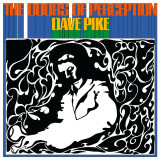
Repress! The Doors Of Perception Is Presented In A Unique Blue Swirl Colored Vinyl Pressing / "The Doors of Perception" is among the most experimental and innovative releases by famed jazz vibraphonist Dave Pike. Recorded in 1966 and released in 1970, the album finds Pike indulging in full-fledged psychedelic jazz, with trippy grooves and a new sound. Produced by Herbie Mann, "The Doors of Perception" features an all-star cast of musicians, including Eddie Daniels, Lee Konitz, Don Friedman, and Chuck Israel. Their talents are complemented by a wide range of sound effects, from echo chambers to piped-in applause to thunderstorms to fuzzy distortion, making for a dynamic and unique listening experience.
The Boysnoize Records catalogue contains more than a decade of milestones in the life of Angeleno DJ and producer PILO. His signatures—a focus on sound design, and a digital crunch evocative of hardware rather than software—are present from the very beginning, but the evolution of Pilo’s skill and sophistication is clear as he stretches from electro to experimental to techno and back again in a slowly oscillating gradient. Yet despite his dozen or so releases in just as many years, G.L.A.M. (dropping November 8th, 2024 from BNR) is Pilo’s first proper album. That the record embraces the cyclical nature of time is apropos; the artist’s journey towards self-actualized mastery always ends with a new beginning.
Over the eight tracks of G.L.A.M., Pilo reaches deep into the dream that first ignited the passion that has driven him since. For a chosen few internet-connected American teens in the aughts, the sounds of European electro (and electroclash) trickled down their ethernet cables and instilled a fantasy of exotic, sartorial, sexually-fluid hedonism that felt a world away from the hard-edged masculinity of the hip-hop and skate cultures dominant at home. Pilo opens G.L.A.M. expressing this idealized fantasy with the track “Superstar DJ,” channeling the tongue-in-cheek self-celebritizing of Miss Kitten and The Hacker’s seminal work. “I’m a superstar, come meet me at the bar,” hiss Pilo’s heavily effected vocals, over a bassline of chopped mentasm synths driven by a swift, club-ready rhythm. The fingerprint of 2000’s electro a la International Deejay Gigolo Records is recognizably present, yet Pilo is too adept, too confident in his studio abilities to let his tracks rely on the retro. A great joy of this album is the future-facing richness of its production, always nodding to its spiritual guide of the past, while constantly breaking new sonic ground.
G.L.A.M. continues with “Girls Rule The World,” its vicious, droning bassline and sticky, titular hook making it the perfect electroclash soundtrack for a revenge plot on an ex-boyfriend. “What you Want” offers an instrumental exercise in “synthesizers are the new guitars,” and Pilo’s FX chops really shine as he warps and distorts his sounds into an undiscovered dimension existing somewhere between both. “Loverboy” enters the more melodic, Legowelt-inspired realm of electro, pushing above and beyond the foundation of analogue minimalism with flourishes of impressive sound design to construct something both climactic and cathartic. Scopa lends her perfect coldwave sprechgesang to titular track “G.L.A.M.,” with Pilo’s vocal processing offering surprises throughout and his FX chains wielded as instruments unto themselves.
On the track “A Slow Thinning Halo,” Pilo might be conjuring the haunting vocal chops and chiptune simplicity of early Crystal Castles, but the whiplash snap of his drums and sizzling production are all his own. “Spend the Night” is G.L.A.M.’s least nostalgic—and most unashamedly pop—offering, with the mic being passed between Sana and DEEVIOUS (previously featured on Pilo and Boys Noize’s 2023 track “Pvssy.”) DEEVIOUS’ sultry singing rides atop the bassline as it hypnotically struts across the floor, while Pilo’s skillful arrangement, deft rhythm programming, and atmospheric control elevate the songcraft into full-spectrum worldbuilding.
As the penultimate track, the contemporaneity of “Spend the Night” serves as transition away from the album’s previous, past-leaning exercises, allowing Pilo to step fully into the future with “One Last Embrace.” The closing track still references aughts sounds, but it borrows so widely and prolifically that Pilo’s reassemblage can only be described as singular. Here, Pilo pushes his engineering into psychoacoustic territory, as the eerie, beautiful melancholy of “One Last Embrace” explodes into a thrashing bassline that warbles like a drowning memory, struggling against the sinking weight of time. Pilo allows it to survive for 16 electrifying, gut-wrenching bars before letting go. In G.L.A.M., as in Pilo’s career, as in life, every ending can only be a new beginning.
Ltd White Vinyl, DL card. 1992's 'Untitled' brought the band's third album that re-cemented the duo once again as the progenitors of the "lo-fi" genre. This breakthrough set transitioned "The Trux" into a never ending all-inclusive rotating cast of musicians. Continuing Fire Records' series of classic remastered albums from Royal Trux, 'Untitled' is released on white vinyl and features updated monochrome and silver artwork. As unpredictable as ever, Neil Hagerty and Jennifer Herrema shook off the next level layering and noise of 'Twin Infinitives' to embrace the history of rock 'n' roll in all its deformed grandeur. Utilizing their ever present mind set of macro-inclusivity, they allowed the subconscious "radio stations" of their lives to infiltrate, lead, and dictate. Culling from their collective minds and memories twisted tunes that touched them. After the blood rush of their much-hailed avant-garde masterpiece 'Twin Infinitives' (1988), this eight-song opus added to the lo-fi genre that originated on 'Twin Infinitives'. On 'Untitled' Hagerty uses his 5-string blues roots and hails rock's twisted potential, while Herrema slurs and snarls in ecstasy. They sound like they're locked in a fourth-floor boudoir at the Chelsea Hotel; bottles clink, an album clicks on its run-out groove, the band plays on. In the mix are the characters and casualties of the 90s, a roll call of swaggering misfits. These aren't superficial sketches, the Trux cut much deeper than that_ "'Junkie Nurse' isn't just about addiction; it's about the twisted hope that even the most broken people can somehow mend others, even when they're falling apart themselves." Jennifer Herrema, Royal Trux. With 'Untitled' Royal Trux justifiably increased their coterie of convicted followers, becoming the cult heroes for a transgressive generation, and the Rosetta Stone for male/female duos (ie:The White Stripes, The Kills etc... ) over the years inspiring everyone from The Silver Jews (David Berman) & Sonic Youth through to melodic blue-eyed soulsters like Hot Chip - "I urge and encourage you to enter the harmolodic multiverse of their music." Alexis Taylor, Hot Chip. "Royal Trux were nothing if not fearless." Pitchfork.
Camelot, the legendary seat of King Arthur's court in Early Middle Ages Britain, was probably not a real place. A corruption of the name of a real Romano-Briton city, the word "Camelot" accumulated symbolic, mythic resonances over centuries, until achieving its present usage as a near-synonym of "utopia." In the mid-20th century alone, Camelot inspired an explosion of representations and appropriations, among them the violent, affectless Arthurian court of Robert Bresson's 1974 film Lancelot du Lac and the absurdist iteration of Monty Python's 1975 Holy Grail, both of which feature armored knights erupting into fountains of blood; the mystical Welsh world of novelist John Cowper Powys's profoundly weird 1951 novel Porius, with its Roman cults, wizards and witches, and wanton giants; and the nationalist nostalgia of President John F. Kennedy's White House. Unsurprisingly there are fewer Camelots in more recent memory. Camelot, Canadian songwriter Jennifer Castle's extraordinary, moving 2024 chronicle of the artist in early middle age, charts a realer, more rooted, and more metaphorical place than the fabled Camelot of the Early Middle Ages (or its myriad depictions), but it too is a space more psychic than physical. In Castle's Camelot, the fantastic interpenetrates the mundane, and the Grail, if there is one, distills everyday experience into art and art into faith, subliming terrestrial concerns into sublime celestial prayers to Mother Nature, and to the unfolding process of perfecting imperfection in one's own nature. Co-produced by Jennifer and longtime collaborator Jeff McMurrich, her seventh record is at once her most monumental and unguarded to date, demonstrating a mastery of rendering her verse and melodies alike with crisply poignant economy. For all their pointedly plainspoken lyrical detail and exhilarating full-band musical flourishes, these songs sound inevitable, eternal as morning devotions. "Back in Camelot," she sings on the lilting, vulnerable title track, "I really learned a lot / circles in the crops and / sky-high geometry." The album opens with a candid admission of sleeping "in the unfinished basement," an embarrassing joke that comes true. But the dreamer is redeemed by dreaming, setting sail in her airborne bed above "sirens and desert deities." If she questions her own agency_whether she is "wishing stones were standing" or just "pissing in the wind"_it does not diminish the ineffable existential jolt of such signs and wonders. This abiding tension between belief and doubt, magic and pragmatism, self and other, sacred and profane, and even, arguably, paganism and monotheism, suffuses these ten songs, which limn an interior landscape shot through with sunstriped shadows of "multi-felt dimensions" both mystical and quotidian. The epic scale and transport of "Camelot," with its swooning strings, gives way dramatically to "Some Friends," an acoustic-guitar-and-vocals meditation in miniature on Janus-faced friends and the lunar and solar temperatures of their promises_"bright and beaming verses" versus hot curses_which recalls her minimalist last album, 2020's achingly intimate Monarch Season. (In a symmetrical sequencing gesture, the penultimate track, the incantatory "Earthsong," bookends the central six with a similarly spare solo performance and coiled chord progression, this time an ambiguous appeal to _ a wounded lover? a wounded saint? our wounded planet?) Those whom "Trust" accuses of treacherous oaths spit through "gilded and golden tooth"_cynics, critics, hypocrites, gurus, scientists, doctors, lovers, government, the so-called entertainment industry_sow uncertainty that can infect the artist, as in "Louis": "What's that dance / and can it be done? What's that song / and can it be sung?" Answering affirmatively are "Lucky #8," an irrepressible ode to dancing as a bulwark against the "tidal pools of pain" and the "theory of collapse," and "Full Moon in Leo," which finds the narrator dancing around the house with a broom, wearing nothing but her underwear and "big hair." But the central question remains: who can we trust, and at what cost faith, in art or angels or otherwise? Castle's confidence in her collaborators is the cornerstone of Camelot. Carl Didur (piano and keys), Evan Cartwright (drums and percussion), and steadfast sideman Mike Smith (bass) comprise a rhythm section of exquisite delicacy and depth. This fundamental trio anchors the airiness of regular backing vocalists Victoria Cheong and Isla Craig and frames the guitars of Castle, McMurrich, and Paul Mortimer (and on "Lucky #8," special guest Cass McCombs). Reprising his decennial role on Castle's beloved 2014 Pink City, Owen Pallett arranged the strings for Estonia's FAMES Skopje Studio Orchestra. On the ravishing country-soul ballad "Blowing Kisses"_Pallett's crowning achievement here, which can be heard in its entirety in the penultimate episode of the third season of FX's The Bear_Jennifer contemplates time and presence, love and prayer_and how songwriting and poetry both manifest and limit all four dimensions: "No words to fumble with / I'm not a beggar to language any longer." Such rare moments of speechlessness_"I'm so fucking honoured," she bluntly proclaims_suggest a state "only a god could come up with." (If Camelot affirms Castle as one of the great song-poets of her generation, she is not immune to the despairing linguistic beggary that plagues all writers.) Camelot evinces a thoroughgoing faith not only in the natural world_including human bodies, which can, miraculously, dance and swim and bleed and embrace and birth_but also in our interpretations of and interventions in it: the "charts and diagrams" of "Lucky #8," a daydreamt billboard on Fairfax Ave. in LA in "Full Moon in Leo," the bloody invocations of the organ-stained "Mary Miracle," and all manner of water worship, rivers in particular. (Notably, Jennifer has worked as a farmer and a doula.) The album ends with "Fractal Canyon"'s repeated, exalted insistence that she's "not alone here." But where is here? The word "utopia" itself constitutes a pun, indicating in its ambiguous first syllable both the Greek "eutopia," or "good-place"_the facet most remembered today_and "outopia," or "no-place," a negative, impossible geography of the mind. Utopia, like its metonym Camelot, is imaginary. Or as fellow Canadian songwriter Neil Young once sang, "Everyone knows this is nowhere." "Can you see how I'd be tempted," Castle asks out of nowhere, held in the mystery, "to pretend I'm not alone and let the memory bend?"
. For Fans Of: The Weather Station, Weyes Blood, Adrianne Lenker, Phoebe Bridgers, Joan Shelley, Lana Del Rey, Cass McCombs, Angel Olsen & Neil Young. Camelot, the legendary seat of King Arthur’s court in Early Middle Ages Britain, was probably not a real place. A corruption of the name of a real Romano-Briton city, the word “Camelot” accumulated symbolic, mythic resonances over centuries, until achieving its present usage as a near-synonym of “utopia.” In the mid-20th century alone, Camelot inspired an explosion of representations and appropriations, among them the violent, affectless Arthurian court of Robert Bresson’s 1974 film Lancelot du Lac and the absurdist iteration of Monty Python’s 1975 Holy Grail, both of which feature armoured knights erupting into fountains of blood; the mystical Welsh world of novelist John Cowper Powys’s profoundly weird 1951 novel Porius, with its Roman cults, wizards and witches, and wanton giants; and the nationalist nostalgia of President John F. Kennedy’s White House. Unsurprisingly there are fewer Camelots in more recent memory. Camelot, Canadian songwriter Jennifer Castle’s extraordinary, moving 2024 chronicle of the artist in early middle age, charts a realer, more rooted, and more metaphorical place than the fabled Camelot of the Early Middle Ages (or its myriad depictions), but it too is a space more psychic than physical. In Castle’s Camelot, the fantastic interpenetrates the mundane, and the Grail, if there is one, distills everyday experience into art and art into faith, subliming terrestrial concerns into sublime celestial prayers to Mother Nature, and to the unfolding process of perfecting imperfection in one’s own nature. Co-produced by Jennifer and longtime collaborator Jeff McMurrich, her seventh record is at once her most monumental and unguarded to date, demonstrating a mastery of rendering her verse and melodies alike with crisply poignant economy. For all their pointedly plainspoken lyrical detail and exhilarating full-band musical flourishes, these songs sound inevitable, eternal as morning devotions. “Back in Camelot,” she sings on the lilting, vulnerable title track, “I really learned a lot / circles in the crops and / sky-high geometry.” The album opens with a candid admission of sleeping “in the unfinished basement,” an embarrassing joke that comes true. But the dreamer is redeemed by dreaming, setting sail in her airborne bed above “sirens and desert deities.” If she questions her own agency whether she is “wishing stones were standing” or just “pissing in the wind” it does not diminish the ineffable existential jolt of such signs and wonders. This abiding tension between belief and doubt, magic and pragmatism, self and other, sacred and profane, and even, arguably, paganism and monotheism, suffuses these ten songs, which limn an interior landscape shot through with sunstriped shadows of “multi-felt dimensions” both mystical and quotidian. The epic scale and transport of “Camelot,” with its swooning strings, gives way dramatically to “Some Friends,” an acoustic-guitar-and-vocals meditation in miniature on Janus-faced friends and the lunar and solar temperatures of their promises—“bright and beaming verses” versus hot curses which recalls her minimalist last album, 2020’s achingly intimate Monarch Season. (In a symmetrical sequencing gesture, the penultimate track, the incantatory “Earthsong,” bookends the central six with a similarly spare solo performance and coiled chord progression, this time an ambiguous appeal to … a wounded lover? a wounded saint? our wounded planet?). Those whom “Trust” accuses of treacherous oaths spit through “gilded and golden tooth” cynics, critics, hypocrites, gurus, scientists, doctors, lovers, government, the so-called entertainment industry sow uncertainty that can infect the artist, as in “Louis”: “What’s that dance / and can it be done? What’s that song / and can it be sung?” Answering affirmatively are “Lucky #8,” an irrepressible ode to dancing as a bulwark against the “tidal pools of pain” and the “theory of collapse,” and “Full Moon in Leo,” which finds the narrator dancing around the house with a broom, wearing nothing but her underwear and “big hair.” But the central question remains: who can we trust, and at what cost faith, in art or angels or otherwise? Castle’s confidence in her collaborators is the cornerstone of Camelot. Carl Didur (piano and keys), Evan Cartwright (drums and percussion), and steadfast sideman Mike Smith (bass) comprise a rhythm section of exquisite delicacy and depth. This fundamental trio anchors the airiness of regular backing vocalists Victoria Cheong and Isla Craig and frames the guitars of Castle, McMurrich, and Paul Mortimer (and on “Lucky #8,” special guest Cass McCombs). Reprising his decennial role on Castle’s beloved 2014 Pink City, Owen Pallett arranged the strings for Estonia’s FAMES Skopje Studio Orchestra. On the ravishing country-soul ballad “Blowing Kisses” Pallett’s crowning achievement here, which can be heard in its entirety in the penultimate episode of the third season of FX’s The Bear Jennifer contemplates time and presence, love and prayer and how songwriting and poetry both manifest and limit all four dimensions: “No words to fumble with / I’m not a beggar to language any longer.” Such rare moments of speechlessness “I’m so fucking honoured,” she bluntly proclaims suggest a state “only a god could come up with.” (If Camelot affirms Castle as one of the great song-poets of her generation, she is not immune to the despairing linguistic beggary that plagues all writers.) Camelot evinces a thoroughgoing faith not only in the natural world including human bodies, which can, miraculously, dance and swim and bleed and embrace and birth but also in our interpretations of and interventions in it: the “charts and diagrams” of “Lucky #8,” a daydreamt billboard on Fairfax Ave. in LA in “Full Moon in Leo,” the bloody invocations of the organ-stained “Mary Miracle,” and all manner of water worship, rivers in particular. (Notably, Jennifer has worked as a farmer and a doula.) The album ends with “Fractal Canyon”s repeated, exalted insistence that she’s “not alone here.” But where is here? The word “utopia” itself constitutes a pun, indicating in its ambiguous first syllable both the Greek “eutopia,” or “good-place” the facet most remembered today and “outopia,” or “no-place,” a negative, impossible geography of the mind. Utopia, like its metonym Camelot, is imaginary
Roy Ayers' first album on the Polydor label inaugurates his music's evolution away from the more traditional jazz of his earlier Atlantic LPs toward the infectious, funk-inspired fusion. Although Ubiquity maintains one foot in Ayers' hard bop origins, it favors soulful grooves and sun-kissed textures that flirt openly with commercial tastes. AllMusic reviewer Jason Ankeny rated the album with **** out of five stars, stating that “Several cuts feature the male/female vocals that would become a hallmark of subsequent works by the same group, while mid-tempo instrumentals like ‘Pretty Brown Skin’ and ‘The Painted Desert’ feature evocatively cinematic arrangements and intriguing solos that unfurl like psychedelic freak flags. The crack supporting cast including bassist John Williams, keyboardist Harry Whitaker, and drummer Alphonso Mouzon proves equally effective on high-energy numbers like ‘Can You Dig It’ and the Nat Adderley-penned ‘Hummin' in the Sun,’ which point the way to the mind-expanding funk Ayers would perfect across the sessions to follow. An outstanding record.”
Pedals is the second studio album from post-hardcore band Rival Schools, released 10 years after their debut record United by Fate was first released. Pedals was recorded by the entire original cast, whom were seen as a tremendous influence within the post-hardcore movement. Where United by Fate was an album often ready to burst at the seams with energy, Pedals shows a more matured and controlled feel, even somewhat experimental at moments with bass tones and frequent use of acoustic guitars and distortion effects. Much like the 2022 reissue of Rival School's first LP, this reissue features packaging updates curated specifically by the band to create the definitive version of this record. The album's artwork has been updated with new gatefold packaging and a slip-case cover along with an updated set of lyrics and liner notes. In addition to all ten original tracks, the second disc of this edition includes three b-sides and four live tracks.
Alternative Jazz. This is a 5 track EP of brand new, previously unreleased material from The Near Jazz Experience (Terry Edwards, Mark Bedford and Simon Charterton). Whilst recording the new album Terry asked pianist Mike Garson (best known for his work with David Bowie, Nine Inch Nails, Smashing Pumpkins) - whom Terry has toured with if he'd like to play on a track. Mike said yes, recorded a stupendous solo for Character Actor at his home studio and sent it over. All in the space of 24 hours! On hearing the piano part NJE bassist Mark Bedford came up with the idea of having the piano mixed with the original track (as intended) but also using it as the basis for a completely new recording with the piano leading rather than complementing the band. Side 1 of the EP has these two very different versions from the same seed. Unidentical twins indeed. Side 2 of the EP contains 4 outliers from the album sessions. These aren't out-takes or unfinished pieces. They simply couldn't find a place for themselves within the album - along the lines of the tunes Tom Waits put together for his Orphans compilation of 2006. They are standalone tunes which have found a home together on this EP because in some way they all have filmic qualities. Side 1 contains 2 takes on Character Actor (the title being a nod to Cracked Actor, a tune on Aladdin Sane, the album that introduced Bowie fans to Mike Garson), and Side 2 has The Loping Four; Projector; MacGuffin and Lockstep, all titles which contain strong cinematic elements, MacGuffin in particular. It was Alfred Hitchcock's favourite word for a red herring in the plot. The musical cast on this release has a remarkable pedigree. The NJE consists of Terry Edwards (solo artist and session player with PJ Harvey, Franz Ferdinand, Siouxsie, Jimi Tenor, Piroshka, Tindersticks etc); Mark Bedford (Madness, Robert Wyatt, Robyn Hitchcock, Nightingales etc); Simon Charterton (The Higsons, Alex Harvey, Zook, Serious Drinking etc). Alongside featured guest Mike Garson there is an appearance by Oliver Cherer (Aircooled, Miki Berenyi Band) on keys and synth. This is an RSD exclusive, 500 copies on black vinyl in full colour sleeve which reflects the filmic quality of the recorded material. No download. The title track will appear on the next Near Jazz Experience studio album. The 4 additional tracks, however, will remain exclusive to Record Store Day.
Rising multi-media artist Shaboozey intends to build his own world.
Determined to carve his own lane in the Alt-Country / Hip-Hop space; he crafts a sound that pays homage to a cast of traditional Western influences, such as Bob Dylan, Lead Belly, Johnny Cash, and Leonard Cohen, while looking into the future of what the two genres have yet to introduce.
Remaining true to his Virginia roots, Shaboozey hopes to continue the region’s long-standing tradition of producing some of the most prolific creatives of the new millennium. This time through elevating the scope of contemporary hip-hop and introducing a modern Americana culture to a global audience.
Fresh off of his inclusion in the groundbreaking Beyonce album, Cowboy Carter, of which he was the only featured artist to appear twice, Shaboozey is set to release his own album, Where I've Been, isn't Where I'm Going. An album that has been years in the making, it includes standout singles “Let It Burn,” “Vegas,” “Anabelle,” & the infectiously fun singalong anthem “A Bar Song (Tipsy).” Millions of streams later, and appearances on esteemed programs such as COLORS and The Late Show with Stephen Colbert, Shaboozey is set to become the new face of modern American country music.
Orchestre Tout Puissant Marcel Duchamp’s latest album, “Ventre Unique”, is a dynamic exploration that seamlessly blends folk, krautrock, post-punk, and African rhythms, delivering an emotionally charged yet exuberant listening experience. Helmed by Geneva-based Vincent Bertholet, the orchestra’s ever-evolving lineup and distinctive sound pay homage to both African music traditions and avant-garde artist Marcel Duchamp, while pushing the boundaries of contemporary music.
Recorded over ten days in the outskirts of Paris at Studio Midilive, the album features an eclectic international cast of 12 musicians. The result is a beautifully organic sound that balances Bertholet’s simple, loop-based compositions with intricate arrangements of marimba, horns, strings, and angular guitars.
Ventre Unique is the group’s sixth album and follows their acclaimed 2021 release, “We’re Ok But We’re Lost Anyway”. While their previous work captured the disarray of the world during the pandemic, “Ventre Unique” reflects on shared human experiences, inviting listeners to find common ground through music
- Kitchen
- Skin On Skin
- Highfield
- Breaking In Reverse
- You Are The Morning
- Best Friend's House
- Guy Fawkes Tesco
- Dissociation
- Tall Girl
- New Shoes
- Roan
- Elephant
- Transition
- Woman
You Are The Morning was formed amid personal upheaval in 2021. "I came out as trans to my nearest and dearest," she says, "Some did not accept me, but some did." Jasmine got divorced, and a difficult home life meant she was writing while experiencing homelessness and precarious housing, sleeping on friend's couches and relying on community support. Despite the pain of some of its background, the record is an uplifting look at t4t love. Jasmine describes her first trans romance as the first time she experienced joy in a deep sense, because of her experience of living as a woman. First single `Skin on Skin' explores the new joy of physical touch. Usually a quick writer, it's a rare song that grew over time, during which a close connection with a friend began to form. "Sticking to the physical boundaries we wanted to have with each other became increasingly difficult. We were spending lots of time together, then falling in love. This song became a celebration of healing and physical catharsis found through unrepressed queer love." The first UK signee on Saddest Factory Records, the album was produced by Julien Baker, Phoebe Bridgers and Lucy Dacus. Jasmine and her band travelled to L.A. to record at Sound City Studios. It was made across 12 days in a highly collaborative and emotional process, and because Jasmine sees her songs as fluid and ever-changing, the recordings carry that free and spontaneous spirit. jasmine.4.t is supported by an all-trans band, Phoenix Rousiamanis contributes piano and strings, with Eden O'Brien on drums and Emily Abbott on bass. With Jasmine's voice and songwriting at the centre, the record incorporates a wider cast of voices. `Best Friend's House' features a chorus including her bandmates, Julien Baker, Phoebe Bridgers and Lucy Dacus ("the girls and the boys"), Saddest Factory Records label-mate Claud, Becca Mancari and E.R. Fightmaster. The song carries the communal spirit of the record's creation. On the closing track, `Woman', she is backed by the Trans Chorus of Los Angeles, a cross-generational group of trans singers who, like Jasmine, use their voice as a source of communal power. The song blossoms from solo performance to wider group catharsis. All the while, Jasmine sings unwaveringly about the power of knowing yourself at a core level: "I am, in my soul, a woman". The writing of You Are The Morning pulled from dark moments to tell its story. Surrounded by friends, the recording process was full of light. Through her performances, activism and artistry, jasmine.4.t is ushering in a new dawn.
Steve Leach's Balearic beach-funk beast Ocean Potion, recorded with the Crystal Grass Orchestra is an absolutely ace, Ned Doheny-adjacent funky AOR / blue-eyed soul BBQ classic from 1976.
Who is Steve Leach, you ask? None other than Seasick Steve in a previous life! A French-only release on Philips, it's a hugely immediate, pop-funk firecracker. It features a wonderfully lush, full orchestral sound throughout, underpinning Steve's gorgeous voice and an army of brilliant backing vocalists.
The supporting cast is phenomenal and is arguably the salient reason this is such a fantastic record. We're talking legendary players from the French scene (think Arpadys, Voyage, Kongas, CCPP, Giant, Swing Family) such as Don Ray with his arranger-conductor hat on as well as synths, Marc Chantereau on percussion, Slim Pezin on guitar, André Ceccarelli on drums, Christian Padovan on bass and Pierre Halation on flute.
With these snakes behind the scenes, it remains a mystery how Ocean Potion is so relatively unknown. Hopefully, this long overdue reissue rectifies this and puts a stop to people dropping $200 on it.
Triumphant, horn-forward opener "The Light Of The Mind" has that uniquely Ned Doheny fidgety funk feel with a fantastically irresistible chorus and great harmonies. Just magic. The insouciant, swaggering "Hey! Hey! What You Doin To Me" is straight up white-hot feel-good funk with by turns sweeping and stabbing strings and a neck-snapping break. Crucial. Coming off like something off The Beach Boy's Surf's Up or Holland (including a sneaky "reason to live" reference that surely nods to "The Trader") is the brilliantly ominous, driving wall of sound of "Take Strength". Cavernous drums, urgent strings and a staggeringly good vocal performance make this a real highlight amongst an album of highlights. The blissful folk-funk of "The Lady Of The Sea" is a real naked heartbreaker, melancholic vibes and a beautiful flute line complementing each other perfectly. Side A closes out with "All My Life", a groovy island-funk white-reggae-tinged lilter which just about lands the right side of acceptable.
Side B opens with the gorgeous "You're The Only One Girl" before the propulsive Philly soul of "At Least We Got Love" elegantly glides into focus. Pulsing beats and piano working with that irresistible orchestra of grass. Glacial ballad "All Love's Children" has a deep New Orleans soul feel that truly soars whilst the breezy "Get Out In The Sun" owes a debt to "Crocodile Rock". It's pure pop for now people and wouldn't have been out of place on a late 70s Nick Lowe effort. Deep late-period Beach Boys gem "Golden Hues" is another heavy melancholic down lifter that really beguiles before the real reason you're all here. Pastoral closer "I Meditate Each Day" is just beautiful, and likely the reason this reissue is giving you that special feeling. Another gorgeous flute-led, folk-funk groover, it featured in a memorable mix from the Creme2laCreme crew (Raphael Top-Secret, Jerome Qpchan and Antoine Kogut) live on Red Light Radio over a decade ago and has been top of many heads' wants list never since. Just mellow out.
As ever, the audio for Ocean Potion has been carefully remastered by Be With regular Simon Francis, ensuring it sounds better than ever. Cicely Balston's expert skills have made sure nothing is lost in the cut whilst the records have been pressed to the highest possible standard at Record Industry in Holland. The original, iconic sleeve featuring a topless Steve reclining next to his piano on a flatbed truck on the beach (of course?!) has been restored here at Be With HQ as the finishing touch to this long overdue re-issue.
Strange Power!, the fifth record from Durham, NC-based songwriter and poet Anne Malin Ringwalt, emerges from the darkest waters of the self into a world remade. Releasing in conjunction with her second book of poetry, What Floods (Inside the Castle, Oct. 2024), Strange Power! overflows with Ringwalt's teeming and sensuous personal symbolry: glowing lilacs and gentle queens, dolphins wild and girls who grew up brave _ T.S. Eliot sung by Cat Power, backed by Mount Eerie. She sings: "I rose up from water." Ringwalt writes and performs with the authority of a lifetime spent harnessing the alchemy of storytelling; her belief in the power of words to heal and transform is palpable in each achingly- delivered lyric. Made amidst profound inner and outer change, Strange Power! also sees Ringwalt taking up the role of self-producer for the first time, mirroring and supporting the record's Orphic quest by gathering contributions from a coterie of friends wielding an electric range of American instruments. Violins, vibraphones, drum machines, electric guitars dappled with spring reverb, wind-blown shells, and a host of other numinous sounds form an unfurling and shadowy world which was then carefully honed during the mixing process (shepherded by Michael Cormier-O'Leary and Lucas Knapp) _ settling the final record in an eerie meridian between spareness and verdancy. The result is a beguiling and darkly blooming realm: the sound of a personal cosmos being remade, piece by piece. Ringwalt is at the height of her spirit as both songwriter-poet and singer, her willowy voice by turns conjuring and keening as she reckons with her deep past and the stories told since. Opening track "The Pines" sets the stage for a record of truly life-long scope: "I was a child, now I hold her / I was asleep for many years." Some songs, like the gorgeous "North Carolina" and "The Saint," were written as early as 2013 but, Ringwalt says, "insisted upon being remembered" as the record took shape; in its final form, they serve as inciting moments of self-discovery before the journey to come. "The Visionary" recalls one of Ringwalt's earliest musical breakthroughs _ her re-rendering of an Emily Brontë poem into a song at age 15 _ and, she says, "`cites' the melody of that song in the context of this new one _ a holding of the past and present and every layer in between/beyond, in utter solitude _ a solitude that reflects certain aspects of abandon as a child and an adult..." This unusually lengthy time-scale lends Strange Power! a deeply moving sense of narrative fullness. Stretches of the record _ particularly the "Judgment Day" ? "River" ? "Lilac Bloom" trifecta that form the black heart of Side 1 _ may recall familiar wanderings of personal underworlds such as Mount Eerie's Lost Wisdom Pt. 2 or Neil Young's Ditch Trilogy. Yet this hollowed landscape is in turn exorcized by the a capella "I Know," in which Ringwalt sings "I won't be gutted by you / For giving and trying to heal / I won't be gutted, I am not a fool / I deserve a love that is new" before the song concludes with a piano passage that recalls hymnal music _ suggesting a faith in life itself to offer new beginnings. Side 2 features some of Ringwalt's most powerfully introspective writing to date, as the songwriter casts off myth after myth in her search for personal transformation. By the final song, "Stories," the energy that has been gathering all throughout the record breaks loose as Ringwalt reflects: "I wrote so many stories, not knowing what the end was." But at this stage in the journey, we know there is no such thing as an ending; if the healing process is never complete, the storyteller's strange power is what finally offers liberation.
Fohn brings connection, displacement and new identities into the moment, on pastoral debut album Seanteach - informed by island life, marine folklore and musical tradition.
Connection to the land, the severing of earthly ties, explorations of environment, mythos and generational memory: under the moniker of Fohn, English violinist and producer Tom Connolly (Quade, AD93) takes to the fiddle on which he learned his craft as a child. Forging new bonds with his family’s island home off the coastal west of Ireland, their story is retold in Seanteach (Irish for ‘old house’), released on Odda Recordings.
“Seanteach explores the nature of my relationship with Ireland, and Connemara in particular, where my dad’s family is from,” explains Connolly, speaking on a long-form work that blends new compositions on traditional Irish fiddle with ambient electronics and evocative field recordings.
“It explores how the island of Maighinis became an almost mythological space for me, growing up in England - we would spend every summer there, but it felt equally present for me when we were back in the UK, a sort of mental solace that I found through music especially.”
Each track on the album is a reflection of aspects of that relationship to island life - where physical features intersect with mythology. Such as, ‘Boreen’, named after a colloquial term for rural byroads sometimes shared with otherworldly neighbours. ‘Aisling at Sea’ draws on the primal, unstoppable momentum of the water, while the folklore of ‘Immram’ reflects on generationally-kept tales of marine bravery and supernatural accomplishment.
“The compositions often sit at the fraying edges of memories I’ve inherited from my own experiences, that of family lore, or from stories that I have come across. I wanted the compositions to tread the space between documentation and fantasy that feels so reflective of my relationship with this place.”
Tying these worlds together is the presence and memory of Connolly’s ‘Mamó’ (Irish for grandmother), Bríd. Despite passing during Connolly’s childhood, this “larger-than-life character” shaped his imagination with anecdotes and stories, representing both a familiar figure, and the poignancies of potential and regret.
“Even at a young age I sensed a sadness emanating from her. Through a series of unfortunate and fortunate circumstances, she found herself leaving Ireland and settling in Boston like so many others. Under the impression she was an illegal immigrant in the US she didn’t return to Ireland for decades.”
‘Between the Shoreline and the Gorse’ channels her early childhood, born to a large Catholic family in the island’s ‘Seanteach’, and cast adrift from her old life - a severance of ties that Connolly attempts to make ethereal amends for, with the album named for her family home.
“It’s something that feels so visibly prominent in Connemara with its landscapes charcoaled with deserted ruins. It’s a feeling I also experience, despite never having lived in Ireland, which prompted me to want to explore the idea of longing for something/somewhere ‘un-experienced’, and to a certain extent, fictionalised.”
- The Lion
- First Broadcast 27Th March 1965
- The Knight Of Jaffa
- First Broadcast 3Rd April 1965
- The Wheel Of Fortune
- First Broadcast 10Th April 1965
- The Warlords
- First Broadcast 17Th April 1965
History must take its course.
Demon Records presents, for the first time on double 140g green and
yellow translucent vinyl, the complete narrated TV soundtrack of ‘Doctor
Who: The Crusade’, with linking narration by William Russell.
The TARDIS travellers materialise in 12th Century Palestine, where
English Crusaders are engaged in a holy war with Saladin, ruler of the
Saracens. When Barbara (Jacqueline Hill) is abducted in a Saracen
ambush, the Doctor (William Hartnell), Vicki (Maureen O’Brien) and Ian
(William Russell) find themselves guests at the palace of King Richard
the Lionheart (Julian Glover).
First broadcast in March and April 1965, the story has become a noted
classic among Doctor Who historical adventures, with a guest cast
including Julian Glover and Jean Marsh.
Only two of its four episodes survive in the BBC TV archive, but this vinyl
release features the complete audio soundtrack. Includes beautifully
illustrated individual sleeves featuring Radio Times-style billings for each
episode.
This release is dedicated to the memory of narrator William Russell, who
died in June aged 99.
Doctor Who is available now on BBC iPlayer in the UK and on Disney+ in the rest of the world,
Longtime enthusiasts of ambient music have much to celebrate as Rafael Anton Irisarri's cherished out-of-print cassette, "Midnight Colours," returns in a meticulously remastered edition and makes its inaugural debut on vinyl. The significance of this album's announcement is accentuated by its historical resonance, coinciding with the same day in 1952 when the world bore witness to the first-ever test of the hydrogen bomb.
"Midnight Colours" is far more than a mere album; it's an exploration of the enigmatic relationship between humanity and time. Conceived as a sonic interpretation of the Doomsday Clock, which symbolizes the world's existential vulnerabilities, Irisarri's work beckons listeners to contemplate the gravity of our existence and the delicate balance that envelops it.
"I wanted to capture the essence of humanity's relationship with time, both the anxiety and the serene beauty that coexists within the shadows of the night," explains Irisarri. "The vinyl format adds a tactile dimension to the experience, inviting listeners to physically engage with the music."
Known for his contributions to the ambient and electronic music genres, Irisarri often explores themes of introspection, nostalgia, and the interplay between sound and emotion.
Recorded in 2017, when the Clock was at 2½ minutes-to-midnight (and at the time, the second-closest to midnight since the Clock's inception in 1947), "Midnight Colours" permeates with the melancholy of memories resurfacing as one approaches the end of life: the regrets, the closure, the uncertainties, the anxieties.
Originally released as a limited tape on the beloved Atlanta-based label Geographic North, "Midnight Colours" swiftly garnered praise and acclaim within the ambient music sphere. Now, with this newly remastered edition on his own Black Knoll imprint, fans, both longstanding and newfound, can rediscover the album's captivating beauty in unprecedented clarity and depth.
"I've wanted to release 'Midnight Colours' on vinyl since it first came out, and I'm thrilled to finally be able to. The remastering process, brilliantly done by Stephan Mathieu, has breathed new life into the work, and I'm eager for listeners to experience it in this format."
The reissue of "Midnight Colours" features band-new artwork and design by the renowned Mexican visual artist Daniel Castrejón. A frequent collaborator and friend of Irisarri, Castrejón's imagery impeccably complements the album's mood and themes, extending a compelling invitation for listeners to explore its aural world visually.
This landmark release serves as a testament not only to Irisarri's enduring impact on the ambient music genre but also as a long-awaited gift to those who have patiently anticipated the album's vinyl debut.
Clear Vinyl. For the first time ever released on vinyl, this brilliant 2012 LP features an all-star cast of musicians and actors lead by Tim Robbins, Dr. John, Bill Frisell, Ralph Steadman, Annie Ross, John Joyce III and Will Forte. Hunter S. Thompson's classic Gonzo reportage on the 1970 Kentucky Derby is summoned brilliantly to life through spoken word and musical composition. Conceived by executive producer Michael Minzer for his Paris Records label, the project was produced by Hal Willner, who brought Bill Frisell in as composer/arranger/conductor. Bill then asesmbled a stellar group of musicians including Curtis Fowlkes (trombone), Ron Miles (trumpet), Eyvind Kang (viola), Doug Weiselman (woodwinds), Jenny Scheinman (violin), Hank Roberts (cello) and Kenny Wolleson (drums, percussion). Ralph Steadman does double duty portraying himself in the narration and contributing original artwork for the project. In 2021, Kramer re-Mastered the original audio for this historic re-release on limited-edition 'Horse-Shit Brown' vinyl for his Shimmy-Disc label.