Italian producer Gledd has been quietly carving out a reputation for groove-led house music that balances raw dancefloor energy with rich musicality. Drawing on influences that span gospel, afrobeat, and classic deep house, his productions channel both heritage and forward-thinking club culture. My House Is Your Church marks his debut release on Delusions Of Grandeur - a fitting home for his expansive, souldrenched sound - and signals a bold new chapter in his evolution as an artist.
The EP opens with On His Way, a percussion-heavy deep roller built for maximum dancefloor impact. Anchored by fat, heavyweight production and a massive low-end presence, the track surges forward with relentless energy. An incredible gospel vocal cuts through the mix, elevating the groove into something transcendent - equal parts spiritual and physical. On It’s Not That Easy, Gledd leans further into his gospel house influences. Highimpact and rhythmically rich, the track weaves together organ fills and subtle tropical flourishes, creating a vibrant, sun-soaked energy while keeping the pressure firmly on the floor.
It’s a track that feels both uplifting and commanding. Flipping to the B-side, Habibi Gospel pushes into more “outernational” territory. A wild, expressive lead vocal takes center stage, riding atop a heavy, driving groove. Organ stabs punctuate the rhythm, locking dancers into a hypnotic flow that bridges cultures and styles with effortless confidence. Closing the EP, Can You Hear My Noise? brings things to a richly textured finale. Slightly more organic in feel, it blends echoing synth stabs, percussive melodic lines, and chopped vocals into a melting pot of sound. The result is a seamless fusion of gospel, afrobeat, and classic house - deep, emotive, and undeniably danceable. With My House Is Your Church, Gledd delivers a statement of intent: music as ritual, the dancefloor as sanctuary.

Поиск:feels
Все
Back on PANORAMA Records, we turn to a beautiful slice of under-the-radar Jamaican reggae with Horace Martin – “Me Rule.”
Born in Kingston, Jamaica, Horace Martin was just 20 years old when he stepped into Channel One Studio to record the track in 1974. At the time he was building his name locally, performing in clubs and talent shows around the city while cutting sides in Kingston’s vibrant studio scene. “Me Rule” captures that moment perfectly — youthful confidence over a deep, steady rhythm.
This record earned its place among the deepest collectors: Proper rootsy dancefloor reggae that feels just as good today as it did when it first came out of Kingston.
On the flip, things open up with a dubbed-out version of the rhythm titled “Rule,” credited to Prince Huntly. Stripped back, the dub extends the track — echo, percussion, and bass doing the work.
As always, PANORAMA Records continues its search for overlooked gems from across the globe — records with history, character, and real musical weight. Carefully remastered and brought back on 7inch, PAN013 is another example of these records finding their way back to the turntable.
A label compilation can be the first sign of a new cycle. After years shaped by individual trajectories, it brings the focus back to what made scenes powerful in the first place: shared language, mutual influence and a sense of collective movement.
For a label built on deep rhythm, organic textures and emotional drive, this carries an even stronger meaning. These musical spaces hold connection, memory and exchange at their core.
In this light, a compilation becomes more than a format: it becomes a statement of identity, a meeting point where different voices contribute to one evolving vision.
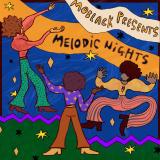
“MoBlack presents: MELODIC NIGHTS” marks the start of this new MoBlack path guided by careful curation and artistic exchange, blending percussive depth with a more melodic approach.
The result is a four-track selection navigating different shades of introspection and release, held together by a strong and recognizable sonic character.
Klement Bonelli – “It’s My Life” sets the tone with a bold, emotionally charged cut that balances melodic lift with a club-focused pulse. it’s jud, MR.FULLTIM€ – “Jackfruit” adds a distinctive twist to the journey, playful in texture yet precise in its impulse, widening the palette with character and movement. Jay’ (CH) – “Our Fire” leans into atmosphere and intensity, building momentum through evocative harmonies and a steady emotional current. Max Zotti, Blaxx – “Release Your Pain” closes the collection with a cathartic, rhythm-led energy, delivering what feels both intimate and dancefloor-ready. More than a one-off release, “MELODIC NIGHTS” introduces a collection designed to highlight converging sensibilities, where each track stands on its own while contributing to a wider narrative.
Artwork by Rachael D’Alessandro. Executive producer Mimmo Falcone. Distribution by Muting The Noise.
Evergreen In Your Mind, the new and third album from Norwegian singer-songwriter Juni Habel, exists in two worlds at the same time. Songs were recorded in quiet corners of her home, on the piano in the school where she works, and it uses the physical world around her to provide percussion. It also takes place, as she herself attests, within a dream; an imagined place in which her desire for oneness with each other and the world around us is finally realised.
Evergreen In Your Mind was recorded with co-producer Stian Skaaden, it’s Habel’s first album in three-years, following the breakthrough success of 2023’s Carvings LP. Formed of eleven new recordings, the songs here remain delicate, Habel’s voice playing an elegant lead role – but there are fluctuations too.
These small shifts in Habel’s sound result in a notable stride forward. More focus went into the groove of these songs. Playfulness was embraced and, perhaps most importantly, patience played a fundamental role in shaping the album with time and care given to every element of these songs. “We always aim to capture effortlessness - but the way of getting there is anything but effortless,” Habel reveals.
This extra time that was given to the project gave Juni the space to nurture her creativity. She would read and listen to music, hike into the hills, place herself within nature and seek out stillness. Not as a deviation from her work but as a fundamental part of the process. It’s a search for connection, and it’s a recurring theme across Evergreen In Your Mind; the polarity between stillness and passion, also our resistance to these desires, and the things we want to live and experience.
The album’s title-track and fist single feels indicative of this narrative. A gorgeous, delicate folk song, it finds Habel out in the woods, hiding from real life, caught in the space between the natural world and the pull of modernity. “It’s nostalgic. It’s about looking back and realizing things will be different,” Habel says. “Its about visualizing something beautiful in your head that you keep clinging onto.”
The album cover for Evergreen In Your Mind also adds shimmer. A striking photograph of Juni among the mountains, it was taken on a day trip to Rondane, a five-hour drive each way from her home. Habel explains. “It was awe-inspiring to drive all the way up into the high mountains, with its wide plains and intense colours. For an album with music that at times likes to hide itself, I think it fitted nicely with such an epic, grand, and powerful landscape.”
"Fans of Nick Drake, Karen Dalton and Neil Young will find much to enjoy in this musical equivalent of an evening spent alone by the fireside.” The Times
- 1: Fire
- 2: Sorry Go 'Round
- 3: Carnival Of Rust
- 4: Locking Up The Sun
- 5: Gravity
- King Of Fools
- 1: Roses
- 2: Desire
- 3: All The Way / 4U
- 4: Delicious
- 5: Maybe Tomorrow Is A Better Day
- 6: Dawn
- 7: Black Waters
Corona Vinyl, Limited to 1000 copies. To celebrate the 20th anniversary of their album Carnival of Rust, Poets of the Fall will release a special new vinyl edition of the record. The anniversary pressing features a previously unreleased single, "Black Waters", presented as a final added chapter to the album's story. Unearthed from the original recording sessions and completed in the present day, the track feels less like an outtake and more like a voice that finally found its moment. The anniversary vinyl will also feature a newly edited cover design, offering the audience a fresh visual take on the classic record.
- Being Left By Today Feat. Norman Blake
- Feather And A Bird Feat. Norman Blake
- Disinformation Feat. Norman Blake
- El, El, El Feat. Norman Blake
- Secret Of Dead Youth Feat. Norman Blake
- Queen Christina The Second Feat. Norman Blake
- Keep Rest In Thunder (My Dying Day) Feat. Norman Blake
- Is Anybody There? / What Am I Afraid Of? Feat. Norman Blake
- Somethin’ Funny Goin’ On Feat. Norman Blake
- Twenty & Twenty Two / Mealy Tell I Am Feat. Norman Blake
- Warehouse Feat. Norman Blake
- Right / Wrong Feat. Norman Blake
- Beautiful Dream Feat. Aby Vulliamy
- Shirley Brassy / Bushed Feat. Aby Vulliamy
- Leave Me Alone Feat. Aby Vulliamy
- Tie Your Hands Feat. Aby Vulliamy
- Who I’m Married To Feat. Aby Vulliamy
- First Time Feat. Aby Vulliamy
- California Girl Feat. Aby Vulliamy
- High Alone Feat. Aby Vulliamy
- Money Dream Feat. Aby Vulliamy
- Mackenzie’s Return Feat. Aby Vulliamy
- I Found It Feat. Aby Vulliamy
- Altogether Hollow World Feat. Aby Vulliamy
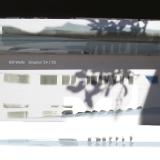
On Dreams ’24 / ’25, Scottish composer Bill Wells turns his nocturnal imagination into a sequence of delicate musical miniatures. The album brings together 24 short pieces, most of them under two minutes, unfolding in just under half an hour like a quietly drifting dream diary.
The album is split into two parts. On the Dreams 2024 side, Norman Blake lends his voice to Wells’ dream-born melodies. Blake, best known as a founding member of Teenage Fanclub, recorded the songs with Wells in a single afternoon at his home, capturing their fragile immediacy in direct and unadorned performances.
For Dreams 2025, Aby Vulliamy — one of Yorkshire’s best kept musical secrets — takes over vocal duties. In mid 2025, Wells sent her a batch of demos; Vulliamy recorded them at home and sent them back to him. The result is a second chapter that feels more introspective, intimate and gently surreal.
The songs themselves are born directly from dreams. Wells wakes from the dream, records it on his mobile and later shapes it into a brief, lyrical composition. One piece, Mackenzie’s Return, was inspired by a dream in which Elvis Costello marched through the streets of a suburban town complaining that he had run out of song ideas, a detail that perfectly captures the album’s blend of humour, strangeness and quiet melancholy.
Dreams ’24 / ’25 is not a collection of fully formed pop songs, but rather a series of fleeting emotional snapshots: soft voices, simple motifs, and melodies that appear and vanish before they can fully settle. It is an album that rewards close listening, inviting the listener into a private, half-lit space somewhere between memory and imagination.
The album is accompanied by a striking cover artwork by Annabel Wright.
Geoglyph is the new duo project by Alohn and Khey Mysterio, a convergence of two deeply singular practices into a single subterranean signal. Their debut album arrives as the eighth reference on Organic Signs, not as a collection of tracks but as a carved artifact: six inscriptions pressed into vinyl, mapping a sonic territory where time, rhythm and texture are no longer linear, but layered like geological memory.
Through Geoglyph, Alohn and Khey Mysterio convey a message from below, or beyond. A pulse engraved from forgotten times in the basement of reality, reactivated by abyssal basses, vibrating layers and fractured textures. Exhumed from the subterranean strata where psychedelic dub, mineral techno and fractal dubstep fuse into raw energy, their music becomes a point of contact: every beat, every silence, every oscillation acting as a coordinate toward another perception. What unfolds is not simply sound design, but an invocation, rhythms as sigils, timbre as gnosis, signals that seem to arrive already charged with intention.
Across the album, Alohn’s guitar notes fall like cascades through the mix, dissolving at times into controlled feedback and crystallizing into melodic fragments that hover between tension and release. These organic gestures are interwoven with Khey Mysterio’s dense low-end architectures and rhythmic frameworks, creating a constantly shifting terrain: from weightless transmissions and ritualistic voices to moments of overwhelming propulsion where the music suddenly breaks open with tectonic force. The record moves fluidly between meditative suspension and explosive motion, never settling into a single state for long.
A strong undercurrent of what has come to be known as “druidstep” runs through the album, a term coined within the 95 Open Tabs universe to describe a form of dubstep untethered from genre convention, rooted instead in bass as ritual, in groove as invocation. Here it meets dub-techno pulse, psychedelic echoes and high-velocity 4×4 pressure, drawing subtle influence from underground bass cultures without ever becoming referential. The result is a body of work that feels both ancient and forward-leaning, cyclical rather than linear: a living geoglyph that reveals different meanings depending on how (and where) it is read.
As the final movement accelerates into its closing phase, the album releases its energy outward, with frequencies stretched toward their limits, leaving behind the trace of a completed ceremony. In this sense, Geoglyph’s debut stands as a defining moment within the Organic Signs continuum: a record that unfolds rather than explains, offering an experience to be entered, absorbed, and carried. With this release, the label continues to explore new sonic spaces, evolving and expanding while giving deeper meaning to its own essence. A message from beneath the surface, waiting for those willing to tune in.
Más de este género
Be The Mountain (2026) is the latest release from Detroit-based musician STS. The record explores a serene and introspective world shaped by organically morphed textures and slowly evolving soundscapes.
While largely drumless, the album maintains a subtle rhythmic backbone - not through traditional percussion, but through modulated pads, shifting synths, and carefully sculpted ambience. The music moves and breathes without overt propulsion, finding tension and momentum through tone, density, and motion rather than beats.
Much of the record was written during a period of sustained physical and mental strain. A time when daily effort fought against perceived limits. Instead of responding with heavier or more aggressive material, the music became a quiet counterweight to the intensity. These tracks function as an escape from chaos. They are built from patience, repetition, and a gradual transformation.
The title reflects a central idea behind the record: confronting something that initially feels insurmountable, only to realize that the enduring force is the one within us all.
Be The Mountain is about endurance, not as struggle, but as presence.
Cassette[14,50 €]
Aspen is very proud to introduce ‘Non Sonett’ by the Christian Wallumrød Ensemble. This ensemble is a pioneering Norwegian chamber group whose work on ECM and Hubro has redefined the boundaries between jazz, contemporary composition and folk music.Across seven albums, the ensemble has developed a highly distinctive l anguage built on restraint, timbral nuance and collective interplay, placing it among the most influential European ensembles of the 21st century.
Bringing together some of the finest musicians in Norway, the ensemble draws on a rare collective sensitivity, where each player contributes to a deeply integrated and texturally rich sound world.
With Non Sonett, the Christian Wallumrød Ensemble opens a new chapter that grows directly out of recent years of work in more solitary and cross-disciplinary contexts. In this period, Wallumrød has developed material for solo performance as well as for dance, allowing ideas to take shape in more fluid and exploratory formats. Some of this material now finds its way into the ensemble, where it is met by the possibilities offered by instrumentation, collective playing, and the distinct voices of the musicians. At the same time, older pieces—originating in entirely different settings— re-emerge here in new forms, reshaped by the ensemble context.
A defining aspect of Non Sonett is the way many of the pieces function less as fully determined compositions and more as open frameworks: starting points, suggestions, or “springboards” for music. These structures invite response rather than prescribe outcome, relying on the ensemble’s inherent sensitivity and capacity to realize and transform the material in performance. The result is music that feels both precise and fluid, shaped in equal measure by composition and by the interpretative presence of the players.
Central to this album is a continued deepening of Wallumrød’s long-standing interest in ambiguity and in dissolving boundaries between different musical elements and expressive worlds. By placing contrasting materials and associations side by side—sometimes subtly, sometimes more overtly—the music opens up spaces where meanings remain fluid and interconnected. On Non Sonett, this approach is taken a step further, allowing these juxtapositions to play an even more active role in shaping the music’s character and flow.
This approach connects closely with the ensemble’s broader artistic trajectory. Over time, the Christian Wallumrød Ensemble has developed a language that is immediately recognizable—marked by reduction, clarity and a deep attention to sonic detail. While each release has its own character, the underlying aesthetic remains consistent: a focus on the inner life of sound itself. Rather than foregrounding gesture or virtuosity, the music draws the listener toward the smallest elements, where meaning emerges gradually through texture, spacing and timbre.
The listening experience becomes one of concentration and proximity, where each sound carries weight, and the accumulation of detail forms a larger whole. References may be sensed—to early polyphonic music, Norwegian folk traditions, or more recent experimental practices—but these are absorbed into a singular musical language that resists categorization.
As with the ensemble’s recent work, Non Sonett also continues the integration of electronics as a fundamental part of the sound world. Each musician engages with electronic elements alongside their acoustic instruments, creating a layered and dynamic sonic environment. At times, this leads into extended, exploratory passages reminiscent of analogue musique concrète; at others, electronics operate almost imperceptibly, subtly altering and extending the acoustic textures in real time.
vinyl[21,81 €]
Aspen is very proud to introduce ‘Non Sonett’ by the Christian Wallumrød Ensemble. This ensemble is a pioneering Norwegian chamber group whose work on ECM and Hubro has redefined the boundaries between jazz, contemporary composition and folk music.Across seven albums, the ensemble has developed a highly distinctive l anguage built on restraint, timbral nuance and collective interplay, placing it among the most influential European ensembles of the 21st century.
Bringing together some of the finest musicians in Norway, the ensemble draws on a rare collective sensitivity, where each player contributes to a deeply integrated and texturally rich sound world.
With Non Sonett, the Christian Wallumrød Ensemble opens a new chapter that grows directly out of recent years of work in more solitary and cross-disciplinary contexts. In this period, Wallumrød has developed material for solo performance as well as for dance, allowing ideas to take shape in more fluid and exploratory formats. Some of this material now finds its way into the ensemble, where it is met by the possibilities offered by instrumentation, collective playing, and the distinct voices of the musicians. At the same time, older pieces—originating in entirely different settings— re-emerge here in new forms, reshaped by the ensemble context.
A defining aspect of Non Sonett is the way many of the pieces function less as fully determined compositions and more as open frameworks: starting points, suggestions, or “springboards” for music. These structures invite response rather than prescribe outcome, relying on the ensemble’s inherent sensitivity and capacity to realize and transform the material in performance. The result is music that feels both precise and fluid, shaped in equal measure by composition and by the interpretative presence of the players.
Central to this album is a continued deepening of Wallumrød’s long-standing interest in ambiguity and in dissolving boundaries between different musical elements and expressive worlds. By placing contrasting materials and associations side by side—sometimes subtly, sometimes more overtly—the music opens up spaces where meanings remain fluid and interconnected. On Non Sonett, this approach is taken a step further, allowing these juxtapositions to play an even more active role in shaping the music’s character and flow.
This approach connects closely with the ensemble’s broader artistic trajectory. Over time, the Christian Wallumrød Ensemble has developed a language that is immediately recognizable—marked by reduction, clarity and a deep attention to sonic detail. While each release has its own character, the underlying aesthetic remains consistent: a focus on the inner life of sound itself. Rather than foregrounding gesture or virtuosity, the music draws the listener toward the smallest elements, where meaning emerges gradually through texture, spacing and timbre.
The listening experience becomes one of concentration and proximity, where each sound carries weight, and the accumulation of detail forms a larger whole. References may be sensed—to early polyphonic music, Norwegian folk traditions, or more recent experimental practices—but these are absorbed into a singular musical language that resists categorization.
As with the ensemble’s recent work, Non Sonett also continues the integration of electronics as a fundamental part of the sound world. Each musician engages with electronic elements alongside their acoustic instruments, creating a layered and dynamic sonic environment. At times, this leads into extended, exploratory passages reminiscent of analogue musique concrète; at others, electronics operate almost imperceptibly, subtly altering and extending the acoustic textures in real time.
Hot Creations Spring 2026 Vinyl Sampler featuring four of the Hottest recent release on Hot Creations.
After a year in which Joe Rolét’s ‘No Hesitating’ on Hot Creations became one of the biggest tracks of 2025 earning a spot in Mixmag’s ‘30 Best Dancefloor Bangers of 2025’, UK favourite Max Dean’s own
interpretation give s whole new energy to the track. Max’s remix reframes it even further for maximum peak-time impact. The bassline is murkier, the cuts sharply, and the overall momentum makes it a powerful weapon for DJs looking to keep crowds moving. Next up is ‘Sweat’, a collaborative drop from in-demand rising talents Locky and Mad.Again, bringing together two distinct voices shaped by London’s underground. ‘Sweat’ is a monster of a track, delivering punchy, driving drums, weighty bass, and tightly coiled grooves designed for peak-time floors, it’s a collaboration that feels rooted, purposeful, and built for the club!
On the flip and L.P Rhythm delivers his 90s-driven house aesthetic with ‘Want Somebody’, leaning into the warmth and swing of the era he draws so much influence from, the production blends crisp percussion, squiggly acid basslines, and soulful vocal flashes into a sharp, club-focused flip of a ’90s house classic - built and re-purposed for packed rooms and late-night energy. Final track ‘Freaks’ from Joshwa, brings a hypnotic blend of infectious vocal chops, punchy percussion, and growling low-end heat built for late-night dancefloors. Another four track banger!
Six years after their last full-length release, Satoshi & Makoto return with Mirage Café, the highly anticipated new album on 8mm Records, in collaboration with Standart Magazine.
A carefully crafted and long-awaited work, Mirage Café is more than an album — it is a fully immersive sensory experience. The Japanese duo expand their signature sound into deeper and more cinematic territory, blending refined electronica, ambient textures, subtle jazz inflections and understated groove with remarkable elegance and control.
The title evokes an imaginary café — a space of contemplation, connection and inspiration. The partnership with Standart Magazine reinforces this conceptual layer, bridging music and coffee culture into a cohesive narrative that feels both intimate and international. The result is an album that unfolds like a slow ritual: warm, enveloping and meticulously detailed.
Throughout the record, Satoshi & Makoto demonstrate a mature and confident songwriting approach. The production is rich yet restrained, atmospheric yet rhythmically engaging — balancing introspection with forward motion. Lush harmonies, delicate arrangements and immersive sound design create a listening experience that rewards both focused attention and late-night drifting.
With Mirage Café , the duo not only meet expectations after a six-year silence — they surpass them. This is a masterwork of nuance and vision, poised to become a defining chapter in their discography and a standout release in the contemporary electronic landscape.
Outstanding Dub! Subset returns to Primary Colours with Gathering The Threads, a record that feels reflective rather than declarative. Following recent work with Echo Inspectors on “Youthman” and the measured pulse of “Impedance” from the Antipodean Dubs compilation, this release settles into its own pace. There is no sense of urgency here, only continuation. Across four originals and a remix from Pugilist, the collection leans into low frequency weight and spatial awareness. The grooves are patient. The arrangements are economical. Each element is given room to sit in the mix without excess.
Is the result of an unexpected and powerful connection between Meeks and Jedsa Soundorom.
Both have spent over 25 years immersed in music, coming from very different backgrounds but combining them to create something completely original.
Meeks, an experienced producer and beat-maker, made his mark during the French Touch boom of the early 2000s.
He worked with artists like Hernest Saint Laurent and Scratch Massive, earning respect for his attention to detail and his love of exploring sounds and textures.
Jedsa Soundorom, meanwhile, is a DJ and producer who’s traveled the world, always bringing new influences into his music and growing his unique style.
When they met a year and a half ago, it clicked right away. That connection became BUG DIVIsion, a project that blends Meeks’ careful precision with Jedsa’s raw energy, creating electronic music that feels both deep and natural.
Selection of IKIGAI Album by Nadia Struiwigh. IKIGAI was born in the quiet space between grief and remembering... Made entirely on hardware, from my living room in Berlin near Hermannplatz (my dad's name is Herman -- the odds), in the months my father passed away. Every sound, every sequence, every texture carries his fingerprint. Not because he made music, but because he made me love gadgets. Circuits, signals, blinking lights. He was the man who opened me up to machines and taught me how, eventually, to listen to them and use them for my craft. The name IKIGAI, a Japanese word for ''reason for being,'' found me when I was at a crossroads. The kind where you ask yourself: Why am I still here? What am I still creating for? What part of me still believes in beauty when everything feels like it's falling apart? These pieces came through slowly, on Japanese gear like Yamaha SEQTRAK, KORG, Roland -- like threads weaving a tapestry I didn't know I was making. Each track is a kind of purge... to him, to myself, to the listeners who find themselves in the in-between. The space where you're not who you were, and not yet who you're becoming. I found myself back into soundscapes and Ambient with a touch of Electronica. I weaved in sounds I captured from daily life, memories -- like the laugh of my sister. I built in silence and let the machines cry for me and let them tell the story I couldn't find the words for. IKIGAI is spacious. It's not trying to impress anyone. It's trying to just be, and hold space for all kinds of emotions. It moves like memory... slow, sacred, shifting. This release needs to be close to home, and will be released on my own imprint Distorted Waves, on the day 11.11 -- which refers to my first album that my dad had hanging up in his shed. For my father. Nadia
- A1: This Is A Dreamcast Disc
- A2: Final Fantasy Vii - Prelude (Pizza Hotline Remix)
- A3: Custom Robo - Dear (Pizza Hotline Remix)
- B1: Konami
- B2: Custom Robo - Puzzle (Pizza Hotline Remix)
- C1: Golden Eye 007 Pause Music (Pizza Hotline Remix)
- C2: Kaze No Notam - Opening (Pizza Hotline Remix)
- D1: Donkey Kong Country - Aquatic Ambience (Pizza Hotline Remix)
- D2: Pokemon Jungle
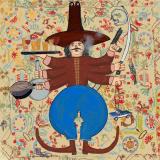
WRWTFWW Records is extremely excited to announce Hot-N-Ready Remixes Delivered by Pizza Hotline In 20 Minutes or Less, the brand new remix album from Pizza Hotline, landing hot and fast on a limited edition Neon Arcade Arctic Pearl Colored Vinyl Double LP, cut at 45rpm and housed in a heavyweight sleeve with artwork by Equip Studio.
From the high-octane mind of PIZZA HOTLINE - the man behind cult classics that helped redefine liquid drum & bass through a Y2K, console-era lens - comes a full-throttle remix album that feels like a secret bonus disc unlocked after beating the game, a portal into a parallel universe of rave-powered nostalgia and pixel-perfect bliss. Warp-speed liquid DNB, atmospheric jungle, and dancefloor-crushing remixes of legendary tracks extracted from the greatest video games ever made collide in a sensory overload of pure arcade euphoria. Soaring pads, breakbeats that ricochet like laser fire, deep-space subs, and rhythms that feel like drifting through a cyber-city at 3AM with only a CRT glow to guide you.
The album plays like a late-night arcade run fueled by muscle memory and emotion: PlayStation futurism meets WipeEout velocities, Donkey Kong adventure grit, GoldenEye stealth tension, and Sega Saturn dream-logic. It's fast, melodic, immersive, and deeply cinematic - a love letter to video game soundtracks, club culture, and the spaces where the two collide.
This release marks the fifth Pizza Hotline collaboration with WRWTFWW, following the ultra-classic Level Select, its brilliant follow-up Polygon Island, the collaborative smash Anti Gravity Tournament with Mitch Murder, and the Low Poly Breaks cassette series.
- 1: Defending The Earth
- 2: New You Anthem (Feat Frank Iero)
- 3: Constant Tension
- 4: Knifepoint (Feat. High Vis)
- 5: Aves Of Fire
- 6: Grey
- 7: I And I Against You All
- 8: Through The Cracks
- 9: Broken Spacesuit \ \ “ Decay & Sand”
- 10: Emptiness: A Side Effect
Douglas Robinson and Sal Mignano (both of The Sleeping) and Josh Eppard (co-founding member of Coheed And Cambria) share passions for authentic expression and genuine creativity. Held. isn’t so much a beginning as it is a culmination. The post-hardcore trio’s debut album, GREY, arrives fully realized, not as the tentative first step of newcomers, but as the collective fire of seasoned lifers discovering a new language together. It’s the sound of raw instinct coalescing with earned wisdom. GREY doesn’t announce itself so much as it emerges, inevitable and undeniable, like thunder rolling across a dark horizon.
It’s a force that feels eternal. Held.’s music feels elemental, evoking storms crashing against jagged cliffs or burning embers kindling, ready to reignite at any moment. It’s urgent and relentless, yet also spacious, textured, and deeply human. There’s gravity in every note, the kind that comes from survival turned into strength. Their sound is born of paradox: fiercely old-school in its emphasis on live performance and feel, but modern in its production and scope. Each song sounds both timeless and timely. Held. is less a band than a force: fierce yet vulnerable, raw yet refined. They play as if the walls themselves are trembling, channeling a purity that feels rare in an age of algorithmic noise. Listening isn’t consumption—it’s recognition, like rediscovering something thats always been within you. Held. carve out a place that feels both unshakably grounded and dangerously alive. Its more than music—its an invocation, a reminder of the raw pulse that connects struggle to transcendence. For those who find themselves in the storm, Held. offer not escape, but resonance: proof that inevitability can sound like liberation.
Work of Art is not merely a sophomore album; it is a victory lap run with the precision of a master artist. Following the stratospheric global ascent of his debut, Mr. Money with the Vibe, Asake faced the kind of pressure that usually demands a pivot. Instead, he treated that intensity like clay, sculpting a project that feels at once more expansive in scale and more intimate in spirit. Released in 2023, the album serves as a definitive statement on Asake’s sonic identity, deepening his signature fusion of Amapiano, Fuji-inspired percussion, and Afrobeats while moving with a newfound sense of deliberate poise.
If his debut was a high-octane sprint to introduce his sound to the world, Work of Art is a confident stroll through his own creative museum. Anchored once again by the masterful production of Magicsticks, the album serves as the perfect architectural space for Asake’s erratic, infectious flows. The record feels richly textured—brimming with pulsating log drums, soulful samples, and the specific, ecstatic chaos of Lagos nightlife. Asake successfully bridges the gap between traditional Yoruba heritage and the deep, percussive basslines of South African Amapiano, resulting in a sound that feels simultaneously ancestral and futuristic.
The project thrives on a unique duality: it is introspective, yet undeniably club-ready. Tracks like "Amapiano," featuring Olamide, provide the anthemic energy his fans crave, while cuts like "Basquiat" showcase a lyrical swagger that frames his life as high art set to a relentless four-on-the-floor beat. By leaning into his "Mr. Money" persona with added vulnerability and a clearer focus on the craftsmanship of his vocal delivery, Asake avoids the dreaded sophomore slump entirely. He proves that he isn't just making pop songs; he is curating a moment. Ultimately, Work of Art captures the feeling of an artist standing at the peak of his powers, looking out at the landscape he has helped reshape, and confirming that, indeed, he belongs there. It is not about reinventing the wheel—it’s about proving that the wheel he built is a masterpiece.
Berlin-based producer ZentaSkai returns with ‘Analog Assets Vol. 04’, a four-track vinyl-only EP focused on analog texture, dub-inflected atmospherics, and disciplined techno structure. Active since 1997 and operating Mask Records and its parent label, Zaijenroots, from his Berlin studio, he continues to refine a sound shaped by spatial control and steady, architectural pacing. Tracks unfold patiently, elements are introduced with intent, and nothing feels excessive.
Setting the tone with Cuddling Monsters’ partner, Laura Merino Allue, A1 features phased melodic textures and crisp percussion that gradually lock in the rhythm. A2 develops a filtered synth motif over a steady four-to-the-floor rhythm, revealing its full weight before pulling back. B1 is the most direct cut, driven by a firm, punchy beat and sharp rhythmic detailing built for peak-time focus, while B2 closes with rising string layers over a dub framework, balancing warmth and precision in a clean, measured finish.
With releases on Jerome Sydenham’s Ibadan Records and upcoming collaborations including Cuddling Monsters with Laura Merino Allue and a joint project with Thomas Grun for Rhythm Trax Austria, ZentaSkai’s work sits comfortably between minimal experimentation and functional dancefloor design.
Supported by artists such as Richie Hawtin, Joseph Capriati, Marcel Dettmann, Luke Slater, Laurent Garnier, and DVS1, he maintains a consistent presence within the underground without chasing trends.
Mit Schemes präsentieren Kreidler ihr neuntes Album auf Bureau B - und öffnen dabei ein neues Kapitel ihres markanten elektronischen Kosmos. Die international renommierte Band aus Berlin/Düsseldorf setzt stärker auf atmosphärische Klangräume, bleibt jedoch ihrem charakteristischen, leichtfüßigen Groove treu. Feldaufnahmen und Outdoor-Sounds spielen eine größere Rolle als je zuvor; besonders eindrucksvoll ist der Gastbeitrag von Leo Garcia, der seine Vocals spontan über urbane Field Recordings improvisierte. Das Trio - Thomas Klein, Alexander Paulick und Andreas Reihse - nutzt auf Schemes den kreativen Zufall als Motor. Leicht skizzierte Strukturen, schwebende Texturen und subtil pulsierende Sequenzen formen ein Ambient-nahes Album, das dennoch ständig in Bewegung bleibt. Jede Komposition entfaltet ihre eigene kleine Welt, zwischen spielerischem Experiment, warmer Räumlichkeit und eleganter Präzision. On their ninth album for Bureau B, the internationally renowned Berlin/Düsseldorf-based outfit Kreidler focus on atmospheric soundscapes - of course maintaining their signature rhythmic groove, which on "Schemes" is simply more buoyant and less insistent. "Schemes" is also characterised by the more pronounced use of nature/outdoor recordings. The track featuring Leo Garcia as a guest vocalist is based on just such a field recording. With "Schemes", Kreidler step into a more ambient space of possibilities, crafting an album that feels both carefully considered and delightfully unguarded. Selling Points
i 1.9Fenix [with Leo Garcia]
[i] 9Fenix [with Leo Garcia]


![Pizza Hotline - Hot-N-Ready Remixes Delivered by Pizza Hotline [In 20 Minutes or Less] (LP 2x12")](https://www.deejay.de/images/l/2/2/1215122.jpg)