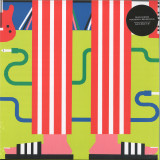
SOURCED FROM THE ORIGINAL MASTER TAPES: 2LP SET PRESENTS 1991 ALBUM IN 45RPM SPEED FOR FIRST TIME.
PCM Digital Master to Analog Console to Lathe.
Dire Straits never made a big to-do about its final run. In classic understated British fashion, the band simply let its music speak for itself. And how. Originally released in September 1991, On Every Street became the group’s swan song – a lasting testament to the influence, musicianship, and integrity of an ensemble whose merit has never been tainted by cash-grab reunions or farewell treks. It remains an essential part of the Dire Straits catalog and a blueprint of the distinctive U.K. roots rock the collective played for its 15-year career.
Sourced from the original master tapes, housed in gatefold packaging, and pressed at RTI, Mobile Fidelity’s 180g 45RPM 2LP set of On Every Street presents the album like it has always been meant to be experienced: in reference-grade audiophile sound. Recorded at AIR Studios in London and produced by Dire Straits leader Mark Knopfler, it features all of the band’s sonic hallmarks – wide instrumental separation, visceral textures, seemingly limitless air, broad soundstages, atmospherics that you can almost reach out and feel. Each element is made more vibrant, physical, and lifelike on this collectible reissue, which marks the first time this 60-minute work has been available at 45RPM speed.
Afforded generous groove space and black backgrounds, the songs from On Every Street burst with nuanced details and vibrant colors. Dire Straits’ playing appears to float, their intricate performances organized amid hypnotic, fluid, three-dimensional arrangements. Mobile Fidelity’s definitive-sounding set also brings into transparent view Knopfler’s finely sculpted guitar lines, expressive tones, and laid-back vocals – as well as the balanced accompaniment from his band mates. Here’s a record on which you can hear the full blossom and decay of individual notes, and imagine the size and shape of the studio. It is in every regard a demonstration disc. And it happens to be filled with timeless fare.
Remarkably, On Every Street almost never came to light. Dire Straits initially dissolved in September 1988 after touring behind its blockbuster Brothers in Arms and suffering the departure of two members. At the time, Knopfler professed his desire to work on solo material; bassist John Illsley also explored side projects. But Knopfler’s decision in 1989 to form the country-leaning Notting Hillbillies reignited a spark to reconvene his primary band and craft a fresh batch of songs. Six years removed from Brothers in Arms, Knopfler, Illsley, keyboardist Alan Clark, and keyboardist Guy Fletcher teamed with A-list session pros – steel guitarist Paul Franklin, percussionist Danny Cummings, saxophonist Chris White, guitarist Phil Palmer included – to create what still stands as an unforgettable farewell.
The platinum record brings the band full circle in that it returns Dire Straits to a quartet formation; finds the group refreshingly out of step with the era’s prevailing trends; and sees Knopfler and Co. knocking out song after song with the deceptive ease of a punter tossing back a pint at a pub. That subtle cool, clever poise, and innate control – signature traits that no other band ever matched – dominate On Every Street. Knopfler’s clean, virtuosic six-string escapades unfurl with dizzying melodicism and economical efficiency. Led by his winding fills and focused solos, Dire Straits traverse a hybrid landscape of rock, jazz, country, boogie, blues, and pop strains with near-faultless prowess.
More than any other entry in the group’s oeuvre, On Every Street welcomes quick detours down back alleys and into the depths of human souls. What makes it more brilliant is its staunch refusal to cater to commercial expectations or take advantage of prior successes; every passage feels true, every measure echoed in the service of song. It’s evident in the humorous satire of “Heavy Fuel,” closeted desperation of the witty “Calling Elvis,” and shake-and-bake bounce of “The Bug.” It pours from the album’s darker corners, as on the high-and-lonesome melancholy of the title track and bruised emotionalism of “When It Comes to You.”
Hinting at the open-minded approaches and boundless curiosity he’d embrace as a solo artist, Knopfler doesn’t limit himself when it comes to style or subject matter. Look no further than “You and Your Friend,” a shuffle whose all-inclusive lyrics encourage an array of interpretative meanings. Another of the album’s deep cuts, “Iron Hand,” comes on as one of the band’s most memorable moments – the narrative addressing the abuses of power at the 1984 Battle of Orgreave during the U.K. miners’ strike. Given cinematic heft by the expert production, the true-fiction account puts into perspective the richness, poetry, and depth of On Every Street.
“Every victory has a taste that’s bittersweet,” sings Knopfler on the title track. At least that bittersweetness seldom sounded so damn good on record.
Suche:feels
Featuring a fabulous mix of R&B classics such as "That's the Way of the World" (Earth Wind & Fire), "Lovely Day" (Bill Withers), "You're the One I Love" (Barry White), "Kiss" (Prince) with more contemporary pop material like "I Belong to You" (Lenny Kravitz), "It Runs Through Me" (Tom Misch), "Roads" (Portishead) and others, Vanessa and Tim Pierce (arranger) have delivered a supremely satisfying and ultra-rewarding album, one that is also beautifully recorded (tracked and mixed by maestro Michael C. Ross).
Many plaudits must also be directed at the magnificent group of creme de la creme LA-based session musicians who are backing Vanessa's latest effort. This is basically the same outstanding group that played on her previous album (GRV1200 I Want You): Tim Pierce (guitars), Alex Al (bass), Victor Indrizzo (drums), Jeff Babko (keyboards), Felipe Menolio (acoustic guitars), and Luis Conte (percussion). Felipe, a brilliant young guitarist from Brazil, is the one new addition and delivers some truly incredible playing - wait till you hear his solo on the samba-driven version of "It Runs Through Me"!
I see lucid blue flames moving before my eyes.
I hear voices melting. Voices somewhere from within.
Speaking words I do not know but feel connected to, almost as if I have known the meaning once..
Noises that obscures the multiple pictures hidden in these digital compositions.
Iku Sakan have created a set of five tracks that takes the listener on a
trip deep into the human psyché. Emotional flickering movements that twists and turns. The albums have a darker, much more intense feel than some of Ikus earlier magical and often hypnotic music. A myriad of different voices creates pulsing patterns and constantly morphing pictures for my inner eye. It's an album that might work as a hack to our lingual structures, pushing limits, pushing possibilities of meaning.
A pool of over-saturated information boils and out of the vapor new contours take form.
The magical and hypnotic is not gone, I still recognise the softer aspects of Ikus highly detailed hybrid sound design. But I no longer see where it takes me. It excites me. It feels like the world is expanding again, breathing. The sounds on the album asks us questions and points in several directions at once. In the shadows, weeds of lucid dreams grow deeper roots, reaching for my inner ear.
The faint sounds on the track Nature Morte reminds me of expeditions to the local witch house ruins as a child. Something almost not there, something felt. History, Memories and the connection between the two seems to have played a part in these compositions. Emotional reactions that plant reactions in other people, all around creating soft movements on the face of our planet.
Whether our collective psyché is an open field or an impenetrable dark forest, is of less concern with a key like Omnitopoeia, that works like an enhanced mirror, reflecting the dreams of the words we speak everyday, reflecting the emotional charges of significant places. Unrecognisable but still remembered.
- A1: I Can't Get Started
- A2: Memories Of You / You Made Me Love You
- A3: Stardust / The Man With The Horn
- A4: Wonderland By Night / Oh! My Pa-Pa (O Mein Papa)
- A5: Star Dreams
- B1: Rhapsody In Blue
- B2: Trumpeter's Lullaby / Bugler's Holiday
- B3: Hot Lips / Sugar Blues
- B4: Oh Marie / Marie
- B5: Gonna Fly Now (Theme From "Rocky")
- B6: Java
- C1: Tuxedo Junction
- C2: Feels So Good
- C3: Night In Tunisia
- C4: Cherry Pink And Apple Blossom White
- C5: The Toy Trumpet
- C6: Tenderly
- D1: When It's Sleepy Time Down South / Hello Dolly
- D2: And The Angels Sing
- D3: Boy Meets Horn
- D4: Ciribiribin
- D5: Rise
- D6: After You've Gone
Foreigner's debut spawned massive FM hits "Feels Like the First Time," and "Cold as Ice"
180-gram 45 RPM double LP
Mastered directly from the original master tape by Ryan K. Smith at Sterling Sound
Pressed at Quality Record Pressings and RTI
Tip-on old style gatefold double pocket jackets with film lamination by Stoughton Printing
Arena rock heroes Foreigner crushed with their 1977 self-titled album debut, spawning some of the biggest FM hits of that year, including the anthemic "Feels Like the First Time" and "Cold as Ice," both of which were anchored — like most of Foreigner's songs — by the muscular but traditional riffing of guitarist Mick Jones, the soaring vocals of Lou Gramm, and the state-of-the-art rock production values of the day, which AllMusic reviewer Andy Hinds says allowed the band to sound hard but polished.
The architect behind Foreigner's extraordinary catalog, Mick Jones has crafted some of rock music's most enduring songs. Grammy and Golden Globe-nominated songwriter, performer and producer and winner of the prestigious Ivor Novello songwriter award in 1998, Jones first began playing guitar in his early teens.
After starting his own rock band and opening for the Rolling Stones in pubs across South London, Mick's first big break came in 1964 when he moved to Paris and was hired to play with French singer Sylvie Vartan.
After a brief stint in England to reform the band Spooky Tooth, Jones moved to New York City and formed Foreigner with Ian McDonald and Dennis Elliott and Americans Lou Gram, Alan Greenwood and Ed Gagliardi.
Foreigner defined a generation of rock music to people across the globe. From its iconic debut album, the band moved on to record-breaking hits including "I Want To Know What Love Is," "Waiting for a Girl Like You," "Double Vision," "Hot Blooded," "Juke Box Hero" and many more.
Now on 180-gram 45 RPM double LP you'll hear Foreigner in all its phenomenal glory. Mastered from the original tape by Ryan K. Smith at Sterling Sound, this reissue rocks. Double LP cut at 45 RPM, pressed at Quality Record Pressings and RTI, and housed in a Stoughton Printing tip-on old style gatefold jacket. That's how you upgrade a classic.
Soul To Burn features highly inventive and memorable avant-rock songs by trio of celebrated musicians, Reciprocate. The germ of the notion that would flower into Soul To Burn came when Reciprocate’s vocalist/guitarist Stef Kett reflected on the idea of funk rock. It ought, he thought to himself, be the best of genres but so often in practice it ends up being the poorest. True enough. Kett decided to approach the problem from a fresh angle, multiple fresh angles, grinding angles, creating an “alt-soul” in which the soul gets to stretch and burn, applied with the power of a rock’n’roll trio but dynamism and agility, rather than cumbersome bulkiness. Reciprocate is a super-group made up of highly celebrated musicians from the UK DIY music scene – their singular, searing-hot power conjured by Stef Kett (Shield Your Eyes) in tandem with drummer Henri Grimes (Shield Your Eyes, Big Lad) and Marion Andrau (The Wharves, Underground Railroad) on bass. The result is the excellent Soul To Burn, which proceeds at a cadence all of its own, halting and blasting, ducking and weaving, zooming away from its distant cousins: Taste era Rory Gallagher or Mr Zoot Horn Rollo of Captain Beefheart’s Magic Band. That’s particularly evident on “Self Regarding Floor Sweepings”, with echoes of “When Big Joan Sets Up” from Beefheart’s Trout Mask Replica, especially with Kett’s added harmonica as the trio hit the winding dirt track, slaloming and swerving. Here is an album of full throttle soul, an avant-rock made up of ear worms so intoxicating they borrow from deep in the mind down deeper into the heart – it’s the cool, weighty groove of Tony Joe White leathering it at full throttle, fuelled by virtuosic back beats that remind of somewhere between the rolling rock of Mitch Mitchell and the fractured noisebeat of Lightning Bolt’s Brian Chippendale: immediate, innovative, virtuosic, exhilarating. Key to the impact of Soul To Burn is Grimes’ drumming, a force unto itself, which sometimes feels like it’s engaged in a creative and playful tussle with Kett’s virtuosic vibrato guitar. Take “Rhodia”, which sounds initially like a radical reworking, an anagram of Free’s “All Right Now”, on which Grimes doesn’t so much hit the groove as hammer it into the ground. Reciprocate tend to be averse to mere repetition, too full as they are of ideas, possibilities. But they know how to hit a riff, as on “Pissed Hymn”. Kett’s vocals are unconventionally impassioned - no vibrato or performative hollering. Rather they climb, up and and again up from the pit of the soul. There’s a sense throughout that this music is hard wrought, squeezed through small apertures, produced against the odds, born to trouble as the sparks fly upwards. There are quieter moments, however, such as the exquisitely beautiful “Ressypressocate”, which affirm the ultimately tender place from where this album proceeds, notes plucked like black flowers, twisted and cherished. Reciprocate demonstrate an astonishing virtuosity, nuance and musical sensitivity manifested through their deep mutual understanding and synergetic interactions. There are moments of sync and camaraderie that remind of the very late Beatles, those rare moments during the Let It Be Era when they loosened up, reassumed their old understanding. But then Kett’s lets fly with a long, looming note and suddenly we’re somewhere else again. With Soul To Burn, Reciprocate set out their stall of intoxicating, super catchy good-time, big heart music – a human album delivering a human message of love and love lost. By the album’s end, you’ll feel pushed and pulled through the mill, wiped out, blissfully exhausted, strangely serene
Parisian quintet En Attendant Ana's third album "Principia" is without a doubt their best yet. Bandleader Margaux Bouchaudon's voice anchors many of the songs on "Principia". The songs were composed from a place of confusion about the state of the world and their place in it, looking outward and inward for answers. Guitarist Max Tomasso - newly joined just before the recording of "Juillet" - feels more "moved-in", his guitar-work gliding effortlessly through. New member Vincent Hivert's bass-work is rubbery & flexible, urging on drummer Adrien Pollin's metronomic swing. The band's secret weapon, multi-instrumentalist Camille Frechou's trumpet & saxophone add a new layer of sophistication to the group's debonair indie pop. Bouchaudon says "One of the most important points we tried to focus on was the place given to each instrument. For the first time, we withdrew parts, we were careful not to play everyone at once and I think that the result is a much lighter album in which every musician has a specific place and moment". "Principia" is a great step forward without sacrificing the things that make the band unique, and absolutely feel like the next great phase of an already great band.
High Vis were formed in 2016 from the ashes of some of the UK's best hardcore bands. Gild-toothed frontman Graham Sayle's anguished lyrics about life in working class Britain were familiar to fans of Tremors' full-throttle thrash, but alongside his former bandmate Edward `Ski' Harper and veterans of Dirty Money, DiE and The Smear, High Vis sought to transform that energy and intensity into something entirely new.Like scene-mates Chubby and the Gang did by pulling in unlikely source material from classic doo-wop or Micromoon have by combining everything from psychedelia and metal into their high potency mix, High Vis' 2019 debut album, No Sense No Feeling showed the band were never going to be constrained by any sense of genre rules or regulations. Its claustrophobic rattle bore traces of Joy Division, Bauhaus, Crisis, The Cure and Gang Of Four lurking in the shadows. 2020's synth-driven EP, Society Exists, was further evidence of the band's restless creative MO.High Vis' second album Blending sees them open their viewfinder wider than ever before. Alongside longstanding favourites such as Fugazi and Echo and The Bunnymen; Ride and even Flock Of Seagulls were shared reference points as the band worked on the album together.From the anthemic sweep of opener "Talk For Hours", through the title track's psychedelic swirl and "Fever Dream"'s baggy groove, it sees High Vis' sound blossoming into something with an unlimited richness. The hazy drift of "Shame" or the melodic jangle of "Trauma Bonds" may take them until uncharted waters, but they still have all the power and bite that made No Sense No Feeling so remarkable.Lyrically, the album represents another leap forward too. Talking frankly about poverty, class politics, and the challenges of everyday life, Sayle's lyrics have always addressed the downtrodden and discarded communities across Britain slipping below the waterline. This time around, Sayle's lost not of that social consciousness, but he's looked at himself and his own emotional landscape, and in the process created something that feels more universal, that reaches a hand-out to people and ultimately gives a message of hope."To me, the lyrics are less selfish," reflects Sayle. "In the past, I couldn't see past whatever was going on with me. It's about accepting things and being open to conversations and learning to talk to people rather than just thinking that we're all doomed."The song "Talk for Hours" is a prime example of that. Born out of an afternoon meeting up with an old group of mates "repeating the same thing and not actually learning anything about each other" it offers to actually break the cycle and to listen and speak frankly about shared feelings and experiences. "Trauma Bonds", meanwhile, traces the broken lines of those living in lost communities, but ultimately realises that despite our shared scars, there's still hope to move on to a better future."The message of the album is you're not who you're told you are," Sayle summarises. "You're not your class background. Whatever it is, you're not that. Don't resign yourself to thinking you can't be this and you can't be that."It's a vitally important message right now, and one that could be the motto for not only Blending, but for High Vis themselves.
KID FRANCESCOLI, leader of the French Riviera Touch is back with the stellar album SUNSET BLUE out Sept 22nd 2023.
After a first sold-out world tour (over 200 concerts in Europe, USA, Asia...), and successful hits such as Nopalitos, Blow Up or Moon (now certified diamond, with more than 200 millions streams), the Marseille-based producer, crooner and multi-instrumentalist, Mathieu Hocine, is eager to share his most accomplished LP ever. This fine collection of soulful songs honor his Mediterranean roots, with elegant and pop melodies. His most recent success and the creation of his first original soundtrack with AZURO, installed him as one of the best French songwriters of his generation, with a unique signature sound.
"I live in Marseille, I spent my childhood in Corsica, I have Algerian origins, my first vacations with friends were in Barcelona, vacations with my first girlfriend in Roma,... Then, I had the chance to perform in Morocco, Greece, Turkey and Egypt: each time I spent time in the Mediterranean region, the people I met there made me feel like I was part of the same country. This shared multiculturalism is really comforting, it has its own poetry and strength, bringing uniqueness and empathy to the people. It is essential for me. I love my city: it’s the perfect place to feel good with sun, sea, family, friendships, love... It gets me emotional, bringing tears with a smile".
With his new musical gem, Mathieu Hocine unveils 11 elegant tunes of his finest craft: sunbathed French Touch (Run Run, 1986), romantic chillwave (Corsica), uplifting synthpop (You Are Everywhere, Like Magic), electronic-soul (Casino Soul), cinematic disco (Solaris), cosmic R&B (Sweet and Sour, Take Time), … Everything is in this record.
For the first time ever, Kid Francescoli paid tribute to his mixed origins with his collaboration with world-renowned lute and mandolin player Hakim Hamadouche (Rachid Taha, Patti Smith, Brian Eno, Tricky...), whom added Algerian patterns to the introspectives songs Drift in Blue and The Morning After.
"My ambition is to create pictures in people's heads with music, to transport them instantly into a movie"
SUNSET BLUE is an instant-crush album: crystal-clear, strong, personal but universal at the same time.
It's an ecstatic soundtrack for this moment when time is suspended, the golden hour when everything seems possible. It feels like Love is in the air, you're living your best life and you're at the right place at the right time. This album embodies this magic moment where we would like to last forever… Like an epiphany, Kid Francescoli's new album is a moment of pure pleasure, a soothing way to escape reality.
"I see myself as a melodist.I would like my music to feel like velvet. There's something cinematic, classy about it, and yet comforting. It's very simple, popular and synonym of love and passion"
His friend French 79 co-produced the album, while the american rapper Bamby H2O brought his NYC swag (on Sweet & Sour), Stan Neff (Polo & Pan, Kungs, Christine and the Queens...) took care of the mix and Alex Gopher (Daft Punk, The Blaze, Bon Entendeur...) added a final touch of magic when mastering. Nicolas Despis (known for his work with Etienne Daho, Hoshi, Juliette Armanet... and many famous French rappers) later joined this dream-team to craft custom-made artworks. SUNSET BLUE is a deeply personal quest, a human adventure for Mathieu Hocine (whom explores his maghrebian origins, his feminine side, his subconscious space, ...). It's a male's work, but don't get it wrong, this LP would be nothing without women’s touch : Julietta (on Run Run and Take Time), Sarah Gaugler from Turbo Goth (on You Are Everywhere and Like Magic), and iOni (on Drift in Blue).
“Music has this magical power to broaden your vision of the world. It's fascinating because, like dreams, it's the kind of irrational things science can't explain and that makes life exciting."
Planets aligned perfectly on this project and thanks to this five-star cast of collaborators, Kid Francescoli achieved his personal holy grail : he orchestrated a great 21st century pop-music album.SUNSET BLUE is a new turning point between organic and electronic, both a mediterranean travel and a Californian dream, a bridge between Ennio Morriconne and modern electronic music.
Also, while it might be called SUNSET BLUE in honor of the sea and the Portuguese / Brazilian concept called “saudade”, but it is a really optimistic album, whose true colors would rather be "yellow-orange-red" in nod to the sun.
Created in the midst of the world tour, SUNSET BLUE is a direct result of the lives’ energy and fans’ joyful vibes: going back in the studio after smiling, singing and dancing with people all around the world inevitably gave Kid Francescoli the desire to retranscribe this ecstatic feeling in music. This album is a sensitive experience, from sunrise to sunset, from first track to last one. It’s an exploration of an everlasting summer, reaching its climax in the very final seconds of the track Corsica, making us want to press play and dive into this jewel all over again.
A beautiful cosmic trip, whether you like to stay in bed cocooning, to travel far, far away or to dance ‘till dawn, to catch the first rays of light.
Make sure to catch Kid Francescoli on his next world tour to have a good time.
With its tenth record from Fortunato Durutti Marinetti, Quindi continues to celebrate songwriting and storytelling framed by curious musicality. In keeping with the label's trajectory to date, this is an album which draws on a universal human sentimentality and presents it with an uncommon flair. In the case of Toronto-based Daniel Colussi, the man behind Eight Waves In Search Of An Ocean, his melancholic poetry cuts through with a clarity which calls to mind all-time greats from Anette Peacock through to Lou Reed and Leonard Cohen.
Turin-born Colussi has drifted through various bands, guises and styles over the past 20 years, but since settling into Fortunato Durutti Marinetti as a vehicle for his songs, he's found a strong expressive impetus which transcends genre to become entirely hinged on the power of his words and melodies. The first album under this alias was a 2020 cassette album, Desire, later pressed on vinyl due to demand in tandem with the release of 2022's Memory's Fool. On each record, Colussi has found distinct arrangements of players to set the mood, ranging from gently lilting art and folk rock through to orchestrated balladry, but Eight Waves In Search Of An Ocean widens the palette of Fortunato Durutti Marinetti to create an album in which each song feels like a tale unto itself.
Colussi's renewed approach is instantly apparent as album opener 'Lightning On A Sunny Day' unfurls, informed greatly by producer Sandro Perri's input pursuing a hybrid electro-organic sound. The addition of drum machines and synths to the musical palette bring with them the strong connotations of pop while the sax and violin sounds similarly smooth and silky, and one can't help but think of John Martyn's slide into the digital sound of Sapphire or Kraftwerk's bittersweet synthetic tenderness.
Within this sound, there's still space for the energy to fluctuate according to the whims of songs. 'The Flowers' turns inward with a soft-touch composition as delicate as the petals Colussi describes falling to the floor. 'Misfit Streams' and first single 'Clerk Of Oblivion' savour the fluid, luxuriant tone of fretless bass with all the 80s connotations intact. Colussi remains the central focus whatever happens around him, in possession of the kind of unforced charisma which drives a song deep into the listener's heart. It's at once entirely his own style and yet comforting and familiar. The lyrics might sweep you into the singer's inner world, similarly to the experience listening to late 60s Tim Buckley, or you might well inhale the mellow jazziness of the harmonic movement like you would Joni Mitchell on Hejira.
The emotional direction of each track is never linear - 'Smash Your Head Against The Wall' snarls its rhythm section before the strings sow their aching beauty to cool the song's temper, winding up as a track of distinct halves jabbing at each other. "I Need You More' leaves space for spiralling flute solos and strangely stiff, militaristic drum rolls in the midst of a sweet, slightly sad synth ballad, the final wave receding back into the tidal undulations of Colussi's unique exploration of his muse.
The artist himself dubs his musical expression as "poetic jazz rock" with a sideways glance - it's not exactly poetry, far from trad jazz and it doesn't really rock, yet the tag feels uncannily like it fits, just like the curious music it's used to describe.
Southern Exposure is proud to present the debut solo EP from Mike Midnight. Angel Hours was originally self-released digitally but has been lovingly pressed on heavyweight vinyl for the first time with design from Jeffrey Annert.
Angel Hours current rise felt like it was imminent from the first listen, with contributions from Noa (Voice Actor/Stroom) and 3NDLES5 (Low Life). Mike’s production across the release feels akin to 90’s artists like I:Cube, Thievery Corporation or certain Weatherall moments. The heavenly references are well deserved with multiple moments on the release feeling truly divine, whilst others take a low-lit and alluring feel. Mike Midnight feels singular in the Australian music landscape, like a mix between the best parts of Paul Mac, Single Gun Theory and Ian Eccles-Smith.
Angel Hours continues the lineage of Australian music breaking through to international recognition with the release becoming a mainstay on NTS Radio, breakfast show host Flo Dill dubbing it “music that when listened to at night makes you feel unstoppable.” Remastered by Corey Kikos (Sleep D/Butter Sessions), the balance of each track of downtempo bliss feels like you’re not only unstoppable but weightless.
Big thank you to Theodore, Mitch, Jeff, Mon, Noa, my friends, family and all the collaborators for their continued patience and support.
- A1: The Beacon
- A2: The Rush
- A3: I Got This (Radio Edit)
- A4: Too Big To Fail
- B1: Production Destruction
- B2: Derailed
- B3: Some People Call This Teamwork
- B4: Captive Normals (A Fever Dream)
- B5: Boss (Vandelay Theme)
- B6: The Hideout
- C1: Heatwave (Radio Edit)
- C2: Test Chamber
- C3: Dev Engine
- C4: Buzzsaw
- C5: Snap (Out Of It)
- D1: Security Shutdown
- D2: Can't Stop Us Now
- D3: Downtime
- D4: This'll Be Rough (Radio Edit)
- E1: Negotiation
- E2: Escape Plan!!
- E3: A New Fight
- E6: Vibin
- F1: Backstage Hustle
- F2: My Heart Feels No Pain
- F3: Exposition
- F4: Let's Hope This Works
- F5: Hey Gang, What's That?
- F6: Intruder
- G1: The Fizzith
- G2: Reflection
- G3: Surfacing
- G4: In A Blink
- H1: What The Future Holds
- H2: Synesthesia
- H3: Kicking Back
- H4: Mission Report!
- H5: Challenger!
- H6: Give It All You Got
- H7: Secret Song (Making Things Is Hard)
- E4: Through The Halls Of History
- E5: How Far We've Come
Deluxe-Box mit dem OST der farbenfrohen Gaming-Überraschung des Jahres 2023, HI-FI RUSH, die Rhythmusspiel und Charakter-Actionspielmechanik verbindet. Das Musikteam (The Glass Pyramids, Shuichi Kobori, REO, Masatoshi Yanagi, Game-Director John Johanas, u.a.) hat einen mitreißend energiegeladenen Rock mit gewaltigen Riffs und treibenden Trommeln geschaffen, der die Spannung und Aufregung des gesamten Erlebnisses aufrecht und die Spieler stets am Puls der Zeit hält. Der 4LP-Schuber wurde vom erstklassigen Tango Gameworks-Kunstteam entworfen und enthält 4 schwarze 180g Vinyle mit 42 speziell remasterten Tracks, darunter die alternativen Bosskampf-Tunes für den Streamer-Modus.
Felipe Gordon is a Colombian producer based in Bogota. He’s one of the most famous faces of latin american underground house music. He built a track record of pure house productions from the mid-2010s up until now, being Laurent Garnier-supported and releasing records with the most notorious house labels around the globe (Royal Oak, Razor-N-Tape, Toy Tonics, Local Talk, Shall Not Fade, etc.) His unique sonic touch, intertwining elements of raw analogue sounds from his synth collection and a strong hip-hop sampling background are allowing him to explore and revisit his influences to craft a solid musical signature.
Sourced from the Original Master Tapes and Presented in Audiophile Sound for the First Time: Mobile Fidelity’s Numbered-Edition 180g SuperVinyl LP Plays with Riveting Detail
Three decades before he released The Philosophy of Modern Song — an insightful book devoted to 66 tunes that both impacted his career and the music world at large — Bob Dylan issued Good As I Been to You. The under-heralded 1992 album, Dylan’s first solo acoustic album in nearly 30 years and first all-covers effort in nearly 20 years, can be seen as a prophetic prelude to what has become the Nobel Laureate’s celebrated late-career arc. It’s also an absorbing continuation of the custom Dylan has embraced since he first picked up a guitar.
Sourced from the original master tapes, pressed at RTI, and housed in a Stoughton jacket, Mobile Fidelity's numbered-edition 180g SuperVinyl LP of Good As I Been to You reveals the immediacy, detail, and stripped-down nature of recording sessions that took place in Dylan’s garage studio in California. Simple, raw, and unplugged, the record presents Dylan in peak form — and showcases a diversity of vocal phrasing, soulful chording, harmonica accents, and close-up ambience that on this reissue emerge like never before. As the first-ever audiophile edition of this almost-lost classic, this LP also benefits from SuperVinyl’s extraordinary properties: a nearly inaudible noise floor, superb groove definition, and dead-quiet surfaces among them.
Recorded and mixed by Micajah Ryan, and supervised by Debbie Gold, Good As I Been to You took shape at Dylan’s home shortly after the singer-songwriter completed sessions in Chicago with a full band. Unaccompanied, he again gravitated to existing works — in this case, traditional folk music — and, with Gold serving as a trusted advisor, performed the songs in multiple keys and tempos until he arrived at what he desired. That careful, determined albeit loose, organic approach emanates from this reissue, on which each note, movement, and space come across more directly, fully, and immediately than on the original formats. It helps draw a through-line to Another Side of Bob Dylan (1964) as well as the similarly themed follow-up, World Gone Wrong (1993) and immersive old-world storytelling of Tempest (2012) and Rough and Rowdy Ways (2020).
Well before Dylan made those renowned 21st century LPs, however, he needed to find a way out of a funk that — save for his 1989 collaboration with Daniel Lanois, Oh Mercy — followed him for years. As author Clinton Heylin reported Dylan admitting in 1997: “My influences have not changed — and any time they have done, the music goes off to a wrong place. That’s why I recorded two LPs of old songs, so I could personally get back to the music that’s true for me.”
Truth: Few, if any, concepts better encapsulate Good As I Been to You. It resonates with the same originality, honesty, resolve, and age- and time-defying relevance as the seminal Anthology of American Folk Music that fired Dylan’s imagination as a kid in small-town Minnesota and, later, per Greil Marcus’ That Old Weird America book, informed Dylan and the Band’s Basement Tapes sessions. This record also contains the type of music Dylan was playing during his acoustic sets at his period Never Ending Tour shows; within a year of the record’s release, Dylan would play half the album’s songs live.
As for those songs: Rife with strange mystery, common circumstance, and epic adventure, the stories appeal to our base instincts. Their themes — jealousy, temptation, sacrifice, love, revenge, identity, opportunity — operate on a fundamentally human level immune to trends, generations, or eras. They’re ancient and modern, serious and comical, open and disguised, simple and multi-layered. They talk of vengeance and justice (“Frankie & Albert”; “Jim Jones”), romance and tenderness (“Tomorrow Night,” “Froggie Went a Courtin’”), the troubled and trouble-free (“Hard Times,” “Sittin’ on Top of the World”). They lend voice to lovers scorned and freed (“Blackjack Davey”), the used and users (“Diamond Joe”), the powerful and powerless (“Arthur McBride,” “Canadee-I-O”), the followed and followers (“Little Maggie”). And akin to much of Dylan’s finest output, things are not always what they appear to be.
Spanning country, folk, sea shanty, bluegrass, and blues motifs, Good As I Been to You re-confirms Dylan’s position as an elite interpreter and sculptor — not of just structure but emotion. Dylan delivers the tunes as if he’s known them forever. He plays with a subtle sense of mischievousness and retains a largely upbeat demeanour; his eyes seemingly twinkle as he sings and picks. His guitar serves as the guidepost for shuffles, boogies, ballads, and mess-arounds while his innate feel for each specific arrangement and melody helps inform pacing, tone, attack.
Like a great author, he understands the importance of adhering to concision, luring an audience, holding their attention, and maximizing the impact of details, actions, and unexpected turns. Though already coarse and ragged, his voice feels ideal for the subject matter and his phrasing — from the clever ways he stretches syllables to underline meanings on the surprise twists of “Canadee-I-O” to the sheer delight he gets from singing “rowdy-dow-dow” on the protest song “Arthur McBride” — outstanding.
High Vis were formed in 2016 from the ashes of some of the UK's best hardcore bands. Gild-toothed frontman Graham Sayle's anguished lyrics about life in working class Britain were familiar to fans of Tremors' full-throttle thrash, but alongside his former bandmate Edward `Ski' Harper and veterans of Dirty Money, DiE and The Smear, High Vis sought to transform that energy and intensity into something entirely new.Like scene-mates Chubby and the Gang did by pulling in unlikely source material from classic doo-wop or Micromoon have by combining everything from psychedelia and metal into their high potency mix, High Vis' 2019 debut album, No Sense No Feeling showed the band were never going to be constrained by any sense of genre rules or regulations. Its claustrophobic rattle bore traces of Joy Division, Bauhaus, Crisis, The Cure and Gang Of Four lurking in the shadows. 2020's synth-driven EP, Society Exists, was further evidence of the band's restless creative MO.High Vis' second album Blending sees them open their viewfinder wider than ever before. Alongside longstanding favourites such as Fugazi and Echo and The Bunnymen; Ride and even Flock Of Seagulls were shared reference points as the band worked on the album together.From the anthemic sweep of opener "Talk For Hours", through the title track's psychedelic swirl and "Fever Dream"'s baggy groove, it sees High Vis' sound blossoming into something with an unlimited richness. The hazy drift of "Shame" or the melodic jangle of "Trauma Bonds" may take them until uncharted waters, but they still have all the power and bite that made No Sense No Feeling so remarkable.Lyrically, the album represents another leap forward too. Talking frankly about poverty, class politics, and the challenges of everyday life, Sayle's lyrics have always addressed the downtrodden and discarded communities across Britain slipping below the waterline. This time around, Sayle's lost not of that social consciousness, but he's looked at himself and his own emotional landscape, and in the process created something that feels more universal, that reaches a hand-out to people and ultimately gives a message of hope."To me, the lyrics are less selfish," reflects Sayle. "In the past, I couldn't see past whatever was going on with me. It's about accepting things and being open to conversations and learning to talk to people rather than just thinking that we're all doomed."The song "Talk for Hours" is a prime example of that. Born out of an afternoon meeting up with an old group of mates "repeating the same thing and not actually learning anything about each other" it offers to actually break the cycle and to listen and speak frankly about shared feelings and experiences. "Trauma Bonds", meanwhile, traces the broken lines of those living in lost communities, but ultimately realises that despite our shared scars, there's still hope to move on to a better future."The message of the album is you're not who you're told you are," Sayle summarises. "You're not your class background. Whatever it is, you're not that. Don't resign yourself to thinking you can't be this and you can't be that."It's a vitally important message right now, and one that could be the motto for not only Blending, but for High Vis themselves.
- A1: Donna Summer - I Feel Love
- A2: Earth, Wind & Fire With The Emotions - Boogie Wonderland
- A3: The Trammps - Disco Inferno
- A4: Chic - Good Times
- A5: Sister Sledge - He's The Greatest Dancer
- A6: Tavares - More Than A Woman
- A7: Yvonne Elliman - If I Can't Have You
- A8: Odyssey - Native New Yorker
- B1: Gloria Gaynor - I Will Survive
- B2: Village People – Ymca
- B3: Sylvester - You Make Me Feel (Mighty Real)
- B4: Patrick Hernandez - Born To Be Alive
- B5: Grace Jones - I Need A Man
- B6: Liquid Gold - Dance Yourself Dizzy
- B7: Kelly Marie - Feels Like I’m In Love
- B8: Leo Sayer - You Make Me Feel Like Dancing
- C1: Amii Stewart - Knock On Wood
- C2: Candi Staton - Young Hearts Run Free
- C3: Chaka Khan - I'm Every Woman
- C4: A Taste Of Honey - Boogie Oogie Oogie
- C5: Alicia Bridges - I Love The Nightlife (Disco 'Round)
- C6: Cheryl Lynn - Got To Be Real
- C7: Labelle - Lady Marmalade
- C8: Diana Ross - Love Hangover
- E5: Mcfadden & Whitehead - Ain't No Stoppin' Us Now
- E6: The Whispers - And The Beat Goes On
- E7: Baccara - Yes Sir, I Can Boogie
- E8: Sheila & B Devotion - Singin' In The Rain
- F1: Eruption - I Can't Stand The Rain
- F2: Boney M - Daddy Cool
- F3: Ottawan - D I.s.c.o
- F4: Village People - In The Navy
- F5: Viola Wills - Gonna Get Along Without You Now
- F6: Gloria Gaynor - Never Can Say Goodbye
- F7: Lipps Inc - Funkytown
- F8: Space – Magic Fly
- G1: Dee D Jackson - Automatic Lover
- G2: Sarah Brightman And Hot Gossip - I Lost My Heart To A Starship Trooper
- G3: Frankie Valli & The Four Seasons - December, 1963 (Oh, What A Night)
- G4: Meco - Star Wars Theme / Cantina Band
- D1: Melba Moore - This Is It
- G5: Leif Garrett - I Was Made For Dancin
- D3: Odyssey - Use It Up And Wear It Out
- G6: The Michael Zager Band - Let's All Chant
- D5: Patrick Juvet - I Love America
- G7: Kc & The Sunshine Band - That's The Way (I Like It)
- D7: Elton John - Are You Ready For Love
- G8: Heatwave - Boogie Nights
- E1: Barry White - You're The First, The Last, My Everything
- H1: Kool & The Gang - Ladies Night
- E3: The Real Thing - Can You Feel The Force
- H2: Dan Hartman - Instant Replay
- H3: Frantique - Strut Your Funky Stuff
- H4: Musique - Keep On Jumpin’
- H5: The Three Degrees - Givin' Up Givin' In
- H6: Sparks - Beat The Clock
- H7: Voyage - Souvenirs
- H8: Chic - Le Freak
- I1: Sister Sledge - We Are Family
- I2: Sheila & B Devotion - Spacer
- I3: Diana Ross - Upside Down
- I4: Earth, Wind & Fire - September
- I5: Candi Staton - Nights On Broadway
- I6: The Emotions - Best Of My Love
- I7: Amii Stewart - Light My Fire
- I8: Belle Epoque - Black Is Black
- J1: Amanda Lear - Follow Me
- J2: Patsy Gallant - From New York To La
- J3: Vicki Sue Robinson - Turn The Beat Around
- J4: Andrea True Connection - More, More, More
- J5: Rose Royce - Car Wash
- J6: Tina Charles - I Love To Love
- D2: Rose Royce - Is It Love You're After
- D4: Irene Cara - Fame
- D6: Stephanie Mills - Never Knew Love Like This Before
- D8: George Mccrae - Rock Your Baby
- E2: The Spinners - Working My Way Back To You / Forgive Me, Girl
- E4: Edwin Starr - Contact
- J7: Cher - Take Me Home
- J8: Thelma Houston - Don't Leave Me This Way
NOW Music is proud to announce NOW Presents…Disco, a stunning 5LP boxset featuring 80 of the greatest Disco classics ever!
Kicking off with the genre defining #1 from Donna Summer ‘I Feel Love’ followed by Earth, Wind & Fire with The Emotions and their timeless hit ‘Boogie Wonderland’, this boxset features the most enduring tracks from dance-floor legends, including Chic, Sister Sledge, Gloria Gaynor, Village People, and Grace Jones - together with Saturday Night Fever gems - ‘Disco Inferno’, ‘More Than A Woman’, and ‘If I Can't Have You’.
LP 2 opens with Amii Stewart’s stunning version of ‘Knock On Wood’, followed by Candi Staton’s ‘Young Hearts Run Free’ and Chaka Khan’s hugely successful debut solo single ‘I'm Every Woman’. Other massive debuts include ‘Boogie Oogie Oogie’ from A Taste Of Honey, Alicia Bridges’ ‘I Love The Nightlife (Disco 'Round)’, and Cheryl Lynn’s ‘Got To Be Real’. Up next is the often-covered ‘Lady Marmalade’ together with Diana Ross’ ‘Love Hangover’ which lead into #1s from Frankie Valli & The Four Seasons, (‘December, 1963 (Oh, What A Night)’), Tina Charles (‘I Love To Love’), Odyssey (‘Use It Up And Wear It Out’) and Irene Cara (‘Fame’).
LP 3 Side A is packed with groovy and romantic chart-toppers from Elton John (‘Are You Ready For Love’), George McCrae (‘Rock Your Baby’), Barry White (‘You're The First, The Last, My Everything’), and The Spinners with their ‘Working My Way Back To You / Forgive Me, Girl’ medley. Flipping over to the other side, we have the timeless smash from Baccara ‘Yes Sir, I Can Boogie’, Boney M. with ‘Daddy Cool’, and Village People’s ‘In The Navy’. Viola Wills’ Hi-NRG cover of ‘Gonna Get Along Without You Now’ and Gloria Gaynor’s ‘Never Can Say Goodbye’ bring LP 3 to a close.
Lipps Inc., Kool & The Gang, Frantique, and KC & The Sunshine Band keep the dance-floor energy levels high on LP 4 with ‘Funkytown’, ‘Ladies Night’, ‘Strut Your Funky Stuff’, and ‘That's The Way (I Like It)’. The disco-mania of the late-70s also saluted the late-70s craze for Space themed movies & tv with early Electro-pop-dance, and included here from Space and Dee D. Jackson, before Sarah Brightman’s debut with Hot Gossip, ‘I Lost My Heart To A Starship Trooper’, and Meco’s remake of the ‘Star Wars Theme / Cantina Band’ as a dance-floor classic… Giorgio Moroder productions for Sparks with ‘Beat The Clock’ and The Three Degrees with ‘Givin’ Up Givin’ In’ lead the side to a close with ‘Souvenirs’ from Voyage.
LP 5 is filled with truly monster sized dancefloor-fillers, beginning with a run of Nile Rodgers & Bernard Edwards productions: ‘Le Freak’, ‘We Are Family’, ‘Spacer’ and ‘Upside Down’ from Diana Ross. It wouldn’t be a Disco album without Earth, Wind & Fire’s ‘September’, the Bee Gees-written ‘Nights On Broadway’ covered by Candi Staton, and the Grammy award-winning ‘Best Of My Love’ from The Emotions, before another hit cover from Amii Stewart, ‘Light My Fire’. Side B features some fabulous European Disco, including Belle Epoque and Amanda Lear, and signature hits from Patsy Gallant and Vicki Sue Robinson before drawing to a close with Rose Royce’s celebrated ‘Car Wash’, and Cher’s biggest disco hit ‘Take Me Home’ – and the last dance is left to Thelma Houston with her defining anthem ‘Don’t Leave Me This Way’.
NOW Presents…Disco – the perfect collection and collector’s item for every 70s Disco lover.
A blistering advancement of the knife-sharp hooks and urgently efficient post-punk structures that they’ve spent over a decade refining since their formation in 2011, the band’s fourth album – and second on Specialist Subject - emerges from a period of flux for the band’s chief songwriting partnership of Emma Wigham (drums/vocals) and Mark Jasper (guitar/vocals). First came a move north to Yorkshire from their native London. “We had decorated a tiny, rented house in Mytholmroyd” Jasper explains. “We setup a practice room in the top of a mill nearby and tried to write music, which we did amid stress about money, and a fear of having made the wrong decision. We had left our jobs, friends and a nice but absolutely tiny flat in London behind, and moved to a small village in West Yorkshire.” Although they found the location to be beautiful, the transition from city life to rural turned out to be an odd fit – too much so, it turned out. From this relatively short stay in West Yorkshire, however, came a more permanent change as the couple welcomed their first child Ivy into the family. Although, they’re hesitant to put too much of Streams and Waterways influence on the shoulders of their young daughter – she arrived a year and a half into the album’s conception – there’s no denying that its themes of loss, birth, and being part of this eternal, momentary life were brought into sharp focus following their new arrival. “Streams and Waterways is about the struggle of looking at the clock, realising it’s actually going pretty damn fast and knowing that really you have no control over anything” Jasper confirms. Perhaps that explains the way that opener The Valley doesn’t even introduce itself before careering into a full-throttled, three-minute scuzzy rager that would approach the descriptor anthemic had it not been kicked and scuffed along the way; it’s maybe why the wiry, ferocious Choice You Make feels like a charge into a storm despite the uncertainty of what you might find. It’s perhaps why even when Witching Waves allow themselves respite on the pared down Open A Hole, there’s a churning anxiety that lies below the acoustic guitar and harmonising vocals: in many ways musically and thematically Witching Waves are relinquishing the control that’s always been a fixture of their music – with all the thrilling and nervous fallout that comes from that. Although the pair have since returned south (having relocated to Exeter), Streams and Waterways also serves as a document of their foray northwards. The surviving artefact from Jasper’s never-to-be-finished studio that he’d began to build in Yorkshire – following the ending of his London-based Sound Savers studio – the record is also the first to feature current bassist Will Fitzpatrick, who joined initially live on their support tour with Australian punks Camp Cope. Fitzpatrick – a key component of Liverpool’s DIY scene for two decades – quickly became a key part of the writing process. Recording sessions were done during periods of lockdown that allowed congregation, Jasper recalling a still unborn Ivy kicking hard during an early mix playback of It’s A Shame’s layered noise rock assault. “The song was about my past, a much harder time. But my future was egging me on” he says. It’s a neat summation of Streams and Waterways and its representation of the discomfort of life amidst the compulsion to ride on its journey regardless. It’s a record that finds Witching Waves looking into the future more than ever before, but still bristles with the rush of being in the moment – because ultimately, despite what may have happened or may yet come, the band’s strongest trait remains being able to keep you feeling in the present.
Detroit music legend, Marcus Malone and Dan Smith of The Noisettes reveal their awesome new collaborative long player, ‘Interstate 75’, on Ramrock Red Records, loaded with 60’s style Rhythm and Blues, old school Soul and back to the future Funk. Across the album there’s 10 incredible songs loaded with finger snapping beats, hip swaying grooves, infectious brass and raw, soul-drenched vocals, all written and performed with the highest level of musicianship. From the empowering opening track, ‘Ain’t No Telling’ to the groovilicious album title ‘Interstate 75’, and the irresistibly funky ‘Other Side Of The River’, this stunning set of work joins the musical dots between 60’s Stax, Motown and Cadet, along with early 70’s Funk of Sly and The Family Stone and Eugene McDaniels, creating an instantaneous authentic classic vibe.
“I’ve got a future Blues classic on my hands with an indefinable time scale – it could’ve been recorded in the mid 70’s and feels like an instant crate diggers delight!” – Jo Wallace (Ramrock Records)
Altered Circuits' next release comes by way of Bologna-to-Berlin transplant Jacopo Latini. On the Motherboard EP he combines stubby drums and sultry, efficient basslines with richly hued synth work. Once the cuts get going, a tapestry of melody reveals itself: gated leads are accompanied by burbling arpeggios, momentous chord progressions and bright pads that crawl in and out. The patches often incline to the bright and dreamy but are deployed with restraint; in the same vein, concealed and aloof vocal samples get sprinkled in. These techniques - staples for the artist - add an inscrutable quality to his work's mood. It is dance music that feels direct on the surface yet hides more ambiguous emotions underneath. Being a DJ was Latini's first approach to the electronic genres, and it arguably still is his main inspiration - it even occurs he writes tracks with a specific venue in mind. Since starting over a decade ago, and having meanwhile swapped the local Italian stages for the international ones, he has amassed a ton of analogue gear to help him do so. On this occasion, he plugged in his Roland D-50, Moog Sub 37 and microKorg XL, among other favorites, to take on progressive, trance and tech house. "Motherboard", "High Voltage", "It Comes In The Morning", and "Dual Effect" make for a diverse selection but have indeed the same objective: the club floor.
‘Rituals’ is the new album of spiralling drone & ambient formations by Italian artist Danilo Betti aka April Clocks (Union Editions / Mixed Up); a new work of sublime disorientation by the Rimini-based outlier, arising from a period of reinvigorated artistic practice.
Emerging just over a year after the project’s second album ‘It Takes Time’, ‘Rituals’ heads deeper into spheres of consuming, hypnagogic haze, coursing through nine coalescent compositions of amorphous yet absorbing electronics.
Where ‘It Takes Time’ represented an autodidactic interpretation of Betti’s formative influences – namely shoegaze & proto-ambient - ‘Rituals’ is an enigmatic proposition, the product of subconscious resonances, a mysterious sound world that finds traces of evanescent beauty and uncanny captivation in sustained tones, cavernous oscillations, and aesthetic imperfections, like the notes of subtle surface noise embedded within many of these productions.
Attesting to the value of Betti’s background as an industrious solo artist, making music away from prevailing sites of activity, ‘Rituals’ consolidates the inspirations and hallmarks of the April Clocks project into an acute reflection of Betti’s vision, one that feels completely his own.
In the buried somnolent splendour of the opener ‘Hypersleep’, through the sound art rustle and time-stretched cycles of ‘A Cure’, into the stroboscopic magnitude of ‘Ceremony’ and the haunting string loops of ‘Coward’, Betti captures compelling impressions drawn from a submerged perspective; a deluge of smokescreens and crosscurrents from the other side.
Bearing the influence of subliminal states, ‘Rituals’ is nevertheless lucid and arresting. There are sumptuous holding patterns of ambient evaporation that stream into vast maelstroms of sound (‘Displaced Euphoria’), enervated organ themes that distil sensations of stasis and dissociation (‘Wound’), as well as psychedelic movements in wide tracts of negative space (‘No Time, No Land’). From here, the acoustic glitch of ‘Disappearer’ and the stratospheric slipstreams of ‘Mirror Being’ bring the album to an astonishingly dramatic conclusion.
Throughout such moments of reverie and tension, ‘Rituals’ makes for a hypnotic listening experience. It’s an album that signals a pronounced sense of development for the April Clocks project, from past vestiges of physicality to present degrees of heightened abstraction and ethereality, from the Warp-influenced rhythms and frameworks of ‘It Takes Time’ to the wide- ranging, experimental sounds that unfold here.
Encompassing forms of decomposition and otherworldly futurism, decay and sublimation, distortion and lustre, this is unique, cerebral music that reaches inward and ascends outward, drifting elsewhere, according to its own coordinates.
Recorded and Mixed at Tower of Disintegration, 2022.
Mastered by Miles Whittaker.