Suche:feldman

Feldman's last composition, Piano, Violin, Viola, Cello, was completed in 1987; although its instrumentation largely corresponds to that of Piano and String Quartet, with one instead of two violins, it differs in almost every other respect from the composition written only two years earlier, for here, in contrast to Piano and String Quartet, Feldman makes every effort to integrate the piano into the string section, and the basic formal components of the composition are no longer staves, as they were in Piano and String Quartet, but individual bars... ...From a compositional point of view, the essential change that transfers the "monolithic block" of late orchestral works such as Coptic Light and For Samuel Beckett to chamber music instrumentation is that the material, already largely homogeneous, is rearranged not in whole systems but in small-part permutations, so that the systems and pages no longer represent periods or sections, and a continuous musical progression emerges with a much reduced internal structure compared to previous works.
from liner notes by Sebastian Claren
dissonArt Ensemble is Lenio Liatsou, Piano Theodor Patsalidis, Violin Chara Seira, Viola Vassills Saitis, Violoncello
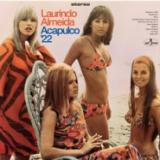
- Desafinado
- I Left My Heart In San Francisco
- What Kind Of Fool Am I?
- Acapulco 1922
- Satin Doll
- The Alley Cat Song
- Meditation
- Walk Right In
- More
- Say Wonderful Things
- Hava Nagilah
- Misirlou
- Danke Schon
- Lisboa Antigua
- Rio Bonito
- I Will Follow Him (Chariot)
- Tie Me Kangaroo Down Sport
- Sukiyaki
- Till Then
- Song Of The Islands
- Se E Tarde, Me Perdoa
Brazilian guitarist Laurindo Almeida was the first artist to receive Grammy Awards for both classical and jazz performances. His discography encompasses more than a hundred recordings over five decades. On Acapulco '22, which includes two complete consecutive 1962 dates by the same formation, Almeida is accompanied by American jazz stars such as Bob Cooper , Jimmy Rowles, Don Fagerquist, Victor Feldman and Shelly Manne
[g] Meditation [meditacao]

- 01: The London Jazz Quartet - Autumn In Cuba
- 02: Shake Keane Quintet - Fidel
- 03: Eddie Thompson - Body &Amp; Soul
- 04: Jimmy Deuchar Quartet - Dancing In The Dark
- 05: Tubby Hayes - Blues For Those Who Thus Desire
- 06: Ronnie Scott&Apos;S Quintet - Nemo
- 07: Wilton Gaynair - Rhythm
- 08: Stan Tracey Trio - Free
- 09: Jimmy Deuchar–Victor Feldman Quintet - Wail
- 10: The Pat Smythe Trio &Amp; Shake Keane - Old Devil Moon
- 11: Dizzy Reece Quintet - Sweet &Amp; Lovely
- 12: The Tony Kinsey Quartet &Amp; Joe Harriott - Fascinating Rhythm
The second volume in a survey of the modern jazz & hard-bop scenes that emerged in the new cultural melting pot of post war London, with recordings from the end of the 1940s through to the early 1960s.
Featuring representations from players whose roots lay in the East-End's jewish community alongside a wealth of talent of Caribbean and African descent playing and recording in post war London during this period.
Made in partnership with the Barbican to coincide with the exhibition Postwar Modern: New Art in Britain 1945-1965.
‘White Series #4’ marks the debut EP of Marc Feldmann and Dominik André as a producer duo. The record opens with ‘Natural Oscillation’
, a hypnotic techno piece where flowing percussion meets subtle trance influences. ‘A Breeze of Mistral’ builds on this energy with layered repetition and a deep pulse that unfolds gradually, drawing the listener further in. On the flip side, Audrey Danza reinterprets Natural Oscillation with a direct, dancefloor-focused approach. She sharpens the groove, raises the tempo, and pushes the track forward with her signature, driving drums and a tightly locked kick, transforming the original’s hypnotic flow into a no-frills cut. The EP slows the pace with ‘Discernible Rhythms’, a reflective, 80s-influenced synth chugger that adds warmth and restraint to the record. Released as a hand-stamped white label on Subject To Restrictions Discs, White Series #4 reflects and continues the label’s contribution to the more understated forms of electronic club music.
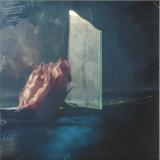
‘In Virus Times’ is an acoustic instrumental piece by Lee Ranaldo.
Composed during the pandemic, ‘In Virus Times’ is released as a onesided LP with an etching on Side B. The cover is a beautiful photo by
Lee’s friend, the great Brazilian photographer Anna Paula Bogaciovas.
Originally released as one track as part of a collaboration with Lucien
Jean for Le Presses du Reel, the music was featured on a mini CD that
accompanied a book that featured two short stories.
‘In Virus Times’, released by Mute, sees the track transformed into 4
pieces and is available on transparent turquoise vinyl with digital
download and an exclusive poster, designed, signed and individually
numbered by Lee Ranaldo. The poster design is based on an electron
microscope photo of the COVID-19 molecule.
Lee has written some of his own ‘loner notes’ for the release:
“This recording began on an evening in September 2020, stuck at home
in lower Manhattan during the dark days of the Covid-19 pandemic as
we came out of a deadly summer. A heightened sense of anxiety
stemming from the then-upcoming US Presidential elections as well as
the virus seemed to pervade all aspects of life, for myself and everyone I
knew. Its minimal quality reflects the sense of ‘motionless time’ that
many of us felt. I set up some microphones in our darkened living room
(studios being closed due to Covid restrictions), coaxing out one simple,
repetitive phrase, and then another, sounding them out into the air. The
casual home ambience - a siren or truck rumbling down the street out
the window; someone talking around the table in another part of the loft;
water running - intrudes at points. I worked to develop a few simple
thematic elements, but mostly I wanted to hear the notes and chords
ringing out, hanging in the air for a long time on that evening when the
world seemed close to stopped on its axis.
“I’d been listening closely to Morton Feldman’s catalog throughout the
pandemic. His sparse, long-duration music could often be heard playing
on repeat as we spent endless days locked inside. His willingness to do
very little, with very simple elements, and to such profound effect, has
been inspirational. I found the vast open spaces in his works thrilling,
miraculous, and comforting in those empty times. Additionally, the Drop
D guitar tuning used here has prompted my own variations on Bach’s
works for solo cello, open strings droning against melodic lines, so
simple and perfect…” - Lee Ranaldo, New York City, August 2021

The first release to document the solo cello work of musician and composer Lucy Railton, the 40-minute composition Blue Veil recorded at Église du Saint-Esprit in Paris invites listeners into the realm of precision-tuned states of resonance: states made manifest through Railton's careful traversal of her cello's most subtle acoustic characteristics as they harmonically interlock with mind's embodied modalities of attention and imagination. Blue Veil arises out of, is sustained in and finally dissolves back into Railton's momentary presence with her intimate connection to the cello, a way of hearing that allows for a deeper engagement with harmonic resonance, one that opens a space for immediate encounters of mind and sound. Railton's exploratory practice of harmonic perception emerges from a focus on the physical qualities of intervallic and chordal sounds, their textural qualities, degrees of friction, and inner pulsations. Composing in the moment guided by resonances within the cello's body, her own, and their shared vibrational space, Railton moves through Blue Veil by giving sounds what they ask for: sounds of pure texture manifesting as a move through temporal transparency, sounds of rough texture marking regions of dimensionally dense space. Railton's creative and highly refined use of just intonation harmony deforms sound's inner movements in ways that suggest a mode of listening that actively supplies imagery of sounds implied or completely absent rather than merely savouring those fully present. This active mode of "listening-with", playfully and semi-metaphorically referred to by Railton as "sing-along music", allows listening to reflexively participate in the music's movement as it gradually passes through richly saturated domains of harmonic imagination. And just as the precision-tuned tones of Blue Veil lose their individuality when fusing multifaceted uniformity, listening's structures of reference and recognition dissolve into nameless waves of intensity, continuously unfolding themselves upon and merging with the listener. Blue Veil is the result of a deep exploration of the inner worlds of tuning, an undertaking in turn informed by and emerging out of Railton's realisations of the music of Catherine Lamb and Ellen Arkbro, her collaborative work with Kali Malone and Stephen O'Malley as well as her interpretive practice in performing the work of Maryanne Amacher, Morton Feldman and others.

- Promise Me
- Take Heart
- Something Blue
- Setback
- Stars In The Car
- Aster
- Faux Sweetness
- Dark Glass
- Instant Comfort
Lucid Express sind fünf junge Träumer aus Hongkong, die mitreißenden, bittersüßen Rock machen, der zum Träumen einlädt. Ihr zweites Album "Instant Comfort", das Nachfolger ihres selbstbetitelten Debütalbums aus dem Jahr 2021 ist, enthält ihre bisher komplexesten Arrangements. Lucid Express holten den Shoegaze-Autor Kurt Feldman (The Pains of Being Pure at Heart, The Depreciation Guild) für das Mixing und Mastering an Bord - das Ergebnis ist ein noch klarerer und mitreißenderer Sound der Band. Über Discord zusammengekommen, entstand ,Instant Comfort" in marathongleichen nächtlichen transpazifischen Sessions zwischen der Band in Hongkong und Feldman in New York City - ein gemeinsames Streben nach Perfektion, das sich von Mitternacht bis zum Sonnenaufgang abspielte. Durchdrungen von gleichermaßen schleichender Melancholie und hoffnungsvoller Romantik, werden in diesen neuen Songs verwirrende Gefühle zugelassen. Luftige Melodien werden von einer schweren Gitarrenwand untermalt: siehe ,Promise Me" und ,Something Blue". Lucid Express waren schon mit Punchlove und Blushing in den USA auf Tour und hat auf renommierten Festivals in Asien und Amerika gespielt, darunter Clockenflap, LEVITATION und Slide Away.

- A1: The All Star Sextet - Fallonology
- A2: Victor Feldman Big Band - Elegy
- A3: Kenny Graham's Afro-Cubists - Dance Of The Zombies
- A4: Steve Race Bop Group - Vertigo
- A5: Shake Keane & The Michael Garrick Quartette - Regrets
- A6: Tommy Whittle Quintet - 12 By 5
- A7: The Dill Jones Trio - Deep Forest
- B1: Wilton Gaynair - The Way You Look Tonight
- B2: The Don Rendell Sextet - Thames Walk
- B3: Ronnie Ball Trio - Thou Swell
- B4: Stan Tracey Trio - Boo-Bah
- B5: Dizzy Reece - Riviera
- B6: The Eddie Thompson Trio - Eddification
- B7: Harry Klein Quartet - Darn That Dream
The third volume in a survey of the modern jazz & hard-bop scenes that emerged in the new cultural melting pot of post war London, with recordings from the end of the 1940s through to the early 1960s.
Featuring representations from players whose roots lay in the East-End's jewish community alongside a wealth of talent of Caribbean and African descent playing and recording in post war London during this period.
Made in partnership with the Barbican to coincide with the exhibition Postwar Modern: New Art in Britain 1945-1965.credits

Dutch artist Sander van der Toorn returns to Kit Records, following his much-loved work with analogue-decayed folk duo Love is Yes, in 2024. While Sander's signature haze of tape-smeared synthesis and motorik guitar is ever present, "kom-kom" represents a departure from the elysian warmth of Love's debut.
The industrial throb of tracks like 'FIVE' and 'Rainhum' bear the deconstructed hallmarks of krautrock pioneers Neu!, and even the dystopic glow of artists like Plastikman or Pole. When kom-kom's harmonic ambitions resurface, such as on the synapse-aching 'Dwarsdoor', or the glassy structures of 'Hazenhart', the effect is startling.
van der Toorn cites the inspiration of Morton Feldman and Sarah Davachi when describing his work less as a linear listening experience, more a collection of sculptures that can be viewed from different angles. In this way, kom-kom doesn't have to move forward; the encounter can be one of stillness, of static objects given movement by the beholder's shifting perspective.
Sounds like: John Fahey being stretched into infinitely long pieces of spaghetti.
Recommended if you like: intercontinental rail travel, Mark Fisher, a nice malbec.
Limited edition of 100 cassettes, with risograph printed artwork.

MEMOTONE, aka Will Yates, has announced details of a new 12-track album, smallest things, set for release on World of Echo on 1 August 2025 on vinyl and digitally.
The album launches today with first track, ‘Time Is Away Theme’, a live favourite that is finally available on album. Watch the video HERE Talking about the release, Will has said, “Staring at a square inch of neglected concrete, I recognise the beauty of existence. Quietly hysterical. While humanitarian catastrophes bubble across the planet, the tides remain in constant and disinterested motion. Your money is worth less than the dusty moss that powders this pavement.
It's certainly not worth a life. We are the smallest things, along with everything else." Will Yates has made music as Memotone since 2007. He operates in the tradition of what Robert Fripp has called 'a small, independent, mobile, and intelligent unit.' If you book him, he will come. When he arrives, he will have everything he needs to make his complex, engaging music: a clarinet, a guitar, synths, samplers and pedals, quickly unpacked in the corner of a club, gallery or village hall. Starting small, he will build layer upon layer of melody, accompanying himself and cutting across himself, creating a music that avoids cliche and moves beyond easy description. His recordings have followed the same trajectory. Moving quickly, he has released fifteen or so albums across various labels (including Trilogy Tapes, Discrepant, Soda Gong). Taken together, these recordings are the sound of a skilled, inventive composer pushing at the edges of what he wants to listen to himself. It is possible to hear a variety ofinfluences in his music: folk and jazz forms, the textural inventiveness of British DI electronica and Chicago post-rock and the blurred sci-fi brass of Jon Hassell are all discernible. But mostly, Will's work seems to stem from a constant drift between long hours in his home studio, and time spent outside in the woods and hills around his home in Wales.
Listening to the album, lushness creeps in at the edges, tiny green shoots appear on what might at first appear to be bare soil. smallest things sheds the skin of Will's previous recordings, removing the electronics and the looping and layering of previous work, to create something almost entirely acoustic. But don't be fooled into imagining music that's folksy, pastoral or twee. Opening track 'I Could See the Smallest Things' is a statement of intent. Widely spaced guitar is underpinned by earthy cello and sleepwalking clarinet, making a gorgeous threadbare pattern, which recalls a Morton Feldman miniature or a Morandi still life.
Beyond the skill involved and the years of self-taught music making that have gone into putting this record together, it is Will's close, careful attention and his talent for existing, observing and creating in the moment that make his work special. Memotone will perform at World of Echo’s annual birthday celebration on 8 Nov Expected Music, when they take over Walthamstow Trades Hall for an inter-genre, day-long investigation into some of the more outré manifestations of the contemporary worldwide underground.

For five decades, Harold Budd stood on the forefront of the West Coast avant-garde. Born in Los Angeles, he studied with Schoenberg-pupil Gerald Strang and began teaching at CalArts in 1970. While searching for his own voice, he was influenced as much by abstract expressionist painters as by John Cage and Morton Feldman. In his work, Budd brought delicate, slowing-moving melodies to the foreground – creating a new musical language based on “eternally pretty music” and smooth surfaces.
In the early ’70s, Budd started an extended cycle of compositions that would comprise The Pavilion Of Dreams. For Budd, the album was a signpost for a new direction in thinking about music: “The Pavilion Of Dreams erased my past. I consider that to be the birth of myself as a serious artist. It was like my Magna Carta.”
Produced by Brian Eno in 1978, The Pavilion Of Dreams stands toe-to-toe with another minimalist masterpiece also released that year, Steve Reich’s Music For 18 Musicians. Budd’s gorgeous pieces reveal a lightness of touch that draws the listener in, while sublime voices float in and out as if in a recurring dream. Featuring saxophonist Marion Brown and multi-instrumentalists Gavin Bryars and Michael Nyman, The Pavilion Of Dreams remains a master class in exquisite timbre and shimmering texture.
The Pavilion Of Dreams was both the final release on Eno’s Obscure imprint and a transition point towards his seminal ambient series. This first-time reissue is recommended for fans of Ryuichi Sakamoto, Jon Hassell and Mark Hollis.
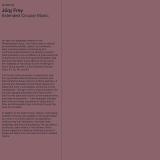
Since its founding back in 2014, Blume has carved a unique place in cultural landscape, issuing free-standing works, spanning the historical and contemporary, that represent singular gestures of creativity within the field of experimental sound. Joining their broad efforts in building networks of context and understanding that already includes the works by Werner Durand, Sarah Hennies, Bruce Nauman, John Butcher, Jocy de Oliveira, Mary Jane Leach, Valentina Magaletti, Alvin Curran, Julius Eastman, Alvin Lucier, and following the first ever vinyl release to attend to James Tenney's legendary Postal Pieces, the label now presents the first LP published by the visionary Swiss composer Jürg Frey. Drawing from the transformative power of breath and resonance, this release represents one of the most profound explorations of musical metamorphosis to emerge from the contemporary experimental landscape.
The completed work represents a "conjunction of these two artists" that has "activated a transformative form of experimentalism." These renderings "dance with an airy lightness, humour, and play, imbuing them with a beauty and emotiveness that can be rare within experimental music." They exist as "breaths, carrying the curiosities of life, belonging to no time and all time, to no one and everyone: a human music to be inhaled and pondered, for which the outcome remains unknown." In this liminal space between composition and interpretation, between breath and resonance, Zurria and Frey have created something that transcends the boundaries of experimental music itself, offering what might be called a metaphysical cartography of sound in its most essential form. As Bradford Bailey observes in his penetrating liner notes, "music is rarely a fixed entity," existing instead in a state of perpetual flux, "taking on the influences of its interpreters and performers." This fundamental truth finds its most eloquent expression in the transformative collaboration between Italian flutist Manuel Zurria and Frey, longtime member of the Wandelweiser Group. Where conventional recordings might preserve a definitive version, this release activates what Bailey calls "states of unknowing and continued experimentation," allowing Frey's compositions to evolve into entirely new dimensional territories. The original string quartet and piano works dissolve into breath-carried architectures of sound, where "the original remains in a constant dialogue with its transformation." This is not mere arrangement but ontological metamorphosis - an alchemical process through which crystalline harmonies are reborn as atmospheric phenomena.
The metaphysical dimensions of this transformation become clear through detailed analysis of the musical result. Where Frey's original compositions operate through what he calls "basic confidence in the clear and restricted material," Zurria's interpretation activates entirely new perceptual territories. Space holds almost atomic sense of weight against the airy punctuations of timbres, textures, and tones, creating "suspensions of time within which questions and identities posed by instrumentation fade." The Extended Circular Music pieces - each comprising "a small number of bars to be repeated an undetermined number of times" - become organizations of sound that defy being definitive or fixed. Originally scored for different combinations of violin, viola, cello, and piano, these works now exist as pure phenomena of breath and resonance, where "hanging, breath-length utterances dance and intertwine amongst complex harmonic clusters and conjunctions."
The philosophical implications of this transformation illuminate a lineage of composers who have moved "away from abstraction and responding to the need to create" something beyond mere technique. Drawing parallels to Morton Feldman's understanding of non-functional harmony, Zurria's approach represents "a transformative form of experimentalism" that activates what Frey calls the "thaumaturgic power" of music - its capacity to heal and transform consciousness itself. The result is "a radical reimagining of ambience: sprawling sonorities and resonances adrift in space, carrying the liberated traces of the work's former incarnations and their truths." In Zurria's interpretation, Frey's String Quartet n.3 becomes something approaching "an organ played in slow motion, its seals leaking," while the Extended Circular Music pieces transform into "glacial chords from a diverse palette of voicings, harmonies, timbres, and tones."
Performed by Manuel Zurria. Recorded and mixed by Zurria at BigCardo, Catania between 2022-2024, with mastering by Bruno Germano at Vacuumstudio, Bologna, this Blume release represents a profound exploration of musical transformation.

- 1: Coyote
- 2: Amelia
- 3: Furry Sings The Blues
- 4: A Strange Boy
- 5: Hejira
- 6: Song For Sharon
- 7: Black Crow
- 8: Blue Motel Room
- 9: Refuge Of The Roads
Mobile Fidelity's UltraDisc One-Step 180g 45RPM 2LP Set Plays with Authoritative Tonality, Airiness, and Clarity:
Pressed on MoFi SuperVinyl and Strictly Limited to
3,000 Numbered Copies
1/4” / 15 IPS Dolby A analogue master to DSD 256 to analogue console to lathe
Joni Mitchell is the only artist who could’ve made Hejira. The legendary singer-songwriter said as much when discussing the album decades after its release. Yet that fact seemed obvious from the moment the gold-certified effort streeted in fall 1976. An adventurous travelogue, probing narrative, and offbeat homage to freedom, Hejira remains an inimitable entry in the catalog of recorded music — a spare, gorgeous, meditative series of sonic vignettes comprised of floating harmonic pop, cool jazz, soft rock, and sensitive vocal elements that beckon feelings of motion, discovery, and self-examination.
Sourced from the original analog master tapes, pressed at Fidelity Record Pressing on MoFi SuperVinyl, and strictly limited to 3,000 numbered copies, Mobile Fidelity's UltraDisc One-Step 180g 45RPM 2LP set presents the record ranked the 133rd Greatest of All Time by Rolling Stone with definitive detail, richness, accuracy, and directness. Marking the first time the revered LP has received audiophile treatment, it's one of six iconic 1970s Mitchell records Mobile Fidelity is reissuing on vinyl and SACD.
Playing with a virtually nonexistent noise floor, dead-quiet surfaces, and superior groove definition, this collectible reissue reproduces in enveloping fashion the tones, textures, and craftsmanship that help Hejira function as the equivalent of a liberating trip down an open road with nothing but blue sky, natural landscape, and fresh air in the immediate vicinity. Passages bloom, carry, decay as they do amid an acoustically optimized environment. Soundstages extend far, wide, and deep, with black backgrounds and pinpoint images adding to the realism.
The reference-grade immediacy, airiness, and presence put in transparent perspective Mitchell’s dense strings of words, stream-of-conscious-like phrasing, and unhurried albeit forward momentum. Likewise, the instrumental contributions of her A-list support musicians — a cast that includes L.A. Express members John Guerin, Max Bennett and Tom Scott, plus Neil Young, Victor Feldman, and Abe Most — emerges with breathtaking clarity and dimensionality.
While Mitchell, whose intimate vocals and abstract guitar parts center everything, Mobile Fidelity's restoration of Hejira further reveals the visionary breadth of guitarist Larry Carlton and bassist Jaco Pastorius. Though heard on only four tracks, Pastorius' fretless bass epitomizes the fluid, subtle, flexible, roomy, and shape-shifting characteristics of songs that often appear to transpire out of nowhere akin to the formation of a puffy cumulus cloud overhead. In sync with Mitchell’s voice, Pastorius’ fusion hovers and floats, suspended in a fog you want to deeply inhale. The "grace notes" Mitchell desired on Hejira can now be heard in full. Ditto the luxurious tapestries of alinear lines, fills, and supplements unreeled on Carlton’s six-string.
Visually, the packaging of this UD1S set complements its identity as the copy to own. Housed in a deluxe slipcase, the LPs come in foil-stamped jackets with faithful-to-the-original graphics. This version is for listeners who desire to become immersed in everything about Hejira, including the unforgettable album cover — a pastiche of 14 different photos Mitchell used a Camera Lucida to assemble into one image that’s anchored by a portrait of her in a stoic pose — and the interior shots of Mitchell skating on a frozen Wisconsin lake wearing a pair of black skates, black shirt, and fur cape.
The notion of skating, feeling an awakening wind whipping against your face, and losing yourself to the surroundings are extremely apt for Hejira, which Mitchell wrote after a sequence of trips and relationships prompted her to reflect on the complicated conflicts between independence and marriage, success and satisfaction, duty and desire — and, more specifically, “the cost of being a woman.” The Canadian native delved into such themes before. But never as she does on Hejira, whose liberating, running-away aura doubles as another of Mitchell’s rejections of tradition as well as a suggestion of a better alternative.
At once observational and personal, expansive and insular, cheerful and poignant, Hejira spans a sea of human conditions, emotions, and circumstances. It addresses drifting, isolation, pleasure, place, time, and surroundings with strikingly poetic discourse matched with music that, save for the crooned ballad “Blue Motel Room,” forgoes conventional structures and choruses.
The jazz-based arrangements, marked by scaled-down percussion and all manner of bent, rounded, and unsettled notes, hint that Mitchell has no exact destination in mind. Excursions such as the moody “Furry Sings the Blues,” funky “Coyote” and edgy “Black Crow” throw open previously locked doors to possibility and journey. They signal it’s time for a welcome departure from norms and the past, one that leads to a heightened sense of clarity and perspective. Or, as Mitchell said upon choosing the album title, it’s time for “leaving the dream, no blame.”

- A1: What Is This Thing Called Love?; Written-By – Cole Porter
- A2: La Bonita; Written-By – Terri Lyne Carrington
- A3: Seven Steps To Heaven; Written-By – Miles Davis, Victor Feldman
- B1: St. Thomas; Written-By – Sonny Rollins
- B2: Just The Way You Are; Written-By – Billy Joel
- B3: Sonny Moon For Two; Guest, Tenor Saxophone – Sonny Carrington; Written-By – Sonny Rollins

- So Many
- Dream Merchants
- The Last Time
- Control
- The Truth
- Pressure
- Sunshine
- Running
- Me With You
- Her
- So Many (A Place To Bury Strangers Remix)
Die selbstbetitelte Debüt-LP von Blushing erhält eine lang erwartete Wiederveröffentlichung und wird zum ersten Mal seit 2019 auf Vinyl erhältlich sein. Dieses spezielle Reissue enthält einen exklusiven, neuen Remix von ,So Many" von Oliver Ackermann (A Place to BuryStrangers) und ein komplettes Remaster von Kurt Feldman (The Pains of BeingPure at Heart, The Depreciation Guild, Ice Choir). Das Vinyl kommt mit transparentem blau/grünem Farbeffekt in limitierter Auflage und mit einem 12" x 24" großen Einleger mit Texten und einer Fotocollage von den Aufnahmen, der Veröffentlichung und der Tournee. ,Blushing" war die erste Zusammenarbeit der Band mit dem ihrem langjährigen Produzent/Engineer Elliott Frazier (Ringo Deathstarr). Der Gruppe gelang es, ihr Songwriting-Potenzial mit schweren Riffs, hakenreichen Refrains und hochfliegenden Gesang zu verbinden und ihre spezifische Art von "heavy" Dream Pop zu kristallisieren.

- Y.i. Blues
- The Trip
- Make A List, Make A Wish
- Patricia
- Caravan
- Blues For Blanche
- Straight Life
Eine faszinierende neue Sammlung von nie zuvor gehörten Auftritten des legendären Altsaxophonisten Art Pepper, »An Afternoon in Norway: The Kongsberg Concert«, erscheint als luxuriöses 180-Gramm-Zwei-LP-Set bei Elemental Music.
Dieser bemerkenswerte Archivfund wurde von dem preisgekrönten »Jazz Detective« Zev Feldman in Zusammenarbeit mit Laurie Pepper und dem Art Pepper Estate produziert.
Feldman sagt: »Art Pepper ist eine der am meisten verehrten Persönlichkeiten der Jazzgeschichte, und seine Musik inspiriert nach wie vor Zuhörer auf der ganzen Welt. Diese bisher unveröffentlichten Aufnahmen fügen seinem Vermächtnis ein weiteres Kapitel hinzu. Wir legen großen Wert darauf, Peppers Werk auf bestmögliche Weise zu präsentieren, um sicherzustellen, dass diese Pakete den Fans über Jahre hinweg Freude bereiten werden.«
Sowohl die LP- als auch die CD-Ausgabe des Pakets enthalten einen Essay des renommierten Jazz-Experten Marc Myers, exklusive Kommentare von Laurie Pepper, Tony Dumas, Carl Burnett und den Saxophonisten John Zorn und Rudresh Mahanthappa sowie seltene Fotos vom Konzert. An Afternoon in Norway enthält Aufnahmen von Art Peppers denkwürdigem Auftritt beim Kongsberg Jazz Festival in Norwegen aus dem Jahr 1980. Aufgenommen im Kongsberg Kino mit seinem herausragenden Quartett - dem Pianisten Milcho Leviev, dem Bassisten Tony Dumas und dem Schlagzeuger Carl Burnett - liefert Art Pepper eine kraftvolle und ausdrucksstarke Darbietung, erfüllt von der Leidenschaft und Brillanz, die seine Karriere ausmachte.
[a] Y.i. blues [aka untitled #34]

Zur Feier des 30. Geburtstags von Frank Blacks bahnbrechendem Solo-Album "Teenager Of The Year" erscheint eine spezielle Pressung auf goldfarbenem Vinyl. Frank Blacks ambitioniertes 22-Track-Album erschien im Mai 1994, nur ein Jahr nach seinem fantastischen, selbstbetitelten Solo-Debüt. Es entstand in einer Zeit, in der die Pixies auf Eis lagen. "Teenager Of The Year", das mit Szene-Legende Eric Drew Feldman (Captain Beefheart"s Magic Band, Pere Ubu, The Residents) aufgenommen wurde und u. a. die Single "Headache" enthält, wird von vielen als sein bestes Solowerk angesehen. Es erschien sowohl in der Pitchfork-Umfrage zu den Top-100-Alben der 1990er Jahre als auch im Buch "1001 Albums You Must Hear Before You Die". Anlässlich des Jubiläums gehen Frank Black und seine Originalband im Januar 2025 auf eine 14-tägige Tournee durch Nordamerika, Paris und London, bei der sie das Album jeden Abend von Anfang bis Ende spielen werden. Passend dazu veröffentlicht 4AD die neue Vinyl-Edition, für die Kevin Vanbergen das Album von den originalen analogen Studiobändern aufwendig remastert hat. Als limitierte "30th Anniversary Tour Edition" klingt "Teenager Of The Year" damit so gut wie nie zuvor. Sie wurde für eine optimale Wiedergabe auf 45 U/min geschnitten und auf goldenes Doppel-Vinyl gepresst. Die 2XLP kommt in einer Gatefold-Verpackung und enthält Linernotes von Frank Black und Produzent Eric Drew Feldman.
- Belt Of Orion
- Vestiges
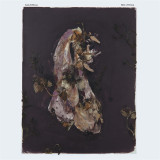
Belt of Orion by Stockholm-based Isak Edberg is the composer's second solo release on XKatedral, and his first to focus solely on instrumental music in the form of two pieces of extended duration for solo piano. Isak Edberg is a composer of electronic and acoustic music as exemplified by Ondulations from 2017 and Lamé written in 2010 and released in 2022, both on XKatedral. Edberg was also a member of Golden Offense Orchestra, active from 2012 to 2014. Edberg writes that his music is informed by an enchantment of being and a search for holiness, rapture and transcendence through stillness, contemplation, dreaming and an attempt to uphold the present. Edberg regards his music to be an adornment of time. The two works presented here were composed in the south of France and in Stockholm during a period spanning the years 2016-2018. The music was inspired by the cold winds, starry nights and desolate, palely bright landscape of the provençal autumn, as well as reflections during a time of escapism and isolation in the life of the composer. More concretely, this music grew out of hours of improvised playing on an old piano while living alone on the countryside, during which harmonic structures and gestures were slowly worked out by means of performing and listening, assessing and balancing sounds and silences. Stylistically, the music draws on a range of sources, such as Feldman's use of space and resonance as projected through both harmonic and temporal distance, the ritualistic gestural repetitions of Satie, as well as Messiaen's resonant harmony, together with some of the harmonic lushness of Scriabin's late work. Belt of Orion is a piece that explores the contrast of two musical textures, the one being fluid, airy and progressive, the other being static, steady and repetitive. The music sequences through a series of harmonic tensions in search of a place of peace, exposing a rift in the weave of time where everything momentarily stands still. In Vestiges repetitive and rhythmic materials form a major part of the musical structure, while sections of sparse, floating harmonies temporarily interrupt with reflective pauses of stillness. The music thus employs two different and contrasting kinds of musical hypnosis, with the aim of cradling the listener into a dark and perhaps unsettling sleep. The music on this recording was performed by the renowned Swedish pianist Mats Persson, who has for many decades been a legend in the art music scene of Stockholm. Through his languid yet distinct interpretations the delicacy and intimacy of these works are elegantly brought to the fore. The recordings heard here were made over the course of two evenings at Fylkingen in Stockholm. Isak Edberg's music moves slowly through the seemingly endless world that is harmonic sound. In his practice he uses heavily reduced and carefully controlled materials to create states of maximum clarity.

An extremely prolific artist, whose work encompasses composition, opera, theatre, radio plays, film or performance, Ergo Phizmiz returns in due time to the Discrepant fold long after his 'Two Quartets' and 'Disco Carousel' - under his given DW Robertson name - albums. A purveyor of the Creative Commons rights, Phizmiz has been deploying much of his work on the ever expanding Free Music Archive directed by WFMU since the early 2000's, creating a sprawling and defiant body of work that defies given and stale notions of sound hierarchies, history and copyright through a process that comprises collage, sampling, reappropriation, songwriting, covers and pretty much any available media with a playful and thoughtful approach.
For this new Discrepant entry, Phizmiz goes back in time to push into the future a number of pieces recorded more than two decades ago creating this perpetual motion outside a linear chronologic progression. Anticipating by almost 20 years the memefication of ASMR videos, 'Selected Ambient & ASMR Works 2001-2003' - itself a pun on the AFX classics - embraces the ambient tag not at its functional face value, but instead as a means to the "evocation of imaginary spaces, and correspondingly the invention of their sonic environments". Collecting recordings from a myriad of instruments - violin, xylophone, banjo, kora, found percussion and so on...-, shortwave radio and field recordings to create loops with different lengths that play with and/or against themselves continuously in a process "(dis)conjunction" not far removed from Feldman's 'Why Patterns?' or hip-hop's sampledelia. A free-floating temporal space that collapses the flashing images of Angelfire pages unto Web 2.0 sense of displacement.

In France: Live at the Nancy Jazz Pulsations Festival (1977) is a previously unissued live recording from the legendary bluesman B.B. King captured by the ORTF in France on October 7, 1977 and released on producer Zev Feldman's Deep Digs label in partnership with Elemental Music and INA France.
The limited-edition 180-gram 2-LP set will be mastered and cut by Matthew Lutthans at The Mastering Lab, and include rare photos by Thierry Trombert, Val Wilmer, Jan Persson and more; plus liner notes by the acclaimed french author Jean Buzeline; and testimonials from fellow blues icons who knew or were inspired by B.B. King.

- A1: Stand By Me - Ben E. King
- A2: Lollipop - The Chordettes
- A3: Everyday - Buddy Holly
- A4: Get A Job - The Silhouettes
- A5: Come Go With Me - The Del-Vikings
- A6: Book Of Love - The Monotones
- A7: Hushabye - The Mystics
- B1: Yakety Yak - The Coasters
- B2: Rockin' Robin - Bobby Day
- B3: Whispering Bells - The Del-Vikings
- B4: Great Balls Of Fire - Jerry Lee Lewis
- B5: Sorry (I Ran All The Way Home) - The Impalas
- B6: Mr. Lee - The Bobbettes
- B7: Let The Good Times Roll - Shirley & Lee
This soundtrack LP features songs that were all included in the 1986
coming-of-age film "Stand By Me", which was directed by Rob
Reiner. The film is based on Stephen King's novella The Body, with
the title deriving from the song of the same name by Ben E. King.
The film is set in the fictional town of Castle Rock, Oregon, in 1959,
and stars Wil Wheaton, River Phoenix, Corey Feldman, and Jerry
O'Connell, as four boys who go on a hike to find the dead body of a
missing boy. The movie's success sparked a renewed interest in
Ben E. King's song "Stand by Me", with the song re-entering the US
Billboard Top 10 chart in 1986. The soundtrack is crammed with
great, early rock & roll hits. The movie may have been nostalgic, but
the music on this soundtrack still sounds alive, decades after it was
originally recorded.

"Ukraine's most beloved and enduring band Okean Elzy will release their first-ever English-language studio album, Lighthouse, on October 11 via Elektra. The group herald the record’s announcement with the title track and new single ‘Lighthouse’ featuring John Rzeznik of Goo Goo Dolls. Produced by John Feldmann (Blink 182, Avril Lavigne, 5 Seconds of Summer), and co-written by Slava, Feldmann and Eva Arnby Busacker (5 Seconds of Summer, Landon Barker), the track also features Travis Barker on drums. A portion of the proceeds from the song will be donated to United24, an initiative launched by the president of Ukraine in support of the country during the ongoing war. The song is accompanied by a cinematic music video – available to stream on the band’s You Tube Channel
Okean Elzy’s lead vocalist Sviastoslav ‘Slava’ Vakarchuk says, ""The creative process was a unique experience for me. Working alongside Feldy and Evey was both fun and inspirational. The song came together in a matter of minutes. Having Travis on drums took the vibe up to a whole other level, and is yet another example of how special the human camaraderie and support is on this track.""
""Lighthouse is a very powerful metaphor for me,"" Slava continues. ""As a Ukrainian I couldn't think of a better metaphor to express our hope for the future, which is part of why the song and album bear that name.""
Okean Elzy radiate luminous energy through ‘Lighthouse’. Anchored to a steady beat, warm guitars ebb and flow beneath a heartfelt promise, “Take my hand, I’ll get you through the storm.” The momentum builds as the song climaxes on an uplifting chorus, “Tonight, I’ll be your lighthouse, shining on.” Meanwhile, Vakarchuk and Rzeznik lock into a bold and bright back-and-forth. The music video seamlessly translates this energy to the screen, capturing the chemistry between the frontmen.
With their upcoming album, Okean Elzy aims to transcend borders and share the rich tapestry of Ukrainian culture with audiences around the world. The album will include collaborations from Travis Barker (Blink-182), Paul O'Duffy and Diane Warren.
In support of Lighthouse, a portion of their North American tour’s proceeds will be donated to Open Eyes Fund, specifically supporting their Drive For Life initiative, whose goal is to deliver 30 ambulances, along with essential medical equipment to the frontlines where urgent medical assistance is required. These efforts will be in addition to the 242 ambulances already delivered to Ukraine and 36,000 lives saved previously by Open Eyes. Following their North American tour, Okean Elzy are set to headline the O2 Academy Brixton in London on December 4. Check out the full confirmed itinerary below. General on-sale begins today at 10am local time.
Consistently selling-out stadium shows, winning multiple YUNA Awards (the nation’s equivalent to the Grammys or the BRITs), and topping airplay charts, Okean Elzy are undoubtedly Ukraine’s biggest band."

Alter is proud to present the debut full length release from devotional music outfit Unstern, a collaborative effort between deep ambient artist Arzat Skia and prodigal pianist Leo Svirsky. Co-mixed by Swedish electronic music luminary Civilistjävel! and Arzat Skia and mastered to tape by Stefan Betke, the album features lush electronics, two pianos refracting across the stereo field, processed recordings from the Peruvian Amazon, bowed percussion by Greg Stuart, alongside strings and renaissance meantone organ recorded at Orgelpark in Amsterdam.
The results are an abundant audio illusion where what seemingly repeats slowly over time morphs in a manner where the destination escapes the departure point with extreme discretion, a reverent nod to Morton Feldman's compositional method of "Crippled Symmetry."
Throughout Es Geht Der Tag there is a muted, refined melancholy imbued with a constantly fluctuating pulse which generates a sense of temporal disorientation, leaving the listener lost in a strange yet not at all unfamiliar sonic labyrinth. It is a journey whereby a glorious subtle tension exists between the grandiose and the restrained.
This is environmental music, not in the sense of capturing nature itself, more with regards to an unfolding of audio elements which move in a manner in tune with the multitude of flows in the world.
Unstern’s Es Geht Der Tag is a deep mental journey, rich in subtle transcendental tendencies and psychic liberation.

A limited vinyl pressing of the sixth album from the classic L.A. punk ska band! On purple blast vinyl!
Right from the start when you hear Feldmann’s voice sing "Everyday is just the same" before the guitars, bass, and drums kick in on opening track "One More Time," you instantly know that Goldfinger are back as good as ever. The elements of desire, passion, and punk in those 5 words instantly tell you that Hello Destiny is going to be different to Disconnection Notice. The songs on the album go from strength to strength. From the slightly heavier song of "Handjobs For Jesus," to the upbeat Ska of "Get Up," to the sweet heartfelt acoustics of the bonus track "Julian," this is an album that will be up there with the best of the Goldfinger records. Like having sex for the first time, it will be remembered.

Enduring for 23 years, Utah’s emo rockers The Used have released nine studio albums. Released in 2014, and debuting at Number 14 on the Billboard 200 and Number 1 in the Independent Albums Chart, ‘Imaginary Enemy’ is the sixth studio album by The Used, now available on gold vinyl.
With production and mixing handled by John Feldman, the album “burns bright and fast” (as written by AllMusic). This album sees the band incorporating pop and dance-infused beats that would re-appear in later albums.

Released in 2012, debuting at Number 8 on the Billboard 200, Number 21 on the Canadian Albums Chart, Number 65 in the UK Albums Chart and Number 18 on the Australia Album Chart, ‘Vulnerable’ was the fifth studio album by The Used. Production and mixing was handled by John Feldman. ‘Vulnerable’ is now available on silver vinyl. “There are so many kids out there who are special in their own way, and I want people to understand that this record is for the misfits and for the outcasts and for anyone who’s never really fit in. There’s a place for all of us in this world. We can all find it if we just keep looking,” said frontman Bert McCracken to Alt Press.

Loup Vert is the first jazz album of French pianist Julien Grassen Barbe, joined for the occasion by double bassist Sébastien Bacquias and drummer Fabien Duscombs. Conceived and composed in the Pyrenees mountains, recorded around Paris, it is an album of twelve tracks that came as a response to the proposal of Julien Galner (producer, founder of HIDD label). Loup Vert is the name of a fetish, a creature that breathes inspiration. Informed by many influences, from Frédéric Chopin to Morton Feldman, from Erik Satie to Herbie Hancock, through Keith Jarrett, Madlib and Naftule Brandwein, Julien Grassen Barbe's music opens a space dedicated to improvisation, melody, and the exploration of textures. Trained in classical music, graduate of the conservatory of the Hautes-Pyrénées region, where he is originally from, Julien Grassen Barbe is a songwriter and a musician, but also an ethnomusicologist, specialist in Jewish music, and a published author. A trip to New-York, land of Thelonious Monk, had a deep impact on him. He used it as a time for jam sessions, lessons with some of his favorite musicians, Aaron Parks, Aaron Goldberg, Barry Harris. Between 2014 and 2016, he explored pop, invited by Chateau-Marmont and Exotica to collaborate on two records as a keyboardist. It is on this occasion that he got closer to Julien Galner, producer, founder of the HIDD record label who asked him to record a jazz record. They entered the studio to record Loup Vert, a project that is a cross between impressionism, cinema, be-bop, mathematics and improvised music. Most of the pieces were written by Julien Grassen Barbe, mixing acoustic and electric/electronic worlds.

Love Is Yes is the first album by Sander van der Toorn and Dax Niesten, an audio-visual duo de force of the same name.
This heady debut is rooted equally in the worlds of fine art and experimental music. Sound and image meld wonderfully across 10 tracks, with shifting movements of music accompanied by a wealth of paintings and animations.
Niesten's work summons the likes of Philip Guston and Maurice Sendak - with its crestfallen, cartoonish voids and cockle-warming grotesquery. Serenely contorted creatures are rendered on large canvases, and brought to fuzzy, maudlin life through a full-length animation that can be viewed alongside the record.
Musically, the pair cite influences ranging from Vashti Bunyan to Morton Feldman. There is an ornate fragility, smeared by zero gravity focus shifts. Some glimpses suggest a corroded grail of Boards of Canada samples; motorik guitar, whispered messages, euphoric vistas and tangled memories all bathing in atomic glow.

Recorded live at the Black Hawk, San Francisco in September 1959, At The Blackhawk 1 is the first of 4 volumes released in 1960. Featuring six cuts, Manne (drums), is joined by Joe Gordon (trumpet), Richie Kamuca (tenor sax), Victor Feldman (piano) and Monty Budwig (bass). This new edition of the album is released as part of the Contemporary Records Acoustic Sounds series and is pressed on 180-gram vinyl pressed at QRP with (AAA) lacquers cut from the original tapes by Bernie Grundman and is presented in a tip-on jacket.

For the five members of Punchlove - multi-instrumentalists Jillian Olesen, Ethan Williams, Joey Machina, Ian Lange-McPherson, and visual artist Viz Wel - moving into a maze of a house in Brooklyn together was the transition that created the album they had been writing their whole lives. Quietly evolving from a bedroom project to a headlining live phenom, Punchlove has geared up a densely layered bed of emotionally serrated pain-pop songs that coalesce around a digitally-stimulated, emotional brand of modern neoshoegaze. Channels, out March 1st on Kanine Records, is an album of deeply prepared sounds, sharply honed instrumentals, and a band performing them that knows each other all the way through. Having met studying music technology in college, multiple members of Punchlove work mixing live bands at prominent NYC venues and in the studio. Using that expertise, the inhouse production, mixing, and recording is a palpable highlight; mastered by 2000s shoegaze stalwart Kurt Feldman (The Depreciation Guild), the record melds DIY recording and experimental sonic visions with studio quality. Punchlove is dedicated to pushing the envelope of experimental sonic practices in live performances, where they can be seen performing with real-time audio reactive analog visuals, executing real-time sampling and looping, self-mixing onstage, running radios and tape loops through effects, improvising, and playing guitar with everything from double bass bows to vibrators. In their home recording environment, experimentation is at the core of their creative process, where they integrate self-programmed digital signal processing systems, psychoacoustic phenomena, tailored feedback, elements of 3D audio, immersive field recording soundscapes, early electronic instruments, and experimental recording and mixing techniques into the greater backdrop of pop songwriting. FOR FANS OF: Radiohead, Wednesday, Hum, DIIV, my bloody valentine, The Smashing Pumpkins, bdrmm, A Place to Bury Strangers

Upside Down is the third studio album by American band Set It Off. The album was released on October 7, 2016 through record labels Equal Vision Records and Rude Records. Since the release of sophomore album ‘Duality’ in 2014 (produced by John Feldmann - 5SOS, Blink-182, Good Charlotte, All Time Low), lots of things have changed for Tampa, FL natives Set It Off. Considered among many like the freshest pop rock band in the scene, they’ve been working for the past few years on ‘Upside Down’, third full-length album to date, in which they continue to expand their signature sound of high energy, orchestra-infused pop and exquisite musical composition and harmonization. ‘Upside Down’ will be available worldwide-wise in physical & digital formats on July, 22nd in perfect time to become one of this Summer’s soundtracks.

- Live Your Life Be Free
- Do You Feel Like I Feel?
- Half The World
- You Came Out Of Nowhere
- You’re Nothing Without Me
- I Plead Insanity
- Emotional Highway
- Little Black Book
- Love Revolution
- World Of Love
- Loneliness Game
Released in October 1991, Belinda’s fourth solo album after leaving The Go-Gos saw Rick Nowels sharing the
producing credits with other names, but he provided Belinda with the hit singles: “Live Your Life Be Free” and “Do
You Feel Like I Feel?”. “Half The World” and “Little Black Book”, produced by Richard Feldman, were also hits.
Charting around the world, the album achieved Gold sales in the UK.
This new edition has been expertly mastered by Barry Grint at AIR Mastering from the original stereo tapes using
precision half-speed mastering. Half-speed mastering is a vinyl cutting technique that improves groove accuracy
and transient information creating an incredibly detailed stereo image with a natural high frequency response.
Presented in its original sleeve, pressed on 180 gram heavyweight black vinyl, featuring an obi strip and housed
in a poly-lined inner sleeve, with all the lyrics and credits on the 4 page insert.

Enlisting the help of Eric Drew Feldman, the sessions for the album were
happening concurrently in Los Angeles, California, at Wild Hamster, while Ash
was recording their album Meltdown (2004). Described as a pop punk and power
pop record, Hatherley's vocals on Grey Will Fade earned her comparisons to Bjork,
Tanya Donelly, and PJ Harvey. Label Last Night From Glasgow have reissued the
album on transparent vinyl.
Hatherley came to prominence as guitarist for rock band Ash. She
has released solo work since 2004 and has worked as a touring
nstrumentalist for KT Tunstell, Bryan Ferry, Bats for Lashes, among
others.

Seven Steps to Heaven arrived at a crucial junction in Miles Davis' career. Recorded at two separate locations in spring 1963, it served as Davis' first release in more than a year – a layoff that was then unprecedented for the jazz visionary who had issued at least one LP a year since debuting in the early '50s. Equally notable, Seven Steps to Heaven marks the point at which the core of Davis' Second Great Quintet started to assemble. The twice Grammy-nominated effort is also Davis' final studio record to blend standards with originals. And it happens to be one of the expressive, well-played albums in the jazz canon.
Sourced from the original master tapes, pressed at RTI, and housed in a Stoughton gatefold jacket, Mobile Fidelity's 180g SuperVinyl LP of Seven Steps to Heaven adds yet another step (or more) towards the bliss suggested by the album title. Playing with standout clarity, detail, tone, and balance, this audiophile reissue pulls back the curtain on the instrumentalists. Afforded the tremendous advantages of SuperVinyl – including a nearly inaudible noise floor, dead-quiet surfaces, and superb groove definition – this numbered-edition version presents Davis and Co. amid a wide, deep soundstage whose dimensions and solidity help bring the record's historical importance and musical merit into focus. Warm, organic, and present, the SuperVinyl LP of Seven Steps to Heaven is what great-sounding hi-fi is all about.
And there's nary a passage on this 1963 landmark that isn't great. That Davis manages to make it feel so cohesive and seamless is a testament to the inspired performances and engaging compositions. Davis didn't draw it up the way it unfolded. No matter. He held trump cards that stayed up his sleeve for the next three decades: A drive to be nothing less than superb, a refusal to settle for mediocrity, and standards to which nearly no other composer or player could match. "The toughest critic I got, and the only one I worry about, is myself," Davis wrote in the liner notes. "The music has to get past me."
Davis' demanding approach partly explains why he switched up his band between the first and second sessions – and underscores how fast his mind was racing with new ideas. Seven Steps to Heaven acts as the stable bridge between the transitional period that followed the dissolution of his First Great Quintet and formation of the Second; without it, Davis perhaps doesn't invite then-23-year-old Herbie Hancock and a still-teenage Tony Williams into the fold. The trumpeter not only got his men – he preserved in amber for the only time (well, magnetic tape anyway) the chemistry and vibe he achieved with pianist Victor Feldman, drummer Frank Butler, tenor saxophonist George Coleman, and bassist Ron Carter.
That line-up gels for half of the six songs on Seven Steps to Heaven. Captured in Los Angeles April '63, the quintet stretches out on a luxurious reading of the late '20s New Orleans staple "Basin Street Blues"; lays on the romance for a candlelit stroll through the '40s standard "I Fall in Love Too Easily"; and explores the rounded contours and melodic crevices of the early blues "Baby Won't You Please Come Home." The performances are refined, elegant, emotional; the band lets the feelings linger and gives the listener time to absorb the colours and textures.
A month later, Davis returned to New York City with Coleman and Carter, and partnered them with Hancock and Williams. Tellingly, the quintet tried its collective hand at the title track and "Joshua" – Feldman-penned songs already recorded in Los Angeles – as well as the yearning "So Near, So Far." Those are the tunes that comprise the other piece of Seven Steps to Heaven, with the revised quintet's liquid pulse, articulate dynamics, and timing shifts a harbinger of things to come.
It's also worth mentioning that the interpretations of the bounding "Seven Steps to Heaven" – a showcase for Davis' trumpet – and interlocking "Joshua" netted considerable radio airplay and attracted the attention of other contemporaries who covered the songs. Keeping Carter and Williams as the rhythmic engine, and Hancock as the anchor between solo flights and structural motifs, Davis would soon soon welcome Wayne Shorter into the family and transform jazz. Again. The aptly – and, in hindsight, perhaps prophetically titled Seven Steps to Heaven – is how he got there.

Die wegweisende feministische Punkband FRIGHTWIG ist mit ihrem neuesten Album 'We Need to Talk...' (Label 51 Recordings) zurück, inklusive einer besonderen Bonus-7''-Single, die ihrer verstorbenen, aber immer präsenten Schlagzeugerin Cecilia Kuhn gewidmet ist, die 2017 diese irdische Ebene verlassen hat.
Seit ihrer Gründung in San Francisco im Jahr 1983 verfolgt Frightwig zwei Ziele: Freude verbreiten und das Patriarchat bekämpfen. Seit 40 Jahren haben sie auf beiden Fronten Erfolg, mit einer Mischung aus knalliger Hardcore-Energie und einem furchtlosen Aktivismus. Die Band war eine prägende Einflussgröße auf die Riot Grrrl-Bewegung und darüber hinaus. Sie begrüßt Mitstreiter, Sünder und Ausgestoßene, und die Anhängerschaft von Frightwig ist im Laufe der Zeit nur größer und stärker geworden.
Das Album wurde von Eric Drew Feldman produziert (bekannt für seine Arbeit mit PJ Harvey, Pixies, The Residents, Frank Black, OK Go und Captain Beefheart). Frightwig entführt eine Welt des feministischen Punkrock entführen, der sowohl Energie als auch Aktivismus verkörpert.
"Following the superb initial two volumes, Emerald City Nights: Live at the Penthouse Vol.3, captures spectacular 1966-68 performances by the master pianist’s trio at the Penthouse in Seattle. Also available as a 2-CD set and download.
Package includes reflections by Ahmad Jamal himself, interviews with fellow pianists Les McCann, Emmet Cohen, Monty Alexander, and Joe Alterman, and essays by producer Zev Feldman and journalist Eugene Holley, Jr., among others. The extensive booklet features rare photos by Don Bronstein, Chuck Stewart, and more.
Producer and music sleuth Zev Feldman’s label, Jazz Detective, a division of the newly created Deep Digs Music Group, releases the third and final volume of the Ahmad Jamal sets: Emerald City Nights: Live at the Penthouse (1966-68), featuring previously unreleased performances by master pianist Ahmad Jamal.
The 2-LP set will be issued on 180-gram vinyl transferred from the original tapes and mastered by the legendary Bernie Grundman. The music will also be available as a 2-CD set and download. The package has been produced by Feldman and supervised by Ahmad Jamal himself shortly before his passing away in April of 2023."

"PRODUCER ZEV FELDMAN’S NEW IMPRINT, JAZZ DETECTIVE, LAUNCHES NEVER BEFORE RELEASED CAL TJADER LIVE SETS RECORDED IN THE 1960s AT THE PENTHOUSE JAZZ CLUB IN SEATTLE.
THIS IS THE FIRST OFFICIAL RELEASE OF PREVIOUSLY UNISSUED LIVE CAL TJADER MUSIC IN NEARLY 20 YEARS!
Transferred from the original tapes by Bernie Grundman, Cal Tjader: Catch The Groove – Live at the Penthouse 1963-1967 is presented as a 180-gram vinyl limited edition 3-LP SET and will also be available as a Deluxe 2-CD set and as a digital download.
Package includes reflections by producer Zev Feldman and jazz writer Greg Casseus, as well as interviews with Poncho Sánchez, Eddie Palmieri, Joe Locke, Gary Burton, Carl Burnett, and Brent Fischer, and a statement by Tjader’s son and daughter Rob and Liz Tjader. The extensive booklet contains previously unpublished photos by Ray Avery and Fred Seligo.
All of the performances heard on this set are previously unreleased. Legendary vibraphone player Tjader is heard with a variety of quintets, backed by pianists Clare Fischer, Lonnie Hewitt and Al Zulaica, bassists Fred Schreiber, Terry Hilliard, Monk Montgomery and Stan Gilbert, drummers Johnny Rae and Carl Burnett, and percussionists Bill Fitch and Armando Peraza.
Taking its name from Feldman’s handle “the Jazz Detective” and reflecting his determined work unearthing hitherto unheard, award-winning treasures, the Jazz Detective label is an imprint of Deep Digs Music Group, a partnership with Spain’s Elemental Music, with which Feldman has enjoyed a long professional relationship."

In his “Pulse Music” compositions of the mid-1970s, composer John McGuire forged a unique interpretation of European serialism. A student of Karlheinz Stockhausen, Krzysztof Penderecki and Gottfried Michael Koenig, McGuire moved to Cologne, Germany in 1970, where he become associated with the world-leading Studio for Electronic Music at Westdeutscher Rundfunk (WDR) in Cologne. Like Stockhausen, McGuire found his musical imagination both constrained and inspired by the technology that was available to him.
A conversation with sculptor Hans Karl Burgeff led McGuire to think beyond the horizon and into limitless space. For “Vanishing Points” (1985–1988), McGuire used an entirely digital set-up for the first time: a digital sequencer, eight Yamaha DX-7 synthesizers and a Studer 24-track digital tape recorder. The piece was conceived as a “sequel” to the Pulse Music series, but also a step forward from it. Whereas the Pulse Music pieces had employed steady streams of pulses, with Vanishing Points McGuire employed pulse layers that accelerate or decelerate against one another, vastly increasing the resulting rhythmic complexity.
McGuire's exploration of music technology continued in “A Cappella” (1990–1997), written for his wife, the soprano Beth Griffith, known for her recording of Morton Feldman’s “Three Voices” made in 1983. Using samples, he created a four-voice choir of voice samples and arranged them into interacting parts. The composition faced challenges due to the organic nature of the human voice compared to the precision of synthesized sounds. This process involved extensive editing and a negotiation between the "material" and the "original conception". This sort of negotiation applies as much to the composition of a single piece as it does to the work of two decades.
White Vinyl[30,04 €]
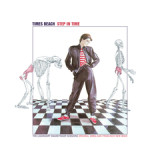
It's been 40 years since these tracks were recorded, but all the original studio and live recordings by Times Beach are finally available on CD & LP Times Beach came together in 1983 with a core of active members from San Francisco's vibrant theatre community. That background propelled the band to a kind of stage glamour that wasn't much seen during the era of post- punk, industrial, and goth music. They were striking to see and hear, with the songs to match. But, like so many excellent bands of the era, they suffered from the "home town curse" since they were not from New York or Los Angeles – but San Francisco. Over the course of two years, Times Beach performed throughout the Bay Area, playing most of the major (and minor) clubs such as The Stone, Baybrick Inn, Cotati Cabaret, Berkeley Square, Sound Of Music, Trocadero Transfer, Ashkenaz, Ruthie's Inn, Sleeping Lady Café, and the beloved Chi Chi Club. They had a legion of dedicated supporters, and many of their shows were real party events. When it came time to record, they accepted an invitation from the illustrious Snakefinger (aka Philip Lithman) and Eric Drew Feldman to produce them at Russian Hill Studio. The first part of their story ends just about there, as they never made enough money to actually produce the album from the recordings. And the various members started drifting off. The final public gig was like their first, at the Mabuhay Gardens, in November 1984. Side One of this LP is comprised of those glorious Snakefinger sessions. Side Two presents just a few of the other great songs they wrote and performed live – never captured in any other form. For fans of Jefferson Airplane, Mutants, Nuns.
