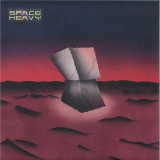
Beautiful, soulful jazz record by Jimetta Rose and The Voices of Creation, a Los Angeles-based community choir, a mainstay of the local scene. Highly recommended!!
The Voices of Creation are a community-based choir led by vocalist, songwriter, arranger, producer and mainstay of the Los Angeles scene Jimetta Rose. Made up of a multigenerational group of mainly non-professional singers backed by some of the city’s finest musicians,their music marries hip strains of gospel with layers of jazz, soul and funk. While aspects of their music might recall Kamasi Washington, The Staple Singers or Sly Stone, Jimetta’s unique vision has resulted in new spiritually-charged forms of music whose whole-hearted embrace of love, joy and peace act as sonic healing balms for the soul.
For Jimetta - whose resume includes collaborations with Miguel Atwood Ferguson, Georgia Anne Muldrow, Sa-Ra Creative Partners, Angel Bat Dawid, Shafiq Husayn, MED and Blu - the very act of creation was part of a healing process: “I was very low at the time and I wrote most of the songs going through hardship. But I found comfort in the songs and a way to adjust my mindset to where things got better. So I thought ‘if this music works for me, maybe it will work for other people’ I believe that every person has their own voice and their own note and that we can use our voices to heal ourselves. That’s the intention behind creating the project.”
After putting out a call on social media for people interested in joining her choir she was met with a sea of replies. Members were chosen in less-than conventional fashion: “I recruited people based on their interest in healing themselves and others, not necessarily on their musical experience or being seasoned performers” she says. Among those accepted into the ever-evolving collective, which was begun initially as a community choir, were the likes of Sly Stone’s daughter Novena Carmel, better known as a radio DJ for KCRW’s flagship breakfast show. Jimetta’s upbringing in the Pentecostal church, where she was a youth choir director, fed into her otherwise intuitive teachings of her songs and arrangements to the inexperienced members with help from the group’s seasoned organ player/co-musical director Jack Maeby.
Produced by Mario Caldato Jr. (Beastie Boys, Seu Jorge) and his wife Samantha Caldato the results show the incredible sense of togetherness and communal spirit that the group had built up over time in the rehearsal sessions. The six tracks of their debut album, a mixture of originals and rearranged covers, are performed in a wide-eyed mix of styles that reflect Jimetta’s vision for borderless music: “It’s new black classical music,” she explains. “It’s all the hodgepodge of being an African American but also with creativity and vision for the future. It has a taste of what is to come and what we can do. What we have gone through and who we are now.”
The group’s propensity for warm and buoyant sonics finds representation on album opener Let The Sunshine In, a sparkling rework of the Sons and Daughters of Lite’s deep jazz classic. Their version finds the group’s dynamic group harmonies offset with Allakoi Peete’s nimble afro-percussive touches and plenty of soul- drenched keys courtesy of pianist Quran Shaheed and organ player Jack Maeby. A similarly uplifting take on Rahsaan Roland Kirk’s choral jazz classic Spirits Up Above follows, with Maeby’s groove-laden organ lines inspiring some gorgeous group harmonies as well as prime solo turns from the likes of Kellye Hawkins, Zavier Wise, Tamara Blue, and Khalila Gardner.
Another Sons and Daughters of Lite cover follows as Jimetta leads the choir in the groove-drenched ode to self-affirmation Operation Feed Yourself. Written as a series of mantras for everyday living, the Jimetta-penned composition How Good It Is harnesses the full transformative power of music to generate a stirring and joyful ode to positivity - it’s chanted declarations bringing out some of the group’s most deeply-felt and affecting vocal performances over some superlative piano and organ accompaniment with a surprise feature vocal from Novena Carmel.
Jimetta’s talent for re-imagining songs in her own light is highlighted in Answer The Call, her vivid re-telling of Funkadelic’s Cosmic Slop: “When I listened to the original song, the Mom in the story was really going through it. I thought of how I could turn this into a song that can encompass the glorification of all mothers and I thought of the Egyptian cosmic goddess Nut. To that mother we’re all the seeds planted in the garden. Answering the call in your life is literally that. Finding out exactly what you’re here for through your heart.”
The album finishes with the standout original gospel number Ain’t Life Grand. Over swaying organs and clapped percussion Jimetta’s lyrical mantras serve to emphasise the good feelings that come to those with a grateful heart. Good feeling is an apt descriptor for the mood of the album as a whole. Its shining positivity provides a welcome ray of light in an increasingly dark world. “It’s a shortcut if you will to the better feelings” Jimetta says. “The hope that we need to keep pressing forward. We are saturated and inundated with images of chaos and destruction, death and hatred. There’s so much we can witness. So, I want to make sure that there is a representation sonically of the other parts that are still there to witness so that we can continue to build those things. So that the systems we support actually reflect what we want to experience. So it’s like: “Don’t give up and Let The Sunshine Into You” and then find out what your purpose is and answer the call.”
Поиск:fer br
Все
Following up his score for the japanese Netflix Anime series “Carole & Tuesday”, Mocky returns to album mode with his new orchestral opus “Overtones For The Omniverse”. Just days before the first Covid lockdowns, Mocky brought a 16 person orchestra comprising of his usual who’s who of underground talent into LA’s Barefoot Studios (and into the same room where Stevie Wonder recorded “Songs in the Key of Life”) to record a pile of scores he had come up with during his previous year’s sabbatical in Portugal. The result is a stunning orchestral album recorded in 36 hours in one or two takes straight off the written page. Shunning the “possible perfection” of today's recording techniques, Mocky looked back as a way to find an alternate future.
According to Mocky:
“We had to do it quick with no rehearsal to capture that big open sound of people working together in a room - in all its imperfect glory. In the imperfections you find the humanity. And in today’s tech driven spaces you have to fight to preserve a space for humanity. I felt a deep desire to create a sonic trajectory path for us to follow as we ascend and evolve our understanding of love and what it means to be human. This is the inspiration for „Overtones for the Omniverse“”.
The album runs the gamut from Steve Reich infused minimalism overlaid with Dorothy Ashby style harp runs (“Overtures”) to atonal analogue synth sounds over Martin Denny style percussion (“Bora!”). There's a classic Mocky crooning number that gives a Jim Henson-esque take on the state of “Humans” and the album as a whole captures Mocky's skill of bringing together the joyful energy of a unique cast of LA collaborators.
Featuring:
Randal Fisher / Flute, Vicky Farewell / Piano, Vocals, Harry Foster / Bass, Vibraphone, Tubular Bells, Vocals Joey Dosik / Organ and Glockenspiel, Vocals, Guilermo E. Brown aka Pw / Percussion, Vocals, Jhan Lee Aponte (TossTones) / Percussion, Vocals, Timpani, Paul Cartwright / Violin, Molly Rogers / Viola, Gabe Noel / Cello, Contrabass, Liza Wallace / Harp, Coco O. / Vocals, Mocky / Compositions, Drums, Vocals, Roland Sh-1000
O for the O Choir :
Nia Andrews, Leslie Feist, Moses Sumney, Durand Bernarr, Eddie Chacon
Recorded at Barefoot Studios, Los Angeles March 6 + 7, 2020.
All songs written by Dominic “Mocky” Salole and published by Heavy Sheet Music/Warner Chappell except "Wishful Thinking" written by Dominic “Mocky” Salole and Matt Corby and "Bora!" written by Dominic “Mocky” Salole, Guillermo Brown, Aponte Poro.
Produced by Mocky, Justin Stanley and Renaud Letang. Mixed by Renaud Letang at Ferber Studios Paris
Mastered by Emilie Daelemans. Cover artwork by Rand Sevilla. Photo by Vice Cooler.
ABOUT MOCKY
Performer, producer, songwriter, composer and multi-instrumentalist, Dominic "Mocky" Salole came to prominence in the Berlin electronic scene of the mid 2000s, releasing three acclaimed solo albums, co-writing and producing classics like Jamie Lidell's "Multiply" and Feist's "The Reminder" and making waves on stage with close collaborators (and fellow Canadians) Peaches, Feist and Chilly Gonzales.
In 2009, his music took a jazz-inflected turn to the acoustic with the release of "Saskamodie" and in 2011, after work in Big Sur on Feist's "Metals", Mocky relocated to Los Angeles, where he quickly established himself as a co-writer with uncommon credentials and eccentric working methods collaborating with L.A.’s brightest breakthrough artists like Kelela, Joey Dosik, Vulfpeck or Moses Sumney.
Whilst in L.A. songs he has written have been sung by Mary J. Blige, Jill Scott and many more and he has collaborated with artists as diverse as Mali’s Bassekou Kouyate and the GZA. His monthly rooftops gigs at the ACE Hotel breathed new life into the LA live scene and Mocky channeled those new creative energies into his fifth full length album "Key Change" and four digital mixtapes/EPs "The Moxtapes" Vol. I-IV.
After co-producing and co-writing Feist's "Pleasure", Kelela's "Take Me Apart" and Joey Dosik's "Inside Voice", in 2018 Mocky released two albums: "Music Save Me (One More Time)" - a collection of the best of Japan-only/unreleased gems and favorites from his so far digital only "Moxtapes" series and "A Day At United", an instrumental jazz album, recorded in a single day in the legendary LA recording studio United Recording.
In 2019 Mocky delved into soundtrack work by collaborating with legendary Anime director Shinichiro Watanabe (Cowboy Bebop) on the first two seasons of the breakthrough show “Carole and Tuesday” (Netflix) for which he won Best Score at the Anime Awards 2020.
The duo of Charles McCloud and Roslyn Johnson made only two albums during their career…but those two albums (Everything Must Change and Spirit of the Living God) are among the most collectible records ever made in the gospel genre. In fact, they are so hard to find that we’re still searching for Spirit of the Living God to scan the artwork, but we managed to snag a copy of their 1981 debut Everything Must Change on the obscure Cheri label (though we may have to pass a collection plate to recoup the cost!).
It’ll just take the first track to show you why these records are in such demand; you have never heard such a soulful (check out those harmonies!), slow-burning rendition of that hoary chestnut “Amazing Grace” in your sanctified life! And with able production by keyboardist Julius Brockington, who played with Larry Young and headed up several outfits of his own, Everything Must Change is a crossover album in the best sense of the word, blending the spiritual fervor of gospel with the danceable grooves of soul and—dare we say it?—disco. Don’t miss the Donny Hathaway cover “Someday We’ll All Be Free,” too. Black vinyl release, first ever reissue in any format…limited to 1000 copies!
"Hungarian guitarist Gabor Szabo (1936-82) issued only three live recordings during his lifetime. Significantly, the first of these, The Sorcerer (1967), remains the most popular album in the guitarist’s all-too abbreviated discography. But there were also More Sorcery (1968) and Gabor Szabo Live with Charles Lloyd (1974), offering Szabo totally in his element and at his bewitching best.
Several more of Szabo’s concert recordings have surfaced in the intervening years, including this one, superbly captured for radio broadcast live in 1976 at the 600-seat Agora Ballroom in Cleveland, Ohio. It is a revelation. There is a sense here that concert patrons may have been hearing an altogether different Gabor Szabo than record buyers.
For one thing, Szabo is heard fronting what is likely his own group, rather than an army of studio musicians. In 1976, Szabo was leading a tremendous quartet with George Cables (or Joanne Grauer) on piano, Tony Dumas on bass and Sherman Ferguson on drums. Szabo had not had a band with this much jazz clout since his famed quartet with Jimmy Stewart in 1967-68 – and it is a union worth savoring: Szabo’s records during this period were light, at best, on jazz.
It’s unclear if any of these musicians are on the Agora date, but as Dumas’s “It Happens” opens the program, it’s a good bet, at least, that the bassist is on board here. But as Szabo’s ’76 quartet is not known to have recorded a studio record, Live in Cleveland is the closest thing to what a mid-seventies Szabo jazz album would sound like.
Gone, are the strings, vocals and concessions to commercial consideration so prevalent on so many of Szabo’s studio records at the time. What is present, though, is fine craftsmanship, tremendous interplay, and the exciting improvisation that good jazz always yields.
This particular concert was part of Sansui’s “New World of Jazz,” a series of 13 hour-long jazz concerts recorded at Cleveland’s iconic Agora Ballroom and broadcast over 40 FM radio stations. The series was sponsored by Sansui Electronics, a Japanese manufacturer of audio and video equipment, which previously sponsored a similar series of rock concerts recorded at the Agora as well.
Sansui was promoting its matrix QS 4-channel sound system – offering, what was considered at the time, superior diagonal separation and stereo compatibility. The firm, partnering with Agora Ballroom and Agency Recording Studio owner Hank LoConti (1929-2014), was looking to take advantage of what they rightly felt was the then-current jazz renaissance.
Each show’s 16-track master tape was mixed through the Sansui QS 4-channel encoder,” according to an August 1976 Billboard article detailing the arrangement, “for distribution to the 40 FM stations throughout the United States that bought the series” – allowing for three commercial spots for local dealers to advertise."
The recording is available for the first time on CD and VINYL. Mastering by grammy-nominated Jessica Thompson.
Lyburnum Wits End Liberation Fly was the one and only full-length album by experimental post-punk innovators, Moss Icon . Recorded in 1988, Lyburnum would not be released until 1993 - several years after Moss Icon 's demise. Originally released on Vermiforn - the esoteric noise label founded by Sam McPheeters of Born Against - the vision that Moss Icon 's Tonie Joy had for Lyburnum failed to manifest in its finished product. Of the process of preparing Lyburnum for its eventual release, Joy recalls, "My creative mind was well into its next chapter, onto an apocalyptic order referring to Joy's post- Moss Icon band, Universal Order of Armageddon . Getting Lyburnum to look like what I envisioned in my mind became an uphill battle that involved misplaced photos, misunderstood instructions by the printer, increasing apathy, and lack of advanced printing knowledge (on my part), amongst many other technical and creative issues. With a deadline near it ended up being an it-is-what-it-is situation. Some corrections were attempted for the second pressing the following year, but a further lack of coordination between various parties saw it losing even more of the original vision." Despite these challenges and shortcomings, Lyburnum Wits End Liberation was instantly cherished as a feral masterpiece - a singular entity that would become a defining influence on post-hardcore and emo in the 1990s and beyond. Nothing before sounded like this, and nothing since has quite captured the same mysterious fury. Now, finally, Moss Icon 's seminal Lyburnum Wits End Liberation Fly LP will be released exactly as it was always intended to look, sound, and feel. The artwork has been fully restored, and includes previously unpublished photos that were inadvertently missing from the original release. Brilliantly remastered by Alan Douches at West West Side Music, the vinyl has been newly cut by Bob Weston at Chicago Mastering Service, and pressed onto audiophile-grade vinyl at Record Technology Inc.
CRYSTAL CLEAR VINYL
Lyburnum Wits End Liberation Fly was the one and only full-length album by experimental post-punk innovators, Moss Icon . Recorded in 1988, Lyburnum would not be released until 1993 - several years after Moss Icon 's demise. Originally released on Vermiforn - the esoteric noise label founded by Sam McPheeters of Born Against - the vision that Moss Icon 's Tonie Joy had for Lyburnum failed to manifest in its finished product. Of the process of preparing Lyburnum for its eventual release, Joy recalls, "My creative mind was well into its next chapter, onto an apocalyptic order referring to Joy's post- Moss Icon band, Universal Order of Armageddon . Getting Lyburnum to look like what I envisioned in my mind became an uphill battle that involved misplaced photos, misunderstood instructions by the printer, increasing apathy, and lack of advanced printing knowledge (on my part), amongst many other technical and creative issues. With a deadline near it ended up being an it-is-what-it-is situation. Some corrections were attempted for the second pressing the following year, but a further lack of coordination between various parties saw it losing even more of the original vision." Despite these challenges and shortcomings, Lyburnum Wits End Liberation was instantly cherished as a feral masterpiece - a singular entity that would become a defining influence on post-hardcore and emo in the 1990s and beyond. Nothing before sounded like this, and nothing since has quite captured the same mysterious fury. Now, finally, Moss Icon 's seminal Lyburnum Wits End Liberation Fly LP will be released exactly as it was always intended to look, sound, and feel. The artwork has been fully restored, and includes previously unpublished photos that were inadvertently missing from the original release. Brilliantly remastered by Alan Douches at West West Side Music, the vinyl has been newly cut by Bob Weston at Chicago Mastering Service, and pressed onto audiophile-grade vinyl at Record Technology Inc.
Mahres's fourth release with Nein Niemals, an ep dedicated to breaks music well mixed and co-produced by Chris Key. Nice original artwork on the labels and sticker on the cover.
Limited to 200 copies
- A1: Say Laa Vee - Ténéré
- A2: Disco Féroce - Chien Méchant
- A3: Kerbal Filter (Homeworked) - Grand Soleil
- A4: L'autre Dimension (Ft Oogo) - La Fine Equipe
- A5: Thirstday - Vect
- A6: Sicily - Fulgeance
- B1: Brad Bass - Confusion Club
- B2: Deep Tongue - Oogo & Blanka
- B3: Right On Time - Phantom Traffic
- B4: Fisheye - Hyas
- B5: Real Og - Le Bag
- B6: Every Day - Jeff The Fool
Nowadays Records has never lost its taste for compilations. And after having released dozens of them to date, the label is planning to release new ones for the occasion, directly from the Club Nowadays' aerial nights, where artists from different scenes, lesser-known heads and label figures are mixed together, always with this key word: openness.
More than just a name for a party or a compilation, Club Nowadays is also becoming a real artists' collective.
On the 1st compilation "Club Nowadays, Vol. 1" released in June 2022, we found house and techno sounds in the Nowadays style by the artists Chien Méchant, Grand Soleil, La Fine Equipe, Fulgeance, Trifouille1er, Ténéré and Vect (who also signed the whole visual DA of the project).
Nowadays is back with "Club Nowadays, Vol. 2", with other artists such as Phantom Traffic, Le Bag, Jeff The Fool,... In a word, Nowadays gives us its definition of club music. It may not be universal, but it is unique and inseparable from the label's image.
The “Heaven” EP features producer-extraordinaire Leonard Charles at the helm, collaborating with prodigious artists from New Zealand (his home country) and the USA, to create an wildly eclectic E.P. project with the common underlying thread of basement funk knitting it together. This presentation of funk is truly a legitimate foundation for the heads that need it: built upon solid soul/jazz chord progressions and played on original musical equipment/gear from the 80’s and 90’s. The record features an exclusive remix of the song “Nine Lives” that he co-wrote with boogie/funk legend Leroy Burgess, and additionally features stellar collaborations with Guilty Simpson, Zyah Belle, Reality Jonez and A.C. Freezy. Jeremy ‘Leonard Charles’ Toy is a producer / artist / musician from Auckland New Zealand who has played on records for Mark De Clive Lowe, Recloose, Julien Dyne and Ladyhawke. He has performed music with Randy Crawford, Hugh Masakela, Kimbra, Maynard Ferguson, Ronald LaPread (the Commodores) and has collaborated with Grandmaster Caz, Guilty Simpson (The Leonard Simpson Duo), Georgia-Anne Muldrow, Dudley Perkins and Wildchild. He has released music on his own imprint, From The Crate Records and Jakarta Records, Hit + Run, Wonderful Noise, Hobo Camp and now CQQL Records.
- A1: Mirror (2:17)
- A2: I'm Back Sleeping Or Fucking Or Something (3:10)
- A3: The Life (2:45)
- A4: Divinity Cove (4:57)
- A5: Locket (4:34)
- B1: Kick The Can (2:49)
- B2: Lyburnum Wits End Liberation Fly (11:24)
- B3: Cricketty Rise (Haverton Road - Browns And Greens) (1:41)
- B4: As Afterwards The Words Still Ring (3:53)
- B5: Happy (Unbounded Glory) (5:20)
Crystal Clear Vinyl[31,30 €]
Lyburnum Wits End Liberation Fly was the one and only full-length album by experimental post-punk innovators, Moss Icon. Recorded in 1988, Lyburnum would not be released until 1993 several years after Moss Icon’s demise.
Originally released on Vermiforn – the esoteric noise label founded by Sam McPheeters of Born Against – the vision that Moss Icon’s Tonie Joy had for Lyburnum failed to manifest in its finished product. Of the process of preparing Lyburnum for its eventual release, Joy recalls, “My creative mind was well into its next chapter, onto an apocalyptic order referring to Joy’s post-Moss Icon band, Universal Order of Armageddon.
Getting Lyburnum to look like what I envisioned in my mind became an uphill battle that involved misplaced photos, misunderstood instructions by the printer, increasing apathy, and lack of advanced printing knowledge (on my part), amongst many other technical and creative issues.
With a deadline near it ended up being an it-is-what-it-is situation. Some corrections were attempted for the second pressing the following year, but a further lack of coordination between various parties saw it losing even more of the original vision.”
Despite these challenges and shortcomings, Lyburnum Wits End Liberation was instantly cherished as a feral masterpiece a singular entity that would become a defining influence on post-hardcore and emo in the 1990s and beyond.
Nothing before sounded like this, and nothing since has quite captured the same mysterious fury. Now, finally, Moss Icon’s seminal Lyburnum Wits End Liberation Fly LP will be released exactly as it was always intended to look, sound, and feel. The artwork has been fully restored and includes previously unpublished photos that were inadvertently missing from the original release.
Brilliantly remastered by Alan Douches at West West Side Music, the vinyl has been newly cut by Bob Weston at Chicago Mastering Service, and pressed onto audiophile-grade vinyl at Record Technology Inc.
- A1: Mirror (2:17)
- A2: I'm Back Sleeping Or Fucking Or Something (3:10)
- A3: The Life (2:45)
- A4: Divinity Cove (4:57)
- A5: Locket (4:34)
- B1: Kick The Can (2:49)
- B2: Lyburnum Wits End Liberation Fly (11:24)
- B3: Cricketty Rise (Haverton Road - Browns And Greens) (1:41)
- B4: As Afterwards The Words Still Ring (3:53)
- B5: Happy (Unbounded Glory) (5:20)
Black Vinyl[27,69 €]
Lyburnum Wits End Liberation Fly was the one and only full-length album by experimental post-punk innovators, Moss Icon. Recorded in 1988, Lyburnum would not be released until 1993 several years after Moss Icon’s demise.
Originally released on Vermiforn – the esoteric noise label founded by Sam McPheeters of Born Against – the vision that Moss Icon’s Tonie Joy had for Lyburnum failed to manifest in its finished product. Of the process of preparing Lyburnum for its eventual release, Joy recalls, “My creative mind was well into its next chapter, onto an apocalyptic order referring to Joy’s post-Moss Icon band, Universal Order of Armageddon.
Getting Lyburnum to look like what I envisioned in my mind became an uphill battle that involved misplaced photos, misunderstood instructions by the printer, increasing apathy, and lack of advanced printing knowledge (on my part), amongst many other technical and creative issues.
With a deadline near it ended up being an it-is-what-it-is situation. Some corrections were attempted for the second pressing the following year, but a further lack of coordination between various parties saw it losing even more of the original vision.”
Despite these challenges and shortcomings, Lyburnum Wits End Liberation was instantly cherished as a feral masterpiece a singular entity that would become a defining influence on post-hardcore and emo in the 1990s and beyond.
Nothing before sounded like this, and nothing since has quite captured the same mysterious fury. Now, finally, Moss Icon’s seminal Lyburnum Wits End Liberation Fly LP will be released exactly as it was always intended to look, sound, and feel. The artwork has been fully restored and includes previously unpublished photos that were inadvertently missing from the original release.
Brilliantly remastered by Alan Douches at West West Side Music, the vinyl has been newly cut by Bob Weston at Chicago Mastering Service, and pressed onto audiophile-grade vinyl at Record Technology Inc.
- A1: Winterwunderland
- A2: Angriff Auf Santa Claus
- A3: Sabotage
- B1: Ein Sack Voller Geheimnisse
- B2: 36 × Elf
- B3: Bruder Justus
- C1: Elf Gegen Drei
- C2: Märchenstunde
- C3: Köder Mit Schleife
- D1: Auf Frischer Tat
- D2: Kurzfinger
- D3: Der Alligator
- E1: Eine Schräge Nachtmusik
- E2: Die Magische Laterne
- E3: 96930 Arctic Code
- F1: Die Übergabe
- F2: Schritte Im Dunkeln
- F3: Eine Schreckliche Überraschung
- G1: Die Frau Vom Polarkreis
- G2: Elf Auf Der Flucht
- G3: Verfolgte Verfolger
- H1: Im Würgegriff Der Rentiere
- H2: Nächstes Weihnachten
- H3: Mitarbeiter Des Monats
Es weihnachtet sehr in Rocky Beach: Auf der Suche nach den passenden Geschenken geraten die drei ??? in einen neuen Fall in 24 Kapiteln.Beim Einkaufsbummel im Kaufhaus Garcy's werden Justus, Peter und Bob Zeugen eines Überfalls. Kein geringerer als der Weihnachtsmann des Garcy´s wird angegriffen. Jemand hat es auf den Sack voller Geschenke abgesehen ... und dieser jemand ist ausgerechnet als Weihnachtself verkleidet. Die drei ??? heften sich an die Fersen des Diebes und finden heraus, auf welches Weihnachtsgeschenk es der Elf abgesehen hat ...Sprecher:innen & MitwirkendeErzähler Axel MilbergJustus Jonas, Erster Detektiv Oliver RohrbeckPeter Shaw, Zweiter Detektiv Jens WawrczeckBob Andrews, Recherchen und Archiv Andreas FröhlichTante Mathilda Karin LienewegOnkel Titus Erik SchäfflerSanta Claus Claus WilckeFotograf Stephan SchadSandy Angela StresemannMutter Pamela PuntiMr. Puckle Christian RudolfMrs. Hatchett Petra KleinertMatty Yoshua Rudolf 1.Security Patrick Berg2.Security Philipp Stumpp3.Security Max König4.Security Tony Curting Pater Achim Schülke Engel Theresa Underberg1.Polizist Patrick Baehr2.Polizist Alexander Mettin3.Polizist Douglas WelbatAngestellte Katrin DeckerLarry Jan LangerLuke Bigelow Harald EffenbergMolly Regine LamsterEmmett Reinhold KammererDurchsage Andrea LüdkeKrankenschwester Scarlett LubowskiMann Helge HalvéBandenchef Lars SchmidtkeBuch und Effekte: André MinningerRedaktion: Maike MüllerRegie und Produktion: Heikedine KörtingTitelmusik: Simon Bertling & Christian Hagitte (STIL)Musik: Constantin Stahlberg, Jens-Peter Morgenstern und Thomas KörtingCover-Illustration: Andreas RuchDesign: Atelier SchoedsackBasierend auf dem gleichnamigen Buch von Marco Sonnleitner, erschienen im Kosmos Verlag, Stuttgart. © 2021Mit freundlicher Genehmigung der Universität Michigan. Based on characters created by Robert Arthur.Die drei ??? © 2022 Franckh-Kosmos Verlags-GmbH & Co. KG(P) & © 2022 EUROPA a division of Sony Music Entertainment GmbH
Valencian producer Pépe's love of iridescent melodies, velvety pads and complex rhythms has seen him skilfully combine house, bass music and breakbeat in recent years. His music is globally reaching, having garnered attention from top artists including Ben UFO, Peggy Gou, Shanti Celeste, Moxie, Mount Kimbie and Disclosure.
His heartfelt, mercurial and emotive sound is ever present on his new album for Lapsus, which also incorporates a lush sonic forest, resplendent in detail and jam packed with influences. The album 'Reclaim' opens the door to experimentation and sound design, while embracing the braindance and hyperpop sphere with surprising maturity. It is an amalgamation of electronic sounds and pulsating structures in which orchestral sounds, folk music, ambient textures and an strong vocal presence, both synthetic and authentic, sparkle.
'Reclaim' imagines a post-human future, where nature once again reclaims lost ground and is free to flourish and take root around manmade structures. Pépe exhibits his personal reverence for the work of Antonio Cortés Ferrando, the architect behind the Espai Verd building, which broke architectural and urban planning norms by using computation to create structures that promote the organic growth of foliage. It is a building designed for the future, where flora cultivates indefinitely.
In Pépe’s own words, "At a time when we have witnessed how nature strives to regain ground, once humans are removed from the streets, it is important to start thinking critically about new techniques in the creation of art and design, and imagining a future where posterity is embodied in the rejuvenation of a greener world".
“… an album which shows that Carter Tutti are in a state of continuing evolution” – The Wire. 2007’s Feral Vapours of the Silver Ether will be available here for the first time on vinyl, and was the second release under the Carter Tutti name. On it, the electronic and the acoustic are merged in a seamless, crafted album that is awash with echoes of the sea, the moon, the open road, and flatlands.
Die färöische Folk-Singer/Songwriterin EIVOR bringt mit ,Slor" bereits ihr zweites Studioalbum innerhalb eines Jahres raus. ,Slor" ist eine Sammlung neu komponierter Songs, die EIVOR in ihrer Muttersprache - färöisch - eingesungen hat. Das Album ist der Nachfolger des englischsprachigen Albums ,Bridges". Und auch wenn es sich um zwei unterschiedliche Alben in unterschiedlichen Sprachen handelt, gibt es eine Verbindung der beiden Platten. Wo ,Bridges" leicht und vor allem sehnsüchtig war, klingt ,Slor" eher rau und reflektierter. ,Bridges" wurde von Freundschaft, Liebe und Heimweh inspiriert. Es thematisiert die Brücken zwischen uns, Beziehungen zwischen Menschen, Plätzen und auch Dingen, die uns berühren. ,Slor" hingegen gibt sich der Fernsucht hin, thematisiert Trennungen und die Suche nach Frieden. Ein Schleier kann ein Symbol für eine Grenze zwischen Gegenwart und Vergangenheit sein, doch ein Brautschleier hingegen repräsentiert vor allem Glück und Hingabe. EIVOR selbst erklärt den Prozess der Geschwisteralben: ,Als ich die Songs geschrieben haben, erfolgte das Songwriting erst auf Englisch und direkt danach kam es auf Färöisch in meinen Kopf - wie eine Art Spiegelbild." Somit handelt es sich nicht nur um zwei voneinander getrennte Werke, sondern auch um einen zusammengesetzten Moment im Songprozess.
After the ambitious A Distant (Dark) Source (2018) and the subsequent artistic triumph of its live recording in 2021, French avant-garde metal outfit HYPNO5E return with their sixth studio album. Once more, these four visionary musicians and cinematographers take us back to the lost shores of the palaeolithic Lake Tauca, where we dive deeper into its dark source to fnd vibrant visions of a memory both distant and hazy as well as warm and evocative. Sheol shows HYPNO5E at the top of their game, revealing the epitome of their idiosyncratic sound while also exploring new and exciting aspects of their artistic identity. Since 2006 HYPNO5E have been taking grand strides in honing their brand of cinematographic metal, with each of their albums developing elements that would become essential building blocks to their sound. Their 2007 debut album Des Deux l'Une Est l'Autre harnessed a raw, chaotic energy, while the following Acid Mist Tomorrow (2012) saw them apply a hazy filter to their ferocious sound. On Shores of the Abstract Line (2015) HYPNO5E already transformed into the true modern metal grandmasters they are today, while the special soundtrack album Alba - Les Ombres Errantes explored a more subdued acoustic side of the band. Sheol sees the band sounding warmer and brighter than anywhere else in their storied discography, and the arrival of new drummer Pierre Rettien and bass player Charles Villanueva adds a fresh touch the classic HYPNO5E sound. The sweeping finales of «Lands of Haze» and «The Dreamer and His Dream» as well as the pastoral qualities of the quiet finger-picked parts on «Bone Dust» and «Lava From The Sky» hearken back to the old prog rock records of the seventies, albeit with an updated sonic palette and modern production parameters. Besides, these eight tracks also see the band carefully exploring new patterns, shapes, and forms within their own musical universe: from the alternating use of ritardando and accelerando on the aforementioned rim-clicks to the increased employment of string sections and vocal harmonies. With the addition of a whole new palette of warmer and brighter tones, HYPNO5E superbly bridge the sounds of the modern progressive metal and retro prog-movements creating an evocative sonic experience. FOR FANS OF Gojira, Opeth, Periphery, Uneven Structure, Steven Wilson Limited (100 copies ww) Single Colour (Gold Vinyl) Edition!
Drumcode’s beloved A-Sides compilation makes a welcome return after a two-year absence, with a mammoth 25-track feast covering every shade of the techno spectrum split across seven, 12 inch parts. The project was devised in 2012 as a way of showcasing the wealth of strong material Adam Beyer receives each year, which due to Drumcode’s busy release schedule, might not otherwise find a home on the label. Since then, it’s grown to become an essential fixture on the techno release schedule and a marker for where the genre stands in any given year.
For part four, Nicolas Taboada cranks the dial on ‘Circles’ melding breakbeats with modulated vocal samples and underlying techno power, as BEC hits with ‘Vibration’ a ferocious, siren signalling rocket.
On the flip, Avision’s ‘Find Myself’ leads listeners into a state of hypnosis with warped vocal refrains, storming kicks and rising synths. Closing out the EP Cosmic Boys unleash a robot wielding, trance flavoured whirlwind.
Sintering or frittage is the process of compacting and forming a solid mass of material by heat or pressure without melting it to the point of liquefaction. The material produced by sintering is called sinter. The word sinter comes from the Middle High German sinter, a cognate of English cinder.
Born in the mid-60s, German musician and sound designer Uwe Zahn came on the scene of electronic music with his debut full-length album for DIN, titled “Atol Scrap.” In the very same year of 2000, the influential City Centre Offices label has signed Arovane for his majestic “Tides,” which has withstood the test of time for over two decades now. Back then, electronic music was split between the dance floors and the bedroom listening, with the latter carrying the now-famous acronym for Intelligent Dance Music. And Zahn’s compositions were indeed just that – more than a gimmicky, knob-twisting, stuttering randomization of experimental rhythms and tone, Arovane’s music evoked real emotion which has assembled his followers from around the globe. But his arrival on the scene was more than a predictable trajectory. Zahn’s sound began to take shape in the late 80s when the cut-up hip-hop beats were layered with synthesizer pads and looped samples. This experimentation progressed into what the 90s coined as breakbeat and glitch.
As the 2000s rolled over, and the monumental imprints, such as Skam and Warp, honed their staple repertoire defining the future of electronic music, City Centre Offices had a staple of their own. Often referenced alongside Boards of Canada and Autechre, Arovane’s sound quickly gained a discerning audience, tuning into his melancholic melodies, advanced textures, and complex polyrhythms. The pinnacle of his production was released in 2004, when suddenly, on “Lilies,” Zahn signed off with the final track, which he has titled “Good Bye Forever.” And then there was silence. For nearly nine years, the scene and yours truly mourned the loss of Arovane, assuming that he’s given up. That is until, in 2013, Zahn came out with a brand new album, “Ve Palor,” on the surviving post-IDM imprint, n5MD.
While on hiatus, Uwe spent his time researching, reconnecting, and reflecting on all he’s built. The sound experiments went on, and so did the music scene, morphing, dissolving, re-shaping itself into a new form for new followers. During that time, Zahn spent some time with sound design, creating patches for Access Virus TI, as well as sample packs for various sound developers. After “Ve Palor,” Zahn began collaborating with various musicians from around the world, exploring, directing, and fusing their distinguished sound with his own. On his subsequent releases, he shared credits with ambient artists Porya Hatami, Hior Chronik, Darren McClure, and even yours truly. During our collaboration, Zahn often described the process of building a new vocabulary for our very own defined language, with which my piano spoke through sound.
With nearly two dozen studio releases under his belt, numerous EPs and singles, and just as many appearances on various compilations, Zahn continues to split his time between his fascination with sound design, sonic programming, and musical composition, which sees the light via his ongoing projects, releases, and contributions towards audio plug-ins, software synths, and sound sets for advanced hardware. It’s effortless to slot Zahn’s sound between the genres, scenes, and names, but very difficult to peel apart, define, and then express the essence using words. However, what is simple and essential for the ones who understand, is recognizing, admiring, and subsequently falling in love with all that is encompassing of Arovane. (by Mike Lazarev)
- A1: Danse Hongroise N5 - Orchestre Philharmonique De Berlin / Herbert Von Karaja
- A2: Concerto Pour Violon, Final - Orchestre Philharmonique De Berlin / Rudolf Kempe / Yeh
- A3: Symphonie N3,In F, Op.90 - Orchestre Symphonique De Vienne / Wolfgang Sawallisch
- A4: Danse Hongroise N1 - Orchestre Philharmonique De Berlin / Herbert Von Karaja
- B1: Valse Pour Piano Op.39 N15 - France Clidat - Valse Pour Piano Op. N°39 N°15
- B2: Concerto Pour Piano Et Orchestre No 2 En Si Majeur, Op 83 - London Symphony Orchestra / Janos Ferencsik - Concerto
- B3: Op.49 No.4 Wiegenlied - Suzanne Danco (Soprano) / Guido Agosti (Piano) - Op.49
- B4: Symphony No.2 In D, Op.73 Iv - Orchestre Philharmonique De Berlin / Wilhelm Furtwängle
Third Pressing of Gilroy Mere's Adlestrop on blue vinyl with a blue cover.
Adlestrop is inspired by the remains of the rural railway stations, that were closed in the wake of the 1963 Beeching Report.
“This record started with Edward Thomas’s poem Adlestrop and a chance visit to the village that it takes its title from. I wanted to see the station, but found it was no longer there, all that remains is the old platform sign Adlestrop, now part of a local bus shelter. However as I walked around the village I was struck that; “all the birds of Oxfordshire and Gloucestershire” were still singing away - like ghosts from Thomas’ verse.
Visiting Adlestrop spurred me to get hold of a copy of the Beeching Report which, in Appendix 2, lists all the services and stations recommended for closure in the 1960s. The names read like an epic British poem, from halts to branch-line stops and stations and singular terminals for public schools, mines, ferries and even an asylum. There’s Ravenscar where a resort was planned but got no further in its construction than the station, and a hotel - the grid marked out for the roads never laid. Bethesda, a short branch line from Bangor up towards Snowdonia, was used for slate and passengers and is now just a quiet green valley, Christ’s Hospital on the old Cranleigh Line, opened with seven platforms to cope with the daily flood of pupils attending the famous school nearby which never came as it was a boarding school. Many of the stations have vanished, with just fields and car parks left in their place, some are repurposed as houses, or shops, or abandoned as artefacts of a lone-gone industrial past.
Armed with a digital recorder, and with a copy of Beechings Report as my guidebook I made notes and recordings on my travels around the country, and used them as the starting point for a set of pieces that try to capture the fading layers of history, in the areas where the stations had once stood making sure each track retains something of the real place within them. Back in my studio I reacted, improvised, and crafted musical responses to each station, trying to capture the ghosts and former lives of the stations and their imprint on the present.”
Gilroy Mere is Oliver Cherer who trading as Dollboy, Rhododendron, and Australian Testing Labs as well as his own name has meandered his way through the backwaters of left of centre English folk, ambient and electronic music, issuing numerous albums of original music to much critical acclaim via highly regarded boutique labels such as Static Caravan, Second Language, Deep Distance, Polytechnic Youth, and Awkward Formats.