
pre-ordina ora20.11.2025
dovrebbe essere pubblicato su 20.11.2025
4,62 €
dovrebbe essere pubblicato su 20.11.2025

Trumpeter, rapper and sonic wanderer Pan Amsterdam has carved out one of the most distinctive voices operating at the intersection of jazz and hip-hop today.
Pan Amsterdam is a musical enigma wrapped in an enduring riddle. His creator is a jazz musician from Houston who’s found fame working with Detroit punk rock God, Iggy Pop, and British indie royalty, Metronomy, and now makes shapeshifting, adventurous hip hop out of the music’s spiritual home, New York.
He’s an irreverent character born out of frustration and named after a misunderstanding, yet one who’s on the verge of releasing his fifth album of truth-slaying, genre-crossing rhymes and beats. The result is a catalogue that feels both deeply rooted in Black American musical tradition and completely untethered by convention.
Pan Amsterdam returns with ‘Panarama’, his fourth full length album and a bold reassertion of his hip hop identity, released via Def Pressé. Created by Houston-born, New York-based musician and composer Leron Thomas, the record finds Pan Amsterdam embracing the harder edges of his sound while continuing to blur the lines between jazz improvisation, abstract rap, punk attitude, and experimental production
Written as a response to contemporary life and the endless cycle of information, conflict and distraction that defines modern culture, ‘Panarama’ unfolds as a stream of consciousness journey through hyper-normalised realities. Across sixteen tracks, Thomas navigates social commentary, personal reflection, absurdist humour, and cultural critique, delivering his observations with the same spontaneity and freedom that have become central to the Pan Amsterdam project
Lead single ‘Szechuan Beef’, produced by acclaimed collaborator 1FS, serves as one of the album’s defining statements. Built around Thomas’ signature free-flowing delivery, the track explores the overwhelming nature of contemporary life, where domestic conflict, social division, entertainment scandals and political discourse become flattened into a constant stream of content.
In Thomas’ own words: “My stream of consciousness style comes quite naturally to me due to the conditioning of scroll down culture where everything, no matter how minor or extreme, is hyper normalised.”
Elsewhere, the track ‘Vanilla Ice’ was written in response to widely publicised ICE killings and the speed at which tragedy is absorbed and forgotten within online culture. Thomas channels the anxiety and emotional disorientation of endlessly consuming information, allowing his thoughts to unfold in real time as social commentary collides with everyday digital noise. The result is both deeply personal and sharply observational, reflecting the fragmented reality of modern life. Other album highlights include the cinematic, Interpol-esque opener - ‘Old Friend’ complete with shimmering guitar lines and an far-reaching introspective, no-filter vocal as Thomas teams up with Nick Zinner (Yeah Yeah Yeahs) and Brad Truax (Interpol) across multiple tracks, often the production traverses left-field indie territory, but always maintaining Pan Amsterdam’s unique musical identity throughout. For the hip hop purists and beats lovers there are plenty of riches to discover from the clever nostalgic sample flips of ‘Cutlery’, the sleepy lofi of ‘Shuriken’ and the wonky LA beat scene / early Flying Lotus era beats of ‘Drunken Noodles’ - all boasting quick witted lyricism. ‘Deep Fried Shiney Things’ explores early electro and industrial sonics while album finisher is an upbeat new wave / indie band cut which sees Thomas take a break from rapping, but of course never letting up on the sharp observations nonetheless
While his previous record explored more alternative territory, ‘Panarama’ marks a deliberate return to rap, as Pan Amsterdam explains:
“I just wanted to do a rap album again.I enjoyed making my last album, but I felt like rapping again. I like to have the freedom to move in between musical worlds that suit the current state I’m in. Frequency accommodating frequency.”
This philosophy runs throughout the album. Tracks move effortlessly between jazz-inflected arrangements, experimental beats, punk energy and underground hip hop aesthetics, allowing ideas to evolve organically rather than conforming to traditional structures. Thomas describes himself as an improviser first and foremost: “I think like an improvisor. That’s how my albums pretty much move. It’s improvisation.”
Featuring additional contributions from Spice Programmers, AnOtter and Mr. Shn, ‘Panarama’ presents a wide-ranging cast of collaborators while remaining firmly rooted in Thomas’ singular creative vision. The record embraces contradiction, humour and unpredictability, capturing fleeting thoughts and observations with the same freedom and spontaneity that define jazz improvisation itself.
A musical enigma wrapped in an enduring riddle, Pan Amsterdam has built a reputation as one of contemporary music’s true outsiders. The project emerged from frustration, experimentation and artistic freedom, with Thomas drawing equally from his background as a jazz musician and his collaborations with artists including Iggy Pop and Metronomy. Operating from New York while carrying the spirit of Houston’s musical heritage, Pan Amsterdam has developed a distinctive voice that sits comfortably between avant-garde jazz, underground hip hop and experimental music.
Reuniting with Def Pressé for ‘Panarama’, Thomas explores what he describes as the more hardcore side of his artistic identity:
“They let me do anything and everything I wanna do so long as it’s on audio, and I need that freedom. What may verbally be perceived as vulgar to one group of people may be very thoughtful and a poignant description of the times that we’re presently in, so I’m glad that I’m part of a label home that understands that.”
dovrebbe essere pubblicato su 16.10.2026

Prolific beat pharmacist par excellence Brendon Moeller continues his hot streak with a return to Samurai to serve up the exquisite craftsmanship of Shadow Language. Across 15 fresh productions the seasoned house and techno producer demonstrates yet more variations on his rejuvenated sound since pivoting towards 160 tempo zones. Heavyweight dub techno pulses collide with D&B pressure and dubstep snarl, delivered with devastating restraint and mediative warmth.
Moeller's dub-informed, high-grade production hit a hot streak as he started to experiment with faster tempos and more broken rhythms, reaching into thrilling new sound fields where fast-slow rhythmic intrigue meets with spatial subtlety and constantly evolving synth voices. The past year has seen him release a swathe of albums, from Further on Samurai to outings on Constellation Tatsu, ESP Institute and Quiet Details that all burst with inspiration, each distinct from the last and offering an original perspective on this rich seam of crossover electronics.
Shadow Language shows Moeller burrowing even deeper into this new era of his work, continuing the hypnotic approach set out on Further while edging more forthright ingredients into the mix. From the outset 'Division By Zero' hits with immediacy even as it dips into a dubwise breakdown, with snatches of vocal and even the iconic loom bird making the slightest of appearances. 'Feral Hymn' finds a curious kind of uplift in the synth chord that twists in and out of the mental techno murmurations of the rhythm section. 'Impermanence' has some snarling bass that belongs in the gnarliest tech-step, while the nagging hats ticking through 'Junkyard Syntax' hint at a shockout without resorting to brute force. The majestic dub techno chords of 'Driftform' create a through-line across Moeller's extensive catalogue, but here they dominate the mix above a spongy bed of sub bass throb and framed by the tiniest slithers of percussion.
Throughout the album, it's the implications Moeller suggests with the tools at his disposal that create a powerful energy. Restraint governs the delivery, guiding the listener in deeper until they find a maximal experience from each elegantly understated roller. The weight and presence is abundant across every track, fuelled by the invigorating power of each tone and frequency while avoiding the clutter of overloaded arrangements.
Finding the notes in between and half-hidden rhythms, Moeller himself perfectly summed up his latest opus as he continues to develop his own compelling Shadow Language.
Disponibile in Stock e pronto per la spedizione

Roberto Musci, born in Milan in 1956, studied guitar, music and electronic instruments. From 1974 to 1985 he traveled the world studying African, Indian, Arabic and Oriental music, recording ethnic music “in the field,” studying and collecting ethnic musical instruments from all over the world. His self-produced debut album, “The Loa of Music,” is a seminal work of staggering originality and extraordinary beauty in which field recordings, musique concrète, electronics, synthesis and instrumentation are interwoven, drawing on the countless musics from around the world that he has recorded. The subsequent “Water messages on desert sand,” composed with Giovanni Venosta, was nominated for a Grammy in the UK in 1987. In the 1980s and 1990s he broadcast ethnic and electronic-experimental music from Rai and Radio Popolare radio stations. He has also composed and played music for videos, commercials, dance, poetry, theater, composed soundtracks and accompanied silent films live. From 1980 to the present, he has played with many Italian and European musicians: Giovanni Venosta, Claudio Gabbiani, Walter Prati, Giorgio Magnanensi, Massimo Cavallaro, Massimo Mariani, Moni Ovadia, Roberto Zorzi, Chris Cutler, Jon Rose David Moss, Steve Piccolo, Elliott Sharp, Keith Tippett and the Third Ear Band.
The theme of travel, ethnicities and mysticism are a pivotal point in this new album of his as well, demonstrating once again how music needs absolutely no sharp lines of demarcation. The music is one.
It goes from the search for deep meanings in a time spent in a Hindu monastery (Ashram) listening to mantras and studying Buddhist philosophy (The Principle Of Things) to space explorations and human settlements on the Moon or Mars wondering how man will live and what he will bring to the new worlds imagining that Sufism, an Islamic mystical religion, will accompany him in the discovery of new worlds (Derviches On Mars). In Goodbye Monsters, harmony and peace are sought. Memories Of A Piano Player is a tribute to Keith Tippett, a great pianist (King Crimson , Centipede, Mujician) with whom he played in several concerts and with whom I spent evenings talking about music, food and Italian wine. Quantum State focuses on how quantum mechanics is creating a revolution in the way of thinking and dividing reality into infinite Parallel Worlds. Panthalassa is the vast ocean that surrounded Pangea and blends South American marimba music and traditional Chinese music. Burn The Shadows is a tribute to the fascinating Indonesian shadow theater, from the stories told and the atmosphere created during the long plays told in the sacred Indian texts of Ramayana or Mahabharata. Shadows are also more or less pleasant memories to which one is attached, and to burn them is still to move on with one's life.
Torajan Funeral Chant: The Toraja are a people living in Sulawesi (Indonesia) who have a special worship of the dead. Funerals are festivals that last several days, the corpses are protected by Tau-Tau (small dolls that watch over cemeteries), and over the years, they exhume the corpses of their relatives and keep them in their homes with them for a time to remember them.
The experimentation goes all the way to modern Artificial Intelligence that 'interrogated' to create something new by inserting conflicting inputs joins them together but nonsensically creating interesting insights; hence A.I. In Confusion. Pangea, named after the continent that contained all the land that emerged between 540 and 200 million years ago, in the Paleozoic and Mesozoic periods, imagined as inhabited by man without divisions created by borders, wars, religions or ethnic groups, is also a tribute to Steve Reich, one of the fathers and a great musician of minimal music. Prophecies, a reading of sacred texts and religious songs from evangelical sects in the United States filtered into granular synthesis with percussion music from South India, closes.
Disponibile in Stock e pronto per la spedizione
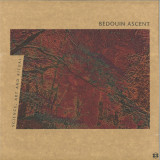
'Science, Art And Ritual' is a story of ‘process'. Growing up in Harrow (a then quiet suburb of London) in the 70’s and 80’s from the age of about 10, Kingsuk Biswas aka Bedouin Ascent's ears opened up to sound as he scanned the airwaves. The undeniable righteousness of 80’s dub via David Rodigan’s Roots Rockers shows was the first prominent influence he received, and with punk roots —and his burgeoning record collection— became exposed to the breathless post punk experimentation that followed in the early 80’s sweeping up free jazz, noise, dub and much more. Throughout though, he maintained his fascination with Indian Classical music which was a mainstay in his parent’s house and spoke with the same infinite space as Joy Division's 'Unknown Pleasures', and King Tubby’s Studio dispatches. Through those teens he assembled and de-assembled, knocking about with fellow travellers —punk bands, garage, space rock, noise. Something was happening. On-U Sound, ECM, Factory Records kept him plugged in and sane.
At that time Kingsuk's core studio setup revolved around his vintage Gretsch, Fender Jazz, Moog, TR-606 and rudimentary FX. He added congas, folk instruments, pipes, hand percussion, gongs, and jammed out shards of funk, noise, jazz fusion, electro and ambience into his hungry Tascam Portastudio. By 1987 these had morphed into what we’d now refer to broadly as techno, but the genre didn't exist beyond the reverberating walls of his bedsit, and he hadn’t yet plugged into the global conversation.
'Science, Art And Ritual' was released in 1994 by Rising High Records and was presented as Bedouin Ascent's debut album, although 'Music for Particles' (released in 1995, again on Rising High) was recorded even before —'SAR' sessions span from 1992-1993, whereas 'Music for Particles' were earlier from 1989-1992, with some older 4-track references from about 1986 too.
Weaved in throughout the album are subconscious references to music that Kingsuk heard in the past that still remained within sight as companions. The opening track "Ancient Ocean III", referencing the extinct ocean Tethis, unapologetically channels Tackhead, Colourbox, Mantronix and Lee Perry. The style was also deliberately juxtaposed to the prevailing sound in techno at the time, which had locked onto a rigid form of symmetrical kicks and light snare drums. Elsewhere 80’s soul and funk are frozen and captured in fragile glass lattices. Electric pianos resound throughout, such as in "He Is She", probably a half-memory of 70’s MOR radio from childhood sleepy night drives. A duel between kick drums from three generations of Roland drum machines —TR-808, TR-707 and R-8— is a central theme in "Transition-R", all in conversation, calling and responding. These were not just machines to Bedouin Ascent, but part of an extended family, with heart and soul.
Three decades after seeing the light, Lapsus is proud to present a special 30th anniversary reissue of this
left-field techno gem in a repackaged and redesigned edition. All pressed on a deluxe 3LP marbled vinyl and including a limited lithographic insert print of the original album cover. All tracks have been restored and remastered directly from the original DAT tapes, and the album also features previously unreleased tracks such as "In the Clouds" and "Thru Water" —regularly performed live at that time and produced in the same period as the album sessions in 1993.
'Science, Art And Ritual’ may refer to esoteric traditions in Indian philosophy, but equally embodies the collision of the science, the art and the ritual that is at the core of being immersed in a deep musical journey.
Disponibile in Stock e pronto per la spedizione

Ecology Division is a new compilation from Bastard Jazz that brings together a network of producers and musicians working across jazz, soul, electronic, and beat-driven styles. Featuring artists from Brooklyn, Chicago, Montreal, London, Lisbon, Melbourne, and Ludhiana, the release highlights a core group of collaborators and peers connected to the label’s extended orbit. The project is presented with cohesive visual direction inspired by vintage field guides and naturalist illustration, with each track paired to a distinct animal. This framing positions Ecology Division as a curated snapshot of an active, evolving creative community rather than a traditional compilation.
The release features contributions from Simon Mavin (of Hiatus Kaiyote), Sholto & David Bardon, Danny Scott Lane, Rachel Kitchlew & DOUGH, Lapgan, Korovo, Birocratic, Kartik, Nick Marks, and Pimenta Caseira. Collectively, these artists have released music on respected independent labels including Ninja Tune, Brainfeeder, Mr. Bongo, Melting Pot Music, WRWTFWW Records, and Moon Glyph, among others—underscoring the compilation’s reach across established global scenes.
dovrebbe essere pubblicato su 04.09.2026

ReVINYL Random Color Edition. Concrete is a bracing jolt of a song, racing forward on a tightly wound post-punk riff, its call-and-response vocals capturing the turmoil and schizophrenic internal dialogue of the song's subject matter."It's about someone who's trapped in a relationship and they're being pummelled into surrender," says singer and lyricist Charlie Steen. "It's not about a physically abusive relationship - more an emotionally and psychologically draining one. The call-and-response vocals between Steen and bassist Josh Finerty is the central figure's own internal dialogue. They are dealing with two different things that they don't want to address."The band cite The Fall, Country Teasers, Television Personalities and Wire among their biggest influences, and the icily claustrophobic sound of Concrete sets it in a lineage with Magazine, Joy Division. As a lyricist, Steen is a modern flâneur, forensically observing the lives of others around him as they unspool and fracture, with Hubert Selby Jr and Irvine Welsh his primary literary influences. "That graphic and harsh style of writing always interested me," he explains. "It's not about the shock factor; it's about the fact they are talking about these things in such great detail without stripping anything back."The London five piece have swiftly earned a reputation as one of the most visceral and exhilarating live bands in the UK, their combustible shows being honed through a heavy touring schedule in the UK and across Europe. Cutting their teeth on the squat-punk scene in the Queen's Head in Brixton in 2015, where they were taken under the wing of Fat White Family, the white heat of their gigs quickly landed them support slots with Slaves and Warpaint. They were also personally invited by Billy Bragg to play the Left Field stage at Glastonbury this year.Following two singles - the AA single The Lick/Gold Hole and Tasteless on Fnord Communications as well as the digital-only Theresa May-baiting Visa Vulture (described by Steen as "the worst love song ever") - Concrete is the first track to be released as part of their record deal with Dead Oceans."We started this band as a joke that went too far," deadpans Steen. "What we do is quite strange and quite weird, but I get to meet a lot of people and I get to hear a lot of things. I am interested in the surrealism of reality."
dovrebbe essere pubblicato su 26.06.2026

Blue & Black Marble Vinyl. Anlässlich seines 10-jährigen Jubiläums erscheint Tychos Grammy-nominiertes Album ,Epoch" (Bestes Dance-/Elektro-Album) in einer brandneuen limitierten Farbversion. Es ist der letzte Teil einer Trilogie nach ,Dive" (2011) und ,Awake" (2014) und der Höhepunkt von über einem Jahrzehnt Arbeit. Das Album dokumentiert die Entwicklung des Projekts von einem feinfühligen Soloprojekt zu einer kraftvollen, vielschichtigen Live-Band. (2011) und ,Awake" (2014) und der Höhepunkt einer über zehnjährigen Arbeit. Das Album spiegelt die Entwicklung des Projekts von einem zurückhaltenden Solokünstler zu einer kraftvollen, vielschichtigen Live-Band wider, die auf den größten Bühnen der Welt auftritt (Kia Forum, Red Rocks, Meow Wolf + weitere...).
Ordina ora e ordineremo l'articolo per te presso il nostro fornitore.

For her second full-length as Plume Girl, Sowmya Somanath crafts a space where boundaries of language, feeling, and sound start to dissolve. ‘Unnameable Glory’ ruminates on the limits of expression, and the luminous freedom that emerges when we let go of the need to name. Elaborating on the exploratory songs of her debut, Plume Girl continues to bring together Hindustani classical improvisation, ambient soundscapes, and experimental pop.
Somanath’s voice—from gentle murmur to radiant call—guides the listener through dreamlike arrangements: sunrise guitar arpeggios, humming choirs, heartbeat kickdrums, and synths tremble. Elsewhere field sounds and old family recordings are collaged, a woman’s giggle transposed into a piano melody, a sloshing body of water mirrored by synth bleeps. Plume Girl conjures moments of revelation, drawing from the natural beauty and intuition, that unnameable glory.
Is there a divinity or a wholeness that exists beyond language, belief, or tradition? Unnameable Glory both celebrates and gently challenges the notion: Can we honour the creative richness of culture while also seeing through the divisions it creates? Can we meet the world—and each other—without assumption, without fear, with eyes made new? In these songs, the sacred is found not in grand gestures, but in the anonymous freedom of simply being: the iridescence of oil and water on a street, the smile of a stranger, the hush that settles by a creek.
At the heart of the album is a sense of curiosity and surrender—a willingness to listen without judgment, to let the moment be unnameable, to allow wonder to arise and dissolve. And yet, as Somanath notes, there’s an impulse to capture that’s tough to ignore; a need to replicate and remember. Unnameable Glory dwells in this tension: between holding and letting go, between the urge to define and the beauty of what cannot be contained. There is a quiet, revolutionary joy in simply living and sensing together. Music becomes a meeting place for the whole, the holy, and the unnamable.
dovrebbe essere pubblicato su 11.07.2025

The title of the brand new album from Brussels hybrid pop quartet FABIOLA refers to the fruit of the gigantic network known as mycelium. A fitting image to describe an album rich in luxuriant sound worlds. This unique collage of 90’s hip hop basses, vivid drums, ominous synthesizers, fields recordings and almost no-wave guitar pizzicati perfectly blends with Fab Detry’s lush vocal lines. If lyrics can express political concerns, crucifying conservatism, icons and orchestrated social division, they also hearten contemplation and a return to simplicity and nature. Fabiola’s pop is utterly smiling, even if it lacks a few teeth.
dovrebbe essere pubblicato su 21.02.2025

The Nefilim gründeten sich 1992 und entwickelten sich nach der Zersplitterung von Fields Of The Nephilim. 1996 wurde das einzige Nefilim-Album mit dem Namen "Zoon" veröffentlicht. Sänger Carl McCoy verbrachte vier Jahre damit, seine Vision zu verfolgen und schuf einen akustischen Angriff auf die Sinne. Es ist ein tiefgründiges, dunkles Industrial-Album mit Death-Metal-Einflüssen, das in Isolation entstand - ein Statement der großen Absicht und des Übergangs. Die erweiterte Ausgabe von "Zoon" wird am 25. Oktober auf 2XLP, CD und digital veröffentlicht. Die Vinylversion ist auf rotes Vinyl gepresst. Alle Formate enthalten vier Bonustracks und wurden von Sean Magee in den Abbey Road Studios remastered. Während sich Fields Of The Nephilim zu einem der bedeutendsten Acts der späten Achtziger entwickelten, war McCoy zunehmend unzufrieden mit den Beschränkungen ihrer musikalischen Formel. "Zoon" zeigt, wie weit seine Fantasie reichte, wenn er sich von den Fesseln einer fünfköpfigen Band befreite. Mit "Zoon" hat er seine Vision zu einem dichten, kohärenten und extrem kraftvollen Album verfeinert, das durch seinen wirklich eindringlichen Gesang getragen wird. Musikalisch gibt es kaum Vergleichbares - "Zoon" enthält Elemente von so unterschiedlichen Künstlern wie Joy Division, Ennio Morricone, Sepultura, Wagner und Ministry, aber die Alchemie des Aufnahmeprozesses hat etwas Einzigartiges geschaffen. In einem Interview mit The Quietus erklärte McCoy, dass "Zoon" eine seiner Lieblingsarbeiten sei. "Es war eine andere Herangehensweise, die es mir ermöglichte, einige meiner Ideen ohne Grenzen auszudrücken. Das musste ich tun."
dovrebbe essere pubblicato su 13.12.2024

Kreaturen der Nacht sehnen sich in die 80er Jahre des letzten Jahrhunderts zurück. Post-Punk und New Wave stiegen zu glorreichen Höhen auf und diese epische Erforschung dunkler Klangwelten auf der Basis von harten Gitarren und treibender Elektronik fand auf allen alternativen Tanzflächen statt. Klangvolle Namen wie SISTERS OF MERCY, FIELDS OF THE NEPHILIM, DEPECHE MODE, JOY DIVISION, THE HUMAN LEAGUE, ULTRAVOX und viele andere funkeln noch immer in einem magischen Glanz. Zum Glück sind all die subtile Erotik, elektrisierende Spannung und die düstere musikalische Leidenschaft nicht für alle Zeiten verloren gegangen: Die Rettung naht mit SOROR DOLOROSA auf schwarzen Schwingen. Das vierte Album der Franzosen mit dem vielsagenden Titel "Mond" hat musikalische Reißzähne, die schon beim ersten Durchgang köstliches Klangblut sprudeln lassen. Der klassisch-dunkle Post-Punk findet sich ebenso wieder wie Wave-Elemente und ein überwältigender Drang, die Füße in ekstatischen Tänzen unter dem namensgebenden Mond bewegen zu müssen. Doch SOROR DOLOROSA gehen dabei keineswegs mit abgestandenem Nostalgie-Schlangenöl hausieren. Die nach Paris umgezogenen Veteranen haben das klassische Feeling mit dem massiven Sound des neuen Jahrtausends für einen neuen Höhenflug aufgerüstet. Die Idee, den Mix und das Mastering von "Mond" James Kent anzuvertrauen, erweist sich als hervorragender Schachzug. Der PERTURBATOR-Vordenker hat die üppige Produktion dieses epischen Albums mit einer vibrierenden Power und wohltuenden ätherischen Kühle aufpoliert. Textlich bleiben SOROR DOLOROSA dem seit ihrer Gründung im Jahr 2001 in der südfranzösischen Stadt Toulouse eingeschlagenen Weg treu. Die erstmals mit der "Severance" (2009) Debüt-EP manifestierten dunkel-romantischen und kathartischen Gefühlslandschaften lassen noch immer das Herz der Band schlagen. Die Inspiration für "Mond" stammt unter anderen aus den Federn von Dichtern und Schriftstellern wie William Blake und Edgar Alan Poe.
dovrebbe essere pubblicato su 04.10.2024

The second LP by Tokyo ambient conceptualists UNKNOWN ME began as a commission for historic Japanese cosmetic conglomerate Shiseido, conjuring audio approximations of seasons and scents, but soon flowered into its own refracted and rarefied environment: Bitokagaku. Translated as “beauty and science,” the album is the foursome’s first composed solely with software, reflecting the collection’s utopian, laboratorial muse.
From levitational electronica (“A Rainbow in Meditative Air”) and vaporous downtempo (“Dancing Leaves”) to planetarium reverie (“Kitsune No Yomeiri”) and AI IDM (“Retreat Beats”), the music moves like weather patterns in a bio-dome: dazzling, microcosmic, and delicately calibrated. Percolating synths crossfade with field recordings from Shiseido’s research division; the sound of streams and distant birds blur into a processed haze; clinical voices read lists of precious stones. It’s a vision of new age as soft robotics, of serenity streamlined by sentient systems.
UM’s team of engineers (Yakenohara, P-RUFF, H. Takahashi, and Osawa Yudai) cite an eclectic swath of inspirations behind Bitokagaku – molecules, stars, Kenji Miyazawa, Akira Kurosawa, even “the sparkle of rainbows” – but their guiding artistic principle is as ancient as it is eternal: “beauty.”
Ordina ora e ordineremo l'articolo per te presso il nostro fornitore.

With Lucifer, Kompakt presents an album of rare beauty from two masters of modern music. A family affair, it’s a collaboration between the Italian father-and-son duo of Luciano Michelini and Lorenzo Dada, whose combined histories bring to Lucifer a depth of experience alongside clarity of vision and a finely tuned, neatly developed combined compositional voice. A lovely, beguiling suite of music that combines the electronic and the acoustic, the urban and the pastoral, its gorgeous night-eye vision and tender melancholy sits neatly within the Kompakt universe, while offering the curious listener some rich new perspectives.
There is already plenty to know both artists by. Lorenzo Dada creates across multiple fields – a techno producer and DJ who has already worked with the likes of Jay Haze, Fete, Leo Benassi, and Der, he’s released a small clutch of stylish, smartly designed EPs, and a solo album, Second Life (2018). His complementary background in classical music and composition informs his ensemble project, Tears Of Blue (who appear on Lucifer), where Dada paints with neo-classical tones for a quartet of violin, viola, cello and grand piano, supplemented by electronics for live performance.
Luciano Michelini’s history is yet richer. He may be best known, to many, for his piece “Frolic”, the theme to Larry David’s Curb Your Enthusiasm series; it was also sampled by Snoop Dogg for 2022’s “Crip Ya Enthusiasm”. But there’s much more to Michelini’s story. A successful soundtrack composer, Michelini both studied and taught at the Conservatoro di Santa Cecilia, and worked for RCA from the sixties to the eighties; his soundtracks from this period are gorgeous examples of the form, particularly his work for Il Decamerone Nero (1972), L’Isola Degli Uomini Pesce (1979), and the devastatingly gorgeous Dimensione Donna (1977).
In the eighties, Michelini and his wife Anna Gutling founded the Electronic Music Division studio and academy in Rome, which is where the majority of Lucifer was recorded. Dada reflects on the experience: “We never worked together before, so it was all new for both of us,” with Michelini adding, “I truly love this experience with my son. He’s a talented pianist and composer. I am not very familiar with electronic music nowadays, but we did it fluently.” There’s certainly a familial energy at play through Lucifer, and you can hear how Dada and Michelini, through exploration and experiment, find a shared language, balancing Dada’s tendency toward minimalism, and Michelini’s composerly voice.
Lucifer flows as a suite that interweaves electronic music with acoustic instruments: the lonely sigh of saxophone; Michelini’s lush, verdant piano; the weeping strings of Tears Of Blue (recorded at the studio of Michelini’s friend, the late Maestro, Ennio Morricone). These multiple voices are located within the electronic sighs and swarms from Dada’s kit; there are moments of propulsion, and passages of lambent drift, where the album revels in its tonal sweetness. If it flows so effortlessly, that’s because Lucifer was designed that way, as a suite or a sonata of sorts.
And the title? Dada reflects, “Lucifer was an angel who decided not to be one anymore. The miracle of life is that we can decide what we want to be, even if we are born as angels or vice versa.” This feels somehow apposite: there’s certainly something of the transformative, and the transportive, in Lucifer, a unique family collaboration of rare poetry and sensitivity, where two generations meet in the modern crucible that is the electronic music studio.
Ordina ora e ordineremo l'articolo per te presso il nostro fornitore.

German jazz singer with Belgian roots Sophie Tassignon has built up a solid reputation in Germany. She has a whole series of well-received records to her credit, which not only showcase her musical versatility but also demonstrate what an incredible vocalist and composer she is. Sophie is a musical chameleon, constantly seeking to challenge and renew herself.
When the refugee crisis erupted and millions of Syrian refugees flocked to continental Europe in search of a better life and safety, it resulted in a lot of fear and opposition from the European population. The perception on refugees is often very negative and creates divisions on the political field.
When a shelter was started up two blocks from Sophie's home in Berlin, she decided to help and take care of some refugees. To get a better understanding on the culture and stories of those people and to bridge with our culture, she decided to study Arabic. Meanwhile, we are more than five years on, and not only is she proficient in Arabic, but she has also gained a better understanding of the culture and customs of the Arab community. Friendships for life were formed.
She decided to incorporate Arabic into her own musical language - jazz - fusing two worlds. From this was born the project and the eponymous record "Khyal. The word refers to the imagination and is literally translated as "remembering and/or longing for something from the (distant) past." With this project, Sophie especially wants to encourage tolerance and acceptance towards people regardless of their cultural background or religion and show how intercultural interaction can lead to very beautiful and artistic results.artwork &
dovrebbe essere pubblicato su 20.10.2023

Second Editions presents a new collaborative work by Marja Ahti and Judith Hamann.
After their distinguished duet ‘Portals’ for Cafe Oto's Takuroku label, ‘A coincidence is perfect, intimate attunement’ is a wonderful sophomore collaborative work pieced together over two years of changing seasons, ideas, moods, and feelings. The release is formed from a shifting field of sound correspondence that pivots on moments of coincidence, of a tuning in.
What are we opening ourselves to when we tune in to sound? How can one be truly open to a sound? How can the activity of recording move beyond notions of capture and release into more generative frames? Rather than a tool purposed for preservation or ‘conservation’ of memory, of time and place, can recording sound instead form new vibrant or vibratory spaces of attunement?
‘A coincidence..’ is an LP length composition of multiple interlocking parts, created through exchange, alignment, unpredictability: the title borrowed from poet Fanny Howe falling right into place, a flock of birds in flight, pitches matched and moved across different geographies and temporal frames. Marja & Judith have created an intuitive, lyrical longform piece that considers the idea of attunement itself as, in some sense, the smallest form of measure or denominator connecting their respective practices: across field recording, just intonation, electronic sonorities and instrumental bodies. ‘A coincidence..’ reflects a sense of a willingness to tune in to impulses given, or gifted to the other, a position that embraces an intimate synchronicity.
Recordings & correspondances between 2020-2022. Mixed by Marja Ahti & Judith Hamann. Mastered and cut by Anne Taegert at Dubplates & Mastering in Berlin, 2022. Title quotation from Night Philosophy by Fanny Howe, Divided Publishing, 2020. Photogrpahy by Joshua Bonnetta. Thanks to Nino Bulling, Niko-Matti Ahti and leo. The work was supported by Kone Foundation, Akademie Schloss Solitude and NEUSTART KULTUR.
Marja Ahti (b. 1981) is a Swedish-Finnish composer and sound artist based in Turku, Finland. Ahti works with field recordings and other acoustic sound material combined with synthesizers and electronic feedback in order to find the space where these sounds start to communicate. She makes music that rides on waves of slowly warping harmonies and mutating textures – rough edged, yet precise compositions, rich in detail. Ahti has presented her music in many different contexts around Europe, in Japan and the United States. She is currently active in the duo Ahti & Ahti with her partner Niko-Matti Ahti and in the artist/organizer collective Himera.
Judith Hamann is a cellist and performer/composer from Narrm/Melbourne in so-called Australia, currently based in Berlin. Their work encompasses performance, improvisation, electro-acoustic composition, field recording, electronics, site specific generative work, and micro-tonal systems in a deeply considered process based approach to creative practice. Currently Judith’s work is focused on an examination of expressions and manifestations of 'shaking’ in solo performance practice, a collection of works for cello and humming, as well as ongoing research surrounding ‘collapse’ as a generative imaginary surface, and the ‘de-mastering’ of bodies (human and non-human) in European settler-colonial heritage instrumental practice and pedagogy. Judith likes working with and thinking-with other artists which sometimes includes people like Joshua Bonnetta, Dennis Cooper, Charles Curtis, Golden Fur (with James Rushford and Sam Dunscombe), Lori Goldston, the Harmonic Space Orchestra, Sarah Hennies, Yvette Janine Jackson, and Anike Joyce Sadiq.
dovrebbe essere pubblicato su 25.11.2022
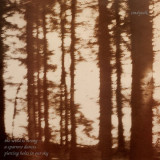
Cindytalk is the mercurial, expressionist outlet of Scottish artist Cinder. An evolution of her early 1980's Edinburgh-based punk band The Freeze, she launched the project upon moving to London, inspired by the crossroads of exploratory UK post-punk and early European industrial. Her work thrives on chance and transformation, collaging elements of noise, balladry, soundtrack, catharsis, and improvisation. After a series of celebrated albums for the Midnight Music label as well as collaborations with This Mortal Coil and Cocteau Twins, Cinder migrated to the United States, becoming involved with various underground techno collectives around the Midwest and West Coast. Subsequent relocations to Hong Kong and Japan further expanded Cindytalk's horizons, resulting in a fruitful partnership with Viennese experimental institution Editions Mego, for whom she released five full-lengths of swooning, granular atmosphere. 2021 finds her as engaged as ever, at the precipice of long-awaited back catalog reissues alongside multiple new works, guided by her lasting love of discovery and deviation: “new pathways always being uncovered.”
The 3rd album by Scottish industrial enigma Cinder aka Cindytalk began life as the soundtrack to an experimental film by English director Ivan Unnwin entitled Eclipse (The Amateur Enthusiast's Guide To Virus Deployment), and was originally slated for release via Factory Records' video division, Ikon. Inspired heavily by Alan Splet's eerily disembodied sound design in David Lynch's Eraserhead, the collection's 15 pieces seethe between field recordings, wistful piano vignettes, and lurking metallic haze – a hybrid palette Cinder characterized at the time as “ambi-dustrial.” Unfortunately Ikon collapsed on the eve of the project's completion so the film was never distributed, but the Midnight Music imprint repackaged Cindytalk's score as an LP in 1990 under the name The Wind Is Strong... (full title: The Wind Is Strong - A Sparrow Dances, Piercing Holes in Our Sky).
dovrebbe essere pubblicato su 30.07.2021

Cindytalk is the mercurial, expressionist outlet of Scottish artist Cinder. An evolution of her early 1980's Edinburgh-based punk band The Freeze, she launched the project upon moving to London, inspired by the crossroads of exploratory UK post-punk and early European industrial. Her work thrives on chance and transformation, collaging elements of noise, balladry, soundtrack, catharsis, and improvisation. After a series of celebrated albums for the Midnight Music label as well as collaborations with This Mortal Coil and Cocteau Twins, Cinder migrated to the United States, becoming involved with various underground techno collectives around the Midwest and West Coast. Subsequent relocations to Hong Kong and Japan further expanded Cindytalk's horizons, resulting in a fruitful partnership with Viennese experimental institution Editions Mego, for whom she released five full-lengths of swooning, granular atmosphere. 2021 finds her as engaged as ever, at the precipice of long-awaited back catalog reissues alongside multiple new works, guided by her lasting love of discovery and deviation: “new pathways always being uncovered.”
The 3rd album by Scottish industrial enigma Cinder aka Cindytalk began life as the soundtrack to an experimental film by English director Ivan Unnwin entitled Eclipse (The Amateur Enthusiast's Guide To Virus Deployment), and was originally slated for release via Factory Records' video division, Ikon. Inspired heavily by Alan Splet's eerily disembodied sound design in David Lynch's Eraserhead, the collection's 15 pieces seethe between field recordings, wistful piano vignettes, and lurking metallic haze – a hybrid palette Cinder characterized at the time as “ambi-dustrial.” Unfortunately Ikon collapsed on the eve of the project's completion so the film was never distributed, but the Midnight Music imprint repackaged Cindytalk's score as an LP in 1990 under the name The Wind Is Strong... (full title: The Wind Is Strong - A Sparrow Dances, Piercing Holes in Our Sky).
dovrebbe essere pubblicato su 30.07.2021

»Dog Mountain« is the second release by the Zurich-based producer and composer Laurin Huber on Hallow Ground. After last year’s »Juncture« saw the Edipo Re co-founder work mostly with synthesizers and programmed rhythms, the four tracks are much more restrained, drawing on tape loops and feedback, recordings of acoustic guitar and synthesizers such as the Korg MS-10 as well as field recordings that relate to the overarching topic that informed the making of the record. While »Juncture« had previously aimed at deconstructing the binaries and dualities that shape our lives and thinking, »Dog Mountain« is dedicated to geographical divisions that result from political processes and social constructions. »›Here‹ means one nation, ›there‹ another,« writes Huber in a literary piece that accompanies the record. »Being in sound, such a separation seems odd.«
While treating the metaphor of the border as a »membrane, registering and translating the vibrations of its surroundings« and thus as something that is constantly (re-)defined, maintained and defended however, the artist also takes into consideration that »one cannot escape one’s standpoint,« as he puts it. The music on »Dog Mountain« may transcend and overcome certain borders, but it does not deny the realities that they impose on each and every one of us – whether in our political lives or in the realm of sound. This is mirrored in Huber’s engaging in the structural and sonic interplay of repetition and difference. Working with slowly evolving and modulating elements that are exposed to slight shifts, »Dog Mountain« puts a focus on the interaction between small elements that together form a bigger whole which is marked by constant evolution and change.
Opener »Raja« (»border« in Northern Sami and Finnish) starts off with a two-note melody played on an out-of-tune guitar. Different field recordings and synthesizer sounds drop in and out of the mix until the dynamic shifts and Huber starts playing more notes on his instrument, thus increasing the tension. It’s a meditation on minimalism, but also a piece that mediates between notions of what constitutes the difference between noise and music or referentiality and abstraction in sound. After »Nickel« (named after a Russian monotown near the border to Norway) dedicates itself to explore the friction between hissing white noise and melancholic tape loops, »A Town Is Not a Town« (a phrase taken from the documentary »Kiruna – Rymdvägen«) structurally mirrors the experiment of »Raja« with very different sonic means.
Closing the record, »Storskog-Borisoglebsk« (the title refers to the northernmost land border between Schengen-Europe and Russia) is the longest and most challenging piece, working with both long-form drones and musique concrète elements. It proposes a synthesis of the opposites that are explored patiently and with much attention to detail throughout this record.
dovrebbe essere pubblicato su 30.07.2021

It's been three years since the last vinyl by Ntogn was unveiled and now we're glad to share with you the result of his venture through the recent winter.
'Smedjan' is inspired by the dwarven craftsmanship of Norse mythology. It is made completely with organic sounds gathered from, and recorded in, the forests of Bålsta which is rich with northern heritage. Everything you hear is either processed textures of birch wood blocks, layers of a custom made Ukrainian artisan mouth harp or the artist's own voice.
There is no synthesis in this record. The kick drums are made by hitting these pieces of wood against each other with contact microphones. Bass layers are extracted from bark scraping against bark. Hi hats are crafted by recorded fire of the same wood logs burning and ambiance is built from the forests where the trees grew and from the woodshed where the artist chopped the wood during winter to keep his cabin warm. The rhythms and sounds in this shed is what inspired the making of this record.
By shaping these sounds of wood and metal Ntogn strives to create a sonic experience that connects the listener to the old Norse stories of the dwarven craftsmanship of Svartalfheim. It is they who made the famous trinkets and weapons that empower the gods of Asgård through stories of trickery and despair which has later inspired tales and literature for over a thousand years.
The record has been distilled from material that was meant to become a two-hour live set specifically made for Mo:dem festival which was unfortunately cancelled due to the corona pandemic. It was also the foundation of the artist's thesis at the university of sound design where he made a study of the effects of organic sound on an electronic expression such as techno music.
It will be released digitally and as a 200 copy limited edition black vinyl adorned with an artwork drawn by the artist's partner Gabriella Holmström using the ashes of the same birch wood blocks that was used to make the sonic content.
The record has received early support from Francois X, Takaaki Itoh, Abstract Division, BLNDR and Rambadu to name a few.
*:・゚✧*:・゚✧
Ntogn en'togg-n is a conceptual electro-acoustic project developed by Hypnus Records' founder and sound design graduate Michel Iseneld (b. 1988, Sweden). It aims to breath life into a fascination for magic with the use of contemporary and classic sound design techniques. This has resulted in what Resident Advisor's William Lynch describes as 'fierce, artistic techno that sounds like little else out there' and a discography ranging from earth-shattering techno to dark, throbbing ambient excursions.
After spending nearly three years in isolation, deeply lost in literature on history, philosophy, occultism and epic fairy-tales; Michel developed an inner world which eventually found an outlet through the means of music in 2013. By the use of field recordings and various samplings of his voice and surroundings, something peculiar sprouted as his inner images started to manifest and mature into an organic sound inspired by the emerging hypnotic deep techno scene.
Today, all music is released on his own imprint Tome in order to preserve the projects' artistic freedom and originality. After two years of sound design studies at the university and a new-found passion for modular synthesis; there's plenty of music in store aimed to satiate the curious minds.
Ordina ora e ordineremo l'articolo per te presso il nostro fornitore.

GIULIO ALDINUCCI is an Italian sound artist working in the fields of experimental electroacoustic music, field recording and ambient soundscape. Born 1981 in Siena, his catalogue comprises four solo albums on labels like DRONARIVM (CHIHEI HATAKEYAMA, AIDAN BAKER),TIME RELEASED SOUND or HOME NORMAL plus EPs and collaborative albums (a.o. with PLEQ). Furthermore , he wrote music for theatre, video art, documentaries and short movies and was awarded with an honourable mention at the 18th International Electroacoustic Composition Competition Música Viva 2017 for his composition "Mute Sirens". Together with ATTILIO NOVELLINO, ALDINUCCI launched the project "Postcards From Italy" which consists of an album published by OAK EDITIONS, live events (the first one took place at Cafe OTO, London) and an installation by AIPS collective & GIANMARCO DEL RE.
"Borders And Ruins", his first album for KARLRECORDS, is a reflection on the instability of borders - borders as an extreme attempt to discriminate and rationalize that turns into a source of chaos and cultural ruins on both sides - and their impact on the relationship between people and territory. It is also a sonic diary: a constantly mutating soundscape where electronic sounds and field recordings (taken during several travels around the continent) blend into an ambient masterpiece of sublime beauty and sacral majesty.
Mastered by Alexandr Vatagin
Vinyl cut by Rashad Becker at D&M, Berlin
Artwork by Joe Gilmore
Ordina ora e ordineremo l'articolo per te presso il nostro fornitore.
