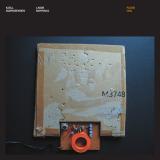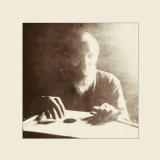
Claire Rousay"s music cascades from a well of documented experience, reflections of the past that compose the present. A prolific multi-instrumentalist, producer, and composer, Rousay gracefully crafts boundaryless music. From her frequent and acclaimed collaborations with artists like M. Sage, more eaze, Gretchen Korsmo, Andrew Weathers, LEYA, and Alex Cunningham, to her film scoring like on The Bloody Lady. From her own compositions to her solo pop work, Rousay"s music is delicate yet powerful, carefully constructed with a casual intimacy. Rousay collages a wealth of found sounds and field recordings with earthy strings, stately piano, and processed instrumentation, all of which trace the outlines of memories and distinct impressions and create a complex constellation of feeling. Her music has evolved from confessional to conversational and excavates the rich emotional essence of each passage. Her work as both archivist and adept arranger and orchestrator merge sublimely into deeply honest and engrossing music. On a little death, Rousay"s blend of pop sensibility and compositional acumen turn abstracted sounds into tangible feelings, its warm, glimmering glow coalescing sensually with the darkness.
Suche:field recordings
- 01: Two Former Friends (Original)
- 02: Dance Of The Silver Beetles (Original)
- 03: Miniature White Deer (Original)
- 04: All The Goodbyes (You Tried To Defer)
- 05: Regretful Polar Bear (Original)
- 06: Anxious Shadow Puppets (Original)
- 07: Failed Space Walk (Original)
- 08: Devils (Original)
- 09: A Leopard With No Spots (Original)
- 10: Abandoned Boy (Left In Charge Of The Family Business)
- 11: Metal Mosquitos (Original)
- 12: A Cat Left To His Own Devices (Original)
- 13: Well-Heeled Human Driftwood (Original)
- 14: Flamingo With Bandaged Neck (Original)
Chris Menist pares his sound right back for A book of imaginary beings, his fourth Awkward Corners outing with a project of electronic and abstracted global grooves. Experimenting with simple melodies and uncluttered arrangements, as well as taking inspiration from the Borges' short stories alluded to in the title, the project took shape in the early part of 2025, in the shorter days and dark evenings of January.
The initial challenge was to knock a basic track into shape each evening after work, then refine it later. There's a melancholy in the air in late winter, compounded by the creeping threat of national and geopolitical instability. Ulla, Natural Information Society, Jabu, Torso and Dawuna formed some of the background soundtrack as each tune took shape.
The track titles came after sitting with the sounds for a while, giving shape to images of people, creatures and their stories for a book that is yet to be written.
Two former friends sets the tone for the album perfectly as a minimal electronic piece with a slowly simmering synth bassline underpinning the groove whilst the trademark Awkward sound of the Shahi Baaja enters drenched in effects. It's the first demonstration of Chris' unique ability to create a world from apparently very little.
Dance of the silver beetles is completely unique in that we can hear chopped up Illimba samples seemingly playing backwards and forewords sometimes alone, sometimes together in duet with Chris' conga rhythms. Add to that a more conventional Illimba melody and added shaker percussion and you have one of A book of imaginary beings most curious chapters.
Anxious shadow puppets is closer to the Awkward Corners sound from previous albums as electronic pulses move around the arrangement with the urgency that the track title suggests. Chris' percussive roots move to the fore with the congas that tie down the Paradise Bangkok Molam International Band's sound. Here, the bassline is more playful and works together with one of Chris' many African Illimbas.
Fans of Chris' adventures on his Roland 808 will dig A leopard with no spots, although the minimal mood continues to flow through on this track. The lolloping, but hard-hitting rhythm track provides the grounding for strange and twisting feedback-sounding tones to work the soundscape.
Abandoned boy (left in charge of the family business) is Awkward Corners at his atmospheric best. Drift off to the sublime sounds of Chris exploring the Shahi Baaja, whilst a soft, repetitive synth line and abstracted pads give the listener that feeling of meditation and peace.
Flamingo with bandaged neck is A book of imaginary beings' perfect coda and is exclusively Shahi Baaja draped in reverbs and delays. It feels like the resolution and the closing of a book that – as of yet – remains unwritten.
Awkward Corners is Chris Menist, a musician, DJ and writer. It started life as a small project in Islamabad, where Chris was living at the time. Initial recordings were made with local musicians in Pakistan and then subsequently in Thailand. This culminated in the Sweet Decay LP that came out on Finders Keepers' Disposable Music in 2014, and in turn led to a limited tape release on Boomkat/Reel Torque of original compositions and re-edits of Thai 45s the same year. Chris released – Dislocation Songs – his second LP proper with Shapes of Rhythm in May 2020, collaborating on many of the tracks with award-winning performer Sarathy Korwar. The LP was picked up by many radio stations including NTS, Resonance FM, BBC 6 Music, Balamii and many more. It made Tom Ravenscroft's LPs of 2020. Amateur Dramatics, Chris' second LP arrived just a year later in 2021 and was a more ambitious project featuring more jazz-focussed compositions and featuring Tamar Osborn and Kitty Whitelaw. Shortly after that came another pivot with the heavier, dancefloor-friendly EP Somebody Somewhere. Somebody Somewhere is Dancing in a Field brought the House (yes House!) vibes, whilst Hector Plimmer turned in a remix of No Words in the same club mood.
As one of NTS Radio's longest-standing presenters, Chris continues to hold down the Paradise Bangkok show. Playing drums and percussion since he was a kid, Chris is the percussionist for The Paradise Bangkok Molam International Band as well as co-founding the record label of the same name. Chris has curated compilations for labels such as Finders Keepers, Soundway and Dust-To-Digital. He has been featured on the Boiler Room, Vinyl Factory Collections, played at the Four Tet curated Nuits Sonores festival, and has put together an edition of Volumes which featured unreleased Awkward Corners compositions.
[d] 04: All the Goodbyes (You Tried to Defer) [Original]
[j] 10: Abandoned Boy (Left in Charge of the Family Business) [Original]
- A1: Signal And Sign
- A2: Apply Some Pressure
- A3: Graffiti
- A4: Postcard Of A Painting
- A5: Going Missing
- A6: I Want You To Stay
- B7: Laimassol
- B1: The Coast Is Always Changing
- B2: The Night I Lost My Head
- B3: Once, A Glimpse
- B4: Now I'm All Over The Shop
- B5: Acrobat
- B6: Kiss You Better
- C1: A19
- C2: Isolation
- C3: My Life In Reverse
- C4: Fear Of Falling
- C5: I Want You To Leave
- C6: A Year Of Doubt
- C7: Trial And Error
- D1: Stray Talk
- D2: Hammer Horror
- D3 0: Apply Some Pressure (Original Demo Version)
- D4 1: Graffiti (Original Demo Version)
- D5: Once, A Glimpse (Original Demo Version)
- E1: Wasteland
- E2: Limassol (First Avenue Demo)
- E3: The Coast Is Always Changing (Dilston Road Demo)
- E4: Signal And Sign (Gravity Shack Session)
- E5: Apply Some Pressure (Gravity Shack Session)
- E6: Going Missing (Gravity Shack Session)
- F1: Surrender (Bbc 6 Music Tom Robinson Session)
- F2: Postcard Of A Painting (Dilston Road Demo)
- F3: The Night I Lost My Head (Dilston Road Demo)
- F4: Now I'm All Over The Shop (John Marley Centre Demo)
- F5: Kiss You Better (Bbc Radio 2 Janice Long Session)
- F6: I Want You To Stay (Field Music/J Xaverre Mix)
Zum 20-jährigen Jubiläum erscheint A Certain Trigger gemeinsam mit der 2006er B-Sides- und Demo-Compilation Missing Songs als hochwertige 2LP auf schwarzem Vinyl im Gatefold-Cover. Die Zusammenstellung enthält seltene B-Seiten und Demo-Aufnahmen aus den UK-Singles dieser Ära und wird ergänzt durch ein beidseitig bedrucktes, farbiges 60 × 90 cm Poster auf luxuriösem Kunstdruckpapier. Ein Sammlerstück für alle Fans des energiegeladenen Indie-Rock-Sounds von Maxïmo Park.
Format: 2LP schwarzes Vinyl, Gatefold, inkl. beidseitigem Farbposter (60 × 90 cm)
"I don’t keep photographs, old letters, keepsakes or memorabilia.
I have sound-files, thousands of them, un-used, un-heard: folders of field recordings; sonic sketches;
experiments that failed but weren’t deleted. The files are saved on hard drives or the cards of obsolete
pieces of equipment replaced – bit by dusty bit – with something new, clean and shiny.
A remnant is what’s left over when the greater part it once belonged to has been used up, removed,
or destroyed. I think of my sound-files like this, the remains of ideas, of a time too.
Remnants"
- 1: Cities Of The Plain (4:25)
- 2: Loss & The Hand Lense (4:)
- 3: The Falls (4:17)
- 4: The Torture Garden (:01)
- 5: The Fatal Muse (6:26)
- 6: Reign Of Ashes (3:04)
- 7: Dead Roads (3:20)
- 8: The Pressure Of The Text (3:15)
- 9: Trance Militant (2:14)
- 10: The Tears Of Eros (6:25)
- 11: Cities Of The Red Night (4:44)
"Originally released in 1990 on the legendary Australian label Extreme, The Annihilating Angel stands as one of Paul Schütze’s most visionary and cinematic works — a dark ambient masterpiece rooted in mystery, decay, and metaphysical beauty. Blending slow-burning soundscapes, processed field recordings, and abstract industrial textures, this album explores the sonic equivalent of sacred ruins and distant, imagined geographies.
Now officially reissued by Everland Music, this long out-of-print classic returns on vinyl with restored audio and updated packaging. The new brilliant remaster was handled by Miroslav Piškulić, a radio sound maestro renowned for his subtle approach to psychedelic electronic music. The result received praise from Paul Schütze himself — who called it the most faithful reproduction of his original vision to date."
Amsterdam label Spectral Bounce recruits French club stalwart Chris Carrier for SPEC06 — Perfect Encounter. Active since 1994, the Parisian artist has released a wellspring of records on Robsoul, Slapfunk and his own Sound Carrier recordings, parallel to his longtime career as a DJ. Characterised by swirling delays and progressive arrangements, Perfect Encounter shows the producer exploring the mesmeric corners of tech house, ideally fitted to the Spectral Bounce aesthetic.
Opener “XLR8” starts with rolling toms that make way for fluid, modulated tones; each bar ebbs and flows to the sweeping synths set in motion by Carrier. Processed with a multitude of delays, rhythmic FX boldly swish above the drums, making for an immersive soundstage. Second track “Light Side” retains the billowing echoes but moves more nimbly, cutting things back to make for a spacious and breezy number. Its croaking synths hop around the stereo field, accompanied by tight percussion and a walking bassline.
The hallucinogenic “Third Moon” sees Carrier step further into trance-inducing territory. The track’s pulsing, syncopated bass note thrums underneath an arpeggio that evolves into a heady prismatic drone. While the chugging beat is ever-present, melodic refrains rise up and evaporate like wisps of vapour, alongside a vocal that fades away as quickly as it appears. The EP’s eponymous “Perfect Encounter” dials up the tension and closes the record with a mysterious touch. Speedy 16th note patterns propel the beat, creating shifty rhythms that rattle and hiss. A rasping, gelatinous synth and squeaky detuned tones resemble extraterrestrial signals — alien morse code for an enraptured dancefloor.
Credits:
Le Motel and Bruce Wijn met at school, during a school art trip to Munich. They went separate ways for a long time.
Hailing from Brussels, Le Motel's world is a vortex of sight and sound that takes in the many and varied corners of the planet. As a music producer and film composer his versatility has taken him to festivals and clubs in every direction as naturally as he has ventured out to the less accessible areas of the globe as a field recordist. It's somewhere in between these spaces that Le Motel operates, gathering unique experiences and sounds to channel through his studio.
Bruce Wijn is a Brussels-based guitarist who played in several postrock kind projects such as Sound Film, 52 Commercial Road, or more shoegaze Lazy Sin. These collaborations gave him the opportunity to perform in various locations in Belgium, France, England, and the USA. As a musician, his focus has always been attracted by progressively built rhythmic melodies, which would eventually turn into long reverberated or distorted swells, or the otherway round.
All these experiences brought them both to the idea of scoring movies with different yet similar approaches.
That's how their first collaboration happened as Le Motel was working on the soundtrack of the movie Binti, and invited Bruce Wijn for the track Exode, in 2018. Since then, they've been working on other scoring projects, such as the feature film 'Aller Retour' more recently.
Alongside the movie scoring activities another audiovisual live project was born, in collaboration with Antoine de Schuyter and his mesmerizing images.
This one is more focusing on tape textures, field recordings and glitchy effects in order to build atmospheric tracks that they decided to bring together in a first E.P. 'MAAR'.
'MAAR' is elaborated as a soundtrack for an imaginary journey between cold seas and volcanoes explorations.
From the first echoing sounds of playing kids on the shoreside in the opening track 'La Perche' Le Motel & Bruce Wijn let you slide in a technicolor dreamworld, reverbing slowly innocent childhood memories into a chilled, out of range, future.
'MAAR' dives deep into a kaleidoscopic microcosmos watching Nautilus playing hide and seek with 'Captain Ahab' floating on sonic breaking waves, while seagulls gently spread their wings flying through the breezy and misty clouds of Blankenberge.
Lava vulcanica slowly melts in the sad euphorica of the cold North Sea, crystallizing sounds only Le Motel and Bruce Wijn can deliver.
The Sator Arepo, or Sator Square, is an ancient word puzzle comprising five palindromes that's etched on various historical sites throughout the Western world. Its origins are unknown, but the square has long been thought to hold magical properties, used as a charm against illness and evil, to cure insanity or to determine whether someone was guilty of witchcraft. Self-styled "punk ethnomusicologist", acoustician and musician Julien Hairon uses this mystical symbol as the starting point for his debut Judgitzu album in an attempt to reconnect with his Celtic heritage, exploring how its hallowed messages might harmonize with contemporary Tanzanian dance music.Hairon has been traveling across the world for over a decade, collecting field recordings from countries such as Indonesia, Australia, Cambodia, China and Bangladesh, and presenting them on his Les Cartes Postales Sonores label, re-issuing any curious cassettes and CDs he came across on the PetPets' TAPES imprint. It was during this time that he became fascinated by rituals that involved spirits, prompting him to examine his own ancestry when he returned to Brittany. "Many artifacts in the landscape remain," Hairon explains, "and the power of spirits is still palpable." He represents this Celtic mysticism on 'Sator Arepo' with murky drones and magickal synth tones, using xenharmonic scales (tuning outside of standard 12-tone equal temperament) that reach back to the ancient world. These sounds are augmented with fast-paced, sci-fi rhythms informed by his time in Tanzania; "Singeli has contaminated me," admits the producer.The most astonishing example of this is 'Miracle', a thrusting soundsystem experiment that layers serpentine, bagpipe-esque electronic wails over extravagant clusters of blocky percussion. Driven by the frenetic 175BPM pulse that echoes through the streets of Dar Es Salaam - popularized globally by forward-thinking producers like Sisso, Duke and Jay Mitta - Hairon opens up a rare conversation, seeking to draw parallels between today's most urgent dance forms and the archaic rituals of antiquity. On 'Vitalimetre', Hairon drives his sonic palette into the red, harmonizing with Dutch hardstyle and gabber, and splaying distorted drones over maddeningly blown-out kicks and ratcheting percussion. 'L'or Des Fous' takes a more meditative route, prioritizing Hairon's eccentric tonality with expressive sheets of pitch-warped sound that ghost walk across energized, rattling beats.If you heard Hairon's last Judgitzu release 'Umeme / Kelele', described by Boomkat as "one of 2019's deadliest dancefloor sessions," then you'll know how mindboggling this material can be. And with 'Sator Arepo', the French producer deepens his reach, grasping a world that we've almost forgotten and juxtaposing it with a landscape most of us barely comprehend.
- A1: Displacement (Kmru Rework) Feat Kmru
- A2: Reprisal (Penelope Trappes Rework) Feat Penelope Trappes
- A3: Empire Systems (Kevin Richard Martin Rework - Iced Mix) Feat Kevin Richard Martin
- B1: Ausencia (Mabe Fratti Hiatus Rework) Mabe Fratti
- B2: Persistence (Abul Mogard Rework)Feat Abul Mogard
- B3: Secretly Wishing For Rain (William Basinski & Gary Thomas Wright Rework)
A decade after its release, A Fragile Geography returns transformed. This limited edition cassette accompanies the AFG10 anniversary reissue, offering an inspired re-envisioning of Rafael Anton Irisarri’s landmark compositions. Reworks presents distinctive readings of these pieces, with each artist leaving their personal mark on the material. The titles remain unchanged, with the sole exception of “Hiatus,” reborn here as “Ausencia.” Together, these reimaginings extend the emotional cartography of the album into new terrains.
KMRU reframes “Displacement” with expansive, glimmering layers that open into meditative ambient landscapes. Nairobi born and Berlin based, he is known for morphing field recordings into vivid aural experiences, often capturing the texture of footsteps, foliage, and distant city life and weaving them into contemplative soundscapes. In this version he introduces subtle new sounds, including stringlike synths that trace and heighten the piece’s emotional arc. The result invites close listening, offering enveloping tones where the organic and the synthetic gently collide and flow.
Penelope Trappes renders “Reprisal” as a voice-led invocation of the delicate and the intimate. Her wistful vocals bloom with fragile sorrow, rising over shimmering strands of strings to create a sound world at once sacred and shadowed. She is adept at channeling inherited grief into music that is transcendent and otherworldly. The interplay of her voice, the strings, and her use of space and depth draws those qualities into Irisarri’s orbit, imbuing “Reprisal” with the same spiritual weight and clarity that define her most powerful work.
Kevin Richard Martin (a.k.a. The Bug) transforms “Empire Systems” into a cavernous “Iced Mix,” driven by polyrhythmic double bass motifs and sculpted from subterranean pressure and negative space. Known for pushing sound to its physical limits, Martin brings the stark intensity of his dub and noise infused practice into Irisarri’s architecture. The track seethes with harmonic distortion and erupts in white noise rhythms, its brooding low end depth and icy reverberant textures amplifying the tension. Vulnerability and force are set in stark relief, as silences feel as heavy as the bursts of sound themselves. The result is a stark study in atmosphere, restraint and impact, reframed through Martin’s singular lens of sonic mass and low end intensity.
On Side B, Mabe Fratti opens with a cinematic, dreamlike, Lynchian reimagining of “Hiatus” in her native Spanish (“Ausencia”). She threads cello and voice so wondrously that her rendering feels at once hauntingly beautiful and disquieting. Emotionally charged melodies shift in unexpected directions, while her soft, intimate vocals hover above Irisarri’s brooding synth textures. Fratti’s gift for blending experimental and avant pop sensibilities with visceral, emotionally powerful expression shines resplendently here. She gives voice to Irisarri’s reflections on the passage of time and his growing desire to reconnect with his familial roots.
Abul Mogard stretches “Persistence” into a vast drone elegy. A master of patient sound sculpting, Mogard layers evolving waves of analog synths into a dense shroud that radiates its own internal light. Gradual surges of tone and subtle harmonic shifts emphasize the piece’s endurance and inevitability. Irisarri’s original composition, in Mogard's hands, becomes a rumination on time’s unrelenting flow. Melancholy and transcendence coexist in equal measure in this engulfing, cathartic rework.
William Basinski and Gary Thomas Wright close the cycle with a spectral version of “Secretly Wishing for Rain.” Basinski’s field recordings of Reseda rainfall and birdsong, which open and close the rework, add a personal touch and evoke the imagined sound of a grainy film reel flickering to life. The piece suspends Irisarri’s yearning for the Pacific Northwest, lodging it hazily between memory, place and an unreachable dream. It feels like a fading recollection, half forgotten and half felt. A final gesture that dissolves the album into vapor, leaving the listener adrift in its lingering afterglow.
Mastered with great care by Stephan Mathieu and featuring a remixed version of the original artwork by Daniel Castrejón, this edition refracts the language of the original through new prisms. Less a return than a passage, across time, across interpretation, into uncharted emotional realms.
From the bellows of a galactic abyss, n-trip offers their first solo EP release on DU:RA. The label boss reveals 4 deep techno tracks cultivated from an appreciation of the stylings of Valentino Mora, Ntogn and Simone Bauer adjacent sound palettes. Attending festivals such as Organik and experiences with deep techno doofs out in the Aussie bushland has also heavily influenced this release.
Reservation and propulsive sound design shape the tracks for the most part, while aspects of field recordings are littered throughout the release of rocks, leaves and sticks from recent travels. The structural simplicity and minimalistic elements make for perfect DJ tracks to accompany swamp-like sets and throbbing sub basslines are sure to shake any doof or club system.
‘Domina’ opens the release with chiming pads and heavily delayed artefacts invoking an ethereal cosmos of which the kicks and bass gently reinforce in movement. A broken snare beat follows as gradually layers of percussion increase in intensity.
‘MML’ takes what energy has built and adds pounding toms to the rhythm. Harsh live synthesis swells in the backdrop as hi-hats and clicks pan around the white noise and minimal yet intentional synth work.
‘dddBBB’ drops the tempo as it comes in full of field recordings. Taking you on a bushwalk through a desolate dreamscape – it slowly grows and pulsates like a giant snake writhing through the cosmic jungle, stalking its prey.
‘MR13’ then takes these ideas and jacks up the tempo to finish off the release. Shakers pan about as sticks, rocks and leaves reinforce the rhythm. FM chords slowly add life to the beat and are accompanied by giant bassy pads that gradually coalesce into its humble yet driving finale.
All tracks have been produced on Gadigal Land. Always was, always will be Aboriginal Land.
Developed over three years across residencies, tours, and periods of deep listening, “Your Whistle Tells of Landscape” finds Australian sound artist Alexandra Spence continuing her investigations into the perceptual entanglements of sound, place, memory, and imagination. Like much of the artist’s work, it unfolds at the liminal edge between the real and the imagined — between what is heard and what is remembered.
Composed from a constellation of materials gathered across sites and seasons — snowscapes recorded in Vancouver, insect choruses from a Sydney backyard, ceramic fragments unearthed while mudlarking with tinysound — it renders an intimate cartography of experience: one shaped equally by ecological resonance and internal drift. Each piece traces a kind of imaginary geography, where sonic ephemera become proxies for topography, weather, or myth.
The album is informed by time spent at EMS (Stockholm) and MESS (Melbourne), where Spence deepened her engagement with microtonality and tuned feedback systems, and by dialogues with sympathetic artists such as Tashi Wada and Patrick Farmer. Sound materials were sourced from Serge Modular systems, a custom lyre built by Tim Wall, amplified objects, handmade electronics, and Spence’s own field recordings captured within rockpools, beneath sand, and among a flock of sheep in the French Pyrenees. On “Magenta,” a collaboration with Delphine Dora, the domestic and mythic intertwine, as layers of voice, environmental recordings, and Halldorophone feedback drift in and out of one another like overlapping weather systems.
Despite its diverse material palette, the album resists spectacle or accumulation. Instead, it moves with a quiet sense of continuity and a rich interiority — less a sequence of compositions than a set of situated attunements. Across its duration, sounds seem to murmur, glint, or hover right at the edge of presence, invoking a listening practice that is as much about orientation as it is about reception. These are pieces not simply about place, but of place — etched with the grains of time, vibration, and breath.
- 1: Manuel (7:43)
- 2: Building Pyramids (8:5)
- 3: Fennel (07:14)
- 4: Selma (8:31)
- 5: Not Erotic / Cop Film (13:41)
East London based quintet IAN bring a sense of jovial camaraderie through their heavy, loud and droning post-rock dirges on debut album 'Come On Everybody, Let’s Do Nothing!' through UK charitable label Human Worth.
IAN (the band) are refreshing newcomers in the UK's heavy underground. The East London based quintet will be releasing their stirring debut album Come On Everybody, Let's Do Nothing! on Vinyl and Digital via independent label Human Worth on October 17th – a labour of love between five old friends and ex-bandmates from Exeter’s fertile early '00s DIY punk scene.
Self-described as "a band that appreciates the peaks and troughs of post-rock as much as the crunch of the riff," IAN's striking debut delivers five dirges that merge earth swallowing riffs with the atmospheres and dynamics of their post-rock heroes, such as Godspeed You! Black Emperor, with the bite and visceral heft of Cult Of Luna and Amenra. Thoughtfully captured by Wayne Adams (Petbrick, Big Lad) at his London based Bear Bites Horse studio, IAN craft slowly mounting riffs, with anguished screams, woven with elegant cello playing, field recordings and earthy timbres. Come On Everybody Let’s Do Nothing!, and the band IAN as a whole, is the culmination of 25 years of musical comradeship and the need to find inspiration in films, noise and the drudgery of middle-aged life.
Rising UK independent label Human Worth have pressed up a limited run of Eco Mix Vinyl, housed in a stunning sleeve designed by guitarist Craig Murray, with a very small batch of Bandcamp Exclusive Signed Prints. 10% of all profits will be donated to charity Mermaids – supporting trans, non-binary and gender-diverse children, young people and their families since 1995.
"A harsh mix of post-rock aggression and dark ambience. As jovial as they were incredible." ~ The Sleeping Shaman
Scintillating, alchemical kosmische; visionary, deep, and luminous; and beautifully sleeved, with gold foiling and silver ink.
Works In Metal fans out a set of acid treatments and finely sharpened blades — cutting, shaping, suspending form. Sounds are melted down and forged as if liquid metal.
The works are paired. Arc’s Blue Flame previews the smoking volatility at the album’s core. Echoes and resonance soften the dissonant, bright textures; all overlaid with Fofana’s signature, percussive kick drums. Welding drills into the discordant thrills and spills of metamorphosis. Sparks fly and the bittersweet arc of change unfolds.
Fofana discreetly folds in text, poetry, and field recordings, spooring their decomposition and recomposition with a prismatic point of view. The coupling Obscure Light (Decomposition) and Obscure Light (Recomposition) marks something new in his music. The pulse is brightly honed, cascading beyond the dancefloor, exultingly eluding musical genre.
Works in Metal is perhaps Fofana’s most narrative album. At its heart is the killer, extended Lure of the Fragment / So Another Sound Suggests Itself. Melodies circle in call-and-response patterns, balancing proximity and distance, signalling the inward gravity required to work with metal. A nested story-line, with birds flying in; an album within an album. Dredging up memories and associations, Fofana filters in selections from his sound-archives. Layered with synths, field recordings become instruments in their own right. The last three minutes proffer precious clarity — a memory, in miniature, flashed onto molten metal.
In 1943 Suzanne Césaire declared that ‘our surrealism will then supply them the leaven from their very depths. It will be time finally to transcend the sordid contemporary antinomies: Whites-Blacks, Europeans-Africans, civilized-savage: the powerful magic of the mahoulis will be recovered, drawn from the very wellsprings of life. Colonial idiocies will be purified by the welding arc’s blue flame. The mettle of our metal, our cutting edge of steel, our unique communions — all will be recovered’. Works in Metal is a tribute to her prophecy; its enactment, sculpted in sound.
INTEMPORARY AND INDETRONABLE FRENCH COLD WAVE CLASSIC in a SPECIAL EDITION to celebrate the 40th anniversary of this mythical album.
This edition includes a 45T with 2 previously unreleased tracks, available nowhere else.
Thierry Müller, who initiated the RUTH project, is not at his first try when the album POLAROÏD/ROMAN/PHOTO including the eponymous track is released in 1985. His older brother Patrick along with one of their cousins make his musical education and he quickly becomes familiar with contemporary and experimental music. He starts quite early to tinker sounds on old tape recorders by himself but it is in 1977 that Thierry launches with some friends his first group, ARCANE, while studying at the School of Applied Arts. Their sound is weird, a mixture of saturated scratches and feedback tapes: there is no discographic or scenic testimony of this experience.
Alongside ARCANE, Thierry is already working solo on his ILITCH project / concept, an experimental and innovative work, whose first album Periodmindtrouble is released in 1978 on the Oxigène label. Despite insubstantial sales, this album brings Thierry recognition and success in the very elitist circles of experimental and underground music.
ILITCH’s musical bias was too narrow for Thierry’s ceaseless experimental curiosity, parallel to these activities, he therefore develops a Punk project called RUTH ELLYERI with the author, actress and photographer Murielle Huster. The title is an anagram of Thierry Müller (the complete name is Ruth M. Ellyeri). The character is meant to impersonate one of his schizophrenic facets and allows him to extend his field of expressions to musical styles differing from those in ILITCH.
From this work, the very cult punk piece Mescalito emerges, song that can be found on the mythical but unfortunately very rare compilation 125g de 33 1/3 tours (1979) of the Oxigène label (first “french punk” sampler). At the end of 1978, he meets Philippe Doray at the Oxigene office. Doray is another big name of French experimental music. Thierry moves to his home near Rouen, a remote farmhouse with a music studio made of odds and ends.
They work on their respective creations but meet from time to time on experimentations in common, including CRASH (a tribute to JG Ballard) As early as 1982, a first version of the track Polaroïd/Roman/Photo is out under the name of the project RUTH. “I wanted to write a piece to make the girls dance and make fun of the boys. I plugged a small handmade clock on my Farfisa organ as a sequencer. I had a small Roland synth-guitar, I put the organ in it and that’s how it started.” Philippe is quite amused by the idea of working on a more Pop project and offers to write the text. Thierry works on other tracks for the future LP and asks some friends to write other texts : Edouard Nono, visual artist, writes the lyrics of Mots, Frédérique Lapierre those of Misty Mouse and Tu m’ennuies . It is her voice you hear on these 2 tracks and on the first version of Polaroïd/Roman/Photo. Later, Thierry settles down in the Anagramme recording studio to carry out acoustic sound recordings. But when the sessions are over, the 2 musicians are not too happy with the results of Polaroïd/Roman/Photo: according to them, they lack “flamboyance”. They decide then to record a new female voice with a professional singer and the sound engeneer Patrick Chevalot offers to mix the track in the Synthesis studio “so that it blows out”.
With his tape ready and the help of Jacques Pasquier (S.C.O.P.A. / Invisible records where Ilitch’s second album, 10 Suicides, is released) he starts to contact record companies. “I visited almost all the major record companies and was thrown out every time. Only at RCA’s I found someone interested in my music. It was Francis Fottorino who had signed Kas Product but when it reached the the big boss, no way! Philippe Constantin from Virgin records raised some hope but in vain.
The album was finally released in 1985 with Paris Album, a small independant label.” The album barely sells 50 copies in 1985, despite the eponymous title as a potential success. « In 2004, 2 DJs Marc Colin and Ivan Smagghe discover the track Polaroïd/Roman/Photo and decide to exhume it from oblvion. They release it on a compilation called So Young but so cold (Tigersushi) and then with Born Bad records on the BIPPP compilation in 2008. Thanks to them, the track and the album start a new life.
Alongside his activity as graphic designer, Thierry Müller carries on producing music under his name, those of ILITCH and RUTH for his own creations and various collaborations.
Perfect Location Records in partnership with the one and only Ear Candy Music is proud to announce 00-04, a compilation of early works by Bevan Smith aka Signer, New Zealand’s most prominent name in ambient electronica and dub techno.
Smith has been producing emotive chords, pop ambience, and thick dub-ospheres since before the turn of the century. His output is prolific, ranging from various solo monikers (Aspen, Introverted Dancefloor) and collaborations (Skallander, Feeling Flying) to unique projects (Touching the Void soundtrack, Isolated Dreams’ 24 EPs and counting). A rare artist with indie crossover appeal thanks to the 2004 Signer album The New Face of Smiling released on Carpark Records (Toro Y Moi, Beach House, Dan Deacon, Montag), Smith has played as a member of bands such as The Ruby Suns (Sub Pop), Over the Atlantic (Involve), and Glass Vaults (JUKBOXR).
Encompassing field recordings and evoking a cloudy coastal sky, 00-04 is a collection of mostly unheard material written in the early 2000s as Smith navigated the chaos and stress of living in London just after 9/11. A portion of this release may be recognisable to those familiar with the Involve catalog––“Drone Early,” for example, is an alternative version to the dub giant “1201A”––and to those acquainted with Signer’s 2002 Low Light Dreams (Carpark/Involve), an iconic album composed of processed guitar, dub-influenced bass, and synth drones; as if that doesn’t sound appealing enough, Low Light Dreams is home to “Building Memories Without You,” an unforgettably engulfing track featured on Fact Magazine’s 25 Best Dub Techno Tracks of All Time.
00-04 is a (re)issue both nostalgic and new, familiar yet unknown, fresh out of the archive. It possesses the Low Light Dreams aural palette while offering a carefully curated array of never before heard icy-cold moods, soothing minimalism, and shyly optimistic melodies, all glazed with recently finalized additions.
Guedra Guedra ist das elektronische Musikprojekt des marokkanischen Produzenten Abdellah M. Hassak. Der Sound von Guedra Guedra ist eine schillernde Mischung aus visionärer elektronischer Musik und musikalischen Traditionen des gesamten afrikanischen Kontinents! Tipp!
MUTANT ist das zweite Album von Guedra Guedra und das erste auf Smugglers Way. Auf MUTANT mischt Abdellah M. Hassak analoge Synthesizer und Drumcomputer mit Field Recordings aus Marokko, Tansania, Guinea und anderen Ländern, die er auf seinen Reisen durch den Kontinent gesammelt hat. MUTANT erforscht Themen wie Identität, Panafrikanismus, Afrofuturismus und Dekolonisierung und verbindet das musikalische Erbe des Kontinents mit Elementen von Techno, Bassmusik und Dub. "Ich wollte einen kulturellen Sound schaffen, der Innovation mit afrikanischer und diasporischer Musik sowie den Vibes von Rhythmus und Bass erforscht", sagt Abdellah. Die Musik von Guedra Guedra ist durchdrungen von Abdellahs Vision der kulturellen und technologischen Dekolonisierung. Eine Vision, die den Panafrikanismus feiert und die Art und Weise hinterfragt, wie Mainstream-Produktionswerkzeuge nicht in der Lage sind, nicht-westliche musikalische Ausdrucksformen zu erfassen. "In afrikanischen Traditionen ist der Rhythmus, insbesondere in seiner polyrhythmischen Form, nicht nur ein Puls oder ein Takt, sondern eine Kartographie des Lebens. Er drückt soziale Komplexität, vielschichtige mündlicher Überlieferungen, Gemeinschaftsdynamik und die spirituelle Dimension der Existenz aus", sagt Abdellah. "Die Weitergabe dieses Reichtums von Generation zu Generation durch Üben und Zuhören ist auch ein Akt des Widerstands, ein Weg, Wissen und Sensibilitäten zu bewahren, die die herrschenden Erzählungen lange Zeit zu marginalisieren oder zu vereinfachen versucht haben.
- 140G schwarzes Biovinyl inkl. vierseitigem Booklet und Downloadkarte
Having worked together on his 2024 album Colours & Light, Project Gemini aka Paul Osborne joins forces once again with Wendy Martinez, French singer and composer, and also part of renowned psych-girl group Gloria on a new collaborative EP. Landing on Mr Bongo, ‘Time Stands Still / Le temps s'arrête’ is a sonic exploration that shows a shared love of the progressive music emanating out of France in the ‘60s and ‘70s and the celebrated film soundtrack composers of the time. A more melodic and romantic excursion than Paul’s previous recordings, this EP marries his richly textured, cinematic psych rock with Martinez’s captivating vocal presence.
A body of work born during the period Paul was finishing up his last LP Colours & Light, he penned an album’s worth of instrumental library-style music and had the idea of having Wendy add vocals and lyrics to a selection of them. The instrumental record got scrapped, but thankfully ‘Time Stands Still’ grew out of it.
Paul was a fan of Wendy’s work as both a solo artist and in the band Gloria, and her inclusion on the Project Gemini tracks ‘Entre chien et loup’ & ‘Extra Nuit’ showed a clear synergy to their musical approaches and sounds. For ‘Time Stands Still’ he sent over instrumental tracks one by one, with Wendy taking time to find melodies and French poetry she was happy with and returning her ideas from her home just outside of Lyon.
Drawing inspiration from French soundtrack composers such as François de Roubaix, Frances Lai and Michel Colombier, as well as French female artists including Léonie and Laurence Vanay, these productions are a contemporary love letter to this sound, not a homage. Mixing psych, folk, chanson, and French new wave, it’s music that pulls you in deeper, with groove, grit and passion at its core.
'Je n'ai plus peur' kicks things off with a sultry energy. It’s a psych-funk production drenched in attitude, swagger, and edge, which nods to the left-field side of Serge Gainsbourg’s music. Elsewhere, 'Âme contre âme' feels like the opener from a forgotten new-wave film, managing to be at both beautiful yet sinister and longing. 'The Crawler' could be incidental music from the same film, with Wendy using her voice as an instrument layering the backing track as Paul's bass takes centre stage. The ghostly spoken word of 'Ce qui est intact' echoes a funky version of what the Théâtre du Chêne Noir d'Avignon may have recorded.
A transportive journey ‘Time Stands Still’ is nostalgic yet new in the same smoke-filled breath. Fuzzed-up guitars and driving basslines meld with folk-leaning organs and mellotron vibrations to give that eerie, otherworldly edge. All of which are seasoned by the sensuous, layered vocal tones of Wendy Martinez, alongside crisp drums from Tony Coote and considered percussive touches by Paul Elliot.
“Is all that we see or seem but a dream within a dream?” This quote from a poem by Edgar Allan Poe sums up the lamenting, primal work that is "All That We See or Seem"; a project conceived between Finland, England and Brazil. The self-titled album consists of two long-form pieces of droning mysticism hailing from the trio of Gruth (concept, production, electronics), Ellen Southern (vocals, field recordings, percussion) and Johanna Puuperä (violin, modular synthesizer, additional vocals).
The album opens straight into a thousand yard stare with “Myrskymielellä", adapted from a 1891 poem by the Finnish national poet, Eino Leino, who wrote it at the tender age of 13. Here a blank distant droning of synths and the sounds of flowing water hover underneath like a dark river observed from the air. This is a sound and feeling that will stay constant for the entirety of the piece´s thirty minute duration. It is a trance-inducing composition that slowly unfolds elements of pagan ancestry into its own life. At first, faint female vocals are introduced as distant spatial elements, which gradually advance into waves of cries and anguish as the piece progresses and moves further into the storm. The tranquility of the first half is slowly morphed into a full blown ceremony as driving ritualistic percussion and a foreboding witch-like presence shifts the piece into a Dead Can Dance-like territory. Here a constant enveloping mixture of violins, modular synths, field recordings and vocal screams creates the feeling of a grande finale. It is an astounding piece of music that develops like a drone symphony for the beginning of time.
With the second piece, “A Dream Within A Dream”, from Edgar Allan Poe´s 1849 poem, you are transported to the shores of an undisclosed island; a place where it´s only you, your thoughts and the endless emptiness. The continual sound of waves is soon brought together with a cloud of synths and mourning violins that will keep a steady dreamlike state during most of the piece´s duration. This time the wordless vocals feel almost angelic in their pageantry. The composition flows like a slow caress of the soul and feels like the spirit twin of Gavin Bryars' “The Sinking of the Titanic” with its lamenting slow movements towards the unknown.
Truly a ghost of a record, “All That We See or Seem” is an experience hard to shake and feels like entering sacred ground. We are in a place surrounded by earth, both ancient and present. "Let loose, Vanha, the rage of an earthly storm! Detach the elements, completely open the sky! In the Earth, let an incessant storm prevail, so that in my chest I would not feel the miserable pain” - Eino Leino
Cassette
Earth Sounds Now is a collective made up of community activist and musician Stefan Christoff,
drummer, composer, scholar, and bandleader Asher Gamedze, music producer Nicolás Jaar, pianist
and composer Büsra Kayikçi, and novelist, poet, and sound performer Kaie Kellough.
Over 13 months, they met online to share sounds, readings, writings, and drawings, resulting in
Convergence—a project reflecting their collaborative process. Each member submitted different
works, including paintings, poetry, field recordings, and musical experiments, taking turns responding
to each other's contributions.
Member Stefan Christoff highlights the importance of listening in these sessions:
"Sometimes we would listen all together, so there was also silence on the online call as we all listened
on headphones to the sounds from our respective places. I am underlining listening here, which the
world needs much more of."
These submissions were organized into a sound library and finally mixed into record format by Jaar,
capturing the essence of their exchanges across global soundscapes.
- A1: Last Shot Fired
- A2: Hotel Hamburg
- A3: Using Only One Hand
- A4: Total Evasion Of Comfort
- A5: Susanna Reid
- B1: The Innocence Of Youth
- B2: You Must Be The Rain
- B3: Weary Eyed And Brainless
- B4: S.f’s Field Day
- B5: Desire
- B6: What Makes A Person?
DEADLETTER frontman Zac Lawrence’s latest solo venture hones in on the songwriter’s love of the contemporary folk scene of the 60s. Though not necessarily a conventional “Folk” sound, the acoustic guitar led songs intertwine the singer’s passion for lyricism and literacy with heart-string tugging melodies and arrangements. With the first single from this project expected in the summer of 2025, he brings a new band together made up of Misty Miller on vocal duties, Blossom Caldarone (English Teacher) on Cello, and Nathan Pigott (also of DEADLETTER) on clarinet. Antithetical to what we know from him as the frontman of the aforementioned, expect laid back, fingerpicked numbers that take you anywhere from Hamburg’s most gruesome hotel, to him imagining himself as a fifty something looking back on a life that he didn’t live in the way that was intended.
Living in the present is an album built around the work of American minimalist poet, Robert Lax (1915-2000) who is widely praised for his artistic concept of reduction, in which a pause becomes as important as the things said.
The album brings together the sound of Robert Lax reading his poetry, narrative field recordings by Nicolas Humbert and subtle yet imaginative timbres by Carina Khorkhordina (trumpet) and Miki Yui (electronics) who is also behind the final mixing of the album.
Living in the present is drawing from an archive of audio recordings originally made by film maker Nicolas Humbert while shooting a film on Robert Lax entitled Why Should I Buy A Bed When All That I Want Is Sleep?, ( Nicolas Humbert and Werner Penzel, Germany, 1999) The film was made on the Greek island of Patmos where Lax has lived withdrawn for 3 decades.
More than 25 years after the premiere of Why Should I Buy A Bed When All That I Want Is Sleep?, Humbert, Khorkhordina and Yui are revisiting the original audio material and patiently open worlds within worlds, pointing to new harmonic textures and isolating timbres, synchronizing different layers of time and traces of various locations into a new composition in its own right.
In some ways this album feels like an expansion of the work Humbert and Penzel did with Lax across six years, between 1993 and 1999, where they developed a unique intimacy in their textual-visual collaboration. On two long pieces, for each side of the album, “Where do i begin” and “One moment passes, another comes on” respectively – Yui’s electronics and Khorkhordina’s trumpet interweave beautifully with Humbert’s field recordings, in a manner that shadows the reflective reduction of Lax’s poetry. Indeed, it's no surprise that Lax’s poetry draws musicians into its orbit; it offers the curious a welcoming reduction in which only individual words and syllables represent the essence of language.
Lax’s poetry is notable for its qualities of near-stillness and its capacity to pause the reader’s thought, asking them to hold the sensuality of language for an extended, quietly revelatory moment. His readings on this album share a similar cadence, interested in settling with syllables, with single or several words, for an extended time.
Ultimately, Living in the present unfolds with unforced grace and poetics – one moment passes, then another comes on. (Jon Dale)
Ostinato as resistance: Rafael Anton Irisarri’s landmark work reimagined. Marking the tenth anniversary of the American composer’s critically acclaimed album 'A Fragile Geography', this new edition arrives renewed, both sonically and visually.
First released in 2015 (Room40) during a period of personal upheaval and creative reinvention, it endures as a testament to resilience, transformation, and the connection we hold with the places that shape us.
Written in the aftermath of a devastating theft, A Fragile Geography was born out of loss. Just days before a cross-country move to New York, Irisarri’s entire Seattle-based studio was wiped out. Instruments. Recordings. Archives. Gone without a trace. He arrived on the East Coast to an empty room and the daunting task of starting over.
“This album wasn’t just a record; it was a lifeline,” Irisarri reflects. “It became a way to process the emotional chaos that followed: uprooting, instability, and ultimately, the slow, intuitive rebuilding of a life.”
Composed and recorded in the rural woods of the Hudson Valley, the album took shape in seclusion, surrounded by nature, and through a process guided by improvisation. Embracing limitations, Irisarri wove textural layers of field recordings with half-remembered melodies from his Seattle years, piecing them together like fragments of memory. Tracks like “Displacement,” “Hiatus,” and “Persistence” juxtaposed haunting stillness with restless momentum, mapping an inner terrain of grief, catharsis, and rebirth.
Among its defining sounds is “Empire Systems,” a monumental centerpiece built around a simple four-chord progression, organ textures, and guitar drones. Gradually, the track expands into layers of immersive loops and thick, enveloping distortion that wash over the listener like a rolling wave. Often cited as the album’s most majestic passage, it captures Irisarri at his most sonically ambitious. With a harmonically saturated structure crafted from restraint and repetition, it remains one of his most recognizable compositions: an exercise in the art of maximal minimalism.
From the outset, “Reprisal” received praise from BBC’s Mary Anne Hobbs, who championed the track on her radio show. Her support played a key role in introducing Irisarri’s work to wider audiences and solidifying his place within the lineage of electronic, drone, and experimental sound artists. A slow-burning elegy, the piece emerges from a haze of distortion and sub-bass, with dense, unrelenting drones carrying a sense of mounting tension. Just as it seems to collapse under its own weight, flickers of guitar emerge like distant light through fog. It’s a meditation on dissonance, resolve, and the elusive possibility of release.
The closing track, “Secretly Wishing for Rain,” is steeped in saudade: a longing for Seattle’s dour grey skies, lush green landscapes, and desaturated sunsets. Through it, Irisarri mourns a vanished chapter of life bound to the city, a time documented in scattered mementos and cherished collections, now permanently gone. A reflection on what could never be recovered: an era lost to time. Julia Kent’s looped cello motifs added a melancholic warmth to the track, marking the first collaboration between the two artists and sparking a musical dialogue that would keep growing in the years that followed.
More than a career highlight, A Fragile Geography has laid the foundation for Black Knoll studio, which Irisarri rebuilt from the ground up. The studio has since grown into a creative hub for countless projects, with Irisarri engineering records for iconic music figures like Terry Riley, Ryuichi Sakamoto, William Basinski, MONO, Devendra Banhart, Grouper, Emeralds, Steve Hauschildt, Julianna Barwick, and many others. Carried by its lasting influence, the album has quietly captured the ear of a younger generation, its sound and emotional arc finding new listeners in unexpected corners.
The album’s new visual language was reimagined in collaboration with Mexico City–based designer Daniel Castrejón. Irisarri captured ghostly images at Gaztelugatxeko Doniene, a historic coastal site in Bermeo, Euskal Herria. Castrejón then treated the photographs with distressed textures and spectral overlays. The final artwork channels the rugged, elemental forces that shaped both the music and Irisarri’s aesthetic, renewing his ties to ancestral ground inspired by the Basque homeland of his bloodline.
Mastered by Stephan Mathieu with exceptional attention to detail, this anniversary edition uncovers every nuance in the sound design, enhancing clarity and presence. With each listen, new elements emerge, inviting discovery and reconnection.
“I don’t experience this album as a document of grief anymore,” says Irisarri. “I hear adaptation and I'm reminded that when everything falls apart, something meaningful, maybe even beautiful, can emerge.”
Ostinato as resistance: Rafael Anton Irisarri’s landmark work reimagined. Marking the tenth anniversary of the American composer’s critically acclaimed album 'A Fragile Geography', this new edition arrives renewed, both sonically and visually.
First released in 2015 (Room40) during a period of personal upheaval and creative reinvention, it endures as a testament to resilience, transformation, and the connection we hold with the places that shape us.
Written in the aftermath of a devastating theft, A Fragile Geography was born out of loss. Just days before a cross-country move to New York, Irisarri’s entire Seattle-based studio was wiped out. Instruments. Recordings. Archives. Gone without a trace. He arrived on the East Coast to an empty room and the daunting task of starting over.
“This album wasn’t just a record; it was a lifeline,” Irisarri reflects. “It became a way to process the emotional chaos that followed: uprooting, instability, and ultimately, the slow, intuitive rebuilding of a life.”
Composed and recorded in the rural woods of the Hudson Valley, the album took shape in seclusion, surrounded by nature, and through a process guided by improvisation. Embracing limitations, Irisarri wove textural layers of field recordings with half-remembered melodies from his Seattle years, piecing them together like fragments of memory. Tracks like “Displacement,” “Hiatus,” and “Persistence” juxtaposed haunting stillness with restless momentum, mapping an inner terrain of grief, catharsis, and rebirth.
Among its defining sounds is “Empire Systems,” a monumental centerpiece built around a simple four-chord progression, organ textures, and guitar drones. Gradually, the track expands into layers of immersive loops and thick, enveloping distortion that wash over the listener like a rolling wave. Often cited as the album’s most majestic passage, it captures Irisarri at his most sonically ambitious. With a harmonically saturated structure crafted from restraint and repetition, it remains one of his most recognizable compositions: an exercise in the art of maximal minimalism.
From the outset, “Reprisal” received praise from BBC’s Mary Anne Hobbs, who championed the track on her radio show. Her support played a key role in introducing Irisarri’s work to wider audiences and solidifying his place within the lineage of electronic, drone, and experimental sound artists. A slow-burning elegy, the piece emerges from a haze of distortion and sub-bass, with dense, unrelenting drones carrying a sense of mounting tension. Just as it seems to collapse under its own weight, flickers of guitar emerge like distant light through fog. It’s a meditation on dissonance, resolve, and the elusive possibility of release.
The closing track, “Secretly Wishing for Rain,” is steeped in saudade: a longing for Seattle’s dour grey skies, lush green landscapes, and desaturated sunsets. Through it, Irisarri mourns a vanished chapter of life bound to the city, a time documented in scattered mementos and cherished collections, now permanently gone. A reflection on what could never be recovered: an era lost to time. Julia Kent’s looped cello motifs added a melancholic warmth to the track, marking the first collaboration between the two artists and sparking a musical dialogue that would keep growing in the years that followed.
More than a career highlight, A Fragile Geography has laid the foundation for Black Knoll studio, which Irisarri rebuilt from the ground up. The studio has since grown into a creative hub for countless projects, with Irisarri engineering records for iconic music figures like Terry Riley, Ryuichi Sakamoto, William Basinski, MONO, Devendra Banhart, Grouper, Emeralds, Steve Hauschildt, Julianna Barwick, and many others. Carried by its lasting influence, the album has quietly captured the ear of a younger generation, its sound and emotional arc finding new listeners in unexpected corners.
The album’s new visual language was reimagined in collaboration with Mexico City–based designer Daniel Castrejón. Irisarri captured ghostly images at Gaztelugatxeko Doniene, a historic coastal site in Bermeo, Euskal Herria. Castrejón then treated the photographs with distressed textures and spectral overlays. The final artwork channels the rugged, elemental forces that shaped both the music and Irisarri’s aesthetic, renewing his ties to ancestral ground inspired by the Basque homeland of his bloodline.
Mastered by Stephan Mathieu with exceptional attention to detail, this anniversary edition uncovers every nuance in the sound design, enhancing clarity and presence. With each listen, new elements emerge, inviting discovery and reconnection.
“I don’t experience this album as a document of grief anymore,” says Irisarri. “I hear adaptation and I'm reminded that when everything falls apart, something meaningful, maybe even beautiful, can emerge.”
Pleasure Patterns has teamed up with the intricate minds of Ahni, INVERNO, No Police, & Submarine FM to produce a cunty cut of modern queer life which stays true to an undeniably classic sound. The record draws on Tunisian grooves, Reggae drum samples, & the energy of resistance.
Synthesised with field recordings from a kitchen, a jewellery box & an airport in Bengaluru, this 100% FLINTA* produced record is a truly trans-genre gem.
Inspired by the sounds & styles of Detroit Techno, Classic Deep House, & 90s Tribal Rhythms, Pleasure Pattern's debut release includes a tea-spoon of Acid, a pinch of Pop, & at least one cup of cunt.
A genre-defying Afrofuturist manifesto from Uganda. Producer,
dancer and choreographer Faizal Mostrixx"s singular vision of
East African electronic music is a lush sonic tapestry of
polyrhythms, modern dancefloor styles, amapiano, Nile basin
ceremonial chants and Pan-African field recordings. A stalwart
of the explosive Kampala electronic music scene Mostrixx has
collaborated with the Nyege Nyege collective appearing at both
the African and European editions of their festival. Mutations is
Faizal"s second full length album, following close on the heels of
his acclaimed digital EP Transitions (May 2022 / Glitterbeat). In
their review of Transitions, The WIRE noted: "If today"s currents
in East African electronic music have a more mainstream
destiny, this might be how it starts."
- A1: Hosanna (Meridian)
- A2: First Born (Redeemed)
- A3: When Angels Speak Of Love
- A4: Doubleupptown (Larocque)
- A5: W-I-S (Above Every Other)
- A6: Pistol Poem (Leadbelly)
- A7: Whip Appeal (Pipn8Ez)
- A8: Seven Trumpets
- A9: Giz'aard ($Uckets)
- A10: Helpmeet (Iyadunni)
- B1: Flir2A
- B2: U&Me (Decemberseventeen)
- B3: Illbethere, 4Everandever
- B4: Alàáfía (Cita's World)
ALTERNATE COVER[27,52 €]
Honour's debut album is a ligament stretching from Lagos to London and to New York, curling across the diaspora and brushing the darker hues of blues, hip-hop, free jazz, ambient, gospel with Christian mythology and Yoruba folklore. As cinematic as it is painterly, Alàáfíà is a meditation on themes of life, death and love that pulls inspiration from the unexpected poetic profundity of casual conversations, field recordings, literature, ephemera, or personal archives. The result is an impressionistic vision in Black and Blur that both exhausts and implicates language_substantiating a mythos proposed by Fred Moten that sublimates boundaries between everywhere and nowhere; history and the present; the individual and the universal. Alàáfíà delineates a gothic landscape cut by overdriven beats, swooping orchestral blasts, choral bursts and ear- splitting fuzz, where the fleshly and spiritual realms commune. Dedicated to Honour's late grandmother, the title track began to take form after their last embrace and remains steeped in her influence and spirit_a tape-saturated composition that starts in Lagos and ends in London's smoke-stained cityscape, the song's dream-like quality developed out of the artist's grief and PTSD coping with this loss. Beneath the stretched guitar drones and stuttering loops, their grandmother's shared faith bubbles to the surface. "When Angels Speak of Love," borrows its title from two works by Sun Ra and bell hooks, respectively. Sculpting echoes of praise music into disorienting spirals perforated with syrupy DJ Screw-inspired breaks and sharp splinters of melancholic guitar, "When Angels Speak of Love" engages a conceptual dialogue with the spirits of both late thinkers, folding them into Honour's pantheon of ancestral guides. The album's ninth track, "Giz Aard ($uckets)," is a dirge of regimented drums which anchor this somber melody as it whirls into a blizzard of heartache, uncertain if its consequence will be death or eternal joy. The album's sole lyrical offering, "Pistol Poem (Lead Belly)," begins with a darkly humorous bar, "He went thru hell and back/ came back/ 2 get the strap," that swells into a haunting allegory based on the life of Philip "Hot Sauce" Champion. A modern take on the Blues, Honour's lyrics reify the artist's status as a student of both literature and popular culture, crossbreeding the artist's clever wordplay with additional references to Richard Pryor, Robert Johnson, Kelly Rowland & Bryon Gysin. Setting core principles of hip-hop, R&B, jazz and gospel music to atemporal soundscapes and compositions, Honour crafts a record that marinates in its own knotty contradictions. The ghosts that sit on the artist's shoulders have never been more tangible than with this emotive debut.
Ostinato as resistance: Rafael Anton Irisarri’s landmark work reimagined. Marking the tenth anniversary of the American composer’s critically acclaimed album 'A Fragile Geography', this new edition arrives renewed, both sonically and visually.
First released in 2015 (Room40) during a period of personal upheaval and creative reinvention, it endures as a testament to resilience, transformation, and the connection we hold with the places that shape us.
Written in the aftermath of a devastating theft, A Fragile Geography was born out of loss. Just days before a cross-country move to New York, Irisarri’s entire Seattle-based studio was wiped out. Instruments. Recordings. Archives. Gone without a trace. He arrived on the East Coast to an empty room and the daunting task of starting over.
“This album wasn’t just a record; it was a lifeline,” Irisarri reflects. “It became a way to process the emotional chaos that followed: uprooting, instability, and ultimately, the slow, intuitive rebuilding of a life.”
Composed and recorded in the rural woods of the Hudson Valley, the album took shape in seclusion, surrounded by nature, and through a process guided by improvisation. Embracing limitations, Irisarri wove textural layers of field recordings with half-remembered melodies from his Seattle years, piecing them together like fragments of memory. Tracks like “Displacement,” “Hiatus,” and “Persistence” juxtaposed haunting stillness with restless momentum, mapping an inner terrain of grief, catharsis, and rebirth.
Among its defining sounds is “Empire Systems,” a monumental centerpiece built around a simple four-chord progression, organ textures, and guitar drones. Gradually, the track expands into layers of immersive loops and thick, enveloping distortion that wash over the listener like a rolling wave. Often cited as the album’s most majestic passage, it captures Irisarri at his most sonically ambitious. With a harmonically saturated structure crafted from restraint and repetition, it remains one of his most recognizable compositions: an exercise in the art of maximal minimalism.
From the outset, “Reprisal” received praise from BBC’s Mary Anne Hobbs, who championed the track on her radio show. Her support played a key role in introducing Irisarri’s work to wider audiences and solidifying his place within the lineage of electronic, drone, and experimental sound artists. A slow-burning elegy, the piece emerges from a haze of distortion and sub-bass, with dense, unrelenting drones carrying a sense of mounting tension. Just as it seems to collapse under its own weight, flickers of guitar emerge like distant light through fog. It’s a meditation on dissonance, resolve, and the elusive possibility of release.
The closing track, “Secretly Wishing for Rain,” is steeped in saudade: a longing for Seattle’s dour grey skies, lush green landscapes, and desaturated sunsets. Through it, Irisarri mourns a vanished chapter of life bound to the city, a time documented in scattered mementos and cherished collections, now permanently gone. A reflection on what could never be recovered: an era lost to time. Julia Kent’s looped cello motifs added a melancholic warmth to the track, marking the first collaboration between the two artists and sparking a musical dialogue that would keep growing in the years that followed.
More than a career highlight, A Fragile Geography has laid the foundation for Black Knoll studio, which Irisarri rebuilt from the ground up. The studio has since grown into a creative hub for countless projects, with Irisarri engineering records for iconic music figures like Terry Riley, Ryuichi Sakamoto, William Basinski, MONO, Devendra Banhart, Grouper, Emeralds, Steve Hauschildt, Julianna Barwick, and many others. Carried by its lasting influence, the album has quietly captured the ear of a younger generation, its sound and emotional arc finding new listeners in unexpected corners.
The album’s new visual language was reimagined in collaboration with Mexico City–based designer Daniel Castrejón. Irisarri captured ghostly images at Gaztelugatxeko Doniene, a historic coastal site in Bermeo, Euskal Herria. Castrejón then treated the photographs with distressed textures and spectral overlays. The final artwork channels the rugged, elemental forces that shaped both the music and Irisarri’s aesthetic, renewing his ties to ancestral ground inspired by the Basque homeland of his bloodline.
Mastered by Stephan Mathieu with exceptional attention to detail, this anniversary edition uncovers every nuance in the sound design, enhancing clarity and presence. With each listen, new elements emerge, inviting discovery and reconnection.
“I don’t experience this album as a document of grief anymore,” says Irisarri. “I hear adaptation and I'm reminded that when everything falls apart, something meaningful, maybe even beautiful, can emerge.”
On Biotope, Valentino Mora ventures even further from the dancefloor, delving into a rich, psychoacoustic realm shaped by modular and spectral synthesis. Built primarily around the Rossum Panharmonium, a module that analyzes and re-synthesizes audio into evolving harmonic clusters in real time, the album conjures an imagined ecosystem, where sound behaves with the logic and fluidity of organic life. Eschewing traditional field recordings, Mora instead sculpts textures and gestures that feel deeply natural yet are entirely synthetic. Inspired by elements such as soil composition, air, humidity, light, temperature, and the chemical properties of both land and aquatic environments and the living creatures that inhabit them, the soundscapes emerge as a kind of sonic biology. The result is a collection of slow-moving, tension-laden compositions that blur the boundaries between physical sensation and abstract design. Biotope unfolds like a closed ecosystem: modular synthesis treated as a breathing entity, shaped by resonance, friction, and organic motion. It embodies a kind of mystical biology, where textures mimic living forms, and frequencies pulse with intent. This is music to be felt as much as heard, Biotope invites you to listen with your skin, not just your ears.
Studio Batsumi Returns with Ya Hu Ra — A Deep Listening Journey Through Analog Soundscapes.
London-based label Studio Batsumi returns with its second release, Ya Hu Ra, a four-track EP. Blending analog warmth with organic textures, the record includes four raw cuts that moves from broken beats and hypnotic melodic house on the A-side to downtempo, tribal rhythms and ambient soundscapes on the B-side.
Written and recorded between London and Paris from 2020 to 2025 by Federico Bigonzetti and Maxime Obadia, the project also features Cameron Cullen and DJ Himitsu (Enharmonics) on Kirtan (A2). The EP blends field recordings from Thailand, Vietnam, and Cambodia, crafting a sound that feels both intimate and vast.
The concept behind Ya Hu Ra was developed by label cofounder Marta Paccagnella, a study in sound archetypes where each track represents a different symbolic state: initiation, movement, trance, return. Whether on the dancefloor or in a living room, this release offers a rich and immersive listening experience, balancing club instincts with introspective detail.
- 1: 20 Season
- 2: Otherworld
- 3: See Me Old
- 4: Beautiful & Treacherous
- 5: Reincarnated
- 6: Abigail
- 7: Couch Interlude
- 8: Oh No!
- 9: New Bliss
- 10: Miss Universe
- 11: Feel Through
- 12: Aurora
- 13: Running With Scissors
Running with Scissors is a cathartic heart ache and, ultimately, a therapeutic exploration of what it means to be alive—to love, to grieve, to regret, and to grow. It pulses with rawness and authenticity, sincerity and honesty, offering both solace and strength to anyone navigating their own emotional journey.
Running with Scissors is the third full-length album from Canadian trio Afternoon Bike Ride. Residing in Montreal, the group is made up of Lia (vocals, guitar, programming), David (vocals, guitar, drums, programming), and Éloi (vocals, keys, drums, programming). Since their formation in 2019, the band has released numerous projects where indie rock blends with acoustic pop, ambient field recordings, and lofi folk.
With each track on the new album, the three artists explore the rollercoaster ride of life’s most profound lessons—falling in and out of love, embracing grief, and navigating the complex spectrum of human emotion. The album feels like a series of journal entries, capturing moments of vulnerability, self-discovery, and personal growth. A lot has changed since their formation in 2019 but their hearts are still in the right place. Lead singer and songwriter Lia reflects on the bittersweet realization that life is an ongoing journey and we’ll never have all the answers, but we can still find meaning through love, meaningful connection, and the lessons that shape us. If life is one big lesson, then according to Lia, "I guess these songs are some classes I've taken."
The twelve song soundscape blends raw, emotional acoustic elements with subtle electronic layers and indie rock grunge, creating a textured blend that feels as vast and intimate as the album’s themes. It’s an immersive record that shifts perspectives, from the micro to the macro, zooming out to explore the universe and zooming in on the personal experiences that define our lives. Throughout the album, ABR explores the beauty of feeling deeply while embracing both the intensity of emotion and the struggles of finding purpose. "I'm finding my way through this world now," says Lia, "with the comfort of knowing I'll never know it all.”
- Another Fugue
- Out In The Hinterlands
- A Field Day For Psychogeographers
- Orbiting London Overground
- Unrevealed Igneous Strata
- Let The Head Of Swedenborg Rest
- Downriver (After Iain Sinclair)
»Downriver« unfolds like a dérive through obscured geographies, echoing the psychogeographic journeys of Iain Sinclair. Just as Sinclair’s writing blurs the tangible and the imagined, Sequences, the project of Antwerp-based artist Niels Geybels, drifts into spaces where memory and environment overlap. Single-take recordings stretch into slowly mutating drones, fractured textures, and ghostlike voices that seem to seep in from unseen thresholds. The atmosphere is one of decayed grandeur, evoking disused monuments, neglected warehouses, and corners of the landscape where centuries of history accumulate beneath the surface.
This is music shaped by wandering without a map: a patchwork of distortion, hidden detail, and abrupt rupture. The sense of time loosens, the everyday unravels, and new contours emerge out of drift and delay. Downriver situates itself between sound art and environmental music, drawing listeners into liminal zones where place becomes porous, haunted by what has been and what might yet be.
Written and recorded by Niels Geybels Mastered by Jacob Calland
Artist and multi-instrumentalist Flaer embraces the search for quiet miracles on first full-length LP Translations.
In 2023, Realf Heygate - who makes music as Flaer - released his debut mini-album Preludes, composed on his mother’s piano and his childhood cello.Returning to ODDA for his debut full-length album, Heygate is now looking in another direction. A record that embraces transition and movement, Translations is in many ways more internal, less rooted to a single place and reflective of the process of laying new foundations in Cornwall.
Like Preludes, Translations is coloured with found sounds and field recordings, from the starlings which can be heard singing through the open window of his studio, to the brittle recordings of his mother, who was a linguist, learning Spanish on a set of language tapes. In both cases, Heygate embraced the translations and memories inherent to the sounds.
“When I digitised my mother’s tapes, they warped and stuttered in a very similar way to the starling’s song,” he explains. “They had this uncanny rhythm and pulse that I couldn’t quite decode, but was saying something." These decayed transmissions hint at loss, resisting clarity in favour of the ineffable.
Translations is also a record of ambiguities and in-betweens, suggested by the double meaning of the album’s opening track ‘Entre’. At once intricate and expansive, threaded with birdsong and acoustic guitar motifs, this and ‘Starling Descends’ (a reference to Vaughan Williams’ ‘The Lark Ascending’) act as a bridge away from the pastoral themes of Preludes towards a more assertive sound. At times intimate in its textured instrumentation and at others more overtly grand in orchestration, reflecting awider palette of influences.
“Flaer began in many ways when I picked up my mother’s instruments, seeking a form of reconnection. Where words evaded me, they became the tools through which I found a language for grief – and above all, for love.”
Recorded between 2023 and 2025 – what Heygate calls “A gradual process of sowing and harvesting ideas rather than a single intense creative period” - each track follows a rhythm similar to the small maquettes and sculptures he has been working on in his visual practice, whereby structures and melodies form intuitively in moments that are as rare as they are fleeting.
“It's that feeling of searching that I really enjoy,” Heygate continues. “I never know what the destination of the composition is going to be, and I never really find what it is."
Translations is released on limited edition off-white vinyl LP (500 copies worldwide) with one of five signed and numbered handmade risograph prints. It's also available as standard black vinyl LP and digitally.
Artist and multi-instrumentalist Flaer embraces the search for quiet miracles on first full-length LP Translations.
In 2023, Realf Heygate - who makes music as Flaer - released his debut mini-album Preludes, composed on his mother’s piano and his childhood cello.Returning to ODDA for his debut full-length album, Heygate is now looking in another direction. A record that embraces transition and movement, Translations is in many ways more internal, less rooted to a single place and reflective of the process of laying new foundations in Cornwall.
Like Preludes, Translations is coloured with found sounds and field recordings, from the starlings which can be heard singing through the open window of his studio, to the brittle recordings of his mother, who was a linguist, learning Spanish on a set of language tapes. In both cases, Heygate embraced the translations and memories inherent to the sounds.
“When I digitised my mother’s tapes, they warped and stuttered in a very similar way to the starling’s song,” he explains. “They had this uncanny rhythm and pulse that I couldn’t quite decode, but was saying something." These decayed transmissions hint at loss, resisting clarity in favour of the ineffable.
Translations is also a record of ambiguities and in-betweens, suggested by the double meaning of the album’s opening track ‘Entre’. At once intricate and expansive, threaded with birdsong and acoustic guitar motifs, this and ‘Starling Descends’ (a reference to Vaughan Williams’ ‘The Lark Ascending’) act as a bridge away from the pastoral themes of Preludes towards a more assertive sound. At times intimate in its textured instrumentation and at others more overtly grand in orchestration, reflecting awider palette of influences.
“Flaer began in many ways when I picked up my mother’s instruments, seeking a form of reconnection. Where words evaded me, they became the tools through which I found a language for grief – and above all, for love.”
Recorded between 2023 and 2025 – what Heygate calls “A gradual process of sowing and harvesting ideas rather than a single intense creative period” - each track follows a rhythm similar to the small maquettes and sculptures he has been working on in his visual practice, whereby structures and melodies form intuitively in moments that are as rare as they are fleeting.
“It's that feeling of searching that I really enjoy,” Heygate continues. “I never know what the destination of the composition is going to be, and I never really find what it is."
Translations is released on limited edition off-white vinyl LP (500 copies worldwide) with one of five signed and numbered handmade risograph prints. It's also available as standard black vinyl LP and digitally.
Expansive and ambitious, Tender Revolutions is the latest from Vietnam-born, Portland, Oregon-based multimedia artist Dao Strom. A fluid album, existing between genres—part ambient folk, part sound collage, part spoken word, part post rock—it blurs the line between the work of an experimental composer and the work of an accomplished singer-songwriter. Instruments slip in and out (guitar, piano, synthesizer, strings, drums, percussion) amid field recordings and samples, all anchored by Strom’s singular voice.
The songs of Tender Revolutions reflect on and embody themes of “yellow subjectivities”—the Asian body as perceived; the Asian feminine body as reflection/catalyst/consort—offering their own forms of response to troubling representations of Asian women in popular media in the West. A “re-voicing” of the problematic hit song “China Girl” by David Bowie re-inhabits this song from a discomfiting silence at its center, and serves as a fulcrum point in the album’s sequencing. Other songs utilize voice as both texture and lyric-driven telling to deepen angles of interiority and thematics of voice/silence.
While Tender Revolutions stands alone as its own whole, it also exists as part of a larger multifaceted project, drawing from a four-part song-cycle (Nhạc Vàng 1-4) and accompanying a series of hybrid-genre literary chapbooks (Yellow Songs 1-4). Released in collaboration with The 3rd Thing, an interdisciplinary publisher in Olympia.
[a] tender variation i [what is tender?]
[b] tender variation ii [when was the first time u felt loved?]
[c] tender variation iii [associations of yellow]
[d] tender variation iv [love object treason]
[i] [hailing tender]
Tasmin - Tezeta
The debut album is a journey through layers of influences connected by the band members bringing the sound of Ethio-Jazz, Afrobeat, Percussion, Dub and Tribal Music with an electronica sauce are interwoven, all mixed together in a delicate balance that creates a cinematic soulful and one-of a kind aesthetic blend from the connection of several worlds
The name "Tezeta" is taken from the well-known Ethiopian musical scale, which served as a major inspiration for the writing. This scale symbolizes nostalgia, longing & love songs and serves as a starting point that resonates a quiet pain and longing for a far away place, but still feels like home. In the case of Hadar and Tushiner, this is a tangible longing and the African sounds are woven into them like a second language
The approach to the production of the album reflects loyalty to the tradition of classic studio recordings that include tape reels, field recordings, African percussion, flutes, saxophone and old synthesizers combined with guitars and drums. Every recorded sound went through a filter of precision, listening, and searching for depth that is both technical and emotional
Their music always takes place in the present, it is a living, open moment, connected at the same time to what is heard in the distance from the winds of the Gulf of the African continent and through the streets of Tel Aviv, inviting listeners into a space where emotion and rhythm move together as one
Eran Hadar guitars, synths, percussion, sound
Eylon Tushiner saxophone, flute, keys
Dror Tshuva bass guitar
Omri Gondor drums
- 1: Propaganda
- 2: Embracing Difference
- 3: Evening Rite
- 4: Fire City
- 5: Domain
- 6: Fantome
- 7: Astral
- 8: Thereupon
- 9: The Night Before
Ken Jacobs, an essential figure of avant-garde cinema, developed the »Nervous Magic Lantern« in the 1960s — a self-made apparatus containing a spinning shutter, a light source, and lenses set in a wooden frame. Hand-painted circular slides, gently moved by hand, produce flickering imagery: geometric patterns, Rorschach-like inkblots, and three-dimensional forms that seem to float beyond the screen. These hallucinatory visions challenge perception and suggest what Jacobs once called »a whole new play of appearances«.
Unlike Jacobs’ politically charged works, the »Nervous Magic Lantern« is patently abstract, examining how the brain regulates perception. For these performances, Jacobs requested »sounds of daily life« — environmental recordings that anchor the phantasmagoria in reality. Field tapes of Chinatown streets, conversations, and other uncategorisable sounds became the material for Aki Onda’s sonic compositions, adding narrative resonance to the abstract visuals and creating an almost documentary dimension.
This album documents a performance of »Nervous Magic Lantern« at Spiral Hall, organised by Sound Live Tokyo on November 3, 2015. Jacobs’ selection and sequencing of slides offered improvisatory space, mirrored by Onda’s flexible arrangement of cassette recordings. The result is a work where life and art dissolve into one another — a soundtrack for life in the depth of illusion.
Music by Aki Onda Cassette field recordings by Ken Jacobs
- Wedding In The Park
- Work From Smoke
- Parenthetically
- Every Five Miles
- Thos. Dudly Ah! Old Must Dye
- Is That A Rifle When It Rains?
- The C In Cake
- The Wrong Soundings
Gastr del Sol"s second album returns at last to the vinyl format - its first physical manifestation in well over a decade. Once again, a drop of the needle may ignite any number of queries, summed simply in one: What IS this music? Such is the potent energy of Crookt, Crackt, or Fly, retaining its otherworldly qualities some 32 years and countless musical movements since. Crookt, Crackt, or Fly expands upon The Serpentine Similar"s minimalist stance in unexpected ways, imposing further austerity in the soundscape but for an unpredictable expansive quantity periodically overflowing, waves of blood sluicing through the elevator doors. This is partially due to a change within the group dynamic: the departure of bassist Ken "Bundy" Brown and the arrival of a new partner for guitarist and singer David Grubbs - guitarist and sound fuckerer Jim O"Rourke. O"Rourke"s initial work with Gastr involved editing and recomposing recordings of the Grubbs-Brown-&-sometimes-John-McEntire lineup, producing an utterly outré collage of cut-ups and other types of tape processing. This became the "20 Songs Less" single, after which he was invited to play with the group. It was a time of flux; Brown recalls playing a Gastr show at the Metro around this time featuring himself, John McEntire, Grubbs and O"Rourke - and one of the pieces played was a Tortoise song! Throughout these shifts, Gastr del Sol"s music was never less than fully considered and composed, even in moments redolent with the suggestion of the random and the non-sequitur. Grubbs and O"Rourke made no attempt to replicate Serpentine"s arrangement of thick, scaly drones and hypnotic song-visions in their own partnership, finding Crookt, Crackt,"s sound instead in spiny, gamelan-like interactions between their (mostly acoustic) guitars, played precisely in and out of formation with bright, fleet-fingered abandon. O"Rourke"s fondness for field recordings and his capacity for tape manipulation intersected with Grubbs" sensibilities, edifying his evolving song style: written with increased sharpness and sly surreal humor, sung closer to silence. Halfway into "Work from Smoke", the sudden collapse of the sound-walls around us signals Crookt, Crackt"s major departure. From the thicket of guitars, a swell of drones and free-jazz squeals, made up of bass clarinet, vibraphone and organ, pulls the listener into an entirely other acoustic space. "Every Five Miles" derails in similarly tactile fashion: a guitar duet boils up thunderously, then fragments and spirals apart. As a free electric guitar part crops up, improbably holding the center, the acoustic space around it continues to disintegrate in ambient stereo. A wedding of folk music idioms to classical, improvised and modern compositional modes (including Gastr"s own formative post-punk mode), Crookt, Crackt, or Fly is a song-based reality steadily giving way to its alternative alchemies playing out within.
Marja Ahti is a Swedish artist living in Turku, Finland. She works with found sounds, objects and electronics, creating auditory assemblages that reveal a profound sensitivity to sound’s tactile potential. This new record sees her palette expand to include more recognisable acoustic instrumentation, albeit working in collaboration with musicians who are already reconfiguring how those instruments can sound.
Touch This Fragrant Surface of Earth has its roots in a tape piece presented at Lampo in Chicago. Ahti then started working with Isak Hedtjärn (clarinet), Ryan Packard (percussion) and My Hellgren (cello) at the electronic music studios (EMS) in Stockholm. Incorporating recordings from those sessions, Ahti presented a new iteration of the work at the Seventh Edition Festival for Other Music in February 2024 with the trio performing live on stage whilst Ahti helmed the mixing desk, spatialising a specially made tape part through the INA GRM’s Acousmonium speaker orchestra. The piece has since gone through several further iterations before arriving at the version we have here on the LP's B-side where immense bass pressure and high frequency tones buffer restless amplified breath and scrape that folds over itself with extraordinary dynamics and subterranean activity before giving way to gorgeous resonant forms and passages of ritual purpose and sheer, unmistakeable beauty.
The A-side is Touch This Fragrant Surface of Earth’s gentle double. Still Life with Poppies, Mirror and Two Clouds offers a companion reconfiguration of Ahti’s resynthesised percussion sustain and the same recordings of Hedtjärn and Hellgren from EMS, but here they’re nestled in a sonic landscape of calm and restraint that gives them a wholly other character. Ahti also draws on older recordings she’d made of Sholto Dobie’s diy pipe organs and uses these to create repeating patterns and flourishes of sliding pitches that emerge unexpected out of cycling passages of Ahti’s clear struck metal, destabilising electronic interventions and minimal piano figures.
Marja Ahti: “I’ve been fascinated with the kind of elemental quality the sounds I'm using have such as airy sounds or earthy, wooden sounds. These qualities can also be found in wind instruments and percussion and the musicians I worked with on Touch This Fragrant Surface of Earth are really good at enhancing these qualities in their playing. I wanted to have this connection between found sounds, field recordings, or pre-recorded sounds, objects, and material, and see where these sounds might meet each other, and hopefully blend is a natural way without a divide between instrumental music, or acoustic music, or electronic music. But also, when you bring in people they come with their personalities and their ideas which is also energizing and brings surprising things into the collaboration that I couldn't come up with myself. I was really interested in making this a proper collaboration and not just coming up with the piece and giving it to them. We had the sessions at EMS where we could share ideas and Isak, Ryan and My could bring in their own ideas. Making recordings there gave me time to process these ideas and to also approach them in the same way that I would work with any other sound.”
Rivet’s new album for Editions Mego is an uplifting and joyous affair coming in the wake of tragedy and disenchantment. It is yet another rebirth from an artist willing to take a step back and reprise the current situation he is in. Mika Hallbäck has a long credible history in the Swedish underground. First recognised for his industrial techno works under the Grovskopa moniker he worked privately on more experimental works that eventually came out as On Feather and Wire, an album released on Editions Mego in 2020. After much acclaim for this bold new direction that blended electronic abstraction, pop and industrial forms into a heavy synthetic trip two tragedies struck. One was the passing of label boss Peter Rehberg and then the passing of his dog Lilo, who was as close as a companion one could have. These events led to the release of the more unsettling follow up L+P-2 (Lilo and Pita minus two) on Midnight Shift Records in 2023. Peck Glamour sees Rivet return to the reawakened Editions Mego with an album of optimism inspired by reconciliation with loss and further explorations of new mental/sonic realms.
Hallbäck defines his approach as not being married to any particular machine, instrument, process or genre. However he holds a particular affinity to sampling, of which, he says, provides the dirt and grit amongst what would otherwise be pristine, generic machine music. The contemporary crate digging method of scouring obscure download music bogs for unique sounds was his preferred research practice.
Peck Glamour is an album full of tracks brimming with the excitement of exploration. It's the results of a mind informed by punk, industrial, techno, dancefloor, disappointment, trauma and rebirth. Here the synthetic and authentic is viewed simply as the same means of human rationale and expression.
The opening, ‘Catch Up to Light’, sets the scene with ecstatic and odd fluorescent vocals sliding amongst crystalline likembe whilst synths swirl amongst the external festivities. ‘Orbiting Empty Cocoon’ is somewhat a homage to the alien sound worlds of The Orb, one which takes the listener deeper into a mind melting array of teased potential as visual elements are executed in a mask of audio wizardry and euphoric staccato rhythms, the later being a nod to Singeli music. ‘Patitur Butcher’ is more dance frontal utilising the Ghatam drum and a YouTube rip of a Chinese language lesson. ‘Plastic Bag Putain’ was made during the beginning of Russia's invasion of Ukraine and should be clear of its intent. ‘All that Heaven Allows’ is a marimba cover of an imaginary Love Parade anthem. 'Kyrie Geire’ potentially briefly fills the void left by the demise of Coil. The entire trip of Peck Glamour is sewn up with ‘We left before we came’ whereby extraneous recordings of double bass player Gregory Vartian-Foss (tuning/strumming/moving the bass) are superimposed with local field recordings to create a gorgeous bed of sounds acting as an exciting exit music to this sharp collection of cinematic ear excursions.