GATEFOLD DOUBLE VINYL WITH SPOT UV FRONT COVER
Following the skewed-unself-help-brilliance of ‘Sus Dog’ (which marked his first full foray into songs, abetted by Thom Yorke), and its companion piece ‘Cave Dog’, Chris Clark returns to the dancefloor’s simple, but no less affecting pleasures, with ‘Steep Stims’.
“I found it hard to pull away from listening to this record, hard to stop making it, I had to remove myself from the Stims and stop enjoying it at some point. The album feels like nature to me. I love it when electronic music feels more naturalistic than acoustic music, more potent, that’s the devil’s trick, the promise of electronic music.” comments Chris.
“I used an old synth - the Virus on all of the tracks. I used it at Mess in Melbourne - run by my friend Robin Fox - I loved it so much I had to buy one when I got back to the UK, it took a while to find. They’re a bit clunky to program but make some of my most favourite sounds.”
‘Steep Stims’ marks a back-to-basics approach, invoking the early years of gung-ho creativity enforced by limitations in technology at the time. “Most of the tracks on this album capture the spirit of making music on old samplers, which don’t have much memory time”, explains Clark. “It reminds me of making ‘Clarence Park’, my first album, where I would have to finish tunes in the session, as they would be saved on floppy disks and I couldn’t easily go between tracks. This new record is just a few synths and a few choice sounds; the writing is the important thing.”
Made quickly, ‘Steep Stims’ reflects the immediate rave energy of his live show, but that’s not to say it’s basic floor fodder, as it’s rife with personality, synth magic, and knack for melody. Although swift and impressionistically captured rather than laboured over, it’s still formidably deft, with plenty of oddball weirdness lurking beneath the dancefloor.
Soft, orange, scorched, brutal, the opening track ‘Gift and Wound’ captures the classic dance music dread / awe / euphoria combo perfectly, before ‘Infinite Roller’ merges sparkly-minimalism with snarling bass and soft sines, which turn more dense and metallic as it progresses.
The melancholic smoke belch of ‘No Pills U’ gives strong classic vibrations, which is belied by its creation, made in just 20 minutes. “I love working quickly sometimes”, comments Clark. “Inspiration hits, rough and ready. It’s off the cuff but also screams ‘don’t gild the lily with nonsense, keep it simple keep it clean’”. Segueing into its elder brother, the piece becomes bigger and beatier on ‘Janus Modal’, where it permutates for over 7 minutes of fluttering, beatific club majesty.
At ‘18EDO Bailiff’ you inexplicably find yourself at a clearing, things have suddenly got much quieter. You enter a decrepit and eerie old house, and as you move through its unsettling interior, you arrive at ‘Globecore Flats’. A real piano tuned to 18 notes per octave gives the pair of tracks a haunted, olde worlde feel, which promptly gets eaten by a huge tech step tearout monster, birthing a strange but exotic beast.
The white hot ‘Blowtorch Thimble’ is all hooktasm-rave-hyper-amen-energy, whilst acidic flute leaps around like Ian Anderson on pingers throughout the catchily simple jump-up lurch of ‘Civilians’.
“‘In Patient’s Day Out’ is like some sort of Morricone-does-kraut-rock-with-drum-machines, but that’s probably just in my head” says Clark. “I made several versions of this then went with the early mix but cranked through some choice outboard because it just had something.”
Drumless, yet still full of exhilarating-big-trance-drama, ‘Who Booed The Goose’ flashes by in stroboscopic fast forward, then ‘5 Millionth Cave Painting’ gives a palate cleanser, letting “the virus with its delicious broken, luxurious reverb have a moment”, before ‘Negation Loop’ swoops down in all its glory, with Clark’s tweaked vocals leading deconstructed trance breakdowns, tape edits and brutal noisebursts.
An antidote to the bombast of its predecessor is ‘Micro Lyf’, which closes the set on a poignant note, of sorts. Muted staccato gives way to field recordings “that gradually put it in this outside space; alien in a meadow somewhere nameless. It feels like a sinkhole. The record kinda swallows itself up and then is gone”, ends Chris.
Buscar:field records
- Lying Eyes
- Sound Of Sinning
- La La La Love Me
- Promises
- Falling Apart
- Hanging On
- Strange Love
- Find My Way Back Home
- Holding Back Your Love
- Too Long (Feat. Ben L'oncle Soul)
- Everyone's Got
GREEN VINYL[23,49 €]
Colemine Records freut sich, eine spezielle 10-Jahres-Jubiläumsausgabe von ,Sound of Sinning", dem bahnbrechenden Studioalbum von Monophonics, zu präsentieren. Seit ihrer Gründung im April 2015 tragen Monophonics stolz die Fackel der reichen Musikgeschichte und -kultur San Franciscos durch die Generationen bis in die heutige Musiklandschaft. Sie halten an Traditionen fest, sind aber keineswegs Puristen, sondern spielen ihre eigene Musikrichtung, die als ,Psychedelic Soul" bekannt ist. Auf ihrem vorherigen Album ,In Your Brain" ließ sich die Band von Acts wie den frühen Funkadelic, Sly and The Family Stone und den von Norman Whitfield produzierten Platten der Temptations beeinflussen. ,Sound of Sinning" markierte den Beginn des Wachstums der Band in allen Bereichen. Mit Einflüssen aus Northern Soul, Doo-Wop, Rock ,n` Roll, Psych Pop und Filmmusik zeigen Monophonics ihre Vielseitigkeit, bleiben aber ihren Wurzeln treu. Insgesamt ist es herzliche Musik mit Old-School-Vibes, ohne dabei die Gegenwart aus den Augen zu verlieren. Diese Musik ist geprägt von dem zeitlosen Gefühl, als man noch Songs schreiben und produzieren konnte, die man sich immer wieder anhören konnte. ,Sound of Sinning" wurde von Kelly Finnigan & Ian McDonald produziert und auf einem alten Tascam-Acht-Spur-1/4-Zoll-Bandgerät in den Transistor Sound Studios in San Rafael, Kalifornien, aufgenommen. Seit ,Sound of Sinning" hat die Gruppe das von Kritikern hochgelobte Album ,It's Only Us" (2020) und das Konzeptalbum ,Sage Motel" (2023) veröffentlicht, das sich über 10.000 Mal verkauft hat. Die Band tourt weiter, hat kürzlich eine Reihe von Shows mit dem legendären Lee Fields absolviert und steht vor einer internationalen Tournee für 2025.
Old-time and traditional music stay exciting for their contrasts. Exacting instrumentation honed through mentorships and late-night jams at fiddler's conventions tangles with a community-sourced inventiveness that influences variants and new sounds. Joseph Decosimo is a master of this genre for this very reason, blending deep technique with an openness and curiosity that keep his music crackling with life. A "marvelous fiddler" (No Depression) and banjo player who braids "exultation and veneration" (INDY Week) into his music, on his third solo album Fiery Gizzard Decosimo gathers a close-knit ensemble of friends from his musical career to infuse his interpretations of fiddle and banjo pieces with a contagious communal joy. As an artist working with traditional music from the South and Appalachia, Decosimo chooses songs based not only on historical significance and lineage but also his own sensory approach. For Fiery Gizzard, his ear was tuned to otherworldly tones and mystery, sourcing from field recordings such as Virginia fiddler Luther Davis' hypnotic version of "Shady Grove" while amping up the music's psychedelic potential. On the middle Tennessee banjo composition "Flowery Girls," a VHS of bluesman Abner Jay inspired Decosimo to rig up a pickup inside a fretless banjo and play it thr ough a tube amp to capture some of Jay's edge and funkiness. But to round out the sound and keep it kinetic meant galvanizing a genre-eschewing crew to jam out - and not in a "spaced-out drooly" kind of way, he laughs, but as a sort of "responsive conversation." Decosimo has always been a community-minded artist. He began playing as a seventh graderin Tennessee, fostering relationships with older players at jams and in homes, a learning mode natural to his inquisitive nature and desire for musical connection. A folklorist by intuition, he later became one by profession, studying with old-time legend Clyde Davenport, teaching in East Tennessee State University's renowned bluegrass program, and receiving his PhD at the University of North Carolina with a dissertation titled "Catching the `Wild Note': Listening, Learning, and Connoisseurship in Old-Time Music." In North Carolina, Decosimo kicked about in the verdant environment of Durham and Chapel Hill's folk and indie scenes, collaborating with artists including Alice Gerrard, Hiss Golden Messenger, and Jake Xerxes Fussell. This community has influenced his own music, including his "sublime and strangely heartening" (Bandcamp Daily) 2022 release While You Were Slumbering and Beehive Cathedral, Decosimo's 2024 "Appalachian mountain music treasury" (New Commute) trio album with Luke Richardson and Cleek Schrey for Dear Life Records. Continuing on this path, Fiery Gizzard is home base for a loose outfit of mostly Tarheel-based musicians from within and beyond traditional music. Inspired by a tour with fiddler Stephanie Coleman (Nora Brown), guitarist Jay Hammond, and synth builder and multi-instrumentalist Matthew O'Connell, Decosimo assembled studiomates based on close friendships and comfort. Coleman, O'Connell, and Hammond contribute to Fiery Gizzard, along with bassist and producer Andy Stack (Helado Negro, Wye Oak), horn player Kelly Pratt (Beirut, David Byrne), Mipso and Fust's Libby Rodenbough, Joseph O'Connell (Elephant Micah), and trad/experimental artist Cleek Schrey. Decosimo's fiddle and banjo work is virtuosic, intricate and simple simultaneously, a testament to his many years of study. On some tracks, his playing or lovely, plain-hearted singing is the centerpiece, such as on his interpretations of Texan street preacher Washington Phillips' 1929 recording "I Had a Good Father and Mother" or the Eastern Kentucky fiddle barn-burner "Glory in the Meetinghouse," famously played by Luther Strong for Alan Lomax. But there's also a trusting open-door policy, like where Southern Appalachian tune "Ida Red" relaxes into Coleman's sweet, confident fiddling and Hammond's loping guitar. As a bandleader, Decosimo's confidence and enthusiasm for the music reveal the heart of traditional music and how it can come to life through community. Fiery Gizzard is Joseph Decosimo as a powerful champion of traditional music - a sponge who soaks up as much as he squeezes out, a responsive artist who makes his genre accessible, and a magnet who can bring musicians of all sorts into his orbit with his same passion.
Released here for the first time on vinyl, Science-Fiction is one of Mazalda's early albums, originally released in 2008 on CD only. Mazalda is a legendary band for anyone who's been to French venues and festivals in the last 20 odd years ; the Lyon-based collective have played – literally – thousands of shows, always with a high level of breathtaking musicianship, sensitivity and energy.
Although mostly known for their fruitful collaboration with raïsinger Sofiane Saidi in the late 2010's, Mazalda started off as a street brass-band circa 2001. Soon, they integrated specific modern elements to their sound : 70's analog synths, psychedelic guitars, electric mandoline, Wurlitzer piano, Ewi electronic saxophone.
Stéphane Cézard, Mathieu Ogier, Lucas & Adrien Spirli, Gilles Poizat and Julien Lesuisse were influenced by numerous styles of instrumental music from across the Eurasian continent since their teenage years ; yet with Science-Fiction they broadened their field of inspiration to both pop and experimental horizons. Gilles Poizat (Orchestre Tout-Puissant Marcel Duchamp) and Julien Lesuisse (Crimi)'s clear and melodic vocals pair with a great sonic depth created by the countless possibilities of instrumental combinations.
Mazalda chose to record a handful of cover versions such as the majestic opener " Thu Og Eg " by Icelandic prog musician Gunnar Thordarson, or a funk-fuelled version of a 1920's protest song by Neapolitan singer Alfredo Bascetta. A majority of the selection, though, is masterfully penned by members of the band.
Science-Fiction captures the fresh and boundless creativity of a young band of mates who, as well as being top-rank interprets, draw unique inspiration from timeless musical wells. It just wasn't fair that this album never got released on vinyl or online. Meanwhile, Mazalda are still alive and well, as they released their latest album Special Key in 2023 (Airfono) and are currently playing shows across France and Europe with Franco-Egyptian singer Hend Alrawy (Orange Blossom) as "Zerzura".
2025 Repress!
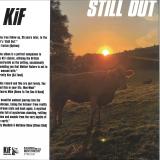
Recorded in a remote cabin on the Devon coast, STILL OUT is an album-length collaboration between musician-filmmakers – and childhood friends – Will Cookson and Tom Haverly. A reflection on friendship, landscape and the passing of time, it inspired a road trip from North Yorkshire to North Devon they took together in the summer of 2024, and forms the soundtrack to a film of the same name which had its premiere screening as part of Stroud Film Festival in March 2025.
Like the film, STILL OUT is also an oblique homage to The KLF’s iconic 1990 album Chill Out, which the Gloucestershire-based pair revisited after it turned up unexpectedly a few years back in Tom’s dad’s record collection. Inspired to create their own recording using a similarly free-spirited process, Will and Tom relocated to the Devon coast in late summer 2023, splicing together a 40-minute mix from their personal archive of recordings and found sounds in a remote cabin with no electricity or mobile reception.
"It came together using cut-and-paste techniques, with ongoing shifts and tweaks,” says Will. “The final result was an audio collage that felt like something legendary hip hop producers The Bomb Squad might make - if ambient music was the only material in their sample library."
Using ‘ambient’ as a starting-point rather than an end in itself, they took inspiration from across the musical spectrum – classic-period Brian Eno, Philip Glass, Bill Evans, plus outliers such as 80s singer-songwriter Virginia Astley and the late DJ-producer Andrew Weatherall. The connections, though, are anything but obvious as the audio shifts seamlessly from field recordings and spoken-word interludes to mood pieces and snatches of vintage pop.
Edited and assembled using freely available open source programs, the source material was often radically altered using tools such as “PaulStretch”, a digital sound-morphing algorithm that allows users to stretch audio files to extreme lengths.
"When we found ourselves in a creative slump or unsure how to navigate a tricky part, we'd say, ‘Let's put some syrup on it and slow it down,’” says Tom. “That always helped us get back on track during late-night recording sessions at the cabin."
Part-soundtrack, part-meditative experiment, STILL OUT is intended as a reflection on the mental and emotional shift that occurs when stepping away from the routine of daily life – an album that forms a celebration of our ever-changing relationship to the world around us and the mystery of what it means to pass through time and space.
“The true follow up, 35 years later, to The KLF’s ‘Chill Out’”.
JD Twitch (Optimo).
An ambient journey reflecting on friendship, the British landscape - and The KLF’s landmark album Chill Out
"This record and film are just lovely. You need this in your life. Moo-Moo!” Balearic Mike (Down To The Sea & Back)
"The album is a perfect companion to the KLF classic, utilising the British countryside as the setting, occasionally reminding you that Mother Nature is not to be messed with.” Strictly Kev (DJ Food)
"A beautiful ambient journey into the landscape, taking the listener from reality to dream state and back again. A mystical realm full of mysterious chanting, rattling trains and sounds from the very depths of the earth."
Lally MacBeth & Matthew Shaw (Stone Club)
- Her Lay, Incorruptible, Ethereal Beauty
- Resumption
- Zenit
- The Day My Father Died
- Wandering Body
- The Spinotian Resistance
- Pit Is Not A Crime (Feat. Kate)
- Nadir
- Free To Live/Free To Die
- Cicada's Swansong
- You Can Get Rid Of The Past!
- Hood Crew (By Growing Concern)
New Wave of Alternative Hardcore! 217's debut album ' In Your Gaze " is a combination of different Hardcore schools mixed with dreamy, dark and intense moments. This is a turning point. Drawing inspiration from American old-school hardcore (Negative Approach, Uniform Choice, Slapshot, Madball, Bad Brains, Chain of Strength, Growing Concern), mid-'90s new school (108, Have Heart, Snapcase, Abhinanda), as well as math rock, hardcore, and alternative dark rock (Melvins, Botch, Bauhaus, Fields of the Nephilim, Stone Temple Pilots, Killing Joke, The Doors), 217 now presents itself with a renewed and at times dreamlike musical and lyrical identity.
In between the folds of ceremony and commonality lies a perennial spring of musical expression.
A statement along the time continuum, or a testament to the resilient resourcefulness embedded in that truth, forms the philosophical approach of this album – the first outing of Dídac.
Studying an extensive archive of instruments, artifacts, and field recordings at the Musée d’ethnographie de Genève—a space steeped in folkloric gesture – Dídac encountered a cosmos of liturgical music and folk song. Anchored in reverance for tradition and transformation alike, this album navigates the old-world Mediterranean lore through a post-modern ambient lens, threading drone, gentle rhythm, electroacoustic textures and the crude tactility of archival material into one woven tapestry.
Under the guidance of Dr. Madeleine Leclair, Dídac was invited to work within one of the world’s most extensive ethno- musicological archives—L’AIMP. In the saturated basements and tape-lined backrooms of the museum, he submerged himself in the sounds of ritual and rural life: wax cylinders from the Eastern Mediterranean, tapes of liturgical hymn, the worn edges of communal song.
In a makeshift studio on the fourth floor of the museum, he sifted through the hours of material he collected, gradually discovering that the archive was no static source – It did not dictate; rather, it served as a companion—offering not answers, but questions. Not a beaten track, but a cluster of sonic clues and riddles. Samples do appear occasionally, tenderly interwoven into the dialogue of the songs. In Dídac’s self-titled debut, the past is not worn as ornament or kitsch; it is listened to and responded to. The museum, its archives, and the visit to Geneva became a foundational culisse of sorts, igniting a myriad of rough cuts and improvisational outtakes.
Dídac, or Diego Ocejo Muñoz, was born in Madrid in 1994 to a family of both Catalan and Castilian origin.
Brought up in a religious household, the influence of the Catholic Church innately shaped the social fabric, schooling and daily life. This lingering dominance led the adolescent Diego into a path of rejection of everything sacramental, promptly resorting to subversion in the shape of grafitti, skateboarding and underground music. Only later in life, after a rigorous venture as an acid and electro producer, the Church re-emerged before him in new light, invoking a deep fascination for its mysticism, iconography and choral tradition.
Spain in general and Catalonia in particular, has long served as a crossroads of the eastern–western Mediterranean continuum, with many of its cultures sharing aspects of way of life and ceremony. At the MEG, Diego found himself puzzled with this realization, resulting in a sonic amalgamation that reaches farther away from the rugged mountains of Catalonia than you might perceive at first encounter.
The deeply embedded memory of rite and public ceremony, religious hymn and landscape—sieved through the undercurrent of personal re-emergence, forms the emotional topography of this album. The record does not trace this landscape; it inhabits it. Its repetitive mysticism and ambient, wide-eyed gaze could possibly evoke (perhaps redundant) comparisons to artists such as Dimitris Petsetakis, or Popol Vuh’s late 70’s cinema scores.
The delicate lines between the sacred and the secular – between memory and re-invention – serve as a cipher to understanding this album in its entirety. Titles like Malpàs Mines or Pantocrator’s Portal Outro nudge toward a folkloric and devotional bedrock—places where labor and spirituality coexist, where names preserve both dust and veneration.
Nevertheless, this is far from mere nostalgia. It is a reclamation — singing alongside the spirits of the past, nurturing what still hums beneath the soil. It is an intimate reflection on tradition, rebellion, adolescence, ceremony and fantasy – a pastoral contemplation on what once was and what is to be.
Amsterdam label Spectral Bounce recruits French club stalwart Chris Carrier for SPEC06 — Perfect Encounter. Active since 1994, the Parisian artist has released a wellspring of records on Robsoul, Slapfunk and his own Sound Carrier recordings, parallel to his longtime career as a DJ. Characterised by swirling delays and progressive arrangements, Perfect Encounter shows the producer exploring the mesmeric corners of tech house, ideally fitted to the Spectral Bounce aesthetic.
Opener “XLR8” starts with rolling toms that make way for fluid, modulated tones; each bar ebbs and flows to the sweeping synths set in motion by Carrier. Processed with a multitude of delays, rhythmic FX boldly swish above the drums, making for an immersive soundstage. Second track “Light Side” retains the billowing echoes but moves more nimbly, cutting things back to make for a spacious and breezy number. Its croaking synths hop around the stereo field, accompanied by tight percussion and a walking bassline.
The hallucinogenic “Third Moon” sees Carrier step further into trance-inducing territory. The track’s pulsing, syncopated bass note thrums underneath an arpeggio that evolves into a heady prismatic drone. While the chugging beat is ever-present, melodic refrains rise up and evaporate like wisps of vapour, alongside a vocal that fades away as quickly as it appears. The EP’s eponymous “Perfect Encounter” dials up the tension and closes the record with a mysterious touch. Speedy 16th note patterns propel the beat, creating shifty rhythms that rattle and hiss. A rasping, gelatinous synth and squeaky detuned tones resemble extraterrestrial signals — alien morse code for an enraptured dancefloor.
Credits:
Black Vinyl[45,25 €]
Effortlessly picking up from their excellent demonstration cassette, it sees the band refining their sound even further. An audio amalgamation combining the profoundness of early Ulver, with the gloom of old Katatonia and exalted boldness of Fields of the Nephilim, thus adding unique elements of nostalgia and atmosphere to their own melodic interplay of guitars and excellent musical framework.
The album contains strong signs of a band that knew at a young age how to draw their canvas. Very Scandinavian in nature, and influenced by the American landscape of the Pacific Northwest, it firmly put Agalloch on the map and raised eyebrows about what a band from North America would be capable of. As a person that grew up checking out records based on their cover-artwork alone, this album is particularly notable for such an experience, considering the wooden cover with a gold emblazoned logo engraved. This is music that glorifies the night sky, envisions campfire magic, heralds nature over humans, arcane arts & poetry, and worships the beauty of a crackling fireplace. It could be the soundtrack for a lone wanderer striving through a wintry storm, only to end up knocking on a faded
wooden door to find shelter in a desolate cabin. In many ways the sound of forlorn times.
If you are looking to fill your heart with woodsmoke and the fire of
the mountain's spirit, look no further.
"Pale Folklore was a watershed moment in American heavy music, when a few young musicians with a shared love of underground death metal - and broad personal tastes beyond - turned their already virtuosic talents toward a fresh hybrid of metal and neofolk through a gothic lens." - Daniel Lake / author of USBM: A Revolution of Identity in American Black Metal
- Ruin
- Circle
- Bitter End
- Petrichor
- Greenway
- Field Fire
- Wallflower
- Ember
- Oathkeeper
- New Sky
The Soft Apocalypse ist ein Triumph der Selbstfindung. Das Debüt von Henry J. Star entstand aus einer Mischung aus Aufrichtigkeit, Absicht und einem breiten Spektrum an musikalischen und nicht-musikalischen Interessen, darunter Cloud Rap, japanische Abenteuerspiele und Literatur. Das Album wurde vollständig von dem Multi-Instrumentalisten Devin Badgett geschrieben, produziert und eingespielt, der bereits durch frühere Projekte als Performer und Songwriter bekannt ist. The Soft Apocalypse ist eine Geschichte vom Ende der Welt am Ende der Welt und eine Anerkennung der überwältigenden Schönheit und unerträglichen Gewalt, die das Anthropozän vorantreibt. Eine detaillierte Schilderung des Pessimisten und Optimisten, die auf eine katastrophale Evolution zusteuern. Jeder Song ist ein lebhafter Blick nach innen auf eine zerbrochene Psyche, die unter der unermüdlichen Belagerung einer zusammenbrechenden Welt versucht, sich wieder zu einem Ganzen zusammenzufügen. Mit tränenüberströmtem Gesicht lag ein junger Künstler auf den abgenutzten, mit Teppich ausgelegten Stufen seines Elternhauses und machte sich an seinen sisyphushaften Kampf, sich selbst zu entkommen. Als seine Mutter sich zu ihm hinunterbeugte, um ihn von den Stufen zu ziehen, die er so oft zuvor erklommen hatte, begann eine neue Reise und eine archetypische neue Persönlichkeit wurde geboren. Devin Javon Badgett ist ,Henry J. Star" und der Autor dieser Geschichte.
Im Sommer 1968 traf sich der 18-jährige Genesis P-Orridge (damals Neil Andrew Megson) mit Freunden in einem bescheidenen Dachgeschoss, um mit Klängen zu experimentieren. Das Ergebnis war "Early Worm", eine Sammlung von Aufnahmen, die die aufkeimende Kreativität eines Künstlers einfing, der später eine Schlüsselfigur der Avantgarde-Musik werden sollte. Diese Sessions, die 1969 auf ein einziges Acetat gepresst wurden, zeigen eine furchtlose Erforschung von Geräuschen, Improvisationen und Tonbandexperimenten, die Einflüsse von Psychedelia, Fluxus, John Cage und Beatnik Bohemia widerspiegeln. "Early Worm" ist ein Zeugnis für P-Orridges frühes Engagement, musikalische Grenzen zu überschreiten. Die rohen und ungefilterten Klanglandschaften des Albums bieten dem Hörer einen seltenen Einblick in die Gründungsmomente, die schließlich zur Gründung von COUM Transmissions, Throbbing Gristle und Psychic TV führen sollten. Remastered und in einer limitierten Vinyl-Pressung, mit Linernotes geschrieben von Genesis Breyer P-Orridge, die den Zeitgeist des UK Undergrounds der späten 60er Jahre in Erinnerung rufen. "If nothing else, (Early Worm) revealed that P-Orridge's approach to music was defiantly left-field from the start: noise, improvisations and tape experiments that sounded a little like a more chaotic version psychedelic folkies the Incredible String Band." . The Guardian
Smoke Vinyl[45,25 €]
Effortlessly picking up from their excellent demonstration cassette, it sees the band refining their sound even further. An audio amalgamation combining the profoundness of early Ulver, with the gloom of old Katatonia and exalted boldness of Fields of the Nephilim, thus adding unique elements of nostalgia and atmosphere to their own melodic interplay of guitars and excellent musical framework.
The album contains strong signs of a band that knew at a young age how to draw their canvas. Very Scandinavian in nature, and influenced by the American landscape of the Pacific Northwest, it firmly put Agalloch on the map and raised eyebrows about what a band from North America would be capable of. As a person that grew up checking out records based on their cover-artwork alone, this album is particularly notable for such an experience, considering the wooden cover with a gold emblazoned logo engraved. This is music that glorifies the night sky, envisions campfire magic, heralds nature over humans, arcane arts & poetry, and worships the beauty of a crackling fireplace. It could be the soundtrack for a lone wanderer striving through a wintry storm, only to end up knocking on a faded
wooden door to find shelter in a desolate cabin. In many ways the sound of forlorn times.
If you are looking to fill your heart with woodsmoke and the fire of
the mountain's spirit, look no further.
"Pale Folklore was a watershed moment in American heavy music, when a few young musicians with a shared love of underground death metal - and broad personal tastes beyond - turned their already virtuosic talents toward a fresh hybrid of metal and neofolk through a gothic lens." - Daniel Lake / author of USBM: A Revolution of Identity in American Black Metal
Scintillating, alchemical kosmische; visionary, deep, and luminous; and beautifully sleeved, with gold foiling and silver ink.
Works In Metal fans out a set of acid treatments and finely sharpened blades — cutting, shaping, suspending form. Sounds are melted down and forged as if liquid metal.
The works are paired. Arc’s Blue Flame previews the smoking volatility at the album’s core. Echoes and resonance soften the dissonant, bright textures; all overlaid with Fofana’s signature, percussive kick drums. Welding drills into the discordant thrills and spills of metamorphosis. Sparks fly and the bittersweet arc of change unfolds.
Fofana discreetly folds in text, poetry, and field recordings, spooring their decomposition and recomposition with a prismatic point of view. The coupling Obscure Light (Decomposition) and Obscure Light (Recomposition) marks something new in his music. The pulse is brightly honed, cascading beyond the dancefloor, exultingly eluding musical genre.
Works in Metal is perhaps Fofana’s most narrative album. At its heart is the killer, extended Lure of the Fragment / So Another Sound Suggests Itself. Melodies circle in call-and-response patterns, balancing proximity and distance, signalling the inward gravity required to work with metal. A nested story-line, with birds flying in; an album within an album. Dredging up memories and associations, Fofana filters in selections from his sound-archives. Layered with synths, field recordings become instruments in their own right. The last three minutes proffer precious clarity — a memory, in miniature, flashed onto molten metal.
In 1943 Suzanne Césaire declared that ‘our surrealism will then supply them the leaven from their very depths. It will be time finally to transcend the sordid contemporary antinomies: Whites-Blacks, Europeans-Africans, civilized-savage: the powerful magic of the mahoulis will be recovered, drawn from the very wellsprings of life. Colonial idiocies will be purified by the welding arc’s blue flame. The mettle of our metal, our cutting edge of steel, our unique communions — all will be recovered’. Works in Metal is a tribute to her prophecy; its enactment, sculpted in sound.
INTEMPORARY AND INDETRONABLE FRENCH COLD WAVE CLASSIC in a SPECIAL EDITION to celebrate the 40th anniversary of this mythical album.
This edition includes a 45T with 2 previously unreleased tracks, available nowhere else.
Thierry Müller, who initiated the RUTH project, is not at his first try when the album POLAROÏD/ROMAN/PHOTO including the eponymous track is released in 1985. His older brother Patrick along with one of their cousins make his musical education and he quickly becomes familiar with contemporary and experimental music. He starts quite early to tinker sounds on old tape recorders by himself but it is in 1977 that Thierry launches with some friends his first group, ARCANE, while studying at the School of Applied Arts. Their sound is weird, a mixture of saturated scratches and feedback tapes: there is no discographic or scenic testimony of this experience.
Alongside ARCANE, Thierry is already working solo on his ILITCH project / concept, an experimental and innovative work, whose first album Periodmindtrouble is released in 1978 on the Oxigène label. Despite insubstantial sales, this album brings Thierry recognition and success in the very elitist circles of experimental and underground music.
ILITCH’s musical bias was too narrow for Thierry’s ceaseless experimental curiosity, parallel to these activities, he therefore develops a Punk project called RUTH ELLYERI with the author, actress and photographer Murielle Huster. The title is an anagram of Thierry Müller (the complete name is Ruth M. Ellyeri). The character is meant to impersonate one of his schizophrenic facets and allows him to extend his field of expressions to musical styles differing from those in ILITCH.
From this work, the very cult punk piece Mescalito emerges, song that can be found on the mythical but unfortunately very rare compilation 125g de 33 1/3 tours (1979) of the Oxigène label (first “french punk” sampler). At the end of 1978, he meets Philippe Doray at the Oxigene office. Doray is another big name of French experimental music. Thierry moves to his home near Rouen, a remote farmhouse with a music studio made of odds and ends.
They work on their respective creations but meet from time to time on experimentations in common, including CRASH (a tribute to JG Ballard) As early as 1982, a first version of the track Polaroïd/Roman/Photo is out under the name of the project RUTH. “I wanted to write a piece to make the girls dance and make fun of the boys. I plugged a small handmade clock on my Farfisa organ as a sequencer. I had a small Roland synth-guitar, I put the organ in it and that’s how it started.” Philippe is quite amused by the idea of working on a more Pop project and offers to write the text. Thierry works on other tracks for the future LP and asks some friends to write other texts : Edouard Nono, visual artist, writes the lyrics of Mots, Frédérique Lapierre those of Misty Mouse and Tu m’ennuies . It is her voice you hear on these 2 tracks and on the first version of Polaroïd/Roman/Photo. Later, Thierry settles down in the Anagramme recording studio to carry out acoustic sound recordings. But when the sessions are over, the 2 musicians are not too happy with the results of Polaroïd/Roman/Photo: according to them, they lack “flamboyance”. They decide then to record a new female voice with a professional singer and the sound engeneer Patrick Chevalot offers to mix the track in the Synthesis studio “so that it blows out”.
With his tape ready and the help of Jacques Pasquier (S.C.O.P.A. / Invisible records where Ilitch’s second album, 10 Suicides, is released) he starts to contact record companies. “I visited almost all the major record companies and was thrown out every time. Only at RCA’s I found someone interested in my music. It was Francis Fottorino who had signed Kas Product but when it reached the the big boss, no way! Philippe Constantin from Virgin records raised some hope but in vain.
The album was finally released in 1985 with Paris Album, a small independant label.” The album barely sells 50 copies in 1985, despite the eponymous title as a potential success. « In 2004, 2 DJs Marc Colin and Ivan Smagghe discover the track Polaroïd/Roman/Photo and decide to exhume it from oblvion. They release it on a compilation called So Young but so cold (Tigersushi) and then with Born Bad records on the BIPPP compilation in 2008. Thanks to them, the track and the album start a new life.
Alongside his activity as graphic designer, Thierry Müller carries on producing music under his name, those of ILITCH and RUTH for his own creations and various collaborations.
Perfect Location Records in partnership with the one and only Ear Candy Music is proud to announce 00-04, a compilation of early works by Bevan Smith aka Signer, New Zealand’s most prominent name in ambient electronica and dub techno.
Smith has been producing emotive chords, pop ambience, and thick dub-ospheres since before the turn of the century. His output is prolific, ranging from various solo monikers (Aspen, Introverted Dancefloor) and collaborations (Skallander, Feeling Flying) to unique projects (Touching the Void soundtrack, Isolated Dreams’ 24 EPs and counting). A rare artist with indie crossover appeal thanks to the 2004 Signer album The New Face of Smiling released on Carpark Records (Toro Y Moi, Beach House, Dan Deacon, Montag), Smith has played as a member of bands such as The Ruby Suns (Sub Pop), Over the Atlantic (Involve), and Glass Vaults (JUKBOXR).
Encompassing field recordings and evoking a cloudy coastal sky, 00-04 is a collection of mostly unheard material written in the early 2000s as Smith navigated the chaos and stress of living in London just after 9/11. A portion of this release may be recognisable to those familiar with the Involve catalog––“Drone Early,” for example, is an alternative version to the dub giant “1201A”––and to those acquainted with Signer’s 2002 Low Light Dreams (Carpark/Involve), an iconic album composed of processed guitar, dub-influenced bass, and synth drones; as if that doesn’t sound appealing enough, Low Light Dreams is home to “Building Memories Without You,” an unforgettably engulfing track featured on Fact Magazine’s 25 Best Dub Techno Tracks of All Time.
00-04 is a (re)issue both nostalgic and new, familiar yet unknown, fresh out of the archive. It possesses the Low Light Dreams aural palette while offering a carefully curated array of never before heard icy-cold moods, soothing minimalism, and shyly optimistic melodies, all glazed with recently finalized additions.
Ostinato as resistance: Rafael Anton Irisarri’s landmark work reimagined. Marking the tenth anniversary of the American composer’s critically acclaimed album 'A Fragile Geography', this new edition arrives renewed, both sonically and visually.
First released in 2015 (Room40) during a period of personal upheaval and creative reinvention, it endures as a testament to resilience, transformation, and the connection we hold with the places that shape us.
Written in the aftermath of a devastating theft, A Fragile Geography was born out of loss. Just days before a cross-country move to New York, Irisarri’s entire Seattle-based studio was wiped out. Instruments. Recordings. Archives. Gone without a trace. He arrived on the East Coast to an empty room and the daunting task of starting over.
“This album wasn’t just a record; it was a lifeline,” Irisarri reflects. “It became a way to process the emotional chaos that followed: uprooting, instability, and ultimately, the slow, intuitive rebuilding of a life.”
Composed and recorded in the rural woods of the Hudson Valley, the album took shape in seclusion, surrounded by nature, and through a process guided by improvisation. Embracing limitations, Irisarri wove textural layers of field recordings with half-remembered melodies from his Seattle years, piecing them together like fragments of memory. Tracks like “Displacement,” “Hiatus,” and “Persistence” juxtaposed haunting stillness with restless momentum, mapping an inner terrain of grief, catharsis, and rebirth.
Among its defining sounds is “Empire Systems,” a monumental centerpiece built around a simple four-chord progression, organ textures, and guitar drones. Gradually, the track expands into layers of immersive loops and thick, enveloping distortion that wash over the listener like a rolling wave. Often cited as the album’s most majestic passage, it captures Irisarri at his most sonically ambitious. With a harmonically saturated structure crafted from restraint and repetition, it remains one of his most recognizable compositions: an exercise in the art of maximal minimalism.
From the outset, “Reprisal” received praise from BBC’s Mary Anne Hobbs, who championed the track on her radio show. Her support played a key role in introducing Irisarri’s work to wider audiences and solidifying his place within the lineage of electronic, drone, and experimental sound artists. A slow-burning elegy, the piece emerges from a haze of distortion and sub-bass, with dense, unrelenting drones carrying a sense of mounting tension. Just as it seems to collapse under its own weight, flickers of guitar emerge like distant light through fog. It’s a meditation on dissonance, resolve, and the elusive possibility of release.
The closing track, “Secretly Wishing for Rain,” is steeped in saudade: a longing for Seattle’s dour grey skies, lush green landscapes, and desaturated sunsets. Through it, Irisarri mourns a vanished chapter of life bound to the city, a time documented in scattered mementos and cherished collections, now permanently gone. A reflection on what could never be recovered: an era lost to time. Julia Kent’s looped cello motifs added a melancholic warmth to the track, marking the first collaboration between the two artists and sparking a musical dialogue that would keep growing in the years that followed.
More than a career highlight, A Fragile Geography has laid the foundation for Black Knoll studio, which Irisarri rebuilt from the ground up. The studio has since grown into a creative hub for countless projects, with Irisarri engineering records for iconic music figures like Terry Riley, Ryuichi Sakamoto, William Basinski, MONO, Devendra Banhart, Grouper, Emeralds, Steve Hauschildt, Julianna Barwick, and many others. Carried by its lasting influence, the album has quietly captured the ear of a younger generation, its sound and emotional arc finding new listeners in unexpected corners.
The album’s new visual language was reimagined in collaboration with Mexico City–based designer Daniel Castrejón. Irisarri captured ghostly images at Gaztelugatxeko Doniene, a historic coastal site in Bermeo, Euskal Herria. Castrejón then treated the photographs with distressed textures and spectral overlays. The final artwork channels the rugged, elemental forces that shaped both the music and Irisarri’s aesthetic, renewing his ties to ancestral ground inspired by the Basque homeland of his bloodline.
Mastered by Stephan Mathieu with exceptional attention to detail, this anniversary edition uncovers every nuance in the sound design, enhancing clarity and presence. With each listen, new elements emerge, inviting discovery and reconnection.
“I don’t experience this album as a document of grief anymore,” says Irisarri. “I hear adaptation and I'm reminded that when everything falls apart, something meaningful, maybe even beautiful, can emerge.”
Ostinato as resistance: Rafael Anton Irisarri’s landmark work reimagined. Marking the tenth anniversary of the American composer’s critically acclaimed album 'A Fragile Geography', this new edition arrives renewed, both sonically and visually.
First released in 2015 (Room40) during a period of personal upheaval and creative reinvention, it endures as a testament to resilience, transformation, and the connection we hold with the places that shape us.
Written in the aftermath of a devastating theft, A Fragile Geography was born out of loss. Just days before a cross-country move to New York, Irisarri’s entire Seattle-based studio was wiped out. Instruments. Recordings. Archives. Gone without a trace. He arrived on the East Coast to an empty room and the daunting task of starting over.
“This album wasn’t just a record; it was a lifeline,” Irisarri reflects. “It became a way to process the emotional chaos that followed: uprooting, instability, and ultimately, the slow, intuitive rebuilding of a life.”
Composed and recorded in the rural woods of the Hudson Valley, the album took shape in seclusion, surrounded by nature, and through a process guided by improvisation. Embracing limitations, Irisarri wove textural layers of field recordings with half-remembered melodies from his Seattle years, piecing them together like fragments of memory. Tracks like “Displacement,” “Hiatus,” and “Persistence” juxtaposed haunting stillness with restless momentum, mapping an inner terrain of grief, catharsis, and rebirth.
Among its defining sounds is “Empire Systems,” a monumental centerpiece built around a simple four-chord progression, organ textures, and guitar drones. Gradually, the track expands into layers of immersive loops and thick, enveloping distortion that wash over the listener like a rolling wave. Often cited as the album’s most majestic passage, it captures Irisarri at his most sonically ambitious. With a harmonically saturated structure crafted from restraint and repetition, it remains one of his most recognizable compositions: an exercise in the art of maximal minimalism.
From the outset, “Reprisal” received praise from BBC’s Mary Anne Hobbs, who championed the track on her radio show. Her support played a key role in introducing Irisarri’s work to wider audiences and solidifying his place within the lineage of electronic, drone, and experimental sound artists. A slow-burning elegy, the piece emerges from a haze of distortion and sub-bass, with dense, unrelenting drones carrying a sense of mounting tension. Just as it seems to collapse under its own weight, flickers of guitar emerge like distant light through fog. It’s a meditation on dissonance, resolve, and the elusive possibility of release.
The closing track, “Secretly Wishing for Rain,” is steeped in saudade: a longing for Seattle’s dour grey skies, lush green landscapes, and desaturated sunsets. Through it, Irisarri mourns a vanished chapter of life bound to the city, a time documented in scattered mementos and cherished collections, now permanently gone. A reflection on what could never be recovered: an era lost to time. Julia Kent’s looped cello motifs added a melancholic warmth to the track, marking the first collaboration between the two artists and sparking a musical dialogue that would keep growing in the years that followed.
More than a career highlight, A Fragile Geography has laid the foundation for Black Knoll studio, which Irisarri rebuilt from the ground up. The studio has since grown into a creative hub for countless projects, with Irisarri engineering records for iconic music figures like Terry Riley, Ryuichi Sakamoto, William Basinski, MONO, Devendra Banhart, Grouper, Emeralds, Steve Hauschildt, Julianna Barwick, and many others. Carried by its lasting influence, the album has quietly captured the ear of a younger generation, its sound and emotional arc finding new listeners in unexpected corners.
The album’s new visual language was reimagined in collaboration with Mexico City–based designer Daniel Castrejón. Irisarri captured ghostly images at Gaztelugatxeko Doniene, a historic coastal site in Bermeo, Euskal Herria. Castrejón then treated the photographs with distressed textures and spectral overlays. The final artwork channels the rugged, elemental forces that shaped both the music and Irisarri’s aesthetic, renewing his ties to ancestral ground inspired by the Basque homeland of his bloodline.
Mastered by Stephan Mathieu with exceptional attention to detail, this anniversary edition uncovers every nuance in the sound design, enhancing clarity and presence. With each listen, new elements emerge, inviting discovery and reconnection.
“I don’t experience this album as a document of grief anymore,” says Irisarri. “I hear adaptation and I'm reminded that when everything falls apart, something meaningful, maybe even beautiful, can emerge.”
Pandemic, war, inflation, apocalyptic scenarios about climate change and artificial intelligence, all connected with widespread bonkers conspiracy narratives and growing fascist sentiments – in this crisis environment we re-emerge with a new issue.
What may appear like a ‘normal’ datacide issue – which it is indeed – is however also a part of a broader strategy. We’ve been busy expanding activities into the field of videos, documentaries and interviews. The very first signs of this are visible on our Noise & Politics YouTube channel.
There will be much more.
Datacide nineteen is now at the printers and will be available for the first time at the Hekate event at Forte Prenestino in Rome on October 6/7.
Subscribers, depending where they are based, will receive their copies soon after.
General distribution will commence later in October, our aim is to have the issue available in all the most important radical bookstores around Europe by early November. If you are interested to resell datacide in your area, please get in touch!
We will also have a table at the Radical Bookfair in London on November 4th, presenting the new magazine along with older issues.
With this issue we pick up the story where we left it with the last one. We’re unfolding a countercultural panorama, this time beginning in the mid-20th century with Howard Slater exploring the beginnings of the Electronic Disturbance Zone, multiple reflections of 1948 via the 1990s, sonic adumbrations of new social relations.
Christoph Fringeli then introduces us to a document from 1967 where situationist ideas popped up in the Extra-Parliamentary Opposition in West Berlin, in a text called Vietnam, the Third World and the Self-Deception of the Left, which contains a détournement of the Address to Revolutionaries of Algeria and of all Countries published by the Situationist International the previous year.
From 1967 we move on to 1978 with Ian Trowell, in an excerpt from his forthcoming book ‘Throbbing Gristle – An Endless Discontent’, tracking the movements of Throbbing Gristle as they play their first gig up north at the aptly named Wakefield Industrial Training College. Uncanny overlaps of the timelines of TG’s operation and The Yorkshire Ripper’s killing spree reveal themselves.
The time window from the 90s to the present day is illuminated by Nihil Fist, as we’re printing the interview previously published in video form on our YouTube channel.
This issue then moves into ficticious territory with stories and poetry by Joke Lanz, Dan Hekate, Howard Slater and Riccardo Balli. Book and record reviews follow, as do the charts and a short report of our wider activities since the last issue.
Please pre-order your copy now (6 euro incl. Shipping in Europe, 8 euro elsewhere) or, even better, take out a subscription (standard subscription for only 23 euros for 4 issues (Europe) or 3 issues (rest of the world) – or our super-subscription which includes also records, t-shirts, books and digital items.
Or just make a donation if you can’t be bothered with print, but want to support our work.
- Patient Boy
- 6: O.4.N.c.8
- Run To Buy Vacuum
- Fields Of Neighborly
- Shell Fantasy
- Ascent Of The Jugular Vein
- Marathon Man
- Murmuur
- Tv Show
Formed in Brussels in 2017, Milk TV has drunk from many sources, quenching an enormous thirst for inspiration to create a singular universe, imbued with nostalgia and cynicism towards Anglo-Saxon pop culture. That of cheap TV programs, giant milk bottle ads, but above all of the underground, from New York no-wave to the Californian noise scene. With "NEO GEO", a new album on Brussels label EXAG' Records, the trio take their music to even more versatile playgrounds, an art-rock kaleidoscope, perhaps more intuitive and effective than its predecessor. While the band's trademark bass chorus and jerky rhythms with a hint of exotica are still present, some tracks give way to a more punky, immediate energy.
A genre-defying Afrofuturist manifesto from Uganda. Producer,
dancer and choreographer Faizal Mostrixx"s singular vision of
East African electronic music is a lush sonic tapestry of
polyrhythms, modern dancefloor styles, amapiano, Nile basin
ceremonial chants and Pan-African field recordings. A stalwart
of the explosive Kampala electronic music scene Mostrixx has
collaborated with the Nyege Nyege collective appearing at both
the African and European editions of their festival. Mutations is
Faizal"s second full length album, following close on the heels of
his acclaimed digital EP Transitions (May 2022 / Glitterbeat). In
their review of Transitions, The WIRE noted: "If today"s currents
in East African electronic music have a more mainstream
destiny, this might be how it starts."
- A1: Hosanna (Meridian)
- A2: First Born (Redeemed)
- A3: When Angels Speak Of Love
- A4: Doubleupptown (Larocque)
- A5: W-I-S (Above Every Other)
- A6: Pistol Poem (Leadbelly)
- A7: Whip Appeal (Pipn8Ez)
- A8: Seven Trumpets
- A9: Giz'aard ($Uckets)
- A10: Helpmeet (Iyadunni)
- B1: Flir2A
- B2: U&Me (Decemberseventeen)
- B3: Illbethere, 4Everandever
- B4: Alàáfía (Cita's World)
ALTERNATE COVER[27,52 €]
Honour's debut album is a ligament stretching from Lagos to London and to New York, curling across the diaspora and brushing the darker hues of blues, hip-hop, free jazz, ambient, gospel with Christian mythology and Yoruba folklore. As cinematic as it is painterly, Alàáfíà is a meditation on themes of life, death and love that pulls inspiration from the unexpected poetic profundity of casual conversations, field recordings, literature, ephemera, or personal archives. The result is an impressionistic vision in Black and Blur that both exhausts and implicates language_substantiating a mythos proposed by Fred Moten that sublimates boundaries between everywhere and nowhere; history and the present; the individual and the universal. Alàáfíà delineates a gothic landscape cut by overdriven beats, swooping orchestral blasts, choral bursts and ear- splitting fuzz, where the fleshly and spiritual realms commune. Dedicated to Honour's late grandmother, the title track began to take form after their last embrace and remains steeped in her influence and spirit_a tape-saturated composition that starts in Lagos and ends in London's smoke-stained cityscape, the song's dream-like quality developed out of the artist's grief and PTSD coping with this loss. Beneath the stretched guitar drones and stuttering loops, their grandmother's shared faith bubbles to the surface. "When Angels Speak of Love," borrows its title from two works by Sun Ra and bell hooks, respectively. Sculpting echoes of praise music into disorienting spirals perforated with syrupy DJ Screw-inspired breaks and sharp splinters of melancholic guitar, "When Angels Speak of Love" engages a conceptual dialogue with the spirits of both late thinkers, folding them into Honour's pantheon of ancestral guides. The album's ninth track, "Giz Aard ($uckets)," is a dirge of regimented drums which anchor this somber melody as it whirls into a blizzard of heartache, uncertain if its consequence will be death or eternal joy. The album's sole lyrical offering, "Pistol Poem (Lead Belly)," begins with a darkly humorous bar, "He went thru hell and back/ came back/ 2 get the strap," that swells into a haunting allegory based on the life of Philip "Hot Sauce" Champion. A modern take on the Blues, Honour's lyrics reify the artist's status as a student of both literature and popular culture, crossbreeding the artist's clever wordplay with additional references to Richard Pryor, Robert Johnson, Kelly Rowland & Bryon Gysin. Setting core principles of hip-hop, R&B, jazz and gospel music to atemporal soundscapes and compositions, Honour crafts a record that marinates in its own knotty contradictions. The ghosts that sit on the artist's shoulders have never been more tangible than with this emotive debut.
Ostinato as resistance: Rafael Anton Irisarri’s landmark work reimagined. Marking the tenth anniversary of the American composer’s critically acclaimed album 'A Fragile Geography', this new edition arrives renewed, both sonically and visually.
First released in 2015 (Room40) during a period of personal upheaval and creative reinvention, it endures as a testament to resilience, transformation, and the connection we hold with the places that shape us.
Written in the aftermath of a devastating theft, A Fragile Geography was born out of loss. Just days before a cross-country move to New York, Irisarri’s entire Seattle-based studio was wiped out. Instruments. Recordings. Archives. Gone without a trace. He arrived on the East Coast to an empty room and the daunting task of starting over.
“This album wasn’t just a record; it was a lifeline,” Irisarri reflects. “It became a way to process the emotional chaos that followed: uprooting, instability, and ultimately, the slow, intuitive rebuilding of a life.”
Composed and recorded in the rural woods of the Hudson Valley, the album took shape in seclusion, surrounded by nature, and through a process guided by improvisation. Embracing limitations, Irisarri wove textural layers of field recordings with half-remembered melodies from his Seattle years, piecing them together like fragments of memory. Tracks like “Displacement,” “Hiatus,” and “Persistence” juxtaposed haunting stillness with restless momentum, mapping an inner terrain of grief, catharsis, and rebirth.
Among its defining sounds is “Empire Systems,” a monumental centerpiece built around a simple four-chord progression, organ textures, and guitar drones. Gradually, the track expands into layers of immersive loops and thick, enveloping distortion that wash over the listener like a rolling wave. Often cited as the album’s most majestic passage, it captures Irisarri at his most sonically ambitious. With a harmonically saturated structure crafted from restraint and repetition, it remains one of his most recognizable compositions: an exercise in the art of maximal minimalism.
From the outset, “Reprisal” received praise from BBC’s Mary Anne Hobbs, who championed the track on her radio show. Her support played a key role in introducing Irisarri’s work to wider audiences and solidifying his place within the lineage of electronic, drone, and experimental sound artists. A slow-burning elegy, the piece emerges from a haze of distortion and sub-bass, with dense, unrelenting drones carrying a sense of mounting tension. Just as it seems to collapse under its own weight, flickers of guitar emerge like distant light through fog. It’s a meditation on dissonance, resolve, and the elusive possibility of release.
The closing track, “Secretly Wishing for Rain,” is steeped in saudade: a longing for Seattle’s dour grey skies, lush green landscapes, and desaturated sunsets. Through it, Irisarri mourns a vanished chapter of life bound to the city, a time documented in scattered mementos and cherished collections, now permanently gone. A reflection on what could never be recovered: an era lost to time. Julia Kent’s looped cello motifs added a melancholic warmth to the track, marking the first collaboration between the two artists and sparking a musical dialogue that would keep growing in the years that followed.
More than a career highlight, A Fragile Geography has laid the foundation for Black Knoll studio, which Irisarri rebuilt from the ground up. The studio has since grown into a creative hub for countless projects, with Irisarri engineering records for iconic music figures like Terry Riley, Ryuichi Sakamoto, William Basinski, MONO, Devendra Banhart, Grouper, Emeralds, Steve Hauschildt, Julianna Barwick, and many others. Carried by its lasting influence, the album has quietly captured the ear of a younger generation, its sound and emotional arc finding new listeners in unexpected corners.
The album’s new visual language was reimagined in collaboration with Mexico City–based designer Daniel Castrejón. Irisarri captured ghostly images at Gaztelugatxeko Doniene, a historic coastal site in Bermeo, Euskal Herria. Castrejón then treated the photographs with distressed textures and spectral overlays. The final artwork channels the rugged, elemental forces that shaped both the music and Irisarri’s aesthetic, renewing his ties to ancestral ground inspired by the Basque homeland of his bloodline.
Mastered by Stephan Mathieu with exceptional attention to detail, this anniversary edition uncovers every nuance in the sound design, enhancing clarity and presence. With each listen, new elements emerge, inviting discovery and reconnection.
“I don’t experience this album as a document of grief anymore,” says Irisarri. “I hear adaptation and I'm reminded that when everything falls apart, something meaningful, maybe even beautiful, can emerge.”
- Montevideo Disney Samba
- Parque Rodo Cookies
- Noa Noa Blues
- Las Canteras Breakbeat Science
- Candombe Doble Gota
- La Sombra Del Limonero
- Parque Rodo Thugs
- The Sound Of Ramirez Shore
A unique sonic journey blending jazz, candombe, dub, hip-hop, and electronic music. Written, sequenced, and recorded by Ian Lampel (Uruguay), the album captures Montevideo's vibrant essence with innovative beats and deep roots. Embark on a sonic journey through the rich tapestry of Ian Lampel's multicultural heritage with his debut solo album, "The Parque Rodó Tapes." From the echoes of his grandparents' wartime exodus from Europe's tumultuous past to the rhythms of daily life in Parque Rodó, Lampel's artistic vision was shaped by a kaleidoscope of influences: Science fiction and fantasy books, graphic design annuals, comics, films, early computers and videogames as well as music; the haunting melodies of Russian and Polish classical composers hummed by his grandmother while cooking, the choir and hammond music of the synagogue, his early explorations in club music and dub or the syncopated drumming of candombe and carnaval echoing in the streets of Montevideo. The composer, producer and bass player, wrote, sequenced and recorded practically everything that is heard throughout the album. With meticulous attention to detail, he has crafted a sonic landscape that seamlessly blends elements of jazz and Uruguayan music with the innovative spirit of dub, hip-hop and electronica; from the infectious rhythms of candombe and the raw energy of murga, to breakbeats, moog's and samples. Drawing from a treasure trove of samples collected over two decades, "The Parque Rodó Tapes" weaves together a tapestry of sound that is both nostalgic and forward-thinking, from the haunting voice of Marosa Di Giorgio and the vibrant cacophony of a carnival field recording by Lauro Ayestaran, to the guest contributions from notable musicians including Lampel's wife, singer/songwriter Eco Lopez, multi-instrumentalist Luciana Giovinazzo on flute, and Ferna Nunez on repique drum. Each track is a testament to Lampel's eclectic vision. A debut album with a certain degree of melancholy that works as a soundtrack to the world in which the artist grew up, a world now gone, without cellphones or social networks, in which everything had to be proactively pursued "in the streets".
Die Black Lips sind mit einer 40-minütigen Rock'n'Roll-Odyssee quer durch die Genres zurück, bei der Garagenrock auf New-Wave-Pop trifft und verärgerter Country sich die Hand mit epischen Western-Soundtracks gibt. Das 14-Track-Album fängt die Energie und den Geist der frühen Black Lips ein und geht gleichzeitig neue Wege beim Songwriting. Das Album ist ein musikalisches Karussell, eine Trip mit straßengeschundenen Geschichten aus der Schattenseite eines lichtlosen Amerikas. Die Rahmung bildet "The Illusion", pt.I und II: eine Suche nach Hoffnung, Angst und Hass in einer Bar, die immer wieder von einem Gefühl der Resignation durchkreuzt wird: ,you reach for the sky / but it's an illusion". An anderer Stelle spielt sich "Wild One" wie ein Morricone-Taumel durch einen weiteren Tag in der Hölle ab. Ein Mantra für verkatertes, himmelschreiendes Klagelied zum Lob des Wilden im Herzen. "Tippy Tongue" zeigt, wie Black Lips den Soul der 60er-Jahre-Girlgroups aufgreifen, wie Shangri-Las oder Ronettes, die von Jayne/Wayne County infiltriert wurden, und ist eine Hommage an Buddha Records. "Kassandra" hat einen sonntäglichen Gitarrensound, der sich wie The Chocolate Watchband mit Zappa am Gesang durch immer wiederkehrende Salven schlängelt. "Zulu Saints" ist ein beschwingter Country-Hupf, ein Gute-Laune-Stück mit Bravour, gespickt mit Cole in einer ungläubigen Radio-Telefon-Show, der nach schwarzäugigen Erbsen sucht und an den Spielautomaten groß gewinnt. Für die Aufnahmen verschanzten sie sich in der idyllischen Umgebung von Schlagzeuger Oakleys neuem Sound At Manor Studio in den Catskills (das erste Album, das dort aufgenommen wurde, seit Oakley das Studio 2020 baute). In dieser idyllischen Umgebung entzog sich die Band dem Stadtleben und nahm ihre Musik analog auf Band auf - Teil ihres Bestrebens, Spontaneität zu leben und die Energie eines Live-Konzerts der Black Lips auf Platte einzufangen. Gelungen! "Simply masters in their field" NME" - Limitiertes, cremefarbenes Vinyl mit DLC sowie CD im Digisleeve
- 1: Open Up Your Heart
- 2: I Dream The World
- 3: Burning
- 4: Cycle
- 5: Don't Wake Me Up
- 6: Emerald Fields
- 7: Can You See Me
- 8: Plastic Noise Rock For The Next Generation
Tasmin - Tezeta
The debut album is a journey through layers of influences connected by the band members bringing the sound of Ethio-Jazz, Afrobeat, Percussion, Dub and Tribal Music with an electronica sauce are interwoven, all mixed together in a delicate balance that creates a cinematic soulful and one-of a kind aesthetic blend from the connection of several worlds
The name "Tezeta" is taken from the well-known Ethiopian musical scale, which served as a major inspiration for the writing. This scale symbolizes nostalgia, longing & love songs and serves as a starting point that resonates a quiet pain and longing for a far away place, but still feels like home. In the case of Hadar and Tushiner, this is a tangible longing and the African sounds are woven into them like a second language
The approach to the production of the album reflects loyalty to the tradition of classic studio recordings that include tape reels, field recordings, African percussion, flutes, saxophone and old synthesizers combined with guitars and drums. Every recorded sound went through a filter of precision, listening, and searching for depth that is both technical and emotional
Their music always takes place in the present, it is a living, open moment, connected at the same time to what is heard in the distance from the winds of the Gulf of the African continent and through the streets of Tel Aviv, inviting listeners into a space where emotion and rhythm move together as one
Eran Hadar guitars, synths, percussion, sound
Eylon Tushiner saxophone, flute, keys
Dror Tshuva bass guitar
Omri Gondor drums
Rivet’s new album for Editions Mego is an uplifting and joyous affair coming in the wake of tragedy and disenchantment. It is yet another rebirth from an artist willing to take a step back and reprise the current situation he is in. Mika Hallbäck has a long credible history in the Swedish underground. First recognised for his industrial techno works under the Grovskopa moniker he worked privately on more experimental works that eventually came out as On Feather and Wire, an album released on Editions Mego in 2020. After much acclaim for this bold new direction that blended electronic abstraction, pop and industrial forms into a heavy synthetic trip two tragedies struck. One was the passing of label boss Peter Rehberg and then the passing of his dog Lilo, who was as close as a companion one could have. These events led to the release of the more unsettling follow up L+P-2 (Lilo and Pita minus two) on Midnight Shift Records in 2023. Peck Glamour sees Rivet return to the reawakened Editions Mego with an album of optimism inspired by reconciliation with loss and further explorations of new mental/sonic realms.
Hallbäck defines his approach as not being married to any particular machine, instrument, process or genre. However he holds a particular affinity to sampling, of which, he says, provides the dirt and grit amongst what would otherwise be pristine, generic machine music. The contemporary crate digging method of scouring obscure download music bogs for unique sounds was his preferred research practice.
Peck Glamour is an album full of tracks brimming with the excitement of exploration. It's the results of a mind informed by punk, industrial, techno, dancefloor, disappointment, trauma and rebirth. Here the synthetic and authentic is viewed simply as the same means of human rationale and expression.
The opening, ‘Catch Up to Light’, sets the scene with ecstatic and odd fluorescent vocals sliding amongst crystalline likembe whilst synths swirl amongst the external festivities. ‘Orbiting Empty Cocoon’ is somewhat a homage to the alien sound worlds of The Orb, one which takes the listener deeper into a mind melting array of teased potential as visual elements are executed in a mask of audio wizardry and euphoric staccato rhythms, the later being a nod to Singeli music. ‘Patitur Butcher’ is more dance frontal utilising the Ghatam drum and a YouTube rip of a Chinese language lesson. ‘Plastic Bag Putain’ was made during the beginning of Russia's invasion of Ukraine and should be clear of its intent. ‘All that Heaven Allows’ is a marimba cover of an imaginary Love Parade anthem. 'Kyrie Geire’ potentially briefly fills the void left by the demise of Coil. The entire trip of Peck Glamour is sewn up with ‘We left before we came’ whereby extraneous recordings of double bass player Gregory Vartian-Foss (tuning/strumming/moving the bass) are superimposed with local field recordings to create a gorgeous bed of sounds acting as an exciting exit music to this sharp collection of cinematic ear excursions.
'Heavy Metal' ist das Debüt-Soloalbum von Geese-Frontmann Cameron Winter. Es ist eine unerwartete klangliche Kehrtwende von Geeses unverkennbar Jam-ähnlichem Indie-Twang undverzichtet größtenteils auf Stadiongitarren zugunsten eines sanfteren Anschlags, der seinen mystischen, fantasievollen lyrischen Stil voll zur Geltung bringt. Gelegentlich verwirrend, doch unendlich bereichernd, enthüllt 'Heavy Metal' Winter als Chamäleon-artigen Meister seines Fachs, einen wandlungsfähigen Singer-Songwriter im Stil von Größen wie Dylan, Cohen und Nilsson.
- Ida Red
- Glory In The Meetinghouse
- Flowery Girls
- I Had A Good Father And Mother
- Shady Grove
- Pretty Fair Maid
- Billy Button
- Puncheon Camps
- The Queen Of Rocky Ripple
- Boatsman
SEAWEED GREEN VINYL[22,27 €]
Old-time and traditional music stay exciting for their contrasts. Exacting instrumentation honed through mentorships and late-night jams at fiddler's conventions tangles with a community-sourced inventiveness that influences variants and new sounds. Joseph Decosimo is a master of this genre for this very reason, blending deep technique with an openness and curiosity that keep his music crackling with life. A "marvelous fiddler" (No Depression) and banjo player who braids "exultation and veneration" (INDY Week) into his music, on his third solo album Fiery Gizzard Decosimo gathers a close-knit ensemble of friends from his musical career to infuse his interpretations of fiddle and banjo pieces with a contagious communal joy. As an artist working with traditional music from the South and Appalachia, Decosimo chooses songs based not only on historical significance and lineage but also his own sensory approach. For Fiery Gizzard, his ear was tuned to otherworldly tones and mystery, sourcing from field recordings such as Virginia fiddler Luther Davis' hypnotic version of "Shady Grove" while amping up the music's psychedelic potential. On the middle Tennessee banjo composition "Flowery Girls," a VHS of bluesman Abner Jay inspired Decosimo to rig up a pickup inside a fretless banjo and play it thr ough a tube amp to capture some of Jay's edge and funkiness. But to round out the sound and keep it kinetic meant galvanizing a genre-eschewing crew to jam out - and not in a "spaced-out drooly" kind of way, he laughs, but as a sort of "responsive conversation." Decosimo has always been a community-minded artist. He began playing as a seventh graderin Tennessee, fostering relationships with older players at jams and in homes, a learning mode natural to his inquisitive nature and desire for musical connection. A folklorist by intuition, he later became one by profession, studying with old-time legend Clyde Davenport, teaching in East Tennessee State University's renowned bluegrass program, and receiving his PhD at the University of North Carolina with a dissertation titled "Catching the `Wild Note': Listening, Learning, and Connoisseurship in Old-Time Music." In North Carolina, Decosimo kicked about in the verdant environment of Durham and Chapel Hill's folk and indie scenes, collaborating with artists including Alice Gerrard, Hiss Golden Messenger, and Jake Xerxes Fussell. This community has influenced his own music, including his "sublime and strangely heartening" (Bandcamp Daily) 2022 release While You Were Slumbering and Beehive Cathedral, Decosimo's 2024 "Appalachian mountain music treasury" (New Commute) trio album with Luke Richardson and Cleek Schrey for Dear Life Records. Continuing on this path, Fiery Gizzard is home base for a loose outfit of mostly Tarheel-based musicians from within and beyond traditional music. Inspired by a tour with fiddler Stephanie Coleman (Nora Brown), guitarist Jay Hammond, and synth builder and multi-instrumentalist Matthew O'Connell, Decosimo assembled studiomates based on close friendships and comfort. Coleman, O'Connell, and Hammond contribute to Fiery Gizzard, along with bassist and producer Andy Stack (Helado Negro, Wye Oak), horn player Kelly Pratt (Beirut, David Byrne), Mipso and Fust's Libby Rodenbough, Joseph O'Connell (Elephant Micah), andtrad/experimental artist Cleek Schrey. Decosimo's fiddle and banjo work is virtuosic, intricate and simple simultaneously, a testament to his many years of study. On some tracks, his playing or lovely, plain-hearted singing is the centerpiece, such as on his interpretations of Texan street preacher Washington Phillips' 1929 recording "I Had a Good Father and Mother" or the Eastern Kentucky fiddle barn-burner "Glory in the Meetinghouse," famously played by Luther Strong for Alan Lomax. But there's also a trusting open-door policy, like where Southern Appalachian tune "Ida Red" relaxes into Coleman's sweet, confident fiddling and Hammond's loping guitar. As a bandleader, Decosimo's confidence and enthusiasm for the music reveal the heart of traditional music and how it can come to life through community. Fiery Gizzard is Joseph Decosimo as a powerful champion of traditional music - a sponge who soaks up as much as he squeezes out, a responsive artist who makes his genre accessible, and a magnet who can bring musicians of all sorts into his orbit with his same passion.
- A1: Disappearances And Losses
- A2: Forest Encyclopedia
- A3: Oceanus Procellarum
- A4: Villa Sacchetti
- A5: Mare Crisium
- A6: Garbo's Face
- A7: Mare Imbrium
- B1: Tuanaki Atoll
- B2: Mare Serenitatis
- B3: Guericke's Unicorn
- B4: Mare Humorum
- B5: Sappho's Poems
- B6: Ghost Train
- C1: Caspian Tiger
- C2: Mani's 7 Books
- C3: Moon Voyager
- C4: Mare Nectaris
- C5: Mare Tranquillitatis
Black Vinyl[28,78 €]
A Study of Losses", das siebte Studioalbum von Beirut, ist eine Odyssee mit 18 Tracks. Das Projekt entstand im Frühjahr 2023, als Viktoria Dalborg, Direktorin des schwedischen Zirkus Kompani Giraff, Condon fragte, ob er Interesse hätte, die Musik für ihr nächstes Projekt zu liefern, eine Show, die auf einer Adaption eines Romans der deutschen Autorin Judith Schalansky basiert. Die Hauptthemen in Schalanskys Buch "Verzeichnis einiger Verluste" und in der Adaption für die Zirkusshow befassen sich mit dem Konzept des Verlusts und der Vergänglichkeit von allem, was uns bekannt ist: von ausgestorbenen Tierarten, verlorenen architektonischen und literarischen Schätzen bis hin zu abstrakteren Konzepten des Verlusts durch den Prozess des Alterns. "A Study of Losses" reist durch elf Songs und sieben erweiterte instrumentale Themen, die nach den Mondmeeren benannt und von der erschreckenden Geschichte eines Mannes inspiriert sind, der davon besessen ist, alle verlorenen Gedanken und Schöpfungen der Menschheit zu archivieren. Musikalisch jedoch taucht er wieder in Chorgesang, Renaissance und andere Stile ein, die seine frühe Arbeiten inspiriert haben, sowie in Variationen von Klängen und Ideen, die sich auf eine seiner Lieblingsplatten, "69 Love Songs" von The Magnetic Fields, beziehen. Mit einer Länge von fast einer Stunde ist es das bei weitem umfangreichste Album, das Beirut je gemacht hat, und es gehört fraglos zu Condons bisher schönsten Arbeiten. "A Study of Losses" ist das zweite neue Beirut-Album innerhalb von nur zwei Jahren und die Fortsetzung eines weiteren, charakteristisch produktiven Kapitels für Zach Condon. Nach einem halben Jahrzehnt, das er damit verbrachte, sich von hartnäckigen Halsproblemen und einem drohenden mentalen Zusammenbruch zu erholen - was ihn daran zweifeln ließ, ob er jemals wieder vor Publikum auftreten würde - folgt "A Study of Losses" auf "Hadsel", das "einen neuen Anfang für Beirut" markierte, lobte Pitchfork und nannte es "eine aus Verzweiflung und Einsamkeit geborene Platte, die sich dennoch voller Leben anfühlt". Während sich "Hadsel" um eine gewaltige, antike Kirchenorgel drehte, die Condon während eines dunklen arktischen Winters in Nordnorwegen entdeckte, wird "A Study of Losses" durch Streichquartette und Arrangements der Cellistin und "No No No"-Mitarbeiterin Clarice Jensen aufgehellt. Geschrieben und aufgenommen von Zach Condon in Berlin (DE) und Stokmarknes (NO), wobei die Wurzeln des Albums in Schweden und Deutschland liegen, erweitert "A Study of Losses" auch die weite Welt, die er durch die Musik von Beirut aufgebaut hat, seit er das Projekt als neugieriger und umherziehender 14-Jähriger begonnen hat. "Als ich zum ersten Mal angesprochen wurde, einen Soundtrack für einen Zirkus zu schreiben, kam zunächst ein gewisses Trauma der 'Elephant Gun'-Ära hoch", erklärt Condon, als er Ende 2024 ,Caspian Tiger' von "A Study of Losses" vorstellt. "Ich war jahrelang in eine Schublade gesteckt worden, in der ich ein skurriles Zirkuskind war, voller sepiafarbener Bilder von Groschenromanen und vielleicht Löwendompteuren mit Schnurrbärten. Es hätte nicht weiter davon entfernt sein können, wie ich mir die Musik vorstellte, die ich machte. Es ist also eine Ironie, dass ich das Projekt von Kompani Giraff so verlockend fand."
- Saddle Up The Grey
- Herrarna I Hagen
- Nu Är Det Sommar
- Långbacka-Jans Polska
- Ljusne
- Gärdet 1970
- Jan Jan Dagobert
- 8: Missnöjet
- Children Playing
- Tripp Harley
- Var Försiktig
- Militär
- Ute Bland Folket
- Dagen Är Över
- Bosses Låt
- T-Doja
- Take Your Fingers Off It
- Ute Bland Folket
- Polyanka
- If The River Was Whiskey
- Minns Du Förra Året
- Farmer Jack
- Gör Som Du Vill
- Ute Bland Folket
Silence present a reissue of legendary live album from Sweden's own Woodstock, Gärdesfesterna, the start of the Swedish alternative music movement. It's hard to imagine an album with a greater symbolic significance than the 2LP set "Festen på Gärdet", recorded at the second of the two festivals held at the Gärdet field in Stockholm in 1970, with Träd Gräs Och Stenar and especially Bo Anders Persson as the driving force behind them both. Those festivals are often regarded as the starting point of the music movement. It's convenient having a fixed date of course, but as with any historical event, it was the product of a process, with one thing evolving into something else. So while the date isn't historically valid, the Gärdet festivals' importance to the music movement is unquestionable. This was the first time that several of the soon to be most important bands presented themselves to a larger audience. Most bands didn't have a record contact at the time, and some of them would never get one, such as Det Europeiska Missnöjets Grunder and Låt Tredje Örat Lyssna In & Tredje Benet Stampa Takten.
WRWTFWW Records is very excited to announce its third release from visionary Japanese ambient/experimental/environmental composer/producer Yutaka Hirose, this time with brand new album Voices, available on limited edition heavyweight-sleeved double LP as well as double CD, both with liner notes from the artist.
Voices finds Yutaka Hirose expanding his signature spatial layering into a three-dimensional videography of sound, blending field recordings, electronic manipulations, and abstract narratives. The 12-track album is a journey through a crumbling library where books whisper, history collides, and sonic textures weave new realities. Chaos, memory, and transformation – Hirose’s voices echo throughout the space, creating a fully immersive sonic experience.
The pioneering experimental and abstract electronic piece with deep hints of ambient and IDM is beautifully represented by the original artwork by Koji Shiroshita and Mifuku gracing the double LP and double digipack CD sleeves.
Voices marks Yutaka Hirose’s third full-length release on WRWTFWW Records, following his kankyõ ongaku classics Nova + 4 (an expanded version of his genre defining Soundscape 2: Nova album) and archival compilation TRACE: Sound Design Works 1986-1989, both available in vinyl, CD, and digital formats.
“Rob wanted the world of The Northman to feel harsh and uncomfortable, and for everything to feel like it was caked in mud and dry blood, so it was crucial for the score to mirror that.” Composers Robin Carolan (Tri-Angle Records) and Sebastian Gainsborough (Vessel) were given a task of epic proportions when director Rob Eggers (The VVitch, The Lighthouse) asked them to create the score for his ambitious and highly anticipated new film The Northman, releasing on April 22nd. They needed to make a score that both honored the immense research that had gone into the authenticity of this Viking era period piece and complimented the cinematic maximalism of the film for a modern audience. The artists stretched themselves to the depths of their creativity and the resulting album is a gorgeous sonic tableaux that places the listener right in the center of the film.
While arranging the score the composers consulted musician and ethnographer Poul Høxbro for inspiration and insight into the history of Viking music. Having backgrounds in left field electronic music, Robin and Sebastian felt liberated by the constraint of using a small selection of musical tools for this piece. “Electronic music has almost limitless potential when it comes to making sounds and that’s obviously an incredible thing, but you can also go down the wormhole and get lost in it sometimes. There’s no risk of that happening when you only have a few primary instruments to draw upon.” Robin remarked.
They utilized traditional instruments such as the tagelharpa, langspil, kravik lyre, and säckpip to build the cinematic world of The Northman but they also took creative freedoms in adding instruments likes drums, which some academics believe wouldn’t have played a big part in Viking musical culture, simply due to the lack of archaeological evidence of actual drums. “One of the pieces we wrote was intended to emulate the sound of a bullroarer; an ancient instrument used in sacred rituals or in battle to intimidate enemies. It makes a really disorienting roaring vibrato sound and low frequencies capable of traveling insane distances.” Robin says when asked about one of the more unique aspects of the score. Everyone involved put so much effort into both their research and their creativity and this richness is evident in every track. The album as a whole is a cinematic masterpiece of sound and ambiance, both gorgeous and disturbing, like the film it so beautifully accompanies.
- Raised On Graves
- Strings Of Red
- Clean
- No Good Things
- Alt Vi Kan Ge Ar Upp
- Copper + Dirt
- Through Veils Of Glass And Silica
Blodsträngen, the third from Gothenburg's inimitable fourpiece Blessings, begins and ends in the same space: the safety and familiarity of their rehearsal room. In between these moments however, the album knows no boundaries; it rampages through your inner sanctum, upending everything it can, razing everything you hold dear and drawing on the walls whilst panting, drooling and muttering to itself in strange tongues_ Blodsträngen is Blessings fine-tuning their deliberately dissonant sound whilst simultaneously casting their net wide for ever more left-field, experimental influences; a disparate collection of idiosyncrasies that the band somehow manage to pull into something cohesive, captivating and empowering. The band leave the messages and meanings behind their music open to interpretation as a means of sharing this attitude of openness with their audience because, when all is said and done, all that matters is all playing disgustingly loud music together in a room. FOR FANS OF Unsane, Breach, Young Widows, Black Flag, Trap Them, Converge, Old Man Gloom, At The Drive In, Swans, The Jesus Lizard
Journeys are never just about distance. They stretch time, reshape perception, and demand transformation. With its latest vinyl split EP, Standard Deviation presents four tracks by Nastya Vogan and Phase Fatale that serves as a vessel for tracing displacement, memory, and the liminality of return. These melancholic yet powerful techno cuts serve both the concrete dance floor and moments of intimate self-reflection. Two artists--Nastya Vogan and Phase Fatale--approach Kyiv from different trajectories, but they both keep returning to the city. Vogan, a Ukrainian musician and resident DJ of Kyiv, and Phase Fatale (Hayden Payne), Berlin-based producer, Berghain and Khidi resident and founder of BITE Records, share a longstanding musical friendship. They've played B2B sets at K41 and Vogan, appeared on BITE's ''Shedding Skin'' compilation in 2023, and they share a vision for music selection, from aesthetics to philosophy. Vogan's 'Transitioning Territory' and 'This Is Not a Love Song' unravel the psycho-geography of transition. The first track captures the 24-hour journey to Kyiv as a rite of passage where 'time seems to fold; you are profoundly present yet paradoxically far from the world you left.' In this suspended state, memories surface and ordinary life recedes as the train's rhythm becomes its own meditation. Her second track explores Lacanian limerence--consciously falling for something not fully known, filling absences with personal projections as a way to discover what lies within oneself. Phase Fatale's contributions capture movement and distance with mechanical precision. 'Kekkai,' takes its name from the Japanese word for boundary, echoing 'respect my borders' ethos while reflecting on crossing into wartime Ukraine. The term also suggests a protective force field in Buddhist thought--much like Kyiv's current aura of resistance. 'Neosyazhna Rosa' (Unreachable Rose) honors Payne's Ukrainian grandmother Rose, weaving family history into his present connection with Ukraine. Both pieces balance melancholy with light, their sound palette of lush pads and rhythmic breaks crafted with K41's dance floor in mind.
- Everybody Drives
- Toilet Paper
- No Whiskey
- Ditch Me
- Förträng
- Cold Sea
- Obituary
- Bells Ring
- Not A Dancer
Nachdem sie auf dem SXSW, New Colossus und Spot Festival für Furore gesorgt haben, veröffentlicht das Berliner Indie-Pop-Trio Matching Outfits ihr erstes Album bei Bar/None Records in Zusammenarbeit mit Dreams of Field Recordings erscheint. Auf "Ditch Me" erzählt die schwedische Frontfrau Linnea Mårtensson mit einer Mischung aus trockenem Humor und roher Verletzlichkeit von dem Jahr nach einer Trennung. Vom Schock, der Trauer und der Wut bis hin zur grimmigen Akzeptanz, wieder in den Dating-Pool zu springen, bleibt kein Gefühl unausgelebt, kein Detail unkommentiert. Die Bandmitglieder Rachel Glassberg und Leah Corper passen sich dem Wirbelwind der Emotionen auf Schritt und Tritt an und wechseln blitzschnell von mäandernden Melodien zu kontrolliertem Chaos, während die reduzierte Produktion von Chad Matheny (Emperor X) die Texte in den Mittelpunkt stellt. Was passiert in diesem Jahr? Die Zeit vergeht, die Vogelkirsche blüht, Geburtstage kommen und gehen und die Alltäglichkeit des Lebens geht weiter - nur mit einem riesigen Loch in der Mitte, das niemand sonst zu bemerken scheint. Richtet man den mikroskopischen Fokus auf diese Leere, malt sie in Pastellfarben, fügt einen Hauch von Velvet Underground und international akzentuierte dreistimmige Harmonien hinzu, dann erhält man so etwas wie "Ditch Me". Die Geschichte von Matching Outfits beginnt auf einem Bauernhof außerhalb von Mjöbäck, Schweden, wo Linnea - Saxophonistin einer Marschkapelle, Chorsängerin und autodidaktische Pianistin - die Musik von The Moldy Peaches und Belle and Sebastian entdeckte und begann, eigene Songs zu schreiben. Nachdem sie nach Berlin gezogen war, ging sie zu einer Open-Mic-Nacht und traf dort Rachel, eine amerikanische Kollegin, die sich bereit erklärte, Schlagzeug auf ihrem Song zu spielen, in dem es darum ging, in einer Karaoke-Bar abgewimmelt zu werden. Leah, eine Bassistin und geheimnisvolle Frau aus Großbritannien, vervollständigte das Trio und Matching Outfits war geboren. Nachdem sie ihr erstes Tape "Band Made Out Of Sand" auf dem Berliner Kassettenlabel Kitchen Leg veröffentlicht hatten, tourte die Band durch Deutschland und Skandinavien, wurde aber auch vom Kult-Radiosender WFMU aus New Jersey eingeladen, ein Syd-Barrett-Cover für eine Fundraising-Compilation aufzunehmen. Matching Outfits tragen keine passenden Outfits, außer wenn sie es tun.
- 01: Forests, Tales, Cities, Forests: I
- 02: Forests, Tales, Cities, Forests: Ii
- 03: Forests, Tales, Cities, Forests: Iii
- 04: Forests, Tales, Cities, Forests: Iv
- 05: Forests, Tales, Cities, Forests: V
- 06: Forests, Tales, Cities, Forests: Vi
- 07: Forests, Tales, Cities, Forests: Vii
- 08: Forests, Tales, Cities, Forests: Viii
- 09: Forests, Tales, Cities, Forests: Ix
Award-winning producer and composer Giorgi Koberidze offers up a head-spinning debut of Georgian modern classical music shot through with 360° electroacoustic textures.
Giorgi Koberidze is an electronic and classical music composer from Georgia. He currently serves as a professor of music at Tbilisi State Conservatoire, as well as at Ilia State University, and the private music school "303 Herz". Giorgi's work is rooted in the Georgian musical tradition, cross-pollinating indigenous instrumentation with electronic and western classical timbres. He recently won first prize in the Tbilisi Conservatoire Composers Awards, and received Georgia's most prestigious cultural gong, the Tsinandali Award.
The Album was premiered in Georgia at the Kutaisi Film Festival, and later showcased at the Tbilisi Film Festival. Working from graphic scores, Giorgi's ensemble includes strings, woodwind and traditional instruments from the Caucasus (doli, chuniri). Fleeting voices, field recordings and skittering percussion converge to paint a storied map of Tbilisi, and its surrounding terrain of forested polyphony and microtonal peaks and crags.
Each listen of the album is projectively rich, like a dizzying series of sonic inkblot images. The piece is designed to be absorbed in the surround sound of darkened movie theatres, conjuring a multiverse of narratives in the half-light of sensory acuity. At home, Giorgi invites listeners to set aside time to experience the record in a dark, comfortable space absent of external stimuli.
This album was made with the support of the Tbilisi State Conservatoire. The recordings were funded by Nicolas Jaar. Thank you. We are beyond proud to present this incredible project.
Recommended for fans of Pierre Bastien, Roméo Poirier, Jan Jelinek.
Penguin Cafe Orchestra’ is the second studio album by the Penguin Cafe Orchestra, released in 1981, and recorded between 1977 and 1980. By this album, the line-up for the band had expanded greatly, with contribution including Simon Jeffes, Helen Leibmann, Steve Nye and Gavyn Wright of the original quartet, as well as Geoff Richardson, Peter Veitch, Braco, Giles Leamna, Julio Segovia and Neil Rennie.
All pieces were composed by Simon Jeffes, except for ‘Paul’s Dance’ (Jeffes and Nye), ‘Cutting Branches’ (traditional), and ‘Walk Don’t Run’ (by Johnny Smith).
The cover painting is by Emily Young.
‘Cutting Branches For A Temporary Shelter’ is based on the traditional Zimbabwean song, ‘Nhemamusasa’, a field recording of which can be heard played on mbira on the Nonesuch Records album ‘The Soul of the Mbira’.
The Boston Globe opined that “this is one of the most eccentric records released this or any year... It’s also one of the most delightful.”
In 2021, ‘Penguin Cafe Orchestra’ was named among The Fifty Best Albums Of 1981 by Spin.
This repress uses the 2008 remaster.
Pressed on apricot vinyl.
- Into My Life
- Blue For You
- Come Tumblin' Down
- Oh
- California
- Frozen Fields Of Snow
- We The People (Feat. Derrick "Solpowa" Rice)
- Catch A Star / No Sign Of Yesterday
- Here In My Hometown
- Next Year People
Man @ Work Volume 2 is the sequel to his 2002 best seller, Man @ Work, and offers
fans an impeccable set of favorites from across Hay's rich catalog, including Men at
Work classics, solo album highlights, and new material. The album opens with "Into
My Life," featuring Gregg Bissonette (Ringo Starr and His All Starr Band) and Cecilia
Noel. The song originally appeared on Hay's 1990 debut solo album, Wayfaring Sons,
and exploded in Brazil in the 90s as the theme song of a popular soap opera, growing
to rival the anthemic "Down Under" as Hay's most popular song in South America. Hay
reaches back to Men At Work's 1983 release, Cargo, for a new recording of the reggae
infected "Blue for You," which segues into a stripped-down version of the infectious
"Come Tumblin' Down" from his 2017 release Fierce Mercy. Other standout tracks on
the album include "We the People" featuring rapper Derrick "Solpowa" Rice, which Hay
was inspired to write in the midst of the polarizing US presidential election in 2024,
and with a haunting performance of "Next Year People" from the 2015 album of the
same name. This version of the song features Hay on acoustic guitar and vocals,
augmented by a string quartet.
Im Sommer 1968 traf sich der 18-jährige Genesis P-Orridge (damals Neil Andrew Megson) mit Freunden in einem bescheidenen Dachgeschoss, um mit Klängen zu experimentieren. Das Ergebnis war "Early Worm", eine Sammlung von Aufnahmen, die die aufkeimende Kreativität eines Künstlers einfing, der später eine Schlüsselfigur der Avantgarde-Musik werden sollte. Diese Sessions, die 1969 auf ein einziges Acetat gepresst wurden, zeigen eine furchtlose Erforschung von Geräuschen, Improvisationen und Tonbandexperimenten, die Einflüsse von Psychedelia, Fluxus, John Cage und Beatnik Bohemia widerspiegeln. "Early Worm" ist ein Zeugnis für P-Orridges frühes Engagement, musikalische Grenzen zu überschreiten. Die rohen und ungefilterten Klanglandschaften des Albums bieten dem Hörer einen seltenen Einblick in die Gründungsmomente, die schließlich zur Gründung von COUM Transmissions, Throbbing Gristle und Psychic TV führen sollten. Remastered und in einer limitierten Vinyl-Pressung, mit Linernotes geschrieben von Genesis Breyer P-Orridge, die den Zeitgeist des UK Undergrounds der späten 60er Jahre in Erinnerung rufen. "If nothing else, (Early Worm) revealed that P-Orridge's approach to music was defiantly left-field from the start: noise, improvisations and tape experiments that sounded a little like a more chaotic version psychedelic folkies the Incredible String Band." . The Guardian