Adam Green"s new album is a flamboyant synthesis of his recent creative work, compiling the three EPs he released exclusively digitally over the last three years. Houseface University, Magic Spells / Vending Machine, and Falling Around finally unite into a single, coherent project: a singular work of incisive songwriting, lo-fi psychedelic pop, and poeticirony. A key figure in the New York anti-folk scene, the singer-songwriter, visual artist, filmmaker, and poet Adam Green has influenced an entire generation since The Moldy Peaches. His songs have been covered by Regina Spektor, The Libertines, Carla Bruni, and Will Oldham; his films and installations have been exhibited at the Beyeler Foundation and acclaimedby the international press. In 2023, the tribute album Moping In Style: A Tribute to Adam Green (featuring Father John Misty, Devendra Banhart, Sean Ono Lennon, and others) confirmed his enduring influence on the global indie and alternative music scene. With this new album, Adam Green continues his unique trajectory: an instantly recognisable visual and musical universe, somewhere between quirky pop and minimalist folk. One of his most accessible and accomplished albums.
Suche:filmmaker
- A1: Junun
- A2: Roked
- A3: Hu
- B1: Chala Vahi Des
- B2: Kalandar
- B3: Eloah
- C1: Julus
- C2: Allah Elohim
- C3: Ahuvi
- D1: Azov
- D2: Junun Brass
- D3: There Are Birds In The Echo Chamber
- D4: Modeh
Junun is the debut collaborative album by composer Shye Ben Tzur, Radiohead guitarist Jonny Greenwood, and the Indian ensemble the Rajasthan Express. Originally released in November 2015, the album was recorded in a makeshift studio within the 15th-century Mehrangarh Fort in Jodhpur, India. Radiohead's longtime producer Nigel Godrich worked on the album, creating a 2LP/CD release. World Circuit is set to reissue Junun on 16th January 2026, marking the album's 10th anniversary. This special edition will be available as a 2LP Gatefold Yellow & Orange Marble vinyl and a CD digisleeve. The album features Ben Tzur's compositions, which incorporate devotional Sufi qawwal musicians singing in Urdu and Hebrew. Greenwood contributed guitar, bass, keyboards, ondes Martenot, and programming, aiming to use chords sparingly and instead focusing on North Indian ragas. The recording process sought to capture the ""roughness"" of Indian music, avoiding the high fidelity often found in world music recordings. The making of Junun was also documented by acclaimed filmmaker Paul Thomas Anderson, offering an intimate look at the creative process and vibrant daily life during the album’s production. His film, also titled Junun, debuted at the New York Film Festival in October 2015. Junun (an alternate spelling of ""junoon,"" meaning ""mania"" or ""the madness of love"") received widespread critical acclaim—including Album of the Year honors from The Sunday Times, who called it “one of the most inspired releases of the year” and “intriguing, sinuous, and essential listening”. The group also supported Radiohead's 2018 Moon Shaped Pool tour, performing under the name Junun.
- 1: Make Me Rainbows
- 2: Remember
- 3: Relaxin
- 4: Deep In A Dream Of You (Poem)
- 5: I Can Dream, Can't I?
- 6: Quiet Nights (Feat. Hubert Laws)
- 7: Haunted Heart
- 8: I'll Be Around
- 9: Arbor Way
- 10: Just Friends
- 11: Beatrice
- 12: Milestones
- 13: So Hard To Know
- 14: Kind Of Quiet (Chet Baker Intro)
- 15: Almost Blue
From 1986-1987, Chet traveled and worked with the photographer and filmmaker Bruce Weber on a project that would become their Oscar- nominated documentary "Let's Get Lost"1988. During this period, Chet performed at the Cannes Film Festival and recorded sessions at Studio Davout in Paris and Sage and Sound Studio in Hollywood. All remained unreleased until now. Inspired by the film - which celebrated its 35th anniversary last year - SWIMMING BY MOONLIGHT is a two-record soundtrack album curated by Bruce Weber and produced by John Leftwich that compiles music, dialogue and live concert recordings.
Multi-platinum, BRIT Award-winning, and GRAMMY®-nominated global pop visionary MIKA ushers in a bold new era with his seventh studio album, Hyperlove. Produced by MIKA alongside Nick Littlemore (Empire of the Sun) , with additional production by Peter Mayes (PNAU), Hyperlove is a vibrant and emotionally charged collection that embodies MIKA’s signature fusion of theatricality, honesty, and irresistible melody. The album captures the sound of an artist forever redefining and transcending pop on his own radiant terms. Written almost entirely by MIKA, Hyperlove also features select co-writing collaborations with Nick Littlemore, Renaud Rebillaud (GIMS), Matthieu Jomphe (Billboard) (Madonna, Dua Lipa, Ariana Grande), and Amy Wadge (Ed Sheeran’s “Thinking Out Loud”). Adding a distinctive cinematic flair, Hyperlove includes narration by the legendary American filmmaker John Waters, bringing his unmistakable wit and presence to the album’s world. With Hyperlove, MIKA continues his lifelong mission to craft pop music that is as bold and heartfelt as it is timeless, a celebration of emotion, identity, and imagination in their most vivid forms.
**2010 Grammy Award Winner: Best Traditional Folk Album **
‘Marvelous…exuberant’ - Rolling Stone
Nonesuch Records releases a fifteenth anniversary edition of Carolina Chocolate Drop’s 2010 Grammy Award-winning album Genuine Negro Jig, featuring founding band members Dom Flemons, Rhiannon Giddens, and Justin Robinson. The reissue includes the original album and nine bonus tracks: seven previously unreleased tracks plus a 2025 remaster of ‘City of Refuge’ and a 2025 mix of ‘Memphis Shakedown’. This release marks the album’s first time on vinyl since its original pressing in 2010.
Genuine Negro Jig was released on February 16, 2010, reaching the top ten on the Billboard Folk chart and the top of the Bluegrass chart. It won the 2011 Grammy Award for Best Traditional Folk Album. Produced by Joe Henry, it was the first of three releases on Nonesuch followed by The Carolina Chocolate Drops/ Luminescent Orchestrii EP (2011) and the Grammy nominated album Leaving Eden (2012), produced by Buddy Miller. Widely acclaimed as one of 2010’s best, Genuine Negro Jig appeared in year-end lists of NPR, Paste, and more, and was featured in Rolling Stone’s 25 Best Country-Soul Albums in 2024.
“Genuine Negro Jig remains fresh fifteen years later not only because of the Carolina Chocolate Drops’ influence on American popular culture but also because it’s an excellent record in itself,” says Dr. Dwandalyn Reece and Dr. Steven Lewis of the Smithsonian National Museum of African American History and Culture in the album’s liner notes.
Carolina Chocolate Drops formed after band members Dom Flemons, Rhiannon Giddens, and Justin Robinson met at the Black Banjo Gathering in Boone, NC in 2005. All three trained in the Piedmont banjo and fiddle musical tradition under the tutelage of Joe Thompson, who was one of the last musicians of his era and his community to carry on the southern Black string band tradition. While old-time Southern string music is often associated with Caucasian musicians from Appalachia, Giddens pointed out in an NPR interview that “it seems that two things get left out of the history books. One, that there was string band music in the Piedmont, period. And that Black folk was such a huge part of string tradition.” Carolina Chocolate Drops sought to not only correct this misunderstanding but also to keep the centuries-old string music tradition alive and developing.
The members of Carolina Chocolate Drops, who came from diverse musical backgrounds, shared singing duties and swapped instruments throughout their sets. The band recently reunited for a single show at Rhiannon Giddens’ Biscuits and Banjos festival in Durham, North Carolina in April 2025. In celebration of the 20th Anniversary of the Black Banjo Gathering, the documentary Don’t Get Trouble In Your Mind: The Carolina Chocolate Drops’ Story by Filmmaker John Whitehead was released on Amazon Prime, Apple TV, and YouTube Free4all streaming platforms.
- A1: Disco Mania
- A2: Miniminiminiminijupe
- A3: Noise Boys
- A4: Hungriges Afrika
- B1: One Second Too Late
- B2: Sweet Jane
- B3: Ping Pong Lied
2025 Reissue.
Münchenbuchsee, a suburb of Bern, Switzerland. Stephan Eicher is the youngest of three children. His father, a radio and TV repairman, is also a jazz violinist and a sound tinkerer in his spare time. In the family home's converted fallout shelter turned studio, Mr. Eicher experiments with homemade sequencers, tortures handcrafted drum machines, and abuses reel-to-reel tape recorders—all under the fascinated gaze of young Stephan.
The boy quickly develops a musical curiosity, exploring sound through various experiments and wanderings. Alongside his younger brother Martin, Stephan crafts audio plays on a homemade multi-track recorder (essentially several cassette decks hooked together!), which they write, record, add sound effects to, and perform for family and friends. Just a couple of nice kids, really...
Then comes 1972, and Lou Reed's Transformer album changes everything for the Eicher kids. For 13-year-old Stephan, it's a revelation—especially "Vicious", the opening track, which he plays on repeat for months. He convinces his father to buy him an electric guitar. Not stopping there, his father also builds him a tube amp using an old radio.
Then comes adolescence. A rough one. Stephan leaves home at 16 and moves to Zurich. With obvious artistic talent, he persuades his art teacher to help him get into F+F, a radical, alternative art school—despite his young age. Accepted, he starts learning video techniques, determined to become a filmmaker.
At F+F, Stephan organizes Dada-style happenings and concerts with a group of friends known as the Noise Boys. Among them: one of his teachers on bass, Veit Stauffer on drums (who would later found ReR/Recommended Records), his girlfriend Sacha on vocals, and Stephan on guitar. In one of their early performances, they release a remote-controlled mouse covered in dull razor blades into the audience to create panic and chaos. Keeping with this aggressive, confrontational spirit, they once played a concert while wearing headphones blasting Tristan and Isolde, trying to perform their own songs simultaneously—to maximize the cacophony. The goal was always the same: clear the room.
Their “songs,” if you can call them that, followed suit. Take "Hungeriges Afrika", for instance—performed entirely with power drills and some drum feedback.
To make ends meet, Stephan returns to Bern on weekends to work as a waiter at the Spex Club, the city’s main punk venue. On September 16, 1980, during a show by proto-electro group Starter, the police raid the club and arrest everyone. Stephan, who manages to avoid arrest, seizes the opportunity to “borrow” Starter’s gear left behind. He suddenly finds himself in possession of a Roland Promars synth, a Korg MS20, and a gorgeous CR78 drum machine, which he runs through a Big Muff distortion pedal to get that perfect gritty sound.
He then sets out to reinterpret some Noise Boys tracks, reworking them during impromptu sessions recorded on a dictaphone (yes, a dictaphone—now the lo-fi sound makes more sense, doesn’t it?). He ironically titles the resulting cassette "Stephan Eicher spielt Noise Boys" ("Stephan Eicher plays Noise Boys"). This gem features seven tracks, which are the ones reissued here.
Back in Zurich, he visits his friends Andrew Moore and Robert Vogel, who have a DIY cassette duplication setup. They make 25 copies of Stephan Eicher spielt Noise Boys for Stephan and his friends. Robert encourages him to visit Urs Steiger of Off Course Records and play him the tape.
Without much hope, Stephan shows up at Urs’s office. But Urs is instantly hooked and suggests releasing a 7” single. Due to space constraints, they reluctantly drop two of the seven tracks ("Hungeriges Afrika" and "One Second"). As for the musical score featured on the cover—it was randomly chosen and remains a mystery to this day. Calling all music theory nerds!
The 7-inch is pressed in 750 copies and released in the first week of December 1980—a date Stephan remembers well, as it’s the same week John Lennon was killed. Smartly, Urs sends a promo copy to François Murner, Switzerland’s answer to John Peel, who hosts a show on alternative station Sounds. Murner falls in love with the record and starts giving it airtime. To Stephan’s surprise, sales follow—and people actually seem interested in his music.
Even this modest underground success scares Stephan a bit. He stops making music for a year and moves to Bologna, where he works as a programmer at Radio Città, a feminist radio station.
Meanwhile, Stephan’s younger brother Martin, who’s also involved in the punk scene, joins the band Glueams as a singer and guitarist. Glueams, named after the fanzine run by two of its members (drummer Marco Repetto and bassist GT), eventually rebrands as Grauzone. Stephan is invited to their shows to project hacked Super 8 visuals live on stage.
Urs Steiger, now working on a compilation titled Swiss Wave – The Album, asks Grauzone to contribute alongside bands like Liliput, Jack and the Rippers, The Sick, and Ladyshave (Fall 1980).
For the album, Martin tasks Stephan with producing their recording sessions. Under Stephan's artistic direction, two tracks emerge: "Raum" and "Eisbär". During "Eisbär", Martin plays a minimalist bass line borrowed from post-punk band The Feelies (just an open string). Drummer Marco Repetto struggles to keep time. Later that evening, unhappy with the takes, Stephan builds a four-bar drum loop from a ¼-inch tape and uses it instead of the flawed original. He then adds bleepy synths and wind sounds to complete the track’s icy vibe before handing it over to Urs.
The Swiss Wave – The Album compilation is released quietly at first, but things snowball thanks to "Eisbär", which eventually becomes a smash hit—selling over 600,000 singles.
Meanwhile, Stephan plays in a rockabilly band called SMUV (named after Switzerland’s social security agency) and begins producing artists, including the debut album of Starter (1981), which includes a more pop-oriented version of "Minijupe".
By early 1982, Stephan starts spending time with the post-punk girl band Liliput (formerly Kleenex). They’re older than him, and he happily drives them around in his Renault Major, acting as their roadie.
By 1983, Grauzone—signed to the major label EMI, which turned out to be a misstep—is falling apart. Stephan begins to pivot toward a more mainstream pop sound with his debut solo album Les Chansons Bleues.
But that... is already another story.
- 01: Parixan Nissan
- 02: Genesis
- 03: Tarian Sari (Funky Remix)
- 04: Karpet Ajaib
- 05: Sunda Megathrust
- 06: Prau Layar (Kapal Selam Version)
IS THE BEST is the manifestation of Prontaxan's collective mindset as a music group formed by visual artists, musicians, producers, and filmmakers.
IS THE BEST tells a story about release — how the constraints of routine can break free through celebration, and how Funkot becomes a universal language to speak about resistance, pressure, and acceptance of reality within the context of today's working class.
IS THE BEST is an expression of this phenomenon — where a masterpiece is one that breaks out of its shell to shine, be admired, discussed, and criticized by its audience.
IS THE BEST is born as Prontaxan's remedy for electronic music lovers across the globe.
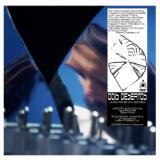
The duality of "man" is a subject that has been explored in art for centuries, from writings of the Bible to Descartes, all the way up to filmmakers like Lynch, Cronenberg, & Carpenter. Who is your "true self" & what do they want? With their sixth studio album "Wish Defense" (again for longtime home Trouble In Mind Records), Chicago trio FACS take a good, long look in the mirror to face themselves. The return of original member Jonathan Van Herik - who stepped away from the group just before their debut album "Negative Houses" was released in 2018 - replacing longtime bassist Alianna Kalaba brings renewed vigor & a marked angularity from the band's more recent output. The songs still hit hard, but the approach is sideways - the roles have changed since Van Herik's original tenure & his previous time with Case & powerhouse drummer Noah Leger in Disappears; now on bass, Van Herik was originally the group's guitar player and features on the debut, while current guitarist Brian Case played bass. This role reversal has helped the band's dynamic, offering up a different musical perspective than before, now revisiting the trio's long-going collaboration with some distance and time. Case notes that the lyrics on "Wish Defense" revolve around doppelgängers or "doubles", tackling the idea of facing yourself and observing your ideas and motivations. Look no further than the album's title track; "Enter the mirror / Double walker / An intimate / Wish defense / Is it real? / You beside me / The detail / Terrifying / Abject self / Your grief / A public / Performance". Case lays out the entire album's theme in one stanza; Are your actions & emotions your true self? Or are they a performative aspect of that "other" person you put forward? Case says that ultimately the sentiment is "_don't let the bastards get you down, there's something beyond this moment, like hope - but not in the naive belief that ultimately people are good". "Wish Defense"s artwork is also a subtle reference to "Negative Houses"' art, returning to that album's black & white starkness & minimalism. The album's checkerboards everywhere are offset reflections of themselves, mirrored with the album's lyrics printed front & center on the cover. Everything is out in the open. A final note; "Wish Defense" is the last album engineered by Steve Albini. Two days were recorded at Electrical Audio in early May of 2024 before Steve's untimely passing, with renowned engineer & friend Sanford Parker stepping in to finish the session 24 hours later, tracking the last bits of vocals and overdubs. Longtime collaborator John Congleton mixed the album as Albini would have; in Electrical Audio's A room, off the tape, using Albini's notes about the session.
- 1: In The Absence
- 2: Aevum
- 3: My Own
- 4: Apricity
- 5: Strange Kind Of Creature
- 6: Friends Of Mine
- 7: My Dove, To Sleep
- 8: Earthing
- 9: Together, Apart
- 10: Of Becoming
- 11: Threads
Vanbur – artist duo consisting of composers Jessica Jones & Tim Morrish – are releasing their debut album release this autumn. The album scoops up Earthing and my dove, to sleep, made famous by the Netflix show ONE DAY, alongside previous material from their debut EP ‘Human’ including In Cold Light which had a huge TikTok moment around the show’s release. Written over several years, ‘Of Becoming’ reflects a maturing of Vanbur’s sound as they themselves have gone through major life changes and transitions, which are addressed both lyrically and sonically in this impressive body of work. There’s a dreamlike quality to the album, representing the sometimes disorientating dichotomy found in immense change of wistful nostalgia and strength found in adaptation. Recorded at Church Studios with a 12-piece ensemble, the album weaves between lush orchestral heights such as Of Becoming and Friends of Mine and edgier alt-pop bangers such as Strange Kind Of Creature. Jess’ vocals are at times ethereal and textured, and at times lean further into her song-writing sensibilities with their most personal lyrics yet. With the pair’s range and skillset across production and composition fully explored, the album is a triumph of song-writing. The band have worked with filmmaker and Creative Director Matt Houghton on a strong visual aesthetic, from key artwork to narrative promotional films shot on 35mm. With graphic design by Torsten Posselt, the vinyl will have a tactile and natural quality tying in with the analogue feel of the campaign. Vanbur’s debut EP, Human, was released in 2018 and received press coverage in Clash, Ear Milk, Higher Plain etc and was played across BBC 6Music shows. The had their debut performance at the 100 Club and plan to bring a scaled up version to stages in 2026. The follow up remix EP included remixes by Mogwai and Katie Gately, and their music has been placed in hit-shows including One Day (Netflix), The Rising (Sky), Hanna (Prime) and Queens (Nat Geo).
2025 Repress!
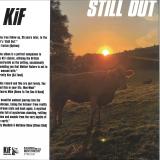
Recorded in a remote cabin on the Devon coast, STILL OUT is an album-length collaboration between musician-filmmakers – and childhood friends – Will Cookson and Tom Haverly. A reflection on friendship, landscape and the passing of time, it inspired a road trip from North Yorkshire to North Devon they took together in the summer of 2024, and forms the soundtrack to a film of the same name which had its premiere screening as part of Stroud Film Festival in March 2025.
Like the film, STILL OUT is also an oblique homage to The KLF’s iconic 1990 album Chill Out, which the Gloucestershire-based pair revisited after it turned up unexpectedly a few years back in Tom’s dad’s record collection. Inspired to create their own recording using a similarly free-spirited process, Will and Tom relocated to the Devon coast in late summer 2023, splicing together a 40-minute mix from their personal archive of recordings and found sounds in a remote cabin with no electricity or mobile reception.
"It came together using cut-and-paste techniques, with ongoing shifts and tweaks,” says Will. “The final result was an audio collage that felt like something legendary hip hop producers The Bomb Squad might make - if ambient music was the only material in their sample library."
Using ‘ambient’ as a starting-point rather than an end in itself, they took inspiration from across the musical spectrum – classic-period Brian Eno, Philip Glass, Bill Evans, plus outliers such as 80s singer-songwriter Virginia Astley and the late DJ-producer Andrew Weatherall. The connections, though, are anything but obvious as the audio shifts seamlessly from field recordings and spoken-word interludes to mood pieces and snatches of vintage pop.
Edited and assembled using freely available open source programs, the source material was often radically altered using tools such as “PaulStretch”, a digital sound-morphing algorithm that allows users to stretch audio files to extreme lengths.
"When we found ourselves in a creative slump or unsure how to navigate a tricky part, we'd say, ‘Let's put some syrup on it and slow it down,’” says Tom. “That always helped us get back on track during late-night recording sessions at the cabin."
Part-soundtrack, part-meditative experiment, STILL OUT is intended as a reflection on the mental and emotional shift that occurs when stepping away from the routine of daily life – an album that forms a celebration of our ever-changing relationship to the world around us and the mystery of what it means to pass through time and space.
“The true follow up, 35 years later, to The KLF’s ‘Chill Out’”.
JD Twitch (Optimo).
An ambient journey reflecting on friendship, the British landscape - and The KLF’s landmark album Chill Out
"This record and film are just lovely. You need this in your life. Moo-Moo!” Balearic Mike (Down To The Sea & Back)
"The album is a perfect companion to the KLF classic, utilising the British countryside as the setting, occasionally reminding you that Mother Nature is not to be messed with.” Strictly Kev (DJ Food)
"A beautiful ambient journey into the landscape, taking the listener from reality to dream state and back again. A mystical realm full of mysterious chanting, rattling trains and sounds from the very depths of the earth."
Lally MacBeth & Matthew Shaw (Stone Club)
Detroit-born artist, Jalen Elk Star unveils his debut LP, ESIN on L.I.E.S. Known in certain circles as filmmaker, music producer, playwright, and collagist, Jalen often draws from controversial themes to craft modern avant-garde works redefining the way art is seen in today’s chaotic universe. After years working on diverse projects under various aliases, his shift to a more liberated creative process under this new moniker has allowed his vision to reach a broader audience, continuing the path with the music on this new lp.
ESIN, a 13-track sonic collage, builds on his past, blending raps, noise, ambience, samplers, drum machines and synths into a raw, vibrant narrative. This work traces Jalen’s journey between his cities, Detroit and Chicago, offering a profound glimpse into his dynamic, limitless world of sound and vision. Something along the lines of the dusty crunched out vapors of the 2010s getting in a car crash with the abstractions of Rammellzee. A headtrip for the headphones.
Furthering the passionate exploration of cinema that has guided her two previous LPs - 2017’s ‘Fassbinder Wunderkammer’ and 2020’s ‘I Should Have Been a Gardener’ - the Milanese guitarist/composer, Alessandra Novaga, returns to Die Schachtel with ‘The Artistic Image Is Always a Miracle’, two sides off shimmering, tense compositions – culminating as one of her most creatively ambitious and conceptually rich outings to date – freely inspired by the life and work of the Russian director Andrej Tarkovsky and the music of Johann Sebastian Bach.
Classically trained at the Musik Akademie in Basel, Switzerland, over the last decade Alessandra Novaga has emerged as one of the leading figures within northern Italy’s thriving new, experimental, and improvised music scene, rendering striking solo efforts, in addition to collaborations with Loren Connors, Stefano Pilia, Elliott Sharp, Nicola Ratti, Paula Matthusen, Sandro Mussida, Kid Millions, Travis Just, Francesco Gagliardi, and others. Remarkably ambitious and forward thinking, her approach to the guitar embarks upon a relentless deconstruction and rethinking of her instrument’s unique properties through distinct applications of structure, resonance, space, and tone, creating in a deeply personal and emotive music, seeking narrative and meaning within the abstractions of sound.
In 2017, with the LP, ‘Fassbinder Wunderkammer’, issued by Setola Di Maiale, Novaga embarked upon the exploration of her love of film. Having begun with Rainer Werner Fassbinder, this was followed in 2020 by Die Schachtel’s release of ‘I Should Have Been a Gardener’, a deeply intimate mediation on the life and work of Derek Jarman. Rather than focusing on a fixed point of inspiration or a single film to work from, these pieces achieve a form of abstract portraiture, distilling elements drawn from these filmmaker’s life and work into ambient networks of texture and tonality. ‘The Artistic Image Is Always a Miracle”’ freely inspired by the Russian director Andrej Tarkovsky and the music of Johann Sebastian Bach, finds Novaga radically expanding her sonic palette within this approach.
The seeds of ‘The Artistic Image Is Always a Miracle’ can be traced to a conversation that Novaga had with Alan Licht (contained in the highly regarded Common Tones: Selected interviews with artists and musicians 1995–2020, Blank Forms, 2021), relating to the connections between music and cinema, which led her to consider Andrej Tarkovsky’s use of Bach's music within a symbiotic framework: how the music illuminates the imagism of the films, and the film illuminates new dimensions of the music. Slowly developing over the subsequent years, the resulting album comprises six individual works, some of which draw directly upon pieces of Bach’s music that Tarkovsky used in his films – specifically 'Erbarme dich, Mein Gott', 'Das alte Jahr vergangen ist', and 'Ich ruf zu dir, Herr Jesu Christ' - while others draw upon the sensibilities and moods evoked in the imagination by the director’s films.
As a point of departure and illumination into the process and spirit that underscored the creation of the album, Novaga points toward a passage in Tarkovsky’s "Sculpting in Time”:
“Art is born and takes hold wherever there is a timeless and insatiable longing for the spiritual, for the ideal: that longing which draws people to art. Modern art has taken a wrong turn in abandoning the search for the meaning of existence in order to affirm the value of the individual for its own sake. What purports to be art begins to look like an eccentric occupation for suspect characters who maintain that any personalized action is of intrinsic value simply as a display of self-will. But in artistic creation the personality does not assert itself, it serves another, higher and communal idea.”
‘The Artistic Image Is Always a Miracle’ can be understood as a realisation of the collectivism of which Tarkovsky speaks, in the service of something far beyond the expression of self. Encountering Novaga moving into fairly uncharted waters, three of the album’s pieces incorporate the human voice we encounter the voices of others: that of the poet Arsenij Tarkovsky, the director’s father; a singer from Bach’s ‘Erbarme dich, Mein Gott’, capturing a broadcast in an underground parking lot, and Novaga’s own, rendering the melody from Bach’s “Ich ruf zu dir, Herr Jesu Christ”. Roughly alternating between solo excursions on guitar and bristling electroacoustic pieces, over the course of the album’s two sides Novaga weaves one of her most abstract and ambitious bodies of recordings to date, shifting between the complex tonal mediations generated by the six strings of her instrument, and phycological densities activated by the expanded pallet of sonority made possible by the tactics and approaches of musique concrète.
An immersive, deeply engaging meeting of beauty and melancholy within a labyrinth of voices and ideas, ‘The Artistic Image Is Always a Miracle’ transfigures the life and work of Andrej Tarkovski – one of the greatest auteurs in the history of cinema – into a singular, experimental statement of collective truth. Belonging to recent, ambitious stream of contemporary new music releases on Die Schachtel that’s already included Novaga’s ‘I Should Have Been a Gardener’, Stefano Pilia’s ‘Spiralis Aurea’, Jim O'Rourke & Giovanni Di Domenico’ ‘Immanent In Nervous Activity’, Claudio Rocchetti’s ‘Labirinto Verticale’, and Damāvand’s ‘As Long As You Come To My Garden’, among others, ‘The Artistic Image Is Always a Miracle’ is available on as a limited edition of 300 dark turquoise vinyl LPs released on June 21, 2024. The LP, designed by Bruno Stucchi / dinamomilano, comes with an 8-pages insert illuminated by Alessandra’s text as well as the lovely and intense photographs of Matilde Piazzi.
- 1: No Faith
- 2: Shadow Boxing
- 3: Sugarcoated
- 4: Deadwire
Nu-hardcore quintet, Bodyweb, are the sound of someone’s nervous system on the verge of breakdown—hyperactive, tormented and unflinchingly vulnerable. Born out of the Leeds hardcore scene, they’re a shape-shifting alloy of jagged emotion and precision chaos. What began as late-night jams between Louis Hardy (Higher Power, Big Cheese, Fate) and Ben Jones (Pest Control) eventually mutated into train_wreck_simulation, a debut EP filled with frantic breakdowns and nu-metal swag that felt like the soundtrack to a digital exorcism. The final piece of the puzzle came from Hardy’s estranged childhood friend, pq. His twisted samples and synthetic textures are haunted and disturbed, injecting cyberpunk soul into hardcore flesh. Contorting through several iterations in the following years, the band absorbed Luke Thompson (Stiff Meds) on drums, filmmaker Tom Hobson on guitar and Naomi Macleod (Empire State Bastard) on bass, and laid down their first collective offering. deadwired is due out on Flatspot Records later this year. Bodyweb's second EP is a violent thesis on connection and pain that sends Hardy’s unfiltered vocals through heaven and hell. Four overstimulating tracks run a gamut of styles and influences from Slipknot to Björk, constantly lane-switching between dizzying heaviness, ambient soundscapes and brain-burrowing hooks. Entirely self-produced, deadwired upgrades the sonic formula laid down on the last record and raises the question: what else could exist in Bodyweb’s twisted roadmap? Nothing seems impossible. What seems important, however, is retaining the rawness in a style that can often turn sterile. “We still wanted it to sound very human. It had to be well produced but not cold and lifeless.” shares Hardy. “We didn’t use a click track. All guitars were real amps with microphones. We tried to make everything as real and raw as possible, we recorded using all the same gear we use when playing live too to really capture the energy of how it feels when we jam together." ‘Deadwired’ is a snapshot of violent implosion. Four ADHD-fuelled transmissions from the edge of spiritual collapse. It drags metallic hardcore through glitched-out ambience to confront ego death, generational trauma, and the violence of being alive. On stage, Bodyweb don’t just perform, they purge. Raucous live electronics meld with digitally contorted guitars. Breakbeats meet breakdowns—no backing track in sight. Bodyweb enable a collective catharsis. Mosh, dance, dive, scream, heal. A physical therapy session screamed into the void.
Mutant, in partnership with Howe Records, is proud to present Howard Shore's incredible score and 17th collaboration with legendary filmmaker David Cronenberg: THE SHROUDS. Over the course of four decades, Howard Shore and David Cronenberg have collaborated on countless masterpieces (Crash, Videodrome, Dead Ringers, History of Violence... the list goes on and on). The Shrouds continues in the mold of Crimes of the Future, with a delicate but deceptive score. In a film about burial, decay, and the search for meaning—marred by conspiracy theories and an overreliance on technology—the film and score find a space that balances the ethereal and the dreadful. The sacred and profane. It's a profoundly beautiful work of art from a maestro who has made some of the best film music of our lifetimes. "Howard Shore’s score, a mix of hymns and organs, beautifully layers the film’s imagery.”
- A1: The Shrouds
- A2: Becca
- A3: Wrapped In A Shroud
- A4: Haptic Feedback
- A5: Gravetech
- A6: Desecration
- A7: Fluid Of Grief
- A8: Shroudcam
- A9: Karsh
- A10: Decryption
- B1: Terry
- B2: Bone Growths
- B3: Dr. Eckler
- B4: Register Emotion
- B5: A Controversial Technology
- B6: A Confession
- B7: For All Eternity
Mutant, in partnership with Howe Records, is proud to present Howard Shore's incredible score and 17th collaboration with legendary filmmaker David Cronenberg: THE SHROUDS.
Over the course of four decades, Howard Shore and David Cronenberg have collaborated on countless masterpieces (Crash, Videodrome, Dead Ringers, History of Violence... the list goes on and on). The Shrouds continues in the mold of Crimes of the Future, with a delicate but deceptive score. In a film about burial, decay, and the search for meaning—marred by conspiracy theories and an overreliance on technology—the film and score find a space that balances the ethereal and the dreadful. The sacred and profane.
- A1: The Fabelmans
- A2: Mitzi’s Dance
- A3: Friedrich Kuhlau: Sonatina In A Minor, Op. 88 No. 3: Iii. Allegro Burlesco
- A4: Midnight Call
- A5: Reverie
- A6: Mother And Son
- A7: Muzio Clementi: Sonatina In C Major, Op. 36 No. 3: I. Spiritoso
- B1: Reflections
- B2: Johann Sebastian Bach: Concerto In D Minor, Bwv 974: Ii. Adagio
- B3: New House
- B4: The Letter
- B5: The Journey Begins
Deluxe heavyweight sleeve with leather laminate finish Includes insert with liner notes by Steven Spielberg Movie directed by Steven Spielberg, loosely based on Spielberg’s adolescence and first years as a filmmaker Film stars an ensemble cast including Michelle Williams, Paul Dano, Seth Rogen, Gabriel LaBelle and Judd Hirsch Golden Globe nominated score composed by John Williams Film won the People’s Choice Award and nominated for five Golden Globe Awards Exclusive limited edition of 333 numbered copies on turquoise coloured vinyl This is a new colour variant – sales notes and tracks are as the previous version, note new cat number and barcode
Reissue of the celebrated Black Panther soundtrack, in which internationally-celebrated Grammy Award–winning global superstar Kendrick Lamar and Billboard Magazine’s Executive of the Year, Anthony “Top Dawg” Tiffith, curates and produces Black Panther: The Album. The album features music from and inspired by Marvel Studios’ Black Panther film including the lead single, "All The Stars", featuring Kendrick Lamar and label mate SZA. Black Panther is directed by critically acclaimed filmmaker Ryan Coogler and stars Chadwick Boseman, Michael B. Jordan, Oscar® winner Lupita Nyong’o and Danai Gurira, among others. Now in limited edition Red vinyl.
Balmat 17 marks both a return and a new frontier. It is the second album on the label from Patricia Wolf, whose 2022 album See-Through is one of the most beloved in Balmat’s catalog; it also marks the first time that Wolf has turned her hand to a film soundtrack. The results are every bit as magical as fans of the Portland, Oregon, composer’s music might expect.
Hrafnamynd—Icelandic for “raven film”—is a new feature-length documentary by experimental filmmaker Edward Pack Davee. Shot on a mix of film and digital formats, and incorporating his father’s Ektachrome slides from the 1970s, the autobiographical film works on multiple levels at once: a reminiscence of his childhood in Iceland, an exploration of landscape and folklore, and a documentary study of the island nation’s ravens—including a talking raven named Krummi.
Wolf is the perfect artist to score such an unusual film. Mixing ambient music and field recording—including extensive experience documenting bird song—Wolf brings an unusually empathic perspective to her music. In the context of Hrafnamynd, her airy melodies, pensive atmospheres, and vivid textures intuitively complement the film’s grainy film stock and blown-out colors. Friends for years, the two artists further bonded when Wolf asked Pack to film music videos for her songs “Woodland Encounter” (from See-Through) and “The Culmination Of” (from I'll Look For You In Others). Pack used Wolf’s previously recorded music as placeholders as he began assembling a rough cut of the film, which made her a natural choice to help him complete his idiosyncratic vision with an all-new, bespoke score.
But Wolf’s soundtrack also indisputably stands alone as a full-length album. Largely created using the UDO Super 6 synthesizer, it features a carefully distilled palette of warm, string-like pads and darkly glistening mallets, rounded out with the very occasional introduction of nylon string guitar. Musically and stylistically, the album’s 11 tracks represent both a continuation of the ruminative sound of See-Through and also an extension into new expressive modes. Few musicians, ambient or otherwise, are as skilled at balancing melody with atmosphere, or at finding ways to eke fresh at finding ways to eke fresh, surprising sounds out of an intentionally reduced toolkit. Meditative, immersive, and emotionally generous Wolf’s Hrafnamynd soundtrack evokes a range of ambient classics from decades past while confidently marking out its own verdant patch of ground.
Artist’s Statement:
Edward and I have been friends for years, but we really started to get to know one another better after I hired him to make music videos for my songs “Woodland Encounter” and “The Culmination Of.” For those projects we got to spend a lot of time hiking in various locations around the Pacific Northwest with his camera, very nice lenses, and tripod. Keeping quiet, hidden, and vigilant we searched for wildlife, good light on the trees, meadows, lakes, rivers, and skies. Edward was already an appreciator of my music and I was already in awe of his filmmaking talents so it felt like a great fit. Although we work in different areas of art our styles compliment one another. We both tend toward slow and careful pacing, with a focus on emotion and introspective reflections on life and the landscapes around us. For this reason, Iknew that I could trust Edward to create videos for my music. We saw so many beautiful and unexpected things on our filming days, but I was moved to tears once I saw how magnificent and poetic it all was. His video work from the cinematography, to the editing, and color correction helped bring my inner vision to life.
A few months after that, Edward surprised me with an invitation to work on the soundtrack for his new film, Hrafnamynd. I enthusiastically said yes. I had always wanted to work on a film, and I knew that his filmmaking style would be inspiring to write music for. I had recently acquired an UDO Super 6 synthesizer but hadn't used it much. I decided that this would be the synth that I'd use for the film. It has the ability to sound very modern, but can also sound so warm and fuzzy, like a synth from the 1970s. It turned out to be the perfect instrument for this project as the film itself straddles time from the ’70s to today.
When Edward sent me the rough cut of the film, he used placeholder music to help give me an idea of the emotion and energy that he was hoping to achieve for each scene. For many of the scenes, Edward used music from my albums as temporary tracks. This told me that he trusted my work and style and therefore I should just trust my intuition with how to proceed. I wanted to make sure that everything that I made was a direct reflection of what was happening on screen, a mirror of its emotion and energy so people could really lock into the film psychologically. This process took my composing to unexpected places—like being led by a strange cat or a raven that seemed to have something to show me. I found that the approach made the music so much more dynamic than my usual style. I really enjoyed being influenced by the action and dialog on the screen. Thankfully, Edward was very happy with the work. I made sure to handle this project with the utmost care because this is about his life and his family, and an exploration of the experiences that made him an artist and filmmaker. While watching the film many times over, I found myself thinking about my own family and my early memories with them and how the place where I grew up has influenced who I have become. I found that his film invites the viewer to reflect on their own lives in a similar way. I hope that this music and film can guide others to contemplate on the history of their beingness and the people and places that shaped them.
Another aspect to this project is the splendor and wonder of Iceland itself. I had the opportunity to visit Iceland for the first time in 2023. I got to play a show there for the Extreme Chill Festival and met many friendly and brilliant Icelanders. I also got to collect field recordings that I used in the film. It's a fascinating place and culture that easily captures the hearts and imaginations of anyone who visits. Whether you spend your time in the city immersed in its impressive arts scene, or venture out into the wilderness to behold its wondrous landscape, it will leave a lasting impression. The soundtrack is also a love letter to Iceland itself.
- 1: I Thought I'd Live Forever
- 2: Happiness
- 3: Causing Trouble Again
- 4: Cello Song
- 5: Keep To The Left
- 6: Doom Monger
- 7: Don't Fight Your Friends
- 8: Nothing Will Ever Change That
- 9: Hey Hey
- 10: Train Platform
Brush Stroke Vinyl[28,15 €]
Legendary artist, Raincoats co-founder, songwriter, filmmaker, and feminist icon Gina Birch has announced her eagerly awaited second solo album, Trouble, arriving via Third Man Records on Friday, July 11. Pre-orders are available now.
Trouble is heralded by today’s premiere of the album’s blistering centerpiece, “Causing Trouble Again,” available for streaming now. An official music video – directed by famed photographer/filmmaker Dean Chalkley and featuring an all-star collective of fellow female artists including Birch’s longtime friend and co-founder of The Raincoats, Ana da Silva, Neo Naturists co-founder Christine Binnie, singer-songwriter Amy Rigby, X-Ray Spex and Essential Logic co-founder Lora Logic, painter Daisy Parris, artist Georgina Starr, writer Jill Westwood, multi-disciplinary artist and activist Bobby Baker, award-winning costume designer Annie Symons, veteran photographer and Raincoats collaborator Shirley O’Loughlin, and many more – is streaming now on YouTube.
“For the ‘Causing Trouble Again’ video, after hearing Bob Dylan sing about a white ladder all covered with water, I became obsessed with white ladders,” Gina Birch says. “ I decided to use five white ladders, three with seven rungs…I realized later that this references Jacob’s Ladder and a connection from Earth to heaven, but I think I was thinking of ladders as a symbol of getting on, getting up. I wanted to have a choreographed movement with four of us with these ladders. How do we move with ladders? Do we move together, do we fight, do we dance? “I also wanted to reference the wind scene from the film, The Colour of Pomegranates, and to include as many artist women from the Women in Revolt exhibition as I could.
Having crested the west coast modular-ambient wave in just a few releases - including 2018's Sharing Waves on the influential LA experimental imprint Leaving Records - Sean Hellfritsch has swapped the mossy analog synth improvisations of his prior output for refined melodic arrangements dressed in sprightly dawn-of-digital textures. Big Earth Energy plumbs the depths of Hellfritsch's multimedia mind and naturalist heart, spinning an impressionistic narrative world off of cultural touchstones like the PC game MYST, and the work of Studio Ghibli composer Joe Hisaishi. Inspired by the aforementioned, and guided by Hellfritsch's experience as an animator and filmmaker, Big Earth Energy is the soundtrack to a hypothetical video game with a pointedly ecological premise, and a twist of psychedelic charm. In Hellfritsch's imagined virtual journey, the player assumes the perspective of a treefrog sixty-five-million years ago, hopping epochs with each new level, forming a comprehensive picture of the massive changes the planet has gone through over the eons. The ultimate goal of the game is not to amass resources, defeat enemies, or gain power, but to fully witness the unfolding of one of the biggest systems of energy imaginable - or as the album's creator puts it - "to explore the incomprehensibly vast energetic expression and mystery that is Earth." Big Earth Energy is steeped in exploratory RPG intrigue, possibility, and contemplation, lovingly overlaid with Miyazaki-an sentiments and aesthetics. The through-composed, organic, meandering synthesis heard on previous Cool Maritime albums has been fully replaced by meticulous polygonal arrangements that recall the computerized sheen of late 80s work by composers like Hiroshi Yoshimura, and Yoichiro Yoshikawa - using true-to-period gear no less. Even given its referentiality, Big Earth Energy comes off as forward-facing where so much reminiscent music remains fixed to a bygone moment in pop culture. Hellfritsch has created a musical world where the endless verdancy of the biosphere finds its parallel in the golden age of early 1990s video games, and late 80s Japanese environmental music, all while pointing to a hopeful planetary and artistic future that vindicates the motives of all of these muses.
- In The Mouth Of Madness
- Assault On Precinct 13
- The Fog
- Prince Of Darkness
- Santiago (Vampires)
- Escape From New York
- Halloween
- Porkchop Express (Big Trouble In Little China)
- They Live
- The Thing
- Starman
- Dark Star
- Christine
Sea Blue Vinyl. John Carpenter is a legend. As the director and composer behind dozens of classic movies, Carpenter has established a reputation as one of the greatest filmmakers in the history of modern cinema, as well as one of its most influential musicians. The minimal, synthesizer-driven themes to films like Halloween, Escape From New York, and Assault on Precinct 13 are as indelible as their images, and their timelessness was evident as Carpenter performed them live in a string of internationally sold-out concert dates in 2016. Anthology: Movie Themes 1974-1998 collects 13 classic themes from Carpenter's illustrious career together on one volume for the first time. Each theme has been newly recorded with the same collaborators that Carpenter worked with on his hit Lost Themes studio albums: his son, Cody Carpenter, and godson, Daniel Davies.
- Les Maîtres Fous Part I
- Les Maîtres Fous Part Ii
LTD DIM GLEAM ED[24,79 €]
Haunting, discordant and deeply unsettling, `Les Maîtres Fous' (`The Mad Masters') was written by French post-metal collective Year of No Light in response to French filmmaker Jean Rouch's controversial 1950's docufiction of the same name. Commissioned by Musée Du Quai Branly in Paris for their 2012 `L'Invention Du Sauvage' exhibition, trance-metal pioneers Year of No Light approached the ritual practices of the Hauka movement as depicted in the film and responded with their uniquely hypnotic heaviness. Performed only twice, once at the exhibition on the 6th January, 2012 and again in Bordeaux on the 29th January, 2015; this release is a live recording of the second and final performance of `Les Maîtres Fous'. Whilst Year of No Light have a long history of collaboration with forward-thinking filmmakers and visual artists, the sensitivity of this documentary's problematic subject matter and the intensity of the band's performance made this performance both a physically and emotionally demanding experience; something that can be keenly felt upon listening. Founded in September 2001 by a collection of Bordeaux's heavy scene stalwarts as an ongoing side project encompassing elements of sludge metal and shoegaze, Year of No Light released their debut album, Nord, in 2006 to critical acclaim. The subsequent years however saw a significant lineup change with the band replacing their vocalist with a third guitarist to become a fully instrumental sextet incorporating aspects of black metal, drone electronica and dark ambient into their already formidable sound. 2010's four track epic Ausserwelt and the 2013 follow up Tocsin saw Year of No Light distilling their punishing sound even further; stalling the tempo to a glacial crawl and tuning guitars ever downwards to new uncharted depths. Consolamentum, the band's first full-length release in nine years and their first with Pelagic Records, brought the outfit's crushing double-drumming percussion to the fore as a masterclass in dynamic control saw Year of No Light embrace the highest highs and the lowest lows of the intervening years. Now approaching their 25th anniversary, `Les Maître Fous' is a pressing reminder that, despite the band's long and ongoing journey, Year of No Light have never been afraid to experiment, to take risks, to square up to life's ugliness and look it straight in the eye. FOR FANS OF Neurosis, Cult of Luna, SWANS, ISIS, Russian Circles, My Bloody Valentine, Chelsea Wolfe
Haunting, discordant and deeply unsettling, `Les Maîtres Fous' (`The Mad Masters') was written by French post-metal collective Year of No Light in response to French filmmaker Jean Rouch's controversial 1950's docufiction of the same name. Commissioned by Musée Du Quai Branly in Paris for their 2012 `L'Invention Du Sauvage' exhibition, trance-metal pioneers Year of No Light approached the ritual practices of the Hauka movement as depicted in the film and responded with their uniquely hypnotic heaviness. Performed only twice, once at the exhibition on the 6th January, 2012 and again in Bordeaux on the 29th January, 2015; this release is a live recording of the second and final performance of `Les Maîtres Fous'. Whilst Year of No Light have a long history of collaboration with forward-thinking filmmakers and visual artists, the sensitivity of this documentary's problematic subject matter and the intensity of the band's performance made this performance both a physically and emotionally demanding experience; something that can be keenly felt upon listening. Founded in September 2001 by a collection of Bordeaux's heavy scene stalwarts as an ongoing side project encompassing elements of sludge metal and shoegaze, Year of No Light released their debut album, Nord, in 2006 to critical acclaim. The subsequent years however saw a significant lineup change with the band replacing their vocalist with a third guitarist to become a fully instrumental sextet incorporating aspects of black metal, drone electronica and dark ambient into their already formidable sound. 2010's four track epic Ausserwelt and the 2013 follow up Tocsin saw Year of No Light distilling their punishing sound even further; stalling the tempo to a glacial crawl and tuning guitars ever downwards to new uncharted depths. Consolamentum, the band's first full-length release in nine years and their first with Pelagic Records, brought the outfit's crushing double-drumming percussion to the fore as a masterclass in dynamic control saw Year of No Light embrace the highest highs and the lowest lows of the intervening years. Now approaching their 25th anniversary, `Les Maître Fous' is a pressing reminder that, despite the band's long and ongoing journey, Year of No Light have never been afraid to experiment, to take risks, to square up to life's ugliness and look it straight in the eye. FOR FANS OF Neurosis, Cult of Luna, SWANS, ISIS, Russian Circles, My Bloody Valentine, Chelsea Wolfe. The Dim Gleam edition is kind of a beige vinyl colour
Unreleased electronic / jazz / madness from two titans of jazz and experimentation: JOHN SURMAN and KARIN KROG.
I could now write a load of blown up puffery about how amazing this is, but everyone does that, and a lot of the time it’s all a load of bollocks. But basically this was sent to me by Karin / John when I asked if they had anything hanging about that had not been released. This came through and blew my tiny mind. Like something from prime Annette Peacock “Pony” period. Here is what John Surman said…
John Surman writes:
Back in 2012/13 there had been some talk about a big futuristic open air urban dance/theatre production for about 80/100 actors/dancers with lasers and all kinds of lighting effects on different stages. I was invited to get involved and, together with Ben and Karin, we eventually decided to get to work on some ideas. I think that the original plan was that in performance there would be a mixture of live music and electronica.
Not altogether surprisingly, bearing in mind the complexity of the project, it never moved forward and developed into anything more than an interesting idea. It was probably over ambitious & I guess the funding never came through.
The only information I that I can find relating to the production refers to two silent movies made in 1927/1928 by the filmmaker Eugene Deslaw, entitled `La Marche Des Machines´ and `Les Nuits Électriques.These were clearly intended to act as inspiration for the project.
After months turned into years it became obvious that the project was going nowhere, and so the recorded music laid around gathering dust until Johnny Trunk asked Karin if she had any interesting music that he might be interested in releasing. One thing led to another and so, finally, Electric Element found a home!
For anyone interested in the equipment used this will have to be an approximation since the memory might be playing tricks. Karin was probably using a Yamaha Rex50 f/x unit, a Roland VT-3 Voice Transformer and an Oberheim Ring Modulator. I was playing Bass Clarinet and Contrabass Clarinet through various f/x units together with a Yamaha WX5 wind synth. All the instruments and voice were also processed through Ben´s equipment. After writing this I asked Ben for his recollections and he came up with the following:
John, Karin and I created this music in 2 or 3 days in the winter of 2013 at their studio in Oslo, Norway. I followed up with another 2 or 3 days of mixing, editing and post-processing . We kept a collaborative, improvisational and free-form approach to the sessions. I grew up immersed in music such as Cloudline Blue, the 1979 duo album of Krog/Surman, and this felt like a similar approach. I have mixed sound for many of their live duo concerts and I would use effects and electronics as an
accompaniment and counterpoint to the performed music. The relation of organic and artificial sound sources in music has always fascinated. In this case, I used some contemporary digital signal processing to introduce my own aesthetic into the conversation, in particular using granular synthesis to recombine small 'clouds' of sound into alternate forms. Some of the software tools I used included Ableton Live, Max/MSP and Reaktor.
Moving Day captures André 3000 in a very important time. Before New Blue Sun was recorded, filmmaker Dexter Navy films André in Venice Beach, California. The day happened to be when André was moving out of his home and into a new place. The score for Moving Day is a weaving of field recordings from the date of filming, an impromptu Q&A by Navy to André, and post studio recording performed forward then backward while watching the film. The additional track ‘Tunnels of Egypt’ is an unreleased New Blue Sun sessions recording. A x3 trk, 31 min piece of work on Ltd Black LP Vinyl. Marketing activity.
- Soleil Noir
- La Rivière
- L'ombre Du Couloir
- Sophie
- Le Miroir
- La Vitrine
- Véronique
- Ma Ville
- L'origine Du Monde
A cult album by Belgian songwriter and producer Benjamin Schoos, aka Miam Monster Miam, Soleil Noir (2005) celebrates its 20th anniversary with an exclusive vinyl reissue.A haunting album at the crossroads of British folk, cinematic blues, and introspective French chanson. Evoking Nick Drake, Leonard Cohen, Léo Ferré, and Ry Cooder, it unfolds a melancholic poetry elevated by the words of filmmaker Olivier Smolders and lush orchestrations, featuring the Liège Philharmonic Orchestra and the intricate fingerpicking guitar work of Jacques Stotzem.A nocturnal and spellbinding record, where narrative tension and raw emotion intertwine.
Born from a desire to explore her background in film composing to create a music film, Hannah Holland’s upcoming album 'Last Exit On Bethnal’ is set for release via PRAH Recordings on 18th July. Together with director Lydia Garnett, the multi-faceted London producer shaped ideas born out of images the pair weren’t finding in film, inspired by queer icon filmmakers like Kenneth Anger and Derek Jarman. “We wanted to craft something unapologetically for dykes: a poetic, surreal exploration of dyke power and sexuality set in a fantasy underworld,” explains Holland. Once the film was shot, she channelled its stunning imagery and the energy of the cast into making the record. Seductive and bass-driven, its nine tracks merge sleazy guitars with 707 machine drums, beautiful evolving arps, and surreal moments of Lynchian dreaminess and Aphex Twin-inspired atmospherics. "It was a really amazing collaborative experience and coming together of a community to make something totally unique….and hot!” she continues. The first single ‘Biker’ features a filthy synth hook atop Hannah’s signature bass-guitar, perfectly capturing the raw and sexy energy of the album and its visual centrepiece. You can listen to it here. The film will be screened at a one-off club night at London’s ICA on 11th April in association with Culture Divided, Somesuch and Bala Project.
Hannah Holland has played a pivotal role in London’s alternative and queer London club scene since the mid-noughties. Rooted deeply in London’s fertile musical community, musical exploration and the transcendent potential of dancefloor have always been her biggest inspiration. Her recent delve into experimental theatre, film and TV scores has proved a future further artistic voyage to explore her creative vision. Holland first arrived on dancefloors sharing electro-tinged techno, with equal inspiration taken from the sounds of DnB and jungle heard at legendary parties such as Metalheadz, which she had frequented in her early teens. Having already been “borrowing” (and perhaps never since returning) Kraftwerk, Grace Jones and Talking Heads records from her parents, the influence of this metropolitan musical soup ensured that Holland emerged on the decks with a unique musical character and diverse taste, hallmarks of her sound that she has not lost since. This has been reinforced with trusted residencies at iconic parties such as Trailer Trash, Adonis, Glastonbury’s NYC Downlow, or undertaking far-reaching marathon sets at Berlin’s Panorama Bar. In 2006 Hannah started Batty Bass with vocalist Mama. Immediately a roadblock party and then a record label with releases from Josh Caffe and The Carry Nation sitting in its discography, Batty Bass explores the disparate strains of electro, acid, techno and house. Hannah also released her own music on the label including the ever-anthemic Paris’ Acid Ball.
A steady stream of releases have followed on Shall Not Fade, Super Rhythm Trax, Crosstown Rebels, Classic, Nervous, as well as remixes for Blessed Madonna ft. Kylie Minogue, Planningtorock, The Knife and Goldfrapp among others. Hannah also finds the time to play bass in several bands including Black Gold Buffalo whose debut album she also co-wrote. Her much-anticipated debut album, Tectonic, came out on PRAH Recordings in 2021, with a second on the way. Hannah’s latest venture into the world of film scores have included queer icon Bruce LaBruce’s ‘The Visitor,’ Channel 4 series Adult Material and award-winning indie feature Electrician.
Hannah Holland continues to push the boundaries of electronic and live music, telling stories and carving her own path in the deeper frequencies.
- Shoplifter
- Possession
- Buildings
- Shining
- Skirts Of Heaven
- Fantastic Tomb
- The Big Day
- Hotel
- Alive
- Another California Song
Cassette[14,71 €]
Ty hits the big sky trail of our good ol" frontier empire, discovering non-stop bangers and inspired new sonics around every bend. With lyrics co-written by long-time collaborator, filmmaker Matt Yoka, Ty"s glittering rhythm arrangements move with fresh scansion, inviting in sweeps of strings and horns to further the charge righteously. You"re invited too! Don"t miss the trip - the country inspires awe from up on Ty"s high-octane ride.
- A1: Olivia Salvadori, Coby Sey, Kid Million - With All The Senses, Su Di Te M'infrango
- A2: Upsammy - Programming
- A3: Sepehr - Divooneh
- A4: Levente - Read It
- A5: Ece + Stefan - Love Street No 90
- A6: Ben Bertrand - What To Do With My Male Body
- A7: The Spy - Paradox
- A8: Filmmaker - Broken Power Gloves
- A9: Christos Chondropoulos - The Spell
- A10: Zona Utopica Garantita - Loop Kraut
- B1: Christos Chondropoulos - Love Song
- B2: Galina Ozeran - Dvizhenie
- B3: Lamusa Ii - Le Reve (Feat Vittoria Totale)
- B4: Solid Blake - Nyx
- B5: Laurel Halo - Waves Goodbye
- B6: Annavsjune - Mirrormom
- B7: Brainwaltzera - Scratch The Sir Face
- B8: Frank Rodas - Dial Up
- B9: Black Dot - The Rainbow Children
- B10: Anpanman - Adjustic High
- B11: Fluctuosa - Lamponi
In 2022, Osàre! Editions founder Elena Colombi approached artists and musicians with a prompt: Every body, everyone needs love to flourish. In her book The Will to Change, the eminent author and social activist, Bell Hooks, invites men to excavate their innermost selves, challenging the way that patriarchal society limits their capacity for intimacy, tenderness, care and emotion. As hooks lays out, feminist thought and work requires the collective participation of all genders in order to realise a liberated world. How can we imagine cross-gender solidarity through music and art? And how can we tell sonic stories that facilitate our full potential as desiring beings? These are the questions that The Male Body Will Be Next starts out from.
The title of the record draws connections between hooks' writing, a film by Rebecca Salvadori and Peter de Potter's stunning photo series of the same name. In de Potter and Salvadori's depictions, men's bodies appear as vulnerable, naked and exposed.
Divided into two parts, the first instalment of The Male Body Will Be Next hinges on colliding energies – the melding of club dance floors and haunting ambient textures, agile techno and noisy experimentation.
'The sun on my skin… it’s so warm and gentle,’ speak-sings Olivia Salvadori on ‘Su Di Te M’Infrango’, visualising utopias. Laurel Halo crafts a dreamscape spun from golden threads of synth and strings. Pensive and reflective, Ben Bertrand’s bass clarinet roams searchingly, its piercing tonality full of longing. Yet, in between these lucid, cinematic passages and spoken word, The Male Body Will Be Next finds space to dance together. Moving in fervent, rhythmic patterns, Sepehr’s ‘Divooneh’ pivots between tension and release. Filmmaker unleashes a wave of energy and The Spy delivers a potent take on vintage electro, the track title hinting at the double-bind of gendered expectations. Propelled between these eclectic styles, the record encapsulates the full spectrum of sonic expression.
Ben McElroy is a folk/experimental/ambient artist based in the UK. He has released prolific albums since his 2016 debut ‘Bird Stone’ for whitelabrecs. Notable releases since then include 2018s ‘The Word Cricket Made Her Happy’ for Eilean Rec and 2022s ‘How I Learnt to Disengage From The pack’ on The Slow Music Movement (which was folk album of the month in the Guardian).
«This album evolved from long improvisations on pump organ and cello. I really wanted to play the instruments as a form of therapeutic release, a kind of stimming, paying more attention to this than the Appollonian aspects of the music. So scrape and repetition… anger and using the bow/keys to really try to gnaw into deep, old brain feelings.
I often start things with improvisations, but then tidy, smooth things out… I wanted to keep that aspect to the minimum here.. there is some, but where possible I’ve kept the squeaks, the noises, the mistakes.
The project took on another dimension when I received some funding from PRS Foundation, allowing me to bring more artists (Debbie Armour on vocals, Elinor Rowlands on spoken word and Nick Jonah Davis on guitar). Where possibly, these collaborations were also improvised, in the moment and left a little raw.
The funding also allowed me to create an accompanying film ‘Widdershins & Deosil.’ Shot with filmmaker Benjamin Wigley on 16mm film in Derbyshire, it is an abstract story of magic and puppetry using elements of the album as soundtrack.» - Ben McElroy
Belgian musician and filmmaker Jef Mertens has been an active force in the experimental music and film scene for nearly two decades. Known for his documentaries on artists like Sonic Youth and Borbetomagus, as well as his work with the now-defunct Dadaist Tapes label, Mertens continues to push the boundaries of sound exploration. His previous solo works include NO MATHEMATICS, released on KRAAK/Feeding Tube Records.
With Orchid Alto, Mertens dedicates himself to the taishogoto, a Japanese stringed instrument that became a new focal point in his sonic explorations. Initially drawn to its unique tonal qualities, he approached the instrument with an open-ended curiosity, using it as a means to reshape his musical language. The transition to taishogoto marked a shift away from guitar-based compositions, offering a fresh perspective on texture and resonance. Through these explorations, Orchid Alto serves as a blueprint for new sonic possibilities.
A bold and immersive sonic journey, Orchid Alto merges traditional resonance with modern experimentalism, further shaping Mertens' artistic voice—one influenced by artists like Michael Flowers, Turner Williams Jr., and Bill Nace.
The Spouse's self-titled album is a captivating compilation of nine tracks that embody their signature vintage sound and reverb-soaked vocals, featuring singles originally crafted as soundtracks for some of Indonesia's most acclaimed films directed by notable filmmakers such as Joko Anwar and Razak Robby Ertanto between 2015 and 2022.
Definitive remastered audiophile edition, restored from the original tapes. Deluxe gatefold sleeve featuring faithfully reproduced original artwork. Comes with an insert featuring exclusive notes by author and jazz specialist Kevin Le Gendre
Relive the timeless brilliance of Paul Bley's 1966 Rome session where bold improvisation, groundbreaking composition and heartfelt tribute redefined the art of jazz trio. BYG Records and Charly Records present the reissue of Ramblin', the seminal jazz album by pianist Paul Bley, originally released in 1969 as part of the iconic Actuel series on BYG Records. This definitive remastered edition invites listeners to experience the unparalleled artistry of Paul Bley's groundbreaking 1966 Rome session in unprecedented clarity. Recorded at Studio RCA in the Eternal City on July 1, 1966, Ramblin' captures Paul Bley alongside the rhythm section of double bassist Mark Levinson and drummer Barry Altschul. Together, the trio carved out a bold statement in the evolving world of jazz. With roots that include collaborations with luminaries such as Charlie Mingus, Art Blakey, Ornette Coleman, Jimmy Giuffre, and Albert Ayler, Paul Bley was a pioneer of improvisational interplay and unorthodox structures that continually pushed the boundaries of the genre. This session brims with vitality and innovation, featurioriginalng compositions such as the introspective 'Touching' and 'Albert's Love Theme', a heartfelt tribute to Albert Ayler. Carla Bley's tender and evocative 'Ida Lupino', written in honour of the trailblazing filmmaker, resonates with even greater poignancy following her passing in October 2023. Meanwhile, the album's title track, Ornette Coleman's exuberant 'Ramblin'' showcases a joyous yet rebellious spirit emblematic of this groundbreaking trio.
- 1: Baby Dynamite
- 2: Family Tree
- 3: Blue Radio
- 4: Piece Of Me
- 5: Dreaming In Stereo
- 6: Goodbye Arkansas
- 7: Partners In Crime
- 8: This Dirty Town
- 9: Living Between The Lines
- 10: Who Stone The Soul
- 11: Dead Winter
For Fans Of The Indie/Americana, Punk ‘N’ Roll, Streetwalkin’ Cheetahs, Fear, Supersuckers, Tom Petty, MC5. Living Between the Lines is the debut solo LP from Frank Meyer. A long time coming, Meyer’s been hinting at it for a while now with Bandcamp exclusive tracks, covers on tribute albums, acoustic solo shows, and his acclaimed collaboration album with Eddie Spaghetti of the Supersuckers. Like the Eddie collab, LBTL is out on Kitten Robot Records. The 11-song album adds touches of blues and soul to Meyer’s expected high-energy rock ‘n’ roll, revealing a more mature voice. He is joined for duets by longtime friend and collaborator Lisa Kekaula of the Bellrays on the title track, Runaways icon Cherie Currie on “Piece of Me” and Spaghetti himself on “Partners In Crime.” An award-winning musician, filmmaker and author, Meyer has a track record that covers rock ‘n’ roll, punk, heavy metal, blues, and country. Known for his work with everyone from Rock ‘n’ Roll Hall of Famers James Williamson (Iggy & the Stooges) and Wayne Kramer (MC5) to legendary punk act FEAR, Meyer has carved out a career full of unlikely collaborations, hard work, searing guitar playing, and ace songwriting skills. “I have rarely seen the public leave so enthusiastic by the pure rock ‘n’ roll download that they had just witnessed. Frank Meyer is an incomparable frontman who lives rock ‘n’ roll 24/7 and always gives his all!” Popular 1 Magazine.
Limited Edition to 200 copies incl. Remixes by DALO, Benedikt Frey and Nathan Dawidowicz
R.i.O. welcomes Brainwave Research Center, a NYC-based duo consisting of house/techno producer Chase Smith and documentary filmmaker Christa Majoras. In early 2023 they freed their debut album "figure 1" via their own label BRC. Two more albums followed. All documenting their love for experimental yet charming music of all kinds.
Their influences span a vast spectrum, from Steve Reich, Laurie Spiegel, and Edgar Froese to Martin Rev, John Carpenter, early Kraftwerk, or the ambient techno of Pete Namlook's Fax +49-69/45046 label. Yet, Brainwave Research Center forges a sound distinctly their own, seamlessly blending analog synthesis with electro-acoustic experimentation.
On "Psychic Antenna", the duo takes a gentle rawer approach. The tracks range from the manic verbal Die-Tödliche-Doris-like loops of "I Find Myself" to the meditative cosmic trance of "Open Your Mouth." "Orange Drop" and "Transmitter Park" toy with the dancefloor, channeling slow-motion acid trance and krautrock echoes.
The release is rounded out by three remixes: R.i.O.'s own Benedikt Frey delivers a deep, trippy groover full of inner musicality, while close companion DALO crafts a dark, echo-drenched pop rework, and Berlin's Nathan Dawidowicz injects psyched nu-disco rhythms, expanding "Psychic Antenna" into seven notions of intense neural oscillations.
ML
*180g virgin leaded vinyl in a deluxe textured heavy gatefold cover, with paste-on artwork and special anti-static innersleeve.* Note: The pressing is absolute on point!!!!
Vincent Gallo and Harper Simon with a beautifully recorded suite of songs and instrumentals.
" More than two decades since he blew minds with a suite of brilliant releases on Warp, Vincent Gallo returns to the world of music at long last in Butterfly, his duo with Harper Simon, with the project’s full-length debut, “The Music of Butterfly”. A gesture of gentle, DIY / bedroom left-field pop, falling within the rough territory for which Gallo became renowned during the late '90s and early 2000s, while interweaving fascinating flirtations with minimalism and experimentalism, it’s a truly captivating piece of work that’s hard to get off the turntable after the first needle drop.
In the arts, the lines between genius and madness, as well as fact and fiction, often blur. Such, it seems, has always been the life of the artist, filmmaker, actor, musician, and composer Vincent Gallo. A cult figure and a member of various creative undergrounds for the better part of half a century, Gallo has courted controversy, ruffled feathers, and made some of the most singular statements to flirt at the outer edges of popular culture that can be called to mind. Arguably most well known for his work in film, during the late '90s and early 2000s - notably with his soundtrack for “Buffalo 66” and a suite of releases on Warp - Gallo became something of a sensation in the world of independent music for a visionary, incredibly unique and sensitive approach to sonority. For a time, the world was abuzz, waiting on bated breath for more, and yet time passed. Bar a few fragments, appearing here and there, almost nothing has been heard from Gallo, within the world of music, for more than 20 years. That is, until now, with the release of “The Music of Butterfly”, the debut full-length of Butterfly, his duo with Harper Simon: beautifully produced and issued by Family Friend Records - Gallo’s own label, founded in 1981 - in a deluxe edition that simply left us speechless: 180g vinyl in textured heavy gatefold cover with paste-on artwork and thick anti-static innersleeve. More or less picking up from where we last encountered him, spinning captivating melodies and gentle song-craft within the quieter temperaments of DIY, left-field pop, once again, and at long last, Vincent Gallo, encountered in an incredibly successful collaboration with Harper Simon as Butterfly, reminds us that he’s as much a force within the realm of music as he is within film. Not to be missed. This one isn’t going to sit around for long.
Vincent Gallo’s biography reads like the stuff of blaring beauty: a figure of moderate fame in his own right, who has remained at the centre of cultural ferment as the decades have rolled by. Born in 1961, in Buffalo, New York, as the story goes he ran away to New York City at the age of 16 and fell into the brewing counterculture of the Downtown scene, William Burroughs and John Giorno, in addition to the cream of his own peers, and began making paintings, music, and experimenting with film. In addition to being a member of the now legendary band Gray, with the artist, Jean-Michel Basquiat, and the filmmaker, Michael Holman, Gallo appeared in the cult 1981 film “Downtown 81”, before slowly beginning a career as an actor and catching the eye of Claire Denis, who brought his talents into the broader cultural gaze. Catapulted into the public by his own subsequent career as a filmmaker with “Buffalo '66” (1998) and “The Brown Bunny” (2003), both of which were marked by controversy and praise, Gallo further captivated the public with a partially brilliant, if not relatively brief, flurry of activity in the realms of music.
While Gallo had already been making music for roughly two decades at the time of his release of the “Brown Bunny” soundtrack, and the four release issued by Warp in rapid succession between 2001 and 2002 - “When”, “Honey Bunny”, “So Sad”, and “Recordings of Music for Film” - the almost fanatical fandom reached a fever pitch at the moment, allowing him, for some, to be regarded as much, if not more, as a musical artist than an actor and filmmaker. Anyway you cut it, in a few short years, he proved himself to be a polymath of rare talent. Somewhere along the way, while both were working as members of Yoko Ono's Plastic One Band, Gallo met the New York based, highly regarded singer-songwriter, guitarist, and producer, Harper Simon, who also happens to be the son of Paul Simon. The pair fell into an incredibly fruitful duo collaboration, which came to be called Butterfly, and “The Music of Butterfly” being their debut full-length release.
Written, performed, and recorded by Vincent Gallo and Harper Simon in New York City between the winter of 2018 and the spring of 2019, the ten tracks comprising “The Music of Butterfly” are cumulatively a gesture of gentle, DIY / bedroom left-field pop, falling within the rough territory for which Gallo became renowned during the late '90s and early 2000s, making one feel like barely a moment had passed since we’d encountered his graceful hand at song-craft. Stripped back and raw, while retaining a sense of warmth and intimacy, across the length of “The Music of Butterfly” the duo of Gallo and Simon weave something completely captivating at the juncture of minimalism, experimentalism, and pop: meandering moments of texture and tone, slowly forming toward flirtations of melody that flower into song and back again. Somehow playful and light, while also remarkably emotive and personal, it’s almost as though each of these tracks crystallised out the air, unlabored and exactly as they should be without a note or beat more.
An engrossing immersion into both Gallo and Simon’s remarkably accomplished minds, having followed the path toward one another after radically different experiences and careers, “The Music of Butterfly” is one of those records that’ll be hard to get off the turntable after that first needle drop, and rarely leave the listening pile for some time to come. Issued by Family Friend Records in a beautiful deluxe edition that is unmatched even among the most stunning recent productions we can call to mind - 180g vinyl in textured heavy gatefold cover with paste-on artwork and thick anti-static innersleeve - it’s lovely to have Gallo back in the musical mix after so many years. "
- A1: A Grave Fall (January)
- A2: Saddle Up
- A3: Was He Good - The Bunny Business
- A4: Bingo Bingo Bingo
- A5: They Say To The Mountain
- A6: Belly Up
- A7: Une Planete
- B1: Twist
- B2: Galveston Beach Pink Dust (April)
- B3: Hell Applaud This Turn!
- B4: A Greater Name Is You
- B5: Run It
- B6: Grab Her Neck And Tell Her I Love Her
On their most explicit venture into music for moving image, Miles Whittaker & Sean Canty rudely fracture piano and vocal recordings by US filmmaker-musician Kristen Pilon in a short-circuiting of style and pattern.
Shredding up definitions of electro-acoustic opera, spectralist chamber musique and concrète rave, Demdike hit square between the eyes/ears of film music vernaculars on a startlingly strong addition to their unique oeuvre, now in its 16th year of elusive psychoacoustic strafes and jump-cuts across putative borders. The 13-part, hour-long album dislodges source material made for the experimental film ‘To Cut and Shoot’, by Kristen Pilon, an NYC-based musician and filmmaker, to farther refract the film’s themes of serendipity and the nature of ghosts and dreams with a flickering flux of sound-imagery and aleatoric weirdness appropriate to her original meditations, but also freely messing with their forms.
Situated just a few miles north of Houston, Cut and Shoot is a relatively insignificant Texas town with an unforgettably bizarre name. Pilon grew up not far from Cut and Shoot, and it's there where she ran into 65-year-old machinist and motorcyclist Robert Lewis Stevenson, better known as Bobbo, who's pictured on the album's cover. The meeting occurred a few months after Pilon recorded her improvisations on piano, strings and voice in the basement cellar of the Halle in Manchester, with Bobbo providing the necessary narrative heft the trio needed to inspire an experimental film and its accompanying soundtrack.
Responding to Kristen’s initial piano and operatic vocal recordings, Demdike return a volley of discrete parts tilting from typically cantankerous mayhem to quieter, more clandestine buzzes sliced with crazed interstices of the imagination, all marbled with the plasmic contrails of the paranormal which have long been peculiar to their work. With a poetic flair reflecting Pilon’s own phrasing and melding of mediums, Demdike unfold and expand her melodic fragments into temporal mazes, variously resembling the most messed-up ends of The Caretaker in ‘A Grave Fall (January)’, but also liable to skew into buckshot club turbulence, as with ‘Belly Up’, or the bittersweet bruk contortions of ‘Twist’.
The storyline wickedly frays and loops into itself with a non-linearity that recalls the mid-to-latter stages of Lynch’s ‘Mulholland Drive’ or waking from a sweaty fever dream only to pitch back into its thorny bush of ghosts, often within the space of one track. It’s testament to the ever-tighter binds of Demdike’s symbiotic vision that the results nevertheless hold a thread of logic that weaves in everything from their Jon Collin jams to reams of mixes and Gruppo edits with an unresolved, open-ended quality that still keeps us on our toes, perhaps more so than ever here.
Mannequin Records proudly presents the debut release from Children Of The Night, a dynamic duo whose music is rooted in cinematic soundscapes. The project brings together Mexican techno producer Alejandro Barba, also known as Dellarge, and French documentary/film producer Pierre Labret, forging a distinctive creative partnership. Their collaboration masterfully combines dark, atmospheric elements with driving electronic rhythms, drawing heavily from the worlds of classic horror and psychological thrillers. The result is a collection of soundscapes that are as eerie as they are captivating, creating an immersive and haunting listening experience.
This album stands as an unconventional horror soundtrack for a film that never came to be—a tribute to the legendary Spanish filmmaker Jess Franco, known for his prolific work in the exploitation and horror genres. Born out of the quiet chaos of the pandemic, this project was originally intended to accompany a slasher film that was halted due to financial constraints. Despite the film’s cancellation, the duo pressed forward, turning the unfinished narrative into an imaginative auditory experience. The soundtrack will serve not only as a homage to Franco but also as a nod to Juan Mendez, better known by his alias Silent Servant, whose dark, minimalist electronic productions have left a deep mark on the underground music scene.
Dellarge and Labret’s creative process is shaped by an eclectic array of inspirations, pulling from both literature and cinema. They’ve cited films such as Franco’s "Paroxismus," "Gritos," and "Faceless" as vital to their sonic direction, as well as the eerie black-and-white imagery of F.W. Murnau's "Nosferatu." Additionally, the duo draws on the disturbing psychological tension of Stephen King’s "Carrie" and "Misery," and the surreal dystopian world of Stanislaw Lem's "Congreso de Futurología." The giallo horror aesthetics of Dario Argento's "Deep Red" also serve as a significant influence, merging surreal visuals with nerve-racking, visceral soundtracks—elements mirrored in Dellarge and Labret's own compositions.
The LP is not only rich with atmospheric storytelling but also boasts a range of remarkable remixes by prominent artists in the electronic music scene. Contributions from Alessandro Adriani, David Carretta, Legowelt, and Broken English Club inject new life into the original tracks, offering reinterpretations that span from industrial techno to Italo disco, further enhancing the project’s depth and versatility. Each remix complements the overarching horror theme while adding a modern, avant-garde twist to the duo’s work.
This debut album promises to be more than just a musical release—it's a vivid exploration of the horror genre through sound, creating a sensory experience that brings forgotten films, unrealized visions, and nightmarish stories to life through music. As the lines between fiction and reality blur, Dellarge and Labret invite listeners into a world where the echoes of lost films can finally be heard.
- A1: Hit Man
- A2: You're Billy
- A3: Animal Abandon
- A4: Madison
- A5: Cabbage Alley
- A6: It's So Weird
- B1: We Don't Have A Choice
- B2: A Personal Attack
- B3: Superego
- B4: Not Technically Divorced
- B5: What's Our Story?
- B6: All Pie Is Good Pie
Mutant, in partnership with Netflix, are proud to present Graham Raynold’s score to Richard Linklater’s film HIT MAN.
A Romantic Comedy Noir, loosely based on the true story of a nebbish philosophy professor named Gary Johnson who moonlighted as an undercover police officer, HIT MAN is Richard Linklater and Glen Powell’s meditation on identity. Linklater, a filmmaker who has shapeshifted many times over his storied three decades of storytelling, has reteamed with his frequent music collaborator Graham Reynolds, to produce a jazzy, romantic, dark, and playful score.
Reynolds has worked in each of these modes before with Linklater, but never all at the same time. It stands defiant in contrast the version of the Gary that we meet at the beginning of the film - allowing the character to meet the score on its level by the time we approach the twisted finale. This score proves that genre, like identity, can be a limitation placed on both films and film music.
This physical release is limited to 500 copies worldwide, and features a forward by Graham Reynolds and packaging designed by Mutant co-founder Mo Shafeek.