Zufällig habe ich am Ende des letzten Jahres für einen Film einige Klavierstücke eingespielt und hatte noch etwas Zeit. Und dann fand ich
ein paar Gäste, die Spaß daran hatten, mitzumachen: Joey Kelly, Doro Pesch, Stumpen von Knorkator, Tausend Tonnen Obst, Andrea HüberRhone, Micha von In Extremo, Jenny Rosemeyer, Käptn Peng, Icke & Er und Farin Urlaub. Den brauche ich jetzt auch, aber vielleicht kommen noch mehr Leute, dann machen wir einen zweiten Teil. Weihnachten kommt ja immer wieder, kann man nichts machen.
Danke und liebe Grüße Flake
— Weihnachtsalbum des RammsteinɞMusikers "Flake"
— Mit prominenten Gästen (Joey Kelly Doro Pesch Stumpen von Knorkator Tausend Tonnen Obst Andrea HüberɞRhone Micha von In Extremo Jenny Rosemeyer Käptn Peng Icke & Er und Farin Urlaub)
Buscar:flak
Geplant war es von Omega damals logischer Weise nicht, die eigene Karriere in Genre-Phasen einzuteilen. So etwas machen später Musikjournalisten und Fans - und unter ihnen besonders die Statistiker. Nach deren Lesart gilt die zweite Hälfte der Siebziger als Space-Rock-Ära der ungarischen Band. Abgebildet wird sie durch die Trilogie "Time Robber" (1976), "Skyrover" (1978) und schließlich "Gammapolis" (1979). Zwar waren sphärische Klänge bereits davor und auch danach noch im Schaffen des Budapester Quintetts zu vernehmen, derart konzeptionell fokussiert zeigten sich Omega jedoch tatsächlich nur auf diesem Triple. Nimmt man die Erfolgs-LP "Time Robber" weiterhin als Qualitätsmaßstab, hielt auch "Gammapolis" mühelos mit. Die Kompositionen der Gruppe um Sänger Jànos Kòbor waren melancholischer geworden, die bittersüßen Melodien schmeichelten. Das galt besonders für den siebenminütigen Opener "Dawn In The City" ("Hajnal a város felett"), dem Titelsong "Gammapolis" und "Silver Rain" ("Ezüst esö"). Zwischen der westeuropäischen, englischsprachigen Version und dem ungarischen "Original" gibt es neben dem Gesang und der Sprache in der Titelreihenfolge und bei der Songlänge einige kleine Unterschiede. Minimal ließen Omega die instrumentalen Passagen einiger Stücke auf der Muttersprachenvariante länger fließen. Für die westeuropäischen Omega-Platten-Käufer jedoch hatten diese feinen Unterschiede keine Relevanz, kannten sie meist die ungarischen Songs gar nicht. Ebenso wenig dürften sie registriert haben, dass GAMMAPOLIS in Omegas Heimat mit fast einer dreiviertel Million Einheiten die am besten verkaufte LP der Band-Karriere wurde. Das deutsche Cover-Artwork wich jedoch von der ungarischen Version erheblich ab: Zeigte die Bacillus/Bellaphon-Variante die Silhouetten der Musiker vor einem von Flak-Scheinwerfern durchschnittenen Nachthimmel, war auf dem Pepita-Album offenbar die zwar futuristische, allerdings auch karge Welt auf einem fremden Planeten zu sehen.
Following the recent vinyl reissue of Manuel Tur's cinematic downtempo album "Intertextural", originally self-released during the Covid 19 pandemic, comes this package of fresh remixes featuring interpretations of four standout tracks from the record by DJ Counselling, All Is Well and Yuu Udagawa.
London-based DJ Counselling opens the EP with his energetic version of "Omina", raising tempo and hands with an expertly executed arrangement, while the newly added filtered synth chords echo some of Tur's best-known releases of the late noughties. Next up is Montreal's Frédéric Blais aka All Is Well, who after his recent LP success on Drumpoet and another brand-new album under his main moniker Fred Everything just released, turns "Flakon" into a head-nodding groove masterpiece that recalls the subtle 90s trip-hop flavor of the original version. On the B-side, Tokyo native Yuu Udagawa, who has collaborated with Tur on several occasions, unleashes two beautiful and ethereal remixes of "Slow White" and "Shadowgraph" that let us float through her signature sparkling sound.
The Ruins' eponymous EP (also known as the “gray record”) was originally released in the late spring of 1984 and in fact represents a significant moment in the Italian independent music scene of the early 1980s. The then contemporary burgeoning wave of entertainment music contaminated by experimental accents and conveyed essentially by electronic instruments saw the Ruins at the forefront. The band, essentially a duo, formed in Mestre (Venice) in 1978, had already carved out a window of national attention within the Italian new wave in 1981 with their first single “Short wave” and their participation in one of the very first (if not the very first) Italian new wave compilations entitled “Samples Only.”
Following this, between 1982 and 1983, there had been an important interlude in the evolution of the RUINS sound with the foundation of the quintet project (of which SPITTLE/DepenDance recently published an essential anthology titled “BRAIN FLAKES”). At the end of 1983, having concluded the group experience with the consequent and inevitable return to the original duo dimension the musical style further evolved putting even more emphasis on the unique blend of electronic sounds and almost black /soul influences of the new compositions that would later be collected in 1984 in the original version of E.P.
The duo's sound at that particular time was characterized by the innovative use of synthesizers and drum machines for unconventional song structures, which at the same time also encapsulated Ciranna and Pizzin's experimental ethos, thus allowing them to follow a parallel trajectory capable of maintaining a certain distance - while remaining somewhat related to - from the contemporary mainstream pop and the so-called ITALO disco strand.
Ultimately, this 1984 EP by the Ruins - of which Spittle DepenDance now offers a valuable reissue enriched with additional material from the period that has remained completely unreleased until now - is a testament to the band's innovative spirit and its role in shaping the Italian new wave scene, landing moreover to international acclaim and acclaim even over the following decades. With its mix of electronic experimentation and dark pop sensibility, it remains essential listening for fans of avant-garde pop music.
DIE legendäre LP von Ronnie April's Positive Energy, die er auf seinem Label Jude Records gepresst und nur lokal vertrieben hat, erscheint als Jazz Room-Reissue. Ein unglaublich seltener Heiliger Gral, der als Orignal für bis zu 300£ den Besitzer gewechselt hat. Der Tune "Snow~flake" ist seit Jahren ein fester Bestandteil der Jazz-Dance-Szene und Ronnie ein Komponist, Arrangeur, Produzent, Saxophonist, Klarinettist und Flötist, der mit Größen wie Tito Puente, Frank Foster, Nat Adderley, Lionel Hampton und Louis Armstrong spielte, um nur einige zu nennen.
"Recorded and produced by friend and frequent collaborator Mo Troper, Who’s A Good Boy is equal parts scrappy and starry-eyed in its sonic makeup. Album opener “The Flake” sets the stage with fuzzy guitars crashing in and Ramirez’s relaxed vocals placed front and center, as a result, the track feels like throwing on a warm blanket. And look no further than the album’s charming lead single “We Both Won,” a jangly earworm with the hypnotic refrain of “Don’t worry about me” lingering long after the track ends, serving as further proof that Bory has found the recipe for the perfect pop song and knows how to deliver it in two minutes flat. At every twist and turn of Who’s A Good Boy there’s something new to be discovered, making it one of the most exciting debuts you're likely to hear in a long time.
"Warm but guarded, intricate and muted, reminiscent of the Shins and David Bazan and especially Elliott Smith." -Pitchfork
"Whether it's the pastoral "Feel The Burn" or the splendid, reverb-drenched "Five-Course Meal", Who's A Good Boy debut full-length project shows some major potential for Bory to earn the title of Next Big Thing in the genre." - UPROXX
On "Intertextural", Manuel Tur delves into more cinematic ambient and trip-hop realms, reminiscent of short interludes from 1990s classic electronica albums. 12 tracks of shifting beat structures, meandering loops and interlocking dubs, oscillating between sample-based and digital textures, form an atmospherically dense tapestry already familiar from Tur's productions for the dance floor.
Originally recorded in the midst of the Covid 19 pandemic and self-released as a digital-only album, "Intertextural" is now available for the first time in a physical format, specially remastered and cut to 180g vinyl.
Phillip Washington (aka Cygnus) is an electronic musician based Dallas, Texas and is making
a name for himself since the early 2010's with releases on Central Processing Unit, Breakin' Records, Biosoft Records, Recondite and Icesea to name a few. Gentrified Underground is giving his first & sought after tape-longplayer "Cybercity Z-Ro" from 2012 a vinyl reissue and a total cover-art make-over by Walid El Barbir. These aquatic and futuristic compositions represent a seminal timestamp for Phillip's discography and electro in general.
Pressed on green-vinyl!
Black Vinyl[21,81 €]
High Roller Records, reissue 2024, black vinyl, ltd 200, insert, remastered and restored by Patrick W. Engel at Temple of Disharmony
Splatter Vinyl[26,47 €]
High Roller Records, reissue 2024, black vinyl, ltd 200, insert, remastered and restored by Patrick W. Engel at Temple of Disharmony
After achieving some decent notoriety, and not only in Italy, as an electro-pop duo (thanks mainly to the single 'Short Wave, a small 'classic' in the early years of that decade), between January 1982 and March 1983 Ruins morphed into a new five members line-up. With this fresh option, Ruins restructured the previous repertoire and produced entirely new material.
The original 4 track recording had remained largely unpublished at the time and seemed irretrievably lost. However, thanks to persistent research and with the aid of modern technology, they have been brilliantly recovered from the archives and are now available in this collection aptly titled “BRAIN FLAKES (The Lost Combo Tapes)“, bringing to light the 'explosive' blend of prog, funk, new wave, and electro-pop, that such short-lived lineup managed to create in just over a year of activity.
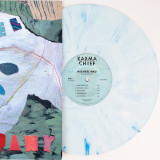
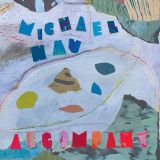
Die 11 Tracks des fünften Albums von Michael Nau fügen sich zu einem schönen Bild zusammen. Die Texte regen den Hörer immer wieder zum Nachdenken an. Sie sind introspektiv, aber vage und ergebnisoffen. Der Indierock-Hintergrund zeigt Anzeichen von Psych-Soul-Einflüssen mit trockenen und druckvollen Drums, üppigen Synthesizer-Linien und einer geschmackvollen, verbgetränkten Vokalproduktion. Nau's Gesang bewegt sich irgendwo zwischen dem Singen vor Publikum, dem Erzählen von Geschichten für einen geliebten Menschen und dem Grübeln über sich selbst. Die entspannte Einstellung des Singer-Songwriters zum Plattenmachen ist im Sound zu hören. Aufgenommen von dem erfahrenen Produzent und Tontechniker Adrien Olsen (The Killers, Lucy Dacus, Fruit Bats) in seinem Studio Montrose Recording in Richmond, Virginia, mit Musikern, die im Laufe der Jahre schon bei Naus verschiedenen Aufnahmen und Tourneen mitgewirkt hatten.
Recorded Live in Italy in October 1985 and mastered directly from the old dusty cassette, here's a previously unheard Steve Lacy recording from a rare duo appearance with pianist Martin Joseph, a little known yet fascinating British musician who had worked with Harry Beckett, John Surman, Ian Carr, Tubby Hayes among others, and who later became a regular presence on the Rome mid 70's creative Jazz scene. This recording gives us an opportunity to listen to the soprano sax giant in a repertoire not frequently found on his other duo recordings with pianists. The set list includes some of Lacy's finest compositions like "Prospectus", "Flakes" and "Coastline", plus Thelonious Monk’s classic "Bemsha Swing" a tribute to Monk's visionary mastery where Joseph’s contrapuntal response to Lacy's angular lines leads the music towards a multidimensional space, a quality to be found throughout the whole album, This is a wonderful discovery! and a significant addition to Lacy's discography and legacy.
Contains printed inner sleeve with archival photos and extensive liner notes by two Italian soprano saxophone specialists Roberto Ottaviano and Eugenio Colombo, and pianist Martin Joseph himself.
Repress!
Following his versatile Alone With Everybody EP, FD returns to The North Quarter with a stunning 16 track debut album: Better Days.
Largely written in a three month window, FDs (real name Freddie Dixon) new long player on The NQ undoubtedly brings the best of the Zurich-based/London-born producer. Better Days is an album that delivers a rare synergy of drive, harmony between subtle & raw and just sheer fun. A versatile yet coherent project drawn from a large pool of sketches, finalised in intricate detail with focused studio dedication.
Drawing influences from Dub, Jazz, Hip Hop, Soul and the Mid 90's Drum & Bass “GoldenAge”, Better Days bridges the gap between genres, as FD enlists carefully considered vocal collaborations. Manchester donny Fox shines on the dubbed out Better Man and Washington DC soul diva Cecily shows shades of Minnie Riperton on Sycamore. Meanwhile Ribs is lifted to one of the album's stand out tracks with Maverick Soul on the keys and the enigmatic Issac Rosie on the boards.
For some the better days in life are in their childhood memories: nostalgia-infused wonderings of the mind to a care-free time without today's online distractions. Although FD’s debut album 'Better Days' is inspired and informed by a period earlier in life, his best days musically are definitely in the present. To put it into the man's own words:
"I’ve been wanting to do an album for quite a while now, but the circumstance never felt right. Once I started working with The North Quarter that all changed – it feels like being part of a team all pushing in the same direction, all supporting one another, all wanting to do the best for each other. Once we’d done the first EP together, for me, it was only a question of when."
Bruce Falkian is a world famous contemporary artist who exhibits at the world's most prestigious art galleries and fairs. Bruce Falkian moonlights as an agent of espionage against the Terrorism Industrial Complex. Wait... what?
To understand Bruce Falkian we first must understand the link between image and war. In the late 1800s the precursor to the video camera was invented. It was directly inspired by guns, specifically, Samuel Colt's Revolver. It borrowed not only its barrel mechanics, swapping bullets for exposures, but its terminology too. Load, point, scope, aim, shoot, flash. The camera and the gun, united by cordite, would go on to prove the most efficacious tools in shaping the modern world.
The 20th century was a laboratory when it comes to killing and image making, glorified through Hollywood and the Western genre. Propaganda would prove highly effective in creating and sustaining support for militaries fighting for ideological global control. Devised first in the aptly title 'Propaganda' (1928) by Edward Bernays, a nephew of Sigmund Freud, Advertising and Public Relations became the leading media industries, learning how to control the population through images, usually just to buy random crap they didn't need, but other times to overthrow democratically elected politicians in foreign countries. Eventually Western Liberal Democracy assumed domination, built of course on the enslavement of all peoples and nations who didn't fall in line with its specific ideas of living. The Red Scare inspired countless anti-leftist, anti-communist works of art throughout the Cold War, notably and most bizarre, funding the abstract expressionist movement as a non-ideological alternative to socialist realism art. When the Soviet Union fell, Western Liberal Democracy was able to promulgate its unhindered views around the world through its various media empires and actor states. Is it a coincidence that a third of the almost $85 billion dollar global camera equipment market is represented by the greatest propaganda beast the world has ever seen, the USA?
Guns are dangerous because of the obvious. Images are dangerous because we are bad at perceiving what is real (as any jump scare, deepfake, newsreel will attest to.) Videos aren't technically real, they are only a collection of rapidly changing static images which give the illusion of movement. It's easy for us to collectively decide that a video is real, because that's the way our brains perceive reality. People who lead the world of media understand this, which is how they are able to control us, make us invade foreign countries, vote for specific politicians, feel ugly or fat etc. However, ubiquitous as they are, it seems that the image is in crisis. It seems that we've run out of them. Or perhaps our understanding of an image is changing, with the aid of near instantaneous text-to-image AI technology. So what does this mean for guns? What does this mean for war? How will images be used as an aid to war in the 21st century? It remains to be seen, but Bruce Falkian will be a useful agent.
Presented here on limited edition gold vinyl, ‘Ogdens' Nut Gone Flake’ is the third studio album, and only concept album by the Small Faces. Originally released in May 1968, the LP peaked at number one on the UK Album Charts the following month, where it remained for six weeks and is the Small Faces' best-known and most successful album.
Including the hit tracks ‘Lazy Sunday’, ‘Ogdens Nut Gone Flake’ and ‘Rene’, side two of the LP is based on an original fairy tale concept about a boy called Happiness Stan - six songs interlinked with narration provided by comic performer Stanley Unwin in his unique, nonsensical private language.
It ultimately became the group's final studio album during their original incarnation. The album title and distinctive packaging design was a parody of Ogden's Nut-brown Flake, a brand of tinned loose tobacco that was produced in Liverpool from 1899 onwards by Thomas Ogden
LAVENDER Coloured Vinyl. Recommended If You Like: Cocteau Twins, Julee Cruise, Antena, Young Marble Giants, The Pastels, Mazzy Star, Norma Tanega. A cinematic ocean of sound. EERIE WANDA's Marina Tadic draws you into her inner worlds on these 11 new songs produced by Kramer (Galaxie 500, Unrest, Ween, Daniel Johnston.). On Internal Radio, the new album by Eerie Wanda, visual artist and musician Marina Tadic welcomes you to her inner world. Guided by intuition, Tadic's songs use haunting, ethereal space, growing whole universes from the seeds of ideas. Internal Radio documents Tadic becoming the artist she wants to be, working through some things, and even exorcizing a few demons. The result is the most realized Eerie Wanda album yet, building on the project's guitar pop past for a more experimental, other worldly, serious grown-up affair that ventures into sensitive, motional territory. "Pet Town is delightfully airy; a set of songs that have drifted in on a breeze from some strange and foreign landscape you won't find on any map.” Gold Flake Paint // “Tadic’s melody here is part of that Brian Wilson lineage … she sets those notes adrift with a casually graceful minimalism… It evokes a pleasant stroll through a city at the moment when night begins to fall on a daydream.” Stereogum // Tracks: 1 Sail To The Silver Sun 2 NOWx1000 3 Long Time 4 On Heaven 5 Confess 6 Nightwalk 7 Someone's In My House 8 Sister Take My Hand 9 Birds Aren't Real 10 Puzzled 11 Bon Voyage