
pré-commande19.04.2024
il devrait être publié sur 19.04.2024
28,53 €
il devrait être publié sur 19.04.2024

il devrait être publié sur 12.04.2024

Flatliners is a series of hardcore releases by extended Straight Up Breakbeat family.
Commandez maintenant et nous commanderons l'article pour vous chez notre fournisseur.

A tape with the rather factual title “Rosa Beton – Demo 83” gained currency in 1983, albeit among an inner circle, or as it says in a lexical note on the band: Rosa Beton “achieved beyond-regional fame in and around Berlin”. Unlike some other bands that were merely rumoured to exist, this name was widely recognized in the East Berlin punk scene and the demo tape was received with some delight. It had been made in the suburb of Hönow, or more precisely in music enthusiast Thomas Wagner’s childhood bedroom. The band was less a classic combo than a short-lived pro- ject run, for a brief underground season, by 16-yearold Wagner and Ronald Mausolf, who was known as “Mausi” and had just come of age. An old clunker of a four-track machine served as an impor- tant nutritional supplement for the duo, allowing bass and vocals to be overdubbed separately. For a project without a professional background, especially for an illegal punk band in the East, this conventional procedure was clearly exceptional. Punk bands would usually record vocals and instruments simultaneously and on a cassette recorder. Recording gear was not readily available in the GDR, and it was disproportionately or prohibitively expensive. The adversities that had to be overcome in starting up a punk band were certainly challenging for teenagers. Rooms for rehearsals were few and far between despite wide- spread vacancies, and public space was taboo thanks to the state. Concerts, whether in flats and studios or under the protection of the Protestant church, remained rare events and, moreover, risky; starting with the party-loyal neighbour alerting the People’s Police as if there were a war on, to the ever-present “digging activity” of the Stasi. The only planned appearance by Rosa Beton never materi- alised. Whether it was the goddesses of fate who averted a show or the Stasi who prevented it can no longer be reconstructed. In any case, Rosa Beton never played live and thus joined a long list of GDR punk bands that, in the early 1980s, did not make it out of illegality into a public sphere, not even into a conspiratorial one. ausi compensated for the band’s lack of live performances by at least distributing a few copies of the demo tape. Among others, at the Kult, the Kulturpark Plänterwald, which provided an initiation field for the Berlin punk scene and a hotspot with a pull beyond it. The punks adapted the Kulturpark to their understanding of an amusement park.
They would thrash about to Schlager music and pogo to third-rate Ostrock bands, make fun of overwhelmed provincials, hang out and exchange half-baked ideas as superior knowledge. In between, the punks liked to ride the chain carousel, there was a certain liking for chains. The Kulturpark management made quite a fuss about the riot the punks put on. Initially they were banned from the chain carousel, then, when the punks switched to bumper cars, they were banned from the bumper cars, then from the roller coaster, and finally from the ghost
il devrait être publié sur 26.01.2024

With J Jazz volume 4, the BBE J Jazz Bullet Train continues its journey traversing the expansive landscape of modern Japanese jazz. Volume 4 is the latest in the universally praised compilation series exploring the best, rarest and most innovative jazz to emerge from the Far East. Please take your seats for a first-class ticket to J Jazz central. This latest station stop off is with the famed Nippon Columbia label, one of the biggest labels in Japan, whose jazz output embraces every possible style imaginable. Focussing on the key years 1968-1981, J Jazz volume 4 sees compilers Tony Higgins and Mike Peden dig even deeper into their record collections and pull-out tracks that span styles ranging from solo to big band, jazz classical interpretations and heavy jazz rock, to febrile post-bop, white hot samba fusion, and modal psychedelic wig-outs. J Jazz volume 4 features icons such as drum master Takeo Moriyama, keyboard magi Hiromasa Suzuki, Fumio Itabashi, and Masahiko Satoh, and guitar wizards Kazumi Watanabe and Kiyoshi Sugimoto, alongside big band maestros and innovators Nobuo Hara and his Sharps and Flats, and Toshiyuki Miyama’s New Herd. Thunderous basslines nestle alongside glistening runs of electric piano, bubbling synths and air-tight drumming as the heavy psychedelic modal blues of Jiro Inagaki flows with the infectious samba grooves of Takashi Mizuhashi featuring Herbie Hancock; Shigeharu Mukai’s fusion funk epics take the music to another level and Mikio Masuda’s driving keyboard rhythms brings the heat to an incendiary dancefloor zone.
Commandez maintenant et nous commanderons l'article pour vous chez notre fournisseur.

A vivid portrayal of Zaltsman’s direction, My Luv delivers 4 hard hitting club tracks, with rhythmic percussion and heavy basslines throughout. ‘The hook’ remaining a staple of this release, the tracks are all equally useful in peak time club scenarios as they are for after-hours listening.
The stripped back, bouncy ‘Moving’ features the vocals of London based poet and musician, James Massiah. An eerie synth runs throughout, complimentary to the vocals and choppy drums. The lead track, 'My Luv', is an out and out club-weapon. Chopped up vocals and a deep dark sub bass. This has seen a Summer of being deployed by some of the best DJs in the scene, taking advantage of its ‘obnoxiously long’ breakdown, before descending into chaos.
Complimenting these two tracks, 'Page 365' is a more sensitive body of music, engaging listeners with a strong bassline hook, before progressing into a more heavy hitting club track, with a large focus on groove, taking influence from the UK Funky scene. Finally, the most club-driven track from the record. 'Flatspot' is dominated by its forceful bassline and rolling percussion. This is out and out designed for peak-hour fun.
Early DJ Support:
Moxie, Saoirse, Louise Chen, Leon Vynehall, Ben UFO, Parris, Moopie, D.Tiffany, re:ni, Amaliah, Stenny
Commandez maintenant et nous commanderons l'article pour vous chez notre fournisseur.

Recommend If You Like: Allen Ginsberg, Hal Willner, Bill Frisell, Marc Ribot, Jack Kerouac, William Burroughs, The Beat Poets, Lenny Bruce, Jazz. Allen Ginsberg, the voice of a generation, fierce, gentle, profound and profane, paired with music created especially for his work, by some of the guiding lights of Jazz in the modern era - Mark Bingham, Bill Frisell, Arto Lindsay, Marc Ribot, and others. All masterfully coordinated and produced by the mad scientist of collaborations, Hal Willner. First released in 1989, this time capsule surges forth into the now with 8 additional tracks never included on the original release. These are timeless works, a garden of eden on vinyl to wander through repeatedly, guided by the founding father of Beat Poetry. Graced by an irresistible coda co-written with Shimmy-Disc founder Kramer, his lyrical mantra of "Don't Grow Old
il devrait être publié sur 27.11.2023

Drawing on influences such as Ry Cooder and Bruce Langhorne while forging new paths alongside fellow travelers like Daniel Lanois and Boards of Canada, SUSS uses a combination of acoustic guitars, pedal steel, harmonica, mandolin and synthesized sound manipulation to take the listener on a blissful and mythic trip into the unknown.
il devrait être publié sur 13.10.2023

il devrait être publié sur 30.09.2023

I could smell the curves of the river beyond the dusk and I saw the last light supine and tranquil upon tide-flats like pieces of broken mirror, then beyond them lights began in the pale clear air, trembling a little like butterflies hovering a long way off. -The Sound and the Fury, William Faulkner
This is the third and final instalment of Jeremiah M. Carter’s album triptych, »Vessels«. Following »Rejoice« and »Speak You Also«, all three album’s where conceived within a 6 month period during ferociously exalting creative sessions.
The Emotional turmoil of the early pandemic is as present on »Vessels« as it is in the other two albums, yet the final instalment showcases as more distinctive sense of focus, where the earlier albums saw Jeremiah expel a state of uncertainty and trepidation into an intense, almost spiritual form of musical cleansing, Vessels still bears those same hallmarks, yet comes across with an air of refinement and finality.
Spanning six pieces, each work feels like an integral part of the albums overarching narrative, fervently nestled amid divinity and humility. By its final piece, which also clocks in as the longest in the entire triptych, we are treated to one of Jeremiah’s finest moments, and for a few seconds, it all comes together for one last swansong, forming a sonic distillation of elation and grief, desire and passion. – It’s all here.
il devrait être publié sur 11.08.2023

"When the call came from WDR Rockpalast, we were thrilled - And the joy
grew from day to day," says Peter Bursch, head of the German Krautrock
legend Broselmaschine, founded in 1968 by "Germany's most famous
guitar teacher".Back in 1968, the Heinrich-Robert coalmine in Hamm was
still in its full bloom
Coal had been mined there since 1901, the year in which the Heinrich and Robert
shafts - as they are called in miners' jargon - were "abgeteuft", followed by the
Franz shaft in 1923. On November 10, 1997, the colliery closed its doors forever.
In the colliery's former wage hall, where the miners used to receive their
envelopes with their weekly wages, Broselmaschine rolled out carpets, plugged in
cables and set up their instruments on April 20, 2021. The high-ceilinged rooms
not only provided a matchless scenery, but also the basis for a unique ambient
sound. The perfect setting for Broselmaschine. But Corona had almost
completely paralyzed public life at this point; the pandemic was taking its toll on
the entire cultural scene. Spectators were not allowed to the events. The artists
and bands gave concerts anyway, sometimes from their flats, rehearsal rooms or
in small, empty clubs, and then came to the fans' homes via live stream. This also
applied for the WDR's Rockpalast with its "Offstage" series. The makers of
Rockpalast organized concerts with performances by artists in special places
that were deserted during the lockdown. That had its own charm and was
something very special.
This was also the case with Broselmaschine. The band played almost exclusively
songs from their latest studio album "Elegy" from 2019, as well as the title track
of the previous album "Indian Camel" and as a finale the Marc Bolan cover of
"Children Of The Revolution". Broselmaschine put on a great performance, no one
missed the audience that was not physically present. But it was there, this
audience. And it was in the hearts of the musicians. You can feel this with every
note this outstanding band was playing. Never were Broselmaschine more
musically valuable than on that special occasion.But judge for yourself.
Unique Rockpalast concert OFFSTAGE from the Corona era, recorded on April 20,
2021 at Heinrich-Robert colliery in Hamm, Germany - also available on vinyl
il devrait être publié sur 04.08.2023

Little Feat is the quintessential “cult” band. Started by Lowell George, 1972’s Sailin’ Shoes captures these musical rebels at one of their early peaks. The songs on Sailin’ Shoes are a masterful collage of inventive narrative, resplendent in countercultural irony and romance. Featuring the classic tracks “Willin’” (covered by Linda Rondstadt and many others), “Easy to Slip” (originally written for the Doobie Brothers) and the title track, it’s an album whose status has grown immeasurably, making it one of the most acclaimed releases of its era. With 1973’s Dixie Chicken, Little Feat found its signature sound as a band, producing a seductive, laid-back, funky record made up of what is arguably Lowell George's best-ever set of songs. With tracks that sound easy but are quite sophisticated, fans will enjoy hits like the rolling "Two Trains," the deeply soulful and funny "Fat Man in the Bathtub" and the country-funkified title track (which was covered nearly as frequently as "Willin'"). These deluxe editions include the original albums remastered and recut from the original tapes, alongside previously unreleased studio outtakes and demos, and complete unreleased live shows. It’s a treasure trove of material for their feverish fan base, and the first ever deep dive into one of the most influential bands from the 70’s Warner catalog.
[a] A1. EASY TO SLIP (2023 REMASTER) [3:19]
[b] A2. COLD, COLD COLD (2023 REMASTER) [3:58]
[c] A3. TROUBLE (2023 REMASTER) [2:15]
[d] A4. TRIPE FACE BOOGIE (2023 REMASTER) [3:14]
[e] A5. WILLIN’ (2023 REMASTER) [2:54]
[f] A6. A APOLITICAL BLUES (2023 REMASTER) [3:25]
[g] B1. SAILIN’ SHOES (2023 REMASTER) [2:49]
[h] B2. TEENAGE NERVOUS BREAKDOWN (2023 REMASTER) [2:10]
[i] B3. GOT NO SHADOW (2023 REMASTER) [5:05]
[j] B4. CAT FEVER (2023 REMASTER) [4:35]
[k] B5. TEXAS ROSE CAFE (2023 REMASTER) [3:43]
[l] C1. SAILIN’ SHOES (DEMO)* [2:57]
[m] C2. EASY TO FALL (EASY TO SLIP) [DEMO FOR DOOBIE BROS.] [2:41]
[n] C3. TEXAS ROSE CAFÉ (DEMO FOR DOOBIE BROS.) [3:24]
[o] C4. COLD, COLD, COLD (ALTERNATE VERSION)* [4:17]
[p] C5. ROTO/TONE [4:07]
[q] D1. A APOLITICAL BLUES (ALTERNATE VERSION)* [3:46]
[r] D2. BOOGIE – TRIPE FACE BOOGIE [3:58]
[s] D3. TROUBLE (ALTERNATE VERSION)* [2:23]
[t] D4. DORIVILLE [2:44]
[u] D5. WILLIN’ (ALTERNATE VERSION)* [3:00]
[w] E1. TRIPE FACE BOOGIE (LIVE AT THE PALLADIUM, LOS ANGELES, CA 8/28/71)* [4:30]
[x] E2. HAMBURGER MIDNIGHT (LIVE AT THE PALLADIUM, LOS ANGELES, CA 8/28/71)* [3:41]
[y] E3. CAT FEVER (LIVE AT THE PALLADIUM, LOS ANGELES, CA 8/28/71)*[5:19]
[z] E4. WILLIN’ (LIVE AT THE PALLADIUM, LOS ANGELES, CA 8/28/71)* [4:06]
[xa] E5. STRAWBERRY FLATS (LIVE AT THE PALLADIUM, LOS ANGELES, CA 8/28/71)* [3:11]
[xb] F1. GOT NO SHADOW (LIVE AT THE PALLADIUM, LOS ANGELES, CA 8/28/71)* [5:08]
[xc] F2. TEXAS ROSE CAFÉ (LIVE AT THE PALLADIUM, LOS ANGELES, CA 8/28/71)* [4:05]
[xd] F3. SNAKES ON EVERYTHING (LIVE AT THE PALLADIUM, LOS ANGELES, CA 8/28/71)* [4:18]
[xe] F4. HOT ROD (ELDORADO SLIM) [LIVE AT THE PALLADIUM, LOS ANGELES, CA 8/28/71]* [5:08]
il devrait être publié sur 23.06.2023
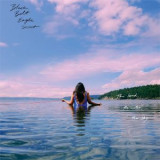
This land runs through Katherine Paul’s blood. And it called to her. In dreams she saw the river, her ancestors, and her home. When the land calls, you listen. And KP found herself far from her ancestral lands during a time of collective trauma, when the world was wounded and in need of healing. In 2020 she made the journey from Portland back to the Skagit River, back to the cedar
trees that stand tall and shrouded in fog, back to the tide flats and the mountains, back to Swinomish.
It is a powerful thing to return to our ancestral lands and often times the journey is not easy. Like the salmon through the currents, like the tide as it crawls to shore this is a story of return. It is the call and response. It is the outstretched arms of the people who came before, welcoming her home. The Land, The Water, The Sky is a celebration of lineage and strength. Even in its deepest moments of loneliness and grief, of frustration over a world wrought with colonial violence and pain, the songs remind us that if we slow down, if we listen to the waves and the wind through the trees, we will remember to breathe.
There is a throughline of story in every song, a remembrance of knowledge and teachings, a gratitude of wisdom passed down and carried. There is a reimagining of Sedna who was offered to the sea, and a beautiful rumination on sacrifice and humanity, and what it means to hold the stories that work to teach us something.
Chord progressions born out of moments of sadness and solitude transform into the islands that sit blue along the horizon. The Salish Sea curves along her homelands, and when the singer is close to this water she is reminded of her grandmother, how she looked out at these same islands, and she’s held by spirit and memory.
The Land, The Water, The Sky rises and falls, in darkness and in light, but even in its most melancholy moments it is never despairing. That is the beauty of returning home. When you stand on ancestral lands it is impossible to be alone. You feel the arms and hands that hold you up, unwilling to let you fall into sorrow or abandonment. In her songs Katherine Paul has channeled that feeling of being held. In every note she has written a love letter to indigenous strength and healing.
There is a joy present here, a fierce blissfulness that comes with walking the trails along the river, feeling the sand and th stones beneath her feet. It is the pride and the certainty that comes with knowing her ancestors walked along the same land, dipped their hands into the water, and ran their fingertips along the same bark of cedar trees.
This is a story of hope, as it details the joy of returning. Katherine Paul’s journey home wasn’t made alone, and the songs are crowded with loved ones and relatives, like a really good party. And as the songs walk us through the land it is important we hover over the images and the beauty, the moments that mark this album as site specific. The power of this land is woven throughout, telling the story of narrow waterways, brush strokes, salmon stinta, and above all healing.
Let it take you. Move through the story and see the land through her eyes, because it is a gift, a welcomed sʔabadəb.*
*The word “gift” in Lushootseed, the language of the Coast Salish people“
il devrait être publié sur 10.02.2023

Ahem is a new project from Housecraft Recordings head Jeffry Astin (aka Xiphiidae, Digital Natives) along with co-conspirators J.P. Wright and Brian Kinkade. Recommended for fans of smoked out dub-bient and deep Appalachian drones.
-Cover art by Joe Roberts (LSD Worldpeace)
-Housecraft Recordings has been active as a cult favorite ambient/tape label for ~20 years now.
Quotes and reactions:
-“Jeffry Astin was the Dominique Wilkins of the early 2000s tape scene” -Tabs Out Podcast (episode #92)
-“Honestly too fire” -Ian Kim Judd (Fifth World/NTS)
-“Great record!” -Hank Jackson (Anno Records)
-“Super nice” -Jacob Gorchov (Palto Flats)
-“Massive” -Eli Libman (Quiet Time Tapes)
Commandez maintenant et nous commanderons l'article pour vous chez notre fournisseur.

il devrait être publié sur 09.12.2022

Pure Wicked Tune is a mixtape-style collection of extracts & cut-ups, taken from DIY cassette recordings featuring rare groove and "soul blues" soundsystems playing at early morning house parties and blues dances - mostly in South & East London - between the mid 1980s & early 90s.
Sounds like Funkadelic, Touch of Class, Latest Edition, JB Crew, Manhattan, 5th Avenue (and the many more featured on this tape) originally began to form in the mid-1980s. With lovers rock dwindling, and the reggae scene becoming dominated by harder digital-style dancehall, these sounds provided a tight but loyal crowd with a potent alternative - playing a mixture of killer rare soul, funk and boogie records in an inimitably reggae soundsystem style, complete with toasting, sirens and effects aplenty.
They were most well-known for playing at house parties and blues dances, typically in small flats or warehouses, with timing of such events generally running from the early morning hours until late the next afternoon. Though the popularity of the sounds faded following the dance music explosion of the early 1990s, there has been continued demand for revival sessions ever since. Whilst the influence of key British reggae & dancehall soundsystems on subsequent UK sounds like hardcore & jungle is relatively well documented, a similar line can just as easily be drawn from these sounds and the aforementioned styles' tendency toward sampling popular rare groove cuts, particularly well evidenced in the work of Tom & Jerry, 4hero, Reinforced & LTJ Bukem among others.
This represents the first outing in a series of collections exploring the sounds of UK soundsystem culture, via extracts from archival DIY cassette recordings of blues parties, dances & clashes made between the late 70s and early 90s. Often duplicated and shared widely, these ruff and ready "sound tapes" provided keen ears with music that wasn't otherwise readily available on the airwaves or in the record shops, and would go on to leave a deeply-rooted but too often overlooked influence on the UK's musical landscape.
Commandez maintenant et nous commanderons l'article pour vous chez notre fournisseur.

Commandez maintenant et nous commanderons l'article pour vous chez notre fournisseur.

Following the already classic Wamono A to Z trilogy, 180g presents an exceptional collection of jazz funk / rare groove tunes recorded in the mid-seventies at the Nippon Columbia studios by three giants of Japanese music: arranger Kiyoshi Yamaya, koto legend Toshiko Yonekawa and shakuhachi master Kifu Mitsuhashi.
- 180g heavy vinyl pressing, reverse board jacket
- Fully licensed Nippon Columbia masters available for the first time outside of Japan
- Mastering and lacquer cut by Jukka Sarapää at Timmion Cutting Lab, Helsinki, Finland
- Artwork by Nker
---
Born in 1932 in Tokyo, Kiyoshi Yamaya started his musical career in 1953 when he played in various jazz bands in town. In 1957, Yamaya joined Nobuo Hara's famous jazz big band Sharps & Flats as a baritone saxophone player and started composing, arranging, and recording for them and other big bands. He became a key jazz figure in Japan in the sixties together with Norio Maeda and Keitaro Miho, both jazz pianists, composers and arrangers, by forming the Modern Jazz Three Association – which aimed at improving the level of Japanese jazz composition and arrangement. In the mid-seventies, his Contemporary Sound Orchestra explored jazz funk fusions with traditional Japanese melodies and instruments such as the shakuhachi, koto, biwa, and shamisen. These works were recorded for a series of panoramic Japanese albums released domestically on Denon and Nippon Columbia, from which the tracks on this compilation are taken from.
Toshiko Yonekawa, born 1913 in the city of Himeji, not so far from Osaka, is the eldest daughter of koto and shamisen master Kin'o Yonekawa. She started studying both instruments with her talented father from the age of 3, played in her first concert at 8, and was only 12 years old when she first appeared on national radio. Her unique style of koto playing is widely recognized due to the extreme accuracy of the intonation and rhythm, as well as the unequaled beauty of the instrument's sonority. After a life decorated with awards and prizes, Toshiko Yonekawa was named a Living National Treasure in 1996.
Born in Tokyo in 1950, Kifu Mitsuhashi is a great master of Koto style shakuhachi. After completing the NHK Hōgaku Training Program in 1972, Mitsuhashi became a member of Pro Musica Nipponia, a group of leading composers and top-ranking musicians devoted to performing a wide-ranging repertoire of classical and contemporary compositions from both Japan and the West – in which all music is performed by traditional Japanese musical instruments. Mitsuhashi has toured the world for hundreds of recitals, also as a soloist, and has performed his art with the greatest ensembles such as the BBC Symphony Orchestra and the Berliner Philharmoniker. In 2020, Kifu Mitsuhashi was awarded the Order of the Rising Sun.
---
All tracks selected and compiled by Greg Gouty and Maxime Brottes, with the assistance of Ryohei "Nitchiku-kun" Tanaka.
All tracks licensed by Nippon Columbia, Japan.
Mastering and lacquer cut by Jukka Sarapää at Timmion Cutting Lab, Helsinki, Finland.
Artwork by Nicolas Kerembellec (Nker.fr).
Proofreading by Brian Durr (Diskotopia).
Executive producers: Greg Gouty and Maxime Brottes.
180GWALP04 - Manufactured and distributed by 180g.

Many of you will be aware of the band Homegrown Syndrome (we released the single a few years ago). They were also known locally as Homegrown Funk & the band Memphis that put out one extremely rare two sider. A party Side 'Shake and Rock' flipped with a top of the rung ballad 'Inside My Love', it has everything collectors want, Rarity & Quality so sells for 500+ all day long, below Robert Garcia gives us the history....
"Memphis" were members of the Memphis based group "Home Grown Funk." Home Grown Funk was also known as "Homegrown Syndrome," a controversial name bestowed to them. Before heading to LA they gigged all over Memphis. Some of the members were from an earlier 70s group called "Brothers Unlimited" and had earlier ties during the 60s with the "Memphis Invaders" (a peaceful civil rights activist group).
With aspirations of pushing Homegrown further, a few members including Jerry Jones made the move out west. It was LA 1977 when they were introduced to Ike Tuner through a mutual friend "Ricky G". It was a casual meetup. Then one night Ike had his son Ike Jr. go check them out while performing at the Soul Train hangout spot "Maverick Flats". Ike Jr. praised their performance to Ike and he had them come out to his Inglewood studio. The group walked into the studio with a funky track already playing and that's when Jerry Jones improvised this opportunity and started singing. Ike then turned and said… "Who is that singing?" Jerry said, "Thats me." Then Ike replied " YOU BIG MUTHAF***A! You could be my new Tina." From that point the group cut bunch of tracks with Ike over the years up until they're feature on his 1980 album "The Edge."
In 1981 Perry Kibble (Keyboardist for Taste Of Honey) was at "Concerts In The Park" and heard Home Grown Funk performing. He linked up with the group and got them a deal with Arista. During this time they recorded their hit track " Confrontation." Perry suggested that the group change their name because he didn't want another group with the work "Funk" in it and hence "Homegrown Syndrome." They also use the Arista studio to cut an unreleased acetate with tracks "Got the love" and "Party Vibes" soon to be reissued on ATON.
Around the same time they were introduced to a fella named Roger Green. Green asked the group to come over to his home studio to cut the track "Inside My Love." Upon naming the record Roger Green suggested to go by "Memphis" since they were all from there. This record was eventually pressed in 1982 as small run becoming extremely hard to find.
Words by: Robert Garcia
Commandez maintenant et nous commanderons l'article pour vous chez notre fournisseur.

Many of you will be aware of the band Homegrown Syndrome (we released the single a few years ago). They were also known locally as Homegrown Funk & the band Memphis that put out one extremely rare two sider. A party Side 'Shake and Rock' flipped with a top of the rung ballad 'Inside My Love', it has everything collectors want, Rarity & Quality so sells for 500+ all day long, below Robert Garcia gives us the history....
"Memphis" were members of the Memphis based group "Home Grown Funk." Home Grown Funk was also known as "Homegrown Syndrome," a controversial name bestowed to them. Before heading to LA they gigged all over Memphis. Some of the members were from an earlier 70s group called "Brothers Unlimited" and had earlier ties during the 60s with the "Memphis Invaders" (a peaceful civil rights activist group).
With aspirations of pushing Homegrown further, a few members including Jerry Jones made the move out west. It was LA 1977 when they were introduced to Ike Tuner through a mutual friend "Ricky G". It was a casual meetup. Then one night Ike had his son Ike Jr. go check them out while performing at the Soul Train hangout spot "Maverick Flats". Ike Jr. praised their performance to Ike and he had them come out to his Inglewood studio. The group walked into the studio with a funky track already playing and that's when Jerry Jones improvised this opportunity and started singing. Ike then turned and said… "Who is that singing?" Jerry said, "Thats me." Then Ike replied " YOU BIG MUTHAF***A! You could be my new Tina." From that point the group cut bunch of tracks with Ike over the years up until they're feature on his 1980 album "The Edge."
In 1981 Perry Kibble (Keyboardist for Taste Of Honey) was at "Concerts In The Park" and heard Home Grown Funk performing. He linked up with the group and got them a deal with Arista. During this time they recorded their hit track " Confrontation." Perry suggested that the group change their name because he didn't want another group with the work "Funk" in it and hence "Homegrown Syndrome." They also use the Arista studio to cut an unreleased acetate with tracks "Got the love" and "Party Vibes" soon to be reissued on ATON.
Around the same time they were introduced to a fella named Roger Green. Green asked the group to come over to his home studio to cut the track "Inside My Love." Upon naming the record Roger Green suggested to go by "Memphis" since they were all from there. This record was eventually pressed in 1982 as small run becoming extremely hard to find.
Words by: Robert Garcia
il devrait être publié sur 28.01.2022

Love Wash opens with “Across the Flats” and closes with its title track, both upbeat ballads that build from scorched drones into momentous sprawling pop songs that help ease in and out of the album, which features contributions from co-PC Worship collaborators (LEYA’s Adam Markiewicz on violin and NYC drum shredder Greg Fox).
The second and third tracks “Drive” and “Saints” carry the subtle intensity that opens the album, with unpredictable instrumentation, chord changes and arrangements. This vibe is revisited later in the album on “Dune House” and “Hidden Away”, all of which are sonically rich, unraveling, dark, introspective and powerfully optimistic.
The rest of Love Wash is comprised of catchy, borderline alt-country hits with a twisted Nashville tele vibe (“December Sun”, “New Thing” & “East Side Walk”), featuring pedal steel and vocal contributions from fellow Dougie Poole band members Tristan Shepherd and Francesca Caruso. Love Wash has a natural flow throughout, however the one real outlier is the well placed and hyper paced middle child of the album “Dredging Up Old Blues,” a schitzo-synth-pop Mountain Dew Rock jam that feels like buying trucker speed at a digital gas station in Middle-America.
Love Wash has echoes of a post-Beatles solo record, recorded in the Northwest in the mid-90s; transient in its influences yet tied together with the aesthetic of its approach. Sequenced like the best, most damaged early K / Kill Rock Stars records and driven by fingerpicked acoustic guitar, sweeping drones, euphoric synths, lush vocals and soaring Dead Man leads, Love Wash is a beautifully rich pop record at its core and an ambitious journey of an album that started as bedroom demos and evolved into a layered studio exploration.
-- Justin Frye (PC Worship
il devrait être publié sur 18.10.2021

LEGENDARY SESSION ! FIRST TIME EVER ON VINYL AND CUT DIRECTLY FROM THE ORIGINAL MASTER TAPES WITH NO DIGITAL PROCESS WHATSOEVER!!!
TIP ON SLEEVE PRINTED JUST LIKE THE OLD NIMBUS LP’s FROM THE 70’s and 80’s… BRAND NEW ARTWORK FROM ORIGINAL SESSION PHOTOS AND LINER NOTES BY Mark Weber
At long last…On Vinyl…From original tapes. 3/5ths of the Quintet that recorded "‘the Giant is Awakened’ LP in 1969…this album sat unreleased for 20+ years before it saw a small run on cd (with poor mastering the early 2000’s), now, 40 years after it was recorded, finally released in the original format it was intended for….This LP sounds fresh and amazing…if you’ve only heard the cd, you’ve not truly heard this lost gem in its full glory. edition of 500
Born in Mississippi in 1937 and beginning to play the saxophone at 14, Billie Harris relocated to Los Angeles in 1965 after a 4 year stint in the Air Force, becoming one of the great, unsung forces of underground jazz in the city for many years (he later relocated to the Mojave Desert, where, at last record, he still plays in a church band). A Venice Beach street musician and longtime member of the Pan Afrikan Peoples Arkestra - you can hear him playing on Live at I.U.C.C. and Flight 17, as well as Jesse Sharps Quintet & P.A.P.A.’s Sharps and Flats (reissued in 2018) - he was also director of the AZZ IZZ jazz club in Venice Beach during the 70s.
On April 29 and May 3, 1980, Harris entered the studio, backed by Horace Tapscott on piano, David Bryant on bass, Daa’oud Woods on percussion, and Everett Brown Jr on drums, recording, over those two days what was to be his only outing as a leader. Once heard, the tragic lack of further material can’t be ignored. It is a truly stunning piece of work, even more surprising for the fact that it sat unreleased for over 20 years, only to be released as a small, poorly mastered edition on CD during the early 2000’s. Now, finally appearing very first time on the format and label for which it was intended, 40 years after it was recorded, we can hear this lost gem in all its glory.
Harris was 43 years old at the time of the Nimbus West sessions that resulted in I Want Some Water, and the power and experience of his playing, honed over three decades, shows in full force. The band is equally imbued with power, sensitivity, and experience. Tapscott, Bryant, and Brown’s working partnership goes back to 1969, when they recorded Tapscott’s debut as a leader, The Giant Is Awakened. In quintet’s hands, channeling the heavy modal relationships pioneered by Coltrane, heavy spiritual groove lock and unfurl, threaded by the release via incredibly forward-thinking improvisation.
Like so much of the work that came out of the Pan Afrikan Peoples Arkestra scene, I Want Some Water has a giant sound, each track long in length, building slowly over time toward towering heights that leave the listener immersed in one of the greatest treasures of spiritual jazz that almost nobody ever heard. Rhythmic, rollicking, and tonally inspired, the joyous interplay of the band goes deep, locked in, and challenging the predictable path, while making nods to numerous, discreet traditions of music.
As far as reissues go, Nimbus’ first ever vinyl pressing of Harris’ I Want Some Water is about as good as it gets. Not only does it deliver some of the best music we’ve heard all year, but it takes huge steps toward allowing a crucial artist to be celebrated in a way that he’s always deserved.
Cut directly from the original master tapes, featuring brand new artwork from the original sessions and liner notes from Mark Weber, and issued in a limited edition of 500 copies, it’s an absolute must that can’t be missed.
Commandez maintenant et nous commanderons l'article pour vous chez notre fournisseur.

Raf Rundell announces the release of his second album, ‘O.M. Days’,
released on Heavenly Recordings.
Features guest appearances from Chas Jankel, Lias Saoudi, Terri Walker,
Andy Jenkins and Man & The Echo.
The cover features a striking Keith Haring-meets-the Green Man image from
acclaimed artist and longtime collaborator Ben Edge, the picture was
inspired by the folk tale of the giant of Dawson, who is both male and
female, human and vegetation and lived in the imagination of Dawson’s Hill,
a stretch of South London parkland a stone’s throw away from Dawson’s
Heights, the flats featured on the cover of the debut album ‘Stop Lying’.
Edge and Rundell, for reasons they can’t entirely comprehend, concocted a
rite which took place the first full moon after this year’s summer solstice
(the results of which can be seen in the short film trailer for the album).
This involved the giant - also known as Tommy Hill Figure - being created
on Dawson’s Hill. “Ben’s been digging deeper and deeper into ancient
myths, the green man, all the stuff that’s been co-opted by organised
religion,” Rundell explains. All this chimed with him because he is a magnet
for signs and symbols. He has been ever since his Mod-loving parents
named him after the RAF roundel symbol.
“We’d been talking about this sort of stuff a lot,” Rundell continues. “The
rite was about the birth of the new and using the coronavirus as a catalyst
for that change, like a full stop to the way things were before. The corona
was called the spark in the ceremony, although we’re not being too specific
about the virus because this is a thing we hope to do annually.”
This is the backdrop to the album, a record far larger and more confident
than its creator could ever have imagined. Unlike his itinerantly created
previous records, ‘O.M. Days’ was entirely recorded in the same Forest Hill
studio, with the aforementioned collaborators. “I love collaborating with
people - like Lias Saoudi or Andy Jenkins, who are both on this record -
that’s where it’s at for me,” Rundell says. “I worked really hard on this one.
And although I had no plan about where it was going, I always have a
notion about how I want things to sound. I had a particular idea about
that.”
Initial copies are eco-wax vinyl, reverting to standard vinyl (HVNLP181)
when sold out.
Digital download code included.
il devrait être publié sur 09.04.2021

Following on from the success of Demon Records’ sold out ‘Special Stuff’ box set, we present the three anniversary specials from 2017, pressed on 3 sides of 180g “Snowglobe” vinyl, with the
fourth side an etching of Tubs and Edward trapped forever in a ‘Phantom Zone’ like state. The Anniversary specials tell the story of Benjamin discovering that his late Uncle Harvey is far
from dead and buried, Tubbs and Edward setting up shop in a derelict block of flats, Pauline reliving her past with her jobseekers and the continued woes of Geoff Tipps. Starring Mark Gatiss, Steve Pemberton and Reece Shearsmith, and featuring gatefold artwork
from horror maestro Graham Humphreys
il devrait être publié sur 06.11.2020

Sublime, unique, sexy and peculiar unreleased scores by electronic and jazz pioneer Ron Geesin, made for the sublime, unique, sexy and peculiar films by maverick director Stephen Dwoskin. There. we’ve said it. And if you have not heard of one or either of these two dudes it doesn’t really matter. Geesin made great music and worked with Pink Floyd. Dwoskin made odd films, most of them are in the BFI permanent collection. They are great and a bit strange.
These superb unreleased soundtracks come from a fascinating, progressive and important period in British film history. They represent an intriguing collaboration between the lively Ron Geesin from Scotland and the American Stephen Dwoskin, who both met in London.
Musically they are minimal, charismatic and quite groundbreaking. Here is the story…
HISTORY:
Steve Dwoskin arrived in London in 1964, aged 25, with several 16mm films in his trunk, shot in the cold-water flats of Greenwich Village. He had been on the fringe of the Factory scene, and some of his films starred Beverly Grant, ‘the queen of the underground’. But they had scarcely been seen, and they didn’t have soundtracks. For almost a year they stayed in the trunk, and stayed silent. Then he met Ron Geesin, somewhere around Portobello Road.
‘Slept last night, completely dressed after working over 12 hours on sound tracks at Ron’s,’ wrote Dwoskin in his diary for 29 July 1965. ‘My films are not anywhere near being anything. I need more energy, more concise and positive ideas and less inhibition. And of course space, money and people.’ Dwoskin, who taught and practised graphic design by day, had recently decided to stay in London beyond the term of the Fulbright scholarship that had brought him there.
Ron, living with Frankie in a basement flat in Elgin Crescent – they would marry the next year, with Dwoskin as best man – was about to leave the Original Downtown Syncopators, the trad jazz band he had joined aged seventeen-and-a-half, and was trying to go solo. On stage he would make vigorous use of piano and banjo; at home Frankie had bought him a new kind of instrument – a tape recorder. ‘Soon I had one tape recorder, two tape recorders, three tape recorders.’
Ron, wrote Dwoskin in his unpublished autobiography, ‘loved to record, and to cut and splice the quarter-inch recording tape to make new sounds. This triggered in me the idea of getting back to my films and finishing them’. Soon he was living in a dank basement in Denbigh Road, a few minutes’ walk from Elgin Crescent. Ron’s soundtracks for Dwoskin’ films, recorded in the Geesins’ flat, encompassed Ron’s very eclectic range of styles – madcap piano and fretted banjo as well as tape manipulation.
Aside from Ron’s soundtracks, some of which belong to films that no longer exist (including Pot Boiler), Frankie would act in one of the films that Dwoskin either lost or never finished during these years. He was disabled, having contracted polio as a child, and Ron and Frankie were both carers and collaborators; Ron had met him when he was struggling into his car.
There was no London equivalent to the underground film scene that Dwoskin had known in New York, and his films remained unseen until such a scene began to come into being, in the autumn of 1966. Some of them made their debut at the Mercury Theatre, near Notting Hill Gate, that September. Dwoskin wrote that Alone, starring Zelda Nelson (from Ron Rice’s Chumlum), and Chinese Checkers, with Beverly Grant and Dwoskin’s friend Joan Adler, went over best.
Soon both Dwoskin and Geesin became involved in the nascent London Film-Makers’ Co-op, which put on screenings in Better Books on Charing Cross Road – ‘if you can call them screenings,’ Ron recalls; ‘I’d call it fifteen blokes in various stages of disarray, peering through the smoke’. One or more of the films had been ‘striped’ with magnetic audiotape; with others ‘we had no means of direct syncing to the picture, so he started the film and I started the tape recorder’.
In the same autumn, Dwoskin moved into a flat almost opposite the Geesins on Elgin Crescent. More collaborations followed, including Naissant, on which Gavin Bryars, whom Geesin had met during a stint on the northern club circuit with novelty act Dr Crock and His Crackpots, played double bass.
Around the end of 1967 Geesin released his first solo LP, A Raise of Eyebrows, and Dwoskin won recognition the Fourth Experimental Film Competition, aka EXPRMNTL 4, an occasional film festival staged at Knokke-le-Zoute in Belgium. By now the films had optical soundtracks.
It was only after this that Dwoskin completed his first ‘British’ films, including Me Myself and I, with Barbara Gladstone, an American dancer who had appeared in Barbara Rubin’s Christmas on Earth, and with whom Dwoskin and Geesin had at one point devised a stage show, never produced. For Moment, a single-shot film, Geesin provided his most experimental score yet. At the time of its debut in 1970, Dwoskin and the Geesins were sharing a house in Ladbroke Grove.
By then, Ron was working with Pink Floyd, and soon afterwards he and Frankie moved out to the country, to be replaced by Bryars both in the house and as Dwoskin’s principal collaborator.
Until now these scores have remained part of the Geesin Archive and have never been issued.
Commandez maintenant et nous commanderons l'article pour vous chez notre fournisseur.

L/F/D/M, "Richard Smith", Brighton based producer who comes
to Alley Version after several killer releases for labels like Cititrax/Minimal Wave, Optimo Trax and collaborations with
Factory Floor’s Dominic Butler on Powell’s Diagonal Records.
“Club Germs On My Clothes” is a 4 tracks EP in which are recognizable elements of ebm, minimal wave, industrial, jackin, shaped in experimental hardware-driven raw-techno forms.
Pressed on 12″ White Coloured Vinyl. Limited Edition of 150 Copies.
Commandez maintenant et nous commanderons l'article pour vous chez notre fournisseur.

Consisting Neither Of One Lone Woman, Nor Hailing From Either The Eurasian Country Or The North American State, This Georgia Is In Fact Comprised Of Two Human Males Working Out Of China Town, N.y.c., Namely Brian Close And Justin Tripp. Together They Form A Creative Partnership Responsible For Not Just A Slew Of Output Upon Such Highly Regarded Imprints As Meakusma, Palto Flats And Emotional Response, But Also For A Kaleidoscopic Variety Of Multimedia Work With A Whole Host Of Clients, From The Corporate To The Counter Cultural. With An All Embracing, Freeform And In Some Ways Contradictory Approach To Production, Their Sound Is At Turns Stimulating, Terrifying, Comforting And Confounding. Separated From Any Visual Representation, The Audio On Its Own Becomes A Soundtrack For The Listeners' Own Intense Internal Projection Screen.
With 'time', Georgia's Vision Is Especially Well Realised As Here, In Collaboration With Fellow Intuitionists Firecracker Recordings, They Release Into This World An Album Which, With Any Luck, Shall Help You Unlock Your Inner Portals - Should They Need Assistance In That Regard Anyway. Unquantisable Polyrhythms Knock Against One Another In An Uncannily Externalised, Conflicting Collage Of Half Remembered Dance Ritual Memories. Fragmented Melodies, Disembodied Vocal Snippets, A Hint Of Ethnomusicality In Places All Give Deep Nods Simultaneously To Ancient Experience And To Post Human Intelligence, Condensing Past Present And Future Into One Eternal Instant.
'time' The Album Asks Us: What Happens When One Removes Ones Expectations Of Where In Time A Piece Of Music Or Art Must Sit And What Of Time Itself As A Construct, Now That We Have Myriad Ways Of Measuring It, Even At The Atomic Level; But Still Its Passing Is Completely Relative According To The Observer, And Indeed May All Be In Our Minds Anyway Equally, You Can Always Just Put It On - Again, And Again - Empty Your Mind Of Such Thoughts Completely, And Allow All Of Your Particles To Move Around Freely To This Joyful Noise... After All, That's The Point, Isn't It We're Gonna Have To Stop Asking Questions Eventually.
Commandez maintenant et nous commanderons l'article pour vous chez notre fournisseur.

"Things take a psychedelic turn for SchleiBen 7 with a welcome to the label of arch exponents of mind expansion in NYC's Georgia and the unlikely but no less diverse inclusion of Balearic stalwarts A Man Called Adam. Having Georgia in the series might not now be a surprise, however discussions with this open, genuine duo started during a visit to New York over 3 years ago and so here, finally realised in this fluid journey of confident pace and harmony, is the best of their freeform evocations. A duo in the everyday sense, Brian Close and Justin Tripp are video / music production teamsters of unnatural talent. Having gained a status of their own that has seen them release for the likes of Palto Flats and FTD, the five pieces that form their contribution drip with psychedelic intent. Culled from archives, the interest is how the tracks - made over different years, locations and situations in life - meld in to something poetic simply by being placed within a specific format. Avant-chimes ebb to rhythmic pulses and erudite teachings before dark percussion and Eastern melodies reach a clattering, but gentle finale. With an upcoming collaborative album with Secret Circuit due on the label later in 2018, as well as recent works with RVNG Intl's Matt Werth and recordings for Sacred Summits' brethren Firecracker Recordings, it's a warm, effusive glow of a welcome. In contrast, the inclusion of A Man Called Adam in the series may indeed surprise but is a false comprehension. The "Sketches" included here show AMCA away from their Balearic pop incarnation of the last thirty years and towards the academia that both members Sally Rodgers and Steve Jones have pursued in the last decade. With both completing PHDs, Sally ('The Diachronic Impact of Technology-Led Abstraction in Oral, Written and Music-based Poetries') is a senior lecturer at Leeds College Of Music, while Steve ('Mobilise: The Carry Principle, Sound and Mobile Media') is based out of de Montfort University, now is the perfect time to highlight the diverse sound environments they have been working in. The music that makes up these recordings are drawn from sound works and audio experiments completed in recent years. From sound toys and apps to home made glass organs and electro-acoustic sound, custom patches to spoken word manipulations, the sketches are excerpts - some evolved from commissions for the National Science Museum, BBC Radio 4 and live performances with the world renowned video artist Milosh JL - fused especially for this release. Bringing these generated pieces in to an audible "mix" creates a discourse of their work in performance, interactions and visual media. An intellectualised album therefore, but still in the premise of the series to allow artists to present something new, unique, discrete, hidden even, all with the aim of giving the recipient the chance to sit back and (un)listen. "
Commandez maintenant et nous commanderons l'article pour vous chez notre fournisseur.

For the label's 50th release, Emotional Rescue returns to the music of Woo to close a trilogy of reissue collaboration albums, in A La Luna. Following Whichever Way You Are Going (1982) and Into The Heart Of Love (1990), their opus A La Luna (1991) was the last of the bands song based albums and represents a wonderful way to close this association.
Reworked, re-ordered and remastered especially for this first time vinyl release, brothers Mark and Clive Ives again present their unique, ground-breaking and at the time, heart-wrenchingly overlooked music, that seems to fit the folk-new age-electronics of today as well, if not better, than when first released.
Across 20 plus songs Mark's guitar, clarinet and vocals are as ever drenched in Clive's mixing desk mastery. Echo and reverb shimmer as the short pieces rise and fall like the wind blowing across nighttime trees. With no song going much beyond three minutes, A La Luna flows as one piece. The unmistaken sound of Woo wraps itself around you in an essence, warmth and glow that is addictive, meditative and uplifting.
Featuring the original vocal performance of Mark's love ode, Magic In The Dark stands as a centerpiece where, as with all their albums, vocals appear at a minimum, as part of the musical journey.
The underlying somber nature of the album comes as the band ended more than a decade of recording with little critical or commercial success. The fact they did not release a full album again and moved towards a more meditation outlook was a loss, however, their recent rediscovery and the excellent releases by Drag City and Palto Flats included, has finally given the Ive's brothers not just a place in appreciation, but has shown that there really is no one like Woo. Enjoy the magic.
Commandez maintenant et nous commanderons l'article pour vous chez notre fournisseur.

Standart LP[17,02 €]
Palto Flats & WRWTFWW Records are ecstatic to announce the highly-anticipated reissue of Japanese percussionist Midori Takada's sought after and timeless ambient / minimal album "Through The Looking Glass", originally released in 1983 by RCA Japan.
Considered a Holy Grail of Japanese music by many, "Through The Looking Glass" is Midori Takada's first solo endeavor, a captivating four-song suite capturing her deep quests into traditional African and Asian percussive language and exploring contemplative ambient sounds with an admirably precise use of marimba. The result is alternatively ethereal and vibrant, always precise and mesmerizing, and makes for an atmospheric masterpiece and an unparalleled sonic and spiritual experience.
The fully licensed reissue is available as a single 33rpm LP and a limited 45rpm DLP, both cut directly from the original studio reels (AAA), at Emil Berliner (formerly the in-house recording department of renowned classical record label Deutsche Grammophon) for the 45rpm DLP, and at the equally famous Frankfurter SST Studio for the LP. It is also available in CD format for the first time. All versions come with extensive liner notes.
Commandez maintenant et nous commanderons l'article pour vous chez notre fournisseur.

2x12" Special Edition[43,07 €]
Palto Flats & WRWTFWW Records are ecstatic to announce the highly-anticipated reissue of Japanese percussionist Midori Takada's sought after and timeless ambient / minimal album "Through The Looking Glass", originally released in 1983 by RCA Japan.
Considered a Holy Grail of Japanese music by many, "Through The Looking Glass" is Midori Takada's first solo endeavor, a captivating four-song suite capturing her deep quests into traditional African and Asian percussive language and exploring contemplative ambient sounds with an admirably precise use of marimba. The result is alternatively ethereal and vibrant, always precise and mesmerizing, and makes for an atmospheric masterpiece and an unparalleled sonic and spiritual experience.
The fully licensed reissue is available as a single 33rpm LP and a limited 45rpm DLP, both cut directly from the original studio reels (AAA), at Emil Berliner (formerly the in-house recording department of renowned classical record label Deutsche Grammophon) for the 45rpm DLP, and at the equally famous Frankfurter SST Studio for the LP. It is also available in CD format for the first time. All versions come with extensive liner notes.
Commandez maintenant et nous commanderons l'article pour vous chez notre fournisseur.

Disco Bucuresti is an audio homage to Romania's capital, Bucharest. Growing up between the city's communist blocks of flats and maturing in the city's underground discos left a distinct creative mark on Andrei Idu (The Legendary 1979 Orchestra). Ever since leaving Bucharest for Amsterdam, Andrei felt the need to tribute the place that shaped him. However, it was only until recently that he found the means necessary to express the feelings he felt. Thus, records released during the 70s and 80s in Romania as sole sample source, analog drum machines, delays, filters and reverbs, all recorded in live takes come together in this evocative EP.
Commandez maintenant et nous commanderons l'article pour vous chez notre fournisseur.
