Super deep n’ rolling ambient junglist mutations from hyped cloakroom attendent Florian T M Zeisig and mysterious XPQ? operator PVAS, uniting under the NUG moniker for a highly atmospheric session beamed directly from that short-lived, elusive sweetspot in the mid 90’s when Omni Trio and DJ Crystl collided with Mo Wax’s Some Scientific Abstract Type Shit! and Gescom’s Disengage, all red lights dappling thru a dense fog of smoke.
Rinsed out under the timeless influence of “bong & sterni” - who sound like a legendary Berlin ambient duo, but are just weed and beer - Zeisig and PVAS collide in midair for a stereo-swirled recollection taking us back to 1995 - that Autechre radio show on Kiss FM, peak Mo Wax, Kodwo Eshun’s ‘club trax’ column, just before everything went fully tasteful. Throwing links to more contemporary refractions found on various J. Albert workouts as much as Skee Mask’s most vapourised breaks, the NUG sound keeps toes and heads off the ‘floor with a rugged but lush suite of rave suspension systems making critical use of negative space and recoiling dub dynamics.
One for the early hours of the club, ‘Not Many People Here yet’ gives acres of room to bounce off the walls, while the ruder ‘Filthy Club’ sounds like the backroom heard from ceramic tiled bogs, and you’re already healthily zonked for the zombie float of ‘Is Under The Blanket.’ The radiant pads and swingeing breaks of ‘Morpheus’ dial up Skee Mask’s most pendulous rave visions, and ‘Napping Under God’ rolls out on 9 minutes of webbed breakbeat for the locked-in steppers, with Florian’s ambient texturing fully coming into effect on the blurry-eyed flex of ‘Lite.’
Suche:fog
Ingredient is the elegant collaboration of Toronto poets, composers, producers and dear friends Ian Daniel Kehoe and Luka Kuplowsky. Their self-titled release is an enigmatic electronic avant-pop record attuned to the micro and macro perspectives of the natural world. Ingredient is an album whose lyrics are more poem than lyric, and whose songs exist in a merger of house music, philosophically-minded lyricism and contemporary R&B. One might recall electronic and art-pop luminaries such as Yukihiro Takahashi, The Blue Nile, and Arthur Russell, or connect it to contemporaries like Nite Jewel, Westerman and Blood Orange. A distinct world of dance, of questions, of secrecy and ultimate softness.
Eight years of friendship forges strange telepathy.
In the summer of 2020, Ian Daniel Kehoe was entrenched in a new feeling of heaviness; psychosomatic symptoms had started to proliferate; stress made new pores across the body, bending sensitivity into pain. His days were met with confusion, detachment, sleeplessness and pain without causation. Disfigured, he felt that what had been central and centering was blown out to the periphery of things. In a moment of self-preservation he reached out to his dear friend Luka Kuplowsky to make an album together. For Kehoe, it was an instinctual grasp for the anchoring truthfulness of deep friendship and the potential for a dedicated creative collaboration. Kuplowsky’s presence was light, supportful and curious, eager to explore musically the sounds they were mutually drawn to: house music, ambient pop, dub. The duality between Kuplowsky and Kehoe – between the Aflight and the Unmoored – is a portrait of a friendship whose exchanges came easy and produced an outpouring of song. Creation and therapy crisscross. In email correspondence that catalogs their process of collaboration, affection abounds: “feels bare without the Luka Licks”, or “Love you so much”, or “Kinda just overwhelmed with deadliness coming in at all angles.” When their voices first come in together on “Wolf,” that harmony arrives in a dramatic avant-pop sound that is bold and wondrous.
Kuplowsky and Kehoe both arrive at Ingredient as established artists whose works are committed to language’s propensity to provoke and mystify. Kuplowsky’s 2020 album Stardust is an idiosyncratic and otherworldly blend of pop and jazz romanticism grounded by Cohen-esque vocals and a stirring philosophical curiosity. Kehoe’s entrance into the new decade has hatched four records of pop experimentation, most recently 2022’s Yes Very So, a euphoric and bold album of poetic synth-pop and meditative ambient instrumentals. Kuplowsky and Kehoe’s union as Ingredient is a beautiful and unusual chemistry that integrates their distinct approaches while bringing forth a newness: a sound that alternates between cinematic technicolor and dubbed out fogginess; a lyricism that exchanges their lucid and clear poetics for a playful and obtuse verse. The album intuitively taps into the opposing emotional states of Kuplowsky and Kehoe during the conception of the record, contrasting the buoyancy of trumpeting keyboards (“Resurface”), angelic synthesized voices (“Come”), and rolling bass (“Photo”) with the record’s underlying darkness of whirring buzzsaw textures (“Transmission”), whooping sirens (“Wolf”) and murky ambience (“Illumination”). Lyrically, this duality arises in the record’s flux between openness (“Variation”, “Raindrop”) and existential dread (“Wolf”). “Illumination” most clearly crystalizes this opposition, reconciling the verses’ neurotic yearning for enlightenment with the chorus’ liberating doctrine of negation: “no more devotion… no more delusion”. Amidst the gradations of light and dark, Kuplowsky and Kehoe trade indelible, lush melodies as though their voices are made of a substance that melts easily one into the other. The harmony of poetry, sound, and texture cuts through your brain fog like a wet diamond.
Ingredient’s self-titled record was assembled by Kuplowsky and Kehoe over the course of six months in a home studio they frequented daily. Amidst synthesizers and drum machines they composed, re-composed, and workshopped a wide array of music, ultimately focusing on a set of eight songs that lived in a shared musical and philosophical world. Recording days often ended in basketball games at a local court or a rooftop commune over a pot of tulsi tea and a crossword puzzle. Kuplowsky brought in the Blue Cliff Record – the classic anthology of Chan Buddhism – whose inscrutable and sublime insights remained constant throughout the recording process as an activator of reorientation and reflection. While Kehoe was frequently rendered physically immobile by bouts of anxiety, a patience and mutual caring governed the pace of their creation; rest, stretching and meditation became equally important as the act of arrangement. Invited into their intimate circle of composition was Thom Gill, whose heavenly voice uplifts “Variation” and “Raindrop,” and Karen Ng, whose alto sax simmers and dances around the funky strut of “Raindrop.”
The lyrics on Ingredient reflect the persistence of change, the infinite variability of nature where randomness and divergence are no accidents. In Daoism, duality, in the form of Yin and Yang, is not contradictory as it is in Western idealist philosophy, but rather composes the eternal and lived paradox of our changeless-changing universe: changeless because all is change, and changing because the dynamism of the Dao makes each moment transformational. Kuplowsky and Kehoe refract this way of seeing the world, as in Variation: “Variation in the natural world / there it is.” Ingredient is an experience of the manifold ways of saying there it is of the transformational world, and there it is, unfolding. Elsewhere, change and ephemerality is addressed through the record’s preoccupation with non-human perspectives, reorienting the listener to the wolf, the mouse, the emerald frog, the centipede, the bird, the fly in the lamp. The album cover visualizes this fascination with the striking image of a reddish-orange frog atop a defamiliarized landscape of dark green leaves. Mirroring the exploratory process of the record’s collaboration, the frog also signals the amphibian’s natural inclination to leap into boundless potential. Kuplowsky and Kehoe’s lyrics manifest philosopher and ecologist Timothy Morton’s concept of “the mesh,” drawing attention to the “vast, entangled web” of interconnectedness that connects all life forms and interweaving the songwriters’ shared wonder into the Animal’s unknowability. As Luka narrates in the breakdown of the dance-floor ready “Photo,” “the closer we observe things, the further they retreat into abstraction.” In Ingredient’s ecosystem, perception is a reversible fractal where the world’s minutest details mirror the shape of the cosmos.
According to the Dao, the path to healing starts by reorienting perception away from the self and toward the self’s subsumption in Totality. For Kehoe, collaborating with Kuplowsky became the reorientation necessary for the self-preservation he was seeking, opening up a shared creative practice to navigate and soften the complexity of his psychological shattering. The album begins with Kuplowsky intoning “colossal faith” which bounces around the stereo field in a cloud of echo, and it is the enormity of “faith” that centers both Kuplowsky and Kehoe’s collaboration and their inquisitiveness in the vast mysteries of our very being. Truth in Ingredient is not an essential nugget, but a bending of the light – it is the equivocal entanglement of how we are in nature as nature, but with a plea or prayer under our breath that marks our felt distance from what we are a part of: “carry me towards the mountains of my birth / returning to the nest / the silence of the earth.”
The East Coast of England is a land living on borrowed time. Time we borrowed from the North Sea, reclaimed a thousand years ago. But now it seems that sea has come to claim it all back. Michael C Coldwell spent three years travelling up and down this rapidly disappearing shoreline, collecting ghost stories, photographing the roads to nowhere, the monumental sound mirrors and pillboxes teetering on the edges of cliffs, making field recordings of the waves and fog signals, and writing mournful electronic music from static caravans. This hauntological project finally culminated in a short essay film entitled Views from Sunk Island - and this new Conflux Coldwell album. More than just a film score, The Phantomatic Coast stretches beyond the original aims of the documentary, to evoke something deeper about our troubled relationship with the sea – the many towns and ships lost beneath the waves, and ancient forgotten lands lying out beyond the windfarms like some Yorkshire Atlantis. Memory and mythology became obvious themes in the work, as did the ruins and remains of the world wars, now slipping beneath shifting sands forever. The Phantomatic Coast will be released via digital platforms and limited edition pressed vinyl in a deluxe gatefold sleeve.
16)- return with their heaviest and most devastating record to date, Into Dust. The new album, a collection of cautionary tales of survival and redemption, is set to an amalgamation of sludge, punk, metal, hardcore, and stoner riffs, that could only be built through 30 years of commitment to their dark sonic craft, which -(16)- continues to improve upon. From the frantic opening of "Misfortune Teller" to the undeniable pounding and swagger of "Scrape the Rocks", Into Dust lives up to its name, as -(16)- beat the listener into submission through the lowest of ends and the sour, palpable malaise prevalent throughout the album's dozen tracks. "There's a story arc in the lyrics that start with an eviction notice served amid the ruins of Hurricane Irma in the Florida Keys, to running aground metaphorically and drowning in midlife, bearing witness to the modern suffering of hunger and poverty on the Mexico California border," guitarist and vocalist Bobby Ferry says. The negativity persists on tracks aptly titled "Null and Eternal Void", and the dizzying, pill-induced "The Floor Wins". Elsewhere, "Born on a Bar Stool" sends the listener off with a sobering album closer; ending on a foggy and rainy jazz-tinged San Francisco night, with an anti-drinking drinking song, proclaiming "Raise your glass all things pass".
Repress in soon, note new price. For the ten-year anniversary of Algernon Cadwallader's first full length, "Some Kind of Cadwallader," Lauren Records and Asian Man Records are reissuing the record along with their second album, "Parrot Flies" (2011), and a new self-titled collection LP. The 16-track collection includes EPs, B-sides, previously unreleased versions, and two covers. Side A reects one era of Algernon Cadwallader, and Side B the other. Tracklist: 1. Second Rate Machines 2 Breath Wish 3 Look Down 4 Sailor Set Sail 5 Shirt 6 Serial Killer Status (Unreleased Version) 7 Katie's Conscious (Unreleased Version) 8 Spit Fountain 9 Fun 10 Foggy Mountain 11 Black Clouds 12 I Wanna Go To The Beach 13 Responsible Party 14. Simulation 15 This Boy 16 No Action
Beatservice Records are thrilled to present the hotly-anticipated third album from Oslo-based production maestro, Third Attempt. 'The Novel Sound' follows on from the widely acclaimed 'Beats From The Quarantine' album released in April 2021, and further compliments the young artist's deserved reputation as one of the dance underground's most exciting talents to emerge in recent years.
Third Attempt (aka Torje Fagertun Spilde) has been dazzling us with his far-reaching music since arriving in the Beatservice fold with 'Shoreline' back in 2018, and since then his ever-evolving repertoire has continued to serve up immaculate sonic surprises. The fast-rising 23-year old artist has wasted no time making his indelible mark, displaying a frenetic work rate alongside an impeccable ear for constructing compelling leftfield grooves.
'The Novel Sound' opens with the rolling deviance of 'Freak Out', where a dusty string sample makes way for vocal samples, scratches, and searing sirens permeating a bass-heavy groove, setting the tone magnificently for the music that's primed to unfold. Next, we arrive in the mid-tempo chug of 'Age Of Steam'. Evolving over a crisp, club-ready rhythm, heavy funk guitars, dancing keys and distant vocal stabs cascade over driving bass before soaring strings herald the arrival of a slick breakdown section. The icing on the cake arrives as bubbling acid joins sensational horn motifs, breaking down once again for a starry-eyed beatless passage that leaves us yearning for a reprise.
'My Girl' features amorous vocal samples hovering over an irresistible disco beat, with alluring rhythm guitars and dreamy e-piano chords setting the scene for rousing horns to blast off into blissful summer skies. Before we've found time to catch our breath, 'Nu Funk' arrives with snappy hip hop samples scratched over tight beats and a delectable bass guitar hook. The groove pauses for dubbed-out space delays to echo into the night before a singing lead guitar joins the rhythm elements to burst back into life, with flute motifs, elegant strings, and otherworldly sweeps elegantly meandering across the panorama.
Set over a groove that arrives like a cool summer breeze, 'Sunbeam Symphony' drifts over soul-soothing chords, weighted bass and slick, rolling beats. Hypnotic keys guide us into position as the drums build energy and the bass notes power us forward. Third Attempt's dextrous keyboard solo dazzles momentarily before subsiding for a dub-infused break, with spaced-out vocal chops and rising sweeps building tension before the groove resumes and the virtuoso solo once again majestically soars. Maintaining the sun-kissed meditations, 'Definite' effortlessly floats through waves of thick bass, funk guitar chops and elegantly fused samples, with seductive chords, hypnotic horns and laser-tight drums combining to create a near overpowering dream state.
The heavy trip-hop rhythms of 'Nightfall' enrapture the listener as rich chords discreetly beckon, with cascading congas, mysterious melodies and exotic refrains building before the glorious lead vocal appears like a hyper-luminous flash of light. The chords disappear into the nothingness, before the carefully selected sample of 'Working Man' drifts in to fill the empty space. Smokey drums soon arrive, joined by weighted bass, foggy chords and an enigmatic whistle lead, fusing to conjure a half-lit world lifted from the pages of an evocative film noir novel.
The enlivening tablas, glitchy effects and saucer-eyed sweeps of 'Greed' hide subliminal messages casting a knowing eye over the consumer-driven society and self-help culture that pervade our society, before we arrive at the album's charmed finale. 'Last Winter Of My Childhood' yet again manages to transport the listener into a gently hallucinatory realm, with drowsy bass notes, tripped out pads and emotive strings building to a profound and rush-inducing crescendo.
'The Novel Sound' once again sees Third Attempt dextrously merging expansive musical aesthetics that fuse trip-hop, funk, soul and disco to deliver a sound that – although endowed with vintage sensibilities – feels proudly up to date. Continuing his breathtaking development in dazzling style, the album feels destined to echo over blissed-out sunsets, back-room excursions and twilight skies for many years to come.
Known for creating the soundtrack of a generation, legendary singer/songwriter and Rock and Roll Hall of Fame member JOHN FOGERTY celebrates 25 years of BLUE MOON SWAMP. As co-founder of Creedence Clearwater Revival (CCR), the group’s chief musical architect, and as a solo artist, Fogerty’s works rank as some of the most influential in American music history. Originally released May 20, 1997, BLUE MOON SWAMP won Best Rock Album at the 40th Grammy Awards in 1998, with the song “Blueboy” receiving a Grammy nomination for Best Male Rock Vocal Performance that same year. BLUE MOON SWAMP would go on to receive gold certification by the RIAA. The 25th anniversary release features revised cover art from the 2018 edition, showcasing the famed concert backdrop from the album’s original supporting tour. The album features contributions from Chad Smith of the Red Hot Chili Peppers, Howie Epstein of Tom Petty & the Heartbreakers and Donald “Duck” Dunn of Stax Records-fame. With a career spanning more than 50 years, JOHN FOGERTY is hailed as one of the most influential musicians in rock history. As the writer, singer and producer of numerous classic hits including “Born on the Bayou,” “Green River,” “Proud Mary” and “Bad Moon Rising,” Fogerty has been honored as one of the 100 Greatest Guitarists, 100 Greatest Songwriters, and 100 Greatest Singers by Rolling Stone. Earning induction to the Rock and Roll Hall of Fame, Songwriters Hall of Fame, and Baseball Hall of Fame, he is also a New York Times bestselling author for his memoir, Fortunate Son: My Life, My Music.
The Polish duo Skalpel is set to release their new album "Origins" on November 4, 2022. "Origins" is an inspiring contemporary vision adapting various currents of electronica and dance music of the millennium era.
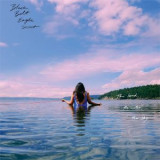
New Hampshire born, New Brunswick based, singer-songwriter Jason
Anderson has spent the last five years making Canada home, landing first
in Toronto before settling in Fredericton - The idea of home the places we
come from, the places we return to is a powerful theme throughout his
epic new record First Light
First Light is a compelling, cathartic listen, as Anderson's poetic lyrics and
anthemic melodies make for an inspired fit with producer Thomas Wincek.
Drawing on his All Tiny Creatues project as well as his work with Justin Vernon's
Volcano Choir, Wincek has created a huge sonic backdrop here. Anderson's
expansive narratives and sing-along hooks weave through explosive rockers like
Caps Ridge Line and Still Life, pastoral mood pieces like Looking Glass and
Streetlamps , and haunting ballads like the pensive "Tower in the Fog and
gorgeous closer Halloween. The whole thing feels a bit like indie- folk stadium
rock, as if The Weakerthans were fronted by fellow Canadian Bryan Adams. As
Anderson puts it, € What started as a text exchange between me and Tom about
Joni Mitchell in the 80s turned into something strange and awesome. What's
perhaps most awesome about the project is hearing a bedroom singer-songwriter
pushing themselves in such a fun and unexpected way. First Light is a really
special record.
Clear Vinyl
Downwards’ deep bonds with NYC catalyse the debut LP by Jim Siegel’s Vivid Oblivion, a reveberating post-industrial salvo produced by adopted Brooklynite Karl O’Connor (Regis), and co-mixed by Anthony Child (Surgeon) and Simon Shreeve, who also mastered it. It’s a super deep, highly atmospheric beast somewhere between Valentina Magaletti’s most expressive percussion work, Bark Psychosis, and classic, moody 4AD, which is coincidentally referenced via the artwork, made by Chris Bigg - legendary graphic designer and longtime assistant to Vaughan Oliver.
Invoking the density, vertiginous scale, and dark grimy nooks of NYC, ‘The Graphic Cabinet’ was realised by Jim Siegel - hardcore legend and occasional/regular drummer with everyone from Raspberry Bulbs to Damo Suzuki and Boredoms, made in close collaboration with Karl O’Connor aka Regis during 2021.
Stemming from intently deep listening sessions immersed in LPs by Viennese aktionist Hermann Nitsch and the myriad eras of Killing Joke, while also absorbing the atmospheres of classic Tarkovsky flicks, the album began life as gonzo field recordings of Siegel smashing the f*ck out of his drum kit, zither, scrap metal and gongs in an array of abandoned warehouse spaces. The recordings formed the basis of Karl’s compound productions, which add depth charge bass and sonorous metallic atmospheres to the mix, along with birdsong and gibbon hoots, plus guitar textures by Nick Forté (Raspberry Bulbs, Rorschach) for a dread-lusting jag deep in the belly of the Big Apple.
With a palpable tang of rust and blood in the air and grime under the fingernails, the seven tracks evoke a resoundingly brutalist portrait of space and place. Siegel’s nervy percussive discipline is framed in alternating barometric and light settings from cut to cut, variously snaking from the poltergeist clang and haunted resonance of ‘Converging and Dissolving’ to slamming motorik thrum in ‘Oblivion’ via imaginative descent into cyberpunk simulacra of the city as jungle-at-night in ‘Remnant Corridor’, replete with animalistic atmospheres that recall Organum.
While the raw attack and devilish swerve of the rhythms are utterly fundamental to the record, Karl’s atmospheric content and the animist mixing magick of Anthony Child and Simon Shreeve most potently give flesh to its bones. Patently evident on the stepping pulse and searching zither that keens into detuned orchestration on ‘Immediate Possession’, the zoned-out klang of ‘Stand Aside’ or in the flooded warehouse chaos of ‘Test For Traps’. The attention to spatial, textural and proprioceptive detail is tightened throughout, peaking with ‘Bargemaster’, a dense slab of tension that sounds like Jon Mueller’s Silo recordings fed through The Caretaker’s fogged machinery.
It’s one of the most impressive records on Downwards for a long while, bound to gnaw and spark the nerves of experimental rock and post-industrial’s greats, anything from The New Blockaders to Faust, Flying Saucer Attack and into iconic Blackest Ever Black releases in the modern era.
'The Arbitrary Dimension of Dreams' is Cate Kennan's oblique exploration of memory, nighttime, and narrative. The resulting 12 compositions are brisk, evocative, and lingering. Kennan's sonic palette is vast yet harmonized, deftly matching spectral synthesizers to hazy lap steel guitars and watery analog effects. Existing in the sparsely occupied world of early melodic electronic music, her songs call to mind the sonic landscape's of Malcolm Cecil, Hans-Joachim Roedelius, and Deux Filles. Each individual track sculpts a setting, constructing an amorphous landscape of surreal musical vignettes. Picture a boat tied to a dock, bobbing with the waves, wisps of fog refusing the complete vision. This is the nebulous space of 'The Arbitrary Dimension of Dreams,' an enveloping, insistent realm that feels both intimately familiar and profoundly otherworldly.
Press play on Lanois’ captivating new instrumental collection, Player, Piano, and you’ll be transported, too. Each song here is a portal, an invitation to lose yourself in the moment and disappear into a world of imagination and memory. Lanois recorded the entire collection himself, capturing a series of gentle, exotic piano performances at his studio in Toronto with the help of co-producer Dangerous Wayne Lorenz, and the results are both intimate and expansive all at once. Melodies unfold slowly with patience and grace; ethereal arrangements drift around them like fog rolling through the mountains. More than just an album, Player, Piano is a gateway into a cinematic sonic universe full of mystery and wonder, a place where the lines between reality and fantasy blur and deep truths and desires reveal themselves in profound and unexpected ways.
“Making this record transported me,” says Daniel Lanois. “I got to travel to Cuba and Mexico and Jamaica. I got to visit with the ghosts of Erik Satie and Oscar Peterson and Harold Budd. I got to go back in time to my work with Brian Eno and Kate Bush and Emmylou Harris. And I did it all without ever leaving my studio.”
First ever vinyl release of this tribal ambient gem. A plethora of exotic rhythms and sonic meteorological phenomena. Loops, leftfield beats, and all kinds of textures from the 4th world and beyond. Originally released in 1994 on CD, it is a true beauty of electronic hypnotism and sonic exoticism. Through a highly developed process of layering, Jeff composes and performs music rich in texture, depth, mood, and subtle detail. His blend of electronic and acoustic instruments and textures produces haunting yet inviting soundscapes with a strong sense of place that hover somewhere between the exotic and the familiar. Moreover, you will find here collabs from other great artists: Dennis Rea (Savant) on guitar and Rob Angus with drum programming.
Jeff Greinke began composing and performing music in 1980 while studying meteorology at Pennsylvania State University. After moving to Seattle in 1982, Jeff formed the production company and recording label, INTREPID, through which he produced his first LP, Cities in Fog. He has since released twenty other recordings on various U.S. and European labels. He has composed music for film, video, dance, theatre, radio, and art installations. Jeff has toured throughout the United States and Europe and has performed in China, Canada, and Mexico. He has also been a member of numerous ensembles and is founder of the group LAND.
Not content with a double 12” of acid drenched delinquency, Schrödinger’s Box have drafted in four 303 addicts to bring their own acrid fire to Hard Ton’s Bigger is Better.
To get the bitter ball rolling, Larionov opens. Known for his dark electro and EBM leanings, this reinterpretation of “Transcend Your Body” is a bruiser of throbbing pulses, lancing lines and stabbing synths to pierce the fog and strobe. Rude 66 follows with his beloved vocoder doing battle with Massimo Bastasi’s original vocals. The result is a duel of distant rhythms and shimmering wordplay. The flip sees Nightwave on the attack. Brawny beats elbow lyrics in this driving audio onslaught. Bulging rusted basslines crush speaker cones as a blistering remake takes hold, blasts of body bending brutalism turning Hard Ton’s original into an even sweatier brute. An artist born and raised on analogue squawk and squelch finishes. Posthuman, one of the infamous figures behind the I Love Acid nights, takes the tongue-in-cheek Brit Pop flashback of “Girls and Boys” and contorts it into a grimy Chicago jam.
Cosmic Disco Machine Volume 6 is reconfirmed with a refined selection of electronic “disco” songs from the 70s / 80s, rigorously in original and remastered versions. Inside we will find songs from the German school "The 4:08 to Paris" by Berlin Express (Conrad Schnitzler) and Rolf Trostel "Digital Track", the English "Regime" by Two, Iam Siam from America with "Talk To Me Even to Italo with Riccardo Cioni's “Nebbia”.
Der Soundtrack zur erfolgreichen BBC-Fernsehserie ‚Around The World In 80 Days‘, komponiert vom legendären Filmkomponisten Hans Zimmer, dem Komponisten von ‚Bleeding Fingers‘, Christian Lundberg, und dem Produzenten Russell Emanuel. David Tennant spielt den unwahrscheinlichen Weltenbummler Phileas Fogg, der sich auf den Weg macht, in 80 Tagen um die Welt und wieder zurück zu reisen. Zusammen mit seinen Begleitern Abigail Fix (gespielt von Leonie Benesch) und Passepartout (gespielt von Ibrahim
Koma) versuchen sie das fast unmögliche Unterfangen, den Globus in 80 Tagen zu umrunden.
This is international pop underground vol. CXLIXI. Almond Joy Oh Henry! is a co-release between Perennial and K. West Coast Fog Pop USA. Almond Joy are the celestial comet heading the West Coast Fog Pop Revival. Featuring a cohort of Bay Area scene stars Jordan Almond (Rays, The World), as well as Muzzy Moskowitz (Froogie’s Groovies, Color Green), Tika Hall (Warp), Staizsh Rodriguez (Children Maybe Later), Britta Leijonflycht (Rays, Galore) , and Pat Thomas (Cool Ghouls). Recorded by Jordan Almond, mixed by Maxwell Mericer with additional mixing to 1/4” tape by Capt. Tripps Ballsington in Olympia WA. Mastered by Amy Dragon. This release continues the rich tradition of DIY bands crafting instant pop hits entirely on their own terms, which has long been the hallmark of the International Pop Underground series. Look for the video for singles “Candy”, “San Francisco”, and “Fosta/Sesta” And a show or two....Whatever happens it is quite assuring that whatever these times may bring bands can still put out music as good as this EP. 600 vinyl copies. 4 tracks 45RPM.
Tracklist 1. Oh Henry! 2. 100 Grand 3. San Francisco 4. Candy
- A1: Careful What You Wish For
- A2: Ayor
- A3: Nature Is A Language
- B1: Fire Of The Green Dragon
- B2: Algerian Basses
- B3: Copacaballa
- C1: Paint Me As A Dead Soul
- C2: Backwards
- C3: Princess Margaret's Man In The D'jamalfna
- D1: Ayor (Live Pornmod)
- D2: Ambient Basses (Hijack Mix 1)
- D3: Wur Click Wur Ruff 1994
- E1: Backwards Dist Vox
- E2: Drone Geff Master
- E3: Carny Master
- F1: Drone Skellies
- F2: Choir Droney Skellies
- F3: Backwards (Live Wip)
"“The New Backwards” was conceived by Peter “Sleazy” Christopherson in 2007, revisiting stray tracks which hadn’t seemed to gel with the material he had chosen for the more somber “Ape of Naples” from 2005, COIL’s initial posthumous release, a sort of requiem and a kiss-goodbye to his then recently deceased partner John Balance.
Significantly different to its sister release, this album collects the brilliantly chaotic and outrageously rhythmic material from the original sessions for the album that was begun as early as 1993 and had originally been conceptualised as the follow-up to “Love’s Secret Domain”. These songs are as diverse and wild as the places they originated from, partly infamously spawned in Sharon Tate’s former home in the Hollywood Hills, the Nine Inch Nails home base in New Orleans and London’s Swanyard, remixed and restructured with the help of long-term friend Danny Hyde in Thailand, this collection has its own unique flow and an atmosphere not found on any other COIL release.
Both “AYOR” and “Backwards” had by the time the album was first released already become favourites in COIL’s manic live performances. Some of the other tracks had only leaked in demo versions and are here presented updated and polished as Christopherson and Hyde intended them to be heard. It is interesting to consider Balance’s vocal contributions, too. Whilst on the albums COIL did release at the time this material was first put aside (“Black Light District” and “ElpH”) his voice is all but absent, his vocal performances and his lyric writing here are arguably more closely indebted to the previous “Love’s Secret Domain” era, especially the epic “Copacaballa” is noteworthy in that respect.
The New Backwards” effectively became the final official COIL studio release of all new material whilst Peter was still alive and is here presented for the first time fully supervised by Danny Hyde, its co-creator.
The stunning cover uses a detail from artist Ian Johnstone’s “Cubic Raven” painting, licensed from the estate of IJ..
It is high time to rediscover this timeless album with the Infinite Fog release boasting eight further tracks of previously unheard material from the same sessions, rough working stages and surprising remixes which will surely delight the dedicated COIL archaeologists, as they shine yet another light on the creative process and on what could have been.
Recorded at Swanyard, London and at Nothing Studios, New Orleans, 1996.
Thanks to everyone there, especially Trent Reznor who made it all possible.
Written & Produced by Coil & Danny Hyde.
Remixed by Peter Christopherson & Danny Hyde, Bangkok 2007.
For that session Coil were: Peter Christopherson, Jhonn Balance & Drew McDowall.
Mastered by Jessica Thompson.
Front artwork by Ian Johnstone.
Artwork licensed from The Estate of Ian Johnstone.
Layout Cold Graves and Oleg Galay."
Add color, reframe, follow the prism, head to the beach. Not sure we’d ever be talking about Grotto Terrazza, the Munich based art/music/life project of Thomas Schamann, in these terms, but here we are, adjusting to his ever evolving collage of life in the form of his new album ‘Kalte Köstlichkeiten’, an ecstatic uptempo, punchy mitteleuropa celebration of punks in the city.
If his 2019 debut ‘Stumpfer Gegenstand’ (also co-released by Cut Surface and Maple Death) introduced us to Grotto Terrazza’s beautiful intimate translucent dark beat poetry set over art-punk ritmik, foggy nightclubs and musk-induced industrial malaise, Kalte Köstlichkeiten sets the record straight by adding a whole new dimension. Cold Delicacies (the literal translation) delivers so much more, 12 melting popsicles that furiously jump from dancefloor post-punk, brazen EBM, funk sleaze and smoked out cold-wave.
2022 Repress!
Clark kehrt mit "Superscope" zurück zum klassischen Techno-Sound, zum Dancefloor, immer mit fortschrittlichem Ansatz. Seine neuen Tunes passen in ein Underground Resistance Set wie auch zu zeitgenössischen DJs wie Jacques Greene oder der Night Slugs-Posse. Passend dazu Clarks neue audiovisuelle Liveshow namens "Phosphor": purer und klassischer Acid.
Sniffany & The Nits are a deranged, genuinely troubling punk band
from London featuring members of Joanna Gruesome, Ex-Void and
The Tubs. Their debut album, ‘The Unscratchable Itch’, is released
via PRAH Recordings.
Drawing a through line between the British post-punk of The Fall and
the new wave of insolent hardcore typified by bands like Lumpy &
The Dumpers, The Nits have developed a knack for writing unhinged
punk earworms.
But it’s Sister Sniffany, and her singular lyrical and performance style,
who elevates the band beyond the sum of their influences. Her lyrics
inhabit the same world as her “macabre, visceral” (It’s Nice That)
cartoons - a world of hidden humiliations, girl abjection, crumpled
lager cans, clam chowder and lumpy, over-stuffed dollies.
Over the course of ‘The Unscratchable Itch’, Sniffany ventriloquises a
cast of pathetic, unbalanced characters: A secretarial administer tails
her Casanova husband to a suburban swingers party: “I can smell
him from here: a mix of Vaseline, foot cream and Stella beer.” A poor
old grandmother’s glasses fog up as she chastises her
granddaughter: “You self-entitled selfish little twat! / Left me to die in a
popcorn-walled flat! / Spotty little smelly little prick! / Making your poor
grandmother sick!”
But these characters aren’t detached, impersonal creations. As
Sniffany explains: “In Sniffany & The Nits I like to exorcise and exhibit
the deeply shameful parts of myself that I see as the toxic aspects of
my own femininity.” These are confessional songs about love
addiction, jealousy, possession, self-loathing and “egg smashingfury.” Though occasionally they are literally just about Sex & The City,
red-pilled incels or grandmothers.
O Williams (drums), Max ‘Wozza’ Warren (bass) and Matt Green
(guitar) have been entrenched in the UK DIY scene for years, having
played in the aforementio ned bands, as well as countless others.
Warren also runs the influential left-field label Gob Nation - a home
for ‘egg punks’ across the country. As such, the band veer between
atonal no-wave guitar assault, straight-up hardcore, goth/anarcho or
whatever takes their fancy, while remaining identifiably Nit-like.
Always grounded by a pounding, pogo-ing rhythm section, The Nits
provide the perfect backdrop for Sister Sniffany’s wild, relentless live
performances. See them live at 2022’s End of the Road Festival.
Cream vinyl LP.
A huge, booming sound prevails across these ten songs, riddled with hooks and accessible in its own odd way: you might catch shards of WIPERS,INSTITUTE"Philadelphia death rock/dungeon punk band Poison Ruïn consolidate their two EPs into one ten-song, self-titled album. Brained, fleshed, and recorded by Mac Kennedy, this effort is one of a personal nature. The sonic nature of the album has a human looseness, apparent like a cassette tape warbling from being wound and rewound. At times the songs sound thin and brittle, as though they are breaking apart simply by being played. The lyrics walk the same path and describe a world of cosmic horrors and environmental disaster. With their soft, eerie, medieval-hall introductions, each song transports the listener to a world of runes and swords, but staves off dorkiness with the relevance of a chewy post-punk center. Rife with sweetly stark guitar hooks and drums that flail like a death march, this self-titled LP gives off black metal at first glance. On further inspection, there is a gradation of inspirations ranging from pond-hopping blues guitar solos, heavy-handed punk drumming, gothic ambiance, and progressive song structures."
TRACKLIST: 1.Carrion 2.Crucifix 3.Demon Wind 4.Sacorsanct 5.Fog of War 6.Paladin's Wrath 7.Doppelganger 8.Morning Star 9.Exiles/ Hell Hounds
Tape
"Samples, movies and beats. That's the essence of Dead End's brand new LP titled Kino Vol.1. The Portuguese producer takes the chair and delivers a masterful performance that combines music and cinema. Kino Vol.1 is a multidisciplinary album built around samples picked from some of his most loved blockbusters and inspired by iconic movie clips. For the occasion, Saturate's Instagram profile has turned into a video gallery, featuring footage from cult movies and series such as The Office, Sicario, A Fistful Of Dollars, perfectly synched with Dead End's productions.
The album experience itself resembles that of a mini-series like Netflix's Love Death Robot or Oat Studios, where every episode is a story on its own, written and shot in a different way. The fourteen tracks, or episodes as I like to call them, range from heavy club to hip hop and halftime. Some are more colorful and atmospheric like the ending tripled composed by 'Cocoon,' 'Voyage' (feat Dj Ride) and 'Flowers Bloom'. These cuts seem to come off reflective and introspective movies. Others are way heavier, as they were made straight for fighting and chase scenes. In this group, you can count 'Melee Attack,' 'Though Break,' 'Stealth', 'Thin Ice'. My favorite instead are those which set up an ambiguous and sinister mood. 'Bullit Drift,' 'The Fog,' 'Shindeiru,' 'The Road,' all these episodes could fit very well in both mental thrillers (a la Nolan) and unconventional psycho/horror movies. They build a palpable tension that successfully keeps me on my toes as I expect a jump scare or a sudden plot twist to come in at every second given.
In conclusion, Dead Ends' Kino Vol.1 has the virtue of creating a listening experience that, thanks to its references to the world of cinema, becomes interactive and involves the listener in first person. It's impossible not to try to figure out from which films the samples are taken or to try to imagine which scene would be perfect for a specific track."
Marisa Anderson is one of the most eminent guitarists working today. Her lucid, eloquent approach to guitar music and composition has established her as an unparalleled artist and an insightful, coveted collaborator. Anderson"s work draws on a mosaic of folk musics and lives in conversation with myriad musical traditions. Her music is inviting and candid, beckoning the listener into sprawling ecosystems and intimate corners alike, from barren landscapes to verdant thickets, impassioned communal experiences to pensive reclusions. As a master of her instrument, Anderson translates abstractions into undeniably moving music, tracing through traditional folk tunes, imagined Sci-Fi films, and foggy sanctuaries of sound. Still, Here is Anderson at her most direct, laying bare her practice of processing and understanding the world through music and distilling that practice into pieces as expressive as they are transfixing. The pieces of Still, Here center around Anderson"s present. The album is a compendium of living moments captured by her preternatural ability to mold human realities into enduring, lyrical compositions. Away from the road for the longest stretch of her career, the making of Still, Here affirmed for Anderson the role of the guitar as an essential tool in processing external and internal realities. "I don"t get ideas and then turn to the guitar, rather I turn to the guitar to find out what my ideas are. I turn towards it for meaning." The discordance of protest and upheaval emanates from a propulsive acoustic ostinato and mournful dueling pedal steel guitars on "The Fire This Time," pausing only to allow space for the blare of sirens on the Portland street near Anderson"s studio. "The Crack Where the Light Gets In" rapturously revels in the glimmers of hope that peek through a pall of darkness. Across Still, Here, Anderson"s playing transmutes the tributaries of fluctuating emotions into a unified flow, stirring and sublime.
Fogbank presents The Best of Joey Chicago, an intro collection to some of Joey's best work on the label since its inception in 2011.
DJ Feedback
Roy Davis Jr:
"The entire EP Bangs the floor! Especially J Paul Ghetto’s Remix, keep the heat coming!!!"
C. Da Afro:
"One of my fav disco house producers finally on my favorite format. Vinyl. 4 track ep for every dj who respects the dancefloor. Get your copies & rock the crowd."
Angelo Ferreri:
"All mixes are killer! Really nice funk!"
Nicky P (Johnick/Henry Street)::
"If you're a fan of Joey Chicago, this is for you!!!...obviously, "The Funk Hustle" is the worldwide monster smash here, but, my personal favorites would be "Remember The Way" and "Feels So Good", as they both have the sound of those 90's house tracks that we were making back then, in the jackin' style of today! Grab this entire collection, you won't be disappointed!!!"
Sean Biddle (Bid Muzik)::
"I have been a fan of Joey since his early days. This EP is classic Chicago at his best."
3rd album of kaleidoscopic 60s psych pop from Glasgow quartet, feat. members of The Wharves, Nightshift and Current Affairs. Now in their 5th year of existence, Order of the Toad forge onwards with 12 frenetic new compositions, pulled together throughout windows of opportunity during the covid era. Recently a four piece (new guitarist Fionnan joining the Order just before the lockdowns began), Gemma Fleet (Current Affairs/ ex- The Wharves/Kasms) remains the spiritual lynchpin and main energy conductor from which Chris Taylor (Personality Toilet/Open Face), Andrew Doig (Robert Sotelo/Nightshift) and of course now Fionnan (Open Face) are powered. With added twin guitar dimensionality, the band flirt with an 80s new wave sound at times on Spirit Man, garnishing their regular sound with new hues of blue and purple atop the amphibious green of previous efforts. ‘Subterranean’ which opens the set is evidence of a B52s style composite, Doig’s now familiar faux organ guitar franken-sound holding steady beneath the wild and youthful six string movement that Fionnan brings to the toadstool. Elsewhere Taylor takes the lead Vox on ‘Salt of the Earth’, ‘Upstairs Downstairs’ and ‘The Dumbening’, all further progressions of the ensemble’s sound. Song structure and chord elements subtly mutate away from the 60’s nucleus of yore, Taylor bringing a Kevin Ayers meets Bill Callahan vocal approach to his cleverly assembled lyrical narratives, the band weaving about tempos with eccentric colour around him. Of course Fleet’s voice is central throughout, always simultaneous with her precise elasticity on the 4 string bass guitar, providing the likes of ‘Golden Rod’ with a sweeping Grace Slick meets Dolly Parton wail, a hollering Kate Bush style octave leap during the kinetic ‘Fog Horn’ and the fast paced crescendo of hollers at the back end of ‘Beyond the Pale’, a breathless 4 chord slammer. Her graceful and acute vocalisms paint the world of Order of the Toad and never before as vibrantly.
Deep-listening organ piece from Malaysia-born, Berlin-based composer Rishin Singh, performed by Martin Sturm on the Lizst organ in Thuringia, Germany. RIYL: Kali Malone, Anna von-Hausswolff - "An endless and captivating exploration of one organ's timbres and tones. Both whispered and shouted, large and small, close and far, Singh's work is both unsettling and a balm, and has invited me to reconsider pitch, consonance, dissonance, tension and release." – Clarice Jensen, artistic director of the American Contemporary Music Ensemble (ACME) In the 1850s the influential composer Franz Liszt, who was living in Weimar, Germany at the time, carried out, with the famous cantor Alexander Wilhelm Gottschalg, a series of “ländlichen Orgelexperimente” (rural organ experiments) in Thuringia – investigating various instruments and their capabilities for contemporary music. They eventually settled on the organ in Denstedt because of its high quality. Many years later, award-winning organist Martin Sturm would invite the Berlin-based composer Rishin Singh to repeat these “ländlichen Orgelexperimente” with him and they again chose the organ at Denstedt, now named in honour of Liszt, as the best instrument – the most flexible and expressive – to perform and record Singh's music for organ. mewl infans is a contemporary classical piece that invites modern listeners to ponder the enduring pull of an instrument that was first conceived more than 2,000 years ago and has, in recent years, been rediscovered by a new generation of composers and listeners. Throughout the larger architecture of the four movements, melodic motifs return over and over, fractured by noise, fragmented by carefully calibrated alternate tunings, dissolving into thin air, and generating drones which then transform into new melodic variations. Over the 44 minutes of the piece the organist at times attempts to exert complete control over the instrument, and at other times relinquishes all control entirely. Conceptually rigorous and emotionally charged, mewl infans rewards deep listening and patience. At times conjuring a sense of doom, at other times suspense, pastoral drift, or aquatic submersion, the album is a universe of tiny details comprised of noise and air, of the journey each tone takes from birth to expiration. HIGHLIGHTS: – Singh has been commissioned by the GRAMMY-nominated JACK Quartet. Premiere in NYC Spring 2023 – Collaborations between Singh and Sturm are ongoing: Sturm will premiere Singh’s concerto for organ, timpani, and string orchestra later this year – Sturm is the youngest professor of organ in German history – The debut album from Singh‘s ensemble Leider, A Fog Like Liars Loving, was released by Beacon Sound in May of 2021 Bios: Martin Sturm, born 1992 in South Germany, in an International award-winning organist (ION, Schwäbisch Gmünd, Festival St Albans, Haarlem, Bavarian Culture Prize, and Keck-Köppe Foundation). He performs regularly as an interpreter and organ improviser at festivals, churches, and concert halls around the world. In 2019 he was appointed Professor for Organ and Organ Improvisation at the University of Music “Franz Liszt” in Weimar (Germany), after teaching at the Universities of Music in Würzburg and Leipzig. Rishin Singh (b. Kuala Lumpur, Malaysia) is a composer and trombonist living in Berlin. He has been commissioned to compose for the JACK Quartet (US), Piano+ (US), Claire Edwardes (AUS), DNK Ensemble (NL), Prof. Martin Sturm (DE), the Amsterdam Wandelweiser Festival (NL), Quiet Music Ensemble (IE), and others. Upcoming premieres include “every day” a concerto for organ, timpani, and string orchestra (Martin Sturm, Thuringia, 2022), and “melancholy objects” a string quartet (the JACK Quartet, New York, Spring 2023). He is currently working on his first chamber opera and is the composer and lyricist for the art song ensemble Leider.
It’s been ten years since No Trigger gifted the world a full length. TEN GODDAMN YEARS. But all that is about to change with the release of 2022’s Dr. Album. They’re the first sextet on Red Scare (we think?) and the biggest thing to come outta Worcester, MA since Bob Cousy. These guys have played all over the world (Europe, Japan, South America, Austra1lia, etc.) and made their name perfecting melodic hardcore, but this new 13-song record has something for everyone. Dynamic indie-punk of all stripes can be heard on Dr. Album, and this doctor has an IV bag of hooks, choruses, melodies, and ferocious lyrics that you’ll wanna inject straight into your veins. Side note: Did you know that Emma Goldman opened an ice cream shop in Worcester (AKA Wormtown) back in the 1800’s? It’s true, and Saint Emma would be proud of these scrappy punks and this Left-Wing masterpiece. It may have taken a decade, but No Trigger is relentless, and the band is playing Riot Fest, Punk In Drublic Festival, and shows with The Lawrence Arms in support of these new songs. Onward and upward!
Tracks: 01. Antifantasy 02. Take Your Time 03. Acid Lord 04. Coffee From A Microwave 05. Too High To Die 06. No Tattoos 07. Brainwashed 08. Water By The Beer Can 09. Foggy Mountain Bus Stop 10. Northern Corner 11. Euro Coke 12. Best Friend Stuff 13. Totally Digital
"Kontakt Audio and Infinite Fog Productions proudly present the 25-th anniversary reissue of the one of most unique albums on avantgarde/neoclassic music – Ihor Tsymbrovsky – Come, Angel.
Recorded in 1995 in Ukraine and released in 1996 just as a small run on cassette on Polish label Koka Records, the album without any promotion little by little became legendary and madly wanted by many fans all around the world. And from the first seconds, you can hear why it is so. Pretty hard to explain what songs play Ihor, moreover that would be senseless. “Come, Angel” is one of those albums which are so unique that takes you in a vacuum of verbal forms in an attempt to describe the record. In a few words, this is definitely very intimate and deeply emotional music with an absolutely incredible voice. The first associations could forward you to Antony Hegarty from Antony And The Johnsons, Marc Almond, Arthur Russell, Baby Dee, Bjork. Experienced listener familiar with these great artist knows that all of them are inimitable and Ihor Tsymbrovsky is totally inimitable as well.
In 2016 well-known German label Offen Music published 3 tracks from the album “Come, Angel” which brought a lot of attention to Ihor’s music. This time we’re excited to announce the first full album reissue on CD, Double vinyl, and tapes. Beside the full version of the album, you’ll find an exclusive bonus song from the cult compilation “Music The World Does Not See” – Nefryt Records 2000.
~
“For me, music is a certain way of cultural survival. Here I do not set myself theoretical problems or experiments.
The connotations of life are important: rhythms, melodies, their connection with language, poetry, real life, virtual or imaginary space. It is very important to me how the recitation of work sounds, how consonant and vowel sounds dissolve in singing, how they combine musically. I understand sound space as a field of my interpretations, preferences, priorities, and I do not use direct imitation. If I hear a melody or a musical phrase, and it is fixed in my memory, later I extract it in my own interpretation, as already formed by this field. In art, the goal is in the work itself, not outside it. For me, the expression “To be is to create a new reality” is another winged reality.” – Ihor Tsymbrovsky
~~
“Tsymbrovsky – an architect, musician, a poet, an artist; one of the most underestimated musicians in Ukraine’s artistic world. Many critics pulled their hair out trying to get to the bottom of Tsymbrovsky’s music. It has been inspired by jazz, minimal, modern, ethnic, and meditation music. Tsymbrovsky is not a virtuoso, however, he creates whole worlds with his astonishing falsetto. Although Cymbrovsky’s music is simple it is made of many elements. Filled with magic and unusual sensitivity and warmth it can be therapeutic for the listener. This is that kind of music, which can be listened to many times – in a different way each time.” – Koka Records.
~~~
“Igor Tsymbrovsky’s only album “Come Angel” (1995) still remains perhaps the most bizarre phenomenon in Ukrainian music since independence. The story of its author is a vivid example of cultural amnesia. In the pre-Internet era, Tsymbrovsky was a prominent figure in the Ukrainian underground, performed on the “Red Route”, went on tour in Germany. However, he left a minimum of evidence of his activity and became a silent legend for a few. We talked to Igor to find out where he came from and where he was going.
The album “Come Angel” is eight compositions performed with a falsetto to the accompaniment of a piano. (Tsymbrovsky’s falsetto is a legacy of the Lviv Dudaryk choir, where he sang as a child.) It would seem that it could be easier. But, despite such ascetic tools, Tsymbrovsky managed to create a phenomenon unique to Ukrainian culture. Some people compare him to Benjamin Clementine and Anthony Hegarty, but no comparison will be exhaustive. The lyrics of the songs attract special attention: two of them were written by Tsymbrovsky himself, the others demonstrate his remarkable literary knowledge. Here and Guillaume Apollinaire, and Mikhaijl Semenko, and even less obvious poets, such as Mykola Vorobyov or Jozsef Attila.
The young performer’s first performance took place in 1987 in the club of the Forestry Institute. It is quite symbolic that this room used to be a Jesuit church because such a chamber environment suits his songs about angels much better than the noise of big festivals. However, there were also many festivals in Tsymbrovsky’s career: in 1989, Chorna Rada and Chervona Ruta, in 1991, Kharkiv’s Nova Scena and Ukrainian Nights in Gdansk, Alternativa in Lviv. Ihor calls his first performances musical performances and notes that they sounded completely different. Unfortunately, we will never know exactly how.” – Amnesia
~~~~
“The magicians at Dusseldorf’s Offen Music pluck a madly beguiling pearl of late-night songcraft by Ukraine’s Ihor Tsymbrovsky to follow their vital releases by Toresch and Rex Ilusivii. Come Angel was first recorded in Lviv, Ukraine, in 1995, and issued on cassette by Poland’s Koka Records in 1996. There appears to be no prior mention of the release or artist on the internet and quite how it came into of Offen Music possession is not disclosed, and that only ratchets the record’s enigma to astonishing degrees once you’ve heard the music. In a quivering, high register, androgynous trill, Ihor Tsymbrovsky beckons heavenly beings in the remarkable A-side Come, Angel against a swirling backdrop of phasing, subtly delayed organ. It was recorded in one take (this is the 2nd version), and, if we’re not mistaken, you can hear the keys being pressed rhythmically in the background, which seems to be the song’s only tangible connection to this mortal world as Ihor vaults octaves high and close-in-the-mix with the sort of alien, dreamlike vocal that requires pinching oneself to make sure you’re awake. Spellbinding is definitely the word. On the other side he (we’re assured it is a ‘he’ in the promo text) sets two poems by Mykola Vorobyov and Mykhal Semenko, respectively, to emphatic piano keys, this time more shy of FX save for some delay, placing that willowing, avian vocal at a dreamy arms reach in Roses for the Poet, and with a sort of liturgical dark jazz feel, sorta like Lewis repenting his sins as a castrato monk, in the spare atmosphere in By the Sea. This is gold-seal business, we tell ya. Clock the clips and clear some swooning room.” – Boomkat
credits:
Music By – Ihor Tsymbrovsky
Lyrics By: Ihor Tsymbrovsky (tracks: C2, D1)
Atilla Joszef (tracks: B1)
Mychajl Semenko (tracks: B2, C1,C3, D2)
Mykoła Worobjow (tracks: A1,A2)
Engineer – Edward Hryhorjew
Remastering – Ihor Tsymbrovsky"
repress
"The haunting ambience of Beat fit somewhat with the then-popular Massive Attack and Portishead, but the album's subsonic drone made it more of a minimal mood piece than a collection of songs." MAGNET
The second in a trio of albums released by the core duo of Lawrence Chandler and Martha Schwendener, Beat is without doubt their definitive artistic statement.
Coming 20 years to the day of its original release, this is the first time this album has been available on vinyl in almost two decades, and the first ever U.S. vinyl release. (Was released here on Beggars Banquet, original copies very hard to find..)
The second album from New York City's Bowery Electric was released in late 1996, less than 15 months after their self-titled debut, but it found them having traveled light years musically in the interim, the group having seemingly decided to see how far they could take the guitar/ bass/ drums/ vocal setup into the atmosphere.
Every aspect of their approach had been refined and focused: squalling, distorted guitars had been transformed into hazy, sensual sheets; the live drums transmuted to sampled rhythms more in debt to the blossoming downtempo sound of the day; bass lines reduced to their most basic diagrams; vocals submerged to become one with the narcotized fog of the instruments; even the lyrics were reduced to a few minimal lines used sparingly so as not to overshadow the dynamic.
Beat is a lush and dense mantra of shadowy percussion, barely-there vocals and immersive drones that envelops the listener in an opiated blanket of sound.
quotes:
"Bowery Electric have made something utterly astonishing here. So deep, so wide, and somehow as intimate as a train crash. The first six tracks are just the most crushingly beautiful thing I've heard in 1997; the last five are even better. Good god, THIS IS IT." Melody Maker
"While cymbals shower down over the songs like a torrent of shattered glass, their austere beauty is never static. Ambience has rarely sounded so messy." Exclaim
A near-perfect mix of shifting dance beats, menacing electronic drones, analogue bleeps,
syncopated rhythms and ethereal vocals." Now UK
Unique and much lauded classic soulful blues-rock band XANDER AND THE PEACE PIRATES will release their hotly anticipated new album Order Out Of Chaos on 6th May. This is preceded by their explosive single “Leave The Light On” released 4th March with an amazing video giving a tantalising taster for the main course of songs to be unleashed on their upcoming album. Order Out Of Chaos is replete with heart-warming songs with soul-searching meanings. There’s also a tumultuous sea of sounds to be discovered on Leave The Light On that will send shockwaves through the ears of connoisseurs of classic rock music. And creating musical shockwaves is something that Xander And The Peace Pirates specialise in ever since brothers Keith and Stu Xander were discovered on YouTube by former Gibson Brands CEO Henry Juszkiewicz and quickly grabbed the attention of music industry figures such as Eddie Kramer (Jimi Hendrix, Led Zeppelin, Kiss, Rolling Stones) and Rick Allen (Def Leppard). After their 5-year tenure as the resident band at Liverpool’s iconic Cavern Club, they went on to support the likes of Joe Bonamassa, Joe Satriani, Manfred Mann’s Earth Band, The Temperance Movement, ex-Whitesnake’s Bernie Marsden and even Bon Jovi at Old Trafford Stadium to name but a few.
Tape
Over the course of two nights, a few weeks before the pandemic arrived in Portugal, André Gonçalves (ADDAC System) and Casper Clausen (Efterklang) recorded music from another realm, dreamy and scary at the same time, sounds complete but it seems to be falling apart at any moment. It is like an alien language or a way to process sound that sounds foreign because it is different from everything else, formally, and aesthetically. This is “Aether”, 37 minutes of constant take-off. A departure from what both musicians have done in the past.
That’s the beauty of these collaborations. You don’t know exactly the point of departure and where it leads. “Aether” masters that feeling throughout seven parts. The synthesized sounds hang in the air like clouds slowly moving, transforming into something else. Sometimes they touch each other and form something else. Or they just hang in there, waiting, just waiting. And then Casper Clausen’s voice shows up and offers a “Twin Peaks” feeling to everything, transforming that sound mass into ethereal melodies that become too overwhelming.
We think about all those Popol Vuh soundtracks from the Werner Herzog films, the fog that never goes away. The constant ecstasy of creating something magical or achieving the impossible. Or even Vangelis and his ability to elevate simple sounds into something beautiful and glorious. Both share this element of the unexpected, you’ll never know what you’ll listen to or feel during the process of active listening. It is a bizarre but comforting experience, a synthetic dream you want to be part of. Music to be touched and felt.
Much of a million magnets sounds as if Möbius has left the music to its own devices. As if he has given it space instead of closing it in and channelising. Little seems to be organised, reflected or calculated. Rather it booms and pulses and chugs and swells.
In 2015 Möbius invited the drummer Andrea Belfi to record with him for his album Batagur Baska (Shitkatapult 2016). They spent a whole day in the studio at Funkhaus Nalepastraße, Berlin. Belfi implemented ideas from Möbius for various pieces and contributed his own ideas. Everything was recorded although in the end only one hi-hat track was used. All the other recordings were left to snooze and be forgotten in a folder on the computer. Years later Möbius discovered them again by chance during a train journey. He decided to answer Belfi’s powerful and concentrated drumming.
If sound recordings are used on specific tracks they start to lead a life of their own. Möbius mostly left Belfi’s recordings unedited. He took them as a trigger for the structure and character of new tracks. So we get the opening track Abayanga with its stoic pulse and airy cymbals. Or Schlucht with such restless drums, fluttering feedback and the mantra-like spoken-song of Yuko Matsuyama. The magical How To Never Make Up is almost a song: feverish percussion (Andrea Belfi on rimshots, Ansgar Wilken on the table top), a rich bass and the other worldly singing by Jana Plewa.
The accordion on Windjammer seems to blow in all directions at the same time, propelled by Belfi’s hounding cymbal playing. Side B starts with a reflection of Windjammer: Discrete Wiring. Guitar riffs in endlessly circling movement and Yuko Matsuyama’s voice and all that it conjures up. Feed Me Fog freely improvised with on drums and feedback is simply complete as a self-contained piece. The singing on Chayyam comes from the Cambodian Prak Chum, who’s voice can also be heard on the title track of Batagur Baska.
- A1: In The Mouth Of Madness
- A2: Assault On Precinct 13
- A3: The Fog
- A4: Prince Of Darkness
- A5: Santiago (Vampires) (Vampires)
- A6: Escape From New York
- B1: Halloween
- B2: Porkchop Express (Big Trouble In Little China) (Big Trouble In Little China)
- B3: They Live
- B4: The Thing
- B5: Starman
- B6: Dark Star
- B7: Christine
- C1: Village Of The Dammed (March Of The Children) (March Of The Children)
- D1: Body Bags
John Carpenter is a legend. As the director and composer behind dozens of classic movies, Carpenter has established a reputation as one of the greatest filmmakers in the history of modern cinema, as well as one of its most influential musicians. The minimal, synthesizer-driven themes to films like Halloween, Escape From New York, and Assault on Precinct 13 are as indelible as their images, and their timelessness was evident as Carpenter performed them live in a string of internationally sold-out concert dates in 2016. Anthology: Movie Themes 1974-1998 collects 13 classic themes from Carpenter's illustrious career together on one volume for the first time. Each theme has been newly recorded with the same collaborators that Carpenter worked with on his hit Lost Themes studio albums: his son, Cody Carpenter, and godson, Daniel Davies.
Limited to: 300 copies.
Lera Lynn blurs the boundaries between genres, carving out a sound inspired by art-pop, indie-folk and the outer edges of American roots music. She’s a singer. She’s a songwriter. She’s a road warrior. She’s a multi-instrumentalist and producer. She’s a mother.
Texas born, Nashville resident Lera Lynn is just as comfortable creating an album entirely by herself, as she is collaborating with her heroes. In 2018, she worked with T Bone Burnett and Rosanne Cash on tracks that were not only picked up by the TV show True Detective, but Lynn was cast as a recurring character who performs in a dive bar frequented by the main characters.
However, nothing could have prepared Lynn for the lessons learned during motherhood. She welcomed her first son during the early months of the pandemic and began writing down her insights, chronicling this newfound experience of shifting priorities, strange endings, and new beginnings. Inside, she was battling postpartum depression. Outside, a bigger picture began taking shape: a feeling of interconnectedness, of cyclic renewal, of the knowledge that every beginning is an end and every end is a beginning. Those realizations coalesced into Something More Than Love, a record filled with synthesizers, lush soundscapes, the pop-noire punch of Lynn's voice, and the most dynamic melodies of her career.
Inspired by the cyclical patterns that shape our place in the world, Something More Than Love was co-produced and largely performed by Lynn and her partner, Todd Lombardo (Kacey Musgraves/Donovan Woods/Kathleen Edwards). They'd met years earlier, not long after Lynn relocated to Nashville from her college town (and musical launchpad) of Athens, Georgia. "My first time ever co-writing a song was in Nashville with Todd," she says of the ACM-nominated multi-instrumentalist. The two became fast friends and, eventually, partners; their creative chemistry giving way to romance and a growing family. That partnership reached a new milestone in 2021, with the newfound parents sharpening their creative instincts and expanding their palette for Lynn's sixth album.
"A lot of people were making records during the pandemic," Lynn notes, "and all they had was time. But it was the opposite experience for us. We created this whole record while still in the fog of early parenthood, and we didn't have the luxury of waiting for lightning to strike. We had to be focused and intentional."
Striking a balance between intimate self-reflection and universal insight, Something More Than Love poses big questions over even bigger-sounding music, with tempos and layered arrangements that find Lynn at her most dynamic. Illusion opens the album with spacey synthesizers before snapping into a taut, 1980s-influenced groove, combing reverb and rhythm into a song that swoons one minute and struts the next. I'm Your Kamikaze — a deconstructed burst of indie garage-rock, heavy on melody and percussive pulse — unfolds like a salute to self-sacrifice, with Lynn dedicating her own existence to ensuring her child's flourishing. What Is This Body? finds her reassessing her ideas of physical identity and womanhood, while the album's gorgeous title track makes room for slow-burn strings and a meteoric chorus.
Together, those songs turn Lera Lynn's experience with absolute surrender — surrendering oneself to the trials and triumphs of motherhood — into a universal record about the experiences that bind us together. This isn't just Lynn's story. It's the story of a life cycle that repeats itself over and over, every termination point becoming a starting line, every death matched by a rebirth, every edge giving way to the circular slope of the ouroboros.
Long before Lina Seybold became a geologist, the singer and guitarist was already writing songs and making a name for herself far beyond the city limits of Munich with her Steve Albini-trained (and produced) quartet candelilla, before the band dispersed into new projects. During her studies, she met Moritz Gamperl and the two realised that what they learned in rock research could also play a role in rock music. Thus, the material history of the planet became both a source of existential reflections for the two and the impetus for a highly accomplished and often graceful sound, which has been expressed in the band pirx together with drummer Sascha Saygin since 2019: Technically sovereign, obstinate songs that - with Seybold now on bass and vocals - create subtle dramaturgies, cinematic aesthetics, far-reaching arcs of tension.
With Lamina, the trio now presents an excellent debut album, recorded by Martin M. Hermann, which shoots out of the earth with explosive force as hot lava, only to flow into the valley in glowing beauty the next moment, changing the earth's surface, telling of elemental forces - until it finally evaporates the water in the sea and lays a comatose fog over all existence. Or in other words: pirx make creation music, in all directions of time!
Back in 2016, producer Seth Applebaum released two EPs that marked the inauguration of the band Ghost Funk Orchestra. `Night Walker' and `Death Waltz' were conceived as one-man-band, reel-to-reel tape recorded experiments that would bring together elements of all the sounds that Seth most adored at the time: tape-saturated drums, gratuitous spring reverb, surfy guitar, Latin-style percussion, odd time signatures, and Spanish-language female vocals. Initially released only in the digital domain and on a short run of cassette tapes, these two EPs that defined the early era of GFO are now finally available together on a single LP via Colemine Records. The tracks have been lovingly remastered by Doug Krebs. We invite you to take a dive into the humble beginnings of a project that has continued to grow, shape shift, and accrue new and exciting sounds for its sonic palette.
- A1: Resemblage (Parasamblaz) (Parasamblaz)
- A2: Cobra Wages Shuffle (Off! Schable W Gure!) (Off! Schable W Gure!)
- A3: Few, Far Chaos Bugles (Uff Bosch Gra Walese) (Uff Bosch Gra Walese)
- A4: Flashcube Fog Wares (Glucha Affera Slow) (Glucha Affera Slow)
- A5: Flight To Sodom (Lot Do Salo) (Lot Do Salo)
- B1: Tonight There Is Something Special About The Moon (Jaki Ksiezyc Dzis Wieczor) (Jaki Ksiezyc Dzis Wieczor)
- B2: If All Things Were Turned To Smoke (Gdyby Wszystko Stalo Sie Dymem) (Gdyby Wszystko Stalo Sie Dymem)
- B3: Anti-Antiphon (Absolute Decomposition) - Anty-Antyfona (Dekonstrukcja Na Calego) (Absolute Decomposition)
Black Vinyl[29,37 €]
Matmos are one of the most prominent experimental electronic artists working today, crafting work by creating new conceptual frameworks & immediately testing those frameworks absolute limits. For Regards / Uklony dla Boguslaw Schaeffer they've focused on another artist known, in large part, for doing the same. Boguslaw Schaeffer was one of the first Polish artists creating electronic music. In step with American contemporaries like John Cage and Morton Feldman, he worked across the boundaries of classical composition, electronic experimentation, and radical theater in playfully form-breaking ways. Matmos are not the first ones to recognize the power of his catalog, from Solo (a 2008 documentary that garnered numerous international awards), to the annual Shaeffer's Era Festival (most recently celebrated simultaneously in Warsaw and Los Angeles) his work continues to inspire. Regards.. however, was not just inspired by his work, Matmos were given access to the entirity of Schaeffer's recorded works to use as they saw fit, commissioned by the prestigious Instytutu Adama Mickiewicza. They re-assembled & re-combined these recorded works with modern instrumentations in a way that only Matmos could, and what emerges is a composite portrait of the utopian 1960s Polish avant-garde and the contemporary dystopian cultural moment regarding each other across a distance. To facilitate the transcultural exchange that is the album's essential premise, all song titles and liner-notes are provided in both English and Polish. The album was mastered by Rashad Becker and features illustration and design by acclaimed artist Robert Beatty (Tame Impala, Osees, Mdou Moctar). Like the anagrams of the letters of Boguslaw Schaeffer's name that were re-assembled to create some of the song titles, the album itself is a musical re-assemblage of component parts into possible but unforeseen new shapes. Adding harp from Irish harpist Una Monaghan, erhu, viola and violin from Turkish multi-instrumentalist Ulas Kurugullu, and electronic processes from Baltimore instrument builder Will Schorre, and Horse Lords wunderkind Max Eilbacher, the resulting arrangements constantly toy with scale as they move from the close-mic-ing of ASMR and the intimacy of chamber music to the immensity of processed drones and oceanic field-recordings that close the album. Offering a "life review" of production styles, Regards / Uklony dla Boguslaw Schaeffer builds temporary shelters out of the panoramic wreckage of modernist composition, sixties tape music, seventies dub, eighties industrial music, nineties postrock and dark ambient, 2000s era glitch fetishism, and contemporary post-everything collage sensibilities.