Rebellion ist aktuell in aller Munde, aber DYMNA LOTVA haben dafür gewichtige persönliche Gründe: Das Duo musste aus seinem Heimatland Belarus aufgrund politischer Verfolgung fliehen. Die Kunst der Metal-Band wird von der Lukaschenka-Diktatur aktuell zensiert und unterdrückt. Doch auch auf ihrem dritten Album, "The Land under the Black Wings: Blood" singen DYMNA LOTVA weiterhin von Trauer und Schmerz. Dabei haben die Belarussen hörbar ihren markanten Stil dynamisch weiterentwickelt. Über einem soliden Black Metal Fundament, das auch Bausteine aus dem Doom und traditioneller Musik enthält, baut das Duo mit Hilfe von melancholischen, eindringlichen Melodien emotionalere und gewaltigere musikalische Strukturen auf. Die Texte von DYMNA LOTVA basieren auf wahren Geschichten aus ihrer Heimat. Diese stammen aus Berichten voller Leid, die das Duo in historischen Archiven und in der Folklore findet - während in ihrem Land an jedem Tag neue Schreckenstaten hinzukommen. Komponist und Multiinstrumentalist Jauhien Charkasau sowie Sängerin Katsiaryna "Nokt Aeon" Mankevich datieren die Gründung von DYMNA LOTVA präzise auf den 8. November 2015. Am diesen Tag entzündete die Nachricht, dass die belarussische Schriftstellerin Swetlana Alexandrowna Alexijewitsch den Literaturnobelpreis erhalten hat, das musikalische Feuer der Band. Noch am gleichen Tag schuf das Duo seinen ersten Song, der von der Nuklearkatastrophe von Tschernobyl inspiriert wurde. Dieser erschien im Jahr 2016 als Single unter dem Titel ("A Solitary Human Voice"). DYMNA LOTVAs erstes Album "The Land under the Black Wings: Swamp" kam noch im gleichen Jahr heraus. Das Debüt stellt auch den ersten Teil einer konzeptionellen Trilogie über Belarus dar. Mit dem Nachfolger, "Wormwood" der nicht zur geplanten Album-Trilogie zählt, kehren DYMNA LOTVA im Jahr 2017 zum Thema Tschernobyl zurück. Nach den gefälschten Wahlen im Jahr 2020 unterstützte DYMNA LOTVA offen die Proteste gegen den Diktator Lukaschenka. Nach einem politisch motivierten Prozess gegen den Metal-Sänger Lesley Knife, der auch als Gast auf der Single 'To Freedom' zu hören ist, werden alle geplanten Konzerte von DYMNA LOTVA offiziell verboten und die Live-Besetzung der Band ist zur Auflösung gezwungen. Sängerin Nokt Aeon kann ihrer politisch motivierten Verhaftung nur durch Flucht außer Landes entgehen. Das Duo will sich in der Ukraine treffen, als der russische Überfall den Plan zunichte macht. Nach zwei Wochen schweren Bombardements durch Russland und harten Kämpfen um Irpin gelingt Nokt Aeon die Flucht aus der Stadt. Beide Musiker finden schließlich Aufnahme in Polen. Für DYMNA LOTVA ist die Veröffentlichung von "The Land under the Black Wings: Blood" daher auch ein Akt des Widerstands. Ihre Musik kann auf mehr als eine Weise gehört werden: Es handelt sich zunächst, nur für sich genommen, um ein wundervoll melancholisches, zeitgenössisches Metal-Album auf der dunklen Seite des Genres; mit einem hörbar belarussischen Einschlag. Doch aus einer erweiterten künstlerischen Perspektive betrachtet, ist DYMNA LOTVAs "The Land under the Black Wings": Blood" ein klagender, wütender Schrei nach Freiheit und Gerechtigkeit!
Buscar:folklore
Rebellion ist aktuell in aller Munde, aber DYMNA LOTVA haben dafür gewichtige persönliche Gründe: Das Duo musste aus seinem Heimatland Belarus aufgrund politischer Verfolgung fliehen. Die Kunst der Metal-Band wird von der Lukaschenka-Diktatur aktuell zensiert und unterdrückt. Doch auch auf ihrem dritten Album, "The Land under the Black Wings: Blood" singen DYMNA LOTVA weiterhin von Trauer und Schmerz. Dabei haben die Belarussen hörbar ihren markanten Stil dynamisch weiterentwickelt. Über einem soliden Black Metal Fundament, das auch Bausteine aus dem Doom und traditioneller Musik enthält, baut das Duo mit Hilfe von melancholischen, eindringlichen Melodien emotionalere und gewaltigere musikalische Strukturen auf. Die Texte von DYMNA LOTVA basieren auf wahren Geschichten aus ihrer Heimat. Diese stammen aus Berichten voller Leid, die das Duo in historischen Archiven und in der Folklore findet - während in ihrem Land an jedem Tag neue Schreckenstaten hinzukommen. Komponist und Multiinstrumentalist Jauhien Charkasau sowie Sängerin Katsiaryna "Nokt Aeon" Mankevich datieren die Gründung von DYMNA LOTVA präzise auf den 8. November 2015. Am diesen Tag entzündete die Nachricht, dass die belarussische Schriftstellerin Swetlana Alexandrowna Alexijewitsch den Literaturnobelpreis erhalten hat, das musikalische Feuer der Band. Noch am gleichen Tag schuf das Duo seinen ersten Song, der von der Nuklearkatastrophe von Tschernobyl inspiriert wurde. Dieser erschien im Jahr 2016 als Single unter dem Titel ("A Solitary Human Voice"). DYMNA LOTVAs erstes Album "The Land under the Black Wings: Swamp" kam noch im gleichen Jahr heraus. Das Debüt stellt auch den ersten Teil einer konzeptionellen Trilogie über Belarus dar. Mit dem Nachfolger, "Wormwood" der nicht zur geplanten Album-Trilogie zählt, kehren DYMNA LOTVA im Jahr 2017 zum Thema Tschernobyl zurück. Nach den gefälschten Wahlen im Jahr 2020 unterstützte DYMNA LOTVA offen die Proteste gegen den Diktator Lukaschenka. Nach einem politisch motivierten Prozess gegen den Metal-Sänger Lesley Knife, der auch als Gast auf der Single 'To Freedom' zu hören ist, werden alle geplanten Konzerte von DYMNA LOTVA offiziell verboten und die Live-Besetzung der Band ist zur Auflösung gezwungen. Sängerin Nokt Aeon kann ihrer politisch motivierten Verhaftung nur durch Flucht außer Landes entgehen. Das Duo will sich in der Ukraine treffen, als der russische Überfall den Plan zunichte macht. Nach zwei Wochen schweren Bombardements durch Russland und harten Kämpfen um Irpin gelingt Nokt Aeon die Flucht aus der Stadt. Beide Musiker finden schließlich Aufnahme in Polen. Für DYMNA LOTVA ist die Veröffentlichung von "The Land under the Black Wings: Blood" daher auch ein Akt des Widerstands. Ihre Musik kann auf mehr als eine Weise gehört werden: Es handelt sich zunächst, nur für sich genommen, um ein wundervoll melancholisches, zeitgenössisches Metal-Album auf der dunklen Seite des Genres; mit einem hörbar belarussischen Einschlag. Doch aus einer erweiterten künstlerischen Perspektive betrachtet, ist DYMNA LOTVAs "The Land under the Black Wings": Blood" ein klagender, wütender Schrei nach Freiheit und Gerechtigkeit!

REPRESS
Codek is the brainchild of Jean-Marie Salaun who grew up in Paris influenced by the folklore of the inner city. In 1978 he joined art rock group SpionS alongside Gregory Davidow and recorded two singles. Diving into the Paris post punk scene he met Claude Arto and designed the artwork for Claude's single on Celluloid Kwai Systeme / Betty Boop.' Robin Scott (M Pop Music') had produced the SpionS first single and wanted to collaborate further. With Claude, Jean-Marie wrote Me Me Me', intended for a choir, for M. Then SpionS split and Robin was off to Switzerland to record an album to follow-up his hit single. That left Jean-Marie alone in London, where he began working as Codek, a play on the brand name Kodak The Me Me Me' single was released by MCA Records in 1980. Back in Paris, now with some studio experience, Celluloid Records hired Jean-Marie to produce records for Artefact and Les Orphelins. Over the next 2 years he began working on ideas for the next Codek single Closer / Tam Tam'
Closer' started its life as an electric baseline played by Jean-Marie. Claude Arto sequenced the floating synthesizers. Laurent Grangier and Frédéric Lapierre of reggae band Immigration Act played the horns. The lyrics Hard to say. Easy to do. We don't need to say what we do' were a statement on creation as narration expressed Jean-Marie's ennui, I'm tired with it.' Tam Tam' was inspired by Burundi drummers playing on the plaza in front of Beaubourg where the song was recorded. Jean-Marie enlisted one of the drummers from the circle, Georges Atta Dikalo, to lay down percussion for the song. The female singers were from the French Caribbean and added falsetto tribal chants. JM was part of the the African night scene in Paris, remixing Xalam's Kanu' and Touré Kunda's Salaly Muhamed.' Claude achieved complex rhythmic patterns using a modular synthesizer and heavy processing. Jean-Marie recorded himself beating his chest for the thump noises. The recording of Tam Tam' and Closer' spanned over two years. They started on 16-track in Studio d'Auteuil, where JM blew the woofers, before resuming in Studio Centre Georges Pompidou with an added 8-track recorder. Jean-Marie was producing other bands, and a lot of this was recorded on "borrowed" studio time. The single was released in 1981 on West African Music, a tiny label from the Ivory Coast, and was re-released a year later by Island Records in the UK (where the B-side was re-named Tim Toum'). Both tracks were staples in the DJ sets of Beppe Loda and Daniele Baldelli, finding a spiritual home in the Cosmic scene of Italy.
Both songs have been remastered for vinyl by George Horn at Fantasy Studios in Berkeley. The jacket is an exact replica of the 1981 edition with artwork by Angela Boy, inspired by primitive electronics and African paintings. Each copy includes an doubles-sided insert with photos and liner notes by Jean-Marie Salaun.
Codek is the brainchild of Jean-Marie Salaun who grew up in Paris influenced by the folklore of the inner city. In 1978 he joined art rock group SpionS and collaborated with Robin Scott (M 'Pop Music'). He began working as Codek, a play on the brand name Kodak with the 'Me Me Me' single released in 1980. In 1981 the 'Tam Tam'/'Closer' single was released on West African Music, a tiny label from the Ivory Coast, and re-released a year later by Island Records in the UK (where the B-side was re-named 'Tim Toum'). 'Tam Tam' was inspired by Burundi drummers playing in the plaza in front of Beaubourg where the song was recorded. Jean-Marie enlisted one of the drummers from the circle, Georges Atta Dikalo, to lay down percussion for the song. The female singers were from the French Caribbean and added falsetto tribal chants. Claude Arto achieved complex rhythmic patterns using a modular synthesizer and heavy processing. Jean-Marie recorded himself beating his chest for the thump noises. The recording of spanned over two years. They started on 16-track in Studio d'Auteuil, where Jean-Marie blew the woofers, before resuming in Studio Centre Georges Pompidou with an added 8-track recorder.
In 2017 we reissued the 'Tam Tam'/ 'Closer' single and shortly after the 24-track master tapes were discovered in Paris by original engineer Gérard Chiron. We arranged for graphic designer Maycec to pick up the tapes and immediately began to think of remixers for this project. First up is producer and DJ Daniele Baldelli who gave the original single a spiritual home in the Cosmic 80s scene of Italy. Here he's teamed up with Marco Dionigi for two remixes. Remix A goes full on funky disco baseline while Remix B a more balearic affair. We remember Justin sharing a memory of DJing the original Island Records promo at the Mudd Club in 1981 so we had to ask him for remix. He teamed up with his Whatever/Whatever production partner Bryan Mette and delivered an hypnotic pulsing house remix and an extended edit. All songs have been mastered for vinyl by George Horn at Fantasy Studios in Berkeley. The jacket is new twist designed by Eloise Leigh on the 1981 edition artwork by Angela Boy, inspired by primitive electronics and African paintings.
Stepanida Borisova is an outstanding singer from the republic of Sakha-Yakutia, Siberia, and its most reknowned exponent of folk theatre. As a singer, Stepanida performs in many different styles of traditional Sakha singing. She is mostly known as a performer of poems - tojuks, one of the genres of Sakha storytelling folklore. Tojuks, long with other genres of singing, form the core of the Sakha epic Olonkho, an anthology of supernatural and heroic legends and fables, an absolute essence of Sakha poetic and vocal expression.
Her signature style of singing is "enelgen", a disturbing and somewhat dark yet mesmerising, ecstatic, meditative and improvisational style, conveying a very intimate and personal feeling of love, loneliness or longing. "Music puts restrictions on you. It puts you in the mould. But the real life is different. Without thinking about musicality and form, one must sing what one feels" Stepanida Borisova comments on her art and performance.
During her long career, her desire to break out of the restrictions of tradition and to expand her sound, led her to perform with musicians from many different cultures - Europe, Middle East and Asia. But of all Stepanida's collaborations, the duo with the Czech drummer and composer Pavel Fajt is undoubtedly the most long standing and well documented project.
Fajt, with his relentless desire for experimentation and musical challenge, is probably one of the most reknowned musicians on the Czech alternative rock/jazz scene. With his musical career starting in the early 1980s, he was crucal in laying the foundations of the Czech folk/rock movement, first with legendary rock band Dunaj, then moving on to work with the violin player and singer Iva Bittova, guitarist Fred Frith, Jim Meneses and many other musicians.
The soaring spiritual dialogue between the two free spirits in music began with a run of successful concerts and a TV debut in Prague in 1998 and still continues. Stepanida's stunning embodiment of the ecstatic female shaman, Pavel's vibrant and expressive drumming manner - combined with the theatrical background and performing experience of both - make an amazing spectacle of sound and vision, in which all the colours of Stepanida's unearthly and powerful voice are neatly dovetailed into Pavel's ornamentation of beats and rhythm.
The songs presented on this album were recorded in Brno in 2002 and are finally seeing their first vinyl release.
Bonded over the struggles of the pandemic and a mutual love for Motown, Soul and Afrobeat, Denmark"s renowned outlet for jazz, April Records proudly presents "Moko Jumbie", the debut by it"s latest outfit "A Plane To Catch". The vibrant Danish jazz scene came to a crashing halt along with the rest of the world in early 2020, and a tight-knit community of up-and-coming musicians were thrust into a void, robbed of the largest part of their livelihood and joy, live performance. Gathering in a graffiti-smudged artist"s space in an old industrial facility in Copenhagen"s outskirts, they created a space for themselves to improvise in a funky, groove-based setting. What came out was an expression of longing for all that was lost during the pandemic - a musical antidote to the loss of fun, joy, community, movement, travel and youthful abandon that the pandemic had temporarily put a halt to. Exploring the rich exchange between West African musical traditions and Western funk and soul, this is music meant for dancing, transporting the listener to dance floors both real and imagined. Featuring warm, raw production the record creates a real sense of energy and intimacy, as if the listener is in a dark club with an electric jam band. Through the eight compositions the quintet joyfully navigates familiar harmonic clichés from 70"s soul tunes, a variety of infectious toe-tapping grooves, playful improvisations and melodic duo horn arranging. Explorations of darker tonalites popularied be Ethio-Jazz legend Mulatu Astatke provide a welcome departure through harmonic contrast and propulsive polyrhythmic groove. The title "Moko Jumbie" derives from a mythical character in Afro-Caribbean folklore. During carnival season masked Moko Jumbies can be seen dancing on stilts in colorful garments, towering over the crowds. Part gods, part healers, part ghosts, and most importantly: moving expressions of freedom and the perfect mascot for this celebratory album.
El Nido: a welcoming embrace in uncertain times. The world changed forever in the second quarter of 2020. The life we were used to ceased to be, as we were overcome by constant fear, distrust in all that surrounded us and a fatalist attitude towards the world we lived in. With the pandemic came lockdown, mandatory isolation for months, empty streets, face masks, hand sanitizer, the fear of going out, an absurd roll call of Covid fatalities, the daily tension of not knowing when it would all end and the urge to "get back to normal," something that certainly never happened. Out of that pandemic saturation and that urge for "normality" came El Nido ("The Nest"), the third album by Italy-based Colombian producer Montoya, who describes this record as "becoming virgins of destiny again, facing up to that fatalist world and creating that longing for tranquility. Savoring that moment prior to the pandemic, that instant when the most important thing wasn't the immediate reality or the global situation." Montoya sees El Nido as that quiet place that you think of when you close your eyes; it is a beach or a mountain, a sunrise or a sunset, a wave in the sea refreshing your body, or an almost-whispering wind that immediately silences everything around you. On his previous records, Iwa in 2015 and Otún in 2019, his work as a producer prevailed, feeding the growing wave of Latin American electronica, fusing IDM and techno with indigenous root music, Andean folklore and rhythms from the tropical Caribbean coast and ancestral Pacific in terms of instrumentation. But on El Nido Montoya splits the balance, offering us five merely instrumental tracks and six collaborations with Latin American artists, including Colombians Nidia Góngora on "Soñé," Montañera on "Sierra" and Pedrina on "Nubecita." It also features Mexican artist Pahua on "Flor del Mar," the Peruvian Lara Nuh on "El Faro" and the Franco-Venezuelan La Chica on "Palosanto." Starting from the name itself ("The Nest"), an evocation of home, El Nido is also a Filipino municipality on the island of Palawan, a place that turned out to be Montoya's last live experience before the pandemic. That place with crystal clear seas and white sand became the scene and starting point for this work, reflecting on the abstraction of a chaotic world and proposing blurred destinations with each song, like places that exist within memories when we close our eyes, letting us inhabit them, for a couple of minutes at least. On the other hand, it's a record that approaches love; as a yearning and a refuge, as a guide and an anchor, but also as a rhetorical figure that makes us vibrate and elevates us, while at the same time keeping us grounded and letting us settle in the place that we can use as our shelter.
Debut vinyl by Cruz Perro Maldito, a Tenerife based trio forever imbued in the collective imagination and folklore myths of the magical and misty mountain of Agua García, located in Tacoronte district at the foot of Teide Volcano (Tenerife/Canary Islands). Their music is an explosion of free jazz improv where sophisticated sound textures emerg-ing from modular synths and processed guitar create abstract and random rhythmic patterns with complex saxophone lines guiding the ensemble from quiet to menacing passages of sudden bursts of noise and frenzy.
Entitled Truquetin Resorte, the album takes inspiration from the rich history of mechanical automata, such as Talos, the bronze giant who defended the island of Crete and was eventually defeated by Jason and his Argonauts. Or Apega de Nabis, a replica of King Nabis’ wife whom crossed unsuspecting victims with its iron spikes hidden in the device's lower arms, hands and breasts.
Or even René Descartes and his infamous daughter- like Automaton replica, an eerie creation from the renown philosopher to evoke his dead daughter
These myths and more serve as reminder of a mechanical world’s past, a world of complex automata stories with me-chanic ‘imitating’ beings as its problematic protagonists. An eerie counterpoint to our current uber modern digital world and its rapid advancing A.I.s.
Fast-rising pianist and producer Yoni Mayraz presents his debut LP ‘Dybbuk Tse!’ revealing the story of a malicious possession that is taking over one’s body and soul.
Dybbuk, known from Jewish folklore, is a malevolent wandering spirit that enters and possesses the body of a living person. It’s a cursed soul of a dead one that wanders tirelessly for sins committed during their life. The most vulnerable victims are the young and the sinful. Possession can be taken literally or as an analogy to the burden that young people carry generations back, which they have no influence on, and which they have to accept. Dybbuk can only be removed by exorcism. The titular ‘Dybbuk Tse!’ is a command to remove the spirit from the possessed body. The album is a story about possession but also about exorcism through music.
Recorded live with his band in a dusty wooden studio, ‘Dybbuk Tse!’ is indeed experimenting with the ‘darker side of things’, but yet with a somewhat lighthearted approach which is so typical of Yoni’s work. He easily combines jazz with the sound of 90’s New York hip hop and raw old school breakbeat. The album interweaves unique Middle Eastern melodies, sophisticated structures and sounds, and beautifully crafted solos played by some of the promising talents on the scene.
London based Israeli born pianist and producer Yoni Mayraz has set foot in the instrumental music scene with his EP ‘Rough Cuts’ released in 2020. Since then, Yoni and his band have been playing major venues and festivals around the world including the legendary Ronnie Scott’s and The Jazz Cafe, to name a few, bringing raw energy to stage with live versions of the studio materials, and stretching the melodies and structures into a Dancefloor-focused take on jazz.
‘Dybbuk Tse!’ album will be released by Astigmatic Records on LP in regular and limited (B1 poster included) editions, as well as on all streaming platforms.
Squids zweites Album 'O Monolith' ist voller melodischer Offenbarungen und vielschichtiger Klänge und eine musikalische Beschwörung von Umwelt, Häuslichkeit und selbst geschaffener Folklore. Wie sein Vorgänger, das gefeierte 'Bright Green Field' (2021), ist es dicht und vertrackt, aber auch wärmer und charaktervoller, mit einer mäandernden, fragenden Natur. Dies ist unverkennbar Musik, die von Freunden gemacht wurde, aber sie ist nicht ausgrenzend - sie laden dich ein, mit ihnen zuzuhören. 'O Monolith' wurde von Dan Carey (Fontaines D.C., Black Midi, Tame Impala)produziert, von John McEntire von Tortoise gemischt und in den Real World Studios aufgenommen. Das Thema der Beziehung zwischen Mensch und Umwelt zieht sich wie ein roter Faden durch das Album. Es gibt Anspielungen auf die Welt, in die die Band so sehr eingetaucht ist, auf den ökologischen Notstand, die Rolle der Häuslichkeit und die Verdrängung, die man spürt, wenn man für längere Zeit weg ist. 'O Monolith' ist ein Spiegelbild der überdimensionalen Entwicklung einer Band, die immer in die Zukunft blickt. Wie sein Namensvetter ist auch 'O Monolith' weitläufig und fremdartig, lebendig mit endlosen möglichen Interpretationen seiner inneren Geheimnisse.
Format: Schwarzes Vinyl mit bedruckten Innenhüllen im Gatefold plus 20-seitiges Booklet & Download-Code
Wenn die Dämmerung auf das Land der tausend Seen fällt, werden die Schleier zwischen unserer Realität und der Anderswelt dünner im Zwielicht der Wälder und Sümpfe. In solchen Momente gelangen Geschichten wie "das Märchen, das es nie gab" in die Texte und Musik von TENHI. Auf ihrem sechsten Album "Valkama", was unter anderem so viel wie "Hafen" oder "Zuflucht" bedeutet, erzählen die Finnen von einer die ursprünglich als Märchen gedachten Reise aus einem brennenden, vom Krieg zerrissenen Dorf über dunkle Gewässer zu einer Insel der Toten. Auf dieser Insel, die in der finnischen Folklore Verisurma ("der Ort für diejenigen, die den Blut-Tod erlitten haben") genannt wird, wohnen diejenigen, die im Krieg starben oder mit einer Klinge getötet wurden. An den Ufern vergießen sie für immer ihr Blut. Doch in den zehn Jahren, in denen TENHI an dem Album arbeiteten, sickerte zunehmend die blutige Realität mit ihren aktuellen Schrecken und Kriegen in die Märchenwelt ein. Jahr für Jahr spürten die Musiker, wie ihre Geschichte immer wirklicher erschien. Schließlich war ein Pegelstand erreicht, an dem die Band beschloss, ihren Kurs zu ändern. Obwohl noch immer Anklänge an das ursprüngliche Werk hörbar und im Artwork auch sichtbar sind, fühlt sich das finale Album ruhiger, harmonischer und sogar heller an als die erste Fassung. Die Band hätte kaum einen passenderen Namen als TENHI wählen können. Das alte finnische Wort bezeichnet einen "Ältesten" oder "Schamanen". Während die Schamanen des finnischen Nordens unter anderem als Vermittler zwischen ihrer Gemeinschaft und der Geisterwelt dienten, sind TENHI musikalische Grenzgänger zwischen dunklem Folk und Folkrock, die sogar bis in die elektrifizierte Welt des Metal hinein wirken. Dies legt zwar einen Vergleich mit WARDRUNA und HEILUNG nahe, doch nur im spirituellen Sinne und nicht in Hinblick auf den Stil. TENHI wurden im Jahr 1996 von Gitarrist und Sänger Tyko Saarikko ins Leben gerufen. Ein paar Jahre später stieß Ilmari Issakainen zur Band. Gemeinsam bilden die beiden Musiker den kreativen Kern der Gruppe. Nach der Selbstveröffentlichung ihres Demos "Kertomuksia" (1997) und der MCD "Hallavedet" (1998) trafen die Finnen 1999 mit dem Debütalbum "Kauan" auf Anhieb einen Nerv. Ins neue Jahrtausend starteten TENHI dann mit einer weiteren MCD namens "Airut:ciwi" (2000). Es folgte eine Reihe von Alben, die von "Väre" (2002) über "Maaäet" (2006) und "Airut:aamujen" (2006) bis zu "Saivo" (2011) reichte. Mit jedem neuen Album vergrößerten die Finnen ihre treue Fangemeinde, die aus diversen musikalischen Richtungen kommt. TENHI verbanden von Anfang an akustische Instrumente und traditionelle Töne mit Strukturen aus der zeitgenössischen Rockmusik. Während das Vorgängeralbum "Saivo" zuletzt verstärkt in Richtung Ambient und Panorama-Soundtrack tendierte, kehrt "Valkama" zu Songstrukturen zurück - wenn auch oft mäandernd und im epischen Format. "Valkama" kommt mit den typisch finnischen Gefühlen der Sehnsucht und anhaltender Melancholie daher. Doch trotz der hörbaren Dunkelheit bieten TENHI ein musikalisches Antidot für die Schrecken der modernen Welt an. Im Zwielicht der Welt des Nordens ist "Valkama" der Silberstreif am Horizont, der innere Geborgenheit und Frieden verspricht.
Gatefold 2LP (clear vinyl) with etching on side D, insert, padded inner sleeves and protection sleeve (300 copies)
Wenn die Dämmerung auf das Land der tausend Seen fällt, werden die Schleier zwischen unserer Realität und der Anderswelt dünner im Zwielicht der Wälder und Sümpfe. In solchen Momente gelangen Geschichten wie "das Märchen, das es nie gab" in die Texte und Musik von TENHI. Auf ihrem sechsten Album "Valkama", was unter anderem so viel wie "Hafen" oder "Zuflucht" bedeutet, erzählen die Finnen von einer die ursprünglich als Märchen gedachten Reise aus einem brennenden, vom Krieg zerrissenen Dorf über dunkle Gewässer zu einer Insel der Toten. Auf dieser Insel, die in der finnischen Folklore Verisurma ("der Ort für diejenigen, die den Blut-Tod erlitten haben") genannt wird, wohnen diejenigen, die im Krieg starben oder mit einer Klinge getötet wurden. An den Ufern vergießen sie für immer ihr Blut. Doch in den zehn Jahren, in denen TENHI an dem Album arbeiteten, sickerte zunehmend die blutige Realität mit ihren aktuellen Schrecken und Kriegen in die Märchenwelt ein. Jahr für Jahr spürten die Musiker, wie ihre Geschichte immer wirklicher erschien. Schließlich war ein Pegelstand erreicht, an dem die Band beschloss, ihren Kurs zu ändern. Obwohl noch immer Anklänge an das ursprüngliche Werk hörbar und im Artwork auch sichtbar sind, fühlt sich das finale Album ruhiger, harmonischer und sogar heller an als die erste Fassung. Die Band hätte kaum einen passenderen Namen als TENHI wählen können. Das alte finnische Wort bezeichnet einen "Ältesten" oder "Schamanen". Während die Schamanen des finnischen Nordens unter anderem als Vermittler zwischen ihrer Gemeinschaft und der Geisterwelt dienten, sind TENHI musikalische Grenzgänger zwischen dunklem Folk und Folkrock, die sogar bis in die elektrifizierte Welt des Metal hinein wirken. Dies legt zwar einen Vergleich mit WARDRUNA und HEILUNG nahe, doch nur im spirituellen Sinne und nicht in Hinblick auf den Stil. TENHI wurden im Jahr 1996 von Gitarrist und Sänger Tyko Saarikko ins Leben gerufen. Ein paar Jahre später stieß Ilmari Issakainen zur Band. Gemeinsam bilden die beiden Musiker den kreativen Kern der Gruppe. Nach der Selbstveröffentlichung ihres Demos "Kertomuksia" (1997) und der MCD "Hallavedet" (1998) trafen die Finnen 1999 mit dem Debütalbum "Kauan" auf Anhieb einen Nerv. Ins neue Jahrtausend starteten TENHI dann mit einer weiteren MCD namens "Airut:ciwi" (2000). Es folgte eine Reihe von Alben, die von "Väre" (2002) über "Maaäet" (2006) und "Airut:aamujen" (2006) bis zu "Saivo" (2011) reichte. Mit jedem neuen Album vergrößerten die Finnen ihre treue Fangemeinde, die aus diversen musikalischen Richtungen kommt. TENHI verbanden von Anfang an akustische Instrumente und traditionelle Töne mit Strukturen aus der zeitgenössischen Rockmusik. Während das Vorgängeralbum "Saivo" zuletzt verstärkt in Richtung Ambient und Panorama-Soundtrack tendierte, kehrt "Valkama" zu Songstrukturen zurück - wenn auch oft mäandernd und im epischen Format. "Valkama" kommt mit den typisch finnischen Gefühlen der Sehnsucht und anhaltender Melancholie daher. Doch trotz der hörbaren Dunkelheit bieten TENHI ein musikalisches Antidot für die Schrecken der modernen Welt an. Im Zwielicht der Welt des Nordens ist "Valkama" der Silberstreif am Horizont, der innere Geborgenheit und Frieden verspricht.
Gatefold 2LP (clear vinyl) with etching on side D, insert, padded inner sleeves and protection sleeve (300 copies)
Flower Storm is a new multi-disciplinary project from the minds of Sepehr and Kasra V -- recontextualizing classic Iranian sounds and folklore, with the modernity of each artists aural palettes to create a sharp-edged musical sword. Birthed from the desire to combine contemporary club culture with the deep roots of their nationalities and motherland, Flower Storm is a simultaneous deep dive into the history of their ancestors as well as a nod to underground electronic soundscapes. Their debut EP entitled 'Yek' (translates to the number 1 in Farsi) is a fierce, four track collection of music alluding and akin to the mythical journeys of ancient stories like Shahnameh. New and classic sounds interlay and converse with each other in an explosive yet intimate manner, like flowers raining from the sky.
Das vierte Album des elektronischen Ensembles Snow Ghosts ist eine Sammlung alter Folksongs, die nie geschrieben wurden, vielschichtig arrangiert mit Vintage-Instrumenten und Synthesizern. Der gemeinsame Einfluss schattenhafter Folklore-Elemente, die härtere Seite des experimentellen Noise, eine disparate Reihe von Bezugspunkten und das umfangreiche Instrumentarium verbinden sich zu dem bezaubernden und oft berauschenden Sound.
Slovak-Hungarian musician Adela Mede explores the interplay between voice and technology with field recordings. She sings in three languages (Slovak, Hungarian and English). Intimate ambient utterances with themes of spiritual growth accompanied by experimental electronics with a wide scope of influences; from minimalism to folklore. Initially released in early 2022 to universal acclaim on digital and cassette, Night School is extremely excited to share Szabadság on vinyl. Mastered by Rupert Clervaux for vinyl, the clearer format teases out new nuances in the music, revealing a physicality and permanence to Mede’s first masterwork.
"Szabadság is a navigation. This debut by Adela Mede, recorded in her family home on the Slovakian border with Hungary, searches through the personal, familial, cultural, folkloric and geographic of her past and present.
Examining both the vulnerability and determination of her voice - as it leaves the lips, raw, and in the ways it can be transformed with digital processing - the embodied memories of language, of utterance, are explored.
Airy, open sound worlds and tentative strings of improvised naked vocal transform themselves into insistent repetition. Fizzing, sparkling electronics are set against the beautiful grainy depth of field recordings. The locations, these places, are found and lost - home is found and lost - in a dance of fragmented vocal harmonies. Three languages (English, Hungarian, Slovak) weave a song of spring, nature, forgiveness, togetherness and rebirth.
Oceans flow through the center of Cinder Well's music and 'Cadence', the
new album from Amelia Baker's experimental folk project,drifts between
two far-flung seas: the hazy California coast where she grew up, and the
wind-torn swells of Western Ireland that she's come to love
Written soon after the release of 2020's acclaimed 'No Summer', Baker returned
to her hometown in central California to record at Harlan Steinberger's nearby
Hen House Studios in Venice Beach. Inspired by this new setting, Baker expanded
Cinder Well's sound to include percussion, provided by her old friend Phillip
Rogers (Haley Heynderickx), as well as trance electric guitar and expansive string
parts courtesy of Cormac MacDiarmada (Lankum). The doom folk and traditional
Irish influences of 'No Summer' are still present but often give way to a more
optimistic and relaxed atmosphere that nods to LA's mythical Laurel Canyon
years. Across nine epic tracks, Baker treads a sonic and lyrical path between the
two coastal towns she calls home, her transcendental voice given new wings by
the record's sweeping arrangements. "Overgrown" is the first major key Cinder
Well song in nearly a decade while the uneasy and pulsating title track is a love
letter to the self for our darkest days. Fittingly, Baker opens 'Cadence' with a song
about selkies-- seals that turn human on land. More than just a bit of folklore,
shapeshifting selkies are a metaphor for Baker herself: a songwriter tied to the
ebb and flow of the ocean (and humanity's) currents, whether they be half a world
away or a few steps from home.
Limited colour variant "battlefield aftermath with blood & dirt swirl" Following their 2020 debut, Ruin, FORETOKEN's latest album sees the group expand upon their foundations of meticulously lofty soundscapes, mythological narratives, and elaborate musicianship. Utilizing traditional narratives of myths, legends, and folklore from a wide range of Western and Middle Eastern origins, Triumphs examines the ignored collateral damage of the cost of victory through these established mythos. Taking musical inspiration from melodic and tech death metal, as well as power, folk and black metal, Foretoken's core sound on Triumphs is bolstered by subtle and captivating use of traditionally Scandinavian, Southeast Asian, and Middle Eastern instruments for atmospheric depth. Reunited once again with Hannes Grossmann (Hate Eternal, Alkaloid, Obscura, Necrophagist, Blotted Science, and Triptykon) on drums and boasting a guest guitar appearance by The Black Dahlia Murder's Brandon Ellis, FORETOKEN's technical prowess shines through without overpowering any of the nine songs' rhythmic charge. Triumphs was penned throughout 2021 by both Steve Redmond (guitar and orchestration) and Dan Cooley (vocals), with the pair settling on eight original compositions and a cover of Naglfar's I Am Vengeance. Grossmann then commenced drum tracking at his own studio, Mordor Sounds, with guitars recorded by Redmond himself and vocals captured at Trepan Studios by Tony Petrocelly, before mixing and mastering duties were placed in the accomplished hands of Jacob Hansen (Arch Enemy, Fleshgod Apocalypse, The Black Dahlia Murder, and more) at Hansen Studios. Visually tied together by portrait artist Tomas Honz's detailed cover painting, depicting a protagonist's journey in the aftermath of battle, Triumphs aesthetic component is a symbolic embodiment of the duo's enduring fascination with historial consequence via a folkloric lens. Taking fables and fantasy to extreme sonic heights, FORETOKEN's Triumphs is as lofty in ambition as it is accomplished in its musicianship and songcraft.
LEMON YELLOW VINYL
As mui zyu, Hong Kong British artist Eva Liu navigates the tricky territory of ever-changing identity, merging fantasy and folklore to create a stage for self-acceptance and deliverance. On her debut full-length Rotten Bun for an Eggless Century, Liu utilizes chopped-up sound- scapes, delicate industrial ambience and sweet pop melodies to introduce a character--a guide--who can be stretched across worlds to offer the catharsis of patience, perseverance and understanding. This isn't a character formed from a desire to escape or flee the real world, but rather a way to submerge even deeper into ourselves. Rotten Bun for an Eggless Century is a reflection of everyone, and everything, that made us who we are. On her 2021 a wonderful thing vomits, Liu was praised for her seamless integration of darkened, often ominous instrumentation and pillowy-soft vocals. As the front person of UK indie-rock trio Dama Scout, Liu effortlessly navigates a disorientating genre-bending sonic landscape with a playful, gentle dexterity. Now, with the help of Dama Scout bandmate Luciano Rossi as co-producer, Liu's first solo full-length builds upon these previous worlds to form a blossoming, more upbeat patchwork of lo-fi percussion, poignant lyricism and oddly alluring arrangements. The writing process of Rotten Bun for an Eggless Century prompted Liu to explore more of her Hong Kong heritage, allowing a space for acceptance and celebration. "I am Chinese and I am owning it," she explains. "Before, I would resent it. I tried doing things that would make me like less Chinese somehow." As the album began to take shape, Liu read the traditional Chinese folklore writings of Pu Songling and joined local East and Southeast Asian groups. It opened a portal into a new self, where Liu could blend her love of video games and film scores with traditional Chinese instruments.
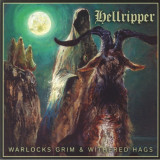
Inspired by the likes of old-school legends including Venom, Kreator, Sabbat JPN & Metallica, James McBain formed Hellripper in 2014, showcasing an electrifying brand of blackened thrash. Building on the already impressive foundations laid by their early EP & split releases, the first full-length album, Coagulating Darkness',
was released in 2017 to media acclaim, with the UK's Metal Hammer hailing Hellripper as Scotland's King of the arcane mosh & the band receiving notable attention throughout Europe & the US. This was followed by the Black Arts & Alchemy' EP, before an eventual deal was inked with Peaceville Records, resulting in the masterful The Affair Of The Poisons', further propelling the band to the forefront of the UK metal scene. Warlocks Grim & Withered Hags' - Hellripper's third studio album - establishes a new threshold of excellence & raises the bar further over The Affair Of The Poisons', with an opus standing at the crossroads between the sound that Hellripper has become known for & a whirlwind of different influences up until now yet to be explored, resulting in James McBain's most personal & diverse
work to date. With a greatly expanded scope to the tracks, incorporating more epic & melodic blackened anthems alongside the high- speed metal attack & blistering solos, Warlocks Grim & Withered Hags' marks a new highpoint for the band. Inspired by the landscapes & legends of the Scottish highlands, McBain explores the darker side of Scottish history & folklore - the title itself taken from a
line in the Robert Burns poem,Address to the Deil' - as well as including references to clan culture (including his own) throughout the album. For example, one of the tracks ( The Cursed Carrion Crown') is based on the legend of Sawney
Bean' & the Bean Clan (a spelling variation of McBain'') & tells the story of a family of cannibals that lived in a cave & committed various gruesome acts. As always, the writing & recording process was carried out by James McBain himself, with a few guests offering contributions in the form of additional vocals & instrumental
parts. With recording taking place between March 2021 & June 2022, the album was also mixed by McBain & mastered by Damian Herring at Subterranean Watchtower Studios. The suitably sinister & ominous artwork appears courtesy of Adam Burke. Hellripper will be embarking upon a series of shows in support of the album throughout 2023.
Die epische Rückkehr der Folk- und Pagan Metal Giganten HEIDEVOLK!
Fünf Jahre nach ihrem gefeiertem Longplayer „VUUR VAN VERZET“, kehrt das niederländische Folk Metal-Kollektiv HEIDEVOLK Anfang 2023 mit ihrem siebten Studioalbum über Napalm Records zurück,
und hält damit die heidnische Flamme mächtig am lodern!
Seit ihrem beeindruckenden 2005er-Debüt „De strijdlust is geboren“ eroberten HEIDEVOLK die Bühnen der Metal Szene im Sturm mit ihrer ganz eigenen, unwiderstehlichen Art von Folk und Pagan Metal. Doppelter, klarer männlicher Gesang in eingängigen Songs, traditionelle Instrumente und furiose Metal Riffs, angeheizt von folkloristischen Feuer und heidnischen Stolz, laden HEIDEVOLK mit ihrem kompromisslosen Sound auf ein musikalisches Abenteuer der
ganz besonderen Art.
Ihr neues Meisterwerk „WEDERKEER“ macht da keine Ausnahme und beweist, warum der Arnheimer Fünfer zu einer der besten, unangefochtesten und aufregendsten Bands ihres Genres und darüber hinaus gehört!
In einer Welt voller Mythen, Natur und Legenden der Veluwe in den Niederlanden, ist das neueste Konzeptalbum eine Odyssee an das Selbst, stets tief verwurzelt im Metal und der Folklore. „WEDERKEER“ (Rückkehr) erinnert daran, sich auch mal eine Pause von allen Medien zu gönnen und nach innen zu schauen, um herauszufinden, wer wir sind, was uns antreibt, was unsere Werte sind, was wir bisher vom
Leben gelernt haben?