In a flurry of angular beats and space age synth licks, Livity Sound welcomes Willis Anne to the fold under the guise of a new alias, FOREIGNER. Operating within the thriving scene around his current base Naarm, Anne brings a live, jammed-out focus to machine-rooted electronic performance that translates into his productions. All four tracks on this new EP crackle with improvised energy, whether it manifests in the dramatic synth shapes on 'Last Peoples' or tangled up in the beat exploration on 'Visible'. At its core, the EP makes its mark thanks to the clarity of Anne's ideas as he swerves the temptation to over-work the sound, ringing true with the immediate, spacious approach of Livity Sound's many-sided catalogue.
Livity Sound is a label set up by Peverelist in 2011 as a vehicle for a raw and exploratory strain of UK techno, rooted in the heritage of UK dance music and sound system culture. It has since become one of the UK's foremost protagonists for cutting edge underground electronic music.
Поиск:foreigner
Все
„Foreigner 4“, wie es oft genannt wird, ist das vierte Studioalbum der legendären britisch-amerikanischen Rockband. Es wurde in einer Zeit des Umbruchs veröffentlicht, als die Band bekanntermaßen von sechs auf vier Mitglieder schrumpfte.Aufgenommen in den berühmten Electric Lady Studios in NYC zusammen mit dem angesehenen Musikproduzenten Mutt Lange, enthält es einige der größten Hits der Band, darunter „Urgent“, „Waiting On A Girl Like You“ und „Jukebox Hero“. Jetzt, im Vorfeld des 45. Jubiläums des Albums im Jahr 2026, erfährt diese ikonische Platte die Rhino-Deluxe-Behandlung: mit einem glänzend neuen 5-Disc-Super-Deluxe-Boxset (4CD + 1BR), einer neu gemasterten 1LP sowie einem Dolby-ATMOS-Mix des Originalalbums. Hinzu kommt ein digitales Deluxe-Angebot, das das remasterte Album, unveröffentlichte Tracks, frühe/alternative Versionen, Instrumentalmixe und eine Zusammenstellung von Live-Auftritten der Welttournee 1981-82 enthält.Nach der Ankündigung am Jubiläum des Albums im Juli erscheint „Foreigner 4“ im Herbst – im Anschluss an die offizielle Auftaktveranstaltung zum 50. Jubiläum des bahnbrechenden Sounds und Vermächtnisses von Foreigner.
Die Geschichte von Foreigner wird seit fast 50 Jahren geschrieben und umfasst unzählige, unvergessliche Live-Auftritte. "Live in Chicago" ist vollgepackt mit Hits wie "Urgent", "I Want to Know What Love Is" und "Juke Box Hero". Ursprünglich 2012 auf Blu-ray und DVD veröffentlicht, wird "Live in Chicago" nun zum ersten Mal in einem CD Jewelcase zusammen mit einer 2 LP-Vinyl-Version sowie als digitales Streaming-Album und Download erhältlich sein. Alle Formate wurden im Jahr 2025 frisch gemastert.
Foreigner's Double Vision album achieved success through a combination of well-crafted songs, strong songwriting, talented musicians, extensive radio airplay, and favorable timing within the music industry.
Double Vision, released in 1978, followed up the group's blockbuster debut with an album of FM mega-hits. Songs such as "Hot Blooded," "Double Vision," and "Blue Morning, Blue Day" became radio staples and resonated with a wide audience. Lou Gramm's powerful vocals and Mick Jones' guitar playing were key components of the band's sound, and their musical prowess was evident throughout the album.
The album peaked at No. 3 on the Billboard 200 chart and earned platinum-selling certification just a week after its release, and now has marked 7x platinum for sales in excess of 7 million units. "Hot Blooded," reached No. 3 on the Billboard Hot 100 chart. In September, it was followed by "Double Vision," which charted at No. 2. This was the highest position Foreigner had attained to that time. The third and final single, "Blue Morning, Blue Day," was released in December and climbed to No. 15 on the chart.
Foreigner was known for their energetic live performances, and they toured extensively to promote Double Vision. Their live shows helped to further connect with fans and promote the album.
Analogue Productions is proud to offer the definitive reissue deluxe 45 RPM 2LP of Double Vision. For Foreigner fans, this is a can't-miss addition to your album collection.
Foreigner Classics ist eine Best-of-Zusammenstellung, die keine Wünsche offen lässt. Erstmals 2012 veröffentlicht enthält sie eine Auswahl ihrer größten Hits aus den 1970er und 1980er Jahren, die die Band zu internationalen Stars machten. Zu den bekanntesten Tracks auf dem Album zählen „Cold as Ice“, „I Want to Know What Love Is“, „Urgent“ und „Juke Box Hero“.
Das Album bietet einen umfassenden Überblick über Foreigners erfolgreichste Phase und zeigt ihren charakteristischen Mix aus Rock, Hard Rock und melodischen Balladen. Ein Muss für Fans, die die Klassiker der Band in einer einzigen Sammlung erleben möchten. Erstmals auf farbigem (rotem) 180g Vinyl erhältlich, streng limitiert und nummeriert.
Foreigner ist die fünfte LP von Cat Stevens’ bei Island Records und repräsentiert die abenteuerliche,
risikofreudige Ader seines Charakters. In Abkehr von seinem weitgehend akustischen Sound entdeckte
Cat auf dem Album seine Liebe zu R&B- und Soul-Musik, wie auf der Hauptsingle des Albums, ”The
Hurt”, zu hören ist. Foreigner wurde größtenteils in Jamaika mit einer All-Star-Band aufgenommen und
ist das erste Album, das ausschließlich von Cat selbst produziert wurde. Es ist tiefgründig, funky und reich
an Bedeutungsebenen
- A1: Feels Like The First Time (Edit) 3:28
- A2: Cold As Ice (Single Mix) 3:19
- A3: Long, Long Way From Home (Single Mix) 2:47
- A4: Hot Blooded (Studio) 4:24
- A5: Double Vision (Single Version) 3:29
- B1: Dirty White Boy (Single Version) 3:13
- B2: Head Games 3:37
- B3: Urgent (Single Version) 3:57
- B4: Waiting For A Girl Like You (Single Mix) 4:35
- C1: Juke Box Hero (Single Version) 4:03
- C2: Girl On The Moon 3:49
- C3: Woman In Black 4:42
- C4: I Want To Know What Love Is 5:03
- D1: That Was Yesterday 3:46
- D2: Say You Will 4:11
- D3: The Flame Still Burns 4:49
- D4: Turning Back The Time 3:54 *
"British-American Rock legends, Foreigner, have recently experienced some long overdue appreciation for their place in rock history, and they’d like to celebrate. In April, they were notified that they will be inducted into the Rock And Roll Hall of Fame, as part of the 2024 class alongside the likes of Cher, DMB, Peter Frampton, Ozzy Osbourne, Dionne Warwick and Big Mama Thorton. The band is releasing a new career-spanning greatest hits compilation titled, Turning Back The Time, to seize on the moment and capitalize on their enduring catalog of hit songs. With the wealth of media visibility and fan support around the induction ceremony, this double LP album offering releases at the top of October ahead of the festivities.
Highlights:
• he band is releasing a new career-spanning greatest hits compilation titled, Turning Back The Time, to seize on the moment and capitalize on their enduring catalog of hit songs"
- A1: Feels Like The First Time (Edit) 3:28
- A2: Cold As Ice (Single Mix) 3:19
- A3: Long, Long Way From Home (Single Mix) 2:47
- A4: Hot Blooded (Studio) 4:24
- A5: Double Vision (Single Version) 3:29
- B1: Dirty White Boy (Single Version) 3:13
- B2: Head Games 3:37
- B3: Urgent (Single Version) 3:57
- B4: Waiting For A Girl Like You (Single Mix) 4:35
- C1: Juke Box Hero (Single Version) 4:03
- C2: Girl On The Moon 3:49
- C3: Woman In Black 4:42
- C4: I Want To Know What Love Is 5:03
- D1: That Was Yesterday 3:46
- D2: Say You Will 4:11
- D3: The Flame Still Burns 4:49
- D4: Turning Back The Time 3:54 *
2x12" Ultra Clear Coloured Vinyl[40,13 €]
"British-American Rock legends, Foreigner, have recently experienced some long overdue appreciation for their place in rock history, and they’d like to celebrate. In April, they were notified that they will be inducted into the Rock And Roll Hall of Fame, as part of the 2024 class alongside the likes of Cher, DMB, Peter Frampton, Ozzy Osbourne, Dionne Warwick and Big Mama Thorton. The band is releasing a new career-spanning greatest hits compilation titled, Turning Back The Time, to seize on the moment and capitalize on their enduring catalog of hit songs. With the wealth of media visibility and fan support around the induction ceremony, this double LP album offering releases at the top of October ahead of the festivities.
Highlights:
• he band is releasing a new career-spanning greatest hits compilation titled, Turning Back The Time, to seize on the moment and capitalize on their enduring catalog of hit songs"
- A1: Feels Like The First Time (Edit) 3:28
- A2: Cold As Ice (Single Mix) 3:19
- A3: Long, Long Way From Home (Single Mix) 2:47
- A4: Hot Blooded (Studio) 4:24
- A5: Double Vision (Single Version) 3:29
- B1: Dirty White Boy (Single Version) 3:13
- B2: Head Games 3:37
- B3: Urgent (Single Version) 3:57
- B4: Waiting For A Girl Like You (Single Mix) 4:35
- C1: Juke Box Hero (Single Version) 4:03
- C2: Girl On The Moon 3:49
- C3: Woman In Black 4:42
- C4: I Want To Know What Love Is 5:03
- D1: That Was Yesterday 3:46
- D2: Say You Will 4:11
- D3: The Flame Still Burns 4:49
- D4: Turning Back The Time 3:54 *
2x12" Black Vinyl[43,66 €]
"British-American Rock legends, Foreigner, have recently experienced some long overdue appreciation for their place in rock history, and they’d like to celebrate. In April, they were notified that they will be inducted into the Rock And Roll Hall of Fame, as part of the 2024 class alongside the likes of Cher, DMB, Peter Frampton, Ozzy Osbourne, Dionne Warwick and Big Mama Thorton. The band is releasing a new career-spanning greatest hits compilation titled, Turning Back The Time, to seize on the moment and capitalize on their enduring catalog of hit songs. With the wealth of media visibility and fan support around the induction ceremony, this double LP album offering releases at the top of October ahead of the festivities.
Highlights:
• he band is releasing a new career-spanning greatest hits compilation titled, Turning Back The Time, to seize on the moment and capitalize on their enduring catalog of hit songs"
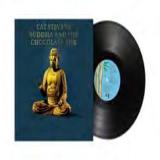
"Foreigner, released in 1973, was Cat Stevens’ fifth LP with Island Records and represents the adventurous, risk-taking streak in his character. In a departure from his largely acoustic sound, the album saw Cat explore his love of R&B and Soul music, as can be heard on the record’s main single, ‘The Hurt.’ Recorded largely in Jamaica with an all-star band and the first record to be produced solely by Cat himself, Foreigner is deep, funky and rich with layered meaning.
Newly remastered, Foreigner will be reissued on 180g black 1LP vinyl with replica 12” lyric card insert. The initial production run will feature the super rare color-front cover (originally released only on first US pressings in 1973)."
Foreigner's debut spawned massive FM hits "Feels Like the First Time," and "Cold as Ice"
180-gram 45 RPM double LP
Mastered directly from the original master tape by Ryan K. Smith at Sterling Sound
Pressed at Quality Record Pressings and RTI
Tip-on old style gatefold double pocket jackets with film lamination by Stoughton Printing
Arena rock heroes Foreigner crushed with their 1977 self-titled album debut, spawning some of the biggest FM hits of that year, including the anthemic "Feels Like the First Time" and "Cold as Ice," both of which were anchored — like most of Foreigner's songs — by the muscular but traditional riffing of guitarist Mick Jones, the soaring vocals of Lou Gramm, and the state-of-the-art rock production values of the day, which AllMusic reviewer Andy Hinds says allowed the band to sound hard but polished.
The architect behind Foreigner's extraordinary catalog, Mick Jones has crafted some of rock music's most enduring songs. Grammy and Golden Globe-nominated songwriter, performer and producer and winner of the prestigious Ivor Novello songwriter award in 1998, Jones first began playing guitar in his early teens.
After starting his own rock band and opening for the Rolling Stones in pubs across South London, Mick's first big break came in 1964 when he moved to Paris and was hired to play with French singer Sylvie Vartan.
After a brief stint in England to reform the band Spooky Tooth, Jones moved to New York City and formed Foreigner with Ian McDonald and Dennis Elliott and Americans Lou Gram, Alan Greenwood and Ed Gagliardi.
Foreigner defined a generation of rock music to people across the globe. From its iconic debut album, the band moved on to record-breaking hits including "I Want To Know What Love Is," "Waiting for a Girl Like You," "Double Vision," "Hot Blooded," "Juke Box Hero" and many more.
Now on 180-gram 45 RPM double LP you'll hear Foreigner in all its phenomenal glory. Mastered from the original tape by Ryan K. Smith at Sterling Sound, this reissue rocks. Double LP cut at 45 RPM, pressed at Quality Record Pressings and RTI, and housed in a Stoughton Printing tip-on old style gatefold jacket. That's how you upgrade a classic.
- A1: Feels Like The First Time
- A2: Cold As Ice
- A3: Starrider
- A4: Headknocker
- A5: The Damage Is Done
- B1: Long, Long Way From Home
- B2: Woman Oh Woman
- B3: At War With The World
- B4: Fool For You Anyway
- B5: I Need You
Musikliebhaber:innen wird nicht entgangen sein: Atlantic Records feiert in diesem Jahr sein 75-jähriges Bestehen. Zu diesem Anlass hat das Label zusammen mit Rhino Entertainment eine umfangreiche Reihe mit 90 Vinyl-Veröffentlichungen auf die Beine gestellt, die im Verlauf dieses Jahres erscheint und die gesamte Geschichte des Unternehmens von den Anfängen bis heute abdeckt.
Freuen kann man sich über ikonische und gefeierte Alben aus praktisch jedem populären Musikgenre, darunter Special Editions und viele Titel, die noch nie auf Vinyl veröffentlicht wurden. Dieses Album erscheint nun als clear Vinyl.
- 1: In Pieces (Radio Edit)
- 2: Cold As Ice (Live - Itunes)
- 3: Say You Will (Live)
- 4: Urgent (Live)
- 5: At War With The World (Live)
- 6: Headknocker (Live)
- 7: Juke Box Hero (Live)
- 8: Feels Like The First Time (Live)
- 9: Starrider (Live)
- 10: Hot Blooded (Live Luzern)
- 11: The Flame Still Burns (Live Luzern)
- 12: Head Games (Live Luzern)
- 13: I Want To Know What Love Is (Live)
“Can’t Slow Down“ was originally released in 2009, 15 years after Foreigner’s previous studio album. It marked the Melodic Rock comeback of the year; praised by fans and critics alike. “It was our first studio album with the new lineup and I think it has a tremendous amount of energy in it“, says founding member and lead guitarist Mick Jones. “The title just seemed to sum up the way we were feeling at the time. It captured the fact that Foreigner had become a powerful live band and was ready to take on the world again. I’m happy to say that it drew the attention of Foreigner fans, old and new, and went on to become a chart album in several countries.“ CD1 includes the complete studio album, produced by Mick Jones & Marti Frederiksen (Aerosmith, Ozzy Osbourne, Mötley Crüe) and featuring the song ‘Fool For You Anyway‘, produced by the acclaimed Grammy Award-winning producer Mark Ronson. Exclusive to this 2CD Deluxe Digipak Edition is the second CD „B-Sides And Extra Tracks“ which includes a carefully selected set of Foreigner’s biggest hits as well as beloved fan favourites – all recorded in energetic live versions of which some will be released the first time on CD. This collection istopped of by an exclusive Radio Edit of “Can’t Slow Down“’slead single ‘In Pieces‘. CD2 will also become available as a Strictly Limited Heavyweight Double LP Edition on transparent orange vinyl.
Gatefold Sleeve
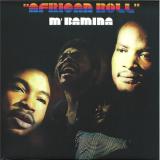
M’Bamina – African Roll (1975)
The story of an album born between Africa, Italy, and the nightclub culture of the 1970s
In the heart of 1970s Italy — a country undergoing profound social change and a music scene just beginning to open itself to distant sounds and cultures — an extraordinary, almost improbable story took shape. It is the story of a group of young African musicians who found their way to Europe, of a Turin nightclub that became a crossroads for communities and experimenters, and of an album which, released in small numbers and largely unnoticed at the time, is now considered a rare jewel of Afro-fusion.
The band called themselves M’Bamina — an ensemble of musicians from Congo, Cameroon, and Benin, who arrived in Italy in the early Seventies. Settling between northern Italy and the Pavia area, they began performing in small clubs and community events, bringing with them a vibrant rhythmic heritage: African polyrhythms, call-and-response vocals, funk-infused bass lines, and Caribbean or Afro-Latin colours absorbed along their musical journeys. Their raw, contagious energy on stage quickly drew attention.
Meanwhile, in Turin, another story was unfolding. There was a venue becoming almost legendary: Voom Voom, one of the city’s liveliest nightclubs, run by Ivo Lunardi. The club attracted an eclectic crowd — students, artists, foreigners, night owls — and Lunardi quickly understood that the dancefloor wasn’t just a place for music, but a melting pot for a new kind of cultural energy. Out of this vibrant atmosphere came his idea: to turn the club’s name into a small independent record label, Voom Voom Music, capable of capturing the spirit of those years and giving voice to unconventional projects.
When Lunardi heard M’Bamina, he immediately sensed that this was the sound he had been searching for: fresh, different from anything circulating in Italy at the time, and capable of blending African tradition with funk and European sensibility. He brought them into the studio.
Production was handled by Lunardi along with Christian Carbaza Michel, while the engineering was entrusted to Danilo Pennone, a young sound technician with a sharp, intuitive ear.
The recording sessions — held in Turin in 1975 — produced a remarkably warm and direct sound. The music feels almost live: grooves rooted in African tradition, but open to funk-rock structures and modern arrangements. It is a natural fusion, never forced. Tracks move between tribal rhythms, funk basslines, light electric guitars, congas and Afro-Latin percussion, with call-and-response vocals and melodies that echo both Congolese tradition and the lineage of Latin jazz. Not by chance, one of the album’s most striking tracks, Watchiwara, reinterprets a Latin standard through M’Bamina’s own rhythmic language.
The album was titled African Roll — a name that was already a statement of intention. It is African music that “rolls,” that moves, adapts, transforms within a new geographic and cultural setting. It is not strictly Afrobeat, nor Congolese rumba, nor Western funk: it is a spontaneous, hybrid blend, shaped more by lived experience than by any calculated aesthetic program.
When African Roll was released, the world around it barely noticed. Distribution was limited, and 1970s Italy had yet to develop a cultural framework for receiving such music. The national music press rarely paid attention to African or “world” productions. The album slipped into silence — though the band’s own story did not.
M’Bamina continued performing across Europe and Africa, even sharing a stage in Cameroon with none other than Manu Dibango. By the late Seventies, they moved to Paris, signed with Fiesta/Decca, and recorded a second LP, Experimental (1978). Meanwhile, the peculiar record they had made in Turin began to resurface quietly among vinyl collectors, Afro-funk enthusiasts, and DJs hunting for forgotten grooves.
That is when the album’s fate began to shift.
Over the decades, African Roll emerged as an almost unique document: a snapshot of an intercultural Italy before the word “intercultural” even existed, a fragment of migrant history, a spontaneous experiment in musical fusion born far from major industry circuits but rich in authenticity. Original copies began commanding high prices on the collector’s market, and the album became recognized as one of the hidden classics of European Afro-fusion from the 1970s.
Today, more than fifty years later, this reissue finally restores visibility and dignity to a project that deserves to be heard, studied, and celebrated. It is not simply an album: it is the testimony of a rare cultural encounter, born in an Italy unaware of how fertile such exchanges would one day become.
It is the story of a visionary producer, an extraordinary band, and a fleeting moment in which music, migration, and nightlife came together to create something genuinely new.
African Roll is — now more than ever — the sound of a bridge: between continents, between eras, between cultures. A record that, after rolling far and wide, has finally come home.
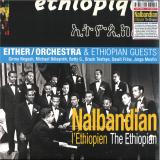
The Éthiopiques series returns! Essential archive recordings from an extremely fruitful period in Ethiopian music.
Before “Swinging Addis” took over the world, there was Moussié Nerses Nalbandian — the Armenian-born composer who shaped modern Ethiopian music. Mentor, arranger, and pioneer, he laid the foundations of Ethio-jazz.
This Éthiopiques volume revives his forgotten legacy, recorded live by Either/ Orchestra First issue ever with new exclusive photos and in depth liner 8-page insert.
“Ethiopian jazzmen are the best musicians that we have seen so far in Africa.
They really are promising handlers of jazz instruments.”
Wilbur De Paris
(1959, after a concert in Addis Ababa)
አዲስ፡ዘመን። *Addis zèmèn* **A new era.**
The time is the mid-1950s and early 1960s, just before "Swinging Addis" bloomed – or rather boomed – onto the scene. Brass instruments are still dominant, but the advent of the electric guitar, and the very first electronic organs, are just around the corner. Rock’n'Roll, R’n’B, Soul and the Twist have not yet barged their way in. Addis Ababa is steeped in the big band atmosphere of the post-war era, with Glenn Miller's *In the* *Mood* as its world-wide theme song, neck and neck with the Latin craze that was in vogue at the same period. Life has become enjoyable once again, with the return of peace after the terrible Italian Fascist invasion of Ethiopia (1935-1941). The redeployment of modern music is part and parcel of the postwar reconstruction. *Addis zèmèn* – a new era – is the watchword of the postwar period, just as it was all across war-torn Europe.
The generation who were the young parents of baby boomers** were the first to enjoy this musical renaissance, before the baby boomers themselves took over and forever super-charged the soundtrack of the final days of imperial reign. Music is Ethiopia's most popular art form, and very often serves as the best barometer for the upsurge of energy that is critical for reconstruction. Whether it be jazz in Saint-Germain-des-Prés or the *zazous* who revolutionised both jazz and French *chanson* after the *Libération*, be it Madrid's post-Franco Movida, or Dada, the Surrealists and *les années folles* that followed World War I, the periods just after mourning and hardship always give rise to brighter and more tuneful tomorrows. Addis Ababa, as the country's capital, and the epicentre of change, was no exception to this vital rule.
**Two generations of Nalbandian musicians**
Nersès Nalbandian belonged to a family of Armenian exiles, who had moved to Ethiopia in the mid-1920s. The uncle Kevork arrived along with the fabled "*Arba Lidjotch*", the** "*40 Kids*", young Armenian orphans and musicians that the Ras Tafari had recruited when he visited Jerusalem in 1924, intending to turn their brass band into the official imperial band. If Kevork Nalbandian was the one who first opened the way of modernism, pushing innovation so far as to invent musical theatre, it was his nephew Nersès who would go on to become, from the 1940s and until his death in 1977, a pivotal figure of modern Ethiopian music and of the heights it. Going all the way back to the 1950s. Nothing less. And it is Nersès who is largely to thank for the brassy colours that so greatly contributed to the international renown of Ethiopian groove. While the younger generations today venture timidly into the genealogy of their country's modern music, often losing their way amidst a distinctly xenophobic historiographical complacency, many survivors of the imperial period are still around to bear witness and pay tribute to the essential role that "Moussié Nersès" played in the rise of Abyssinia's musical modernity.
Given the year of his birth (15 March 1915), no one knows for sure if Nersès Nalbandian was born in Aintab, today Gaziantep (Turkiye/former Ottoman Empire) or on the other side of the border in Alep, Syria... What is certain is that his family, like the entire Armenian community, was amongst the victims of the genocide perpetrated by the Turks. Alep, the place of safety – today in ruins.
Before Nersès then, there was uncle Kevork (1887-1963). For a quarter of a century, he was a whirlwind of activity in music teaching and theatrical innovation. *Guèbrè Mariam le Gondaré* (የጎንደሬ ገብረ ማርያም አጥቶ ማግኘት, 1926 EC=1934) is his most famous creation. This play included "ten Ethiopian songs" — a totally innovative approach. According to his autobiographical notes, preserved by the Nalbandian family, Kevork indicates that he composed some 50 such pieces over the course of his career. This shows just how much he understood, very early on, the critical importance of song as Ethiopia's crowning artistic form. Indeed, for Ethiopian listeners, the most important thing is the lyrics, with all their multifarious mischief, far more than a strong melody, sophisticated arrangements or even an exceptional voice. (This is also why Ethiopians by and large, and beginning with the artists and producers themselves, believed for a long time — and wrongly — that their music could not possibly be exported, and could never win over audiences abroad, who did not speak the country's languages).
Last but not least, one of Kevork's major contributions remains composing Ethiopia's first national anthem – with lyrics by Yoftahé Negussié.
Nersès Nalbandian moved to Ethiopia at the end of the 1930s, at the behest of his ground-breaking uncle. Proficient in many instruments (pretty much everything but the drums), conductor, choir director, composer, arranger, adapter, creator, piano tuner, purveyor of rented pianos,... he was above all an energetic and influential teacher. From 1946 onwards, thanks to Kevork's connexion, Nersès was appointed musical director of the Addis Ababa Municipality Band. In just a few years, Nersès transformed it into the first truly modern ensemble, thanks to the quality of his teaching, his choice of repertoire, and the sophistication of his arrangements. It was this group that would go on to become the orchestra of the Haile Selassie Theatre shortly after its inauguration in 1955, which was a major celebration of the Emperor's jubilee, marking the 25th anniversary of his on-again-off-again reign.
At some point or other in his long career, Nersès Nalbandian had a hand in the creation of just about every institutional band (Municipality Band, Police Orchestra, Imperial Bodyguard Band, Army Band, Yared Music School…), but it was with the Haile Selassie Theatre – today the National Theatre – that his abilities were most on display, up until his death in 1977. To this must be added the development of choral singing in Ethiopia, hitherto unknown, and a sort of secret garden dedicated to the memory of Armenian sacred music, and brought together in two thick, unpublished volumes. Shortly before his death (November 13, 1977), he was appointed to lead the impressive Ethiopian delegation at Festac in Lagos, Nigeria (January-February 1977).
His status as a stateless foreigner regularly excluded him from the most senior positions, in spite of the respect he commanded (and commands to this day) from the musicians of his era. Naturally gifted and largely self-taught, Nerses was tirelessly curious about new musical developments, drawing inspiration from the very first imported records, and especially from listening intensely to the musical programmes broadcast over short-wave radio – BBC *First*. A prolific composer and arranger, he was constantly mindful of formalising and integrating Ethiopian parameters (specific “musical modes”, pentatonic scale, and the dominance of ternary rhythms) into his “modernisation” of the musical culture, rather than trying to over-westernise it. It even seems very probable that *Moussié* Nerses made a decisive contribution to the development of tighter music-teaching methods, in order to revitalise musical education during this period of prodigious cultural ferment. Flying in the face of all the historiographical and musicological evidence, it is taken as sacrosanct dogma that the four musical modes or chords officially recognised today, the *qǝñǝt* or *qiñit* (ቅኝት), are every bit as millennial as Ethiopia itself. It would appear however that some streamlining of these chords actually took place in around 1960. It was only from this time onward that music teaching was structured around these four fundamental musical modes and chords: *Ambassel*, *Bati*, *Tezeta* and *Antchi Hoyé*. A historical and musical “details” that is, apparently, difficult to swallow, especially if that should honour a *foreigner*. Modern Ethiopian music has Nersès to thank for many of its standards and, to this day, it is not unusual for the National Radio to broadcast thunderous oldies that bear unmistakable traces of his outrageously groovy touch.
A Must-Hear for Reggae Fans! Legendary Hits Revived in Exquisite Covers ? Now Available on Limited Edition 7-Inch Vinyl!
From the hugely popular compilation series by UK's renowned reggae label Smart Move Records and its producer/creator Lee Francis, comes another remarkable 7-inch vinyl featuring two stunning tracks!
Side A features a soulful reggae cover of Foreigner's iconic 1979 hit "I Want to Know What Love Is", performed by the incredibly talented Jamaican singer Tessanne Chin. This timeless track, reintroduced to a new generation by Mariah Carey's 2009 revival, is beautifully reimagined with a heartfelt reggae twist.
Side B includes a captivating reggae rendition of Mary J. Blige's 2009 hit "I Am", brought to life by rising star Jordaine Bailey, whose smooth and soulful vocals add a unique charm to the original. The result is a refreshing nd laid-back reggae sound that stands out.
Perfect for reggae lovers, R&B fans, and anyone who appreciates acoustic brilliance, this exceptional release is a must-have for your collection.
Don't miss out ? this limited-edition vinyl won't last long!
"Forastero translates to “outsider” or “foreigner”. It is a common reference in Argentina folk music that describes the experience of immigrants and troubadours - bringing up feelings of isolation and solitude, but also the freedom of roaming in nature without borders. It reflects Selasco’s experience as an immigrant - feeling like an outsider both in the United States or Argentina, yet at the same feeling that there is a deeper sense of belonging to the world that is beyond borders.
In Forastero, Terror/Cactus explores themes of identity, memory, perception, and mysticism. Featuring collaborations with artists such as Pahua, Rumbo Tumba, Barrio Lindo, and Corina Lawrence, Forastero encompasses a musical landscape filled with electronic folk, dark cumbia, and psychedelic beats."
- 1: When The Cold Wind Blows
- 2: The Death Of Me
- 3: Different Kinda Woman
- 4: If I Was King
- 5: Shakedown
- 6: Fire And The Flame
- 7: I'm Ready
- 8: Paralyzed
- 9: Carry On
- 10: Battered And Bruised
- 11: What The Future Holds
BLACK SWAN Return with Third Album “Paralyzed” — A Masterclass in Melodic Hard Rock Robin McAuley (McAuley Schenker Group), Reb Beach (Winger, Whitesnake), Jeff Pilson (Foreigner, The End Machine, ex-Dokken), and Matt Starr (Ace Frehley, Mr. Big) — collectively known as BLACK SWAN — are back with their explosive third album, Paralyzed. Following the critical acclaim of their previous releases, the supergroup once again delivers a powerful statement in modern hard rock. With all songs written and composed by McAuley, Pilson, and Beach, and expertly produced by Pilson, Paralyzed showcases Black Swan at their peak performance — offering a dynamic mix of towering vocals, razor-sharp riffs, and hook-laden melodies. The band’s chemistry continues to shine, elevating their songwriting and musical delivery to new heights.
Tracked at Pilson’s Los Angeles studio, the album reflects the tight-knit synergy among its members. McAuley’s commanding vocals remain as ageless, while the instrumentalists deliver with precision and fire. Much like its predecessors, the new record is a testament to the individual and collective talents of these seasoned musicians. Far from being a patchwork of their previous bands, BLACK SWAN has firmly carved out its own identity. Paralyzed is fresh, heavy, and melodically rich — a cohesive and compelling album that feels both classic and contemporary. Building upon the blueprint laid by their debut, Shake the World, the band expands their sonic universe. The result is a record that not only meets but surpasses expectations, cementing BLACK SWAN as a formidable force in the modern hard rock scene. Whether you’ve followed these legendary musicians since the heyday of '80s rock or you’re just now discovering their magic, Paralyzed is essential listening — a masterclass in melodic hard rock delivered by artists who continue to defy time and expectations.
„Tell ‘Em I’m Gone“ wurde in Zusammenarbeit mit der Legende Rick Rubin produziert und zeigt Yusuf,
wie er einige seiner bluesigeren Einflüsse erkundet. In vielerlei Hinsicht knüpft das Album an „Foreigner“
und „Numbers“ an, da er seinen bekannteren Folk-Sound vorübergehend beiseitelegt, um sich anderen
musikalischen Traditionen zuzuwenden, die ihn maßgeblich geprägt haben. Eingefleischte Fans wissen
vielleicht, dass Leadbelly schon immer einer von Yusufs Lieblingskünstlern war, und zum ersten Mal wird
dies in seiner Musik deutlich spürbar.
Neben Eigenkompositionen enthält „Tell ‘Em I’m Gone“ eine Reihe von Coverversionen von Songs, die
Yusuf am Herzen liegen, wie Edgar Winters „Dying to Live“ und Luther Dixons/Al Smiths „Big Boss Man“.
Sogar eine bluesige Neuinterpretation von Jimmie Davies/Charles Mitchells „You Are My Sunshine“ ist
dabei.
(Eingeweihte Fans wissen, dass Leadbelly schon immer einer von Yusufs Lieblingskünstlern war, und zum
ersten Mal wird dies in seiner Musik deutlich.) Klanglich besticht das Album durch kraftvolle Grooves und
schlichte Arrangements, die authentisch für das Blues-Genre wirken, doch Yusufs einzigartige musikalische
Handschrift ist unverkennbar.
Das Albumcover wurde von Yusuf entworfen und vom Künstler William Stout illustriert. Es unterscheidet
sich von der Sony Legacy-Veröffentlichung, die ein Foto von Danny Clinch verwendete.
- Answer To My Prayers
- Fire In Your Eyes
- We Remember You
- Strangers
- What Are We Looking For
- Take Me As I Am
- Brand New Start
- Dont Be Sorry
- She Cant Hide
- Better Walk Away
Blue Black Splatter Vinyl[23,95 €]
oulette - GO! (2025) | Melodic Rock at Its Finest!
Roulette is back, delivering another AOR/Melodic Rock milestone with their highly anticipated full-length album, "GO!" Featuring 10 brand-new
songs, this release follows the critically acclaimed "Now!" (2019) and continues the band's remarkable musical evolution.
Their recent EP "From Now Until Today" (2024) showcased their ability to develop their songwriting while staying true to their roots. Now, "GO!"
takes that journey even further.
"We have connected to our roots of Thin Lizzy, Def Leppard, Bryan Adams, and Van Halen," says bass player Hansi Fellbrink.
Expect powerful melodies, soaring vocals, electrifying guitar riffs, and a pounding rhythm section-everything that defines Roulette's signature
sound.
Following the massive success of their latest single, "Love's The Drug"-which has dominated the Swedish charts for over 7 months-"GO!" is set to
raise the bar even higher.
And with their reputation for extraordinary live performances, Roulette will bring their energy to the stage with several live shows, including an
exciting tour in Spain this October (2025).
Sounds like: Def Leppard, Journey, Europe oder Foreigner!
oulette - GO! (2025) | Melodic Rock at Its Finest!
Roulette is back, delivering another AOR/Melodic Rock milestone with their highly anticipated full-length album, "GO!" Featuring 10 brand-new
songs, this release follows the critically acclaimed "Now!" (2019) and continues the band's remarkable musical evolution.
Their recent EP "From Now Until Today" (2024) showcased their ability to develop their songwriting while staying true to their roots. Now, "GO!"
takes that journey even further.
"We have connected to our roots of Thin Lizzy, Def Leppard, Bryan Adams, and Van Halen," says bass player Hansi Fellbrink.
Expect powerful melodies, soaring vocals, electrifying guitar riffs, and a pounding rhythm section-everything that defines Roulette's signature
sound.
Following the massive success of their latest single, "Love's The Drug"-which has dominated the Swedish charts for over 7 months-"GO!" is set to
raise the bar even higher.
And with their reputation for extraordinary live performances, Roulette will bring their energy to the stage with several live shows, including an
exciting tour in Spain this October (2025).
Sounds like: Def Leppard, Journey, Europe oder Foreigner!
- A1: Steely Dan– Fm; Written By – Donald Fagen, Walter Becker
- A2: Bob Seger And The Silver Bullet Band– Night Moves; Written By – Bob Seger
- A3: Steve Miller Band– Fly Like An Eagle; Written By – Steve Miller
- A4: Foreigner– Cold As Ice; Written By – Lou Gramm, Mike Jones*
- A5: Tom Petty And The Heartbreakers– Breakdown; Written By – Tom Petty
- A6: Randy Meisner– Bad Man; Written By – Glenn Frey, John David Souther
- B1: Eagles– Life In The Fast Lane; Written By – Don Henley, Glenn Frey, Joe Walsh
- B2: Steely Dan– Do It Again; Written By – Donald Fagen, Walter Becker
- B3: Boz Scaggs– Lido Shuffle; Written By – Boz Scaggs, David Paich
- B4: Boston– More Than A Feeling; Written By – T. Scholz
- C1: Linda Ronstadt– Tumbling Dice; Written By – Jagger-Richards
- C2: Linda Ronstadt– Poor Poor Pitful Me; Written By – Warren Zevon
- C3: Jimmy Buffett– Livingston Saturday Night; Written By – Jimmy Buffett
- C4: Dan Fogelberg– There's A Place In The World For A Gambler; Written By – Dan Fogelberg
- C5: Billy Joel– Just The Way You Are; Written By – Billy Joel
- D1: The Doobie Brothers– It Keeps You Runnin'; Written By – Michael Mcdonald
- D2: James Taylor (2)– Your Smiling Face; Written By – James Taylor (2)
- D3: Joe Walsh– Life's Been Good; Written By – Joe Walsh
- D4: Queen– We Will Rock You; Written By – Brian May, Freddie Mercury
- D5: Steely Dan– Fm(Reprise)
In the Andes of Peru, in a valley formed by the Huallaga River, lies the city of Huanuco. There, a little over fifty years ago, the emblematic cumbia band Los Darlings de Huánuco was born, and since then their compositions have gone around the world, bringing their homeland to the ears of music lovers and collectors. Adversities kept them away from music for two decades, but in spite of this, they marked a parallel path and created their own history in the maximum splendor of Peruvian cumbia. In a valley formed by the Huallaga River lies a temperate land located on the eastern slopes of the central Andes of Peru: Huánuco. A little more than seventy years ago, in that land of mountains and starry skies at almost 2,000 meters above sea level, Juan Nájera was born. A multifaceted musician by profession, he did not always have the privilege of being able to dedicate his life to music. For almost ten years he ran a family hardware store in Huánuco and then a mechanic shop on La Marina Avenue in Lima. He was also a truck driver. A decade of military dictatorships in Latin America made the artist's path very hard in the region, and Peru was no exception. Nájera was only nineteen when his first son was born. He had to make a living and the possibilities for entrepreneurship were slim. But if we go back in history, Juan Nájera was, first and foremost, a boy who dreamed of becoming a musician. Later, he was a boy who made it. Los Darlings de Huánuco managed to cross borders, not only in the capital of Peru, but also abroad. There are many collectors and music lovers around the world who seek and appreciate their songs, musical gems that have toured different latitudes and have managed to position this band from the Peruvian countryside in the most remote places on the planet. In a country characterized by its centralism, where opportunities in the countryside are much scarcer than in the capital, where the foreigner is greeted with more warmth than the local, and where getting ahead, especially in the musical field, implies an extraordinary effort, Los Darlings de Huánuco managed to take their sound to where they never thought it would be possible. From the Andes to the skyscrapers, from the heart of Huánuco to the immensity of other continents.
- A1: Take Me To Church
- A2: Angel Of Small Death & The Codeine Scene
- A3: Jackie And Wilson
- A4: Someone New
- A5: To Be Alone
- B1: From Eden
- B2: In A Week
- B3: Sedated
- B4: Work Song
- C1: Like Real People Do
- C2: It Will Come Back
- C3: Foreigner's Gold
- C4: Cherry Wine (Live)
- D1: In The Woods Somewhere
- D2: Run
- D3: Arsonist's Lullabye
- D4: My Love Will Never Die
Celebrate the 10th anniversary of Hozier’s self-titled debut album with this special limited-edition release. Featuring “Take Me To Church,” now RIAA certified DIAMOND, and four exclusive bonus tracks released on vinyl for the first time, including “In The Woods Somewhere” and “Arsonist’s Lullabye”. Custard colored vinyl in a gatefold jacket.
Rickets EP is the second 12” and tenth release from the label signed by the Valladolid artist Alf.
“The theme of this EP revolves around the hyperactivity that both the capitalist system and ourselves demand of us, thinking that this ultra-productivity will make us feel happy and fulfilled at some point, how we isolate ourselves in our small fortresses and see foreigners as viruses that must be eliminated or expelled.”
The 5 original tracks on this EP have been designed with few tracks but processed thoroughly to create a powerful atmosphere ready for the dance floor.
The technical side of this work is once again the work of Dan Böhler, who has mixed and mastered this album and has also given us a “house brand” remix of the title track of the EP. The visual work is by Marcos Abella.
The Ibex Band, with Giovanni Rico and Selam Woldemariam at the creative helm, provided the musical backbone for legends like Aster Aweke, Girma Beyene, Tilahun Gessesse, Mulatu Astatke, and Mahmoud Ahmed, including the iconic album Ere Mela Mela, shaping modern Ethiopian music as we know it today. This 1976 album (Ge’ez Year 1968) played a pivotal role in that legacy and has now resurfaced to set the record straight.
There’s a tendency to talk about the seventies as a golden age of Ethiopian music. There are good reasons for that, and just as good reasons against it. However, the notion of a golden past privileges the role of Western explorers and suggests that the pinnacle of Ethiopia’s musical culture is something only a foreigner can appreciate and unearth. It downplays the complexities of Ethiopia’s culture and history, creating an artificial divide between then and now. And it underestimates the constantly evolving sound that has followed.
The legendary musical outfit The Ibex Band, later metamorphosed into The Roha Band, has played a central role in defining the sound of many of the greatest stars on the music scene of Ethiopia from the mid-seventies onwards–but their golden output has never really waned. The story of the origins of the band that provided the musical backbone for greats such as Aster Aweke, Girma Beyene, Tilahun Gessesse, backing the solo career of group member Mahmoud Ahmed as well as backing Mulatu Astatke and many others has yet to be properly told.
Two misconceptions plague the image of Ethiopian music, one is that the music is pure because it is, by some notion, unexploited, the other is that it is all traditional. To begin with, a combination of political changes between the late sixties and the mid-nineties created an environment where only the most dedicated and skilled musicians struggled on and pursued a musical career against fierce odds. The whole Ibex Band, with Giovanni Rico and Selam “Selamino” Seyoum Woldermarian at the creative helm, are arguably the origo of the vibrant scene in the mid-seventies, and the said pair are foremost responsible for not only navigating the band through troubled times, but also modernizing the 6/8 chickchicka rhythm to a contemporary form. Giovanni laid the rhythmic foundation with heavy looped basslines that reinvented traditional melodies as dance music, and with Selamino’s innovative guitar work they influenced scores of musicians from Abegaz Kibrework Shiota to Henock Temesgen. Even Giovanni’s Fender bass and Selamino’s Gibson guitar inspired younger musicians in their choice of instruments. Not only in choice of instruments but also in sound–even as the digital revolution hit Ethiopian music, a lot of popular music still took its cue from the masters from Ibex and Roha.
Ibex emerged out of the ashes of the sixties group the Soul Echos band, adding Giovanni and Selamino to their ranks and taking their cues from a slew of influences, such as Motown and The Beatles, fused with traditional music. A tighter-knit unit than most bands at the time – Ibex has remained six to seven members throughout their whole career, compared to many bands that were as large as fifteen or sixteen men strong when Ibex set out. Their playing has been viciously focused, economical yet heavy. Just a year before the recording sessions of the album in your hands, Giovanni and Selamino made a contribution to the popular musical lexicon of Ethiopia that was simply defining the popular sound: their arrangement and recording of bandmate Mahmoud Ahmed’s solo effort and real commercial breakthrough tune and eponymous album, Ere Mela Mela, from 1975.
Selamino has never limited himself to being an adroit lead guitarist, but has always been a scholar of history, and as such he has probably contributed as much to modern Ethiopian music with his guitar playing and compositions as with a deepened understanding of modern or contemporary – Zemenawi – Ethiopian music. Selamino’s contributions serve as a metaphor for those of the whole band, at one and the same time creating and defining a new, danceable and updated sound anchored in Giovanni’s bass, whilst also elevating the broader scene through their support for others on the scene and on top of that, increasing the understanding of the music.
There is an understandable desire to romanticize the musical heyday Ibex and Roha were at the forefront of, because so much of the output is sorrowfully hard to come by. Ibex creativity was nothing short of ridiculously fierce compared to many of their Western contemporaries. Based on their sheer recorded output alone they could have usurped the title “hardest working in show business” from James Brown, recording more than 250 albums or 2500 songs in the seventies and eighties. Some only surface as cassettes today, others were never given full LP release, and some are simply impossible to find today. In the light of that, it’s nothing short of a miracle that the recording Stereo Instrumental Music from 1976 (Ge’ez Year 1968) has resurfaced. Unearthed in perfect condition on a chrome cassette, this is musical history comes alive–to set the future straight. Stereo Instrumental Music was recorded in collaboration with Karl-Gustav Lundgren, a Swedish national working for the Radio Voice of the Gospel. It took two sessions at the Ras Hotel ballroom in Addis Ababa. The Ibex Band was the first band in Ethiopia to employ a four-track recorder for their recording (the first available in the country, lent by Karl-Gustav). Later the same week, Giovanni and Selamino realized that, lengthwise, the recorded material fell short of what they wished for, so they recorded four more tracks in one more session on a single-track recorder. The Ras Hotel and Ghion Hotel, where the Ibex Band held musical residencies were to Ethiopia in general and Addis Ababa in particular what Motown was to the USA and Detroit a few years earlier – a hotbed of musical creativity and showmanship.
The most astonishing thing about Ethiopian music of the last half century is how tradition and modernity are intertwined. Because of this feature, it’s kind of hard to tell when there ever was or when we are in a “golden age”. So much of music from the past has been criminally neglected, but because of the hardships in the past, it would be an oversimplification to say that said past was a golden age. Probably, the golden age is what we are approaching, because for the first time both the past and future are accessible, and the monumental contributions from before can lay a firm foundation for a thriving music scene today. The Ibex Band stands firmly in the past, present and the future. That, if anything, is golden.
The detailed history of Stereo Instrumental Music is in many ways unique. To begin with, it couldn’t have been recorded earlier (there were no four-track recorders available) and it really couldn’t have been recorded afterwards either, at least not in the years directly following, because of the toll the musical scene took from the unfavorable political climate that followed when the nascent Derg regime and rival groups tried to assert themselves, the musical equipment lent from The Voice of Gospel Radio simply disappeared from Ethiopia when the radio station folded in 1977. Karl-Gustav Lundgren,
the Swedish foreign national who assisted during the recording, worked with the Ethiopian Evangelical Church Mekane Yesus at the time, recalls how they only had about fifteen minutes to get the microphones in place for the recording as to not alert neither the management at Ras Hotel nor the authorities and most importantly, to complete the recording before the curfew came into effect at midnight. In leaping to the opportunity to use previously unavailable equipment to push their sound forward and improvising to meet the logistical challenges, the Ibex Band displayed the very avant-gardism and adaptability that explains their longevity as a band through the years. The recording of Stereo Instrumental Music is from a given time in history, but it sounds as beyond time.
Much of the energy that burst out of the scene that Stereo Instrumental Music came out of dissipated or got sidetracked during the societal changes Ethiopia went through in the 1970s and 80s. Whilst leaders might have professed to be revolutionary, the work ethic of the Ibex Band can truly be described as that. They never called it quits, but adapted, toured extensively abroad in Africa, Europe, and the Middle East, and found ways to work even in the face of the curfew that curtailed a lot of musical life. They even played major arenas in the nineteen eighties, despite said curfew and restrictions. The whole extent of their legacy has never been told, but their music speaks louder than words, so therefore… tune in to the Ibex Band’s Stereo Instrumental Music.
- A1: Queen - Don't Stop Me Now?
- A2: Def Leppard - Pour Some Sugar On Me
- A3: Bon Jovi - Livin' On A Prayer
- A4: Survivor - Eye Of The Tiger?
- A5: Run Dmc - Walk This Way (Feat Aerosmith)
- A6: Iron Maiden - Can I Play With Madness
- A7: Motorhead - Ace Of Spades
- A8: Judas Priest - Living After Midnight
- B1: Electric Light Orchestra - Mr Blue Sky
- B2: Meat Loaf - Bat Out Of Hell
- B3: Journey - Don't Stop Believin
- B4: Boston - More Than A Feeling
- B5: Blue Oyster Cult - (Don't Fear) The Reaper
- B6: Python Lee Jackson - In A Broken Dream (Feat Rod Stewart)
- B7: Foreigner - I Want To Know What Love Is
- C1: Bruce Springsteen - Born To Run
- C2: Paul Mccartney & Wings - Live And Let Die
- C3: The Who - Baba O'riley
- C4: Billy Joel - We Didn't Start The Fire
- C5: Status Quo - Rockin' All Over The World
- C6: Thin Lizzy - The Boys Are Back In Town
- C7: Bachman-Turner Overdrive - You Ain't Seen Nothing Yet
- D1: Cher - If I Could Turn Back Time
- D2: Zz Top - Gimme All Your Lovin
- D5: Lenny Kravitz - Are You Gonna Go My Way?
- D6: Pat Benatar - Love Is A Battlefield?
- D7: Pretenders - Back On The Chain Gang
- D8: 4 Non Blondes - What's Up?
- E1: Elton John - The Bitch Is Back
- E2: Slade - Cum On Feel The Noize
- E3: Sweet - Fox On The Run
- E4: Golden Earring - Radar Love
- E5: Emerson, Lake & Palmer - Fanfare For The Common Man
- E6: Gerry Rafferty - Baker Street
- E7: Patti Smith - Because The Night
- E8: Poison - Every Rose Has Its Thorn
- F1: Meat Loaf - I'd Do Anything For Love (But I Won't Do That)
- F2: The Police - Every Breath You Take
- F3: Toto - Africa
- F4: Tina Turner - We Don't Need Another Hero (Thunderdome)
- F5: Marillion - Kayleigh
- F6: The Cars - Drive
- F7: Celine Dion - All By Myself
- D3: Rainbow - Since You Been Gone
- D4: Ram Jam - Black Betty
Introducing the ultimate Rock and Power Ballads collection - NOW That’s What I Call Rock Anthems – Out 31st May! Get ready to crank up the volume and let the music take you on a journey through 79 epic hits, spread across 4 CDs.and with 45 epic hits on 3-LP’s pressed in stunning Neon Violet Vinyl
- 1: Summer Bodies
- 2: That Thing You Did
- 3: Canines
- 4: Back From Tour
- 5: Yearning And Pining
- 6: Banger #7
- 7: No Souvenirs
- 8: Inferno
- 9: My Best Me
- 10: Eating For Two
- 11: Paddling Pool 12. 30
12” paddling pool blue vinyl, is an edition of 500. CD Digifile. Following the runaway success of their critically acclaimed 2021 second album Contender, the question for fast-rising London four-piece Fightmilk was always going to be “what next?” With a tight indie-pop sound that defined their early recordings, the answer was obvious to a band who seem hellbent on the notion of evolve or die… The band originally formed in 2015 in a Brixton pub garden by Lily and Alex, who had both, separately, just been dumped and thought being in an angry punk band would cheer them up. Then they found Nick and Healey to hold the rhythm down and make them sound good. With three albums under their belt, they’ve perfected their chaotic, melodic brand of joy and rage-filled pop with full-throated yelling and sparkling guitar riffs as their trademark. They’ve graduated from angsty whippersnappers in their mid-twenties to overgrown teenage 30-somethings with mild ongoing back and shoulder pain. Their previous 2 albums Not With That Attitude (2018) & Contender (2021) marked them out as an ambitious and rising prospect, and now on their forthcoming new album No Souvenirs the band eschew their former Britpop ties and edge further into DIY punk and heavier rock influences to reveal a leaner, meaner, more abrasive side to their cathartic lo-fi anthems. Whilst collectively diving into their passion for Jimmy Eat World, frontwoman Lily Rae made a conscious decision to strengthen her “big loud yell” with influence from Alicia Bognanno (Bully), Nat Foster (Press Club), and Missy Dabice (Mannequin Pussy). “My voice is the biggest it’s ever been and I’m constantly thrilled when people are surprised at how loud I am, considering I’m so small in stature,” she grins. “Lyrically I always look to Bruce Springsteen for inspiration but I also really enjoyed the angsty candour of Sour by Olivia Rodrigo, and Kacey Musgraves’ impeccable one-liners.” There are a few genre experiments on the record—Yo La Tengo in ‘Paddling Pool’, ‘Canines’ is part The Strokes and part Neu!, and ‘Back From Tour’ was heavily influenced by long term friends Johnny Foreigner. “You could probably make a case for ‘Inferno’ having a bit of Counting Crows to it, but we were never writing to emulate,” explains guitarist Alex. “The references and touchstones just happened along the way. As far as we’re concerned, they just sound like Fightmilk - and that’s a really nice place to be nearly a decade in.” “That said, we’ve also been REALLY picky with the songs that made it onto the album - there’s probably an-other album’s worth of songs that didn’t feel right, even if we loved them. We got really good at finding the “magic thing” in each song that made it work.” Spilling over with candid lyrics about death, doomed love, and dog bites, framed by endless punk energy and the kind of full-throated riff-rock that sounds just at home in a giant stadium as it does in a sticky-floored toilet bar, No Souvenirs is a triumphant return from the band, who are equally enthused by the album. “I only realised after we put the songs together how personal to me this album was,” explains Lily. “Not just because I’m writing about extremely specific sitcom episodes in my life (getting fired from bridesmaid duty, being bitten on the arse by a dog, being relentlessly asked when I’m going to have kids), but because whilst we were making it, I turned 30. It’s a significant age for women, especially in music, because aside from being something called a ‘geriatric millennial’, there’s an unspoken rule that there’s a cut-off point for you to have ‘made it’ and after that you have to settle down and be normal.” For Lily, writing for the album also aligned with the 10th anniversary of the death of a close friend, with the resulting track ‘No Souvenirs’ lending its title to the album as a whole. “It had taken me that long to write about it in a way I felt ok with. But I realised that I couldn’t have written it before,” she explains. “I needed that distance, and that maturity, to be able to articulate those feelings. It feels to me now like the album is about scorched earth, moving on, taking nothing with you for the next ‘thing’ - and realising that getting older is a privilege.” Bringing a huge amount of energy and joy with them whenever and wherever they hit a stage, interacting with the audience is a vital part of the Fightmilk live experience. “Without people singing and dancing at us we wouldn’t have gigs at all, so we want everyone to get involved!” says Lily of the band’s future tour plans
- A1: Wham! - Young Guns (Go For It!)
- A2: Adam Ant - Goody Two Shoes
- A3: Abc - The Look Of Love - Pt. 1
- A4: Spandau Ballet - Instinction
- A5: Haircut 100 - Love Plus One
- A6: Culture Club - Do You Really Want To Hurt Me
- A7: Duran Duran - Save A Prayer
- B1: Paul Mccartney - Ebony And Ivory
- B2: Elton John - Blue Eyes
- B3: Lionel Richie - Truly
- B4: Marvin Gaye - Sexual Healing
- B5: Bucks Fizz - My Camera Never Lies
- B6: Blondie - Island Of Lost Souls
- B7: Madness - Our House
- B8: Dexys Midnight Runners - Come On Eileen
- C1: Tears For Fears - Mad World
- C2: The Human League - Mirror Man
- C3: Visage - The Damned Don't Cry
- C4: Simple Minds - Promised You A Miracle
- C5: Ultravox - Reap The Wild Wind
- C6: Orchestral Manoeuvres In The Dark - Maid Of Orleans (The Waltz Joan Of Arc)
- C7: Soft Cell - Say Hello, Wave Goodbye
- D1: Survivor - Eye Of The Tiger
- D2: Meat Loaf With Cher - Dead Ringer For Love
- D7: Roxy Music - Avalon
- E1: Abba - The Day Before You Came
- E2: Donna Summer - State Of Independence
- E3: Shalamar - A Night To Remember
- E4: Irene Cara - Fame
- E5: Boys Town Gang - Can’t Take My Eyes Off You
- E6: Rockers Revenge Feat. Donnie Calvin - Walking On Sunshine
- E7: Malcolm Mclaren, The World's Famous Supreme Team - Buffalo Gals
- F1: The Jam - Town Called Malice
- F2: The Clash - Rock The Casbah
- F3: Bow Wow Wow - Go Wild In The Country
- F4: New Order - Temptation
- F5: The Associates - Party Fears Two
- F6: The Stranglers - Golden Brown
- F7: Japan - Ghosts
- F8: Clannad - Theme From Harry's Game
- D3: Pretenders - Back On The Chain Gang
- D4: Steve Miller Band - Abracadabra
- D5: Christopher Cross - Arthur's Theme (Best That You Can Do)
- D6: Foreigner - Waiting For A Girl Like You
NOW Music is proud to present the newest addition to the ‘Yearbook’ series: NOW – YEARBOOK 1982. 3 LPs of 44 defining tracks that ruled the charts in 1982.
Featuring number 1s, including ‘Eye Of The Tiger’ (Survivor), ‘Ebony And Ivory’ (Paul McCartney), ‘Town Called Malice’ (The Jam), and 1982’s biggest seller ‘Come On Eileen’ from Dexys Midnight Runners.
1982 saw the first huge hits from a wealth of new artists including Culture Club, Wham! and Tears For Fears, as well as an incredible line-up from artists who had established their chart presence in the prior 18 months and would produce some of the greatest tracks of the decade; Duran Duran, Spandau Ballet, ABC, Haircut 100, Soft Cell, The Human League, and a newly solo Adam Ant.
‘Fame’ was the TV phenomenon of the year, and Irene Cara’s theme from the original 1980 film enjoyed massive success.
As ABBA released their last singles for nearly 40 years, pure-pop from Bucks Fizz, Blondie, and Madness is celebrated alongside synth-pop gems from New Order, Simple Minds, Visage and Japan.
Leading artists from the punk scene enjoyed continued and renewed success, including The Stranglers, The Clash and Pretenders, whilst Foreigner, Meat Loaf with Cher, and Steve Miller Band provided radio-favourite rock and power ballads.
1982 saw a huge chart presence for dance music – from the hi-NRG of Boys Town Gang, to the electro-infused beats of Malcolm McLaren, and Rockers Revenge, the 1980’s disco of Shalamar, alongside soul classics from Marvin Gaye and Donna Summer… plus stellar ballads from Elton John, Lionel Richie, and Roxy Music.