Running with the ball that 2020’s “Serve To Serve Again” punted forward, this album marks another energetic break towards the goal for Vintage Crop. ‘Kibitzer’ sees the band define their field of play, more melodic at times, still bruising, forever droll. These ten tracks of ‘snappy as elastic’ Australian punk are packed with tensile riffage, hefty beats and witty refrains of everyman curiosity.
‘Kibitzer’ was written in quick response to their critically lauded ‘Serve To Serve Again’ album. Harsh guitars, a brutish rhythm section and a knack for always having the right words at hand are still abundant, but this time Vintage Crop’s songs expand upon their forceful nature with greater harmonic arrangement. It was recorded by Jasper Jolley in one single session on a former apple orchard in Geelong, a backdrop that mirrors the band’s own organic growth whilst highlighting their willingness to approach capturing their own sound their own way. The album was then mixed and mastered by Mikey Young.
‘Kibitzer’ delves into themes of identity, resilience and acceptance; some of the more upbeat notions that the band have dealt with to date. ‘Casting Calls’ opens the record, slamming through the speakers with gusto and setting the tone for the following 30 minutes. “It’s rolling, we’re rolling, we’re winding back the tape, we’re getting better with each take” sings lead songwriter Jack Cherry. Accepting your limitations and taking pride in your work are key themes on ‘Kibitzer’. In fact ideas around learning, growing and being able to take things in your stride are strongly felt through their entire body of work. These themes hit home with the album’s title too, with Cherry feeling that ‘Kibitzer’ is an apt way to describe a lot of the band’s focus. “I feel like a lot of our lyrics over the years have been our unsolicited opinions on other people’s situations, the very definition of the word Kibitzer. So for this record we wanted to lean into that tendency by acknowledging it and even go as far as stamping it on the album cover.”
Musically the band have expanded their palette on this album; exploring a world of rhythmic harmony and a newfound vocal melodicism. There’s also greater lyrical elaboration and considered song structures at play. ‘The Duke’ is a mob of rollicking chants and heavy hitting, catchy to the core. ‘The Bloody War’ is a more sanguine reflection of tumbling drums, struck chords and shrill keyboard warble. “He’s got the keys to the universe and they’re hanging from his belt loop, his wit is as quick as lightning, his disapproving gaze is the thunder that follows” pipes Cherry on ‘Double Slants’, guitars chiming through the hubbub. ‘Hold The Line’ turns the wry amusement of dealing with cold callers into a fidgety anthem of knowing frustration. Whilst ‘Switched Off’ even welcomes the introduction of horns (courtesy of Heidi Peel) to the group’s repertoire, ushering in an unexpected serenity into their tough sound.
Buscar:former being
Running with the ball that 2020’s “Serve To Serve Again” punted forward, this album marks another energetic break towards the goal for Vintage Crop. ‘Kibitzer’ sees the band define their field of play, more melodic at times, still bruising, forever droll. These ten tracks of ‘snappy as elastic’ Australian punk are packed with tensile riffage, hefty beats and witty refrains of everyman curiosity.
‘Kibitzer’ was written in quick response to their critically lauded ‘Serve To Serve Again’ album. Harsh guitars, a brutish rhythm section and a knack for always having the right words at hand are still abundant, but this time Vintage Crop’s songs expand upon their forceful nature with greater harmonic arrangement. It was recorded by Jasper Jolley in one single session on a former apple orchard in Geelong, a backdrop that mirrors the band’s own organic growth whilst highlighting their willingness to approach capturing their own sound their own way. The album was then mixed and mastered by Mikey Young.
‘Kibitzer’ delves into themes of identity, resilience and acceptance; some of the more upbeat notions that the band have dealt with to date. ‘Casting Calls’ opens the record, slamming through the speakers with gusto and setting the tone for the following 30 minutes. “It’s rolling, we’re rolling, we’re winding back the tape, we’re getting better with each take” sings lead songwriter Jack Cherry. Accepting your limitations and taking pride in your work are key themes on ‘Kibitzer’. In fact ideas around learning, growing and being able to take things in your stride are strongly felt through their entire body of work. These themes hit home with the album’s title too, with Cherry feeling that ‘Kibitzer’ is an apt way to describe a lot of the band’s focus. “I feel like a lot of our lyrics over the years have been our unsolicited opinions on other people’s situations, the very definition of the word Kibitzer. So for this record we wanted to lean into that tendency by acknowledging it and even go as far as stamping it on the album cover.”
Musically the band have expanded their palette on this album; exploring a world of rhythmic harmony and a newfound vocal melodicism. There’s also greater lyrical elaboration and considered song structures at play. ‘The Duke’ is a mob of rollicking chants and heavy hitting, catchy to the core. ‘The Bloody War’ is a more sanguine reflection of tumbling drums, struck chords and shrill keyboard warble. “He’s got the keys to the universe and they’re hanging from his belt loop, his wit is as quick as lightning, his disapproving gaze is the thunder that follows” pipes Cherry on ‘Double Slants’, guitars chiming through the hubbub. ‘Hold The Line’ turns the wry amusement of dealing with cold callers into a fidgety anthem of knowing frustration. Whilst ‘Switched Off’ even welcomes the introduction of horns (courtesy of Heidi Peel) to the group’s repertoire, ushering in an unexpected serenity into their tough sound.
Jasmyn is the new solo project created by Jasmyn Burke, former singer-songwriter and frontwoman of the critically acclaimed Canadian band, Weaves. Having two JUNO nominations for Alternative Album of the Year and two SOCAN Songwriting Prize nominations, Burke has established herself as one of Canada's most exciting and fresh voices. With this new project, she has decided to use her own name, Jasmyn, to mark the start of exploring her own unique sound as a solo artist. Collaborating remotely with Los Angeles-based producer John Congleton (St. Vincent, Angel Olsen, Sharon Van Etten) on a body of work she had compiled over months of being in lockdown. Finally in the Spring of 2021, Jasmyn went to LA to record with Congleton, exploring themes of finding patterns in life and how to perhaps change them. On the general direction of her new album In the Wild, Jasmyn said, "This was written during the Fall of 2020; The world was feeling pretty heavy, and I felt myself wanting to write music that created a mood of happiness and space to grow. I feel like I have grown and changed as a person over the last few years and wanted to write songs that created a sense of confidence and well-being." With Weaves receiving worldwide support from the likes of Rolling Stone Magazine, NPR, Pitchfork, and more, Jasmyn is excited to share a new side of herself, perhaps her most honest and raw work to date.
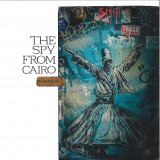
The Spy from Cairo (aka Moreno "Zeb" Visini) returns with his 5th studio album on Wonderwheel Recordings: "Animamundi" features some special collaborations from his travels & live shows from over the past few years. The album reflects the move from his home in NYC to his mother's home in a quiet village in Italy to take care of her in her older age. It's been a difficult transition with Italy's challenging experience with the pandemic, including some of the strictest measures enforced on the public. He recalls by stating "This album was conceived between 2020 and 2021 in Italy, between lockdowns, restrictions, and various pandemic mandates. Its message is of hope and positivity - a reminder that we are all spiritual beings… Free spiritual beings… and that freedom can't be broken."
"Animamundi" is a reconfirmation that The Spy from Cairo overcomes all obstacles & delivers a diverse progression of his iconic "Arabadub" sound, with the help of collaborators like Andalucian vocalist Carmen Estevez, Mexican vocalist Mambe Rodriguez on the heavy hitting "Criminal," Egyptian vocalist Adii Small on "Beautiful Baraka," and former touring band member, the multi-instrumentalist and vocalist Fatima Gozlan from Hungary. The music can vary from heavy deep electronic synths and live eastern instrumentation with Zeb playing oud, saz, chiftelli, bass, percussion, and other instruments, all along giving it his signature dub mixing style.
The songs take inspiration from a wide range of musical traditions and cultures, including Turkish (on "Cosmic Pasha," "Qanun in Dub" – using the qanun, an instrument popular across the Middle East, with a sound between the European harp and a dulcimer – and "Black Sea," which utilises a typical Dabke melody), Egyptian ("Mizmirized," sampling riffs from a mizmar), Indian ("Seeds of Culture), and Sufi ("Divination," a devotional composition), fusing these reference points with healthy doses of cumbia, funk, reggae, psychedelic, and dub. Thematically, "Animamundi" deals with some of the struggles Zeb – and all of us – have faced the last two years, through the lens of his personal experiences. Yet, the tone of the record manages to remain positive, like an uplifting dance through the world's sounds; after all, "Animamundi" means "soul of the world" in Greek. With album art by Sam Angeli and layout design by Marcial Arts, this beautiful album is a truly well-rounded worldwide collaboration.
"Animamundi" will be released digitally on March 4th, 2022, with the LP to follow shortly after.
Batsaykhan is the rebirth of the first project to ever release on Favela Discos, only a few hours after the label’s blogspot was put online back in 2013. Formerly known as Batsaykhantuul, Batsaykhan is not only one of Nuno Oliveira’s alter-egos but also something between a science fiction character and an ancestral spirit doomed to wander the earth in an apparently human physical manifestation.
The first album, Maestro Ir Noras, is a small and simple collection of tracks featuring only guitars and other stringed instruments, the second, being even smaller (only a single track) already seemed to lead us on through the psychedelic desert that would define the sound of the project.
After a long hiatus, Batsaykhan finally emerged from the drawer, or maybe it was from the desert, only to reveal that he had shape-shifted, now taking the form of a trio. With the help of André Azevedo and Tito Silva, Nuno started working on old demos of unpublished compositions and adapting them to the new formation. The trio started the process of refining the songs and the sound of the record, using only a strict selection of synths, percussions, bass and guitar.
They ended up settling down on a terrain of moving sands for those who feel the need to define their sound, between a forest of psychedelia, a river of ambient and the obvious desert that has buried the guitars under its “western” sand.
Batsaykhan’s self-titled release, and the project’s first long play will finally unveil itself on the last day of February, digitally and on 12’’ vinyl, with design and artwork by Rita Laranja.
- A5: French Film
- A10: Chairs Missing
- B2: Ignorance No Plea
- B5: Stepping Off Too Quick
- A1: Oh No Not So
- A2: Culture Vultures
- A3: It's The Motive
- A4: Love Ain't Polite
- A6: Underwater Experiences
- A7: Stalemate
- A8: Options R
- A9: Indirect Enquiries V1
- B1: Being Sucked In Again
- B3: Once Is Enough
- B4: The Other Window
- B6: On Returning
- B7: Former Airline
- B8: Two People In A Room
The original Not About To Die was an illegal bootleg, released at some point in the early 80s, by the dubiously named Amnesia Records. The album was made up of selections from demos recorded by the group for their second and third albums: Chairs Missing and 154. These demos had been recorded for EMI, with cassette copies circulated amongst record company employees. However, they were never intended for release. A typically shoddy cash-in, the songs on Not About To Die were taken from a second or possibly third generation cassette, with the album housed in a grainy green and red photo-copied sleeve. Compared with the high standards of production and design Wire have always been known for, it was something of an insult to band and fans alike. Now, in a classic act of Wire perversity, the group have decided to redress the balance and reclaim one of the shadier moments of its history, by giving Not About To Die its first official release on the bands own pinkflag imprint.. All the tracks have been properly remastered, with the relevant recording details in place. As for the sleeve artwork, whilst it strongly references the original, it is decidedly more artful in its execution. Not About To Die emerges as a fascinating snapshot of Wire in transition with embryonic versions of classic songs such as ‘French Film (Blurred)’, ‘Used To’ and ‘Being Sucked In Again’, that the group would develop considerably for their epochal 1978 album Chairs Missing. Later demos such as ‘Once Is Enough’, ‘On Returning’ and ‘Two People In A Room’ would surface in radically altered form on 1979’s 154. Some songs, such as ‘The Other Window’, are virtually unrecognisable from their later iterations but the biggest prizes here may well be the tracks that were omitted from Wire's later studio albums... Highlights include ‘Motive’, which has an undeniable power. Robert Grey’s drumming is crisp and minimal, and Graham Lewis’s bass runs are particularly ear-catching. Despite its distinctly un-Wire title, ‘Love Ain't Polite’ is also something of a gem. Meanwhile, the track which gives the album its title Not About To Die (officially known as ‘Stepping Off Too Quick’) possesses what Colin Newman half jokingly calls “The best intro to any song ever”. The intro is so good in fact, that it takes up a third of the song’s entire time frame. These properly mastered tracks have never been available on vinyl before, and they provide an opportunity to hear Wire at a point in their development when they were bursting with fresh ideas and a will to communicate them. This is post-punk at its very finest.
a A1 Oh No Not So [save The Bullet]
[e] A5 French Film [blurred]
[j] A10 Chairs Missing [used To]
[l] B2 Ignorance No Plea [i Should Have Known Better]
[o] B5 Stepping Off Too Quick [not About To Die]
Pachakuti is a musician and producer with family roots in Colombia. He plays keys, tenor saxophone and clarinet. While living and working in Berlin, he draws inspiration from the natural world, investigative travels, and ancestral traditions of Latin America and beyond. His expressive and rhythmical playing and his instantaneous compositions are directed at the human core, arousing subtle experiences. While not being conformed to one style, it always invokes a sense of liveliness and depth to be delved in. young.vishnu is a producer and DJ. He has studied philosophy and music in Hildesheim, Germany, which heavily influenced his views on meaning and mythology in music. In his DJ sets he selects and plays classic and contemporary Funk, Soul and Afrobeat. His practice as a DJ informs his work behind the boards directly, adding also more organic grooves and broader spectrum of musical styles to his in Hip-Hop based production. If you had to put one single tag on their forthcoming album Dédalo, the best choice would be Jazz. That being said, Pachakuti and young.vishnu's sound worlds might be better described in their own words: "We just make music and try to incorporate what we love about it". They are musical freethinkers with shared interests in eastern philosophy and botany who interweave Hip-Hop, Latin and Funk with musical storytelling and world mythology. Undoubtedly, their most ambitious work to date, Dédalo (Spanish synonym for labyrinth), recorded and produced over the course of a year, shows Pachakuti & young.vishnu's ambitions and growth. Where their debut work Semilla (2020) centered around the image of the seed, Dédalo takes on the entire garden. Besides playing multiple instruments by themselves, Pachakuti & young.vishnu invited a growing group of befriended musicians into the studio, including percussionist maestro Eric Owusu (Pat Thomas, Ebo Taylor, Jembaa Groove) and drummer Leon Raum (Bokoya, Wyl), as well as Brazilian newcomer vocalist Laíz, and members of their former band project Soularkestra. The 16 recorded songs, ranging from 1:19 to 14:58 minutes, take you on an emotionally honest, metaphoric journey through the maze of human existence, of modern society and mythic poetry. The mostly instrumental tracks build on expressive melodies, layered rhythms, and a wide range of musical instruments, merging the sounds of Jazz with the classical word of orchestras and choirs, and urban soundscapes with traditional instruments such as the Andean Kena and Charango, the Colombian Gaita and Marimba de Chonta, and an Indian harmonium. The Album thus weaves together past and future, and diverse cultural threads, sounds and ideas in an act of cultural appreciation and global conscience. Mixed and mastered by Roe Beardie at The Brewery Studios, Berlin. The album artwork itself merges the visionary art of Mexican painter Sergio Chávez Hollar with an original artwork-inlay of Brazilian artist Laíz and the work of Carsten Pölking of the Nima Compositions Archive.
Dédalo will be available digitally and on double-vinyl with inside-out print cover and colored inlay with credits and painting by Laís De Mello Barbero.
FROM MUSIC COMES HARMONY
HARMONY BRINGS BALANCE
BALANCE RESTORES PEACE
Enter the heart of drums ..
With obvious intent Nui and Simon set out to create an album that encompasses all of their influences and experiences as musicians and journeymen in the world of African inspired rhythm and sound and have arrived at a work that is at once global, innovative and deeply funky !
It’s been an incredible journey that has taken them from the wilds of the northern hinterlands of New South Wales in Australia to the dreamy secret gardens of Marrakesh, from the onsite recordings of Afro-Cuban choirs of Havana, to the Gnawa street sounds of Moroccan medinas.
Nui and Simon have traversed the globe to create these recordings and have collected diverse and international group of artists to collaborate with in the making of Heart of Drums.
Artists such as Cazeaux Oslo, who is an African-American Mc and vocalist hailing from California.
Olugbade Okunade , Nigerian trumpeter and vocalist , was formerly a member of the Femi Kuti Positive Force band.
Members of Clave y Guaguanco, One of Cuba’s foremost folkloric groups, who have been around since the 60’s.
Lalita Yagnik, Portuguese Speaking Indian, vocalist and martial artist.
Radouan Naim, Traditional Moroccan vocalist and instrumentalist .
And
Close Counters, Australian Up and coming Electronic duo.
Digital Afrika is made up of two main protagonists:
Zhonu ‘Nui” Moon (Future Roots)
An African-Australian producer, percussionist and Dj that has performed and recorded all over the world.
With a strong focus on African music,He has worked with the likes of Femi Kuti , Mulatu Astake and Tony Allen.
And Simon Durrington (Si Fixion ) who is an Australian based producer, keys player and DJ. With extensive experience of working with Melanesian , Indian and world musicians.
Drawing on these influences, Si weaves these styles together seamlessly with his unique high quality electronic production.
This album ‘Heart of Drums’ is a synergy of lush analog electronica and fiery African percussion, vocals and instrumentation.
With occasional reinvented throwbacks to the Disco and Funk era as well as forward thinking Afro-futuristic Record bag essentials, Heart of Drums really brings the party!
These are constructed dance floor motivators for any environment.
The artwork for this record deserves special mention as the mask was handcrafted by the interesting and talented artist Ju Mu Monster. Based in Berlin, the studied fashion designer creates colourful, wildly dancing image-worlds, in which beings from diverse cultures are combined with shamanism and spiritual worlds. Her enchanting works of art include murals and canvases as well as magical masks.
All tracks produced and arranged by Zhonu (Nui) Moon & Simon Durrington
The Ricardo Villalobos / Samuel Rohrer partnership has yielded increasingly interesting results over the past few years, with the former’s remixes of the latter’s trio Ambiq being supplemented by further reinterpretations of Rohrer’s solo work and live meetings at select events like Berlin’s Funkhaus and Radialsystem V. As should be the case with any strong collaboration, this partnership has been based on mutual challenge rather than compromise,
seeing each participant shuttle key technical and emotive aspects of the other’s work to previously unexpected places.
Those who have been closely following this relationship will notice a definite sense of continuity between previous outings and the new collaborative release entitled MICROGESTURES. As with those earlier Villalobos / Rohrer pairings, these four new pieces are defined by a special quality of being many things that once: that is to say, depending on the listener’s own level of focus, these can feel very tightly constructed and disciplined, or playful and freely wandering. That the tracks are equally engaging regardless of one’s chosen listening “mode” is a testament to the level of thought put into them; you could almost imagining the creators poring over some elaborate sketched set of architectural blueprints rather than coolly monitoring the usual multi-track editing software.
Altogether the music here is firmly a-melodic and percussive, but within these deliberate limitations there is still a greater variety of individual sounds than most would bother with. Each track is its own observatory of microgestures clustering together into a dense communicative fog or a sort of robotic sound swarm. Yet while all
these tracks are variations on that theme, each one has its own character and, consequently, its own rewards in terms of the exact sectors of the imagination that it activates.
Take for example “Cochlea” and its twin “Helix,” on which the magnetizing, busy layers of percussion are tempered with mischievously disruptive blossomings of digital noise, as well as sampled radio communications (which again bring us back to the idea of listeners’ attentiveness changing the meaning of this music - these
curious transmissions can either be taken as a purely aesthetic element or as something to be actively decoded).
Club-oriented elements are also not absent from this suite, particularly on “Incus” with its traditional sequenced baseline, crisp synthetic trap and hats, and dizzily sliding set of bell-like tones laid on top.?
Yet this track, too, is powered as much by its restless desire to deviate as by its rhythmic consistency: throughout the eleven-minute running time, a mass of ambiguous and restless machine sounds build a parallel narrative, and will maybe prompt the occasional glance over the shoulder as they seem to be taking on their own life. “Lobule” rounds out the program with the most rhythmically eventful sound set off the five.
What this all adds up to is a confident music which builds that quality from its faith in possibilities rather than firm conclusions: it’s an inspiring addition to both the musical landscape and reality in general
Eight Miles High was originally released in 1969 by the Dutch rock band The Golden Earring. It was the first album they released under their slightly shorter name, formerly being The Golden Earrings. The album is titled after their cover of The Byrds’ “Eight Miles High”, of which the full 19-minute version is included. It is the longest track The Golden Earring ever recorded. They recorded the full album at the Olympic Sound Studios in only 5 days time
In the vast musical archive that is Roman Flügel’s discography, Ro70 holds a special place. Written, performed and produced between January and July 1995, it is his debut album as a full-fledged solo artist. Enquired and inspired by a certain David Moufang from Heidelberg, who used to share a classroom with Jörn Elling Wuttke at the SAE Institute and revealed himself to be an Acid Jesus fan and also of the Roman IV 12“ project, it seemed like a good fit for his (and Jonas Grossmann’s) Source Records label.
In the days before file sharing that meant going back and forth with various DATs in his mom’s Volkswagen Polo Fox for actual listening sessions between Darmstadt and Heidelberg. The time was as special and idiosyncratic one as was the sound of Source Records and of course Ro 70 itself. While the rave-olution was ready to eat its kids with the commercial outlook of former underground phenomena looked bright and the scene’s prophecy seemed grim, enterprises like Source and artist like Roman Flügel were defying any competition out of those corners with their own means.
Listening back to the ten tracks of Ro 70, it proves them, their taste and artistic vision right. Probably still being put into the ambient, downtempo, electronica or chill out sections of most record shops, this music could have been made, relished and cherished anytime between 1995 and now. Made in Roman’s home studio in his parent’s house or in the Klangfabrik studio in Egelsbach, this was made for before or after the rave – or for people who din’t want to have to do anything with it at all. His signature is all over it. Well balanced soundscapes with an almost uncanny presence and clarity. Bittersweet symphonies that doesn’t seem to be in an inferior position to modern classical or electronic studies.
It is also a very personal testament to a time in the artists’s life that was ready to get caught in the maelstrom of the oscillating techno city called Frankfurt am Main and its halcyon days between the Delirium record shop, Sven Väth’s marathon sets, the early days of the label triumvirate Playhouse, Klang & Ongaku. In a musical journal without lyrics, those memories will have to stay pantomimic and private. All for the better, that we can at least still listen to them.
Clear Vinyl
The Psychedelic Romance experience is birthed, combining future-facing electronic music, art and healing. The venture is a collaboration between former Trouw & De School resident JP Enfant, energy practitioner & artist Cuevawolf and artist & label manager Maren Monika Brombeiss. It will offer an immersive sensory experience to its audience via an event series and label, with music produced at 432hz, a frequency known to uplift emotional wellbeing.
The trio linked in Amsterdam last year. JP had been previously running Psychedelic Romance events at the legendary Trouw, an opportunity he used to explore the musical terrain linking techno, UK bass and ambient. Over the years, the cream of the underground scene was invited to play, from Pearson Sound to boundary-pushing dubstep/bass producer 2562. He met Cuevawolf by chance mid-way through 2020, after fate would have the Mexican artist “stuck” in the Dutch capital during the pandemic. The click was instantaneous. Seasoned music industry professional and yoga practitioner Maren Monika completed the triangle. Together they seek to combine their passion for cutting-edge electronic music with consciousness-raising events and healing.
The label strand of Psychedelic Romance comes to life via JP Enfant’s ‘Somewhere Else EP’, a veritable musical Rubik’s Cube encompassing techno, ambient and bass. The five-track work includes a remix of lead track ‘Muzieklokaal’ from Bristol’s acclaimed experimental producer LCY, who reworks the playful original into a dynamic pastiche of industrial breaks and techno.
Dubbed a “local legend” of the Amsterdam scene by RA, JP Enfant has built up a credible reputation with gigs across Europe including Berghain, Melt Festival and fabric. His nuanced approach to techno has seen releases on Planet X, a.r.t.less and DGTL Records.
The conscious ethos of the project runs through every thread of Psychedelic Romance. Alongside the music being produced at 432hz, a frequency believed to support a calm body and mind, at upcoming Psychedelic Romance events, Cuevawolf will play the crystal singing bowls, which will transition the night from an uplifting sound healing session into an immersive electronic rave experience, led by JP. “Our goal is to create purposeful healing frequencies through music and art that ultimately raises and harmonizes our audience’s vibration,” Cuevawolf explains. “The idea is to marry electronic music and spirituality providing a safe space for transcendental and self-healing experiences that evolve onto a dancefloor.”
Psychedelic Romance hosted an intimate family and friends gathering during ADE week at Amsterdam’s Pamela, with music led by JP and emerging Amsterdam selector DJ Corridor. On the label front, other artists slated for appearances on Psychedelic Romance include Dutch techno artist Mary Lake and ascendant Austrian talent Arthur Robert.
Spaceship is Mark S. Williamson, a musician, sound artist and educator based in Todmorden, West Yorkshire. His work is often made in response to his environment, working on location, combining field recordings with electronic and acoustic instrumentation, usually recorded outside, amid the landscape and weather. Mark has recorded for wiaiwya, Apollolaan, the Dark Outside and his own Forged River Recordings. His work has been reviewed by The Wire, Electronic Sound, Shindig and The Quietus and he was recently one of the fourteen artists featured in Electronic Sound Magazine’s ‘field recording special’. His collaboration with Luke Turner on series of readings from Luke’s book ‘Out of the Woods’ has seen performances at Cecil Sharp House, Port Eliot Festival, The Trades Club in Hebden Bridge, Krankenhaus Festival and the Horse Hospital and he recently collaborated with the artist Michael Powell on his Calderfolk project. A direct sequel to 2019’s Outcrops (also on wiaiwya), Ravines moves its focus from the uplands above Todmorden to the narrow, steep sided ravines, known as cloughs, that contain the streams that flow down the valley sides to feed the River Calder. These valleys, formed over hundreds, if not thousands of years can be peaceful sanctuaries, their stepped pools and waterfalls a shelter from the windswept moors. In time of heavy rainfall though, they become the conduits for the rapidly descending overland flows which reach the Calder and, in extreme circumstances, cause the floods which remain a part of valley life. These cloughs also saw the beginnings of industry in the area. Colden Clough and Jumble Hole Clough contain the ruin of small water fed mills which would evolve into the much larger steam powered facilities in Todmorden and Hebden Bridge. Mostly recorded in the field using portable equipment, these pieces are intended to reflect all three of these aspects; the peace, the violence and the beginnings of humankind’s ultimate separation from the landscape brought on by the industrial revolution. The sleeve is by Maxim Peter Griffin, an artist, illustrator and writer based in Lincolnshire. A fine art graduate and former stonemason, over the past few years he has been building a body of work that echo his experiences on foot between the North Sea and the hills. "...a luminous soundtrack to the passage of geological time." Shindig // "Williamson is building desire tunnels, churning through the layers of rock and soil to find his conclusions." The Wire // "These rumbling synth drifts and ominous drones transport you to entirely different places-like being cast adrift in a cosmic void" Electronic Sound // "...the droning synthesizer waves conjure up something spectral and eerie, stretching out like the wide horizon..." The Quietus // "Beautiful." Hannah Peel
FFO: Arthur Russell, Stealing Sheep, Neu!, Agar Agar, Galaxians
Holodrum are a new disco-infused synth-pop group, who feature members of Hookworms, Yard Act, Cowtown, Virginia Wing, Drahla and more.
Maybe Holodrum were destined to start at this point. This might be the first time they’ve all officially worked together, but between Emily Garner (vocals), Matthew Benn (synth/bass/production), Jonathan Nash (drums), Jonathan Wilkinson (guitar), Sam Shjipstone (guitar/vocals), Christopher Duffin (sax/synth) and Steve Nuttall (percussion) they’ve shared bands, mixed each other’s records, promoted live shows and made music videos together in and around Leeds. As Holodrum, this is the 7 piece’s debut album, but the interlocking grooves and hot headiness of their repeato-rock-via-CBGBs dopamine hits have in one way or other been fermenting for years.
“When it comes to doing music most bands fall between two extremes of doing it for some goal or as an end to itself” says Shjipstone. “I think Holodrum is about the joy and complexity of living, and I just hope to god everyone gets to have a good time doing it.”
Ultimately the core of the group comes from Shjipstone and his former Hookworms bandmates Benn, Nash and Wilkinson. After their abrupt dissolution in late 2018, the four of them spent six months apart; Benn still had Xam Duo, his ongoing project with Virginia Wing and some-time James Holden & The Animal Spirits live member Duffin, Nash remains vocalist and guitarist of long-running DIY rockers Cowtown and helms his solo project Game_Program; and Shjipstone plays guitar with Yard Act. However, the four of them missed the sixth sense synergy they’d built-up playing together over a decade and soon enough demos were being swapped and new ideas were discussed.
The vision of a large live electronic ensemble formed quickly. Friends were added: Duffin and Nuttall – who was keen to resurrect the double percussion interplay that he and Nash had been exploring as part of motorik trio Nope joined first. Then animator and VIDE0 singer Garner crystallised the line-up by joining on vocals.
“Apart from Emily, all of us had actually played together before in a covers band at a New Year’s Eve party at the Brudenell Social Club a couple of years ago, so we knew we could have fun together” says Benn. “So we set up to be a live party band early on. We wanted lots of people on stage having fun, playing for people that also wanted to have fun. It makes sense we take inspiration from bands like Tom Tom Club and Liquid Liquid; they were trying to help people to party at a point when New York was quite a scary and dangerous place we’re doing the same, albeit in the face of a decaying world and a global pandemic.”
Covid-19 hasn’t given them much opportunity to do that yet, with two fledgling shows in late 2019 to their name before festival appearances at the likes of Bluedot, Sounds From The Other City and Gold Sounds were scuppered last year. However, the 6 tracks on Holodrum crackle with the energy of the dancefloor. Opening cut 'Lemon Chic' described by Garner as her “workout track” starts out sparsely, with tight drum claps and burbling synths holding a teetering suspense before the whole thing’s prised open, allowing beaming saxophone skronk to shine in. Garner’s vocals bob and weave around the syncopations of the track’s building cacophony.
It sets the stall for an album heavy on euphoria, built atop crisp interplaying percussion and acid-flecked grooves. At times Shjipstone provides a raw counterpoint on vocals, while elsewhere - like on the strutting, swirling disco of 'Free Advice' and 'Low Light'’s late night ping pong synths - the pair indulge in playful call and response as the instrumentation builds and contorts around them. 'Stage Echo' provides a respite of sorts halfway through, a swirling, fever dream of a track that peaks with big squelchy frequencies and cavernous reverb, before the album returns to its repetitious exercises in body-moving catharsis underpinned at all times by a relentlessly propulsive rhythm section.
Bev Lee Harling returns with her first solo recording in almost a decade. She won the hearts and musical minds of DJs across the board with her 2012 debut LP, Barefoot In Your Kitchen, which BBC 6Music's Gilles Peterson made his Album of the Week. Now the gifted singer, violinist and composer returns with twelve beautiful pieces of music that tell a very personal story of the years since.
Having swapped the busy streets of North London for the calmer shores of Hastings in Sussex to bring up her young family, it's fair to say that Bev's priorities might have changed somewhat over the past few years, but the music was never far away. Her new environment, and musical family (including multi-talented partner and album co-producer Frank Moon) added plenty of fresh inspiration to her recordings, and we're very excited to share her new album, entitled Little Anchor, with you this Autumn.
The album is in some senses a travelogue, a 9 year journey of a creative womannavigating the landscape of parenting. Each song is a snapshot taken at a differentlocation in time, in a world where finding balance between creative freedom and motherhood is still a struggle, from the uplifting and euphoric Beautiful Life, to the heavy and harassed Only Got A Minute.
Between the unexpected joys of parenting, grappleswith mental health and feelings of inadequacy, and fighting for every second ofcreative time while slowly accepting a life very different to the one that existedbefore, this unedited family album emerged bursting with quirky childhoodmemories, dark musings and celebrations of musical passion and legacy.
Each song carries breakthrough personal moments in rebuilding strength as an artist, as a person, as a parent. Even down to a very emotional moment with Ray Davies of The Kinks, during a songwriting retreat, where album closer This Violin String, a deeply personal ode to her recently departed mum, was written…
"Everyone turned up writing on guitars and piano and I just had my battered old violin. I felt totally out of touch with my former confident musical self and had zero confidence in what I was doing after an intense period of car crash parenting. I wrote it, performed it on the same day and then sobbed my guts out in front of a bunch of total strangers (sorry Ray!). Something shifted for me in the act of being quite so vulnerable though and I found my mojo again in writing solo with my violin."
The personal nature of this record is self-evident, it bursts through every note and word in each song. We're very excited to be able to share such a special album,afresh foray into the always unpredictable, experimental and playful world of Bev Lee Harling.
How can one explain the lasting popularity of the bass clarinet in musical circles from Vienna to Brussels? Perhaps because its frequency range articulates an alternative to conventions of popular music, where "bass" is reserved primarily for rhythmic impulses and the very foundation of the music. Viennese bass clarinetist Susanna Gartmayer's playing can by no means be reduced to just this, rather, it scutinizes the entire sound universe: she can do rhythm and drone, not to mention melody and noise, often all at once. Who would be a more fitting collaborator than Stefan Schneider, with his minimalist rhythms and subtle cosmic exploration?
Together, Schneider and Gartmayer form the project So Sner, which owes its existence to a concert in 2015 at the Approximation Festival in Düsseldorf. Gartmayer's bass clarinet polyphonies so impressed Schneider that he quickly suggested a collaboration. That same year, they began recording the album "Reime" in Kraftwerk's former Kling Klang studio, which in 2015 became workspace and concert venue simply called Elektro Müller. The second part was recorded in the summer of 2020 in Düsseldorf-Kaiserswerth at Stammhaus church, whose interior wood paneling facilitated organic acoustics.
Susanna Gartmayer has been active as a musician and composer in various realms between experimental rock music, improvisation and multimedia sound performance since the early 2000s, releasing the album "Smaller Sad" with Christof Kurzmann and "Black Burst Sound Generator" with Brigitta Bödenauer in 2020. In addition to his solo project Mapstation, Düsseldorf-based musician and producer Stefan Schneider has been pursuing new avenues of experimental music in the here and now for over 20 years, in numerous collaborations with Sofia Jernberg, Krautrock pioneer Hans-Joachim Roedelius, or visual artist Katharina Grosse among others.
So Sner's sound is equally oriented towards experiment and tradition, whose roots can be traced back to the UK of the early 80s: an era in which soul and synth, jazz and industrial, avant-garde and polyrhythm were blended with the help of intellectualism and punk attitude in such a way that manifold sketches of possible music emerged which are only being colorized today. Like So Sner - from the very first stomp to the very last drop.
Olaf Karnik, Cologne, October 2021
Multi-instrumentalist UMUT ÇAĞLAR (KONSTRUKT, KARKHANA), former BABA ZULA-drummer FAHRETTIN AYKUT and the Finnish saxophone player / shakuhachi specialist JONE TAKAMAKI join forces in a stunning improvised live set that blends Free Jazz with East-Asian ZEN-sounds.
The idea for "Myth Of The Drum. Urban Transformation" dates from an art exhibition in Istanbul 2017 where FAHRETTIN AYKUT exhibited an installation called "Urvban Transformation" that combined painting and music, dealing with the relation of humankind and earth which is symbolized through a tree put upside-down.. AYKUT, former drummer in the Turkish group BABA ZULA and these days a well-known architect in Turkey, asked his longtime friend UMUT CAGLAR, multi-instrumentalist in KONSTRUKT and KARKHANA, to join for an actual performance … CAGLAR on his side was in touch with JONE TAKAMAKI who has been a central figure of the Finnish Free Jazz / Avantgarde scene since the 1970s. His album "Universal Mind" (1982) is a sought-after collector's item of European Spiritual Jazz, he was a member of the group ROOMMUSHKLAHN (with RAOUL BJÖRKENHEIM a.o.) and in 1991 he joined the ECM signed Finnish jazz/rock/improv collective KRAKATAU, founded and run by RAOUL BJÖRKENHEIM, and last but not least TAKAMAKI received the first ever Pekka Pöyry Award. Besides being deeply rooted in jazz, he is also a specialist in Japanese shakuhachi and hocchiku flute playing which makes this adhoc-trio so extraordinary: repetitive drumming, shamanistic throat sounds and plenty of string and reed instruments, a constant ebb and flow of sounds and energy … neither pure jazz nor world music but a blend of both, forming a fascinating third! Meditative in its continuously pulsating rhythm, cathartic in the moments of sonic outbursts …
A few months after the Istanbul art fair performance, the trio (augmented to a quartet by ALAN WILKINSON) played 2 showsatLondon's Cafe OTO and gossip has it saying that THURSTON MOORE who attended the show confessed afterwards that he was very touched emotionally.
Credits:
All Music by Fahrettin Aykut/Umut Çağlar/Jone Takamäki.
A Konstrukt Joint.
Jone Takamäki: tenor saxophone, ney, shakuhachi, clarinet.
Umut Çağlar: guimbri, kalimba, gralla, zurna, mey, flutes.
Fahrettin Aykut: electronic percussion; drums, cymbals.
Recorded live at BantMag. Havuz/Bina in Istanbul (October 3rd, 2017) through a Tascam portable recorder.
Produced by Umut Çağlar.
Mastered & cut by Anne Traegert at D&M, Berlin
Forenzics is an exciting new project from former Split Enz members Eddie Rayner and Tim Finn. The project saw two artistic endeavours meet in the middle and started like when Eddie and Tim had been revisiting some of their favorite sections from lesser-known Split Enz works, using them as inspiration and the basis for new songs.
Along with Tim Finn and Eddie Rayner, there are musical contributions from Noel Crombie of Split Enz, Phil Manzanera of Roxy Music, Harper Finn and Elliot Finn. (the latter 2 being Tim’s children). Noel Crombie and Phil Manzanera; both dialled their parts in during Covid lockdown. And even though Eddie and Tim live in the same city they followed the same process. Tim says: “I love working this way, sharing files. You work when you want to, and my singing has an unforced intimacy that is very hard to achieve when there is someone else in the room.”
The Forenzics repertoire, like paintings in an exhibition, is an album of individual works that together form an immersive and cohesive whole. It is a genuine sabbatical journey into the artistic unknown, mapped out by two artists at the height of their creative powers.
On August 27th 2021 The Third Sound released their fifth album ‘First Light’ on Fuzz Club Records and it is now being given a second pressing after selling out upon release the first time aorund. Dealing in a hypnotic blend of neo-psychedelia, post-punk and new wave, The Third Sound is a Berlin-based band led by the Icelandic musician Hákon Aðalsteinsson, who is the guitarist in Brian Jonestown Massacre and formerly played in the cult rock’n’roll outfit Singapore Sling. A mainstay of the European psych underground in his own right, not just through his collaborations with the likes of Anton Newcombe and Tess Parks, The Third Sound has been Hakon’s primary solo endeavor since the release of his self-titled debut on Newcombe’s A Recordings a decade ago. Arriving following 2018’s ‘All Tomorrow’s Shadows’ LP, ‘First Light’ marks an evolution into a brighter and at times uplifting sound. Marrying moments of light and dark, the result is The Third Sound’s most dynamic full-length to date. Talking about the album, Hakon said: “This album is definitely less gloomy than the previous one, although some ghosts from the past are lurking in the background. We always try to make something new on each album and never make the same album over again, but this feels like an even bigger change than usual, especially regarding the mood. Something new is beginning although the past is not forgotten. I think the title, First Light, describes the overall feel of the record pretty well.” ‘First Light’ is the fifth full-length from The Third Sound and arrives off the back of 2018’s ‘All Tomorrow’s Shadows’, 2016’s ‘Gospels of Degeneration’, 2013’s ‘The Third Sound of Destruction and Creation’ and their 2011 self-titled debut. With Hakon Aðalsteinsson leading the group on vocals and guitar, the rest of the band is currently comprised of Robin Hughes (Guitar / Organ), Fred Sunesen (Drums) and Andreas Miranda (Bass). With a number of European tours in tow, the band have previously shared the stage with the likes of the Brian Jonestown Massacre, The Warlocks, Singapore Sling, Crocodiles, Clinic, Tess Parks and more.
Los Angeles-based duo SANA SHENAI began in 2009 when their Dublab radio-affiliated ambient quintet Golden Hits went on hiatus. Jimmy Tamborello (Dntel, The Postal Service) and Mitchell Brown (LAFMS, Sun Araw, Sissy Spacek) have since amassed a mountain of material culled from 10 years of home recording. In late 2018 the 5-song digital EP "Forewarm" was released by Leaving Records, which now joins seven other pieces on this physical debut double LP for Les Albums Claus, "WARM FORMER".
Brown reveals: "We initially set out to make oddball minimal techno using 50's-80's musique concrete studio techniques and modular synthesizers. This almost happened, perhaps best exemplified by the cut "Humid Beings", but even by the first session's end we'd given in to the open-endedness of our gear, jamming entirely different stuff." Warm Former's sound palette is vast with plenty of almosts and could be's, hosting shape-shifting polyglot sound-field games to investigate, decipher and redecipher. Tracks "Frozen Host" and "Laqua" might be considered uncanny and reminiscent of memories not quite your own. "No One There to Confirm" is the moody melodic sprawler that heavily features both Serge and Buchla synths. Wonky, splicey 1/4" analog tape loops are hiding all over this album but are definitely the stars on "Wizard A Baby". "Worm Farmer" might be the most accessible tune, falling near the crossroads of motorik 70's krautrock and the sprightlier side of Tamborello's own Dntel catalog.
Just a few months after releasing their acclaimed second album Still Life, Los Angeles indie-pop band Massage returns with Lane Lines a six-track EP out in early 2022 on Mt. St. Mtn. (Cindy, Flowertown, Blues Lawyer) that finds the quintet expanding on their Sarah-meets-Creation Records sound with new touches of soft psychedelia, Feelies-ish frenzy and Haçienda-era escapism. The band didn’t plan to follow Still Lines so quickly. But after the pandemic further delayed that multi-year project, Alex Naidus (guitar, vocals, former Pains of Being Pure at Heart), Andrew Romano (guitar, vocals), Gabrielle Ferrer (keyboards, percussion, vocals), David Rager (bass) and Natalie de Almeida (drums) leapt at the chance to make music together again in real life and started gathering on random summer evenings in the tiny rehearsal-space studio of producer-composer Andrew Brassell (Susanna Hoffs) with no clear goal in mind. Lane Lines is the surprise product of those informal sessions — a flash of pent-up creative energy that serves as both a companion piece to Still Life and an exploration of textures and influences that didn’t quite fit the full-length but have always been deeply embedded in the band’s DNA, with new echoes of 1980s artists that sought to refract the 1960s through their own skewed prisms: Flying Nun, the Paisley Underground, The Feelies covering The Beatles, “Second Summer of Love” New Order. “The songs on Still Life and Lane Lines seem to straddle the line between indie and pop without exactly being ‘indie pop,’” Romano says. “To me they feel more like descendents of ‘college rock’ a moment that lasted from about 1986 to 1991, right before the underground and the mainstream converged, when it seemed like any scrappy indie band might stumble across a hit.” The EP begins with the new single version of Still Life standout “In Gray & Blue,” which along with previous singles “Half a Feeling” and “Made of Moods” is part of a trio of songs written during the first days of lockdown and later added to the album. But while brief lulls in the pandemic allowed Massage to record the other lockdown tracks in the studio, the LP version of “In Gray & Blue” was entirely DIY a GarageBand demo emailed around for overdubs and ultimately “mixed” by Romano himself.
"We all know what teenagers are like. Bratty little gobshites. Moody shits. Forever toeing the line between cocky arrogance and whiny self-doubt, and to hell with anyone who gets caught in the crossfire. And this old fucker should know; he was really good at all of the above (still keeping on top of the ‘gobshite’ part, you’ll notice). For some reason, the entirety of rock’n’roll is predicated on music made for and about these states of mind - well, I guess if you mix ‘em all together, they can make for one helluva sense of reckless abandon. So it shouldn’t come as a surprise that Melbourne quartet Mr Teenage sound exactly like their name suggests: chaotic, raw, emotionally volatile… and of course they bind all this together with their own brand of heroically melodic garage rock. Produced by Billy Gardener (of Ausmuteants, Smarts, Cereal Killer and god knows how many other vital Aus-punx), this debut EP snarls, spits and swaggers with all the glorious self-belief of a drunken 4am stumble to the petrol station to buy a pack of skins. And the songs are fucking great too. Title track ‘Automatic Love’ expertly showcases the combined sounds of their cited influences (Thin Lizzy, Dictators, Martha Reeves, etc), with frontman Nic Imfeld’s voice at times edging close to the sandpaper soul of their countryman Shogun (ex-Royal Headache). Meanwhile ‘Waste Of Time’ sees him blending their garage licks with Joey Ramone bubblegum, just as ‘The Loser’ fashions a delightfully adolescent chorus of ‘the loser says what?’ from an airy melody that either The Shangri-Las or Del Shannon would be proud of. They wrap things up with another slab of pure punk/pub rock genius called ‘Kids’ that’ll get the hairs on the back of your neck standing on end, as you fight the urge to crank-call your former school teachers and blame the kid who used to take your lunch money. Of course, singing about ‘kids these days’ marks Mr Teenage out as being older than their name suggests, and sure enough their name comes from an old wrestler rather than identifying with an age bracket they’ve outgrown. But with tunes like this… honestly, who gives a fuck what they’re called? This record is perfect." Will Fitzpatrick.
- A1: K.o.f '95 (Title)
- A2: Devil's Selection
- A3: Selection Of The Raging Billows
- A4: Funky Esaka (Japan Stage)
- A5: Kono Yo No Haru(Victory Demo)
- A6: Ryo (Korea Stage)
- A7: Desert Requiem (Middle East Stage)
- A8: Senritsu No Dora (Chine Stage)
- A9: Club-M -Flute In The Blue Sky- (Mediterranean Sea Stage)
- A10: (Ryuko & Ken, Swinging Boys' Hearts (American Fighting Stage)
- B1: Bass Crawling On The Grounds (England Stage)
- B2: Stormy Saxophone (American Factory Stage)
- B3: Weeping R - Sorrowful D (Rugal Demo 1, 2, 3)
- B4: Hal,Bass And Melody (Final Boss Stage 1)
- B5: Rugal Hymn (Rugal Appearance Demo)
- B6: Guitar, Omega And Rugal (Final Boss Stage 2)
- B7: Rugal Vanishing (Rugal Vanishing Demo)
- B8: Kid (Ending 1)
- B9: Namidasan Sayonara (Ending 2)
- B10: Saraba! Seisyun (Ending 3)
- B11: The Sunset Sky Part 6 - Liebe (Staff Roll)
- B12: Yokubou No Uzu(Game Over)
SNK composer Masahiko Hataya reprises his role in KOF '95 while being joined by composers Akihiro Uchida and Pearl Sibakiti.
As a Generation Series releases, the KOF95 soundtrack will feature newly remastered analog and digital tracks, as well as a booklet containing archival artwork and liner notes by former development team members.
Russian Roulette is the seventh studio album by German heavy metal band Accept. The album was originally released in 1986 and the last album to feature Udo Dirkschneider as lead vocalist until his return in 1992. The recordings are darker and heaver in sound than the commercial-sounding predecessor Metal Heart. The band stated that with this album they were going back to their unpolished sound and therefore produced the album themselves.
Accept was originally assembled by former vocalist Udo Dirkschneider, guitarist Wolf Hoffmann and bassist Peter Baltes. Their beginnings can be traced back to the late ‘60s. The band played an important role in the development of speed and thrash metal, being part of the German heavy metal scene, which emerged in the early to mid-80s.
Russian Roulette is available on black vinyl and includes an insert.
- 1: Should Have Seen It Coming
- 2: Mid-Century Modern
- 3: Lonesome Ocean
- 4: Good Days And Bad Days
- 5: Freedom Doesn’t Come For Free
- 6: Reflections On The Mirth Of Creativity
- 7: The Million Things That Never Happened
- 8: The Buck Doesn’t Stop Here No More
- 9: I Believe In You
- 10: Pass It On
- 11: I Will Be Your Shield
- 12: Ten Mysterious Photos That Can’t Be Explained
Billy Bragg has been a fearless recording artist, tireless live performer and peerless political campaigner for over 30 years. Among the former Saturday boy’s albums are his punk-charged debut Life’s a Riot With Spy Vs Spy, the more love-infused Workers Playtime, pop classic Don’t Try This At Home, the Queen’s Golden Jubilee-timed treatise on national identity England, Half-English, and his stripped-down tenth, Tooth & Nail, his most successful since the early 90s. The intervening three decades have been marked by a number one hit single, having a street named after him, being the subject of a South Bank Show, appearing onstage at Wembley Stadium, curating Left Field at Glastonbury, sharing spotted dick with a Cabinet minister in the House of Commons cafeteria, being mentioned in Bob Dylan’s memoir and meeting the Queen. At their best, Billy’s songs present ‘the perfect Venn diagram between the political and the personal’ (the Guardian). Billy Bragg added best-selling author/musicologist to his CV with the success of his acclaimed 2017 book ‘Roots, Radicals & Rockers – How Skiffle Changed The World’. Billy Bragg will release a new single ‘I Will Be Your Shield’ on 14th July 2021. Taken from his forthcoming 10th studio album ‘The Million Things That Never Happened’, ‘I Will Be Your Shield’ is a beautiful love song and is the beating heart of his new record.
The vanguard of the Polish psychedelic heavy rock scene returns
with a brand new album! Continuing to defy expectations and
challenge what it means to be a “stoner” band, Weedpecker have
crafted a new masterpiece. After several fundamental lineup
changes in the past years, fans of
Weedpecker were left wondering
what might become of the band’s
newest incarnation. “III”, their
last outing from 2018, was the
final one with longtime bandmates
Bartek Dobry, Robert Kulakowski
and Grzegorz Pawlowski (the first
of whom is remaining founding
member Piotr Dobry’s brother).
In 2019, the band gave a very brief
glimpse into their new lineup featuring
members of Dopelord, Major
Kong and Belzebong while on
a short tour. The most surprising
change was the switch from dual
guitars to a full-time keyboardist.
So much for history, where does
this take us to now with the new
album?
“IV” is a deep, vividly textured IV” is a deep, vividly textured psychedelic
rock record with tons of
layers begging to be picked apart
upon multiple spins. Beginning
with the driving opener “No Heartbeat
Collective”, the song immediately
beings new elements into
the mix. Etherial keys and twisting
guitar lines meld in harmony,
giving way to chunky riffs. Moving
forward, “IV” continues to surprise
with mellow psychedelic gems
reminiscent of early Tame Impala,
blistering Oh Sees-esque rock
bursts and of course the trademark
melodic heavy riffage.
Former co-lead guitarist Bartek
has teamed up with the band
in the position of engineer and
producer, while also lending his
arrangement skills. This combination
of new input and experimentation
has led to the most radical
Weedpecker record thus far, a
killer album which will doubtless
make a late entry for 2021’s album
of the year.
Available on 180gr. transparent
yellow LP including download card
and on CD.
strumentalist Teddy Lasry's story is noteworthy not just in regards to the music he released, but in the ways approached the craft of composing and experimenting with sounds and sonics.
Always intrigued with the capabilities of instruments, their groove and their feel, it was very much his family’s influence that helped to fuel these life long affections. As a performer in a parisien cabaret, Teddy’s father Jacques would mingle with giants like Serge
Gainsbourg and Charlie Chaplin (impressed by his ability to improvise, Chaplin wanted him to become his accompanist, but the pianist politely refused). Jacques and his wife (Teddy’s mother Yvonne), would later become members of the innovative experimental group Les Structures Sonores, and surround their children’s lives with sounds. Electronic music was still in its infancy and Les Structures Sonores, with their resonators that produced long, mysterious tones, were deemed ‘cosmic’. It was the era of the launching of the first Russian Sputnik and every time a radio or television station wanted music for their science fiction programs, they turned to one of their compositions. Showing a natural ability with multi instrumentalism, Teddy was rewarded with a spot in the band, allowing him to really explore unconventional methods of composition.
Following a brief stint with Ariane Mnouchkine's avant-garde Théâtre du Soleil after graduating school, Teddy joined the pioneering prog band Magma, with whom he would record three groundbreaking records during the early 1970s (According to former member
Laurent Thibault, their album Mëkanïk Dëstruktïẁ Kömmandöh and its sound were strong influences on David Bowie during the recording
of Low and Iggy Pop’s The Idiot at Hérouville). Despite the successes with these projects, Teddy was constantly searching for new ways
of expressing himself through music, leading him into the beginnings of a solo career that would last the better part of three decades.
Teddy’s transition into his solo career came with contrasting fortunes, in that he was now becoming a music to image composer but with the unfortunate realisation that his eyesight was gradually worsening (due to being diagnosed with retinitis pigmentosa at an early age). Nonetheless, his solo career would begin in 1975, and for the rest of the decade his sound would become increasingly mired in electrified Funk-Fusion and its endless sonic possibilities. The resulting music would serve to highlight Teddy’s love affair with the possibilities found within tireless instrumentation, with the flute and particularly synthesisers becoming a mini-obession of his (he once spent a 7,000 Francs loan, which was meant to be spent on fixing his roof, on synths).
To this day Teddy continues to record and experiment with music, a passion which in many ways has never left his sid, even at the age of 75. His career was one that was fuelled by innate curiosity and an intrinsic desire to discover new methods of expressionism, be it through the realms of Jazz-Funk, ambient electronics, Swing music or indeed through the medium of instrumentation itself. On this compilation, we look to encapsulate the essence of his innovative sound, and from start to finish a sense of his ingenious approach to composing structure and mood is made abundantly clear. The funk-jazz fusion style that embodied the majority of his 70s work is on full display here, with the vibrant flute driven "Los Angeles", the Miles Davis inspired "Blue Theme", the progressive and driving
"Chamonix", and the deeply intricate "Krazy Kat", along with one of his finest 80s slow jams, "Funky Ghost". Two cuts off the ‘Back To
Amazonia’ album are also featured (Teddy’s last album including his Prophet T8, Yamaha DX7 and Oberheim drum machines). "Raising
Sun in Bali" and the title piece both emphasise an ever present passion for synthesisers. "Birds of Space", a standout track off the e=mc2 album, closes the comp, and is a fitting way to end this journey.
Pulled together in close collaboration with Teddy and his family, this collection of songs looks to introduce new listeners to his work and we are proud to present this limited and carefully remastered compilation on vinyl, including extensive liner notes.
Does returning to a place have a sound? Can the ear have a memory? And what if places which we return to are just empty shells? Choreographed rooms which we need to play, fill from scratch each time with fragments from the past and present, layer upon layer, familiar and still somehow always new and differently assembled. Paula Schopf’s Espacios en Soledad are acoustic walks around present day Santiago de Chile, the city where she was born - which she always left, had to leave and to which she always returns - but more than anything also through her own memories which resonate throughout the public places, squares, streets though still in their own way remain strange.
„Every immigrant in the world has a piece like this - a kind of missing link, something which is incomplete. And every time one returns to the home country you are looking for it. For me it was a matter of sound.“ (Paula 2019).
In the mid 70s leaving Santiago was a flight of exile as a child with her family. Leaving in 1990 was an autonomous decision to head for Europe, Berlin, where the wall fell, where the heavens opened up all at once and electronic music became a kind of new home to so many. Paula Schopf belonged there. For her the Ocean Club at Tresor club was a central place where friends and mentors like Gudrun Gut and Thomas Fehlmann made it possible for her to get really into it. Dancing, being and feeling your body, forgetting oneself in the bass and beats, who one is and where one’s from, to becoming the DJ Chica Paula. Chile was very far away during this time, Latin America was more just a code, a musical and habitual cliche to be cautious of. This was especially true for the culture of the Chilean exile, the pathos of the “Canto Nuevo”, the sound and ideologically charged instruments of the „música andina“, for example the Zampoña, Quena or Charango. Techno was the greatest thinkable alternative to this even if or perhaps because so many kids exiled from Chile became key figures in the German and European scene: Ricardo Villalobos, Dandy Jack, Cristian Vogel, Matias Aguayo and many more.
How does returning to a place sound? Does the ear have its own memory? The field recordings which were recorded in Santiago de Chile in 2016 and form the central sonic material for Espacios en Soledad represent the paradox for Schopf’s return to her home country after emigrating: the inevitable drifting apart of her own lived time from that of her former home. Already the Venezuelan and Colombian hawkers are unmistakable signs of the deep change in Chilean society which has happened in recent years due to immigration. Which is in contrast to the old lady who sits on the floor in a pedestrian zone and without break sings the same three songs by Violeta Parra and then keeps falling asleep while doing so. The fragile presence of her voice is joined with a repertoire which is almost mythologically timeless in Chile in a particularly moving way.
By layering, ordering and conjoining such found sounds from modern day Santiago this piece become about the urban sound of Chile’s present. But more than anything by doing this Paula Schopf becomes an arranger of her own sonic memory or sound-triggered memories of returning to this city. Just as techno and Berlin helped her for such a long time to get away from too strong of an identification as a Chilean in exil, now with Espacios en Soledad she has found a way to bring these two seemingly disparate lives and remembered worlds together.
Matthias Pasdzierny
Following the release of acoustic EP Letters To Our Former Selves – Acoustic late last year, Youth Fountain is excited to be back at it with new single “Peace Offering" “This track was written in the perspective of knowing you could never truly love or be loved by anyone before being comfortable with who you are as a person,” shares Tyler Zanon “No matter what positive aspects can come out of a relationship - if the foundation isn’t there of having that bare minimum of self love, things inevitably tend to tarnish.” As Youth Fountain prepares to move forward, the future perfectly mirrors the past. What began as a solo project by guitarist/vocalist Tyler Zanon in 2013 under the name Bedroom Talk eventually blossomed into a full-blown band by 2017, with the Vancouver-based Youth Fountain (then a duo) proudly announcing their presence with the debut single “ Grinding Teeth ” and a pair of Pure Noise Records releases that expertly toed the line between pop-punk fervor and more reflective emo moments.
The Fabulous Counts were originally a teenage instrumental group of five musicians, Mose Davis (Organ and Piano), Demetrius ‘Demo’ Gates (Alto Saxophone and vocals), Jim White (Tenor Sax), Andrew T. Gibson (Drums) and Raoul Keith Mangrum (Percussion and Flute) who were later joined by the older, more experience Leroy Emanuel (Guitar and vocals). Emmanuel was invited into the group as it’s band leader by the groups manager Fred McClure, a former Detroit boxing champion who also happened to be the manager of another popular Detroit group the singing Metro’s of the hit recording “Sweetest One” fame and their subsequent respected RCA album of the same name. The Fabulous Counts would often perform at shows as the Metro’s backing band.
The Fabulous Counts first big break came after knocking several Detroit Record labels doors. They were eventually invited in by Ollie McLaughlin’s Moira studio to record, under the tutelage of Popcorn Wylie the one take hit “Jan, Jan (Moira-103). A further two Moira 45’s followed of which “Get Down People/Lunar Funk “(Moira-108) also scored high on the R&B charts. Through a deal arranged by McLaughlin The Counts released their respected “Jan, Jan” album on the Atlantic distributed Cotillion label in 1969. Moving on to Armen Boladian’s Westbound label, during 1970 the group simply changed their name to The Counts and charted with their 1971 “What’s Up Front” Westbound album, also releasing a solitary 45 “Thinking Single/Why Not Start All Over Again”. In 1972 while still part of the Westbound set up The Counts recorded two major label 45’s under the pseudonyms of Bad Smoke “Crawl Ya’ll Part 1&2” (Chess-2124) and Lunar Funk “Mr Penguin Part 1&2” (Bell 45-172), the latter being thier biggest hit. A subsequent move to Atlanta, GA saw The Counts sign with Michael Thevis’s Aware records where they recorded a further two successful albums “Love Sign” (1973) and “Funk Pump” (1975), plus a string of 45’s. In 1976 although officially never breaking up The Counts members went their separate ways to explore different life opportunity’s.
During 1978 and while still in Atlanta Leroy Emanuel borrowed money from his family and reuniting with his fellow Counts, Mose, Demo, and Jimmy Jackson Jr, they, accompanied by a local strings section recorded a session of material that spawned two songs “What’s It All About” and “Motorcity”. Which Leroy later made a deal with Terry Mendelson to release on a 45 on his TM label. The Counts had previously known Mendelson through his brother Bernie at Westbound. The TM 45 made very little noise with many of the copies having mispressed labels. Although later reissued and mistakenly credited as two previously unissued Westbound recordings on several latter Cd compilations it came to light that quite a few avid European soul collectors actually owned copies of this high quality, very elusive and desirable 45! With demand still seemingly high it seems a good time for Soul Junction to reissue it. The A-side, “What’s It All About” features its composer Leroy Emanuel on lead vocals with the other Counts adding to the backing chorus. The flipside of this 45 from the same session is the previously unreleased Mose Davis penned “Watch The Clock” which is more in keeping with the Counts traditional funk groove, enjoy.
Manchester reggae band X-O-Dus are best known for their single English Black Boys, produced by Dennis ‘Blackbeard’ Bovell and released on Factory Records (Fac 11) in February 1980. This remastered compilation collects together 7 of their best tracks and is limited to 500 copies on 180 gsm vinyl (plus digital copy)
Talent-spotted by Joy Division manager Rob Gretton, X-O-Dus performed at live events such as Zoo Meets Factory Halfway (August 1979) and Factory By Moonlight (April 1980). In time-honoured Factory fashion Fac 11 was released almost a year late, being the only reggae record to appear in a sleeve designed by Peter Saville.
Digitally remastered by Peter Beckmann in 2021, this 7 track vinyl edition includes both sides of the Factory single as well as 5 album demos recorded in 1980. For optimum sound quality the album is pressed on 180 gsm vinyl.
The vinyl inner bag contains sleeve notes by former manager Martin Dunlop, along with archive images including previously unseen shots from the Moonlight Club show on 4 April 1980 by Peter Anderson.
Blind, Chicago soul singer Willie Williams was first discovered performing in clubs in and around the Windy City. He was signed to ABC records by their A&R Director for the Midwest Johnny Pate a former Jazz bassist, independent producer, arranger and songwriter in his own right. Pate was a friend and colleague of fellow musician, songwriter and founding member of one of ABC’s prolific vocal groups The Trends, Tom Dorsey. Pate and Dorsey would contribute heavily as writers and producer throughout Willie’s recording career, beginning with his first ABC 45 release in 1966 “Have You Ever Been Played For A Fool/With All My Soul”. The release’s b-side became a popular radio play at the time with Willie becoming known as Willie “Soul” Williams for a while. Two further ABC releases were to follow “It Doesn’t Pay/Just Because” (1967) and “I’m Through With You/Strung Out” (1968).
Willie’s next 45 release although recorded in Chicago under Johnny Pate’s supervision found it’s way to another major label, RCA, although credited as a GWP Production (Gerrard W. Purcell). The 45 in question being the excellent Tom Dorsey penned songs “Just To Be Loved By You/Name It” released during 1969.
Two Willie Williams 45 releases did appear on the Gamma label but I’m unsure if one or both of these are by the same Willie Williams in question.
Throughout his recording career Willie continued to work the clubs with his own band which was led by his bass guitarist and confidant Bradley (Brad) Bobo a man who featured as a session musician on many recording sessions including the creation of The Notation’s album of the same name for Curtis Mayfield’s Curtom subsidiary label Gemigo.
On the 22nd of December 1970 a recording session was held in RCA’s Studio B, on North Wacker Drive, Chicago with sound engineer Russ Vestuto. The session was financed by Tom Dorsey who amongst other song writing gratuities had been paid handsomely for the 3 songs “Love Machine”, “My Baby’s Love” and “How Are You Fixed For Love” which he had wrote and contributed to the blue-eyed hit group, The O’Kaysion’s “Girl Watcher” ABC album. The result of this session yielded four Willie Williams tracks. Brad Bobo played bass guitar on the session, the composer of the four songs Tom Dorsey supplied the arrangements and Tom’s wife Carolyn (also a former group members of The Trends) joined both he and Brad on backing vocals.
The four songs were then offered to Eddie Thomas who chose two of them to release on a 45 single. The two songs being “Must Mean Love” which was later renamed “The Baa Baa Song “and “Psyched Out” which Eddie then released on his own Lakeside label, thus leaving the two other songs to remain unissued in the can.
Willie has now sadly passed away but in his later life once the opportunity’s for performing artists began to dwindle he chose a different path in his life, gaining a Doctors degree, he went on to become a College Lecturer. Tom Dorsey too turned his back on the music industry apart from his publishing company to concentrate on his family life as well as founding a very successful business involving one of his other great life passions, photography. Luckily for us he never lost the master tape of Willie’s sessions and after several years of tentative enquiries he graciously relented to my request to put them out. So now before you we have the two excellent previously unissued Willie Williams songs that Eddie Thomas passed on, the delightfully soulful “Give It All I Got” backed with the funky, social conscience themed “Do You Understand”, lost early 1970’s Chicago Soul at its finest.
New York City 4-piece deliver a modern blues rock masterclass on their feisty debut album.
“A timeless classic rock sound that revels in lean riffs and raw emotion.” – Afropunk
In an age where artistic merit is awarded to those who shout the loudest, Dakota Jones pride themselves on an unwavering ability to leave a lasting impression. Spearheaded by Tristan Carter-Jones fierce and unashamedly uncensored songwriting, the band’s fast-growing reputation as formidable live act has stamped Dakota Jones with the hell-hath-no-fury power of Chaka Khan, the wild spontaneity of Janis Joplin, and the honey-dripping sensuality of Marvin Gaye. Their debut album’s message of proud black heritage and triumphant queerness manifests itself in Carter-Jones’ ability to challenge norms of adulthood and femininity as she takes a deep dive into some of life’s most visceral emotions.
Tristan Carter-Jones: “I’m a black, queer woman expressing myself through love and music. Some folks still find that to be a transgressive act in and of itself. I work to fight that idea. I write a lot about my
Continued over…
sexuality and the ways in which I express it. Songs about sex and love bounce back and forth between songs about heartache, hangovers and self-medication, and the pleasure and pain of truly finding yourself. I don’t think we get to hear these things from a woman’s mouth as often as we should.”
Serving as an instant tone setter, the album opens with the line "Stretch marks from growing pains" with Carter-Jones lamenting the woes of adjusting to adulthood on lead single ‘Did It To Myself’ - her husky and commanding vocal instantly asserting its place in the spotlight. The atmosphere soon turns steamy on the flirtatious title track ‘Blacklight,’ whilst fantasising over a modern-day Bonnie & Clyde love affair the funk-laden ‘We Playin Bad Games’ packs a punch with its tale of free spirits entwined in a haze of late-night revelry.
Elsewhere, stories of caustic heartache twist the knife into wounded blues guitar riffs on ‘Like That’ and ‘Black Magic (That Power)’, in which Carter-Jones’s stoical voice never once faulters as she mourns the memories of a previous flame. Personal prayer ‘Lord Please’ recites empowered words of reassurance, and solidarity in the face of injustice erupts into a rallying cry for change on the classic sounding ‘Noise’ – written as a reaction to the 2016 US election. “I woke up after the election feeling pure panic and fear in my body,” remembers Tristan. “I wanted people in a place of privilege to stand up for what I was feeling, stand up for injustice, stand up for all of the things we need to change as a country. I wanted their rage, and I wanted their noise.”
Finally, the band’s tender tropes of togetherness eventually boil into gritty, guitar-slung balladry on hidden bonus track, ‘California,’ where, knees buckling under the weight of past trials and tribulations, Carter-Jones sets out on one final journey of self-discovery, hastily pulling out from reality and leaving only a dust cloud in her wake.
Production comes courtesy of the Grammy-winning John Wooler, ex Virgin Records A+R and founder of the Blues label Pointblank who has worked with everyone from John Lee Hooker and John Hammond to Isaac Hayes and Van Morrison. The album also features a wealth of hugely talented and accomplished musicians, including backing vocalist Kudisan Kai, former backing vocalist for the likes of Elton John, Chaka Khan, Anita Baker, Natalie Cole, Beck, Sting, Mary J. Blige and Jill Scott. Also present; Grammy winning keyboardist Jon Gilutin, who has spent years working with some of the industry’s most respected and iconic artists including Linda Ronstadt, James Taylor, Lady Gaga, Willie Nelson, Aretha Franklin, Diana Ross, Jackson Browne, Celine Dion, Bonnie Rait and Carole King. You’ll also hear the talents of acclaimed guitarist Michael Toles. Most well-known for being a part of the Stax Records group The Bar Kays, and for his contributions on famous records by Issac Hayes, Al Green, BB King, Johnny Taylor, Rufus Thomas, Albert King to name just a few.
Dakota Jones are a rising funk, soul and blues rock band from Brooklyn, New York City. Comprising of Tristan Carter-Jones (vocals), Scott Kramp (bass) Steve Ross (drums), and acclaimed musician Randy Jacobs (guitar) - former member of Was(Not Was) who has recorded for Seal, Bonnie Raitt, Tears for Fears, Elton John and many others. Though Carter-Jones and Ross first met in 1999 whilst at primary school, the band formed years later following a series of home jam sessions in 2016. The band’s collective alias originates from Carter-Jones’s middle name, ‘Dakota’. Dakota Jones have since released a string of acclaimed singles and EPs as well as received international attention for their track, ‘Have Mercy’ after it featured on Netflix’s 2019 film, Always Be My Maybe starring Ali Wong and Randall Park – and now after years of hard work and determination, the band are finally set to reveal their long awaited debut album. “We’d been regularly releasing EPs, waiting for our chance to come, and wondering what that would look like,” says Carter-Jones. “We didn’t realise until we started making this record that we needed to stop waiting for some break to come along, and just do it ourselves, independently.”
“Black Light really dives into a place of funk soul and everything that comes with it. There’s joy and dancing, sleek guitar licks and funky bass slaps. There’s pain and longing, and there’s the feeling of relief when you come out of that place and find your joy and purpose again. Black Light is my story.”
The Paradise Projex is a reunion of key original members of former 80s UK soul band Paradise. Co-founder, songwriter, musician and music director Phil Edwards joins musician and producer Karlos Edwards and lead singer Paul Johnson for this brand new entity made of some friends new and old. The outstanding quality and investment in the music remain the same. Paul Johnson features on “Feels Like Home” and a new take on the 1983 Paradise classic “One Mind, Two Hearts”. These 4 tracks are only being issued on vinyl for the time being, 1000 copies with an individually numbered picture sleeve.
In a release inspired by the smooth rhythms of the region's past, Atlanta-based Dog Bite offers more music medicine in the form of Tranquilizers. The sophomore release transcends the reverie state of Velvet Changes in pursuit of a darker, more full-bodied experience. Tranquilizers migrates into a dreamy sonic realm enveloped in its own soulful influence. Frontman Phil Jones found his extensive listening to iconic R&B musicians such as Otis Redding and Isaac Hayes to be the original muse for the album. In its formation it began as a soul record; however, at its core the release remains grounded in Dog Bite's beloved shoegaze landscapes. With the support of Woody Shortridge on bass and Tak Takemura on drums, Dog Bite purposefully evades sedation through its blend of smoky textures across divergent genres. Being an album submerged between the differences of classic funk and rock music, it is Jones' customary croon that weaves a common mesh in the record's diverse artistry. First making music at the end of his high school days, 23-year-old Phil Jones began Dog Bite after dropping out of the Savannah College of Art and Design. Influenced by the work of J Dilla, Portishead, Caribou, Panda Bear and The Roots, Jones began self-releasing tracks, followed-by a 7-inch and CD on Young Turks. While later touring as the keyboardist to Washed Out he picked up an acoustic guitar and composed his debut-full length, Velvet Changes, released on Carpark in early 2013. In support of Velvet Changes, Dog Bite embarked on an extensive North American winter tour with labelmate Toro Y Moi. The two marked the occasion with a split 7. Jones returns with his newest release on Carpark, the LA EP. In addition to his time with Washed Out, Jones has appeared on a matthewdavid release and produced for Mood Rings and Bosco. As one half of Acid Flashback, he's crafted tunes for the voice of Karen Jacobs (of Toronto's Free Kisses). Dog Bite performs live as a four-piece, featuring Jones' friend Woody Shortridge formerly of defunct Atlanta band Balkans.
Lynda Dawn and XL Middleton collaborate on boogie 7" 'Roses' for Extra Soul Perception.
London soul singer Lynda Dawn returns with her first release since being tipped by The Guardian as one of their 'Ones To Watch' in 2021.
Following her participation in the first ESP writing camp in Nairobi 2019, 'Roses' was originally released on 'New Tangents…Vol. 1' EP alongside four other tracks with artists from the UK, Kenya and Uganda.
As part of the label's commitment to international collaboration, 'Roses' 7" brings two artists together for the first time, united by their love for boogie. To accompany the original, Lynda collaborated remotely with L.A. producer and record shop owner XL Middleton for an up-tempo flip, mixing g-funk and 90s RnB.
The 'Roses' 7" is Extra Soul Perception's second release of 2021, following on from 'Bad Meditation', the debut album from former Electric Wire Hustle frontman Mara TK.
a a1: Roses (7" Version) feat. BesKept
In celebration of the 20th anniversary of the release legendary singer/ guitarist Thalia Zedek's Been Here and Gone, Thrill Jockey is proud to present the album unlike it has ever been heard before: on vinyl, re-mastered by Sarah Register. Thalia Zedek has been one of the most enduring rock musicians of the past four decades. From her auspicious beginnings in bands Uzi, Live Skull, and Dangerous Birds to her wider recognition in Come, Zedek established herself as a singular voice accruing accolades from critics and contemporaries including J. Mascis, Kurt Cobain, and Bob Mould. Been Here and Gone, her debut solo release originally released on Matador in 2001 on CD, marked a turning point in Zedek's music. As Come was coming to a close, Zedek began exploring writing and performing as a solo artist, eventually backed by violist David Curry, pianist Mel Lederman (both of which went on to perform with Zedek for two decades), as well as former Come bandmates Chris Brokaw and Daniel Coughlin. The idiosyncrasies of her voice were laid bare for the first time, revealing an even greater depth to her unique songwriting. The more spacious and rich arrangements sprawl and whisper with powerful vulnerability. "There was definitely something magical about the making of Been Here and Gone," says Zedek. "I'm not sure if it was because it was made at a studio called Higher Power in a recently desanctified church in Stuyvesant, NY, or if it was because it was the end of a century, not to mention a millennium, the end of a decade of being in Come, the longest running band I'd had up to that point, and the end of 5 years of unhappy breakups and tumultuous relationships in my personal life." The eleven tracks that comprise Been Here and Gone embody that tension of uncertainty with a hopeful edge of renewal. Zedek's indelible resilience lifts even the somberest laments into triumphs. Even on the album's three cover tunes, including a haunting rendition of Leonard Cohen's "Dance Me to the End of Love," Zedek's voice and guitar color every note with raw emotion, making each passing gesture personal. Been Here and Gone channels the thunder and roar of Zedek's past into a fragile magnificence.
- 1: Bonjour Klaus - Jeff Özdemir & Daniel Raymond Gahn 03:58
- 2: He's A Woman - Jeff Özdemir With Knarf Rellöm & Dj Patex 03:51
- 3: I Follow My Heartbeat - F.s.blumm & Jeff Özdemir 0:25
- 4: Saatler, Dakikalar Ve Saniyeler Gelip Geçiyor - Jeff Özdemir & Ertan Doğancı 02:29
- 5: Kleistpark - Vackrow 04:22
- 6: Love Letters - Jeff Özdemir & Joanna Gemma Auguri 03:31
- 7 52: Nd Street Und Dann Die Erste Rechts - Jeff Özdemir 05:14
- 8: Campagne (Band Version) - Désolé Léo 04:46
- 9: Disco - Beige Gt 03:40
- 10: Losin' - Jeff Özdemir & Zap 04
- 11: Complètement Perdu - Jeff Özdemir & Alexandre Thiercelin 02:18
- 12: Zu Viele Erinnerungen - Otto Von Bismarck 08:23
- 13: That's Not What Friends Are For - Jeff Özdemir's New Hard Drive 02:58
- 14: Bremerhaven, Das Kann Ich Dir Nicht Antun - Jeff Özdemir 03:26
- 15: The Day - Eng°N Featuring Jeff Özdemir 05:43
- 16: Güneș - Jeff Özdemir & Treetop 01:51
- 17: Bored - Elke Brauweiler & Jeff Özdemir 04
- 18: Die Quelle Von Hermidas - Jeff Özdemir With Elmer Kussiac 02:19
In the past years, the multi-instrumentalist, composer, producer and music enthusiast Jeff Özdemir had been focusing on organising the Live-Mixtape series in Berlin, inviting numerous artists to join him on stage for every single event. However, the year 2020 put an end to this for all the painfully obvious and obviously painful reasons. Undeterred, he instead put together the third instalment of the »Jeff Özdemir & Friends« series, working with singers, musicians and groups such as Knarf Rellöm & DJ Patex, F.S. Blumm, Joanna Gemma Auguri, Elke Brauweiler and Elmer Kussiac for an 18-track … Now, is this a compilation or an artist album? Well, why just either this or that when it can just be both at once? This is »Jeff Özdemir & Friends Vol. 3« after all, emphasis on »&«.
Released on Karaoke Kalk like its two predecessors from the years 2015 and 2017, respectively, »Jeff Özdemir & Friends Vol. 3« sees the man behind Kreuzberg’s 33rpm record store and the 33rpm Records label showcase his qualities as a people remixer, songwriter and versatile musician. He put together a collection of groovy tunes picking up on funk and afrobeat rhythms, introspective ballads, a musically channeled punk attitude, shoegaze sentiments, spoken word passages, drones, glockenspiel sounds, seriously fun experimentation and much more. Just like on the cover artwork - courtesy of Marion Eichmann, Özdemir’s favourite visual artist - everything here seems to discreetly exist for itself while being tightly connected to everything else at same time.
While artists like Ertan Doğancı, Désolé Léo, eng°n, F.S. Blumm and Zap have been long-term collaborators of Özdemir and were featured on previous instalments of the »Jeff Özdemir & Friends« series, new faces and forces also enter the mix. The melancholic »Love Letters« for example marks the first (though hopefully not last) collaboration with singer Joanna Gemm Auguri, while Knarf Rellöm & DJ Patex’s appearance has been dreamt of collectively but hasn’t been fully realised until now.
Whether it’s Désolé Léo’s French crooner soul, the lo-fi synth pop song »Bored« featuring former Commercial Breakup singer Elke Brauweiler or the many different sounds and styles presented under the name Jeff Özdemir: no decision is ever made between either that or this musical direction, but all are being joyfully enjoyed together. Thus, throughout its 70 minutes, the stylistic diversity of »Jeff Özdemir & Friends Vol. 3« does not once border on randomness. Instead, these sometimes very different songs are marked by a shared atmosphere - a direct result of these very different musicians approaching their studio time together less as a chance to make music but more of a chance to carefully listen to and interact with each other.
Just like you’d expect it from someone deeply connected with the local music community who also happens to run a record store, Özdemir is also the kind of person who’ll hand you the worn copy of a record he has just fished out from the bargain bin because he knows about its potential to change your life. The contributions by Vackrow (»Kleistpark«), Gebrüder Teichmann’s old band BeigeGT (»Disco«), and Otto von Bismarck (»Zu viele Erinnerungen«, produced by The Whitest Boy Alive’s Daniel Nentwig) do not even feature Özdemir, but are simply musical pearls that were (almost) lost in the shuffle of music history and unearthed for this very special occasion. That’s just what friends do, don’t they?
Known for the soulful jazz-grooves of their self-titled 2020 debut album, Matti Klein’s Soul Trio actually began as an idea rather than a group.
However, in early 2018 three master musicians met in Berlin’s Lovelite Studio with producer/engineer Jochen Str h (Tony Allen, Ebo Taylor, Pat Thomas, Jimi Tenor) and recorded a set of well-planned and even better executed live sessions, each finding their desired space live and direct, locking into the immediacy of the groove. ‘Soul Trio Live On Tape’ contains these very first sessions of the Matti Klein Soul Trio and comprises new arrangements of songs that had primarily been composed for Klein’s band Mo’ Blow; favourites already back then, timeless classics now thanks to these exciting ‘deep-fried contemporary soul jazz’ versions.
Their leader, known for his work as musical director for the Brazilian superstar Ed Motta as well as Mo ‘Blow, can be heard on Wurlitzer and Rhodes Bass; Lars Zander (The Ruffcats, El Cartel, Lucasonic, STEREOFYSH) not only proves he is the most soulful tenor saxophonist in Berlin, but also why he has earned kudos for a bass clarinet sound that is enhanced with analog tape delays, Wah-Wah and Harmonizer-sweetenings; and drummer Andr Seidel also shows his chops, incorporating elements of rock, hip-hop, odd meter fusion and the sound of New Orleans into his own unique groove jazz style.
As for the music, ‘Rocket Swing’ is a tenor sax feature in which a hip-hop vibe meets a jazzy fifth fall, while ‘Ray’ (dedicated to Mr. Charles) is a Meters-inspired shuffle in 7/8 time. ‘No Particular Way’ showcases the funky side of the band, with singer Pat Appleton in top form over a wonderfully creaky Rhodes bass. ‘Sunsqueezed’ is created in a wide compositional arc, evoking a ray of sunshine peeking through the clouds during a long and grey 10-month Berlin winter, giving hope for the next two months.
‘Eleven Feels Like Heaven’ is a joyful, uproarious gospel blues with a brilliant odd meter drum solo. ‘Grandpa’s Fairytale’ is a hitherto unreleased piece that is dedicated to the bandleader’s grandfather, a former school headmaster who loved to read him stories and is a Wurlitzer-warmth meets bass clarinet groove in an atypical dynamic arc. Summarising their efforts, Klein states somewhat cryptically that “the band rolls in a warm, soft couch whenever there is a risk of having to sit between the chairs.”
Initially available as a limited fan item only at live shows, this document is now being released officially with the addition of ‘Grandpa’s Fairytale’. It is a journey through time, absolutely contemporary and yet wonderfully back to the future.
Backed by members of the David Nance Group, Rosali (Long Hots, Wandering Shade, Monocot) wades through the emotional mire with infectious, earworm melodies led by her luminous voice. With their rich, raw instrumentation, these rock ballads sound like the resilience discovered in facing one’s darkest moments, the assurance of the calm and clarity that comes after the storm. As she sings on the second track, “Bones,” “Through the darkness of the field / I walk through without yielding / To the rest of the feelings / I’m carrying.” With her confident song craft, Rosali illustrates the ability to push through, moving toward something greater without being destroyed by the weight of trauma.
Engineered by James Shroeder and featuring Kevin Donahue (Simon Joyner), James Shroeder (Simon Joyner, DNG, Connor Oberst), David Nance, Noah Sterba, Colin Duckworth, and Daniel Knapp, the album was recorded in ten days and the raw immediacy of the music is palpable across these ten tracks. Added adornment was contributed by Philadelphia's Robbie Bennett (War on Drugs) on organ and keys, and Matt Barrick (The Walkmen, Jonathan Fire Eater, Muzz) makes a percussion cameo on “Whisper,”which was tracked at Philly’s Silent Partner Studio, where No Medium was mixed by Quentin Stoltzfus (Mazarin, Light Heat). The open creative collaboration elevated the songs, resulting in the exciting, vibrant sound of the album.
Rosali wrote the bulk of these songs in January of 2019 while on a self-imposed two week residency in the hills of South Carolina. Alone in an old farmhouse, she experienced supernatural events and faced her own demons in the deepest darkness. Perhaps as a result, there is a boldness that permeates the album, a daring vulnerability in both the lyrical themes and their musical accompaniment. Rosali says, “I approach guitar playing the same intuitive way I sing, which is profoundly spiritual for me. Where words fail, the guitar becomes the conduit for raw feelings, providing a direct connection to them. I’m constantly working on being fearless in my work, which means showing the rough side, the mistakes along with the triumphs.”
While writing No Medium, Rosali was inspired by harmonographs—swinging pendulums that create beautiful illustrations of the mathematics of music—considering how the mind, too, creates images through song. She imagined herself as the swinging pendulum—“a body suspended from a fixed point” (Encyclopedia Britannica), governed by the forces surrounding her. She thought about the pendulum’s relationship to time, movement, and even its use in divination practices. The album’s title, lifted from Charlotte Brontë’s, Jane Eyre, resonated with this vision: “I know no medium: I never in my life have known any medium in my dealings with positive, hard characters, antagonistic to my own, between absolute submission and determined revolt. I have always faithfully observed the one, up to the very moment of bursting, sometimes with volcanic vehemence, into the other.” With the multiple meanings of “medium”—as middle ground, a term for psychics, and as the material of artistic expression—No Medium felt like the appropriate name, describing how the self is shaped by the patterns of life .
The influences for the sound of No Medium reflect this pairing of assured vulnerability, in the stylistic coherence of Bob Dylan’s Desire, the tender delivery in Iain Matthews’ Journey From Gospel Oak, the strut and swagger of Bowie’s Hunky Dory, the ambition and beauty of Gene Clark’s No Other, and the playful catharsis of Harry Nilsson’s Nilsson Schmilsson. The Richard and Linda Thompson-esque album opener “Mouth,” places Rosali within both a physical and emotional space. “East of the river I was travelling on / watch me lie, undone / rest me in a forest, overgrown / until I am free of all that I’ve known,” she sings. There is movement, both within a cityscape, and in her outlook on love. Speaking of her thought process when writing the song, she says, “I imagine confidently walking away from the past, toward a new approach to love and intimacy to achieve a closer relationship with myself.”
In “Pour Over Ice,” Rosali explores her relationship with alcohol and her former reliance upon it as a social lubricant to quell her social anxiety, an energizer to keep moving, a means to cope and self-medicate, and most addictively, to lure out her wild side as a free flowing, good time girl. While drinking helped her through some shitty times, it eventually got the upper hand and became an insatiable hole within. She says, “The ‘you’ in the song is really me, talking to that component of myself struggling with drinking and self-sabotage, caught up in the cycle, and all the bad choices I made.” She sings, “Maybe I didn’t care enough / or can’t remember / chasing small pleasures / making fire from embers.” Rosali wanted her lead guitar on this track to simultaneously sound like a slow motion car crash propelling her through the day, and the sound of a gnawing hunger for something more.
Rosali’s alliance with the Omaha musicians that orbit David Nance Group (including Nance himself) came about while on a Long Hots / DNG tour in the summer of 2019. Great friendships formed and one night after playing in Detroit, Dave suggested they be her backing band. The pairing was effortless and natural, and in November of the same year, they were recording No Medium in a basement in Omaha.