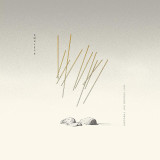
Julek ploski’s ‘Give up Channel’ is on mappa. It’s the follow-up to the Poland-based FL Studio demon’s ‘Hotel *’, released via Orange Milk in 2023.
It’s an album that wrestles against a shadow self. It’s about shelter from the hailstorm of unwanted memories and guilt pangs and serrated blades of thought. It’s about clinging on to some semblance of hope, knuckles taut and teeth gritted.
The fragmented drift of opener ‘Naysayer’ flows forward like an anxious daydream, pad eddies and piano plinks anchored by Trapaholics drops and bursts of guaracha drums. It’s a mess of mind: the bleakness of ‘Truth’ is punctuated by gun cocking and bullet spray and sudden jester-like blasts of unhinged, schizo-whimsical melody. An internal war without a clear winner.
Shame snakes through this music like venom through an emaciated body. Blue screenlight in a dark bedroom, pulsating temples, lockjaw. ‘Titanic’ hits like the thrashing resistance of a being built for love grappling against the scalding vengefulness it’s forced to contend with, the song’s abstracted rave synths giving way to warped voices and spiralling derangement. ‘Hollywood’ is a scarred battleground, the martial bludgeoning of a tightly wound hardstyle stomp blistering and shredding a delicate piano-and-string arrangement.
This music is about deep solitude, a meditation on simmering, slow-marinating hatred. But it’s ultimately about prevailing. It doesn’t revel in negativity, it roils and twists and writhes against it. Dots of light in oppressive darkness. Clarity and purpose against chaos and filth. It’s a struggle worth waging.
h I Was #AllAlone Movements V - VIII
[i] Economy [Movements I - IV]
Buscar:fragmente
Emergent polymath Brother Aten makes his first outing on Bruk with an icy slice of system-ready
minimalism, guided by the cooly detached voice of Ze R.
Taking cues from cult sci-fi and early 80s no wave, Fragmented Dystopia is a crystal clear
statement trimmed of all unnecessary baggage. The title spells out the mood — Aten's
soundscapes are stark and synthetic machine mantras punched out on outboard instruments
navigating gritty, futuristic zones.
On 'Unavailable' steadily humming drones shape the space in which Ze R. hovers, initially
delivering a deadpan denial before their humanity sneaks in as the track snakes through an
intricate lattice of crisp digital percussion. Short and razor-sharp two-parter 'Fragmented Dystopia'
finds an even sparser corner to occupy within Aten's subtly cyberpunk vision, where Ze R.'s
scattered words cut a measured figure delivered at acute angles before breaking into wilder forms
at the end of Part 2.
Originally from Brooklyn and now based in Berlin, Brother Aten has been weaving a fascinating
tapestry of audio and visual work as MAF. His artwork examines the fraught relationship between
technology and society. Ze R. explores dimensions of sexuality, subjectivity and individualism
through writing, performance and community organisation.
- Crude Soil 04:08
- Myriads 05:12
- Lifelike (Feat. Midwife) 04:38
- Veils 05:48
- Sun Unseen 04:49
- Lowercase Letters 05:32
- Infinities 05:31
- Burnt Siennas 05:31
On "Not Around But Through", Portland-based experimental musician and tape wizard Amulets
navigates the process of acceptance and the tumultuous journey of looking within. Over the course of 8 tracks he explores the emotional path of moving through rather than circumventing, in the process soundtracking a purposeful desire to face trauma and vulnerability.
Infusing his trademark ambient soundscapes with ambitious blends of post-hardcore, emo, and metal, "Not Around But Through" connects the dots between personal and social dislocation, leaving us with a taste of the fragmented and fallen future we are all steeling ourselves for. Traversing a landscape that varies from gentle and meandering to explosive and cathartic, Amulets uses cinematic tension and relentless attention to detail to construct his sonic apparitions. On "Lifelike" he collaborates with Midwife, incorporating Madeline Johnston's voice into a song that pulsates with post-shoegaze transcendent energy.
Amulets is the solo project of Portland-based audio + visual artist Randall Taylor. Amulets employs handmade cassette tape loops and live processed guitar loops to create live, lush soundscapes and immersive drones. Through the recontextualisation of cassettes, sampling, field recording, and looping, these long-form compositions blur the genres of ambient, drone, noise, and electronic music.
- Every Day There's A Sunset
- Interlude I
- Satellite
- To Breathe Lightning
- Ghost
- Breaks
- Search Light
- Every Day There's A Sunrise
- Spirit
- Maybe
- Interlude Ii
- Letter
- Splits The Light
- You Are Everywhere
TRANS RED VINYL[28,15 €]
Jules Reidy"s sublime music maps the human experience in glittering constellations of sound. The guitarist is a driver of Berlin"s fertile contemporary music scene. A wide-eyed imagination combined with technical mastery guide each work in Reidy"s extensive catalog, from solo guitar albums and collaborations with innovative peers, including recent works with claire rousay, Oren Ambarchi, Andrea Belfi and Sam Dunscombe to major commissions from JACK Quartet and Zinc & Copper. The songs of Ghost/Spirit collectively convey an astral sense of yearning and wonder, pushing towards transcendence. The album charts a deeply personal journey with love, spirituality and transformation expressed in fractal guitar figures, ethereal vocal vapors and rippling microtones. Reidy"s guitar approach unlocks the tonal and textural possibilities of the instrument from their use of alternate tunings and astute processing. The maximalist melodics of album opener "Every Day There"s a Sunset" are bolstered by rumbling bass samples from Andreas Dzialocha, Reidy"s collaborator in the duo Sun Kit. On "Satellite," cello samples from Judith Hamann stretch out through the cosmos, orbited by spiraling finger-picked guitars, while stacked trombone chords echo out into the ether. Thundering drum samples from Berlin metal mainstay Sara Neidorf push the album to ecstatic peaks on "Every Day There"s a Sunrise," fragmented rhythms breaking apart in the atmosphere. Field recordings of the Berlin S-Bahn recur throughout the album, another endless cycle of leaving and returning that shuttles beneath the album"s whirling tones. Ghost/Spirit captures the inherent power and agency in choosing to offer yourself up to the universe and let go, ego death and prayer rendered in incandescent sonics. Reidy"s inimitable skill as a guitarist, producer and composer is on full display, and when combined with the intensity of experience, the resulting album is a remarkable work of art.
Firework Shimmer Vinyl[28,15 €]
Like a passenger riding shotgun on a road trip, The Villagers Companion offers its own unique perspective and story to tell. Featuring tracks recorded alongside last year’s acclaimed villagers, TVC captures the miles between the start and destination—the faded gas station pit stops, the plastic saint statue stuck to the dashboard for safe travels or luck. It embodies the essence of the journey without the burden of driving—the experience of the ride itself.
The album takes us through the heart of Califone’s magic: reverb-drenched piano chords, electronic whirs, and layers of experimental noise. Guided by Tim Rutili’s abstract, fragmented lyrics—both strange and familiar—delivered through his warm, well-worn vocals, it creates an experience as evocative as it is haunting. Often passing through what seem to be the spaces between radio frequencies, the stations never meant to be heard. Crackles of static, feedback loops, and fleeting signals bloom into meditative moments, with each sound given space to breathe, unravel, and shimmer in slow decay. The result resonates deeply, transforming what might be noise into something profound, hypnotic, and totally immersive.
As with villagers, Rutili and company continue to explore what it means to get lost while surrounded by modern technology. Like a ghost in a machine or a whispered prayer stuck in a telephone line, Califone adds soul—be it damned or saved. And they do so with the kind of transformative magic granted perhaps only to artists a quarter of a century into their craft. The kind that turns a photograph into a tableau, or any darkened space with a microphone into a makeshift confessional. A song into a hymn, and a hymn into a soundtrack to a life.
Black Vinyl[29,62 €]
Like a passenger riding shotgun on a road trip, The Villagers Companion offers its own unique perspective and story to tell. Featuring tracks recorded alongside last year’s acclaimed villagers, TVC captures the miles between the start and destination—the faded gas station pit stops, the plastic saint statue stuck to the dashboard for safe travels or luck. It embodies the essence of the journey without the burden of driving—the experience of the ride itself.
The album takes us through the heart of Califone’s magic: reverb-drenched piano chords, electronic whirs, and layers of experimental noise. Guided by Tim Rutili’s abstract, fragmented lyrics—both strange and familiar—delivered through his warm, well-worn vocals, it creates an experience as evocative as it is haunting. Often passing through what seem to be the spaces between radio frequencies, the stations never meant to be heard. Crackles of static, feedback loops, and fleeting signals bloom into meditative moments, with each sound given space to breathe, unravel, and shimmer in slow decay. The result resonates deeply, transforming what might be noise into something profound, hypnotic, and totally immersive.
As with villagers, Rutili and company continue to explore what it means to get lost while surrounded by modern technology. Like a ghost in a machine or a whispered prayer stuck in a telephone line, Califone adds soul—be it damned or saved. And they do so with the kind of transformative magic granted perhaps only to artists a quarter of a century into their craft. The kind that turns a photograph into a tableau, or any darkened space with a microphone into a makeshift confessional. A song into a hymn, and a hymn into a soundtrack to a life.
After Martin Hederos gathered his dream band, Hederosgruppen has become one of Sweden’s most hyped jazz acts, both live and on record. Yes, they are often placed in the jazz category, but they seem primarily focused on making fun music. Hederosgruppen made their debut with Storstrejk (2020) which was followed by Ståplats (2022), the only album thus far to win the Gyllene Skivan, Grammis and Manifest awards. Expectations for the third album may be high, but the group acts colly, calls their new creation Stilbrott (Breach of style) and puts three ski jumpers on the cover. As before, all five band members contribute ideas and compositions. The result could have been fragmented, but this quintet has created their style out of eclecticism. As before, they mix the riotous with the romantic in any number of styles. The common thread is the joy of being alive and playing live.
"Four years in the making, Nikolaienko’s retrogarde take on mid-20th century tape music is a loping, whirling fuzzy felt oscillator odyssey. If Louis and Bebe Barron had been asked to create electronic tonalities for a Czech animation based on EM Forster’s The Machine Stops, the results may have turned out like this. Only, for all its nods to Parmegiani and the BBC Radiophonic Workshop, one can’t quite see this album coming out in 1956 – or even 1976. Something about the slightly off kilter rhythms, the loose feel and wheezing sound effects make this very much a post-Dilla take on Raymond Scott and his successors." - The Wire
"...The album, pitched as “a tribute to early-electronics’ golden era,” takes on a fragmented aesthetic of bleeps, thunks and jolts that secrete the concentrated focus of a fantastical laboratory...” Tiny Mix Tapes
"...The Sounds Of Pseudoscience is a perfect cocktail of space ambient with ice, delicate percussions, under-water rhythms and echoes of Soviet 60s..." Krossfingers
Limited to 50 copies cassettes in Riso printed J-cards
"Four years in the making, Nikolaienko’s retrogarde take on mid-20th century tape music is a loping, whirling fuzzy felt oscillator odyssey. If Louis and Bebe Barron had been asked to create electronic tonalities for a Czech animation based on EM Forster’s The Machine Stops, the results may have turned out like this. Only, for all its nods to Parmegiani and the BBC Radiophonic Workshop, one can’t quite see this album coming out in 1956 – or even 1976. Something about the slightly off kilter rhythms, the loose feel and wheezing sound effects make this very much a post-Dilla take on Raymond Scott and his successors." - The Wire
"...The album, pitched as “a tribute to early-electronics’ golden era,” takes on a fragmented aesthetic of bleeps, thunks and jolts that secrete the concentrated focus of a fantastical laboratory...” Tiny Mix Tapes
"...The Sounds Of Pseudoscience is a perfect cocktail of space ambient with ice, delicate percussions, under-water rhythms and echoes of Soviet 60s..." Krossfingers
Black Truffle is thrilled to begin 2025 with a rare solo release from Konrad Sprenger, alias of elusive Berlin composer-producer-instrument builder Jörg Hiller. A prolific collaborator, Sprenger has worked extensively with icons of American minimalism such as Ellen Fullman (with whom her recorded the gloriously eccentric song album Ort) and Arnold Dreyblatt (as a core member of the Orchestra of Excited Strings since 2009), as well as releasing their music on his impeccably curated label, Choose. As an instrument builder and installation artist, he has overseen the creation of a computer-controlled multi-channel electric guitar and, with Phillip Sollmann, a modular pipe organ system designed to be reconfigured from space to space.
In much of Hiller’s work, a scientific approach to acoustic phenomena co-exists with a pop sensibility and a sly sense of humour. Nowhere is this unique combination more in evidence than in his slim body of solo work, beginning with the startling diversity of instrumentation and compositional approaches heard on the short pieces of Miniaturen (2006) and Versprochen (2009), followed by the more single-minded exploration of the computer-controlled electric guitar on Stack Music (2017). Set brings together these various strands of Sprenger’s work into a wildly infectious, playful epic, performed by the composer and the mysterious Ensemble Risonanze Moderne. On the LP’s second side, we are also treated to a guest appearance from longtime collaborator Oren Ambarchi, on whose recent solo releases Simian Angel and Shebang Sprenger has made key production contributions. Ambarchi’s signature stuttering, swirling harmonics weave through a sparkling assemblage of electric guitars, acoustic instruments, percussion and electronics—though, given the deft use that much of Sprenger’s recent production work makes of midi-controlled sampled instrumentation, it’s anyone’s guess where the acoustic ends and the digital begins here.
As soon as the needle drops on the first side, we are inside a musical world that Set will inhabit for its 33 minutes: sparkling guitar harmonics and palm-muted notes, tuned percussion, crisp electronic drum hits, flashes of horns, and untraceable bursts of synthetic sound are arranged into a skittering polyrhythmic framework calling up the detail-rich percussive constructions of contemporary techno filtered through the pointillism of the post-serialist European avant-garde. Behind this shifting mist of particulate sound, winds and strings sound out held chords, reminiscent of Arthur Russell’s Tower of Meaning in their epic yet seemingly aimless drift. The relationship between elements is mysterious, appearing both carefully considered and almost random. Though never straying too far from where it begins, as the piece moves along, it spotlights increasingly bizarre instrument choices (shakuhachi and steel drums, anyone?) as well as momentary liftoffs into motorik propulsion. Set is a fascinating, mercurial thing: at once propulsive and fragmented, essentially static in form yet ever-changing in detail, unabashedly egghead in its construction yet sure to get the feet tapping.
In the heart of the neon-washed ruins, the citys pulse was electronic faint, rhythmic, controlled. The rebellion moved like shadows, fragmented, but growing. Among them, The Echo shifted no face, no identity, just whispers of someone who was everywhere and nowhere.
It could become anyone, blend into any crowd, disappear in plain sight. To the rebels, The Echo was the key. A shapeshifter with the ability to infiltrate the Systems command center, the nerve of the AI-controlled city. But in the silence between the beats of a distorted festered.
Was The Echo their weapon, or their silent executioner?
- Unperson
- Apparition 3
- Bruise
- Blackmail
- The Itself Of Itself
- Study For Tape Hiss And Other Audio Artefacts 11.58
- Apparition 5
Steven Wilson is no stranger to composing music that appears to counter everything else before it in his catalogue. Bass Communion, his long running solo electronic project, is no exception to this perverse streak that apparently likes to turn all expectations upside down. The Itself of Itself, Bass Communion's first album for 12 years, skilfully pays testament to this. Long established as a purveyor of mostly atmospheric or ambient textures, the seven cuts that represent The Itself of Itself take detours from this approach in order draw as much from musique concrete, noise music, abstract electronics and uneasy listening. Whilst still rippled with the same shades of light and dark that can be found throughout all of Bass Communion's work, The Itself of Itself reveals a fascination with analogue sounds and, more importantly perhaps, 'unwanted' analogue artefacts like tape hiss, wow and flutter, static noise, and sonic break-up, taking the music into a space at once different yet familiar. 'Apparition 3' presents a stark nod to Wilson's established command of shifting textures steeped in penumbral gauze, while 'Bruise' is akin to a space probe adrift and headed towards a white dwarf as all communication is reduced to a disturbing and indecipherable crackle. Between the other five cuts we witness fragmented, garbled and buried voices, vast vacillating banks of grainy hum, what sounds like the dying gasps of an oboe, spooky swirls from an indiscernible source, swathes of tape hiss, moody drones, and spiralling slivers of noise. Meanwhile on the title track, a mellotron flute rusts and collapses in on itself in a way that renders it the very antithesis of the one deployed on 'Strawberry Fields Forever'. Everything adds up to a dynamic listening experience where unease, dread and comparatively claustrophobic torrents of sound make (un)natural bedfellows to moments of enchantment and serenity. Above all, The Itself of Itself sees Steven Wilson cutting his teeth on an album that's at once cinematic and moody whilst proving him to be a master in electronic music craftsmanship. It's an album that might surprise some of those who have thus far been paying attention to his work as Bass Communion, but setting out to please everyone was never part of his raison d'etre. The Itself of Itself catches Bass Communion spreading its weatherbeaten wings to embrace new strategies and a strong desire to journey elsewhere. Arriving in a wonderful Carl Glover designed deluxe cover also comprising a 24pp. booklet of his photographs and an obi strip, this version of The Itself of Itself arrives in December on Lumberton Trading Company as a 2LP pressed in an initial run of 1000 copies.
- Ermione
- Elena
- Menelao
- Tindaro
- Nuovo Sposo
- Uccidere Elena
- Amata Luce Addio
- Pilade
- Niente Di Sacro
- Pugnali
Die Schachtel Records is proud to present Ifigenia/Oreste, a new vinyl LP by celebrated Italian composer Paolo Spaccamonti. This album marks the seventh installment in the label's renowned Decay Music series, which has become synonymous with deeply emotive, abstract, and electronic/ambient music, which has so fare featured works of such names as Stefano Pilia, Giovanni di Domenico, Sandro Mussida, Vértice, Damavand and Claudio Rocchetti. Aim of the series is composing a fascinating scenario of the most interesting names of experimental musicians – mainly of Italian origins - working at the intersection of sound and music, abstract and visual, storytelling and abstract composition.
Paolo Spaccamonti has long been a significant figure in the contemporary music scene, known for his ability to bridge the worlds of instrumental, electronic, and experimental music. His most recent release, Nel Torbido (2023), is a testament to his ever-evolving artistry. With Nel Torbido, Spaccamonti delivered a haunting and immersive sonic experience that oscillates between tension and release, bringing together moody soundscapes, unsettling textures, and his signature understated guitar work. His exploration of silence, noise, and melodic tension has earned him recognition as one of the most unique voices in modern composition.
Composed by Spaccamonti, Ifigenia/Oreste is the original score for the theatrical production IFIGENIA / ORESTE, directed by Valerio Binasco and produced by Teatro Stabile di Torino. The music, both haunting and subtle, mirrors the play's minimalist and intense staging, immersing listeners in an evocative soundscape that blends ambient textures with guitar-driven melodies. The music was recorded and processed by Filippo Conti, with additional production and mixing by Stefano Pilia. The vinyl’s design has been crafted by Bruno Stucchi of Dinamomilano, making this release a fusion of sound, visual, staging and cultural reference.
In reflecting on his collaboration with director Valerio Binasco, Spaccamonti said: "From the first meeting with Valerio, it was clear that we aimed to create a production stripped of any unnecessary stylistic embellishments. Ifigenia and Oreste had to be severe, devoid of visual distractions, simple yet extreme in its own way. I sought to follow the same path with the music. The foundation is always the guitar, but I wanted to avoid overloading it, either harmonically or sonically. Sometimes, I treated it like a fragmented background noise; other times, I ventured into more aggressive, melancholic, or even melodic terrains, but always in a very human way. The text demanded an atmosphere that lived in the alternation of silence and rarefaction, like in the films of Bresson and Lanthimos. Short scenes interrupted by moments of darkness. In a marked rhythm, a suspense constantly suggesting the advance toward death, announced from the very first scene. Hence, the emphasis I wanted to place on silence through the music, even within individual tracks. Long, granular tails, like the (few) lights on stage."
The much acclaimed Environments series returns with an exclusive to Record Store Day vinyl edition of “RITUALS” the first in the Environment 7 trilogy - a 13 track album of new recordings by The Future Sound of London, engineered by Yage.
Delicate melodies collide with deeply fragmented electronics - surfing atop muted rhythms and beats. Unique and unplaced the FSOL are unrivalled in art-electronic.
6 years after their last album, fav favourite Kites, Submotion Orchestra make their long-awaited return with the remarkable Five Points EP. Recorded over a period of two months at band member Taz Modi's new studio in the Sussex countryside, it sees the band plough a path through electronica, jazz, soul and ambient in their own singular way. After a period of time spent looking back at their oeuvre, with the release of two Unplugged collections as well as classic debut album Finest Hour on vinyl for the first time, the refreshed, slightly older and wiser band set their sights firmly ahead, and the result is music that sounds like nothing they've done before.
Whilst featuring the uniquely fragile voice of Ruby Wood and the live instrumentation that has been their calling card in the electronic world for so long, the EP also delves into rhythms, soundscapes and effects that push their recognisable sound as far as it can go, and acts as the perfect taster for the forthcoming album that the band are currently recording.
Created as a seamless listening experience, the EP opens with the evocative and atmospheric 'Start Point', as dreamlike synths and brass mix with wordless harmonies straight from the heavens. 'Hope' continues the mood, warm analogue synth patterns combining with fragmented vocals on a persistent build-up to an emotional climax. Lead single 'Side One' cheekily nods to Submotion classic 'All Yours', before moving into newer territory, where Ruby Wood's vocals slowly become distorted and twisted, the perfect backdrop for this story about the loss of hope. Flowing joinlessly into its mirror image 'Side Two', we see the instrumental prowess of Submotion Orchestra which has so long been their defining characteristic in full flow. Finally, 'End Point' brings the EP to a moving and wistful climax, telling a tale of the wisdom that can only come after bitter experience.
50 frequency and amplitude modulated sine waves describing a landscape / Trigram for Earth. Trigram for Earth, by Flora Yin Wong, is inspired by traditional eight-sided Pakua mirrors and the trigrams inscribed on each of their edges. The function of the mirrors is to show the nature of reality as being composed of mutually opposing forces and modulate them. Here, energies seem to be manipulated to guide and direct our listening, lost in a maze of sound, diffracted to the point of merging with the artist's own listening, through her memories, her obsessions, the fragments she carries within her. Flora Yin Wong invites us to embark on a multi-faceted investigation of sound, a journey through the meanders of liberated sonic forces, an auscultation of her own listening and a portal, at last, ajar to a fragmented and forever mysterious inner world.In his work '50 frequency and amplitude modulated sine waves describing a landscape,' Sébastien Roux applies his approach to algorithmic composition to the observation of the natural world, bringing the sound of the sea and the song of birds into the electronic domain, transmuting them into each other through a slow process of gradual modulation. Exploring the abstract space of pure sounds between two naturalistic tableaux, Sébastien Roux offers us a fascinating meditation on the world of synthesis, revealing, with an economy of means and great formal elegance, the magic of sonic simulacrum (deepl propose simulacra, mais là je suis pas assez calé_) and the strange beauty of the artificial, in a gesture that is ultimately as poetic as it is musical.
SWIMS returns with their third release since last summer’s romance with London’s Kit Records which spawned two beautiful albums by Romeo Poirier and Electric Capablanca.
Leaving behind the soothing natural landscapes of the previous releases, Finomehanika is an intricate 42-minute machinist journey combining the frayed melancholia of Vladislav Delay’s recently reissued Multila, with the strangely real-sounding yet otherworldly mechanics of Autechre in their Confield era. However, Finomehanika sounds thoroughly unique. It makes heavy use of the piano and field recordings for depth and ambience. The line between synthesized sound and manipulated recordings blur to a point where one becomes the other. The often subtle use of field recordings prevents us from drifting too far into the abstract, keeping us grounded in a fragmented, confusing but familiar environment.
Finomehanika is Robert’s first solo release in 20 years since 2000’s Albumski on Phthalo. The sleeve was designed by Michael Tan known for his previous work with artists such as Blanck Mass and Dopplereffekt. The album features on piano Robert’s brother Miro, better known for his releases as Qwerty. The brothers also recently collaborated on 2019 album Na Vrućem Krovu by Robert’s art-pop band Marinada.
Ruby Wine Vinyl. Manchester UK's Space Afrika make music of what they term "overlapping moments" - oblique mosaics of dialogue, rhythm, texture, and shadow, half-heard through a bus window on a rainy night. Honest Labour, the group's first full-length since 2020's landmark hybtwibt? (have you been through what i've been through?) mixtape, expands the project's palette with classical strings, shimmering guitar, and visionary vocal cameos, leaning further into their enigmatic fusion of ambient unrest and cosmic downtempo. It's a sound both fogged and fragmented, at the axis of song craft and sound design, born from and for the yearning solitudes of life under lockdown.The album title is tiered, alluding to a legendary patriarch from co-founder Joshua Inyang's Nigerian family tree (who was lovingly called "Honest Labour" for his loyalty and resilience) as well as the nature of self-designated work, such as Space Afrika's music - a "labor of love" in its truest sense. With fellow co-founder Joshua Reid recently relocated to Berlin, the pair began sharing files last fall, piecing together poetic vignettes of looping haze and found sound, inspired by the notion of "records that leave an impression, and help the listener deal with their life." As the isolation of Covid compounded with the worsening winter, the songs skewed increasingly introspective and emotive, reflecting a mood of dissipating futures and the infinite nocturnal unknown.The artists cite two core motivations for Honest Labour: to transcend the sum of their influences, and "to show what we're capable of." Both ambitions are entirely realized. The collection's 19 tracks flow with a synergy and sophistication as rare as they are radical, untethered to the dusty dub-techno templates of Space Afrika's early years. These are interstitial anthems, expressionistic and open-ended, delirious but deliberate, attuned to the drift and dreamstate of the present moment: "Ultimately this is an homage to U.K. energy, and an album about love and loss."
Den Titel für sein Album "Classical Soul Volume One" hat Pianist und Komponist Alexis Ffrench an klassische Hip Hop-Mixtapes angelehnt. Kurze Melodie-Fragmente aus Soul-Hymnen wie "Ain't No Sunshine" und "A Change Is Gonna Come" verbindet er, wie "Samples" im Hip Hop, mit seinen eigenen Kompositionen. Diese sind von persönlichen Momenten und Erinnerungen inspiriert. Alexis Ffrench sagt: "Dieses Projekt hat etwas von einem Rundumblick und ist auch das Ergebnis eines '360°-Prozess', bei dem ich zurückgeschaut, aber auch nach vorne geblickt habe". Der Tod seines Vaters war ein fundamentaler Einschnitt, ein Verlust, der nachhallte und Alexis neu auf sein Leben blicken ließ. Eine Auszeit in der Natur, in den Highlands von Schottland, brachte ihm Ruhe und Zeit zur Reflexion. "Diese Erfahrungen veranlassen dich, darüber nachzudenken, was man hat und wirklich liebt", erklärt er. Insofern ist "Classical Soul Volume One" auch eine universelle Erzählung von Verlust und Liebe und dabei eine Feier des Lebens.