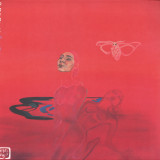
Named for the Grateful Dead song that concludes this inspired double
album, Uncle John's Band features masterful guitarist John Scofield at
his most freewheeling
Wide ranging repertoire finds his trio with Vicente Archer and Bill Stewart tackling
material from Dylan's "Mr Tambourine Man" to Neil Young's "Old Man", from
Leonard Bernstein's "Somewhere" to the Miles Davis Birth of the Cool classic
"Budo". And jazz standards including "Stairway to the Stars" and "Ray's Idea" rub
shoulders with seven Scofield originals that are variously swing, funk and folkinflected. The red thread through the programme is the trio's tremendous
improvisational verve.
"I feel like we can go anywhere," says John Scofield of the group's multidirectional versatility.
Uncle John's Band was recorded at Clubhouse Studio in Rhinebeck, New York, in
August 2022.
quête:free son
New West Records is proud to present Strange Country, the new full-length album from the young and gifted cousin-duo Kacy & Clayton. The ten-song collection was recorded over seven freezing Canadian winter days at Ghetto Box Studios, a historic community hall turned studio. The product of a lifetime of deep kinship, the record showcases the purity and astounding beauty of Kacy Anderson's voice, one that has been notably compared to Fairport Convention's Sandy Denny. Only Clayton Linthicum's intricate guitar work, expert time changes and vocal harmonies could forge the foundation for Kacy's voice to soar even higher - the result being an enormously satisfying and organic album. Drawing a wide swath of inspirations ranging from the Greenwich Village folk scene to the ancestral music of Southern Appalachia and the British Isles, the cousins fashion songs steeped in those traditions, simultaneously paying homage and building on those sounds.
- 1: You Have Arrived
- 1: 2Neil Finn - Here Comes The Season Again
- 1: 3My Calendar Lied
- 1: 4Annabella Lwin - It Felt Like A Dream
- 1: 5Puddles Pity Party - Maids Can't Mop Up Memories
- 1: 6Coming Apart At The Seams
- 1: 7Erik Paparozzi - I Passed It By
- 1: 8Alan Bishop - Security Guard
- 1: 9Screen Time
- 1: 0Miranda Paparozzi - Cats And Dogs
- 1: Neil Hamburger And A.j. Lambert - Sleeping For Free
- 1: 2Bonnie
- 1: 3If This Long Season
- 1: 4Natalie Peyser - Check-Out Time Is A.m
- 1: 5Sugar Packets
Neil Hamburger presents a new work from the songwriting team of Gregg Turkington and Erik Paparozzi. Seasonal Depression Suite is an album-based musical, sung by an all-star cast whose voices embody various guests stuck in a perfectly average chain-hotel, wallowing in self-pity and paranoia, re-living personal catastrophes both real and imagined, or simply trying to use the hotel vending machine. Expert music played by an all-star band, to boot! To sing these parts, a once-in-a-lifetime all-star cast was assembled - including Neil Finn (Split Enz, Crowded House, Fleetwood Mac), Annabella Lwin (Bow Wow Wow), Alan Bishop (Sun City Girls), Bonnie Prince Billy, acclaimed singer/performance artist Puddles Pity Party, voice actress Natalie Peyser, J.P. Hasson (Pleaseeasaur), enigmatic vocalist (and Frank Sinatra"s granddaughter) A.J. Lambert, Paparozzi himself and, of course, Neil Hamburger. Among the many musicians accompanying the cast were Scarlet Rivera (Bob Dylan"s Rolling Thunder Revue), Danny Heifetz (Mr Bungle), Bär McKinnon (Mr Bungle), Prairie Prince (The Tubes), Atom Ellis (Dieselhed), Jason Schimmel (Secret Chiefs 3), and Alex Jules (The Monkees band) - an international assemblage whose talents give Seasonal Depression Suite its epic sweep. With all hands on board, Turkington and Paparozzi created their own kind of masterpiece, like Sinatra"s late-period concept album Watertown fused with the misfit comedy of Neil Hamburger - a work that looks at a cast of characters both ordinary and bizarre, as they make their way from one grievance to another, traveling from place to place, hoping to live, while waiting to die.
Faitiche releases the album Improvisations And Edits, Tokyo 26.09.2001 on vinyl for the first time. For the original 2002 CD on Soup-Disk and Sub Rosa (Audiosphere), Jan Jelinek and the Japanese trio Computer Soup (Satoru Hori – trumpet, Osamu Okubo - toys & electronics, Kei Ikeda - toys & electronics) presented eight tracks all recorded one afternoon in the trio’s living room in Tokyo. They are excerpts from a joint group improvisation that subsequently underwent rudimentary editing, on which Jelinek and Computer Soup worked separately.
Jelinek met the three musicians at his first concert in Japan in 2001, at Tokyo’s Yellow club, where Computer Soup performed as the support act. Delighted by their free improvisation on pocket-sized electronic toys, trumpet and oscillators, he arranged to meet Hori, Okubo and Ikeda a few days later for a session at their apartment. The resulting three-hour recording, made on their living room floor, formed the basis for Improvisations and Edits. A few days later, Jelinek returned to Berlin. Over the following months, they separately chose passages from the recording that were then edited and assembled into an album.
Formed in Tokyo in 1996 as a quintet (including Shusaku Hariya and Daisuke Oishi), Computer Soup began by performing with acoustic instruments on the streets of Shibuya. Ikeda und Okubo soon switched instruments, and from then on the group’s minimalistic but densely woven sound was defined by electronic toys, oscillators and Satoru Hori’s trumpet. Their first album was released in 1997 on the Japanese label Soup Disk. Eight further releases followed.
From the reviews of Improvisations and Edits, Tokyo 26.09.2001 in 2003:
"The mind-blowing first track Straight Life is perhaps the best example of what the album has to offer. Jelinek's trademark smears and washes occupy the midrange, like ghosted images of Joe Zawinul's electric piano floating quietly in the wind. DSP jazz modes are set against a walking bassline (possibly computer generated) and a gently tooted trumpet complete with Harmon mute, a dead ringer for Miles Davis' Prestige-era ballads. The effect is something like a three-dimensional film, with different realities on each layer; images of what jazz was manage to interact with a real-time demonstration of all it could be."
pitchfork, 2003
"Improvisations and Edits is a warm and mellow Ambient release with beautiful glitch fragments, static noise bursts and real trumpet intersections. However, there are times where it is the exact opposite, mainly effect-laden, overdriven and bouncy with a lack of melodies and focus, so be aware of these specific tracks."
ambientexotica, 2003
"Often deliciously dreamy and hazy, Improvisations and Edits is like listening to an exceptional instrumental jazz performance while half-conscious or under some sort of chemical influence. Computerised blips and bleeps, loops and treatments and murky sonic skips curl up around desolate horn notes and scattered instrumental noises that culminate in elegant music."
exclaim.ca, 2003
Since their formation in 1977 Mark Perry’s group Alternative TV have moved far away from their more direct punk rock beginnings into all manner of other areas of music that have sometimes themselves drawn from improvisation, free jazz, industrial and electronic music. On Direct Action, Alternative TV’s first studio album since Opposing Forces in 2015, we are presented with six instrumental tracks which steadily rip apart all expectations as they shed all allusions to rock music in favour of the kinda sonic mutilations that once helped 1979’s classic (and Nurse With Wound list endorsed) Vibing Up the Senile Man (Part One) stumble into weird and wonderful shapes. Direct Action marries guttural electronics to sounds most artists would consign to the bin and through Perry’s long perfected mastery of pulling together disparate strands to create something entirely alchemical and invigorating delivers a unique stamp to the ATV story. With the help of longtime collaborator Dave Morgan alongside the input of Gareth Matthews, Ruth Tidmarsh and Cos Chapman, abstract patterns of dishevelled sound rub alongside occasional percussion, disembodied plasma guitar strums and even what seems like an oboe groaning in a murky corner. Similar to its distant cousin of Vibing…, everything adds up to a whole that’s demanding yet completely rewarding as every listen prises open the dark scab of contemporary malaise to reveal something fresh. The front cover’s homage to an incredible album by a pioneering electronic group we are not going to name should in itself point to the unpredictable nature of the music here. If you are savvy enough to get that reference, then you’re on the right path to understanding where Direct Action resides. Easy listening this ain’t. Limited to 600
Am 05. Mai 2023 veröffentlichen HIGH SOUTH mit FEEL THIS GOOD sinnigerweise ihr inzwischen fünftes Studioalbum. FEEL THIS GOOD ist ein Album, das von einschneidenden Veränderungen geprägt ist. Dass FEEL THIS GOOD dennoch eine ausgesprochen positive Platte geworden ist, ist einmal mehr der Grundhaltung der beiden HIGH SOUTH Masterminds JAMEY GARNER & KEVIN CAMPOS geschuldet, die sich durch Nichts und Niemandem unterkriegen und von ihrem Weg abbringen lassen - mit ihrer Musik den Gedanken von PEACE, LOVE & HARMONY in der Welt zu verbreiten! IKonzerte weg, Einkommen weg, Produzent weg, Bandmitglied weg - übrig bleiben die beiden Bandgründer inmitten der Scherben ihres musikalischen Traums. Als sich Kevin schlussendlich auch noch aus dem gemeinsamen Wohnort Nashville, dem vermeintlich musikalischen Epizentrum der Country & Americana Welt Richtung Europa verabschiedet, um sich fortan der Liebe wegen in Österreich niederzulassen, scheint die Zukunft der Band für kurze Zeit mehr als ungewiss. Neuorientierung auf allen Ebenen ist angesagt, welche schließlich auch Jamey das kalte Wetter Tennessees gegen die Sonne Floridas eintauschen lässt. In der entspannten Umgebung des Surfer-Hotspots New Smyrna Beach, Fl kann Jamey wieder neue Kraft schöpfen. Das Surferparadies fand entsprechend passend auch in der Album-Artwork durch die wunderschönen Bilder des dort ansässigen Fotokünstlers Dan Mongosa Ausdruck. Spätestens nach der in 2022 nachgeholten PEACE, LOVE & HARMONY TOUR, als den beiden Musikern jeden Abend eine unglaubliche Woge an Begeisterung und Freude ihrer treuen Fangemeinde entgegenschlägt, ist jeder Zweifel einer Fortführung des Projekts ausgeräumt und man macht sich an den Plan ein neues Album aufzunehmen. Das Album wird in Eigenregie produziert, back to the roots, und ist deutlich rauer, ungeschliffener und auf den Kern und die Quintessenz ihrer Musik konzentriert - zurück zu den Wurzeln eines reduzierten erdigen, authentischen Americana Sounds, der durch die unnachahmlichen HIGH SOUTH Harmony Vocal Chöre verfeinert bzw. zur Perfektion geführt wird. Das Ergebnis der Sessions ist pure hörbare Lebensfreude und Positivität, die bei Fans des Genres Gänsehautmomente folgen lassen, und dadurch FEEL THIS GOOD musikalisch und inhaltlich seinem Namen in jederlei Hinsicht gerecht werden lassen und von der Band mit Fug und Recht als die bisher stärkste und authentischste Platte wahrgenommen wird. Genre: CLASSIC ROCK / AMERICANA / COUNTRY ROCK
"Sweet Justice" ist das zweite Album von Tkay Maidza, der ersten Rapperin, die bei 4AD unter Vertrag ist. Der Nachfolger des selbstbetitelten Debüts aus dem Jahr 2016 enthält Produktionen von Flume und Kaytranada und zeigt alle Facetten der in Los Angeles lebenden, in Simbabwe geborenen und in Australien aufgewachsenen Tkay. "Sweet Justice" ist kein Rachealbum, wie der Titel vermuten lässt, sondern das Ergebnis dunkler Nächte und der Erleuchtung am Tag danach. Das Album klingt nach innerer Befreiung und Spaß am Leben. Sie wechselt zwischen den Stilen und überwindet so mühelos Genregrenzen - Musik ohne Zwänge, Regeln und Vorgaben. Dazu trennte sie sich von ein paar alten Freunden, fand einige neue, die auf der gleichen kreativen Wellenlänge lagen: die kanadischen Produzenten Stint und Kaytranada sowie ihr australischer Kollege Flume, die alle zur Produktion beitragen haben. "Sweet Justice" ist ein Album, das die wunderbaren Widersprüche von Tkays Kunst verkörpert: Es ist eine Coming-of-Age-Platte von jemandem, der langsam versteht, wie das Spiel des Lebens läuft. Ein Album über Gerechtigkeit und Verantwortlichkeit, das hell, luftig und unglaublich lustig ist und diejenigen, die unehrlich und respektlos sind, mit bittersüßer Musik niederstreckt. Wie Tkay in "Love Again" singt, einem Song, der wie eine Meditationssitzung klingt: "Vorbei sind die Tage, an denen ich fiel und sah, dass es kein Entkommen gibt." Ein gutes Leben ist die beste Rache. Auf "Sweet Justice" lebt Tkay Maidza dieses Motto.
‘Double Pink’ is the debut album by And Is Phi (Andrea Isabelle Phillips), a multidisciplinary artist from Norway and the Philippines now based in South East London. ‘Double Pink’ is a nuanced world that draws on colours and texture; with influences of Joni Mitchell and Frank Zappa, 90's R&B and Madlib’s ‘Shades Of Blue’ blending languidly to produce a base for uncovering layers of self, a deep release, and fragile new form.
Written by Andrea and co-produced with Fiona Roberts and Lorenz Okello over a nine month period; ‘Double Pink’ thematically explores the many movements of internal change, speaking from a deep inner voice inside the body. The title track is an invitation to be as unapologetically hungry as you please after a long absence of life giving passion and trust in oneself. ‘White Noise’ is a recovery song playing in your soul the first time you made it back out to the dance floor after a heart break so massive it laid rest to the person you used to be. Songs like ‘Working’ and ‘Staaar’ come from a candid and contemplative aspect. Stages of grief and resilience and wonder and wisdom are all touched upon.
“The album explores metamorphosis, liminal spaces, and the multiple faces of love”, says Andrea. “I mention love as a key ingredient, because anyone who has had to push and pull and hold and yield themselves through great loss and transformation knows it ain’t gonna happen without love. Tough times ask for double love, a stronger heart, something like a double pink”.
Andrea’s story dots between periods spent living in Norway, the Philippines and England - experiencing joy and beauty battling corruption and violence in Manila, DJing in Oslo, losing her sizable record collection in a warehouse fire before making friends and family in the jazz scene in London. Every story needs a scene, a landscape, an environment; all things Andrea visualises when writing songs.
“At my heart I am emotional and imaginative, searching for freedom for my spirit. What grounds it all is coming from a family of storytellers. My father played drums and percussion, he was a great dancer and a true collector and connoisseur of music from everywhere. My wise mother instilled in me a sense of faith and grace”.
Andrea is far from new to the scene, having performed with Steamdown, Emma Jean Thackray, Hector Plimmer, Scrimshire, William Florelle and many more as a valuable and inspiring creative force within the South London music scene. Andrea also created the album’s artwork and music videos: musicality and painting evolved from her initial creative languages of drawing and dance. All aspects are dialects of her common language: singing what can’t be painted and painting what can’t be sung.
Take the 101 north out of Los Angeles, and you'll pass by Agoura Hills, where the core duo of the band Dub Thompson grew up. Whatever you see in that town won't readily prepare you for the music they wrote while there, but you're free to look."Most everyone who's in a group who's our age lives on the Internet," says guitarist Matt Pulos. "The kinds of things that have shaped our band aren't anchored to any one time or place."Pulos and his bandmate, drummer Evan Laffer, are currently both 19 years old, and are putting that line of thought to the test; their musical influences travel from the Midwestern malaise of Big Black and Pere Ubu, to Kraut pioneers Can and Kraftwerk, while bowing to the British belligerence of The Fall and This Heat.Recording the album while living with Foxygen's Jonathan Rado at his rented house in Bloomington, the band had its first taste of a heavy Indiana summer, and all the humidity and insect life that buzzes along with it. "We woke up every day, ate hard-boiled eggs and stood on a porch," says Pulos of the experience.Their first collection of songs slyly unties the shoes of genre and convention, shapeshifts mischievously, and tramples on the promises delivered on the name itself.There are only eight songs on this rangy debut.Intense blasts of hook-filled noise rock ("Hayward!"), rocksteady marionette stomp ("No Time"), hypnotic bouts of doomy poetics ("Epicondyles"), outlandishly sexy groove rock ("Dograces"), and a number of other bite-sized forays into parts unknown are made manifest across 9 Songs. The vibes are strong here. Pulos sings and plays like he's working out long-standing grudges, pulling the most sinewy tones from an acoustic guitar and ripping huge chunks of demon flesh out of his electric. Laffer matches him step for step on the drums, an exacting presence behind the kit who pushes even the band's more placid moments into bouts of tension. Together they succeed in animating their musical ideas to startling, almost unnatural life. Reverb units, keyboards, samples and processing gluing everything together, saturated in the August heat and worn in until they sound second nature, it's like somehow you've been listening to these songs forever.
Morikawa Seiichirou, vocals, bass
Yamagiwa Hideki, electric & classical guitar
Takahashi Ikuro, drums & percussion
je prie pour que la goutte ne tombe pas
(I pray that the drop does not fall) is the first international release by Japanese trio Chi To Shizuku. While they have released five albums and a 7” in Japan, their spectral, haunted rock songs haven’t yet reached a much wider audience overseas. With this album, then, a live recording taken at Koenji HIGH, Suginami, Tokyo on 23rd November 2021, the unique, quartz-like character of Chi To Shizuku’s music is writ large, the bleak bliss of their songs carved onto twelve-inch vinyl.
Perhaps the best-known member of Chi To Shizuku, at least for audiences with an ear turned to Japanese psychedelia, is drummer Takahashi Ikuro, known for his membership of almost every group worth a damn from that scene – Fushitsusha, Nagisa Ni Te, Ché-SHIZU, Kousokuya, High Rise, Maher Shalal Hash Baz, LSD March, the list goes on. But the core of Chi To Shizuku’s music is the collaboration between vocalist, bassist and lyricist Morikawa Seiichirou, and guitarist and arranger Yamagiwa Hideki. Morikawa is a member of long-running punk/goth group Z.O.A., and has also played with YBO , Zzzoo, and as collaborator with Takeshi and Atsuo of Boris in A/N; he’s also recently been performing with Mitsuru Tabata. Yamagiwa’s history takes in stints with Katsurei and Cock C’ Nell, and he also recently guested with la scene 裸身.
All this contextual information does relatively little, though, to prepare you for the unique vibration of Chi To Shizuku’s lustrous songs. They shimmer in the same half-light, perhaps, as Shizuka and the quieter moments of LSD March, sharing a similar poise and classicism, and there’s a tenderness and wracked poetry to Morikawa’s voice that reminds of the emotional intensities both of traditional Japanese folk, and of British folk music: on “Musuu No Nemuri No Naka De Kumo Wo Tukamu”, the combination of his singing, backed with gorgeously plangent guitar, reminds of no-one so much as it does The Pentangle or Spriguns Of Tolgus. Chi To Shizuku’s love for the ballad as form gifts their music an archaic, sometimes arcane resonance, and from what you can hear on this album, it’s clear they’re in love with graceful melancholy.
But this is not a folk album, by any means; it just shivers with the same eternal spirit. There are also hints of prog rock, and you can catch some passages of scratchy, distended free rock, on the extended spirit invocation of “Nanhito Hanhito”. je prie pour que la goutte ne tombe pas is an extraordinary album, a melancholy surprise, that reminds dedicated listeners of the seemingly bottomless well of great music to be found via the Japanese underground in its many forms. Perhaps Michel Henritzi says it best, though, in his liner notes, when he writes, “Chi To Shizuku’s music reminds us that our life is a dream that lasts only a season, and that oblivion will follow.”
Recorded at Koenji High Suginami, Tokyo, 23 November 2021
Mix & Mastering: Taku Unami, photography : Noriko Akiyama
Liner notes by Jon Dale Printed by Alan Sherry
- A1: She Belongs To Me - Live At The Royal Albert Hall (04:49)
- A2: Fourth Time Around - Live At The Royal Albert Hall (04:45)
- A3: Visions Of Johanna - Live At The Royal Albert Hall (09:29)
- A4: It’s All Over Now, Baby Blue - Live At The Royal Albert Hall (05:10)
- B1: Desolation Row - Live At The Royal Albert Hall (12:29)
- B2: Just Like A Woman - Live At The Royal Albert Hall (05:55)
- B3: Mr. Tambourine Man - Live At The Royal Albert Hall (06:29)
- C1: Tell Me, Momma - Live At The Royal Albert Hall (04:46)
- C2: I Don’t Believe You (She Acts Like We Never Have Met) -Live At The Royal Albert Hall (05:33)
- C3: Baby, Let Me Follow You Down - Live At The Royal Albert Hall (02:47)
- C4: Just Like Tom Thumb’s Blues - Live At The Royal Albert Hall (05:51)
- D1: Leopard-Skin Pill-Box Hat - Live At The Royal Albert Hall (03:42)
- D2: One Too Many Mornings - Live At The Royal Albert Hall (04:02)
- D3: Ballad Of A Thin Man - Live At The Royal Albert Hall (06:11)
- D4: Like A Rolling Stone - Live At The Royal Albert Hall (06:36)
Cat Power veröffentlicht am 10. November ein Live-Album Cat Power Sings Bob Dylan: The 1966 Royal Albert Hall Concert via Domino.
Cat Power Sings Dylan: The 1966 Royal Albert Hall Concert" wurde am 5. November 2022 in der berühmten Londoner Royal Albert Hall aufgenommen und zeigt Chan Marshall wie sie Song für Song eines der legendärsten und transformativsten Live-Sets aller Zeiten nachspielt. Im Mai 1966 fand das Konzert in der Manchester Free Trade Hall statt, das aufgrund eines falsch beschrifteten Bootlegs lange Zeit als "Royal Albert Hall Concert" bekannt war. Bei dem Originalauftritt wechselte Bob Dylan in der Mitte des Konzerts von der akustischen auf die elektrische Gitarre, was den Zorn der Folk-Puristen auf sich zog und den Verlauf des Rock 'n' Roll für immer veränderte. "Cat Power Sings Dylan: The 1966 Royal Albert Hall Concert" würdigt liebevoll Dylans Spuren in der Geschichte und bringt eine bezaubernde Vitalität in viele seiner am meisten verehrten Songs, einschließlich "She Belongs to Me" und "Ballad of a Thin Man"."
- A1: String Quartet No. 5 I
- A2: String Quartet No. 5 Ii
- A3: String Quartet No. 5 Iii
- A4: String Quartet No. 5 Iv
- A5: String Quartet No. 5 V
- B1: String Quartet No. 4 (Buczak) I
- B2: String Quartet No. 4 (Buczak) Ii
- B3: String Quartet No. 4 (Buczak) Iii
- C1: String Quartet No. 2 (Company) I
- C2: String Quartet No. 2 (Company) Ii
- C3: String Quartet No. 2 (Company) Iii
- C4: String Quartet No. 2 (Company) Iv
- D1: String Quartet No. 3 (Mishima) 1957 – Award Montage
- D2: String Quartet No. 3 (Mishima) November 25 – Ichigaya
- D3: String Quartet No. 3 (Mishima) 1934 – Grandmother And Kimitake
- D4: String Quartet No. 3 (Mishima) 1962 – Body Building
- D5: String Quartet No. 3 (Mishima) Blood Oath
- D6: String Quartet No. 3 (Mishima) Mishima/Closing
When Kronos plays a piece, they become fellow composers, true collaborators. Without them, we wouldn’t have the kind of string quartet playing that we find around us today. There are two kinds of string quartet playing: the ‘Before Kronos’ and the ‘After Kronos’.” – Philip Glass
‘Kronos Quartet has broken the boundaries of what string quartets can do.’ – New York Times
Nonesuch releases Kronos Quartet’s acclaimed album Kronos Quartet Performs Philip Glass on vinyl for the first time to coincide with Kronos Quartet: Five Decades, a year-long celebration marking the quartet’s 50th anniversary. Originally released in 1995, the album features David Harrington (violin), John Sherba, (violin), Hank Dutt (viola) and Joan Jeanrenaud (cello) performing Quartet No. 2 (Company) (1983), No. 3 (Mishima) (1985), No. 4 (Buczak) (1990), and No. 5 (1991), the first piece Glass wrote especially for Kronos. Recorded at Skywalker Sound in California, the album was produced by Judith Sherman, Kurt Munkacsi and Philip Glass. The cover art features Francesco Clemente’s painting The Four Corners (1985). At the time of the album’s release, the New York Times said, ‘It contains some of Glass's best music since Koyaanisqatsi. His ear for sumptuous string sonorities is undeniable,’ while the Washington Post called it ‘An ideal combination of composer and performers.’ It was a top 10 hit on Billboard’s Top Classical Albums, and spent 12 weeks on Billboard’s Classical chart.
In his original liner note, critic Mark Swed wrote, ‘Glass’ string quartets may contain his most intimate music. They are works through which a very public composer, perhaps the most important opera reformer of our age and a longstanding collaborator in large-scale music theater, holds up a mirror to himself and his way of composing. “In an odd way,” Glass explains, “string quartets have always functioned like that for composers. I don’t really know why, but it’s almost impossible to get away from it. It’s the way composers of the past have thought and that’s no less true for me. It’s almost as if we say we’re going to write a string quartet, we take a deep breath, and we wade in to try to write the most serious, significant piece that we can.” Glass says that as he sat down to write String Quartet No. 5, he had discovered that perhaps not taking a serious tone might be the most serious way to deal with it. “I was thinking that I had really gone beyond the need to write a serious string quartet and that I could write a quartet that is about musicality, which in a certain way is the most serious subject.”’
Glass’ first numbered quartet was written in 1966; however, he did not return to the string quartet medium until 1983, when he provided incidental music for a dramatization of Samuel Beckett’s prose poem, Company. During those 17 years, Glass had formed an ensemble and developed his style in a series of increasingly elaborate pieces for it. String Quartet No. 3 is also adapted to dramatic music, this time from his score to the 1985 Paul Schrader film, Mishima. It was with the music of Mishima that Kronos became associated with Glass, recording the string quartet sections of the soundtrack and subsequently working extensively with the composer on all five of his numbered quartets. Kronos also gave the first concert performances of Company and Mishima. String Quartet No. 4 was composed in remembrance of the artist Brian Buczak, who died of AIDS in 1988.
As Kronos’ anniversary season continues with further concerts around the world, Nonesuch will reissue Black Angels on vinyl on February 16. First released in 1990, the award-winning album includes George Crumb’s title piece, which inspired David Harrington to found the quartet. Called ‘an unusually elevated and searing Vietnam War protest’ by the New York Times, it sets a dark, powerful tone for this collection, which addresses the political/physical/spiritual consequences of war. Also featured are works by Charles Ives, István Márta, Thomas Tallis, and Dmitri Shostakovich. ‘Stylishly packaged, intelligently programmed, superbly recorded and brilliantly performed,’ proclaimed Gramophone. ‘In short, very much the sort of disc we’ve come to expect from the talented and imaginative Kronos Quartet.’ The Evening Standard included it among its ‘100 Definitive Classical Albums of the 20th Century’.
Born in Baltimore, Maryland, in 1937, Philip Glass is a graduate of the University of Chicago and the Juilliard School. By 1974, he had created a large collection of music for The Philip Glass Ensemble. The period culminated in the landmark opera, Einstein on the Beach. Since Einstein, Glass’s repertoire has grown to include music for opera, dance, theatre, orchestra, and film. His scores have received Academy Award nominations (including Kundun and The Hours, as well as Notes on a Scandal) and a Golden Globe (The Truman Show). Recent works include his memoir, Words Without Music, his first Piano Sonata, opera Circus Days and Nights, and Symphony No. 14. Glass received the Praemium Imperiale in 2012, the US National Medal of the Arts from President Barack Obama in 2016, and 41st Kennedy Center Honors in 2018.
Nonesuch’s relationship with Glass began in 1985, with the release of the score for Paul Schrader’s Mishima featuring Kronos Quartet. Over the years other Glass works on Nonesuch have included Einstein on the Beach (1993), Kronos Quartet Performs Philip Glass (1995), Music in Twelve Parts (1996), Glass Box (2008), as well as the soundtracks for Powaqqatsi (1988), Kundun (1997), Koyaanisqatsi (1998), and The Hours (2002), amongst others.
For 50 years, San Francisco’s Kronos Quartet – David Harrington (violin), John Sherba (violin), Hank Dutt (viola), and Paul Wiancko (cello) – has challenged and reimagined what a string quartet can be. Founded at a time when the form was largely centred on long-established, Western European traditions, Kronos has been at the forefront of revolutionizing the string quartet into a living art form that responds to the people and issues of our time. In the process, Kronos has become one of the most celebrated and influential groups of our era, performing thousands of concerts worldwide, releasing more than 70 recordings of extraordinary breadth and creativity, and collaborating with many of the world’s most accomplished composers and performers. Through its nonprofit organization, Kronos Performing Arts Association, Kronos has commissioned more than 1,000 works and arrangements for string quartet – including the Kronos Fifty for the Future library of free, educational repertoire. Kronos has received more than 40 awards, including three Grammy Awards and the Polar Music, Avery Fisher, and Edison Klassiek Oeuvre Prizes.
Kronos is prolific and wide-ranging on recordings. The ensemble’s expansive discography on Nonesuch includes three Grammy-winning albums: Terry Riley’s Sun Rings (2019), Landfall with Laurie Anderson (2018), and Alban Berg’s Lyric Suite featuring soprano Dawn Upshaw (2003); the 40th-anniversary boxed set Kronos Explorer Series; Nuevo (2002), a Grammy- and Latin Grammy–nominated celebration of Mexican culture; Pieces of Africa (1992), a showcase of African-born composers that simultaneously topped Billboard’s Classical and World Music charts; and Folk Songs (2017), Nonesuch’s 50th album with Kronos, which featured Sam Amidon, Olivia Chaney, Rhiannon Giddens, and Natalie Merchant singing traditional folk songs.
and Sebastian Kokus and the prolific Ulf Schütte, the Hamburg-based trio has tirelessly expanded upon its sound and extended its musical style. After 2022’s »S/T« documented the results of their first jam sessions as a newly-founded group, »V.A.« started even more modestly and became an even bigger undertaking. Originally conceived as a small one-off release, it grew into a full record which sees the group embracing dub music, collaborating with Peaking Lights’ Aaron Coyes and inviting other artists—No UFO’s, Seekers International, Coco Em—who reworked select tracks in true dub style. »V.A.« is marked by inconsistency, openness, and heterogeneity in the best sense of those words: ever-changing, constantly surprising and consistently in motion.
The starting point for »V.A.« was a Hamburg concert in December 2022 together with Coyes, who played a solo set as Peaking Lights. On the request of the event organiser, Cloud Management teamed up with him for a jam session after the gig, laying the foundation for a track that the group took to the studio before sending it to Coyes to record vocals for it. Another song quickly followed and even though the band initially intended to release »PST« and »0rten Pitch« as standalone 7” single, they soon decided to have others create versions of the two tunes to round them off in the form of a 12” EP. Once more though, one thing led to another and now »V.A.« collects five original pieces by Cloud Management as well as three—four on the digital version—remixes by other artists.
Collaborating with Leipzig-based Canadian producer No UFO’s, the Canadian Seekers International collective, and Kenyan multi-disciplinary artist Coco Em came about organically. As fans of their friend Konrad Jandavs’ work for labels such as Spectrum Spools, Root Strata and his own Nice Up International, Korf, Kokus and Schütte asked him for a remix and granted him full creative freedom for his take on »PST«. Jandavs also connected them with the prolific Richmond-based soundsystem worshippers, who present their take on the same track on this record as well as a version of »Electric CD.« Also this track appears three times on the record, having been re-rubbed by Emma Mbeki Nzioka, who was introduced to the the trio by its label Altin Village & Mine.
There isn’t really a common thread running through the rough digi-dub of No UFO’s take on »PST«, Seekers International’s traditionally-minded yet infinitely playful dub-psychedelia and Coco Em’s bass-heavy, percussive, pulsating take on »Electric CD.« However, as a group dedicated to staying in flux at all times, Cloud Management ended up embracing the creative differences between their own work and those of their respective collaborators. In calling it »V.A.,« they paid tribute to their somewhat loose, but conceptually consistent concept of giving various artists full creative licence over their own work. Neither a true album in the strict sense of the world nor just a compilation, »V.A.« is actually the essential Cloud Management record: ever-changing, constantly surprising, consistently in motion.
The late percussionist Milford Graves was one of the most unique artists the world has ever seen. Born in Jamaica, Queens in 1941, he began his career in the early '60s as a part of New York's vibrant Latin jazz scene. His focus quickly turned inward, shifting towards a practice that explored the very nature of self. From his work in the New York Art Quartet and collaborations with Albert Ayler, Sonny Sharrock and more to his important contributions during NYC's loft era – he is, simply put, free jazz royalty.
In April 1966, the duo of Graves and pianist Don Pullen played at Yale University. As John Corbett writes in the liner notes, "This performance was something of a turning point for Graves. Until then he had been working in other people's bands or collective ensembles. He was phenomenally busy. In 1965 alone, he recorded with NYAQ (two LPs), Giuseppi Logan Quartet, Paul Bley Quintet and Lowell Davidson Trio, and he made his first recording released under his own name, Percussion Ensemble. Every one of these is important in its own way, but none of them quite anticipate how radical was the music that he and Pullen would unleash that evening in New Haven."
Originally released on the artists' own Self-Reliance Program label, this legendary one-night performance would be split into two volumes: In Concert At Yale University and Nommo. While rooted in African rhythms, Graves' music has its own sense of time. As the drummer stated in a 1966 DownBeat interview, "Time was always there, and the time I see is not the same as what man says time is. It works by impulsion."
The late percussionist Milford Graves was one of the most unique artists the world has ever seen. Born in Jamaica, Queens in 1941, he began his career in the early '60s as a part of New York's vibrant Latin jazz scene. His focus quickly turned inward, shifting towards a practice that explored the very nature of self. From his work in the New York Art Quartet and collaborations with Albert Ayler, Sonny Sharrock and more to his important contributions during NYC's loft era – he is, simply put, free jazz royalty.
In April 1966, the duo of Graves and pianist Don Pullen played at Yale University. As John Corbett writes in the liner notes, "This performance was something of a turning point for Graves. Until then he had been working in other people's bands or collective ensembles. He was phenomenally busy. In 1965 alone, he recorded with NYAQ (two LPs), Giuseppi Logan Quartet, Paul Bley Quintet and Lowell Davidson Trio, and he made his first recording released under his own name, Percussion Ensemble. Every one of these is important in its own way, but none of them quite anticipate how radical was the music that he and Pullen would unleash that evening in New Haven."
Originally released on the artists' own Self-Reliance Program label, this legendary one-night performance would be split into two volumes: In Concert At Yale University and Nommo. While rooted in African rhythms, Graves' music has its own sense of time. As the drummer stated in a 1966 DownBeat interview, "Time was always there, and the time I see is not the same as what man says time is. It works by impulsion."
Singer-songwriter Thom Morecroft releases his sophomore album, “Waiting For Leo.” Drawing inspiration from the rich songwriting style of 1970s folk-rock and infusing it with the distinctive aesthetic lens of Glasgow’s C86 scene, Morecroft delivers a captivating lo-fi experience that pays homage to the past while carving its own unique path. Think Crosby, Stills, Nash & Young meets the infectious energy of Teenage Fanclub’s “Bandwagonesque.” During the pandemic-induced lockdowns of 2020 and beyond, Thom embarked on a remarkable creative journey, offering his Patreon subscribers a new digital album every month. It is within these prolific collections that the songs for “Waiting For Leo” were born. With an abundance of time and the freedom to explore his creative impulses, Morecroft crafted a collection of songs that are reflective, philosophical, and deeply personal. Some look towards the future with hope, others reminisce about the past, while some capture the essence of the present moment, and a few wander into realms of pure fantasy. As Thom navigated the challenge of selecting the final tracklist, he honed and refined each composition, adding production elements and creating a cohesive sonic tapestry. “Waiting For Leo” is an album that manages to strike a delicate balance, emanating a sense of contentment and carefree spirit while simultaneously delving into themes of family, alcoholism, grief, and loss. The introspective nature of these songs, born out of a period devoid of external stimulation, allows listeners to embark on a thought-provoking journey alongside Morecroft. Reflecting on the album’s title, Thom shares, “The album is called ‘Waiting for Leo’ because the songs were written and recorded during the period before my partner and I discovered we were expecting our son. There is also the famous Samuel Beckett play called ‘Waiting for Godot,’ which I must confess I have never seen. Is it good?” “Waiting For Leo” stands as a testament to Thom Morecroft’s artistic growth and showcases his ability to merge captivating songwriting with a distinct sonic aesthetic. As listeners immerse themselves in the intimate world he has created, they will discover a tapestry of emotions that resonate deeply.
In 2021 Nijs and Smolders started a series of free improvisations. Each came from a different background (see bio’s) and wanted to explore musical horizons that they were not used to. As a next step they decided to record an album of composed tracks. The experimental platform shifted from long improv sessions to composition and structure, with the work of Delaere as a source of inspiration. The material of his work, the unevenness, the detail of pigments clashing, superimposing on the canvas served as a metaphor and inspiration for sonic canvases that they constructed.
The result has become a record full of surprises. Rhythm, drone, dynamics, timbre, notes, tones, all have been thrown in the tumble dryer and during the process many times led the two musicians towards an outcome they couldn’t have possibly foreseen. But here we are. Our own experience is that the music works best when it’s played loud. Crank up the level of your amp and dive into these 35 minutes of colorful sounds.
In ¿Quién?, Sylvia Meyer combines music, image, sound and poetry. Her lyrics, so subtle, acquire a singular dimension. They grow and become an essential lyricism that vindicates art and music. Almost 30 years after her last album release, Sylvia Meyer released ¿Quién?, an album where everything happens between his piano and his voice. Its exquisiteness, sensitivity, luminosity, and refinement coexist with arranging complexity and virtuosic, achieving a unique texture and a voice that penetrates souls to nest there, and grow beauty. The musical atmospheres and the universes of beauty to which the songs that make up this album transport us rescue that sound so complete and, at the same time, so inevitably montevidean, which travels absolutely free. Meyer is one of the most important Uruguayan artists of the last four decades. Composer and owner of a unique and special voice. Everything that sighs fills it with beauty and mystery. His music manages to transcend the borders of cinema, theater, concerts and art. "Because a the music, the only thing that interests is music" repeats Sylvia Meyer
- A1: La Chanson Des Granges Brûlées
- A2: Le Pays De Rose
- A3: L'hélicoptère
- A4: Une Morte Dans La Neige
- A5: Le Juge
- A6: Le Car / Le Chasse-Neige
- A7: Thème De L'argent
- A8: Rose
- A9: Zig-Zag
- B1: Hésitation
- B2: La Perquisition Et Les Paysans
- B3: Reconstitution
- B4: Les Granges Brûlées
- B5: Descente Au Village
- B6: La Vérité
- B7: Générique
- B8: Happiness Is A Sad Song
Transversales proudly presents the first LP reissue of “Les granges brûlées”, original soundtrack written and performed by Jean-Michel Jarre shortly after his work experience at G.R.M (Groupe de Recherches Musicales).
Probably one the first ever electronic music score, recorded with very scanty means: a VCS3 synthesizer, a Farsifa organ and three synchronized Revox tape recorders.
Director Jean Chapot, who understood immediately the interest in the gap between this hyper classical rural thriller and this groundbreaking music, let Jarre absolutely free to compose. Built up around several melodic leitmotifs, the score of “Les granges brûlées” allowed Jarre to pursue his personal research: to bridge the gap between experimental music and pop music. This deluxe reissue also contains the bonus track “Happiness Is a Sad Song” composed during Jarre's time at the G.R.M.
“Aphex Twin told me once that the original soundtrack of “Les granges brûlées” was one of his favorite records” JeanMichel Jarre