experiment in markmarking and sound, as a kind of writing by ear - metallic, brushed, wooden - lines imprinted and pressed circular. The record takes its name from the discarded title of the several-hundred-page draft of Clarice Lispector’s eventual 96-page novel Água Viva. Devoid of characters or plot, Água Viva appears always in suspension between the interior and exterior and impression and expression. Weird and formless (like the jellyfish ‘agua viva’ translates to in Portuguese) Lispector’s text deals less in the cerebral or the knowable realms of words and more in the unknowable moment of experience. Its joy is found in its looseness, its meaning found in its lack of definition. Loud Object began as six sides of violin improvisations, four of them abandoned and the last of them added to or processed using samplers in moments Steiger calls ‘wells’ - gaps or dips in the recording which could be filled or poured into. The process of filling up and taking away, of repeating and multiplying, of building tension between the finite and the lost - all wrestle with actualisation. Which line will be drawn? In the liner notes for the LP, Evie Scarlett Ward writes, “The record holds loss.” Though the lines are fixed, its contents are fluid - forty minutes filled in and manipulated, before time moves on. Steiger’s relentless rearranging of convention means no two of his live shows are the same, and his decade-plus involvement in London’s free improvisation scene constantly surprises. Loud Object is no exception. Recorded on the 12th, 13th and 14th February 2021 by Daniel Blumberg. Produced by Billy Steiger. Mixed by Billy Steiger and Shaun Crook. Mastered by Giuseppe Ielasi. Artwork by Billy Steiger. Layout by Oli Barrett. Liner notes by Evie Scarlett Ward.
Cerca:free time
Following the recently released and highly praised Trees 50th Anniversary box set on Earth Recordings, Trees reissue their second album as a standalone release. “A beautiful hybrid, Trees found a unique space between intimate folk and freewheeling psychedelia. Musically ambitious yet brilliantly balanced, they have left an enduring legacy for those lucky enough to be in on the secret” Edd Gibson, Friendly Fires. It’s now over fifty years since Trees’ formation, a band who helped define ‘Acid Folk’, creating a sub-category in the lexicon of record dealers and music critics alike. Released just months after their debut second album, ‘On The Shore’ sees a shift from the first record into something darker and more ambivalent with an arcane Englishness. The product of an era characterised by clunky polemic, arcadian sentimentality or English fuzzy-felt surrealism, the album, like all classic records, is so much greater than the sum of its parts. Opening with ‘Soldiers Three’, learned from Dave Swarbrick, the album includes another traditional tune and one of the definitive moments in English folk rock ‘Polly On The Shore’ alongside ’Sally Free and Easy’ and ‘Streets of Derry’. // “The music’s arcane power remains intact” Mojo // “A fantastic band” Record Collector. // “Spectacular” Uncut. // “Sublime” Shindig. // “Timeless” Prog. // “It’s these two original albums that stand as pinnacles of form” The Wire. // Track listing: A1. Soldiers Three A2. Murdoch A3. Streets Of Derry A4. Sally Free And Easy B1. Fool B2. Adam's Toon B3. Geordie B4. While The Iron Is Hot B5. Little Sadie B6. Polly On The Shore
While she might be best known as an improviser (most notably in the Spontaneous Music Ensemble, the Feminist Improvising Group and more recently with the likes of Les Diaboliques), Maggie Nicols’ talents stretch into song, dance, poetry, performance and composition. When Cafe OTO was shut over lockdown we invited her to follow up the wonderful solo ‘Creative Contradiction’ with some time spent singing alone at the piano. ‘Are You Ready?’ comprises an LP of songs and a 2CD edition which includes a companion disk of freely improvised meditations entitled, ‘Whatever Arises.’ Songs - seemingly contradictory to the practices of free improvisation - have been a vital part in Nicols’ relationship to music. It was singing bebop with pianist Dennis Rose which nurtured and challenged Nicols, allowing her to develop her own skills and sound amongst a repertoire of standards sung in clubs and pubs. Singing alongside Julie Tippetts in Centipede showed her how heady experimentation could be woven into composition, and a more recent gig with pianist Steve Lodder played out ‘The Maggie Nicols Songbook.’ Are You Ready? recalls Nicols’ own compositions from memory, working out tunes and turning them over. New routes down old paths form in moments of improvisation and all wrong turns are played out with joyous discovery. What John Stevens dubbed Maggie's “ability to find the ‘rhythmelodic’” meets a willingness to be understood and to understand. Solo at the piano, Nicols is still firmly rooted in the collective however - “Sans Papiers” sets the words of poet Vicky Scrivener to tune; a story of migration and struggle which is as important to Nicols as the songs her mother wrote. Such an intimate recording of her own compositions came with a certain amount of reflection and anxiety - best confronted with time spent freely improvising. ‘Whatever Arises’ - a companion disk to the ‘Songs’ - is a meditation of sorts, a process of ‘following the energy’ which has its roots in John Stevens’ work. “Improvisation gives the confidence to compose,” Nicols told us in an interview about some of her archival tapes, and here the two are as important as each other. Beginning with breath and repetition, ‘Whatever Arises’ allows Nicols’ to find new voices, accompanied by the piano and over dubbings of her tap shoes on the concrete floor. Brilliantly she is able to share her moments of discovery with the listener, finding comfort in vulnerability. Whilst rooted in Stevens’ work, Nicols’ improvisational techniques also remind us of Pauline Oliveros’ Sonic Meditations. They are what has allowed Nicols to find her own sound, to ‘teach herself to fly.’ They have allowed Nicols to grow and share and to be able to keep close the songs that mean so much to her, now shared with us. Recorded at Cafe OTO on July 15th, 16th and 17th 2021 by Shaun Crook. Mixed by Shaun Crook. Mastered by Sean McCann. Artwork by Annalisa Colombara. Lettering by Rosella Garavaglia. Layout by Maja Larrson. ‘Slow Within The Urgency’ inspired by mindfulness teacher Jeff Warren. Original poem ‘Sans Papiers’ by Vicky Scrivener. Original poem ‘You Darkness’ by Rainer Maria Rilke. Music and lyrics to ‘Music Is The Healing Force of The Universe’ by Mary Maria Parks.
ARCHITECTS have delivered their 10th studio album; an arena-ready
opus entitled, the classic symptoms of a broken spirit , the follow up to
their 2021 breakout album For Those That Wish To Exist, which hit #1 on
the UK sales chart.Finding yourself with a UK Number One album and
selling out arenas is enough for some to repeat a winning formula
Architects however, are forever moving forward. "It was definitely validating and
felt really cool for like a day," recalls drummer, producer and songwriter Dan
Searle of hitting the top spot with For Those That Wish To Exist."For a lot of the
bucket list things you reach in any career, there's a momentary gratification then
you're like, 'What next?' You just move on. By the time the album came out, my
head was already in the mindset of 'broken spirit'. That was where I was at."
Searle notes how it was their albums Lost Forever/ Lost Together, All Our Gods
Have Abandoned Us, and Holy Hell that really "cemented what the band was
about" and "took them to a new level" as a rock powerhouse and leaders of the
UK's metalcore scene – making it all the more "daunting" to reinvent themselves
on the records that would follow. "I wanted to make this album with a different
aesthetic. We were enjoying working with the synths and doing stuff that we
hadn't done before."
As a band who never stop writing, the kernels of the songs that make up the
classic symptoms of a broken spirit were already in progress before the ink had
time to dry on the artwork of their last record. Architects were on a creative roll,
and the record was born of that creative freedom. Produced by Dan Searle and
guitarist Josh Middleton, with additional production from frontman Sam Carter at
Decon's Middle Farm Studios and their own Brighton Electric Studios before being
mixed by Zakk Cervini, the band were buoyed by finally being back in a room
together after their last album was made mostly remotely due to COVID
restrictions. The result was something altogether more "free, play - ful and
spontaneous," Searle explains.
Carter agrees: "This one feels more live, more exciting and more fun – it has that
energy. We wanted it to be a lot more industrial and electronic. That was the main
mission. They can sit side-by-side: Mr. Electronic and Mr. Organic."
Here it is finally, the third and latest album by New York City band Five Dollar Priest. Continuing the sounds and style of their previous albums, on Eyes Injected with Love Five Dollar Priest stamp their personalities on a base of Lower East Side free-jazz, no wave and dirty, very dirty rock. But they go deeper and deeper into it this time, with songs about hard times and low life in the New York City streets, which they know perfectly well. These definitely aren't easy sounds and this is not music for the masses or the newbies -- this is top-class weird and sick melodies and lyrics which Bang! Records are truly proud to release. Five Dollar Priest include, among others, great musicians: Ron Ward (Speedball Baby, Wobbly Organ); Grasshopper (Mercury Rev); Christina Campanella (Speedball Baby); Norman Westberg (Swans).
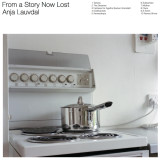
Produced by Laurel Halo and released via Norway's respected Smalltown Supersound label, Anja Lauvdal's first solo release, From a Story Now Lost, is a gorgeous musical essay reflecting on time, its perception, and lost histories rediscovered. Finally exploring her own voice after more than a decade of collaborative improvisational playing - starting at her time in jazz conservatory in Trondheim - the album is a jewel of subtle beauty and innovative detail. A freeform musician on piano, synthesizers, and electronics, Lauvdal's discography stretches back to 2013 and includes her participation in a myriad of ensembles and collaborations exploring the limits of sound and music in many forms, including noise, jazz, and more. Following her move to Oslo after graduation, she became deeply embedded in the music community there, touring with Jenny Hval as well as playing on her records. When pandemic hit and isolation was the norm, Lauvdal began working on her own, recording her improvisations in an attempt to capture something new for herself. Connecting to Laurel Halo via Smalltown's founder Joakim Haugland, the acclaimed American artist agreed to work with Lauvdal in shaping her solo record, becoming integral to its creation through all of its stages. Lauvdal credits Halo as a deep listener and gentle "thought-provoker", who contributed ideas as well as helping to shape the finished versions (Halo also worked alongside Rashad Becker on the final mix of the album). Together, they found a method of recording Lauvdal's improvisations, making small loops from those, feeding them back into the synthesizers, and making synthesizers out of the improvisations, which Lauvdal would then re-improvise with. She describes the end result, "like seeing different pieces of time around in the universe." While the record is based on Lauvdal's improvisations, some tracks were inspired Agathe Backer Grondahl, a Norwegian classical pianist and composer from the latter half of the 19th century. Lauvdal notes that Grondahl is not widely known, although her best friend Edvard Grieg is still considered Norway's most famous composer. Yet now, partly through Lauvdal, her story resurfaces and persists. "From a Story Now Lost means the story is still there," Lauvdal explains. "It hasn't gone anywhere even though nobody heard it, or maybe you're hearing it for the first time. And actually it was told a long time ago - maybe you weren't ready to hear that story at the time." This hints at the limitless nature of her music, as well as its new emotional texture. Direct in its vulnerability, immediate in its tenderness, From a Story Now Lost is a sophisticated evocation over restrained artistry spilling over with meaning.
Sasu Ripatti, now sporting the new "Ripatti Deluxe" moniker, presents his very own abstract take on early rave and happy hardcore. "Speed Demon" marks the first release on Ripatti's newly launched label "Rajaton".
The Finnish word ”raja” has multiple meanings. It could refer to a ”border”, ”limit”, ”boundary”, or even ”capacity” if understood broadly. It feels that ”border” is the first interpretation that comes to mind when the word is met in isolation of additional context. It often includes political energy of some sort. Or perhaps it’s just this particular point in time that leads the mind into such field of thought.
As the Dutch author Rutger Bregman notes in his book Human Kind – A Hopeful History, the real trouble with people began when the first person had the idea of drawing a line on sand and claiming ownership of the area on their side. The concept of physical borders was born.
Naturally, there are mental borders, as well. Think about all the things you shut out because they’re ”not for you”. They are numerous and we do it all the time. The issue is not to stop that, but to recognize when to let new things in, even if they’re not commonplace. Mental borders might often be easier to rewrite than physical ones, but the challenge remains a real one.
That’s where the derivative form ”rajaton” comes to play. By simply adding the ”-ton”, all borders, limits, boundaries and capacities are lifted in an instant. We have something ”borderless” instead, and are thus free to expand our thinking.
One could argue that the word ”rajaton” implies not the removal of borders but instead their very non-existence at large. How will our mind work when the concept of borders doesn’t even enter the conscious thought?
Mental borderlessness is a truly fascinating concept. A maximalist array of opportunities and potential ideas enters the picture – one which is also limitless, unlimited, sans boundaries, and also without a danger of being depleted. It’s an all-existence of multitudes where hierarchy also starts to deteriorate, giving way to a new form of full understanding without judgement.
Music is one fine place for such thinking, especially when thinking about the role of the listener. Occupying a much more active position than is generally recognized, the listener can greatly benefit from borderless thinking, and thus help to enhance the collective perceived significance of any given body of work. When there are no boundaries, the interpretation remains unchained and honest.
Basically it was all already said by the late revolutionary jazz pianist Burton Greene: ”Borders are boring!”
Sasu Ripatti, now sporting the new "Ripatti Deluxe" moniker, presents his very own abstract take on early rave and happy hardcore. "Speed Demon" marks the first release on Ripatti's newly launched label "Rajaton".
The Finnish word ”raja” has multiple meanings. It could refer to a ”border”, ”limit”, ”boundary”, or even ”capacity” if understood broadly. It feels that ”border” is the first interpretation that comes to mind when the word is met in isolation of additional context. It often includes political energy of some sort. Or perhaps it’s just this particular point in time that leads the mind into such field of thought.
As the Dutch author Rutger Bregman notes in his book Human Kind – A Hopeful History, the real trouble with people began when the first person had the idea of drawing a line on sand and claiming ownership of the area on their side. The concept of physical borders was born.
Naturally, there are mental borders, as well. Think about all the things you shut out because they’re ”not for you”. They are numerous and we do it all the time. The issue is not to stop that, but to recognize when to let new things in, even if they’re not commonplace. Mental borders might often be easier to rewrite than physical ones, but the challenge remains a real one.
That’s where the derivative form ”rajaton” comes to play. By simply adding the ”-ton”, all borders, limits, boundaries and capacities are lifted in an instant. We have something ”borderless” instead, and are thus free to expand our thinking.
One could argue that the word ”rajaton” implies not the removal of borders but instead their very non-existence at large. How will our mind work when the concept of borders doesn’t even enter the conscious thought?
Mental borderlessness is a truly fascinating concept. A maximalist array of opportunities and potential ideas enters the picture – one which is also limitless, unlimited, sans boundaries, and also without a danger of being depleted. It’s an all-existence of multitudes where hierarchy also starts to deteriorate, giving way to a new form of full understanding without judgement.
Music is one fine place for such thinking, especially when thinking about the role of the listener. Occupying a much more active position than is generally recognized, the listener can greatly benefit from borderless thinking, and thus help to enhance the collective perceived significance of any given body of work. When there are no boundaries, the interpretation remains unchained and honest.
Basically it was all already said by the late revolutionary jazz pianist Burton Greene: ”Borders are boring!”
Gondwana Records announces Horizons the debut album from Jasmine Myra, produced by Matthew Halsall, it's an elevating debut record of understated beauty
Jasmine Myra is a Leeds-based saxophonist, composer and band leader Her original instrumental music has a euphoric and uplifting sound, influenced by artists as diverse as Kenny Wheeler, Bonobo and Olafur Arnalds and like Mammal Hands and Hania Rani her music has a special, emotive quality that draws the listener into her world. Matthew Halsall first heard Myra's music in 2019 shortly before the pandemic hit, signing her to Gondwana Records and producing her beautiful debut album, Horizons.
"I was immediately drawn to Jasmine's music. I could hear jazz, electronica in her music but with a deep, honest, emotional quality. I was really impressed with her skills as a composer and bandleader, that she is open and intelligent enough to bring all those influences together, to make something fresh and original. We were also delighted to work with a young artist from the North of England. London is often seen as the place to be, but cities like Manchester and Leeds are full of creative musicians too, and that sense of local community is at the heart of our values as a label."
Myra came-up through the bustling, creative Leeds music scene and her music draws on the sense of community that permeates life in the city and which is notable for a strong DIY ethos in its musical community. She attended Leeds Conservatoire and played with the Leeds based Abstract Orchestra, a jazz big-band, led by tutor Rob Mitchell that explores the synergy between jazz and hip-hop found in the recordings of Madlib, MF Doom of J Dilla. Indeed, Myra cites MF Doom and Soweto Kinch as early influences on her own music. It was in her last year at the conservatoire that Myra started to consider leading her own group and started to really think about what her own music might sound like and her first band featured guitarist Ben Haskins and drummer George Hall who both feature on Horizons and her band draws heavily on the Leeds community featuring rising stars such as pianist Jasper Green and harpist Alice Roberts.
Myra also mentions local legend, Dave Walker, who owns an instrument repair shop called 'All Brass and Woodwind' which is right next to the music college. She worked there while studying and he introduced her to a lot of local musicians. Walker also has his own line of saxophones (played by Shabaka Hutchins, Pete Wareham and Nubya Garcia), and gifted Myra the saxophone she plays on Horizons. It was Walker who encouraged Myra to apply for Jazz North Introduces, a scheme that supports emerging jazz artists in the North of England and Myra credits her winning a place, in 2018,with helping her grow in confidence.
" It gave me the opportunity to start gigging outside of Leeds, which I was very keen to do. I was quite surprised by people's reaction to the project and the support I was being shown, which helped me gain a lot of confidence. It became clear to me very quickly that being a solo artist was what I wanted to do and it was also apparent to me that mine was one of the only female-led instrumental bands on the Leeds scene, which encouraged me even more, as I wanted my project to inspire younger female musicians".
Horizons was produced by Matthew Halsall and mixed by Portico Quartet collaborator Greg Freeman, and much of the music was written during lockdown. It was a hard time for a lot of people, and initially Myra struggled mentally, deprived of shows and the connections of making music with her band and friends, but she also realised what she wanted as an artist and the result is heard on Horizons.
"I realised that my aim was to start writing music that made people feel happy and uplifted. Writing is one of my biggest passions, but I also love performing. Playing live and seeing the audience connect with my music and have a positive experience brings me so much joy".
This sense of elevation is at the heart of Horizons, together with the feeling of a journey, of reaching new ground. Prologue and Horizons were originally composed as one piece as they encapsulate Myra's own personal development as she worked on the album - taking the listener on a journey, especially Prologue; and then Horizons is that moment of release when you've reached the end goal. 1000 Miles takes inspiration from the music of Shabaka and the Ancestors. Whereas Words Left Unspoken was written after Myra's grandmother unexpectedly passed away in June, and due to Covid restrictions she was unable to visit her before she passed and say how much she loved her. Morningtide is a nod to Kenny Wheeler, particularly the track Opening from Sweet Time Suite on Music for Large and Small Ensembles but Myra also puts her own spin on it as she also does with Promise, another track influenced by Wheeler. Awakening has a calm and euphoric quality and represents that sense of problems lifting, or of reaching the other side, and New Beginnings finishes the album with a positive vibe and a sense of moving forward from darkness
This then is Horizons. A soulful, emotional and up-lifting debut from a major new voice. A snapshot of a young artist at the beginning of her journey - drawing on jazz and electronica influences to create something fresh and new. But also a celebration of her home town Leeds, and a record built on a sense of support and community before looking out to wider Horizons.
Jamie Cullum on BBC Radio 2 "...That's Jasmine Myra and 'New Beginnings', wonderful to hear new music from a new artists i've not heard before, a great new artist!"
Tom Ravenscroft on BBC 6 Music "Leeds-based saxophonist, composer and band leader Jasmine Myra. 'New Beginnings' on Gondwana Records. Compositions drawing influence by Kenny Wheeler, Bonobo, Ólafur Arnalds. Produced by Matthew Halsall"

Pkew Pkew Pkew is looking on the bright side. As a band that lives and dies by touring, it’s been a while since they could say fuck it, we’re taking a year off to make something. That decision wasn’t entirely theirs, but 2020 handed them an opportuni-ty. Open Bar doesn’t navigate any of the tired pandemic tropes. Instead, Pkew is celebrating the things that make their lives awesome, even if those things suck sometimes. The band was forced to take a step back and use a slower approach. Mike Warne (guitars/vocals), Ryan McKinley (guitars/vocals), Emmett O’Reilly (bass/vocals) and David Laino (drums) bounced song ideas off Craig Finn of The Hold Steady, and went into the studio with Jon Drew, who produced their first album. “Since we didn’t have a hard deadline to finish, we felt a lot more freedom to take our time and mess around in the studio. Jon is the kind of producer that is down to try anything, so we had lots of fun playing with trumpets, old moog synths, glockenspiels,” says Warne. In a weird year, the familiar Pkew themes—navigating life’s small daily troubles with a sardonic grin and your friends by your side—are comforting, nostalgic. The result is tight, rowdy modern punk with the heart and soul of classic rock. It’s cracking a beer in the park, plugging in the AUX cord on a summer road trip, cramming into a sweaty bar with your friends and a million strangers.
From their new millennium rise to MTV superstardom through pop-punk’s modern resurgence that has introduced their iconic, multi-platinum sound to new audiences around the world, SIMPLE PLAN have been an indelible part of pop culture for more than two decades because they’ve never lost sight of what got them there in the first place: their fans.It’s this same sense of mutual respect that’s fully on display on “The Antidote,” the first single from their sixth studio album, HARDER THAN IT LOOKS., their first new music since 2016’s Taking One For The Team, and the most authentically Simple Plan album since 2004’s Still Not Getting Any. Free agents for the first time in their storied career, the band kept their circle tight during the recording process, enlisting longtime songwriting partners like We The Kings’ Travis Clark and producers Brian Howes and Jason Van Poederooyen (who worked on the band’s 2011’s album Get Your Heart On!) and Zakk Cervini (blink-182, Good Charlotte). From the skyscraping choruses of “Congratulations” and “Ruin My Life” (ft. Sum 41’s Deryck Whibley) to the unflinching poignancy of the album-closing “Two,” which instantly ranks alongside “Perfect” and “Untitled (How Could This Happen To Me?)” as one of the band’s best closers ever, HARDER THAN IT LOOKS certainly respects Simple Plan’s storied career – and the same spirit that helped the band sell 10 million albums worldwide – without being overtly reverent. The album-opening “Wake Me Up (When This Nightmare’s Over)” is a cathartic rush of familiarity and freshness – not to mention a bit lyrically prescient, as the COVID-19 pandemic hit shortly after the band wrapped the album. (“We certainly didn’t set out to write a pandemic album,” Bouvier says with a laugh. “It’s funny how some of the songs might seem like that, though.”) There are even spiritual successors to early material, like the glass-half-full skate-punk-leaning “Best Day Of My Life,” quite a 180 for a band who put a song called “The Worst Day Ever” on their genre-defining, Platinum-selling 2002 debut No Pads, No Helmets...Just Balls. But you won’t find an ounce of fat on the 10-song album, no obvious plays to recapture the radio waves they claimed in the early aughts with smash hits like “I’d Do Anything,” “I’m Just A Kid” and “Addicted.”
Out of the Fog is a masterpiece of divine beauty and charm from the Norwegian composer / performer Daniel Herskedal featuring fellow Norwegian singer-songwriter Emilie Nicolas (4 Times Norwegian Grammy Winner - 2014: Pop soloist of the year and new artist of the year. 2018: Album of the year and pop artist of the year). Crafted with a warmth and awe-inspiring finesse, it’s the blend of Daniel’s unequivocally trademark sound of multi-layered brass, empowering harmonies and soaring melodic lines, with warmth and emotive power of Song and the collaboration with Emilie Nicolas that gives this album its uniquely defining quality. Having emerged in recent years as one of the most prolific and exciting Norwegian composers, Daniel is adeptly capable of straddling Jazz, Classical, soundtracks and now High-Art Pop as well as being a performer who has pushed his instrument beyond its limits. As a consequence it has earned him numerous awards and accolades including a Norwegian Grammy for Best composer and seen him write music for a global Coca Cola ad, the film (The Last Black Man of San Francisco), and the soundtrack for the 9/12 podcast (nominated for Best Score And Music Supervision at Ambie Awards) as well as his own acclaimed albums. Featuring legendary guitarist Eivind Aarset and percussionist Andreas Helge Norbakken, Out of the Fog is an astonishing album from Norwegian Jazz and Pop royalty, with music that is long-lasting and that leaves you wanting more and more. It’s breathtaking and powerfully moving.
Low Company presents Yuta Matsumura’s Red Ribbon, a sequence of introspective, lavishly melodic dream-songs and amphibian atmospheres recorded in scattered periods over 2018-21. Having played in bands like Low Life, M.O.B. and Orion, and the duo Jay & Yuta (with Jay Cruikshank), Red Ribbon is Matsumura’s first solo outing, and represents a conscious effort to move away from guitar-based songwriting. He composed its nine tracks mostly on piano - layering vocals, bass, keyboards, flute (courtesy of Maeve Parker), violin/cello (Laurence Quinn) and clacking drumbox rhythms into dynamic, dubwise avant-pop structures which are supple and spacious but fizzing with detail and vivid inner life. The laconic 4/4 pulse, heat-warped synth-tones and haunting vaporous melodica of opener ‘Box Garden’ set the tone: its surreal psychedelic patternings barely concealing a deep sting of longing and regret. The cryptic lyrics suggest chance encounters, hidden logic, missed opportunities, fatalism, serendipity. A city submerged: everyone else paused mid-movement, while you’re allowed to swim free and fish-like through the streets, over the rooftops...‘Tangled Orchid’ is a tense night-drive through dry desert heat and into the unknown, running away from your old life, chased down by dust-devils of half-baked schemes and abandoned plans, while ‘Myth Machine’ drops the tempo and something mind-altering, guiding us on a tripped-out dub-disco scuba among alien flora and fauna, a world of impossible shapes and sensations. At which point, the mood of the album decisively shifts, firstly with ‘Sake No Otoh’, sung in Japanese by Haruka Sato: an instant-classic, breathtakingly intimate lover's lament that sounds like it got lost on its way to heaven and is now doomed to orbit the earth forever. The songs that follow continue in this more confessional, imploring mode. As if the travelling's done, the baggage has been cast off, and we’ve arrived at our destination, where the real process of rebirth and repair can begin. The music’s textures become less overtly dubby and electronic, with more of an organic, earthy, chamber-pop/avant-folk feel, at once sad and hopeful-sounding. Three songs in particular bear the influence of Eno’s 70s work (and its mutant bedsit offspring Lifetones, Flaming Tunes, etc): ‘‘E. Potential’, where baroquely chorused vocals - half-agonised, half-beatific - teeter on top of simple oscillating piano loops, and the stately, dawntreading ballads ‘Tabula Rasa’ and ‘No Sleep For Birds’. The bulk of the album was made prior to lockdowns and all of that; its themes of reset, self-examination, the need to f**k it all off and take spiritual stock, are timeless. Though they perhaps have a more bittersweet resonance now the world has returned pretty much to how it was, only worse. Track list: 1. Box Garden 2. Tangled Orchid 3. Myth Machine 4. Red Ribbon 5. Soko No Ato 6. Tabula Rasa 7. E. Potential 8. No Sleep For Birds 9. Zookeeper's Trial
More solid UK boogie & brit-funk courtesy of Freestyle Records - this time giving the 12" reissue treatment to short-lived group Cool Runners' 1982 single Checking Out, backed up with sought-after High on a Feeling.
-------
As Cool Runners' Paul Tattersall recalls, "this single was a follow-up to the "Play The Game (So You Think It Funny) / Hawaiian Dream" 12" which we believe got to around number 60 in the national charts, and was at the time heavily played on the radio by DJ Greg Edwards who sadly passed away earlier this year..." Recorded mixed and mastered then licensed for release to MCA, this initial single also relased in 1982 was voiced by Tony Jackson, then part of Paul Young's backing band as his career took off in the charts. Tony formed part of a string of funk groups throughout the 70s and early 80s - Sweet Dreams, Midnight, Ritz & Indigo - and later went on to be successful as lead singer in Rage.
These tracks "Checking Out" and "High on a Feeling" on the other hand features the vocal talents of Rush Winters, who would go on to record with the likes of Carmel, Yello, D.C.Lee and others. "It received little in the way of promotion by the record company at the time", Tattersall continues "so it has produced a cult following and has become rather sought-after, as few copies were actually released at that time."
After release, Cool Runners' Paul Tattersall and Chris Rodel then played with several different bands, with Chris moving onto double bass. He still plays professionally today as an accomplished jazz bass player. Paul has run a successful musical hire company in North London, with a specialism on synths and keyboards, since the eighties - and continues to this day.
- A1: Plays Albert Ayler 1 10 01
- A2: Plays Albert Ayler 2 09 45
- B1: Plays John Cassavetes 1 09 58
- B2: Plays John Cassavetes 2 09 57
- C1: Plays Hubert Fichte 1 10 01
- C2: Plays Hubert Fichte 2 09 59
- C3: Plays Cornelius Cardew 1 04 01
- D1: Plays Cornelius Cardew 2 04 03
- D2: Plays Robert Johnson 1 04 04
- D3: Plays Robert Johnson 2 04 00
Ekkehard Ehlers' seminal plays series was originally released on three 12inches (Staubgold) and two 7inches (Bottrop-Boy) in very limited runs. The entire series was previously only available as a CD compilation or digitally. Keplar finally presents it on double vinyl for the first time, featuring a new cover artwork.
Domestic ethnology: Ekkehard Ehlers plays.
‘Play’ is a word in English with many meanings attached. Each one sends you down a different cognitive pathway. When I think of ‘playing’, in the sense of a game, I think of an activity involving more than one person. When Ekkehard Ehlers plays, he is very much on his own. Or, at least, alone but at the same time keeping intimate company with the artistic innovators named in his titles. Robert Johnson. John Cassavetes. Albert Ayler. Cornelius Cardew. Hubert Fichte. Is he playing with them, against them, about them, for them, to them? This can never be known.
It is certainly a mistake to try to hear the ‘work’ of these originals in the sounds played by Ekkehard. They’re not cover versions. They’re hardly tributes in the conventional sense. Cassavetes and Fichte are not even musicians, although music played an important part in both their careers. Sure, there are little nods and flashes of recognition – tiny guitar licks among the minimal beats of ‘Robert Johnson 2’; rich bowed instruments in ‘Albert Ayler’, recalling the violin, cello and double bass arrangements on Ayler’s 1967 Live in Greenwich Village LP; the elongated organ lines of ‘Cornelius Cardew 1’ gesturing towards passages in Paragraph 1 of the British composer’s 1971 Marxist monolith, The Great Learning. Ekkehard is not so much playing these figures as allowing himself to be played by them.
Playing as an activity also suggests freedom. Maybe the only thing all five named persons have in common is that they were all quiet radicals. In music, literature and cinema, they all stepped, without self-promotion or fanfare, into unmapped territories. Once there they found it necessary to invent new languages in order to survive. Necessity was the mother of their inventiveness. They were also uncomfortable avant gardists. Lonely types, fighting their corners out on the margins, with little reward, often misunderstood, ridiculed or ignored.
All died unfairly young. Fichte a victim of HIV/AIDS, Cassavetes of cirrhosis of the liver. (‘Cassavetes 2’ sounds like a tender farewell played across the 59 year old alcoholic director’s death bed.) The deaths of Johnson, Ayler and Cardew have never been satisfactorily explained, and remain shrouded in myths and conspiracy theories. The pioneering expeditions of all five began in that spirit of playful freedom, but inexorably drew them towards the heart of darkness.
So these ‘plays’ are micro-dramas, sonic soliloquies, monolog-ins to the private accounts of various geniuses in Ekkehard’s ‘follow’ list. Hacked sensibilities. Artistic manifestos boiled down and distilled, skinned and dried in the digital smokehouse. (Ekkehard Ehlers Flays.) Each of these plays was originally floated out into the world alone on its own disc. The collected works play well as a team – a tranquil, introspective experience where each artist has his own identifiably unique sound character. As an album, Plays is a ‘Plattenragout’ – a ‘record stew’ – which was the title of Hubert Fichte’s LP review column in the leftist culture magazine konkret in the 1960s. The novelist’s work investigating the cultures of South America and the Caribbean islands has been called ‘domestic ethnology’. The writer himself referred to his ‘ethnopoesie’. Ekkehard Ehlers’s intuitive electronic portraits are a form of domestic ethnology in themselves. Invoking another of Ekkehard’s musical aliases, they are portraits of cultural ‘autopoiesies’ – creators whose works were strong enough to have their own self-regenerating life force. (by Rob Young)
All tracks written and produced by Ekkehard Ehlers.
Featuring Stephan Mathieu, Joseph Suchy, Anka Hirsch.
Tracks A1 to C2 originally released on three 12inches via Staubgold.
Tracks D1 to D4 originally released on two 7inches via Bottrop-Boy.
Plays originally released as CD compilation in 2002 by Staubgold.
Mastered by Rashad Becker.
Cut to vinyl by Lupo, Berlin, 2022.
Redesigned by Sandra Kastl, 2022.
Photos by Ludger Blanke
We Jazz Records presents the second volume of their reworks albums dealing with source material from the Helsinki-based label's catalog. This time around, it's Carl Stone's turn to tackle the source albums at hand and filter the label's output through his musical lens.
We Jazz Reworks is an idea that repurposes some of the label's output 10 albums at a time. That is, the label invites producers whose music they love on board, and one by one, they tackle 10 albums worth of source material, of which they are free to use as much or as little as they choose. The series evolves chronologically, so this volume being number two, the source material is pulled from We Jazz LPs numbers 11 through 20. The artist has complete freedom.
Volume 2 in the series happens with Carl Stone, a legendary figure in creative music. His career spans decades of unlimited musical innovation. Stone's recent output on Unseen Worlds, the label who has also been instrumental in issuing some of his remarkable earlier work, ranks among the most original art of our time and renders notions such as "genre" virtually meaningless.
Here, We Jazz originals by Terkel Nørgaard, OK:KO, Jonah Parzen-Johnson and more are met here with a fresh sense of discovery, spun around and delivered ready for the turntable once again.
Carl Stone says:
"It was wonderful that We Jazz gave me carte blanche to work with any materials from the set of ten releases in its catalog. This freedom to work with everything could have been a mixed blessing though, as it could be a challenge to try to deal with so much musical information. In the end I did what I almost always do: Let my intuition be my guide and to seize upon any musical items that seemed to fit into an overall approach."
"To make a new piece I usually start with an extended period of what really is just playing, the way a child plays with toys. Experimentation without necessary expectation, leading to (hopefully) discovery of things of musical interest, then figuring out a way to craft and shape these into a structured piece of music. Each track uses a different approach, which I found along the way during this play period."
This conceptual approach becomes complete with the design, in which album graphics are treated in a similar fashion, reworking what's there. This time around, the artwork is reinvented by Tuomo Parikka, a regular cover collage contributor for the We Jazz Magazine.
CURACAO BLUE TRANSPARENT VINYL, INSIDE OUT SLEEVE, OBI W/ LINER NOTES, PRINTED INNER SLEEVE WITH SOURCE ALBUM DESIGN REFLECTIONS.
The sun, kissing the forehead through half-closed blinds; the night, coming uninvited through a windowpane like a damp, sticky shroud. Light and darkness, solid foundations and elusive glimpses of parallel realities. Armies of digital insects - taken aback by warmth of one brave heart, 90s chillout rooms updated for todays vast and desolated space full of fragile souls desperate in their look for any kind of communion; “artificial intelligence” after three decades of wandering, trying to finally find a helping hand, solace and peace. Shimmer and shine. Welcome to “Pristine”, a new recording from the mind of Jacek Sienkiewicz.
For the past years Jacek has been escaping his image of relentless producer and performer of driving, multi-layered club music. His most recent works include deep ambient records, abstract electro-acoustic experiments, and super smart, stripped-down yet incredibly complex contemporary electronica. The last few records, mostly on his own label Recognition include albums with Max Loderbauer and Atom™, reinterpretations of works by Bogdan Mazurek of the legendary Polish Radio Experimental Studio, scores for radio plays and last year’s massively overlooked “Krasz”, music for theatrical performance of Ballard’s/Cronenberg’s “Crash”.
“Pristine”, a labour of love, is at times abstract and atonal, at times breathtakingly beautiful and tender.
8 tracks written and performed in Jacek’s unmistakable, singular style, and covering many grounds - abstract, electronic forms, neo-classical wonders, super tight compositions and freeform, jazz-like improvisations and stripped-down rhythms. Different moods, machine-translated and reverseengineered in a variety of recording locations, make up this exceptional record.
Shimmer and shine, immerse and enjoy.
Co-Financed By The Minister Of Culture And National Heritage of Poland.
The project has been implemented in co-production with Recognition Records and the National Centre for Culture of Poland
Massimiliano Pagliara returns to Permanent Vacation with his fourth studio album "See You In Paradise". After the highly acclaimed "Nothing Stays In One Place For Long" EP from 2020, this is the first full-length from the Italian-raised and Berlin-based producer for the label. Albums in the dance music genre can often be a challenge in terms of finding the right balance between the dancefloor and listening at home. Massimiliano, however, mastered this craftmanship perfectly while reviving the art of the album format.
Mostly written and produced in the lockdown period of spring 2020 these 10 tracks offer the whole sonic spectrum from the "Massi universe". The hardware enthusiast blends analogue-heavy and bright synthesizer melodies, pop hooks, Chicago house groove with more technoid tracks and atmospheric soundscapes. Taking you on a journey through his mind, body and soul: From his underground disco passion and pulsating dancefloor moments to ethereal and meditative ambience.
Inspired, both musically and aesthetically - one of his favourite carnal catchphrases titles the album - by Disco hero Patrick Cowley, Massimiliano channelled past, present and future in searching for new adventures within his music. For the first time working with live musicians (saxophone and piano) to bring a new facet on the table, that flows with the production seamlessly.
Communication and getting into a dialogue is a crucial part for Massimiliano as an artist. Whether it used to be as a ballet dancer, as a DJ, most prominently as a resident of the legendary Berghain / Panorama Bar, a producer and in collaboration with other artists and musicians: Maestro Massi has gathered an illustrious group of friends and like minded artist such as Snax, Fort Romeau and Init (with whom he has worked before), as well as new collaborators including Curses, Coloray and Vanessa. Under the artistic direction of Massimiliano each artist was able to bring his own unique talent into the album's coherent production and together with Massimiliano they created something that is more than the sum of its parts: A refuge full of beauty and harmony and free from worries in an upside down world. In other words: "See You In Paradise”
What Are People For? make the perfect kind of dystopic dance music for our times. Born from a collaboration between artist Anna McCarthy and musician/producer Manuela Rzytki, the band could be the illicit lovechild of Tom Tom Club and Throbbing Gristle, displaying the ideal balance of hip shaking vibes and dark provocative content.
On their collaborative debut, McCarthy and Rzytki share songwriting duties. The album was produced by Rzytki herself. They are joined by Paulina Nolte on backing vocals and Tom Wu on drums, while Keith Tenniswood mastered the record.
The whole project stems from a publication and exhibition by McCarthy laying the foundations for the content and lyrics of the album, which is humorous, poetic and political. As a lyricist, McCarthy uses her storytelling ability to explore anxieties and desires, digging into free surreal word associations reminiscent of Su Tissues’ tongue in cheek experiments with Suburban Lawns, but also explosive and gripping like a Kae Tempest rap.
Rzytki’s precise sonic palette and talent at penning structured bangers perfectly complement McCarthy’s playful and subversive language manipulations. Rzytki's beats are rooted in old school Hiphop loop principles and an authentic love for the analog. Her use of an array of synthesizers and other "real" instruments adds to WAPF's depth, soul and sincerity.
The album opens with a joyful anthem, full of energy and melodic hooks. The audience is confronted with the quintessential titular question What Are People For? and told that they are just a mere disposable commodity. Throughout the album, lyrical themes revolve around underground aspects of society, violence, political ideologies, sexuality and mysticism. The content is deep but the album is as danceable as it is biting.
73, with its drum machine hysteria and hypnotic synth basses is a a text collage written on the 73 bus through London, consisting of situations and conversation snippets encountered along the way. Drones indulges in the narrator’s paranoia as they feel they are being watched by cigarette machines, whilst the haunting choir is half spoken, half sung, ending on the orgasmic chanting of the word “mummy”. Nursery Rhyme brings more soothing incantations. There is definitely an affinity for fairytales, albeit adult ones and especially the anarchistic ones such as The Moomins, who were a consistent influence on the band. The artwork for the record, created by McCarthy, is a beautiful children's book-style painting of the group in a forest, seemingly about to engage in a magical encounter to which we are invited.
WAPF? have absorbed and digested a variety of influences. Trip hop, Punk and Techno are rubbing shoulders on Party Time. 1977 was coined “Summer of Hate” in the UK and unsurprisingly in WAPF?’s Summer of War, ethereal singing alternates with a powerful marching Garage/Grime chorus reminiscent of street protests and UK culture.
Mz. Lazy starts like an invitation to meditation and references Gertrude Stein’s book Ida in which she develops the idea that publicity is a new religion and people are now famous for being famous. Repressed anger explodes into violence and freedom at the end of the song as our heroine eventually grabs an axe to destroy her oppressors.
Fantasize, on its part, is raw, sexual and liberating while the closing track Bring Back the Dirt is a welcome hymn into a world that is becoming more and more sanitised.
While exploring deep subject matters throughout their album, WAPF? manage to remain satirical, exciting and funny. Each and everyone of their songs have a cathartic quality.
The visual identity of the band is intrinsic to their appeal. Live, they are eccentric, wild and unapologetic, wearing see-through costumes, bright miniskirts and intricate headpieces while delivering their songs with sharp intensity. Their performances radiate queer sexiness and transcend B52's thrift store aesthetics, creating a space for collective dreaming.
WAPF? is a rare combination of contemporary punk energy, irresistible groove, absurdist dry humour and astounding depth of field. They have the mighty power to create a party with their music and soon you will find yourself lifting your arms as if controlled by an external force, to chant: WAPF? WAPF? WAPF?
– Marie Merlet (Malphino, Little Trouble Girls, London)
The Exaltics need no further introduction.. operating since 15 years now and become one of the stalwarts of the international underground electro scene. Robert Witschakowski-Jockel founded the project The Exaltics in 2006 as well as the electro/ techno label SolarOneMusic with his long term friend Nico Jagiella. Since then he published countless 12"s and several LP's with labels like Clone, Creme Organization, Bunker or his own label SolarOneMusic and worked during that time with outstanding artists like Drexciya's Gerald Donald, Helena Hauff or the legendary Martin Gore from Depeche Mode. He turned his deep cinematic and most of all charismatic electro into his own trademark. The collection contains 13 Tracks recorded between 2009-2019 including tracks from long out stock titles first time on vinyl. Probably the best overview over the world of The Exaltics.