Lisbon-based duo Garoa—formed by Brazilian musicians Raphael Soares (drums, percussion) and Henrique Dias (piano, synthesizer, guitar, percussion)—craft an evocative soundscape that merges Afro-Brazilian rhythms with ambient textures. Their latest release, recorded in May 2024 at Estúdio Fetra, presents a free-flowing exploration where harmonies and rhythms unfold organically, avoiding rigid structures and embracing improvisation full time.
The album’s compositions are anchored by the interplay between Soares’ fluid percussion and Dias’ expansive harmonic approach. Tracks like “A Sandália Quadrada de Lampião” and “Xaxado de Chicago” weave percussive patterns reminiscent of Brazil’s Nordeste, blending them seamlessly with atmospheric synthesizers. “Baião de 2” and “Farofa e Cachaça” carry the unmistakable swing of Brazilian traditional forms, reinterpreted through Garoa’s lens of modernity and free flowing spontaneity.
Produced and mixed by Kellzo, the album captures the spirit of a collaboration that thrives on fluidity and openness. Garoa doesn’t aim for definitive statements; instead, they invite the listener into an evolving sonic landscape, where tradition and experimentation walk hand in hand.
Поиск:free time
Все
- A-1. Everlasting Dream
- A-2. We Wish
- A-3. Real Me
- A-4. Free & Easy
- B-1. Heartplace
- B-2. Over
- B-3. Haanabi
- B-4. Taskinillusion
- B-5. Everywhere Nowhere
- B-6. July 1St
- C-1. Dolls
- C-2. Neverending Dream
- C-3. Voyage
- D-1. Close To You
- D-2. Independent+
Hamasaki's fifth album, released on18 December 2002.
Includes hit singles such as "Voyage" "Free & Easy" and "July 1st"
The stark, naked cover art drew attention, and this album breaks new ground with the inclusion of English lyrics for the first time, creating a pop yet profound masterpiece.
- 1: Santa Monica
- 2: Robert Redford
- 3: Tidal Wave
- 4: A Little Mark
- 5: Laugh At Death
- 6: Kids
- 7: Vampire Weekend
- 8: For The Roses
- 9: Sapphire Days
- 10: Some Boys
- 11: Barbara?S Ocean
Kurt Vile once sang that he had a freeway in mind, but Matt Kivel (Vile’s former Woodsist labelmate) literally has a freeway mind. Kivel grew up in Santa Monica, California, getting shuttled up and down the 10, the 101, PCH, and all the other freeways Angelenos lovingly affix definite articles to. He started out in music as part of the buzzy, Eagle Rock-based indie band Princeton, toured the country relentlessly, burned out, and then resurfaced with a series of bleak, hauntingly spare solo albums that garnered widespread critical acclaim.
Over the ensuing decade, Kivel collaborated closely with a growing set of brilliant, and varied musicians from across the globe, including Bonnie “Prince” Billy, Alasdair Roberts, Madi Diaz, Robin Pecknold of Fleet Foxes, Jana Horn, and Satomimagae. He moved to Austin, Texas then left for New York City for a spell and then returned to Austin where he settled down. In 2017, he started writing the songs for what would become his eighth solo album, Escape From L.A. Escape From L.A. is an autobiographical song cycle that chronicles the first thirty-three years of Kivel’s life in the City of Angels. The material was labored over, rewritten, rearranged, and rerecorded numerous times, between LA, New York, and Austin. Kivel self-effacingly refers to it as his “bootleg as hell Blood On The Tracks” with myriad alternate sequences, tempos and arrangements that will never see the light of day. It involved over twenty collaborators, a string section, pedal steel guitars, and a renewed lyrical and vocal clarity that allows the narrative vignettes to unspool in vivid detail. It’s a beautiful, grounded statement and one of Kivel’s best.
- A1: Scarecrow
- A2: Curious Baby
- A3: Two Candies Walking
- A4: Back
- B1: Freak
- B2: Too Young To Stop Loving
- B3: Maze Of Love
- B4: Orange
This is an entry for "Record Day DAY 2." Released on 180g heavyweight vinyl!
This 1995 debut album was produced by Yasushi Ide, with artwork by Mitsuo Shindo.
Includes eight tracks, including "Orange" and "Maze of Love"
Features an impressive lineup of guest musicians at the forefront of the music scene at the time, including former ORIGINAL LOVE member Ryutaro Kihara, former Roosters member Tomio Inoue, Freedom Sweet's Hiroshi Yamashita, and Cool Spoon's Ikichi Sasanuma.
Elations Recordings presents "Return of the Airpoets", an exploratory recording from longtime collaborators Reuben Lewis (I Hold The Lion's Paw) & Adam Halliwell (Mildlife, IHTLP), occupying a unique space between contemporary experimental music and avant jazz. Engineered and mixed by Reuben Lewis in 2023, and featuring guest appearances from acclaimed Australian drummer Ronny Ferella.
"Return of the Airpoets" continues a conversation begun with 'Cygon Dance', an extended duo between Lewis and Halliwell from Halliwell's 2023 LP "Freedom Lapse"; a dialogue that stems from a shared love and respect for Jon Hassell's Fourth World music. Sonic pioneer and adventurer, Hassell's futuristic vision advocated possible musics, stressing plurality and multiplicity. Faithful to his vision, Adam and Reuben, as trailblazers rather than imitators, delight in boundless musical possibilities, adopting Hassell's futurism as stock-in-trade, making it their own while augmented with neo noir hues and hints of the tilted electro-funk of Miles Davis' collaborations with Marcus Miller.
These nine tracks flow together as a unified suite, their shadowy presence stitched from fractured narratives: imaginary crimes, murders, dreams, the unspoken. At the same time, you can detect the artists' meticulous attention to sonic detail, feel the undercurrents, the complex layering. This music has been distilled, winnowed, from extended improv sessions, with the artists - as producers - zeroing in on offcuts, shards, and splinters, seamlessly patching together fragments in post-production to construct intricately layered sound collages, taking a leaf out of Tao Macero's book, building from the ground up.
Who are these airpoets? Their mystifying trial suggests the travails of Joseph K, sentenced for unspecified crimes. But I prefer to see them as fugitives escaped from Robert Bolaño's novel, "Savage Detectives". In Bolaño's book, poet Juan Garcia Madero is granted admission to the shadowy group of poets, the Visceral Realists, whose movement has no clear aims, and whose members "walked backward . . . gazing at a point in the distance, but moving away from it, walking straight toward the unknown." Like the visceral poets, these airpoets, Reuben Lewis and Adam Halliwell, set their sights on a point on the distant horizon, setting off without map or compass, drawing nearer and moving away, towards the unknown.
French artist based in Brussels, Che Vuoi presents her first album Cinecittàx, a nod to the great Italian studio, and a tribute to false dreams.
A theatre at the back of a run-down piano bar, where surreal and intimate scenes unfold; words and stories drawn from disparate sources: Fellini, G. Réal, Diderot... or written by herself, spoken, shouted or barely whispered by an altered voice.
Noises, samples, a drum machine, a brush on a snare drum, a piano spinning round and round until it reaches delirium and its own abolition, leaving us suspended in a constant in-between or a time that never truly existed.
« This voice, gentle, mad, with lightning verve, tells between the lines and the echoes the presence of threatening shadows and ghosts. And it is Che Vuoi, her character, her world of images, that haunts us. It is a strange bewitchment that carries us beyond the words she has freed from "the stationery I stole from Bellavista the other night" ("le papier à lettre que j’ai chipé au Bellavista l’autre soir") into the lair of her universe, as whimsical as it is silky in which we let ourselves slip, as one would slip over the rock of an esoteric river, in the heart of a forest that makes music and has delirious things to tell us. »
Khaoz Engine first album on vinyl ever !!!
"Use your shoes they said !"
10 tunes for the dancefloor ! The one you gonna dig with you feets while dancing !
Khaoz Engine is a very free open minded musician : able to press with underground italian labels (Mechanical Brain) or french crazy labels (Karnage) or big time PRSPCT or scotish Motormouth... As well he totally influenced by the Rebelscum/Deathchant crew.
Please welcome his first album !
And its graphist Ultraflex.
! 300 Limited copies !
As usual cut by Simon Davey
Pressed at Records Industry...
For the best hit combo !
- A1: Motherland
- B1: Me More Cowboy Than You
Seattle born and raised brothers. Since forming in 2020, everything has fallen into place as it should for the Brudi Brothers, a direct byproduct of their desire to create and play, wherever and however. Shortly after signing to Mom+Pop earlier in 2025, they released their single, “Me More Cowboy Than You,” a tongue-in-cheek jab at the “cowboy craze” and its subsequent poseurs, which went viral, reaching more than 1.4 billion views and 60 million streams.
On their folkier “Motherland,” the Brudi Brothers detour through a nostalgic recollection of the days when love was freer, meditations on how time is fleeting, and a reverence for the souls who have come and gone, held by their interwoven harmonies and guitars.
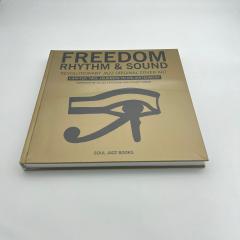
Freedom, Rhythm and Sound showcases the stunning graphic works of independently published jazz record cover designs in the 1960s, 70s, 80s and beyond, from radical jazz musicians such as Sun Ra, John Coltrane, Pharoah Sanders, The Art Ensemble of Chicago and others. This second Freedom, Rhythm and Sound book is a new ‘chapter’, featuring hundreds more unique, rare and beautiful jazz record cover designs.
This book documents the continued development in jazz as African-American artists set out on new journeys to enlightenment, heading out into Europe at the end of the 1960s. The artwork of these (often self-produced) record cover designs during this era reflected their radical agenda, spiritual awareness and singular search for musical and personal freedoms. From raw, DIY aesthetics to lyrical and poetic illustrations, sometimes containing futuristic worlds and ancient landscapes, the designs are always bold, strikingly graphic, and most importantly capture the spirit of the music, giving them a unique beauty. The book also includes sections on African-American poets and writers, Civil Rights and Black Power Movement leaders (Martin Luther King, Malcolm X) and early musical pioneers (Yusef Lateef, Max Roach, Art Blakey and others), all of which helped influence and shape the world of radical and spiritual jazz from the 1960s and onwards to its rebirth today. Since the 1980s, Gilles Peterson has been a pivotal figure in the club scene, renowned for his genre-defying approach to music with jazz at its core. As one of the UK’s most iconic DJs, he has spent over 40 years shaping music trends as a radio presenter, club DJ, producer, and festival curator.
He hosts a flagship show on BBC Radio 6 Music and, in 2016, launched Worldwide FM. He is founder of the Worldwide Festival in the South of France and We Out Here festival in the UK. He runs the label Brownswood Recordings, dedicated to discovering and promoting new talent and bringing fresh voices to the global stage. Stuart Baker founded Soul Jazz Records in 1992. For more than 30 years the record company has released over 500 records covering a genre-defying array of non-mainstream musical worlds – Jazz, Reggae, Punk, Latin, Brazilian, Disco, African, Gospel, Acid House and more.
In 2017, part of Stuart Baker’s jazz record collection (much of which appears in Freedom, Rhythm and Sound) was featured and displayed as part of the Soul of a Nation: Art in the Age of Black Power exhibition at Tate Modern in London, and subsequently at The Broad in Los Angeles (2019) and Brooklyn Museum (2019). Soul Jazz Books launched in 2007, a similarly diverse and critically acclaimed publishing house with graphic art, culture and photography titles that include ‘Voguing and The House Ballroom Scene of New York’, ‘Dancehall – The Rise of Jamaican Dancehall Culture’, ‘Yo! The Early Days of Hip-Hop’, ‘Freedom, Rhythm and Sound – Revolutionary Jazz Cover Art 1965-83’, ‘Punk 45 – The Singles Cover Art of Punk 1976-80’ and others. Reviews of the first Freedom, Rhythm and Sound: “A remarkable book” The New Yorker “If there can be such a thing as a revolutionary coffee table book, Freedom Rhythm & Sound is it―a chance to wallow in the Afrocentric visual language of the non-mainstream black jazz vinyl of this extraordinary fertile and creative period.” Eye “Like the uncompromising music they represent, all the covers broadcast a sense of bold, brazen ideology” Pitchfork “A definitive account of a complex passage of cultural upheaval.” The Independent “For decades, no one was sure how to refer to this extraordinary music.
Calling it ‘fire music’ does justice to its incandescent spirit, still burning from the pages of a book that preserves the memory of a special time.” The Guardian “These sleeves are the original independent legacy to America’s premier art form – Jazz. In terms of African-American cultural expression they are part of a long line of thought that was charged in the 1960s by John Coltrane, Martin Luther King, Ornette Coleman, Malcolm X and others” The Wire “A hefty compendium of radical jazz cover art” Mojo
Strolling through the world by Biboul Darouiche & The Bantu Jazz Connection marks the first vinyl release on Crispy Water and is a vibrant fusion of African rhythms, jazz improvisation, and soulful storytelling, blending ancestral rhythm with contemporary jazz expression. Recorded with an ensemble of outstanding musicians, the album moves effortlessly between groove, spirit, and freedom — connecting continents through sound.
BIBOUL DAROUICHE is a singer, percussionist, composer and head of the ensemble. By playing the conga, djembe, calimba and - the African treetrunk drum (also called nkul or tam-tam, which by the way should not be missing at any concert!) Darouiche brings a very special color to his music. He works mainly in Europe, but his engagements also take him to the Middle East, the countries of the CIS, Brazil and the USA. Since1995 he has been a member of Klaus Doldinger's Passport. He has also worked with musicians such as Al Di Meola, Pee Wee Ellis, Roy Ayers, Graham Haynes, Paquito D'Rivera and the Jazz Baltica Ensemble.
The Austrian multi-instrumentalist and producer MICHAEL HORNEK, who is part of the permanent cast of Klaus Doldinger's Passport as a keyboardist, plays keyboards, percussion and sings. His free-jazzy percussive playing inspires every listener. Hornek's keyboard skills can be heard on over 750 music productions, and the trend is of course increasing!
Mauritian bassist LINLEY MARTHE is one of the world's best bassists. He was a long time permanent member of the band Joe Zawinul Syndicate,worked with musicians like Dave Liebmann, Richard Galliano, Omar Hakimand many more. Zawinul said of Linley Marthe in an interview: “Linley is a phenomenon. I don't know if anyone can match him in terms of bass playing."
ROGER BIWANDU, french musician born and raised in Bordeaux/France, with roots from Congo (DRC) is an artist resident at l'Apollo bar in Bordeaux since june 1997, he plays there one time per month. He played with a lot of great musicians all over the world, with some heavy weights too, like Joe Zawinul, Salif Keita, Marcus Miller, Lee Ritenour, John Beasley, Dee Dee Bridgewater, Franck McComb, to name a few.
Joel Shearer’s Listening Immerses Itself in Ambient Guitar, Restraint, and the Beauty of Repetition
With guitarist and ambient composer Joel Shearer’s new album, Listening, he took the path of repetition, subtle movement, and pure sound rather than conventional songwriting. What began as a disciplined experiment — limiting himself to just electric guitar — soon expanded. At various points, he introduced piano, cello, and trumpet, allowing the record to evolve organically. "I didn’t know I was making another record,” Shearer says. “I was experimenting, wanting to do something beyond just the electric guitar. So, I started these other tracks, and that’s how Listening came about.”
Unlike albums built around hooks or dramatic shifts, Listening unfolds gradually, moving with patience and restraint. There are no choruses, no obvious climaxes — just sound evolving over time. “Instead of a traditional song structure with a verse, chorus, or B section, it’s one continuous movement that grows and dissolves,” Shearer explains. “It’s not about anticipating the next moment—it’s about sitting inside the sound, getting comfortable with patience.” A Topanga-based session musician, composer, and producer, Shearer’s previous solo albums, Morning Loops and Hours, explored the manipulation of only the electric guitar, using texture and repetition to push beyond conventions. Listening continues that journey, offering music that resists distraction and rewards deep attention.
Shearer recorded Listening without a click track, working in long, freeform takes. His shimmering, clean guitar tones—often unrecognizable, processed through looping pedals and effects—became a foundation, with layers of sound building around it. “I love making the guitar sound like anything but a guitar,” he says. “I might play for just a minute, but once the sound enters the effects chain, it takes on a life of its own. The music keeps evolving, stretching time in ways I couldn’t predict.”
The opening piece, “Big Sur,” is an 11-minute meditation that drifts in slow, hypnotic waves, its layered guitar textures sparkling like light over water. The piece moves without urgency, subtly transforming as it pulls the listener deeper into its atmosphere. “Threshold” features a delicate piano melody that gradually unfurls, allowing its essence to fully settle before the next emerges. Subtle layers of ambient guitar weave around the piano, stretching and dissolving into the background, creating a sense of stillness and slow expansion.
At nearly 15-minutes, “The Clear Light of the Void” is a slow-burning study in sustain and resonance. Layers of guitar stretch and dissolve into an open, drifting soundscape, each note lingering and shifting like a breath held in suspension. Subtle tonal variations emerge over time, creating a sense of vastness—an expanse where sound is less about movement and more about presence.
“The world is noisy—so much information, so much distraction,” Shearer says. “I wanted to create something that allows people to just be present with the sound, without expectation.” It’s an album that demands nothing from the listener but offers space — to focus, to drift, to listen without waiting for what comes next.
At the beginning of the 1960s, at the Berklee College of Music, Byard Lancaster met some feisty friends: Sonny Sharrock, Dave Burrell and Ted Daniel. It is easy to see why he rapidly became involved in free jazz. Once he was settled in New York, he appeared on Sunny Murray Quintet, recorded under the leadership of the drum crazy colleague of Albert Ayler.
In 1968, the saxophonist and flutist recorded his first album under his own name: It’s Not Up To Us. The following year he came to Paris in the wake of… Sunny Murray. He would come back to France in 1971 (again with Murray) and in 1973 (without Murray for a change). This is when he met Jef Gilson, the pianist and producer who encouraged him to record under his own name again.
On Palm Records (Gilson’s label), he would release four albums: Us, Mother Africa, Exactement and Funny Funky Rib Crib. “Us”, the first of the four records was recorded on November 24th, 1973 with Sylvin Marc on electric bass (a Fender… Lancaster?) and the evergreen Steve McCall on drums.
On the album, the trio works from the John Coltrane model; free jazz shook up by the timely contributions of the bassist, followed by a mesmerizing atmospheric music. Then, Lancaster delivers a sinuous solo path, which is a reminder of his unique tone. On the album’s companion single, the trio launches into great black music of a different genre which would lead the clairvoyant François Tusques to claim that Byard Lancaster is an “authentic representative of soul/free jazz”, to sum up this is Great Black Music!
crédits
- A3: Main Theme & Final Boss Medley
- A4: Dignity Palace (Kain R. Heinlein Stage)
- A5: All Over With Blood (Freeman Stage)
- A6: Fullmoon - A Groan (Gato Stage)
- A7: Destruction Maniac (Grant Stage)
- B1: The Twelve Challengers (Player Select), Exotic Lady (Charlotte)
- B2: Darkness (Shiro Tokisada Amakusa 2)
- B3: Banquet Of Nature (Nakoruru) - Part 1 & Part 2
- B4: Ryuhaku Todoh Stage
- B5: The Primitive Age
- B6: The Age Of Rome
- C1: Ponponella
- C2: Vixen
- C3: The Super Spy, New World
- C4: Imputation
- C5: Game Start, Powering Up
- C6: Stage Medley
- C7: Change (Theme 2)
- C8: Termination (Ending 1)
- D1: Bioinformatics (Ufo Interior Passage 3)
- D2: The Cenotaph (Stage 4 Alternative Route~Ancient Ruins), Desert (Stage 4)
- D3: Secret Factory (Stage 3 Alternative Route~Armory)
- D4: Into The Cosmos (The Void Of Space)
- D5: Opening, Napolitan Blues, Duel R&D, Yuu, Psycho Soldier "K.o.f Version
- A1: Snk - Rhapsody For Piano
- A2: Intro, Stage 1, Stage Boss Medley
Relive the excitement of SNK's greatest games with this album featuring cult titles arranged entirely for piano!
Arranged and performed by pianist Nicolas Horvath, a Steinway and Sons artist renowned as a leading interpreter of composers such as Philip Glass, Franz Liszt, Claude Debussy, and Erik Satie.
The album contains a rich selection of tracks composed by the legendary SNK Sound Team, ranging from Prehistoric Isle to The King of Fighters 94, Samurai Shodown, The Last Blade, and Metal Slug 3.
Sometimes dark, sometimes bright, the arrangements beautifully and emotionally revisit the melodies that have marked several generations of gamers!
b a2 Intro, Stage 1, Stage Boss Medley [PREHISTORIC ISLE]
[c] a3 Main Theme & Final Boss Medley [PREHISTORIC ISLE]
[d] a4 Dignity Palace (Kain R. Heinlein Stage) [GAROU: MARK OF THE WOLVES]
[e] a5 All Over With Blood (Freeman Stage) [GAROU: MARK OF THE WOLVES]
[f] a6 Fullmoon - A Groan (Gato Stage) [GAROU: MARK OF THE WOLVES]
[g] a7 Destruction Maniac (Grant Stage) [GAROU: MARK OF THE WOLVES]
[h] b1 The Twelve Challengers (Player Select), Exotic Lady (Charlotte) [SAMURAI SHODOWN]
[i] b2 Darkness (Shiro Tokisada Amakusa 2) [SAMURAI SHODOWN]
[j] b3 Banquet of Nature (Nakoruru) - Part 1 & Part 2 [SAMURAI SHODOWN]
[k] b4 Ryuhaku Todoh Stage [ART OF FIGHTING]
[l] b5 The Primitive Age [TIME SOLDIERS]
[m] b6 The Age of Rome [TIME SOLDIERS]
[n] c1 PonPonella [ALPHA MISSION]
[o] c2 Vixen [THE SUPER SPY]
[p] c3 The Super Spy, New World [THE SUPER SPY]
[q] c4 Imputation [THE SUPER SPY]
[r] c5 Game Start, Powering Up [Vanguard]
[s] c6 Stage Medley [Vanguard]
[t] c7 Change (Theme 2) [THE LAST BLADE]
[u] c8 Termination (Ending 1) [THE LAST BLADE]
[v] d1 Bioinformatics (UFO Interior Passage 3) [METAL SLUG 3]
[w] d2 The Cenotaph (Stage 4 Alternative Route~Ancient Ruins), Desert (Stage 4) [METAL SLUG 3]
[x] d3 Secret Factory (Stage 3 Alternative Route~Armory) [METAL SLUG 3]
[y] d4 Into the Cosmos (The Void of Space) [METAL SLUG 3]
[z] d5 Opening, Napolitan Blues, Duel R&D, Yuu, Psycho Soldier "K.O.F Version" [THE KING OF FIGHTERS '94]
[b] a2 Intro, Stage 1, Stage Boss Medley [PREHISTORIC ISLE]
[c] a3 Main Theme & Final Boss Medley [PREHISTORIC ISLE]
[d] a4 Dignity Palace (Kain R. Heinlein Stage) [GAROU: MARK OF THE WOLVES]
[e] a5 All Over With Blood (Freeman Stage) [GAROU: MARK OF THE WOLVES]
[f] a6 Fullmoon - A Groan (Gato Stage) [GAROU: MARK OF THE WOLVES]
[g] a7 Destruction Maniac (Grant Stage) [GAROU: MARK OF THE WOLVES]
[h] b1 The Twelve Challengers (Player Select), Exotic Lady (Charlotte) [SAMURAI SHODOWN]
[i] b2 Darkness (Shiro Tokisada Amakusa 2) [SAMURAI SHODOWN]
[j] b3 Banquet of Nature (Nakoruru) - Part 1 & Part 2 [SAMURAI SHODOWN]
[k] b4 Ryuhaku Todoh Stage [ART OF FIGHTING]
[l] b5 The Primitive Age [TIME SOLDIERS]
[m] b6 The Age of Rome [TIME SOLDIERS]
[n] c1 PonPonella [ALPHA MISSION]
[o] c2 Vixen [THE SUPER SPY]
[p] c3 The Super Spy, New World [THE SUPER SPY]
[q] c4 Imputation [THE SUPER SPY]
[r] c5 Game Start, Powering Up [Vanguard]
[s] c6 Stage Medley [Vanguard]
[t] c7 Change (Theme 2) [THE LAST BLADE]
[u] c8 Termination (Ending 1) [THE LAST BLADE]
[v] d1 Bioinformatics (UFO Interior Passage 3) [METAL SLUG 3]
[w] d2 The Cenotaph (Stage 4 Alternative Route~Ancient Ruins), Desert (Stage 4) [METAL SLUG 3]
[x] d3 Secret Factory (Stage 3 Alternative Route~Armory) [METAL SLUG 3]
[y] d4 Into the Cosmos (The Void of Space) [METAL SLUG 3]
[z] d5 Opening, Napolitan Blues, Duel R&D, Yuu, Psycho Soldier "K.O.F Version" [THE KING OF FIGHTERS '94]
- A1: Garden Of Eden
- A2: Construction
- A3: Pass The Time
- A4: Survival
- B1: The Fool And His Harem
- B2: Nothingness
- B3: Near Death
- B4: Beasts Of This Earth
- C1: Fall Into Time
- C2: Folie À Deux
- C3: Screams At The Edge Of Dawn
- C4: Divorce
- C5: Three Windows
- C6: Touristsd1 - Shame
- D1: Shame
- D2: Tower Of Sin
- D3: Club Kapital
- D4: Volver
- D5: Spirit
- D6: Muse
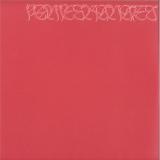
It's been 10 years since Pomegranates - Nicolás Jaar's unofficial/alternative soundtrack to Sergei Parajanov's 1969 film The Color of Pomegranates - was first released, and to highlight this occasion we are reissuing the album on vinyl, with the first edition (a collaboration with the label Mana) having long been out of print.
Longer and slower-releasing than his other albums, Pomegranates often parallels the cinematic epic on which it’s based, with ideas pursued over long timelines and across dark landscapes, assembling elements and moods from the aesthetic and folkloric landscapes of Armenia. Jaar’s identity is perceived within this, folding in his heritage as Palestinian and Chilean as he attempts to build a musical architecture outwards that frames as much of the mess and sprawl of life as possible; using a language that investigates the movement and fluctuation of his own artistic career and character similarly to the film’s tracing of the coming of age of the young poet, Sayat-Nova.
At times, Pomegranates feels profoundly intimate, as though looking through the archive of a friend’s music and discovering the accent and common currency that lives within each of these tracks. Much of Jaar’s most elegant and touching melodic work is nestled here, its power residing in its simplicity and willingness to speak to the heart and not the mind of the listener.
In the text document included in the first freely distributed version of the album in 2015, Jaar writes that the album was conceived during a moment of change, and that the pomegranate became an icon that heralded that passage of time. The physical publication of Pomegranates closes one door whilst opening another, keeping promises and marking a significant point in the career of an artist who restlessly reinvents himself, with a document that illustrates a common language of lyricism, freedom, and emotional resonance linking his many paths and projects
- 1: Raz Fresco – Who Mapped The Earth
- 2: Romderful – Maybe With You
- 3: Dowker – Call Me
- 4: Speak – Sakuraba
- 5: Cookin Soul (Feat. Ovrkast) – Flying
- 6: Demahjiae (Feat. Monster Rally) – Clooney
- 7: Mr. Scruff – Flute Boom
- 8: 645Ar – Shooting Star
- 9: Peanut Butter Wolf (Feat. Myka & Waragainstgod?) – Organic Ai
- 10: Chuck Strangers (Feat. Graymatter) – Marigold
- 11: L.a. Jay (Feat. Pigeon John) – Thank You
- 12: Dj Harrison – Applechopchutney
- 13: Homeboy Sandman (Feat. Monster Rally) – I Love You
- 14: Low Leaf – Faerie Function
- 15: Pouya (Feat. Boobie Lootaveli) – Bitch, Park Backward
- 16: Eddie Chacon (Feat. John Carroll Kirby) – Comes And Goes (Live At Isc)
- 17: Devin Morrison – Givin' Up
- 18: Suzi Analogue – King
- 19: Lee "Scratch" Perry – Morning Star
- 20: Dayytona Fox – Woooaaah
- 21: Rvyo (Feat. Bombay) – Kflex
- 22: Crimeapple (Feat. Don Leisure) – Vic Damone
- 23: Huey Briss – Don't Clap When I Win
- 24: Ncy Milky Band (Feat. Quelle Chris) – High Speed Clouds
- 27: Swum (Feat. Big Lordy) – Shinto
- 28: Xavier Wulf – 2 Can Wulf
- 29: Tommy Wright Iii – Chrome Thang
- 30: Yvain – Metta
- 25: Mr. Mumblz (Feat. Daniel Son) – Snake Eyes
- 26: Girl Talk (Feat. Freeway & Waka Flocka Flame) – Tolerated (Remixed By Mikey The Magician)
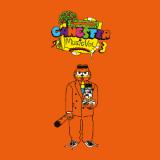
Imagine curating a dream lineup of MCs and producers from every corner of the rap world—sounds impossible, right? Not for artist and illustrator Gangster Doodles, who has been bringing this vision to life for the past decade. Now, with “Gangster Music Vol.3”, the trilogy reaches its grand finale, and it’s bigger, bolder, and more unpredictable than ever before. Gangster Doodles himself puts it best: "It’s hard to believe that I’ve been actively working on this Gangster Music series for the past 10 years. The most gangster music trilogy of ALL TIME is almost complete!! And in my humble opinion Vol.3 is the most exciting out of the 3, both from a music standpoint (special shout-out to all my music heroes on Vol.3) and artistically speaking this is the most fun I’ve had in years”
Since launching Volume 1 in 2019 and following up with the second volume in 2022, Gangster Doodles has been shaping the Gangster Music series into a one-of-a-kind sonic universe—an unfiltered mix of underground titans, unsung legends, and rising stars. Volume 3 is the biggest installment yet, boasting a staggering 30 tracks that traverse the entire spectrum of rap and beat culture.
This time around, the lineup is as eclectic as ever. From legendary pioneers like Lee Perry and Tommy Wright III, to veteran producers such as Mr. Scruff and Peanut Butter Wolf, the album pays homage to hip-hop’s roots while pushing forward into fresh territory. The roster also includes established up-and-comers like Devin Morrison, Low Leaf, DJ Harrison, Quelle Chris, Homeboy Sandman, and Suzi Analogue, ensuring a mix of classic flavors and new-school innovation. The bubbling underground is well represented too, with artists like Raz Fresco, Atlanta’s 645AR, and Pro Era’s Chuck Strangers bringing their own distinct heat.
From pioneering SoundCloud rappers like Pouya to genre-bending composer John Carroll Kirby, from Birmingham’s Romderful to Chile’s RVYO, the album encapsulates a truly global soundscape, proving once again that Gangster Doodles’ ear for cutting-edge talent is second to none.
It was December 2015 when Simon Weiss delivered his first EP for Voyage Direct, an impressively intergalactic affair full of supersonic synthesizer arpeggio lines, Motor City influences and robotic drum machine hits. Two years on, the experienced Dutch producer returns to action for the first time since, in the process delivering another quartet of starry-eyed productions.
.
Through releases on Deepermotions, Rush Hour and Hometaping is Killing Music, Weiss has established a reputation for combining a deep understanding of dancefloor dynamics with a sci-fi inspired futurist aesthetic. Both of these complimentary traits are much in evidence on his second outing for Voyage Direct.
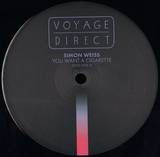
Weiss blasts off via Brain Fever', where raw, mind-altering arpeggio bass, fuzzy drum machine hits, spacey chords and alien electronics thrust our hero skywards. Think of it as techno for funk-fuelled, Italo-disco loving astronauts whose journey to the end of the universe is only just underway. This intergalactic funk blueprint is explored further on the deeper and more melodious You Want A Cigarette', where Weiss's vocoder vocals wrap themselves around mutant TB-303 lines, rush-inducing chords and clattering machine percussion.
On Space Ghetto (Booty)', our hero celebrates the discovery of previously unknown worlds in the only way he knows how. With kaleidoscopic, full-throttle electronic motifs and funk-fuelled synth-bass to the fore, Weiss offers his own unique take on electrofunk. Pleasingly fuzzy and tightly wrapped in the syncopated drum machine handclaps of ghetto-house, it's a typically far-sighted and attractive proposition.
With just two minutes to go until his spacecraft touches down on alien territory, Weiss rounds things off via the melancholic chord progressions and heartfelt vocoder vocals of Intro', a beat-free excursion just tailor made for dramatic set openings and spine-tingling mix endings. He may be stepping into unknown territory, but it won't be the last you'll hear from Simon Weiss.
A meeting of worlds. A new kind of resonance. GODTET's upcoming release captures the alchemy of their landmark performance with the Sydney Symphony Orchestra at the Sydney Opera House.
At once bold and nuanced, this album explores the friction between improvisation and orchestration. Where the orchestra is anchored in fully composed material, GODTET remains free – navigating the work's harmonic architecture with instinct and spontaneity. Structures are fixed, but expression is fluid.
Orchestrated and brought vividly to life by Novak Manojlovic, GODTET's long-time collaborator and musical polymath, the work bridges the worlds of bedroom production and classical tradition. His arrangements offer not just translation but transformation. Amplifying the ensemble's rhythmic language through the rich sonic canvas of the Sydney Symphony Orchestra.
The result is a deeply textural suite that amplifies the best of both disciplines: GODTET's idiosyncratic groove and live sampling artistry converging with the symphonic weight and colour of the Sydney Symphony Orchestra.
Under the baton of Nicolas Buc,GODTET + The Sydney Symphony Orchestradoesn't just blend genres, it dissolves hierarchies. It's a declaration that music born in warehouses and bedrooms can belong in concert halls, and that authenticity transcends format. This is GODTET in full bloom, expansive, fearless, and profoundly moving.
a 01: New Sun (Live) feat. The Sydney Symphony Orchestra & Novak Manojlovic
b 02: Stepper (Live) feat. The Sydney Symphony Orchestra & Novak Manojlovic
[c] 03: The Fall Line (Live) [feat. The Sydney Symphony Orchestra & Novak Manojlovic]
[d] 04: Dub Angels (Live) [feat. The Sydney Symphony Orchestra & Novak Manojlovic]
[e] 05: Cantus (Live) [feat. The Sydney Symphony Orchestra & Novak Manojlovic]
[f] 06: Bliss Angels (Live) [feat. The Sydney Symphony Orchestra & Novak Manojlovic]
[feat. The Sydney Symphony Orchestra & Novak Manojlovic]
The inimitable Richard Youngs returns to Black Truffle with this third full-length for the label, Hidden. Like CXXI and Modern Sorrow, Hidden unfolds across two side-long pieces at once eminently listenable and possessed of the ‘bloody-minded’ dedication to ‘having an idea and sticking with it’ that Youngs himself has identified as one of the key qualities of his work.
At the core of both pieces are rapid, randomised arpeggios generated with a Moog Grandmother, hypnotic patterns that wouldn’t be out of place on a Berlin School classic. Alongside these arpeggios, across the seventeen minutes of the first side-long piece Youngs builds an airy structure of shakers, synthetic handclaps and a brief, repeated sample, impossible to identify but sounding like a glitched foghorn. Over the top we hear his unmistakable voice, repeating single syllables—Ha, Ho—with a slow delay, something like a lonely one-man-band take on Anthony Moore’s Pieces from the Cloudland Ballroom or a more musical elaboration of the hypnotically overlapping delayed phonemes of Anton Bruhin’s Rotomotor. Like much of Youngs' work, the arrangement of sounds is sparse, each layer punctuated by spaces that allow others to shine through, in a way that seems to have more to do with dub or early hip-hop than high-brow models of musical reductionism.
On the flipside, the arpeggios return, now accompanied by ringing, filtered guitar chords and long flute tones. The use of a similar ground layer across the two pieces with strikingly different overdubs calls up Youngs' first solo record, the classic Advent, reminding us of how consistent ‘theme and variations’ is as an approach in his enormous body of work. Joined by handclaps and a chiming sound, the piece almost feels like it is about to achieve dance-floor lift-off at times, only for the percussion to disappear and leave the listener once again floating among the guitar and flute, now joined by occasional cut-off vocal snippets, like a radio turned quickly on and off. The suspension of these disparate elements over the steady foundation of the Moog arpeggios might remind some listeners of the free-form studio explorations of Moebius & Plank and Holger Czukay or even give a nod to Youngs’ formative encounter with Cabaret Voltaire.
Like some of Youngs’ much-loved work with Simon Wickham-Smith, Hidden approaches relatively familiar sounds and instruments from skewed angles, delighting in loose structures of interaction that border on gleeful incoherence while remaining outwardly beautiful. Coming up to almost four decades of persistent activity, like little else in contemporary music Youngs’ work beams with the simple joys of exploration and experiment.
“Even a blind pig can find an acorn once in a while.”
Dialling up Bristol for a nearly-missed hard drive scoop from a moment back in the middle-distant past, Bruk proudly presents the sound of Blind Pigs. Snaffling up eight nuggets of open-format beats recorded over a 24-hour creative spurt, this record captures a moment in time and celebrates the magic that happens when seasoned heads cut loose in the studio without an Agenda.
The sound of Blind Pigs is steeped in many things, conjured as it is by two venerable wizards with all kinds of skin in the game. There are snatches of trap’ sharp contours, LA beat scene storytelling, grime immediacy, soundtrack atmospherics and the pervading influence of soundsystem-spirited low end. Those are all just hints really — the resulting spell is its own blend that manifests free of any conceit. The production is raw and impactful, cold to the touch but charged with emotional weight in the haunted polysynth shapes peeling out across the tracks. Re-discovered by chance and stripped of contextual baggage, Blind Pigs is what happens when music is allowed to happen naturally. No arch concept, no stylistic posturing, just properly crafted beats stumbled upon by chance from two real ones who maybe never entered the studio together Again.