- A1: Slow & Low
- A2: Shake Your Rump
- A3: Posse In Effect
- A4: Egg Man
- A5: Stand Together
- A6: Pow (Feat Dj Hurricane)
- A7: Egg Raid On Mojo
- A8: Time For Livin
- B1: In 3'S
- B2: Michelle's Farm
- B3: Holy Snappers
- B4: Jimmy James
- B5: The Sounds Of Science
- B6: Hold It Now, Hit It
- B7: Pass The Mic
- B8: Freestyle (Feat Mc Boo)
- B9: Time To Get Ill
- B10: Shadrach
Поиск:free time
Все
- 01: Emerald Pool
- 02: The Unveilin
- 03: Cult Of Isis
- 04: Phantom Dancer
- 05: Energies
- 06: Century C
- 07: Morning Splendor
- 08: Gossamer Silk
- 09: Untitled Track 1 (Cd Only)
- 01: Mushroom Trip
- 02: Freebasing
- 03: Symphonic Industry
- 04: Organized Confusion
- 05: Plot Zero
- 06: Untitled Track 2 (Cd Only)
- 01: Tenement Stairwell
- 02: Spatial Spectre
- 03: Blood Thirst
- 04: Virgin Ice
- 05: Blood Celebrants
- 06: Freedom At The 45Th Floor
- 07: Alpine Flight
- 08: Untitled Track 3 (Cd Only)
- 01: Ancient Sea Ritual*
- 04: Summer Rain
- 05: Midnight Velvet*
- 06: At The Water Stairs
- 07: Timeless Grief*
- 02: Quiet Joy
- 03: Domestic Peace
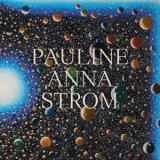
Echoes, Spaces, Lines collects Trans-Millenia Consort, Plot Zero, and Spectre, the first three albums by the late West Coast composer, healer, and medium Pauline Anna Strom. Exploring all corners of the multiverse through transpersonal form and freedom, Strom’s first three albums share a singular sensibility, different streams flowing from the same oracular font. Echoes, Spaces, Lines establishes Strom’s rightful place in the canon of great synthesists. Restored and mixed from the original reels by Marta Salogni, newly remastered, and adding Oceans of Tears, a fully realized but previously unreleased album exclusive to this box set, these are the first official reissues and the definitive encapsulation of Pauline Anna Strom’s prolific and visionary early work. These four-disc LP and CD box sets include 12 and 16 page booklet containing liner notes, an unearthed interview with Strom, and unseen ephemera.
Legendary Dublin punk band formed in November 1978 by Maurice Foley (guitar/vocals), which had a number of iterations before disbanding in 1981. The Threat built up a following in Dublin and maintained a heavy reputation through the 1979 and 1980. Playing the legendary Dandelion on a couple of occasions towards the end of 1979 and became friendly with members of the Virgin Prunes and U2. Stano, another friend of the band, bought a synthesizer, purely as a sound generator, and joined them. As a nonmusician, his synth added noise and texture to the band's sound and brought out their experimental side.
This "Lullaby in C" / "High Cost of Living" - their sole single - recorded in 1980 with Irish traditional musician Donal Lunny producing, providing his services for free. Lunny went on tour with Planxty before the recordings were completed. Impatient to get the single out, the band completed the work themselves with cover art from Dave Clifford of Vox fanzine. Self-financed, self-released and distributed by the band around Dublin with a few making it over the sea to Rough Trade. A second single was recorded in 1981 with the Virgin Prunes Danny Figgis producing but the mastertapes are lost to the midst of time. We've added a demo from Stano recorded in 1979.
- A1: She Belongs To Me - Live At The Royal Albert Hall (04:49)
- A2: Fourth Time Around - Live At The Royal Albert Hall (04:45)
- A3: Visions Of Johanna - Live At The Royal Albert Hall (09:29)
- A4: It’s All Over Now, Baby Blue - Live At The Royal Albert Hall (05:10)
- B1: Desolation Row - Live At The Royal Albert Hall (12:29)
- B2: Just Like A Woman - Live At The Royal Albert Hall (05:55)
- B3: Mr. Tambourine Man - Live At The Royal Albert Hall (06:29)
- C1: Tell Me, Momma - Live At The Royal Albert Hall (04:46)
- C2: I Don’t Believe You (She Acts Like We Never Have Met) -Live At The Royal Albert Hall (05:33)
- C3: Baby, Let Me Follow You Down - Live At The Royal Albert Hall (02:47)
- C4: Just Like Tom Thumb’s Blues - Live At The Royal Albert Hall (05:51)
- D1: Leopard-Skin Pill-Box Hat - Live At The Royal Albert Hall (03:42)
- D2: One Too Many Mornings - Live At The Royal Albert Hall (04:02)
- D3: Ballad Of A Thin Man - Live At The Royal Albert Hall (06:11)
- D4: Like A Rolling Stone - Live At The Royal Albert Hall (06:36)
Cat Power veröffentlicht am 10. November ein Live-Album Cat Power Sings Bob Dylan: The 1966 Royal Albert Hall Concert via Domino.
Cat Power Sings Dylan: The 1966 Royal Albert Hall Concert" wurde am 5. November 2022 in der berühmten Londoner Royal Albert Hall aufgenommen und zeigt Chan Marshall wie sie Song für Song eines der legendärsten und transformativsten Live-Sets aller Zeiten nachspielt. Im Mai 1966 fand das Konzert in der Manchester Free Trade Hall statt, das aufgrund eines falsch beschrifteten Bootlegs lange Zeit als "Royal Albert Hall Concert" bekannt war. Bei dem Originalauftritt wechselte Bob Dylan in der Mitte des Konzerts von der akustischen auf die elektrische Gitarre, was den Zorn der Folk-Puristen auf sich zog und den Verlauf des Rock 'n' Roll für immer veränderte. "Cat Power Sings Dylan: The 1966 Royal Albert Hall Concert" würdigt liebevoll Dylans Spuren in der Geschichte und bringt eine bezaubernde Vitalität in viele seiner am meisten verehrten Songs, einschließlich "She Belongs to Me" und "Ballad of a Thin Man"."
Five groups, one mythical studio - documenting the emergence of a generation!
The initial postulate was simple: five groups, one emblematic studio and 24 hours for each to imagine and record two unreleased tracks with one objective - the will to document a French jazz scene in the midst of renewal.
In these last few years, several innovative currents have shaken up the world of jazz and attracted new fans. They have bubbled up from Los Angeles, impregnated with hip-hop culture (Kamasi Washington, Terrace Martin, Thundercat), or from London, tinged with African rhythms (Nubya Garcia, Kokoroko, Ezra Collective). Meanwhile, in France, a new scene is emerging, carrying with it more of a dancefloor-oriented sound influenced by electronic music - an obvious kinship with the French Touch explosion of the late 90s.
Historically, every movement has been assimilated to a certain neighbourhood, to specific clubs where late at night, young guns stayed up to imagine the jazz of tomorrow - the Cotton Club for the jazz of the 20s, Minton’s Playhouse in Harlem for Be-Bop, the Black Hawk in San Francisco for West Coast jazz, Birdland in New York for Hard-Bop or a lot more recently, the Total Refreshment Centre which has been the playing field for the new London scene.
In Paris too, this new sound is associated with actual venues, places which have allowed these groups to form, create a repertoire and forge an aesthetic - Le Baiser Salé for Monsieur Mâlâ, La Gare/Le Gore for Photon, La Pêche in Montreuil for Ishkero, La Petite Halle for Underground Canopy and also le Duc des Lombards and le 38 Riv’ for Alex Monfort; it’s in a live context that this music will always continue to evolve.
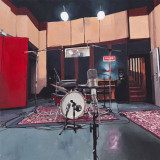
Keeping this “live” spirit, with all its spontaneity, was actually the guiding line for the elaboration of this Studio Pigalle compilation. Each take was recorded in the most organic way possible, bringing all the musicians together in the same room to limit post-production alterations before the final cut was assembled, in just one day, by studio in-house sound engineer, Felix Rémy.
A feeling of urgency permeates a record guided by an artistic production taking care to crystalise the essence of this artistically free-range generation whose childhoods were rocked just as much by Bill Evans and Roy Hargrove as by J Dilla and Jeff Mills. One of the two tracks recorded is geared towards the dancefloor, and the other, more cosmic/ambient gives freer rein to individual interpretation.
There were therefore many possible ways of interpreting these guidelines for the five formations which number among the most distinctive on the current French musical landscape, and the occasion, for some, to rummage through their archives! With Transe (Mbappé) and Da Verdere (Vella), Monsieur
Mâlâ present us with two unreleased tracks issued from the very first rehearsals of the quintet reworked especially for this compilation. “Seen the aesthetic range of this group, it all worked out very naturally in the studio”, recounts keyboardist Nicholas Vella “Recording like they did in the sixties with all the channels live and working with small imperfections was a very interesting task, even when it came to the mix, we had to make do with the takes we had... “
“Our group is very recent, and with this session, in just two tracks, we had the opportunity to present the entirety of our musical universe,” says Photons pianist Gauthier Toux. “All too often, we assimilate this fusion between jazz and dance music to computers and post-production modifications. For “Dessine”, we kept the first take, and we must have recorded just three or four for the other track with more of a techno bent. In one day, we understood that we could play our entire repertoire live, from A to Z”.
“When the Komos label offered me this project, it immediately spoke to me”, remembers Alex Monfort “Straight away, I thought of “Since I Met You”, a track with a nine/four time signature which really is reminiscent of a new- soul groove, but with this extra cosmic vibe! I wrote the words to the chorus and Nina Tonji placed her voice on the track, adding her own verses. For “Tonight”, the up-tempo track, I wanted to head off in more of a hybrid direction inspired by Kaytranada or the Black Radio series by Robert Glasper. A cross-over between jazz and hip-hop which really does represent my world, and I also tried to place vocals centre stage (Emcee Agora)”.
“We truly resonated with the way Antoine Rajon imagined this compilation and the recording session”, confide Warren Dongué and Jérémy Tallon from Underground Canopy. “When arriving in this studio we felt as if we had gone backtothe70s! Inkeepingwiththespiritofthisera,heknewhowtoletus keep our spontaneity, without recording in too many takes, and that’s how we like to work”.
“We managed to adhere to the themes of the compilation without changing our instrumentation, we wanted to remain faithful to the sound of Ishkero on these new compositions and take them somewhere else” – says drummer TaoEhrlich -“Withoutaddinganyelectronics.Thesessionwassupervisedin a truly subtle and benevolent manner. From a human perspective, it was also a wonderful experience”.
Whether turned towards hip-hop, ethnic or electronic music, the artists featured on this Studio Pigalle compilation represent the eclecticism of a new generation in the process of writing the first chapters of its history. Open to experimentation, these artists continue to hold high an immutable love for improvisation and creation in the moment... another definition of the word Jazz!
Mick Jenkins, lyrical hip-hop mastermind and Chicago's Finest, returns with the album "The Patience." He chose to title it "The Patience" because it was that patience that he needed to get to the point in his career where he is now.
Waiting to get free from a label that didn't share his vision was very frustrating, especially since he had to consciously hold back his musical gems in order to release them in collaboration with a partner and team that believed in his art and supported him in his vision for his music.
During this time, Mick worked on his upcoming amazing body of work that has evolved into something very special. Mick at times compares himself to a star chef, brewing up lyrics, seasoning each line to perfection. The album is bursting with offbeat rhymes, sophisticated grooves and complex metaphors. On 'The Patience', the artist shows in an impressive way that he is one of the best in his genre.
Features on the album include JID, Freddie Gibbs, Benny The Butcher and Vic Mensa, who are no less eloquent as rappers and round out the record excellently. Also the production, peppered with live instruments and many jazz influences, makes the hip-hop hearts beat faster.
Singer-songwriter Thom Morecroft releases his sophomore album, “Waiting For Leo.” Drawing inspiration from the rich songwriting style of 1970s folk-rock and infusing it with the distinctive aesthetic lens of Glasgow’s C86 scene, Morecroft delivers a captivating lo-fi experience that pays homage to the past while carving its own unique path. Think Crosby, Stills, Nash & Young meets the infectious energy of Teenage Fanclub’s “Bandwagonesque.” During the pandemic-induced lockdowns of 2020 and beyond, Thom embarked on a remarkable creative journey, offering his Patreon subscribers a new digital album every month. It is within these prolific collections that the songs for “Waiting For Leo” were born. With an abundance of time and the freedom to explore his creative impulses, Morecroft crafted a collection of songs that are reflective, philosophical, and deeply personal. Some look towards the future with hope, others reminisce about the past, while some capture the essence of the present moment, and a few wander into realms of pure fantasy. As Thom navigated the challenge of selecting the final tracklist, he honed and refined each composition, adding production elements and creating a cohesive sonic tapestry. “Waiting For Leo” is an album that manages to strike a delicate balance, emanating a sense of contentment and carefree spirit while simultaneously delving into themes of family, alcoholism, grief, and loss. The introspective nature of these songs, born out of a period devoid of external stimulation, allows listeners to embark on a thought-provoking journey alongside Morecroft. Reflecting on the album’s title, Thom shares, “The album is called ‘Waiting for Leo’ because the songs were written and recorded during the period before my partner and I discovered we were expecting our son. There is also the famous Samuel Beckett play called ‘Waiting for Godot,’ which I must confess I have never seen. Is it good?” “Waiting For Leo” stands as a testament to Thom Morecroft’s artistic growth and showcases his ability to merge captivating songwriting with a distinct sonic aesthetic. As listeners immerse themselves in the intimate world he has created, they will discover a tapestry of emotions that resonate deeply.
In 2021 Nijs and Smolders started a series of free improvisations. Each came from a different background (see bio’s) and wanted to explore musical horizons that they were not used to. As a next step they decided to record an album of composed tracks. The experimental platform shifted from long improv sessions to composition and structure, with the work of Delaere as a source of inspiration. The material of his work, the unevenness, the detail of pigments clashing, superimposing on the canvas served as a metaphor and inspiration for sonic canvases that they constructed.
The result has become a record full of surprises. Rhythm, drone, dynamics, timbre, notes, tones, all have been thrown in the tumble dryer and during the process many times led the two musicians towards an outcome they couldn’t have possibly foreseen. But here we are. Our own experience is that the music works best when it’s played loud. Crank up the level of your amp and dive into these 35 minutes of colorful sounds.
In ¿Quién?, Sylvia Meyer combines music, image, sound and poetry. Her lyrics, so subtle, acquire a singular dimension. They grow and become an essential lyricism that vindicates art and music. Almost 30 years after her last album release, Sylvia Meyer released ¿Quién?, an album where everything happens between his piano and his voice. Its exquisiteness, sensitivity, luminosity, and refinement coexist with arranging complexity and virtuosic, achieving a unique texture and a voice that penetrates souls to nest there, and grow beauty. The musical atmospheres and the universes of beauty to which the songs that make up this album transport us rescue that sound so complete and, at the same time, so inevitably montevidean, which travels absolutely free. Meyer is one of the most important Uruguayan artists of the last four decades. Composer and owner of a unique and special voice. Everything that sighs fills it with beauty and mystery. His music manages to transcend the borders of cinema, theater, concerts and art. "Because a the music, the only thing that interests is music" repeats Sylvia Meyer
The sound that swallows jazz rock, mode jazz, and free jazz is serious and profound.
A magnificent concept album that will remain in the history of Japanese jazz with the theme of global anti-war and peace
Hiromasa Suzuki, a rare pianist/composer/arranger who showed his skills in the groups of Terumasa Hino and Akira Ishikawa. Collaborating with Big Soul Media, led by Jiro Inagaki, one of the best jazz rock groups of our time, this work is unusual for a Japanese jazz work, and the concept is based on the theme of “global anti-war and peace.”
The sound that swallows jazz rock, mode jazz, and free jazz is serious and solid, but at the same time, it is full of overwhelming dynamism.
Suzuki’s ability to manage a big band and create a masterpiece sound is also splendid, and Big Soul Media, which listened to Suzuki’s intentions and responded to his request, is also splendid.
Both Suzuki and Inagaki’s activities in the jazz-rock era are at their peak, and this work is also important in that it captures the overlap.
text by Yusuke Ogawa (universounds/Deep Jazz Reality)
Composition/Arrangement/Conductor: Hiromasa Suzuki
Performed by Jiro Inagaki and Big Soul Media
Jiro Inagaki (S.Sax, T.Sax)
Shigeo Suzuki (A.Sax)
Tadayuki Harada (B.Sax)
Takehisa Suzuki (Trumpet)
Tetsuo Fushimi (Trumpet)
Takeshi Nomura (Trumpet)
Shigemichi Domoto (Trombone)
Tadataka Nakazawa (Trombone)
Kazuo Usui (Trombone)
Tsunehide Matsuki (Guitar)
Masaru Imada (Piano, Organ)
Hiromasa Suzuki (Piano, Organ)
Yasuo Arakawa (Bass) / Gen Ishimatsu (Drums)
- A1: La Chanson Des Granges Brûlées
- A2: Le Pays De Rose
- A3: L'hélicoptère
- A4: Une Morte Dans La Neige
- A5: Le Juge
- A6: Le Car / Le Chasse-Neige
- A7: Thème De L'argent
- A8: Rose
- A9: Zig-Zag
- B1: Hésitation
- B2: La Perquisition Et Les Paysans
- B3: Reconstitution
- B4: Les Granges Brûlées
- B5: Descente Au Village
- B6: La Vérité
- B7: Générique
- B8: Happiness Is A Sad Song
Transversales proudly presents the first LP reissue of “Les granges brûlées”, original soundtrack written and performed by Jean-Michel Jarre shortly after his work experience at G.R.M (Groupe de Recherches Musicales).
Probably one the first ever electronic music score, recorded with very scanty means: a VCS3 synthesizer, a Farsifa organ and three synchronized Revox tape recorders.
Director Jean Chapot, who understood immediately the interest in the gap between this hyper classical rural thriller and this groundbreaking music, let Jarre absolutely free to compose. Built up around several melodic leitmotifs, the score of “Les granges brûlées” allowed Jarre to pursue his personal research: to bridge the gap between experimental music and pop music. This deluxe reissue also contains the bonus track “Happiness Is a Sad Song” composed during Jarre's time at the G.R.M.
“Aphex Twin told me once that the original soundtrack of “Les granges brûlées” was one of his favorite records” JeanMichel Jarre
Prisoners Of Love And Hate' is an offering to community, to desires that imprison and liberate, to people in all their divinity and ugliness. Apostille - aka Night School Records’ captain Michael Kasparis - presents is third album with a bang, a bursting ball of NRG, empathy and bristling living.
Like its predecessor 'Choose Life', 'Prisoners…' was recorded at Full Ashram Celestial Garden in Glasgow with Lewis Cook (Free Love) through 2022. A nine song treatise on pop music, trauma, ecstasy and the mundanities between the extremes, Kasparis takes on classic 80s synth pop, 90s house music, 00s trance, wistful balladry, 70s power pop. The thread that runs through the album is a boundless energy, an openness to the moment, to living
the pains and joys equally, open armed.
This is a place of no judgement, of possibility, challenge and comfort. The nine songs on 'Prisoners…' can be read as separate ruminations on the feelings and desires that imprison our experience. Through it all the narrator struggles against them, transported and fooled by love and longing, peering through the bars of anguish, flailing in a cell of emotions. 'Saturday Night, Still Breathing' breaks the album open with an invigorating scream and pounds into the night with a nod to Whigfield, Kasparis’ punk roots and house music. Over a thumping 909 kick and bassline, Kasparis pens a love letter to being with people, the collective energy of hearts in a room, thrumming together, making it through together. Written as private ritual magic, manifesting community during a time of isolation, it’s as if the party is the most important thing in the world. 'Rely On Me' imagines 80s Mute synth pop, Erasure fronted by Bruce Springsteen, romance doomed and forever perfect in the mind. 'Spit Pit' completes the opening triptych of fast paced rollercoasters, an ode to childhood forged out of change and discomfort told with a bold, epic production by Lewis Cook, AFX breakbeats, 160BPM kicks and a commanding vocal performance.
On 'People Make This City', Kasparis eases off the gas, lets the mist blowing in from the Clyde River blow over his version of Glasgow. A wistful ballad about small town gossip and coming through anger to leaving it all behind, it provides some shadow to the bright light of the vibrancy of the album. 'Natural Angel' owes much to 70s and 80s power pop, guitar melodrama, Thin Lizzy and Rick Springfield through the prism of co-dependence in relationships. It’s a theme that’s picked up in slow burner 'Nothing But Perfect', a hazy synth soul-inflected song about building your own mythology, constructing a dream to hide in, to hold on to. The most surprising track of the album, 'Summer of ’03' re-imagines the trance music of early noughties Europe into a lament for an eternal summer or as a fan once put it, “Meat Loaf with a donk on it.” A recognition that all ecstasy has tragedy laced within it, it’s a theme that is sewn throughout the LP and continued on the final song 'Feel Good (You Can Make Me)'. Referencing Shalamar’s 1982 mega hit by way of N-Trance’s piano riffs, the epic closer is riddled with heartbreak, vulnerability and power. It’s a testament to the new confidence in Kasparis’s songwriting, sure, but also to the enduring power of people to come together in mutual dependence and love. If ecstasy is always laced with tragedy, then 'Prisoners of Love and Hate' can always reach out between the bars to meet in the middle, the eternal now.
The last twelve months have been a whirlwind for Henry Counsell and Louis Curran, the men who make up Joy (Anonymous). Having established themselves during the Covid-19 era by playing impromptu meet-ups on London’s South Bank, they have graduated to bigger venues, travelled to far-flung locales and recorded their second album, Cult Classics, while maintaining the spontaneous energy and irrepressible joy that made their name. Their music revels in the euphoria of being alive and all the feelings, good or bad, that come with it. It invites us into a community, draws us close and promises the night of our lives.
Recorded over the course of a year, the blueprint for Cult Classics was laid down over a two-week span at Imogen Heap’s Round House in east London. Joy (Anonymous) invited friends old and new to visit - they’d record live instruments in jam sessions upstairs and then retreat to a second room to flip and loop and generally mess with the sounds, moulding them into sizzling dance tracks. “Loads of people were coming up to me like ‘I thought this was going to be a dance record?’” Louis says, remembering the quietly beautiful music they’d be recording. “I’d be like, don’t worry about that, just keep playing.” He’d send it back to people later and they’d be floored - “That was my bit and you’ve made it... jungle!”
It was an organic and creatively fulfilling approach, one that didn’t allow any of the music to get stale or stagnate. As they built the tracks from the sounds they’d collected, Joy (Anonymous) would weave the new songs into their famously improvised live sets, testing them, refining them, taking note of the audiences’ reactions. In a year punctuated by a lot of travel, they’d also incorporate the voices of people they met along the way - “Beazley’s Poem”, which opens the record, features the words of a man who was working security at a Fred Again show at New York’s Terminal Five. “He was basically doing the opposite of his job and being a hype man, climbing on the fence and ramping up the crowd - we ended up hanging out with him - like, who’s this legend?” Louis explains. “He just speaks really amazingly about his life, all these amazing thoughts and opinions - he started jumping on the mic when we were playing, preaching these amazing messages to the crowd, like that we all need to be nicer to each other. The first time we played the record in its entirety, he introduced us and that’s the recording we’ve used.”
Joy (Anonymous) remain dedicated to the spirit of spontaneity. They shut a street down with a surprise waterside party in New York. On a trip to Copenhagen they played an impromptu set in a cafe, which turned into a house party and a night-long good time. In Lithuania, they ended up playing in a decommissioned prison. It’s harder, perhaps, to keep that spirit alive now that they are operating more within the confines of the music industry but they will keep lugging their kit to wherever the party calls for as long as they can. “I think if we lose that, we’ve kind of lost what makes us us,” Henry says.
Bursting with multi-genre reference points and disparate influences, Cult Classics is very much a dance album. The samples we made ourselves or we took from music that is quite different to dance music, but we definitely wanted to shout out a lot of the dance influences that we love,” Henry says. They listened to a lot of Daft Punk and Basement Jaxx as well as The Prodigy (“more rage stuff”), taking songwriting tips from their dance forebears, but also recording bits that felt more like jazz and motown (see: A Place I Belong and the lovely album closer, You’re In Or You’re Out). Emir Taha’s gentle classical guitar runs like a thread throughout Cult Classics, washing into the undertones of the record, tying it all together.
The album follows the beat of a night out, from frenetic, sweaty movement to the gentler winding down as the dawn breaks. At times it is euphoric, celebratory and pure, whirling fun, at others it seeks the joy in the darker emotions that life throws our way. 404 is designed to encapsulate everything about the Joy (Anonymous) journey so far. Skittering beats and ghostly vocals give way to vibrating house chords: sirens blare as we approach a dubstep drop. It’s dramatic and wild, ratcheting up, seeming to settle then hitting you with an intense and frantic breakdown before the ghostly vocal returns to lull us back into the world. It has the feel of a hungry cat playing with a mouse, toying with it before letting it get away.
What sounds like someone playing the spoons on playful, housey How We End Up Here is actually Louis’ restless habit of clicking his rings on everything, one of a myriad of calling cards and easter eggs that day one fans will recognise. They rework Miley Cyrus and Swae Lee’s Party Up The Street into a French-electro-inspired future classic, adding a note of melancholy to a tune that you can imagine hearing blaring from every car on a summer drive. The lyrics on Cult Classic are generally reassuring, inspirational, originally drawn from Henry in stream-of-consciousness freestyles. You’re fine the way you are, they seem to say - the repeated “No need to try” of A Place I Belong, the assurance that “It’s in me all the time” on In Me All The Time. Even the summery but regretful Did You Wrong hints at the growth that is possible from less than ideal behaviour. For Joy (Anonymous), joy isn’t about just being “happy” all the time - it’s about relishing every element of your being.
The name ‘Joy (Anonymous)’ is taken from the work Henry did with Alcoholics Anonymous groups: it is a way to build a community around sharing joy. Their impromptu live sets are known as ‘meetings’; they encourage fans to share moments of joy to their website. They care deeply about the scene they’ve come up in and are determined not to leave it behind. Every show is another chance to reach out and connect with people who love to come together and revel in music as loud as it can go.
Support slots for Fred Again and The Streets, wild B2Bs with Fred and Skrillex, and a set at Four Tet’s Finsbury Park all-dayer this summer have given the duo the opportunity to live out childhood dreams and introduced their infectious live shows to new audiences at huge venues.
With an album as assured and joyful as Cult Classics on the horizon (and a killer collab with The Blessed Madonna coming up), they’re only going to reach higher heights. But the essence of Joy (Anonymous) remains on the South Bank. Between shows at Ally Pally in September, they dragged their camping chairs and gear back down to the banks of the Thames: and it just felt right.
- A1: Safe European Home
- A2: I'm So Bored With The Usa
- A3: Complete Control
- A4: London Calling
- A5: (White Man) In Hammersmith Palais (White Man)
- A6: I Fought The Law
- A7: Jail Guitar Doors
- A8: Clash City Rockers
- B1: Stay Free
- B2: The Guns Of Brixton
- B3: English Civil War
- B4: Clampdown
- B5: Tommy Gun
- B6: Garageland
- B7: Armagideon Time
- B8: White Riot
2023 Repress
Reiko Kudo first debuted on the Tokyo underground music scene in 1980 with NOISE, a duo which apart from herself under her then maiden name Reiko Omura on voice, guitar and trumpet featured Tori Kudo on organ. Their only album TENNO (1980 on Engel) is probably one of the most outstanding and uncompromising records of all time.
Like other pioneering female producers from Japan such as NON (of NON BAND), PHEW and HACO, who had all begun their startling careers in the early days of the japanese Punk era, Reiko Kudo can surely be regarded as one of the most unique, uncategorisable and daring voices in the entire field of electronic and experimental music ever.
RICE FIELD SLOWLY RIPING IN THE NIGHT was REIKO KUDO's second album under her own name. It features TORI KUDO (MAHER SHALAL HASH BAZ) and SAYA and TAKASHI UENO (TENNISCOATS) on various instruments. The recordings took place in 2000 at Reiko' s and Tori's house in the rural surroundings of Shikoku island.
All recorded music on this album sounds like it originates in a parallel dimension where time and key signatures simply don't exist, Some might describe this as outsider music, but this doesn't really begin to do justice to the quality of the tracks, there is nothing accidental or forced here, this is simply music created in a very different way. Yet again REIKO KUDO had conceived of something utterly beautiful.
"After producing the album "Souvenir de mauve" with Maher Shalal Hash Baz which we released on our label Majikick, the idea came to us, to release Reiko Kudo's work. For Reiko's work, we brought our recording equipment from Tokyo to Shikoku and recorded the entire album at her house.
The piano was positioned in a room with a high ceiling. We would set up our small recording equipment in the room and started to record. The basic tracks were recorded without any rehearsal and just a few overdubs were added on top of it. To have a distant sound on the recording, Tori played trumpet in the next room. The choir was standing outside the house, singing "Enya-totto, enya-totto" through the open window. It was early spring, I remember that it was still a bit cold and the members of the choir were freezing outside.
Reiko plays only at certain times of the day, so that we were able to complete only two or three recordings a day. Therefore we had plenty of free time. We went to a hot spring, to a cafe, or we tried pottery on a spinning wheel at Tori's workshop. It was a very rewarding time.
When this album was finished, we brought it to her to listen to. She said happily "I think this is the best work I have ever done." We felt that all our efforts were richly rewarded. Secretly, we thought the same, so we are delighted that this album will be re-issued." - Saya and Ueno (Tenniscoats), Tokyo 2018
Originally released on Majikick Records, Japan, 2000 Restauration and mastering by Detlef Funder at Paraschall Mastering, Düsseldorf. Vinylcut at Calyx, Berlin Translation by Miki Yui and Claus Laufenburg. Many thanks to Reiko Kudo, Tori Kudo, Saya and Takashi Ueno, Satoru Higashiseto.
It’s frequently been difficult for us, as a band, to limit ourselves to “normal” pop song lengths and structures….as evidenced in pretty much all of our releases to date. From time to time we feel the need to loose the ropes that bind us and let our Long & Tedious flag fly freely. Truth Or Consequences, New Mexico is the result of said untethering.
We’ve always found the idea of exploring a single note over long stretches of time interesting and this song is that idea taken to an extreme logical conclusion. It’s an exploration of the note A in all it’s possible variations.
Lyrically the song is an extravaganza of navel gazing. There’s a cliche in the literary world nowadays of authors writing novels about the trials, tribulations and rewards of writing a novel. Truth Or Consequences, New Mexico is just as sickeningly self-referential, exploring the obsessive urge to create art of all kinds and how it turns into a cycle of imbibing real life experiences, then spitting them back out in whatever artistic discipline you happen to find yourself practicing. A kind of snake eating it’s own tail….but with the kind of self pitying pretentiousness that only folks who think they’re very clever indeed (that’s us) would want to impose on themselves.
Ruthie Foster’s ninth studio album represents a new high water mark for the veteran blues artist—a collection of songs possessing pure power, like a tidal wave of musical generosity.
Healing Time finds Foster pushing her boundaries as a singer and songwriter more than ever before, creating a truly live-sounding atmosphere with the help of her band, who sound refreshingly loose and lived-in throughout these 12 songs.
Joining Foster and her band: members of Austin psych-soul outfit Black Pumas. “They gave these songs a breath of fresh air,” she says about their contributions—and veteran producer Mark Howard (Willie Nelson, Lucinda Williams) also came in to bring new ideas to Foster’s table.
- Don't Happen That Often (Feat. Lep Bogus Boys)
- Blackbird (Feat. Action Bronson)
- Keep It Politics (Feat. Raekwon)
- Lost In Transition (Feat. Mr. Muthafuckin' Exquire)
- Good For Me (Feat. Cyhi The Prynce)
- Turn It Up (Feat. Outasight And Naledge)
- Comy In The Truck (Feat. Blu)
- Something New (Feat. Freddie Gibbs And Yp)
- So Stupid (Feat. Sir Michael Rocks And Vic Mensa)
- Fresh Like Me (Feat. Vonnegutt And Mic Terror)
- This Is How We Treat'em (Feat. Ninjasonik, Million $ Mano, And Hollywood Holt)
- Extraordinary (Feat. Donnis And Glc)
- Gameface (Feat. Scheme And Alex Wiley)
- Dear Heather (Feat. Action Bronson, Rockie Fresh, And Macie Stewart)
Recorded between 2010-2012, Closed Sessions Vol. 2 is a snapshot of a begotten time in Hip-Hop music and blog culture. The album features an eclectic class of artists such as Action Bronson, DJ Babu, Vic Mensa, The Cool Kids, Rockie Fresh, Freddie Gibbs, and others coming to the legendary SoundScape Studios and participating in the Closed Sessions program. Every song was followed by a documentary on MTV2 Sucker Free.
CS Vol. 2 was originally released August 23, 2012 and has been offline since 2015, the album has been re-mastered and is being released on vinyl for the 1st time ever. Limited to 500 copies.
Shrouded in darkness for over a decade, ever since the disturbing events that lead to the band's inception, B R I Q U E V I L L E have been bewitchingaudiences with a hypnotizing dirge that evokes the heaviest elements of doom metal and post-rock before mixing them with eerie field recordings, found sounds and haunting traditional instrumentation. On November 3rd, 2023, as winter takes back the night, B R I Q U E V I L L E will unveil `IV' - their latest exploration into the darkest depths of the soul. The Belgian collective's pulsating, repetitive rhythms and penetrating, guttural guitar work return alongside a more prominent vocal presence with ethereal melodies and brooding lyricism further exploring the deeper, richer sonic palette first heard on 2020's `Quelle.' Drawing from members of different local scenes, B R I Q U E V I L L E first assembled with the ambition of improvising around a single, droned note. Having latched onto something raw and powerful, the band suddenly found themselves confronted by a stranger telling tales of a hatred years in the making. Floored by such a fateful meeting, B R I Q U E V I L L E have anonymised themselves behind sweeping black robes and occult golden masks ever since; unifying the collective as one sound, a singular faceless force hellbent on converting audiences around the world. With `IV' however, B R I Q U E V I L L E are beginning to lift the veil. Alongside the aural despair that the band have been handcrafting ever since their eponymous debut full-length in 2014, `IV' is imbued with an intriguing duplicity. Within the mournful melancholy and grinding, icy orchestration is the faintest glimmer of hope as the collective explores the idea of creativity free from the confinement of morals, expectations and time. `IV' sees subtle, tonal shifts and brief periods of warmth and richness now intersperse the band's fearsome outbursts of unrivalled heaviness in a new, intoxicating transformation of their formidable sound. DO be careful though, B R I Q U E V I L L E may be stepping out of the shadows, but they can easily drag us back. FFO Sleep, Bong, ISIS, Pelican, Mogwai, Sunn O))), Godspeed You! Black Emperor, Amenra Ltd Single Coloured XX Edition Vinyl, sleeve w/ gold foil embossing!
There’s a connection between the musical history of the Mediterranean that can’t be explained through academia alone. It’s an expression of simultaneous grief and celebration that trespasses cultures and generations; and demands to be felt, or even better, danced, to be understood. The same spirit weaves Rebetiko from the ashes of the Ottoman empire to the heavy Hafla soundtracks on the Koliphone label in ‘70s Jaffa, or rebellious Turkish psychedelic music to the first generation of surf guitarist migrants in America. It's an infectious feeling that travelled and evolved wherever it was called, and that passion is embodied in “Back to the Taverna”, the new album by Berlin based bouzouki quintet, Cherry Bandora.
On the milestone of their third release, original members Liad Vanounou (Bouzouki) and Lorena Atrakci (Vocals) have bolstered their sound with longtime friends and collaborators Moshe ‘Moosh’ Lahav on Keyboards and flute, Tamir ‘Hassan’ Chen on Bass and Nimrod Lieberman on Drums to create an album celebrating the ecstasy of being able to drink and perform together again, freed from the anathema of the last years. The band has evolved considerably since their beginnings ten years ago as an Agean-influenced part of the local Balkan Swing scene; the most significant addition being the deployment of “The Hardest Working Man in Tropical Music” Alex Figueira as musical director for this album. His scorched fingerprints are unmissable throughout the extended psychedelic breakdowns and percussive overdubs that make “Back to the Taverna” such a dynamic offering.
Cherry Bandora have always been a very personal band; collecting songs from nearby cultures and history and blending them into their own experience by developing new arrangements or lyrics, just as musicians from those times would have. Lorena delights in expressing herself away from her mother tongue or providing modern lyrics for an updated feeling, as she does to the beloved Turkish standard, “Rampi Rampi”. In this interpretation she uses her native Hebrew in a saucy lockdown-delivery-guy romance... This track also features Baris Öner from local Turkish rock band Kara Delik on his signature flanging Saz.
Singing in Greek, English, Turkish and Hebrew was also a natural choice on the album, representing the “multikulti” area of Berlin that the band lives and records in. These languages would all be heard on the street as they walked to record in the analog Studio Wong in Kreuzberg.
“As descendants of Mizrahi Jews (Jewish migrants from non-European countries), growing up listening both to Beatles and Umm Kulthum, playing in jazz music departments in high school, and now living in Kruezkölln, we basically pay tribute and revive this shared heritage in the context of the global music scene of today” says Lorena.
The opening track, The Sound Of Baglama, is an interpretation of the anthemic Tsitsanis homage to the tavernas and sweethearts of Thessaloniki. It lays the ground for what to expect from Cherry Bandora’s exceptional live performances, featuring effortless switch-ups between surf rock choruses and laid-back verses dipping into Persian disco funk. This song will be accompanied by a tour-collage “found footage” style film clip in production at this
time.
Cherry Bandoras show their dedication to the bit with a rousing English version of the canonical rembetiko tune Dimitroula Mou. This amour song, popular with generations of female singers, is accompanied by real studio plate smashing, a ritual which sealed their final session for the album. 2 bonus tracks are included on the digital release, both a little more raw from the band’s home studio: the reeling dervish Rubi Rubi (which will be released as a second single with a video clip) and the emotionally dense and hypnotic slow burner Esý.
The album will be released digitally and on vinyl as a collaboration between Rebel Up Records (Belgium) and Rumi Sounds (Berlin) on Friday 3 november 2023 and is a prime example of what a raunchy, open minded and tireless bouzouki band can do as they hit their prime.
An extensive highlighted review will appear in Songlines magazine #135 December issue and the track ‘Benimde Canim Var’ will be featured on their free compilation. Also radioplay on Radio Campus France playlist (allover) during November and December.