This one is a taste of things to come from the ClekClekBoom camp, a ready to use 'Various Cuts' EP made by deejays for deejays.
A solid wax with different weapons including already known CCB producers and extended family. For this first volume, French Fries teams up with NSDOS on a hypnotic jam, bringing Chicago's percussive legacy in a 90's NYC ballroom. Then we got Aleqs Notal going deep with a new batch of his lunar material where tripping synths meet spaced out hi-hats. On the flip Jean Nipon provides his drummer background to display some infectious rhythms colliding with a shuffling syncopated bass, while Barbara Ford takes us through a heavy mesmerizing acid jam tunnel... Overall a deep and yet club-material experience representing perfectly what ClekClekBoom has to offer today.
quête:french fries
- 1
Chevel's Air Of Freedom remixes comes from Happa, Leeds-based producer on the rise, and Parisian dance-floor prodigy French Fries.
180 G. BLACK VINYL WITH LINER NOTES IN CREOLE, FRENCH, ENGLISH
Originally released in 1979, "Spiritual Sound" lives up to its name, a soaring, triumphant album, six tracks of spirit magic from Guadeloupe.
Telluric, intense, terribly alive, the gwoka drums of Guadeloupe carry the identity of a painful and fervent island. Marked forever by the crime of slavery, Guadeloupe's créolité cherishes the ka drums and their natural environment: the low-pitched boula drum with male goatskin, the high-pitched soloist makè drum with female goatskin, the chacha, ti bwa, triangle, calabash and other percussion instruments that surround them, and the voices - the fiery, proud, timbred, urgent voices of the gwoka.
This album is also a legend for its voices: in his then dazzling youth, singer Lukuber Séjor was one of the first gwoka artists to largely feminize the chorus of répondè, who converse with his text delivered in a straight and powerful voice.
And everything here sets new standards. In 1979, Mizik Filamonik - Spiritual Sound proclaimed a spiritual patriotism of ferocious intensity. The album by Lukuber Séjor - whose spelling alone is a battle - sets out to give Guadeloupe the intangible weapons of self-respect and self-knowledge, through a singular practice of traditional music.
The genesis of gwoka music is less straightforward than one might imagine... The drums performed the servile task of accompanying the work of slaves in the fields and during the “corvées” imposed by the administration, before being freely practiced by the common people after the abolition of 1848. At the heart of the conviviality of the Guadeloupeans furthest from the cities - geographically and socially - the gwoka drums come out for carnival, funeral wakes and neighborhood celebrations, but also during strikes, fits of anger and armed vigils of the riots and revolts that have punctuated the island's history. For generations, governors of the colony and then the prefects of the overseas department of Guadeloupe have been viewing the gwoka as a potential for turbulence and a threat to public order.
But as the Beatlesmania, “chanson engagée” and rock revolutions unfolded in Europe, young people turned to the drums of mizik a vié nèg (“bad negro music”, in Creole), which Guadeloupeans had learned to despise by following the “assimilation” process advocated by the school system and most of the political class. At the end of the sixties, in a Guadeloupe mourning the deadly repression of the May 1967 social movement, they played traditional music, refusing to wrap it up in tourist prettiness and madras folk costumes. Instinctively, they played a rough and contemporary gwoka, led by the incendiary Guy Konkèt. This was the era of decisive 45 rpm records such as Robert Loyson's Kann a la richès, which brought to light the fieriest words of union rallies.
At his home in Sainte-Anne, Lukuber Séjor played with flautist Olivier Vamur and his brother Claude Vamur, who cobbled together a drum kit from tin crockery and became, a few years later, the most influential drummer in Kassav'.
These were the years of the Bumidom program, when young Guadeloupeans were encouraged to emigrate to mainland France. At the age of twenty, Lukuber Séjor embarked on the liner Irpinia, disembarking at Le Havre and taking the train to the Gare Saint-Lazare - the route taken by thousands of young West Indians who went on to study or looked for work, all the while trying to maintain a link with their homeland. In this case, it's at the Antony university residence, where Lukuber played the drum and participated in a thousand gwoka updates and aggiornamentos, while exile reinforced the need for a spiritual link with the native land.
In 1978, Guy Konkèt played at the Salle Wagram, a historic event for West Indian music. After serving as répondè - i.e. backing vocalist - on one of his home-recorded albums, Lukuber joined his live band. Little by little, he became one of the key artists on a circuit parallel to French show business. At a student party in Caen, he met a young woman from Martinique who, at the time, was more motivated by her ambitions as a visual artist than by her vocation as a musician. Her name was Jocelyne Béroard and, a few years before she plunged into the Kassav' adventure and became the greatest West Indian singer of her generation, she designed the cover of Lukuber Séjor's LP.
This ambition was obvious and imposed its will. A more or less regular band was formed, with Roger Raspail, Rudy Mompière and Éric Danquin on ka drums, Claude Vamur on ti bwa, Olivier Vamur and Françoise Lancréot on flutes and Annick Noël on keyboards. Lukuber Séjor is set on wanting to extend the gwoka palette to other instruments, as the jazz-rock revolution opens a thousand new doors. Annick Noël will play a wide range of timbres and textures on electric piano and synthesizer. Another novelty: the répondè are two men and two women, Roger Raspail, Olivier Vamur, Françoise Lancréot and Maryann Mathéus ...
Mizik Filamonik - Spiritual Sound is a self-production in which the singer and leader sank all his savings, allowing him no more than a single day in the studio. The first side is more of a musical manifesto, with the first two tracks, Éritage and Penn é plézi, being instrumentals. The third, Son, forcefully celebrates the need for Guadeloupeans to connect with the gwoka. In fact, Jocelyne Béroard's cover shows a tambouyé in the shadow of a cloudy sky, against which a radiant sun is rising and whose light will soon flood the entire landscape. The silhouette and face of this man strongly evoke the immense Vélo, master of the ka, rejected at the time on the fringes of society.
The second side of the LP is surprising. Formally, three tracks are explicitly linked like the three parts of a triptych. Primyé voyaj evokes the appalling tribulation of Africans deported as slaves to Guadeloupe; dézyèm voyaj speaks of the Bumidom program and the economic, political and social forces driving young Guadeloupeans towards the mirage of prosperity in France; twazyèm voyaj closes the cycle with the emigrants' return from Europe after years away from their island...
This gwoka, obsessed with the need to save Guadeloupe spiritually, appeals far beyond the politicized audience. Mizik Filamonik - Spiritual Sound instantly became a classic, although Lukuber Séjor never really made a career for himself as a musician.
After all, the album was released in 1980, with no promotional resources in France or Guadeloupe - and therefore no concerts. The thirty-two-year-old author, composer and performer made his own third trip back to Guadeloupe. He set up a small woodworking business, which he lost in Hurricane Hugo in 1989. His other activity, teaching in a medical-educational institute, became the core of his professional life. He continued to be an active campaigner - a campaigner for the Creole language, a campaigner for the reawakening of identity, a campaigner for special education, a campaigner for a thousand causes that he ignited with his generous and perceptive enthusiasm, such as the defense of breadfruit fries...
The echoes of his 1979 album have not died down. Of course, the use of Penn é plézi as the theme tune for Radio Guadeloupe's funeral notices from 1980 to 1992 kept him in the collective memory, but he continues to sing and compose sporadically, as with his all-female
vocal group Vwapoulouéka... Still convinced that music is a means of liberating the spirit, he continues the journey of a young man eager to deploy the power of Creole music and language.
Bertrand Dicale
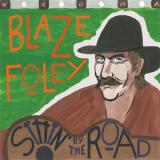
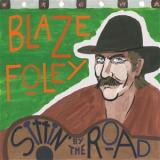
Die frühesten Aufnahmen des legendären Singer-Songwriters Blaze Foley. Einfach, geradlinig und kraftvoll - ,Sittin' By The Road" enthält 12 Titel, die während Blazes ,Baumhaus"-Zeit in Georgia aufgenommen wurden. Die hier vorgestellten Titel wurden Mitte der 1970er Jahre auf Blazes heimischem Tonbandgerät aufgenommen, das er auf seinen Reisen zwischen Texas und dem ländlichen Georgia mit sich führte. Diese Songs zeigen Blazes Talent in seiner frühen Form. Das Album enthält mehrere Songs von Blaze, die heute als Klassiker gelten, darunter ,Cold, Cold World", ,Election Day", ,Clay Pigeons" und ,If I Could Only Fly". Das Album enthält außerdem drei Songs von Foley, die auf keiner anderen Aufnahme zu finden sind: ,The Way You Smile", ,Fat Boy" und der Titelsong. Als Blaze 1989 auf tragische Weise ermordet wurde, war er außerhalb der Kreise der rebellischen Songwriter von Austin kaum bekannt. Heute wird er als einer der großen Songwriter von Texas verehrt. Townes Van Zant und Lucinda Williams haben beide bewegende Hommagen an Blaze geschrieben. Seine Songs wurden von John Prine, Merle Haggard, Lyle Lovett, Billy Strings und Willie Nelson gecovert.
- Big Cheeseburgers & Good French Fries
- Clay Pigeons
- Sittin' By The Road
- Slow Boat To China
- Election Day
- Let Me Ride In Your Big Cadillac
- Cold, Cold World
- The Way You Smile
- Rainbows & Ridges
- Fat Boy
- Faded Loves And Memories
- If I Could Only Fly
MIDNIGHT BLUE SPLATTER VINYL[26,01 €]
Die frühesten Aufnahmen des legendären Singer-Songwriters Blaze Foley. Einfach, geradlinig und kraftvoll - ,Sittin' By The Road" enthält 12 Titel, die während Blazes ,Baumhaus"-Zeit in Georgia aufgenommen wurden. Die hier vorgestellten Titel wurden Mitte der 1970er Jahre auf Blazes heimischem Tonbandgerät aufgenommen, das er auf seinen Reisen zwischen Texas und dem ländlichen Georgia mit sich führte. Diese Songs zeigen Blazes Talent in seiner frühen Form. Das Album enthält mehrere Songs von Blaze, die heute als Klassiker gelten, darunter ,Cold, Cold World", ,Election Day", ,Clay Pigeons" und ,If I Could Only Fly". Das Album enthält außerdem drei Songs von Foley, die auf keiner anderen Aufnahme zu finden sind: ,The Way You Smile", ,Fat Boy" und der Titelsong. Als Blaze 1989 auf tragische Weise ermordet wurde, war er außerhalb der Kreise der rebellischen Songwriter von Austin kaum bekannt. Heute wird er als einer der großen Songwriter von Texas verehrt. Townes Van Zant und Lucinda Williams haben beide bewegende Hommagen an Blaze geschrieben. Seine Songs wurden von John Prine, Merle Haggard, Lyle Lovett, Billy Strings und Willie Nelson gecovert.
Born in Antwerp in 1939, Ferre became a true icon in the sixties, adored by youngsters and hippies and hated by the establishment. His successful debut album in 1966, which featured the hits “Ring Ring, I’ve Got to Sing,” “Crucified Jesus,” and “Drunken Sailor,” brought him an international breakthrough with concerts in Paris, London, and Hamburg, and led to a contract with the famous French Barclay label. The next three albums did not match the initial commercial success — a pressure the music business was happy to put on his shoulders. Still, these three albums, reissued in their original packaging and artwork on vinyl for the very first time, are loaded with hidden gems, combining folk, blues, and psychedelics in Ferre’s original songs.
- A1: Liquid Sunshine (Feat. Blundetto)
- A2: Homegrown
- A3: Monday (Feat. Lej, Akhenaton & Blundetto)
- A4: Low Grade (Feat. Blundetto)
- B1: My Face
- B2: French Fries (Feat. Blundetto)
- B3: Tropic Sky (Feat. Ruffian Rugged, Prendy & Art-X)
- B4: Contrebande (Feat. Atili Bandalero)
- C1: Petit Boze (Feat. Biffty)
- C2: Life Long
- C3: Do My Ting
- C4: French Wine
- D1: Rendez Vous
- D2: Pmu
- D3: Veleda (Feat. Big Red & Blundetto)
- D4: Lazer Beam
Biga Ranx is a major artist of the international Dub Scene, he has been acclaimed by the biggest Jamaican MC's over the years for his unique flow and style. From the age of 14, Biga has been working on his lyrics and his compositions. After 5 albums and 1000 gigs over the world, Biga Ranx his still evolving his style by mixing Dub with Electronic, Lo-Fi and Hip Hop sounds.
1988 is his 4th album and the most successful one, it sold 80 000 units around the world and tens millions of streams.
Captures Blaze Foley and his working band-the Beaver Valley Boys-on their first Texas studio recordings dating from 1979 and 1980. Blaze and the band-anchored by the reknowned Gurf Morlix-are at the top of their form. Cold, Cold World includes 17 Foley songs from his well-known classics to six songs that appear on a Foley recording for the first time.
Gavin Vanaelst runs the space Aboli Bibelot in Antwerp where exhibitions and musical performances can happen side to side with dealings in centuries-old furniture and unique pieces of folk art or volkskunst. Gavin makes music under the aliases DJ Charme, Kassett and So Sorry. This is the first album under his birth name. Takeaway Loops cycles back to the days when Gavin was working as a courier for .
is a food delivery company. Their couriers - ehm, brand ambassadors, as the company prefers to call them - dressed in bright orange, they race their bikes around the city. They deliver meals and groceries for all sorts. Thanks to them, the privileged can stay tucked in their private spaces. Interaction between the two groups - the privileged and the brand ambassadors - is mostly kept to the bare minimum. And sparse communications are often driven by annoyances - “my Coke is warm because you kept it too close to the French Fries.” And on the streets the general public dis-approaches the brand ambassadors with pity. We tell our peers: “That’s not a good job,” and “stay away from the Sharing Economy.” Because, you know, in our capitalistic dollhouse we all stand our grounds and play our parts wholeheartedly.
During his shifts for , Gavin recorded location sounds on his phone at fast food restaurants while waiting on the orders he had to pick up and deliver. Later in his home studio Gavin added piano and electronics to this source material. The result: a gloomy soundtrack for a shadow world. Seven songs in evening blue with a bright orange glare.
A few years ago, our favorite Belgian publishing house Het Balanseer released Seizoenarbeid by Heike Geissler (available in English trough Semiotext(e)). Geissler writes about her job at Amazon in Leipzig. Because her writing and freelance work did not pay the bills any longer, she was forced towards this underprivileged shadow-world of unwanted jobs. Seizoenarbeid shed a light on freedom in an unfree world. A monument of ‘we are all in this, but not together’. Takeaway Loops gives us a similar peak in a world that is at the same time so visible, but then also very veiled for many. A world that we prefer to use, yet that most of us prefer not to see - a world that we don’t like to enter.
Last year at Harbourland subway station in Kobe i was mesmerized by its sound design, created by Hiroshi Yoshimura. For each part of the subway station he composed a short phrase. While walking trough the station, a full composition grows in your head. The looping melodies guide you trough a microworld. Trough a blue world of commuters, of the homeless, of the lonely, of the fast paced, of the tourist. Gavin creates a similar effect with Takeaway Loops. The tonality somehow corresponds to Yoshimura’s work. Yet instead of being guided trough a building, we are now taken to the after dark. You feel the concrete evening heat of the city. You hear the rain. Stiff fingers during cold winters’ nights. You are alone on the bike, cruising. Your maps app telling you where to go. You just left the fake leather bench of the well-lit pastiche interior of a fast food restaurant.
Next order, number ECN44! Please wait outside, sir?
Alaska Reid hails from a frontier city in Southwestern Montana whose population lingers around 8,000 residents, and while Reid now works in Los Angeles, she can’t give up her hometown. Her career began here, where she sang in basements, churches, and gyms before starting her first band, Alyeska. Soon talent, and her parents’ minivan, drove her to tour further west. Now, Reid splits her time between the coastlines and the mountainous West, splitting what time she can between the two and working in both cities. Due out summer 2023 via Luminelle, Disenchanter,is as much a collection ofstories as it is a collection of songs. Though Reid’s principle instrument is guitar, she worked on Disenchanter with A. G. Cook, whose synths and the duo’s combined array of pedals allowed Reid to explore her pop inclinations after she recorded each track live at home in both Montana and California. “I have my road dog arsenal from playing tons of live shows, so most of the songs have at least one guitar with my personal chain in homage to my live set up,” she says. “We’d then layer combinations of A. G.’s pedals onto the track, and the contrast between them mirrors our respective musical approaches.” THEMES: Friendship, Touring, Storytelling, Vulnerability GENRE: Indie / Indie Folk / Indie Rock
“The rumors are true; Providence, Rhode Island is permeated with a mysterious energy”. So says Dave Litifreri, guitarist and vocalist of
Urdog. “Some of us focused this energy, learned to live with the ghosts and tell their story.” It’s a story chronicled on Long Shadows, the new Urdog retrospective on Rocket Recordings - the work of a mercurial band whose music may have been summoned from fog and ghosts, yet possesses considerable staying power beyond their brief time on the planet. “We were influenced by the horror of late-capitalism in general every day” says drummer and vocalist Erin Rosenthal, “This glued and glues us together, also love of bicycles, french fries and faerie folk. Big influences for me were Robert Wyatt, Incredible String Band, Dagmar Krause, but especially This Heat, Riot Grrrl and 90’s hardcore.” From such disparate inspiration came psychically heavy jams and wild improvisational voyages from this triumvirate which chart an instinctive and wild journey, drawing the interplanetary dots between early ‘70s freak-flag-waving transgressions and the folk-tinged frontiers of the early 21st century US underground. Mantric repetition, ceremonial ambience
and fuzz/wah tinged blowouts take equal prominence in this dreamlike realm. Drawing the interplanetary dots between the drone ’n’ klang of Amon Düül II and the cultish hallucinations of Sunburned Hand Of The Man, and replete with both an earthiness of approach and a powerful celestial intensity. “We used our intuitive connection to let three distinct voices be heard” reflects Dave. “There was no foundation; they supported each other. Once that is achieved, a vibe develops. Getting into the space of a song is something you can’t notate. We had the keys, but getting to the door was the trick. Some nights we got all the way through the roof to the stars.”
- A1: The Explosions - Hip Drop
- A2: Aaron Neville - Hercules
- A3: Bo Dollis & The Wild Magnolia Mardi Gras Indian Band - Handa Wanda
- A4: The Meters - Handclapping Song
- B1: Eddie Bo - Check Your Bucket
- B2: Professor Longhair - Big Chief
- B3: Cyril Nevilille - Tell Me What's On Your Mind
- B4: Lee Dorsey And Betty Harris - Love Lots Of Lovin
- C1: Mary Jane Hooper - I've Got Reasons
- C2: Lee Dorsey - Who's Gonna Help Brother Get Further
- C3: Huey Piano Smith & His Clowns - Free Single And Disengaged
- C4: Eddie Bo - Hook'n'sling (Pt Ii)
- D1: The Gaturs - Gator Bait
- D2: Danny White - Natural Soul Brother
- D3: Ernie K Doe - Here Come The Girls
- D4: Dr John - Mama Roux
- E1: Allen Toussaint - Get Out Of My Life Woman
- E2: The Explosions - Garden Of Four Trees
- E3: Robert Parker - Hip-Huggin
- E4: Chuck Carbo - Can I Be Your Squeeze
- F1: Gentleman June Gardner - It's Gonna Rain
- F2: Marilyn Barbarin - Reborn
- F3: The Meters - Just Kissed My Baby
- F4: Sonny Jones - Sissy Walk (Pt Ii)
Album features Ernie K Doe’s ‘Here Come The Girls’, The Meters, Eddie Bo, Professor Longhair, Lee Dorsey, Wild Magnolias and more.
This is the definitive collection of New Orleans Funk featuring acknowledged masters next to some of the earlier artists who shaped the meaning of funk. The album is also filled with many rare, sought after and undiscovered funk tracks. It covers the period from the emergence of New Orleans Funk in the early 1960's through to the mid-seventies.
The record is an essential part of anyone in any way interested in Funk's record collection. It has some vital ingredients in it that you can't find elsewhere. With the sound of the New Orleans Funeral March Bands, Mardi Gras Indian Tribes and Saturday Night Fish Fries all as inspiration New Orleans Funk developed into a unique sound.
New Orleans is a port town. Originally owned by the French, this was where many slaves were brought from the West Indies. Many of these slaves came from Haiti and brought with them the religion of Voodoo and its drums and music. It became one of the first parts of America to develop a strong African-American culture leading to the invention of Jazz in the early 1900's.
A main feature of Jazz in New Orleans were the Jazz Funeral Marching bands. Solemn Brass bands accompanying a coffin would, on burial, be joined by a second line of drummers and dancers which would turn the event into a celebration of the spirit cutting free from earth. This African tradition is strong in New Orleans and still goes on to this day. The backline drums play a syncopated style that is neither on the beat nor the off-beat. It is these rhythms that are the basis of New Orleans Funk.
The album comes with a booklet presenting a historical explanation to how and why this music came about, and with lots of information about the people involved.
Reviews: "A Perfect Primer For Funk Fans" Q (Top 5 albums of the year). "Probably the finest compilation that Soul Jazz has released. Essential" Time Out.
- 1