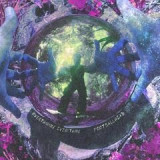
'Mei Semones' sweetly evocative blend of jazz, bossa nova and math-y indie rock is notonly a way for her to find solace in her favorite genres, but is an intuitive means ofcatharsis. "Blending everything that I like together and trying to make something new -that's what feels most natural to me," says the 23-year-old Brooklyn-based singer-songwriter and guitarist. "It's what feels most true to who I am as an artist." Plinking guitar tones and asymmetrical time signatures exemplify her forays intoangular indie rock more now than ever before, especially on her debut Bayonet Recordssingle "Wakare no Kotoba"_its wide-interval arpeggios in odd meters being some ofthe most technically difficult guitar work Mei has ever implemented in her songwriting.Translated to "parting words'' in English, the self-described "anti-love song" serves as afarewell to a toxic friendship, complete with orchestral swells and crashing guitars. Originally from Ann Arbor, Michigan, Semones began playing music at a young age,starting out on piano at age four before moving to electric guitar at age eleven. Afterplaying jazz guitar in high school, she went on to study guitar performance with a jazzfocus at Berklee College of Music. College is where she met her current bandmates,including string players Noah Leong and Claudius Agrippa, whose respective viola andviolin add softness and multidimensionality to Mei's intricate guitar work. After releasinga slew of singles and an EP in 2022, coinciding with her move to New York City, Mei andher band have since gone on to collaborate with post-bossa balladeer John Roseboroand embark on their first-ever tour with the melodic rock outfit Raavi. Semones chronicles infatuation, devotion, and vulnerability in her songs, complete withsweeping strings, virtuosic guitar-playing and heartfelt lyrics sung in both English andJapanese, that have all become part of her sonic trademark: ornately catchy, genre-fusing compositions serving as the backdrop to tender lyrics touching on theuniversalities of human emotion.
Поиск:friends band
Все
The 8-member strong brass band from the windy streets of Amsterdam are back with their fifth studio effort reflecting on their over a decade-long career of bringing the best that instrumental brass music has to offer. With their newest album, they claim their righteous throne as stalwarts of the new European wave of brass bands making waves on the continent.
Containing 9 tracks of top-notch quality brass music from a collective of musicians, friends, and renegades that pursue a quest of innovating of what we know instrumental brass music to be. Gallowstreet is considered a reference point for the (future) sound of European brass bands that mix a multitude of styles into a new sound, whilst simultaneously (re)anchoring the notion of brass bands in its counter-cultural and communal roots. Distinct from its American counterpart, whilst paying homage to the legacy
Recorded by award-winning mastering engineer Kevin Gray's record label, Anthony Wilson's Hackensack West is Cohearent Records' follow-up to Kirsten Edkins' Shapes & Sound album. Produced by Joe Harley and recorded all-analogue/all-tube at Gray's studio, Cohearent Recording, the AAA vinyl release is pressed on 180-gram vinyl at RTI and housed in a deluxe tip-on gatefold jacket.
From the liner notes:
The week before these sessions in the summer of 2023, I sat down each morning with the goal of composing one new song by day's end. I knew I'd soon be in the room with my dear friends Gerald Clayton, John Clayton, and Jeff Hamilton, three musicians whom I trust the most, and with whom I've played the most over the last couple of decades. I tried to imagine themes that would feel natural to us, the kinds of songs we could simply dive into without much thinking. When we headed to Kevin Gray's studio to record, I brought seven new songs along with me. Five are included on this album.
"Daido" is dedicated to Japanese photographer Daido Moriyama, who became known in the late 1960s for his grainy, sometimes blurry, high-contrast black and white images made throughout Japan. I love his pictures taken on the streets of various Tokyo neighbourhoods such as Shinjuku. His portrait of a menacing stray dong, from his series "A Hunter," is the kind of picture that, seen just once, is unforgettable. These days Daido is still out on the street making pictures, at the ripe young age of 85.
"Verdesse" has a sinuous, chorinho-like melody and rhythmic feel. The tune seems to weave and bob playfully in a space of brightness the way a grapevine seems to curl towards the sunlight. So I named it after a wine grape native to the pre-Alpine region of Isère, near Grenoble in eastern France, that makes a particularly delicious and drinkable white wine.
I wrote "Sunday," well...on Sunday. It unfolds slowly, like a good Sunday does when there's nothing to do, you can sleep in, you've got your person beside you, and you just relax into the day.
"The Lands" is dedicated to a family very dear to my heart: that of tenor saxophonist Harold Land. My mother met Harold when they were both teenagers growing up in San Diego, California. The two of them became lifelong friends, and a little later, Harold enjoyed a fruitful musical association and close friendship with my father, Gerald Wilson. Harold, his lovely wife Lydia, and their son Harold Jr. were extended family for us; they looked after me with love and care. Some of my first gigs ever as a young guitarist were with Harold's incredible band that included Oscar Brashear, Billy Higgins, Richard Reid, and Harold Land Jr.
I've loved Todd Rundgren's "Marlene" since I first heard it on his epic double-album Something/Anything. With its tender, well-contoured melody buoyed by a few special harmonic surprises, it almost seems like something from the pen of Burt Bacharach. It tells such a complete musical story. Rundgren's recorded version has a beautiful endlessly repeating tag. So we played the melody simply, and used the tag as a small staging area for a bit of improvising.
Hackensack West is our alias for engineer Kevin Gray's studio Cohearent Recording, a place inspired by Rudy Van Gelder's first studio in Hackensack, New Jersey. Located inside Van Gelder's parents' home, the musicians played in the living room! It was there, in 1954, that Thelonious Monk recorded his classic tune "Hackensack," a "contrafact" melody over the chord changes to the Gershwins' "Oh, Lady Be Good!" In contrafact-like fashion, my own bebop-spirited melody "Hackensack West" seems to nod toward the changes of a few recognizable standards, without corresponding to any particular one.
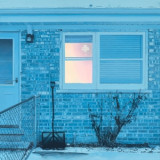
Ratboys have been recording and releasing music for over a decade, but their newest album, The Window, marks the first time they’d ever traveled outside their home base of Chicago to make a record, journeying to the Hall of Justice Recording Studio in Seattle to work with producer Chris Walla.
The sessions with Walla (Death Cab for Cutie, Tegan and Sara, Foxing) struck the perfect balance between preparation and experimentation, injecting new life into the band’s style of soft-hearted Midwestern indie rock with an ever so subtle Americana twist. The solidified Ratboys lineup stretched and expanded their vision in the studio, adding unexpected elements and instruments like rototoms, talkboxes, and fiddles. The result is Ratboys’ most sonically diverse record, shifting wildly from track to track. It flexes everything from fuzzy power pop choruses on “Crossed That Line” and “It’s Alive!” to
a warm country twang on “Morning Zoo” to mournful folk on the titular track. After more than ten years and four studio albums, The Window finally captures Ratboys as they were always meant to be
heard—expansive while still intimate, audacious while still tender—the sound of four friends operating as a single, cohesive unit. This release comes with a Download Code.
The word Asapani is part of the artistic vocabulary of Paolo "Batà" Bianconcini, percussionist of the La Scimmia Records collective, founding member of the Circolo Psiconautico and part of the Neapolitan bands Parbleu, Funkin' Machine and Nu Genea. This ancient-sounding term is a creation of the artist, who defines it as a word of nature, but also the (italian) acronym of Listen to the Silence, Listen to the Peace, Listen to the Inner Nothingness. More than a simple term, an exhortation.
The music contained in Asapani was written and produced between 2022 and part of 2023 by Paolo “Batà” Bianconcini who together with the Circolo Psiconautico (Paolo Petrella on bass and synth, Pietro Santangelo on wind instruments and Roberto Porzio on synths) and takes shape from observation of time and the infinite possibility we have of blocking its fragments and making them our own and then sharing them in another form. The intent is to transport the listener outside of himself, through sound vibrations, during the span of four long tracks that melt into each other feeling like one singular body of work.
This album spans several genres, but at the same time is unique in its style. Spiritual jazz blended with primitive settings, achieving a sensation of sonic primitivism. The listener is projected into a circle of musicians who, sitting around a fireplace, are transported towards infinity by their internal vibrations.The research starts from the four elements of nature (water, fire, earth and air) and thus uniting and fusing with each other they make us question our existence, our depths.
As Batà himself explains, starting from the four fundamental elements in order to keep the search for the fifth element constant.
A location, Melizzano, on the western slopes of Monte Taburno, where the Batahaus stands, the physical and spiritual home of Batà, a magical place in which the Circolo Psiconautico meets, with the aim of navigating the waves of the unconscious and composing music which, through contamination and experimentation, captures the moods of the moment and projects images and colours from the inside out that speak to everyone. Like a real club, the Psiconauti come together to give each other the chance to explore together, create suggestions and get excited among friends.
Modern Baseball was formed in 2011 by friends and guitarists Jacob Ewald and Brendan Lukens, who were soon joined by Ian Farmer on bass and Sean Huber on drums. The band self-released their first EP The Nameless Ranger in 2011 while still in high school. Shortly after the members relocated to Philadelphia to attend college and quickly gained a strong following in the Philadelphia music community, teaming up with locals Marietta to release the Couples Therapy split in the spring of 2012. Modern Baseball released their debut full-length Sports later that year on Lame-O Records, which they self-recorded and produced. After spending the summer of 2013 touring heavily across the US, the band headed into Studio A in Philadelphia to self-record You're Going to Miss It All. Mixed by Jonathan Low at Minor Street Recordings, mastered by Will Yip and released through Run For Cover Records, You're Going to Miss It All features 12 tracks that showcase the band's signature witty indie-pop.
Plizzken are back in a big way with their eagerly anticipated second LP, Do You Really Wanna Know? These German punks' debut LP was the first full length where lead singer Sebi sang entirely in English. Since that album's release to great acclaim from the international street punk commu- nity, Sebi suffered the setback of a debilitating workplace accident, but triumphantly rose above all expecta- tions for recovery, making a hard-hit- ting new record with his long-running band Stomper 98 to boot! Returning their focus to Plizzken, Sebi and the crew are locked in and razor tight, crafting 13 brand new tracks of anthemic working class street punk that will thrill their fans while taking them by surprise. What will strike listeners immediately is a renewed focus on melody and hooks. In short, these songs are CATCHY! By the time the handclaps come in on the fourth song, "Memory Lane," you may just find yourself dancing around the room to these tunes. Likewise for the post-punk/new wave influenced groove that drives tracks like "I Don't Wanna. "Without sacrificing the realism and grit with which they face the world and sound the alarms for the working class to rise up, Plizzken sound renewed, positive, and keen to encourage everyone ready "TO FIGHT THE GOOD FIGHT," as the gang vocals on "Mad World" put it. Although they are all punk rock veterans with decades playing music, Do You Really Wanna Know? has the energy of a hungry young band who are not about to waste a new lease on life. Combining street level punk rock 'n roll with a genuine pop sensibility and a rabble-rousing spirit, executed with the chops of seasoned players, Do You Really Wanna Know? is truly a record that will have old fans dancing and singing along with fists in the air, hand in hand with what is certain to be an army of new ones.
96kHz - 48-bit HD Audio with digital booklet including original photography by Christopher Kayfield and liner notes by Shaun Brady.
Pianist Kevin Hays, bassist Ben Street, and drummer Billy Hart reunite for a second, scintillating trio date, BRIDGES, featuring original compositions by Hays and Hart with classics by Wayne Shorter, Bill Frisell, The Beatles, and Milton Nascimento.
Hays Street Hart, the trio of pianist Kevin Hays, bassist Ben Street, and legendary drummer Billy Hart, recorded their acclaimed 2021 debut, ALL THINGS ARE, under less than optimal conditions. The album began life as a performance in honor of Hart’s 80th birthday in December 2020, live-streamed from an empty Smoke Jazz Club in the final weeks of that grueling pandemic year. Despite those adversities, the music they created that night was spectacular enough to convince all involved that it should be released.
Two years later, the trio has reconvened, this time fully cognizant that they were going to record an album at Sear Sound Studios in NYC. The captivating BRIDGES brilliantly spotlights the unique chemistry and shared spirit of exploration that emerged fully formed on that initial impromptu session. The title succinctly hints at some of the reasons why Hays, Street and Hart work so well together: this is a trio that bridges generations, certainly, as well as a wealth of diverse experience and inspiration. But it also sums up a mutual desire to bring people together through music.
“In this world that seems to be crumbling beneath our feet,” Hays explains, “we sense the need to make allies where there might be adversaries. On the most intimate level, interpersonally and inter-psychically we set out to overcome any number of misunderstandings and adversarial situations.”
Not that there was any antagonism to overcome within the trio itself. More than anything, Hays Street Hart is a mutual admiration society of the highest order. The esteem in which the pianist and bassist hold Billy Hart likely goes without saying. The drummer was ordained in 2022 as an NEA Jazz Master, just one of the many honors he has chalked up over a breathtaking career. He began his career with an apprenticeship under the revered vocalist Shirley Horn and went on to make notable music with such luminaries as Miles Davis, McCoy Tyner, Herbie Hancock, Wes Montgomery, Jimmy Smith, Stan Getz, and as part of the quartet Quest featuring David Liebman and Richie Beirach.
But Hart is if anything, even more laudatory toward his younger bandmates. Street has been a member of the drummer’s stellar quartet for two decades, alongside pianist Ethan Iverson and saxophonist Mark Turner, a tenure that speaks for itself. As for Hays, Hart is quick to place the pianist in the exalted company of some of his iconic former collaborators.
“I’ve been lucky enough to have the chance to perform with Herbie Hancock and McCoy Tyner,” says Hart modestly. “Each generation presents their own equivalent, and Kevin is an example of the latest innovations. There was Herbie and McCoy, then it was Chick Corea and Keith Jarrett, and then you have what's coming next. I think Kevin is definitely part of that continuum.”
Though Hays sticks strictly to the piano on BRIDGES, he is also an accomplished singer whose vocal instincts fuel his inventive and lyrical melodicism. Street points to those facets as key to the connection between the pianist and Hart, who has enjoyed several meaningful collaborations with vocalists.
“It always seems to me that Kevin has the capacity to sing in his mind and then accompany himself on the piano,” Street describes. “That makes for such a nice connection with Billy, who has played with and learned from so many singers. I don't even feel like we're playing as a piano trio most of the time; it feels more like a quartet.”
Those qualities are especially clear on Hays’ “Butterfly,” which opens the album. Though it’s performed here as an instrumental, the pianist has composed lyrics for the piece, and its gorgeous, song-like quality shines through. Hays also contributed the breathtaking ballad “Song for Peace,” highlighted by Hart’s gentle, embracing brushwork and Street’s sturdy, stentorian tone. The pianist’s third original, “Row Row Row,” is constructed on a twelve-tone row, but as the playful title suggests, it has none of the more stringent qualities of the serialist composers.
Hart’s stunning “Irah,” originally recorded on his quartet’s self-titled 2006 debut, is dedicated to the composer’s mother and was recorded at Street’s suggestion. The bassist also brought guitarist Bill Frisell’s reflective “Throughout” to the date, imagining Frisell’s Americana influences would resonate with the similarly inclined Hays, who approaches the tune with a harp-like beauty. Hays’ love of pop and rock music is also reflected by the inclusion of The Beatles classic “With a Little Help from My Friends.”
The trio pays tribute to the late, great Wayne Shorter with “Capricorn,” originally released on the composer’s 1969 Blue Note album SUPER NOVA and later included on the Miles Davis Quintet set WATER BABIES. Hart called Shorter one of a kind. I think of the many times I heard him excel – with the Maynard Ferguson Big Band, with Art Blakey's Jazz Messengers, with Weather Report. And in each case, he was innovative.”
BRIDGES closes with the title track, a dazzling piece by the great Brazilian singer and songwriter Milton Nascimento, which Hays calls “one of my favorite compositions ever, by anybody.”
BRIDGES was recorded under ideal studio conditions by a now-established trio with a weeks-long European tour under their belts. Perhaps what’s most remarkable about the album is not that Hays, Street, and Hart play so masterfully together – with three artists of their caliber, who could expect any less? – but that this second outing maintains the bold spirit of inquisitiveness and spontaneity that its predecessor naturally possessed. Credit that to a trio perpetually determined to discover new bridges worth building.
What Do We Do Now is the fifth solo studio LP recorded by J Mascis since 1996. This is obviously not a very aggressive release schedule, but when you figure in the live albums, guest spots, and records done with his various other bands (Dinosaur Jr., The Fog, Heavy Blanket, Witch, Sweet Apple, and so on), well, to paraphrase Lou Reed, "J's week beats your year." What Do We Do Now began to come together during the waning days of the Pandemic. Utilizing his own Bisquiteen Studio, J started working on writing a series of tunes on acoustic with a different dynamic than the stuff he creates for Dino. "When I'm writing for the band," he says, "I'm always trying to think of doing things Lou and Murph would fit into. For myself, I'm thinking more about what I can do with just an acoustic guitar, even for the leads. Of course, this time, I added full drums and electric leads, although the rhythm parts are still all acoustic. Usually, I try to do the solo stuff more simply so I can play it by myself, but I really wanted to add the drums. Once that started, everything else just fell into place. So it ended up sounding a lot more like a band record. I dunno why I did that exactly, but it's just what happened." Two guest musicians are playing this time out; Western Mass local Ken Mauri (of the B52s) plays piano on several tracks. Since J himself has some experience with keys, when asked why he needed a hired gun, he says, "Ken is great, and he plays all the keys. I tried playing some keyboards on the first Fog album, but I'm really only comfortable playing the white notes, so it's kind of limiting. laughs Nowadays, I could just turn the pitch on a mini Mellotron to play different sounds, but black keys just seem hard. For whatever reason, I just like banging on the white ones. Seems like it's harder to figure out how to stretch your fingers around the other ones." Mauri has no such qualms and plays all the keys very damn well. He sounds especially great on "I Can't Find You," where he is Jack Nitzsche to J's Neil Young, creating one of the album's loveliest tunes. The other guest musician, Matthew "Doc" Dunn, is also prominent on this track. Dunn's steel guitar manages to both widen and soften the musical edges of the music, giving it a full classicist profile. Dunn is an Ontario-based polymath who J met through Matt Valentine. After J played on Doc's great 2022 Sub Pop single, "Your Feel," he figured it was time for payback. Both Dunn and Mauri add beautifully to the songs here, helping to transform them from acoustic sketches into full-blown post-core power ballads. What Do We Do Now is the finest set of solo tunes J has yet penned, and the way they're presented is just about perfect. Asked if he would be touring to support the album, J says he'll be doing some weekend dates, but he probably won't be putting a band together. And I'm sure these songs will sound great solo and acoustic, but the arrangements on this album are truly great and put a cool, different spin on Mascis' instantly Recognizable approach to making music. So, what do we do now? Not sure. But apparently, what J does is to make one of his most killer records ever. Hats off to him. - Byron Coley
tapetopia 015 The name L’Ambassadeur des Ombres goes back to the
French science fiction comic “Valérian et Laureline”. The Ambassadors of the Shadows combined pop appeal and experimentation as the soundtrack to the zero hour of their generation in the GDR’s waning days. The music was made in a children’s room, but the edifice of ideas was a demolition site. L’Ambassadeur des Ombres existed as a hybrid of the wave bands Die Vision and Neuntage. The open ensemble’s family tree can however be traced back to buried DIY projects such as the Mahlsdorfer Wohnstuben Orchester, Zerstörte Umwelt and dark-wave protagonists Fellini Prostitutes or Nontoxic. In the short time of their existence in 1988/89, L’Ambassadeur des Ombres did not give a single concert. The tape “Strike Me If I Shriek” was circulated among friends and musicians only as an on-request work report – it’s a long overdue discovery. The tapetopia series, using the original layouts and track lists, publishes cassette editions from the GDR underground of the 1980s, especially from the “walled-in” scene in East Berlin. More than three decades after their initial “release”, most of these tapes have yet to be heard on either vinyl or CD, even though they made an audible mark in the canon of GDR subculture. Despite the tiny original editions of the time, many of the bands were considered cult in countercultural circles, which made them highly suspect in informed circles.
Beside Trawbreaga Bay, in Co Donegal, on the north coast of Ireland, in an old schoolhouse, with a suitcase full of hired recording gear, Oisin Leech strums gently on an acoustic guitar and watches the tide pull the water away from the ancient inlet - The thickness of Oisin's voice soothes the room as the sound waves bounce around in the land where his ancestors still live and still wander - With a musical history that led Leech from the street punk bands of yesteryear through an ongoing stint with folk duo The Lost Brothers, he found himself for the first time working on songs to sing alone. In his mind, the songs became imagined vignette films playing behind closed, guitar eyes. After writing nearly 40 new songs in this fashion, Leech wrote "October Sun" which would become the foundation for his debut solo record, Cold Sea.
Cold Sea was produced by guitarist/songwriter Steve Gunn. Leech dreamt of making the record in Donegal Ireland, a county significant to him because it is the home of his ancestors. Pitching this idea to Gunn sparked the first of several serendipities circling the Cold Sea sessions - Gunn had always wanted to visit Donegal to connect with his own familial roots in the region.
Cold Sea is perhaps most notable for its tremendous warmth. Each song was recorded in a few takes and adorned gently with synthesizers and guitar from Gunn. Several songs feature contributions on the upright bass by Bob Dylan band stalwart Tony Garnier. M. Ward plays guitar on October Sun and there are strings by Roisin McGrory and bouzouki by the legendary Donal Lunny throughout. It is a friendship record but even at its most collaborative, Cold Sea remains centered around the humble acoustic guitar and wool blanket vocals of Leech.
Before coming to Europe, in 1970, pianist Manuel Villarroel was a vet in his native Chilli. A few years later, as leader of the Machi Oul Big Band, he returned to the animal kingdom. A very specific kind of animal, for sure, the Quetzalcoatl, also known as the Feathered Serpent. What is behind this title (also the name of one of the three original compositions on this album released on the Palm label in 1976), is first and foremost a sort of homecoming...
After discovering the jazz of Herbie Hancock, McCoy Tyner, Miles Davis and John Coltrane, Villarroel was taken by the free jazz which was all the rage at the time in America and Europe, and this would inspire the first version of his Machi-Oul, project. This was a septet, with which the pianist would record, in 1971, the tremendous Terremoto (re-released by Souffle Continu FFL085). After this masterstroke Villarroel was invited to record with Perception (Perception & Friends) and with Baikida Carroll (Orange Fish Tears). While these were notable contributions, Villarroel was already looking into other combinations.
“I had to deal personally with my situation as an expatriate, without disavowing it. I tried not to betray my roots, I tried to translate into my music what was essential to me, to reflect my origins – Latin America, its musical and above all human feelings – while remaining faithful to jazz, which is the mode of expression of the musicians in the group”. This then is the ‘homecoming’ we mentioned, which would incite Manuel Villarroel to compose what he would call “structured free music”. In January 1972 the pianist enlarged his formation to reach the size of a real big band: the Septet became the Machi-Oul Big Band. Three years later in January 1975, with producer Jef Gilson at the helm, fifteen musicians including those from the old Septet (Jef Sicard, François and Jean-Louis Méchali, Gérard Coppéré) worked on a rare form of jazz. From togetherness to dissonance, we danse to it “Bolerito” then shake it up on “Leyendas De Nahuelbuta”. As for the concluding serpent, it is a piece which is impossible to pin down: “Quetzalcoat” is as impressive as it is difficult to grasp. To remind ourselves of this, lets listen to it again.
After 2021’s critically acclaimed album “Afraid To Leave”, Berlin based post-punkers Bleib Modern invited artist friends to take an outside perspective on their tracks, resulting in the “2 Afraid 2 Leave” compilation, featuring remixes and reworks from several esteemed names within the darkwave, post-punk and EBM music scenes.
From club bangers like IV Horsemen’s version of “Bitter Smile” and M!R!M’s dreamy lo-fi bedroom synthpop sound on “Into The Night” to Danish deviant pop artist Dune Messiah’s crooner “Loony Voices”. The album also boasts contributions from luminaries like The KVB, The Underground Youth, Blind Delon, Shad Shadows and various Bleib Modern band member side projects.
“2 Afraid 2 Leave” offers listeners a chance to experience Bleib Modern’s music from an altered vantage point, a welcome interlude as the band forges ahead with new creations.
Footballhead is a Chicago-based alternative rock band headed by singer/ songwriter Ryan Nolen - At its heart, the band is a vessel to toil forward through internal and external insecurity It also serves the unrelenting spirit of new- millennium Midwestern youth, with MTV and skatepark dreams in the core of their memories. By blending pop structures with alt and emo sounds, Footballhead channels the frantic, dramatic, and anthemic to map the pressure points of existence. It's outcast music, revitalized in search of a modern, blissful awakening. Nolen was a skate kid from the western Chicago suburbs; the one who only kicked it with older neighborhood kids. The punkish attitude of late-90s and earlyaughts alt- rock galvanized Nolen, from the infectiously fun music down to the fashion.
A teenage relocation to Palm Springs, CA coincided with Nolen inundating himself with all the music he could: Warped Tour, 411 videos, Limewire, and the like. The Footballhead ethos comes from this comfort zone of pop impulses and raucous energy, carried by a DIY spirit that grants Nolen the autonomy to facilitate honesty and reflection. Joined by Adam Siska, snow ellet, Liam Burns, and Robbie Kuntz, Footballhead crafts supercharged rock songs like brief, open secrets. However weathered one is from their struggles and mistakes, this music offers unbridled fun as a reprieve, and salves for the shaken. These are your old friends inviting you in to commiserate, elevate, and believe.
- A1: There Is No Time (Prelude)
- A2: The Call
- A3: Theme De Crabtree
- A4: Road Of The Lonely Ones
- A5: Loose Goose
- A6: Dirtknock
- A7: Hopprock
- A8: Riddim Chant
- B1: Sound Ancestors
- B2: One For Quartabe/Right Now
- B3: Hang Out (Phone Off) (Phone Off)
- B4: Two For 2 - For Dilla
- B5: Latino Negro
- B6: The New Normal
- B7: Chino
- B8: Duumbiyay
MUSIC BY MADLIB / ARRANGED BY KIEREN HEBDEN (Four Tet)
Gil Evans to Miles Davis…. Holger Czukay to the ensemble known as Can….Jean Claude Vannier to Serge Gainsbourg on Histoire de Melody Nelson. That’s the only way to explain the specificity of Four Tet and Madlib’s collaboration, in this special album that showcases a two-decade long friendship that has resulted in an album that follows Madlib’s classics like Quasimoto’s The Unseen, Madvillainy and his Pinata and Bandana albums with Freddie Gibbs.
“A few months ago I completed work on an album with my friend Madlib that we’d been making for the last few years. He is always making loads of music in all sorts of styles and I was listening to some of his new beats and studio sessions when I had the idea that it would be great to hear some of these ideas made into a Madlib solo album. Not made into beats for vocalists to use but instead arranged into tracks that could all flow together in an album designed to be listened to start to finish. I put this concept to him when we were hanging out eating some nice food one day and we decided to work on this together with him sending me tracks, loops, ideas and experiments that I would arrange, edit, manipulate and combine. I was sent hundreds of pieces of music over a couple of years stretch and during that time I put together this album with all the parts that fitted with my vision.” - Kieren Hebden AKA Four Tet
THEODOR is a psychedelic sweet soul band formed by members with diverse musical backgrounds.
Whilst on a road trip to Italy Rob and Lui were listening to tapes of contemporary soul music. The idea was born to record an album channeling a moody and relaxed soundscape. „Right after our trip we called up our good friends Max and Greg, who were immediately on board. We wrote and recorded deep in the pandemic. Those weekend sessions captured this peaceful solitude“ The outcome was their self-titled debut album which will be released in February 2023 on the french label Broc Recordz.
The rich sonic texture and unconventional arrangements of their very first single SHEPARD’S LULLABY gives a hint on what is to be expected on their forthcoming LP. THEODOR created a perfect soundtrack for a hot and humid summer day having a magic dash in your twelve o’clock tea. Playful melodic bass lines and the soulful acoustic drums build the playground for the warm and dreamy keys such as farfisa organs, fender rhodes and 80's synths. The lush instrumentals are spiced by the very different yet complementary voices of Max and Lui.
'Scope Neglect' ist ein experimentelles und genreübergreifendes Album, das aus Frosts Bewunderung für den Metal geschmiedet wurde, wobei er sich bewusst von dessen konventionellen Attributen entfernt hat. Wo das Album Aspekte des Genres berührt, trifft es auf glitchende Elektronik, immersive Ambient-Industrial-Sounds und tief kontemplative Erkundungen, die zu etwas führen, das sich nicht in eine Schublade stecken lässt. Das Album wurde zusammen mit dem Gitarristen Greg Kubacki (von der New Yorker Progressive-Metal-Band Car Bomb) und dem Bassisten Liam Andrews (von der Melbourner Band MY DISCO) in den Candy Bomber Studios in Berlin mit dem Toningenieur Ingo Krauss (Swans, Nick Cave und Mick Harvey) aufgenommen.
First official vinyl reissue of this sought-after psychedelic folk-rock / Americana / SSW album from 1976.
Major Arcana was a group led by counter-culture Milwaukee icon JIM Spencer, featuring a revolving cast of musicians / collaborators. The core of the band was Jim Spencer (guitar, vocals); Randall Dubis (electric guitar); Michael Burdecki (bass, slide guitar) and Jim Kitchen (percussion, harmonica). They were helped in the studio by some friends / musicians like Sigmund Snopek III and Barry Patton among many others.
Released on Jim Spencer’s own private label (A Major Label, home also to Anonymous of “Inside The Shadow” fame), the album opens with the terrific psych-folk of “Western Wind” and closes with an acid-folk rendition of “Greensleeves”. In between, you’ll also find some blues rock, SSW ballads, jazzy bits…
File next to groups like Pearls Before Swine or Bermuda Triangle.
Head Body Connector is the third offering from Noah Prebish, Peter Spears, and Brother Michael Rudinski’s Psymon Spine project. It is a record that relishes in the heady, the psychedelic, the abstraction of temporality as we know it. Head Body Connector is a studio record from a band obsessed with production. It’s also a record that more so than any other Psymon release is interested in explicitly sounding live. It’s a guitar-forward album. Something that is ready-made to be performed. It. features Liquid Liquid’s Dennis Young’s percussion and Angel Deradoorian (Dirty Projectors, Flylo, The Roots) on backing vocals as well as long time collaborator Sabine Holler. Head Body Connector also saw the induction of two longtime friends of the band, drummer Zeb Stern and singer/guitarist Sarah Aument, both on tour and in the studio.
Les Disques du Crepuscule presents a unique anthology by artful Brussels postpunk-funk band Marine, fondly remembered for their dazzling debut single ‘Life In Reverse’ in 1981, and now back with a clutch of brand new studio tracks.
The cover art is by LDDC art director Benoit Hennebert and based on the ‘Same Beat’ single sleeve from 1982. The vinyl edition s of TWI 143 is limited to 500 copies pressed on blue vinyl and includes a digital link. All tracks are newly remastered in 2023.
Formed in late 1980 around charismatic frontman Marc Desmare together with musicians from infamous punk band Mad Virgins, Marine made an early splash supporting Orange Juice and Josef K at the legendary Plan K venue, Postcard Records afterwards keeping tabs on the Sound of Young Brussels.
Snapped up instead by chic boutique label Les Disques du Crepuscule, Marine released their infectious debut single ‘Life In Reverse’ in April 1981, attracting rave reviews in the Belgian and UK press, reaching the giddy heights of #6 on the NME indie chart, and even being invited to record a radio session for John Peel - a world first for a Belgian band.
Soon favourable comparisons were being drawn with The Pop Group, A Certain Ratio, Defunkt, James White and Fire Engines, some pundits even sensing a new Haircut 100. ‘We’re not a fashion band,’ insisted Marc in UK rock weekly Sounds, ‘and it’s not really dance music. But all the same I’m glad people dance to it.’
Alas, artistic differences caused the fast-rising group to part ways in a London studio, when half the band quit to form pop-funk sophisticates Allez Allez. With new Marines on board, Marc and bassist Paul Delnoy went on to release two further singles (‘How to Keep Cool’ and ‘Same Beat’), gigged extensively around France and the Low Countries, and played a headline show at The Venue in London. ‘Fine, disciplined and gleeful rhythm workers,’ enthused Chris Bohn in NME. ‘A happy, contagiously clean aural equivalent to a Serge Clerc cartoon.’
Alas by the summer of 1982 Marine were all washed up, with Marc going on direct films and documentaries as Marco Laguna. Four decades later, finally heeding desperate pleas from Crepuscule that his sensational first band never cut an album, Marc has written and recorded another 6 remarkably authentic sounding Marine songs with help from like-minded friends in Brussels and Paris, once more drawing on a heady mix of supercool funkabilly, jazz and soundtrack influences.
‘It was an incredibly strange experience to revisit my past,’ says Marc, ‘but definitely fun. I’m glad, and I’m proud!’