Sara Dobbs and Jenny Shore used to work summer stock theater in St. Louis, Missouri. They'd do the hand jive with TV stars past and future; they'd get coldly corrected by the ancient, legendary choreographer Gemze de Lappe. Sara went on to Broadway, including a run as Anybodys in West Side Story. Jenny went on to choreograph in the independent dance scene of early 2000s Chicago. Julie Shore is Jenny's sister. She's always made music_playing Chopin, writing songs, making bands with her friends. She's had the archetypal Millennial journey of entering adulthood in the '08 financial crisis and figuring out what stupid series of jobs you have to take to pay rent while keeping an artistic life alive. Miles Francis grew up in New York City with Backstreet Boys posters covering their walls. An extraordinary drummer since youth, Miles thrives in collaboration_ whether producing artists in their West Village studio, performing with artists like Angelique Kidjo, or powering protests with a big marching drum. These four_Miles, Julie, Jenny, and Sara_are Sister Squares. What made them a musical unit was working with Grammy winner and Oscar nominee Will Butler. They've all just finished a new record together: Will Butler + Sister Squares. "After Generations, I considered making a weird solo record. Me alone in the basement, etc., etc. Mostly I realized that what I wanted was the opposite," says Will. He increasingly turned to the band for feedback on lyrics and song structures. He asked Miles if they'd produce the record. The band played a run of shows in August 2022, airing out studio ideas in live rooms. After coming home, the band regrouped at Figure 8 Studios in Brooklyn. "I had quit my band Arcade Fire very recently, after 20 years_maybe the most complex decision of my life. I had spent the preceding two years at home with my three children. I was 39 years old. I was waking up every morning and reading Emily Dickinson, until I had read every Emily Dickinson poem. I was listening to Morrissey, to Shostakovich, to the Spotify top 50. I had unformed questions with inchoate answers," says Will. "But, honestly, I was feeling great about the record." The album projects widescreen emotional landscapes. Lead-off single "Long Grass" is like a Harry Styles song with 20 more years of life behind it. Standout track "Saturday Night" has a beat, according to Miles, "with that robot-alien-dancing-at-a-haunted- dive-bar feeling that we were going for." The back half of the album is a danceable, weird choral record with harmonies both beautiful and dissonant. Closing song "The Window" is the comedown after the party_Julie playing a Chopin Nocturne on a three-years-out-of-tune piano, slowed to half-speed on tape with Will singing over it in a voice exactly as tired as he was. It's a record with a warm, humane soul.
quête:friends band
Sara Dobbs and Jenny Shore used to work summer stock theater in St. Louis, Missouri. They'd do the hand jive with TV stars past and future; they'd get coldly corrected by the ancient, legendary choreographer Gemze de Lappe. Sara went on to Broadway, including a run as Anybodys in West Side Story. Jenny went on to choreograph in the independent dance scene of early 2000s Chicago. Julie Shore is Jenny's sister. She's always made music_playing Chopin, writing songs, making bands with her friends. She's had the archetypal Millennial journey of entering adulthood in the '08 financial crisis and figuring out what stupid series of jobs you have to take to pay rent while keeping an artistic life alive. Miles Francis grew up in New York City with Backstreet Boys posters covering their walls. An extraordinary drummer since youth, Miles thrives in collaboration_ whether producing artists in their West Village studio, performing with artists like Angelique Kidjo, or powering protests with a big marching drum. These four_Miles, Julie, Jenny, and Sara_are Sister Squares. What made them a musical unit was working with Grammy winner and Oscar nominee Will Butler. They've all just finished a new record together: Will Butler + Sister Squares. "After Generations, I considered making a weird solo record. Me alone in the basement, etc., etc. Mostly I realized that what I wanted was the opposite," says Will. He increasingly turned to the band for feedback on lyrics and song structures. He asked Miles if they'd produce the record. The band played a run of shows in August 2022, airing out studio ideas in live rooms. After coming home, the band regrouped at Figure 8 Studios in Brooklyn. "I had quit my band Arcade Fire very recently, after 20 years_maybe the most complex decision of my life. I had spent the preceding two years at home with my three children. I was 39 years old. I was waking up every morning and reading Emily Dickinson, until I had read every Emily Dickinson poem. I was listening to Morrissey, to Shostakovich, to the Spotify top 50. I had unformed questions with inchoate answers," says Will. "But, honestly, I was feeling great about the record." The album projects widescreen emotional landscapes. Lead-off single "Long Grass" is like a Harry Styles song with 20 more years of life behind it. Standout track "Saturday Night" has a beat, according to Miles, "with that robot-alien-dancing-at-a-haunted- dive-bar feeling that we were going for." The back half of the album is a danceable, weird choral record with harmonies both beautiful and dissonant. Closing song "The Window" is the comedown after the party_Julie playing a Chopin Nocturne on a three-years-out-of-tune piano, slowed to half-speed on tape with Will singing over it in a voice exactly as tired as he was. It's a record with a warm, humane soul.
It’s long believed that dreams are a way for our subconscious and conscious selves to interact. A chance meeting between cognitive thought and the expanse of imagination. Our dreams are often half remembered upon waking, leaving bits and shards of the story left to be pieced together. That process of pulling together fragments feels infused within Austin’s Neckbolt, a band with a radiant understanding of pairing disparate elements together to create something magnificent. Introduced back in 2021 with Midwestern Drawl, their self-released debut album, the duo of James Roo and Benjamin Krause formed the project with a specific energy and an alien sound. At its core, that record laid the blueprint for the band, a forward thinking mix of caustic noise rock and vivid psychedelic pop, combining to create something wild yet ingenious, reshaping common genre ideals.
At some point between the recording and release of their debut, Neckbolt expanded, reverse engineering their sound to form a live band that could pull off the music of their recordings. The line-up grew from a duo to the quintet, with Roo (vocals) and Krause (guitar) joined by longtime friends and collaborators, Bill Indelicato (bass), Brent Hodge (drums), and Kilyn Massey (guitar), forming an instant chemistry apparent in their earliest of live shows. With members split between Austin and Oklahoma City, the band adapted their approach to songwriting, opting to record in bits and pieces as they wrote, bouncing ideas back and forth, watching songs take shape in ways that none of the members had intended, but all were quick to embrace. Neckbolt are a freaky band and their second album, Dream Dump, seizes the opportunity to dial up the strange in their own vibrant way.
Punk pioneers Crass continue their vinyl reissue series, repressing their limited releases by adjacent artists through Crass Records, in association with One Little Independent. The series, including over twenty bands and solo artists recorded at the legendary Southern Studios and produced by Penny Rimbaud, continues with two more historic pieces from the Crass Records catalogue; ‘Farce’ by Rudimentary Peni and ‘Can’t Cheat Karma’ by Zounds.
Zounds are an English post-punk band from Reading, Berkshire, formed in 1977. Originally, they were part of the cassette culture movement, releasing material on the Fuck Off Records label, and were also involved in the squatting and free festival scene. The name of the band is derived from the old English ‘zounds’, a contraction of ‘God’s wounds’, referring to the crucifixion wounds of Jesus Christ, formerly used as a mildly blasphemous oath.
The band met up with fellow anarchists Crass when, legend has it, their van broke down on the road. They made their way to nearby Dial House, where Crass were based, who helped them with repairs. The two bands became friends, and although musically very divergent, they shared many common political views. Zounds shortly afterwards released their first EP, ‘Can't Cheat Karma’, on the Crass Records label in 1980. The EP featured possibly their most well-known track ‘Subvert’, a call to arms against the grind of daily life. The release of this EP and association with Crass led to an increase in the band's profile in the embryonic anarcho-punk scene, touring with both Crass and Poison Girls. They split in 1982 but reformed in 2007, and remain active today.
Penny continues; “Zounds could have made a fine pop group, but they were far too socially sassy to fall for that one. No, their commitment to radical political change, so abundantly clear in their lyrics, set them apart from the commercialism that had so blighted the likes of The Clash and other punkish pretenders. Having been drawn from the ranks of hippy bands like Here and Now, Zounds encouraged dissent and personal change, and, at their own cost, to pursue and promote them as ideologies. Can't cheat karma? No, nor ever beat it. Zounds were hip to this fine point. Want a better life?
Then make it for yourself. Ain't no one gonna help you out on that one. Find your own way, it's the only way there is.”
First released on 7” vinyl, limiting the sound, the new series has been remastered for 12” by Alex Gordon at Abbey Road Studios, allowing them to be heard as never before. This, plus enlarged replicas of the original covers, brings new gusto to their already radical sound.
KAU (previously KAU trio.) is an instrumental trio based in Brussels. Representing various European backgrounds, the Belgian capital and melting pot proves to be a never ending source of inspiration for the band. Taking influences from jazz, groove and dance music, their aim is simple but straightforward: to make your heads bob. The formula they use to do so has been the same since their early days: improvisation, never ending jam sessions and an open-mindedness towards various genres and styles. This gives their music an organic and vibrant feel. Furthermore, the three boys' long-lasting friendship is at the heart of it all, always relying on what brings them together: their love for music. The KAU cycle is bound to repeat itself and to birth something new - over and over again.
"The Cycle Repeats" is KAU's debut album, due on September 22 on SDBAN Ultra, the home of ECHT!, Black Flower, Glass Museum, STUFF. and more. It represents a milestone in the band's musical journey: it's their firm decision to present a strong and unified trio playing music that stands out through the combination of 80's synths, acoustic drums and electric bass. Moreover, the album succeeds in capturing the energy of their infectious and legendary live shows.
Highlights are album opener "Kampala", which has a throbbing bassline, jazzy synths and heavily modified arpeggiators at its core. The album's first single "Little Steps" starts with a strong hip hop groove, morphing into Herbie Hancock-style chords. "Amulet" is inspired by breakbeats, fast paced grooves and pentatonic bass lines. Both "Kautokeino" and "Alaska" are an invitation to travel to the utmost remote places of this earth, using intense sequencing and suffocating subbasses into an epic finish, probably demonstrating the trio in its most sincere form.
In short: with André Breidlid on drums, Matteo Genovese on bass and Jan Janzen on synths, KAU are a trio of childhood friends with a pan-European identity, whose music reflects the city they grew up in: unapologetic, richly diverse and with a spontaneous groove underlining it all. With their new album "The Cycle Repeats" they directly aim for your dancing shoes and souls.
Say Anything's 'Baseball' is the band's first full length album, originally self released and never before pressed to vinyl. Baseball is the predecessor to seminal album 'Is a Real Boy' and features 15 rare and hard to find tracks.
Black Vinyl[28,99 €]
The kind of band whose members are fully immersed in their local scene-through a handful of notable side projects and the show- promoting Philly staple 4333 Collective- the quintet's sound takes wide- spectrum influence from its environment. The result is an amalgam of complex song structures and flourishes of technical acumen, wholly unconcerned with genre, yet evoking the specific styles of touchstones such as Paramore and Circa Survive.
On their debut longplayer Where the Heart Is, Sweet Pill's unbound, raucous energy presents through ten autobiographical tracks that hinge on singer Zayna Youssef's elastic, enrapturing voice- at times belting and controlled, at others textural and guttural. Supporting Youssef are guitarists Jayce Williams and Sean McCall, bassist Ryan Cullen, and drummer Chris Kearney. Their blistering lead single "Blood" sees Youssef exploring a deteriorated friendship over Williams and McCall's trudging riffs and tactful counterpoint, with Cullen and Kearney rumbling nimbly in the song's foundations.
Second single "High Hopes" counters with introspective, melodic punk that reshapes anxiety rather than succumb to it. But third single "Diamond Eyes" momentarily slows the pace, with McCall joining Youssef on vocals for a breakup lament laden with acoustic sentimentalism and an emotive flurry from guest flutist Jill Ryan. Such range is the central facet of Where the Heart Is, where Sweet Pill's penchant for combining punkish tropes enlivened with the vibrance of math- rock and the aggression of post- hardcore sweetened with pop sensibility compound into something stylistically new yet still familiar.
When one of South Africa's most sought after trumpet players steps forward after a career alongside the very best in the International jazz scene, you know it's going to be a special record.
Dennis Mpale was one of South Africa's heavyweights. You'll find his name springing up on every important South African jazz record and billing since the 1960's. Chris McGregor's iconic Jazz/The African Sound LP, Abdullah Ibrahim's Dollar Brand, Barney Rachabane in the highly influential ensemble Roots, and early work in house bands appearing alongside Nick Moyake in The Soul jazz Men to name just a few. His trumpet playing had character, an extension of the body and amplifier of that great South African sound.
Leaving South Africa during Apartheid as a strong supporter and member of the ANC, Dennis made London his home, joining the newly established SA Jazz scene and standing in solidarity against the oppressions back in Africa.
Moving between London and South Africa during the 70's and 80's It wasn't till the early 1990's when Dennis finally settled again to make his biggest transition to solo artist, redefining his Jazz past and putting a heavy kwaito infused house slammer on the agenda. 1994s 'Paying My Bills' (a title maybe more appropriate now than it ever has been) is a mighty jazz kwaito house effort: From the heavy synth beat and gorgeous floating solo opener of 'Paying My Bills', to the highly infectious vocal phrasing on thumping house anthem 'Take My Time'. Paying My Bills takes the sensibilities of a jazz maestro and pairs it with one of South Africa's biggest producers Peter 'Hitman' Moticoe, creating the perfect recipe for a certified summer slammer.
Having previously only ever been released on CD, this is the first ever vinyl pressing of the album (hazy early test pressings lurk on a small number of lucky shelves). Vinyl mastering is handled by The Carvery's very own Frank Merritt here in London, with the resulting tracks generously split over 2 discs to fully appreciate the swampy heavy dub bass drolls for full dancefloor effect. It's loud and punchy and makes space for those glorious trumpet improvisations while keeping the synth refrains and heavy bass thumping.
Early plays include resident NTS DJ's and a feature on Palms Trax Radio 1 residency with surely more support to follow.
It’s been nearly eight years since the last Mondo Drag album came out. In that time, the Bay Area psych-prog band toured the US and Europe, performed at major festivals and—once again—reformed their rhythm section. But in the context of the band’s nearly two-decade existence, this period may have been the most fraught. Vocalist and keyboardist John Gamiño lost friends and family members. Meanwhile, humanity suffered the throes of a global pandemic. “It was a dark chapter,” he recalls. “I was going through a lot of stuff personally—there’s been a lot of death, loss of family members, and grief. Plus, the band was inactive. It felt like time was slipping away from me. I felt like I was wasting my opportunities. I felt like I wasn’t participating in my story as much as I could have.” This feeling of time slipping away is the prevailing theme on Mondo Drag’s new album, Through the Hourglass. “For me, Through the Hourglass really encompasses the quarantine/pandemic years,” Gamiño says. “But in a way that includes a couple of years before that for us, because the band was stagnant during that time. Living with that was really impactful on our daily lives. So, the album is reflective. It’s looking at time—past, present, future.” Luckily, Mondo Drag emerged from this dour period reborn. Freshly energized by bassist Conor Riley (formerly of San Diego psych squad Astra, currently of Birth), who joined in 2018, and drummer Jimmy Perez, who joined in 2022, Gamiño and guitarists Jake Sheley and Nolan Girard have triumphed over the seemingly inexorable pull of time’s passage. “Astra was the one contemporary band that we felt was on the same tip as us,” Gamiño says. “We saw the similarities and felt the same vibe. Conor moved to San Francisco in 2018 and heard we were looking for a bassist, so we got in touch. For us, it was like, ‘The synth player from Astra wants to play bass for us?’ We couldn’t think of anybody more perfect.” Perez, meanwhile, brings deep psych-prog knowledge and impeccable skill. “He’s an amazing drummer, and he allowed us to do what we’ve been trying to do,” Gamiño says. “Before he came along, it was like, ‘Where are the drummers who like psych and prog and can play dynamically?’ We ended up trying out metal drummers, but they couldn’t swing. Jimmy was the final piece of the puzzle.” The result is a dazzling and often plaintive rumination on the hours, days, and years—not to mention experiences—that comprise a lifetime. Two-part opener “Burning Daylight” smolders with melancholy, offering a whirl of multi-colored and hallucinatory imagery. “It’s about the California wildfires and a feeling of helplessness,” Gamiño explains. “There’s a juxtaposition between the dark lyricism and upbeat music which is meant to imply a sort of delusional state—and choosing our own delusion to overcome the crushing despair of reality.” Eleven-minute centerpiece “Passages” is a sprawling prog-rock adventure, festooned with lofty guitar melodies, sweeping organ flourishes and a delicately finger-picked outro. But the heaviest song, thematically speaking, might be the mournful and hypnotic “Death in Spring,” which borrows its title from the like-named Catalan novel. “In the novel, people are placed inside opened trees and their mouths filled with cement before they die to prevent their souls from escaping,” Gamiño explains. “The song is about three people I knew who lost their lives to gun violence, addiction, and mental health. It’s my way of cementing their souls in song form.” Mondo Drag fans might be surprised by this blend of hard reality with literary surrealism, but it’s a perfect example of how the last several years have impacted Mondo Drag—and Gamiño in particular. “On all of our previous albums, the lyrical content is more psychedelic and out there,” he acknowledges. “This is the most personal stuff I’ve ever done, so I’m definitely feeling vulnerable on this one.” The title Through the Hourglass comes from the opening of the long-running soap opera Days of Our Lives. It’s less inspired by a predilection for daytime TV than Gamiño’s connection with his late mother, who passed during the time since the last album. “I used to watch Days of Our Lives with her everyday growing up,” he explains. “The song is kind of a reinterpretation of the theme song, although it’s different enough that probably no one will catch it. Now that I’m getting older, I like to put these little Easter eggs in the songs for myself and for archival purposes—for memories.” Through the Hourglass was tracked at El Studio in San Francisco, with an additional ten days of recording at the band’s rehearsal space, which doubles as a hybrid analog-digital recording studio. The album was engineered and mixed by Phil Becker, drummer of space-punk mainstays Pins Of Light. “We’re still here,” Gamiño says. “We’ve been in the studio working on our craft and honing our skills. Now we’re re-emerging for the next stage of our life cycle.”
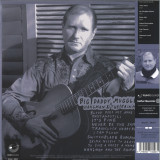
Big Daddy Mugglestone is back, with his first full-length solo release in over 2 decades! Rumi Sounds is proud to present this collection of songs about Life, Love, and God that really embody the idea of Americana Gothic.
The songs are dark but not bleak, giving a glimpse of forgiveness...even the 12-minute long murder ballad for which the album is named is still a love song.
With a mixed band of Denver and Berlin-based friends, Mugglestone steps out of the shadowy depths to create a record you and yr auntie could listen to while doing the dishes or lounging on the sofa on a rainy day.
The psyche-melodic guitar swirls of Oska Wald and the alluring back-up vocals of MTN GRL elevate his wry croon, not quite country but not quite contrary. Something like if Lee Hazlewood and John Prine both wanted to buy the same vintage lamp...
Adrian Borland and Graham Bailey might be better known as members of legendary post-punk group The Sound, but the two were childhood friends and had been playing together even earlier in The Outsiders, and continued their deep musical rapport as a duo, creating these intense and engaging songs as Second Layer at the same time as their higher profile band output. Following our release of Courts Or Wars, combining their early material, we are proud to reissue their only full length album, World Of Rubber.
Fueled by experimentation in both song construction and recording techniques, the duo leave you enveloped in what The Quietus described as, “a monochrome worldview morbidly obsessed with the dehumanizing effect of war, nuclear weapon annihilation, and the fracturing and negation of the self within an increasingly distorted and technologically mediated society.” Indeed, the goal had been to make each album a concept album, with this to be titled: Second Layer’s World Of Rubber. Alas, this was to be the first and last of those efforts. New detailed liner notes from Graham Bailey shed considerable light on the creation of this cold classic and its immediate aftermath.
Bailey’s inventive construction and deconstruction of various electronics, effects boxes and tape loops form the propulsive base for these songs. Borland’s guitar playing is jagged and unleashed. Above it all is an undeniable sense of melody and Adrian’s distinctive vocals. Soon, they would wonder where Second Layer ended and The Sound began, but World Of Rubber would stand as a document of this fertile period. It would also be a lasting testament to their desire to push the boundaries of their creativity. Dark and brooding the result is what Bandcamp described as “brutally bleak, blank-eyed post-punk that remains chillingly compelling.”
"If you can imagine a love child between MAC DEMARCO and SPAR-KLEHORSE, then this would be what you're left with." - SO YOUNG MAGA-ZINE
Raised in North Queensland, Australia, Jarrod Mahon is not one to shy away from bold new endeavors. Once parting ways with his previous record label in 2019, Mahon chose to go fully independent, relocating to Berlin in 2019 (where he still resides), despite having no contacts at all in the country. What’s more, having recorded/performed under the pseudonym Emerson Snowe for over a decade - during which time he home-recorded five albums and 13 EP’s, toured with the likes of King Krule or Ariel Pink, played showcases SXSW and the Great Escape, the works - Mahon took that brave, most uncommercial decision to release under his own name and start almost totally anew.
“There was never really a concept to that name Emerson Snowe other than having some kind of separation from who I was as a person,” Mahon explains, “using a moniker gave me that confidence to push myself further mentally and to give myself some kind of a freedom”. And through the process of creating what would become his debut album, Mahon saw that he had outgrown the need for this protective persona. ‘Everything Has A Life’ was meant to be the debut Snowe album”, he admits, “but after I finished mixing it with Syd Kemp, co-producer I realized that I had actually grown a lot and was much more comfort-able with who I am and what my personal beliefs are.”
The choice of ‘Everything Has A Life’ as the album title, pulled from beauteous opening track ‘All I Know’, neatly summarizes this new outlook: moving on from ‘self-pity’ of the past-self by becoming present for the loved ones around you, improving understanding of one’s own self, via the wider world at large.
That track marks the first written during a lockdown stint in LA where Mahon wrote and recorded every day for 2 months, produced nigh on 250 demos and birthed the bulk of the record. It also brought Mahon back to his all-time favorite, Sufjan Stevens’ Ilinois and its blend of widescreen orchestral landscapes and more candid, naked acoustic-leaning variations - an important influence for the album's stylistic contrasts. Another key inspiration for the record too brought Mahon back to his roots - those full-bloom strains of his Mum’s Beloved Neil Diamond, an annual Christmas irritant to Mahon as a child, yet an artist he’s come to respect in adulthood. “Whatever the reason, with age I came to love the big show band sounds,” he says, “the idea of a performer on stage with a mas-sive orchestra with strings was amazing to me.”
With the help of producer Syd Kemp (Ulrika Spacek, Vanishing Twin), such grand designs could be met. - “When we first met, he asked me if I would like real strings on it. I said of course.” Enter Magda Mclean on violin (Caroline/the Umlauts), and Gamaliel Rendle Traynor on Cello (Sweat, Fat White Family), whose strings helped lift the record to romantic new heights.
He continues: “I said to Syd that the only thing I wanted to achieve with this rec-ord was that I wanted it to make me cry at one point. And we got there eventual-ly.” The final culmination of all these strands, ’Everything Has A Life’ is indeed a treasure trove of emotive riches. Locking into that bittersweet, quintessentially ‘pop’ combination of triumphant rhythms and confessional, stream-of-consciousness lyrics plucked straight from the heart, Mahon faces up to years of substance abuse with a series of gorgeous, blushing melodies: “I was using, I was drinking, I was lying to my friends, I was messing up again, I was hiding from myself”, he joyously chants on ‘The Growing’.
A banquet fit for an indie king, Everything Has A Life is loaded with psych-pop lusciousness (‘All I Know’) and anthemic glam fuzz (‘Death Of The Ladies Man’, ‘Deadstar’, or ‘Sonny is my Best Friend’); recalling that foundational Sufjan Ste-vens influence too with shambling flecks of country (‘Charly (Romantic Heart)’). There’s also those lo-fi crepitations of ‘My Man’ and ‘I can’t’ harking back home-recorded demos that lie at the core of Mahon’s creative process.
Worriers' new album Trust Your Gut is what happens when a queer Springsteen sleeper cell emerges to throw an indie rock house party. It’s the opening scene of Empire Records if it were soundtracked by Frightened Rabbit. It’s about yearning for a better self when you constantly feel neither here nor there. While that isn’t entirely about their gender, it’s absolutely a part of songwriter Lauren Denitzio’s lived experience as a millennial. After Worriers released an album the same week as the 2020 lockdown - and after a history of what can only be described as music industry slapstick comedy - Denitzio rebuilt their songwriting practice from scratch. Armed with a small artist grant, new collaborators, and a lot of time on their hands, Trust Your Gut was written by taking everything apart and putting it back together again. The album was written and arranged with drummer Atom Willard (Against Me!, Angels & Airwaves), pianist Franz Nicolay (The Hold Steady), and guitarist Frank Piegaro who joined the band in 2019. With bass recorded by Allegra Anka (Cayetana) and strings by Ethan Philbrick, Trust Your Gut crafts a world of heart-punching indie rock with pop and folk influences after a career of fierce punk-leaning anthems.
- A1: Andre' Brasseur - X
- A2: Yan Tregger -Transgression
- A3: Man - Erotica
- B1: Super Erotica - Flash
- B2: Hareton Salvanini - Growing
- B3: Bill Cosby - Hikky-Burr
- B4: Gary Burton - Vibrafinger
- C1: Mandrill - Mandrill
- C2: Bana Pop Band - Jet Pop
- C3: Alex Scorier - Topless
- D1: Alan Parker - Solid Satin
- D2: The Mystic Moods - Midnight Snack
- D3: Barbara Moore - Steam Heat
- D4: Pierre Bachelet - O' Et Sir Stephen
- D5: Christine - Miss X
IF THERE WAS A PLACE WHERE FINO ALL THE BEST EROTIC MUSIC, WHAT ELSE COULD IlBE IF NOT AN "EROTEQUE" ? WELL DEAR FRIENDS, HERE WE HAVE A FANTASTIC DOUBLE VINYL THAT CONTAINS EXACTLY THAT MOOD, WITH A SELECTION OF 15 SONGS THAT WAS CERTAINLY NOT MADE BY CHANCE, BUT WITH A REFINED SELECTION OF COLLECTABLE SONGS.
- Word Games (Live)
- Love The One You’re With (Live)
- Sugar Babe (Live)
- Do For The Other (Live)
- Jesus Gave Love Away For Free (Live)
- 49: Bye-Byes/For What It’s Worth (Live)
- You Don’t Have To Cry (Live)
- The Lee Shore (Live)
- Cherokee (Live)
- Black Queen (Live)
- Know You’ve Got To Run (Live)
- Band Introduction (Live)
- Ecology Song (Live)
- Bluebird Revisited (Live)
- Lean On Me (Live)
Founding member of Buffalo Springfield and folk-rock supergroup Crosby, Stills, Nash & Young, Stills' first solo album, Stephen Stills, earned a gold record, is the only album to feature both Jimi Hendrix and Eric Clapton, and climbed to #3 on the album charts. Stephen Stills’ single "Love the One You're With" became his biggest solo hit, peaking at number 14 on the Billboard Hot 100 and is the first track on this collection. 14 tracks from Stephen Still’s First US Tour, previously unissued and recorded Live at The Berkeley Community Theater in 1971, featuring David Crosby on two songs. In 1971 Stephen Stills embarked on a US tour, opening each show with an intimate acoustic first set, and closing each night with a riveting electric set featuring the Memphis Horns. These historic, previously unreleased recordings took place over two nights at the Berkeley Community Theater, with David Crosby joining him on vocals and guitar for "You Don’t Have To Cry" and "The Lee Shore." These recordings find Stills at peak performance in both vocal delivery and musicianship, effortlessly incorporating alternate instrumentation on his instantly recognizable tracks, including a seamless medley of “49 Bye Byes" and "For What It’s Worth” unexpectedly played on piano. Hand-picked by Stills from his personal archives, this album captures timeless and era defining performances. Fans who were lucky enough to catch his historic debut trek, dubbed “The Memphis Horns Tour,” were treated to the balladeer, the raving troubadour, the acoustic bluesman, the soul driver, and by far the most passionate music maker. Backed by a loyal cast of friends, including his usual steady rhythm section—drummer Dallas Taylor and bassist Calvin “Fuzzy” Samuels—along with keyboardist Paul Harris, guitarist Steve Fromholz, and percussionist Joe Lala, these Northern California shows were one of the most unique and intimate stops on the tour This album, rather than being an artifact from a bygone era, sparkles and stimulates. It cajoles you into thinking, feeling and—most importantly—moving. Stephen Stills Live At Berkeley 1971 is a cornucopia of priceless sound—and all of it bears the distinct and loving fingerprint of Stephen Stills.
Working with Bat For Lashes producer David Kosten (aka Faultline), the recording of Man Alive was completed mainly in a chapel in North Wales. The album sounded unique. Nothing dates like the future, yet Man Alive sounds dateless, placeless, and as a result, stands up perfectly many years later.
Man Alive was only the beginning of the group's adventures in – to use their words – 'Mismatched styles of music mashed together.' The result is often exhilarating; there are Brazilian drums and a prog guitar breakdown in Schoolin', classical influences, as well. Its subject matter is often way outside the realms of conventional songwriting; MY KZ, UR BF explored the different Americas: the cosy self-centred domesticity of programmes such as Friends versus a foreign policy
based on killing; Qwerty Finger examines imperialism. Anglo Saxon guilt is also present.
The album's artwork was striking – a photograph of a fox by Swiss photographer, Laurent Geslin, reflecting the track Tin (The Manhole) which deals with the theme of depression, through, as the band said in 2010, "the story of an urban fox that ingests all our pollution and grows massively in a sort of dream sequence. We chose photos of an urban fox for this reason, but we partly attacked the code of the digital image to create a glitch distortion . . . a reference to digital manipulation and chaos as well as our modern lives online".
Released in August 2010, Man Alive made the UK Top 20 and was well reviewed.
For example, BBC Music commented that the group "know more than most how to craft a song, how to make an album. They know how to give it depth, light and dark, and they - crucially - know when to stop." Man Alive was shortlisted for the 20th Mercury Music Prize in 2011.
The original LP edition of the album is super- scarce, released before the 'vinyl revival' kicked in, hence the original pressing now selling in the high three figures.
This re-issue is presented with scrupulous attention to the detail of the original UK first pressing, complete with gatefold sleeve, poster and 8 page booklet. It is pressed on 140gm vinyl.
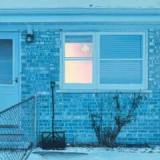
The sessions with Walla (Death Cab for Cutie, Tegan and Sara, Foxing) struck the perfect balance between preparation and experimentation, injecting new life into the band's style of soft- hearted Midwestern indie rock with an ever so subtle Americana twist. The solidified Ratboys lineup stretched and expanded their vision in the studio, adding unexpected elements and instruments like rototoms, talkboxes, and fiddles. The result is Ratboys' most sonically diverse record, shifting wildly from track to track. It flexes everything from fuzzy power pop choruses on "Crossed That Line" and "It's Alive!" to a warm country twang on "Morning Zoo" to mournful folk on the titular track. After more than ten years and four studio albums, The Window finally captures Ratboys as they were always meant to be heard--expansive while still intimate, audacious while still tender--the
sound of four friends operating as a single, cohesive unit.
At the end of the 60s and early 70s Brazil was a dream. It was fashionable everywhere in Europe and therefore in France too. One thinks of 'Samba Saravah' from the Un homme et une femme OST, Françoise Hardy and her record produced by Tuca, Isabelle Aubret and her 'Casa Forte' or France Gall with 'Zozoi'. Three Brazilian musicians exiled in France, Edson Lobo (bass), Fernando Martins (piano) and Nelson Serra (drums) form the Trio Camara. They met a group of friends who loved Brazilian music, all professional musicians, but who wanted to remain anonymous, hence the name of the band : Les Masques (The Masks)…
Claude Germain (Les double six), José Bartel, Marie Vassiliu, Pierre Vassiliu … Indeed the singers forming Les Masques are from being unknown. In 1969 they entered Studio Davout with le Trio Camara to record "Brasilian Sound". Composed of 11 tracks, it is a superb album, masterfully produced and recorded, a gripping record to listen in one go and transports us in atmospheres both dreamy and naïve which belong to that period. Produced in 500 copies on CBS, 'Brazilian Sound' was not, unfortunately, a success and it is today impossible to find the original French pressing (which sounds much better than the Canadian pressing released at the same time). This reissue on Le Très Groove Club is welcome, so that 50 years after its release, a larger audience can discover this beautiful record, echo of a once and for all past era.
This song, co- written and produced by Jamie Safir (Kylie, Birdy, Will Young) is from the brand-new collection 'Greek Street Friday' released later this year on all formats. With an ace band, which includes drummer Ian Thomas (George Michael, Van Morrison, Celine Dion) and guitarist David Preston (Melody Gardot, Curtis Stigers), this collection will also feature, on a beautiful new take of Rickie Lee Jones' 'Blinded By The Hunt', the world-renowned saxophonist Iain Ballamy (Everything But The Girl, Hermeto Pascoal, Loose Tubes). 'To Be Held' is a lullaby for our times. The title, inspired by a Truman Capote interview, with Dick Cavett, expands into a beautiful tribute to lost friends, the power of connections, imperfections and navigates the strangeness and beauty of being alive 'on this beaten-up planet of ours'.
Ian Shaw is back with force and with 'the quirks and character tics of every day living, . . . brought into euphoric focus Shaw tours his smart and soulful show' (The Guardian)
The sessions with Walla (Death Cab for Cutie, Tegan and Sara, Foxing) struck the perfect balance between preparation and experimentation, injecting new life into the band's style of soft- hearted Midwestern indie rock with an ever so subtle Americana twist. The solidified Ratboys lineup stretched and expanded their vision in the studio, adding unexpected elements and instruments like rototoms, talkboxes, and fiddles. The result is Ratboys' most sonically diverse record, shifting wildly from track to track. It flexes everything from fuzzy power pop choruses on "Crossed That Line" and "It's Alive!" to a warm country twang on "Morning Zoo" to mournful folk on the titular track. After more than ten years and four studio albums, The Window finally captures Ratboys as they were always meant to be heard--expansive while still intimate, audacious while still tender--the
sound of four friends operating as a single, cohesive unit.