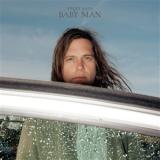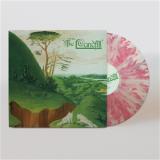
Der Mittlere Westen, insbesondere der Teil, aus dem Eric D. Johnson stammt, ist eine weitgehend flache Weite. Wenn man auf der Autobahn hindurchbraust, sieht man Städte und Ortschaften in der Ferne aufragen, doch wenn man blinzelt, verpasst man andere von Menschenhand geschaffene Gegenstücke zum Leben in der Ebene, die die Landschaft prägen: Hügel um Hügel, erbaut aus den Abfällen der Vergangenheit: Mülldeponien. Einige dieser Hügel eignen sich hervorragend als Schlittenhügel, Parks und Wanderwege. Andere verwandeln organische Abfälle in Kompost. ,The Landfill" ist etwas ganz anderes: ein Berg, der die Landschaft in Johnsons Herzen dominiert. Im Laufe seiner mittlerweile 25-jährigen Karriere unter dem Namen Fruit Bats war der Großteil von Eric D. Johnsons Schaffen das Ergebnis von Geduld und Feinschliff. Seine Songs sind, um einen Ausdruck zu verwenden, Langzeitprojekte, die auf Alben zum Leben erweckt werden, welche lange Zeiträume und Erinnerungen umfassen. "Baby Man" änderte das - er verbot sich, auf Material zurückzugreifen, an dem er vor der Aufnahme des Albums gearbeitet hatte. Es war sowohl ein atemberaubendes Dokument von Johnsons Können als Singer-Songwriter als auch ein ungeschönter Bericht über die zwei Wochen, in denen er das Album aufnahm. "Diese Session war vorbei", erklärt er, "aber es gab noch viel mehr zu erkunden. Mir gefiel die Unmittelbarkeit davon, und ich wollte sehen, wie sich das auf ein Fruit-Bats-Album mit voller Bandbesetzung übertragen lassen würde." Innerhalb weniger Wochen war er wieder im Studio, diesmal mit seiner Band: David Dawda (Bass), Josh Mease (Gitarren, Synthesizer), Frank LoCrasto (Klavier, Synthesizer) und Kosta Galanopoulos (Schlagzeug). Wenn man sich "The Landfill" anhört, stellt man fest: Diese Band rockt. Johnson produzierte die ersten Aufnahmesessions in den Bear Creek Studios in Washington und machte sich daran , "den Sound dieser Band einzufangen, die mich immer wieder in Staunen versetzt - das Gefühl, in einem Raum mit Musikern zu sein, die man liebt und denen man genug vertraut, um sie einfach machen zu lassen." Sie nahmen das meiste davon in einem Durchgang auf - ohne Click-Tracks, ohne zusammengestellte Gesangsparts und mit minimalen Overdubs, wobei der häufige Mitwirkende Thom Monahan zurückkehrte, um zusätzliche Produktionsarbeit zu leisten und den finalen Mix von ,The Landfill" zu erstellen. "So machen wir es auch mit meiner anderen Band, Bonny Light Horseman, und ich war neugierig, wie es bei den Fruit Bats funktionieren würde", bemerkt Johnson. "Es ist sowohl ein sehr persönliches Album als auch mein bisher kollaborativstes." Es ist zudem das live-orientierteste Album der Fruit Bats seit "The Ruminant Band" aus dem Jahr 2009, und durch die Reduzierung der Spuren, die einen Song einer kompletten Band normalerweise ausmachen, ist die psychedelische, technicolorartige Verträumtheit ihres Sounds lebendiger denn je. Die Songs auf "The Landfill" zeichnen sich sofort als einige der besten in Eric D. Johnsons Werk aus, Suchende und Hymnen gleichermaßen. Es ist der bisher gewaltigste Gipfel, den er erklommen hat.
Поиск:fruit bats
Все
- 1
- 1: The Saddest Part Of The Song
- 2: All Wounds
- 3: Think Aboutcha
- 4: That Goddamn Sun
- 5: Silverfish In The Sink
- 6: Wild Pony Tower Moment
- 7: Fishin' For A Vision
- 8: Perhaps We're A Storm
- 9: Hummingbird Sage
- 10: The Landfill
PINK SPLATTER IN CLEAR VINYL[22,27 €]
Der Mittlere Westen, insbesondere der Teil, aus dem Eric D. Johnson stammt, ist eine weitgehend flache Weite. Wenn man auf der Autobahn hindurchbraust, sieht man Städte und Ortschaften in der Ferne aufragen, doch wenn man blinzelt, verpasst man andere von Menschenhand geschaffene Gegenstücke zum Leben in der Ebene, die die Landschaft prägen: Hügel um Hügel, erbaut aus den Abfällen der Vergangenheit: Mülldeponien. Einige dieser Hügel eignen sich hervorragend als Schlittenhügel, Parks und Wanderwege. Andere verwandeln organische Abfälle in Kompost. ,The Landfill" ist etwas ganz anderes: ein Berg, der die Landschaft in Johnsons Herzen dominiert. Im Laufe seiner mittlerweile 25-jährigen Karriere unter dem Namen Fruit Bats war der Großteil von Eric D. Johnsons Schaffen das Ergebnis von Geduld und Feinschliff. Seine Songs sind, um einen Ausdruck zu verwenden, Langzeitprojekte, die auf Alben zum Leben erweckt werden, welche lange Zeiträume und Erinnerungen umfassen. "Baby Man" änderte das - er verbot sich, auf Material zurückzugreifen, an dem er vor der Aufnahme des Albums gearbeitet hatte. Es war sowohl ein atemberaubendes Dokument von Johnsons Können als Singer-Songwriter als auch ein ungeschönter Bericht über die zwei Wochen, in denen er das Album aufnahm. "Diese Session war vorbei", erklärt er, "aber es gab noch viel mehr zu erkunden. Mir gefiel die Unmittelbarkeit davon, und ich wollte sehen, wie sich das auf ein Fruit-Bats-Album mit voller Bandbesetzung übertragen lassen würde." Innerhalb weniger Wochen war er wieder im Studio, diesmal mit seiner Band: David Dawda (Bass), Josh Mease (Gitarren, Synthesizer), Frank LoCrasto (Klavier, Synthesizer) und Kosta Galanopoulos (Schlagzeug). Wenn man sich "The Landfill" anhört, stellt man fest: Diese Band rockt. Johnson produzierte die ersten Aufnahmesessions in den Bear Creek Studios in Washington und machte sich daran , "den Sound dieser Band einzufangen, die mich immer wieder in Staunen versetzt - das Gefühl, in einem Raum mit Musikern zu sein, die man liebt und denen man genug vertraut, um sie einfach machen zu lassen." Sie nahmen das meiste davon in einem Durchgang auf - ohne Click-Tracks, ohne zusammengestellte Gesangsparts und mit minimalen Overdubs, wobei der häufige Mitwirkende Thom Monahan zurückkehrte, um zusätzliche Produktionsarbeit zu leisten und den finalen Mix von ,The Landfill" zu erstellen. "So machen wir es auch mit meiner anderen Band, Bonny Light Horseman, und ich war neugierig, wie es bei den Fruit Bats funktionieren würde", bemerkt Johnson. "Es ist sowohl ein sehr persönliches Album als auch mein bisher kollaborativstes." Es ist zudem das live-orientierteste Album der Fruit Bats seit "The Ruminant Band" aus dem Jahr 2009, und durch die Reduzierung der Spuren, die einen Song einer kompletten Band normalerweise ausmachen, ist die psychedelische, technicolorartige Verträumtheit ihres Sounds lebendiger denn je. Die Songs auf "The Landfill" zeichnen sich sofort als einige der besten in Eric D. Johnsons Werk aus, Suchende und Hymnen gleichermaßen. Es ist der bisher gewaltigste Gipfel, den er erklommen hat.
- Let You People Down
- Two Thousand Four
- Stuck In My Head Again
- Baby Man
- Creature From The Wild
- Puddle Jumper
- First Girl I Loved
- Moon's Too Bright
- Building A Cathedral
- Year Of The Crow
Hinter dem gefeierten Indie-Folk-Künstler FRUIT BATS verbirgt sich der GRAMMY-nominierte Singer/Songwriter Eric D. Johnson aus Nashville, Tennessee. Mit "Baby Man" hat Johnson ein Album geschaffen, das sich von allen anderen FRUIT BATS-Alben abhebt. "Baby Man" setzt sich aus zehn fesselnden Solodarbietungen mit minimalistischer Instrumentierung (Gitarre, Klavier und gelegentlich Synthesizer) und maximaler Ausführung zusammen und Johnsons Raumnutzung auf dem gesamten Album ist oft ebenso bezaubernd wie die Musik und seine stets bemerkenswerte Stimme. Für die Produktion von "Baby Man" hatte sich Johnson wieder mit Thom Monahan zusammengetan. Das Ergebnis dieser Zusammenarbeit ist das intimste Werk, das FRUIT BATS bisher aufgenommen hat. "Baby Man" überrascht mit einigen der rauesten Stücke, die bisher unter dem Pseudonym FRUIT BATS entstanden sind. Monahan hat die Vocals im Mix nach vorne geschoben, was sowohl die Souveränität als auch die Verletzlichkeit jeder Darbietung hervorhebt. Zwischen der Substanz und dem Klang ist das Hören von "Baby Man" eine kraftvolle und gefühlvolle Erfahrung. Das spürt man gleich beim Album-Opener "Let You People Down" und auch beim nachdenklichen Titeltrack. Johnson ehrt den kürzlichen Verlust eines besonderen Freundes in dem wunderschönen "Creature From The Wild", einer zu Herzen gehenden Hommage, mit der sich leidenschaftliche Hundeliebhaber sofort identifizieren werden. Das philosophische "Building A Cathedral" stellt die Frage, was einem im Leben wirklich wichtig ist und was nicht, während der letzte Song "Year Of The Crow" mit einer stimmungsvollen, bluesigen Klaviereinleitung daherkommt und das Album schmerzhaft und gefühlvoll abschließt. Der Song ist ein passendes Finale eines bemerkenswerten Albums eines geliebten und verehrten Künstlers, der weiterhin Musik konzipiert, Emotionen vermittelt und Verbindungen auf sinnvolle Weise herstellt. "Baby Man" ist der Nachfolger des von der Kritik hochgelobten Albums "A River Running to Your Heart" aus dem Jahr 2023. Johnson ist auch Mitglied des GRAMMY-nominierten Indie-Trios Bonny Light Horseman.
Around the making of Mouthfuls, Fruit Bats had coalesced into a duo with Gillian Lisée and myself. It was sort of like our own mini cocaine-free version of Rumors. She wrote the bridge to 'Magic Hour,' which is totally about her. We also co-wrote 'Track Rabbits' together which is still one of my favorite things I've ever done and probably my favorite song on Mouthfuls.' 'I wrote 'When U Love Somebody' at the very last minute right before we started to record. It was kind of the throwaway track, which of course became by far the most popular song on the album and still probably the most popular Fruit Bats song, I was just trying to make something that sounded like Ray Davies, or even more specifically The Beatles' 'Two of Us.' Also, I spelled 'you' with a 'U' to reference Prince. People still like dancing to this one. Pressed on Straw Color Vinyl & exclusive to independent record stores!
BLUE & BONE VINYL
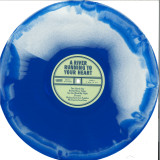
Eric D. Johnson rarely lingers at one location too long. As a kid growing up in the Midwest, Johnson's family moved around a lot, but it wasn't until he became a touring musician years later that motion became a central part of his identity. That transient lifestyle stoked an enduring reverence for the world he watched pass by through a van window. A sense of place is a unifying theme he's revisited with Fruit Bats throughout its many lives. From the project's origins in the late '90s as a vehicle for Johnson's lo-fi tinkering to the more sonically ambitious work of recent years, Fruit Bats has often showcased love songs where people and locations meld into one. It's a loose song structure that navigates what he calls "the geography of the heart." "The songs exist in a world that you can sort of travel from one to another," says Johnson. "There are roads and rivers between these songs." Those pathways extend straight through the newest Fruit Bats album, aptly titled A River Running to Your Heart . Self-produced by Johnson_a first for Fruit Bats_with Jeremy Harris at Panoramic House just north of San Francisco, it's Fruit Bats' tenth full-length release and one that finds the project in the middle of a creative resurgence. After two decades of making music, hard-earned emotional maturity has seeped into Johnson's songs, resulting in a more complex sound that's connected with audiences like no other previous version of Fruit Bats. A River Running to Your Heart represents the fullest realization of that creative vision to date. It's a sonically diverse effort that largely explores the importance of what it means to be home, both physically and spiritually. And while that might seem like a peculiar focus for an artist who's constantly in motion, for Fruit Bats, home can take many forms_from the obvious to the obscure. Lead single "Rushin' River Valley" is a self-propelled love song written about Johnson's wife that clings to the borrowed imagery of the place where she grew up in northern California. Then, there's the gentle and unfussy acoustic ballad "We Used to Live Here," which looks back to a time of youthful promise and cheap rent. But the wistful "It All Comes Back" is perhaps the most stunning and surprising track on the album, Johnson's production skills on full display. Built upon intricate layers of synths, keyboards, and guitars, it's a pitch-perfect blend of tone and lyricism that taps into our shared apprehensions and hopes for a post-pandemic life. "We lost some time / But we can make it back / Let's take it easy on ourselves, okay?" sings a world-weary but ultimately reassuring Johnson in the song's opening lines. It's the kind of performance that makes you hope Fruit Bats stays in this one place, at least for a little while longer.
Tripper, the Fruit Bats' 2011 follow-up to The Ruminant Band, is more
pared down, with bandleader Eric Johnson doing most of the legwork
himself
Synthesizers and keyboard loops replace the knotted guitars. Atmospheric
washes of sound replace the sunny, straightforward hooks. On songs like € The
Fen, € instruments replace vocals entirely, sounding more like a clip from an
orchestral movie soundtrack than the work of a rock band. The majority of the
work was done by Johnson and producer Thom Monahan, resulting in a layered
sound that stacks overdubbed harmonies onto combinations of pump organ,
found sounds, acoustic guitar, and various bleeps and bloops. Whether he's
working alone or leading a full lineup, though, Johnson knows his way around a
good pop hook, and Tripper's best songs are rooted in catchy, sunny melodies
that shine through their heavy wrapping paper. Proof that Johnson knows how to
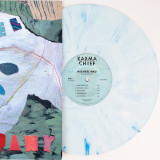
stretch his legs without losing his balance. Pressed with LP on White Color vinyl
and 7" on Seaglass Blue Color vinyl.
The Pet Parade,” the title track to Fruit Bats’ newest album, might be a surprising opening track for longtime fans of Eric D. Johnson’s beloved indie folk-rock project. The six-and-a-half-minute tone poem smolders and drones over just two chords, inspired by the strange and silly community events that he saw growing up outside of Chicago, in La Grange, Illinois, in which people dressed up and showed off their pets. Decades later, The Pet Parade emerges in troubled times, living within what Johnson refers to as the beauty and absurdity of existence. While many of the songs on The Pet Parade were actually written before the pandemic, it’s impossible to disassociate the record from the times. As an example, producer Josh Kaufman (Bob Weir, The National, and Bonny Light Horseman, in which he plays with Johnson and Anaïs Mitchell) was brought in for his deep emotional touch and bandleading abilities. However, Johnson, Kaufman, and the other musicians on The Pet Parade drummers Joe Russo and Matt Barrick (The Walkmen, Fleet Foxes), singer-songwriter Johanna Samuels, pianist Thomas Bartlett (Nico Muhly, Sufjan Stevens), and fiddler Jim Becker (Califone, Iron & Wine) were forced to self-record their parts in bedrooms and home studios across America. Still, says Johnson, “The songs have enough intimacy that it doesn’t sound like it was made a million miles away.” Such tension and turmoil also impacted the lyrics of The Pet Parade. While “Cub Pilot” and “Here For Now, For You” began as more traditional love songs from a personal “I” to a specific “you” Johnson quickly realized that these songs needed to comfort broader audiences, changing the words to a more inclusive “we” and “us.” So too in “The Balcony,” a song ostensibly about a particular space in his grandmother’s apartment, but one that evolved into a metaphor on patience. At times upbeat and reassuring (“Eagles Below Us”) and at times quietly contemplative (“On the Avalon Stairs”), The Pet Parade marks a milestone for Johnson, who celebrates 20 years of Fruit Bats in 2021. In some ways still a cult band, in other ways a time-tested act, Fruit Bats has consistently earned enough small victories to carve out a career in a notoriously fickle scene. And Johnson himself who has played in The Shins, composed film scores, gone solo and returned back to the moniker that started it all, and most recently, earned two GRAMMY® nominations with Bonny Light Horseman doesn’t take this long route of life’s pet parade for granted. “I’m still really excited to make records,” he says. “Lucky and happy and maybe happier that things went slower for me. I’m savoring it a lot more.
Blue Vinyl[28,78 €]
Following the huge acclaim of Matt Berry’s 2021 album The Blue Elephant (“A sonic odyssey” – Uncut) – as well as last year’s one-off album of library music collaboration with the KPM label (“another string to Berry’s impressive bow” – Prog magazine) – we present Heard Noises, Matt’s eighth studio album with Acid Jazz, out 24 January.
We’re hugely excited to offer a beautiful label-exclusive gatefold edition on Psychedelic Swirl colour vinyl, alongside the standard version Sky Blue LP, as well as corresponding soft-pack CD and retro Cassette.
Out now, lead single ‘I Gotta Limit’ finds Matt trading lines with Kitty Liv (Kitty, Daisy and Lewis) as a man after a second chance with a woman impatient with his pleading. With a song structure inspired by Sly Stone, in a little over three minutes ‘I Gotta Limit’ crams in a plethora of musical ideas on an instantly catchy song which is part Northern Soul, part psych.
In contrast to The Blue Elephant’s dizzying trip through an idiosyncratic love of British Psych, Freakbeat, Acid Rock and late ‘60s pop, Heard Noises finds Matt heading for a looser, Californian psychedelia through his love of the trippier sounds of space pop and rock, and his ear for an eerie, haunting melody.
Once again, the album is testament to Matt’s exceptional musicianship, production skills and songwriting prowess. Almost every instrument is played by Matt including guitars, bass, a variety of keyboards (acoustic and Wurlitzer pianos), synthesizers and organs (including Moogs, Vox, Farfisa, Gibson, Eminent organs) and Mellotron.
He is joined by long-time collaborator, neo-progressive drummer Craig Blundell, and guests including Pokerface’s Natasha Lyonne and back with Matt is The Shins/Fruit Bats’ Eric D. Johnson (acoustic guitar, autoharp and backing vocals on ‘Why On Fire?’, ‘To Live For What Once Was’ and ‘Snakes That Slide’), Phil Scraggs (lap steel guitar on ‘To Live For What Once Was’ and ‘Snakes That Slide’), Rosie McDermott (vocals on ‘Sky High’) and the S. Club 60s Choir (featuring Matt’s mum).
In many ways Heard Noises could be considered the perfect distillation of the extraordinary breadth of musical ideas across Matt’s albums to date.
B-side features “Torii Gates” on vinyl for the first time ever due to fan demand.
Acclaimed by outlets like Aquarium Drunkard and NPR, who praised his, “Cosmic country with a gentle sweetness, reminiscent of Beachwood Sparks and Silver Jews at their twangiest.”
His rhythm section is drummer Dana Buoy (Akron/Family) and bassist Alex Chapman and enlists pedal steel player Connor Gallaher (Anna St. Louis, Lana Del Rey) to flesh out the songs.
2024 festival plays at Treefort, Kilkenny Roots, Otis Mountain Get Down, and west coast summer tour.
Publicity campaign by Riot Act Media
Recent touring with William Tyler, Fruit Bats, and more.
RIYL: JJ Cale, Mapache, William Tyler, Steve Gunn, Rose City Band, Amen Dunes, Jake Xerxes Fussell, SUSS, North Americans, Chuck Johnson
- 1: For You (Instrumental)
- 2: For You
- 3: Stuck (Instrumental)
- 4: Stuck
- 5: Heal (Instrumental)
- 6: Heal
- 7: Don't Stress (Instrumental)
- 8: Don't Stress
- 9: This Is It (Instrumental)
- 10: This Is It
Jaguar Sun is a solo project created by multi-instrumentalist Chris Minielly. Weaving together inspiration from bands such as STRFKR, Youth Lagoon, and Panda Bear, Minielly creates dreamy, pop-centric soundscapes with experimental flair. The Ontario based artist allows his instruments to speak equally to his voice urging listeners to get lost in richly layered guitar lines and deep droning synths.
For You is a collection of songs that reflect change, both the desire for it and the anxieties that hold you back from it. It’s about working through challenging transitions in your life, a call to be kind to yourself in the process, and a move towards a bigger picture in your life.
For fans of The Drums, Daywave, Goth Babe, Yot Club, Real Estate / Fruit Bats / JW Francis / Bon Iver / Barrie
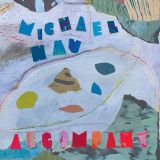
Die 11 Tracks des fünften Albums von Michael Nau fügen sich zu einem schönen Bild zusammen. Die Texte regen den Hörer immer wieder zum Nachdenken an. Sie sind introspektiv, aber vage und ergebnisoffen. Der Indierock-Hintergrund zeigt Anzeichen von Psych-Soul-Einflüssen mit trockenen und druckvollen Drums, üppigen Synthesizer-Linien und einer geschmackvollen, verbgetränkten Vokalproduktion. Nau's Gesang bewegt sich irgendwo zwischen dem Singen vor Publikum, dem Erzählen von Geschichten für einen geliebten Menschen und dem Grübeln über sich selbst. Die entspannte Einstellung des Singer-Songwriters zum Plattenmachen ist im Sound zu hören. Aufgenommen von dem erfahrenen Produzent und Tontechniker Adrien Olsen (The Killers, Lucy Dacus, Fruit Bats) in seinem Studio Montrose Recording in Richmond, Virginia, mit Musikern, die im Laufe der Jahre schon bei Naus verschiedenen Aufnahmen und Tourneen mitgewirkt hatten.
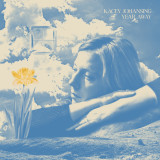
In March of 2020, after learning that a dear friend’s life was coming to an end, Johansing sat down and in one sitting wrote the song “Daffodils”. An elegiac tribute to someone facing death with grace and curiosity, the lyrics confront Johansing’s own mortality by observing the brief lifespan of a Hlower. Only a week later when the world came to an abrupt standstill, she soon found herself processing this recent loss while trying to make sense of a new global reality. Across the ensuing months, Johansing found herself increasingly untethered by a world of isolation and political upheaval.
Having been a frequent touring member of bands like Hand Habits and Fruit Bats, and often being called into the studio to lend her harmonies and multi-instrumental talents to records, Johansing’s phone no longer rang. Living in Los Angeles she feared her musical community was vanishing, as friends and collaborators continually announced they were leaving the city. It was in returning to her piano nightly that she found the greatest solace, feverishly writing the songs that would be collected on her next album. Resulting from this new sense of time and focus was a deepening of her songwriting. As Johansing recalls, “I felt like a metamorphosis happened during that time. There was a lot of personal growth and healing.”
Throughout Year Away Johansing traverses uncharted emotional landscapes brought upon by the changes occurring all around her. The forced self-reflection of the moment is aptly captured by “Old Friend”, featuring an aching melody and swooning production that recalls the best of Harry Nilsson. The epic piano and saxophone-driven “Smile with My Eyes” addresses the loss of community as friends became distant and political divides between family grew. On “Smile” Johansing pushes her vocals further than ever, expanding her range and using her peerless voice as the singular instrument it is. Facing the loss of a family home due to environmental destruction, “Shifting Sands” is marked by soaring Hlutes, Hield recordings and glassy synthesizers that nod to Japanese New Age.
“Daffodils”, the stunning album centerpiece, is built from a pastiche of looping samples, swirling Mellotron and dazzling vibraphone. “Keep your heart open wide, you never know your time / Keep your heart wild, true Hlower child”, Johansing sings as she says goodbye to an elder, while the band reaches a grief-stricken crescendo of woodwinds and chiming bells. On the title track, Johansing takes listeners on an eerily meditative journey of collective experiences. “I wanted to keep the progression simple and repetitive so that musically we could add new elements little by little, while the emotional tone of the lyrics becomes increasingly more strained and expressive”. The song grows to a fever pitch as Johansing sings higher than she thought possible; the tension of the repeating chords Hinally resolving into a hopeful coda as multiple soloists weave around each other.
Amidst heavier themes, Johansing still leaves room for her love of irresistible pop melodies and lush production. The driving “Last Drop” and mid-tempo “Valley Green” are two of her catchiest songs to date. On the former Johansing sings the anthemic chorus, “As if it were the last drop, and nothing ever lasts forever / As if it were the last stop, too far out to come back ever”, longing for a love that she’ll never take for granted, while also admitting that she doesn’t always know how good she has it. “Valley Green” features shimmering layers of 12- string guitars, stacked horns and an impeccable solo by co-producer and multi- instrumentalist Tim Ramsey (Vetiver, Fruit Bats), hinting at a love for bands like NRBQ.
Having been eager to capture the initial spark of songwriting, Johansing booked time at Highland Park’s 64 Sound Studio the week that it reopened. Over the course of three days, she and her band gathered basic tracks for 10 songs, before returning home to Hinish the record with Ramsey. Setting forth to make an album that paid homage to the music that kept them company during the months spent alone together, the duo pulled inspiration from a wide net including Burt Bacharach, John Carroll Kirby & Haruomi Hosono. Ramsey’s newfound love of early digital synthesizers dovetailed effortlessly with Johansing’s fondness for classic 70’s horn and string arrangements, creating a sound that is distinctly modern yet warm and familiar.
Once again Johansing called upon some of the Hinest players of Northeast Los Angeles’ vibrant music community to lend a hand with the record. The 70s R&B-folk of “Watch It Like a Show” features an electric guitar solo from Hand Habits’ Meg Duffy, while album closer “Endless Sound” boasts backing vocals from electronic musician Kaitlyn Aurelia Smith and swooping Indian-inspired violins from Amir Yaghmai (HAIM, The Voidz). The record shines brightly thanks to an ace mix from veteran producer Rob Schnapf (Beck, Elliott Smith, Cat Power), woodwinds from Logan Hone (John Carroll Kirby, Eddie Chacon), and a featured rhythm section of drummer Josh Adams (Jenny Lewis, Bedouine) and bassist Todd Dahlhoff (Feist, Devendra Banhart). Recorded across multiple studios including LA’s famed Sunset Sound, the album remains steadfastly buoyed by the adept engineering of Tyler Karmen (MGMT, Alvvays).
Though born of turbulent times, Year Away is ultimately interested in moving forward. The album ends with “Endless Sound,” where Johansing laments seismic global changes, (“The water is hotter, the mighty thaw / The current’s reversing, the last are lost”) but vows to keep going (“No storm can take me down / Endless light, endless sound”). It’s Year Away’s resilience that shines through despite the darkness. It’s a sound all her own and Johansing’s most cohesive set of songs yet.
Black Vinyl[27,10 €]
Jordan Reyes is one of the busiest musicians in experimental music
today, and here he takes a bold turn with the metal-inflected Everything Is
Always, touching on death, Zen and science fiction
Reyes' previous collaborators include ONO, Eli Winter and Robert Stokowy, and
here he brings in a large and expert cast: Steve Hauschildt (Emeralds) at the
mixing board, and Heba Kadry (Slowdive, Big Thief, Alex G, Lower Dens)
mastering, plus instrumentalists including Lia Kohl (Whitney, Steve Gunn), Jon
Mueller (Volcano Choir, Death Blues), Patrick Shiroishi and Sam Wagster (Fruit
Bats, Eli Winter). The result is conceptual yet refined, and distinctively American
Dreams. Pressed on Randomly Colored color vinyl.
Random Colour Vinyl[36,77 €]
Jordan Reyes is one of the busiest musicians in experimental music
today, and here he takes a bold turn with the metal-inflected Everything Is
Always, touching on death, Zen and science fiction
Reyes' previous collaborators include ONO, Eli Winter and Robert Stokowy, and
here he brings in a large and expert cast: Steve Hauschildt (Emeralds) at the
mixing board, and Heba Kadry (Slowdive, Big Thief, Alex G, Lower Dens)
mastering, plus instrumentalists including Lia Kohl (Whitney, Steve Gunn), Jon
Mueller (Volcano Choir, Death Blues), Patrick Shiroishi and Sam Wagster (Fruit
Bats, Eli Winter). The result is conceptual yet refined, and distinctively American
Dreams. Pressed on Randomly Colored color vinyl.
With or, the band's second full-length LP, Eyelids has created their most
emotional record yet
Produced by Peter Buck of R.E.M. and mixed by Thom Monahan (Peter, Bjorn and
John, Devandra Banhart, Fruit Bats), or is liberally sprinkled with the hooks,
melodies, and charming wordplay that make a certain kind of rock & roll fan fall
madly in love with an LP. It's all evident in the opening song, € Slow It Goes € €" is
that a play on Vonnegut or Nick Lowe? Somehow both feel appropriate €" the kind
of classic easily slotted between Superchunk and the Raspberries on a mixtape,
locked and loaded with a perfectly winsome expression of angst: € She says, € If I
can keep from sighing, why can't you?' € From there, the sequence dives deeper
and deeper into Slusarenko and Moen's love of underground pop: listen to those
sparkling € Starry Eyes € -worthy guitars on € Falling Eyes, € the psychedelic swirl
of € My Caved In Mind, € and the Dream Syndicate mysticism of € Tell Me You
Know. € Pressed on Limited Edition Sea Green Color vinyl.
Acht neue Songs von Okkervil River Frontmann Will Sheff. Produziert von John Congleton (St. Vincent, The War On Drugs), Matt Linesch und Marshall Vore (Phoebe Bridgers). Ein bemerkenswertes Album und Sheff’s Solodebüt.
Inspiriert von den Texten von King Crimson, Joni Mitchell oder Bill Fay sowie den Bergen, Wüsten und Seen Südkaliforniens, seiner neuen Wahlheimat, jedoch überschattet vom Tod seines Freundes, Okkervil River-Drummer Travis Nelsen, besticht 'Nothing Special' mit teils verspulten Arrangements, die subtile Überraschungen enthalten und Verweise nahelegen auf barocken Pop, verschwommene Synthie-Balladen und Sci-Fi-Psychedelia der 70er und 80er Jahre. Eine emotionale Reise, die von Trauer und Verlust handelt und dem Versuch, sich einer transzendenteren Realität zu öffnen.
Unterstützt wird er dabei von alten und neuen Freunden, Gitarrist Will Graefe und Bassist Benjamin Lazar Davis, Singer/Songwriter Christian Lee Hutson, Dawes-Schlagzeuger Griffin Goldsmith und Death Cab For Cutie-Pianist Zac Rae sowie Cassandra Jenkins und Eric D. Johnson (Fruit Bats, Bonny Light Horseman).
Acht neue Songs von Okkervil River Frontmann Will Sheff. Produziert von John Congleton (St. Vincent, The War On Drugs), Matt Linesch und Marshall Vore (Phoebe Bridgers). Ein bemerkenswertes Album und Sheff’s Solodebüt.
Inspiriert von den Texten von King Crimson, Joni Mitchell oder Bill Fay sowie den Bergen, Wüsten und Seen Südkaliforniens, seiner neuen Wahlheimat, jedoch überschattet vom Tod seines Freundes, Okkervil River-Drummer Travis Nelsen, besticht 'Nothing Special' mit teils verspulten Arrangements, die subtile Überraschungen enthalten und Verweise nahelegen auf barocken Pop, verschwommene Synthie-Balladen und Sci-Fi-Psychedelia der 70er und 80er Jahre. Eine emotionale Reise, die von Trauer und Verlust handelt und dem Versuch, sich einer transzendenteren Realität zu öffnen.
Unterstützt wird er dabei von alten und neuen Freunden, Gitarrist Will Graefe und Bassist Benjamin Lazar Davis, Singer/Songwriter Christian Lee Hutson, Dawes-Schlagzeuger Griffin Goldsmith und Death Cab For Cutie-Pianist Zac Rae sowie Cassandra Jenkins und Eric D. Johnson (Fruit Bats, Bonny Light Horseman).
Das zweite Album der Indie-Folk-Supergroup um Anaïs Mitchell ("eine der größten Songwriterinnen ihrer Generation" NPR), Eric D. Johnson (FRUIT BATS) und Josh Kaufman (THE WAR ON DRUGS, THE NATIONAL, TAYLOR SWIFT). Produziert von Bandmitglied Josh Kaufman, ist "Rolling Golden Holy" der Nachfolger ihres von der Kritik gefeierten, selbstbetitelten Debüts, das zwei GRAMMY-Nominierungen (Best Folk Album und Best American Roots Performance) erhielt und von u.a. Paste, MOJO, Uncut Magazine als eines der "Besten Alben des Jahres 2020" bezeichnet wurde. Falls sich das Debüt von Bonny Light Horseman jemals wie das Werk einer kurzlebigen Supergroup oder einer einmaligen Abwechslung angefühlt haben sollte (was sie nie war), widerlegt "Rolling Golden Holy" diese Vorstellung mit überirdischer Schönheit, Charme und Fantasie. Diese 11 Songs - allesamt Originale, geschrieben und realisiert vom Trio als Ganzes - folgen den Pfaden der traditionellen Melodien, die die Band schätzt, zu neuen musikalischen und lyrischen Grenzen, und geben den Klängen und Situationen der Geschichte die Schwere und Form der Gegenwart. "Rolling Golden Holy" bestätigt, dass es sich bei Bonny Light Horseman nicht um ein Projekt, sondern um eine Band handelt, die derzeit an der Speerspitze des modernen amerikanischen Folk arbeitet. Die ersten Schreibsitzungen von "Rolling Golden Holy" - und die beiden darauf folgenden Aufnahmesessions, zuerst in Aaron Dessners (THE NATIONAL) Long Pond Studio und dann in dem, was sie als ihr "spirituelles Zuhause" bezeichnen, der wunderschönen und buschigen alten Kirche namens Dreamland - waren eine Reihe von "Ja, und"-Treffen, bei denen jedes Mitglied die anderen ermutigte, eine Idee aufzugreifen und sie ein wenig weiterzuverfolgen, um die Komfortzonen zu überwinden. Auf "Rolling Golden Holy" stellt das Trio eine wesentliche Frage - und beantwortet sie mit jedem Stück: Wo hört die traditionelle Folkmusik auf und wo fängt die moderne Folkmusik an, falls es eine solche Abgrenzung überhaupt gibt? Diese Lieder suggerieren und verkörpern ständig ein unausgesprochenes Kontinuum. Hier zeigen sich BONNY LIGHT HORSEMAN in der vollen Pracht ihres Lebens als komplette Band.
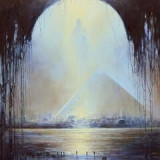
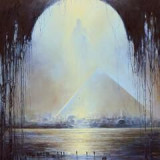
Nightlands is the solo project of The War on Drugs’ bassist and multi-instrumentalist Dave Hartley. Amid massive global paradigm shifts Dave Hartley (aka Nightlands) became a father twice over and left his native Philadelphia for Asheville, where the pace of daily life is slower and it's easier to maintain a zoomed-out perspective on modern life. From the newfound refuge of a studio he built using the bones of a barn attached to his hundred-something-year-old house in the mountains, Hartley has tailored a collection of well-crafted pop rock, pointedly titled Moonshine. Guided by some of the harmonic sensibilities that have helped make The War on Drugs a force in modern music, Moonshine combines immaculate-yet-dense vocal stacks and billowy clouds of effected keyboards with classic songcraft, revealing previously unseen acreage in the unfurling dreamscape that is Nightlands. The surrealistic album art by Austin-based illustrator Jaime Zuverza depicts an archway opening to the stars over the surface of an idyllic sea flanked by both moon and sun. Similarly, Moonshine reveals portals within portals leading to ever deeper places in Hartley's vocal-centered labyrinth. Throughout the album, there are plenty of buoyant high moods where the pitter-patter of drum machine and humming digital organ hints at Hartley's low-key tropicalia streak, but the lyrics anchor the dreaminess in real-world sorrow and resignation. Nowhere are these sentiments more apparent than on the title track, a nearly acapella recitation of "America the Beautiful" that poignantly hovers over a mirage of soft keyboards before dovetailing into Hartley's own words about the hypocrisy of the American dream. "This was never intended to be an overtly political record" he admits. "I have so many friends who are able to process the frustration of current events gracefully or with wisdom or in a nuanced way, but I often find myself just consumed with anger about it all. I decided to just let that come out, and it manifested itself lyrically." Moonshine's wide-eyed, utopian instrumental backdrops provide sharp contrast to Hartley's lyrics, which sting even harder within the sweetness. Even in light of the album's vocal emphasis, Hartley's history as a bassist brilliantly beams through Moonshine, giving effortless and sprightly movement to songs like "Down Here," which also features an extended section of saxophone lent by his Western Vinyl labelmate, Joseph Shabason. In addition to Shabason, the album hosts a short list of remote collaborators including four of Hartley's bandmates from The War on Drugs, Robbie Bennet, Anthony Lamarca, Eliza Hardy Jones, and Charlie Hall, as well as exotica virtuoso Frank Locrasto (Cass McCombs, Fruit Bats), and producer Adam McDaniel (Avey Tare, Angel Olsen). Hartley was forced to keep the guest list small out of the necessity of pandemic isolation, coupled with his move to a smaller city, all of which challenged him to do most of the album's heavy lifting right down to the mixing duties, resulting in the most independent effort of his career. By that measure, Moonshine is also the clearest image yet of Dave Hartley as a person and creator.
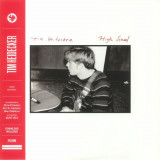
Produced by Heidecker, Drew Erickson, Eric D. Johnson and Mac DeMarco, High School sees Heidecker emerging as an increasingly playful and poignant story teller, infusing childhood tales with new gravity. In conjunction, he announces Tim Heidecker Live! Featuring Tim Heidecker and The Very Good Band, his first two-act tour of comedy and music. Since 2016, Tim Heidecker has chronicled the annals of adulthood on a series of supreme singer-songwriter albums. The crushing devastation of divorce and the existential malaise of middle-age, the minutiae of home ownership and the ritual of family vacation, child rearing and global warming: Heidecker has handled it all with humor and heart. But, there’s one pivotal lodestar of human development he has yet to mine that’s right, High School. First single “Buddy” is a composite of a few woebegone friends, which finds Heidecker reminiscing on the familiar tragedy of the adolescent stoner, manifesting the destiny of undiagnosed depression and parents who didn’t care much. The song itself is a jangly delight, but it’s hard not to mourn for “Buddy,” then re-count whatever blessings you may have. After initial and fruitful sessions with Jonathan Rado, Heidecker started recording tunes with DeMarco and Erickson, who had also worked on 2020’s collaboration with Weyes Blood, Fear of Death. At DeMarco’s studio, they added drum machines and synths and sidewinding solos to Heidecker’s big strummed chords. Johnson (Bonny Light Horseman, Fruit Bats) helped Heidecker finesse the tunes even more, making the music as rich as the feelings. Kurt Vile contributed to one song, as well. Through all those sessions, it slowly became clear: Heidecker was writing not only about the adventures and misadventures of life as a Pennsylvania teen in the early ’90s, but also how it felt to lose a juvenile sense of mystery and possibility as an adult. He was writing about high school and, really, the way it helped shape everything else. Back at Pennsylvania’s Allentown Central Catholic High School, Heidecker dreamed of making it with one of his many rock bands — Time and Other Things, Shaggy’s Beltbuckle, and (incredibly) The Pulsating Libidos. Two years shy of his graduating class’ 30th anniversary, Heidecker admits he had little of substance to say when he was 17, like all but the rarest of precocious minds. In college, though, he found the friends with whom he built his comedy career, largely apart from music and without much thought for his time back at Central Catholic. He was focused on his future. It is fitting, then, that as Heidecker has become such a delightful singer-songwriter and collaborator, he returns to the first scene of his time as a musician. Maybe he’s right — he didn’t have anything to say or sing about life back then. But across the earnest and amusing High School, he finds plenty to say about those weird and wonderful and ordinary times.
- 1: Aaron Lee Tasjan - Traveling After Dark
- 2: Jaime Wyatt - Need Shelter
- 3: Beachwood Sparks & Gospelbeach - You Don't See Me Crying
- 4: Marcus King With Eric Krasno - No One Above You
- 5: Fruit Bats - Feathers For Bakersfield
- 6: Billy Strings With Circles Around The Sun - All The Luck In The World
- 7: Dori Freeman W/ Teddy Thompson - Sweeten The Distance
- 8: Hiss Golden Messenger - Time Down The Wind
- 9: Johnathan Rice - Me & Queen Sylvia
- 10: Mapache - The Wisest Of The Wise
- 11: Phil Lesh & The Terrapin Family Band - Freeway To The Canyon
- 12: Leslie Mendelson - Feel No Pain
- 13: Jonathan Wilson With Hannah Cohen - Detroit Or Buffalo
- 14: Susan Tedeschi & Derek Trucks - Day In The Sun
- 15: Jimmy Herring With Circles Around The Sun - Bird With No Name
- 16: Shooter Jennings - Maybe California
- 17: Vetiver - White Fence Round House
- 18: Todd Scheaffer - December
- 19: Courtney Jaye - Grand Island
- 20: Oteil Burbridge, Nick Johnson, Steve Kimock, John Morgan Kimock, Duane Trucks - Superhighway
- 21: Britton Buchanan - Willow Jane
- 22: Kenny Roby W/ Amy Helm - Too Much To Ask
- 23: Bob Weir - Time & Trouble
- 24: J Mascis - Death Of A Dream
- 25: Tim Heidecker - The Cold & The Darkness
- 26: Warren Haynes - Free To Go
- 27: Rachel Dean - So Far Astray
- 28: Steve Earle & The Dukes - Highway Butterfly
- 29: Victoria Reed - Angel & You're Mine
- 30: Jason Crosby - Pray Me Home
- 31: Lauren Barth - Lost Satellite
- 32: Jesse Aycock - The Losing End Again
- 33: Puss N Boots - These Days With You
- 34: Tim Bluhm With Kyle Field - Cold Waves
- 35: Zephaniah Ohora With Hazeldine - Best To Bonnie
- 36: The Mattson 2 - Let It All Begin
- 37: Cass Mccombs, Ross James, Joe Russo, Farmer Dave Scher, Dave Schools - You'll Miss It When It's Gone
- 38: Angie Mckenna - Fell On Hard Time
- 39: Allman Betts - Raining Straight Down
- 40: Hazy Malaze Featuring Jena Kraus - Soul Gets Lost
- 41: Robbi Robb - I Will Weep No More
Highway Butterfly: The Songs of Neal Casal is a 5LP vinyl boxset
celebrating the prolific body of work Casal left behind over the course of
14 studio albums
Recording sessions for the project began in February 2020 led by co-producers
Dave Schools of Widespread Panic and seven time Grammy- Award winning
recording engineer/ producer Jim Scott at PLYRZ Studios in Valencia, CA.Over
forty artists appear on the tribute including Susan Tedeschi and Derek Trucks,
Jonathan Wilson, Phil Lesh and The Terrapin Family Band, Steve Earle, Warren
Haynes, Jaime Wyatt, and Shooter Jennings among numerous others. The first
single and video from the recording was captured during the initial sessions in
February 2020. It features Billy Strings with Circles Around the Sun performing
"All The Luck In The World.
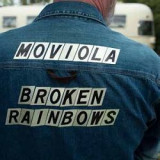
On the fringe of the indie Rust Belt scene since the 1990s,
Moviola has quietly forged a low-key career of high-quality
recorded output over twenty-five years, issuing ten (!) records
and countless 7-inch singles (including splits with Cobra Verde,
Hiss Golden Messenger, Handsome Family and many others).
In this artistic continuum, the band has evolved from everything
from 4-track fuzz to hi-fi country soul. Today, the band steps
forward with Broken Rainbows, its strongest collection of songs
to date, written, recorded, and mixed inside the group’s HQ in
Columbus.
Jake Housh started Moviola in 1993 as a student at “The”
Ohio State University as a noisy, fuzzed out lo-fi noisemakers.
Over the years, the band has morphed into a unique DIY
music and art-making collective with five distinct singers and
songwriters, recalling the creatively democratic lineage of The
Mekons, The Band, Pink Floyd, many others. Moviola is Jake
Housh, Ted Hattemer (Thomas Jefferson Slave Apartments),
Scotty Tabachnick, Greg Bonnell, and Jerry Dannemiller.
Broken Rainbows is a milestone release, showcasing a band
newly energized and assured in its artistry, and supportive of its
members’ songcraft. The eleven-song album hovers over a plot
of ground that’s optimistic in its despair. Album topics range
from the personal to the political, showcasing each member’s
unique songwriting within an overall cohesive band aesthetic.
“Moviola was one of those groups I met early on back in the day
that showed me how to do it. Broken Rainbows is a highlight—
pastoral thumpers, fuzzy indie radness, hooks to spare, pretty
much all the good stuff. Feels like a glorious drive from one
disparate end of Ohio to another. I love this band.”
—Eric Johnson (Fruit Bats)
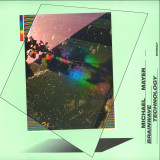
Michael Mayer’s latest EP, Brainwave Technology, comes at you purposeful, stealthy and sly. It’s a glorious left turn for the redoubtable producer, one that sees his typically lean and lithe productions buffed to a metallic, futurist sheen. There’s a gleam in the eyes of tracks like “Brainwave Technology” and “Alpha” that speaks of serious fun, of the intersection of the pleasure zone and the frontal lobe.
“Brainwave Technology” itself is informed by Mayer’s deep dive into the thorny terrain of artificial intelligence, transhumanism and posthumanism. Inspired by reading German philosopher Richard David Precht, Mayer found himself heading down the “proverbial rabbit hole,” as he describes it, “watching hours of YouTube material by self-proclaimed prophets of these ‘inevitable’ changes to come.” Never one to be taken in by the egotist’s dance, Mayer’s cynicism about the whole endeavour is tempered, a little, by the deeper questions that these figures gesture towards: “Is it really an evolutionary step that man and machine become one? Or is it rather a marketing plot by Silicon Valley billionaires?”
On “Brainwave Technology”, Mayer plays the charlatans at their own game, turning their logic against them by exposing the fruitiness of their ‘visions’. “I chose irony as my sword with which I chopped off some quotes from some of those batshit crazy prophets and self-promoters,” he explains of the drooling psychobabble he drops in the track’s lacuna. There’s a sense of humour here – how could you not laugh at these hungover egotists? – but there’s levity too, a sense that Mayer’s using sound to expose the contradictions and double-speak at the heart of these half-formed ideas. It’s a Burroughsian tactic, to slice into the heart of the voice to see what hidden truths surface.
It was Burroughs, too, who once said that “when you cut into the past, the future leaks out”; Brainwave Technology cuts into the logic of the futurologist to leak out the messiness of modern reality. On “Alpha” and “Gamma”, Mayer seems to conjure up the stark, ominous music that’d soundtrack a science fiction reinterpretation – or preinterpretation – of our modern malaise, all funereal wreaths of electronic noise and clatterboxing beats. As the EP resolves with “Device For The Young At Heart”, Mayer’s questions are piling up: “Do we want to become immortal and live on as a download? Do we really give up on Earth and put all our effort into colonising Mars?” There are no answers, of course, but plenty of imaginings-to-be. Brainwave Technology soundtracks both dystopian and utopian possibilities of what could come next.
- 1