
Disponible
En el almacen y preparando para el envío
Ültimo hace: 5 Meses
10,88 €
En el almacen y preparando para el envío

Haga su pedido ahora y le encargaremos el artículo en nuestro proveedor.
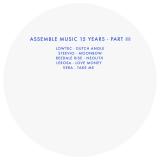
"ASSEMBLE MUSIC 15 YEARS - Part III : Founded in Lisbon in 2011, Assemble Music celebrates its 15th anniversary with a three-part vinyl compilation, bringing together fifteen artists who, in different ways, reflect the label's past, present and future. Released simultaneously in November 2026 and distributed worldwide by Clone Distribution, the three records are less a retrospective than a continuation of what Assemble has been building since the beginning: music with character, made by artists with their own language, away from trends and easy categorisation. Across fifteen years, Assemble has moved freely between house, techno, electro, dub and more experimental forms of electronic music. The catalogue has never been defined by one particular sound, but rather by a certain approach, personal, uncompromising and built to last. Part III brings together another five artists particularly close to Assemble's musical universe. Lowtec has spent decades developing one of the most distinctive languages in European house and techno, both through his own productions and his own label Workshop. His music shares something fundamental with Assemble, restraint, depth and an unwillingness to follow obvious paths and thats exactly what he delivers with "Dutch Angle" exploring the more ambient and abstract side of house. Welsh modular artist Steevio, co-founder of Freerotation, approaches electronic music through improvisation and live interaction with machines. His contribution to the compilation reflects the human, unpredictable side of electronic music that has always fascinated the label. Reedale Rise returns after becoming an important part of Assemble's recent chapter. Moving naturally between electro, techno and house, his music combines precision with an unmistakable melodic and emotional quality. With his track he explores a slightly darker path here, with deeper, more shadowy melodies revealing a different side of his distinctive sound. Lerosa's "Love Money" and Vera's "Take Me" are two very special tracks in our back catalogue, and we felt it was time to bring them back to life for our 15th anniversary. Vera was one of the first artists to collaborate with Assemble, with Lerosa joining not long after. Over the years, both have become an important part of the label's story, through releases, many shared showcases, and above all, a great friendship that has grown along the way."
debe ser publicado en 30.11.2026

2026 Repress
Chlar returns to his Primal Instinct label with 'Modern Survival'
Following the widely praised Funk Assault (Chlar & Alarico) 'Minimum One Post A Week' EP, which kicked off the Primal Instinct label last summer and won the support of the likes of Rodhad, Tasha, and Luke Slater, as well as routine plays from Sarah Story on BBC Radio 1, Chlar now returns to his imprint with solo venture 'Modern Survival'. While the first Primal Instinct release saw references to artist urges and behaviours on social media, this next instalment explores a modern recontextualisation of humanity's hierarchy of needs in yet another high-concept EP.
First up, 'Internet Soulmate' boasts a crunchy bassline as its drum work chugs along the track playfully. The groove twists and turns before the hypnotic and tribal 'Supermarket Hunting' continues with sounds of nature, loopy rhythm and syncopated bleeps.
On the B-side's 'Body Control Officer', human-made grooves intertwine with machine-like thrum, synths whirring and zapping, while 'Competitive Influencing' takes off with rolling percussion, subtle whistles and distorted vocal one-shots. Closing out another stellar offering from the Primal Instinct frontman, Chlar brings the dark 'Scout My Algorithm', a brooding slow-burner offset by smooth arpeggio snippets and warped slices of digital noise.
"In an era where technology entwines our everyday existence, where the virtual realm shapes our interactions, and where the pursuit of influence takes centre stage comes an EP that delves deep into the modern tapestry of human existence. 'Modern Survival' is not merely a collection of songs and visual clips, but a poignant reflection on the intricate dance between our primal instincts and the brave new world we navigate today. The EP invites listeners on a journey of self-discovery and reflection, prompting them to ponder the fundamental essence of our existence in an environment of fast-paced technological evolution." - Chlar
En el almacen y preparando para el envío

Crossing borders between traditions, sonic territories, and instruments, musicians Tomáš Niesner and Aldana Duoraan created their first collaborative album Plot. The sound of khomus meets guitar melodies simplified into pentatonic scales, intertwining in a dialogue that remains playful while moving between meditative passages and bewitching, hypnotic moments. Solid yet ever-changing, these melodies explore a delicate relationship between the present interactions, their past, and possible futures. “I feel that the essence of our collaboration is not to close the songs off, but to leave them open so that they can develop and be interpreted a little differently each time, depending on the circumstances,” Niesner explains when describing the duo’s artistic approach. The recording therefore captures only the most essential moments and ideas, which continue to unfold in new directions during live performances.
Each segment of Plot, word meaning “fence” in Czech, while also referring in English to a narrative structure or hidden plan, represents a different constellation shaped by the pairing of specific khomuses and guitar tuning. The track titles, such as The Key of Radiance or The Key of Humbling, are inspired by the ancient Chinese text I Ching (usually translated as Book of Changes). Like the classical cosmological text itself, the compositions meditate on similar fundamental principles. The ideas explored in the chapters of the I Ching are thus loosely translated into musical language. Themes of Radiance, Attending, or Nearing thus loom over the reflective realm of Aldana and Tomáš.
The two musicians first met in 2021 through a collaboration organized by Konektiv, an event series that aims to create new connections between genres and musicians with diverse backgrounds. Aldana Duoraan is a Prague-based artist born in the Sakha Republic, whose experiments with the khomus (also known as the jaw harp) draw on the traditional music of her homeland. Tomáš Niesner, a sound artist and guitarist based in Brno, navigates the realms of American primitive guitar while incorporating influences ranging from folk to drone. Because the duo rarely finds themselves in the same city, an important moment in the development of Plot was a showcase at Cafe OTO, organized by mappa. The album, capturing the fleeting energy of this encounter and several others, has now been released on the Slovak experimental label, which helped bring the collaboration to life.
debe ser publicado en 14.08.2026
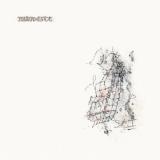
Australian composer-performers Judith Hamann and James Rushford have worked together in countless projects for two decades, perhaps most notably in Golden Fur, their trio with Sam Dunscombe. Black Truffle is pleased to announce Midmeste, their first work as a duo. Its title is Middle English for ‘the middlemost point’, alluding to how the piece builds on the points of overlap between the highly personalised musical languages Hamann and Rushford have developed in recent years. Performed on cello and a variety of pipe organs, Midmeste is a spacious, sometimes unsettling exploration of their shared interest in alternative tunings, psychoacoustic phenomena, the physical properties of their instruments, and the usually peripheral sounds generated by the performing body.
Beginning with a sequence of austerely vibrato-less harmonics from Hamann's cello, trailed by Rushford's whistling portative organ tones, the music soon expands into a slow-moving melodic wander, pausing at times to linger over an uncomfortable harmony or particularly resonant cello tone. Hamann and Rushford have long histories of engagement with pre-Classical European musical traditions, having in past projects performed and radically extended the work of Solage, Louis Couperin, Johann Conrad Beissell and other composers. Here they use a 15th century song by John Dunstaple, ‘O rosa bella’, which returns throughout the piece, distorted, aerated and splayed into new forms.
Developed while the two shared residencies at Akademie Schloss Solitude, Stuttgart in 2020 and La Becque on Lake Geneva in 2023, Midmeste integrates recordings made (at at the invitation of the Biennale Son) on the organ of the Basilica St Valere in Sion, Switzerland—the world’s oldest playable organ, built in the early 15th century. Played by both Rushford and Hamann, the instrument’s idiosyncratic features, including bellows pumped manually using massive wooden beams, are integrated into the music through amplification. Creaks and thumps locate the music physically both in the performers’ bodies and the specific site of its making. Moving through a series of distinct episodes across its forty-minute span, Midmeste makes space for near-silent duets of high harmonics and hissing air, moments where twittering high tones and rumbling sub-bass could be electronic, and static fields that unexpectedly blossom into almost Romantic harmonies.
Listeners familiar with Hamann and Rushford’s work will find many familiar features here: the stunningly rich cello tones, their patient sustain allowing heightened awareness of the inner life of sound and its interactions with the environment; the care with which acoustic space is activated, becoming at times a third instrumental voice; the attention to fragile, unstable sonorities that sometimes have a comic edge. A major work from two key figures in contemporary experimental music, Midmeste synthesises rigorous exploration of fundamental questions of sound and performance with an unapologetic embrace of beauty.
debe ser publicado en 22.05.2026

On Katelyn Clark and Mitch Renaud's »Ouroboros,« astronomical and astrological phenomena, concepts and symbols such as the Great Year or the Eternal Return serve as the starting points for sonic explorations and experimentations. Focusing on a uniquely tempered range of frequencies, from low-enddrone rumbles to airy pipe swirls, the duo develops a minimalist and highly evocative sonic universe on their debut album for Hallow Ground.
Working as composers, improvisers and curators in Canada's vibrant experimental and early music scenes, Clark and Renaud began developing »Ouroboros« through extensive improvisation with a reduced setup. Clark, who has worked extensively with historical keyboards since her studies in Amsterdam and Siena, played a small pipe organ modeled after a 14th-century instrument while Renaud brought a modular synthesizer and his interest in feedback systems to the collaboration. Later, the duo further refined their artistic dialog and the sonic interactions of the two instruments through the shared space of a two day recording session in Vancouver. Subtle crackling, acoustic beating and other (psycho-)acoustic effects in five pieces document this encounter, giving the music a profound physicality while hinting at the bodily presence of the two collaborators.
Just as the cyclicality of natural phenomena or the repetition of planetary movements is both a scientific fact and of the cultural imaginary, the sound worlds of »Ouroboros« are fundamentally rooted in time and space while transgressing the idea of a »here and now« through their conceptual links to geological and planetary time. The interplay of portative organ and modular synthesizer, which merge fluidly and in ever-changing ways, leads to a kind of circularity, a timelessness, a no-time. At the same time, the movements and subtle changes undermine the idea of repetition in the negative sense. After all, the Eternal Return, as Gilles Deleuze writes in regard to Nietzsche, is not the return of the same but a repetition of repetition. The only constant is change, the production of new intensities, of new forms of life – and of new frequencies.
debe ser publicado en 11.04.2025
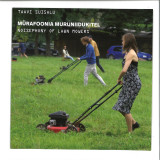
Taavi Suisalu is an Estonian media artist particularly interested into complex and adventurous sounds, field recordings and harsh audio emergencies, organized under the form of symphony or as a result of performative interactions.
In 2014 Suisalu received the Young Estonian Artist Prize as curator of Project of In-existent Villages, an articulate exhibition full of installations and site-specific sound performances. The use of peripheral spaces and the crossovers, sometimes extremely creative, of human interactions, data, sounds and technologies, are recurring in the works of Suisalu, whose subjective perspective unconventionally investigates different social and cultural phenomena. He is always attracted by the different forms of technologies. It can be an old seismograph he reconstructs to record the underground vibrations of a volcano, or, it can be some 3D models he uses to analyze a grain of soil coming from the ancient Pompei. The results of the researches would lead to the installations. The whole set of data is often the premise of a narration, a datafiction, as in the case of the signals recorded from some abandoned satellites, who are later presented with a speed set by the position of other satellites gravitating above the gallery hosting the event.
“Noisephony of Lawn Mowers" was originally composed in 2013, but it was unreleased until now, when Staalplaat, a fundamental label for its unusual experimental connections and for the sound events performed in unconventional spaces, decided to publish it. It's a score for lawnmowers, whose making is given to a conductor and executed by a group of artists. Suisalu reminds us that historically, lawn has been a symbol of power and wealth as it required substantial upkeep and unused land. Today, it still indicates wealth, but is mainly maintained by the owners themselves. This puts us in a schizophrenic situation where we strive to be privileged by taking the role of the servants.
“Silver Meets Ted” is the other track included in the selection. It's a recording of over ten minutes, whose trend cryptically moves on and with some unsettling minimal tolls, always more metallic. Some deaf beats follow, and then we have a splash of water and some slightly hinted neighs, chirps, different spills of liquid, more intense and measured, clackings and vibrations, some hardly identifiable frequencies and again a series of punctuated metal bells. The work by Taavi Suisalu stands out as a calibrated combination of mathematical coherence and elements of surprise, automatized and causal processes, some small oblique utopias, that work well together by improving highly subjective resources and create some slightly unsettling final results.
Haga su pedido ahora y le encargaremos el artículo en nuestro proveedor.

Roman Flügel is a magician. This statement is far from being a hyperbole. Just put the needle down on any record – I mean any! – of his ( collaborations included) since the early nineties and see for yourself: none of them are without that special effect. The magic works instantly. And as the thing with magic goes: it’s challenging to explain it. But I guess that is what makes it magic.
Eating Darkness is the title of his newest spell. Affected by the fundamental shock that any system got in 2020 – but not the result thereof – it is an album that could absorb it – as its name might suggest. Music and nightlife work hand in hand as escapism and as anchors or as the undercoat of social interactions. They enable people to deal with hardships as well as the burden and the joy of life. That is the starting point and hope of Eating Darkness: the outlook and invitation to enrich each and everyone’s existence.
Bound to the single LP format and reminiscent of a time with format limitations, the nine tracks are testament to Flügel’s weakness for the art of pop music with the use of little and especially short motifs. Furthermore equipped with a clear instrumentation and without any camouflage, Eating Darkness corresponds to his idea of a virtual band.
As it happens, the opener is called The Magic Briefcase. That sits not only well with my first sentence, but pretty much embodies the album and Roman Flügel’s apparatus in an alternative title: Crystal clear sounds and melodies bounce on and off the dance floor, living room and club are pulled together and transcendental moments take turns with the tangibility of reality. After all, that is how a real magician allures you.
Haga su pedido ahora y le encargaremos el artículo en nuestro proveedor.

ᴛʀᴀᴄᴋs ᴍᴀᴅᴇ ғᴏʀ ᴛʜᴇ ʀᴀᴠᴇʀs ᴡʜᴏ ᴀʀʀɪᴠᴇ ᴇᴀʀʟʏ ᴀɴᴅ sᴛᴀʏ ʟᴀᴛᴇ, ғᴏʀ ᴛʜᴏsᴇ ᴡʜᴏ ʙᴜʀɴ ᴛʜᴇ ᴄᴀɴᴅʟᴇ ᴀᴛ ʙᴏᴛʜ ᴇɴᴅs.
Early support from Cleric, Setaoc Mass, Reflec, Laurent Garnier, Regal, Tensal, P.Leone, Alfredo Mazzilli, Clouds, Gary Beck, Slam, Keith Carnal, Surit (NX1), Silent-One, Kmyle, Yant, Marron, Felicie, JC Laurent, Lawrence Kurt, Fundamental Interaction & Gareth Wild.
All tracks written and produced by Habgud // Art, Photography and Design by Jake Clewis & Elliott Habgood
Haga su pedido ahora y le encargaremos el artículo en nuestro proveedor.

Haga su pedido ahora y le encargaremos el artículo en nuestro proveedor.

'It is now clear that humans are no longer the most important things in the universe, that their knowledge, creativity and intelligence are ultimately limited.'
The Posthuman realises that the ultimate questions about existence and being do not require answers and accepts that humans have a finite capacity to understand and control nature. Even just to know the ultimate nature of the universe would require knowing everything about the universe, everything that has happened and everything that will happen. If one thing were not known it would imply that all knowledge of the universe is partial, potentially incomplete and, therefore, not ultimate.
Humans privilege to order over disorder on the assumption that the essential laws of nature are gradually being discovered. This is a fundamental error; nature is neither essentially ordered or disordered. What we perceive as regular, patterned information we classify as order; what we perceive as irregular, unpatterned information we classify as disorder. The appearance of order and disorder implies more about the way in which we process information than the intrinsic presence of order or disorder in nature.
The humanist era was characterized by certainty about the operation of the universe and the place of humans within it. The Posthuman era is characterized by uncertainty about the operation of the universe and about what it is to be human.
What is a human Is there such a thing
No finite division can be drawn between the environment, the body and the brain. The human is identifiable, but not definable.
Consciousness, (the interaction body-brain) and the environment (reality) cannot be separated; they are continuous that defines the being.
All technological progress of human society is geared towards the transformation of the human species as we currently know it; the posthumans regard their own being as embodied in an extended technological world. In such 'synthetik' reality power no longer needs to impose physical regulations, as it is able to manipulate and shape up the minds directly, becoming part of it.
There won't be any resistance from the individual, as he will have embodied the needs of the system in his own being, and their ambition will serve the economy.
Currently the output of machines is predictable; the Posthuman era fully starts when the output of machines becomes unpredictable, so that complex machines, apparatus whose workings we do not fully understand or control, become an emerging form of life.
In the Posthuman era, the future never arrives.
..from ´The Posthuman Manifesto´, Robert Pepperel, 1995
Haga su pedido ahora y le encargaremos el artículo en nuestro proveedor.

Haga su pedido ahora y le encargaremos el artículo en nuestro proveedor.

Entitas, is the second instalment of Jay Clarke's BLACKAXON imprint, and sees the label boss bring out the big guns in the form of three distinct and diverse cuts. First up is Entity, an autonomic monster which has sweat soaked energy written all over it. It's auspiciously one part deep, and more than double just as twisted. Things are far from linear with Entity, it's mercilessly the sum of it's own parts, and has the hallmarks of a true big room pleaser written all over it. A truly authentic demonstration of the old adage 'It's not where you are going, it's how you get there'. Entity is certain to be reached for by all of the major players on the Techno circuit for a long time to come.
On the flip, Ghosts Of Acid is the Yin to Entity's Yang. A plangent and introspective groove opens up with wispy cymbals, cleverly placed rims, hats and claps. Exploratory and evolving subaqueous acidic forays dare the listener to dive in a little deeper, with the reward being a very proficient and efficient take on the now classic Acid sound.
Existence Through Perception seeks to carry on where the previous two tracks left off. A driving groove and sinister hook lets up briefly midway to a near triumphant fanfare, only to be brought back to it's mischievous overture. A perfect late night/peak time track for DJ's looking to elevate the bar of their set just one more rung higher.
Support From:
(Phase), DVS1, Ben Klock, Answer Code Request, Luke Slater, Norman Nodge, Chris Liebing, Lucy, Oscar Mulero, Speedy J, DJ Deep, Tommy Four Seven, Cassegrain, Inigo Kennedy, Slam, Brendon Moeller, Nihad Tule, Kr!z, Psyk, Jonas Kopp, Truncate, Samuli Kemppi, Juho Kusti, Anthony Parasole, Eric Cloutier, Jereon Search, Moerbeck, Truss, Distant Echoes, Yac (I/Y), Philippe Petit, Thomas Hessler, Randomer, Volte-Face, Fundamental Interaction, Arnaud Le Texier, Ame, Angel Molina, Tensal, Kwartz, Stacey Pullen.
Credits
Haga su pedido ahora y le encargaremos el artículo en nuestro proveedor.

Our first release is by Jay Clarke, a London based producer and resident of the renowned monthly party. The first release will showcase killer cuts from Jay himself, each showcasing a brand of Techno narrative that's become now synonymous with his contradistinctive sound.
Jay's production methods are by no means homogeneous to one strain of dancefloor Techno, his DJ sets regularly encompass tracks, tools or elements from the broader spectrum of electronic music, and you're sure to find an array of influences in abundance throughout his own productions. So it's not just First Flight by name, it's also First Flight by nature here for Jay.
First Flight features three original tracks from Jay himself and UK producer JoeFarr has been drafted in to take care of remix duties here, and brings his trademark rough- edged Techno sound along for the ride. This really isn't one for the faint-hearted; a great addition to what is a supremely versatile and well-rounded release.
Support from:
Dave Clarke, AnD, Phase, DVS1, Kriz!, Inigo Kenedy, Ben Sims, Shifted, Marcel Dettmann, Kwartz, Answer Code Request, Adam X, Surgeon, Norman Nodge, Henning Baer, Luke Slater, Nihad Tule, Francois X, Len Faki, Abstract Division, Slam, Pfirter, Happa, Rivet, Thomas Schumacher, Brendon Moeller, Ame, CTRLS, Joseph Capriati, Richie Hawtin, Steve Lawler, Sasha, Hernan Cattaneo, John Selway, Dave Angel, Dave Tarrida, Juho Kusti, Bas Mooy, Psyk, 2000 and One, Dax J, Espen Lauritzen, Arnaud Le Texier Fundamental Interaction, Vincent Neumann, Lee Holman, Gareth Wild, UZB, Mr Jones, Submerge, Sandrien, Setaoc Mas, Annie Hall, Matthias Woot
Haga su pedido ahora y le encargaremos el artículo en nuestro proveedor.

Haga su pedido ahora y le encargaremos el artículo en nuestro proveedor.
