everything one needs to know about this album: a misshapen,
CHUD-like figure wanders in a graveyard bearing a cross,
while a mutated fish flops in a polluted ditch and a clutch
of factories belch their smoke above it all. The message of
the illustration is not to frighten or warn, but to celebrate
and admire.
Originally released in January of 1984, Disease Is Relative
is an unapologetic and wholesale embrace of death,
disease, and dystopia, with liberal doses of absurdism
and an unrelenting devotion to anything unexpected,
chromatic, or evil sounding. Sporting influences as
diverse as no wave, death rock, funk, post-punk, hardcore,
metal, and prog rock, this music somehow happened in the
midst of a first wave hardcore scene, before there was a
“post-” to be “post” of. Less surprising is that this happened
in Cleveland, which also inspired a desire to recreate the
feeling of the city’s post-industrial desolation in sound.
There’s also some epic screaming and crazy guitar playing.
The album features three songwriters (brothers Andrew
& Chris Marec, Robert Griffin), who also divide guitar,
bass, and vocals equally between themselves here.
Drummer Bruce Allen is the secret weapon, and provides
a clue to what a young Bill Bruford might have done in a
band like this. And yet, beyond all odds, the end result is
cohesive, cathartic, and utterly idiomatic. The distinct vibe
of the album, and its sheer quantity of killer riffs, songs
and performances have made it an album that people have
championed over time, while others have come to know it
through the interwebs as a result.
quête:funk in you
everything one needs to know about this album: a misshapen,
CHUD-like figure wanders in a graveyard bearing a cross,
while a mutated fish flops in a polluted ditch and a clutch
of factories belch their smoke above it all. The message of
the illustration is not to frighten or warn, but to celebrate
and admire.
Originally released in January of 1984, Disease Is Relative
is an unapologetic and wholesale embrace of death,
disease, and dystopia, with liberal doses of absurdism
and an unrelenting devotion to anything unexpected,
chromatic, or evil sounding. Sporting influences as
diverse as no wave, death rock, funk, post-punk, hardcore,
metal, and prog rock, this music somehow happened in the
midst of a first wave hardcore scene, before there was a
“post-” to be “post” of. Less surprising is that this happened
in Cleveland, which also inspired a desire to recreate the
feeling of the city’s post-industrial desolation in sound.
There’s also some epic screaming and crazy guitar playing.
The album features three songwriters (brothers Andrew
& Chris Marec, Robert Griffin), who also divide guitar,
bass, and vocals equally between themselves here.
Drummer Bruce Allen is the secret weapon, and provides
a clue to what a young Bill Bruford might have done in a
band like this. And yet, beyond all odds, the end result is
cohesive, cathartic, and utterly idiomatic. The distinct vibe
of the album, and its sheer quantity of killer riffs, songs
and performances have made it an album that people have
championed over time, while others have come to know it
through the interwebs as a result.
Possibly one of the weirdest experiment in the post-punk realm, Vibing Up the Senile Man (Part One) is the second studio album by English anti-heroes Alternative TV, released in March 1979 on small indie label Deptford Fun City. Forget about the influential 1978 debut - The Image Has Cracked – frontman Mark Perry is literally leaving the planet in this effort. ‘There are free jazz influences; I'd got into the Art Ensemble of Chicago, Sun Ra ..) I'd moved into this house with an amazing music room – pianos, clarinets, you name it – and we'd always be picking up stuff from junk shops.’ The description set the pace for a unique performance, not only the afro-american heritage , traces of the Canterbury school are almost evident as the early experiment of the BBC Radiophonic workshop. Is it safe to consider Vibing up The Senile Man on the same time-line as Robert Wyatt ‘The End Of An Ear’ and Throbbing Gristle ’20 Jazz Funk Greats’ (Genesis P-Orridge is on board on two tracks, playing assorted percussion) ? Judge by yourself and don’t be scared.
Released in 1983, Sandra Sá's 'Vale Tudo' is one of the essential Brazilian-boogie-funk records of the era. Pure class throughout, with a dream team of incredible musicians and producers behind the scenes. For some, this album is regarded as Sandra's magnum opus.
It is drenched in the essence of the Brazilian 80s boogie and funk sound. A driving force behind this is the writing, arrangement, and musicianship of Lincoln Olivetti, who was instrumental in forging this unique sound within Brazilian production at the time. It is heightened even further by the astonishing team that feature on the record. Brazilian icon and heavyweight Tim Maia, Robson Jorge, Serginho Trombone, Oberdan Magalhães, Claudio Stevenson and Jamil Joanes (of Banda Black Rio fame), Junior Mendes, the list goes on. This crew of musicians synergised perfectly with Sandra's vocal style, all complementing each other to create a classic.
One of our favourites from the album is the opening track 'Trem Da Central', an infectious groove that when paired with Sandra's cool and relaxed swaggering vocal resulted in an essential dancefloor jam! Equally delightful and dancefloor summoners are the catchy boogie funk of ‘Candura’, and the Earth, Wind & Fire sounding 'Pela Cidade'. Tim Maia features on the fast-paced duet 'Vale Tudo', which was written especially for Sandra to sing with Tim, who at the time was one of the biggest stars in Brazilian music. These boogie and funk compositions are balanced by fine slow jams giving the album a satisfyingly well-rounded feel.
Sandra had been working in music since the 70s and continues to do so to this day, but this period of the early 80s was a rich and prolific time for her. If you are a fan of Robson Jorge & Lincoln Olivetti's self-titled album from 1982 or Marcos Valle's 1983 album featuring the song 'Estrelar', then this one is definitely for you. 'Vale Tudo' is a must-have record from a talented artist at the top of her game and Sandra makes it all sound so effortless.
Minimal Wave presents ‘Recordings 1980-1982’ (MW077), a triple 7” box set by pioneering south Florida synth-punk band Futurisk, in honor of their 40th anniversary. Founded by Jeremy Kolosine in 1978, Futurisk recorded many songs and performed live throughout the early 1980s. Though they had released two 7”s that sold out, had a legendary live show, and even some videos, by 1984 Futurisk was history. Eventually, the main core of Futurisk would be the Jeremy Kolosine, Richard Hess, and Jack Howard line-up though much happened leading up to this point.
In 1979, the teenage Jeremy Kolosine won studio time and money in a competition with his drum-machine-triggered guitar-synth act called ‘Clark Humphrey & Futurisk’. He decided to form a band around the name to record a more punk release titled The Sound of Futurism 1980 / Army Now. It was an ambivalent anti-war anthem with Jack Howard on drums, Frank Lardino on synth, and Kolosine on vocals and guitar synth. Many live shows ensued with the line-up which included Jeff Marcus on bass and Vinnie Scrimenti on drums but in 1981 a rift between the band caused them to part ways. They continued for a bit as ‘Radio Berlin’ (no relation to the Vancouver act) and Kolosine, who had gotten absorbed in a new analog synthesizer with sequencer continued as Futurisk.
He recruited synthesist and recording engineer Richard Hess who had a myriad collection of Moogs, Oberhieims, and CATs. Jack Howard returned on drums and syn-drums and the lineup for the Player Piano EP was cast. The EP, like the live show, was a strange blend of punk, minimalist, and disco-influenced electro-pop, with drum machine triggered synths and often frantic real drums all led by Kolosine’s schizophrenic Bowie / Ferry / Foxx adulations. It was recorded by Richard Hess and the band in the rooms of a friend’s house. The drum sound, recorded in a bathroom, rocks, even today. Reportedly, Futurisk may have been the first synth-punk band in the American South, and their 1981 track ‘Push Me Pull You (Pt. 2)’ was an early pre- ‘Rockit’ excursion into electro-funk.
The ‘Recordings 1980-1982’ box set includes three 7”s, an Army Now (1982) Flexi 5” x 7” postcard, and a 16-page full-color booklet featuring unpublished photographs of the band, the history of the band, and an interview with founder Jeremy Kolosine. The three 7”s are The Sound of Futurism 1980 / Army Now which includes an unreleased track from the same session, the Player Piano five-song 7” EP from 1982, and the Ocean Sound 7”, which has not been released in this format until now. All three 7”s are remastered, pressed on heavyweight 70-gram vinyl, and housed in heavy color printed matte sleeves featuring the band’s original artwork. The box is case wrapped and depicts an early illustration of the band printed in black on white with a spot gloss. Limited edition of 600 copies.
With their 25th anniversary celebrations well underway, Hospital Records are bringing their esteemed ‘Classic Symptoms’ series into 2021 with four stellar selections.
The fifteenth edition will be the first to celebrate the label’s milestone achievement by shining the spotlight on some of the original versions of tracks from the highly anticipated ‘H25PITAL’ compilation set to be released on 26th March 2021. Expect an eclectic mix of sound supplied by Netsky, SKC & Bratwa, Hugh Hardie and Q-Project pressed to an extremely exclusive vinyl run.
An undeniable anthem which has cemented itself in the hearts of countless drum & bass lovers, Netsky’s ‘Memory Lane’ marked his first release on Hospital Records and is the perfect starter for ‘Classic Symptoms 15’. Opening the ‘Sick Music 2’ compilation which originally came out in 2010, ‘Memory Lane’ is now approaching its 11th year in circulation.
“It was an exciting time, I had been sending demos through AIM to Hospital for some time, hoping something would get picked up.” - Netsky
Hailing from Hungary, SKC & Bratwa’s nostalgic ‘Heart Of Love’ follows. First seeing the light of day as part of the ‘Weapons Of Mass Creation’ compilation in 2004, this one will take you on a funk-infused liquid trip back to the days of the original Hospital loungecore sound.
Bringing things back to the future, Hugh Hardie’s soulful slammer ‘Tearing Me Apart (feat. Kyan)’ provides ‘Classic Symptoms 15’ with alluring groove and, of course, that infamous double bass melody. Initially released on the ‘Hospital: We Are 18’ compilation back in 2013, it’s safe to say this one is timeless.
Sending it way back to 2006, Q-Project steps up with the title track of his 2006 ‘Computer Love’ electro-infused smasher. Rugged breaks and future-retro synthesis, this one sounds just as good now as it did back then.
Don’t sleep on securing your extremely limited press of four Hospital classics.
This one is for the serious collectors - once they’re gone, they’re gone.
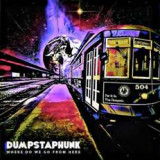
"Where Do We Go From Here" is Dumpstaphunk's first album in seven years. It will be released on April 23, 2021 on The Funk Garage, an imprint of Mascot Label Group.
Over its past 17 years, Dumpstaphunk has earned its reputation as the most well-regarded next-generation New Orleans live powerhouse, the type of band whose live shows attract sit-ins from legends like Carlos Santana, Bob Weir and Trombone Shorty. Alongside Hall, Daniels, Alex Wasily, Ryan Nyther and drummer Devin Trusclair, cousins Ivan and Ian Neville have built upon their family’s iconic NOLA legacy as they’ve transformed Dumpstaphunk into the city’s pre-eminent 21st-century funk-fusion export.
The band’s mix of classic and modern influences can be heard throughout the party-friendly mix of R&B, funk, rock, swamp-pop and blues of "Where Do We Go From Here," from the slap-bass rave "Make It After All" to the band's contemporary renderings of NOLA R&B rarities (the 1975 Blackmail gem "Let’s Get At It") and early Seventies classics (Sly and the Family Stone's "In Time”).
‘Where Do We Go From Here’ is perhaps the best evidence yet of Dumpstaphunk’s ability to strengthen and transform their singular NOLA roots in combination with the deeper outside musical and philosophical influences on which the band is founded.
- A1: Watch Me Now
- A2: Ease Back
- A3: Ego Trippin (Original 12” Version)
- A4: Moe Luv’s Theme
- A5: Kool Keith Housing Things
- A6: Traveling At The Speed Of Thought (Remix)
- A7: Feelin’ It
- A8: One Minute Less
- B1: Ain’t It Good To You
- B2: Funky (Remix)
- B3: Give The Drummer Some
- B4: Break North
- B5: Critical Beatdown
- B6: When I Burn
- B7: Ced-Gee (Delta Force One)
- C1: Funky (Original 12” Version)
- C2: Bait (Original 12” Version)
- C3: A Chorus Line (Featuring Tim Dog) (Original 12” Version)
- D1: Traveling At The Speed Of Thought (Hip-House Club Mix)
- D2: Ego Trippin (Bonus Beats)
- D3: Mentally Mad (Original 12” Version)
New York Hip Hop revolutionaries Ced-Gee, Kool Keith, Moe Luv and T.R. Love, known as Ultramagnetic Mc’s dropped their seminal debut album Critical Beatdown in 1988. Immediately grabbing the attention and pushing the boundaries of hip hop into new horizons, it was hailed as a masterpiece by the underground. Influential hip hop magazines The Source and Hip Hop Connection both listed Critical Beatdown in their Top 100 charts, naming it one of the best 100 hip hop albums ever. The 1986 single “Ego Trippin” is one of the first tracks to use the SP1200 drum machine (programmed by producer Ced-Gee), and the SP1200 would later become the golden standard for many hip hop producers. This expanded edition features not only the original album with the 15 tracks, it also includes 6 bonus tracks: the original 12” versions of “Funky”, “Bait”, “A Chorus Line” featuring Tim Dog, “Mentally Mad” plus “Traveling At The Speed Of Thought (Hip House Club Mix)” and “Ego Trippin (Bonus Beats)” coupled for the first time ever on vinyl. It also contains a 4 page booklet with interviews, rare photos and liner notes written by Angus Batey, the author of Rhyming and Stealing: A History Of The Beastie Boys and a writer for Hip Hop Connection and Mojo magazine.
This first pressing also comes with an exclusive photograph of Ultramagnetic Mc’s on thick cardboard. The timeless classic Critical Beatdown is available as a limited edition of 2000 individually numbered copies on yellow vinyl.
This self-titled work is Tim Buckley’s debut album, originally released in 1966. Most of the songs were co-written by Buckley and Larry Beckett while still in high school. It also features lifelong friend and collaborator Lee Underwood as well as Van Dyke Parks. This mostly folk oriented album was the start of an incredibly versatile career in which he later incorporated jazz, psychedelia, funk, soul and avant- garde. The album is released as a limited edition of 1000 individually numbered copies on gold coloured vinyl.
- A1: Midnight Rush
- A2: La La Land
- A3: Makin’ It Up
- A4: It Is What It Is
- A5: Or
- B1: I Don’t Wanna Be A Rock
- B2: Reach You
- B3: New Kind Of Fool
- B4: Care For You
- B5: Same Old Moon
• Although no longer part of the current Band line-up, Hamish Stuart remains integral to the continuing Average
White Band catalogue reissues, a band that is widely regarded as one of the best ever soul and funk bands.
• For the last 40 years, Hamish Stuart has been an in-demand songwriter, producer and studio/live performer,
working with Paul McCartney, Chaka Khan and Aretha Franklin, being part of the Ringo Starr & His All-Starr Band,
or the occasional meet-up of the 360 Band, which also featured former band mates Steve Ferrone and the lateMalcolm ‘Molly’ Duncan.
• Hamish has also written for Smokey Robinson, George Benson, Diana Ross Jeffrey Osborne and Atlantic Starr,.
• ‘Sooner Or Later’ was his first solo album, released worldwide between 1999 and 2000, so although celebrating
it’s Coming-of-Age, 21 years later, it’s the album’s debut release on vinyl.
• ‘Sooner Or Later’ has been edited and reconfigured by Hamish to give it a tighter sound and includes the single
‘Midnight Rush’, co-writer with Incognito’s Jean-Paul ‘Bluey’ Maunick.
• Other song writing collaborations include ‘It Is What It Is’, with Richard Darbyshire and Frank Musker and ‘I Don’t
Wanna Be A Rock’, with Graham Lyle.
Black Market Brass is a Minneapolis-based group performing their own brand of originally composed Afrobeat/Afrofunk music, as well as completing authentic renditions of the classic 1970's West African sound. Taking their cues from the godfathers, the band draws on complex polyrhythmic percussion, driving bass lines, dizzying guitar interplay, rolling keyboards, and room-commanding brass. The result? An eclectic blend of cool deep funk and driving Afrobeat grooves that will lure you to the dance floor and never let you leave.
Favorite Recordings and Charles Maurice proudly present the 5th edition of the AOR Global Sounds compilations series: 8 rare and hidden tracks, produced between 1977 and 1984 in various parts of the world. Started in 2015, the AOR Global Sounds series was born from the will of Charles Maurice (aka Pascal Rioux) to share his longtime love for the AOR and WestCoast movement and highlight its influence for many artists in the late 70s and early 80s. In this 5th volume, he selected again highly forgotten productions, deeply infused with Disco and Soul flavors.
Half of the compilation’s tracklist is naturally coming from the US, homeland of this music style, while the other half is made of productions from all over the globe, from France or United Kingdom to Venezuela. And for most of these beautiful songs, it came from artists and bands rather unknown and often released as private press.
Often, these records will have a special story, sometimes they’re just part of the universal quest of finding true love. Nonetheless, they all carry a wide range of emotions magnified by the music.
For example, “Don’t Take It Away” by Westside is as a love song about a new relationship, recorded in Minnesota and mastered on Sunset Bld. (Hollywood) by Bernie Grundman, who worked on Thriller – funny thing, the original LP is a picture-disc, which was still quite rare back in the days because the singer saw one from Mickael Jackson when visiting the studio. “Til’ Mornin’ Comes”, the only release by The Ferry Brothers, is also a love song, recorded in NYC with notably Gwen Guthrie, Vivian Cherry & Patti Austin singing as backup vocalists. On “What Its Meant To Me”, Jonathon Hansen remembers with emotion the good times spent with the members of his band including the vocalist he was in love with. On “J’Irai Squatter Ton Cœur”, Didier Makaga better-known as a French Boogie & Pop singer, arranger & composer, sings a charming declaration of love on a heavy and groovy eighties production. “You Never Know” by Rhapsody, recorded in Connecticut, sounds more like an East coast fusion of Soul and Jazz-Funk à la James Mason. “What You Do To Me” by Sugar Cane was highlighted on a Pittsburgh Rock Radio compilation: listening to this smooth ballad with its amazing Moog synth break will lift your soul. “Kailua” by Venezuelan Jazz-Funk band Esperanto, is a song about Hawaii which evocates bucolic dreamy nights facing the ocean, a typical AOR vibe. Finally, “I Need You” from Mark Williamson is a blue-eyed soul UK groover ending on a four-on-the-floor climax!
And we could detail stories but our guessing is the best way to learn more about all these gems is to listen to the compilation, fully remastered from originals, and whether your preference is for vinyl or CD formats.
One Up, DJ & Beatmaker from Nantes, France, has a passionate love for Soul, Funk and Hip Hop, releases his first album Heritage, which represents a musical heritage from all the meetings and travelling experiences who built him artisticly.
This album results of the collaboration with Slapback group, with 10 banging tracks which feet perfectly for dancing background and also if you do stunts with your car !
One Up has performed all over the world, in the biggest breakdance battles, like Adikal Force Jam
in Singapour, Floor Wars in Danemark, Evolution in New York, Arka Battle in Mexique et in France
with the classic Hip Opsession from Nantes or Battle of The Year in Montpellier.
Following on from the success of ‘Greg Belson’s Divine Disco’ series Greg Belson and Cultures of Soul team up again to explore the world of Gospel Funk.
Belson, one of the world's leading collectors and DJs of gospel music, has assembled a collection of some of the rarest Gospel funk records for “Greg Belson’s Devine Funk.” In addition to the full-length, available on CD and LP, choice selections from the compilation will be released on 7 inch singles in limited quantities.
First up in the Devine Funk 7 inch series, a split 7 inch from the Christian Harmonizers on the A-Side and The Gospel Travelers on the flip.
- A1: The Devil In Me 3:24
- A2: Hey Queenie 4:08
- A3: Betty Who? 3:57
- A4: You Can‘t Dream It 3:10
- B1: My Heart And Soul 5:13 (Long Version)
- B2: Get Outta Jail 3:18
- B3: Do Ya Dance 2:44
- B4: Isolation Blues 3:36
- C1: I Sold My Soul Today 2:37
- C2: Love‘s Gone Bad 4:35
- C3: In The Dark 3:08
- C4: Motor City Riders 3:54
- D1: Can I Be Your Girl 3:34 (Bonus Track)
- D2: Desperado 3:37 (Bonus Track)
black vinyl[24,33 €]
Denn leichtfertig würde die amerikanische Rocksängerin solche Superlative wohl kaum in den Mund nehmen. Suzis Begeisterung für ihr neuestes Werk hat viele Gründe, genau genommen 12. Denn exakt ein Dutzend Songs befinden sich auf The Devil In Me, auf dem vom Opener/Titelsong bis zum finalen ‚Motor City Riders‘ jede Nummer ein echtes Highlight ist. Die Gründe für Suzis bemerkenswerte Kreativexplosion: einerseits der Lockdown, der sie ab Frühjahr 2020 von ihrem gewohnten Tourleben abhielt, andererseits die erneute Kooperation mit ihrem Sohn Richard Tuckey, die bereits auf dem Vorgänger No Control glänzend funktioniert hat. Suzi: „Ab Frühjahr 2020 wurden fast 100 meiner Shows gecancelt, und auch Richard wäre eigentlich mit seiner Band unterwegs gewesen, wenn nicht alle Konzerte abgesagt oder verschoben worden wären. Also sagte ich zu ihm: ‚Wir sollten die freie Zeit nutzen, um neue Songs zu schreiben und uns von dem inspirieren lassen, was sich in der Welt derzeit abspielt.‘ Ich wusste, dass Richard und ich ein tolles Team sind, denn No Control war ein riesiger Erfolg und eine für uns ganz besondere
Scheibe. Allerdings hatte ich nicht damit gerechnet, dass wir sie sogar noch übertreffen könnten. Doch alle, die The Devil In Me gehört haben, und diejenigen, die am Vorgängeralbum beteiligt waren, sagten uns: ‚Diese Scheibe ist noch stärker!‘“
The Badasonics mixes soul and funk together with Jamaican riddims and horns with the soulful rock and reggae voice of Caz Gardiner to deliver a pulsating party of soul steady beats. Caz has performed with the BandHouse Gigs, Newmeyer Fyler productions and The Beat Hotel. She was the lead singer for The Ambitions, a 60's influenced soul/rock band which in 2008 was nominated for a Wammie (Washington Area Music Association) in the best new band category; and the rock steady/reggae band Caz and The Day Laborers. In 2010, she was nominated for a Wammie in the best traditional blues/RnB vocalist category for her work with Caz and The Commotions. The Badasonics, consisting of former members of The Moon Invaders & The Caroloregians, were also known as the busiest backing band for Jamaican artists in Europe and have played with Lee 'Scratch' Perry, Ken Boothe, Alton Ellis, Dave & Ansel Collins, Rico Rodriguez, Doreen Shaffer, Pat Kelly, Derrick Harriott & many more.
DJ DSK is back with more dancefloor goodness, DNA Edits vol 6. The A side is an edit of Patrice Rushen's 80s R&B classic remind me. The flip side is a funky house/disco edit of Funkadelic’s Knee Deep, both are DJ friendly remixed from the stems with intros/outros big sound and banging beats.
- Rare 1987 Detroit experimental Funk/Soul album - Solo album by Tony Newton (Motown, Funk Brothers) - First ever vinyl reissue - 180g Black Vinyl Edition - Limited to 500 copies // Antonio L. Newton AKA Tony Newton (born 1948) is a multi-instrumentalist from Detroit, MI who began his professional career at the age of thirteen, playing bass guitar with blues legends like John Lee Hooker and T-Bone Walker. Discovered by Motown executive Hank Cosby while playing the Detroit blues circuit at the age of 18, he became the touring bassist with Smokey Robinson and the Miracles on the famed 1965 European 'Motown Review' tour. Within two years, Newton became the Miracles' musical director. Tony Newton also toured and recorded with other Motown artists such as The Supremes, Marvin Gaye, Stevie Wonder, The Jackson 5_and countless others. Earning the nickname "the Baby Funk Brother" he left his trademark of solid, hard-driving and deftly clever grooves on such timeless hits as "Where Did Our Love Go," "Baby Love," "Stop In The Name Of Love," "Nowhere to Run," "ABC," "Never Can Say Goodbye," "Don't Leave Me This Way," and many others. Next to his impressive body of work for Motown, Newton can be heard on several hit singles from labels like Invictus-Hotwax and Stax. Later, Newton gained recognition as a member of both the acclaimed jazz-rock fusion group: The New Tony Williams Lifetime (headed by Miles Davis' drummer Tony Williams) and the British hard rock group: G-Force (with veteran guitarist Gary Moore). Tony Newton also recorded several solo albums during his impressive career, including the two total classics: 'Mysticism & Romance' (1978) and 'Novaphonia' (1987). On the album, we are presenting you today (Novaphonia from 1987) the listener is treated to something UNIQUE (and this is not an overstatement). Newton really puts the 'multi' into multi-instrumentalist, playing the synthesizers, the electric bass and the drum machine. Experimental is the keyword here, sounds vary from psych/trance (almost like a soundtrack from a space movie), to funk, fusion, rock, R&B, soul and jazz. Novaphonia has both elements of Tony Newton's impressive musical past and his vision for the future. Spacious synths, unusual instruments and an all-around cosmic approach make this an 'out of this world' and VERY intriguing album. Resonant, sonically rich, sonorous, colorful, mind-expanding sounds are what one should expect from the 20th century Novaphonic sound developed to its greatest extent. These harmonies are innately pleasing to the human ear, mind and nervous system.
Melvin Ukachi needs little introduction, the Lagos (Nigeria) based vocalist and bandleader is a living legend. Melvin is known for his fantastic solo albums, his vocals for the afrobeat star-groups M.F.B. and Ozzobia_but his biggest legacy is without a doubt him being the singer and bandleader of Ofege. Melvin formed Ofege in the early 1970s (when he and the other band members were all still a bunch of teenagers). Due to their vibrant combo of sweet harmonies, hooks & fuzz, Ofege would become one of the most legendary Nigerian groups of all time, with expressive sales and national stardom to follow. At the turn of the century (and because of tracks appearing on various compilations) Ofege would receive international acknowledgment for being the first of their kind and THE ultimate West-African psychedelic funk band! Melvin Ukachi recorded four milestone albums with Ofege: 'Try and Love' (1973) 'The Last of The Origins' (1976), 'Higher Plane Breeze' (1977) and 'How Do You Feel' (1978). When the Ofege story came to an end, Melvin recorded two astonishing solo albums: 'Evolution-Bring Back The Ofege Beat' (1981) and 'I am Ok' (1985). Both of his solo recordings have now become much sought-after holy grails for collectors and fans alike. On the album, we are presenting you today (Evolution-Bring Back The Ofege Beat) the listener is treated to the trademark Ofege sound (as the title of the record obviously suggests). Next to the rootsy and raw Ofege sound, we're shown a perfect glimpse of the late '70s afrobeat works combining soul, jazzy rhythms, William Onyeabor style synths & fluid boogie-danceability Expect some serious 'all-star' guest musicians as well_featured on the album are Chyke Madu (The Funkees) on drums, Berkley Jones (Ofege) on guitar_and many other local legends. To top things off the tracks were recorded and mixed at the legendary Abbey Road Studios in London_all slickly engineered by Rafiu Ayoade (The Apostles) and produced by the president of sound himself Odion Iruoje (known for his work with Manu Dibango, Fela Kuti_and many others). 'Evolution-Bring Back The Ofege Beat' was released on EMI Nigeria in 1981 and is a total Afro-psych-funk classic that begs for a special place in your record collection. It's tight, funky and Melvin's soulful vocals are to die for. This record is a monster! Tidal Waves Music now proudly presents the first-ever reissue (supervised by Melvin Ukachi himself) of this amazing Nigerian Afrobeat album. This RARE classic (original copies tend to go for large amounts on the secondary market) is now finally back available as a limited 180g vinyl edition (500 copies) complete with the original artwork made at Grafikad (who were responsible for designing landmark sleeves for renowned artists such as Fela Kuti).
Antonio L. Newton AKA Tony Newton (born 1948) is a multi-instrumentalist from Detroit, MI who began his professional career at the age of thirteen, playing bass guitar with blues legends like John Lee Hooker and T-Bone Walker. Discovered by Motown executive Hank Cosby while playing the Detroit blues circuit at the age of 18, he became the touring bassist with Smokey Robinson and the Miracles on the famed 1965 European ‘Motown Review’ tour. Within two years, Newton became the Miracles’ musical director.
Tony Newton also toured and recorded with other Motown artists such as The Supremes, Marvin Gaye, Stevie Wonder, The Jackson 5…and countless others. Earning the nickname “the Baby Funk Brother” he left his trademark of solid, hard-driving and deftly clever grooves on such timeless hits as “Where Did Our Love Go,” “Baby Love,” “Stop In The Name Of Love,” “Nowhere to Run,” “ABC,” “Never Can Say Goodbye,” “Don’t Leave Me This Way,” and many others. Next to his impressive body of work for Motown, Newton can be heard on several hit singles from labels like Invictus-Hotwax and Stax. Later, Newton gained recognition as a member of both the acclaimed jazz-rock fusion group: The New Tony Williams Lifetime (headed by Miles Davis’ drummer Tony Williams) and the British hard rock group: G-Force (with veteran guitarist Gary Moore).
Tony Newton also recorded several solo albums during his impressive career, including the two total classics: ‘Mysticism & Romance’ (1978) and ‘Novaphonia’ (1987).
On the album, we are presenting you today (Novaphonia from 1987) the listener is treated to something UNIQUE (and this is not an overstatement). Newton really puts the ‘multi’ into multi-instrumentalist, playing the synthesizers, the electric bass and the drum machine. Experimental is the keyword here, sounds vary from psych/trance (almost like a soundtrack from a space movie), to funk, fusion, rock, R&B, soul and jazz. Novaphonia has both elements of Tony Newton’s impressive musical past and his vision for the future.
Spacious synths, unusual instruments and an all-around cosmic approach make this an ‘out of this world’ and VERY intriguing album. Resonant, sonically rich, sonorous, colorful, mind-expanding sounds are what one should expect from the 20th century Novaphonic sound developed to its greatest extent. These harmonies are innately pleasing to the human ear, mind and nervous system.
Explore new musical frontiers intended to catapult the listener towards new dimensions…this is an album that just begs for a special place in your record collection!
Tidal Waves Music now proudly presents the first-ever vinyl reissue of ‘Novaphonia’ since its release in 1987. This rare & private-pressed album (original copies tend to go for large amounts on the secondary market) is now finally back available as a limited 180g vinyl edition (500 copies) complete with the original artwork.