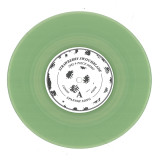
Błoto has never cared much for dominant aesthetics. Instead, the band has consistently chosen paths less travelled, unexplored territories and uncharted routes where experimentation is not so much a conscious decision as a natural state of being. After years of a rather hermetic approach to recording their albums, the time for change has come. A trip to Bucharest and the opportunity to collaborate with the community of musicians associated with the underground label Future Nuggets, led by Ion D, resulted in many hours of recordings, which will be presented by Astigmatic Records in a series of releases across 2026. It opens with a 7-inch vinyl titled Zmiany / Schimbări, recorded in collaboration with Ion D and Plevna.
Поиск:future nuggets
Все
- 1
Jhobei has been on a constant ascent in the last couple of years, and he's worked with some of the most credible labels in the game in that time, from Fuse to Picnic to Semi Delicious. Now he steps up to Burnski's Pilot with four absolute nuggets. 'Pulse Reflex' is amped right up and ready to go - tightly circling synths, buoyant beats, garage shuffle and slick fills that all demand you bust out some moves. 'Believe' dials things back into a more heady, deeper dub tech vibe and 'Cannei Getcha (To Feel)' brings crispy electronic synths and pensive pads to a future groove before 'Synthetic Symphony' closes with buffed neon pads and smooth progressive chords that ride clean, meticulous drums.
UILTY RAZORS, BONA FIDE PUNKS.
Writings on the topic that go off in all directions, mind-numbing lectures given by academics, and testimonies, most of them heavily doctored, from those who “lived through that era”: so many people today fantasize about the early days of punk in our country… This blessed moment when no one had yet thought of flaunting a ridiculous green mohawk, taking Sid Vicious as a hero, or – even worse – making the so-called alternative scene both festive and boorish. There was no such thing in 1976 or 1977, when it wasn’t easy to get hold of the first 45s by the Pistols or the Clash. Few people were aware of what was happening on the fringes of the fringes at the time. Malcolm McLaren was virtually unknown, and having short hair made you seem strange. Who knew then that rock music, which had taken a very bad turn since the early 1970s, would once again become an essential element of liberation? That, thanks to short and fast songs, it would once again rediscover that primitive, social side that was so hated by older generations? Who knew that, besides a few loners who read the music press (it was even better if they read it in English) and frequented the right record stores? Many of these formed bands, because it was impossible to do otherwise. We quickly went from listening to the Velvet Underground to trying to play the Stooges’ intros. It’s a somewhat collective story, even though there weren’t many people to start it.
The Guilty Razors were among those who took part in this initial upheaval in Paris. They were far from being the worst. They had something special and even released a single that was well above the national average. They also had enough songs to fill an album, the one you’re holding. In everyone’s opinion, they were definitely not among the punk impostors that followed in their wake. They were, at least, genuine and credible.
Guilty Razors, Parisian punk band (1975-1978). To understand something about their somewhat linear but very energetic sound, we might need to talk about the context in which it was born and, more broadly, recall the boredom (a theme that would become capital in punk songs) coupled with the desire to blow everything off, which were the basis for the formation of bands playing a rejuvenated rock music ; about the passion for a few records by the Kinks or the early Who, by the Stooges, by the Velvet mostly, which set you apart from the crowd.
And of course, we should remember this new wave, which was promoted by a few articles in the specialized press and some cutting-edge record stores, coming from New York or London, whose small but powerful influence could be felt in Paris and in a handful of isolated places in the provinces, lulled to sleep by so many appalling things, from Tangerine Dream to President Giscard d’Estaing...
In 1975-76, French music was, as almost always, in a sorry state ; it was still dominated by Johnny Hallyday and Sylvie Vartan. Local rock music was also rather bleak, apart from Bijou and Little Bob who tried to revive this small scene with poorly sound-engineered gigs played to almost no one.
In the working class suburbs at the time, it was mainly hard rock music played to 11 that helped people forget about their gruelling shifts at the factory. Here and there, on the outskirts of major cities, you still could find a few rockers with sideburns wearing black armbands since the death of Gene Vincent, but it wasn’t a proper mass movement, just a source of real danger to anyone they came across who wasn't like them. In August 1976, a festival unlike any other took place in Mont-de-Marsan – the First European Punk Festival as the poster said – with almost as many people on stage as in the audience. Yet, on that day, a quasi historical event happened, when, under the blazing afternoon sun, a band of unknowns called The Damned made an unprecedented noise in the arena, reminiscent of the chaotic Stooges in their early adolescence. They were the first genuine punk band to perform in our country: from then on, anything was possible, almost anything seemed permissible.
It makes sense that the four+1 members of Guilty Razors, who initially amplified acoustic guitars with crappy tape recorder microphones, would adopt punk music (pronounced paink in French) naturally and instinctively, since it combines liberating noise with speed of execution and – crucially – a very healthy sense of rebellion (the protesters of May 1968 proclaimed, and it was even a slogan, that they weren’t against old people, but against what had made them grow old. In the mid-1970s, it seemed normal and obvious that old people should now ALSO be targeted!!!).
At the time, the desire to fight back, and break down authority and apathy, was either red or black, often taking the form of leafleting, tumultuous general assemblies in the schoolyard, and massive or shabby demonstrations, most of the time overflowing with an exciting vitality that sometimes turned into fights with the riot police. Indeed, soon after the end of the Vietnam War and following Pinochet’s coup in Chile, all over France, Trotskyist and anarcho-libertarian fervour was firmly entrenched among parts of the educated youth population, who were equally rebellious and troublemakers whenever they had the chance. It should also be noted that when the single "Anarchy in the UK" was first heard, even though not many of us had access to it, both the title and its explosive sound immediately resonated with some of those troublemakers crying out for ANARCHY!!! Meanwhile, the left-wing majority still equated punks with reckless young neo-Nazis. Of course, the widely circulated photos in the mainstream press of Siouxsie Sioux with her swastikas didn’t necessarily help to win over the theorists of the Great Revolution. It took Joe Strummer to introduce The Clash as an anti-racist, anti-fascist and anti-ignorance band for the rejection of old-school revolutionaries to fade a little.
The Lycée Jean-Baptiste Say at Porte d’Auteuil, despite being located in the very posh and very exclusive 16th arrondissement of Paris, didn’t escape these "committed" upheavals, which doubled as the perfect outlet for the less timid members of this generation.
“Back then, politics were fun,” says Tristam Nada, who studied there and went on to become Guilty Razors’ frontman. “Jean-Baptiste was the leftist high-school in the neighbourhood. When the far right guys from the GUD came down there, the Communist League guys from elsewhere helped us fight them off.”
Anything that could challenge authority was fair game and of course, strikes for just about any reason would lead to increasingly frequent truancy (with a definitive farewell to education that would soon follow). Tristam Nada spent his 10th and 11th unfinished grades with José Perez, who had come from Spain, where his father, a janitor, had been sentenced to death by Franco. “José steered my tastes towards solid acts such as The Who. Like most teenagers, I had previously absorbed just about everything that came my way, from Yes to Led Zeppelin to Genesis. I was exploring… And then one day, he told me that he and his brother Carlos wanted to start a rock band.” The Perez brothers already played guitar. “Of course, they were Spanish!”, jokes their singer. “Then, somewhat reluctantly, José took up the bass and we were soon joined by Jano – who called himself Jano Homicid – who took up the rhythm guitar.” Several drummers would later join this core of not easily intimidated young guys who didn’t let adversity get the better of them.
The first rehearsals of the newly named Guilty Razors took place in the bedroom of a Perez aunt. There, the three rookies tried to cover a few standards, songs that often were an integral part of their lives. During a first, short gig, in front of a bewildered audience of tough old-school rockers, they launched into a clunky version of the Velvet Underground's “Heroin”. Challenge or recklessness? A bit of both, probably… And then, step by step, their limited repertoire expanded as they decided to write their own songs, sung in a not always very accurate or academic English, but who cared about proper grammar or the right vocabulary, since what truly mattered was to make the words sound as good as possible while playing very, very fast music? And spitting out those words in a language that left no doubt as to what it conveyed mattered as well.
Trying their hand a the kind of rock music disliked by most of the neighbourhood, making noise, being fiercely provocative: they still belonged to a tiny clique who, at this very moment, had chosen to impose this difference. And there were very few places in France or elsewhere, where one could witness the first stirrings of something that wasn’t a trend yet, let alone a movement.
In the provinces, in late 1976 or early 1977, there couldn’t be more than thirty record stores that were a bit more discerning than average, where you could hear this new kind of short-haired rock music called “punk”. The old clientele, who previously had no problem coming in to buy the latest McCartney or Aerosmith LP, now felt a little less comfortable there…
In Paris, these enlightened places were quite rare and often located nex to what would become the Forum des Halles, a big shopping mall. Between three aging sex workers, a couple of second-hand clothes shops, sellers of hippie paraphernalia and small fashion designers, the good word was loudly spread in two pioneering places – propagators of what was still only a new underground movement. Historically, the first one was the Open Market, a kind of poorly, but tastefully stocked cave. Speakers blasted out the sound of sixties garage bands from the Nuggets compilation (a crucial reference for José Perez) or the badly dressed English kids of Eddie and the Hot Rods. This black-painted den was opened a few years earlier by Marc Zermati, a character who wasn’t always in a sunny disposition, but always quite radical in his (good) choices and his opinions. He founded the independent label Skydog and was one of the promoters of the Mont-de-Marsan punk festivals. Not far from there was Harry Cover, another store more in tune with the new New York scene, which was amply covered in the house fanzine, Rock News (even though it was in it that the photos of the Sex Pistols were first published in France).
It was a favorite hang-out of the Perez brothers and Tristam Nada, as the latter explained. “It’s at Harry Cover’s that we first heard the Pistols and Clash’s 45s, and after that, we decided to start writing our first songs. If they could do it, so could we!”
The sonic shocks that were “Anarchy in the UK”, “White Riot” or the Buzzcocks’s EP, “Spiral Scratch” – which Guilty Razors' sound is reminiscent of – were soon to be amplified by an unparalleled visual shock. In April 1977, right after the release of their first LP, The Clash performed at the Palais des Glaces in Paris, during a punk night organised by Marc Zermati. For many who were there, it was the gig of a lifetime…
Of course, Guilty Razors and Tristam were in the audience: “That concert was fabulous… We Parisian punks were almost all dressed in black and white, with white shirts, skinny leather ties, bikers jackets or light jackets, etc. The Clash, on the other hand, wore colourful clothes. Well, the next day, at the Gibus, you’d spot everyone who had been at this concert, but they weren’t wearing anything black, they were all wearing colours.”
It makes sense to mention the Gibus club, as Guilty Razors often played there (sometimes in front of a hostile audience). It was also the only place in Paris that regularly scheduled new Parisian or Anglo-Saxon acts, such as Generation X, Siouxsie and the Banshees, the Slits, and Johnny Thunders who would become a kind of messed-up mascot for the venue. A little later, in 1978, the Rose Bonbon – formerly the Nashville – also attracted nightly owls in search of electric thrills… In 1977, the iconic but not necessarily excellent Asphalt Jungle often played at the Gibus, sometimes sharing the bill with Metal Urbain, the only band whose aura would later transcend the French borders (“I saw them as the French Sex Pistols,” said Geoff Travis, head of their British label Rough Trade). Already established in this small scene, Metal Urbain helped the young and restless Guilty Razors who had just arrived. Guitarist for Metal Urbain Hermann Schwartz remembers it: “They were younger than us, we were a bit like their mentors even if it’s too strong a word… At least they were credible. We thought they were good, and they had good songs which reminded of the Buzzcocks that I liked a lot. But at some point, they started hanging out with the Hells Angels. That’s when we stopped following them.”
The break-up was mutual, since, Guilty Razors, for their part, were shocked when they saw a fringe element of the audience at Metal Urbain concerts who repeatedly shouted “Sieg Heil” and gave Nazi salutes. These provocations, even still minor (the bulk of the skinhead crowd would later make their presence felt during concerts), weren’t really to the liking of the Perez brothers, whose anti-fascist convictions were firmly rooted. Some things are non-negotiable.
A few months earlier (in July 1978), Guilty Razors had nevertheless opened very successfully for Metal Urbain at the Bus Palladium, a more traditonally old-school rock night-club. But, as was sometimes the case back then, the night turned into a mass brawl when suburban rockers came to “beat up punks”.
Back then, Parisian nights weren’t always sweet and serene.
So, after opening as best as they could for The Jam (their sound having been ruined by the PA system), our local heroes were – once again – met outside by a horde of greasers out to get them. “Thankfully,” says Tristam, “we were with our roadies, motorless bikers who acted as a protective barrier. We were chased in the neighbouring streets and the whole thing ended in front of a bar, with the owner coming out with a rifle…”
Although Tristam and the Perez brothers narrowly escaped various, potentially bloody, incidents, they weren’t completely innocent of wrongdoing either. They still find amusing their mugging of two strangers in the street for example (“We were broke and we simply wanted to buy tickets for the Heartbreakers concert that night,” says Tristam). It so happened that their victims were two key figures in the rock business at the time: radio presenter Alain Manneval and music publisher Philippe Constantin. They filed a complaint and sought monetary compensation, but somehow the band’s manager, the skilful but very controversial Alexis, managed to get the complaint withdrawn and Guilty Razors ended up signing with Constantin with a substantial advance.
They also signed with Polydor and the label released in 1978 their only three-track 45, featuring “I Don't Wanna be A Rich”, “Hurts and Noises” and “Provocate” (songs that exuded perpetual rebellion and an unquenchable desire for “class” confrontation). It was a very good record, but due to a lack of promotion (radio stations didn’t play French artists singing in English), it didn’t sell very well. Only 800 copies were allegedly sold and the rest of the stock was pulped… Initially, the three tracks were to be included on a LP that never came to be, since they were dropped by Polydor (“Let’s say we sometimes caused a ruckus in their offices!” laughs Tristam.) In order to perfect the long-awaited LP, the band recorded demos of other tracks. There was a cover of Pink Floyd's “Lucifer Sam” from the Syd Barrett era – proof of an enduring love for the sixties’ greats –, “Wake Up” a hangover tale and “Bad Heart” about the Baader-Meinhof gang, whose actions had a profound impact on the era and on a generation seeking extreme dissent... On the album you’re now discovering, you can also hear five previously unreleased tracks recorded a bit later during an extended and freezing stay in Madrid, in a makeshift studio with the invaluable help of a drummer also acting as sound engineer. He was both an enthusiastic old hippie and a proper whizz at sound engineering. Here too, certain influences from the fifties and sixties (Link Wray, the Troggs) are more than obvious in the band’s music.
Shortly after a final stormy and rather barbaric (on the audience’s side) “Punk night” at the Olympia in June 1978, Tristam left the band ; his bandmates continued without him for a short while.
But like most pioneering punk bands of the era, Guilty Razors eventually split up for good after three years (besides once in Spain, they’d only played in Paris). The reason for ceasing business activities were more or less the same for everyone: there were no venues outside one’s small circuit to play this kind of rock music, which was still frightening, unknown, or of little interest to most people. The chances of recording an LP were virtually null, since major labels were only signing unoriginal but reassuring sub-Téléphone clones, and the smaller ones were only interested in progressive rock or French chanson for youth clubs. And what about self-production? No one in our small safety-pinned world had thought about it yet. There wasn’t enough money to embark on that sort of venture anyway.
So yes, the early days of punk in France were truly No Future!
- 1: Beat Revolution
- 2: Because Of You
- 3: Overnight Delivery
- 4: Julia (I Want To Kill Your Boyfriend)
- 5: Lemon And Lime
- 6: You Can't Try It (Before You Buy It)
- 7: The World's Gone Mad
- 8: She's Too Good For You
- 9: Down In The Underground
- 10: Mary Ann Man
- 11: Cool Imposter
- 12: One Hit Wonder Of Love
- 13: Carefree
- 14: Beat Revolution 9
Beat Revolution is the new 14-song album by MUCK AND THE MIRES available April 25 from Dirty Water Records (London), featuring their smash radio singles “Cool Imposter” and “Beat Revolution” + 12 brand new revolutionary tracks.
On BEAT REVOLUTION, their 7th full-length album, we find the band marching forward into the sounds of Powerpop (“Overnight Delivery”), Punk Rock (“Julia’s Got a Boyfriend”), and pure Nuggets-era Garage Rock (“She’s Too Good For You”).
“With a blend of ‘50s kitsch, late ‘60s garage rock guitar and one of the most repetitious hooks ever, ‘Cool Imposter’ quickly marked out a place as one of their strongest tracks to date.”- Real Gone
“Now here's a political campaign we can all get behind! “ ‘Beat Revolution’ features the signature Muck sound — recalling '64 era Beatles if they'd somehow time travelled into the future and heard the Ramones. Be sure to volunteer today! Faster and Louder
“’Beat Revolution’ is pure classic early garage rock 'n' roll, and who doesn't need that sound more often? - If It’s Too Loud
Boston's Muck and the Mires, have been described as a blend of the HAMBURG era BEATLES and the CBGBs era RAMONES. They have built a worldwide following through relentless touring, radio and satellite airplay and a string of recordings (considered by many to be cult classics) produced by Kim Fowley and Jim Diamond. The band gained worldwide recognition when they were featured on MTV as the winners of Little Steven Van Zandt's (E-Street Band/Underground Garage) national battle of the garage bands contest. Beat Revolution is the followup to their highly successful album, Greetings From Muckingham Palace, which earned a Coolest Song in the World (“I’m Your Man”) on the Underground Garage SIRIUS XM show.
2025 Repress.
Originally released in limited formats in 2017 and having since been repressed several times, 2025 sees
a new pressing to acknowledge the enduring legacy of this recording. In 2024, the song Trees & Flowers
became an unexpected hit on Tik Tok and introduced a new generation to these timeless songs.
“1982 4-Piece Demo” is the first official, fully-licensed and unreleased material to be released under the name
Strawberry Switchblade in 30 years. Since disbanding amid major record label acrimony and personal differences
in 1986, the already-cult band have since grown in stature and legend. Trailblazers in many ways, the band’s
mythology justifiably centers around the charismatic duo of Jill Bryson and Rose McDowall, but that isn’t a
complete picture.
Bryson and McDowall’s growing friendship, having met some years earlier on the punk scene, became a creative
partnership: Bryson’s art school background and McDowall’s history in avant-punk group The Poets meant
Strawberry Switchblade was a band pitted against many established norms. The band’s very first incarnation,
an all-female 4 piece, recorded one demo at Glasgow’s Hellfire Club and played a handful of gigs. Friends
Janice Goodlett and Carole McGowan completed the line up on bass and drums respectively. Strawberry
Switchblade would eventually pair down to a duo and go on to chart success but it’s in these raw, passionate
recordings that the songwriting and vocal elements were being hammered out and explored in real time.
“Spanish Song” is a previously unreleased song. With Rose McDowall’s instantly recognizable lead vocal
dovetailing with Bryson’s harmonies and lead guitar, it’s the first glimpse at an alternative history of Strawberry
Switchblade. This incarnation could easily have been featured on a Nuggets compilation or a precursor to the indiepop revolution that would take over British bedrooms a couple of years later. Trees & Flowers is instantly
recognizable, a bona fide classic that would earn the band its first record deal. Here it’s given a more forceful rhythm
section: Goodlett and McGowan’s playing is in fact accomplished and doesn’t hint at the bands’ youth. Go Away
would also surface later on the band’s debut LP but here it is a moody-garage stomper with a psychedelic, haunting
refrain.
These 3 songs point to a tantalizing future of the band that was never realized.
Remastered and restored by Sean Pennycook from the original cassette, with artwork based on a single
photographic contact sheet (the only visual evidence of the band in this form) and with a booklet of photographs and
new text from contemporary Stephen Pastel.
Spanish Song' is a previously unreleased song. With Rose McDowall's instantly recognizable lead vocal dovetailing with Bryson's harmonies and lead guitar, it's the first glimpse at an alternative history of Strawberry Switchblade. This incarnation could easily have been featured on a Nuggets compilation or a precursor to the indie-pop revolution that would take over British bedrooms a couple of years later. "Trees & Flowers" is instantly recognizable, a bona fide classic that would earn the band its first record deal. Here it's given a more forceful rhythm section: Goodlett and McGowan's playing is in fact accomplished and doesn't hint at the bands' youth. "Go Away" would also surface later on the band's debut LP but here it is a moody-garage stomper with a psychedelic, haunting refrain. These 3 songs point to a tantalizing future of the band that was never realized.
Remastered and restored by Sean Pennycook from the original cassette, with artwork based on a single photographic contact sheet (the only visual evidence of the band in this form) and with a booklet of photographs and new text. Pa
Coke Bottle Clear Vinyl + Book[14,71 €]
1982 4-Piece Demo' is the first official, fully-licensed and unreleased material to be released under the name Strawberry Switchblade in 30 years. Since disbanding amid major record label acrimony and personal differences in 1986, the already-cult band have since grown in stature and legend. Trailblazers in many ways, the band's mythology justifiably centers around the charismatic duo of Jill Bryson and Rose McDowall, but that isn't a complete picture. Bryson and McDowall's growing friendship, having met some years earlier on the punk scene, became a creative partnership: Bryson's art school background and McDowall's history in avant-punk group The Poets meant Strawberry Switchblade was a band pitted against many established norms. The band's very first incarnation, an all-female 4 piece, recorded one demo at Glasgow's Hellfire Club and played a handful of gigs. Friends Janice Goodlett and Carole McGowan completed the line up on bass and drums respectively. Strawberry Switchblade would eventually pair down to a duo and go on to chart success but it's in these raw, passionate recordings that the songwriting and vocal elements were being hammered out and explored in real time.
Spanish Song' is a previously unreleased song. With Rose McDowall's instantly recognizable lead vocal dovetailing with Bryson's harmonies and lead guitar, it's the first glimpse at an alternative history of Strawberry Switchblade. This incarnation could easily have been featured on a Nuggets compilation or a precursor to the indie-pop revolution that would take over British bedrooms a couple of years later. "Trees & Flowers" is instantly recognizable, a bona fide classic that would earn the band its first record deal. Here it's given a more forceful rhythm section: Goodlett and McGowan's playing is in fact accomplished and doesn't hint at the bands' youth. "Go Away" would also surface later on the band's debut LP but here it is a moody-garage stomper with a psychedelic, haunting refrain. These 3 songs point to a tantalizing future of the band that was never realized.
Remastered and restored by Sean Pennycook from the original cassette, with artwork based on a single photographic contact sheet (the only visual evidence of the band in this form) and with a booklet of photographs and new text. Pa
Unavailable for over three decades, we are happy to reissue this garage rock's essential gem, originally released in the early days of Greg Shaw's Bomp! label. Bomp! Records of Burbank, California was likely the most significant American independent record label of the 1970s. It was the first in this country to recognize and actively support the punk rock and new wave revolution with its releases, at a time when both America's vast regional disparity and an extremely conservative record business had deemed this new, strange idiom anathema. In its first five years Bomp! the label wore its heart on its sleeve with a series of fascinating, unpredictable, and memorable 45 RPM releases. And the whole was brainstormed by Greg Shaw, likely the only maverick alive at that time who could have created and populated such a scenario. The winter 1976 issue of Who Put The Bomp (Greg Shaw's fanzine) had featured a detailed report on the Boston scene, with favorable mentions of two future Bomp! acts. Willie 'Loco' Alexander was a local legend, the storied former lead singer of the Lost, and his 1975 single 'Kerouac' (reissued on Bomp!) was a suitably eccentric, Dylan-ish ode to the beat maven. DMZ was a more predictable proposition, sporting obvious glam roots and an eccentric but dedicated rock & roll fan in lead singer, Jeff 'Mono Mann' Conolly. Wearing his heart on his sleeve, Conolly and crew went for a chaotic and intense hybrid of Dolls, Stooges and most of the Nuggets bands, so Bomp! the label was a natural choice. With killer cuts like 'Busy Man' and 'When I Get Off,' their Craig Leon-produced 1977 EP captured the DMZ zeitgeist considerably better than the album they would later record for Sire.
- A1: The Bo Street Runners – Bo Street Runner (Single Version)
- A2: The Others – Oh Yeah
- A3: David John And The Mood – Bring It To Jerome
- A4: Mickey Finn And The Blue Men – I Still Want You
- A5: Ronnie Jones And The Night-Timers – I Need Your Loving
- A6: The Second Thoughts – Seventh Son
- A7: James Royal – Work Song
- A8: Alexis Korner’s Blues Incorporated – Taboo Man
- A9: The Trendbender Band – Unchain My Heart
- B1: The Syndicats – Crawdaddy Simone
- B2: The In Crowd – Things She Says
- B3: The Boys Blue – You Got What I Want
- B4: The Rocking Vicars – It’s Alright
- B5: The Artwoods – I Take What I Want
- B6: The Favourite Sons – That Driving Beat
- B7: The Moody Blues – And My Baby’s Gone
- B8: The Stormsville Shakers – Number One
- B9: The Union – See Saw
- C1: Rod Stewart – Shake
- C2: Laurel Aitken And The Soul Men – Last Night
- C3: Barry St John – Gotta Brand New Man
- C4: The Soul Brothers – Good Lovin’ Never Hurt
- C5: Lucas & The Mike Cotton Sound – Ain’t Love Good, Ain’t Love Proud
- C6: J.j. Jackson – But It’s Alright
- C7: Carl Douglas & The Big Stampede – Something For Nothing
- C8: Wynder K Frog – Turn On Your Lovelight
- D1: The Spencer Davis Group – Looking Back
- D2: Double Feature – Baby Get Your Head Screwed On
- D3: Scots Of St. James – Tic Toc
- D4: The Attraction – She’s A Girl
- D5: John’s Children – But She’s Mine
- D6: The Drag Set – Day And Night
- D7: Rupert’s People – Hold On
- D8: The Action – Look At The View
Modernists loved the latest R&B, blues and soul sounds coming from US cities such as Chicago, Memphis and Detroit and when British groups started playing their own interpretations in clubs and dancehalls they gained their own mod followings, their music remaining popular on the mod scene today.
Side 1 of this bespoke collection spotlights the British R&B scene and features a founding father of British blues Alexis Korner with the rare ‘Taboo Man’ alongside ace mod tracks from The Bo Street Runners, The Others, Mickey Finn and The Blue Men (featuring a youthful Jimmy Page on harmonica) and more.
Side 2 starts with British R&B groups developing their own sound by turning up their guitars, employing distortion, feedback and fuzz pedals to take the music in a new direction. Highlights include the Joe Meek produced ‘Crawdaddy Simone’ by The Syndicats (described as proto punk because of its ferocity), The In Crowd’s snarling ‘Things She Says’ and The Artwoods’ fuzz drenched mod favourite ‘I Take What I Want’ featuring future Deep Purple organist Jon Lord on organ.
Denny Laine (later of Wings) sings with The Moody Blues calming things down with some soulful beat.
Side 3 focuses on UK soul music - Rod ‘the mod’ Stewart backed by The Brian Auger Trinity takes on Sam Cooke’s ‘Shake’, the godfather of ska Laurel Aitken proves he’s also a natural soul man with his floor filling version of The Mar-Keys’ ‘Last Night’ and the amazing Barry St. John sings the funky ‘Gotta Brand New Man’. Popular club acts Lucas & The Mike Cotton Sound and Carl Douglas & The Big Stampede would regularly bring the house down at mod clubs and also feature.
Side 4 includes mod club dancefloor smashes from The Spencer Davis Group and Rupert’s People (AKA mod group Fleur De Lys) while mod heroes The Action go psychedelic with ‘Look At The View’. A moonlighting Jeff Beck of The Yardbirds plays on John’s Children’s ‘But She’s Mine’ and there are brilliant singles revered by freakbeat and psych collectors such as Double Feature’s ‘Baby Get Your Head Screwed On’ and The Drag Set’s ‘Day And Night’.
Rarities from The Trendbender Band and The Union (featuring Elmer Gantry) appear on vinyl for the first time.
- A1: Here I Come
- A2: Revolution
- A3: Street Dance (Feat. L'entourloop)
- A4: Roots Rock Reggae (Feat. Yaniss Odua)
- A5: Rappa Pam Pam
- A6: Who Fool Dem
- B1: Free Your Sould Interlude
- B2: Mister Babylon
- B3: No Matta
- B4: Expensive Love
- B5: What A La La (Feat. Johnny Osbourne & Manudigital)
- B6: Dancehall
- B7: Perfect Timing
Skarra Mucci is a Jamaican Reggae and Dancehall artist born in Kingston. Known as the "Dancehall President", his career counts 7 solo albums, including the essential "Return of the Raggamuffin" (2012) and countless classics and cult collaborations, such as the hit "My Sound" from the album "Greater Than Great" (2014) which exceeds 15 million cumulative Spotify and YouTube streams and the critically acclaimed album "Dancehall President" (2016) with its tour of more than 100 dates around the world, from Mexico to China.
5 years after the release of "Skarra Mucci & The One Love Family" (2018), this essential figure of Jamaican music, with his versatile flow and recognizable voice, announces a new studio album with multiple influences "Perfect Timing", which is scheduled for release on September 29, 2023.
The album opens with a hybrid roots-tinged hip hop riddim. Brass and percussion resonate throughout the track as Skarra Mucci gives way to a mesmerizing voice sample that gives the track “Here I Come” all its depth.
An introduction that sets the tone for an album tinged with a mix of genres by Skarra Mucci and his team of top producers brought together by Undisputed Records. "Perfect Timing" is indeed an ode to Reggae of all eras, full of nods to the Sound System culture, from its beginnings to the present day. From the choice of the featurings to that of the producers, nothing is left to chance to offer us a journey through the highlights of this rich culture which has never ceased to evolve, without any period being left behind.
For his 1st single, it is with a major player in the current Reggae scene that Skarra Mucci has chosen to announce the release of his 8th solo album by inviting the Martiniquais Yaniss Odua on the title "Roots Rock Reggae".
Accustomed to albums teeming with successful collaborations, "Perfect Timing" is obviously no exception to the rule. We find in particular on the title "Street Dance" the essential French producers of L'Entourloop, with whom he released the very successful EP "Golden Nuggets" (2019, 6 titles, 17M cumulative streams Spotify and YouTube) to drop once again a banger between Hip-Hop and Dancehall in line with their huge 2013 hit “Dreader Than Dread” (38M combined Spotify and YouTube streams).
Jamaican legend Johnny Osbourne also takes part in the celebration for a version of his classic of the digital era "What A La La", with Skarra Mucci on the Stalag riddim replayed for the occasion by the beatmaker specialist in the matter: Manudigital.
Skarra Mucci continues his exploration of various styles and influences with the very groovy "Dancehall", produced by the musicians of Dub Akom, in which he lets us perceive all his class and his swing. We also find the massive “Who Fool Them”, a UK stepper track produced by Evidence Music, but also the future Dancehall classic “Rappa Pam Pam”, or the huge “Misty Babylon” in a much more Roots register.
The album "Perfect Timing" ends with the eponymous title, on a riddim and Lovers Rock melodies carried by a joyful piano and a groovy bass. A finale in the form of a declaration of love for Reggae, this music which gave him so much and to which he gave everything.
See you on September 29, 2023 to discover "Perfect Timing", Skarra Mucci's new album.
Previously unavailable on vinyl for more than 50 years, this rare collection of tracks presents a wealth of hits that helped define country music in the ‘60s - and beyond!
If you don’t remember Western Swing in its heyday, or the first generation of Texas Honky Tonk, you may not know Billy Gray. Aside from a select group of music aficionados and musicologists, Billy Gray’s name and significant contributions to country music and western swing have simply gone unrecognized for far too long.
Musically, there were many shades of Billy Gray. Singer, Songwriter, Musician, Performer, Arranger, Bandleader. Whether on stage or in the studio, Billy Gray personified what this music was – and still is – all about.
Billy played behind some of Country Music’s biggest names – Hank Thompson, Ray Price and Willie Nelson – served as Thompson’s and Price’s bandleader – and built quite a following in his own right with his own bands, The Western Okies, The Nuggets and The Cowtowners.
Billy Gray, together with the legendary Hank Thompson created a wealth of hits that helped to define the country music of an era, and beyond, helped launch the career of future rockabilly legend Wanda Jackson, and greatly influenced the future sound of country music.
-- Joe Hopkins
- A1: Ronnie Miller - I Got The Hots For You
- A2: Leaves Of Autumn - Slip Back Into The Magic
- A3: Mirage - Bend A Little
- A4: People - Misty Mood
- A5: Stroke - Without Your Love
- A6: Tom Miles - Old Home Movies
- A7: Jan Lewis Group - Oh Senor
- A8: Synod - Future Shock
- B1: Mikael Neumann - Hey Flicka
- B2: 5-3-74 - Love Is Not For Real
- B3: Babe - It&Apos;S A Long Road
- B4: Jeff Elliott - Magic Sands
- B4: Charles Vickers - Mister Jones
- B5: Aoh - The Answer Lies In Love
- B6: Dianne Elliott - The Ring
- B7: Phil Palumbo &Amp; Pals - It Was A Very Good Year
After 6 years and 7 volumes, the Tramp Records crew invites you to join them on yet another enlightening journey into soulful Jazz, Folk and Funk from the 1970s.
This 8th volume contains nineteen Jazz, Soul and Folk nuggets from between the late 1960s and the late 1970s. One of the many highlights is the opening track by Bobby Cole which is most likely one of the finest independently produced vocal jazz recordings ever put on wax. So true. Oscar Brown Jr. and Mark Murphy sends its regards. But that's just the beginning. Praise Poems Vol.8 covers a wide selection of genres, from big band jazz (Helmut Pistor's Big Rock Jazz Band and Germany's own Ladykiller) to psych-pop (Portraits in Sound, Harve and Charee and Allison & Shaffer), from folk-rock (Flash, Garndarf and the incredible Fang Buzbee) to AOR (The Menagerie and Penn Central), completing the set with a handful of melancholic folk beauties, most notably Hans Hass Jr.'s mind-blowing "Welche Farbe hat der Wind".
Very few compilation series' release as many as eight volumes and those that get that far often start to run out of quality music or meander too far from their original artistic direction. That certainly is not the case with the "Praise Poems" series which leaps from strength-to-strength as our team of compilers and researchers continue to unearth lost and often overlooked music from an era long gone. Many of these records were released in small quantities as private pressings or by small regional labels. Obviously, those labels neither had the budget, expertise, nor options to promote their releases in a sweeping way. Therefore the majority of these artists failed to find the wider audience their music so richly deserved.
- 1: Lick It
- 2: In And Out
- 3: Oozle
- 4: Dont Love Me
- 5: Monday Blues
- 6: Mind Expanders
- 7: I'm A Living Sickness
- 8: College Town
- 9: Be A Caveman
- 10: Get Out Of My Life
- 11: Eat My Dinner
- 12: Queen Of The Surf
- 13: Love Gestapo
- 14: Nothing
- 15: Underwater
- 16: Nobody Spoil My Fun
- 17: I'm A Liar
- 18: Wind Blows Your Hair
- 19: Chocolate River
- 20: 13 Stories High
- 21: When I Needed You
- 22: Stop And Listen
- 23: You Need Love
- 24: Mad And Kinda Sad
- 27: Average Dick
- 28: Every Night
- 29: Schizophrenic X-Mas
- 30: Mommy Daddy
- 31: Love Makes Me A Monster 2
- 32: I Hate Girls
- 33: Leave Your Mouth At Home
- 34: Suburban Nightmare
- 25: Brand New Cadillac
- 26: Love Makes Me A Monster
Originally Released in 1999, this much sought after package is back with new art and a suave ass gatefold jacket! The early paisley garage Dwarves are represented here tearing through their first LP (Horror Stories) and early singles and unreleased tracks that predate their rebirth as punk icons. Thrill to tambourines, Farfisa organs and background vocals with attitude! Hits include Living Sickness, Don't Love Me, Get Outta My Life. "Lick It is everything right on up to the Horror Stories LP. What it plays like is blacklight fractured genius. Part Nuggets adulation, a healthy dose of Cramps style un-repentant psychosis, all lathered with helpings of oozing sexual whatsis. This one's got thirty-four flavors so it's kinda tough picking particular stand-outs. ... I mean, there're plenty of glances towards the future here to clue anyone in as to what was coming." (lollipopmagazine)
Back in stock !
First Word Records is very proud to present a brand new full-length album from Kaidi Tatham. 'It's A World Before You'.
Following on from two EPs released on First Word last year ('Changing Times' and 'Hard Times'), Kaidi has delivered us thirteen tracks that deftly illustrate his various talents as a multi-instrumentalist.
Kaidi is probably best known for his work with Bugz In The Attic, though his musical contributions over the years have also included Amy Winehouse, Slum Village, Mulatu Astatke, Soul II Soul, Moonchild, Leroy Burgess, Amp Fiddler, Chris Dave, Macy Gray, King Britt, DJ Spinna, Mr Scruff and IG Culture to name but a few! In recent times, he's worked with DJ Jazzy Jeff on a variety of projects, including his most recent album 'M3', touring Europe for Jeff and Will Smith's reunion shows, and on the PLAYlist album 'Chasing Goosebumps', with Glenn Lewis, Stro Elliot (The Roots), Masego, Maimouna Youssef, Rich Medina, Daniel Crawford and more.
All this in addition to heating up dances around Europe with his inimitable DJ sets, and working heavily with First Word label-mate, Eric Lau (who also mixed this album) on a variety of projects, and adding releases to his already impressive catalogue on 2000 Black, Eglo and Theo Parrish's Sound Signature, with regular compadre, Dego (who features on the album's title track).
This album personifies Kaidi's diverse palette of sounds - bar Eric & Dego's features, every piece of music is played by himself. Largely flowing on a broken beat rhythm section, Kaidi effortlessly incorporates washes of afro, latin and funk throughout. From the harmonics of 'Your Dream Don't Mean A Thing', to the breakneck funk of 'Outta Audah', each and every riddim exudes energy. But this isn't simply a bruk record. The album is laced together with downtempo beats and future jazz interludes throughout, and some sweet synth boogie is never very far away, especially on the weighty vibes of 'It's About Who You Know'. To top it all off, there's two delightful nuggets of hip hop soul - Mancunian label-mates, Children of Zeus, feature on the neo-soul vibes of 'Out Here On My Own', and there's a feature from Amir Townes, better known as Uhmeer - an upcoming MC from Philadelphia, and son of one Jazzy Jeff Townes - who rides a sub-heavy, piano-led slice of boom bap, voicing an assortment of characters to tell the tale of 'Cupid'.
'It's A World Before You' is set to cause serious damage to sound-systems over the Summer, and show and prove once again the skills of one of the UK's best unsung musical talents, Kaidi Tatham.
Black Vinyl[9,87 €]
"Hong Sau" draws influence from artists like David Axelrod, Menahan Street Band, and The Rugged Nuggets. This funky psychedelic groover with a reverse guitar solo, is guaranteed to set the right vibe! On the flip side we have "Elephant Walk", an Antibalas influenced, down-tempo, horn-driven anthem. Both tracks feature Mitchum Yacoub on percussion and Tim Felten from Sure Fire Soul Ensemble on keys. The musicians from In Motion Collective like Joe Harrison, Dillon Casey, Tim McNalley, Jeff Wilson, and Jesse Audelo, have gone on to work with bands and artists such as Holy Hive, Hether, The Sure Fire Soul Ensemble, Nick Hakim, Futurebirds, Evangeline, and more! Also Available From In Motion Collective: Jesse's Jing / M.T.A. 7”
Natural w/ Black Swirl vinyl[9,87 €]
"Hong Sau" draws influence from artists like David Axelrod, Menahan Street Band, and The Rugged Nuggets. This funky psychedelic groover with a reverse guitar solo, is guaranteed to set the right vibe! On the flip side we have "Elephant Walk", an Antibalas influenced, down-tempo, horn-driven anthem. Both tracks feature Mitchum Yacoub on percussion and Tim Felten from Sure Fire Soul Ensemble on keys. The musicians from In Motion Collective like Joe Harrison, Dillon Casey, Tim McNalley, Jeff Wilson, and Jesse Audelo, have gone on to work with bands and artists such as Holy Hive, Hether, The Sure Fire Soul Ensemble, Nick Hakim, Futurebirds, Evangeline, and more! Also Available From In Motion Collective: Jesse's Jing / M.T.A. 7”
- A1: Bobby Cole A Perfect Day
- A2: Helmut Pistor's Big Rock Jazz Band There's A Promise For The Future
- A3: Ladykiller Mercy Mercy Mercy
- A4: Portraits In Sound It's Time For Music
- B1: Sebastian Good Time City Nights
- B2: Harve And Charee Got To Turn Away
- B3: Allison & Shaffer Moon Madness
- B4: Klaas Craats Six Water Gardens Of The Moon
- B5: Gemini If You're So Smart
- C1: Flash Around This Time
- C2: Garndarf Song For A Girl
- C3: Fang Buzbee & Sutton Frozen Love
- C4: Penn Central Make It Happen
- C5: The Menagerie They All Seem To Know
- D1: Hans Hass Welche Farbe Hat Der Wind
- D2: Ron & Sally Price California Feeling
- D3: Kris 'N Dale Memory Shelf
- D4: David White I Want To Have You A Long Time
- D5: Vision Girl We Really Done It This Time
After 6 years and 7 volumes, the Tramp Records crew invites you to join them on yet another enlightening journey into soulful Jazz, Folk and Funk from the 1970s.
This 8th volume contains nineteen Jazz, Soul and Folk nuggets from between the late 1960s and the late 1970s. One of the many highlights is the opening track by Bobby Cole which is most likely one of the finest independently produced vocal jazz recordings ever put on wax. So true. Oscar Brown Jr. and Mark Murphy sends its regards. But that's just the beginning. Praise Poems Vol.8 covers a wide selection of genres, from big band jazz (Helmut Pistor's Big Rock Jazz Band and Germany's own Ladykiller) to psych-pop (Portraits in Sound, Harve and Charee and Allison & Shaffer), from folk-rock (Flash, Garndarf and the incredible Fang Buzbee) to AOR (The Menagerie and Penn Central), completing the set with a handful of melancholic folk beauties, most notably Hans Hass Jr.'s mind-blowing "Welche Farbe hat der Wind".
Very few compilation series' release as many as eight volumes and those that get that far often start to run out of quality music or meander too far from their original artistic direction. That certainly is not the case with the "Praise Poems" series which leaps from strength-to-strength as our team of compilers and researchers continue to unearth lost and often overlooked music from an era long gone. Many of these records were released in small quantities as private pressings or by small regional labels. Obviously, those labels neither had the budget, expertise, nor options to promote their releases in a sweeping way. Therefore the majority of these artists failed to find the wider audience their music so richly deserved.
Pingipung and Future Nuggets present Cosima, a Bucharest based artist, with two wonderfully poignant songs. Cosima Opa^rtan is widely known as one half of "Raze de Soare" (Future Nuggets). As a solo artist, she files her music under the genre widow pop - melancholically reaching out to the past and the future in one gesture. She sings like someone addressing a beloved but faraway audience, or a trusted, distant relative who can only be seen through someone else's description. Cosima has a background as an architect which she shifted to designing sonic treatments for various spaces such as sound studios. She is also a founding member of the Queer Night, a series of itinerant parties engaging the local LGBTQ+ community and part of Corp., a Bucharest based platform dedicated to supporting and promoting female & female identified musical talent. "Ploaia" has been co-composed and produced by Ion Dumitrescu, known to all Pingipung afficionados for his 7inch as Ion Din Dorobanti (Pingipung 056) who also runs the never failing Future Nuggets label. On the flip side, the two team up with Horatiu Serbanescu, an artist from the Future Nuggets roster releasing music as "Plevna".
- A1: Intro
- A2: Love That I'm In (Feat. Andy Cooper)
- A3: Since You've Been Gone
- A4: Entitled To That
- A5: Get Down On You
- A6: Push On
- A7: Main Event (Feat. Andy Cooper)
- B1: Hold You Close
- B2: Buzzsaw (Andy Cooper)
- B3: Allergic Interlude
- B4: It Won't Be Me (Feat. Andy Cooper)
- B5: Funky Feeling
- B6: Remedy (Feat. Dr Syntax)
- B7: Get On The Floor
The Allergies' debut album introduced the world to the way they effortlessly fuse funk, soul, disco, hip-hop and breaks into dancefloor-ready nuggets of ear candy. Taking classic sounds and reshaping for the modern age is the signature that won them plaudits across the globe.
Not ones to rest on their laurels, it hasn't taken long for them to deliver more of the goods on their second full-length album, 'Push On'. As well as taking the successful formula of the first record and expanding on the sound with raw Funk, Psych, Northern Soul, and Boogie influences, The Allergies enlisted two giants of underground Hip-Hop to bless mics on the album as well.
After a hugely successful collaboration on their debut LP, once again the dynamic lyricism and production skills of the inimitable Andy Cooper (Ugly Duckling) are present and correct in this new collection. Besides bringing the party on tracks like 'Main Event', he also settles scores with 'It Won't Be Me', before destroying all-comers on the battle Rap behemoth, 'Buzzsaw'. Also joining in on the action is UK MC veteran, Dr Syntax (The Mouse Outfit, Foreign Beggars) who prescribes some more healthy Hip-Hop advice on the track 'Remedy'.
Other highlights include the vintage Soul stomper, 'Entitled to That', Sixties uptempo groover, 'Hold You Close', and the fantastic little strutter, 'Get Down On You'. All in all it's a brand new set of future classics from your new favourite funky beatmakers, The Allergies.
The Holy Fix stands for the solo project of Camil Dumitrescu, co-founder of Future Nuggets and the Delusion Men project together with Ion D (Utopus) .
With this second release of the Future Nuggets' clubloving child, the fresh imprint P-BALANS, The Holy Fix delivers a highly personal bass-driven, dub-flavoured and psyched out blend of electronic sounds in a solid attempt to define the labels edgy technodelic profile.
Tunes for depth divers and tormented dancers.
- 1