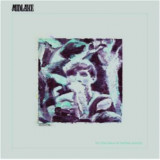
In 2020, a year shaped by stringent COVID-19 restrictions, many of us paused for thought about our collective futures. For First Light Records, this reflection, plus the support of Sound and Music's Composer-Curator programme, led to the development of Unbuilt Sound, a new series of commissions centred around acoustic ecology; the relationship between listener and environment. The first iteration of the Unbuilt Sound series sees Flora Yin-Wong retreat to an isolated cabin outside Machynlleth, North Wales, to collect the field recordings that provide the basis for her folklore-inspired album, The Sacrifice.
A collage of twisted field recordings, rich waves of synth, and whispered vocals, The Sacrifice oscillates between gentle familiarity and dreamlike distortions, inspiring a folkloric sense of place that extends across time. Softly dissonant drones envelop the sounds of rocks underfoot and rippling pools, a continuous call and response between artist and landscape. These themes are perhaps best captured on 'Willow Bends', which features spoken word written and performed by Berlin's Rachel Lyn. "Ride," she says, "these ancient and contemporary currents, carrying their secrets from up-stream. Wanderwaves, when pebbles skip across the ripples, I reflect upon it, this water mirror..."
Buscar:futures
Red Vinyl[22,48 €]
Cabaret Voltaire co-founder Stephen Mallinder's second solo outing for Dais further distills his signature fusion of minimal synth, oblique wordplay, and "wonky disco" into a riveting rhythm suite ripe for our Age of Escalation: Tick Tick Tick. Channeling the temporal malaise of lockdown through a lusher palette of modular electronics and stereo strings, the songs embrace ambiguity and plasticity, loose systems of percolating circuitry and airless funk. Recorded across a handful of sessions at Meme Tune Studios in Cornwall with frequent collaborator Benge (aka Ben Edwards), Mallinder cites no guiding aesthetic premise for the collection beyond "cowbell on every track, and entirely no reverb." From the first coiled cybernetic groove of opener "Contact," the album's spatial dynamics are disorienting and asymmetrical, alternately cold and sensual, opiated and claustrophobic. But, throughout, "rhythm is the default, the bedrock, the building block-even the melodies are rhythmic." Across 40-plus years of electronic musicianship, Mallinder's sense of timing and tempo has honed into a rare tier of mastery, limber and fluid but knotted with strange frictions. Shades of Detroit technoid industrial ("ringdropp," "Shock To The Body") crossfade into now avy punk-funk ("Guernica Gallery," "Galaxy," "The Trial"), bad trip IDM ("Wasteland"), and jittery vapor house ("Hush"), at the threshold of modes both familiar and foreign. Lyrically the record is equally evasive, rich with allusions and associative linguistics, surveying liquid notions of societal noise, ecological ruin, art world pretension, and the trials of daily life. But the lack of fixed meaning remains Mallinder's main muse: "Music should draw you in; lyrics should make you think. Most interpretation is misinterpretation." This is music of countdowns and comedowns, fleeting pleasures and opaque futures, observing the great decline while dancing on its ashes. Flux is deathless and forever; the rest, illusion: "I will be a constant figure / Flickering a moving picture / Turning in your head forever / Split apart but held together."
Black Vinyl[21,22 €]
Cabaret Voltaire co-founder Stephen Mallinder's second solo outing for Dais further distills his signature fusion of minimal synth, oblique wordplay, and "wonky disco" into a riveting rhythm suite ripe for our Age of Escalation: Tick Tick Tick. Channeling the temporal malaise of lockdown through a lusher palette of modular electronics and stereo strings, the songs embrace ambiguity and plasticity, loose systems of percolating circuitry and airless funk. Recorded across a handful of sessions at Meme Tune Studios in Cornwall with frequent collaborator Benge (aka Ben Edwards), Mallinder cites no guiding aesthetic premise for the collection beyond "cowbell on every track, and entirely no reverb." From the first coiled cybernetic groove of opener "Contact," the album's spatial dynamics are disorienting and asymmetrical, alternately cold and sensual, opiated and claustrophobic. But, throughout, "rhythm is the default, the bedrock, the building block-even the melodies are rhythmic." Across 40-plus years of electronic musicianship, Mallinder's sense of timing and tempo has honed into a rare tier of mastery, limber and fluid but knotted with strange frictions. Shades of Detroit technoid industrial ("ringdropp," "Shock To The Body") crossfade into now avy punk-funk ("Guernica Gallery," "Galaxy," "The Trial"), bad trip IDM ("Wasteland"), and jittery vapor house ("Hush"), at the threshold of modes both familiar and foreign. Lyrically the record is equally evasive, rich with allusions and associative linguistics, surveying liquid notions of societal noise, ecological ruin, art world pretension, and the trials of daily life. But the lack of fixed meaning remains Mallinder's main muse: "Music should draw you in; lyrics should make you think. Most interpretation is misinterpretation." This is music of countdowns and comedowns, fleeting pleasures and opaque futures, observing the great decline while dancing on its ashes. Flux is deathless and forever; the rest, illusion: "I will be a constant figure / Flickering a moving picture / Turning in your head forever / Split apart but held together."
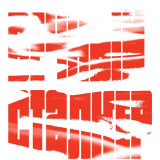
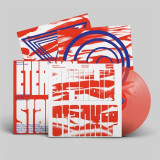
On their first official collaboration, Japanese noise pioneer Masami Akita aka Merzbow and Australian sound sculptor Lawrence English present a harrowing, surrealist portrait of nocturnal industrial activity, spawned by field recordings made in a sprawling factory complex seven hours north of English's home in Brisbane. He characterizes the area as "uneasy and unsettling," awash in the sickly glow of smelters and refinement machinery, somehow not of this world - a liminal quality vividly captured in Andrei Tarkovsky's sprawling purgatorial opus, Stalker, to which the title alludes. Akita, too, described early drafts of Eternal Stalker as feeling "like the soundtrack to a dystopian science fiction opera." A mood of mechanical dread and ruined futures permeates each of the album's seven potent compositions. Opener "The Long Dream" sets the stage with steady rain on sheet metal, punctured by thunder and metallic echoes, reverberating to the rafters in a collapsing warehouse. Quickly the tempest rises. "A Gate Of Light" and "Magnetic Traps" both convulse in churning furies of electric demolition and rattling chains, roaring and relentless. "The Visit" and "Black Thicket" operate more at a distance, surveying the topography of steam, rust, and liquid metal from above, their flickers of violence swallowed by blankets of darkness. This is noise at its most elemental and unknowable: brooding, bristling, and opaque, stalking forbidden peripheries of chaos and creation. Discussing Akita's music, English refers to its "intense substrata that is purely psychedelic; it consumes and confounds." The seasick swells of friction and fracture subsume the listener, forcing an auditory surrender: "this saturation of the senses can be a euphoria." Proof comes halfway through "The Golden Sphere," when the howling mayhem subtly recedes, revealing an eerie siren drone hovering in the void, like the resonance of a dead star galaxies away. Slowly a seething, venomous wall of volume returns, shredding the signal until its frequencies fray, whipping away into the eye of the storm. The combined effect merges obliteration and liberation, rapture and ravagement; it's the sound of dissolution as resolution, uprooted and unmoored, finally freed from form.
RIYL: Beach House, Cocteau Twins, Cigarettes After Sex, Slowdive. Isolated from any kind of music scene and enveloped by the cold Brutalism of Preston, White Flowers are a young, enigmatic band developing their own eccentricities away from the influence of big cities. New EP ‘Are You’ is a sonic and aesthetic collage drawing deeply from their environmental and social surroundings. The songs on the EP may at first seem delicate and beautiful, but closer listening reveals dark undertones and dry humour fuelled by the frustration of feeling trapped with no way out. Driven by this sense of claustrophobia, the duo have sought to create a form of escapism outside of their physical and geographical limitations. Recorded late 2021 between Preston and Bristol, ‘Are You’ weaves together a mixture of intuitive home recordings and refined studio production aided by producer Ali Chant (PJ Harvey, Portishead, Perfume Genius). The four songs on the EP are an intentional collection of contrasts and paradoxes - beauty and repulsion, calmness and mania, anxiety and stasis - all combined to form a balanced whole. Whilst influenced in part by the writings of the late Mark Fisher and his idea that we are haunted by futures that failed to happen, that what might have been may yet be the dream that saves us, White Flowers have also found inspiration in the Brutalist architecture that adorns their hometown - futuristic yet dated buildings that serve as an appropriate visual metaphor for Fisher’s theories. Bleakly imposing yet comfortingly familiar, the monochromatic starkness of these structures has fed into the imagery for the record, as well as the sounds found within. Not intending to wallow in cynicism, however, White Flowers’ art ultimately aims to provide a way out of these dystopian fever dreams and spiralling thoughts into a forward facing place.
Honeyglaze are the South London-based, Haiku-loving trio comprised of vocalist and guitarist Anouska Sokolow, bassist Tim Curtis and Yuri Shibuichi on drums.
Born out of lead songwriter Sokolow’s un-desire to be a solo act, the group met officially at their first ever rehearsal - just three days ahead of what was to become a near-residency, at their favoured Windmill in Brixton. Forming a mere eighteen-months ahead of a subsequent eighteen-months of mandatory solitude, a parallel that’s both aligned and universally un-timely, Honeyglaze, at first appearance, are a group who play with chance, time, and synergetic fate, in mannerisms few others are able to do.
Pricking the ears of seminal producer Dan Carey and his team of merry tastemakers, the Speedy Wunderground / Honeyglaze partnership would manifest into a dynamic that, despite not having met prior, quite simply just worked.
Much like the eponymously debuted statements of contemporary folk-singer Bedouine’s ‘Bedouine’, ‘Crosby, Stills and Nash’, or, dare we suggest Madonna’s ‘Madonna’, ‘Honeyglaze’ the album presents to the world an audibly picturesque documentation of soul-searching, in all its figment’s of reality; a proclamation of cultivated intent which in turn creates a subliminal safe-space between relatability and self-projection, and creative-comradery paired with introspective artistry.
A self-described “opposite to a concept album” that sonically encapsulates the who, what, where and how of their individual circumstances coming together as one, Honeyglaze is a meticulously transformative feat of which, in their own eyes, is a “quite accurate” sonic encapsulation of who the trio believe to be.
This is storytelling at its most soulful, and ‘Honeyglaze’ presents human instinct in a manner that accepts all of the insecurities that come from their present adolescence, whilst acknowledging the formative maturity that’s earned when we allow ourselves to embrace the unknown, of our futures ahead.
“If someone is going to find you special - then you want to show what’s most special about yourself,” notes Curtis. “Then you can do what you want from there.”
Mixing the personal with romanticised ideals in ways that are simultaneously heart-wrenching, and humorous to a dead pan effect, there is no one trajectory for Honeyglaze, whose greatest ability is finding ways to present what’s written in-between the lines, in moments of beautifully well-versed clarity.
In their own words: “Hi we are Honeyglaze, and there’s no time to explain.”
The Wastelands' is an album of material made around the same period as 'The Entire City' though never released commercially. The album expands on 'The Entire City's shadowy, futurescape, featuring foreboding, percussive songwriting, with euphoric choral swells. 'The Wastelands' also features the captivating photo collage artwork of British artist, Suzanne Moxhay.
Transparent Blue vinyl (Limited to 500). DENT is the fifth LP from Cleveland, OH rock band Signals Midwest, recorded by J. Robbins (Against Me!, Jets to Brazil, The Promise Ring). Inspired by a stolen and ultimately totaled van, the album confronts the uncertainty of a world at halt, and transmits the shaken-up-soda-can energy that fueled its writing process. With a feedback squeal and a quick four-count, DENT hits the ground running, and what follows is just over a half-hour's worth of big songs about little moments, ominous futures, the lure of nostalgia, and finding shards of peace in an almost all-consuming wreckage. In a world up in flames, DENT is a project born from the ashes. ABOUT SIGNALS MIDWEST: Signals Midwest is a loud, smiley punk rock band, made up of Maxwell Stern on guitar and vocals, Steve Gibson on drums and backup vocals, Jeff Russell on guitar, and Ryan Williamson on bass, all (he/him). Signals Midwest has been creating punk/indie music in Cleveland, OH since 2008, and is about to release their 5th album.
EVEN THE CHIMERA is the debut album by Wild Terrier Orchestra, a new project by Dimitris Papadatos, aka Jay Glass Dubs, based on interchangeability and open improvisation. A newer, freer incarnation of Papadatos’ creative intent, the project acts more like an open container of disparate and idiosyncratic contributions from a mutable cast of musicians and artists. Often times not provided according to a pre-planned structure, these contributions are actually more likely to arrive in the form of free improvisations, unconnected musical segments and fragmented splinters of sound. This allows Papadatos to aggregate all the constituent parts according to an intuitive process that bridges between the detailed craft of electronic music production and surrealist techniques such as the Cadavre Exquis and the Cut-Up. It’s both a harmonization of contrasting tones and a research for commonality within difference, although none of the wild terriers are ever nearly tamed. Unsurprisingly, the main inspiration for this new chapter came from a a pinnacle of avantgarde literature: poet Andreas Embirikos’, considered Greece’s first surrealist and all-out paradoxical figure. Specifically, this release is guided and instigated by his poem OKTANA, in which Embirikos inscribes a manifesto for a hedonistic utopia years ahead of any accelerationist theories, bursting with contradicting presences and mutating identities. Written in the aftermath of the Greek civil war, the poem calls for a time of eternal poetry and spiritual intoxication that can only be reached through a painful process of violent deconstruction. Thus, EVEN THE CHIMERA was born: a culmination of Papadatos’ decades long research on traditional Greek and Byzantine music, free jazz and free improvisation. Firmly spread between two side-long tracks, the contributions of American singer and musician Cruel Diagonals on vocal duties as well as Greek artist and musician Fotini Korre on ney suggest the existence of a filament that connects the west and the east through the creation of ‘’possible musics’’. This happens in accordance to Papadatos’ practice of a counterfactual approach to the process of what music history dictates. It is also directly shaped by the musician’s frequent dwellings in the isle of Cyprus, a land in which the clash of worlds and culture has often taken both violent and beautiful shapes. The long drones, acoustic ghosts and unbalanced choirs that form the album seem to call from the Mediterranean itself, not only from its history but also from its possible futures and unreal narrations, invoking it as a nexus of diversity and possibility.
Another new colour pressing we have 200 only white vinyl coming in Mrch. Single LPs w/ printed inner sleeve + lyric insert and Download card. The Armed return with their first new album in over three years and Sargent House debut, ULTRAPOP. The album reaches the same extremities of sonic expression as the furthest depths of metal, noise, and otherwise "heavy" counterculture music subgenres but finds its foundation firmly in pop music and pop culture. As is always The Armed's mission, it seeks only to create the most intense experience possible, a magnification of all culture, beauty, and things. The band goes on to explain, "crafting vital art means presenting the audience with new and intriguing tensions sonically, visually, conceptually. Over time and through use, those tensions become less novel and effective and they become expectations. The concept of "subgenre" becomes almost the antithesis of vitality in art itself a fetishization of expectation. ULTRAPOP seeks, in earnest, to create a truly new listener experience. It is an open rebellion against the culture of expectation in "heavy" music. It is a joyous, genderless, post-nihilist, anti-punk, razor-focused take on creating the most intense listener experience possible. It's the harshest, most beautiful, most hideous thing we could make." ULTRAPOP follows their recent contribution to the Cyberpunk 2077 soundtrack “Night City Aliens” and 2018’s critically acclaimed album Only Love, which landed on ‘Album of the Year’ lists from The Atlantic, Pitchfork, Rolling Stone, Vice, Stereogum, and many more. The album was co-produced by the band's own Dan Greene in collaboration with Ben Chisholm (Chelsea Wolfe) and features contributions from Mark Lanegan, Troy Van Leeuwen (Queens of the Stone Age, A Perfect Circle), Ben Koller (Converge, Killer Be Killed, Mutoid Man) and many more. Kurt Ballou (Converge, High on Fire, Russian Circles) remains at the helm as executive producer. An interactive ARG campaign with numerous stages of engagement is underway and will continue through release. A website, media mailings and various social media interactions are leading fans to find easter eggs including songs, album info, videos and much more. A livestream performance confirmed for same day. Videos for all three focus tracks (“All Futures”, “Average Death” + “An Iteration” are completed and will be released along with each song.
Loss and hope, isolation and communion, the cessation and renewal of purpose. Timeless and
salient, these themes echo throughout the fifth album from Midlake, their first since ‘Antiphon’
in 2013.
From the cover to the title and beyond, a longing to reconnect with that which seems lost and
seek purpose in its passing sits at the record’s core. The cover star is keyboardist/flautist Jesse
Chandler’s father, who, tragically, passed away in 2018. As singer Eric Pulido explains, “He
was a lovely human, and it was really heavy and sad, and he came to Jesse in a dream. I
reference it in a song. He said, ‘Hey, Jesse, you need to get the band back together.’ I didn’t
take that lightly.”
A desire to commune with the past and connect with present, lived experience asserts itself
from the opening of the album. ‘Bethel Woods’ sustains and develops that reconnection,
evoking the steadfast and contemplative urgency of ‘The Trials of Van Occupanther’ to back a
lyric steeped in yearning for a paradisal time and place of hope and optimism. Soaring guitars
and atmospheric noise effects extend a sonic scope further developed by ‘Glistening,’ where
arpeggios dance like light glancing off a lake. In just three songs, Midlake reintroduce
themselves and reach out into fresh territory with a richly intuitive dynamism, honouring their
past as a seedbed of possibility.
Elsewhere, the prog-enhanced funk-rock of ‘Gone’ seeks to find hope in relationships that
seem fragile. The ELO-esque ‘Meanwhile…’ draws inspiration from what happened when
Midlake paused after ‘Antiphon’, developing universal resonance as a song about the beautiful
growths that can emerge from the cracks and gaps between things. ‘Dawning’ draws on 1970s
soft-rock stylings for another song searching for hope, its keyboard line reaching out towards
an uncertain future while everything seems to collapse around it; ‘The End’ reflects on the
difficulties of partings.
On-hand was new collaborator John Congleton, who produced, engineered and mixed the
album, marking Midlake’s first record with an outside producer. “I can’t say enough just how
much his influence brought our music to another sonic place than we would have,” says Pulido.
“I don’t want to record without a producer again. Part of that is the health of the band, because
as you get older you get more opinionated and you kind of need that person who says, ‘No, it’s
going to be this way!’ It’s hard to do that with your friends.”
The result is a powerful, warming expression of resolve and renewal for Midlake, opening up
new futures for the band and honouring their storied history. Formed in the small town of
Denton, with roots in the University of North Texas College of Music, Midlake delivered an
auspicious debut with 2004’s ‘Bamnan and Slivercork’. For the follow-up, they looked further
afield and deeper within to deliver 2006’s wondrous ‘The Trials of Van Occupanther’, a modern
classic pitched between 1871, 1971 and somewhere out of time: between Henry David
Thoreau and Neil Young’s ‘After the Gold Rush’, between 1970s Laurel Canyon thinking and a
longing for something more mysterious.
Confidence bolstered by a growing fanbase and a developed sense of their own far-reaching
abilities, Midlake - a band acutely attuned to seasonal shifts - then embraced change. In 2010,
they visited darker psych-folk thickets for ‘The Courage of Others’ and backed John Grant on
his lustrously spiky breakthrough album, ‘Queen of Denmark’. When singer Tim Smith departed
Midlake in 2012, Pulido stepped up to the lead vocal role for 2013’s freshly exploratory
‘Antiphon’, teasing out singular routes through vintage electric-folk pastures.
In reuniting, the bandmates were adamant that Midlake needed their absolute focus. The result
is an album of tremendously engaged thematic and sonic reach with a warm, wise sense of
intimacy at its heart: an album to break bread and commune with, honour the past and travel
onwards with. In ‘Bethel Woods’, Pulido sings of gathering seeds. On ‘For the Sake of Bethel
Woods’, those seeds are lovingly nurtured, taking rich and spectacular bloom.
LP pressed on 180g vinyl in a gatefold sleeve printed on matt card and printed inner sleeve
with lyrics and digital download card.
Loss and hope, isolation and communion, the cessation and renewal of purpose. Timeless and
salient, these themes echo throughout the fifth album from Midlake, their first since ‘Antiphon’
in 2013.
From the cover to the title and beyond, a longing to reconnect with that which seems lost and
seek purpose in its passing sits at the record’s core. The cover star is keyboardist/flautist Jesse
Chandler’s father, who, tragically, passed away in 2018. As singer Eric Pulido explains, “He
was a lovely human, and it was really heavy and sad, and he came to Jesse in a dream. I
reference it in a song. He said, ‘Hey, Jesse, you need to get the band back together.’ I didn’t
take that lightly.”
A desire to commune with the past and connect with present, lived experience asserts itself
from the opening of the album. ‘Bethel Woods’ sustains and develops that reconnection,
evoking the steadfast and contemplative urgency of ‘The Trials of Van Occupanther’ to back a
lyric steeped in yearning for a paradisal time and place of hope and optimism. Soaring guitars
and atmospheric noise effects extend a sonic scope further developed by ‘Glistening,’ where
arpeggios dance like light glancing off a lake. In just three songs, Midlake reintroduce
themselves and reach out into fresh territory with a richly intuitive dynamism, honouring their
past as a seedbed of possibility.
Elsewhere, the prog-enhanced funk-rock of ‘Gone’ seeks to find hope in relationships that
seem fragile. The ELO-esque ‘Meanwhile…’ draws inspiration from what happened when
Midlake paused after ‘Antiphon’, developing universal resonance as a song about the beautiful
growths that can emerge from the cracks and gaps between things. ‘Dawning’ draws on 1970s
soft-rock stylings for another song searching for hope, its keyboard line reaching out towards
an uncertain future while everything seems to collapse around it; ‘The End’ reflects on the
difficulties of partings.
On-hand was new collaborator John Congleton, who produced, engineered and mixed the
album, marking Midlake’s first record with an outside producer. “I can’t say enough just how
much his influence brought our music to another sonic place than we would have,” says Pulido.
“I don’t want to record without a producer again. Part of that is the health of the band, because
as you get older you get more opinionated and you kind of need that person who says, ‘No, it’s
going to be this way!’ It’s hard to do that with your friends.”
The result is a powerful, warming expression of resolve and renewal for Midlake, opening up
new futures for the band and honouring their storied history. Formed in the small town of
Denton, with roots in the University of North Texas College of Music, Midlake delivered an
auspicious debut with 2004’s ‘Bamnan and Slivercork’. For the follow-up, they looked further
afield and deeper within to deliver 2006’s wondrous ‘The Trials of Van Occupanther’, a modern
classic pitched between 1871, 1971 and somewhere out of time: between Henry David
Thoreau and Neil Young’s ‘After the Gold Rush’, between 1970s Laurel Canyon thinking and a
longing for something more mysterious.
Confidence bolstered by a growing fanbase and a developed sense of their own far-reaching
abilities, Midlake - a band acutely attuned to seasonal shifts - then embraced change. In 2010,
they visited darker psych-folk thickets for ‘The Courage of Others’ and backed John Grant on
his lustrously spiky breakthrough album, ‘Queen of Denmark’. When singer Tim Smith departed
Midlake in 2012, Pulido stepped up to the lead vocal role for 2013’s freshly exploratory
‘Antiphon’, teasing out singular routes through vintage electric-folk pastures.
In reuniting, the bandmates were adamant that Midlake needed their absolute focus. The result
is an album of tremendously engaged thematic and sonic reach with a warm, wise sense of
intimacy at its heart: an album to break bread and commune with, honour the past and travel
onwards with. In ‘Bethel Woods’, Pulido sings of gathering seeds. On ‘For the Sake of Bethel
Woods’, those seeds are lovingly nurtured, taking rich and spectacular bloom.
LP pressed on 180g vinyl in a gatefold sleeve printed on matt card and printed inner sleeve
with lyrics and digital download card.
Carl Finlow keeps on keeping on. As the world changes around him, the veteran producer continues to do what he does best - craft top-quality electro tunes which invoke the sound's Drexciyan heyday, yet carry themselves with an assurance that is all of Finlow's own.
Finlow remains a prolific producer more than a quarter of a century on from his emergence. Still averaging several records a year across a variety of aliases, recent times have seen Finlow forge particularly strong links with the Central Processing Unit label. Now, after a run of EPs for the Sheffield imprint which began with 2018's 'Projections', Finlow's Silicon Scally project offers up CPU's first drop of 2022 in the form of the 'Field Lines' LP.
Silicon Scally productions have long been marked out by how they combine piston-precise beat programming with more textured synth play. 'Field Lines' runs with this formula to deliver some of Finlow's most atmospheric material to date. At once shadowy and expansive, listening to 'Field Lines' is the aural equivalent of taking a night-time drive around some futuristic metropolis.
The beats cruise sleekly here. Many of these burbling machine-funk numbers hover at mid-tempo, the crisp clip of their drum programming given shape and depth by all sorts of percussive tones fizzing around at the fringes of the mix. Even when 'Field Lines' seems to set its sights on the club - the Bunker Records-aping 'Amino', for instance, or the dystopian whizz-bang of 'Static Fire' - the tracks here strut sturdily rather than giving in to full-on freakouts.
However, from this sturdy base, Finlow moves outwards. Working with tones which range from rapid-fire machine-gun bass to keening, dawn chorus keyboard pads, Finlow leads us through the futurescape with the expertise of a seasoned guide. Cuts like 'Submerged' and 'Yield' are brilliantly cinematic, blooming from those reliable drum pulses into miniature masterpieces of nocturnal electronics. Elsewhere on 'Field Lines' there is a mechanical majesty to 'Inhibitor' and 'Altered Domain' which invokes the brave new worlds that Kraftwerk repeatedly conjured in their heyday.
Central Processing Unit's first release of 2022 is 'Field Lines', an LP of electro-funk explorations from Carl Finlow's Silicon Scally project which will thrill regardless of whether it's experienced through headphones or out on the dancefloor.
RIYL: Drexciya, Kraftwerk, Cygnus, Annie Hall
printed spined outer sleeve, plain inner, 12-page booklet
Mit ihrem neuen Studioalbum zelebrieren Bastille das Lebensgefühl im digitalen Zeitalter – sie feiern das Menschsein in der Tech-Ära und fangen dieses seltsame Gefühl ein, in einer Welt zu leben, die sich manchmal wie Science-Fiction anfühlt.
„In dieser apokalyptischen Phase an diesen neuen Songs zu arbeiten, wo plötzlich jeder zu Hause festsaß, rund um die Uhr vor dem Bildschirm, machte das Gefühl, dass es zunehmend schwerer wird zu
unterscheiden, was nun wirklich ist und was nicht, nur noch stärker“, so der Singer Songwriter Dan Smith. Das Album ist durchzogen mit Anspielungen und Referenzen aus Sci-Fi-Filmen und -Romanen sowie aus den Bereichen Videogames und Virtual Reality. Alles dreht sich um grenzenlose Möglichkeiten und einen fiktiven (aber durchaus vertraut wirkenden) Tech-Giganten namens Future Inc., verantwortlich für eine Erfindung namens Futurescape: ein Gerät, mit dem User:innen die eigenen Träume virtuell ausleben können.
Mit „Give Me The Future“ entführen Bastille ihre Hörer:innnen also in ein Sci-Fi-Wunderland, in dem alles möglich ist. Ihr viertes Studioalbum erscheint als CD und 12“ Vinyl.
Recommended if you like: Com Truise, Toro Y Moi, Tycho, Tourist. British Columbia producer Jamison Isaak didn’t anticipate an adulthood of globe-trotting songcraft, but teenage exposure to iconic French house music videos cast a spell on him that still holds: “I knew then this is what I wanted to do'’ Catalyzed by synthetic sights and sounds from oceans away, he patiently taught himself primitive software and recording programs, reverse engineering the heady, swooning horizons of the dance music that had permanently bewitched him. A decade later, having amassed an expansive discography of soft-focus synth pop and romantic electronic a crisscrossing the planet many times in the process the subtext of his project’s journey rings clear: “Teen Daze is dream fulfillment'’ Enter Interior. An ode to electric futures glimpsed in ecstatic heights, from bedrooms to big rooms, it’s an album of first loves refracted through prisms of wisdom, wounds, and wonder. Filter house and flashing lights; soft acid and vaporous neon; bumping clubs in spiral towers: “Like what the teenagers in Akira might be listening to'’ Collaborative cameos by multi-instrumentalist Joseph Shabason (on sublime fantasia opener “Last Time In This Place”) and vocalist Cecile Believe (on the glitch-glamorous anthem “2AM (Real Love)”) evocatively expand the record’s palette but otherwise Interior is Izaak’s love letter to his own artistic awakening, to the paradigm shifts inherent in youthful discovery and remote dreaming — your world exploded, your life forever changed. Years of devotion and divergence have honed his craft radically; tracks like “Nite Rune “Nowhere and“Translation”are among the most supreme bangers in the entire Teen Daze canon, a delirious fusion of textural finesse and emotional transcendence. It’s music of skylines, escape, and sensual energy, forever cresting through nights that never end.
Geese are a band that begins and ends in Brooklyn, as a
project between friends to build a home studio out of a
basement.
Their debut album, ‘Projector’ (from which this single is
taken), is born from the same ambition: make music by
any means necessary. The songs were recorded with
sneakers as mic stands and blankets draped over the
amps, all within the afternoon following a school day, up
until they ran the risk of noise complaints.
As a result, ‘Projector’ is as much a moment in time as it is
an album. It represents five teenagers whose love of
music touches every part of their lives: their restless
anxiety about their futures, and their pent-up frustration
with their present - a perspective all too familiar in today’s
uncertain world. Perhaps then it only makes sense that the
figure on the album cover was born from a dream:
curiously alien, yet strangely familiar.
Creative direction by Matt De Jong and Jamie JamesMedina (Fontaines D.C., Arlo Parks, Mura Masa, FKA
Twigs).
Two sold out London shows at The Windmill and The
Sebright Arms. First time ever playing in the UK.
7” features ‘Low Era’ on the A side and a never before
heard bonus track called ‘Smoke In Japan’ on the B side.
Geese are a band that begins and ends in Brooklyn, as a
project between friends to build a home studio out of a
basement.
Their debut album, ‘Projector’ is born from the same
ambition: make music by any means necessary. The
songs were recorded with sneakers as mic stands and
blankets draped over the amps, all within the afternoon
following a school day, up until they ran the risk of noise
complaints.
As a result, ‘Projector’ is as much a moment in time as it is
an album. It represents five teenagers whose love of
music touches every part of their lives: their restless
anxiety about their futures, and their pent-up frustration
with their present - a perspective all too familiar in today’s
uncertain world. Perhaps then it only makes sense that the
figure on the album cover was born from a dream:
curiously alien, yet strangely familiar.
Creative direction by Matt De Jong and Jamie JamesMedina (Fontaines D.C., Arlo Parks, Mura Masa, FKA
Twigs).
Two sold out London shows at The Windmill and The
Sebright Arms. First time ever playing in the UK
Geese are a band that begins and ends in Brooklyn, as a
project between friends to build a home studio out of a
basement.
Their debut album, ‘Projector’ is born from the same
ambition: make music by any means necessary. The
songs were recorded with sneakers as mic stands and
blankets draped over the amps, all within the afternoon
following a school day, up until they ran the risk of noise
complaints.
As a result, ‘Projector’ is as much a moment in time as it is
an album. It represents five teenagers whose love of
music touches every part of their lives: their restless
anxiety about their futures, and their pent-up frustration
with their present - a perspective all too familiar in today’s
uncertain world. Perhaps then it only makes sense that the
figure on the album cover was born from a dream:
curiously alien, yet strangely familiar.
Creative direction by Matt De Jong and Jamie JamesMedina (Fontaines D.C., Arlo Parks, Mura Masa, FKA
Twigs).
Two sold out London shows at The Windmill and The
Sebright Arms. First time ever playing in the UK
Gatefold double LP. Black Vinyl. No DL Code is out in January, 1000 copies available. Since 2006 Maybeshewill have released four full-length albums of towering, cinematic instrumental music. After a decade long career that saw them tour across four continents they bowed out in 2016 with a sold out show at London’s Koko. Having reformed briefly in 2018 at the request of The Cure’s Robert Smith for a show at Meltdown Festival, 2021 sees the band return with their first new material since 2014’s Fair Youth. Having worked on ideas separately in the intervening years, it was the sketches of music that would become ‘No Feeling is Final’ that pulled the band back together. Building on the songs that they felt needed to be heard, together. ‘No Feeling is Final’ was born from a place of weary exasperation. From the knowledge that we’re living in a world hurtling towards self-destruction. We watch as forests burn and seas rise. As the worst tendencies of humanity are championed by those in power; rage, fear, greed and apathy. We see every injustice, every conflict, every catastrophe flash up on our screens. We stay complacent and consume to forget our complicity in the structures and systems that sustain that behaviour. As the world teeters on the edge of disaster, we sigh and keep scrolling, the uneasy feeling in our stomachs eating away at us a little more each day. However easy it would be to switch off and pretend all is lost, there’s no choice but to remain engaged. To set that feeling of hopelessness aside and use the fear and frustration as fuel to make something positive. ‘No Feeling is Final’ is a message of hope and solidarity. It’s a story of growing grassroots movements across the world that are rejecting the doomed futures being sold to us, and imagining new realities based on equality and sustainability. It’s a reckoning with the demons in our histories and a promise to right the wrongs of the past. It’s a plea to take action in shaping the world we leave for future generations. It’s a simple gesture of reassurance to anyone else struggling in these troubled times: “Just keep going. No feeling is final.” Continuing and building on the self-sufficient, do-it-yourself ethos that has been core to their existence, ‘No Feeling is Final’ was once again recorded and produced by bassist Jamie Ward, and released on the bands own Robot Needs Home Collective Label, in collaboration with close friends Wax Bodega (North America), New Noise (Asia) and Birds Robe (Australasia).