For his last solo record ‘Through a Room’, Bill Nace shifted his usual saturated guitar sound and added tapes, hurdy gurdy, doughnut pipe, bird calls and the mysterious Japanese taishōgoto. Setting up for the final night of his three day residency at OTO with only the taishōgoto soundchecked, Nace hoped that Parker would arrive with his small soprano as its opposite. “I’ve been interested in state change, you know, playing until there’s a shift in time.” Known for his development of multiphonics to produce a constantly shifting pattern, Evan Parker has evolved an instantly recognizable sound - his work the soprano most distinct. Happily, it was the soprano Evan brought with him and as soon as the two start to play they entwine - taking off in a double helix of keys and reed primed for endless reconfiguration. Space warps under the velocity of playing, the pitch rising unrelentingly. It felt like unending lift off in the room, sheer energy until the last note makes remember your feet have been on the floor the whole time. Total time bending shredding.
–
"They had never played together before. They had never even met each other before this springtime 2024 concert at London’s Café Oto.
Evan Parker, circular breathing maestro of the saxophone, a legend in the universe that is Free Improvisation since the late 1960s and Bill Nace, one of the most intriguing experimental “noise” guitarists of the 1990s/2000s underground scene.
For those of us who have been enamored by the live and documented work of both these gents, this Café Oto duo was a must-hear event. It could have gone anywhere musically and that would have been totally fine. Particularly with Evan having a history of being thrown into a variety of challenging collaborations throughout his career, employing the learned elegance of trust in his own sensitivity to listening, responding, leading, following, sparring, intertwining, dialoguing, creating in the instant and, essentially, dignifying the non-hierarchical grace of chance.
The aesthetics of socialist consideration in Evan Parker’s playing, in his community of expanded and personal technique, for a younger player such as Bill Nace, strikes an exemplary model. This notion of respect would be entirely the reason Nace, when offered a residency at the most critical “new music” room in England, would request to play in duo with Parker.
Bill Nace came to prominence mostly during the apex of experimental music activity in and around Western Massachusetts in the early days of the aughts, with a focus on visual art and free improvisation guitar action. He could be found in the daytime hours, his head hanging down over a notepad, penning fine-tuned illustrations and abstract line drawings, while in the evenings he’d be attending any number of basement noise gigs, many of which he’d be participating in. His guitar style came across as being informed as much as by the physicality of his writing utensils in friction to the page as it was to his hearing and redefining of radical recordings ranging anywhere from the Black Unity Group to Black Flag.
Utilizing various metal files and other small cylindrical objects Bill would allow his guitar and amplifier to be in tandem with the improvisatory movements of his body as the instrument balanced, intentionally and, at times, precariously, upon his lap. The performances came across thrilling and daring and they would be mostly in the context of venues nothing more than a low-ceilinged damp and dank New England basement, a clutch of people hanging onto rusty pipes or sitting up on dilapidated washer/dryer machines, the shards of Bill’s “file guitar” sounds ringing out like the most alive music on Earth.
By the time Bill reached Café Oto in early 2024 he had relocated to Philadelphia all the while releasing a succession of collaborative LPs on his Open Mouth label to present his developing progression of solo and collaborative work. He also would find himself considerably engaged with playing the electric taishōgoto, a keyboard-activated string instrument from Japan which can exist as a one, two, four, five, or six string oblong sound object. Bill’s approach to the taishōgoto would not be too unlike his approach to the traditional electric guitar, though no outboard implements such as files, sticks, and rocks are utilized. The similarity would lie wholly with Bill’s full immersion of high velocity action-playing where, with the taishōgoto, an electric drone beauty occurs. The flurry of sonics and resultant harmonics emanating from the amplifier (which Bill opts to dial into with borderline loud-as fuck volume settings) furthers the meta-mantra properties of the instrument in an astounding display of drone dynamism.
This sound world of Bill’s two-stringed taishōgoto on this Café Oto night worked beautifully with Evan Parker’s improvisatory saxophone conceptions. The duology achieved instant lift off at ground zero only to find it’s eventual finale as if it were organically ordained. Time seemingly morphed from its ancient human construct of control, rendered inconsequential to the torrential transcendence of the room wildly activated by the magic resonance of the multi-directional pan-spatial sonance of the music as if it were some beatific blessing. It was one of those nights where art as a liberating force of spirit gifted the listeners with an offering of exaltation and joy. It was entirely mystical and mind blowing. A night of Total Music."
Thurston Moore, London, 2025
Suche:g machine
- Roadmap
- Icebreaker
- Again
- New York Attitude
- Underground
- The Lemur
- Tilværelse
- What Get's You
The project is co-led by Copenhagen-born saxophonist Andreas Toftemark, a European Jazz Master and recipient of the Bent Jædig Prize, whose career has taken him from the Conservatorium van Amsterdam to The New School in New York. He is joined by Benny Benack III, the multi-award winning Emmy-nominated trumpeter and vocalist lauded for his charismatic performances with the likes of Christian McBride, Chad Lefkovitz-Brown, Peter Bernstein and more. Rasmus Sorensen adds a vital piano voice, fresh from winning a Danish Music Award in 2024 and releasing Balancing Act (2024) featuring modern drum icon Kendrick Scott. On bass, Finnish talent Kaisa Mäensivu - leader of her own project Kaisa"s Machine - brings international credentials shaped at the Sibelius Academy, Manhattan School of Music, and festivals including Pori Jazz. Completing the lineup is New York drummer Joe Peri, a Grammy-winning artist featured on Tony Bennett & Lady Gaga"s Love for Sale and a familiar face at Birdland, Mezzrow, and other NYC institutions. Together, they craft Roadmap - a set of originals born from tours around the Copenhagen Jazz Festival and honed on the road. Each member contributes compositions: from Toftemark"s modal-driven title track and brisk swinger What Gets You to Peri"s hard-hitting opener Icebreaker, Mäensivu"s funk-tinged The Lemur, and Sorensen"s harmonically dense New York Attitude. The quintet also delivers moments of intimacy, with Again - a co-write between Toftemark and Benack - adding lyrics penned on tour and sung with understated warmth. As Benack reflects: "When I play with Andreas, I"m thinking of Joe Henderson and Kenny Dorham, of Clifford Brown and Harold Land. But this isn"t just a revival of a classic hard bop record-the heart and soul of it is the Copenhagen-New York connection."
- 1: War Profiteering Is Killing Us All
- 2: Capitalist Suicide
- 3: Ghost On Sunset Strip
- 4: Junk
- 517: % 18-25
- 6: Capsule (Aka Requiem For The Stupid Human Race)
- 7: All Systems Fail
- 8: Red Flag
- 9: Nuclear Generators
- 10: Bottomed Out
- 11: Rebellion Is On The Clearance Rack (And I Think I Like It)
- 12: Hands Tied
- 13: I Went On Tour For Ten Years...and All I Got Was This Lousy T-Shirt
- 1495: % Of The World Is Third World
Nach gefeierten Auftritten bei den BBC Proms, im Kölner Dom und auf der New York Fashion Week veröffentlicht die Organistin, Chor-Leiterin und Influencerin Anna Lapwood ihr aktuelles Album Firedove jetzt auf Vinyl. Neben den beliebtesten Stücken des Albums sind auch zwei neue Stücke dabei, die extra für die Vinyl aufgenommen wurden: "Nimbus" von der indonesischen Komponistin Eunike Tanzil und eine Toccata von Eugène Gigout.Für ihr Album "Firedove" hat Anna Lapwood neue Arrangements zeitgenössischer Stücke von u.a. Hans Zimmer, Rachel Portman oder Alan Menken aufgenommen. Dabei ist Anna Lapwood nicht nur an der Orgel zu hören, sondern leitet bei den Stücken "Come to Me", "Firedove" und "Make You Feel My Love" auch den Chapel Choir of Pembroke College Cambridge. Beim Stück "Flight" wird Anna Lapwood von der Saxofonistin Jess Gillam begleitet. "Firedove" wurde in den Nachtstunden im Nidaros Dom aufgenommen, einer spektakulären gotischen Kathedrale aus dem 11. Jahrhundert in Trondheim, Norwegen."Ich wollte ein Album schaffen, bei dem die Hörer nie genau wissen, wohin es als nächstes geht. Es gibt viele kleine 'Easter Eggs', die man nicht erwarten würde - so der erste Auftritt des Chors. Ich habe das Gefühl, dass ich endlich gefunden habe, was ich als Künstlerin sagen möchte. Ich bin sehr stolz darauf", erklärt Anna Lapwood.Als roter Faden durchzieht "Firedove" das Motiv des Fliegens und der Entfaltung - ein Sinnbild für Anna Lapwoods künstlerische Entwicklung. Sie ist ein Phänomen. Mit der Orgel der Royal Albert Hall, an der sich fast jede Nacht übt, begeistert sie eine neue Generation von Musikfans auf Instagram und TikTok für ihr gemeinhin als altmodisch geltendes Instrument. Sie hat sich damit nicht nur Millionen Fans auf Social Media erspielt, sondern wurde auch zu Kollaborationen mit Bonobo, MRAYE, Florence & The Machine und Aurora eingeladen. Selbst Tom Cruise besuchte sie bei einer ihren nächtlichen Proben, was zu einer spontanen Orgelstunde führte. 2024 wurde sie für ihr Debüt-Album "Luna" mit einem Opus Klassik ausgezeichnet. Neben ihrer Tätigkeit als Organistin wurde sie mit 21 Jahren zur Musikdirektorin am Pembroke College in Cambridgeshire ernannt und war damit die jüngste Person, die jemals diese Position an einem College der Universitäten Oxford oder Cambridge innehatte und leitete neun Jahre lang deren Chöre.
Brand new music from the space cavern for 2025. "Intersatelital" is the new exploration in sound from Vinnum Sabbathi, encompassing the relationship between us humans and the machines we have created to aid in our quest towards the expansion and conquest of space beyond our home planet, taking special focus on a pivotal point in time for Mexico. Back in 1985, two satellites (Morelos I & II) were put in orbit under the NASA missions STS-51-G and STS-61-B. These satellites became crucial for advancing communications in Mexican territory and were controlled and monitored by Mexican engineers in the heart of Mexico City. Mission STS-61-B also featured the first-ever Mexican astronaut, Dr Rodolfo Neri, who set several experiments in orbit as well as taking photo documentation of the country from space, and, with all of this, Mexico entered a new era of technology and communications. A sonic testament of the intricate human-machine comradeship from the last century.
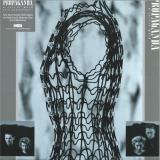
Die deutsche Synthie-Pop-Band Propaganda wurde 1982 in Düsseldorf gegründet. 1983 unterschrieb sie
einen Vertrag bei ZTT Records und veröffentlichte 1984 ihre erste Single „Dr. Mabuse“. Es folgte das
Debütalbum „A Secret Wish“, von dem die beiden Singles „Dr. Mabuse“ und „Duel“ in die britischen
Top 30 kamen. Das von Mertens und Dörper geschriebene Album „A Secret Wish“ erhielt viel Lob von
Kritikern und erreichte Platz 16 der britischen Albumcharts. Auf das Album folgte die Single „p:Machinery“,
die in Italien, Frankreich, den Niederlanden, Deutschland und der Schweiz ein Hit wurde. Anschließend
verbrachte die Gruppe den Rest des Jahres auf ihrer „Outside World“-Tournee durch Europa und Amerika.
Im November 1985 erschien das Remix-Album „Wishful Thinking“. Ursprünglich war das Album für den
amerikanischen Club-Markt gedacht, es wurde jedoch auch in Europa veröffentlicht. Das von ZTT-Experte
Ian Peel zusammengestellte und kuratierte Box-Set enthält neben dem Album eine Auswahl seltener Mixe,
unveröffentlichter Titel und einiger Live-Aufnahmen. Das Booklet in der kompakten, stabilen CD-Box
enthält eine Notiz von Ian Peel über die Geschichte der Band und den Einfluss, den das Album im Laufe
der Jahre hatte. Die Veröffentlichung wird von einer limitierten 1-LP-Version und einer Blu-ray (SDEExklusiv) begleitet, die einen neuen Atmos-Mix von David Kostin enthält.
The first ASFON release has been a year-long labour of love that has come into being from what felt like a lucid dream, off in the distance, too crazy to believe was real. From our first meeting in the Freerotation yurt to late-night exchanges in Bristol, Winkles (Jamie Slater) has been sharing tracks that lingered long after the party ended. Their raw textures and warped sense of time found a natural home in our sets, eventually leading to the emergence of ‘The Unavoidable EP’, a collection of four diverse tracks which form a singular, immersive experience.
On A1 journey, The Unavoidable Consequence Of Familiarity, a knocking kick opens the door to this new sound world, introducing us to the granular clicks, crazed telephony and vocoded grunts which populate the deep space of Winkles’ imagination. Machines whir and perception shifts in the space between distant synth stabs, while a pulsating bassline battles to break through the filter and create a throbbing low end. Hallucinatory and deep, this is the perfect introduction to both the EP and the ASFON outlook.
Semi Stretches sees Winkles pick up a signal from beyond the outer rim, fire up the hyperdrive and lock into the rolling hum of intergalactic techno. Juggernaut bass forms the perfect counterpoint to the rapid fire rim shots trembling away up top as this Venusian club craft battles static, drives through the milky cosmic and transports the dancing bodies to a Multicoloured Plasticine Universe.
Cutting the engines and switching to suspended animation, Winkles lets us drift through a hazy dream-space where there’s no up or down, where twinkling arps, insectile electronics and hazy sirens coalesce into a psychotropic swirl.
Out of this multicoloured mirage comes Osaka-based astral traveller Erik Luebs, who translates that peak-time ambient bubbler into a Balearic chugger which emerges from the ether to add another dimension to the EP. Rubberised bass, velvet pads and nuanced percussion ensure this is perfect for poolside play in a land of pink sand and sideways tides.
DOUBLE VINYL
The full album on vinyl for the first time, packaged with the classic original Designers Republic artwork
ABOUT
To celebrate the 20th anniversary, Collabs 3000: Metalism, the original classic pure techno album and first full-length collaboration between techno innovators Chris Liebing and Speedy J, is remastered and reissued via NovaMute.
Originally launched by Speedy J (aka Jochem Paap) as a platform for 12" collaborations with other artists, the Collabs series laid the groundwork for what would become one of techno's most compelling partnerships. The first release with Chris Liebing, Collabs 300 (featuring 'Trick_' / 'Treflon_'), landed in 2004 to a rapturous response; its machine-funk intensity and unmistakable breakdowns helped define the sound of early 2000s techno whilst revealing a writing and production chemistry that demanded a larger playground for their work.
That creative spark ultimately manifested in Collabs 3000: Metalism, a landmark record for techno. Combining the pair's mastery of subversive electronics and peak-time techno, the album remains a career highlight for both artists: a smouldering collision of taut techno rhythms, sonic abstraction, and, as the title suggests, robust metallic beats.
The 20th anniversary edition of this timeless techno masterpiece has been fully remastered by Liebing himself and is available on CD and for the first time on vinyl across 2 discs.
- A1: On With The Show
- A2: Keep Smiling
- A3: Woman Of Faces
- A4: Happening Again
- A5: Time Will Tell
- B1: People Always Change
- B2: Sometimes
- B3: Could Be Machine
- B4: This Is Who I Am
‘Woman Of Faces’ is the second studio album from Celeste. The highly anticipated record features singles ‘Time Will Tell’ and ‘On With The Show’ and was produced by multi-Grammy award winner Jeff Bhasker. ‘Woman Of Faces’ will be released through via Polydor Records.
- Fire (Luke 12:49)
- Nature Is A Song
- Springtime (In Australia)
- Mass-Emmanuel
- Messe Du Saint Esprit
- Light (John 8:12)
- O Brother (Matt. 7:1-5)
- Mary Was Here
- Teenager's Chorus
- O Great Mystery (John 6)
- Christ Our King (Col. 1:13)
- Keshukoran
FIRE VINYL[24,79 €]
Fire of God's Love ist das legendäre Album der australischen Nonne Schwester Irene O'Connor aus dem Jahr 1973 - eine aufrichtige, gefühlvolle und unbewusst psychedelische Songfolge, die der Selbstreflexion und dem Erwachen des inneren Geistes gewidmet ist. Das Album ist eine Sammlung von originellen spirituellen Folksongs, die von O'Connor geschrieben und mit Gitarre, E-Orgel, Drumcomputer und ihrer engelsgleichen Stimme interpretiert wurden. Es wurde von ihrer Mitschwester und Toningenieurin Sister Marimil Lobregat auf erstaunlich futuristische Weise aufgenommen und abgemischt. Freedom To Spend bietet die erste autorisierte Neuauflage dieses heiligen Grals seit 1976; das Album wurde mit Sorgfalt und Bedacht aus den besten verfügbaren Quellen restauriert und remastered. Als junge römisch-katholische Nonne im Orden der Franziskanerinnen von Maria begann Schwester Irene 1953 ihre musikalischen Aktivitäten, als sie von Sydney in ein Kloster in Singapur zog und begann, Kinder mit Lernschwierigkeiten zu unterrichten. Nachdem sie sich eine Akustikgitarre zugelegt und drei einfache Akkorde gelernt hatte, blühten Irenes Lieder dank der Begeisterung der Kinder auf. Durch einen glücklichen Zufall arbeitete ein Elternteil eines Schülers bei einem kommerziellen Radiosender in Singapur, und Irene wurde eingeladen, im Studio des Senders aufzutreten und aufzunehmen. Sie ging hin, trug ihre Ordenstracht und hatte ihre Gitarre dabei, und nahm dort 1965 ihren ersten eigenen Song auf. Unter dem Pseudonym Myiriam Frances, um innerhalb ihres Ordens anonym zu bleiben (,Nonnen machten so etwas nicht", bemerkte O'Connor), veröffentlichte Phillips Ende der 1960er Jahre eine Reihe von Platten von Schwester Irene. Im Kloster in Singapur lernte Schwester Irene Schwester Marimil Lobregat kennen, eine Mitbrüderin aus dem Franziskanerorden, die Anfang der 1960er Jahre von den Philippinen auf die Insel gezogen war. Mehr als ein Jahrzehnt später trafen sie sich, wie durch göttliche Fügung, in einem anderen Kloster in Point Piper in Sydney wieder. Marimil, ebenfalls Musikerin und Klangenthusiastin, arbeitete als Audio- und Videotechnikerin beim Catholic Radio and Television Centre in Homebush im Westen Sydneys. Schwester Irene, die treu an ihren musikalischen Fähigkeiten feilte, und Schwester Marimil schmiedeten den Plan, sich an mehreren Sonntagnachmittagen im Zentrum zu treffen und die Lieder zu komponieren, die später auf ,Fire of God's Love" erscheinen sollten. Die Lieder von ,Fire of God's Love" werden von Schwester Irene mit ihrer engelsgleichen Sopranstimme gesungen (mit Texten in Englisch, Latein und Malaiisch) und von Schwester Marimil produziert und auf einem Teac 3340S 4-Spur-Tonbandgerät aufgenommen. Marimil trug maßgeblich dazu bei, die unheimliche Jenseitigkeit zu zaubern, die das Album durchzieht. Die kristallklare Stimme von Schwester Irene wird exquisit von einem schimmernden Mosaik aus Hall und analogen Synthesizer-Klängen umhüllt, während sie wie eine Glocke in der Dunkelheit erklingt und so lange nachhallt, bis die Wahrheit oder das Göttliche erscheint. Themen wie Barmherzigkeit, Gnade, Licht und Geheimnis werden von sanften Akustikgitarrenklängen und ewigen Pianotönen untermalt, die sich langsam auf vibrierenden Fäden drehen. Bei den Songs mit Keyboards spielte Schwester Irene alle Parts live in Echtzeit, einschließlich der Basspedale. Die Drum Machine wurde von derselben Orgel erzeugt, die sie spielte, und gleichzeitig ausgeführt. All dies trägt zu einer Atmosphäre erhöhter Präsenz bei, einem organischen Blitz, der tief aus dem Unterbewusstsein kommt. Entstanden aus Ideen, die in einem ruhigen Kloster und abgeschieden von weltlichen Einflüssen entstanden sind, wird der liturgische Rahmen des Albums durch die innige Hingabe zweier Schwestern gefiltert - ihre eigene Interpretation von Popmusik, befreit von Anmaßung und oberflächlichem Glamour. Der Titel des Albums stammt, wie viele seiner Songs, aus einem Bibelvers, in diesem Fall Lukas 12:49. Aber Schwester Irene und Schwester Marimil haben ihn in einen Raum gebracht, in dem alle spirituell Suchenden die Übertragung oder: ungewöhnliche Hermeneutik schätzen können. Die Texte sprechen universelle Bedürfnisse, Wünsche und Sehnsüchte an: ewige Liebe und Zuneigung, ein Ende der Einsamkeit, eine neue Form der Erleichterung, Befreiung von der Angst vor dem Tod. Anstelle von Hymnenformeln bedient sich Schwester Irene, vielleicht unbeabsichtigt, der damals modischen Folk- und Psychedelic-Musik, um eine Predigt zu halten, die sich wie Liebesbriefe an eine göttliche Präsenz liest und über jede formale Religion hinaus zur Seele spricht. ,Fire of God's Love" ist ein inspirierendes Archiv früher elektronischer Experimente zwischen zwei befreundeten Frauen und Mystikerinnen, eine Dokumentation ihrer göttlichen Energie, die auf disziplinierte Weise kanalisiert wurde. Bei seiner Erstveröffentlichung war es weder ein durchschlagender Erfolg noch ein Misserfolg, sondern wurde vor allem mit Neugierde aufgenommen. Die beiden haben nie wieder gemeinsam Musik gemacht, und in den 50 Jahren seitdem zieht ihre einmalige Zusammenarbeit weiterhin Zuhörer an, die sie in Plattenläden entdecken (sei es die Originalpressung von Phillips oder die klanglich überlegene Neuauflage von 1976 bei Alba House Communications) oder eher über YouTube, als zufällig entdeckter und heiß diskutierter Kultklassiker. Heute lebt Schwester Irene in Sydney, Australien, und freut sich, dass ein neues Publikum in ihrer Musik mit Schwester Marimil einen Sinn findet. Ihre Geschichte ist ein Beweis dafür, dass man nicht viel braucht, um ein visionäres, zeitloses Album zu schaffen: ein Tonbandgerät, Freundschaft und ,The Fire of God's Love", um den Weg in die Zukunft zu ebnen. Das kann ein spiritueller Freund sein oder ein irdischer Begleiter direkt neben einem. Sister Irene O'Connors ,Fire of God's Love" wird am 14. November über Freedom To Spend auf Vinyl, CD und als digitale Ausgabe veröffentlicht.
For Marcela Dias Sindaco’s third release on the Oklahoma City label Fixed Rhythms, she delivers a full-length 2xLP of her characteristically magical electro. These songs were recorded in various studios across Brazil, capturing the intangibles of Brazilian city life. You can hear her influences (Detroit techno, kosmische synth travel, electro, etc.), but she distills it all yet again into something completely her own. Whenever you listen to her music, you know it’s her. Hypnotizing electro made on warm machines with her sung/spoken Portuguese woven enchantedly throughout…truly sublime listening. This is a 16 track groove journey that will make you a Marcela fan if you aren’t already one.
The two black 12 “s come housed in a beautiful jacket that offers you a glimpse into Marcela’s world. The background of the artwork on the backside features a wallpaper design that you may find in an old home in Brazil. Inside is an insert written by Italian curator and philosopher Massimo Torrigiani. Only 300 copies pressed…don’t sleep on this one.
- A1: Part 1
- B1: Part 2
Free Jazz: A Collective Improvisation is a studio album by American jazz saxophonist Ornette Coleman, released in September 1961.
The album features what Coleman called a "double quartet," i.e., two self-contained jazz quartets: each with a reed instrument, trumpet, bass, and drums.
The two quartets are heard in separate channels, with Coleman's working quartet at the time in the left channel, and the second quartet, including
the former Coleman rhythm section of Charlie Haden and Ed Blackwell, on the right.
The two quartets play simultaneously. Free Jazz was the first album-length improvisation at thirty-seven minutes, unheard of at the time.
The original LP package incorporated Jackson Pollock's 1954 painting The White Light. The cover is a gatefold with a cutout window in the lower right corner allowing a glimpse of the painting;
opening the cover revealed the full artwork, along with liner notes by critic Martin Williams.
Free Jazz served as the blueprint for later large-ensemble free jazz recordings such as Ascension by John Coltrane and Machine Gun by Peter Brötzmann.
Free Jazz is available as a limited edition of 1000 individually numbered copies on white vinyl.
- Big Feelings
- Places
- Anywhere But Here
- It Was Whatever
- Parties
- Just Us
- Sink
- I Can't See You I'm Dead
- Trapped In A Burning House
- Get Out
- Your Stupid Face
- Seriously
- Same Time
Los Angeles artist and musician Shlohmo returns with a vinyl repress of two of his defining albums: "Bad Vibes" and "The End". From the first sounds of Henry Laufer"s early work, it was clear he was forging a new path in electronic music - melding hazy textures, emotive melodies, and fractured beats into a sound both intimate and expansive. Bad Vibes introduced Shlohmo"s lo-fi, slowmotion approach, crafting emotive atmospheres that would influence a generation of West Coast producers. The End, a cinematic journey of chaos and calm, cemented his status as a visionary, blending apocalyptic tension with moments of quiet reflection, made with drum machines, vintage synths, and improvised recording techniques.
- Rock Music
- The End
- Hopeless
- Eating Away
- Headache Of The Year
- Ungrateful
- Staring At A Wall
- We Sat In The Car
- Panic Attack
- Watching A Video
- The Best Of Me
- By Myself
- Still Life
Los Angeles artist and musician Shlohmo returns with a vinyl repress of two of his defining albums: "Bad Vibes" and "The End". From the first sounds of Henry Laufer"s early work, it was clear he was forging a new path in electronic music - melding hazy textures, emotive melodies, and fractured beats into a sound both intimate and expansive. Bad Vibes introduced Shlohmo"s lo-fi, slowmotion approach, crafting emotive atmospheres that would influence a generation of West Coast producers. The End, a cinematic journey of chaos and calm, cemented his status as a visionary, blending apocalyptic tension with moments of quiet reflection, made with drum machines, vintage synths, and improvised recording techniques.
The pioneering electronic sounds of Daphne Oram reimagined by TAAHLIAH, Cosey Fanni Tutti, Marta Salogni, Arushi Jain and others using tapes from Oram's archive.
To mark the centenary of overlooked electronic pioneer Daphne Oram, Nonclassical - together with Oram Trust and Oram Awards - have commissioned new music by a set of contemporary visionary minority-gender electronic artists celebrating the next generation of trailblazers.
This group of artists span early-career to high-profile DJs and musicians across diverse electronic worlds, representing a spectrum of distinct practises - from uncompromising club beats, performance art and sound art to ambient music and deconstructed future-forward Arabic dance music.
The artists have created these new works using samples from Oram's archive - housed at Goldsmiths, University of London - which features a mix of sound clips covering not only her innovative Oramics machine and other electronic music, but also match strikes, cat purrs, scraped objects and commercial jingles as well as recordings of Oram's own voice.
Look out for gigs around the UK and at London's Barbican Centre around the release.
Osaka-based producer and beat-maker Altz reinterprets and remixes Roland P. Young's spiritual jazz classic, Isophonic Boogie Woogie for the EM label!Intergenerational gene-splicing from EM. Roland Young's Isophonic Boogie Woogie, tripped-out minimalist spiritual free jazz from 1980 (previously reissued by EM as EM1045CD/LP), is here mutated, masticated and machined by Altz, renowned "organic electronicist" from Osaka. Maintaining and magnifying the cosmic bliss-vibe of the original release, Altz lovingly massages Young's sounds into the year 2009. Sounds are layered and treated, atmospheres extended, and propulsive elements from Young's original recordings are bolstered (there is some fine drumming here from former Boredoms drummer Muneomi Senju). Altz also respects Young's more absract side, following the elder master into atmospheres of freedom, unrestrained by the gravity of the beat and the conventions of the dance floor.
For our ninth offering we have ventured out of our small but fertile swamp in search of another source of magick. Meandering across boggy pastures new, we crossed paths with Steevio, who sat hovering serenely in the fern covered shade of a nearby valley. Instantly recognising the singular vision of this fabled artist, we hastily gathered our nets and cast them under Steevio’s branches, capturing four beautiful offerings as they wriggled towards us. Upon the return to our mulch, it became clear that we could not contain Steevio’s creations, so willful was their vitality. It was therefore all we could do to release them back to the universal dance from whence they came.
The dance germinates with the writhing polyrhythmic ‘Apricity’. Hearing the crunch of frost laden grass beneath our webbed toes, we look above us to search for the sun. Angular beams of light escape over the horizon, as the warmth of Steevio’s machines coalesce. A glistening hi hat breaks through the membrane to bind his creation and anchor its ever shifting arms.
‘Octopus’ glides gracefully through a sun-dappled kelp forest. Sub frequencies rumble up from the shadowy darkness below, rippling along the fronds as they ascend. As the ocean begins to churn, a wriggling melodic tentacle parts the foliage, gleaming with primordial energy. Its joyful visit to the surface realm leaves us with a brief yet powerful reminder of the mystery beneath.
The glow of the midwinter sun warms our bones on ‘Apricity (Sunrise Mix)’. Percussive elements bubble out of the depths, forming intricate cascading patterns as they grow over the perfectly formed kicks. The moog filter tames the brew with Steevio’s intuitive restraint , until he releases its mighty power upon the gleeful forest dwellers, to their rapturous gratitude.
With ‘Adref’ we return home. The sedate tempo provides oceanic space for a melody which inhales and exhales over a familiar landscape of perfectly tuned percussion. With each breath the melody seems to increase its reach, until it’s buried deep within our bones, its memory resonating on long after it’s gone.
Steevio’s music reflects the universal moments where seemingly chaotic and disparate elements are suddenly revealed to be perfectly harmonious. Of course examples of this are always universally present in nature, and have been eternally, but we have to be reminded to appreciate them. In the same way that a wave deposits a perfect line of shells on a beach, dew freezes on grass, or individual strands of mycelial hyphae bind together to form incredible patterns, Steevio’s music is likewise; effortlessly considered. For us, it has more in common with the unrelenting flow of a river than it does with dance music. It is psychedelic music in the same sense that nature is intuitively psychedelic; without ever leaning into any tried tropes of what is culturally considered ‘psychedelic’ music.
Delsin invites you to submerge into the prismatic electronica of Xenia Reaper. Across nine tracks of exquisitely rendered sonics, the shadowy producer engages in the time-honoured craft of introspective sound manipulation, folding gaseous pads into dissected breaks and running heavyweight machine pulses through achingly beautiful synthesis. The sound is sharply realised, modernist music that revels in the finegrain detail afforded by technology, but never at the expense of warmth and charm. It's nuanced electronica for deep listening, but it also hits on an instinctive, physical level.