Unstoppable Ukrainian metalcore unit SPACE OF VARIATIONS ascend to the next level of mind-bending modern metal on their upcoming, in-your-face full-length, IMAGO, out March 18, 2022. Following their 2019 Napalm Records debut, the XXXXX EP, the unbridled outfit breaks new ground and transcends all expectations with their exciting and undeniably fresh second studio album. IMAGO’s multifaceted, cathartic delivery seamlessly mixes gut-punching hardcore riffs and catastrophic breakdowns with colorful electronics, brutalizing vocals and, at times, trance-like synth – exploring elements of djent, hip-hop and even hyperpop influence along the way. The album’s addictively erratic, emotive atmosphere echoes their spontaneous live performance; having previously toured with modern metal giants JINJER, the four-piece relentlessly smashed European stages while captivating each listener with futuristic stylings reverberating the likes of Bring Me The Horizon, Architects, Norma Jean and LANDMVRKS. Furiously crashing opener “SOMEONE ELSE” sets free the uncompromising spirit of SPACE OF VARIATIONS – instantly breaking down genres and placing a forceful exclamation mark at the start with smashing instrumentation and a feverish vocal and lyrical assault by Dmytro Kozhukhar and Olexii Zatserkovnyi. Devastatingly heavy “1M followers” takes no prisoners from the first second and features a hefty appearance from former Asking Alexandria vocalist Denis Stoff, resulting in a fearless, addictive metalcore banger. Tracks like eponymous “IMAGO” and intense mid-tempo “Serial Killer” emphasize the multifaceted nature of SPACE OF VARIATIONS with sporadically scaled-back instrumentation and emotion turned to 10. On the contrary, previously released penultimate post-hardcore dystopia “Ultrabeat” delivers bone-crushing beats and is by far no stranger to the band’s devotees. Closing with an insane verse from Ukrainian rap sensation ALYONA ALYONA, the track undeniably marks a milestone in the unit’s soon-to-be revered history while representing the seething desire to expand all limits of songwriting and creativity. This mindset embodies SPACE OF VARIATIONS and their sonically boggling ode to the future, IMAGO. 1. SINGLE - EN Unstoppable Ukrainian metalcore unit SPACE OF VARIATIONS steps up its game with hard-hitting opener “SOMEONE ELSE” from the upcoming full-length album IMAGO. Previously touring with modern metal giants JINJER, the five-piece already smashed numerous stages across Europe. “SOMEONE ELSE” promises aggressive screams, charging transitions and deadly synth parts straight to your face. Stay tuned for this futuristic metal monster called SPACE OF VARIATIONS! 2. SINGLE - EN Unstoppable Ukrainian metalcore unit SPACE OF VARIATIONS drifts off into distant universes with their second single “vein.mp3” from the upcoming full-length IMAGO. Previously touring with modern metal giants JINJER, the five-piece already smashed numerous stages across Europe. Like a bestial alien, "vein.mp3" goes wild with its shattering drums, thudding bass, heavily distorted guitars and evil screams. Beware of this musical demon called SPACE OF VARIATIONS! 3. SINGLE - EN Unstoppable Ukrainian metalcore unit SPACE OF VARIATIONS reveals its album title track “IMAGO” from the upcoming full-length IMAGO. Previously touring with modern metal giants JINJER, the five-piece already smashed numerous stages across Europe. With melodic, yet distorted and heavy riffing, booming drums and deep growls, "IMAGO" proves itself as SPACE OF VARIATIONS’ anthem!
Cerca:g unit
Purple Vinyl
Concentric Records present this special edition EP by the Berlin-based duo YHDESSA - composed of Dutch-Italian composer and poly- instrumentalist Grand River and Sardinian electronic music experimentalist Enrica Falqui.
Entitled Along The Simple Line, the 5-track EP is a unique sonic journey that merges in pure form the distinct worlds of the two composers, exposing a warm and delicate essence. Perfectly punctuated, and in a pace of its own, the album gently and precisely unfolds through touching musical spaces, dramatic textures, entrancing rhythms and unexpected vocal lines, revealing a wonderful depth. The result is so perfectly uniting as if woven by the same two hands.
Yhdessa is a collaborative project made up of Grand River and Enrica Falqui which was conceptualised in 2017 while the duo shared a music studio and were living as a couple in Berlin. Their first piece, released in 2018 on the label One Instrument Records, was named after the Vermona E-Piano and is composed entirely using the analogue synthesizer that was built in 1978. Following this came their lingering soundscape Waldorf Micro Q featured on the record “One Instrument Volume 01” as well as an impelling remix of Dunes by Jiska Huizing and Rudi Valdersnes.
Aimée Portioli is a Berlin-based Dutch-Italian composer and sound designer who records and performs as Grand River. The name Grand River evokes nature, scale, and movement, all key forces in Portioli’s work. Her first release as Grand River was the resolute 2017 Crescente EP, which includes Flies, a composition named by XLR8R as one of the best tracks of that year. She followed this with her melodious debut album Pineapple (Spazio Disponibile, 2018), which garnered praise from The Quietus, amongst others. The moving and dynamic subsequent album, Blink A Few Times To Clear Your Eyes (Editions Mego, 2020) was lauded by Resident Advisor and The Verge, and was elected among the best albums of 2020 by Inverted Audio. Separately, Grand River’s work has appeared on compilations by Ghostly International, Tresor, Longform Editions and has composed an official remix for Tangerine Dream.
Enrica Falqui is a Sardinian music producer and DJ currently based in Berlin. With artistic versatility as one of her defining traits: she comfortably traverses between the dimensions of electronic music. For over a decade she has dedicated herself to the study of sound and the relentless excavation of lesser-known music, which has earned her bookings all over the world and commissions for her productions from some of the most respected labels including Marignal Returns which released Plexus, a mini-album of cool, divergent compositions. Enrica is also part of the coveted duo, ERIS, whose debut and sophomore EPs, Moments and Champions League, found their home on the illustrious Cabaret Recordings. The releases entwine the forceful with the ethereal and create an original, future-facing and club-orientated sound. Moloko, a drum-focussed track laced with weaving synths, was considered by Resident Advisor as one of the best tracks of 2019.
Aimée and Enrica’s musical union through Yhdessa, is one of colour and warmth. It expresses an experimental electro-ambient side of the two composers, to form a style that is meditative, other-worldly and at times introspective. Although, the two are now, no longer romantically engaged, they maintain a passionate friendship to match this profound musical partnership.
Thirty years after releasing his debut album, Chill Rob G teamed with super producer C-Doc to present “Empires Crumble”, a boom bap odyssey filled with the wisdom of one of hip hop’s elder statesmen. Featuring a Flavor Unit reunion with Double J, God Lakim (formerly Lakim Shabazz) and The 45 King, Rob also teams up with Public Enemy’s Chuck D to present a rugged new version of his 1990 hit, “The Power.”
Juan Ibarra's jazz quintet blends hypnotic grooves, sonic landscapes and experimentalism with a cinematic touch. Jazz fusion and Avant-garde united with an unmistakable South American feel. Arco is inspired by an imaginary talk between Eduardo Mateo (Uruguayan Musician) and Thom Yorke (Radiohead) in a bar from deep Uruguay, while drinking cane and playing chess. The talk has its focus on the search for what is our "bow" to be able to launch our "arrow". At the same time they discuss calmly, while they think their movements, the different transformations they go through in life, what are the natural and which ones are necessary. The album seeks a sound between the electric guitar of Martín Ibarra and the acoustic guitar of Jeremías Di Pólito, imitating the voice with the trumpet of Juan Olivera supported by the improvised bases of Andrés Pigatto on double bass and Juan Ibarra on drums, thus opening a limbo to discover between the world Uruguayan folk and jazz.
An’archives announce the release of Ricshari, the first LP from Japanese free improvising duo MAI MAO. Consisting of Shizuo Uchida of Hasegawa-Shizuo, Albedo Gravitas, Archeus, Kito Muzukumi Rouber, TERROR SHIT, UH, etc. on bass, and Kyosuke Terada, of HUH (who have their own release due on An’archives soon), TERROR SHIT, Bay City Rolaz, Praymate, The Obey Unit, etc. on guitar, they’ve previously released two wild cassettes, Curvature Improvement Plan (Haang Niap, 2020) and Folk Dope Rally (2021), both documenting one-take improvisations from live gigs. Ricshari was recorded by Nobuki Nishiyama in January 2021, and is proof, if any was needed, that this duo is one of the most fiercely unique, out -there units currently extant – in Japan, or anywhere, for that matter.
The music of MAI MAO seems to proceed by opposites and juxtaposition, shifting from frantic, hectic runs of splattering note spray to moments of granular stasis, where Uchida and Terada coax their instruments into and out of deep wells of silence, or rest, temporarily, in a lagoon of fermenting fuzz. Spiralling kinetics are largely the order of the day, though – the opener, “Chew a flying flash prayer”, skitters here and there, guitar and bass jumping over one another in games of leapfrog and Twis ter, finding new ways to perplex and puzzle the listener, and perhaps each other in the process, Uchida and Terada fully committed to the short -circuiting spirit of the moment.
The energy here is hyperactive, but it also speaks of a curious and committed attention to improvisatory responsiveness, one that’s just as likely to fork off into different directions in a split second – it’s real edge-of-the-seat stuff, as though the hands are moving too fast for the mind to follow. That’s all the better, then, to let the gush of genuinely free-thinking, devoted duo improvisation to fly at its most playful and intelligent. File next to the likes of Davey Williams & LaDonna Smith and their TransMuseq companions, or th e wickedly perplexing bass-synth/trombone duets of Dave Dove Paul Duo, and you’ve some idea of what’s going on here, provisionally at least, ‘cos this one’s an enthralling, yet welcoming, head-scratcher of the highest calibre.
Ali Farka Touré trekked the world, bringing his beloved Malian music to the masses. Dubbed "the African John Lee Hooker," one could hear strong connections between the two; both employed a bluesy style of play with gritty textures that elicit calm and fury in equal measure. While the influence of Black blues music prevailed, Touré created a West African blend of 'desert blues' that garnered Grammy awards and widespread reverence. Though he transcended in 2006, Ali's musical legacy lives on through his son, Vieux aka "the Hendrix of the Sahara," an accomplished guitarist and champion of Malian music in his own right. On Ali, his collaborative album with Khruangbin, Vieux pays homage to his father by recreating some of his most resonant work, putting new twists on it while maintaining the original's integrity. The result is a rightful ode to a legend. Ali isn't just a greatest hits compilation. It's a lullaby, a remembrance of Ali's life through known highlights and B-sides from his catalog. It is a testament to what happens when creativity is approached through open arms and open hearts. "To me, music is magic, it is spontaneous, it is the energy between people," Vieux says. "I think Khruangbin understands this very well." The genesis of the album dates back to 2019, when Khruangbin, coming off their breakthrough album Con Todo el Mundo, was beginning to playto bigger crowds. The record was finished in 2021, as a global pandemic shuttered businesses and forced us to take stock of what Earth was becoming. Indirectly, Ali captures this as a moment of peace within a raging storm, a conversation between past and present without allegiance to suffering. Now, given Khruangbin's reach as a unit with legions of fans (including the likes of Jay-Z and Paul McCartney), they're poised to bring Malian music to broader groups of listeners. Ali is a masterful work in which the love surrounding it is just as vital as the music itself, driving it to unforeseen places; Vieux and Khruangbin are spreading the good word to a completely new generation. "I hope it takes them somewhere new, or puts them in a place they haven't felt or heard," Lee says. "It is about the love of new friendship and making something beautiful together," Vieux continues. "It is about pouring your love into something old to make it new again. In the end and in a word it is love, that's all."
Born in Juazeiro, Bahia, Brazil on June 10, 1931 (and 87 years .old at this writing), singer/song writer Joao Gilberto is a living legend of bossa nova. While Antonio Carlos Jobim set the standard for the creation of bossa nova in the mid-’50s (with songs like “The Girl from Ipanema” and “Desafinado”), it was Gilberto who brilliantly reimagined (and, arguably, defined) the genre. The first bossa nova song, titled “Bim-Bom”, was written as Gilberto watched passing
laundresses on the banks of the Sao Francisco River balance loads of clothes on their heads. In 1956 he went to Rio de Janeiro and struck up old acquaintances, most significantly Antonio Carlos Jobim, who was by then working as a composer, producer and arranger with Odeon Records. Jobim was impressed with Gilberto’s new style of guitar playing, and set about finding a suitable song to pitch the style to Odeon management. In 1959 Gilberto presented his first LP, Chega de Saudade. The title song turned into a hit, launching Gilberto’s career and the bossa nova craze. Besides a number of Jobim compositions, the album featured older sambas and popular songs from the 1940s and 1950s, all performed in Gilberto’s distinctive style. This album was followed by two more in 1960 and 1961, by which time the singer featured new songs by a younger generation of performer/composers such as Carlos Lyra and Roberto Menescal.
By 1962, bossa nova had been embraced by North American jazz musicians such as Herbie Mann, Charlie Byrd, and Stan Getz, who invited Gilberto and Jobim to collaborate on what became one of the best-selling jazz albums of all time, Getz/Gilberto. Chega de Saudade was issued in the United States as The Warm World of Jo o Gilberto.
New instrumental album from French producer Moresounds (Cosmic Bridge, Astrophonica), his second release for Italian label Original Cultures.
Originally intended for a rap project that was never finished, Roll G in Dub takes beats Moresounds had made for MCs and gives them a dub twist in his typical fashion. The result is 9 tracks of club ready, dubbed out trap beats.
Released as a 12" with artwork from Paper Resistance and mastering from Ian Carter (Stick In The Wheel, Various Production).
Early support from Om Unit, Fracture, Kutmah.
Middle Eastern psych-rock collective Al-Qasar"s debut album is an explosive mix of heavy Arabian grooves, global psychedelia and North African trance music. The band calls it "Arabian fuzz." Brazenly electric yet deeply connected to their roots, guests include Lee Ranaldo (Sonic Youth), Jello Biafra (Dead Kennedys) and Alsarah (Alsarah & The Nubatones). Mixed by Alain Johannes (Queens of the Stone Age, PJ Harvey). Al-Qasar was born in the Barbès neighbourhood of Paris," explains band leader Thomas Attar Bellier. "I"ve lived in Los Angeles, Paris, New York, Lisbon... I wanted to start a project that was in tune with the daily life of people living in these international cities, something diverse, radically colourful, with a fresh, contemporary outlook on what societies really look like today". The musicians came together from France, Morocco, Algeria, Egypt, and the United States. Shows followed, first in France, then in Europe and the Middle East. They put out an EP, the widely-lauded Miraj, recorded in Cairo. In the same time frame, Attar Bellier collaborated with the likes of Emel Mathlouthi and Dina El Wedidi, two of the most exciting names in contemporary Arab music. Drawing on years of experience working in Los Angeles studios, Attar Bellier produced the album. Who Are We? translates the sound that inhabited his head into something physical that stirs spirit, heart and feet. It is relentless and insistent, like a psychedelic celebration on the dancefloor, bristling with the kind of deep energy that makes Al-Qasar sound like the world"s most dangerous wedding band. During those years spent behind the control board, Attar Bellier made some good friends in the US, and they"ve been eager to help out on the project. Alain Johannes (Queens of the Stone Age, PJ Harvey) mixed the record, and Grammy-winner Dave Collins mastered it. The Dead Kennedys" Jello Biafra was a natural addition to "Ya Malak," his inimitable voice reciting a translation of Egyptian revolutionary poet Ahmed Fouad Negm, elevating the record"s social critique while showcasing the first-ever English recording of Negm"s work. Jello Biafra is not the only punk hero to appear on Who Are We? Lee Ranaldo of Sonic Youth layers textured, brooding guitar over the first two cuts, "Awtar Al Sharq" and "Awal." The sweeping drones embrace the Moroccan bendir groove to magical results. "Lee sent me upwards of eighteen guitar tracks," says Attar Bellier in amazement. "It was enough for an entire EP, and all so good. The hard part was deciding what not to use. Lee"s vibe just fit perfectly with what I was trying to do with the track." Who Are We? is an exhilarating album. Its intensity never wavers, music that pulls from the hypnotic roots of North African trance and threads it into a fabric with the elaborate beauty of Arabic scales and the shock and thrill of rock"n"roll. It is modern folklore, a reflection of the cross-cultural societies we"ve become.
) Mark Peters releases a second solo album Red Sunset Dreams on September 16. The follow-up to his hugely acclaimed debut Innerland, which was one of Rough Trade’s albums of the year when it came out in 2018, it features a number of guest musicians, including former One Dove singer and songwriter Dot Allison and pedal steel legend BJ Cole. Like its predecessor, Red Sunset Dreams is an album about an imaginary landscape. Whereas Innerland was an introspective psychogeographic trip inspired by Mark’s move back to his hometown of Wigan and the memories it stirred up, Red Sunset Dreams looks outwards, across the Atlantic to the United States of America, but very much through a UK prism; a representation of the subconscious Americana that’s buried deep in our collective psyches. The result is an incredibly evocative trip through the landscapes of old Western movies, exploring their links with the North West of England while touching on wider themes such as isolation, freedom and dementia. Sonically, it builds on the palette of the previous record with instrumentation equally inspired by the ascendant ambient Americana movement and classic country-rock. As a result it ends up somewhere between Acetone’s peerless I Guess I Would, Diamond Head-era Phil Manzanera and the dusty instrumentals on the second disc of David Sylvian’s 1986 classic Gone To Earth.Mark has spent the four years since Innerland recording and releasing Destiny Waiving, his third collaboration with Ulrich Schnauss, and recently followed up 2020’s new Engineers recordings (the ambient perambulations of Pictobug) with a reissue series of the band’s much sought after early albums. He has recently put a brand new band together and will be playing a series of live shows following the release of Red Sunset Dreams.
"Matasuna Records" returns to Mexico for a third time to dig for rare treasures. They got their hands on a special gem - two obscure Latin/Jazzfunk tunes by a band called "Colorado" from "Mexico City". The songs were released in 1976 on the Mexican label Peerless and the super rare original 7inch is virtually unavailable. Fortunately, the release is finally available for the first time as an official reissue in a remastered edition. An unjustly under-the-radar Latin jazzfunk highlight!
The song "Colorado", named after the band, opens the "A-side" of the single. The hypnotic fender rhodes puts the listener in the right mood right from the start, before the drums and percussion set the rhythm. The horns also add depth and melodiousness before the song takes a turn and reveals its funky side with guitars, synths and bass. A nice guitar solo also reveals the affinity for rock music without losing sight of the vibe of the song or tipping it a different direction. Definitely a fabulous song that comes up with a lot of ideas and inspirations, offering an unexpected richness in the under 3-minute running time.
The "B-side" also continues musically energetic in the same way with "Para Ti". Here, too, you can feel and hear the playfulness and experimentation of these extraordinary musicians. Atmospherically dense passages alternate with quieter phases and solo parts, before the tension rises again and literally explodes. As in the song "Colorado", rhodes, brass, guitars & bass offer a great and varied interplay. The secret highlight, however, might be the drum and percussion parts in the middle of the track, which will surely enchant not only the B-Boys and B-Girls.
Artist info:
The internet, a source of almost endless knowledge, offers no information about the band Colorado. All the more fortunate that one of the band's founding members, "Emilio Espinosa Becerra", provides detailed info for the reissue.
In 1968 the three brothers "Luis", "Francisco" and "Emilio Espinosa Becerra" from Mexico City started to rehearse together to play wellknown rock & pop songs at friends or family parties. At first, they played on Japanese guitars and a Teisco bass borrowed from a school friend. They saved up money to then buy guitar & bass amps and a microphone, which they always had to rent until then. However, the budget was only enough for Mexican replicas of the legendary Fender Bassman and the Fender Super Reverb. Original equipment was simply unaffordable.
Shortly thereafter, more members joined the band. Three musicians from the school band "Tepeyac": "Marco Nieto Bermudez" (trumpet), "Raymundo Mier Garza" (tenor saxophone) and "Alfonso Romero" (trombone). Another classmate named "Carlos Mauricio Fernández Ordóñez", who studied piano, also joined the group. His father had a chemical factory in the United States and helped bring equipment (amplifiers and a Farfisa Fast 5 organ) - hidden in the back of a truck - to Mexico. In the time that followed, more instruments were acquired, including bass and guitars (from Gibson, Rickenbacher and Fender) and microphones (from Shure) for vocals and horns.
With a larger band and new equipment, they played many parties in their district of "Lindavista" in "Mexico City" and neighboring areas from 1970 to 1973, as well as gigs at various festivals and school events. The group's band name at the time was "Sound Core Brass". However, more and more often people with turntables and speakers showed up at parties, which were also able to heat up. The so-called "Sonideros", a sound system culture that was emerging in the 1960s, charged less than a multi-piece live band, so the band's performances declined.
During those years, three other "Espinosa Becerra" family members joined the band: "Jorge Rafael" (trombone), "Sergio Alejandro" (tenor saxophone) and "Felipe de Jesus" (drums and percussion).
A brother of the musicians, "Carlos Espinosa Becerra", studied electrical engineering at the University. Together with another fellow student, he designed and built a 10-channel console with a variety of functions and features that far surpassed the devices available at the time. They also went to the US again to buy JBL speakers & tweeters to build their own sound system. On another trip to Los Angeles, they bought Phase Linear amplifiers, which offered enormous power by the standards of the time and had an extremely low distortion factor. With this equipment they could turn up the volume really loud and noise-free.
This was also the time when they stopped playing music from English bands & youth groups and changed their repertoire completely. They played mambos, chachachas, pasodobles and tangos on special occasions in big ballrooms and halls. Also, every now and then they hired a string quartet of well-known Mexican violinists to provide the musical entertainment at dinner events.
During those years, classmate "Pablo Rached Diaz" joined the band, playing tenor saxophone. Pablo was very active and organized many parties. He was also the one who helped the band to record on the Mexican label "Peerless". So in 1975 they were asked by Peerles Records to record their own songs. They had recorded a total of 12 songs - six of these songs were released on three vinyl singles (45rpm). Most of the songs were composed by "Gustavo Ruiz de Chavez Sr.". The band was asked to adopt a more commercial name, and so they had chosen the band name "Colorado". In the course of the releases, the band made some promotional tours and appeared in shows on "Televisa", the most important television station in Mexico in those years.
Later, several members of "Colorado" graduated and began to pursue regular professions. They didn't stop playing at events, but priority was given to more formal duties and the band was no longer as active as it had been in its heyday.
About 8 years ago, the band got back together to play again. The next generation of musicians also joined the band: two sons, a nephew and a brother-in-law of the original band members. Currently, they are back playing at friends' parties and family gatherings in Mexico City.
LESKY and Waywell unite again. The German Lofi heavyweight and
the UK guitarist are back with the sequel to their 2021 EP Whitecaps”.
A perfect soundtrack to pool parties, imaginary beach cruises and late-night bonfires. Their album is called “Mesame”, which is Georgian for “the third”.
The title draws on the Indian concept of the third eye chakra that provides higher consciousness and perception beyond ordinary sight and refers to the psychedelic influences surrounding the album sound. “Mesame” will be released September 9th digitally and on LP, consisting of 6 brand new tracks and all tracks from the “Whitecaps” EP. The album artwork created Tim Paschedag.
The two expats LESKY and Waywell met in Tbilisi, Georgia where they
shared a studio space. Waywell’s deeply soothing guitar riffs and LESKY’s crisp production make for a perfect hybrid sound of cosmic lofi paired with a subliminal yacht rock vibe, called Lofi Yacht Pop. LESKY was born in Leipzig but moved to Georgia beginning of 2021 to pursue music full-time.
Creating his own soundscape fusing mellow neo soul keys, trap infused drums and samples flipped beyond recognition, he has released three EPs and the full-length album “Meraki” on Melting Pot Music. Furthermore several projects on renowned labels like Blue Note Records/Astralwerks and Lofi Girl. Waywell has been self-releasing singles and one EP since 2017.
Pablo Bozzi is a Berlin-based French producer also known under the alias of Lapse of Reason and as ½ of projects like Soft Crash, Infravision and Imperial Black Unit. Bozzi, who has been long recognized for his ability to omit electronic music conventions with remarkable ease, returns to BITE with his second solo EP on the imprint. BITE020 serves as a further exploration of his signature Italo Body Music style. In the best traditions of so-called Bozzi Music, the EP is a stylistic hybrid rich with nostalgic synth lines, electro and new beat influences, while this time leaning even more into the hard-hitting EBM territory. All while staying true Bozzi’s playful and euphoric spirit, which resonates with so many dancefloor enthusiasts. Artwork by Silent Editions and Simone Ling Design by Eloise Leigh Mastered by Gianmaria Dell’Aera
Idiology was originally released in 2001 and is now finally back on vinyl. This re-issue is pressed on white color vinyl and presented in a die cut jacket with artworked inner sleeve and free download card. From their beginnings in 1992, Cologne native Jan St. Werner and Dusseldorfer Andi Toma have consistently challenged electronic music"s paradigm in often surprising and always intriguing ways. Idiology is the duo"s seventh album and is no exception to this rule, as Mouse on Mars surround themselves with strings, woodwinds, brass and the band"s own heavily modified fleet of machines in the St. Martin"s Tonstudio. Fans should once again brace themselves for the inevitable shock of the new as Germany"s most irreverent audio renegades have created the perfect soundtrack for a highly sinister dance party. Kicking off with "Actionist Respoke", the album"s first single, Mouse on Mars officially declare their independence from glitchtronica"s shoegazing legions. Longtime collaborator Dodo Nkishi lends a uniquely warped vocal sensibility to the track which already features Mouse on Mars"s darkest grooves to date. The rest of the album continues to thicken the group"s sonic stew. Tracks such as "Presence" and "Catching Butterflies With Hands" have their populist intentions undermined by Werner and Toma"s meddling hands, while the duo reprise their flirtation with the orchestral as heard on the opening tracks from 2000"s Niun Niggung. At the other end of the spectrum, "Introduce" is a truly evil slice of twisted lympho-zoid hip-hop. Idiology takes no prisoners in its dual-pronged assault on the conventions of modern music. Only with the loungy closing number, "Fantastic Analysis" (a term Werner and Toma invented to describe their working process), do Mouse on Mars let the arrangements breathe a long sigh of relief, the calm after the storm. To enable these stylistic achievements Mouse on Mars enlist the help of partners in crime such as: Nkishi, the multi-talented Harald "Sack" Ziegler, house icon Matthew Herbert on piano, violinist Matty Arouse, in addition to fellow programming wizards Adam "Vert" Butler and F.X. Randomiz. The latter two toured with Mouse on Mars in 2000 as they successfully triumphed over audiences around the globe.
Last year Sacred Bones released the groundbreaking album Sounds of the Unborn which was made by using biosonic MIDI technology to translate Luca Yupanqui’s in utero movements into sound. With the help of her parents, Psychic Ills bassist Elizabeth Hart and Lee Scratch Perry collaborator Iván Diaz Mathé, Luca’s prenatal essence was captured in audio. They designed a ritual, a kind of joint meditation for the three of them, with the MIDI devices hooked to Elizabeth’s stomach, transcribing its vibrations
into Iván’s synthesizers. They let the free-form meditations flow without much interference, just falling deeper into trance and feeling the unity. After five hour-long sessions, the shape of an album began to emerge. Elizabeth and Iván then edited and mixed the results of the sessions, respecting the sounds as they were produced, trying to intervene as little as possible, allowing Luca’s message to exist in its raw form.
The 40th Anniversary Edition of Fairytales is the final of many incarnations of singer Radka Toneff and pianist Steve Dobrogosz’s jewel of a duo album. In the course of the 40 years that have passed since its release – on LP in 1982, CD in 1986 – Fairytales has sold well over 100 000 units, making it the top-selling Norwegian jazz record ever, and was also voted Norway’s best album of all time in a poll of Norwegian musicians in 2011. For four decades the sometimes delicate and sometimes robust melodic intimacy between the singer and the pianist, and the fragile strength with which they imparted their lyrics and music, has cast a spell on listeners from all music scenes. Constantly new generations are enthralled by the 41 auditorily minimalist but eloquently narrative minutes, and this final version, with improved sound quality, brings us closer to the magic of the Toneff/Dobrogosz duo than ever before. Fairytales had a solemn epilogue when Radka died under tragic circumstances a few weeks after the album was released and had begun to go from strength to strength. In retrospect, though, it is not the memory of the loss of an incomparable singer, but rather the content of what Radka accomplished together with her American duo partner that keeps Fairytales alive. “It’s not just the sound itself, but it’s also about how Radka sings, about the sensitivity in her voice,” Steve Dobrogosz has said. The pianist describes Radka as a superb, forthright and genuine interpreter who was “at her best” with Fairytales, and he rejects any implication that she sounds especially lonely or depressed, or that the album can be construed as part of any autobiographical timetable. The sum of singer Radka Toneff was, naturally, more than the parts she was able to display on Fairytales. But when practically all subsequent singers in Norway, from Sidsel Endresen up to the young talents of today, get a warmth in their voices and eyes when they talk about Radka as an artistic ideal and a source of inspiration, it is not least because they heard Fairytales at some point, and were sold. The fact that the album has also been the impetus for an interest in Radka that has produced posthumous records, books, radio documentaries and countless articles only confirms the strong position the album still occupies in the Norwegian music scene, a position that this 40th Anniversary Edition will further reinforce. Terje Mosnes, January 2022 01 The Moon Is A Harsh Mistres (Jimmy Webb) 02 Come Down In Time (Elton John/Bennie Taupin) 03 Lost In The Stars (Kurt Weill/Maxwell Anderson) 04 Mystery Man (Steve Dobrogosz/Fran Landesman) 05 My Funny Valentine (Richard Rodgers/Lorenz Hart) 06 Nature Boy (Eden Ahbez) 07 Long Daddy Green (Blossom Dearie/Dave Frishberg) 08 Wasted (Radka Toneff/Fran Landesman) 09 Before Love Went Out Of Style (Dudley Moore/Fran Landesman) 10 I Read My Sentence (Steve Dobrogosz/Emily Dickinson)
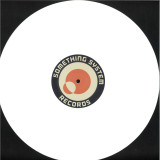
White Vinyl
The 2nd release from Midlands based DnB, Breaks & Bass Label 'Something System Records' features a 140 Breakbeat track from Parallel Action & a DnB track from his alter ego ScanOne
Side A: Parallel Action 'Air' In a word.. DRUMS! Parallel Actions debut on SSR opens with this Jazz fuelled epic. The track has a real 'live session' feel with some insane drum editing. An eastern flavour compliments the cinematic overtones of this piece perfectly. A real 'Lights on' end of the night tune for sure.
Side B: ScanOne 'Unity' This time it's the turn of Parallel Actions alter ego 'ScanOne' In many respect's this is a remix of 'Air' A beautiful, rolling, atmospheric slice of Drum & Bass that encapsulates all the qualities of side A but a more peak time tempo.
- A1: Stereolab & Nurse With Wound - Simple Headphone Mind
- B1: Stereolab & Nurse With Wound - Trippin' With The Birds
- C1: Low Fi
- C2: Varoom!
- C3: Laisser-Faire
- D1: Elektro (He Held The World In His Iron Grip) (He Held The World In His Iron Grip)
- D2: Robot Riot
- D3: Spool Of Collusion
- D4: Symbolic Logic Of Now!
- D5: Forensic Itch
- D6: Ronco Symphony (Demo)
- E1: Abc
- E2: Magne-Music
- E3: Blaue Milch
- E4: Yes Sir! I Can Moogie
- E5: Plastic Mile
- F1: Refractions In The Plastic Pulse (Feebate Mix - Autechre Remix)
- F2: Unity Purity Occasional
- F3: The Nth Degrees
- F4: Xxxooo
- F5: Cybele's Reverie (Live At The Hollywood Bowl)
Deluxe Version[39,45 €]
Switched On 5/Remaster
Remastered von den Originalbändern erscheinen auf 2CD und 3LP weitere 21 Tracks, angefangen 1992 in Stereolabs Frühphase bis zum Jahr 2008, darunter Aufnahmen aus superlimitierten 7inch- und EP-Miniauflagen, rares Bonusmaterial, exklusive Compilation- und Kunstaustellungsbeiträge, Kollaborationen mit Nurse With Wound und ein Autechre-Remix. Zudem gibt es komplett unveröffentlichtes Material in Form von der 2004er Live-Version von 'Cybele's Reverie' (aus dem 'Emperor Tomato Ketchup' Klassiker (1996)), des ursprünglich für eine Skulptur von Charles Long geschriebenen 'Robot Riot', der Originalversion von 'Plastic Mile' (aus der Compilation 'Fab Four Suture' (2006)) sowie der Demoversion von 'Ronco Symphony' (aus dem 1993er Minialbum 'The Groop Played "Space Age Batchelor Pad Music').
- A1: Stereolab & Nurse With Wound - Simple Headphone Mind
- B1: Stereolab & Nurse With Wound - Trippin' With The Birds
- C1: Robot Riot
- C2: Spool Of Collusion (Remastered)
- C3: Symbolic Logic Of Now!
- C4: Forensic Itch (Remastered)
- D1: Abc
- D2: Magne-Music (Remastered)
- D3: Blaue Milch
- D4: Yes Sir! I Can Moogie
- E1: Plastic Mile (Original Version)
- E2: Refractions In The Plastic Pulse (Feebate Mix) - Autechre Remix
- E3: Unity Purity Occasional
- F1: The Nth Degrees (Remastered)
- F2: Xxxooo
- F3: Cybele’s Reverie (Live At The Hollywood Bowl)
Black Vinyl[41,81 €]
Switched On 5/LtdDeluxe
Remastered von den Originalbändern erscheinen auf 2CD und 3LP weitere 21 Tracks, angefangen 1992 in Stereolabs Frühphase bis zum Jahr 2008, darunter Aufnahmen aus superlimitierten 7inch- und EP-Miniauflagen, rares Bonusmaterial, exklusive Compilation- und Kunstaustellungsbeiträge, Kollaborationen mit Nurse With Wound und ein Autechre-Remix. Zudem gibt es komplett unveröffentlichtes Material in Form von der 2004er Live-Version von 'Cybele's Reverie' (aus dem 'Emperor Tomato Ketchup' Klassiker (1996)), des ursprünglich für eine Skulptur von Charles Long geschriebenen 'Robot Riot', der Originalversion von 'Plastic Mile' (aus der Compilation 'Fab Four Suture' (2006)) sowie der Demoversion von 'Ronco Symphony' (aus dem 1993er Minialbum 'The Groop Played "Space Age Batchelor Pad Music').