“Loves Love” jettisoned STÜM into 2024 and now “Beautiful Dancers” is here to take him ever higher.
As the second single off his forthcoming Essence Of Time EP, “Beautiful Dancers” is a blissful yet haunting take on techno. This track is total club rapture made up of ghostly vocal calls, static-like percussion and howling wind effects. A record of mixed emotions, pleasure and pain all blended up into 6 plus minutes.
Speaking on the tune, STÜM says “The songwriting process involved juxtaposing the organic with the synthetic weaving together contrasting sounds to mirror the duality of human emotion.”
Third in line is “Limbo”, a heaving acid hit full of hypnotic foreign instruments and vocals. This one gives off a massive street party feeling. From there we head to “Escape” a more dreamy and introspective bell-tone tune. A deliberate breather from STÜM before storming into the title track of the EP.
“Essence Of Time” is a shimmering rave piece. Dulcet piano intertwines with airy effects and hammering synths – another excellent example of STÜM’s ability to blend light and shade all at once.
Поиск:gallery sounds
Все
On August 16, Toronto-based musician and producer David Psutka aka ACT! (fka Egyptrixx / Anamai / Ceramic TL) will release his latest project ‘Face to Face, Day by Day’ for his own Halocline Trance imprint.
This is is Psutka’s third album proper as ACT! following the release of the “sonic mixtape” ‘Universalist’ in 2018 and the augmented reality soundtrack ‘Grey Matter AR’ in 2021; a series of Snapchat filters created by artist Karen Vanderborght and soundtracked by ACT! which explored the poetic and existential potential of AR and social media.
“Aesthetic accidents in the periphery of the ‘work’ can be the message. In 2018, at an Egyptrixx concert at Bagni Misteriosi de Teatro Franco Parenti - a gorgeous, sprawling outdoor pool theatre in Milan - I had a clarifying moment. Gigs around then had mostly been in pummelling, dark music venues, so I wasn't prepared for this expansive space (and the thoughtful work of the organisers who had layered sheets of plastic film on the pool to parallel eco-materialist themes from a previous album). It was the midday soundcheck that struck me most - brittle digital sounds from the set echoed off the colonial Milanese facades and ricocheted down the Via Carlo Botta, pinging off buildings in the distance and clashing with the noise of traffic, tourists and whatever else. It was a strange, collisionist moment, and a reminder that my essential approach to music is, above all, a preoccupation with the materiality of sound.
Everything on Face to Face, Day by Day began as an improvisation. Openness to accidents and the emotional complexity that comes from centering them in composition has become important to my work, and helps the music go beyond the possibility of what is playable, imaginable. I also wanted to channel adventurous solo pop records of the 1970’s and 80’s, like Yasuaki Shimizu, Jon + Vangelis and Stevie Wonder. These came from an interesting era in commercial music as studio production techniques became increasingly formalised as compositional devices, like AMS RMX16 percussion sounds and early digital stereo effects.
Like many musicians, I’ve been travelling and performing less since the pandemic and as a result, have wanted studio sessions to feel more collaborative and improvisational. There were great writing and recording sessions for this album. Vox, synth, sax and guitar jams - much of what ended up on the record isn’t edited much, if at all. I jammed a sm57 into Colin Fisher’s sax bell and created feedback loops using various preamps and distortion units. The clunky sounds were sampled and used as percussion elements. I also had a great synth jam session with Jeremy Greenspan at Barton Building Studio in Hamilton, which was recorded by filmmaker Liz Adler.
I’ve had a few months to sit with this album and see clear throughlines connecting it to previous projects. There are aspects of the experiential and structuralist sound design ideas from the EGYPTRIXX records; and also some arrangement tricks borrowed from ANAMAI - specifically, the use of interruptionist sound events. Perhaps most of all, it feels connected to the Ceramic TL + Ipek Gorgun record ‘Perfect Lung’ and its splattered take on musical complexity. “ (David Psutka)
In addition to ACT!, Psutka has released music with numerous projects including Anamai, Egyptrixx and Ceramic TL, he has collaborated widely with artists such as Junior Boys, Ipek Gorgun, and Kuedo as well as Jessy Lanza (2016) and an official remix for Massive Attack’s ‘Hymn of the Big Wheel (2012). The contributions on this album, from Robin Dann and Ben Gunning, reflect the deeply collaborative nature of the Halocline Trance label and the Toronto creative scene more broadly.
Many of Psutka’s releases have received critical acclaim from media outlets such as Pitchfork, Exclaim, The Quietus and Resident Advisor. As a live performer, he has toured extensively including performing at Sonar Festival, Roskilde, Mutek, MOMA PS1 Warm-UP and CTM Festival. He’s also presented sound installations at various institutions such as Galeria Civica Commune di Modena, and Art Gallery of Ontario (AGO).
In 2015, Psutka launched Halocline Trance as a home for his various sound projects, events and collaborations. Now a creative collective and label, it has grown to include a diverse array of artists including Casey MQ, Xuan Ye, Myst Milano, Colin Fisher and others. The label is described as “genre-agnostic” and conceptually open, supporting work across a wide spectrum of creative fields including soundtrack recording, AR design and traditional artist albums. Their impeccable roster also includes, theorist/improviser Eldritch Priest, and AR/VR artist Karen Vanderborght. In recent years, Halocline Trance has established itself as a platform that facilitates many of Canada’s most exciting creative music projects. Many of the releases have received critical acclaim from outlets including Pitchfork, Exclaim, Bandcamp and Resident Advisor.
Ein allumfassender akustischer Angriff, eine Kraft, die so unaufhaltsam und lebendig ist wie die Flut. Das Post-Rock-Kraftpaket AND SO I WATCH YOU FROM AFAR kehrt mit seinem 7. Studioalbum ,Megafauna" zurück. Studioalbum "Megafauna" zurück. Das neue Album ist eine eigenwillige Erkundung und eine von Herzen kommende Würdigung mit der ganzen Intuition, Intimität und dem Humor von vier festen Freunden, die sich ihrem 20-jährigen Bandbestehen nähern. Die Absicht hinter "Megafauna" ist von Anfang an klar. Zwei Gitarren, ein Bass und ein Schlagzeug, allesamt in einer Woche aufgenommen, erwachen in einem Endorphinrausch der Zusammenarbeit und des Miteinanders nach der physischen und psychischen Wildnis der Isolation zu überschäumendem Leben. Die Leadsingle "Do Mór" ist eine absurd verspielte Kollision aus unbeschwerten Gitarrenhooks, mühelosen Jazz-Synkopen und der triumphalen Rückkehr von ASIWYFAs unnachahmlicher Wall-of-Sound-Verzerrung, während der Eröffnungstrack "North Coast Megafauna" als Hymne für das gesamte Album und vielleicht auch für eine wiedererstarkte Band dient, die die freudig-schockierende Konfrontation ihres Sounds stolz auf ihren Ärmeln trägt. An anderer Stelle stehen Introspektion und düstere Sentimentalität im Mittelpunkt, wobei das Downtempo-Stück "Years Ago" eine bemerkenswerte dynamische Tiefe bietet. "Megafauna" ist das erste neue Werk der Band seitdem von der Kritik hochgelobten, aber nur sehr limitiert veröffentlichten "Jettison" aus dem Jahr 2022, ein ambitioniertes Multimedia-Ensemblewerk voller Experimente mit Gästen. Gitarrist Niall Keenedy bezeichnete "Jettison" scherzhaft als "das reife Album" der Band und umrahmte das Schreiben von "Megafauna" mit dem langjährigen Mantra der Band "DO THE SCARY THING", das sie ständig auf das Neue, den Fortschritt, die Evolution und das Unbekannte zusteuern lässt. Während die neue Platte ASIWYFA in einer vertrauteren, traditionellen Form zeigt, ist "Megafauna" in dieser Post-"Jettison"- und Post-Pandemie-Welt eine ohrenbetäubende und trotzige Absichtserklärung des treibenden Kerns der Band, die Zusammengehörigkeit statt Trennung zelebriert. Übrigens, das klasse "Jettison" jetzt auch wiederveröffentlicht!
2024 Repress
Dauw welcomes Berlin based musician Midori Hirano to the label with her new album Soniscope. Award winning composer Robot Koch provided a rework of the track Patterns under his recently announced new ambient project Foam and Sand.
With releases on acclaimed labels such as Longform Editions, Sonic Pieces and Alien Transistor, Midori Hirano is no stranger within the field of electro-acoustic piano music. While she is more known for her studio-work, it is often forgotten that she also has a long tradition of writing for films and theatre productions. This forms an important part in her work and a constant inspiration for her autonomous work. Soniscope is no exception in that regard. While working on the film Mizuko (Kira Dane, Katelyn Rebelo, 2019), a still of many little Jizo statutes got her attention and came to be the first steps of her new album.
“I was fascinated by the combination of the image and sound which well emphasized the stillness with a slight of emotion.” (Midori Hirano)
With the Jizo statutes on her mind, Midori Hirano wanted to make an album and started envisioning several personal narratives. Soniscope can be considered as the soundtrack of her own personal stories related to these statues of which Mizuko Jizo was the starting point. With Soniscope, Hirano continues in the same vein as her previous albums in which piano and electronic arrangements hold a central place. However, on this record she specifically explored new possibilities in terms of techniques and instruments.
Midori Hirano is a Japanese musician, composer and producer, born in Kyoto and living in Berlin since 2008. She started learning the piano as a child, and this triggered what was to later see her study classical piano at university. Therefore her productions are based on the use of acoustic instruments such as the piano, strings or guitars, but yet experimental and an eclectic mixture of modern digital sounds with subtle electronic processing and field recordings.
Her first two albums were released on noble records, and her second, “klo:yuri”(2008), saw her further develop of her sound, garnering critical acclaim from various media including TIME magazine , BBC radio and FACT Magazine. Over the following years Midori has performed in venues and festivals as diverse as Club Transmediale, Heroines of Sound Festival, Erased Tapes Sound Gallery, L.E.V. Festival, Boiler Room Berlin, and Wonderfruit Festival.
The nine solo albums and numerous single track releases to date include the works of her other moniker MimiCof, in which she explores the realm of experimental music and detailed rhythmic patterns, combined with an idea of drawing melodic shapes and harmonies. Her recent works have been released by labels such as Sonic Pieces, Daisart, Alien Transistor, raster-media, 7k! Music and Longform Editions.
Besides producing her own works, she composes music for films, video installations and dance performances. The films that have commissioned works by Midori have been screened at Berlin International Film Festival, SXSW Film Festival, International Documentary Film Festival Amsterdam and among others.
Big Yawn - NGB
Research Records welcomes back Melbourne quartet Big Yawn for their fourth full-length offering, "NGBE."
Big Yawn's ability to blend complex rhythm sections with infectious basslines, deep synth work, and tongue-in-cheek sampling remains ever-present, and perhaps is the most advanced we've heard yet.
Sitting in a world of its own, the album—named after the group's beloved and lost warehouse space, National Gallery of Brunswick East (where most of the material was recorded)—features a wide array of soundscapes spanning mutated drum 'n' bass, low-key grime, rap, and dub-wise antics, all laced with a heavy dose of FX.
Equal parts deep and menacing, the nine tracks encapsulate Big Yawn's evolution in the studio and on stage, most notably through their collaboration '2Stroke' with Melbourne-based future rap prodigy Teether and brought to life visually with album artwork by Julian Hocking.
Italian born, London-based soundsmith Andrea Ottomani dons his Big Hands moniker for an excursion in modern dub on the burgeoning Teeth label. Ottomani is the artist behind the label Baroque Sunburst, which he runs with Soreab, and he also forms half of jazz techno unit Ottomani Parker with Abraham Parker.
The Vulgarity Of Snow is Ottomani’s woozy, lilting soundwalk through techno, experimental electronics and scorched earth acid. The untitled tracks are less like distinct entities and give way to a larger, conjoined pair of triptychs spread out over two sides of wax. They feel like a paean to the format, which no doubt comes from Ottomani’s time spent working at one of London’s most revered record shops. As a longer, more probing piece, it’s anathema to talk about The Vulgarity Of Snow in terms of bpms and sub-genres, and arguably it owes as much to free jazz and psych-rock as it does to more leaden styles such as dub and roots. At times it pays tribute to the work of acts like Basic Channel and Random Trio, deploying dub electronics in novel ways, but it is also broader in its choice of sounds. On B2, for example, Mino Carbone, the artist’s uncle and an Italian anarchist from the same lineage as artists like Dario Fo, plays a song from that tradition. It’s not a chaotic piece, but it’s not heavily constrained.
Teeth is an ideal home for Ottomani’s freeform work, following contributions to Beat Machine, Blank Mind and Oscilla. The label is the brainchild of Jojo Mathiszig, who also runs Farringdon record shop and radio station Kindred. Slade graduate and Kindred co-founder, Scarlet Griffiths, supplies the artwork following on from her recent exhibition at Dinner Party Gallery.
LP reissue of Collective Calls, the first duo LP from Evan Parker and percussionist Paul Lytton. Mythically alluded to as ‘An Improvised Urban Psychodrama In Eight Parts”, Collective Calls utilises electronics, pre-records and homemade instruments to wryly in/act self investigation. Having just recorded the cliff jumping Music Improvisation Company with Derek Bailey, Christine Jeffrey, Hugh Davies and Jamie Muir, Parker was at the point where he was thinking, ‘what’s the next thing?’ On Collective Calls, only the 5th release to appear on the newly minted Incus label, percussionist Paul Lytton arrives with an arsenal of sound making sources to push Parker into ever new territory. Recorded in the loft of The Standard Essenco Co on Southwark Street by Bob Woolford (Topography of the Lungs, AMM The Crypt), Collective Calls has more in common with noise or music concrete than with jazz; sitting comfortably alongside Italian messrs Gruppo di Improvvisazione Nuova Consonanza or the husband-wife duo of Anima Sound. According to Martin Davidson, it was a Folkways record that Lytton was obsessed with around the time of this release - Sounds of the Junkyard - its track titles like “Steel Saw Cutting Channel Iron in Two Places” working to give you a good idea of the atmosphere of Collective Calls. Paul Lytton had encountered the use of electronics in music in 1968 when he was invited to play drums on the recording of An Electric Storm by White Noise (along with David Vorhaus, Delia Derbyshire and Brian Hodgson). He had seen Hugh Davies using contact mics in the Music Improvisation Company, and soon set about assembling a Dexion frame akin to drummer John Stevens’, except that his own was armed with several single-coil electric guitar pickups, long wires and strings with connected foot-pedals to modulate pitch. Influenced as much by Stockhausen, Cage and David Tudor as he was by Max Roach and Milford Graves, Lytton’s percussion is abstract, expressionist and at times totally mutant. Sometimes rolling extremely fast, then screeching almost backwards over feedback, Lytton gives Parker room to play some of his weirdest work. Parker is listed as performing both saxophones, but also his own home made assemblages, including one dubbed the ‘Dopplerphone’ - a length of soft rubber tubing (activated by a saxophone mouthpiece and manipulated to alter the rate of airflow) attached to a longer length of clear plastic tubing (whirled around the head whilst being played) ending in a plastic funnel. Thickening the brew even more, Parker would also add a cassette recorder, on which he would play back collected sounds and previous recordings of the duo. Imagining the set up in a 70s loft, it’s an assemblage more akin to what today's free ears might see at a Sholto Dobie show, spread out on the floor of the Hundred Years Gallery, the shadow of Penultimate Press lurking in the corner. It’s a testament to Parker’s shape shifting sound - the ever present link to birdsong being at its most warped here - terrifically free and unfussy, wild and loose from any of the dogma that might come in later Brit-prov years
Taavi Suisalu is an Estonian media artist particularly interested into complex and adventurous sounds, field recordings and harsh audio emergencies, organized under the form of symphony or as a result of performative interactions.
In 2014 Suisalu received the Young Estonian Artist Prize as curator of Project of In-existent Villages, an articulate exhibition full of installations and site-specific sound performances. The use of peripheral spaces and the crossovers, sometimes extremely creative, of human interactions, data, sounds and technologies, are recurring in the works of Suisalu, whose subjective perspective unconventionally investigates different social and cultural phenomena. He is always attracted by the different forms of technologies. It can be an old seismograph he reconstructs to record the underground vibrations of a volcano, or, it can be some 3D models he uses to analyze a grain of soil coming from the ancient Pompei. The results of the researches would lead to the installations. The whole set of data is often the premise of a narration, a datafiction, as in the case of the signals recorded from some abandoned satellites, who are later presented with a speed set by the position of other satellites gravitating above the gallery hosting the event.
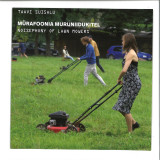
“Noisephony of Lawn Mowers" was originally composed in 2013, but it was unreleased until now, when Staalplaat, a fundamental label for its unusual experimental connections and for the sound events performed in unconventional spaces, decided to publish it. It's a score for lawnmowers, whose making is given to a conductor and executed by a group of artists. Suisalu reminds us that historically, lawn has been a symbol of power and wealth as it required substantial upkeep and unused land. Today, it still indicates wealth, but is mainly maintained by the owners themselves. This puts us in a schizophrenic situation where we strive to be privileged by taking the role of the servants.
“Silver Meets Ted” is the other track included in the selection. It's a recording of over ten minutes, whose trend cryptically moves on and with some unsettling minimal tolls, always more metallic. Some deaf beats follow, and then we have a splash of water and some slightly hinted neighs, chirps, different spills of liquid, more intense and measured, clackings and vibrations, some hardly identifiable frequencies and again a series of punctuated metal bells. The work by Taavi Suisalu stands out as a calibrated combination of mathematical coherence and elements of surprise, automatized and causal processes, some small oblique utopias, that work well together by improving highly subjective resources and create some slightly unsettling final results.
"The Concert" is the first discographic collaboration between percussionist Alexandre Babel and visual artist Latifa Echakhch. The record is intimately linked to the eponymous exhibition presented at the Swiss Pavilion during the 59th Venice Art Bienniale.
For her exhibition in the Swiss Pavilion, Latifa Echakhch created an orchestrated and enveloping experience, a rhythmic and spatial proposal that allowed the visitor a complete perception of time and of his own body. What is the origin of rhythm? How does the body perceive time? How does the mind rearrange it? Can we substitute one perception for another, the visual for the sound? Can fragments of memory go back in time and recreate a different story?
Her proposal entered a dialogue with the building around it, designed by Bruno Giacometti. The artist revisited its architectural programme as well as the prototypical progression of these exhibition spaces, originally defined for the display of classical art. She appropriated the entirety of the spaces, simultaneously exploring continuity, movement and sequence. Their relationship to light, and the different sounds that emerge from them. Yet the exhibition was entirely silent and the musical composition "The Concert" functions as its sound rendering, by following a similar path.
This one-sided vinyl is a complementary and inseparable partner piece to the exhibition and its eponymous catalogue, the latter having been published in April 2022 by Sternberg Press. The music features field recordings made at the Swiss Pavilion itself as well as pre-recorded percussion sounds and significant contributions by the Berlin-based musicians Jon Heilbronn, Rebecca Lenton, Theo Nabicht, Nikolaus Schlierf.
The record, available only after the closing of Latifa Echakhch’s exhibition offers a concluding phase to the project. The resonance of its sensory score. It reactivates the experience of the physical journey of the installation, without imposing itself as a transcription or an illustration. Through texture, temporality and its totality, the record stands as a resonance of the rhythms that have structured the pavilion, the harmonies that have composed it and the sounds that have inhabited it.
Latifa Echakhch Lives and works in Vevey, Switzerland. She graduated from the École nationale supérieure d’arts in Cergy-Pontoise and the École nationale des beaux-arts in Lyon. Galleries representing her include kamel mennour (Paris and London), kaufmann repetto (Milan and New York), Dvir Gallery (Tel Aviv/Brussels) and Pace (New York). She took part in the main exhibition of the Venice Biennale Arte in 2011 and was awarded the prix Marcel-Duchamp in 2013 and the Zurich Art Prize in 2015. Through her interdisciplinary installations, Latifa Echakhch is recognized for the fine balance between forcefulness and fragility of her visual language, inserting surrealist and conceptual elements, and her use of symbols that–in her own words–are both "political and poetic".
Alexandre Babel Lives and works in Berlin. He is a drummer, composer, and curator. His projects redefine the boundaries of musical convention, confounding listener expectations in the conquest of new contexts. Babel has been the artistic director of the contemporary percussion group Eklekto 2013–2022. In 2020, the monographic Festival Les Amplitudes in La Chaux-de-Fonds focused on Babel’s compositional and curatorial work. He is a laureate of the Swiss Music Prize from the Federal Office of Culture 2021.
160-gram heavyweight Vinyl LP with gatefold jacket displaying the painting series that inspired the music, and the story of Newtok. Newtok is a remote Alaska Native village situated on the Ningliq River, near the west coast of Alaska. Although a very remote and quiet place, Newtok has come face-to-face with climate change. Due to a combination of thawing permafrost, low levels of sea ice, and strong storms, the coastal land of Newtok is eroding dramatically. In 2016, Chicago visual artist Jennifer Cronin embarked on a trip to Newtok to document this changing environment. Upon returning, she spent the next several years developing a series of paintings and screen prints titled Seen and Unseen that captured this eroding landscape. In 2019, Cronin and musical Artist Patrick Mitchell (a/k/a Dusty Patches) began discussing the project after Cronin asked him to perform at the Gallery opening for the series. As a result, Mitchell created this album, Newtok - inspired by Cronin's Seen and Unseen series and the story of Newtok, Alaska. Mitchell is a multi-instrumentalist songwriter and producer from Chicago who has led numerous past projects in the Chicago DIY community including De Triomphe, New Color, and Whiskey Wise. He dove headfirst into synths in 2017 and adopted the electronic alias Dusty Patches. Dusty Patches released his debut project Filthy Four Track Machine: Volumes I & II (2018, Sooper Records), largely made with the Teenage Engineering Pocket Operators and OP-1. In 2020, he released Nocturnal Emissions from the Dablatory, his first project fully realized with modular synthesis. In approaching Newtok, Mitchell composed all of the constituent musical elements of the work and then recorded and live mixed the album during a single live performance on modular synthesizer. The album draws heavily on sprawling ambient synths, electric and acoustic post-punk guitar motifs, cryptic vocal sampling, vintage drum machines, and modular patches that often sound like birds or the sea. The subject matter of the album, the complexity of its arrangement, and its execution as a single live recorded performance makes Newtok a unique musical experience. About Newtok, Mitchell says: This record was an exploration of themes. When faced with the immense canvases Jen Cronin produced upon her return from the village of Newtok, one can't help but feel awe. With the sheer size of the works towering above you, you are compelled. There is overwhelming beauty, desolation, a sense of urgency, and a sense that it is, in fact, far too late. These visual themes, and the emotions they evoke, were connected to the sounds and compositions of this record. There is a coldness to the digital soundscape, but organic sounds of nature and humans tether and steer the album through a journey of musical storytelling. Newtok is a journey of musical storytelling about the tragedy of the Anthropocene in the age of climate change. FOR FANS OF: Mother Earth's Plantasia, Black Moth Super Rainbow, Boards of Canada, Bibio
Felicity is an Australian sound artist, composer and educator based in Berlin and her latest effort "Train Tracks Recorded And Edited By Felicity Mangan" will be out world wide on tape and digital December 9.
"Train Tracks Recorded And Edited By Felicity Mangan" composed of field recordings was made during a Green Tour, while traveling only by train and ferry through Denmark, Sweden, Finland and Norway in June 2022.
For this release Felicity utilised raw and sampled field recordings to create a sense of slow travel by train, train networks, train delays and the moments in between waiting for trains or missed train connection in cities and small towns.
Felicity has presented projects in many different settings from galleries, gardens, clubs, festivals and online platforms throughout Europe, including National Gallery Denmark, Technosphärenklänge CTM/HKW, Sonic Acts Academy, RIVERSSSOUNDS.org and recently sound design for 100 Climate Conversations , Powerhouse Museum, Sydney, Australia.
““Stations In Between” establishes a pulse early, recreating the initial excitement that turns to tedium. Four minutes in, the drums disappear, swept away by chimes; no longer stuck, the passenger is moving forward again. The station comes to life: another radio, a street musician, a bicycle, a cough ~ the last sound bearing a reminder of the last two years.”
Richard Allen — A Closer Listen
“the elements of sound are manipulated for effect, and the performance nature of Mangan’ work tends to be an effects driven construction of collated and improvised sounds.”
INNERVERSITYSOUND — Cyclic Defrost
“Throughout the album, it sounds rather as if Mangan had written elaborate electronic music permeated by discreet rhythms and pulsating drones equipped with a whole range of devices. The fact that this is not the case is as impressive as the actual music itself.”
— Fieldnotes Berlin
In 2021, nyMusikk's annual festival of sound, "Only Connect", commissioned an interpretation from I LIKE TO SLEEP of the first movement of Olivier Messiaen’s Turangalila symphony. A project which initially led to a 15-minute piece performed at the festival, with the trio re-writing the music of Messiaen, but also rewriting the music of their own. Messiaen as a reference and compositional tool may be heard in the album for those really listening for references. With “Sleeping Beauty” the trio also explore even heavier riffs than before, seasick grooves and tempi, and deeper ambient soundscapes. Through extensive improvisation, the effects and processing of the sounds are way more extreme than before, almost awakening the sleeping beauty. During the pandemic, the band also had to find new ways to write music without the presence of every member, introducing the vibe-samples from the old Mellotron sound gallery to the band. Quarantillity, one of the themes which appears several times throughout the album - almost used in a similar way as the flower theme in the Turangalila symphony - is a direct result of sitting alone in quarantine, playing the Mellotron while listening to vibraphone extraordinaire Bobby Hutcherson. This theme could also be seen as a continuation of the previous album tracks named Pause I & Pause II from “Bedmonster” (2017) and “Daymare” (2020). Like “Daymare”, “Sleeping Beauty” was recorded in Duper Studio in Bergen, co-produced with the band’s all-time favourite sound wizard Jørgen Træen. It is also mixed and mastered by Træen, making the music sound as brutal, intense and intimate as experiencing I LIKE TO SLEEP in a live setting. “Infernal, scrotum-shrivelling energy sorely missing in today's music” said Jazzwise about their previous album, mentioning King Crimson, Magma, Tony Williams Lifetime, electric Miles and 60s free energy jazz as possible references. But that’s only one side of the story, there are plenty of quieter moments at work here, and the dynamic range is wide. Nicolas and Øyvind first met in high school in Trondheim before they joined up with Amund in a youth big band. It soon became apparent that they shared the same musical background centered around 70s progressive rock, classical music, jazz and improvisation. Taking their name from a Thelonious Monk quote, I LIKE TO SLEEP was formed, first for fun, but soon with higher ambitions, winning the prestigious "Young Jazz Musicians of the Year" award in 2018. Still only in their early 20s and still studying jazz at NTNU in Trondheim, they are also active as composers, freelancers and in other projects and are among the most promising on Norwegian scene. Amund Storløkken Åse – vibraphone and Mellotron Nicolas Leirtrø - baritone guitar, bass-VI and Mellotron Øyvind Leite – drums Tracks
- A1: Mirror (Feat Josue Thomas)
- A2: Lava (Feat Ua)
- A3: The Battle Part 1 (Feat. Emilie Chick)
- A4: Sumimasen Suite Part 1(Feat. Emily Capell & Rebel Dread)
- A5: We Need Power Part 1 (Feat. Josh Milan)
- B1: I'm Thinking, I'm Spacing(Feat Afrika Bambaataa)
- B2: Outer Space (Feat Dj Krush)
- B3: Galactic Beats Part 1
- B4: Hear, There (Feat Kan Takagi & Reck)
- B5: New Beginning
Japanese street music icon, Yasushi Ide released new album featuring Don Letts, Josh Milan, Jeff Mills, DJ Krush and more.
"This is a sound track for rude, underground adults! Amazing mixture of reggae, dub, funk, jazz, rock, afro, house. Masterpiece that goes beyond genres of music created by great producer, Yasushi Ide who has relentless motivation and global network of talents." - Shuya Okino (Kyoto Jazz Massive / Kyoto Jazz Sextet)
"Great album! It is amazing to finish such a big project involved many collaborators at this high quality only in a year and 4 months. The magic of Cosmic Suite is there are variety of styles, and it makes you feel deep and spiritual at one point, but at the same time you can feel relaxed. Also, I have to say that the sound quality is great. It sounds very clear and it can only be done with top level recording and mixing professionals." - Ken Ishii
Yasushi Ide is the Japanese street icon. In the 90's he was called "the Guru of Shibuya-kei" which was the movement of Shibuya style of eclectic pop by the artists such as Cornelius, Pizzcato Five, or Original Love who is once again recognized in City Pop revival of recent years. (Yasushi Ide was a manager of Original Love, and also Kenji Ozawa)
Through his works, he has been creating the global network of musicians such as Josh Milan of the Blaze, house music icon, Don Letts, the pioneer of connecting punk rock with reggae, and Jeff Mills, Detroit techno legend, and released a great amount of hi-quality music on his label, Grand Gallery.
The Cosmic Suite project started in 2020, during the pandemic. It started as a project to reconstruct the parts of music Jeff Mills created for Chieko Kinbara, a violinist which Mills produced. However, it turned out to be 36min of spaced themed original track = Cosmic Suite.
(There are few phrases of Jeff Mills music left in the final version) This masterpiece created a buzz in the music scene in Japan and overseas, and became Yasushi Ide's new beginning.
In June, 2022, Ide released "Cosmic Suite 2". Originally, Cosmic Suite was an instrumental. "Cosmic Suite" is the reconstruction of "Cosmic Suite 2" with the element of vocals. In this project, Don Letts, Josh Milan, DJ Krush are featured as guest musicians. Moreover, drums of Tony Allen, the legendary Afrobeat drummer, and Style Scott, a drummer known for his works in early days of ON-U label, and Gota Yashiki, a Japanese drummer known for his works with Soul II Soul are featured in this album. Also, Japanese brightest talents such as Kan Takagi of Major Force, Kaoru Inoue aka Chari Chari, Tomoyuki Tanaka aka Fantastic Plastic Machine and Calm are featured as artists and engineers. This is the true dream team of the Japanese underground music scene.
The artwork is done by Josue Thomas, the founder of popular fashion brand, Gallery Dept. He is also featured as poetry reading artist in track 1 of "Cosmic Suite 2." Ide and him collaborates in various projects under the concept of "Universal Music Connection."
Yasushi Ide's also well received as a dub artist. (beside his wide range of musical styles)
His dub cover of Bill Withers' "Ain't No Sunshine (Space Dub Mix)" is selected for "Late Night Tales mixed by Don Letts" in 2021.
Highlight of "Cosmic 2" is the unique dub sound in tracks such as "Lava" feat. UA, the Japanese singer often described as "Japanese Bjork", and "Sumimasen Suite" feat. Rebel Dread (= Don Letts).
Tokyo is the melting pot of street music from all around the World such as Dub, Jazz, House, Hip Hop, Afrobeat, Punk rock, Techno,,, You can see the influence of all spectrums of rebel music in this album. This unique avant-garde music can only be created by Yasushi Ide, who has been heavily involved in this truly unique music scene for a long time.
Sound: An Exhibition of Sound Sculpture, Instrument Building and Acoustically Tuned Spaces opened at the Los Angeles Institute of Contemporary Art in the summer of 1979 (and was also on view later that year at PS1 in New York). Curated by Bob Wilhiteand Robert Smith, the exhibition surveyed the field of sound art. The forty-four participants were painters pivoted toward performance, conceptual artists attracted to time-based mediums, self-styled creators of environments, and musicians (formally trained and otherwise) fashioning new instruments from household items and consumer electronics. They were more or less object-oriented and, at the same time, more or less music-oriented. What brought them all together, as the exhibition catalog gamely asserted, was sculpting in three-dimensional space.
The Sound exhibit included installations, recordings played in the exhibition space and a series of live performances, demonstrating instruments that otherwise rested inert in the gallery. For a broader sense of the show than a single visit provided, the curators also produced a compilation album featuring short pieces, or excerpts from longer works, by many of the participants. (Artists in the exhibition, but not on the LP include Alvin Lucier and Mike Kelley.) Selections from bright lights of the 20th century avant-garde – such as composers Bill Fontana, Yoshi Wada and Paul DeMarinis; conceptual artists and performance artists Terry Fox, Tom Marioni and Jim Pomeroy; experimental vocalist Joan La Barbara; and Los Angeles Free Music Society members Tom Recchion and John Duncan – feature alongside the sounds of Jim Hobart's tuned jars, Ivor Darreg's fretless banjo, Doug Hollis' aeolian harp and Richard Dunlap's rubber bands.
This first-time reissue is limited to 500 numbered copies. Comes with poster.
Available from Blank Forms for the first time since its original 1980 release on ALM-Uranoia, New Sense of Hearing documents a collaboration between Takehisa Kosugi and Akio Suzuki, two luminaries of Japanese experimental music in the lineage of Fluxus. Blank Forms's high-quality reissue of the sought-after, long out of print LP, is produced by musician-artist Aki Onda and mastered from the original tapes recorded on April 2, 1979, at Tokyo's Aeolian Hall. Described by Suzuki as the "culmination" of their sound,New Sense of Hearing features the two musicians improvising together in that empty Tokyo theater, Kosugi on vocals, violin, and radio transmitter and Suzuki on the Analapos, his namesake glass harmonica, spring cong, and kikkokikiriki, all apparatuses of his own invention. Suzuki and Kosugi first met at the city's Minami Gallery in 1976 on the occasion of "Sound Objects and Sound Tools," an exhibition of Suzuki's homemade instruments. Two years later, at the Festival d'Automne in Paris, Suzuki invited Kosugi to join him for a suite of performances as part of the exhibition "MA: Espace - Temps au Japon," organized by architect Arata Isozaki and composer-writer Toru Takemitsu. Suzuki and Kosugi performed together at the Musée des Arts Décoratifs, Paris, nearly fifty times, honing their approach to mutual improvisation, before traveling with the exhibition to Stockholm and New York_critic Tom Johnson wrote in the Village Voice that he had "seldom seen two performers so completely tuned in on the same types of sounds, the same performance attitude, the same philosophy, the same sense of what music ought to be."For New Sense of Hearing, the duo reunited in Japan and produced an extraordinary dispatch from their collaboration of arioso violin, echoing vocals and bangs, and metallic twangs. As Johnson observed in 1979, Kosugi and Suzuki are "in a very subtle artistic world where there can be no direct relationships. . . . Only coincidence." Takehisa Kosugi (1938-2018) was a composer, artist, and violinist from Tokyo. In 1960, Kosugi founded Group Ongaku, the country's first improvisational performance collective dedicated to Happenings, with Mieko Shiomi and Yasunao Tone. Four years later, Fluxus leader George Maciunas published Events, an eighteen-piece set of his text compositions. Between 1971 and '74, his band the Taj Mahal Travelers produced four live albums. In 1977, the Merce Cunningham Dance Company invited Kosugi to be their resident musician; from 1995 to 2011 he served as the company's musical director. The Whitney Museum of American Art presented "Takehisa Kosugi: Music Expanded," a two-day retrospective of Kosugi's work, in 2015. Akio Suzuki (b. 1941) was born in Pyongyang, North Korea, to Japanese parents. For the artist-musician's first Fluxus-style work Kaidan ni Mono wo Nageru (Throwing Things at the Stairs), 1963, Suzuki tossed a bucket of miscellaneous objects down a flight of stairs in Nagoya Station and listened to the sounds it produced. During the next decade, he would create original instruments including the Suzuki-type glass harmonica and the echo instrument Analapos. In 1976, Tokyo's Minami gallery hosted his first exhibition, "Akio Suzuki's World: Sound Objects and Sound Tools." For his 1988 performance piece Space in the Sun, Suzuki spent twenty-four hours listening to his surroundings on the meridian line which runs through Amino, Kyoto. Suzuki has performed and exhibited at many venues and music festivals, including Documenta 8 (Germany, 1987), the British Museum (2003), Musée Zadkine (France, 2004), Kunstmuseum Bonn (Germany, 2018), and the Museum of Contemporary Art Tokyo (2019).
- A1: Love Song
- A2: Young Bastards
- A3: Stop It
- A4: Blind Man
- A5: Skin O Daayba - Complex Habits No.3
- A6: We Are Waiting
- B1: Mantra
- B2: Skin O Daayba - Feedbackless World
- B3: Cupping Glass
- B4: Half Monk Half Herring
- B5: Ukoidm - Fishing (Edit)
- B6: Eric
- B7: In The Garden
- B8: Sequencer
- C1: Who Are We
- C2: Hit
- C3: Yozti 2
- C4: Voices Cricket
- C5: Attempt To Raise Hell
- C6: Anna's Assignment
- D1: In Our Culture (Surname Version)
- D2: Lesson 4 Voices
- D3: Intermission
- D4: Chicken
- D5: Untitled
- D6: Against Soap
- D7: Bereshit
- D8: Caretakers
Black Truffle is pleased to announce Uri Katzenstein’s Audio Works, produced in collaboration with Holon’s Centre for Digital Art. Spanning sculptural installation, performance, video art, and many other media, Katzenstein’s absurdist, poetic, and often hilarious work made extensive use of sound and music. This, however, is the first release dedicated to the artist’s audio work, collecting 28 tracks produced between the early 1980s and 2017. Compiled from dozens of hours of recordings left uncatalogued (and in some instances unheard) at the artist’s death in 2018, these four sides are a treasure trove, offering a captivating glimpse into a uniquely uninhibited creative practice. Predominantly recorded alone, with some contributions from regular collaborators such as Ohad Fishof on the later pieces, many of these tracks stem from Katzenstein’s time living in New York in the 1980s. Feeding on the cross-pollination of post-punk energy, radical art practice, and new media possibilities that characterised the New York scene at this time, many of Katzenstein’s recordings squeeze multilayered vocal experimentation into synth-based miniatures with a distinctively pop twist, their forms ruptured with anarchic bursts of free-form electronics, sounds from self-built instruments, and field-recorded snatches of the outside world. Katzenstein’s electronic production calls up touchstones of skewed 80s art pop like Laurie Anderson, Ambitious Lovers, and Scritti Politti, but imbued with DIY directness and economy of means. The arrangements of synths, percussion, and noise elements are invigoratingly raw and, at times, almost austerely minimal. On ‘Intermission’, thick distorted chords accompany a wandering portamento melody, inhabiting the wayward carnival space of Roedelius’ most unhinged efforts. Many of the tracks centre on Katzenstein’s multi-tracked vocal performances, often moving between multiple languages, (most commonly English, German, French, and Hebrew). A bewildering range of vocal approaches are present on these pieces, from sweet wordless harmonies to hammed-up growls and monastic recitations. On ‘Skin O. Daayba – Complex Habits no. 3’, improvised resonance singing against a backdrop of echoing electronics and radio snatches. ‘Half Monk Half Herring’ layers multi-lingual syllabic fragments, crossing sound poetry techniques with melodic invention in a way rarely heard outside of Caetano Veloso’s Araçá Azul. On ‘Attempt to Raise Hell’, Katzenstein’s distorted voice spits out streams of alliterative nonsense (‘the hemlock of Henry, he was a hermit…purple pumpkin pulsates to pops’), while on the hilarious ‘Eric’, Katzenstein appears to instruct a small boy simultaneously in basic French and German conversation. On ‘Chicken’, vocal harmonies accompany the pecking and clucking of the titular fowl. Moving from bent, outsider synth pop to snatches of Jo Jones-esque automated instrumental clang and absurdist linguistic experiments, these are far more than footnotes to an artist’s gallery works. Accompanied by extensive, beautifully written liner notes by Roee Rosen and the little information that exists on the individual tracks, Katzenstein’s Audio Works inhabits an outer fringe of DIY pop and sonic experiment reminiscent of Pascal Comelade or Die Welttraumforscher, where accessible forms convey radical interrogations of song, word, and sound.
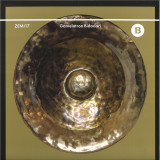
The Gamelatron is many things; one could call it a sculpture, a multimodal installation, an instrument, a robot, a feat of engineering, a vision—and it is all of these things. More importantly, though, it is a concept sustained by Aaron Taylor Kuffner, aka Zemi17, whose Gamelatrons are “sound producing kinetic sculptures” designed to create an immersive, visceral experience for the listener. Not a small feat, and yet the ambitions of Zemi17 are absolutely realized in this long-standing project, culminating now in his third release for The Bunker NY: Gamelatron Bidadari.
The Gamelatron Bidadari is not just a name—it is one of seventy-plus musical sculptures that Zemi17 has conceptualized, designed, and fabricated. Therefore, it would be inaccurate to think of this release as simply a series of arrangements composed in a finite period of time. Rather, it’s a window into a project and a process that is much larger than any single album can encapsulate. Gamelatron Bidardi is the culmination of more than a decade of work, and is central to Zemi17’s evolution, not only as a musician but as an artist.
Having studied gamelan for many years in Indonesian villages and at the Institut Seni Indonesia in Yogyakarta, Kuffner is a musician, an artist, technologist, and craftsman. The gongs in his sculptures are co-created with master Indonesian artisans. Each Gamelatron composition is site-responsive, meaning its sounds are composed for the acoustics and intentions of the space it inhabits, whether it’s an art gallery, a wooded landscape, or the inner temple of Burning Man. The Gamelatron does not stand alone: it is in constant co-creation with its physical environment, and in dialogue with gamelan’s long-standing history.
Originally exhibited at the Smithsonian Renwick as part of a show entitled, No Spectators: The Art of Burning Man, the Gamelatron Bidadari produces sounds that are delicate yet strong, and deeply hypnotic. Textured chiming creates intricate polyrhythmic patterns that are both complex and simple, or in a word, elegant. On Gamelan Bidadari, Zemi17 refrains from adhering to the strict musical structures; his approach to composition is free flowing.
He says, “I want to evoke what the music tells me it has to offer. It is like following water to its conclusion (or non-conclusion).” The arrangements on this album, written by Zemi17 and performed by the robotic arms of the Gamelatron, leaves the listener feeling enchanted, nourished and enriched.
A sense of the mystical comes through in the tonal quality of the instrument, and is conceptually felt in the sculpture’s name: the Bidadari, which loosely translates to “forest nymph.” The music conjures up natural wonder, and the four sculptures that make up the Gamelatron Bidadari, in fact, resemble trees. They are four independent yet connected entities, each with a large gong situated at their structural base—the sonic “roots” of the sculpture—while smaller gongs branch off of a golden, trunk-like spine. The Gamelatron Bidadari is as physically stunning as it is mesmerizing to the ear. A kind of divinity is invoked through its sound, or a sacred cohesion between past and present, tradition and new form. Meant to be viscerally experienced, the sounds of the Gamelatron call for sublime togetherness. Gamelatron Bidadari is not just an album but the crystallization of Kuffner’s work; it is a condensed yet spacious glimpse into the sonic power of Zemi17’s Gamelatrons, which have already been heard and experienced live by over a million people.
The four tracks that comprise Giving Water to the Dead were composed using sound materials originally recorded for the sound installation Histories of the Present, a public artwork commissioned by the City of Berkeley in 2019. But where the installation was about a melding of practices and sounds into a single gesture, Crouch and Novak wanted to take the opportunity of a split release to exploring divergent paths starting from common ground. For Giving Water to the Dead, each artist started with the same source material and plotted their own direction without direct influence from the other. As artists in a relationship and sharing a studio this was no easy feat. Despite the planned divergence the resulting tracks compliment each other, as the artists do.
Yann Novak and Robert Takahashi Crouch are a creative and romantic couple living and working in Los Angeles. Their collaborative practice incorporates field recordings, photography, and video as tools to investigate the relationship between site and subject. Their performances and installations have been presented at the AxS Festival, Pasadena; California Museum of Photography, Riverside; Desert Daze Festival, Southern California; Downtown Berkeley BART Plaza, Berkeley; Gays Hate Techno, Northern California; Hammer Museum, Los Angeles; LACMA, Los Angeles; PØST, Los Angeles; Tanya Bonakdar Gallery, New York and others. Their compositions have been published by The Tapeworm, Murmur Records, Estuary Ltd., IO Sound, and Untitled & After.
- A1: Natalino Otto – Bossa Figgieu
- A2: Gino Paoli – O Straccè
- A3: Bruno Lauzi – O Frigideiro
- A4: Gino Paolillo – Sognado Rio
- A5: Natalino Otto – O Pescou
- A6: Bruno Lauzi – Sto Cicchetton De Un Gioan
- B1: Augusto Martelli – Bom De De Bom Bom
- B2: Roberto Arnaldi – Ho Fatto Un Viaggio
- B3: Gino Paolillo – Seduzione
- B4: Augusto Martelli – Scia Cattaen, Scia Me I Fa I Taggiaen
- B5: Natalino Otto – Arrio
- B6: Nino Ferrer – Rua Madureira (Italian Version)
South American Jazz & Bossanova flavours from 60s & 70s in Liguria, north west Italy. Melody sounds really close to Brazilian Portuguese and instrumental tracks smells of South American Jazz.
Nonetheless, the sound landscape clearly reflects the Italian Library Music of the time. This mingling was made possible by the commercial and cultural interconnections during the discovery of the New World: the local Ligurian language was influenced by new stimuli from the new territories and vice-versa. Moreover, from the end of the Nineteenth Century, a strong migration of Italians involved South America, with numbers comparable to the Italian migration in the USA, but less known because less represented in films or narrative.
As a result of these connections, these songs sound mellow, carioca and exotic, based on the phonetics of one of the most musical, folkloric and peculiar Italian dialects.
The artwork project is a homage to lithographs and ADV that were inspired by the first tourist and migration trips departing from Genoa towards Rio De Janeiro. The lithographs were recovered by “L’Image” an existing art gallery in Alassio, a small town in Liguria.
"Bossa Ligure" can be seen as a micro-genre and a different form and aesthetic of Brazilian music, which is unknown to many, but that we would like to make available with this collectanea. A musical and a
cultural expression which reveals a strong influence and connection to the Brasileiro sound in an unexpected territory.