Identified Patient returns to Dekmantel for a third time with his Reset EP. The future-facing four tracker is another mutant fusion of bass and techno with low-end power with cerebral sound designs.
Job Veerman debuted on the Dekmantel UFO Series in 2019, returned in 2020 and has lit up the festival several times with transportative sets that balance power with precision. Like his productions on the Nerve Collect label, he co-runs with Gamma Intel, they are leftfield explorations of genre and tempo that find strange sensuality in often abstract ideas. Once again here, the Dutchman draws on eclectic influences to craft music that sounds like no one else but remains anchored by magnetic rhythms.
Opener 'Light' kicks off with a fuzzy synth line that slithers between syncopated drums. Whispered vocals drift through the mix as lurching basslines swell and collapse beneath them. The groove disassembles and reassembles in waves, propelled forward by bursts of glitchy, off-kilter percussion that's unsteady yet seductive. 'Scales' is a slow, menacing descent into rhythmic darkness. It sounds both ancient and futuristic with ghoulish vocalisations and filtered synths flickering like a badly wired circuit. There's a rave tension lurking throughout, but always in the shadows.
'Internal Pace' drives on but rides fluid, wobbly bass while tightly looped hits build the pressure. Layers of static and subtle distortion add grit to this unrelenting heads-down roller. Finally, 'Return' is a kinetic, razor-edged ride where jungle breaks collide serpentine melodies. Ethereal female coos drift in and out, brushing against spat-out vocal fragments so that tension crackles throughout this hallucinogenic trip.
With Reset, Identified Patient reaffirms his status as a singular voice who twists sound into evocative new worlds.
Поиск:gamma intel
Все
- 1
Una epopeya electro-techno-cyberpunk es la nueva aventura que nos propone la referencia 18 de HC Records, donde alta tecnologia, radiaciones gamma e incursiones en la matriz se entremezclan con los futuristas ritmos rotos del artista andaluz C-System bajo su
encarnación Spectrums Data Forces.
Hackeamos los códigos de acceso del sistema del ritmo que nos permiten escuchar los primeros sonidos del track que da nombre al Ep, X-Tremely Deeply, una secuencia tan épica, como obsesiva e hipnótica, aderezada y reforzada por un inteligente uso de arpegios
ácidos y etéreos pads. A modo de reflejo en el hielo, el segundo corte de la cara A excita nuestra glándula pineal guiándonos en el lisérgico remix firmado por el artista inglés Featherstone. Herrumbre, óxido, procesos mecanizados y propulsiones de pura energía se
alternan en formato rítmico en Sector 90, primer track de la cara B, que combina en industrial armonía electro y techno fusionando primitivos y contundentes ritmos rotos con oscuras y abisales secuencias melódicas cargadas del primigenio espíritu trance.
El track B2 titulado Viny, nombre del gato del productor, sigue la senda de melodías densas y reconfortantes, como el ronroneo de un felino, sin perder un ápice de dinámica y emoción. El último tramo del surco de vinilo corresponde al remix elaborado por el músico Ampler
Clap a Viny, que redirige la composición hacia parajes sonoros misteriosos y casi terroríficos dignos de un Slasher de los 80´s o un futurista Giallo.
Como es habitual los bonus track en formato digital cierran la experiencia sonora en esta decimoctava referencia, por un lado 36th que aborda una oscura espiral electro saturada por siniestras secuencias sobre un huracán de metálicos y demoledores ritmos rotos. Y por otro Raw Rat, composición que parte de un minimalista ritmo inicial que crece y evoluciona en cada uno de sus ciclos como en el nacimiento y expansión de un cuásar. De nuevo dentro del apartado gráfico encontramos un encomiable cuidado y mimo por el
detalle, dirigido por Daniel Requeni y a su vez los videos elaborados por Frank-F dotan de una quinta dimensión al concepto artístico global. El master como es habitual corresponde a Steve Voidloss en Black Monolith Studios en Londres (UK).
- A1: Vortex Count - Growthh
- A2: Translate - Nyquist
- A3: Pulso - Unexpected
- A4: Aural Research - <>
- B1: Droneghost - Cartographer
- B2: David Bowman - Ligo
- B3: Animatek - Black Cat
- C1: Hd Substance - Kormoran
- C2: Groof - Al Caer Sube
- D1: Dorian Gray - Arcadia
- D2: Andrey Detochkin - Brain Impulses
- E1: Pedro Pina - Peakoil
- E2: Victor Santana - The Feeling Of Never Giving Up
- F1: Hironori Takahashi - Velk
- F2: Subtraum - Binare Code Ii
- G1: Plural - Stowaway
- G2: Hanton - Astral Travel
- H1: Eleck & Alex Schultz - Engine Control
- H2: Lakej - Someone Lead The Way
Neurotwin is a Trilogy:
Part I
In the fight against Alzheimer's, epilepsy, schizophrenia and other diseases characterized by an imbalance in neuronal activity, there are chemical weapons, such as those that try to prevent the protein fragments known as beta-amyloid plaques from developing in the cerebral cortex , and physical, such as electrical stimulation that allow to restore the functionality of brain cells. This last resort, which has already been shown to be effective in modifying the activity of the cerebral cortex, is today a weapon of general intervention. Converting it to precision requires the development of individualized and predictive brain models that allow identifying where and how much to stimulate each patient. To achieve this, an international European team is working on the creation of virtual replicas of the most unknown organ in the body: the Neurotwin project.
According to recent research, the decrease in power in the neuronal oscillations of the gamma band of the cerebral cortex (a pattern whose frequency ranges between 20 and 50 Hertz) favors the development of protein fragments related to Alzheimer's.
Transcranial application of weak electrical currents has proven to be an effective and painless way to modulate brain activity without side effects.
The objective is to create complete computational models of the brain with real data of living beings (human patients) and that allow to anticipate and specify the effects of non-invasive stimulation techniques on neurological mechanisms.
"Never turn your back on a friend."
- Alfred Hitchcock
Part II
The Neurotwin project is the successor to an initiative that encompasses many projects called Virtual Physiological Human, which was based on the idea of creating a complete model of a human being on a computer, to perform non-invasive tests at the computational level. Now the concept has been derived to "Digital Twin", which seeks not only to have an equal computational model for everyone, but to create "twin" digital models of each patient in order to be able to make personalized medicine from the genome of each individual. Specifically, in our project, we have focused on digital twin brains, which would be representations of patient brains created from data extracted with current neuroimaging and brain activity monitoring techniques.
"Mirrors are used to see the face, Art to see the soul."
- George Bernard Shaw
Part III
A digital twin is a computer system programmed in such a way that, receiving the same inputs as the physical object or process it is a twin of, it provides the same outputs.
Characteristics of digital twin technology
1 Connectivity
2 Homogenization
3 Reprogrammable and intelligent
4 Digital traces
"There is no light without shadows and no fullness of mind without imperfections. Life requires for its realization, not perfection, but fullness. Without imperfection, there is no progress or growth."
- Carl Gustav Young
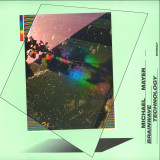
Michael Mayer’s latest EP, Brainwave Technology, comes at you purposeful, stealthy and sly. It’s a glorious left turn for the redoubtable producer, one that sees his typically lean and lithe productions buffed to a metallic, futurist sheen. There’s a gleam in the eyes of tracks like “Brainwave Technology” and “Alpha” that speaks of serious fun, of the intersection of the pleasure zone and the frontal lobe.
“Brainwave Technology” itself is informed by Mayer’s deep dive into the thorny terrain of artificial intelligence, transhumanism and posthumanism. Inspired by reading German philosopher Richard David Precht, Mayer found himself heading down the “proverbial rabbit hole,” as he describes it, “watching hours of YouTube material by self-proclaimed prophets of these ‘inevitable’ changes to come.” Never one to be taken in by the egotist’s dance, Mayer’s cynicism about the whole endeavour is tempered, a little, by the deeper questions that these figures gesture towards: “Is it really an evolutionary step that man and machine become one? Or is it rather a marketing plot by Silicon Valley billionaires?”
On “Brainwave Technology”, Mayer plays the charlatans at their own game, turning their logic against them by exposing the fruitiness of their ‘visions’. “I chose irony as my sword with which I chopped off some quotes from some of those batshit crazy prophets and self-promoters,” he explains of the drooling psychobabble he drops in the track’s lacuna. There’s a sense of humour here – how could you not laugh at these hungover egotists? – but there’s levity too, a sense that Mayer’s using sound to expose the contradictions and double-speak at the heart of these half-formed ideas. It’s a Burroughsian tactic, to slice into the heart of the voice to see what hidden truths surface.
It was Burroughs, too, who once said that “when you cut into the past, the future leaks out”; Brainwave Technology cuts into the logic of the futurologist to leak out the messiness of modern reality. On “Alpha” and “Gamma”, Mayer seems to conjure up the stark, ominous music that’d soundtrack a science fiction reinterpretation – or preinterpretation – of our modern malaise, all funereal wreaths of electronic noise and clatterboxing beats. As the EP resolves with “Device For The Young At Heart”, Mayer’s questions are piling up: “Do we want to become immortal and live on as a download? Do we really give up on Earth and put all our effort into colonising Mars?” There are no answers, of course, but plenty of imaginings-to-be. Brainwave Technology soundtracks both dystopian and utopian possibilities of what could come next.
The first in a series of various artists to be released by Details Sound - The Spirit Of The Age Vol. 1 is a personal attempt to represent "the spirit" of this moment, an eye on the sea, where the initial intention of powerful and dynamic body music is changing, leaving room for a more contemplative and reflective way of dancing, where large places give space to the little ones, taking back the original spirit of being together. On the A side, Anatolian Weapons opens with A Series Of Changes - a progression of looped vocals and acidic basslines that culminate in a full, liberating rhythm. Following A Hand Modern Cage focuses on a more hypnotic and evocative soundtrack that can perfectly match an atmospheric opening. On the flip Gamma Intel’s Note To My Love deliver a mix of broken and electro rhythms that are part of the artist signature sound, ending with an intricate weave of melodic basslines. The last track Dense And Ragged is signed by the renowned london-based duo Vactrol Park who set the mood for a distopyan trip in 2049.
Vienna-based DJ and producer, Heap, lands on Mechatronica White with a radiant and hypnotic vision of forward thinking dance music, assisted by Gamma Intel's menacing slow-burner on the flip.
Starting from this release, EPs in the Mechatronica White series will be released via one limited pressing of hand-numbered and hand-stamped white label 12" vinyls, as well as in digital format.
- 1