Inhaler is the third studio album by American rock band TAD, originally released on October 19, 1993. It was the band's major label debut after two albums and an EP released by Sub Pop, and it was also their first album with drummer Josh Sinder, formerly of The Accüsed. Producer J. Mascis (Dinosaur Jr.) gave TAD a more focused and driven sound on this record. He can be heard playing the piano on ""Luminol"". The song ""Grease Box"" was played during the end credits of the 1994 movie Brainscan. Inhaler is easily their best and most consistent album to date and obtained positive critical reception upon release. Fortunately, the group has lost none of the grit that marked them as the grungiest of the Seattle scene. In promotion of Inhaler, TAD toured with Soundgarden. Inhaler is available as a limited edition of 1000 individually numbered copies on magenta coloured vinyl and includes an insert.
Поиск:gave
Все
- A1: Ponta De Lança Africano (Umbabarauma) 3:58
- A2: Hermes Trismegisto Escreveu 3:04
- A3: O Filósofo 3:30
- A4: Meus Filhos, Meu Tesouro 3:53
- A5: O Plebeu 3:18
- A6: Taj Mahal 3:10
- B1: Xica Da Silva 4:00
- B2: A História De Jorge 3:53
- B3: Camisa 10 Da Gávea 4:18
- B4: Cavaleiro Do Cavalo Imaculado 4:43
- B5: África Brasil (Zumbi) 3:48
África Brasil is a 1976 release by Brazilian artist Jorge Ben. It was Ben's 14th studio album and a milestone in his career with a switch to electric guitar and funk music leaks. For África Brasil Ben reworked three of his earlier compositions: "A Princesa e o Plebeu" from Sacundin Ben Samba, "Taj Mahal" from Ben, and "Zumbi" from A Tábua de Esmeralda. The album's opening track "Ponta de Lança Africano (Umbabarauma)", a song about an African football striker, became a well known soccer-associated track and it was later included on David Byrne's 1989 compilation Brazil Classics Beleza Tropical, prompting rotation of a video for the track on VH-1
John Birks "Dizzy" Gillespie (1917 - 1993) was a legendary trumpeter, composer, and bandleader. Gillespie was praised worldwide for his trumpet playing, using not just any trumpet, but one with a bell bent at a 45-degree angle. The unique shape of the instrument, according to his autobiography, was not intentional but the result of an accident. Fortunately, Gillespie liked the altered sound, and this unique shape and sound became the artist's trademark.
Gillespie began playing the trumpet at the age of 13 and formed his first big band in 1937 with Teddy Hill (1909 - 1978). Later, Dizzy Gillespie led his own big band from 1946 to 1950, making pioneering contributions to the jazz world. Gillespie was a versatile musician, known not only as a memorable trumpeter but also as a fantastic pianist and trombonist. He even made an unsuccessful bid for the presidency.
In the 80s, Dizzy Gillespie gave some beautiful and unforgettable performances at North Sea Jazz, and thanks to NSJ Records, NTR, AVROTROS, and MOJO, this legendary concert is now available on LP!
Dizzy Gillespie is one of the LPs that is part of the North Sea Jazz Concert Series. Other concerts in this series feature artists like Dizzy Gillespie, Ray Charles, Dexter Gordon, and Jan Akkerman.
The North Sea Jazz Concert Series will include officially licensed releases that will be released as standard on 180-gram white vinyl in a sleeve of heavy paper and printed on reversed board. The records will be captured in mainly black-and-white artwork by Hans Pol in his signature style of the festival with inspiration from the covers of classic older jazz releases from the Blue Note label, for example. The liner notes are written by journalist and jazz expert Jeroen de Valk
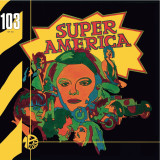
It was on the occasion of the bicentennial of the USA (1776 – 1976) that I recorded this album which had an international success. The musicians were perfect and the sound great; it gave me the idea and the crazy desire to make a record on the Africa that I love. Here too, I’ll let you know.
LINGUA IGNOTA, the solo project of multidisciplinary artist Kristin Hayter, takes a radical, unflinching approach to themes of violence and vengeance in ways that are moving, brutal, and harrowing. Her music is intentionally situated at specific and strange intersections, incorporating elements of power electronics, death industrial, and black metal alongside baroque classical, spiritual minimalism and folk. Relentless intensity and soaring dramatic arcs are informed by Hayter's background in classical music, and the major sonic locus of the project is her voice, a dynamic entity that rushes from unhinged screaming to lilting soprano to angular belting with an artistry and ferocity that has drawn comparisons to Diamanda Galas. She is notorious for confrontational live performances that can leave an audience breathless or in tears. Hayter began classical training at the age of ten with intent to pursue an operatic conservatory track. Instead she developed an interdisciplinary fine arts practice at The School of the Art Institute of Chicago. She continued with graduate work at Brown University, producing a controversial thesis titled BURN EVERYTHING TRUST NO ONE KILL YOURSELF. LINGUA IGNOTA was born out of this thesis which re-contextualized misogynist content as biblically vitriolic anthems for survivors of domestic violence and sexual assault. A survivor herself, Hayter seeks to give a singularly aggressive voice to the unheard, silenced, and dismissed.
“On ‘The Nashville Sessions’ as throughout Van Zandt’s entire catalogue, the more wretched he sounds, the better - and on the best parts of ‘The Nashville Sessions’ he almost makes melancholy sound a condition to be envied.” Uncut In 1974, Townes Van Zandt recorded what would have been his seventh album, ‘Seven Come Eleven’. Business issues prevented its release until the recordings surfaced two decades later as ‘The Nashville Sessions’ In 2014, Townes Van Zandt’s original manager and producer Kevin Eggers gave Charly Records’ Rob Caiger and engineer Pete Reynolds the only surviving tapes to restore and remaster to present a stunning document of the folk-blues master at his absolute peak, originally released on vinyl for the first time in 2015. “You did a first-class with the record. The packaging looks sensational and the records sound great. That was what matter most to me over the years. I know Townes would be very pleased. The simple truth is the only things that matter to him was his songs and his music. All the rest was bullshit and he could have cared less. We began as dear friends and that’s how it ended just before his death. When it came to the music he gave all he had to give.” Kevin Eggers - 26 March 2015
The band Dizzy Gillespie assembled for this date — Junior Mance, Les Spann, Sam Jones, and Lex Humphries — was for the most part a working band on the club & concert circuit, offering a mixture of Gillespie’s entertaining songs, established repertoire, & some Latin & African-influenced pieces. With them, Dizzy found a middle ground in his music that gave his legacy room to breathe, but with much more rhythmic variety. This Verve By Request title is pressed on 180-gram vinyl at Third Man in Detroit.
After remaining unavailable for years, here's the long-awaited vinyl reissue of the debut album (originally released in 1972) by one of the epoch-making groups in the history of Peruvian rock: We All Together. Their original compositions -all sung in English- betray their passion for McCartney, taking Beatle centrism to new heights in South America. While the Uruguayan Los Shakers could remind us of the first phase of the Fab 4, We All Together is like their '70s version. Amazing compositions, with nods to prog rock and the twilight imprint of singer-songwriters living the end of the hippy dream, that show both diversity and a defined identity. A must for any '70s rock collector. DESCRIPTION Between 1967 and 1974 Saúl and Manuel Cornejo led a series of epoch-making groups on the MAG label (New Juggler Sound, Laghonia and We All Together) in the history of Peruvian rock. All these bands were directly influenced by the British invasion and used new sounds from Hammond, phase shifters, synthesizers and tapes played backwards, which stimulated rivalry with other groups. Another hallmark of the brothers was the technical quality of their records, thanks to Saul's supervision of all MAG recordings between 1972 and 1974. At the end of 1971, when Laghonia was working on the last tracks of "Etcétera", they met Manuel Antonio Guerrero's (MAG) son, Carlos, who had just got back from the USA, and gladly joined in the choruses of the last songs Laghonia was recording. They met up again soon after to rehearse some of Paul McCartney's songs. As soon as he heard them play, Guerrero Senior urged them to form a group focused on cover versions of foreign hits not yet known in Peru. Initially, the Cornejo brothers weren't enthused by a project so different from Laghonia, but ended up accepting as it gave them the opportunity to spend time in the studio. Carlos' melodic voice was another incentive, although they made it clear that the new group, We All Together (WAT), would stick to the mixing desk: "The group isn't into presentations or shows, we're about recording music and purifying it to the max," stated Saúl at that time. Their first album included four covers of Paul McCartney and Badfinger, several compositions by Carlos Guerrero -appealing Beatles-style melodies- and two songs from Saúl and Manuel's archives. 'Children', by keyboardist Carlos Salom, opens the LP: a nostalgic description of childhood, with the distinctive piano sound (achieved through mixing) that permeates the record. Although WAT sang and composed in English, they had no intention of undermining or alienating national culture. Their aim was much more innocent: they simply wanted to make it in the English-speaking world. 'It's a Sin to Go Away' was composed during Laghonía's lifetime as a band and it features guitars played backwards and a psychedelic-progressive style closely attuned to the era. After being included on several compilations, praise for the song has flowed from Europe and the United States in recent years. The album was released in July 1972 and became one of the best-selling Peruvian rock LPs.
Veiga lands straight on the dancefloor, no ambiguity about it. Spurred by the guys from RS Produções, he's been honing his DJ skills since he was 17 (currently 23), initially with partner Nunocoox, who gave him even more motivation. Production came naturally sometime in 2020. We venture: maybe one of the good things coming out of the lockdown? Summer of '22, his debut at Musicbox (at the Príncipe monthly residency) is recorded as a festive, lively set, punctuated by the kind of crowd shouts only heard when things go really happy and sweaty. Since then, Veiga's name has been spotted regularly in the afro club scene, growing in reputation
This side of kuduro, "Leandro" is as expressive as it gets, with percussive forces pulling in deceitfully different directions, much in the same style as the slower form of tarraxo. But we can call this house, yeah? No niceties, however: little over 3 minutes and the track abruptly cuts into silence, exuding the raw power of something made for the mix, not in the least "for the people". In a similar pragmatic mode, the stabs in "Sem Nome" get the party started unannounced. Full mode, for the duration. Minimal groove, broken beats and emotive highlights. "Boiler Room" may be wishful thinking, an interpretation of what is required to rock the place or, ultimately, just a title to wrap up the project. In any case, here's a feisty vocal-and-whistle driven stormer, building up to perfection over three and a half minutes. All elements exactly where they belong. Relentless pace in "X de Destroi", a dark side operation, unreal ambiance, breakneck beats, a purgation?
The title "Tudo É No Guetto" contains all the necessary theory. Everything happens in the ghetto. This uplifting house slab celebrates life as it is, freezing hardships for a moment, the ghetto seen as welcoming, a natural place to be. Vocals stashed away in his cell phone come from the animação crew Os Twinni (he joined them for a while). Clipped, repeated and manipulated to convey the very simple feeling of good times. Veiga himself talks about growing up with minimum resources but still happy. That is the memory he retains from being a kid in the ghettos of Amadora, just outside of Lisbon, born to a Cape Verdean father and Portuguese mother. Though the music sounds carefree and the message is chilled, let us not be tempted to rebrand Reality.
Never before had the lyrics of Peruvian cumbia been able to touch the reality of migrants from the countryside living in the capital. In 1974, Grupo Celeste, under the direction of Víctor Casahuamán Bendezú, recorded 'En el campo', a first single that not only broke sales records, but also brought thousands of people into contact with their homeland. The band not only wove the nets of that urgent, necessary reconnection, but also gave birth to one of the most relevant popular singers in the history of Peru: Lorenzo Palacios Quispe 'Chacalón'. The year was 1974. Until then, only Los Destellos had recorded a non-instrumental cumbia song, 'Elsa', in 1970. Víctor Casahuamán Bendezú, a musician, creator and the composer behind Grupo Celeste understood that in order to continue the legacy of Peruvian bands from the sixties like Los Demonios de Corocuchay, Los Yungas and Los Demonios del Mantaro, it was necessary to address in his lyrics a special and urgent topic: the feeling of displacement from the homeland and the vicissitudes of the migrant sector. The experiences of those who traveled from the provinces to the capital in search of opportunities they could not find in their towns of origin; the process of settling and adapting in a foreign city; the challenges derived from this change of environment; the recognition of a different culture and the creation of a space they understood as their own were the stories that had to be told in the songs. This is why Grupo Celeste was the backbone of cumbia in Peru: it established a common story that thousands of migrants would identify with. From this idea and impetus was born 'En el campo', the band's first single.
Color Vinyl[24,58 €]
Valley of Rain was Tucson’s Giant Sand’s debut album recorded in 1983, and eventually released by 1985. It included Howe Gelb on vocals, guitar and Winston Watson on drums for most of it, Tommy Larkins on drums for some of it and Scott Garber on fretless bass for all of it. At the time of the recording, Howe was unacquainted with the possibilities of tube (valve) amps and had recorded most of the album with a Roland JC120 at the miraculous 8 track facilities of The Control Center in Korea Town, Los Angeles by Ricky “Mix” Novak. This impromptu recording had occurred because the band refused to cancel their first Los Angeles live gig, at Madame Wong’s, when the band (Giant Sandworms) had broken up days before in Tucson. Instead, Howe headed out anyway with Scott, the newest member who’d only been in the band for about a year, after band mainstays Billy Sed and Dave Seger reasonably decided ‘enough was enough’ following a rough and tenuous year spent in the lower east side of NYC attempting to further the band circa 1981/82. Tucsonan Winston Watson, (who would go on to tour with Bob Dylan in the 90s, as well as Alice Cooper, Warren Zevon etc ) was already living in Los Angeles and was brave/kind enough to jump in for the live date with no rehearsal. The result was so sparked with adrenalin, that the trio set up an impromptu studio session the next day to attempt to capture the sonic thrust on tape. The total cost of the day and a half recording was $400 including one 1” reel of 30 minute tape. When Enigma Records offered to release the album they requested another 15 minutes of music to make it a full LP. Ron Goudie was then called in to oversee the extra recordings at a Venice, CA studio called Mad Dog with Eric Westfall engineering. Tommy Larkins, who had been on the previous country punk album of Howe’s “The Band of ... Blacky Ranchette” came in to drum for those last 3 songs. It was there when Howe borrowed an amp that had been stored at the studio did he discover the bolster of a tube amp and his world changed. The amp was a slightly modified Fender Twin Reverb owned by Robbie Krieger of The Doors. 30 some years later, now that the band had been put to sleep indefinitely, those very first songs had begun creeping into the last Giant Sand tours. It somehow seemed appropriate to give them another shot with the proper amp just to see what they could’ve been. What made the idea more approachable was the availability of both original drummers living back in Tucson. The first attempt came last summer with both Winston & Tommy and Thøger Lund on bass, as well as the 2 newest members, 29 year old Gabriel Sullivan and 23 year old Annie Dolan on double neck guitars. The sound was insane. The funny part was Gabriel, who engineered and mixed the session, gave it an intentional 80s production sound. Howe later explained to Gabe he had been at war with that production trend since those first original recordings. So they all tried it again at Christmas time, this time with a newly discovered Fender 30 amp that had only been in production from 1980 – 1983. This new re-recording of that first album now sounds like it should’ve sounded. It was re-done for $400 and the same day and a half session time as the original. Scott Garber even drove up from Austin TX with his fretless to play so that the album is literally the originally line up for at least half of the songs. And yes, no pedal boards were used too. The band intends to tour this summer playing only those Valley of Rain songs. Giant Sand Returns To Valley Of Rain.
Black LP[19,12 €]
Crystal Clear / Black Smoke Vinyl[25,17 €]
FLUO GREEN[26,01 €]
"When the stirring musical passions of piano virtuoso Robert Mitchell, celebrated double bassist Neil Charles, and drum wizard Mark Sanders came together as a trio in 2022, “The Flame” was born, altering sound forever.
Much like their first album, Vol. 2 is yet another sparkling contribution to the rich vibe that is British improvised music. This outstanding interplay among trio members brings together the perfect balance of adventurous improvisation, abstract rhythms, and dreamy melodies that linger oh so pleasantly in your mind. Robert Mitchell opens the album with a dedication to the woman who gave him life. He tenderly recites his beautifully written poem about the selfless sacrifice of a mother so devoted to helping others."
“This is the second half of The Flame’s debut show at Café Oto in Feb 2022,” explains Professor Robert Mitchell. “It also features my poem ‘A Son Of Windrush Reflects’ in tribute to my mother and all of the nurses who served in the UK’s National Health Service from 1948 onwards - and the ongoing Windrush Scandal (5 years and counting)."
Robert Mitchell - Piano, narration, percussion.
Neil Charles - Double bass.
Mark Sanders - Drums, percussion.
Recorded February 10, 2022 by Shaun Crook at Cafe Oto, London, UK.
Mixed and mastered by Jeremy Loucas at Sear Sound, New York City.
Illustration by Robert Mirolo.
Graphic design by Mark Smith.
Jazz-infused prog rock act Catapilla began in London in 1970, with saxophonists Robert Calvert (who later worked with Daevid Allen in various Gong spin-off projects) and Hugh Eaglestone, bassist Dave Taylor (of chart-topping pop act Edison Lighthouse, and later active in hard-rock group, Liar), along with drummer Malcolm Frith, guitarist Graham Wilson and clarinet player/flautist, Thierry Rheinhardt; original vocalist ‘Lady’ Jo Meek quit early (to work with the keyboardist, poet and science fiction author, Julian Jay Savarin) and was duly replaced by her sister, Anna, whose gutsy gasps gave the band its noteworthy difference, along with the woodwinds and horns. Former Millionaires’ bassist Cliff Cooper (who had worked with producer Joe Meek before founding Orange Amplifiers), brought Catapilla to the attention of Black Sabbath’s manager, Patrick Meehan, who swiftly got them a contract with Vertigo, Philips’ prog subsidiary; this self-titled debut has four freaky tracks, including the side-long closer, “Embryonic Fusion.”
The roots of 80s English psychedelic freak band The Tryp lie in a hoax perpetuated by Steve Lines’ indie mag Mardenbeat, based in the town of Calne in the Marden Delta, which reviewed a gig by a non-existent band; former JP Sunshine main man Rod Goodway and partner Christine Cotter then gave flesh to the beast with Lines and Paul Ricketts of Unhinged mag, cutting My Brain Collapsed! as an exploration of mushroom-fuelled mental instability. First issued on cassette label Mardentapes and later by Acid Tapes (just as Lines took over from Alan Duffy), this edition is the first on vinyl-A Must Have FOR ALL Tryppers!
Love, Love, Love, Love will make you walk a thousandcmiles to be with her. She is the wisdomcyou long to have, the courage you nevercthought you had. Love is peace, she is patient, she is Kind. Love will heal that infected wound that you long gave up on to heal, more powerful than any weapon of mass destruction. Cuddled up in her grasp, her tears will roll down your face. She’s the real deal. She will fight for you, she will carry the sword for you, She will walk a thousand miles for you. She is sweet, very sweet. Welcome to Jaqee 6th and final album, a closure of a chapter in my artistry so far. This is not the end, it’s just a crossroad that is proudly and lovingly directing me into an unpredictable future. I felt a strong need for healing on this album, so I made way for Vulnerability. I have opened doors that are to be obediently followed as I dig deeper in the understanding of the one thing that we humans yearn so much for. Love is King.
January 2023, Dorset. Snow is piled at the door, icy roads are closed, and Emily Cross is in a coffin. Not a setting typical for a rebirth. But for Loma, this is where they bring their band back from the brink. "It's like a demon enters the room, whenever we get together", writer, singer and instrumentalist Cross says of the struggle to bring new Loma music into the world. Following the release of their 2020 second album Don't Shy Away, Loma's three members were cast around the globe and the band-not for the first time-entered a deep sleep. Multi-instrumentalist and recording engineer Dan Duszynski remained in his studio in Don't Shy Away's central Texas heart, but Cross, a UK citizen, moved to Dorset, and writer and instrumentalist Jonathan Meiburg left the US for Germany to research a book. In the pandemic years, even being in the same room was impossible, and attempts to start a new record faltered. The following winter, in an attempt to salvage the record and the band, Cross suggested they regroup in the UK, in the tiny stone house-once a coffin-maker's workshop-where she works as an end-of-life doula. With minimal recording gear and few instruments, Loma turned two whitewashed rooms into a makeshift studio, using a padded coffin as a vocal booth. It was a turning point. They scrapped much of what they'd made, letting a new place set a new course. The one-lane roads, hedgerows and dark skies of Dorset gave the new songs an ineffable but unmistakable Englishness. The band used the ruin of a 12th-century chapel as a reverb chamber-surprising hillwalkers who peeked in to find them singing to no one-and the sounds of Cross's chilly workshop wormed their way into the recording: a leaky pipe, a drummer's brushes on a metal lampshade, the voices left on an ancient answering machine. What emerged was How Will I Live Without A Body?: a gorgeous, unique, and oddly comforting album about partnership, loss, regeneration, and fighting the feeling that we're all in this alone. Many of its songs have a feeling of restless motion; faceless characters drift through meetings and partings, tangling together and slipping away. "I Swallowed A Stone" is like a nightmare with a happy ending; "How It Starts" and "Broken Doorbell" reflect on the challenge (and necessity) of wrestling with agoraphobia. Though the record nods to the trio's separate lives- a German percussion ensemble, a pair of Texan owls, and the surf at Chesil Beach make guest appearances-the core of Loma's sound remains intact: earthy, organic and deeply human, anchored by Cross's cool, clear voice. Loma's previous album, Don't Shy Away, was galvanized by the unexpected encouragement and contributions of Brian Eno. This time, they found inspiration in another hero, Laurie Anderson, who offered a chance to work with an AI trained on her entire body of work. Meiburg sent her a photo from his book-in-progress about the once and future life of Antarctica; Anderson's AI responded with two haunting poems. "We used parts of them in a few songs," he says. "And then Dan noticed that one of its lines, 'How will I live without a body?' would be a perfect name for the album, since we nearly lost sight of each other in the recording process." In the end, Loma's efforts to reconnect with one another are the album's central focus: what do you owe a shared past, when everyone and everything has changed? "Making this record tested us all," says Duszynski. "I think that feeling was alchemized through the music." Alchemized, because How Will I Live Without A Body? is by no means a stressed-out record: an undercurrent of deep calm runs through it. But maybe 'relaxed' isn't the right word. It's more like a feeling of relief, of making it through a tough journey together.

- A1: Succession (Main Title Theme) - Orchestral Intro Version
- A2: Adagio In C Minor
- A3: Andante In C Minor
- A4: Serenade In E-Flat Major
- A5: Dark Minuet
- A6: Million Dollar Home Run
- A7: Succession - End Title Theme - Piano And Cello Variation
- A8: Rondo In F Minor For Piano And Orchestra - Kendall's Journey
- A9: Andante Con Moto - Piano And Strings - "Vaulter
- A10: Roman's Beat - Hearts
- A11: Itermezzo In C Minor - Piano And Double Bass
- A12: Concerto Grosso In C Minor - End Credits - You Have To Be A Killer
- A13: Furioso In F Minor
- B1: Andante Agitato - End Credits - “The Raid”
- B2: Sinfonietta In A Minor - Strings Variation - “The Photo”
- B3: Tuscany” Suite For Piano And Orchestra
- B4: Andante Moderato - End Credits - _Amen
- B5: Langsam - We Gave It A Go
- B6: End Credits - Vivace Appassionato In G Minor
- B7: Andante Espressivo - String Orchestra - Number One Boy
- B8: Allegro In F Minor - Arrival At Waystar
- B9: Succession - Andante Risoluto
- B10: End Credits - Choir And Orchestra - With Open Eyes
Immerse yourself in the immersive world of Succession like never before with the Official Soundtrack on vinyl. Discover the soundscape that accompanies the gripping drama of the Roy family's power struggles, brought to life through a selection of tracks that capture the essence of the acclaimed series.
Featuring both original compositions and carefully selected classics, the Succession vinyl soundtrack offers an emotional journey through the highs and lows of the Roy dynasty. From moments of intense family conflict to triumphs of corporate conquest, each track takes you deeper into the heart of the story, making it a must-have for fans and collectors alike.
Treat yourself to the luxurious experience of vinyl and enhance your listening sessions with the rich, warm tones that only analogue audio can offer. Add the Succession vinyl soundtrack to your collection today and immerse yourself in the world of power, wealth and family intrigue
"Multiplatinum hitmakers Fastball are remembering it's okay to have hits. Reflecting on their meteoric rise with chart-topping debut “The Way,” guitarist/vocalist Miles Zuniga wryly remarks, “I like to say that ‘The Way’ gave us the freedom to continue doing what we do.”
And what Fastball does is write hits. Their latest, Sonic Ranch, produced by David Garza (Fiona Apple) and John Fields (Demi Lovato, Miley Cyrus), is ten sing-along gems, combining pop smarts & the wisdom of 30 years together."
Single Vinyl[32,14 €]
The hugo toolbox - A lasting place.
Just as my dad with words unspoken gave the tools to me, I’m passing these down to you.
A place to keep ideas safe, to hold the music, to give you space away from your phone.
Contents:
• 1x Toolbox
• 1x Chess Board with Custom chess pieces (Made by Sunny)
• 1x Incense (Made by Cremate)
• 1x Incense Burner
• 1x hugo car key with keychain
• 1x Pin Badge
• 1x Certificate of authenticity
• 1x Notebook
• 1x hugo Process Book
• 1x Georgetown Flexidisc
• 1x Plastic Flexidisc
• 1x hugo: reimagined (Live at the Royal Albert Hall) Vinyl LP
• 1x hugo Picture Disc Vinyl LP
• 1x Hidden Message