"Dunya", der Titel von Mustafas meisterhaft ausgearbeitetem und atemberaubend zärtlichem Album, bedeutet aus dem Arabischen übersetzt so viel wie "die Welt mit all ihren Fehlern". Ein hochtrabendes Thema für einen jungen Songwriter, aber wie bei jedem Thema, das im Mittelpunkt der Arbeit des sudanesisch-kanadischen Künstlers steht - von religiöser Hingabe bis zu Kindheitstraumata, von Bandengewalt bis zu romantischer Intimität - nähert er sich durch eine persönliche Sichtweise. Er mischt Genres und Stimmungen, verwebt romanhafte Details in einprägsame Folksongs und hat ein Album geschaffen, das sich wie eine Reihe persönlicher Durchbrüche anfühlt, die einer nach dem anderen eintreffen. Was zuerst an Mustafas Musik auffällt, ist seine Art zu schreiben: ein einfacher, durchdringender Ton, der jede Geschichte so roh und ernsthaft wirken lässt wie die Worte eines Liebesliedes. Mit seinem leisen Vortrag, der seine Umgebung zum Schweigen bringen kann, entwickelte sich Mustafa schnell vom Wunderkind, das in seiner Heimatstadt Toronto Gedichte rezitierte, zu einer Kraft, die hinter den Liedern steht und Popsongs schreibt. Auf "Dunya" ist er zu einem eigenständigen Autoren gereift. "Ich versuche, das gewöhnliche Leben im Ghetto zu bewahren und zu feiern", beschreibt Mustafa seine lyrische Inspiration. Die Songs, in denen er sein Aufwachsen und seinen weiteren Lebensweg beschreibt, sind gleichermaßen entwaffnend in ihrer Einfachheit und vielschichtig in ihrer emotionalen Bandbreite. Durch die Zusammenarbeit mit Aaron Dessner, Rosalía, Clairo, Nicolas Jaar und anderen sowie Mustafas langjährigem kreativen Partner Simon Hessmann offenbart die Musik eine selbstbewusste, unverwechselbare Stimme, die noch nie so massenkompatibel geklungen hat.
Cerca:gaz w
- A1: Lale Minna
- A2: Marrakesh Swing
- A3: Little Lost Wonder
- A4: Tamina's Lullaby
- A5: Stories Of Life
- A6: Dear Rainer
- A7: Tomato Party
- A8: These Simple Things
- A9: Like The Wind - Instrumental
"Stories Of Life" - triosence malen Musik aus Geschichten, die das Leben schreibt Das Album "Stories of Life" des Genregrenzen neu definierenden Pianotrios triosence ist ein musikalisches Porträt von Momentaufnahmen aus dem Leben. In jedem Titel erkundet triosence-Bandleader und Komponist Bernhard Schüler die Tragik und Schönheit von Geschichten aus dem Alltag und malt diese Erlebnisse in betörend melodiöse, mitreißende Instrumentalkompositionen. Große Freude und tiefer Schmerz, scheinbar Banales und wahrhaft Lebensveränderndes liegen oft überraschend nah beieinander. Der Verlust einer Schwangerschaft in "Little Lost Wonder", die Liebe zu seiner kleinen Tochter in "Tamina's Lullaby", der Tod seines Onkels in "Dear Rainer" oder die Freude über wild wuchernde Garten-Gewächse seiner Lebensgefährtin in "Tomato Party" - "Stories of Life" ist die in Musik nachvollzogene Erkenntnis von Bernhard Schüler, dass im Leben all das verwoben ist. "Ich setze mich ans Klavier und spiele mir alles von der Seele. Schöne und traurige Erlebnisse, Beobachtungen, Empfindungen - Musik zu schreiben ist meine Art, über das Leben nachzudenken", erklärt er.Was "Stories Of Life" musikalisch auszeichnet, sind progressive Strukturen, die immer wieder in Stil, Tempo und Stimmung variieren; die mal laut oder leise sind, verträumt oder kraftvoll. Sie sollen den Hörer auf eine regelrechte Reise schicken, indem sie eine Reihe von starken Klangbildern erzeugen. "Wenn ich komponiere, habe ich das immer im Hinterkopf", so Bernhard Schüler. "Nämlich Geschichten mit meiner Musik zu erzählen. Das ist, was die Leute am meisten berührt." Auf "Stories Of Life" entwickeln er und seine Bandkollegen Tobias Schulte (Schlagzeug) und Omar Rodriguez Calvo (Bass) mit großer Leichtigkeit ihren melodiösen, stimmungsvollen Sound-Mix aus Weltbeat, Folk, Jazz, Rock und Pop konsequent weiter. "Wir gestalten ein totales Crossover", erklärt Bernhard Schüler, "das ist Musik, die zwar in klassischer Jazz-Formation daherkommt - mit Klavier, Bass und Schlagzeug - aber Jazz im herkömmlichen Sinn kann man das nicht mehr nennen. Mir geht es um starke Melodien und klare Songstrukturen. Eine Fokussierung auf das Wesentliche ist mir wichtig oder anders gesagt: musikalisch auf den Punkt zu kommen."Dem Maler Rainer Hoffmann ist nicht nur das Stück "Dear Rainer" gewidmet - mit "Stories Of Life" wird ihm auf besondere Weise ein Denkmal gesetzt. Sein Gemälde "Badere vid Ingetoprsjön" (Badende am Ingetorpssee) ziert denn auch das Cover-Artwork und im Booklet finden sich zehn weitere Bilder des Künstlers - jedes thematisch einem der Songs zugeordnet. "Leider hat die Kunst meines Onkels nie die Aufmerksamkeit und Anerkennung bekommen, die sie wirklich verdient hat", so Schüler. "Aber er hat ein sehr aufregendes Leben geführt und war ein wahrer Abenteurer, der bereits in frühen Jahren in die schwedische Wildnis gezogen ist und die ganze Welt bereist hat, um dort zu malen. Alles andere war ihm egal. Diese Leidenschaft für die Kunst - ohne Wenn und Aber - hat mich schon als kleiner Junge fasziniert, und wenn er damals Geschichten aus seinem Leben erzählt hat, saß ich mit großen Augen vor ihm." Eine dieser Geschichten greift Schüler in "Marrakesh Swing" auf - ein Flirt mit der Kultur einer Stadt, die er nie besucht hat, aber in seiner Komposition zu blühendem Leben erweckt. Der Hörer erlebt sie vor seinem geistigen Auge - in all ihren Facetten, Farben und ihrer Lebendigkeit.Mit "Tamina's Lullaby" ist nach langer Zeit wieder ein Stück für Soloklavier auf einem triosence-Album enthalten. Zudem schließt eine Referenz auf die Vergangenheit den Kreis der Geschichten auf "Stories of Life": Eine neue Instrumentalversion von "Like The Wind", das ursprünglich mit der US-Sängerin Sara Gazarek für das Album "Where Time Stands Still" aufgenommen wurde, bildet den Schlusspunkt des Albums.
- Cut & Rewind
- Under The Sun
- Disco Life
- Chapters
- Possibilities
- Take It All
- She Who Dares
- Shop Boy
- Bandit
- Little Kisses
- Do All Things With Love
- Make It Known
LILIAC VINYL[23,49 €]
NYC punk-chic, discodelic funk band Say She She is back with Cut & Rewind, their politically-charged, dancefloor-crushing third album. Led by the powerhouse vocal trio of Piya Malik, Sabrina Mileo Cunningham, and Nya Gazelle Brown, the group channels progenitors like Minnie Ripperton, Charles Stepney, Liquid Liquid, and Raw Silk to create a groove-forward, psychedelic soundscape of pulsing disco beats, heavenly whistle tones, and soaring three-part harmonies. There's a feeling of righteous rebellion simmering beneath these songs' body-moving exterior, though: "She Who Dares" is a call to fight against a near-future dystopia where women's rights have been decimated globally; "Disco Life" decries the racism and homophobia of Steve Dahl's 1979 "Disco Demolition Night," reclaiming the dancefloor as "a playing field where all are free." Cut & Rewind is protest music dressed up as a sweat-dripping, hip-shaking, mind-expanding good time.
Ostinato as resistance: Rafael Anton Irisarri’s landmark work reimagined. Marking the tenth anniversary of the American composer’s critically acclaimed album 'A Fragile Geography', this new edition arrives renewed, both sonically and visually.
First released in 2015 (Room40) during a period of personal upheaval and creative reinvention, it endures as a testament to resilience, transformation, and the connection we hold with the places that shape us.
Written in the aftermath of a devastating theft, A Fragile Geography was born out of loss. Just days before a cross-country move to New York, Irisarri’s entire Seattle-based studio was wiped out. Instruments. Recordings. Archives. Gone without a trace. He arrived on the East Coast to an empty room and the daunting task of starting over.
“This album wasn’t just a record; it was a lifeline,” Irisarri reflects. “It became a way to process the emotional chaos that followed: uprooting, instability, and ultimately, the slow, intuitive rebuilding of a life.”
Composed and recorded in the rural woods of the Hudson Valley, the album took shape in seclusion, surrounded by nature, and through a process guided by improvisation. Embracing limitations, Irisarri wove textural layers of field recordings with half-remembered melodies from his Seattle years, piecing them together like fragments of memory. Tracks like “Displacement,” “Hiatus,” and “Persistence” juxtaposed haunting stillness with restless momentum, mapping an inner terrain of grief, catharsis, and rebirth.
Among its defining sounds is “Empire Systems,” a monumental centerpiece built around a simple four-chord progression, organ textures, and guitar drones. Gradually, the track expands into layers of immersive loops and thick, enveloping distortion that wash over the listener like a rolling wave. Often cited as the album’s most majestic passage, it captures Irisarri at his most sonically ambitious. With a harmonically saturated structure crafted from restraint and repetition, it remains one of his most recognizable compositions: an exercise in the art of maximal minimalism.
From the outset, “Reprisal” received praise from BBC’s Mary Anne Hobbs, who championed the track on her radio show. Her support played a key role in introducing Irisarri’s work to wider audiences and solidifying his place within the lineage of electronic, drone, and experimental sound artists. A slow-burning elegy, the piece emerges from a haze of distortion and sub-bass, with dense, unrelenting drones carrying a sense of mounting tension. Just as it seems to collapse under its own weight, flickers of guitar emerge like distant light through fog. It’s a meditation on dissonance, resolve, and the elusive possibility of release.
The closing track, “Secretly Wishing for Rain,” is steeped in saudade: a longing for Seattle’s dour grey skies, lush green landscapes, and desaturated sunsets. Through it, Irisarri mourns a vanished chapter of life bound to the city, a time documented in scattered mementos and cherished collections, now permanently gone. A reflection on what could never be recovered: an era lost to time. Julia Kent’s looped cello motifs added a melancholic warmth to the track, marking the first collaboration between the two artists and sparking a musical dialogue that would keep growing in the years that followed.
More than a career highlight, A Fragile Geography has laid the foundation for Black Knoll studio, which Irisarri rebuilt from the ground up. The studio has since grown into a creative hub for countless projects, with Irisarri engineering records for iconic music figures like Terry Riley, Ryuichi Sakamoto, William Basinski, MONO, Devendra Banhart, Grouper, Emeralds, Steve Hauschildt, Julianna Barwick, and many others. Carried by its lasting influence, the album has quietly captured the ear of a younger generation, its sound and emotional arc finding new listeners in unexpected corners.
The album’s new visual language was reimagined in collaboration with Mexico City–based designer Daniel Castrejón. Irisarri captured ghostly images at Gaztelugatxeko Doniene, a historic coastal site in Bermeo, Euskal Herria. Castrejón then treated the photographs with distressed textures and spectral overlays. The final artwork channels the rugged, elemental forces that shaped both the music and Irisarri’s aesthetic, renewing his ties to ancestral ground inspired by the Basque homeland of his bloodline.
Mastered by Stephan Mathieu with exceptional attention to detail, this anniversary edition uncovers every nuance in the sound design, enhancing clarity and presence. With each listen, new elements emerge, inviting discovery and reconnection.
“I don’t experience this album as a document of grief anymore,” says Irisarri. “I hear adaptation and I'm reminded that when everything falls apart, something meaningful, maybe even beautiful, can emerge.”
Ostinato as resistance: Rafael Anton Irisarri’s landmark work reimagined. Marking the tenth anniversary of the American composer’s critically acclaimed album 'A Fragile Geography', this new edition arrives renewed, both sonically and visually.
First released in 2015 (Room40) during a period of personal upheaval and creative reinvention, it endures as a testament to resilience, transformation, and the connection we hold with the places that shape us.
Written in the aftermath of a devastating theft, A Fragile Geography was born out of loss. Just days before a cross-country move to New York, Irisarri’s entire Seattle-based studio was wiped out. Instruments. Recordings. Archives. Gone without a trace. He arrived on the East Coast to an empty room and the daunting task of starting over.
“This album wasn’t just a record; it was a lifeline,” Irisarri reflects. “It became a way to process the emotional chaos that followed: uprooting, instability, and ultimately, the slow, intuitive rebuilding of a life.”
Composed and recorded in the rural woods of the Hudson Valley, the album took shape in seclusion, surrounded by nature, and through a process guided by improvisation. Embracing limitations, Irisarri wove textural layers of field recordings with half-remembered melodies from his Seattle years, piecing them together like fragments of memory. Tracks like “Displacement,” “Hiatus,” and “Persistence” juxtaposed haunting stillness with restless momentum, mapping an inner terrain of grief, catharsis, and rebirth.
Among its defining sounds is “Empire Systems,” a monumental centerpiece built around a simple four-chord progression, organ textures, and guitar drones. Gradually, the track expands into layers of immersive loops and thick, enveloping distortion that wash over the listener like a rolling wave. Often cited as the album’s most majestic passage, it captures Irisarri at his most sonically ambitious. With a harmonically saturated structure crafted from restraint and repetition, it remains one of his most recognizable compositions: an exercise in the art of maximal minimalism.
From the outset, “Reprisal” received praise from BBC’s Mary Anne Hobbs, who championed the track on her radio show. Her support played a key role in introducing Irisarri’s work to wider audiences and solidifying his place within the lineage of electronic, drone, and experimental sound artists. A slow-burning elegy, the piece emerges from a haze of distortion and sub-bass, with dense, unrelenting drones carrying a sense of mounting tension. Just as it seems to collapse under its own weight, flickers of guitar emerge like distant light through fog. It’s a meditation on dissonance, resolve, and the elusive possibility of release.
The closing track, “Secretly Wishing for Rain,” is steeped in saudade: a longing for Seattle’s dour grey skies, lush green landscapes, and desaturated sunsets. Through it, Irisarri mourns a vanished chapter of life bound to the city, a time documented in scattered mementos and cherished collections, now permanently gone. A reflection on what could never be recovered: an era lost to time. Julia Kent’s looped cello motifs added a melancholic warmth to the track, marking the first collaboration between the two artists and sparking a musical dialogue that would keep growing in the years that followed.
More than a career highlight, A Fragile Geography has laid the foundation for Black Knoll studio, which Irisarri rebuilt from the ground up. The studio has since grown into a creative hub for countless projects, with Irisarri engineering records for iconic music figures like Terry Riley, Ryuichi Sakamoto, William Basinski, MONO, Devendra Banhart, Grouper, Emeralds, Steve Hauschildt, Julianna Barwick, and many others. Carried by its lasting influence, the album has quietly captured the ear of a younger generation, its sound and emotional arc finding new listeners in unexpected corners.
The album’s new visual language was reimagined in collaboration with Mexico City–based designer Daniel Castrejón. Irisarri captured ghostly images at Gaztelugatxeko Doniene, a historic coastal site in Bermeo, Euskal Herria. Castrejón then treated the photographs with distressed textures and spectral overlays. The final artwork channels the rugged, elemental forces that shaped both the music and Irisarri’s aesthetic, renewing his ties to ancestral ground inspired by the Basque homeland of his bloodline.
Mastered by Stephan Mathieu with exceptional attention to detail, this anniversary edition uncovers every nuance in the sound design, enhancing clarity and presence. With each listen, new elements emerge, inviting discovery and reconnection.
“I don’t experience this album as a document of grief anymore,” says Irisarri. “I hear adaptation and I'm reminded that when everything falls apart, something meaningful, maybe even beautiful, can emerge.”
- A1: Fragments (Extraits)
- A2: Park Güell
- A3: Disque Raye?
- A4: Valse De L'aiguille Creuse
- A5 4: Rroses Pour Marie
- A6: La Catedral D'escuradents
- A7: Your Labios As Tulips
- A8: Souvenirs De Vernet Les Bains
- B1: Arthur Cravan Was A Flor Fina
- B2: The Skatalan Logicofobism
- B3: Sardana Dels Desemparats
- B4: A Glass Of Gaz
- B5: Les Places De Gra?Cia (1)
- B6: Les Places De Gra?Cia (2)
- B7: Patafisiskal Polska
- C1: I Put A Barbara Steele On You
- C2: Chanson De Charme Pour Faux-Nez
- C3: The Lollobrigidada Fox-Trot
- C4: Third Eye Of A Cubist Guitar
- C5: Le Fakir De La Chapelle
- C6: On Se L'hegel En Enfer
- C7: Un Train Direct Pour Charenton
- C8: Love Too Soon
- D1: L'argot Du Bruit
- D4: Back To Schizo
- E1: To Be Dammit Ornette To Be
- E2: The Blank Invasion Of Schizofonics Bikinis
- E3: Sardana Dels Desemparats
- E4: Sense El Resso? Del Dring
- E5: Contre Le Style
- E6: A Figueres
- F1: The Hallucinogenic Espontex Sinfonia
- F2: La Societat Del Piano-Obstacle
- F3: Ge?Ge?Ne
- F4: Petite Escena Nocturna
- F5: A Farrutx
- F6: Le Soir Du Grand Soir
- F7: Souviens-Toi De Ces Douces Soire?Es
- G1: Stranger In Paradigm
- G2: La Vedette Del Molino
- G3: Jopo De Pojo Not Dead
- G4: The Indian Of The Group
- G5: Il Luna-Park Galactico
- G6: Don't Touch My Blue Oyster Shoes
- G7: Sans Les Mains ! (Zappambarretina)
- H1: El Misteri Del Triangle Del Vermut
- H2: Two Maniaco-Depressive Beatnicks Squabbling Over A Jane Russell Mozzarela's Bikini
- H3: Vals Burlesco
- H4: Flan Sin Nata Inzenight
- H5: Despintura (A) Fo?Nica
- D2: To The Last Of Imaginary Solutions
- H6: Europe Change Bad
- I1: El Bolero Del Raval
- I2: O Dancing Del Gran Fumisme
- I3: Hydropathes Marchant Sur Les Os
- I4: Spinoza Was A Soul Garagist
- I5: El Pianista Del Antifaz (Born In Candolle)
- I6: Portrait De L'artiste Avec Des Lunettes Pour Voir Les Femmes À Poil
- I7: La Bella Dorita
- J1: Deviationist Muzak
- J2: Dancing Le Mômo
- J3: Roll Over Fuzmanchu
- J4: Stigmates De La Ligne Crade
- J5: Evaporisme Sonor
- J6: L'horizon Perdu Du Cornet À Gidouille
- J7: La Filosofia Del Plat Combinat
- K1: Coucher De Soleil Sur L'adriatique
- K2: Unicazzz
- K3: Des Rails En Mou De Veau
- K4: E?Le?Vation De Marie-Madeleine
- K5: No Sympathy For Symphony
- K6: Sardana Meca?Nica
- K7: Ha Passat Un Angel
- L1: Skin Saxo Derivato
- L2: Apparition Du Visage De Bela Lugosi Sur Une Tranche De Salami
- L3: Musique Hypertrophique Des Remontoirs
- L4: Cimetie?Re De La Photographie
- D3: Toti Al Soler
- L5: Alzina Muntanera
his ultimate 6LP Boxset presents the works of Pascal Comelade from 1984 to 2024 and his 40 years producing instrumental music. Each vinyl has been thought as an album in itself , with its own identity, that could be listened as it is. According to the artist, "Improperies- compositions et enregistrements magnétiques (1984-2024)" is a music puzzle which doesn't obey to any rule with the exception of Pascal Comelade's creation and art thoughts that kept moving over the years.
Limited numbered to 500 copies - 6 x Black Vinyl in spineless sleeve, heawyweight cardboard slipcase/custod numbered at the back, includes an insert-photo signed by the artist. The boxset artwork is an original creation by Miquel Barceló.
Ostinato as resistance: Rafael Anton Irisarri’s landmark work reimagined. Marking the tenth anniversary of the American composer’s critically acclaimed album 'A Fragile Geography', this new edition arrives renewed, both sonically and visually.
First released in 2015 (Room40) during a period of personal upheaval and creative reinvention, it endures as a testament to resilience, transformation, and the connection we hold with the places that shape us.
Written in the aftermath of a devastating theft, A Fragile Geography was born out of loss. Just days before a cross-country move to New York, Irisarri’s entire Seattle-based studio was wiped out. Instruments. Recordings. Archives. Gone without a trace. He arrived on the East Coast to an empty room and the daunting task of starting over.
“This album wasn’t just a record; it was a lifeline,” Irisarri reflects. “It became a way to process the emotional chaos that followed: uprooting, instability, and ultimately, the slow, intuitive rebuilding of a life.”
Composed and recorded in the rural woods of the Hudson Valley, the album took shape in seclusion, surrounded by nature, and through a process guided by improvisation. Embracing limitations, Irisarri wove textural layers of field recordings with half-remembered melodies from his Seattle years, piecing them together like fragments of memory. Tracks like “Displacement,” “Hiatus,” and “Persistence” juxtaposed haunting stillness with restless momentum, mapping an inner terrain of grief, catharsis, and rebirth.
Among its defining sounds is “Empire Systems,” a monumental centerpiece built around a simple four-chord progression, organ textures, and guitar drones. Gradually, the track expands into layers of immersive loops and thick, enveloping distortion that wash over the listener like a rolling wave. Often cited as the album’s most majestic passage, it captures Irisarri at his most sonically ambitious. With a harmonically saturated structure crafted from restraint and repetition, it remains one of his most recognizable compositions: an exercise in the art of maximal minimalism.
From the outset, “Reprisal” received praise from BBC’s Mary Anne Hobbs, who championed the track on her radio show. Her support played a key role in introducing Irisarri’s work to wider audiences and solidifying his place within the lineage of electronic, drone, and experimental sound artists. A slow-burning elegy, the piece emerges from a haze of distortion and sub-bass, with dense, unrelenting drones carrying a sense of mounting tension. Just as it seems to collapse under its own weight, flickers of guitar emerge like distant light through fog. It’s a meditation on dissonance, resolve, and the elusive possibility of release.
The closing track, “Secretly Wishing for Rain,” is steeped in saudade: a longing for Seattle’s dour grey skies, lush green landscapes, and desaturated sunsets. Through it, Irisarri mourns a vanished chapter of life bound to the city, a time documented in scattered mementos and cherished collections, now permanently gone. A reflection on what could never be recovered: an era lost to time. Julia Kent’s looped cello motifs added a melancholic warmth to the track, marking the first collaboration between the two artists and sparking a musical dialogue that would keep growing in the years that followed.
More than a career highlight, A Fragile Geography has laid the foundation for Black Knoll studio, which Irisarri rebuilt from the ground up. The studio has since grown into a creative hub for countless projects, with Irisarri engineering records for iconic music figures like Terry Riley, Ryuichi Sakamoto, William Basinski, MONO, Devendra Banhart, Grouper, Emeralds, Steve Hauschildt, Julianna Barwick, and many others. Carried by its lasting influence, the album has quietly captured the ear of a younger generation, its sound and emotional arc finding new listeners in unexpected corners.
The album’s new visual language was reimagined in collaboration with Mexico City–based designer Daniel Castrejón. Irisarri captured ghostly images at Gaztelugatxeko Doniene, a historic coastal site in Bermeo, Euskal Herria. Castrejón then treated the photographs with distressed textures and spectral overlays. The final artwork channels the rugged, elemental forces that shaped both the music and Irisarri’s aesthetic, renewing his ties to ancestral ground inspired by the Basque homeland of his bloodline.
Mastered by Stephan Mathieu with exceptional attention to detail, this anniversary edition uncovers every nuance in the sound design, enhancing clarity and presence. With each listen, new elements emerge, inviting discovery and reconnection.
“I don’t experience this album as a document of grief anymore,” says Irisarri. “I hear adaptation and I'm reminded that when everything falls apart, something meaningful, maybe even beautiful, can emerge.”
“When forty, I was still wearing miniskirts, extravagant patterns, pink, fluorescent colours, star shaped earrings. I walked around with my leopardskin hat, my fluffy bag, my floral outfit, until the gaze of others made me feel like it was not age appropriate anymore. Although I am still the same person I was at 16. It's the others I see changing."
There's no better way to describe ageing than through the gap that arises and continues to grow between physical reality and the specular image of the self : one deteriorates over time, exposed to the cruel laws of gravity and oxydation, while the other never ages, remaining intact and unaltered… frozen in a moment of blissfulness. The more time goes by the more the gap becomes a separate entity (ou “world” pour etre plus prosaïque). It can become so painful that many try to escape it, using and abusing every trickery.
“Youth looks so good on you” is a sonic ballad which bizarrely explores the world that lies between reality and self-fantasy, a world where the aesthetic cult of youth becomes sovereign to the people.
This piece was produced in 2022 as part of the Festival « Les Heures Sauvages - Nef des Marges dans l'ombre des certitudes », at the Centre Wallonie-Bruxelles in Paris.
After "A Story of a Global Disease" in 2022, "Youth looks so good on you" is the second piece of music by Naomie Klaus released on moli del tro records.
- A1: Gazpacho (2019 Michael Hunter Remix)
- A2: Cannibal Surf Babe (2019 Michael Hunter Remix)
- A3: Beautiful (2019 Michael Hunter Remix)
- B1: Beautiful (2019 Michael Hunter Remix)
- B2: Afraid Of Sunrise (2019 Michael Hunter Remix)
- C1: Out Of This World (2019 Michael Hunter Remix)
- C2: Afraid Of Sunlight (2019 Michael Hunter Remix)
- D1: Beyond You (2019 Michael Hunter Remix)
- D2: King (2019 Michael Hunter Remix)
Released in 1995, Afraid of Sunlight earned a 5-star review from Q-Magazine, was named one of its Recordings of the Year and ranked in Prog Magazine’s 100 Greatest Prog Albums of All Time. Its lyrical focus delves into the darker sides of fame and celebrity, making it one of the band’s most introspective and enduring works.
Pendulum, undoubtably one of the biggest electronic bands of all time, are back with Inertia, their first album in fifteen years. Produced by Rob Swire and Owen Charles and recorded at Pendulum’s London Studio, Inertia is a rampaging, 16-track emotional maelstrom and without doubt the band’s most personal work to date. Featuring collaborations with Bullet For My Valentine, Wargasm, AWOLNATION, Scarlxrd, Joey Valence & Brae and Hybrid Minds across the album’s tracklist, Inertia began to take shape in 2020 as Rob searched for what it is to be Pendulum in its current era. Stemming from 2021’s Elemental and 2023’s Anima EPs, which were the blueprint for the band’s future, the band found their new direction. Pendulum have 3 platinum albums to their name, including renowned debut Hold Your Colour and a UK #1 and #2 for Immersion and In Silico. The drum and bass/rock band from Perth, Australia have sold over a million albums in the UK alone, as well as selling out global arena tours and playing to thousands across main stage performances from Glastonbury and Download to Reading and Leeds on top of a headline slot at Ultra Miami in spring 2025.
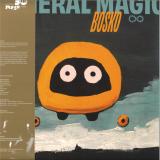
Editions Mego presents Bosko, landing exactly 30 years after the initial General Magic flights into the fantastic; the legendary first Mego release, a collaboration with Pita whereby all sounds were harnessed from the buzzing, drinking, humming sounds of fridges MEGO 001 General Magic & Pita and a 12” with Elin called Die Mondlandung (The Moon Landing) MEGO 002 which embarked on a minimal techno template so austere and strange it was one of the historic progenitors of austere and wonky rhythms alongside Sakho and other European explorers.
The initial return of the playful and mystical Austrian outfit General Magic came with the 20th year anniversary vinyl reissue of their classic debut Frantz eMEGO 010. A record so audacious and playful it still baffles as much as it entertains. At some point whilst working on this reissue GM’s Ramon Bauer and Andi Pieper were spurred on to rummage around with ideas and tools once more and after more than two decades of inactivity sonic sorcery was conjured once again. Live shows in honour of Peter Rehberg were performed in Vienna and London. Softbop, a limited risograph collaboration with Tina Frank came with the first new recordings as a digital download came out discreetly online. The first full length album following Rechenkönig in 2000 MEGO 032 “Nein Aber Ja” released in 2023 on Finlay Shakespeare’s GOTO Records on CD and cassette. An ongoing series of mix tapes online further highlights their interests encapsulating a new found angle on electronic mayhem. All of these elements retain the wildly eclectic and ecstatic glow that only they can harness and hand out to an unprepared world.
Now, we have General Magic’s second official full length comeback recording, Bosko. The new album is initially notable prior to the needle hitting the wax or the cursor identifying a track due to the artwork. Made by long term collaborator Tina Frank, this is Frank’s first analogue artwork, with a painting of a happy/nervous machine thing hovering in a landscape of no discernible identity. It’s quasi science fiction hovering amongst the potential for fun. Suited to the music? Natürlich.
Bosko sees Bauer and Pieper update and reframe their original investigations with a fresh supply of head scratching, heart racing tunes that hit the inexplicable with a wild mesh of drums, pianos, synthetic voices and all manner of immaterial sonic play. Startling sonics shock the ears on Club Duchamp which sounds like a conversation between synthetic adult ants in an environment still in development. Elfer features vocals supplied by a female-ish voice who, whilst grappling melody, has trouble executing a firm identity. Noorenhalt catapults along a mainframe of syncopation so unwieldy it feels like the voice, which is utterly alien, provides the only comfort. Seite 5 inhabits a fuzzy zone where a synthetic Horn of Jericho type ambience competes with rhythms never quite sure of who they are. Rise of the Ombré raises the spectral dread. Is this Science Fact? Absolutely nothing within Bosko is predictable.
The amount of change in the miasma of existence and the things we touch in order to make things has shifted so exponentially we are at the point where minds are starting to glaze over. All of this makes the return of the always original, always surprising, always fresh and exciting General Magic totally in tune with the artificial intelligent apocalyptic age we currently inhabit. The tools may have changed but the wonderfully warped gaze of Bosko offers a fresh new vision of perplexing funk and robotic punk.
- Exodus
- Aurora
- Portrait Of A Scorched-Earth
- Just Beyond The Reach Of Light
- Oblivion
- Kaleidoscope
- Matrix Of Control
- Catatonia
- Infinity's Kiss
- Automation Bias
- Rorschach
Lathe of Heaven kehren mit ihrem zweiten Album Aurora zurück, einer kühnen Erweiterung ihrer klanglichen und thematischen Palette, die sich wie eine Reihe lebendiger, emotionaler Vignetten entfaltet. "Aurora" ist eine bisher unerforschte Variante des Lathe of Heaven-Sounds, die eine delikate Balance zwischen ihren Punk-Wurzeln und einer fesselnden New-Wave- und 80er-Jahre-Post-Punk-Ästhetik bietet, die Einflüsse aus dem britischen und finnischen Post-Punk der mittleren 80er-Jahre mit subtilen Nuancen aus dem Underground-Pop der 90er-Jahre und der Gegenwart kombiniert. Aufgenommen mit Ben Greenberg bei Circular Ruin und gemastert von Brad Boatright, ist das Album klanglich beeinflusst vom melodischen Rock von The Cure, Musta Paraatis Gothic-Post-Punk-Synthie und intensivem Schlagzeugspiel und A Flock of Seagulls' Art-Pop-Gesang und Gitarrenriffs. Textlich schreckt Aurora nicht vor schweren Themen zurück. Aurora ist als eine Sammlung von Science-Fiction-Kurzgeschichten gedacht, die von Themen wie Antikolonialismus, Vielfalt und Gleichberechtigung beeinflusst sind und sich in den Texten niederschlagen. Diese Geschichten sind von den Romanen von Ursula K. le Guin, Octavia Butler, Greg Egan und Peter Watts inspiriert und führen den Hörer in mythische, kühne und etwas beunruhigende Realitäten. Der Titeltrack "Aurora" spielt in einer dystopischen Zukunft, in der die Erde aufgrund von nuklearem Fallout längst verlassen ist - er erforscht Themen wie Verlust, Liebe und Hingabe. "Oblivion" befasst sich mit dem Phänomen der semantischen Sättigung - wenn man ein Wort oft genug sagt, verliert es seine Bedeutung. "Exodus" ist eine Neuinterpretation des Schiffsparadoxons von Theseus und erzählt von der Erfahrung, das Bewusstsein in einen neuen, perfekten Körper zu übertragen. An anderer Stelle steht "Portrait of a Scorched-Earth" für einen direkten Akt des Widerstands. Als einer der emotionalsten Songs des Albums bricht er mit der üblichen lyrischen Abstraktion der Band und ist eine schonungslose Abrechnung mit den Schrecken der modernen Kriegsführung und der Vertreibung, die in der gelebten Tragödie von Gaza wurzelt. Lathe of Heaven hoffen, dass "Aurora" ein breites Spektrum an Emotionen hervor ruft und zum Nachdenken über den Zustand unserer Realität und der Menschheit anregt. Es ist literarisch, ohne prätentiös zu sein, politisch, ohne zu predigen, und emotional, ohne mit der Wimper zu zucken. Jeder Song hält ein Stück eines zerbrochenen Spiegels, und was zum Vorschein kommt, ist eine prismatische, verwundete Schönheit, die mit tausend Gesichtern zurückstarrt. "Aurora" erhebt den Anspruch, "ohne Angst in das traumlose Vergessen zu zittern". Sie sind herzlich eingeladen.
Soul Flip is back with the 18th chapter of this apparently never-ending story! And this time, Mr Soul Flip himself Del Gazeebo welcomes the return of super-producer Wonderlove for backup.
First up, Del gives his full attention to the Pointers Sisters' "Send Him Back" - a firm favourite with the Northern Soul crowd back in the day, and respectfully freshened up for 2025.
As you probably know by now, we love a "version", so on the flip, Wonderlove breathes new life into Johnny Mathis' cover of Willy Bobo's "Evil Ways" in devastating fashion.
Early support from Craig Charles Funk and Soul Show on BBC6 Music.
Still Forms in Air is the debut album by Italian composer Francesca Marongiu under her own name. It draws inspiration from mid-1980s Japanese ambient music — Hiroshi Yoshimura, Satoshi Ashikawa, Takashi Kokubo — and, more subtly, from Italian experimental echoes rooted in both personal and cultural memory.
The album unfolds like suspended time, like architecture that quietly bears witness to the shifts that have shaped our cities and the ways we live in them. These tracks reflect an emotional and urban landscape, shaped by a gaze cast upon the mid-1980s and early ’90s — a time of subtle yet lasting changes in the form and meaning of shared space. That period marked a delicate turning point, later described as les années d’hiver: the slow onset of fragmentation beneath a surface of creative openness.
Still Forms in Air doesn’t dwell in nostalgia (though it draws from it), but reimagines that duality through a contemporary lens. Its sound blends memory and presence, layering ambient textures with a refined spatial sensitivity. It is a dialogue across decades — clear-eyed, affectionate, and quietly luminous.
Written, arranged and recorded by Francesca Marongiu in Rome and Pistoia between May 2024 and March 2025.
Francesca Marongiu: electronics, synthesizers, vocals, sound objects.
Antonio Gallucci: wind arrangements on track 1 and 4, bass and sound objects on track 3, drums on track 3 and 4.
Mixed by Francesca Marongiu and Antonio Gallucci. Mastered by Antonio Gallucci at Mercurial Mastering in Pistoia. Artist photo by Elisabetta Scarpini. Artwork by Daniel Castrejón.
“Only Skies Stay Eternal” is a full length album from Fille – the final chapter in a sonic trilogy that began earlier with two captivating singles. A restless explorer in the oversaturated wilderness of digital soundscapes, Fille brings her vision to a powerful conclusion.
This album dives into profound and final questions: the meaning of human existence, the nature of dreams and reality, the evolutionary mission of our species, and the fragile, intricate microcosm of the self. Fille embraces the contrasts of our new era – the tension and harmony between technology and nature, the digital and the analog. Her sound is a refreshing fusion of IDM, breakbeat, and dreamy textures, layered with extraterrestrial vocals that feel both ancient and futuristic.
Cinematic funk visionaries The Diasonics drop a new disco-funk 45 vinyl with two killer tracks tailor made for DJs and cinematic funk fans. Only 500 copies pressed wordwide, instant collector's item. From the snowy streets of Moscow to the crates of vinyl diggers worldwide, cinematic instrumental combo The Diasonics unleash a new limited edition clear vinyl 45 with two killer tracks taken from the upcoming new album "Ornithology", set to drop worldwide on October 3 via Record Kicks. On the A side "Oriole" is a vintage disco-funk stormer taking inspiration both from the Soviet-era disco and jazz fusion records, as well as from 70s European library music and synth-funk movement. A minimalist synthesizer melody echoing the song of the oriole, paired with a steady disco-funk groove reminiscent of a train in motion ("Oriole" is also the name of a popular Russian electric train) lay the foundation of their most danceable track to date. The b-side holds the equally strong "Chickadee" a funk stomper with bold bassline and heavy b-boy breaks and percussions and a NY early 80 vibe able to set every dancefloor on fire. A peerless party-starter that you just don't want to miss it. Formed in 2019, this four-piece instrumental unit _ Daniil Lutsenko (electric guitar), Kamil Gazizov (keyboards), Maksim Brusov (bass), and Anton Moskvin (drums & percussion) _ quickly gained cult status through a series of sought-after 45s on Mocambo and Funk Night Records. Their critically acclaimed debut album "Origin of Forms" mixed by Henry Jenkins, producer of the Australian cult band Surprise Chef, came out on Record Kicks in 2022. The vinyl went sold out in few weeks and is now in-demand on the international cinematic funk scene.
veins syncopating under your skin
not knowing how or from where
it washes over us, just that it stretches
light bulbs crashing in a storm slender
waxy petals of a wild plant splitting
gazing at a nocturnal ocean, ill-met by moonlight
this is where you spend your time
the taste of tangy citrus on your tongue
the pounding of familiar tools
sculpting deeper
the echoing of distant futures
in your ears
—
Ramble is the debut LP on vinyl from experimental electronic musician Sebastiano Carghini. An ambient-no-ambient journey, his sound art unfolds like a fractured memory loop—where degraded tape hiss, layered textures, drifting echoes, and minimalist pulses dissolve into a liminal, ever-shifting landscape of sonic perception. It is released by adventurous electronic music label topo2 on July 11, 2025. The record is pressed on 180 grams of ICCS-certified minty-ice colored bio-vinyl, housed in a heavy full-colour sleeve, and comes with a download-code to the full release. Mastering is done by Ike Zwanikken, artwork by courtesy of Tjobo Kho, and poetry written by Eelco Couvreur.