Cerca:generation of drums

Generi
Tutto
Giuliano Sorgini - Zoo Folle LP (2x12")

(Extended Reissue)

Double vinyl LP | Extended reissue
All tracks remastered from the original master tapes.

And here it is! For the first time ever, Zoo Folle in its full, extended glory.
This double LP contains both the soundtrack as released in 1974 (sides A and B) and previously unreleased gems (sides C and D).

Back in 2016 we put out the first official reissue of Zoo Folle. It sold out in a matter of months, leaving many vinyl collectors hungry for more. Quite serendipitously, the following year we found ourselves digging through Giuliano Sorgini's personal archives to prepare what would become Africa Oscura and stumbled upon a few mysterious reels that could be traced back to Zoo Folle. Imagine our joy when we realized that they contained the complete recording sessions of the original soundtrack, including unreleased material and never-before heard alternate versions! It was a no-brainer to start planning this extended reissue.

Already a phenomenon among collectors and experts, not only does Zoo Folle it keep winning more and more recognition, but, together with The Living Dead at Manchester Morgue and Under Pompelmo, it has established Sorgini as one of the great Italian composers of his generation.

And this is no coincidence. Zoo Folle is Sorgini's most committed and personal work. It reflects at once his beliefs as an animal rightist and his deep friendship with TV director and long-time collaborator Riccardo Fellini (brother of La Dolce Vita director Federico). It was Fellini himself who asked Sorgini to score his documentary on the living conditions of animals in zoos in Western metropolises (Rome, London and Paris in particular).

Originally broadcast by RAI in three primetime episodes, Fellini's exposé sharply contrasts the lives of caged animals with the freedom they experience in nature and wildlife reserves such as the Amboseli National Park in Kenya, Africa.

For his part, Sorgini offers perhaps his grandest score ever – a magnificent, multifaceted soundtrack that brings together a variety of instruments and the best musicians available at the time, from the lavish string orchestra recorded at the Fono Roma studios (a dream come true for someone who had not penetrated the inner circle of A-list composers like Morricone), to the angelic voice of Edda Dell'Orso, who conveys the sweetness and melancholy of the African sunset in Red, Old Skies.

Also performing on the soundtrack are exquisite soloists – all long-time friends of the composer. Nino Rapicavoli, for instance, whose flute adds a magical touch to the psycho-funk of Mad Town and the groove of Slaves, as well as Enzo Restuccia, whose afro-tribal percussions have made Ultima caccia a legendary track especially among lovers of Balearic grooves, and Enrico Ciacci, whose classical guitar soars beautifully over the nostalgic and poignant Chains. Not to mention the fact that Sorgini himself laid down the foundation tracks for the album in the small studio he had in the Prati neighbourhood in Rome, playing the piano, drums and several synthesizers.

So, what are you waiting for? Get your turntables ready for the full version of Amboseli (14 minutes of sheer bliss versus less than 6 in the original record) and for stunning, previously unreleased alternate versions of many other themes composed by Sorgini to celebrate the beauty of the savannah.

non in magazzino

Ordina ora e ordineremo l'articolo per te presso il nostro fornitore.

36,93

Last In: 3 years ago
Kinetika Bloco - Legacy

Kinetika Bloco's 'Legacy' now on limited-edition vinyl with 6-panel poster
of the cover artwork
'Legacy' celebrates the 21st anniversary of the carnival group of the same name,
which was founded by Mat Fox in South London. Usually around 100 strong, this
scaled-down group of Kinetika alumni led by Mat's son Ruben Fox revisit some of
the Bloco's iconic pieces on this landmark recording and features saxophonist
Nubya Garcia, pianist Reuben James and trumpeters Mark Kavuma, Claude
Deppa and Ife Ogunjobi.
They revisit some of the Bloco's iconic pieces on this landmark recording. What is
effectively a big band with guitar, Hammond B3 and a four-piece rhythm section
of Brazilian surdos (bass drums), bells and snare drums, their sound is
refreshingly new, enthralling, and vibrant.
George Clinton: "Don't ever stop grooving like that, you (Kinetika Bloco) own the
world."
Press quotes:
"Kinetika Bloco has created a unique new British carnival sound, drawing its
influences from the Caribbean, Brazil, Africa and New Orleans." - Jazzwise
"Kinetika Bloco are a phenomenon - over the last twenty years the percussion and
horn heavy collective have evolved their own irresistible version of carnival music,
drawing on the many traditions of the Black Atlantic, while acting as a hothouse
for talent development for generations of young London musicians." - Jazzviews
"The group sounds like a British carnival for today, drawing on a Caribbean,
Brazilian, African and New Orleanian influence. Legacy celebrates Kinetika Bloco's
21st anniversary." - Jazz Journal
Kinetika Bloco were featured in the Queen's Platinum Jubilee Pageant, as seen on
TV by millions.

pre-ordina ora23.09.2022

dovrebbe essere pubblicato su 23.09.2022

31,89
Lemonheads - Lick Lp

Lemonheads

Lick Lp

12inchFIRELP258
Fire Records
16.09.2022

Repress!

Note - Sleeve says contains a bonus CD, these represses do not have a bonus CD, they have a download card.

Fire Records will be reissuing the first 3 albums by the Lemonheads, Hate Your Friends (1987), Creator (1988) and Lick (1989), featuring copious bonus tracks and many never-before released rarities and live recordings on the download card. Together, these seminal albums showcase the band's early punk rock roots and trace the Lemonheads’ transformation towards becoming one of the most successful and influential bands in indie rock. Before the 90s. Before the internet. Before Nevermind. Back when something called “independent music” first began reaching a wider audience, through college radio, word-of-mouth, and that small “underground” record store you seem to find in every town…there was a band from Boston called Lemonheads. High school friends Ben Deily and Evan Dando, Lemonheads’ primary songwriters, co-guitarists and co-vocalists, first recorded together on 4-track cassette in the spring of 1985; by the end of the decade they—together with bass player Jesse Peretz, sometimes-guitarist Corey Brennan, and successive drummers Doug Trachten and John P. Strohm—had created a body of recordings which would see them on MTV’s fledgling “120 Minutes,” beating out the Grateful Dead on college radio charts, and entering the consciousness of a generation of music fans. Cited as influences by artists as varied as Billie Joe Armstrong and Ryan Adams, these fledgling Lemonheads recordings—part rock, part pop, part unique hybrid of the 80s punk styles beloved by the band members—mark the start of the trajectory that would eventually lead to “mainstream” success and stardom for a later version of the band. But they also represent a distinct, never-repeated phase of the band’s history: one that is finally receiving the attention it deserves. Lick is the third full-length album by the Lemonheads, and the last to feature founding member Ben Deily. It was the group's last independent label-released album before signing to major label Atlantic. An odd mixture of brand-new, and considerably older, sounds, 1989’s Lick brings together the output of several distinct recording sources: six brand new songs recorded with Minneapolis-based band friend and producer Terry Katzman, and a collection of older, B-side and never-released material originally overseen by producer and engineer Tom Hamilton. The difficulties of writing and creating a new full-length album every year (Hate Your Friends and Creator were released in 1987 and 1988, respectively) are clearly in evidence on Lick. While the newest material (“Mallo Cup,” “A Circle of One,” “7 Powers,” “Anyway”) hints at promising new song writing directions for both Deily and Dando, there’s an almost valedictory sense of the past in the inclusion of versions of “Glad I Don’t Know” and “I Am a Rabbit” (from the band’s first-ever, self-released EP), and the now-classic track “Ever,” a previously-unreleased tune from the original 1986 Hate Your Friends sessions. At moments, Lick almost sounds like an elegy for itself—or an elegy for a band that has reached the end of the beginning. Also audible in the heterogeneous songs are the tensions of line-up changes—and inchoate, growing frustrations. After various band break-ups or threatened break ups (such as Dando’s brief departure to play bass for Boston band the Blake Babies), the Lemonheads convened to record new material for Lick now featured Dando on drums, Peretz on bass, Deily on guitar (and “piano,” according to the album credits) along with the addition of long-time band friend—and former member of TAANG! labelmates Bullet LaVolta—Corey Loog Brennan on lead guitar. And yet the frenzied, quasi-ironic hammer-ons of Corey’s axe provide some of Lick’s most entertaining moments—like the unaccountably-translated-into-Italian paen to 70s detective Ironside, “Cazzo Di Ferro.” (The song’s music was originally composed by Brennan for his Italian punk band, Superfetazione.) After the album’s completion, Deily opted out of the subsequent European tour, before leaving the band permanently. Jesse Peretz stayed on to record their Atlantic records debut Lovey, but left after the supporting tour in '91. Since then, Dando has been the Lemonheads' sole permanent member. BONUS TRACKS: Features bonus tracks including several never-before-released live tracks from a 1987 radio session, live tracks and an interview from the 1989 European tour, and the 4 tracks of the Lemonheads self-released debut EP, Laughing all the way to the cleaners.

pre-ordina ora16.09.2022

dovrebbe essere pubblicato su 16.09.2022

25,17
Colorado - Colorado / Para Ti

"Matasuna Records" returns to Mexico for a third time to dig for rare treasures. They got their hands on a special gem - two obscure Latin/Jazzfunk tunes by a band called "Colorado" from "Mexico City". The songs were released in 1976 on the Mexican label Peerless and the super rare original 7inch is virtually unavailable. Fortunately, the release is finally available for the first time as an official reissue in a remastered edition. An unjustly under-the-radar Latin jazzfunk highlight!

The song "Colorado", named after the band, opens the "A-side" of the single. The hypnotic fender rhodes puts the listener in the right mood right from the start, before the drums and percussion set the rhythm. The horns also add depth and melodiousness before the song takes a turn and reveals its funky side with guitars, synths and bass. A nice guitar solo also reveals the affinity for rock music without losing sight of the vibe of the song or tipping it a different direction. Definitely a fabulous song that comes up with a lot of ideas and inspirations, offering an unexpected richness in the under 3-minute running time.

The "B-side" also continues musically energetic in the same way with "Para Ti". Here, too, you can feel and hear the playfulness and experimentation of these extraordinary musicians. Atmospherically dense passages alternate with quieter phases and solo parts, before the tension rises again and literally explodes. As in the song "Colorado", rhodes, brass, guitars & bass offer a great and varied interplay. The secret highlight, however, might be the drum and percussion parts in the middle of the track, which will surely enchant not only the B-Boys and B-Girls.

Artist info:

The internet, a source of almost endless knowledge, offers no information about the band Colorado. All the more fortunate that one of the band's founding members, "Emilio Espinosa Becerra", provides detailed info for the reissue.

In 1968 the three brothers "Luis", "Francisco" and "Emilio Espinosa Becerra" from Mexico City started to rehearse together to play wellknown rock & pop songs at friends or family parties. At first, they played on Japanese guitars and a Teisco bass borrowed from a school friend. They saved up money to then buy guitar & bass amps and a microphone, which they always had to rent until then. However, the budget was only enough for Mexican replicas of the legendary Fender Bassman and the Fender Super Reverb. Original equipment was simply unaffordable.

Shortly thereafter, more members joined the band. Three musicians from the school band "Tepeyac": "Marco Nieto Bermudez" (trumpet), "Raymundo Mier Garza" (tenor saxophone) and "Alfonso Romero" (trombone). Another classmate named "Carlos Mauricio Fernández Ordóñez", who studied piano, also joined the group. His father had a chemical factory in the United States and helped bring equipment (amplifiers and a Farfisa Fast 5 organ) - hidden in the back of a truck - to Mexico. In the time that followed, more instruments were acquired, including bass and guitars (from Gibson, Rickenbacher and Fender) and microphones (from Shure) for vocals and horns.

With a larger band and new equipment, they played many parties in their district of "Lindavista" in "Mexico City" and neighboring areas from 1970 to 1973, as well as gigs at various festivals and school events. The group's band name at the time was "Sound Core Brass". However, more and more often people with turntables and speakers showed up at parties, which were also able to heat up. The so-called "Sonideros", a sound system culture that was emerging in the 1960s, charged less than a multi-piece live band, so the band's performances declined.

During those years, three other "Espinosa Becerra" family members joined the band: "Jorge Rafael" (trombone), "Sergio Alejandro" (tenor saxophone) and "Felipe de Jesus" (drums and percussion).

A brother of the musicians, "Carlos Espinosa Becerra", studied electrical engineering at the University. Together with another fellow student, he designed and built a 10-channel console with a variety of functions and features that far surpassed the devices available at the time. They also went to the US again to buy JBL speakers & tweeters to build their own sound system. On another trip to Los Angeles, they bought Phase Linear amplifiers, which offered enormous power by the standards of the time and had an extremely low distortion factor. With this equipment they could turn up the volume really loud and noise-free.

This was also the time when they stopped playing music from English bands & youth groups and changed their repertoire completely. They played mambos, chachachas, pasodobles and tangos on special occasions in big ballrooms and halls. Also, every now and then they hired a string quartet of well-known Mexican violinists to provide the musical entertainment at dinner events.

During those years, classmate "Pablo Rached Diaz" joined the band, playing tenor saxophone. Pablo was very active and organized many parties. He was also the one who helped the band to record on the Mexican label "Peerless". So in 1975 they were asked by Peerles Records to record their own songs. They had recorded a total of 12 songs - six of these songs were released on three vinyl singles (45rpm). Most of the songs were composed by "Gustavo Ruiz de Chavez Sr.". The band was asked to adopt a more commercial name, and so they had chosen the band name "Colorado". In the course of the releases, the band made some promotional tours and appeared in shows on "Televisa", the most important television station in Mexico in those years.

Later, several members of "Colorado" graduated and began to pursue regular professions. They didn't stop playing at events, but priority was given to more formal duties and the band was no longer as active as it had been in its heyday.

About 8 years ago, the band got back together to play again. The next generation of musicians also joined the band: two sons, a nephew and a brother-in-law of the original band members. Currently, they are back playing at friends' parties and family gatherings in Mexico City.

non in magazzino

Ordina ora e ordineremo l'articolo per te presso il nostro fornitore.

10,71

Last In: 3 years ago
Robyn Schulkowsky, Gebrüder Teichmann - Time Bends 2x12"

Turn up the volume and look how time bends before your eyes because that is what Robyn Schulkowsky and Andi and Hannes Teichmann do with their music. They bend time.
They make a ring out of it or some sort of ellipse, and then they pull it straight again, they transform it into a rope, and then, of course, they balance on it, forwards, backwards, half speed,
double speed, 33 rounds per minute, or was it 45? Just try both.

World percussion meets Techno and Berlin club culture, one might be tempted to say. One would be wrong to do so. This is not just crossover, this is just not an "encounter" between different generations, different experiences, different cultures, traditions and attitudes and form asossations of expressions, or, to put it in a more simple way, an "encounter" between drums and gongs and bells and stones and on the other side hardware-electronic and sequencing, delay and reverb. This is far more complex.No need to put a label on it.
by Roland Schimmelpfennig / excerpt

non in magazzino

Ordina ora e ordineremo l'articolo per te presso il nostro fornitore.

25,50

Last In: 3 years ago
DIANE DENOIR - DIANE DENOIR

One of the most legendary LPs from Uruguay remains a hidden treasure in the rest of the world. It is the first LP by singer Diane Denoir. Diane was a regular in the “Conciertos Beat” (“Beat Concerts”) of Montevideo's 1960s scene where she performed with Eduardo Mateo on guitar (leader of El Kinto, one of the most influential bands in "candombe beat", and the ones who coined the term), Roberto Galletti on drums and Antonio Lagarde on double bass. Diane was also Mateo's muse throughout the early years of his career, he wrote several songs for her, among them “Esa tirsteza,” “Y hoy te vi,” and the classic “Mejor me voy.” Eduardo Mateo would become one of the biggest names of all times in Uruguay's musical scene. Diane, instead, found herself outside the country when the military coup installed a non constitutional government in Urugay in 1973 and was wisely advised by friends not to go back home to avoid trouble with the new dictatorial regime. A brave defendant of Human Rights, she had been very active against torture, thus becoming a target for the dictatorial regime military intelligence. She exiled in Argentina and Venezuela, and she later settled in Europe and didn't perform in public or record again until recent years when she returned to her home country.


On her eponymous 1972 debut album, Diane fused all her influences in one solid sound through songs created by Uruguayan songwriters (Eduardo Mateo, Urbano Moraes –bassplayer for El Kinto,– Daniel Amaro, Giuso Bellanca), plus Argentinian lyricist Edgardo Lisi. She had released a couple of 7" between 1966 and 1970, but it is her debut album –which would be her only one until her 2008 comeback– that made her legend grow among future generations of music lovers.


It's hard to name artists in the same dimension as Diane Denoir for reference, but be sure that you will love this LP if you like the candombe beat scene of El Kinto, Tótem or the Fattorusso brothers (Hugo and Osvaldo) in their post Los Shakers works, but also the bossa nova sound and even artists of their own like Vainica Doble.


Very limited edition, only 500 copies made. Remastered sound. Comes in upgraded artwork, gimmick cover with printed inner sleeve.

pre-ordina ora17.06.2022

dovrebbe essere pubblicato su 17.06.2022

23,99
Whytwo - Ghost 2x12"

Whytwo

Ghost 2x12"

2x12inchBMTLP016
BLU MAR TEN RECORDS
13.06.2022

"Don’t be afraid, old son, it’s only me,
though not as I’ve appeared before,
on the battlements of your signature,
or margin of a book you can’t throw out"
~ Michael Donaghy

Whytwo is a young, enigmatic artist from Scotland, UK. A talented multi-instrumentalist and performer with an extraordinarily broad range.
First coming to Blu Mar Ten's attention after entering their 2017 remix competition, Whytwo created a wildly different take on their track 'Titans', bending it into a skittering, menacing groove while somehow maintaining a playful edge.

Fast-forward a little and we've now arrived at Whytwo's debut LP, 'Ghost', an exhilarating and elasticated take on Drum & Bass that exists in the hinterland between elation, melancholy and longing.

Mirroring Whytwo's music, the album's title, 'Ghost', is richly layered word, meaning, in different places and at different times; a memory of something or someone; to disappear without communication; to move quietly and quickly; to secretly do work for another; and, of course, a being caught between worlds.
From the old English, 'Gast', meaning 'breath' or 'spirit', the word eventually transformed into 'Ghost' coming to describe "a slight suggestion, mere shadow or semblance". All of these definitions relate, in some way, to the album now before us.

In conversations with Whytwo, he describes how his Jazz musician Grandfather was the person responsible for first giving him music-making software, and whose clarinet features on some of the album tracks. At the same time that 'Ghost' was being created, Whytwo was looking after a young child and some of the drums on 'Ghost' are recordings of the child hitting things. Whytwo describes the feeling of existing between these two extreme states, young & old, naive & experienced, primitive & advanced, and taking the role of a medium 'caught between worlds' whose task was to stitch together this generational fabric.

The result is nothing less than spectacular. Despite having its roots in Drum & Bass, the rules and conventions of the style are ruthlessly disobeyed resulting in glittering cascades of melody, harmony and rhythm that somehow burst with both sadness and joy, hope & loss, memory and anticipation. The music swoops and dips, briefly casting shadows before blasting them away with sunlight, evoking memories both personal and collective. This is 'Lost Soul Music' that manages to speak to all of us.

Despite being deceptively listenable, Whytwo insists this is not relaxing background music. Listeners should fully engage with the music beyond its attractive surface and absorb it at the same deep human level where it was created. 'Ghost's production levels are astoundingly high but focussing on those would be a mistake. They only serve to carry the spiritual content of the music across to the audience and unlock the valves of feeling. The beauty here is not the machine, but the ghost in the machine.

non in magazzino

Ordina ora e ordineremo l'articolo per te presso il nostro fornitore.

25,17

Last In: 3 years ago
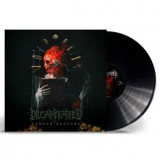
Decapitated - Cancer Culture

Decapitated

Cancer Culture

12inch4065629605285
Nuclear Blast
27.05.2022

Across eight studio albums, DECAPITATED grew from the adolescent dream of teenagers from a small Central European town to one of the leaders of the metal genre. Each successive album further expands the band’s sound with genre-bending authenticity and integrity. As Metal Injection rightfully observed, “any self-respecting death metalhead knows the name well.”

DECAPITATED’s music is a weapon forged by four young men from a historic medieval-fortified town in Poland, which catapulted them to the top of a worldwide subculture. Like a rose in the devil’s garden, the DECAPITATED story builds triumph from tragedy. The gleeful grotesquery of extreme metal imagery and rifftastic bludgeoning beckons listeners to uncover broader truths.Upon the release of 2017’s Anticult, Metal Hammer declared DECAPITATED “a serious successor to the likes of Pantera and Lamb Of God – a band who can draw new legions into the metal world as its new champions.” Their diverse follow-up, 2022’s Cancer Culture, delivers on that promise.

Instantly recognizable devastation and deceptively sinister hooks abound. Freshly minted DECAPITATED anthems like “Last Supper,” “Hello Death,” “Just Cigarette,” “No Cure,” “Iconoclast,” and “Cancer Culture” shimmer with sonically sharp production and unrelenting bombast. There’s also a newly increased emphasis on melody, even venturing into darkly romantic territory. Wacław "Vogg" Kiełtyka (guitar), Rafał "Rasta" Piotrowski (vocals), Paweł Pasek (bass), and James Stewart (drums) are at the top of their game, delivering the goods at peak performance. Jinjer vocalist Tatiana Shmayluk and Machine Head frontman Robb Flynn make guest appearances.

Set on the descending plains of a mountain range amid a dense forest, Krosno boasts a 14th-century Gothic church, a Subcarpathian museum, and stunning artisan glassware. In this Polish town, teenage music student Wacław "Vogg" Kiełtyka discovered records from bands like Morbid Angel, Cannibal Corpse, Metallica, and Machine Head. The guitarist and his younger brother, drummer Witold “Vitek” Kiełtyka, cofounded DECAPITATED in 1996, inspired by a wide range of technical death, blackened thrash, and local heroes, like KAT and the world-renowned Vader. Death and black metal reigned supreme in the Polish scene of the 1990s, where Behemoth originated as well. In fact, a Vader song called “Decapitated Saints” inspired the band’s moniker.
The organic musical chemistry between the Kiełtykas was akin to the brotherly connectivity and vibe driving Pantera, Gojira, and the classic era of Sepultura. In 2006, Kerrang! praised the first three DECAPITATED albums - Winds of Creation (2000), Nihility (2002), and The Negation (2004) – as “superbly conceived and executed eruptions of technical brilliance and razor-sharp songwriting that turned these youthful Poles into one of the genre’s most widely respected bands.” That year’s Organic Hallucinosis further perfected Vogg’s penchant for blending extremity with catchy hooks.

The rule-breaking ferocity and invention of the first four albums reinvigorated death metal, as DECAPITATED inspired a new generation of bands who followed suit. Sadly, this era came to a shocking end in late 2007. While touring Russia, the band’s bus collided with a large truck near the border with Belarus. Both Vitak and then-singer Adrian “Covan” Kowanek sustained severe head injuries. Tragically, Vitak passed away in a Russian hospital a few days later. He was just 23.Vogg summoned the courage to continue, in honor of his brother and what they created, and returned with a new incarnation of DECAPITATED and the fiercely adventurous comeback album, Carnival is Forever (2011) featuring new vocalist Rafał "Rasta" Piotrowski. Blood Mantra (2014) introduced bassist, Paweł Pasek. Blabbermouth declared it “perhaps the most poised and gutsy” DECAPITATED album, adding “its courageous bends make it a turbulent but pleasurable ride.”

Cancer Culture sounds brilliant, modern, and tasty. “There is no place for any fake, plastic, bullshit drum machine or anything like that,” Vogg insists. “It’s all organic, pure, and clear, showing the true face of the band. Vogg and company entrusted the Cancer Culture mix to David Castillo at Sweden’s Fascination Street Studios / Studio Gröndahl (Sepultura, Carcass, Opeth, Katatonia), and legendary American producer Ted Jensen (Metallica, Slipknot, Pantera, Machine Head, Korn).
The devoted supporters who traveled to see DECAPITATED on international tours with the likes of Lamb Of God, Meshuggah, Soulfly, Fear Factory, and Suffocation over the years will recognize the ever-present pummeling backbone. Longtime fans and newcomers alike will connect to the variety of atmospheric depth throughout Cancer Culture’s ten boundlessly energetic and creative tracks.
“If you told me 25 years ago, in my neighborhood in the South of Poland, that I would be in Machine Head, sharing riffs with Robb Flynn,” Vogg marvels. “It’s simply incredible. It means that everything is possible in your life. That gives me the faith to believe that I can achieve even more in my career. The dreams we have when we are kids, things we can barely imagine, can happen.” Flynn contributes a hauntingly beautiful vocal to the Cancer Culture track “Iconoclast.” “Clean vocal singing is a really new thing in DECAPITATED,” Vogg notes. “It’s really unique and amazing.”

Driven by Vogg’s passion and integrity, the dual emphasis on creative invention and technical prowess maintains DECAPITATED’s stature as genre-leaders in 2022 and beyond. The band’s supporters continually demonstrate confidence and absolute certainty DECAPITATED will deliver.

pre-ordina ora27.05.2022

dovrebbe essere pubblicato su 27.05.2022

30,88
Decapitated - Cancer Culture

Across eight studio albums, DECAPITATED grew from the adolescent dream of teenagers from a small Central European town to one of the leaders of the metal genre. Each successive album further expands the band’s sound with genre-bending authenticity and integrity. As Metal Injection rightfully observed, “any self-respecting death metalhead knows the name well.”

DECAPITATED’s music is a weapon forged by four young men from a historic medieval-fortified town in Poland, which catapulted them to the top of a worldwide subculture. Like a rose in the devil’s garden, the DECAPITATED story builds triumph from tragedy. The gleeful grotesquery of extreme metal imagery and rifftastic bludgeoning beckons listeners to uncover broader truths.Upon the release of 2017’s Anticult, Metal Hammer declared DECAPITATED “a serious successor to the likes of Pantera and Lamb Of God – a band who can draw new legions into the metal world as its new champions.” Their diverse follow-up, 2022’s Cancer Culture, delivers on that promise.

Instantly recognizable devastation and deceptively sinister hooks abound. Freshly minted DECAPITATED anthems like “Last Supper,” “Hello Death,” “Just Cigarette,” “No Cure,” “Iconoclast,” and “Cancer Culture” shimmer with sonically sharp production and unrelenting bombast. There’s also a newly increased emphasis on melody, even venturing into darkly romantic territory. Wacław "Vogg" Kiełtyka (guitar), Rafał "Rasta" Piotrowski (vocals), Paweł Pasek (bass), and James Stewart (drums) are at the top of their game, delivering the goods at peak performance. Jinjer vocalist Tatiana Shmayluk and Machine Head frontman Robb Flynn make guest appearances.

Set on the descending plains of a mountain range amid a dense forest, Krosno boasts a 14th-century Gothic church, a Subcarpathian museum, and stunning artisan glassware. In this Polish town, teenage music student Wacław "Vogg" Kiełtyka discovered records from bands like Morbid Angel, Cannibal Corpse, Metallica, and Machine Head. The guitarist and his younger brother, drummer Witold “Vitek” Kiełtyka, cofounded DECAPITATED in 1996, inspired by a wide range of technical death, blackened thrash, and local heroes, like KAT and the world-renowned Vader. Death and black metal reigned supreme in the Polish scene of the 1990s, where Behemoth originated as well. In fact, a Vader song called “Decapitated Saints” inspired the band’s moniker.
The organic musical chemistry between the Kiełtykas was akin to the brotherly connectivity and vibe driving Pantera, Gojira, and the classic era of Sepultura. In 2006, Kerrang! praised the first three DECAPITATED albums - Winds of Creation (2000), Nihility (2002), and The Negation (2004) – as “superbly conceived and executed eruptions of technical brilliance and razor-sharp songwriting that turned these youthful Poles into one of the genre’s most widely respected bands.” That year’s Organic Hallucinosis further perfected Vogg’s penchant for blending extremity with catchy hooks.

The rule-breaking ferocity and invention of the first four albums reinvigorated death metal, as DECAPITATED inspired a new generation of bands who followed suit. Sadly, this era came to a shocking end in late 2007. While touring Russia, the band’s bus collided with a large truck near the border with Belarus. Both Vitak and then-singer Adrian “Covan” Kowanek sustained severe head injuries. Tragically, Vitak passed away in a Russian hospital a few days later. He was just 23.Vogg summoned the courage to continue, in honor of his brother and what they created, and returned with a new incarnation of DECAPITATED and the fiercely adventurous comeback album, Carnival is Forever (2011) featuring new vocalist Rafał "Rasta" Piotrowski. Blood Mantra (2014) introduced bassist, Paweł Pasek. Blabbermouth declared it “perhaps the most poised and gutsy” DECAPITATED album, adding “its courageous bends make it a turbulent but pleasurable ride.”

Cancer Culture sounds brilliant, modern, and tasty. “There is no place for any fake, plastic, bullshit drum machine or anything like that,” Vogg insists. “It’s all organic, pure, and clear, showing the true face of the band. Vogg and company entrusted the Cancer Culture mix to David Castillo at Sweden’s Fascination Street Studios / Studio Gröndahl (Sepultura, Carcass, Opeth, Katatonia), and legendary American producer Ted Jensen (Metallica, Slipknot, Pantera, Machine Head, Korn).
The devoted supporters who traveled to see DECAPITATED on international tours with the likes of Lamb Of God, Meshuggah, Soulfly, Fear Factory, and Suffocation over the years will recognize the ever-present pummeling backbone. Longtime fans and newcomers alike will connect to the variety of atmospheric depth throughout Cancer Culture’s ten boundlessly energetic and creative tracks.
“If you told me 25 years ago, in my neighborhood in the South of Poland, that I would be in Machine Head, sharing riffs with Robb Flynn,” Vogg marvels. “It’s simply incredible. It means that everything is possible in your life. That gives me the faith to believe that I can achieve even more in my career. The dreams we have when we are kids, things we can barely imagine, can happen.” Flynn contributes a hauntingly beautiful vocal to the Cancer Culture track “Iconoclast.” “Clean vocal singing is a really new thing in DECAPITATED,” Vogg notes. “It’s really unique and amazing.”

Driven by Vogg’s passion and integrity, the dual emphasis on creative invention and technical prowess maintains DECAPITATED’s stature as genre-leaders in 2022 and beyond. The band’s supporters continually demonstrate confidence and absolute certainty DECAPITATED will deliver.

pre-ordina ora27.05.2022

dovrebbe essere pubblicato su 27.05.2022

29,03
Doctors Of Madness - Dark Times

RIYL: Velvet Underground, Lou Reed, Nick Cave, Patti Smith, Leonard Cohen, Iggy Pop, Radiohead & Tom Waits. "If you have never heard the Doctors of Madness, you should. Musically they are the Velvet Underground, New York Dolls with shades of glam, hippie, prog and punk all rolled into one, yet are still totally original. Vastly underrated, they should have been huge. Pure genius" Vic Reeves…. The DOM are “the missing link between David Bowie & The Sex Pistols” (The Guardian May 2017). Exploding onto the music scene in 1975 with their theatrical, William Burroughs-inspired Sci-fi nightmare, they were misunderstood by many, but those who knew understood the importance of the band’s dangerous, uncompromising approach to lyrics, to music and to performance. Among the many fans of the band were acts as diverse as The Damned, Vic Reeves, Joe Elliott of Def Leppard, Spiritualized, Julian Cope, The Adverts, The Skids and Simple Minds. The Sex Pistols supported them, so did The Jam & Joy Division. They were the first to combine the avant-garde approach of The Velvet Underground with a distinctly European aesthetic. The blue hair, exotic stage-names, the lyrical themes of urban decay, political propaganda, mind control and madness were all taken up by the punk bands who followed in their wake. The DOM were trailblazers, pioneers, adventurers…pushing the boundaries of rock music and theatre to see how far it would go before it bust. What happened after them was due, in no small part, to what they achieved in 3 short years. They may not have been Jesus Christ, but they were, arguably, John the Baptist!!! Now, 40 years after they imploded, they are back…with an album seething with lyrical anger and passion. It is the most potent and incisive musical dissection of modern life and contemporary politics released the decade. With tracks titles like “So Many ways To Hurt You”, “Sour Hour”, “Make It Stop!” and the ground-breaking sonic assault of the title track “Dark Times”, Richard “Kid” Strange proves once again that he has his finger firmly on the pulse of our times, just as he had when he founded the band in 1974. Produced by John Leckie (Radiohead, Stone Roses, Pink Floyd), the new album, Dark Times, features contributions from Joe Elliott (Def Leppard), Sarah Jane Morris (Communards), Terry Edwards (PJ Harvey, Nick Cave etc), Steve ‘Boltz’ Bolton (The Who, Scott Walker) and the young protest singer Lily Bud, alongside the current thrilling and thunderous DOM rhythm section of Susumu Ukei (bass guitar) & Mackii Ukei (drums) of the Japanese extreme glam-metal band Sister Paul, and Dylan O Bates (violin and keyboards). Julian Cope, another rock star who, like Strange, found the confines of music too tight for his ambition, his energy and his imagination, was blown away when he first heard the songs, declaring, “These Dark Times are enormously informing: the RULES OF THE FUTURE are indeed being forged right now”. Top producer Martyn Ware (Human League/Heaven 17) said the album “…reminds me of Iggy Pop’s Kill City album – love it.” and Biba Kopf (The Wire) declared, “Still listening to new DOM album with immense interest and pleasure”. The first single, Make It Stop!, is an impassioned howl against the global drift to right wing extremism and persecution of minorities, and is already a live showstopper for the band. It features the thrilling cross-generational combination of Def Leppard’s Joe Elliott and Lily Bud on backing vocals. In the period since the last DOM gig in 1978, Richard has written a memoir, collaborated on a cantata with internationally celebrated composer Gavin Bryars, worked as an actor on films with Tim Burton, Martin Scorsese, Harmony Korine & Jack Nicholson, toured the world in a Russian version of Hamlet with James Nesbitt as his grave-digging co-star, played Glastonbury, sung baritone in the British premiere of Frank Zappa’s200 Motels at the Royal Festival Hall, directed a multi-media evening celebrating the life and work of William Burroughs, won Best Art Film Prize at the Portobello Film Festival last year, had his own live talk show, worked with Tom Waits and Marianne Faithfull on the William Burroughs/Robert Wilson stage play The Black Rider, curated events for the Tate Gallery, and sung Walt Disney songs with Jarvis Cocker.

pre-ordina ora13.05.2022

dovrebbe essere pubblicato su 13.05.2022

15,92
TOMOKAWA, KAZUKI - A STRING OF PAPER CRANES CLENCHED BETWEEN MY LP

In a generation of musicians that came of age in postwar Japan, Kazuki Tomokawa stands as a pioneer of radical individualism, with a sound marked by shocking intimacy and blistering honesty. In his third album, A String of Paper Cranes Clenched between My Teeth, released by Harvest Records in 1977, Tomokawa creeps "ever more inward," as Kiichi Takahara writes in the record's original introductory text-embracing an attitude pervasive amongst musicians of the time who interrogated the prosaic and the profound alike, eschewing politics and society in favor of an "attitude of total self-containment." Tomokawa recorded the album over the course of a month-from August 24 to September 25, 1977-at Tokyo's famed Onkio Haus studio in the bustling Ginza district. The arrangements, accordingly, are amped up: paired with the Black Panther Orchestra, Tomokawa's "screaming philosopher" vocals find their match with the orchestra's electric guitar, bass, piano, tuba, and ground-thumping drums played by the Brain Police's Toshi Ishizuka-who appears on Tomokawa's first three records and remains his collaborator to this day. "This is Kazuki Tomokawa in the flesh," concludes Takahara. A String of Paper Cranes Clenched between My Teeth is, in Tomokawa's uncanny way, able to cut through facade and artifice in pursuit of truth. "You call that life?" he heckles, exhausted by the melodrama and nihilism of youth counterculture, "try saying you're alive!"

pre-ordina ora13.05.2022

dovrebbe essere pubblicato su 13.05.2022

25,17
Sean Dixon - Generations EP

Sean Dixon

Generations EP

12inchFINALCHAPTER008
Final Chapter
12.05.2022

Sean Dixon, known from previous releases on Clone and Rawax, is back on his own label Final Chapter.

On this colorful four track record called Generations EP, he’s joined by Sheffield´s John Shima.
Opening the EP is Generations I, a raw piece, with chord stabs that are dancing around the percussion sounds and organ bass, with a vocal on top. Followed up on the A-side is Generations ll, a Chicago and Detroit inspired track with wonderful lush strings one top of the drums and vocal,. Generations lll opens up the B-side, with wicked melodies and a funky bassline.

The B2 track Generations IV comes from John Shima, who is doing a rework on Sean´s original sounds, putting his characteristic feeling and touch to it.

non in magazzino

Ordina ora e ordineremo l'articolo per te presso il nostro fornitore.

12,98

Last In: 3 years ago
Seikatsu Kojyo Iinkai - Seikatsu Kojyo Iinkai

Ferocious JP / US free jazz bomb. A rare meeting between the NYC free jazz scene and the Japanese free music scene. Old-style Gatefold LP, with rare photographs & liner notes by Alan Cummings.

Following hot on the heels of the first, mid-sixties generation of Japanese free jazz players like Kaoru Abe, Masayuki Takayanagi, Yōsuke Yamashita, Motoharu Yoshizawa, etc., an exciting second wave of younger players began to emerge in the seventies. Two of its leading members were the saxophonist Kazutoki Umezu and multi-instrumentalist Yoriyuki Harada. Both were post-war babies and immigrants to the city, Umezu from Sendai in the north and Harada from Shimane in the west. They first met as students in the clarinet department at the Kunitachi College of Music, a well-known conservatory in western Tokyo. Harada was already securing sideman gigs on bass with professional jazz groups and was active in student politics, making good use of his connections to set up jazz concerts on campus. It was around this time that the two began to play together in an improvised duo, with Umezu on clarinet and bass clarinet and Harada on piano. They also experimented with graphic scores and prepared piano.

These experiments eventually led to the creation of a trio, with a high-school student called Tetsuya Morimura on drums, that they decided to name Seikatsu Kōjyō Iinkai (Lifestyle Improvement Committee) in joking reference to the Marxist discourse of the student radicals of the time. Around 1973, Umezu and Harada decided to call it a day and go their separate ways. Umezu began playing with the Toshinori Kondo Unit and Harada with the Tadashi Yoshida Quintet. In 1974 Harada formed his own trio and began to play at jazz coffeehouses across Japan.

Then, in September 1974 Umezu travelled alone to New York, where he set about building connections with the loft jazz scene in the city. It was a fortuitous moment to arrive in New York. Rents were cheap in the Lower East Side, possibilities for squatting existed, so many musicians and artists had moved to the area. Umezu soon became known on the scene as Kappo and he started to make connections with some of the young musicians like David Murray, Arthur Blythe, and Oliver Lake. He recalls making the rounds of the lofts every evening, checking out the performances, and getting the chance to sit in with many groups including Juma Sultan’s Aboriginal Music Society and trumpeter Ted Daniel’s orchestra.

Things were going so well that Umezu wrote to Harada and invited him to come to New York. He accepted and arrived in the city in July 1975. Harada and Umezu took the opportunity to resume their artistic collaboration. Their first concert together in over two years took place on July 20th at another loft, Sunrise Studios at 122 2nd Avenue. Umezu remembers Sunrise as an unusually sunny loft with the rarest of things, a grand piano. He invited along Ahmed Abdullah, a trumpeter he had got to know while playing with Ted Daniel. Abdullah led his own group and was a long-term Sun Ra sideman. William Parker, one of the key figures in the loft jazz scene of the period, was on bass. Abdullah also brought along Rashid Sinan on drums. Sinan drummed in Abdullah’s units throughout the seventies, but he had also played on Frank Lowe’s immortal Black Beings album and collaborated with Arthur Doyle, playing on Doyle’s Alabama Feeling album. By all accounts the evening was a huge success, with speed and dynamism of Harada’s piano playing gaining him lots of support.

Since they had managed to save some money from their day jobs, Umezu and Harada decided to set up a recording session with the same line-up on August 11 at Studio We, where there was a well-equipped studio on the third floor. Umezu recalls the session as follows, Of course, we recorded our performances in one take, with zero retakes as far as I remember. On all the tracks we recorded, we moved as one unit, sharp and fast. That was the nature of Lifestyle Improvement Committee, New York Branch.

Umezu and Harada would later become known for the elements of parody and entertainment that they brought to their music, a freewheeling blend of pastiche, humour and on-stage performativity that paralleled the approaches of the Art Ensemble, Sun Ra, and Holland’s ICP. But here, on their first recordings, the humour element is not yet present. Instead, there is a febrile sense of joy in creation and connection. On the Umezu-penned “Kim”, for example, Harada opens the piece with a speedy exploration of the full-range of the keyboard, hitting hard on the bass keys to create a rhythmic bed out of which patterns begin to emerge. Umezu enters at a much slower pace, longer held notes that at first float weightlessly over the urgency of the piano before they begin in splinter and accelerate. When Parker and Sinan kick in, it’s a rollicking tempo with Parker plucking deep and hard and the left-handed Sinan skittering hard across the topside of his kit. Abdullah kicks in a glorious solo twelve minutes in, bright and breathy at once. The piece slows and grows more spacious towards the end, giving Parker a chance to showcase some arco work that shades beautifully into the air against Abdullah’s trumpet.

pre-ordina ora06.05.2022

dovrebbe essere pubblicato su 06.05.2022

25,17
Taj Mahal & Ry Cooder - Get On Board

Taj Mahal&Ry Cooder

Get On Board

12inch75597913552
Nonesuch
22.04.2022

“They were so solid. They meant what they said, they did what they did… here’s two guys, a guitar player and a harmonica player, and they could make it sound like a whole orchestra.” – Taj Mahal

“It was perfect. What else can you say?” – Ry Cooder

Nearly sixty years after they first played together, Ry Cooder and Taj Mahal, longtime friends and collaborators, reunite with an album of music from two Piedmont blues masters who have inspired them all their lives: GET ON BOARD: THE SONGS OF SONNY TERRY & BROWNIE MCGHEE, on Nonesuch Records.

With Taj Mahal on vocals, harmonica, guitar, and piano and Cooder on vocals, guitar, mandolin, and banjo – joined by Joachim Cooder on drums and bass – the duo recorded eleven songs drawn from recordings and live performances by Terry and McGhee, who they both first heard as teenagers in California.

Explaining where Terry and McGhee took him musically, Cooder says, “Down the road, away from Santa Monica. Where everything was good. ‘I have got to get out of here,’ was all I could think. What do you do, fourteen, eighteen years old? I was trapped. But that first record, Get on Board, the 10” on Folkways, was so wonderful, I could understand the guitar playing.”

Taj Mahal adds, “I started hearing them when I was about nineteen, and I wanted to go to these coffee houses, ‘cause I heard that these old guys were playing. I knew that there was a river out there somewhere that I could get into, and once I got in it, I’d be all right. They brought the whole package for me.”

Taj Mahal and Ry Cooder originally joined forces in 1965, forming The Rising Sons when Cooder was just seventeen. The band was signed to Columbia Records but an album was not released and the group disbanded a year later. The 1960s recording sessions, widely bootlegged, were finally issued officially in 1992. GET ON BOARD is Taj Mahal and Ry Cooder’s first recording together since then.

Harmonica player Sonny Terry and guitarist Brownie McGhee, both originally from the southeastern United States, had active solo careers as well as collaborating with some of the most celebrated musicians of their time. But they were best known for their forty-five-year partnership, which began in 1939 and included mesmerising live performances around the world and numerous acclaimed recordings.

Their Piedmont blues style became popular during the folk music revival of the 1940s and ’50s, centered in New York City’s flourishing club scene for jazz, boogie-woogie, blues and folk music. Terry and McGhee traveled in the same circles as Woody Guthrie, Pete Seeger, Leadbelly, and Josh White, among others in a rich mix of writers, actors and musicians. As a new generation emerging in the 1960’s drew inspiration from folk and blues, Terry and McGhee toured the world as the foremost exponents of the acoustic music of the Piedmont. They were named National Heritage Fellows in 1982 in recognition of their distinctive musical contributions and accomplishments.

“You got the south on steroids, when you got the music of the south, the culture of the south, the beauty of the south, through Brownie and Sonny,” Taj Mahal says. He describes McGhee as a “solid rhythm player. To really play behind the harp like that. He would set stuff up. He wasn’t making many notes. Sonny had all the notes, running around. But Brownie, he laid it down.” Cooder adds: “This thing of squeezing the thumb and first finger and a little bit of the second finger, which I still do. I’d forgotten where it came from. That’s what Brownie did. I saw him do that and said, ‘I think I can do that.’”

Taj Mahal calls Terry “a wizard harmonica player”. Cooder says, “Sonny had incredible rhythm for one thing. Making sounds with his voice and the harmonica so you couldn’t tell quite which was which. He was good at that.”

“We’ve been doing this a while,” Cooder says. “Perhaps we’ve earned the right to bring it back. Taj Mahal concludes. “We’re now the guys that we aspired toward when we were starting out. Here we are now… old timers. What a great opportunity, to really come full circle.”

pre-ordina ora22.04.2022

dovrebbe essere pubblicato su 22.04.2022

23,95
Mathias Eick - When We Leave

Mathias Eick

When We Leave

12inch3865851
ECM Records
08.04.2022

180g vinyl pressing of Norwegian trumpeter Mathias Eick's 2021 ECM
album 'When We Leave'
Eick's expressive playing, which according to the New York Times radiates a
"pristine yet penetrating tone", is remarkably well complemented in the company
of his gifted supporting players and fellow travelers. Violinist Hakon Aase, one of
the outstanding improvisers of his generation, shadows the leader with lines that
reflect a profound background in folk as well as jazz. Drummers Helge Andeas
Norbakken and Torstein Lofthus mirror their exchanges, as they interact with
purring precision. Near the centre of the action, pianist Andras Ulvo and bass
guitarist Audun Erlien ferry ideas between frontline and rhythm section and make
statements of their own. On several tracks, the delicate swell of Stian
Carstensen's pedal steel guitar adds a dimension of mystery.
'When we leave' was recorded at Oslo's Rainbow Studio in August 2020.
Mathias Eick: trumpet, keyboard, vocals
Hakon Aase: violin, percussion
Andreas Ulvo: piano
Audun Erlien: bass
Torstein Lofthus: drums
Helge Andreas Norbakken: drums, percussion
Stian Carstensen: pedal steel guitar

pre-ordina ora08.04.2022

dovrebbe essere pubblicato su 08.04.2022

27,69
The Goa Express - Everybody In The UK LP

7" Black Vinyl limited to 1000 copies.

Teenagehood, brotherhood and a genuine love for alternative music has united THE GOA EXPRESS from the off. Hailing from the industrial town of Burnley and adopted by the Manchester culture carriers, their teenage years can be viewed as something of a hedonistic pilgrimage into the underbelly of suburban rock and roll- their first gig having been 3 songs blasted out their mates garage, the next on top of a local vintage shop where the floor nearly caved in: “when there’s fuck all, you make do with what you got”. The intensity of this friendship has resulted in the occasional bust up along the way, yet it only adds to the burning chemistry that the band offer on record and on stage. Together, brothers James Douglas Clarke (Guitar + Vocals) and Joe Clarke (Keys), along with Joey Stein (Lead Guitar), Naham Muzaffar (Bass) and Sam Launder (Drums) all contribute to a fuzzy wall of diverse sound, becoming harder to pin down with their constantly evolving, psych-umbrella’d, rock and roll. What sets THE GOA EXPRESS apart from other musicians who sit comfortably within scenes is that their identity as a band has been growing organically long before the 5 of them decided to pick up instruments and teach themselves art of killing time. Their genuine joy in the everyday; their attitude and antics seem to hark back to the glory days of the NME- if they talk about a night out, you want to be there because these lads ooze charm and wreak havoc. This purist, old school approach to creating music through unified experiences and stimulated good times is married with the plain fact that they are very much young people of this generation, and while they see its flaws its hyperreality, its sheep-like tendencies, they still understand the importance in the immediacy of pop music: of a banging riff, or a glorious chorus and how effective this can truly be, and they want everyone along for the ride. With influences ranging from Spacemen 3 and The Brian Jonestown Massacre to French existentialism, from Beat Literature to long hours working at the Bookies to the journey into the sunrise on the night bus home, it is their ability to be all these things at once which makes THE GOA EXPRESS a guitar band for the 21st Century. Nothing is ever a compromise because they are so unapologetically themselves in everything they do- proud Northerners with a DIY foundation that aren’t afraid to look into the often dim future and see themselves shining brightly in it, unforgiving and unpretentious. So far, the band have released 3 singles with great success. The first: ‘Be My Friend’, produced by Ross Orton right next Sheffield’s famous ‘City Sauna’ brothel, presents itself to us as a cheeky, snarling pop song, holding undertones of raw cynicism laden with psychedelic sunshine. Ross Orton’s studio was also right next door to where the band recorded their last single ‘The Day’ with Nathan Saoudi of Fat White Family at ‘Champ Zone.’ Both these producers have been able to give these instant pop classics a grittier feel, capturing the essence of the unfettered lifestyle the band were living at the time that they were able to capture themselves in the music video for ‘Be My Friend’. After signing with Ra-Ra Rok, (WU-LU/Bingo Fury) the band released anthemic summer hit ‘Second Time’, that went straight to the 6 music B-List before quickly heading up to the A-List 2 for 2 weeks. This was followed by the release of its B-Side ‘Overpass’ that almost immediately caught the eyes and ears of BBC Radio 1’s Jack Saunders, who had the band on his ‘Next Wave’ Segment. Closing the year that saw them play to 1000 strong crowds at festivals like Latitude & End of the Road, the band headlined their biggest headline show to date at Manchester’s Gorilla. Its fair to say that this really is only the beginning.

pre-ordina ora01.04.2022

dovrebbe essere pubblicato su 01.04.2022

8,82
Evil Invaders - Shattering Reflection LP

Belgian Metal frontrunners EVIL INVADERS are ready to unleash their third album, Shattering Reflection, on April 1, 2022 via Napalm Records! It took the band almost five years to craft a new record and it has been undoubtably worth the wait. EVIL INVADERS have found the perfect balance between fast, mid and slow tempo songs focusing on strong choruses, touching lyrics and even some progressive touches that will grab every Heavy Metal fan by the throat and screaming for more! EVIL INVADERS’s Shattering Reflection is promising to be a game-changer for the Belgian 4-piece as the band seems to have found their own formula to turn Heavy Metal into another extreme direction. Shattering Reflection takes off with a fast Heavy Metal banger “Hissing in Crescendo”, followed by the epic anthem “Die For Me”, already destined to become an EVIL INVADERS’s all-time classic. A calmer side is explored on tracks like mid-tempo opus ”Forgotten Memories“, creating a dense, heavy wall of sound with piercing vocals and ditto lyrics underlined by guitar solo virtuosity. That thrilling epos stands in line with “In Deepest Black”, which showcases even more how the band has managed to craft a pure classic Heavy Metal anthem with melodic guitar lines and catchy choruses, creeping relentlessly into the listener’s head. It also proves how Joe has matured as his vocals have entered a whole new dimension, both in the high and the low ranges. On the contrary, ”Sledgehammer Justice“ is a furious outburst of classic Thrash/Speed Metal in which the Belgian quartet goes full throttle with hammering rhythms and guitar solo madness! Another album highlight is the dark opus ”The Circle“, creating a horrifying atmosphere with stomping drums and excellent guitar lines. Fans of King Diamond will definitely dig this one! Throughout the album the band manages to keep the balance between fast Extreme Heavy Metal with sharp shredding and mosh-worthy tracks, as well as very melodic, more intense and chorus-oriented midtempo anthems. Shattering Reflection has turned out to be a monster of an album that will prove that in a new generation of Metal bands, EVIL INVADERS have been able to develop and mature record after record, just like the great classics did in the good old days. You will want to hear this record and also find out how EVIL INVADERS will deliver this masterpiece live on stage! credits

pre-ordina ora01.04.2022

dovrebbe essere pubblicato su 01.04.2022

27,10
Steve Bug & Cle - Let It Go / Suitcase In A Box

Electronic music pioneer and Poker Flat boss Steve Bug is a name that needs little introduction, as one of Germany’s true house masters he has consistently pushed musical boundaries to become a taste maker and trend-setter of a generation. Joining forces once more with regular collaborator Clé for their joint Nu Groove debut, the pair who have been behind a vast number of elite club cuts now deliver ‘Let It Go / Suitcase In A Box’ for an imprint steeped in house history. Opening with ‘Let It Go’, ethereal strings and an enriched, buttery vocal are paired with a wickedly deep bassline and acidic synths for a track that sounds like it was ripped straight from a 90s NYC dancefloor, while the accompanying Bassmix offers a headsier, dub-like alternative. ‘Suitcase In A Box’ is a little tougher in its composition, as Steve Bug & Clé’s patented old-school drums and another hefty dose of acid influence are layered upon a relentless beat for a track destined for in-the-know floors.

non in magazzino

Ordina ora e ordineremo l'articolo per te presso il nostro fornitore.

14,71

Last In: 7 months ago
Pneumatic Tubes - A LETTER FROM TREETOPS
  • 1: Summer's Children
  • 2: Joyous Lake
  • 3: Treetops
  • 4: The Big Deep
  • 5: Mumbly-Peg
  • 6: Slow Fawns
  • 7: Camp Sunfrost
  • 8: Overlook Mountain House
  • 9: Saw Teeth
  • 10: Witch Water
  • 11: Magic Meadow
  • 12: Summer's End

A Letter from TreeTops is the debut album from Pneumatic Tubes, the solo project of multi-instrumentalist Jesse Chandler. Grounded here in his own bucolic makings, Chandler opens his imagination to the world with this very personal and contemplative album. It’s a kind of American Kosmiche Music, a paean to the wild landscapes of the Adirondacks and Catskills of Upstate New York where he grew up. (TreeTops is the name of a summer camp, fondly remembered by several generations of the Chandler family.)

The album came to Chandler almost as an automatic transmission. Shortly after the death of his father, he holed up alone in the old family home with a few synths, a couple of vintage keyboards, percussion instruments and of course his beloved flutes and clarinets - the “pneumatic tubes” of his nom de plume. Channelling raw memory and landscape, Chandler laid down most of the material for this mystical and elegiac suite of music in just a few days. He later called on some talented friends to flesh out the final recordings; Paul Alexander on bass, Bill Campbell on drums, Marissa Nadler backing vocals and Robert Gomez on electric guitar.

The result is a series of beautifully faded musical photographs. Gentle melodies are propelled along by synth arpeggiators or laidback sidestick and felt beater drums. Chandler’s wind instruments are woven throughout like wild vines binding the elements together. Towards the end of the album an underlying note of melancholy swells into grief during the very moving Witch Water, which is subtly underpinned with Marissa Nadler’s haunting voice. The clouds soon clear, the mountains reappear, and the wheel of the year and of the generations turns again as A Letter from TreeTops signs off with the same lilting melody on which it began.

Originally hailing from Woodstock, New York and now living in Denton, Texas, Jesse Chandler is the keyboard and woodwinds player for the bands Midlake and Mercury Rev. His particular warmth as a composer and improviser is informed by a childhood ensconced in the mystical Catskill mountains, where he absorbed the area’s rich musical history and developed a fascination with keyboard and woodwind instruments.

A Letter from TreeTops is not his first appearance on Ghost Box, he also contributed organ and flute on the Soundcarriers’ incredible Entropicalia album.

Evocative liner notes are provided by Justin Hopper, author of Old Weird Albion and writer of the Ghost Box spoken word album Chanctonbury Rings. By happy coincidence Hopper also grew up in New York State and has his own deep connection to the landscapes there.

pre-ordina ora25.02.2022

dovrebbe essere pubblicato su 25.02.2022

20,71
Moonbrew & Paolo Apollo Negri - The LEM Tales - Chapter One

Words have a force of their own: a life generated by their meaning and by the imaginary world they refer to; a power increased by the dynamic interplay with other words. Just put 'Moon' and 'Apollo' together, and you'll be almost inevitably transported to mankind's greatest adventure: the Moon landing and, before that, the space race between the US and USSR, the early missions, and the incredible technological challenges faced at the time by astronauts and engineers.

It is against this imaginative background that beat-maker and bass player Moonbrew and organist and keyboardist Paolo Apollo Negri conceived The LEM Tales project. Their collaboration, too, is the coming together of 'Moon' and 'Apollo', and of their two worlds: a sonic universe where hip hop meets funk, pop merges with jazz, old school interacts with new possibilities, and urban and space blend into something new.

The LEM Tales - Chapter One narrates the space race from the American point of view. This vinyl edition, which includes two exclusive tracks (*) not on the digital release, takes us on a journey from "Project Gemini" - NASA's second human spaceflight program - to "Tranquillity Base" (*) (the site on the Moon where Armstrong and Aldrin landed and walked in July 1969) , through tracks titled "Capsule Communicator" (the individual in the mission control center who maintained communication with the astronauts in space), "EMU" (Extravehicular Mobility Unit, better known as the spacesuit), "Saturn V" (a threestage, liquid-fuelled rocket used between 1967 and 1973), and "Mercury Seven" (*) (the group of seven astronauts chosen for the Mercury Program in 1959).

Inspired by iconic images that are part of our collective visual memory, Moonbrew and Apollo's first collaborative effort tries to provide a contemporary sonic representation of what the past means to us today – and, perhaps, will mean to future generations. It does so through a feast of vintage synthesizers, transistor and tonewheel organs, string machines, electric pianos, tube amplifiers, obscure analogue devices, electric bass, and modern samplers.

An old-school hip hop approach was used in the first stages of writing the album: individual drums hits from old, dusty records were first sampled and then physically played on real instruments to create patterns and build up the rhythm section. Moonbrew then laid down the electric bass grooves and Apollo layered his dreamy, evocative vintage keyboards on top. The result is a combination of different styles, sounds and genres that is fresh, original and contemporary while being clearly influenced by many musical legends of the past.

The LEM Tales - Chapter One is released by Four Flies in partnership with Record Kicks.

non in magazzino

Ordina ora e ordineremo l'articolo per te presso il nostro fornitore.

20,55

Last In: 4 years ago
Articoli per pagina:
N/ABPM
Vinyl