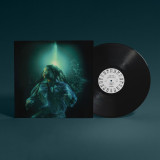
Often touted as a "masterpiece of jazz-funk live albums," The Wooden Glass's 1972 live recording proves it's more than just hype. Featuring vibraphonist Billy Wooten who previously played with Grant Green, this record was recorded at Indianapolis' The 19th Hole club and captures the essence of fusion driven by soulful 60s influences. Wooten's gentle melodies contrast with the gritty, distorted sound of Harold Cardwell's powerful drumming and Emmanuel Riggins' Hammond organ while the energetic performance from the band, including guitarist William Roach, creates a tapestry of intensity and dreamlike vibes. It's raw, electrifying, high-energy jazz.
Suche:gentle
- A1: Velocity Girl
- A2: Gentle Tuesday
- A3: Imperial
- A4: Ivy Ivy Ivy
- A5: Loaded
- B1: Come Together
- B2: Higher Than The Sun
- B3: Don't Fight It, Feel It
- B4: Movin’ On Up
- C1: Gentle Tuesday
- C2: Imperial
- C3: Ivy Ivy Ivy
- C4: Kowalski
- D1: Star
- D2: Burning Wheel
- D3: Swastika Eyes
- D4: Kill All Hippies
Formed in the early 1980s, Primal Scream paid their indie rock dues and experimented with their sound for almost a decade before finding their feet with the era-defining dance/rock hybrid Screamadelica album. It spawned their first hit singles, ‘Loaded’, ‘Come Together’ and ‘Movin’ On Up’, after which they became a chart regulars for over a decade. This carefully curated 17-track collection, first issued in 2019, covers their fascinating journey from 1986 to 2000, taking in their most successful period but also detailing the evolution of their sound before they broke into the mainstream.
Released by Hegoa Records and Night School Records.
Greatest Heads is the fourth album by the radical Basque- Berlinesque group Al Karpenter. A deconstruction of structured “rock” music, here Al Karpenter re-imagine “the band” to explore the intersection between Free music, afro-beat, the avant garde and gonzo rock.
If Theodore Adorno wrote “To Write Poetry after Auschwitz is Barbaric” in 1949, Al Karpenter attempts to answer the difficult question today; what kind of music can be done in the face of a genocide? Álvaro Matilla, Marta Sainz, Enrique Zaccagnini & Mattin’s response to the planet’s slipping into a vortex of hate is to create a music ecstatic, a music of protest bursting with multiple musical languages and glossaries, full of overlapping histories and thrilling tensions.
Greatest Heads posits a plurality of musics both in opposition and intertwined: Al Karpenter play rock instruments pulled apart in the studio in post-production. Distorted rhythm chunks bit-crushed and dissipated, segments of freedom oppressed by waves of sound invading from every direction. The interplay between the chief instrumentalists and renowned, storied sound artist Mattin creates something akin to ESP freedom-seekers Cro Magnon playing in Miles Davis’ early 70s groups, The Los Angeles Free Music Society tightening up into a clenched fist of plunderphonics and runaway percussion.
We Are All Karpenters opens Greatest Heads with the most straight-forward song refrain of the record accompanied by a band that soon crash into eruption, imagining Sun City Girls in full free rock mode.
The modulating synth sound soon sucks the band into its wake to create a spine-chilling climax of distorted sound, made fully orgasmic with mastering engineer Rashad Becker’s attention to detail. On Izugarrizko Buruak (Greatest Heads), Matilla intones in Basque over a mangled distorto-beat. A Brand New Astraphobia creates a black space for a heavily processed guitar to blow up before falling to earth at night, a gentle figure serenading the coming end.
On Side B, the band begins by being masticated by a brutal phaser, squelching and stretching the music into new territories. The overt message of Stop The Genocide! is besieged by violence before Worm City aggressively samples the ghosts of soul music, mixing in noise bursts, prepared piano and swiping, abstracted sound. Epic closer Perfect Love feels like a beat poetry performance on a burnt world, still grasping for community, for home, for some sort of human love. A Mad love, then; an angry love fuelled by solidarity and collaboration.
The band’s cascading layers of references and polyglottal musics attempt to create the perfect lover, alive with rage and disorientating ecstasy: Al Karpenter.
- Prologue
- Gentleman In Black
- Cuban Rebel Girl
- Sympathy For Mata Hari
- Vampire From Havana
- Doomsday Baby
- Crying For More
- The Ballad Of Rue De La Lune
- Garden Of The Medicis
- Lady From Shanghai
- Chamber Of Desire
- Epilogue
Im Februar 2024 kamen Tav Falco und seine unvergleichliche Band Panther Burns ins Sam Phillips Recording Studio in Memphis, Tennessee, um ihr 14. Studioalbum "Desire On Ice" aufzunehmen. Das Ergebnis ist eine Sammlung von Falcos Originalkompositionen, die seine gesamte Karriere umspannt und mit ausgewählten Songs verschiedene Phasen der 45-jährigen Karriere von Panther Burns neu beleuchten. Neben der aktuellen Besetzung der Band, darunter Gitarrist/Produzent Mario Monterosso, sind auf dem Album auch ehemalige Mitglieder von Panther Burns und Zeitgenossen wie Jon Spencer, Reverend Horton Heat, Kid Congo Powers, Bobby Gillespie und andere zu hören. Inspiriert von Künstlern, deren Vision und Musikalität gereift sind, gräbt dieses Werk die Unterströmungen einer Psyche aus, die für die Dekonstruktion mythischer Themen wie unerwiderte Liebe, Bruder gegen Bruder, verlorene Fälle und brennende Villen bekannt ist. "Desire On Ice" ist ein momentaner Ausschnitt aus unmittelbaren, schrägen Balladen, die bereits in die Zukunft geschleudert wurden.
Seeking overlooked beauty and prizing reflection in a distracted world, Hammock creates cinematic music for the road less traveled. In stirring works of shimmering post-rock ambience that swell with hope and melancholic nostalgia, the Nashville-based duo of Marc Byrd and Andrew Thompson immerse listeners in living visions of moments long past, animating life's fond remembrances and scarring losses with gentle lens-flare harmonics, heart-surging neoclassical drama, and pensive silence. A direct challenge to the passive existence of modern life, where everything can be experienced but precious little is felt, Hammock demands, and richly rewards, patience and contemplation. One of Hammock's career defining works, the Mysterium, Universalis, and Silencia trilogy came to a close in 2019. The first chapter, Mysterium, was written following the death of Byrd's 20-year-old nephew and dealt with incomprehensible, shattering loss. Difficult understanding came on Universalis, and an altered reality understood through quiet reflection took hold on Silencia. Emerging from the silence, a period that brought with it the global pandemic of Covid-19 that has kept loved ones apart, conscripted months upon months of isolation, and roused directionless longing for escape, Hammock presents Elsewhere. Recorded by Byrd and Thompson at their homes, apart and with minimal equipment, Elsewhere serves as a gateway to another place, materializes feelings of separation and loss without closure, and calls listeners back to live their lives - not spend them longing to be something or somewhere else. - Wyatt Marshal
Within the nine carefully composed tracks of Young Bones, Mel D’s characteristic voice stands out in all its facets, varying from fragile to powerful, haunting to playful, but most of all soulful. With a voice that’s both extraordinarily clear and melancholic, Mel D is something surprisingly rare: a singer whose artistic expression goes beyond the mere use of her voice. On Young Bones, Mel D uses contemporary figures, rephrasing them into timeless formulas. Her unique musical language embodies references to genres like Indie or Alternative. In other moments, her sound leans baroque, then jazzy, soulful, and contemplative. Each song represents an ode to being connected: to the world, other people, and most of all to the beauty of music. Mel D draws her inspiration from struggles felt in the current world climate: “I have felt overwhelmed by the world we live in and its countless challenges,” said Mel D. “As if we’re all a bit directionless in our own lives.” Nevertheless, Mel D uses her musicality as a tool for resistance - using it to transform sadness and anger into creativity, and to give world-weariness a voice that seduces, comforts, and inspires. On Young Bones, Mel D sings us to a place where we might find hope - with songs rooted in concern, solidarity, humanness, and empowerment, inviting the listener to lean into those feelings. Bring the Witches Back, a hymn to witchcraft, is a quiet song that summons the return of witches with feminist urgency, for more love and magic to open ourselves towards each other and the world. Soft, a soulful song with a tender melody, gently lulls the listener into an in-between dimension, full of opportunities. Meanwhile, in the coming-of-age ballad, Slowly Growing, she raises questions about belonging and identity, pointing directly at our emotional core. Where Do You Look When It Hurts? speaks to the sensation of exhaustion and emptiness, offering musical warmth and a sense of community in moments of lethargy. Finally, listening to the album, one always feels in good company. Playfully working in folk and electro-pop elements, Mel D takes us on a ride toward love and a sense of belonging, particularly on the track We win. Young Bones was recorded in Zurich and Paris with two outstanding producers of our times: Renaud Letang, who has previously collaborated with Feist, Chilly Gonzales or Lianne La Havas, and Dino Brandão. The latter recognized Mel D’s artistic uniqueness during their first meeting, inviting her to a recording session in his studio and bringing her into the band of Swiss superstar, Faber. Mel D’s solo project was more a product of coincidence than planning, as she says, even though an undisputed talent and passion for music had always been apparent throughout her youth. During her studies in fine arts in Zurich, she founded the electronica-duo mischgewebe, and composed soundtracks for theater and movie productions, as well as for exhibitions. Long before forming her current artistic identity, she went by the nickname Mel D, in a humorous reference to the Spice Girls. Although her personality and musical language suggest thoughtfulness and a melancholy touch, Mel D acknowledges that an honest laugh is never out of place, making her sympathetic and approachable.
- Keme Bourama
- Sozani
- Kasse Dya
- Kasse Moro
- Fognana Kouma
- Niagaleba
- Kaira
- Simbo
- Mande Djali
- Toumaro
Kasse Mady Diabate, a key figure in Malian music, left his mark on history with his gentle yet powerful voice, earning him the nickname "the golden voice of Mali". A respected Mandingo artist, he was known for his ability to touch souls with melodies and texts steeped in depth and tradition. As a griot, he carried the musical heritage of his people with dignity and talent. The album title song, Toumaro (A bientôt), written by his daughter Hawa Kasse Mady Diabate, is part of this heritage, celebrating love and gratitude. After Kasse Mady"s sudden death in 2018, Hawa continued the album her father had started, offering a poignant tribute to his legacy and a beautiful way to connect with him spiritually through music. Hawa herself is an iconic figure on the Malian music scene, particularly as a member of Trio Da Kali, the griot "super-group" whose album Ladilikan with the Kronos Quartet was a true masterpiece. Toumaro is a testament to the richness of the griot tradition, carried on by artists such as Hawa as well as Lassana Diabate and Madou Kouyate. Their collaboration on Toumaro with renowned musicians underlines the importance of passing on cultural and musical values, while renewing the genre through contemporary arrangements.
- 1: Black Veils Of Melancholy
- 2: When My Mind Is Not Alive
- 3: Ice In The Sun
- 4: Elizabeth Dreams
- 5: Gentleman Joe's Sidewalk Café
- 6: Paradise Flat
- 1: Technicolor Dreams
- 2: Spicks And Specks
- 3: Sheila
- 4: Sunny Cellophane Skies
- 5: Green Tambourine
- 6: Pictures Of Matchstick Men
In South London members Alan Lancaster (bass) and Francis Rossi (guitar) were the original members and founders of Status Quo. _x000d__x000a_Formerly known as The Spectres and later renamed to Traffic or Traffic Jam they settled for Status Quo as their band name in 1967. _x000d__x000a_The following years they were joined by John Coghlan (drums), Roy Lynes (keyboard) and Rick Parfitt (guitar)._x000d__x000a_Status Quo’s first hit record "Pictures of Matchstick Men" was released in 1968 .The single reached #7 in the UK, and remains the band's only major hit single in the US, where it reached #12. Their debut Picturesque Matchstickable Messages from the Status Quo soon followed. It features several covers, including "Green Tambourine" by The Lemon Pipers and "Spicks and Specks” by The Bee Gees. _x000d__x000a_Another highlight from the album is their second single, "Ice in the Sun." Even if this is not the most representative album from Status Quo, it is a good psychedelic pop exercise ._x000d__x000a__x000d__x000a_Picturesque Matchstickable Messages from the Status Quo is now available as a numbered limited edition of 1000 copies on turquoise coloured vinyl_x0009_
Marja Ahti is a Swedish artist living in Turku, Finland. She works with found sounds, objects and electronics, creating auditory assemblages that reveal a profound sensitivity to sound’s tactile potential. This new record sees her palette expand to include more recognisable acoustic instrumentation, albeit working in collaboration with musicians who are already reconfiguring how those instruments can sound.
Touch This Fragrant Surface of Earth has its roots in a tape piece presented at Lampo in Chicago. Ahti then started working with Isak Hedtjärn (clarinet), Ryan Packard (percussion) and My Hellgren (cello) at the electronic music studios (EMS) in Stockholm. Incorporating recordings from those sessions, Ahti presented a new iteration of the work at the Seventh Edition Festival for Other Music in February 2024 with the trio performing live on stage whilst Ahti helmed the mixing desk, spatialising a specially made tape part through the INA GRM’s Acousmonium speaker orchestra. The piece has since gone through several further iterations before arriving at the version we have here on the LP's B-side where immense bass pressure and high frequency tones buffer restless amplified breath and scrape that folds over itself with extraordinary dynamics and subterranean activity before giving way to gorgeous resonant forms and passages of ritual purpose and sheer, unmistakeable beauty.
The A-side is Touch This Fragrant Surface of Earth’s gentle double. Still Life with Poppies, Mirror and Two Clouds offers a companion reconfiguration of Ahti’s resynthesised percussion sustain and the same recordings of Hedtjärn and Hellgren from EMS, but here they’re nestled in a sonic landscape of calm and restraint that gives them a wholly other character. Ahti also draws on older recordings she’d made of Sholto Dobie’s diy pipe organs and uses these to create repeating patterns and flourishes of sliding pitches that emerge unexpected out of cycling passages of Ahti’s clear struck metal, destabilising electronic interventions and minimal piano figures.
Marja Ahti: “I’ve been fascinated with the kind of elemental quality the sounds I'm using have such as airy sounds or earthy, wooden sounds. These qualities can also be found in wind instruments and percussion and the musicians I worked with on Touch This Fragrant Surface of Earth are really good at enhancing these qualities in their playing. I wanted to have this connection between found sounds, field recordings, or pre-recorded sounds, objects, and material, and see where these sounds might meet each other, and hopefully blend is a natural way without a divide between instrumental music, or acoustic music, or electronic music. But also, when you bring in people they come with their personalities and their ideas which is also energizing and brings surprising things into the collaboration that I couldn't come up with myself. I was really interested in making this a proper collaboration and not just coming up with the piece and giving it to them. We had the sessions at EMS where we could share ideas and Isak, Ryan and My could bring in their own ideas. Making recordings there gave me time to process these ideas and to also approach them in the same way that I would work with any other sound.”
- Inside Out
- Minneapolis
- Say It Again
- Tell Me When It Rains
- Tight Grip
- Reality
- Poplar Tree
- Everything
- Before The Hour's Up
Canadian singer-songwriter Marissa Burwell creates moments of warm musical tones featuring thick harmonies wrapped around gentle guitars and drums, while other moments showcase cathartic bursts of energetic alternative rock. Burwell"s sophomore album "Before the Hour"s Up" was born from a push and pull from within. The record is titled after the closing track, which explores the hopeless desire for all of life"s issues to be solved by the end of a therapy session. The creation and release of this album echoed this sentiment; there was a hope that by the time it was released, Marissa"s questions would be answered and her feelings resolved. Instead, she is humbled (yet unsurprised) by the reality that no matter how many topics you address in the hour, they do not simply disappear.
"Astral Americana hymns hovering somewhere between the dirt and the stars" Pitchfork
"Mood music for moments of solitude, best experienced without distraction" The Times
"Overwhelmingly effective and ravishingly beautiful" The Wire
American Dust is an ode to the beauty of the American Southwest, where vast desert landscapes hold stories both stark and tender. Eve Adams’ characteristic folk noir weaves a vivid tapestry of love, sacrifice and quiet revelation, conjuring images of dust storms, stray dogs and far off trains.
The high desert of California is a vast and confounding place. Equally inspiring as it is punishing, it’s a landscape that carries magic in its deep dark nights, holding stories both tender and stark in the coarse layer of dust that settles upon everything. It’s long been a source of inspiration for musicians, writers, and painters, each of them adding to the same current, carried forward over time, through hope and hardship and the passing years.
Somewhere out there in that broad and boundless landscape, Eve Adams has been living her own desert life, quietly writing the follow-up to 2021’s Metal Bird LP. Where that album sang of liminal space, the dream-like turbulence of Hollywood’s golden age, American Dust is far more rooted in traditional storytelling; a eulogy for the American Dream channeled through that sweeping part of the country that holds such power and mystery. Slipping into different and varied costumes throughout its ten songs, it finds Eve not just observing the people around her but stepping into their shoes and peeling back the layers of their quiet lives.
Adams writes from within. A few years ago she moved out there, to “the middle of nowhere”, finding a slowness that didn’t exist in the city, and she knows only too well about the mystical nature of the land and those who live within it. Weaving together themes of grit and romance, American Dust holds its focus on the bittersweet poetry of lives lived in solitude, most notably the women who sustain life at the center of it all. “There’s something very radical about domestic life,” Adams says of this thread. “So many women live their entire lives behind closed doors, completely in the shadows. Within those lives is such sacrifice, devotion, and love. I wanted to honor that: the poetry in the mundane, the longing in the repetition. The way love survives boredom and dust and time.”
Eve is joined on American Dust by Canadian musician Bryce Cloghesy, aka Military Genius of Crack Cloud, who plays throughout and also helped produce the album. Musically bold and vivid, it’s an ambitious and detailed stride forward from what’s come before, the scope of the LP’s narrative reflected in the radiant sweep of the playing. On top of gentle piano and guitar, gorgeous strings drift through the album, lending the songs a woozy sense of romanticism; a collaboration with Gamaliel Traynor (Cello) and Caroline’s Oliver Hamilton (Violin).
For all the drama that’s coiled around these songs, it’s the recurring notion of love and hope fighting against everything that holds true throughout American Dust. Musically it’s lush and vibrant, intimate and cinematic side by side, and always bursting with warmth. But it’s what it holds in its weary bones that elevates it to something truly special, something more than just a collection of songs penned in the heart of the desert. The characters it speaks of, and from, feel shadowed but wholly real, like they’re bursting to share their stories that have remained hidden for years and years and they allow Eve Adams to grow as a songwriter right in front of our eyes.
“The same swirling dust that clung to the covered wagons of my ancestors as they crossed the Great American Desert is the same dust my great-great-grandmother swept off her porch during the Dust Bowl of 1936 in Oklahoma, is the same dust that blows in through the cracks in my windows here in the desert, carrying stories from a time long gone,” Eve says, reflecting on the personal narrative that runs through her new album.
“It’s not just dust—it’s American Dust, the kind that settles into the bones of a family and never leaves. I think about that dust as a symbol of the passage of time. I hope this album will be part of that same current, carrying forward for the next generations of my family to find. I’ve been lucky enough to have journals and poetry from my ancestors that documents their lives during times of pure hope and pure hardship. I’d like to think of this album as a contribution to that family history.”
- 1: I’ll Be With You 3:00
- 2: Left :0
- 3: Carmen Electra 2:45
- 4: Idr 1:3
- 5: Fumbled 1:46
- 6: “Affirmatively.” Pt 1 1:59
- 7: Honey I 2:10
- 8: Could You 3:31
- 9: Recognize Me 2:11
- 10: “Affirmatively.” Pt Ii 3:19
- 11: And 4:16
Blaney describes A Room With A Door That Closes as “a love letter to her blue,” an emotional state that she defines as “a kinetic, intense, and dark energy that needs to be expressed as soon as it is felt.” The eleven songs on the album span radioactive kiss offs, sorrowful meditations on yearning, and gossamer reveries about self image.
The music has a fittingly tumultuous, intricate sound: 1960s soul samples melt into warm drum n bass percussion, blips of glitch ping pong against grating synth, and Blaney’s vocals range from searing punk exclamations to gentle, exploratory croons. It’s the sound of a singer peering deeply within herself and presenting the world with everything she finds, unadulterated, in real time. Blaney produced the new project along with a tight team of three producers: Emerson Fossett, Harlan Steed (Show Me The Body), and Alex Farrar (MJ Lenderman, Wednesday, Squirrel Flower, Snail Mail).
Blaney had just started playing guitar and producing around the time she began writing the songs that would become the album. Being new to both producing and guitar playing opened up a sense of exploration and freedom for her. She felt emboldened to employ more adventurous riffs and unconventional song arrangements when she was writing. A Room With A Door That Closes is a collection of songs that rigorously pursue honesty, that present feelings as they arise without rushing to categorise them or explain them away. In the process of understanding her rage or discomfort, Blaney often lands on a sense of pride and assurance, but that’s never the ultimate goal. She eschews the easy comfort of neat resolution for the excitement of ongoing discovery. The album is an exercise in unfiltered self-expression, and a celebration of life at its messiest.
- A1: Get Sun
- A2: And We Go Gentle
- A3: Love Heart Cheat Code
- A4: Blood And Marrow
- A5: Telescope
- B1: Make Friends
- B2: By Fire
- B3: Red Room
- B4: Nakamarra
Brainfeeder stellt Tres Leches vor - ein Trio herzzerreißender Troubadoure, bestehend aus Paul Bender und Simon Mavin von Hiatus Kaiyote, ergänzt durch das tourende Bandmitglied und dem langjährigen Kollaborateur, Alejandro „Silentjay“ Abapo - und ihr kommendes Album, „The Smooth Sounds of Tres Leches, LHCC Mart Vol. 1“, das Mitte August 2025 auf dem Label erscheint.
Liebevoll aufgenommen und abgemischt in verschiedenen Hotelzimmern an den freien Tagen einer Nordamerika-Tournee, drehen Tres Leches die Lichter herunter und interpretieren Hiatus Kaiyote-Evergreens wie „Get Sun“, „Red Room“, „Make Friends“, „Nakamarra“ und mehr neu, um Leidenschaften zu wecken, die Sinne zu entzünden und die wilde Bestie in sich zu beruhigen. Ursprünglich als Soundtrack zu einem imaginären Supermarkt für „Love Heart Cheat Code“ gedacht, nahmen diese schwülen und sinnlichen Interpretationen der Hiatus Kaiyote-Tracks bald ein Eigenleben an. Hiatus Kaiyote - das Quartett bestehend aus Naomi „Nai Palm“ Saalfield (Gitarre, Gesang), Paul Bender (Bass), Simon Mavin (Keyboards) und Perrin Moss (Schlagzeug) - wurde von vielen bekannten Namen gesampelt, darunter The Carters (Beyoncé & Jay-Z), Kendrick Lamar, Anderson .Paak und Chance The Rapper. Außerdem wurden sie von gefeierten Künstler:innen wie SZA, Kehlani, Willow Smith und Virgil Abloh unter Vertrag genommen. Letzten Herbst coverte Doja Cat die „Mood Valiant“-Single, „Red Room“, in der Live Lounge in Los Angeles und spielte den Song auch mehrfach auf ihrer damaligen Tour.
- A1: Linda Smith - So Long Ago
- A2: Linda Smith - Evening
- B1: The Smashing Times - Alfie
- B2: The Smashing Times - King Bidgood’s In The Bathtub (And He Won’t Get Out Of There)
Linda Smith and The Smashing Times are the best of friends. They are both currently based in Baltimore, USA. This split 7” EP celebrates that friendship with two new tracks by each act; united by DIY spirit, a bedroom-pop sensibility and now a puddle of black vinyl.
Songwriter Linda Smith has a gentle but unconventional experimental style that continues to evolve as she adds new entries to her storied catalogue. Smith’s pioneering work with four-track production in the '80s found her at the beginning of a home-recording movement that would set the pace for the decades of indie rock that followed. During this most active period, Smith's music was limited mostly to obscure cassette and 7" releases. This trailblazing time was recently revisited on Captured Tracks’ compilation ‘Till Another Time: 1988-1996’. Shortly after Smith’s retrospective, she teamed up with like-mind and collaborator Nancy Andrews to release an album of beguiling pop entitled ‘A Passing Cloud’ (2023). The duo performed songs from that record at Upset The Rhythm’s 20th anniversary party at Café OTO that same year. 2024 saw further reissues of Smith’s music including Nothing Else Matters (1995) and I So Liked Spring (1996).
The Smashing Times are a premier East Coast Pop Experimental Group. They have also gleefully performed in London for Upset The Rhythm twice in quick succession. Known for their dogtooth style, waggish mod attitude and tumbledown sound, The Smashing Times have holes in their socks and sit idly between The Kinks and Tori Kudo. Their previous albums on K Records, Perennial and Meritorio are a cherished commodity steeped in Paisley psyche and slapdash panache.
36 and Past Inside The Present label head Zake return to their Stasis Sounds For Long Distance Space Travel project which is music designed not for the distracted world we inhabit, but for the still moments we so often neglect. Crafted with intention and restraint, it is a universe that suspends the listener in time across glacial soundscapes in which the duo conjures a sense of cosmic awe. Soft, slow-moving drones and textural washes drift like solar winds through the vacuum, suggesting the boundless calm of deep space. The production is rich, gentle with tonal shifts and barely-there harmonics that evoke both distance and intimacy, wonder and melancholy. It feels like music beamed in from the edges of the known universe. If you fancy a contemplative journey from the edge of Earth's thermosphere into the unknowable beyond, tune into Stasis Sounds on your best headphones.
Scowl is a band that sounds exactly like their name implies. Venomous, fierce, antagonistic. A sneer not to be crossed. Over the last five years, the Santa Cruz, California, band has firmly planted their flag in the hardcore scene with their vicious sound and ripping live show, sharing stages around the world with Circle Jerks, Touché Amoré, and Limp Bizkit, and filling slots at prominent festivals like Coachella, Sick New World, and Reading and Leeds. But with their new album, Are We All Angels (Dead Oceans), Scowl is aiming to funnel all that aggression through a more expansive version of themselves.Much of Are We All Angels grapples with Scowl's newfound place in the hardcore scene, a community which has both embraced the band and made them something of a lightning rod over the past few years. Standout single "Not Hell, Not Heaven" outright rejects the narratives cast onto them by outsiders. "It's about feeling victimized and being a victim, but not wanting to identify with being a victim," explains vocalist Kat Moss. "It's trying to find grace in the fact that I have my power. I live in my reality. You have to deal with whatever you're dealing with, and it ain't working for me." The band breaks from a sense of disassociation to seek deeper connections on "Fantasy." "It's incredibly challenging to try to balance my love for the scene while also feeling, in some spaces, extremely alienated and hated," Moss says. "`Fantasy' is about feeling like I don't know how to connect with these people anymore, because I have shelled myself away so hard." The album ends in a philosophical place on the closing, titular track, "Are We All Angels," asking questions like, "Is this all there is?" and ultimately putting it on the listener to decide. "It's about the personal struggle between good and evil. It doesn't matter how `good' or `bad' you are, there are systems that will try to rewrite your narrative no matter what you actually do," explains Moss, noting that punctuation on "Are We All Angels" has been deliberately omitted in an attempt to leave the statement open-ended. Are We All Angels is the highly anticipated follow-up to Scowl's debut, 2021's How Flowers Grow, a 16-minute primal scream over punishing riffs. But amidst the pounding chaos, it was the record's sonic outlier, a cleaner interlude called "Seeds to Sow," that, true to its name, planted the seed for what was to come for the band. "It kind of laid out this destiny for us, and I feel like now we're fulfilling that," says drummer Cole Gilbert. The band continued to expand their sound on 2023's widely acclaimed Psychic Dance Routine EP, incorporating more pop hooks and favoring gentler singing over heavy screaming, paving the way for what would come next.Scowl's growth got a huge boost from producer Will Yip (Turnstile, Title Fight, Code Orange, Balance and Composure), who broadened the band's scope. "Will would say, `Everything you have here is correct, but it's in the wrong place,'" says Gilbert. Moss adds: "Will really helped restructure a lot of the material. Some songs he tore apart to make more space for the really good hooks and choruses." But even through this more eclectic approach, Scowl loses none of their edge, and still manages to convey the anger and frustration that lies underneath. They are deeply committed to carrying the ethos of punk and its sense of community. "Hardcore and punk have sculpted how we operate, what we want to do as a band, and how we participate," says guitarist Malachi Greene. "At our core, we are a punk and a hardcore band, regardless of how the song shifts and changes."
- My Own Way
- Cold Case
- All Of Our Friends
- Cowgirl Suit
- Callin Ya
- Ufo
- Cedar On The River
- I'll Never Know
A self-described chronically-sincere farm girl, Emily Hines grew up on a farm in rural Ohio before moving to Nashville where she played in other songwriters' projects before recording her own songs on a 4-track cassette recorder. Hines worked with producer Henry Park. Together they drew inspiration from acts like Duster, Laura Marling, and Karen Dalton to record simply and add layers one at a time. The resulting collection makes for something truly special; rich and decadent but also earthy and cracked. Emily prioritized creating a recording that feels human and present, and the outcome is palpable throughout These Days. At times we're right there in the room with Emily, up close and deeply personal, at other points it's as if you're straining to hear from the outside listening in; ear to the wall, notes carried and caught in the breeze. "We were drawn to the 4-track because it constrains the urge for perfectionism and encourages authenticity to the moment," Emily explains. "What you get is what you get, the 4-track doesn't afford you to get surgical about the details - and that can be really freeing." "Listening to Emily Hines' lo-fi folk ballads feels like discovering a cult hero's lost demos-these gentle, heart-mending recordings crackle with intimacy and seem to unfold as you're listening.' Paste Magazine 'Hines sings plaintive and romantic acoustic ballads, small moments of a life that build to something far greater within the woozy timber of her voice." - Gold Flake Paint
- I'm | Getting Sick
- Evicted | 05 24
- We've | Made It This Far
- Undercurrent
- King | Of Swords
- Omw
- Happy | Is Hard
- Tired
- Keep | Driving
- I'll | Be Here 03 56
Vines, the solo project of New York-based multi-instrumentalist and composer Cassie Wieland, offers a window into her inner world through expansive swaths of sound. She pieces together a celestial mix of synths, percussion, strings, and vocoded voice, making music that is at once deeply personal and cinematic in scope. This diaristic approach first took shape with her 2023 EP Birthday Party, and is crystallized on her debut LP, I’ll be here. With the sweeping and vulnerable I’ll be here, Vines arrives fully formed as an artist who crafts deeply resonant and open music–the kind that invites listeners in to listen, reflect, and share in the journey of learning through living.
“It was through making music that I was able to meet myself,” Wieland said. “Anything I’m going through or feeling is something that somebody else out there can relate to, and that’s really special to me.”
I’ll be here is both a culmination of years spent creating gossamer soundscapes and an opening to a new journey for Wieland as an artist. The album grew out of her years as a composer and songwriter, and builds on the language she developed on Birthday Party, which transformed the tumultuous feelings of the passing of time into minimalist meditations. It was just a start, though–a prologue, a development of the kind of language and ideas she wanted to express. With I’ll be here, she digs deeper and writes music that feels more sprawling, further solidifying her singular voice.
Wieland’s musical composition process is similar to journaling, lending itself to the music’s honesty. When she writes, she makes room for all the ideas she has; in these sessions, there are no wrong ideas, and she allows the music to be attuned to the experiences she’s having at the time. With I’ll be here, Wieland zeroes in on themes of anxiety, loneliness, navigating human connection, and having to grow up from a young age, ultimately coming to a place of acceptance. And though it began as a journal written in solitude, her collaborators shape the music with her.
Working with friends, in fact, was a crucial part of bringing the record to life. “Everything that was supposed to happen came together so easily because of the people involved,” Wieland said. I’ll be here was co-produced and recorded with Wieland’s longtime collaborator Mike Tierney, a four time Grammy-nominated engineer who has worked with artists across the contemporary classical and experimental scene like minimalist pioneer Steve Reich, LA’s preeminent classical ensemble Wild Up, and various bands on Bang on a Can’s Cantaloupe Music label. Percussionist and composer Adam Holmes and violinist Adrianne Munden-Dixon are two other longtime collaborators who are frequent fixtures of her live show. Holmes plays synths, drums, and banjo; in live settings, his kit is loaded with elements of the songs that are then triggered by MIDI, making the music an interactive, evolving experience. The album’s gentle, filamented edges are colored by Munden-Dixon, whose poignant string melodies elevate Wieland’s introspective compositions, as well as cellist Helen Newby, saxophonists Julian Velasco and Jordan Lulloff, and bassist Pat Swoboda.
Wieland takes an economic approach to writing music, building the swirling and immersive landscapes of Vines through short melodies, lyrics, and phrases. As each element layers and interweaves, they grow into sprawling webs of ghostly sound. Prior to Vines, Wieland composed pieces for other people to play using a minimalist’s sensibility, writing slowly unfolding melodies for instruments like violin and saxophone. In recent years, she sharpened her solo style across a variety of singles and covers which have garnered significant attention on social media for their emotional resonance (“being loved isn't the same as being understood” in particular went massively viral on TikTok in 2024). Birthday Party, her debut as Vines, brought her writing to a much more intimate space, centering on her vocoded voice cloaked in feathery reverb. A series of recent singles, meanwhile, including “I am my home,” showcase the way that Wieland’s music is born from the story of her innermost feelings, extending far beyond just the self.
Though Wieland’s music often deals with dark themes, it unfolds with tender melancholy, the kind that feels like a warm embrace. On “Evicted,” Wieland wonders if she’s getting sick or moving on, if she’s lost or found. Her vocals expand with each lyrical repetition, as the instrumentals slowly encircle and the music’s rhythm grows and bursts into a heart-wrenching, yet radiant wave reminiscent of post-rock bands like Explosions in the Sky. “Tired” follows a similar trajectory, building from a looping, melancholy rhythm and floating lyrics into a solemn resignation. Elsewhere, Wieland takes a more ruminative approach: “Omw” begins with twinkling piano and melancholy strings that gradually transform into an undulating mass. It is a song born out of the warm feeling of reminiscence, the slight return of hope that comes with nostalgia.
With any searching journey, there is also a point of understanding. The title track closes the album with the freedom of acceptance. A marching drum beats steadily beneath Wieland’s open vocals, moving forward, ever onward as it flies into the ether. In Wieland’s delicately textured music, there is room to come into yourself, and learn to love whomever that is. I’ll be here is a special space that can be all your own, one in which to feel what needs to be felt. “This is music for your story,” Wieland said. “I want you to use it how you need it.”
- A: Oasis V Blur
- B: Pacio’r Fan
2025 is a special Britpop anniversary year, and Swansea Sound are keen to celebrate this summer’s coming together of every single music-lover in the UK with the release of their new single Oasis v Blur.
The song probably sounds more like The Fall getting into bed with The Sweet, but that’s just the way it turned out.
The B side, Pacio’r Fan, is about a journey back to a remembered teenage time, when idealism still burned and the world was full of potential. It is a wistful song, but it’s hopeful too: the idealistic flame is still there if you seek it out.
The release date of Oasis v Blur coincides with Swansea Sound’s live performance at the reasonably-priced Skep Wax Weekender, alongside label-mates including Sassyhiya, The Gentle Spring, Jeanines and Heavenly.
Swansea Sound have released two albums, several singles and have recorded live radio sessions for BBC6Music and WFMU (New York). They are Hue Williams and Amelia Fletcher (who both sang in The Pooh Sticks), Rob Pursey (in Heavenly with Amelia), Bob Collins (of The Dentists), Ian Button (The Night Mail, Papernut Cambridge, Death In Vegas ) and artist Catrin James (The Loves).