Nachdem sie auf ihrem gefeierten Debütalbum ein multidimensionales Klanguniversum definiert hatten, verlassen der Komponist und Filmemacher Chris Hunt und James ,Munky" Shaffer von Korn auf EXINFINITE das Vertraute und driften in ein Reich der Rekursion, wo sie auf ein Gewirr aus gespiegelten Wurmlöchern blicken, die mit unheimlicher Mehrdeutigkeit summen. Das zweite Album von VENERA ist düsterer, heavier und perkussiver als sein Vorgänger, aber es gibt etwas Intimeres in seinen Schaltkreisen, das schwer zu definieren ist - etwas Mystisches, Geheimnisvolles und Melancholisches. Songs materialisieren sich aus dem Nichts, nur um von sauren Synthesizern aufgelöst oder von Hunts geschärften Beats durchbohrt zu werden, während Shaffers dichte, gequälte Riffs durch euphorische, zeitverzerrte Vocals von FKA twigs, Dis Fig und Chelsea Wolfe ausgeglichen werden. Nach ihrer Begegnung mit der Unendlichkeit haben VENERA nach innen geschaut, über die Grenzen der Existenz nachgedacht und ihre tiefsten Emotionen ausgegraben. VENERA entstand 2022, als Hunt und Shaffer nach Aufnahmen mit der albanischen Künstlerin Xhoana X. ihr eigenes musikalisches Terrain betraten. Das Duo improvisierte gemeinsam und experimentierte mit cineastischem, von Science-Fiction inspiriertem Sounddesign und erkannte, dass die Zusammenarbeit Potenzial hatte. So begannen sie, ihren Sound weiterzuentwickeln und zu verfeinern, wobei sie Unterstützung von Deantoni Parks, dem ehemaligen Schlagzeuger von Mars Volta, Alain Johannes von Queens of the Stone Age, dem Post-Punk-Duo VOWWS und den LA-Noise-Rock-Legenden HEALTH erhielten. Nachdem ihr Debütalbum 2023 auf Mike Pattons Label Ipecac erschienen war, setzten VENERA die Dekonstruktion und Neugestaltung ihres Songwritings fort, tauschten Eno-artige Ambient-Atmosphären gegen explosive Beats und dichte Texturen aus und fanden heraus, wie sie die von ihnen eröffnete Erzählung erweitern konnten, ohne alte Pfade zu beschreiten. Auf ,Tear" ist die neue Richtung des Duos deutlich zu hören, wenn Shaffers ursprüngliche Gitarrenklänge zu unheimlichen Widescreen-Expositionen umgestaltet werden, die Hunt mit pneumatischen Kick- und Snare-Zyklen untermalt. Unterbrochen von Luftschleusen-Zischen und leuchtenden Synthesizern, bietet der Track eine Kulisse, die VENERA kontinuierlich verwandelt und das Konzept im Laufe des Albums neu formt. Die Kult-Singer-Songwriterin Chelsea Wolfe gibt dem düsteren ,All Midnights" einen gotischen amerikanischen Touch, indem sie kraftvoll über VENERAs vakuumverpackte Rhythmen und gasförmige Synthesizer singt, und der in Berlin lebende Noisemaker Dis Fig, der bereits mit The Body und The Bug zusammengearbeitet hat, verleiht Shaffer und Hunts tape-verzerrten Industrial-Pops und -Whirrs in ,End Uncovered" hauchige, emotional vielschichtige Töne. Sie lassen squelchigen, verlangsamten Techno in okkulte Noise-Reflexionspools auf dem schlängelnden ,Asteroxylon" einfließen, und Hunt antwortet auf Shaffers hallende Zupftöne mit Nebelhorn-Stöhnen auf dem unheilvollen, nachdenklichen ,uuu773". ,EXINFINITE" baut sich kontinuierlich auf, bis es ,Caroline" erreicht, eine intensive Zusammenarbeit mit FKA Twigs, die ihre unheimlichsten Töne isoliert. Zunächst umspielt sie ihre Worte mit bedrohlichen elektrischen Verzerrungen und verstümmelten, geisterhaften Stimmen, bevor sie in einen aufgeladenen opernhaften Schrei ausbricht, dem Shaffer und Hunt mit flirrenden kybernetischen Beats und dichten Wänden aus Gitarrenlärm begegnen. Dieser Track bricht das Konzept von VENERA vollständig auf, verschmilzt das Synthetische mit dem Natürlichen und löst Dysphorie, Selbstverlust und unendliche Regression aus. So wirken der blutrünstige Lärm und die finstere Atmosphäre von ,Decreation" wie eine dissoziierte Coda. In ,EXINFINITE" werden Zerstörung und Tod nicht überwunden, sondern so lange intensiviert, bis sie sich vollständig verwandeln.
Поиск:ges e
Все
The occasion of possibility runs through Ben Bertrand's new album Relic Radiation. It is all backdrops and layers. Hints of the emotive and the distant. Confronting the classical with what is new, looking for an expressive space. Melancholy, not melancholy. Contemplation on a midnight blizzard. Dust motes in a sunbeam. Sand dunes and microwaves.
Ever since 2018 and the release of his first solo album, Ben Bertrand has been working up his own interpretation of the bass clarinet as an instrument of the avant-garde. Touching upon ambient and cosmic as well as earthy sceneries, his is a gentle musical paradox come to life. Let go of explicit pleasantries, Relic Radiation is the polymathic interpretation of a frozen intercom, of a subdued intent of contact. The music is competent and familiar, distant without being distant. There is no predefined form or context here. It is a different kind of colour.
As musical moments and modi become enormous, things break down into exploration. On the crystal shores of perception, Relic Radiation leaves a lot of space for interpretation. It is never loud, although it works loud. An at times almost sequenced feel to treated and overdubbed bass clarinet and clarinet notes adds to a feeling of paradox. Every voice, every gesture indicates a way in. The electron is now an immeasurable wave."
Gesloten Cirkel is back with a blistering new 4-track release. Known for his uncompromising sound, he dives effortlessly into stroboscopic acid with the title track and the ruthless "Heisinprison," while delivering near-tearjerking industrialized house with the summer-tinged jams "F-unkz3" and "Breaking The Lamp." The Acid Puke EP oozes equal parts dystopian rave energy and twisted melodic bliss. This is Gesloten Cirkel at his most focused and feral.
Wrong Filament embodies Robert Piotrowicz's creation of fictional traditional music - not studied but invented, a utopian and oniric construct that becomes tangible in sound. These imagined traditions act as communal forces of music-making, resisting dominant structures of power.
The album unfolds in six dense compositions built on rhythm, repetition and minimal melodic gestures that draw on archetypal patterns of Eastern European traditions. Entirely synthetic yet strikingly instrumental in character, they develop as autonomous sound events, expanding into multi-part forms that evoke the physicality of ensemble performance - as if played by an imagined community of musicians.
Rather than reconstruction, Piotrowicz invents forged dances - a pre-techno of sorts, where complex meters and dense textures point to a parallel history of collective sound beyond industrial uniformity. They imagine a utopian and fictional genealogy of collective sound: one where industrial modernity yields to more unstable, communal energies.
This is celebratory music with invocatory charge: calls to dance, echoes of ceremony, microtonal melodies shaped by emotional weight, and traces of Eastern ornamentation stretched through synthetic means. Wrong Filament sacralises performance through sound alone, spinning a world where spectres of collective experience vibrate against the limits of rupture and resistance.
These pieces confront the traces of violence inscribed in body and memory, yet also affirm freedom, emancipation and integration. They manifest celebration, identity and resistance while opening a path toward liberation and shared needs that exceed social, private and intimate categories.
- A1: When I Sing, I Slip Into The Microphone. Into That Void, I Bring Comrade "Prayers", Then, Turning To Face The Outside, Together We Explode. Part I
- B1: When I Sing, I Slip Into The Microphone. Into That Void, I Bring Comrade "Prayers", Then, Turning To Face The Outside, Together We Explode. Part Ii
- C1: When I Sing, I Slip Into The Microphone. Into That Void, I Bring Comrade "Prayers", Then, Turning To Face The Outside, Together We Explode. Part Ii (Continued)
- D1: When I Sing, I Slip Into The Microphone. Into That Void, I Bring Comrade "Prayers", Then, Turning To Face The Outside, Together We Explode. Part Ii (Conclusion)
- D2: When I Sing, I Slip Into The Microphone. Into That Void, I Bring Comrade "Prayers", Then, Turning To Face The Outside, Together We Explode. Part Iii
Among the true Keiji Haino devotees, Nijiumu’s Era of Sad Wings (released on P.S.F. in 1993) has always held a special place in the pantheon. Operating for only a few years in the early 90s and apparently only performing a handful of shows, Nijiumu operated at the opposite end of the dynamic spectrum to Haino’s famed power trio Fushitsusha, dwelling in a hushed, meditative realm of mysterious droning sonorities and free-floating melodies that occasionally erupts into violence. Black Truffle is pleased to announce a new double-LP edition of a lesser-known 1994 Nijiumu recording, When I sing, I slip into the microphone. Into that void, I bring comrade “prayers”, then, turning to face the outside, together we explode. Here, Nijiumu is the trio of Haino, Tetuzi Akiyama and the obscure Takashi Matsuoka, the three performing on a wide variety of string, wind and percussion instruments, as well as electric guitar and bass, and Haino’s unmistakeable voice.
Like on the early solo Haino album that shares the group’s name (released on P.S.F. in 1993), the instrumentation swims in reverb (the use of which Akiyama recalls as ‘a kind of point of the band’), often obscuring the instrumental sources. On the short opening piece, a distant reed instrument arcs long buzzing melodies over a bed of cymbals and gongs, like a psychedelic take on Tibetan music. The epic second part, occupying almost 50 minutes, begins as a splayed, near-formless cloud of electric guitar and bass, shadowed by bowed and plucked strings, the three elements working through twisting atonal shapes. At various points in the recording, we hear what seems to be the sounds of musicians moving between instruments, their shuffling and bumps fitting seamlessly into this radically open music. Eventually, what sounds like electric guitar moves closer to the foreground, fixing on a repeated melodic cell around which hover mysterious clouds of long tones and a sporadic shaker. At the half-hour mark, the music begins to build to a violently emotive climax, Haino’s impassioned vocal cries punctuating a lumbering, bass-heavy murk, contrasted at points by what sounds like a tin whistle. Suddenly, the volume drops to a near-whisper, opening the way for the stunning final moments, which touch on the slow-motion balladry of Haino’s classic Affection, here given an eccentric twist by an occasional woodblock hit. The third piece opens with a hazy trio of rumbling bass, bowed strings and abstracted slide guitar, the latter calling to mind some of Akiyama’s later solo work. Eventually joined by Haino’s voice, its fragile, haunted tone might remind the listener of the man in black’s documented love of the madrigals of the murderous Count Gesualdo, before the recording abruptly breaks off mid-note. In this new edition, the Nijiumu trio recording is supplemented by a piece recorded solo by Haino in 1973, a bracing electronic blowout stretching almost half an hour. Using a homemade electronics setup to unleash a barrage of crunching distortion and shuddering harmonic fuzz, it takes its place in the canon of extreme live electronics next to Robert Ashley’s Wolfman and Walter Marchetti’s Osmanthus fragrans, looking forward to extreme noise years before Merzbow. Taken as a whole, these four sides of music are a stunning document of some of the lesser-known waystations of Haino’s singular creative path.
- A1: Babytalk - Keep On Move (Original Mix)
- A2: Babytalk - Keep On Move (Six-Leg Friend Mix)
- B1: Babytalk - Chance (Original Mix)
- B2: Babytalk - Chance (Hercules & Love Affair Remix)
- B3: Babytalk - Chance (Babytalk Remix)
- C1: Watussi - If All We Had Was Love
- C2: Watussi - Purple Moon
- D1: Watussi - Purple Moon (Instrumental)
- D2: Babytalk - Enough
Eric Broucek war der Ur-Ingenieur der fruchtbarsten Ära der DFA Studios, etwa von 2003 bis 2008 (niemand weiß genau, wie es damals war, da alles im Nebel des Chaos verloren gegangen ist). Er hatte seine Hand im Spiel bei allen Remixen, LPs und Dance-12s. Er war fast jeden Tag in diesem überladenen Equipment-Keller, nahm auf, mixte und bemühte sich, Tim und mir nicht die Augen zu verdrehen. Und irgendwo in diesem Nebel veröffentlichte er still und leise drei limitierte 12-Inch-Veröffentlichungen auf seinem eigenen Label Stickydisc Recordings - zwei unter dem Namen Babytalk und eine als Watussi zusammen mit einem weiteren DFA-Stammgast, Morgan Wiley. Damals wollte Eric seine Musik nicht auf DFA veröffentlichen. Er wollte seine eigene Identität entwickeln, was ihm auch gelang, indem er Musik herausbrachte, die mit ihrer einzigartigen schrägen, umgekehrten und zurückhaltenden Kraft vom DFA-Pfad abwich. Seine Musik ist so anders als alles andere aus dieser Zeit, so einzigartig, dass sie immer noch völlig zeitlos klingt. Vor ein paar Jahren begann ich wieder, die Tracks aufzulegen, und sah, wie die Welt immer noch von dem überrascht war, was Eric geschaffen hatte, und so entstand die Idee zu dieser Compilation. Also, Eric, am Ende haben wir deine Platten doch veröffentlicht. Wir lieben dich, Mann. - James Murphy
WVLT is the newest sonic addition from WNDFRM (Portland-based, Tim Westcott), an album of eight distinct explorations exploring the many facets of experimental IDM.
Tim Westcott’s practice is rooted in an acute, nearly forensic attention to sound. Subtle tones, sculpted drones, and lean percussive gestures, always pursued with a patient ear and obsession with sound design.
With previous releases on Prologue, Home Normal, and Dragon’s Eye Recordings, and several live performances at Mutek, a new album from Tim is a rare yet welcome occurrence. The conceptual approach for WVLT began in 2021, mixing synths with drum machines and granular processing. Lightly arced structures slip between gates of rhythm, shifting pulses, translucent washes, and disquieting residue. There’s a precision to the hesitation and an insistence in the space between notes, a deft balance of raw improvisation and sculpted quietude.
An exercise in immediacy and response, each track builds and unspools, like form in fleeting motion, driven by the moment’s tonal contrasts, micro‑rhythmic interplay, and slight gestures that alter entire planes of listening. It’s minimal without sparsity, intense without density.
Die Cinematic-Funk-Visionäre The Diasonics liefern mit ihrem neuen Album ,Ornithology", das am 3. Oktober über Record Kicks veröffentlicht wird, ein weiteres solides Set aus östlich angehauchtem Psychedelic, Cinematic und Disco-Funk. Nach ihrem 2022 von der Kritik gefeierten Debütalbum ,Origin of Forms", das von PopMatters zum Library Music Album of the Year gekürt wurde, kehren die in Moskau ansässigen Instrumentalisten The Diasonics mit ,Ornithology" zurück, einem zweiten Album, das ihre klanglichen Grenzen erweitert und gleichzeitig ihrem unverwechselbaren Stil treu bleibt. Aufgenommen in ihrem eigens errichteten Studio 23, das sich in einer umgebauten Lampenfabrik aus der Sowjet-Ära befindet, ist das Album das Ergebnis von zwei Jahren intensiver kreativer Erkundungen und Experimente. Mit ihrer ganz eigenen Mischung aus cineastischem Funk, östlich angehauchten Melodien, instrumentalem Hip-Hop und analogem Soul haben sich The Diasonics einen einzigartigen Platz in der globalen Funkszene geschaffen. ,Ornithology" markiert ein neues Kapitel: Inspiriert von wiederkehrenden Vogelmotiven in ihrer Umgebung, von Zügen und Bahnhöfen bis hin zu lokaler Folklore und den Schreien der Vögel, die über ihrem Studio kreisen, kanalisiert die Platte Ideen von Bewegung und Freiheit, sowohl thematisch als auch musikalisch. ,Das Thema Vögel und Ornithologie ergab sich ganz von selbst - wir fingen einfach an, überall um uns herum vogelähnliche Namen zu bemerken: Züge und Bahnhöfe, Geschäfte, Orte, Nachnamen von Menschen, Bücher und Filme", sagt die Band. "Wir besorgten uns ein paar alte Synthesizer und stimmten die Oszillatoren, während wir den Schreien der Möwen lauschten, die um die Fabrik flogen, in der sich unser Studio befand. Die Ideen von Flug, Freiheit und Raum wurden zentral für die Musik des neuen Albums." Klanglich gehören zu den wesentlichen Merkmalen von Ornithology nicht nur die Synthesizer, sondern auch Diana Grebs hypnotischer Gesang, der sich nahtlos in die Klangpalette einfügt und dem instrumentalen Funk Leben und Seele einhaucht. ,In unserer Vorstellung balancieren wir wie Vögel zwischen der Erde und dem Himmel und haben versucht, unsere eigene musikalische Sprache innerhalb des Konzepts der Ornithologie zu erschaffen, die den Wunsch eines jeden Menschen widerspiegelt, den Vögeln näher zu kommen und frei zu schweben, jenseits von physischen oder mentalen Grenzen." Die 2019 gegründete vierköpfige Band, bestehend aus Daniil Lutsenko (E-Gitarre), Kamil Gazizov (Keyboards), Maksim Brusov (Bass) und Anton Moskvin (Schlagzeug & Perkussion), erlangte durch eine Reihe von begehrten 45er-Scheiben auf Mocambo Records und Funk Night Records schnell Kultstatus. Ihr von der Kritik hochgelobtes Debütalbum Origin of Forms,, das von Henry Jenkins, dem Produzenten der australischen Kultband Surprise Chef, gemischt wurde, erschien 2022 auf Record Kicks und wurde von PopMatters (US) zum Library Music Album" des Jahres und von FIP (Radio France) zum Album des Monats gekürt. Das Vinyl war innerhalb weniger Wochen ausverkauft und ist nun in der internationalen Cinematic-Funk-Szene sehr gefragt. ,Origin of Forms" erhielt begeisterte Kritiken von Zeitschriften wie Wax Poetics, Mojo, Rolling Stone FR, Clash, Uncut und wurde von Jamie Cullum (BBC2), KEXP, Radio France und Huey Morgan, Don Letts, Cerys Matthews und Tom Ravenscroft von BBC 6 Music, um nur einige zu nennen, unterstützt und gespielt. Mit dem neuen Album Ornithology tauchen The Diasonics in üppige Synthesizer, stripped-down Grooves und rohes instrumentales Zusammenspiel ein, schöpfen aus der Library-Musik der 1970er Jahre, sowjetischer Jazz-Fusion und Disco-Funk und liefern eine weitere supersolide Veröffentlichung, die all die Einzigartigkeit bestätigt und vorantreibt, die ,Origin of Forms" so verlockend machte. Unverzichtbar für Fans von Khruangbin, Surprise Chef und instrumentalen Funk-Grooves.
“For Today” is a timeless album—a sonic journey that seamlessly blends electronic influences, Trip-Hop, Folk, Indie Rock,
and Psychedelia.
It unfolds like an immersive soundscape, rich in complex atmospheres, experimental textures, and a deep emotional
undercurrent. Agosta has envisioned a record that transcends trends and market conventions, crafting a cinematic, soulstirring experience that fuses the intensity of trip-hop, the purity of folk, and the swirling colours of psychedelia.
The result is music that stimulates the intellect as much as it stirs the heart. With a delicate, refined touch and melodic
depth, Agosta combines contemporary sounds with vintage warmth, pairing poetic lyrics with themes of love, introspection,
and the human experience.
A standout element of “For Today” is the presence of five tracks featuring female performers and writers. This
intergenerational collaboration brings a richness of perspective and emotional range to the album. Far from a simple gesture
of gender inclusion, it serves as an authentic integration of diverse voices, offering new layers of sensitivity and storytelling.
Where Agosta’s previous work leaned more toward instrumental composition, here the inclusion of female voices adds
lyrical nuance and depth. These contributions explore themes such as love, identity, relationships, and personal liberation—
offering a poetic yet grounded lens through which to experience the album’s contemporary sound.
In essence, “For Today” is a mature and cohesive work that defies the boundaries of traditional genres, creating a unique
and resonant sonic world.
Each track explores a different emotional and musical dimension, with meticulous attention to sound design and a clear
desire for emotional experimentation. The album balances the introspective depth of trip-hop with the lightness and
spirituality of folk, weaving in modern pop elements and touches of psychedelia and groove.
The result is a compelling, emotionally charged, and genre-blending experience—one that invites listeners not only to hear,
but to feel.
An absolute must-listen!
On Biotope, Valentino Mora ventures even further from the dancefloor, delving into a rich, psychoacoustic realm shaped by modular and spectral synthesis. Built primarily around the Rossum Panharmonium, a module that analyzes and re-synthesizes audio into evolving harmonic clusters in real time, the album conjures an imagined ecosystem, where sound behaves with the logic and fluidity of organic life. Eschewing traditional field recordings, Mora instead sculpts textures and gestures that feel deeply natural yet are entirely synthetic. Inspired by elements such as soil composition, air, humidity, light, temperature, and the chemical properties of both land and aquatic environments and the living creatures that inhabit them, the soundscapes emerge as a kind of sonic biology. The result is a collection of slow-moving, tension-laden compositions that blur the boundaries between physical sensation and abstract design. Biotope unfolds like a closed ecosystem: modular synthesis treated as a breathing entity, shaped by resonance, friction, and organic motion. It embodies a kind of mystical biology, where textures mimic living forms, and frequencies pulse with intent. This is music to be felt as much as heard, Biotope invites you to listen with your skin, not just your ears.
Book[37,40 €]
In the final month of 2024, Meitei arrived in Beppu, a city long steeped in vapor, myth, and mineral memory. Invited to create onsen ambient music commemorating Beppu’s 100th anniversary, he immersed himself in the city’s geothermal psychogeography, where sound rises from the ground and time clings to mist.
Known for his Lost Japan (Shitsu-nihon) works, which channel forgotten eras into flickering auditory relics, Meitei took residence in the warehouse of Yamada Bessou, a century-old inn perched by the bay. Over two weeks, he listened intently to steam, to stone, to the atmosphere itself. The resulting work, Sen’nyū, traces the inner spirit of onsen culture. Like water finding its path, the music emerged with quiet inevitability, shaped by Meitei’s synesthetic sensibility and deep attunement to place.
Equipped with a microphone, he wandered Beppu’s sacred sites: Takegawara Onsen, Bouzu Jigoku, Hebin-yu, and the private baths of Yamada Bessou. There, he captured the breath of the springs, bubbling mud, hissing vents, wind against bamboo, and the murmurs of daily visitors. These field recordings became the sonic bedrock of Sen’nyū, an act of deep listening that attempts to render even the rising mist and shifting heat into sound.
Unfolding as a single, continuous piece, Sen’nyū drifts like fog through sulfur and stone. It traverses the veiled madness of Bouzu Jigoku, the spectral resonance of Yamada Bessou’s inner bath, and the hushed voices of Takegawara Onsen. It is a gesture of quiet reverence, for water’s patience, the land’s memory, and the hands that have bathed here for generations.
Where Meitei’s earlier works conveyed his personal impression of a fading Japan, Sen’nyū is grounded in tactile presence, music not imagined but encountered. Here, his practice moves closer to the spirit of kankyō ongaku, environmental music born from place, shaped by it, and inseparable from it.
As part of the project, Meitei conceived a two-day public sound installation inside Takegawara Onsen, culminating in a live performance. Bathers soaked in mineral-rich waters while submerged in sound, an embodied ritual of place, body, and listening.
Sen’nyū marks Meitei’s first full-length work centered entirely on onsen and opens a new chapter of his Lost Japan project under the expanded title 失日本百景 (One Hundred Lost Views of Japan), a series exploring extant sites of longing still quietly breathing within contemporary life. The album will be accompanied by Meitei’s first photo book, a visual document of his time in Beppu. A new layer is added to the world he has, until now, built only through sound.
Sen’nyū continues Meitei’s devotion to Japan as subject, while opening new terrain: both ritual and remembrance, an immersion into the mineral soul of Beppu.
Backspin's new release comes from Obscure Shape, delivering a deep and versatile techno EP that lives up to its title: 'Zwei Gesichter' (German for 'Two Faces'). Across five tracks, the EP explores the tension between raw force and emotional depth, marrying the label's Hardgroove roots with a more introspective edge.
The A-side presents Obscure Shape's first face: It opens with 'Zwei Seiten', a no-frills banger that hits with immediacy and drive. 'Im Angesicht Der Zeit', the single, leans into groove and movement, offering a more fluid, time-aware flow. 'Die Haut In Der Ich Wohne' pares things back into a minimalistic, loopinghypnosis, evoking the idea of inhabiting one's own skin. On the B-side, presenting the producer's second face, 'Spuren Des Werdens' features producer AMIYE and introduces more melody and saw synths, a reflection on growth and transformation. The closer, 'Von Hoffnung Getragen' - also a collaboration with AMIYE - lifts off with ethereal vocals and a bouncing rhythm, embodying the hope that carries us forward.
With the 'Zwei Gesichter' EP, Obscure Shape crafts a powerful narrative through groove, form and feeling, perfectly aligned with Backspin's evolving reinterpretation of early 2000s techno.
- A1: Topo & Ruby - Under The Ice
- A2: Scotch - Pictures
- A3: Gaznevada - I C. Love Affair
- A4: Fun Fun - Baila Bolero
- B1: Laserdance - Cosmo Tron
- B2: Brand Image - Are You Loving?
- B3: Cyber People - Void Vision
- B4: Koto - Japanese War Game
- C1: Ken Laszlo - 1-2-3-4-5-6-7-8
- C2: Baby‘s Gang - Challenger
- C3: Claudio Mingardi - Star (Medley With Starman)
- C4: Grant Miller - Colder Than Ice
- D1: Savage - Only You
- D2: Valerie Dore - Lancelot
- D3: Den Harrow - To Meet Me
- D4: Marx & Spencer - Stay
- E1: Brian Ice - Talking To The Night
- E2: J D. Jaber - Don‘t Wake Me Up
- D3: P Lion - Dream
- E4: Radiorama - Aliens
- F1: Tango - Computerized Love
- F2: Lena - Run To Me
- F3: Ocean Wings - Loving In The Snow
- F4: Malcom & Leo - Living In The Dark
- H3: Quinn Martin - One More Mission
- H4: Joe Yellow - Runner
- G1: Felli - Diamond In The Night
- G2: Diego - Walk In The Night
- G3: A G.f. - Loved By You
- G4: Jaco - Spanish Run
- H1: Alba - Only Music Survives
- H2: Roy - Shooting Star (Six Times)
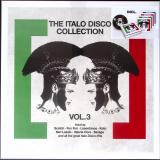
Die legendäre Vinyl-Serie für alle Italo Disco-Fans geht in die nächste Runde!
Mit The Italo Disco Collection Vol. 3 erwartet dich eine exklusive 4LP-Box, randvoll mit den größten Klassikern der Italo Disco-Ära der 80er Jahre – ein Muss für Sammler, Nostalgiker und Liebhaber des typischen Synthie-Sounds.
Diese Box bringt den Sound der Tanzflächen der 80er Jahre zurück – authentisch, analog und mit jeder Menge RetroFeeling. Ideal für DJs, Fans der Italo Disco-Szene oder als stilvolles Geschenk.
- A1: Cyclops
- A2: Hell No
- A3: Gods Of War
- B1: 1000 Points Of Light
- B2: Laughing In The Hiding Bush
- B3: Shoot All The Clowns
- C1: Fire
- C2: Sacred Cowboys
- C3: Tears Of The Dragon
- D1: Gods Of War Live In The Studio
- D2: Shoot Alll The Clowns Live In The Studio
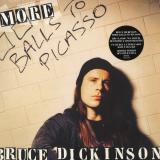
Bruce Dickinson, More Balls To Picasso. Sein klassisches Album von 1994 neu interpretiert und neu
aufgelegt!
Bruce sagt dazu: „Während ich meinen gesamten Katalog in Dolby Atmos abmischte, verspürte ich den
brennenden Wunsch, die Platte neu zu interpretieren und neu zu erfinden. ‚More Balls To Picasso‘ war
eine Herzensangelegenheit. Natürlich haben wir die Gitarren verstärkt und sogar neue hinzugefügt. Der
brasilianische Komponist Antonio Teoli steuerte atemberaubende Orchesterarrangements bei und fügte – als
einzigartigen Beitrag – am Anfang von ‚Gods Of War‘ einheimische Instrumente aus dem Amazonasgebiet
hinzu (die er selbst aufgenommen hatte, als er dort lebte!).
‚Shoot All The Clowns‘ profitiert von einer Bläsersektion unter der Leitung von Professoren des Berkeley
College of Music, und die gesamte Platte profitiert vom Mix von Brendan Duffey (The Mandrake Project),
ergänzt durch Anmerkungen von Shay Baby, dem ursprünglichen Vater des Albums.
Enthält zwei bisher unveröffentlichte Live-Studio-Tracks: ‚Gods of War‘ und ‚Shoot All The Clowns‘.“
Autechre setzen ihre chronologische Reihe von LP-Neuauflagen mit den Alben Untilted (2005) und Quaristice (2008) fort. Keines der beiden wurde seit seiner Erstveröffentlichung neu aufgelegt, beide sind über 15 Jahren kaum erhältlich. Die Nachfrage hat in der Zwischenzeit für begehrte Wiederverkäufe unter Fans gesorgt, die diese Musik auf Vinyl hören möchten. Die Neuauflagen erscheinen zu einem besonders aktiven Zeitpunkt für Autechre, die sich auf eine ihrer bisher umfangreichsten Live-Tourneen vorbereiten, darunter eine komplett ausverkaufte Serie mit 25 Konzerten in 29 Tagen durch die USA, Kanada und Mexiko im Oktober sowie Tourneen in der EU (August) und Großbritannien (November). Autechre veröffentlichten zuletzt im November 2024 neue Musik im Rahmen des laufenden digitalen Projekts AE_2022–. Weitere erhältliche LP-Neuauflagen: Incunabula (1993), Amber (1994), Tri Repetae (1995), Chiastic Slide (1997), LP5 (1998), Confield (2001), Draft 7.30 (2003).
Ottagono Italian Dojo presents the second release on the Ottagono Retro outlet imprint label through South America. This special occasion marks the opening of a second Ottagono headquarters in Argentina, introducing an exclusive project that blends the essence of the Italian music family. If you’re familiar with Latin American music genres like Rock, Post Punk, Industrial, Minimal Synth, New Wave, Synth Pop, and the broader electronic music scene of the last 40 years, you’ve surely heard of iconic bands such as Virus, Soda Stereo, and Sumo. Among these bands, having in common their birth in Argentina, Alfredo Peria is another influential music pioneer and key figure in the entire Latin American underground movement. In the mid-80s, he founded the techno duo Mimilocos. Because of this, over the years, Alfredo has been renamed the “Juan Atkins de Latino America”. Later in the 90s, he joined major labels like Polygram and BGM, living between Spain and the United States. He founded another project called Limbo with Julio Moura, a member of Virus and brother of Federico Moura. In the late ’90s, he released his first solo album with Fonovisa. After spending years travelling the world, Alfredo returned to Argentina and, alongside Cecilia Olariaga, founded his own production company, Pulpería Discos. The music world once again showcases the strong connection between Argentina and Italy, evident in the heritage of artists and figures like Maestro Alfredo Peria and la familia Ottagono, including the new Latin America manager, Federico Luchetti.
A.1: Sentidos is a new wave Latin American classic! After over 30 years, it finally received its first vinyl release. Originally written in the early ’90s by Alfredo and Julio Moura, then members of Limbo, a band formed after Virus disbanded following the passing of Federico Moura, Julio’s brother, Virus frontman. This updated version, enhanced with synthesizers and additional production by tech wizard Franco Colombo , transforms the original lyrics into a retro-futuristic club anthem with 80s vibes, It captures the essence of early Depeche Mode, Nitzer Ebb, and the Chicago Warehouse scene, while also being a great fit for fans of Juan Atkins and Yellow Magic Orchestra as well.
A.2: Yo soy su Cuba – 3.0 Adicta mix is the latest version inspired by the original demo from the 80s. This mix showcases Electro Tech Synth Pop music created by Alfredo, Rudie Martínez, Joaquín Franco, Juan Pablo Bidegain, Germán Moreno, and Pablo Torterolo, collectively known as Adicta.
A.3: Castillitos de arena – original ’87 demo, it’s a classic in Argentina underground music movement, among fans and people lost in club culture, even though it never got an official release in any format. This was frequently performed during the early years of Mimilocos live shows, but it was never officially released. A few years later in Spain, a Latin pop tropical house version was released, presenting a fresh and entirely different take from the original’s obscure essence marked by minimal synth, EBM, and deep, atmospheric sounds, which thanks to Ottagono family will see the light.
B.1: Gesell – From Villa Gesell to Ibiza, from Alfredo with love to another renowned
“Argentino” known as DJ Alfredo. This is an Ottagono tribute to one of the Isla masters and the Balearic sound. Gesell feels like a fresh 90s UK track by Farley & Heller or DJ Harvey, immersed in the emotive Alfredo Peria landscape—something you could easily hear at Café del Mar during sunset, played by another maestro we all miss, José Padilla.
B.2: Yo soy su Cuba – Now available on vinyl for the very first time, featuring the original demo. There’s not much to add—just sit back and enjoy this pure 80s treasure in all its glory.
B.3: Over the past months, Claudio and Federico have listened to many unreleased
demos and tapes from Alfredo’s extensive musical career. Among them, “7 Days” stood out for its simple beauty and potential as a hit for underground enthusiasts. This track seamlessly combines post-punk, new wave, and tropical Balearic vibes. From ’95 to ’25, it has remained fresh and innovative, once again proving that the Ottagono crew understands the essence of timeless music.
POP – the album that has become widely recognized as the defining moment in which Wolfgang Voigt brought us into a clearing of his deep, psychedelic forest. A landmark release in the GAS odyssey that drew international attention, POP was originally released in 2000 on the iconic Frankfurt imprint MILLE PLATEUX. POP was heralded by Pitchfork at the time of release as being “an exercise in sonic texture… pure sonic velvet, the layered drone radiating a palpable warmth.”
POP has since been reissued in 2016 as a part of GAS “BOX” (now out of print) and finally now, POP is released on KOMPAKT – for the first time in its original artwork. POP wird allgemein als das GAS Album angesehen, auf dem Wolfgang Voigt den Hörer auf eine kleine Lichtung inmitten seines undurchdringlichen, psychedelischen Waldes mitnahm. Ursprünglich im Jahr 2000 auf dem legendären Frankfurter Label Mille Plateaux veröffentlicht, gilt POP innerhalb der GAS Historie als Meilenstein, der international große Aufmerksamkeit erregte. Das renommierte amerikanische Musikmagazin Pitchfork nannte POP „eine Übung in sonischen Texturen … reiner, akustischer Samt; dicht übereinander geschichtete Drones, von denen eine tatsächlich spürbare Wärme ausgeht“.
Als Bestandteil der GAS „BOX“ (aktuell vergriffen) bereits 2016 neu aufgelegt, wird POP nun mit Original Artwork erstmals auf KOMPAKT veröffentlicht.
Techno Club Retro Vol. 1 – Vinyl Edition
Sechs legendäre Trance-Tracks aus den 90ern & 2000ern – in den erfolgreichen Talla 2XLC Reworks – auf exklusiv farbiger, streng limitierter Vinyl!
Mit seinem Label Technoclub Retro! lässt Talla 2XLC unvergessene Trance-Klassiker mit viel Liebe zum Detail kraftvoll und emotional neu aufleben.
Techno Club Retro Vol. 1 ist eine Zeitreise durch die Trance-Geschichte, präsentiert durch die ersten sechs erfolgreichen Veröffentlichungen des Labels. Perfekt für Liebhaber, DJs und Sammler gleichermaßen ein Statement auf Vinyl!
Side A:
• Dito – Shadows (Talla 2XLC Remix): Das Original aus 2000 – melancholisch und hypnotisch – erhält eine treibende Dynamik mit Gänsehautmomenten.
• Triple Concept – Tonetwister (Talla 2XLC Remix): Von 1998, bekannt für das ikonische NASA-Sample. Der Remix liefert eine wuchtige Bassline und modernes Clubfeeling.
• Alpha Breed – Epic Future (Talla 2XLC Remix): Ralphie B’s Meisterwerk von 1999, jetzt mit psytrancigen Akzenten – energetisch und atmosphärisch zugleich.
Side B:
• Talla 2XLC – Follow The Meteor: Ein Remake des Vectrex-Hits von 2004 – zwischen mystischem Drive und Adrenalinschub, perfekt für die Peak-Time.
• Plastic Angel – Schatten 2021 (Talla 2XLC & Para X Remix): „Schatten“ von 2001, neu aufgelegt von zwei Trance-Veteranen – emotional, druckvoll und voller Tiefe.
• Traveller – Bright Sign (Talla 2XLC Remix): Hardtrance trifft Psy – der 2002er Kulttrack bekommt fette Breaks, bunte Strings und kompromisslose Energie
My Dear Melancholy (stylized as My Dear Melancholy,) is the first extended play by Canadian singer the Weeknd. It was released on March 30, 2018, through XO and Republic Records. Primarily produced by Frank Dukes, who serves as an executive producer alongside the Weeknd, it features contributions from Gesaffelstein, as well as Mike Will Made It, DaHeala, Skrillex and Daft Punk's Guy-Manuel de Homem-Christo, among others.
My Dear Melancholy has been described as a return to the darker style of the Weeknd's earlier work, such as Trilogy (2012) and Kiss Land (2013). The EP was supported by the lead single, "Call Out My Name". It received generally favourable reviews and debuted at number one on the US Billboard 200.