It seems that every major jazz artist has a one-off sort of record in their discography, be it with strings, voices, spoken word or - as in this case - a foray into the funkier side of jazz. Charlie Rouse (going here as Charles Rouse) gets his chance on Two Is One, a funky soul jazz excursion on Strata-East, the artist-run label where creativity and pushing boundaries was at the forefront. Playing mostly with a group of session musicians, Rouse put together an album that may stray a bit from his hard bop roots, but is nonetheless an enjoyable and at times inventive record. The style of music played here - sophisticated soul jazz with some post bop and spiritual jazz thrown in for good measure - is very much a product of it's time. 1974 saw a whole slew of artists stretching the boundaries of what jazz music could be, combining elements from the past two decades into electric jazz adventures. The piano-less group that Rouse put together is a funky one, with lots of rhythmic playing behind either the searching solos of Rouse on the tenor or some inventive electric guitar work from either George Davis or Paul Metzke who appear together on all but a couple of tracks. Cal Scott gets plenty of time to shine throughout on what sounds like an electrified cello, an unusual instrument for modern jazz to be sure, but one that manages to fit in just fine here.
The first side of the album is all slow burning soul jazz, highlighted by the opening track "Bitchin'" where Rouse shows off that he is more than capable of setting down soulful lines over a funky backbeat. The second side is where the group gets a whole lot more inventive, particularly on the title track where they mix some post bop madness with the soul jazz sound. "Two Is One" features different tempos throughout: in the "first section" the bass plays in 9/8 time, the drums in 6/8 time and the cello and tenor are in 3/4 time. For the "second section" the rhythm section switches to 7/8 time while cello and tenor move to 4/4 time. Stanley Clarke is on bass here and his deep and twisty electric bass line is placed prominently up front.
"Two Is One" is certainly the highlight of the album from a pure jazz standpoint, and it lives up to it's title, which according to Gene Lewis' liner notes is taken from a Thelonious Monk phrase meaning two people so in tune with one another that they become one. The album finishes off with "In His Presence Searching," a spiritually informed jazz number that is reminiscent of the work being done during this period by the likes of Pharoah Sanders and Gary Bartz, (while not being quite as out there as their best work). The tune is all rhythmic glory, with Rouse and Scott playing introspective and penetrating solos throughout. It's a nice album closer, and a good reminder that while Two Is One may be best known for it's funkier excursions, Rouse had a few tricks up his sleeve and the album, when taken as a whole, is a complete statement from a legendary jazz musician.
Search:get set
Dynamic Sounds Studio has its roots firmly set in Jamaica’s history. It was the first state of the art studio built in Kingston, Jamaica and a firm favourite with all the topflight homespun artists. Bob Marley chose to record the bulk of his seminal 'Catch A Fire' album there and many foreign musicians trying to catch some of that reggae magic and emulate that sound have beaten a path to its doors. As you will see the studio had a history already of its own, that was carved out before it became the aptly named Dynamic Sounds.
Originally named WIRL Studio's (West Indies Records Limited), it was set up initially to record Jamaica's versions of the American Rhythm and Blues tunes that were proving so popular on the island. It was started back in 1958 by Political leader Edward Seaga an astute businessman, who had many interests around the island including clubs and bars. As the R & B music evolved into its own styles from Mento into Ska, one of its main protagonists Byron Lee and his band the Dragonaires would be at the forefront and be seen as ambassadors to the cause. Edward Seaga would choose the band to head the 1964 World’s Fair and take them to New York to showcase the Jamaican Ska Music. His political ambitions leading the American friendly JLP (Jamaican Labour Party) against the Cuban inspired PNP (People's National Party), would see him cutting back his other interests and lead to the selling of WIRL, lock stock and barrel to Byron Lee. On taking over the business he renamed it Dynamic Sounds and extended it to include not only a top of the range recording studio but a pressing plant to distribute the new hot sounds of the day directly to the streets of Jamaica. The address would also change to 15 Bell Road, it's old address No 13, seemingly too unlucky for such a fine establishment.
The studio has become part of the Jamaican culture and each twist and turn in its musical story has been caught and recorded here. We get on board when the music had slowed down to the reggae skank that we now know and love. We have picked some fine cuts that we feel best represent the times. The rhythms are pushed to the fore and the great Sylvan Morris a much-underrated studio master, always came up with some interesting effects to enhance the version cuts. A fine time in reggae's history caught at one of Jamaica's finest studios. Dynamic Sounds from a Dynamic Studio.....
Second installment of the Parisians Get a Room! on Insane Dances label.
This time the duo deliver two original tracks on the A side and have given the task of two remixes to I:Cube on the B side.
A1:The EP opens with an exotic dubby slow-mo track with a Cajun vocal sample gimmick supported by a heavy acid bass-line.
A2: New-beat is the key word here! A late mid tempo 80's Belgian beat style is mixed with Eastern influence to remind us of the Belgian good times sound.
B1: I:Cube gives us two different remixes of A1 "Cochon Toi Même" on the B side. The tempo rises into a dubby ethnic tribal vibe. Perfect for the late DJ set.
B2: A reinterpretation of "Cochon Toi Même" again, but this time with a more 90's feel. A fast light break-beat rhythm takes us on a psychedelic space journey, full of fxs and spacey pig sounds for the more adventurous
- Track 1 Rub-A-Dub Style - Shorty The President
- Track 2 Gorgon Style - U Roy
- Track 3 Greedy Girl - Jah Stitch
- Track 4 Babylon Dub – Dillinger
- Track 5 Dub Dunza - U Brown
- Track 6 Stick By Dub - Dennis Alcapone
- Track 7 Dub To The Lonely - Prince Jazzbo
- Track 8 Control Dub - Shorty The President
- Track 9 3 Wisemen In Dub - I Roy
- Track 10 Yu Nuh Here Dub - U Brown
- Track 11 Dub Chalice - Prince Jazzbo
- Track 12 Rebel Dub Skank - Shorty The President
- Track 13 Don’t Touch The Dub - I Roy
- Track 14 Hard Time Dub - U Brown
One of the two great chapters in reggaes history was the DJ phenomenon that conquered the Sound Systems in and around Kingston town in those heady 1970's, the other was the dub plates specials that allowed the DJ's to explore a tune in the first place. Giving some fine question and answers to its original vocal, emphasising its meaning or taking it into another subject matter altogether. When you have these two styles and add to it that original vocal, dubbed in at various points you get a fantastic melting pot that lifts a tune and can take it almost anywhere it likes.
Although DJ's were operating in Jamaica in the 1950's and 1960's with the likes of Count Matchuki and Sir Lord Comic, their role was that of mainly selector with a few vocal embellishments to instrumental tracks to gee up the crowd. 1969 saw the art form broaden with the likes of DJ King Stitt (Winston Spark) who scored a couple of hits for producer Clancy Eccles with 'Fire Corner' and 'Herbsman Shuffle'. But it was Clancy Eccles next releases with a certain U Roy (Ewart Beckfort) in the same year that saw the style explode. When hearing the DJ holding the crowd’s attention on King Tubby's Home Town Hi - Fi Sound System, the producer rushed the DJ into the studio and cut 'Wake the Town' and 'Rule The Nation'. Which would top the Jamaican charts in the soon to follow 1970.
In true Jamaican musical style when a new sound hits on the radio waves, many would soon follow. With an abundance of already tried and tested hits, producers would get the new
toasters of which there were many and revamp and breathe new life into their back catalogues.
But what makes this set of cuts, chosen for this release that little bit more interesting, are the working of the dub plates and effects alongside these vocal talents. Adding another layer to this musical cake.
A fine selection of tunes worked over by the cream of the 1970's DJ circuit.U Roy, I Roy. Jah Stitch, U Brown, Dillinger, Prince Jazzbo, Dennis Alcapone and the vastly underrated Shorty the President alongside some classic King Tubby dubs surely a match made in heaven...
Hope you enjoy ride…….
Joshua Abrams’ first album Natural Information from 2010, superb avant-jazz, newly remastered at Dubplates & Mastering.
In his book Powershift, published in 1990, writer and businessman Alvin Toffler predicted that the century ahead would be defined by speed and that time itself is destined to become our most valuable commodity. When Joshua Abrams recorded Natural Information, originally released by Eremite in 2010, he was reacting against such commodification of time and the diminishing attention span that accompanies it by offering music with an irresistible groove, rooted in the sinuous rhythms of the human body and the full play of our senses.
At the heart of this music is the sound of the guimbri, a North African three-stringed bass lute, which Abrams started to play following a visit to Morocco during the late 90s. Traditionally the instrument has a key role in mystical healing ceremonies. Abrams, already a well-established figure in Chicago’s vibrant musical communities, had no desire to repackage tradition. He recognized however that the involving, springy and percussive sound of the guimbri was just the right voice to communicate vital data, to relay the natural information we all need in order to get back in touch with the pulsating continuities of a world we all share.
With Natural Information Abrams entered a new phase of his musical life, extending an invitation to the trance, where time intersects with timelessness. He carried with him a wealth of playing and listening experience. As a bass player he had worked with a host of notable musicians including guitarist Jeff Parker and percussionist Hamid Drake, and had been a member of back porch minimalism outfit Town And Country and the improvising trio Sticks And Stones.
The guimbri is a shaping presence on this remarkable recording, but Abrams also plays bass, bells, kora, sampler and synthesizer. Sympathetic friends including guitarist Emmett Kelly, vibraphonist Jason Adasiewicz and drummers Frank Rosaly and Nori Tanaka join him for the project. They set out not to contrive some neat hybrid but to enable coordinated energies and enriching influences to pulse and flow through living, breathing music. Ten years further into a century seemingly dedicated, as Toffler foresaw, to the survival of the fastest, the deep involving groove of Natural Information seems still more relevant, more illuminating, more vital.
Joshua Abrams: guimbri, mpc, percussion, harmonium, bass, bells, dulcimer, donso ngoni, ms20
Jason Adasiewicz: vibraphone
Emmett Kelly: guitar
Frank Rosaly & Noritaka Tanaka: drums
- A1: If I Could See Heaven Without Dying Feat Scott Burton
- A2: Ce-Les-Tial
- A3: Sunwalkers Part Two And Three Feat Bill Summers
- A4: Just A Little While Longer
- A5: African Bahia Sol Feat Dr Who Dat?
- B1: Viberian Waves 1 & 2 Feat Capitol Peoples
- B2: Broken Arted
- B3: Banana Peel (Cáscara De Plátano) Featuring Masauko Chipembere
- B4: Trop-Pics
- B5: Let The Cuica Play Feat Café And Micröclimate
In 2018 Far Out Recordings signed a record deal with Brooklyn born, nomadic producer Jneiro Jarel. Having just put the finishing touches to the recordings, Jarel suffered an ischemic stroke while living and working in Costa Rica and his wife Indigo was forced to set up a crowd fund to cover special medical transport back to the states to receive treatment. The release was put on hold, but thanks to the generosity of friends and fans around the world, Jarel was able to get the care he needed and is now on the long road to recovery. We’re overjoyed to finally announce that Jneiro Jarel’s After A Thousand Years is now set for an October 2020 release.
Throughout a career that has spanned over twenty years and seen collaborations with MF DOOM, Thom Yorke, Damon Albarn, BadBadNotGood, Portishead’s Beth Gibbons, Kimbra and Khujo Goodie (Dungeon Family), Jneiro Jarel’s consistently distinctive, forward thinking productions, as well as his love for the music of Brazil, made his partnership with Far Out a perfect fit.
Recorded between New York, New Orleans, Miami and Costa Rica, After A Thousand Years features legendary multi-instrumentalist Bill Summers, famed for his work with Herbie Hancock, Quincy Jones and Eddie Henderson. The album also features Malawian-American guitarist Masauko Chipembere who has worked with the likes of RZA from Wu-Tang Clan and Ladybug Mecca from Digable Planets.
For Jarel, After A Thousand Years is “a culmination of the longstanding musical contributions of the African diaspora.” Permeating the Brazilian music and Latin jazz Jarel has loved and drawn inspiration from, as well as the stateside jazz, soul and funk Jarel grew up around, the influence of Africa and its musical history, on both North and South America, is key to the album’s sound.
On lead single “Banana Peel”, Jarel’s outernational perspective makes for a track that is almost impossible to place geographically: you can hear the swing of Jarel’s native New Orleans jazz, the vibrance of Costa Rican rainforests as well as the influence of Jarel’s vast collection of Brazilian records. “Viberian Waves 1&2” is equally nonconformist, morphing from funky baroque-flavoured instrumental hip hop into a bossa inspired, percussive jam.
Taking its inspiration from the biblical prophecies found in the books of Isaiah, Daniel, and Revelation, foretelling the fully realized, physical and spiritual restoration of the earth and mankind after the thousand year reign of the Messianic Kingdom, After A Thousand Years contemplates and celebrates a world where everlasting love, peace, and harmony abound under a sovereign, divine rulership.
After A Thousand Years will be released on Vinyl LP and CD on the 30th October 2020 via Far Out Recordings.
FEEDBACK
“great release. Really like this!” Antal (Rush Hour)
“Banana Peel is exactly what we need now. Visionary Jneiro Jerel at his finest channelling healing sounds and rhythms from Mother Earth. A much-anticipated lens through Jneiro’s third eye. Thank you!” King Britt
“Sounding real good!” Errol Anderson (Touching Bass)
“I love it!!!!!!!” Raffaele Costantino (RAI RADIO 2)
“Sounds great. Congratulations. Will play it on my radio shows.” Batida
“Will pitch album to my editors” Dean Van Nguyen
“Please send me the full album once it's finished.” Francisco Noronha (Publico PT)
“Beautiful man. So happy that he's ok” King Hippo (WLPN-LP / Worldwide FM)
“cracking tune. already lined up to add to playlist. might go into radio show too.. love it” Oli Brunetti (Collectivo Futuro / Olindo Records)
“Amazing! Ive not heard anything from JJ for a long time but a welcome return, this is a cracking track. Looking forward to hearing more new material.” Mickey Jukes (1BTN FM)
“Very vibrant, fresh release! It gets better every time I am listening to it.” Shantisan (Superfly FM Vienna)
“This is a pretty special track , unique sound but very accessible , like it a lot and will play in my show Look forward to hearing the LP” Andy Wilson (Ibiza Sonica Radio)
“So good to hear Jneiro again, loving this cut. Thanks!” Chris Knight (Astrojazz)
“sublime !!!! will definitely play !!!” Mark Milz (Radio Corax)
“I-Robots approved!” Thanks for sharing...” I-Robots
A name, a man, an attitude, Amsterdam Dj and producer San Proper is one that needs very little introduction. His intricately minimal, yet highly musical productions have seen the light of day on Dekmantel, Perlon and Rush Hour Records alongside his own label, Proper's Cult. Now, this renowned crazy cat presents a new set of works, 'Home' EP with MUSAR Recordings.
Teaming up with drummer, producer and long-time collaborator, D. (real name Derek Van Beelen) who has also appeared solo on 'Proper's Cult', the two come together on 'Home' to explore the genre of house; expanding it into new, idiosyncratic forms.
Across 'Home' EP, the flamboyance and quirks of San are deeply embroidered. From the frenetically charged, punk-esque 'Home' to the mid-tempo trip of 'Get On Down', each see the musical talents of D. underpinning the cursive vocals and hardware slurs of Proper. Whilst closing track 'Licks & Tech' provides an off-kilter take, pairing woody, linear percussive parts with sweeping and insidious modulations.
Tokyo's very own 'Watechno' originator and MUSAR associate, Hoshina Anniversary comes through with a rework of 'Home'. Flexing over San's vocals with jazzy keys and native Japanese instrumentation, striking experimentations in-keep with the expansive nature of 'Home' EP.
Big Crown Records is proud to present Ekundayo, Liam Bailey’s debut record on the label. This album is a long time in the making, and after listening, clearly worth the wait. It didn’t take a long time to record, but it did take years for all the stars to line up.
Bailey, born and raised in Nottingham, England, the son of an English mother and Jamaican father got his early influences from his mom’s record collection. Bob Marley and Dillinger, Stevie Wonder and The Supremes, The Beatles and Jimi Hendrix would eventually shape the singer/songwriter we know today.
Fast-forward to 2005, Liam is in London and doing the whatever-gig-you-can-get musician hustle with hopes of landing a record deal. And it was through this time that Liam first teamed up with Leon Michels, musician / producer luminary, and the co-founder of Brooklyn's own Big Crown Records. Liam flew out to New York and those first sessions together produced the now classic tunes “When Will They Learn” and “I’m Gonna Miss You” which still get spins at reggae spots around the globe. That trip helped kick off what was to follow next for Liam: a slew of record releases, label deals, and working with some wildly-notable mainstream producers. Even a just-famous Amy Winehouse heard one of Liam's apartment-made, lo-fi recordings through a friend and liked what she heard. Regardless of the audio quality, Liam's particular sound shone through—all guitar, warm-rough and genuine soul. She signed him to her label shortly after.
But, as the story can go with major labels, they already had an idea of the Liam they wanted to make, promote, and push. With the typical pay-day enticement, Liam did his best to fit into whatever shape they put him to. "'Maybe I can make it work,' that's what you're thinking," Liam remembers, "but, you quickly find out that you can't."
While Liam’s career went through a bunch of record industry twists and turns he and Michels stayed in touch and would regularly connect and collaborate. Finally, in 2019, the time was right to do a full-length album together. And this time, it would be free of any restricting major label presumptions and opinions. "This is the record we always wanted to make," says Michels. Set to release in November 2020, the album is called Ekundayo. And the word's meaning may be all you need to know to get to the essence of this project. It means "sorrow becomes joy" in Yoruba, a language spoken mostly in Western Africa. On the surface, Ekundayo is a weighty Reggae record, full of new and old textured riddims. But listen more in-depth, and you'll find subject matter that's more recognizable from a modern-day R&B record. An example of the former is the first single off the album. Sung to the most beautiful woman at the nightspot, "Champion" is a joyous anthem powered by a silly-thick Juno-bass throb and 808-proof drums. In short, "Champion" is dancehall-ready. But then there's a song like "Don't Blame NY." Moody and sparse with a somber drive, you might have to resist the urge to compare it to a Frank Ocean-ish type vibe. Liam's voice is in a different but fitting element here, showing stripped-back emotion and soulful restraint. Anyone who has lived and tried to thrive in New York won't have a hard time relating to the lyrics but they may join the masses who blame the city, while Liam points the finger at himself and sings praises to The Big Apple.
Credit to Leon's hand, elements of Jamaican production are everywhere, peppered throughout the record. Like the pitch-perfect organ stabs that push through the authentically positive "White Light," or the muted, percussive guitar strums that chug along in the back of "Fight." In the same vein of any fantastic singer/songwriter album, Ekundayo is a reflection of who Liam Bailey is, taking on topics and approaches he never would think of just a few years ago. Some evidence: "Ugly Truth" is about reconnecting with his biological father, a subject he once thought would be too personal to address. The journey from conforming to major labels to this latest record has been a long one for Liam, and a bit of a struggle. But struggle may be the only way we truly grow and evolve. With a new clarity of purpose, sound, and life, Liam has found joy out of those struggles. And it's called Ekundayo.
The 4th release on Sofia by KiNK is all about warmth. The harmonies are deep, the instruments are muffled, the rhythms are humanised. Even when some of the tracks are getting a bit aggressive, they are not hurting, but giving the right amount of energy and surprise. This record is built from some of the live streams Strahil was doing during the pandemic lockdown in April. "101 Reasons" is a track with disco epic-ness and techno attitude. It captures KiNK's dream of being on the sweaty floor again, surrounded by dancers, one big family, like it used to be. "Dreamer" is low key house music, with melodies, leaking between the notes and the rhythms are somehow derailing, but instead of chaos, you get that dreamy feeling like if you watch a ribbon in the sky. The phenomenal Dutch artist Frits Wentink delivers a tighter version of the track with his unique swing on the drums and extra chords, which uplift the track with new energy. The closing song "Set The Mood Right" is recorded with his usual collaborator Rachel Row on the vocals. It's a very relaxed downtempo track, which takes an unexpected turn and it's a perfect open end for the record. A warm record for the cold days.
January 12th, 2020, a Sunday night in Toronto - Matthew Tavares and Leland Whitty (of BADBADNOTGOOD fame) are reunited at Burdock for a live improvised Jazz session. The pair are joined on stage by bassist Julian Anderson-Bowes and drummer Matt Chalmers as part of Burdock’s Piano Fest, an annual event at the city's brewery and music hall.
Two days later an email from Matthew hits Mr Bongo's inbox... "I think it turned out amazing, brought some really nice recording gear and it sounds almost like a studio record, thought I'd share. Moments definitely get to the jazzier side but there is some spiritual moments that are so far out". The Bongo office were all blown away by this free-flowing session, one which sounded like a well-rehearsed set at the end of a long tour, rather than a one-take improvised assembly. The chemistry between the musicians is magical. The tight friendship and musical connection between Tavares and Whitty are self-evident, however, Chalmers and Anderson-Bowes have a great contribution to make too. They act as the solid foundation that leaves Tavares and Whitty free to roam and explore moments of darkness and light, intensity and beauty. From the first time of hearing this intimate session, we knew this had to be shared.
The same quartet feature on Matthew Tavares & Leland Whitty's 2020 album 'Visions'. The plan to promote 'Visions' was to tour, with each night comprising a uniquely improvised set. Sadly due to world events, this couldn't happen, but for now 'January 12th' is a snapshot of the wizardry that would have been from four amazing musicians at the top of their game.
Created in 2006, Setenta, the Latin Soul Band spreads a unique mix over the world scene. For their fifth album Materia Negra, the Paris-based band returns to its roots: hard Latin funk with plenty of Afro-Latin percussion upfront in the mix contrasted with accents of lush vocal harmony and warm, breezy melody. But at its core, there is something essentially darker, rougher and funkier than their previous releases, especially in the guitar and synth work, bluesy minor key arrangements, and lyrical content. It’s essentially a heavier feel with this record, influenced no doubt on the negative side by the current dark times being experienced across the globe due to the pandemic, subsequent economic downturn and the lack of effective government leadership and global solidarity to deal with the crisis. On the positive tip, the inspiring Black Lives Matter movement and international protests against oppressive governments, systemic racism, corporate greed, global warming and environmental exploitation no doubt have something to do with the serious feel of Materia Negra as well.
Another crucial aspect to this newfound toughness is what band member and Latin Big Note founder and director Osman Jr. states is the group’s desire to address DJs and dancers who appreciate the rawest songs from Setenta’s previous productions. The desire is to leave their mark on the decks and dance floors of the planet with a genre that “we defend by taking the torch extended by our mentors such as Joe Bataan: Latin Funk!” Setenta’s sound has always been soulful, with plenty of tropical Caribbean roots, but this time there is an even stronger Afro-centric theme and gritty psychedelic R&B angle, clothed in galactic, outer-space trappings, bringing to mind another forerunner, Mandrill, as well as the Afro-Futurist mothership vibe of Parliament-Funkadelic.
Big Crown Records is proud to present Ekundayo, Liam Bailey’s debut record on the label. This album is a long time in the making, and after listening, clearly worth the wait. It didn’t take a long time to record, but it did take years for all the stars to line up.
Bailey, born and raised in Nottingham, England, the son of an English mother and Jamaican father got his early influences from his mom’s record collection. Bob Marley and Dillinger, Stevie Wonder and The Supremes, The Beatles and Jimi Hendrix would eventually shape the singer/songwriter we know today.
Fast-forward to 2005, Liam is in London and doing the whatever-gig-you-can-get musician hustle with hopes of landing a record deal. And it was through this time that Liam first teamed up with Leon Michels, musician / producer luminary, and the co-founder of Brooklyn's own Big Crown Records. Liam flew out to New York and those first sessions together produced the now classic tunes “When Will They Learn” and “I’m Gonna Miss You” which still get spins at reggae spots around the globe. That trip helped kick off what was to follow next for Liam: a slew of record releases, label deals, and working with some wildly-notable mainstream producers. Even a just-famous Amy Winehouse heard one of Liam's apartment-made, lo-fi recordings through a friend and liked what she heard. Regardless of the audio quality, Liam's particular sound shone through—all guitar, warm-rough and genuine soul. She signed him to her label shortly after.
But, as the story can go with major labels, they already had an idea of the Liam they wanted to make, promote, and push. With the typical pay-day enticement, Liam did his best to fit into whatever shape they put him to. "'Maybe I can make it work,' that's what you're thinking," Liam remembers, "but, you quickly find out that you can't."
While Liam’s career went through a bunch of record industry twists and turns he and Michels stayed in touch and would regularly connect and collaborate. Finally, in 2019, the time was right to do a full-length album together. And this time, it would be free of any restricting major label presumptions and opinions. "This is the record we always wanted to make," says Michels. Set to release in November 2020, the album is called Ekundayo. And the word's meaning may be all you need to know to get to the essence of this project. It means "sorrow becomes joy" in Yoruba, a language spoken mostly in Western Africa. On the surface, Ekundayo is a weighty Reggae record, full of new and old textured riddims. But listen more in-depth, and you'll find subject matter that's more recognizable from a modern-day R&B record. An example of the former is the first single off the album. Sung to the most beautiful woman at the nightspot, "Champion" is a joyous anthem powered by a silly-thick Juno-bass throb and 808-proof drums. In short, "Champion" is dancehall-ready. But then there's a song like "Don't Blame NY." Moody and sparse with a somber drive, you might have to resist the urge to compare it to a Frank Ocean-ish type vibe. Liam's voice is in a different but fitting element here, showing stripped-back emotion and soulful restraint. Anyone who has lived and tried to thrive in New York won't have a hard time relating to the lyrics but they may join the masses who blame the city, while Liam points the finger at himself and sings praises to The Big Apple.
Credit to Leon's hand, elements of Jamaican production are everywhere, peppered throughout the record. Like the pitch-perfect organ stabs that push through the authentically positive "White Light," or the muted, percussive guitar strums that chug along in the back of "Fight." In the same vein of any fantastic singer/songwriter album, Ekundayo is a reflection of who Liam Bailey is, taking on topics and approaches he never would think of just a few years ago. Some evidence: "Ugly Truth" is about reconnecting with his biological father, a subject he once thought would be too personal to address. The journey from conforming to major labels to this latest record has been a long one for Liam, and a bit of a struggle. But struggle may be the only way we truly grow and evolve. With a new clarity of purpose, sound, and life, Liam has found joy out of those struggles. And it's called Ekundayo.
Mit "Sol" meldet sich der dänische Produzent Kasper Marott auf Seilscheibenpfeiler zurück. Die beiden fesselnden, von Melodie getriebenen Techno-Tracks sind der Teaser zu seinem anstehenden Debütalbum. Im introspektiven Titeltrack sonnt sich Kasper Marott 9 Minuten lang in progressive, hypnotische Rhythmen und setzt eine Duftmarke, die gleichsam Tänzer und Tagträumer anspricht. "Katla" schlägt in eine ähnliche Kerbe. Seine dramatischen Synths, polternden Rhythmen und Sci-Fi-Sounds öffnen die Tür zur Vergangenheit und teilen sich die DNA mit dem loopy Rave-Techno der späten 90er.
- A1: Road To Earth (With Peter Thomas)
- A2: It's The Music (With Afrika Bambaataa, Charlie Funk, Hektek & Deejay Snoop)
- A3: In The Dark (With Nichola Richards)
- A4: The Spell Of Ra-Orkon
- A5: Political Power (With Afrika Bambaataa, Charlie Funk & Donald D)
- A6: Drifting Stars
- B1: Not Get Caught (With Derobert)
- B2: Locked & Loaded
- B3: Catfight
- B4: Hot Stuff (With Afrika Bambaataa, Charlie Funk & Deejay Snoop)
- B5: The Showdown
COLOUR VINYL[16,77 €]
The Mighty Mocambos' new album "Showdown" sets another cornerstone in their prolific career as a globally active instrumental funk outfit. While maintaining their organic approach of recording real musicians live on tape, the group has refined their trademark sound with a dramatic edge, a hard hitting production and ventures into less obvious musical territories. While highly enjoying themselves as the tight unit they are, The Mighty Mocambos invited an exciting list of guests to contribute to their musical "Showdown": German film composer icon Peter Thomas, hiphop godfather Afrika Bambaataa, rap legends Charlie Funk aka Afrika Islan (member of the original Rocksteady Crew) and Donald D (of Ice-T's Rhyme Syndicate), plus Nichola Richards, Shawn Lee, DeRobert from peer label GED Soul in Nashville, Zulu Nation MCs Deejay Snoop & DJ Hektek and organ genius Guillaume Metenier all joined the group for their new musical adventure. "Showdown" is released on vinyl LP by Mocambo Records and on CD and digital incarnations by Légère Recordings.
About the Mighty Mocambos:
The Mighty Mocambos and their many incarnations have released dozens of 45s and several albums on their own imprint Mocambo Records and other labels such as Kay Dee, Truth & Soul, Tramp, Légère and Favorite Recordings, to name a few. They have collaborated with musical legends such as Afrika Bambaataa, Lee Fields or Kenny Dope, put new talent like Gizelle Smith and Caroline Lacaze on the map, brought Caribbean steel drums to funk clubs with their alter ego Bacao Rhythm & Steel Band, and have toured through all civilized parts of the continent and beyond for the better part of the last years. Their unique style and trademark sound are loved by peers, fans and critics alike and distinguishes them from mere retro-copycat-acts as well as overproduced plastic soul. The Mighty Mocambos continue to deliver their brand of funk with blazing horns, soulful guitars, driving drums and basslines combined with an extra bit of quirkiness. When not producing records for one of their many incarnations and collaborations, the band is touring steadily. Whoever witnessed a concert will tell you about the musicality, passion, energy, humour and joy that the band loves to bring to the people. Background What started out years ago as a take on "deep funk" and its associated vinyl culture has completely grown into its own oeuvre d'art. With the launch of their production studio and record label in 2006, things started to gain momentum. Apart from self-releasing the group's own recordings, Mocambo Records became a household name by putting out highly collectable vinyl 45s by today's best funk outfits as well as unearthing lost library funk treasures. The Mighty Mocambos however did not restrict themselves solely to their own label. Their interpretation of the Furious Five classic "The Message", released under a pseudonym on an obscure phantasy label without proper distribution, got picked up and remixed by Grammy- nominated producer legend Kenny Dope (Masters at Work, Bucketheads). Their first single with UK funk singer Gizelle Smith, "Working Woman", became an overnight smash and a prime-time club favourite of funk & soul DJs worldwide. Initially released on the Finnish private press imprint Old Capital, it got the remix treatment by Kenny Dope and a re-release on Kay Dee Records as well. After earning their credits through vinyl 45s, the band stepped up their game with the full- length "This Is Gizelle Smith & the Mighty Mocambos" in 2009. The album received rave reviews, got lots of airplay - and sold a bunch of physical copies too. Its success led to an extensive tour throughout Europe with club dates from Marseille to Oslo, performances at massive festivals such as the Printemps de Bourges in France and live radio appearances at respected FMs such as the BBC and Radio Nova. With the following album "The Future Is Here" (2011), the band stepped further into the spotlight and explored new sounds with features by hiphop legends Afrika Bambaataa and Charlie Funk, French singer Caroline Lacaze and German rare groove queen Su Kramer, while manifesting their unique raw funk sound and refining their unmistakable instrumental style that had long gained international reputation. The album was toured extensively, including a legendary performance with Afrika Bambaataa at Hamburg's Reeperbahn Festival (covered by ARTE TV), support gigs for Lee Fields and headline shows at renowned venues such as Amsterdam's Paradiso, Islington Assembly Hall in London, Paris' Bellevilloise, Tempo Club in Madrid, or at home at Hamburg's Mojo Club. After producing the critically acclaimed debut album "En Route" (2013) of French soul singer Caroline Lacaze, where their adapted their sound to deliver a stunning mix of French Beat, Soul & Psychedelic Rock, the band went on to record a full length under their moniker Bacao Rhythm & Steel Band. Their interpretation of 50 Cent's P.IM.P. had long become a cult classic and was often mistaken for the original sample. The group's approach in stretching the boundaries of funk by adding Caribbean steel pans caught the interest of Brooklyn's finest label Truth & Soul who signed the band for the album "55", an explosive mix of funk and hip hop cover versions as well as original compositions that showcase the band's singularity in today's funk circuit. The Mighty Mocambos' recent album "Showdown" (2015) sets yet another cornerstone in their prolific career as a globally active instrumental funk outfit. While maintaining their organic approach of recording real musicians live on tape, the group has refined their trademark sound with a dramatic edge, a hard hitting production and ventures into less obvious musical territories, with a diverse list of special guests ranging from German film composer icon Peter Thomas to hiphop pioneer Afrika Bambaataa.
- A1: Is He Trying To Tell Us Something? (Instrumental)
- A2: Rhapsody In Green
- A3: Baroque No 2
- A4: This Is My Beloved
- A5: Music For Advertising #1
- A6: Music For Advertising #2
- A7: Music For Advertising #3
- A8: Killers Of The Wild
- A9: Realizations Of An Aeropolis
- A10: Music For Advertising #4
- A11: Music For Advertising #5
- A12: Z Theme From "Music For Sensuous Lovers" (Part 1 - Instrumental)
- A13: The Blobs Son Of Blob Theme
- B1: Cathedral Of Pleasure
- B2: Ode To An African Violet
- B3: The Time Zone Space Walker
- B4: Dragonfly
- B5: The Lords Of Percussion Geisha Girl
- B6: The Electric Blues Society Our Day Will Come
BLACK VINYL[21,97 €]
Mort Garson’s road to cool cultural caché and the sublimity of Plantasia meant a decades’ long journey through an underworld of sophisticated, international, string-laced dreck (i.e., your great-grandparents’ record collection) to arrive at Music from Patch Cord Productions, this set of queasy-listening you now hold.
Music from Patch Cord Productions shows that Garson’s knack was to exist in both worlds, super-commercial and waaay out. He cut delirious minute-long blasts for commercials (as to whether or not they were actually ever aired remains unknown) and spacecraft-hovering études. Were there really account managers out there in the early ’70s that gave the greenlight to these commercial compositions which seemed to anticipate everyone from John Carpenter to Suicide? What were these campaigns actually for, Soylent Green? Regardless, Mort’s jingle work laid the groundwork for the future. As Robert Moog himself noted: “The jingles were important because they domesticated the sound.” Via Garson’s wizardry, the synthesizer transcended novelty to ubiquity and dominance.
Other curios and questions abound. How did Garson’s arrangement work for Arthur Prysock’s satiny body worship album This Is My Beloved transmogrify into the body-snatcher pulses of “This is My Beloved”? Are the two pieces even related? What is the IATA code for the airport of “Realizations of an Aeropolis”? What denomination is the “Cathedral of Pleasure”? If “Son of Blob” sounds like a hallucinatory melted ice cream truck theme, what on earth does Blob’s father sound like? Every sound wrangled out of that Moog by Garson pushes things further and further out.
Of course, these are all questions that may never get answers, as Garson wasn’t the most organized modern day composer, busy as he was conjuring strange new realms with his circuit boards and synths. He worked and wrote right up until his death in 2008, his daughter and Sacred Bones still going through all of the material left behind. He wouldn’t live to see it, but his renaissance was just around the corner, the seeds that had been scattered in record bins around the world suddenly coming to bear fruit. Take a bite!
Ltd 180g Clear Vinyl + DL Code (BU126LPC) is for Indies only. Black vinyl is 180g with DL. File Under: Funk, Dance, Breaks, Latin Soul. Harlem Hipshake sees the welcome return of The Bongolian AKA multi-instrumentalist and Big Boss Man front man Nasser Bouzida. This, the sixth album under The Bongolian moniker, follows the highly acclaimed Moog Maximus. Harlem Hipshake finds The Bongolian deeply immersed in his lifelong love for the music of the sixties New York's Latin Soul scene, particularly the music of Ray Barretto, Mongo Santamaria and Joe Bataan. Principally a drummer, percussionist by trade, Nasser has once again delivered another set of heavy breaks and percussive grooves underpinning this brand-new collection of songs which he has written and produced. Whilst Nasser performs many of the instruments (as is usual with Bongolian albums) on the album, it also features a prominent use of additional UK musicians on brass duties. These include Terry Edwards (Trumpet, Trombone, Sax, Flute), Gareth James Bailey (Trombone) and Craig Crofton (Alto Sax), James Morton (Alto Sax), Andrew Ross (Tenor and Baritone sax) and Ralph Lamb (Trumpet). From the East Side to the West Side, get ready for the Harlem Hipshake. Quotes about previous album 'Moog Maximus': All I know is that it makes me want to dance" Craig Charles House Party (Radio 2) // "That is sheer musicality" Cerys BBC 6 Music "Terrific stuff, that is" Gary Crowley BBC London // "Beautiful new breaks" Nemone BBC 6 Music "A brilliant, brilliant funk" Chris Hawkins BBC 6 Music (Googa Mama) // "Guaranteed to keep the party going" Vive Le Rock "This is the feel-good album. 9/10 " Louder Than War + // "Hipper, groovier, and funkier than ever before! Imagine Booker T & The MGs, The Duke Of Burlington, and Alan Hawkshaw taking a trip to the stars" DUSTY GROOVE (review of Outer Bongolia) // "A Latin-flavoured jazz-funk odyssey" Q "Forget your preconceptions, this is the REAL incredible bongo band." CLASH
- A1: Sookie - Love Beat
- A2: Give It Up
- A3: Disco Madonna
- A4: Lovers Concerto (Vocal)
- A5: Don't Fight The Feeling
- B1: Play Me Desires/I Wanna Love/You Are Loving Me/Burning (Parts 1-4)
- B2: Midnight
- C1: The Mystery With Me
- C2: Don't Think About It
- C3: Choco Date
- C4: Tonight
- D1: Love Somebody (Part 1)
- D2: Your Love (With Venise)
- D3: Let's Keep It Together
Cameroonian Joe Bisso's earliest musical influences didn't come primarily from his homeland, but more from the neighbouring Congo, where the kind of early 60's Congolese Rumba played by the likes of Franco / TP Ok Jazz, and Tabu Ley Rochereau was establishing itself as a musical force in the region.
Alongside this exuberant, swinging, jazz influenced sound, the growing impact of the all conquering US soul titans became inescapable, and sprinkled with a bit of Johnny Halliday & Co's smooth chanson over the top, we get a snapshot of where Jo Bisso and friends post school musical experimentation was headed in the late 60's.
As that decade drew to a close, the single minded Bisso headed off to France to begin his quest for the future, and by 1972 could afford the journey to the US that he'd long dreamed of.
Enrollment at the Berkeley School of Music in Boston soon lead to a new band coming together, and by 1974 the all conquering, multi faceted approach that marks Bisso's musical career, meant he'd written, produced and sung on his debut single for the mighty Decca Records. 'Flying To The Land Of Soul' drew heavily from James Brown's propulsive dancefloor funk, whilst wearing it's African colours loud and proud via 'African Express' chants, and drums front and centre.
At the same time, Bisso and friends had started to immerse themselves in the fast emerging disco sound pulsing outwards from Downtown NYC into the Boston nightclubs, and by the time his debut album 'Dance To It' was released on France's influential Le Disques Esperance in 1976, it was the driving, 4/4 floor power of disco that was to define Bisso's sound on that, and the following two albums.
Whilst Bisso's immersion in Disco was based around it's energy and musicality (rather than any associated hedonism), 'African Disco Experimentals (1974 to 1978)' paints a picture of an artist dedicated to the underground club side of the scene, rather than focused exclusively on the fast emerging pop potential of the sound at the time.
The album's tone is set by 3.20 mins of building, tribal percussion and rolling rhythms of the opener 'Love Beat', a 'strictly dancefloor' approach mirrored in the near 11 mins of 'Love Somebody', building from soulful keys to deep bass funk, extended percussion breaks, joyous squelchy Moog licks, breathy vocals and more (interesting footnote : Bisso is credited as Producer / Writer / Arranger, but 'Recorded by' is attributed to Joe Chiccarelli, better known in recent years for his work with The White Stripes, Shins, and Broken Social Scene.)
Still clocking in at a healthy 6 mins plus, "The Mystery With Me" (1978) makes a nod towards more radio friendly waters with it's hooky, floaty choruses and tight structures (a then 22 year old Arthur Baker is credited as sole writer on Discogs - Bisso himself doesn't seemed convinced by this idea, but that's another story...)
'Let's Keep it Together' (1977) loops the song title over a slower groove, with free form electric guitar licks adding new textures, whilst 'Disco Madonna' (1976) showcases Bisso at his most playful, combining spoken word Hispanic vocals, rattling percussion and more of the always welcome Moog, switching up keys at the end for an unselfconsciously camp finale.
And if anything sums up the ambition of Bisso's work in the field at the time, 'Play Me' (1978) can lay claim to being the magnum opus. It's presented here as a continuous 16 minute extravaganza (as opposed to the 4 parts it came in originally) : lush strings, hypnotic vocal sections, irresistible basslines, crisp drums, the odd Barry White style interjection, disco moans, the occasional nod to a chorus vocal. None of it seeming in much of a hurry to go anywhere in particular, choosing instead to joyfully revel in the expansiveness of the form.
- A1: Road To Earth (Feat Peter Thomas)
- A2: It's The Music (Feat Afrika Bambaataa, Charlie Funk, Hektek & Deejay Snoop)
- A3: In The Dark (Feat Nichola Richards)
- A4: The Spell Of Ra-Orkon
- A5: Political Power (Feat Afrika Bambaataa, Charlie Funk & Donald D)
- A6: Drifting Stars
- B1: Not Get Caught (Feat Derobert)
- B2: Locked And Loaded
- B3: Catfight
- B4: Hot Stuff (Feat Afrika Bambaataa, Charlie Funk & Deejay Snoop)
- B5: The Showdown
BLACK VINYL[14,66 €]
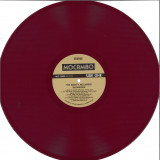
Limited edition ruby red colour vinyl reissue of the smashing album from Germany's finest funk ensemble to celebrate its 5th anniversary. 11 cinematic deep funk instrumentals, celebrated b-boy breaks and vocal dancefloor killers with special guests Afrika Bambaataa, Charlie Funk, Deejay Snoop, DJ Hektek, Donald D., DeRobert, Nichola Richards, Peter Thomas, Guillaume Metenier & Shawn Lee.
Original note from 2015 release:
"The Mighty Mocambos' new album "Showdown" sets another cornerstone in their prolific career as a globally active instrumental funk outfit. While maintaining their organic approach of recording real musicians live on tape, the group has refined their trademark sound with a dramatic edge, a hard hitting production and ventures into less obvious musical territories. While highly enjoying themselves as the tight unit they are, The Mighty Mocambos invited an exciting list of guests to contribute to their musical "Showdown": German film composer icon Peter Thomas, hiphop godfather Afrika Bambaataa, rap legends Charlie Funk aka Afrika Islam (member of the original Rocksteady Crew) and Donald D (of Ice-T's Rhyme Syndicate), plus Nichola Richards, Shawn Lee, DeRobert from peer label GED Soul in Nashville, Zulu Nation MCs Deejay Snoop & DJ Hektek and organ genius Guillaume Metenier all joined the group for their new musical adventure."
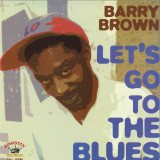
Barry Brown one of reggaes vastly overlooked talents. His militant conscious style has over time lost none of its appeal. Truly one of the sweetest roots vocalists to come out of Jamaica.
Born in 1962, Kingston, Jamaica, he cut his musical teeth working under producer Bunny Lee. Their first release was a track called ‘Girl You’re Always on my Mind’, although a minor hit, Bunny Lee saw his potential and was rewarded with his 1979 cut ‘Step it up Youthman’ which became a hit and has become a roots classic, leading to an album of the same name. The late 70’s was a great period in Barry Brown’s career and its from this period that we have culled this set of tracks. Straight from the master tapes some of his finest moments and some unreleased gems that we believe should be heard. A great set from his timeless 'Trying Youthman' a tail of struggling times in the heart of Kingston Jamaica.
His rastafarian inspired chants 'Stop Them Jah Jah','Give Thanx and Praise','Natty Rootsman' and 'Lead Us Jah’ work alongside socially charged cuts as 'Politician', 'Big Big Pollution' and 'Mr Money Man'. As with all his tales and inspired lyrics they are put across in such a tuneful way that like all the best songs that carry a message can be remembered also through the strength of the song.
As with many of his artists Bunny Lee encouraged him to go into self-production, and after a time spent with producer Linval Thompson ‘Separation’, and Sugar Minott ‘Things & Time’, he did just that and produced his first release ‘Cool Pon Your Corner’ in 1980 followed in 1981 by ‘Problems Get You Down’.
We hope this release will find a place in your collection and remind us of the talent of Mr Barry Brown. If somewhat overlooked, but certainly now not forgotten. Let’s celebrate with the man and go to the blues one more time....
Third number in the DDS split series after a pair of releases courtesy of Betonkust/Uj Bala and DJ Overdose/Sematic4, "DDS03" sees Budapest duo SILF (alias Farbwechsel chief-operators Alpar & S Olbricht) and Den Haag-based pair Intergalactic Gary and Pasiphae join forces on a quartet of elusive, unpigeonholeable power moves.
Four years after the drop of their debut joint EP on Biorhythm, "Made of Glass", I-G and Pasiphae are back at it with two left-of-centre hybrids of futuristic techno on a whirring electro-industrial tip. An off-kilter jam percolating fine hints of spiritual elation and post-apocalyptic anxiety, "Microwaves" gets the ball rolling on a dichotomous note. To slo-scudding flocks of loud, bouncy kicks supersede skeins of brittle chimes and rattling drums, all woven together by subtle tectonic shifts of moody pads.
A further hi-intensity affair, "Indistinct Chatter" drives that essential heavenly/nightmarish duplicity to higher spheres of consciousness. Fusing lighthearted, daydreaming tonalities with brooding, cavernous onslaughts from the depths, the track has us navigating in a zone of its own, deftly oscillating betwixt moments of mystique-imbued euphoria and darkling introspection. A choice exponent of the Hague-based dyad's capacity at busting antiquated patterns and limitations.
Having slept in the label's vaults for a few seasons, the two tracks composing the B-side emerge from their slumber in all their time-proof bravura. An in-your-face trampler, the ten-minute long "Mono Miner" takes no byway to get its point across, all set to smash basements and warehouses by the dozen with its electrifying compound of 909-emulated gut churn and spinning synth arpeggios circling like birds of prey over your sore, rhythm-enslaved carcass.
Closing the journey on a much softer, hazier vibe, "Aces" steers us towards a realm of ambient wonder, where slo-drip cascades of tapping percussions and elegiac synth waters flow into warm, glimmering summer beds. A most contrasting, tranquillising finale to an EP defined by its propensity to change colours and intensity throughout.