GER SMILE zeigen mit ihrem hervorragenden Debut PRICE OF PROGRESS leichtfüßig auf, dass Post Punk im Jahre 2023 noch immer erfrischend klingen kann. Sie nehmen ihre Referenzen nicht als Dogma, bleiben experimentell, eigensinnig. Erzählerisch, eingängig, rough und anschmiegsam verschmelzen dabei die feinsinnigen, poetischen Beobachtungen von Sängerin Rubee True Fegan (USA) mit dem versierten Sound einer Band, die von Produzent Olaf Opal genau dahin gebracht wurde, wo sie hingehört: an den Startblock innovativer, kluger und sinnlicher Gitarrenmusik. In PRICE OF PROGRESS manifestiert sich das Zusammenspiel aus musikalischem Sturm und Drang und der Reife einer reflektierten Erzählperspektive. Was hier entstanden ist, klingt nun, 2023, in seiner jugendlichen Frische durchaus nach einem Debut - gleichzeitig aber nach dem Werk einer erfahrenen, über lange Zeit gewachsenen Band. Nur deutsch klingt es nicht, was sicher im Wesen von Sängerin Rubees True Fegans Heimat Albuquerque (New Mexico) begründet liegt, gleichsam aber in der Vielseitigkeit, die sich SMILE erlauben - und ihrer einhergehenden Virtuosität an den Instrumenten. SMILE versuchen sich dabei - einem Post-Punk britischer Machart folgend - durchaus in homogener Geradlinigkeit (Herrengedeck), lassen Kühle zu (Machine Dreaming) und folgen einem düsteren Ernst (Säge). Diese Facetten aber vermengen sich mit einer heiteren Experimentierfreude (Stalemate, Produce, Hungry Ghosts), mit Humor (Doohickey), mit verträumter Beschwingtheit (Commuter) und Genresprengender Pop-Af finität (Protection). So zeigt sich dieses stilsichere Album in einer Vielseitigkeit, die heute selten zu finden ist - und klingt trotzdem wie aus einem Guss. Auch die ersten drei Singles zeigen gut das Panorama, das SMILE mit ihrem Debut aufmachen: Dog In The Manger erinnert zunächst an Talk Talks Happiness Is Easy, wechselt aber nach dem Drum-Intro schnell die Spur. Der Opener der Platte stellt Rubee als Sängerin vor, die, trotz einer gewissen Gelassenheit in der Performance, von Wut und Traurigkeit getrieben ist. Der Text ist eine politische Reflexion, ausgelöst vom gekippten Abtreibungsrecht in den USA, das sich mit einer alten griechischen Fabel verbindet. So startet das Album mit einem Rätsel und offenbart, das Musik noch immer eine Waffe sein kann - aus Sound, Herz und Verstand. In Doohickey, einem der beschwingtesten Songs der Platte, kramt Rubee in ihrer Erinnerung, besucht ihre verstorbene Großmutter, eine unfreundliche alte Frau, die in ihrem Haus hortete, was sie fand. So entsteht eine Kurzgeschichte über die weirdest person alive und zeigt SMILE als Band, in der Text und Musik nicht konkurrieren, sondern stets Symbiose feiern. Zackig und temporeich wie das erzählte Leben kommen auch Gitarren und Rhythmussektion daher, finden zu einer soghaften Dynamik, ohne mit billigen Sing-alongs zu arbeiten. Protection, die dritte Single, ist wohl das eigensinnigste Stück der Platte, erzeugt, gesanglich pendelnd zwischen Blood Orange und Bands wie Siouxsie & The Banshees oder Bow Wow Wow, eine breite und intensive Palette, bringt einen The Fall-artigen Witz ein und wird zwischen den vermittelten Gefühlen zur Achterbahnfahrt. Das Stück schrieb Gitarrist Lars Fritzsche, mit dem Ziel, einen klassischen Hit zu schaffen (gelungen, wenn auch nicht klassisch!) - und schuf in der Offenheit des Songs dabei eine perfekte Fläche, die nun gleich mehrere Stimmen der Band versammelt. Im Zentrum: Rubee, die hier einen Text performt, der zwischen Traum und Cut-up ihren poetischen Glanz scheinen lässt. Die aus der Hüfte geschüttelte Dramaturgie ist dabei Paradebeispiel für die Innovation einer der spannendsten neuen Gitarrenbands, die nun auf dem Indielabel Siluh (Wien) eine Heimat zwischen Köln, Bonn und Albuquerque gefunden hat. Wahnsinn! (Hendrik Otremba)
ENG SMILE IS A POST-PUNK BAND WITH A SINGER, WHO PREFERS NOT TO SING. INSTEAD, SHE INTONES HER POETIC STORIES SPIKED WITH PERSONAL REFLECTIONS. With their excellent debut PRICE OF PROGRESS, SMILE light-footedly show that post punk can still sound refreshing in 2023. They don't take their references as dogma, remain experimental, stubborn. Narrative, catchy, rough and cuddly, the subtle, poetic observations of singer Rubee True Fegan (USA) merge with the accomplished sound of a band that producer Olaf Opal has put exactly where it belongs: on the starting block of innovative, clever and sensual guitar music. In PRICE OF PROGRESS, the interplay of musical Sturm und Drang and the maturity of a reflective narrative perspective manifests itself. Ltd pink vinyl LP!
Buscar:ghosts in the machine
ANTI- Records is honored to share a never-before-heard album by Mark Linkous of Sparklehorse titled Bird Machine. Originally recorded in 2010 and mixed by Mark Hamilton (who also worked on It"s A Wonderful Life), Mark"s brother Matt notes "great care has been taken to archive and preserve Mark"s music.
We are very thankful for Mark and the beauty he brought to this world." Sparklehorse was an American indie rock band formed by singer-songwriter and multi-instrumentalist Mark Linkous in the mid-1990s.
Born on September 9, 1962, in Arlington, Virginia, Linkous began playing music as a teenager. Described as an artist who "compelled listeners to heed the beauty of darkness" by Pitchfork, Sparklehorse released many influential records, including the renowned albumsn Vivadixiesubmarinetransmissionplot and Good Morning Spider in the "90s, It"s A Wonderful Life and Dreamt for Light Years in the Belly of a Mountain in the early aughts, and a collaborative album Dark Night of the Soul released in 2010.
Throughout his career Mark collaborated with thought provoking artists like Vic Chesnutt, Daniel Johnston, Tom Waits, Danger Mouse, and David Lynch.
While Mark recorded in various studios, collaborating with other musicians and producers, he did much of his work in his home studio, Static King, often playing and recording everything on his own. He was "very much kind of a working-class guy with a very poetic sensibility, who was drawn to artists like himself, who worked in isolation," said NPR Fresh Air"s Ken Tucker.
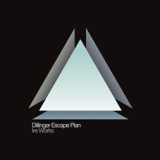
After Miss Machine, Dillinger Escape Plan fans were divided. Many of the folks who were attached to the screaming mathematical metal of Calculating Infinity bailed on the band, disapproving of the experimental musical direction and the meathead appearance of new singer/screamer Greg Puciato. Open-minded listeners were excited about the progressive journey they were taking and many critics hailed the group as a true innovator of metalcore. Ire Works succeeds in many of the same ways that their previous album did, while branching out creatively. They continue to toy with technical metal, blistering hardcore, jazz breaks, and post-punk, but here they evolve again by adding more twists and turns with additional electronic elements. While the merging of too many styles in hardcore can make for a convoluted result (see Avenged Sevenfold's self-titled release), the added instruments and genre changeups enhance the result rather than acting as ornamental distractions. Edgy Aphex Twin-style drill'n'bass drum breaks and stretched and squeezed electro blips feel strangely at home next to the psychotic time-signature changes and manic riffs, especially on the tracks "Sick on Sunday," "Dead as History," and "When Acting as a Wave." Violins, pianos, and trumpets sit nicely in the mix, and the group's willingness to take chances leads to stunning artistic endeavors rather than stale attempts at crossing genres just for the sake of being clever. Original vocalist Dimitri Minakakis makes an appearance, as does Mastodon guitarist Brent Hinds, but the most notable inclusion is drummer Gil Sharone, who proves himself an expert at picking up the slack after the departure of founding member Chris Pennie to play in Coheed and Cambria. Undoubtedly, this act added anger to fuel the fire of their heavier numbers. "82588," "Fix Your Face," and "Party Smasher" are as wicked and manic as their most difficult earlier stuff; conversely, the melodic hooks and falsetto of "Black Bubblegum" and the watery ambience of "Mouth of Ghosts" balance out the album nicely. It can be inaccessible and terrifying all at once, but in a genre overly saturated with formulaic groups, Ire Works is a true standout. If DEP aren't careful and continue down this innovative path, they could easily be labeled the Radiohead of metalcore
Marc Richter aka Black To Comm released his debut record 20 years ago. In 2023 he is still busy releasing music under various disguises and is currently signed to the Thrill Jockey label. To celebrate this anniversary his own Cellule 75 label is re-releasing some classic out-of-print vinyl albums that originally came out on the defunct Type and De Stijl labels. The LP will feature a full-colour printed inner sleeve exclusive to this edition.
In 2009 the Type Recordings label run by John Twells had just released seminal records by Grouper, Jóhann Jóhannsson and Yellow Swans when they signed Richter and put out his breakthrough Alphabet 1968 album. The LP sold out within two weeks, receiving a glowing full-page review in The Wire Magazine by the late Mark Fisher (later reprinted in his book Ghosts Of My Life), was selected for Boomkat's Top 10 releases of the year (alongside debut albums by Leyland Kirby, Demdike Stare and Oneohtrix Point Never) and was greeted with universal praise in the underground blog network as well as established magazines such as The New Yorker and Pitchfork.
The music itself played with the notion of nostalgia without being nostalgic itself. It's the sound of half-remembered dreams, a surreal distorted vision of the past, an aural polaroid of long forgotten musics, a ghostly voice from a non-existent era.
From the original Type one-sheet:
"The mission statement for Alphabet 1968 was to write an album of "songs" for want of a better word. Short tracks which represented genre points, the milestones which stuck in Richter's mind when he thought back to his favorite records. What we arrive at is a breathtaking 10-track album which, over the course of 45 minutes, explores world music, techno, noise, avant-garde, ambient music and even exotica. Each track is linked with a loose thread of radio static or environmental sound, dragging you through the album, as if tuning in to a stray broadcast or a particularly adventurous mix. Richter has pieced the album together from hours of recordings made at his studio with home made gamelan, small instruments and loops gathered from a collection of ancient vinyl and 78 records. The scope of the album is admirable, but ignoring this, it is simply a shockingly arresting collection of experimental oddities, with references ranging from Moondog to Basic Channel by way of Bernard Herrmann. It's not hard to fall in love with Alphabet 1968, far harder would be to place exactly where the record should fit into your collection."
Mark Fisher in The Wire:
"But what if we were to take Richter's provocation seriously - what would a song without a singer be like? What would it be like, that is to say, if objects themselves could sing? It’s a question that connects fairy tales with cybernetics, and listening to Alphabet 1968, I’m reminded of a filmic space in which magic and mechanism meet: JF Sebastian’s apartment in Blade Runner. The tracks on the LP are crafted with the same minute attention to detail that the genetic designer and toymaker brought to his miniature automata, with their bizarre mixture of the clockwork and the computerised, the antique and the ultramodern, the playful and the sinister. Richter’s musical pieces have been built from similarly heterogeneous materials - record crackle, shortwave radio, glockenspiels, all manner of samples, mostly of acoustic instruments. ….. JF Sebastian's apartment was itself an update of older spaces in which science and sorcery co-existed: the workshops of ETA Hoffmann's inventor-magicians, or of Pinocchio's creator, Geppetto. I think, too, of Auguste Villiers de l'Isle-Adam's astonishing 1886 tale The Future Eve in which Edison, using the expertise he has recently acquired from inventing the phonograph, sets himself the task of constructing an artificial woman. But if there are songs here, they are sung by the gramophone and other recording and playback machines. Richter so successfully effaces himself as author that it is as if he has snuck into a room and recorded the objects as they played (to) themselves. Rather than simply automating his music, as in the case of Pierre Bastien and his mechanical machines, Richter makes us feel that he has merely recorded the unlife of objects. ….. Indeed, the impression of things winding down is persistent on Alphabet 1968. Entropy has not been excluded from Richter's enchanted soundworld. It feels as if the magic is always about to wear off, that the enchanted objects will slip back into the inanimate again at any moment."
Liberation is the latest evolution by David West, a dedicated underground dweller and traveler with his groups Rat Columns and Rank/Xerox and previously spotted in Lace Curtain and Total Control. Many familiar elements of West's songwriting creep out from the speakers this time around, albeit in a sonically more adventurous and personal manner. Swathed in analogue and FM synths, pinned down by near-funk drum machines, and with a vision expanded into the past and future. While in previous incarnations, West's alienated and fragile vocal has battled with jangling guitars and distortion, Liberation sets free his woes and ruminations into space. Taking inspiration from the heyday of Mute Records, the beginnings of electronic dance music's rudimentary sampling, broken and sound art, Liberation's debut LP is 10 songs of the road, about the nameless ghosts on the highway, accidental lovers, the alienation of the stranger in a strange land, the unbearable weight of freedom.
Beginning with a curveball, Liberation's first vocal sets out the position of the forever-cuckold, the sad lover hanging on: Looking For A Lover combines a Roland 707's loping mid-tempo with creeped-out synth lines as West intones his intentions close to the ear. Continuing in a more baroque manner, Move Me makes astounding use of string samples and space, with esteemed engineer Mikey Young's (Total Control / Eddy Current Suppression Ring) production prowess making for a distilled yet inviting loneliness. Forget is the night-drive centerpiece of the album, a 7 minute that erupts into a nihilistic sub-disco darkness. A constant theme of Liberation is the friction between West's characters: a frustrated love in victim-status paired with a menacing intent. The adorable, fragile stalker in the moonlight, illuminated by Whatever You Want, a
subjugated protagonist offering they have while the city burns. The brightest pop moment of the album has this in abundance: Cold And Blue, a classic synth pop jam to be played on repeat til the end of time, like New Order played by one man in his bedroom, with no drugs for a cushion, coming down the stairs, she looks like a perfect fear and Im a monument to your existence. But West has moments of touching sincerity that speak direct to the listener, as in album highlight Leaves Falling; a sparse string arrangement frames his vocal, "why do I keep falling for you I must just really like to be alone." Liberation is the freedom from attachments, about how sometimes they're what you want most.
All of us carry a piece of where we’re from with us, but these parcels of fallow land often in a uniquely mysterious way become the prey that nourishes our aspirations. Agnès Gayraud a refined thinker by day that transforms into la Féline at night left Tarbes many years ago in search of greener pastures. After making a name for herself with Adieu l’Enfance (2014), Triomphe (2017), and Vie Future (2019), the author and musician has evolved once again. Her latest release Tarbes reinvents the circle of life and challenges our preconceived notions. She welcomes us to her hometown with sweet and clear melodies over the backdrop of an electronic hum, reminiscent of Mark Twain classic Tom Sawyer. Tarbes is no more than a listen away. Physically prevented from returning to her hometown by the viral threat we all know all too well, Agnès found her way back with a small Electone home organ. The constraints of off-peak hours that called for some DIY savvy, slowly but surely, roused her spirit. With a drum machine, a bass and a guitar, she succeeded in making the young girl inside her smile again. With 13 songs and just as many adventures Tarbes is a concept album that tells the story of a young woman’s formative years, as spent in her hometown. The returning hymn doesn’t only imprint nostalgia, it paints the full emotional portrait of a town. Because for Agnès, Tarbes is not just her theater, but her whole world, showing how fiercely protective she is of her hometown in the song Solazur. Under a magnifying glass of emotion, and with the sentimental testimony that is La Panthère des Pyrénées, the artiste shows us the skeletons in our own closets. Tarbes, more than a brief stopover in a rail journey to the coast, broaches issues that touch on abandonment, desertification, aging and redevelopment that many French towns and cities face today. Alexandre Guirkinger’s photographs serve as album art that illustrates this strangely unique singularity. While fine-tuning this collection of stories, in an oh-so-intimate album where solitude rips away the mask of confidence, Agnès found solace in uniting with other spirits. For 3 songs Tarbes, Jeanne d’Albret and Fum, inspired by an Occitan poem of Louisa Paulin (1888-1944), she invited the young voices of Conservatoire Henri Duparc a building she knows intimately, despite never feeling allowed to enter as a child to breathe the energy of their adolescence into this record. She also collaborated with Lyon’s own François Virot to imbue his delicate rhythms into her work, as well as Belgian guitarist Mocke Depret. Lastly, La Féline entrusted the last production stages to her eternal partner in music, Xavier Thiry, with Stéphane “Alf” Briat on the mixing board. The final piece has a complex tranquility, surrounded by non-verbality, with Jeanne d’Albret, Louisa Paulin and the Pyrénées safeguarding Agnes’ secrets. With the calm reassurance of her metamorphoses, La Féline delivers a slice of silence to her town, serving as both her cradle and theater. Tarbes’ Théâtre des Nouveautés is where Agnès Gayraud, La Féline, has decided to present Tarbes to its residents on October 14, 2022. While “nouveautés” evokes newness, this theater is reminiscent of a future which is already outdated, where modernity is only vague and fictional, carrying reminders of French haute-kitsch accordionist Yvette Horner, whose parents were the caretakers of what was then called the Cani Eldorado a bastion of virtue through the 30s, with its lineup of Catholic films. However, by the 60s, it would have become a temple of pornographic cinema. Tarbes, “Les Nouveautés”, end card. In the mid 90s, then 16 years old, Agnès discovered the volatile dust and the ghosts of the past that were hidden in this apostate theater. This phantom bequeathed song the teenager with the gift of her undeniable talent at her first appearance on stage a high school performance of a guitar-laden ballad sung in Spanish, a language her Andalusian mother has infused her with. On October 14, 2022, Agnès returns to the stage, bass in hand and joined by François Virot (drums), Mocke Depret (guitar), Léa Moreau (keyboard) and the Conservatoire de Tarbes singers to perform the album in its entirety
The debut from new splinter alias of Manchester producer, sequencer designer, and Cong Burn label boss John Howes was made entirely on a Nord Modular G2, Elektron Machinedrum, and Monomachine – a rig he characterizes as “an authentic 2006 studio, best listened to on Windows XP Media Player or Winamp.” Paperclip Minimiser’s self-titled full-length collects eight elusively multi-dimensional constructs of stereo panned synthetics and slithering ambient techno, born of a web of generative patches subjected to improvisational alterations. Taking things further, Howes’ process involves “planting ghosts in the machines,” instilling each element with “some self-correcting behavior in a cybernetic / lo-fi AI / semi-autonomous agent kinda way.” The result is an ambiguous and dynamic hybrid of accident and intention, chaos and control, shuffling through an innerspace wilderness of psychic circuitry.
The title alludes to a 2003 thought experiment about the existential risk of artificial intelligence; how even a mundane objective, algorithmically extrapolated, could culminate in catastrophe. Here the notion is inverted, demonstrating the sonic infinities to be mined by “pushing and pulling at the strings” of musical systems. Howes aptly samples a vintage interview with electronic music pioneer Bebe Barron – co-composer of the Forbidden Planet soundtrack – discussing the anthropomorphic potential of randomized audio generation: “We thought of our circuits as actors in a script.” Paperclip Minimiser descends from a similar family tree, coaxed as much as crafted, flickering rhythmic synchronicities glimpsed in a mirage of wires and glass.
Sunda Arc are brothers Nick Smart and Jordan Smart. Best known as key members of folk and jazz influenced minimalists Mammal Hands, their Sunda Arc project takes inspiration from the likes of Jon Hopkins, Rival Consoles, Moderat and Nils Frahm as well as their own music world. Their debut EP 'Flicker' was released in December 2018 and now the duo are set to release their debut LP, 'Tides' on 7th February 2020.
Named for a volcanic arc in the Indian Ocean, created by the process of massive tectonic plates colliding, Sunda Arc strives to mingle electronic and acoustic sounds until they become almost indistinguishable from each other. It's a process where they draw the acoustic properties and quirks out of electronic sounds and find the electronic potential in acoustic sounds. "Finding the ghost in the machine or blending the human elements of playing live is something we are always trying to explore in our work.
Experimentation is a large part of our process and we tend to combine carefully composed material with chaotic ideas to find the balance between the two" — Sunda Arc 'Tides', their debut album, takes its name from the idea of unseen forces that can affect our lives in myriad ways, being pushed and pulled and at the whim of powerful forces outside of our control as well as offering a nod to things such as the tides on our planet, tectonic plate movements and weather systems. There are often chaotic elements in these systems that function in a way that produce a type of controlled randomness on a large scale. This is something they try to reflect in their music by adopting some of the ways these systems work into musical sequences, and using ideas such as chaos theory to control musical parameters. "Tides is a reference to themes we were thinking a lot about during the making of this album. These include the similarities between macro and micro systems, or the circulatory and nervous systems in the body. Things that produce a type of controlled randomness on a large scale". — Sunda Arc 'Hymn', the first single from the album, uses Nick's voice sampled and played back through a keyboard to create a human yet electronic feel.
It mixes soft vocals with heavier electronic elements to create a danceable yet human sound world. 'Dawn', is best described as uplifting-techno, its use of repeated phrases building in intensity and variations to put you into a hypnotic state whilst also being industrial and danceable. 'Daemon' is one of the tracks that really resonates live. Drawing on the sound of UK dubstep it's intense but fun and the bass clarinet blends with synths at the end to create a sound almost like a vocal. 'Secret Window' brings forward another side of the band, focusing around a lo-fi recording of felted piano and bass clarinet.
These are blended with granularised and processed versions of themselves which emerge like ghosts of the instruments throughout the track. 'Cluster' is another key track. It utilises a small group of notes looped in an unusual way to create a sense of cascading patterns over a solid danceable drum groove. It emphasises soprano sax blended into the sound world half-way through to lift into the final section.
Drawing the night in around his private, unnerving vigil, Ellis Swan returns to Quindi Records with an album of cracked beauty and haunted balladry. The Chicago-based singer-songwriter debuted on the label last year with a collaborative project called Dead Bandit, a vividly produced instrumental set in thrall to the badlands and a laconic, languid Americana.
Under his own name, Swan records intimate, poetic songs in a stark fashion, so fragile they might disintegrate in between your fingers were you to pick them up. He draws the microphone close to pick up every whisper and drags the music through layer upon layer of tape fuzz, leaving room for atmospheric impressions which loom out of the walls like the ghosts of past misdeeds. These pieces play on the natural distortion and delirium which occurs at the farthest end of the night - the hour before dawn might hope to break the veil of darkness.
Swan's is a hauntological sound, but like the late Israeli rockabilly icon Charlie Megira his process strikes a spooked tone past revivalism and out of time or place. The only anchor which places Swan anywhere is the subtle presence of Katherine Swan providing lyrics to '3am' and lyrics and backing vocals to 'It Could Be Worse'.
The impression cast is of one man and his guitar, but there are other textures tucked into the music - the muffled murmur of a drum machine or a low frequency organ hum, some desolate piano, other treated percussive impulses which might well have been the work of incidental sprites while the four-track was rolling.
There are fuller cuts like 'Evening Sun' and the title track '3am' which play with structural dynamics and creep out of the shadows a touch, while passages of plaintive, instrumental unease such as the hypnotic, mantra-like 'Chinatown' protract the space between songs. 'Swing' lolls between moments of bottomless silence and a discernible, rickety funk, and 'Puppeteers Tears' teases out a buried drama. But primarily, it's the light touch of 'Horses Bones' and tin can tenderness of 'She's My Sweet Summer Storm' which spell out the spellbinding character of 3am; a singular creation fusing the best qualities of folk, blues and Americana with a fearlessly experimental sound palette.
Ben Auld writes songs whose heartbreak and wonder reveal themselves
moments after the warmth of their beauty sinks in, like slipping into the
ocean on a bronzy morning
Whether he's singing about bookstores and porches or ghosts and space
stations, the Bristol, UK-based singer-songwriter imbues his straight-to-tape gems
with a radiant AM pop warmth. And on Lemongrass, due ia Earth Libraries, that
comfy songwriting crackles and pops somewhere between Roger McGuinn and
Gram Parsons. Auld's debut record brims with homespun charm, dazzling
melodies, and lyrics that burrow deep into the heart.
Throughout the album, the immaculately arranged compositions provide the
perfect frame for smooth and rosiny vocals. Utilizing a series of reel-to-reel tape
machines, Auld chose to meticulously stack his instrumentation rather than
simplify; some songs have dozens of instrumental tracks, all assembled on tape.
"I'd record three tracks, bounce that over, and then record another three. I did it
alone and it took a long time to figure out what was possible," he says. "I went
through two four- track recorders, an 8- track 1/2" reel- to- reel, and finished the
album on a TASCAM 388. One of the biggest challenges of the album was fixing
all the broken old gear."
With each new listen, Lemongrass becomes a fonder friend, Auld's heart-on-hissleeve lyricism and intimate songwriting building a deeper nest. "The time is
ours/ Our time is now," he insists on the psychedelic wonder of "Our Time Is
Now", more certain and wide-eyed than urgent. Through first love and heartbreak,
dawns and apocalypses, Lemongrass keeps turning, collecting flickers of astral
bliss with each rotation, Auld's thumping heartbeat at the core.
Rome’s own disco wizard L.U.C.A. aka Francesco De Bellis is back for his second LP Terra, hot on the heels of his Venus 12” EP earlier this year. In this far-reaching album, the Edizioni Mondo founder explores the deteriorating relationship between Man and Nature, and the dire consequences. The album is split into two themes - part one is Consacrazione (Consecration) and side two is Coscienza (Conscience) - as L.U.C.A. charts a trip through mankind’s psychic universe, and imagines worlds beyond our physical dimension.
The opening composition Cities is an uptempo number that slowly comes into focus, as dreamy drum machines emerge from the urban bustle, before settling into a soulful groove as keyboard, upright bass and guitar figures dance across bright percussion. As it builds up a head of steam, the piece gives way to an ambient, tribal breakdown, which is also echoed in the following song, Drum Talk. This second tune sets up in a fourth world dreamscape of drums, synths, and abstracted echo effects, and is peppered with word fragments from the bush of ghosts. By the time we’ve reached the third track, Congiunzione sounds like travelling at singularity speed, beaming in from a future where human consciousness and gaia can finally dance on a cosmic plain.
Part two of Terra details how revelation of the spirit can guide the mind, as Time Spirals rises out of a drum motif with a nod to classic ragas, as a disembodied voice asks questions on the nature of corporeality. The sound design is just as front and centre as the sitar and fretless bass, and the song gives way to a richly-layered soup that sounds like the vast space between atoms. It’s this shift from composition to ambience that is the dynamic core of Terra, giving L.U.C.A. plenty of space to showcase his next-level audio and arranging skills. Midway through part two, Giallo Assoluto begins with reverb tails and choral voices before expanding in brightness and texture until the audio field is practically levitating your hi-fi speakers, vibrating them with drones, twinkling keys and shards of digital noise. The closing composition Ritorno al Domani is a perfect balance of optimism and mystery. Tension and release collapse in on themselves as waves of ambient pads crescendo and then break over stretched-out sonic turbulence, before reversed synths bring the listener to a closing door, and the end of the journey.
It’s a mind-expanding musical exploration of other worlds and parallel universes which are surely all around us, and in many ways serve to remind us of the marvel that is our own planet.
He may not have known it before, but Toronto-born, New York-based
guitarist Matthew Stevens, prized for his forceful, distinctive electric
sound was an ideal candidate to make an album fully devoted to solo
acoustic guitar: the intimate, unadorned, straightforwardly titled
'Pittsburgh'
September 2020, Stevens was hunkering down in his wife's family's hometown of
Pittsburgh, while navigating his way through the crisis. He had with him a vintage
Martin 00-17, a small- body mahogany guitar. Practicing daily on the Martin, he
began generating a series of short song "starts" - ideas and sketches he thought
might lead somewhere. Then one rainy Pittsburgh day, Stevens' bike slid out from
under him and he broke his right elbow. Rather than getting derailed musically, he
became immersed in a creative process that led straight to 'Pittsburgh': a
document of those short song "starts" from the notebook, now hatched as
completed compositions. "Playing this music became a big part of my rehab,"
Stevens recalls.
As the album took shape, it became clear to Stevens that he was headed in the
direction of a wholly unaccompanied recital, with no overdubs or sound layering
of any kind. Just him and this special Martin, two Neumann U89 mics and enough
peace of mind across two separate sessions to make 'Pittsburgh' the triumph that
it is.
In addition to his extensive high-profile work with Esperanza Spalding (serving as
co- producer on 'Exposure' and '12 Little Spells'), Stevens is also a member,
songwriter and co-producer of Terri Lyne Carrington's GRAMMY-nominated Social
Science band. He has made vital contributions to groups led by Dave Douglas,
Linda May Han Oh, Christian Scott aTunde Adjuah, Ben Williams and more. With
tenor saxophonist Walter Smith III he co-leads the In Common collective. Stevens
has also amassed many credits beyond the jazz world, collaborating on
forthcoming releases by Anna B Savage, Jamila Woods, Tyler Armes
(Murdagang) and Berlin-based electronic artist Robag Wruhme.
"Don’t be afraid, old son, it’s only me,
though not as I’ve appeared before,
on the battlements of your signature,
or margin of a book you can’t throw out"
~ Michael Donaghy
Whytwo is a young, enigmatic artist from Scotland, UK. A talented multi-instrumentalist and performer with an extraordinarily broad range.
First coming to Blu Mar Ten's attention after entering their 2017 remix competition, Whytwo created a wildly different take on their track 'Titans', bending it into a skittering, menacing groove while somehow maintaining a playful edge.
Fast-forward a little and we've now arrived at Whytwo's debut LP, 'Ghost', an exhilarating and elasticated take on Drum & Bass that exists in the hinterland between elation, melancholy and longing.
Mirroring Whytwo's music, the album's title, 'Ghost', is richly layered word, meaning, in different places and at different times; a memory of something or someone; to disappear without communication; to move quietly and quickly; to secretly do work for another; and, of course, a being caught between worlds.
From the old English, 'Gast', meaning 'breath' or 'spirit', the word eventually transformed into 'Ghost' coming to describe "a slight suggestion, mere shadow or semblance". All of these definitions relate, in some way, to the album now before us.
In conversations with Whytwo, he describes how his Jazz musician Grandfather was the person responsible for first giving him music-making software, and whose clarinet features on some of the album tracks. At the same time that 'Ghost' was being created, Whytwo was looking after a young child and some of the drums on 'Ghost' are recordings of the child hitting things. Whytwo describes the feeling of existing between these two extreme states, young & old, naive & experienced, primitive & advanced, and taking the role of a medium 'caught between worlds' whose task was to stitch together this generational fabric.
The result is nothing less than spectacular. Despite having its roots in Drum & Bass, the rules and conventions of the style are ruthlessly disobeyed resulting in glittering cascades of melody, harmony and rhythm that somehow burst with both sadness and joy, hope & loss, memory and anticipation. The music swoops and dips, briefly casting shadows before blasting them away with sunlight, evoking memories both personal and collective. This is 'Lost Soul Music' that manages to speak to all of us.
Despite being deceptively listenable, Whytwo insists this is not relaxing background music. Listeners should fully engage with the music beyond its attractive surface and absorb it at the same deep human level where it was created. 'Ghost's production levels are astoundingly high but focussing on those would be a mistake. They only serve to carry the spiritual content of the music across to the audience and unlock the valves of feeling. The beauty here is not the machine, but the ghost in the machine.
- A1: Dj Ghost - Techno Trip
- A2: Insider - Boots On The Run
- A3: Body-Shock - Invasion Of The Body-Snatchers
- A4: Dj Looney Tune - Workstation
- A5: Body-Shock - Sleepless
- A6: Liquid Overdose - Contact
- A7: Cherrymoon Trax - House House House
- A8: Dj Looney Tune - Beatbox (Acieed Mix)
- A9: Liquid Overdose - Fearsome Bass
- B1: Jan Vervloet & Dj Ghost - Super Dry
- B10: Joyrider - The Deadline (Ny Mix)
- B11: Body-Shock - Attack Of The Body Snatchers
- B2: Jones & Stephenson - The First Rebirth (Dj Ghost & Danny C Remix)
- B3: Push - Universal Nation (Dj Ghost & Danny C Remix)
- B4: Traxcalibur - The Dreamer
- B5: Repulsive 2 - Recactussed
- B6: Dave Davis - Transfiguration
- B7: Blue Alphabet - Cybertrance
- B8: Final Analyzis - El Punto Final (Power Mix)
- B9: Dreamland - Mind Penetration
Our next mixtape features a superb, tight blend of some of the very best tracks to fly out of the speakers at the Cherry Moon Club. At the helm we have DJ Ghost, spinning the grooves to take us on a journey through the ages, through the genres, from twisted acid concepts to hypnotic trance and gut busting hardcore. Ghost aka Bjorn Wendelen has been a stalwart for us at Bonzai since the very early days. He’s delivered several cuts for us over the years and has branched out with his own Ghoststyle brand with great success. The famous Cherry Moon was and remains one of the biggest names in Belgian club-life, with 30 years of embracing club culture. Since the start in 1991, they have brought the best techno, hard-trance and house to the scene. During the 90's and early 00's, Cherry Moon was the place to be for clubbers from all over Belgium, France, the Netherlands and even other European countries. Housed on classic K7 tape, this comp features a host of tracks from the likes of DJ Ghost, Insider, Body-Shock, DJ Looney Tune, Jones & Stephenson, Push, Blue Alphabet, Final Analysis, Joyrider, Dreamland and more. So, dust off your vintage cassette machine and prepare to be blown away by the sound of Cherry Moon.
- A1: New Memories Of Machines
- A2: Before We Fall
- A3: Beautiful Songs You Should Know
- B1: Warm Winter
- B2: Lucky You Lucky Me
- B3: Change Me Once Again
- C1: Something In Our Lives
- C2: Lost & Found In The Digital World
- C3: Schoolyard Ghosts
- D1: At The Centre Of It All
- D2: Dreamless Days (Outtake)
- D3: Someone Starts To Fade Away
THE 10TH ANNIVERSARY EXPANDED EDITION OF TIM BOWNESS &
GIANCARLO ERRA'S 2011 ALBUM 'WARM WINTER' - NOW ISSUED AS
MEMORIES OF MACHINES
An expanded & remixed 10th Anniversary version of Tim Bowness & Giancarlo
Erra's 2011 album 'Warm Winter' (now issued as 'Memories Of Machines', the
original project name).
Featuring contributions from Robert Fripp, Peter Hammill, Julianne Regan, Jim
Matheos, Colin Edwin, Huxflux Nettermalm, Peter Chilvers, Aleksei Saks &
members of Nosound & Tim Bowness's live bands, the album contains 10
sweeping & majestic songs (culminating in the epic "At The Centre Of It All").
The 2 disc - CD/DVD-A/V version includes hi-res stereo & 5.1 Surround mixes in
addition to two 2020 recordings - an album outtake & a new version of the
Nosound piece "Someone Starts To Fade Away" - created especially for this
release.
Featuring a 2021 remix from the original tapes by Giancarlo Erra, this new edition
emphasises the textural nature of the music & restores the pieces to their original
arrangements & track lengths (resulting in a different listening experience).
The artwork has also been overhauled for this release by Giancarlo Erra &
Caroline Traitler.
Haiku Salut, the acclaimed electronica trio from the Derbyshire Dales release their fifth album, ‘The Hill, The Light, The Ghost’ on Secret Name records on August 27th. Note the LP follows in November.
A beautiful study of ghosts and memory, the gestation of the record began when Haiku Salut’s Sophie Barkerwood was given a Tascam field recorder. “I carried it around with me in case anything interesting happened. I guess I wanted to capture little pieces of the world in the same way we all take photographs,” explains Sophie. “It wasn’t immediately apparent that we would begin to use these sounds as the architecture for an album but as our writing process evolved the textures of these memories became a bank of inspiration.”
“We then began actively searching for ghosts in the world and framing the songs around their qualities,” Sophie continues. “Gathering recordings, removing them from their context and building worlds around them. Capturing and preserving personal experiences, and evoking vivid spaces. You could say the record is a miniature exploration of sound in relation to memory. Each piece is intimately connected to a place in time.”
Musically, the album marries the expansive vision of their third album, ‘There Is No Elsewhere’, which celebrated identity and community, with the darker, more contemplative feel of their fourth album, the trio’s original soundtrack for Buster Keaton’s ‘The General’. Building on the lessons learned working on ‘The General’, ‘The Hill, The Light, The Ghost’ is a cohesive suite, nine songs that combine to tell a larger story – that of experience and memory, of precious moments and echoes of past lives.
Two worlds collide to offer a brand new project. The lo-fi rock from Emilie Zoé and Nicolas Pittet blends perfectly with the sounds of the machines and samples of the leader of The Young Gods, Franz Treichler. The sound triangulates and takes the shape of an /A\. Zoé is an artist who converts the ghosts of everyday life into electric fulgurations on the extreme fringes of pop and rock; Pittet is her drummer, but above all he’s an all-round musician, as comfortable backing Lee ‘Scratch’ Perry’s primal dub as he is
fiddling with electronics (e.g. his project Kera); and of course, Treichler is the well-known leader of The Young Gods, and band that’s been setting the bar since 1986 when it comes to transforming rock by infiltrating its genome into machines.
This diversity of backgrounds, tastes and experiences might at first sight have appeared as a reason to stay apart from each other, but instead it’s proved to be a vector of mutual attraction. What /A\ offers contains no foreign matter: Treichler, Pittet and Zoé’s aesthetics are intertwined through subterranean links that strike by their clarity, like the pieces of a puzzle that is both unexpected and surprising.
It’s through this profound entanglement that the pieces, one after the other, succeed in materialising hitherto unseen faces. They create something new: Hotel Stellar delivers an otherworldly blues, a slow snake that oscillates between the abyss and redemption; We Travel the Light, with its guitars measured in megatons, invents the notion of a steamroller possessed by insane joy; Count to Ten is a wash of restrained melancholy infused with almost Birkin-like touches, which, as the minutes go by, bristles with scratches and sandy echoes, like synthetic dub; The Leaves is yet another strange beast which could be considered as the evolution of a trip hop theme that would have been left to mature for a few decades in the noblest of drums. “It’s red, it’s hot” says Zoé when asked to analyse the record. “You can feel like there’re waves coming at you, but you never really know when.”
unperson has quickly defined his own unique lane of deeply atmospheric and percussive bass-laden electronics. His 'The Ghosts That Gave' EP was released to critical acclaim in March 2020 with support from Mixmag, DJ Mag (9/10 Review) & Resident Advisor and plays across BBC 6Music ('Recommends Spotlight Artist' feature for Tom Ravenscroft), Saoirse's BBC R1 Residency, NTS, Rinse FM + more. With tastemaker DJ support from Call Super, upsammy, Errorsmith, Machine Woman, Minor Science, India Jordan, AYA, Bruce etc., unperson is becoming a formidable new face in the electronic scene having recently contributed to Crack Magazine's esteemed mix series.
The 'Struggles In Conjuring' EP sees unperson step further out of the "corners of the club" than he has in his output to date; with an alluringly warm introduction, 3 tracks primed for peak dancefloor dismantling and a remix from man-of-the-moment DJ Python – who had a career defining 2020 after releasing his 'Mas Amable' album (#1 in Resident Advisor Album of The Year 2020, #3 on Crack Magazine's Best Albums Of 2020, #87 in Pitchfork's 100 Best Songs of 2020 etc).
Something wicked this way comes. Following singles 'Know The Future' b/w 'Digital Warfare' in 2019 and 'Hypersocial' b/w 'Safety Test' in 2020, ESP’s own Patrick Conway has now teamed up with the illustrious Appleblim (of Skull Disco and Apple Pips fame) for a meaty self-titled debut 2xLP under the new collaborative moniker, Trinity Carbon. There is something to be said for art created in the face of global unraveling, while mass transgression and the friction of culture shifting produce poignant commentary, but more often than not, it’s the personal coping mechanisms within our work that have the power to speak directly to the receiver. After a number of sessions resulting in wild imaginative beginnings, it was the untimely passing of Andrew Weatherall and a coming to terms with that loss that moved the two Brits-via-Berlin to herd their roaming sketches into a more narrative statement. In the uphill struggle to retain some sense of individualism, it’s always outsiders like Weatherall whose risks illuminate the roads of creativity less traveled, and when those beacons go dark there is a disorientation felt far and wide. Conway and Blim concede to the internal inquiry, “What would Weatherall do?” bringing to mind the man’s pervading morale, always soldiering onward through mediocrity, as it was undoubtedly an impetus for the duo growing steadfast and chiseling 'Trinity Carbon' into completion. While employing trusted machines in the bass department, they established a warm euphonic home base from which they could stray in a variety of tonal and rhythmic directions without straining a tether to the album’s core. However, as soon as any hint of familiarity may arise, or listeners begin to mentally assign stylistic epithets, the duo boldly change course to remind us that while the banal stay safely defined, it’s the iconoclasts, the outsiders who make us feel.
Clear Vinyl
WRWTFWW Records is happy to announce the release of Para One’s new album SPECTRE: Machines of Loving Grace, available in half speed mastered 180g double lp housed in a heavy sleeve with UV spot varnish. Machines of Loving Grace, the new album by Para One, whose real name is Jean-Baptiste de Laubier could be called fiction. It is an object freed from constraints, formats, genres, territories: the gospel of a new world. Six years after Club, eight years after Passion, his previous LP, this lover of electronic music, who has also been putting his sensitivity to the service of movies (soundtracks for Céline Sciamma in particular) opens with this record a new dimension in his artistic career. “I needed to break away from patterns and systematisms of formats, and take unexpected turns. To do so, I had first to allow myself to do so”. Allow oneself and maybe above all confront oneself – with one’s childhood, with one’s childhood’s ghosts, and what fantasies, ideals, memories, and grey areas they harbor. He had to go back – without giving up on his position as an adult, as a full-fledged artist – to the sources of his imagination, to the moment when music was holding almost mystical power. And then revisit it to make something new out of it. Just like Sanity, Madness & the Family (the feature film directed by Para One that he just finished and of which it is a consubstantial part), Machines of Loving Grace has an investigation around a family secret and the father figure as its starting point. “When you go down the path – of a work, of a person, of the past – you never really find out what was. You find yourself