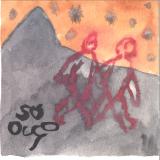
"Taking influence from the pioneers of Música Popular Brasileira, Wolfgang Pérez has crafted an exquisite album of summery experimental pop music that encapsulates the beauty and chaos of modern Brazil. A must-listen for fans of Tom Zé, Gilberto Gil, Kiko Dinucci, Negro Leo, Ricardo Dias Gomes, and João Gilberto.
Genre-blending songwriter, arranger, and guitarist Wolfgang Pérez is set to release his highly anticipated new album Só Ouço in July 2025 on Hive Mind. Known for his unique fusion of influences, the German-Spanish artist first captured attention with his 2021 debut WHO CARES WHO CARES (Fun In The Church), followed by the critically acclaimed Spanish-language album AHORA (BAUMUSIK, 2024).
Só Ouço is the fruit of an 18-month creative residency in Rio de Janeiro, where Pérez collaborated with a group of young Brazilian musicians. Deeply inspired by the city's sounds and rhythms, the album marks an exciting chapter in Pérez’s evolving artistic journey.
In 2022, Wolfgang Pérez arrived in Rio de Janeiro on a university exchange to study composition, and quickly found himself immersed in the city’s rich musical landscape. Introduced early on to Rio icons like Thiago Nassif, Arto Lindsay, and Ana Frango Elétrico, what began as a semester turned into a transformative three-semester stay. Pérez absorbed the city's contrasts - it's beauty, its people, it's chaos and violence, all it's contradictions and life - while deeply studying Brazilian music at UFRJ/UNIRIO under the guidance of masters Josimar Carneiro, Marcello Gonçalves and Almir Cortes.
Wolfgang spent the first 6 months or so soaking in as much as possible, going to shows, to the baile funk parties, walking the streets, hiking the mountains in and around Rio, listening to music, making friends, learning where to go and where not to, learning the language, learning the slang, incorporating the culture. He used the time to forget himself in the vibrance of the city.
After this the band came together through a series of chance encounters and happy accidents...some loose jam sessions led to shows around Rio, where Wolfgang, alongside Luis Magalhães (bass), Pedro Fonte (drums) and Paulo Emmery (electric guitar), started to flesh out some of Wolfgang's compositions. At a show at Audio Rebel they met Angelo Wolf (owner of Wolf Estúdio and engineer for artists such as Bala Desejo, Dora Morelenbaum, Zé Ibarra, Marcos Valle, Antonio Neves and Ana Frango Elétrico); moved by the music, Wolf offered Pérez residency and studio time at Wolf Estúdio, providing the foundation for Só Ouço. Angelo was a catalyst for the production of Só Ouço, his openness and generosity helping to shape the sound of the record. Carol Maia, a young guitarist, lyricist and singer brought a sensitivity and tenderness to the songs, while Antonio Neves helped to pull together the brass and woodwind players who would complete the lush sound of the album.
Meticulously arranged, and beautifully composed, Só Ouço is a joy to listen to and surprising at every turn. Classic songwriting and cutting edge production blend to produce an album that is by turns tender and gentle, abrasive and unsettling, a joyful celebration of life in all its complexity."
Suche:gilberto gil
- Je Suis Sans Toi
- Rendez-Vous D'automne
- La Dernière Valse
- Le Lendemain
- Un Amour, Un Sourire, Une Fleur
- Corcovado
- Gua De Beber
- Berimbau
- Vivo Sonhando
- Fever
- Garota De Ipanema
- So Nice
- Las Flores Nuevas
- Y Hoy Te Vi
- Esa Tristeza
- Mejor Me Voy
Born as Diana Reches, Diane Denoir made her debut as a singer in 1966, backed by Eduardo Mateo on guitar. Influenced by Françoise Hardy and Astrud Gilberto, along with her own unique style, she performed a special blend of chanson française, bossa nova (sung in Portuguese, English, and French), and jazz. By then, Mateo was already a well-known guitarist in the Uruguayan music scene and a sought-after arranger. He was also beginning to establish himself as an incredible songwriter, connecting different musical universes in unique ways. The two formed a fruitful artistic partnership that lasted until the early seventies. This album, originally released in 1998 on CD, is a compilation of various unreleased recordings from different sources (concerts, radio and TV recordings, homemade tapes) made between 1966 and 1968. It is a unique document that showcases their incredible musicianship and creativity in their early years. The duo swings from bossa nova classics like "The Girl from Ipanema" to the rhythm and blues of "Fever," including chanson française standards like "Le lendemain" and "La Dernière Valse." The album also features earlier versions of the three best-known Mateo songs performed by Diane: "Y hoy te vi," "Esa tristeza," and "Mejor me voy," all of which were inspired by Diane. Inéditas unveils a new dimension of South American music from an unforgettable era.

Give bread and circuses to Brazilians in 1968, and they'll turn it into an anthem. Under the yoke of a monstrous dictatorship, this foundational album of the tropicalist movement forever changed the way music was thought of and made. Looking for bossa nova and bolero? Fine, but they added Batman, macumba, yé-yé, and psychedelic rock. With an album cover inspired by Sgt. Pepper's, Caetano Veloso, Gilberto Gil, Gal Costa, Tom Zé, Nara Leão, Torquato Neto, Capinam, Os Mutantes, and their brilliant arranger Rogério Duprat etched their names into history.
- A1: The Girl From Ipanema; Written-By – Antônio Carlos Jobim*, Norman Gimbel, Vinicius De Moraes
- A2: Doralice; Written-By – Antônio Almeida, Dorival Caymmi
- A3: P'ra Machuchar Meu Coracao; Written-By – Ary Barroso
- A4: Desafinado; Written-By – Antônio Carlos Jobim*, Newton Mendonça
- B1: Corcovado; Written-By – Antônio Carlos Jobim*, Gene Lees
- B2: So Danco Samba; Written-By – Antônio Carlos Jobim*, Vinicius De Moraes
- B3: O Grande Amor; Written-By – Antônio Carlos Jobim*, Vinicius De Moraes
- B4: Vivo Sonhando; Written-By – Antônio Carlos Jobim*, Vinicius De Moraes
- A1: Gilberto Gil - Miserere Nobis
- A2: Caetano Veloso - Coracao Materno
- A3: Os Mutantes - Panis Et Circenses
- A4: Nara Leao - Lindoneia
- A5: Gilberto Gil, Caetano Veloso, Gal Costa, Os Mutantes - Parque Industrial
- A6: Gilberto Gil - Geleia Geral
- B1: Gal Costa, Gilberto Gil - Baby
- B2: Caetano Veloso, Gilberto Gil - Tres Caravelas (Las Tres Carabelas)
- B3: Caetano Veloso - Enquanto Seu Lobo Nao Vem
- B4: Gal Costa - Mamae, Coragem
- B5: Gilberto Gil - Batmacumba
- B6: Caetano Veloso, Gilberto Gil, Gal Costa, Os Mutantes - Hino Ao Senhor Do Bofim Da
Give bread and circuses to Brazilians in 1968, and they"ll turn it into an anthem. Under the yoke of a monstrous dictatorship, this foundational album of the tropicalist movement forever changed the way music was thought of and made. Looking for bossa nova and bolero? Fine, but they added Batman, macumba, yé-yé, and psychedelic rock. With an album cover inspired by Sgt. Pepper"s, Caetano Veloso, Gilberto Gil, Gal Costa, Tom Zé, Nara Leao, Torquato Neto, Capinam, Os Mutantes, and their brilliant arranger Rogério Duprat etched their names into history.
Carwyn Ellis & Rio 18 release their new album "Fontana Rosa". Possibly the world's only musical group to fuse Latin music of all kinds with the Welsh language, this time Rio 18 draw inspiration from slightly different musical corners, including Chicano Soul, Nuyorican pop, and Salsoul disco plus Latin sounds filtered through the cultural spectrum of the USA.
Most significantly though, the album was among the last ever to be recorded by the acclaimed producer Liam Watson at his legendary studio and shrine to all things analogue, Toerag Studios - a huge inspiration and influence on Rio 18's Carwyn Ellis. The "Fontana Rosa" sessions saw Ellis draw together an all-star band at the fabled studio which is perhaps best known through its place in the White Stripes history.
Talking about the story and gestation of the album, Carwyn said:
"I was in Mexico City with Baldo Verdú when I heard that Toerag Studios in London was going to close. It came as a shock - Toerag and Liam Watson, its owner and resident producer had been a massive influence on me. Liam, along with Edwyn Collins, had taught me much of what I know about recording, had hired me as an instrumentalist on countless sessions and had helped me to get started when I began my own solo career. And over the years, I'd still go in to record with Liam whenever the opportunity arose. When I heard that Liam was shutting up shop, I took it upon myself to try and ensure he went out with a musical bang. I rounded up the best band I could get: the aforementioned Venezuelan percussion wiz and singer, Baldo Verdú: American drummer, multi-instrumentalist and producer Shawn Lee: the Isle of Wight's finest drum and percussion master, producer and composer Rupert Brown (whom I'd originally met at Toerag many moons ago): Elan Rhys, one of Wales's finest voices and long term collaborator with Rio 18, as well as being one third of the wonderful folk group, Plu: and Kassin - my Brazilian brother from Rio de Janeiro, bassist and producer with artists such as Jorge Ben, Caetano Veloso, Gilberto Gil and a multitude of others, including Carwyn Ellis & Rio 18.
So this was my dream team, assembled to make beautiful music one more time at Toerag (I have to add at this point that Shawn and Rupert hit it off so well at our sessions that they booked their own session shortly afterwards! Look out for the brilliant Shawn Lee's Toerag Orchestra 'Percussion Discussion' album). Toerag, if you're not familiar with the place, made its name as London's foremost analogue studio for some 30 years, recording directly to tape which in essence means musicians playing live, together in a room until they get it right. And the sound? Oh the SOUND!! And this is all Liam Watson's doing, his sonic aesthetic - a real master engineer. The studio is perhaps best known as the place where the White Stripes recorded their monster hit album 'Elephant' but for me it's where I got to record with James Hunter, Lay Low (from Iceland), Quruli (from Japan), Fabienne Delsol (from France) and made many lasting friendships, learnt a great deal about popular music, as well as making a bunch of my own best recordings with Colorama.
Over the course of five days we laid down as much music as we could. We had some visitors too: guitar slinger Little Barrie (Primal Scream, The The and Liam Gallagher among other things, but also my dear bandmate in Edwyn Collins's band): sax and flute maestro Jim Hunt (Amy Winehouse, Primal Scream, Duffy and very many others): and Diego Laverde Rojas, the Colombian Latin harp virtuoso.
This time the music had a slightly different edge - although we still maintained our Brazilian/Welsh connection on 'Deffro'r Dydd' (written with and sung by Elan Rhys), our Cumbia vibe and some Merengue ('Mariposa' and 'Te Adoro', sung by Baldo Verdú) and even a traditional Afro-Venezuelan tune ('La Quichimba', again sung by Baldo) - the main influence for me this time was Latin music as recorded in the USA, both new and old. 'No More Secrets' is a straight up slice of Salsoul disco, while 'Hei Ti' is a punky funky but of Nu Yorican pop somewhere between ESG and the Beastie Boys. But one of my main influences in the last couple of years has been the current wave of Chicano Soul coming from California, particularly via the Penrose and Big Crown labels. I was turned on to this music when I was in Japan in early 2023 - Takashi-san at Pleased To Meet Me Records in Nara played me the Altons' 'Float' and I was hooked!
And that music has a similar aesthetic to Toerag: music recorded live to tape by excellent engineers, performed by fine musicians and singers. So our songs 'Impossible', 'Heartbreaker' and 'Lovesick' are very much in this vein. And that just leaves the title track, 'Fontana Rosa'."
Nara Leão is known as "the muse of bossa nova”. Already as a teenager in the late 1950s, she became friends with several singers and composers who took part in Bossa Nova's musical revolution, including João Gilberto, Vinicius de Moraes, and Antônio Carlos Jobim. By 1963, after singing as an amateur for a few years, she became a professional and toured with Sérgio Mendes. In 1968 she appeared on the album “Tropicália: ou Panis et Circenses” together with artists including Gilberto Gil, Caetano Veloso, Os Mutantes and Gal Costa, performing "Lindonéia”, which appears as first track in this album, published in the same year.
- A1: Porto Feliz (Mozar Terra)
- A2: Janeiro (Ion Muniz)
- A3: Serena (Steve Sacks
- B1: A Chegada (Dom Salvador)
- B2: Para Ana (Ricardo Dos Santos)
- B3: Pra Nova (Aloisio Aguiar)
- B4: Constelação (Alfredo Cardim)
- C1: Ascensão (Mozar Terra)
- C2: Clodes (Alfredo Nascimento)
- C3: Naquela Base (Guilherme Vergueiro)
- D1: Atlantico (Ricardo Dos Santos)
Gatefold 2LP
Far Out Recordings proudly presents a landmark discovery in Brazilian jazz: the long lost album by drumming pioneer Edison Machado. Recorded in New York City in early 1978 but never released, Edison Machado & Boa Nova captures a pivotal figure in Brazilian music history at the height of his artistic powers.
Combining North and South American jazz traditions with Machado's revolutionary samba innovations, Edison Machado & Boa Nova represents a triumph against the odds. After facing persecution under Brazil's military dictatorship and being forced to sell his drum kit in 1976, Machado found renewed creative purpose in New York with the Boa Nova ensemble. The resulting album captures the essence of his genius - sophisticated yet wild, controlled yet daring, leading an ensemble of some of the best jazz, samba and bossa nova players of the day.
At just fifteen years old, Machado revolutionized Brazilian music through an accident that would change everything - when his snare drum broke during a performance, he began playing samba rhythms on the cymbal. This innovation, known as "samba no prato" (samba on the cymbals), brought new layers of dynamism to samba and proved instrumental in the development of bossa nova alongside contemporaries like Antonio Carlos Jobim and João Gilberto.
A complex and passionate figure, Machado was notorious for his militant perfectionism and "attacking" style of drumming. Having spent some years of his youth in the Brazilian army, musicians often remarked that he played as if he were at war. But his innovative style, while exhibiting complete control and sophistication, somehow so often danced right on the edge of chaos and wild abandon.
After making his name in Rio's legendary Beco das Garrafas (Bottles Alley) in the 1950s and early '60s, Machado went on to form Bossa Três - the world's first instrumental bossa nova group. His influence spread internationally through collaborations with Stan Getz, Sergio Mendes, Antônio Carlos Jobim, Milton Nascimento, and Chet Baker, while his 1964 album Edison Machado É Samba Novo stands as a masterpiece of Brazilian jazz.
At 80 minutes in length, Edison Machado & Boa Nova, the lost 1978 New York sessions, is a singular achievement in Brazilian jazz. The format itself is a rarity in the canon. It’s packed full of exceptional technical precision and creative vitality, with sophisticated arrangements and masterful improvisation from its exceptional sextet of Brazilian and US musicians: Paulinho Trompete (flugelhorn/trumpet), Ion Muniz (tenor saxophone), Steve Sacks (baritone saxophone), Mozar Terra (piano), and Ricardo dos Santos (double bass).
The album features unheard compositions by Brazilian masters Dom Salvador (Salvador Trio, Harry Belafonte, Edu Lobo), Guilherme Vergueiro (Raul De Souza, Leon Ware, Joyce), Aloisio Aguiar (Arthur Verocai, Airto) amidst the plethora of captivating original material by the members of the Boa Nova ensemble.
"The film soundtrack for Marcel Camus' film Black Orpheus, written by Antônio Carlos Jobim, Luiz Bonfá, Vinícius de Moraes & Antônio Maria. Among the musicians heard here are Luiz Bonfá and Roberto Menescal on guitar, as well as the vocals of Elizeth Cardoso and Agostinho dos Santos. Includes the classic songs ""Manhã de Carnaval"" and ""Samba de Orpheus."" Three songs from the film recorded shortly after by the great Joâo Gilberto have been added as a bonus.
THE COMPLETE ALBUM + 3 BONUS TRACKS - 180-GRAM VINYL - LIMITED EDITION"
Mongolian hip-hop producer Bodikhu has never been to Rio but this is his lovely letter to the city he has often dreamt of. He has a love of the great Joao Gilberto and armed with that and a worm out MPC he set to work, laying down tropical beats and sunny melodies. The result became an instant classic and spawned a number of tunes that went on to pick up more than a million streams. It's a record that excites the imagination as well as warming the soul and this version comes with superb original artwork designed by illustrator David Burnett on a lovely splatter-coloured vinyl inspired by its own cover.
- A1: Corcovado (Quiet Nights Of Quiet Stars)
- A2: It Might As Well Be Spring
- A3: Eu E Voce
- A4: Summertime
- A5 6: Nix-Pix-Flix
- B1: Only Trust Your Heart
- B2: The Singing Song
- B3: The Telephone Song
- B4: One Note Samba
- B5: Here's That Rainy Day
Recorded in 1964 during two concerts in the venerable Greenwich Village venue, the Café Au Go Go, two months after Astrud Gilberto's "Girl From Ipanema" became a Top Five pop single. However, the focus of these sets moved away from the Brazilian flavoured fare, bringing Gilberto into the realm of a decidedly more North American style. The band features a young Gary Burton (vibraphone), Kenny Burrell (guitar), Gene Cherico (bass), and Joe Hunt (drums). There are a few personnel substitutions, with Helcio Milito (drums) and Chuck Israels (bass), respectively, filling in. Verve’s Acoustic Sounds Series features transfers from analog tapes and remastered 180-gram vinyl in deluxe gatefold packaging.
Back in stock due to popular demand, the 23rd release in our signature Brazil 45’s series served up a double header of classics from Sonia Santos and João Donato.
First up, 'Poema Ritmico Do Malandro (Balanço Do Crioulo)' is a beautiful track from the instantly recognisable Sonia Santos. A song that drifts from classic to psychedelic samba, laden with strings, horns and crowd noise. First released on 7” by Copacabana in 1971, but never on an album, originals fetch up to £100 per copy. A different version of this song also appears on the truly excellent Zito Righi Alucinolandia LP.
On the B side, 'Cala Boca Menino' is taken from João Donato’s much sought after and requested Quem É Quem LP. Quirky percussion, bubbling keys, horns and a hypnotic vocal. Donato is a hugely prolific force in Brazilian music and worked with the likes of including Tom Jobim, Astrud Gilberto, Cal Tjader, Dom Um Romao and Gilberto Gil amongst others. ‘Cala Boca Menino’ was released on a 7” in 1973 in Brazil, but is very difficult to find at a reasonable price and in good condition these days.
The only album released on the Verve Label by prolific Brazilan singer Marcos Valle, Samba '68 has him recording his Brazilian hits in English in order to capitalize on the then-huge Getz-Gilberto-Jobim-Mendes-Astrud market.
Marcos' rapid and stunning artistic growth is apparent on this Bossa Nova classic. Fans of Sérgio Mendes and Astrud Gilberto (both of whom recorded tons of Valle's tunes) will enjoy it immensely, for Samba '68, with brilliant arrangements by Eumir Deodato, is definitely one of the ultimate "loungy" records. The albumreceived a 4 1/2 star rating on AllMusic,with reviewer John Bush stating that "Samba '68 is a vibrant set of Brazilian pop, indebted to bossa nova and samba but undeniably Americanized for a domestic audience. The result is a joyous album throughout. One of the best Brazilian crossovers of the 1960s."
- A1: Django Reinhardt - Minor Swing
- A2: Dave Brubeck - Take Five
- A3: Nina Simone - My Baby Just Cares For Me
- A4: Roy Hargrove - Strasbourg Saint Denis
- A5: Stan Getz & Joao Gilberto - The Girl Of Ipanema
- B1: Nat King Cole - L-O-V-E
- B2: Ahmad Jamal - Poinciana
- B3: Wayne Shorter - Black Orpheus
- B4: Quincy Jones - Soul Bossa Nova
- B5: Peggy Lee - Fever
- C1: Ray Charles - Georgia On My Mind
- C2: Herbie Hancock - Cantaloupe Island
- C3: Errol Garner - Misty
- C4: Horace Silver - Song For My Father
- C5: Miles Davis - Ascenseur Pour L'echafaud
- D1: Sidney Bechet - Petite Fleur
- D2: Weather Report - Birdland
- D3: Sonny Rollins - Saint Thomas
- D4: John Coltrane - Naima
- D5: Louis Armstrong - What A Wonderful World
- 01: Via Con Me
- 02: Io Che Non Vivo Senza Te (Feat. Gilberto Gil)
- 03: Con Una Rosa
- 04: Que Me Importa El Mundo
- 05: Va Bene, Va Bene Così
- 06: Io Che Amo Solo Te (Feat. Chico Buarque)
- 07: Never Never Never
- 08: Metti Una Sera A Cena
- 09: Una Sigaretta
- 10: Fortissimo
- 11: Incantevole
- 12: E Penso A Te (Feat. Ana Carolina)
- 13: Il Mondo
- 14: Senza Fine
- 15: I Mulini Dei Ricordi (The Windmills Of Your Mind)
- 16: Arrivederci (With Strings)
- 17: Estate
- 18: Senza Fine (English Version)
- 19: Roma Nun Fa La Stupida Stasera
- 20: Hurry To Me (Metti Una Sera A Cena)
Ten years after its original release, after having sold thousands of copies on CD and collected millions of plays all over the world, "Canzoni" is finally available on vinyl, in a deluxe edition – double vinyl with gatefold sleeve – the album that revealed Chiara Civello's talent as an interpreter, attesting her artistic depth on international stages.
A record which embraces the Italian musical tradition in all its facets, capable of moving through Northern Soul, Bossa Nova, Blue Eyed Soul, Jazz and Pop. Produced by Nicola Conte, recorded in analog between Bari, New York and Rio de Janeiro, and enriched by the participation of extraordinary guests, including Gilberto Gil, Chico Buarque, Ana Carolina and Esperanza Spalding, with orchestral arrangements by the legendary Eumir Deodato, "Canzoni" still proves to be a very successful work today, capable of honoring the beauty and depth of Italian music, demonstrating once again Civello's status as a timeless musical icon.
CREDITS
Produced by Nicola Conte
Executive producer: Quarter Moon Inc.
Additional production: Ettore Caretta
Bari production coordination: Bass Culture
Orchestral Arrangements: Eumir Deodato
Flutes arrangement on "Senza Fine": Magnus Lindgren
Recorded mixed and mastered by Tommy Cavalieri at Sorriso Studios, Bari, Italy
Additional recording studios: CNSO Recording Studios, Prague / #AC Studio, GG Studios, Rio de Janeiro / Pat Dillet's Studio, New York City
Additional engineers: Eduardo Andrade, Renato Godoy, Pat Dillet
Gilberto Gil appears courtesy of GEGE Producoes Artisticas
Chico Buarque appears courtesy of MAROLA
Ana Carolina appears courtesy of Armazém Produtora e Editora Ltda
Album cover: Daniela Boccadoro
Photos by Fabio Lovino
Graphic layout: Eugenio Crippa
[o] 15: I Mulini Dei Ricordi (The Windmills Of Your Mind) [feat. Esperanza Spalding]
Born in Recife, Brazil, and currently residing in Lisbon, Sam Nóbrega is a singer-songwriter, multi-instrumentalist, arranger, and producer.Influenced by the Brazilian melodies his parents sang and listened to at home and on the radio, and driven by his love for Brazilian folk songs, street culture, and genres and movements like samba funk, forró, Ijexá, Manguebeat, and Bossa Nova, Sam embarked on a journey of musical self-discovery. In 2017, he took the stage with his first shows presenting his original music, performing at the Misturada festival in Florianópolis, southern Brazil, and at renowned venues in his hometown. However, it was in 2019 that Sam Nóbrega unveiled his debut single, "A Vida Vai e Volta," showcasing his instrumental prowess in a live video on top of a building. Subsequent releases like "Ruas Desertas," an independent release during the pandemic, demonstrated Sam's versatility.
His debut album "Ponta de Dois Lados," produced by Sam and Pedro Diniz, is slated for release by the British label Freestyle Records late November 2024. It is a rich sonic tapestry of Brazilian culture, blending traditional and popular elements with an indie and contemporary touch, creating an intriguing fusion of old and new sounds. Influences from João Donato, Marcos Valle, Milton Nascimento, Jorge Ben, Gilberto Gil, Novos Baianos, to the Manguebeat, Tropicalismo, and Vanguarda Paulista movements.
Repress!
You know it's going to be a heavy record when DJ / collector Mr Thing asks you to keep a look out for a copy on your next digging trip to Brazil. Add on top of that, being sampled by Madlib on the track 'Curls’ on his Madvillain album!
Taken from Waldir Calmon's 'Waldir Calmon E Seus Multisons' album on Copacabana (1970), from looking at this unassuming record cover featuring a middle-aged man sporting an impressive pair of glasses you wouldn't expect it to become the fabric to one of the songs from the iconic 'Madvillain’ album. But… like many things in life, you shouldn’t judge a book by its cover. 'Airport Love Theme’, like its name suggests, falls into full-on lounge territory. It’s feel-good music made to be the soundtrack for a utopian world that never really was. Yet behind the silky-smooth groove is an addictive earworm waiting to be heard.
'Afro Son' taken from the same album, pushes things in a different direction towards a sound that is more firmly rooted in the Brazilian tradition. This quirky 60's-breakbeat-funk groove is reminiscent of French artist Jean Jacques Perrey's 'E.V.A.', also from 1970, in its melody and backbeat, where the Moog synthesizer of Perrey is replaced with a more orchestrated sound by Calmon. This track is magical, cinematic and breakbeat-laden with a hidden unknown exoticism.
Waldir Calmon had an active career in music working from the '50s right up until his passing in 1982. His career started early, forming his first ensemble at the age of fourteen, originally working in bands in nightclubs and writing jingles. He progressed in the early '50s to a long-running career working in television. In addition to his television work, he had success with his recording vocation, mixing in the same musical circles as greats such as Tom Jobi, João Gilberto and Doris Monteiro.
• Next installment in BRAZIL 45 Series.
• Sampled by Madlib on the track ‘Curls’ from his ‘Madvillain’ album.
• Quirky, cinematic, breakbeat-laden exoticism.
Pique is the sensational debut solo album from Dora Morelenbaum, one of the key talents spearheading Brazil’s new musical wave. A member of the Latin Grammy award-winning band, Bala Desejo, Dora showcases a new side to her solo productions on this special LP. Whereas Dora’s first solo EP, Vento de Beirada, was a leap of faith, Pique sees her soaring as one of Brazil’s standout stars, emboldened, emphatic but ever elegant. Building bridges between past and present, it’s a funkier, more groove-based affair, weaved together with those signature, slower, celestial tracks. Touching on disco, MPB, soul, R&B and jazz, the album is enriched with an indie pop aesthetic courtesy of fellow Brazilian star and co-producer, Ana Frango Elétrico.
With an ethereal, enveloping air few can match, Dora’s gift shines through both the serene and the spirited songs contained within. The blissful, sun-soaked ‘Não Vou Te Esquecer’ opens, before the funk-fuelled, feel-good ‘Venha Comigo’ and ‘Sim, Não.’ give a glimpse of the creativity bursting from the production partnership between Dora and Ana Frango Elétrico. Elsewhere, the album reclines into hazy lean-back realms via ‘A Melhor Saída’ and ‘Petricor’, virtuoso jazz funk in the form of ‘VW Blue’ and radiant MPB through the album’s title track ‘Pique’.
The drumming is tight, fresh and swung, the horns and strings deftly arranged, as funk-driven basslines and strutting guitars mesh with playful production touches that give an added vibrancy to the record. It is an album that exhibits every side of Dora and one she has been involved in from the ground up, from the songwriting, singing, arrangement and production to booking the studio time and sourcing the artwork designer, Maria Cau Levy.
An exchange of musical ideas powers every great scene and Rio’s contemporary landscape is no different - a family of interconnected musicians and friends that collaborate on each other’s productions. Pique is graced by a wealth of these leading Brazilian lights including her Bala Desejo bandmates Lucas Nunes, Julia Mestre and Zé Ibarra, as well as Guilherme Lirio, Alberto Continentino and Tom Veloso to name just a handful. This exchange crosses generations merging tradition with modernity. In a full circle moment, Dora’s parents Paula and Jaques Morelenbaum, who featured in countless recordings from Tom Jobim's Nova Banda and Ryuichi Sakamoto to Gal Costa and Gilberto Gil, join on the album through backing vocals and arrangement.
Pique sees Dora embrace a freedom through fresh forms, showcasing the depth and diversity of her creative artistry. An infinitely listenable release that nods to Brazilian greats like Gal Costa, Banda Black Rio and Lincoln Olivetti, fused with the indie pop edge of Ana’s production. The result is truly unique and sure to be a future Brazilian classic.
For the next reissue in Mr Bongo’s Cuban Classics series, we look to Raúl Gómez’s entrancing 1977 Instrumental album. Presenting a unique blend of orchestral disco and jazz-funk, with Afro-Cuban flavours and soundtrack influences, it’s rich with drum breaks, energy and evolving compositions. A record that forever keeps you guessing, powered by an exemplary orchestra at the top of their game.
Cuban composer and singer Raúl Gómez is most known for featuring in the groups Mirtha Y Raul and Los Bucaneros alongside producing the Cuban classic Los Reyes 73 album, amongst a whole host of other incredible productions over the years. Released on Cuba’s state-owned label Areito, Instrumental sees Gómez not only as an instrumentalist and author, but also as a producer and arranger.
It's an album that deftly evades pigeonholing. Floating between instrumental mood music and library/soundtrack mastery, followed by explosions of cosmic-Latin funk, psych guitar workouts and compositions that reflect the orchestrated disco coming out of the US at the time, from greats such as Love Unlimited or MFSB. Lace that together with a healthy serving of Afro-Cuban magic to underpin the tracks and it’s a recipe for a record that captivates from start to finish.
Predominantly an instrumental album as the title suggests, the record showcases the Orquesta EGREM in full flow, soaring strings and vibrant horns at every turn. Highlights include 'Mi Samba Carnaval' with its breathtaking drum break, bubbling synths and sublime arrangements and the romantic film music impressions of ‘Tema De La Sierra', that have been a sampling source for many a producer. Elsewhere, ‘6 Son’ is a mind-melding psych guitar powerhouse, with 'Dacapo', written by Gilberto Peralta, offering up a slice of atmospheric and energetic Latin shuffle. One of only a handful of tracks where scat vocals compliment the orchestral tones, a Brazilian percussion theme marries with dancefloor sensibilities for a dose of feel-good, brilliance.
A wide-ranging, multi-dimensional release, Instrumental exhibits musicianship, composition and creativity at its finest and demonstrates another key example of the rich output of music that flowed from the island of Cuba post revolution.
Pique is the sensational debut solo album from Dora Morelenbaum, one of the key talents spearheading Brazil’s new musical wave. A member of the Latin Grammy award-winning band, Bala Desejo, Dora showcases a new side to her solo productions on this special LP. Whereas Dora’s first solo EP, Vento de Beirada, was a leap of faith, Pique sees her soaring as one of Brazil’s standout stars, emboldened, emphatic but ever elegant. Building bridges between past and present, it’s a funkier, more groove-based affair, weaved together with those signature, slower, celestial tracks. Touching on disco, MPB, soul, R&B and jazz, the album is enriched with an indie pop aesthetic courtesy of fellow Brazilian star and co-producer, Ana Frango Elétrico.
With an ethereal, enveloping air few can match, Dora’s gift shines through both the serene and the spirited songs contained within. The blissful, sun-soaked ‘Não Vou Te Esquecer’ opens, before the funk-fuelled, feel-good ‘Venha Comigo’ and ‘Sim, Não.’ give a glimpse of the creativity bursting from the production partnership between Dora and Ana Frango Elétrico. Elsewhere, the album reclines into hazy lean-back realms via ‘A Melhor Saída’ and ‘Petricor’, virtuoso jazz funk in the form of ‘VW Blue’ and radiant MPB through the album’s title track ‘Pique’.
The drumming is tight, fresh and swung, the horns and strings deftly arranged, as funk-driven basslines and strutting guitars mesh with playful production touches that give an added vibrancy to the record. It is an album that exhibits every side of Dora and one she has been involved in from the ground up, from the songwriting, singing, arrangement and production to booking the studio time and sourcing the artwork designer, Maria Cau Levy.
An exchange of musical ideas powers every great scene and Rio’s contemporary landscape is no different - a family of interconnected musicians and friends that collaborate on each other’s productions. Pique is graced by a wealth of these leading Brazilian lights including her Bala Desejo bandmates Lucas Nunes, Julia Mestre and Zé Ibarra, as well as Guilherme Lirio, Alberto Continentino and Tom Veloso to name just a handful. This exchange crosses generations merging tradition with modernity. In a full circle moment, Dora’s parents Paula and Jaques Morelenbaum, who featured in countless recordings from Tom Jobim's Nova Banda and Ryuichi Sakamoto to Gal Costa and Gilberto Gil, join on the album through backing vocals and arrangement.
Pique sees Dora embrace a freedom through fresh forms, showcasing the depth and diversity of her creative artistry. An infinitely listenable release that nods to Brazilian greats like Gal Costa, Banda Black Rio and Lincoln Olivetti, fused with the indie pop edge of Ana’s production. The result is truly unique and sure to be a future Brazilian classic.
Repress!
On 'Breakin' My Heart', Jim Sharp finds a way to bridge the summery goodness of ATCQ with the original instrumentation sampled by Dilla. The iconic vocal lead of Bebel Gilberto floats over the boom bap drums to make it a sure shot. The flip side, 'Check Minnie's Love' once again shows that Naughty NMX and Runex are on point. The product is horns, beefed up beats, fat bass and silky smooth vocals to make you think it's '92 again (without the Rhime). Minnie rips the lovely
vocals into a dance floor banger.
In 2007, Céu debuted her self-titled album, becoming one of the select Brazilian artistsnominated for an American Grammy in the World Music category and is widely regarded as one of the most in_¼éuential Brazilian artists of her generation. With now six albums to her credit, Céu has transcended borders, captivating audiences on five continents at prestigious festivals such as the Montreal Jazz Festival, Coachella, Roskilde, Rock in Rio and Lollapalooza. She is renownedfor her collaborations with both Brazilian and international artists like Duran Duran, Herbie Hancock, Jorge Ben Jor, Gilberto Gil and Emicida. Recorded in the USA, the album features musical production by Céu as well as Brazilian musician and producer Pupillo (drummer of Naçao Zumbi) and American multi- instrumentalist and arranger Adrian Younge (co-founder of Jazz Is Dead). Recorded at Linear Labs Studio in Los Angeles, Novela is Céu"s sixth studio album. It was captured live on tape, in a dynamic moment that demands total presence. A number of artists feature on the record: American MC and songwriter LadyBug Mecca, Franco-Senegalese singer and songwriter anaiis, American singers Loren Oden and Jensine Benitez, American DJ and producer Frankie Reyes, French artist Hervé Salters (General Elektriks) and Brazilian national treasure Marcos Valle. In Novela, ancient technologies, healing, creaminess, bolero, polished stars, echoes of soul music, things of the earth, rap, and whispers to guides emerge. Throughout the record, there is a reaffirmation of the author"sfearlessness, committed to her time, in the complexity and beauty of creative work. Always keeping the diversity of Brazilian music on the horizon.
Jorge Ben is a name that any lover of Brazilian music will be very familiar with. He is widely regarded as the James Brown of Brazilian music and is famed for writing the Brazilian anthem ‘Mas Que Nada'. For the duet ‘Carolina, Carol Bela' he teamed up with the singer and guitarist Toquinho. Toquinho is best known for his collaborations, as composer and performer, with bossa nova poet Vinicius de Moraes.
'Carolina, Carol Bela' featured on the album Toquinho by Toquinho. It was originally released in 1970 on the small independent Brazilian label, RGE. The song was sampled by DJ Marky and XRS for their Drum & Bass track ‘LK’ (V Recordings, 2002). This went on to be a huge chart hit across the world, and a number one hit in the UK.
João Donato is a Brazilian jazz and bossa nova pianist. He has collaborated with many of the greats of Brazilian Music, including Tom Jobim, Astrud Gilberto and Gilberto Gil. He was one of the few Brazilian artists who went over to perform in the States during the bossa nova boom of the late 60’s. The song ‘A Rã’ was originally released on his seminal album Quem é quem, (EMI, 1973), an album that is full of great tracks and was considered as one of the 100 best albums of all time by the Rolling Stone magazine.
Specially prepared liner notes by renowned music writer Brian Morton. Brazilian singer/ song writer Joao Gilberto was a legend of bossa nova. While Antonio Carlos Jobim set the standard for the creation of bossa nova in the mid-'50s (with songs like The Girl from Ipanema and Desafinado), it was Gilberto who brilliantly reimagined defined the genre.
In 1959 Gilberto presented his first LP, Chega de Saudade presented here. The title song turned into a massive hit, launching Gilberto's career and the bossa nova craze.
"In 1959, before I left my hometown, I heard Joao Gilberto. And hearing Joao Gilberto was a revolution in my mind; it was an enlightenment, really. I knew that something had to happen, something was already happening, and that Brazil could be freer and bigger and could make some kind of original contribution for world
civilization." - Caetano Veloso (Brazilian singer/composer)
Marking sixty years of Bossa Nova, and twenty years since Marcos Valle’s first release for Far Out Recordings, what better time to bring back this era-defining classic from the Brazilian master composer?
Throughout his astounding six-decade career, infiltrating pop, bossa nova, samba, delicate psychedelia, jazz and funk, Marcos Valle has consistently shown a dogged determination to transcend the traditions and structures of bossa nova, whilst never veering away from the movement’s inherent, fundamental spirit. To some extent, his epithet ‘the original Rio beach boy’ is a handy one: it reflects the origin and character of his often sun-soaked sound, but expounding his importance in the lineage of Brazilian music, he is more discerningly known as ‘the renaissance man of Brazilian pop’. He is indeed one the very greatest and most important composers, arrangers, writers and performers in Brazil.
Up until Nova Bossa Nova, Marcos Valle hadn’t released an album for well over a decade. After 1983, he resented the way the music industry had changed with commercialisation and new demands curtailing his creative freedom. This was until 1994 when Marcos met Far Out boss Joe Davis and they recorded a track for Far Out’s first Friends From Rio album. This new collaborative partnership resulted in a new solo album, which commenced recording in 1996.
Nova Bossa Nova brought Marcos bouncing back into the 90s, slotting nicely in place alongside the acid jazz movement as well as a voracious new demand for Brazilian music on dancefloors from London to Tokyo. It was witnessing the London club scene’s growing appetite for Brazilian music, as well as a lack of new sounds coming out of Brazil at the time, that a young Joe Davis put in a proposal to record a new album with one of his musical idols. Joe wanted to facilitate an album which would combine the latest technologies and production techniques, with live to analogue tape recording: a Marcos Valle album tailor-made for London’s clubs. Always open to modern influences and possibilities, Marcos agreed to the project, and Joe and his production partner Roc Hunter flew to Rio in ‘96. The record wasn’t released until ’98, as the original ½ inch tapes were stolen from Far Out’s London studio, meaning parts of the album had to be re-recorded.
Nova Bossa Nova was unveiled at the peak of the of the Brazilian movement, the record would also prove to be something of a revolution, inspiring a new generation of artists like Bebel Gilberto, Sabrina Malheiros, Da Lata and Bossacucanova, who continued to fuse Brazilian influences with modern electronic sounds.
Continuing the Mr Bongo Cuban Classics Series, we shine a light on Los Reyes 73 and their sensational debut LP from 1975. The album had multiple different pressings under various titles and artworks, but the music stayed the same and speaks for itself. The group set the bar high with this fiery Afro-Cuban-funk gem, letting loose a vibrant Latin workout combining psych rock trippiness with a heavy dose of deep funk. Elements that fuse to firmly cement this album as a ‘70s Cuban masterpiece and one of our favourites here at Mr Bongo HQ.
Releasing just two albums and a handful of 7-inch singles, the band were a popular and influential group in Cuba at the time. Since then, they have featured on several compilation albums across the 2000s that have helped raise their profile amongst new audiences worldwide.
Produced by the magical Raúl Gómez, the album featured a list of heavyweight Cuban musicians. Directed by Santiago Reyes and Ovidio Guerra, with orchestration from greats including Ricardo Eddy Martinez who also released the much-loved album 'Expreso Ritmico' in 1978 alongside Ignacio Herrera, Mario Valdes and Gilberto García. The album also features the writing prowess of Los Van Van’s Miguel Ángel Rasalps.
Blending traditional Cuban Son aesthetics with funk influences and psychedelic touches, the music housed within showcases a cosmic fusion that stands up on any modern dancefloor. The scintillating opener ‘Grandes Amigos’, the tripped out ‘Adeoey’ and the grooving ‘Un Lamento Hecho Cancion’ are just a handful of examples that exhibit the sheer musical melting pot of this album.
For this reissue, we have chosen to use the artwork from a Mexican version of the album released on Pentagrama Records that features the beautiful bird illustration cover art. The Cuban edition was released on the state-run Areito.
Repress!
Far Out Recordings Proudly Presents The 1975 Self-titled Debut Album From Brazilian Vocalist And Bossa Nova Luminary Emilio Santiago. Nicknamed 'the Nat King Cole Of Brazil', Santiago Was A Master Bossa Balladeer And A Top-class Crooner. But He Is Known Equally For His Brazilian Funk, Soul And Boogie Classics. One Of His Best Know Is Album Opener 'bananeira', A Party-starting Version Of The Song Originally Written By Joao Donato And Gilberto Gil. 'brother' Is A Smooth-grooving Killer With Great Horn Arrangements And A Huge Backing Choir, While 'la Mulata' Is A Soulful, Swinging Salsa Stepper.
Originally Released On The Cid Label, The Album Showcases The Full Range Of Emilio's Talents, While Paying Homage To Some Of Brazil's Greatest Composers, Including Jorge Ben, Marcos And Sergio Valle And Ivan Lins Among Others.
The Credits On The Album Are A 'who's Who' Of Brazil's Greats, With João Donato On Keys, Wilson Das Neves, Ivan 'mamão' Conti And Paulinho On Drums, Durval Ferreira, Carlos Roberto Rocha And Helio Delmiro On Guitar, Ariovaldo, Orlandivo, And Chacal On Percussion, Danilo Caymmi On Flute, A Brass Section Featuring Victor Assis Brasil, Edson Maciel And Jesse Sadoc, And Backing Vocals From Jaime And Nair, Lúcia Lins, Jurema And Marcio Lott.
The daughter of a Brazilian mother and German father, Astrud Gilberto achieved international prominence with “The Girl From Ipanema,” an inauspicious debut
recorded for the landmark album her husband, Joao Gilberto, created with Stan Getz in 1963. Moving to the USA, where she was subsequently based,
she continued her solo career and also toured with Getz, with whom she later began a relationship. Over-the-top classic That Girl From Ipanema allowed
her to revisit the hit in the sweeping high-fidelity full-spectrum setting of a disco big-band,
the album overseen by MFSB and Salsoul mainstay, Vince Montana.
Along with individual takes of Cole Porter’s “Love For Sale” and Harry Nilsson’s “The Puppy Song,”
original “Far Away” benefits from the understated trumpet of Chet Baker, but the album ultimately revels in all things disco,
the Brazilian element coming courtesy of percussionist
Dom Um Romao on select tracks. Crank up the volume and tune in to the brass, piano and percussion that percolates under Astrud’s characteristically soft
and sultry vocals to fully experience this underrated gem.
"Espontaneamente se Tenta: Aventuras Sonoras de Djalma Corrêa is an album of deeply exploratory pieces by legendary percussionist and composer Djalma Corrêa. This double-LP set features previously unreleased recordings that cover a wide range of sonic experiments, revealing an unknown side of the prolific and groundbreaking Brazilian artist. Most of the tracks on this album were digitized for the first time – directly from the original tapes – and were compiled in collaboration with Corrêa just before he passed.
The result is a wild and unsettling collage that shows us just how original and intense Corrêa could be: from the unorthodox electroacoustic piece Evolução (Para Fita e Filme), which channels ancestral African inspirations to create a sonic cosmogonical narrative, to the proto-mixtape Exemplo de Sintetizadores, in which he transitions from transcendental drones to astral cha-cha-chas.
While the compilation might seem disjointed at first listen, it is in fact the most accurate translation or representation of his central concept: spontaneous music. Djalma's relationship with sound was always guided by his fearless approach to listening, and by his audacious and dynamic interaction with both musicians and equipment, which enabled him to work across a wide array of genres: from jazz to completely abstract music, always through a personal DIY ethic.
Corrêa developed a strong bond with experimentalist and inventor Walter Smetak, with whom he shared a studio during his formative years at Universidade Federal da Bahia. Suite Contagotas, featured in this collection, is no less than a sonic materialization of that bond: an experiment revolving around dripping water and its randomness – a tentative exploration of the ideas and possibilities envisioned by Smetak for his audacious, albeit unrealized, Estúdio OVO.
Djalma, however, is best known for his studio work in historical albums, including many by Caetano Veloso, Gilberto Gil and Jorge Ben, and for his own polyrhythmic opus Baiafro. The last track is an early recording called Bossa 2000 dC, first performed by Djalma at the 1964 Nós, Por Exemplo concert, an event which is often cited as marking the beginning of the Tropicalia movement. At the time, he was the only artist in the lineup using electronic devices to create sounds, e.g. medical oscillators and contact mics to augment his percussive palette.
The artwork is an amalgamation of material found in the Djalma Corrêa Archive (currently managed by his son Caetano Corrêa) and other material created during the period in which the record was being put together. The intention is to guide the listeners through this possibly tempestuous soundscape, giving them additional resources so that they may draw their own meanings and make their own sense of this extremely immersive and original experience – which is like nothing we've ever heard before."
- A1: Stan Getz - Grandfather's Waltz
- A2: Stan Getz - Tonight I Shall Sleep With A Smile On My Face
- A3: Stan Getz - Stan's Blues
- A4: Stan Getz - Here's That Rainy Day
- B1: Joao Gilberto - Samba Da Minha Terra
- B2: Joao Gilberto - Rosa Moreno
- B3: Joao Gilberto - Um Abraco No Bonfa
- B4: Joao Gilberto - Bim Bom
- B5: Joao Gilberto - Meditation
- B6: Joao Gilberto - O Pato
- A1: The Girl From Ipanema
- A2: Doralice
- A3: P'ra Machucar Meu Coração (To Hurt My Heart)
- A4: Desafinado
- A5: Corcovado (Quiet Nights Of Quiet Stars) Single Version (Bonus)
- B1: Corcovado (Quiet Nights Of Quiet Stars)
- B2: Só Danço Samba (Jazz Samba)
- B3: O Grande Amor
- B4: Vivo Sonhando
- B5: The Girl From Ipanema Single Version (Bonus)
As mood changers go, this track is up there with the best. Last year whilst DJing with miche at Shapes festival in the snow-capped mountains of Switzerland, a breathtaking yet ominous Alpine sky suddenly became a picture postcard moment. The clouds parted and a double rainbow formed, as miche dropped Studio Rio's bossa nova remake of Bill Withers’ all-time classic 'Lovely Day'. From there, the dancefloor shifted gears and morphed into full-swing feel-good vibes, in a beautiful, spontaneous moment nobody could have planned for.
Mr Bongo now proudly presents a reissue of this brilliant, bossa-channelling Bill Withers reinterpretation from Studio Rio’s 2014 release ‘The Brazil Connection’. Masterminded by the German Grammy award-winning Berman Brothers, the project was born out of their deep love of Brazilian music. “Our goal was to bring the Brazilian joie de vivre to iconic performances by well-known artists. What would these classic songs sound like had they been recorded in the studios of Rio de Janeiro in the first place, with the best Brazilian musicians and arrangers?” the brothers reflect.
Capturing the life force of Brazil, the beating heart that is its music, they set out to find the musicians who would fit best with their concept. Landing in Rio in 2013 a series of coincidences led to them being introduced to their idols Marcos Valle and Roberto Menescal, who both agreed to come on board. The Berman Brothers also wanted to find some of the musicians who recorded with one of Brazil’s most influential composers Tom Jobim. “Fifty years after Jobim made the music that really defines bossa nova, we found that many of his sidemen were still active, including Paulo Braga of Jobim’s famed rhythm section. It was magic; everything just fell into place.”
There's no question that the original of ‘Lovely Day’ is up there as one of the most feel-good, spirit-lifting anthems of all time. Here the brothers, with the help of a whole host of Brazil’s finest musicians, rework Bill’s soul-fuelled groove into a bossa nova slice of sunshine. With the blessing of Bill and Sony, they were given access to the original multitracks so they could incorporate Bill’s vocals perfectly into the new arrangement.
Joy-injected horns and bouncing double bass blend with the smile-inducing samba flavour of Pretinho da Serrinha’s cavaquinho playing. Tying it all together Torcuato Marinao who worked with the likes of Gal Costa, Gilberto Gil and Caetano Veloso, completes the line-up as arranger of the songs.
The perfect end-of-the-night track, mood lifter or soul warmer, remakes don’t get much better than this.
Razor-sharp production of the highest order from two of the masters of the early 80™s Rio de Janeiro boogie sound, Robson Jorge and Lincoln Olivetti. Both were highly acclaimed music producers of the time, starting around the mid-70™s. Over the course of his career Olivetti worked with artists including Rita Lee, Erasmo Carlos, Don Beto, Marcos Valle, Tim Maia, Gilberto Gil, Gal Costa, Sandra Sa, Painel de Controle and many more. The album takes in mid-tempo, AOR, boogie and even latin all way through the tempo™s to ultra-quick Prince style disco-funk workouts. Includes several standout tracks ˜Aleluia™ and ™Ginga™ being our two favourites. Synths, horns, claps, drum machines, guitars, keys and vocal harmonies combine effortlessly.
2024 repress.
“Déjà Vu”, a true labour of love project featuring 5 previously unreleased songs from two of Brazil’s most celebrated artists, Robson Jorge and Lincoln Olivetti. Recorded between 1982 and 1986, these tracks take off from the legendary boogie-disco, jazz-funk fusion sound they presented in their first – and only – album together and allow us to have a glimpse of what their planned second volume would sound like. This collection of songs is a must-have for DJs, Brazilian music fans, and music aficionados alike.
Robson Jorge and Lincoln Olivetti have been influential figures in the Brazilian music scene for decades, with their innovative and groovy sound inspiring many artists in Brazil and beyond. They participated in more than 1,000 records, including groundbreaking work with Tim Maia, Marcos Valle, Gilberto Gil, Gal Costa, Rita Lee, and Jorge Ben, either arranging, producing and/or playing in their albums. This release offers a unique opportunity to experience some of their never-heard-before material, each song expertly restored and remastered from Lincoln Olivetti’s vaults to ensure that the original recordings were preserved.
For disco DJs, this record is a treasure trove of dancefloor gold, specially the opening track “Suspira”, certified material to get any party started. Brazilian music fans worldwide will appreciate the unique blend of Brazilian rhythms with disco and funk elements. And for music aficionados, this release is a rare gem, offering a peek into the creative process of two legendary musicians and producers. In the end, this very special release has the potential to be a hit with a wide range of music lovers.
The last of the collaborative LPs Miles Davis recorded with Gil Evans for Columbia, Quiet Nights is easily the most controversial. Following the success of Sketches Of Spain, Davis and Evans aimed to further the Latin explorations, this time pointing to Brazil, as heard on the adaptation of Antonio Carlos Jobim’s ‘Corcovado’ and Joao Gilberto’s ‘Aos Pés Da Cruz,’ with its stellar Ron Carter bass accompaniment, though some were surprised by the brevity of the proceedings, including Miles himself. Nevertheless, those who get to know the album will appreciate its intricacies, the product of the pair’s unique creative chemistry.