
In Stock
On Stock and ready to ship
Last In: 18 months ago
20,38 €
On Stock and ready to ship

Diese Session aus dem Jahr 1957 gilt als eines von Dizzys besten Treffen mit den Jazztitanen Sonny
Stitt und Sonny Rollins. Gerüchten zufolge ließ Trompeter Gillespie die beiden Saxofonisten vor der Session spielerisch gegeneinander antreten, was die Messlatte höher legte und zur Entstehung eines heute
legendären Albums führte. Ray Bryant (Klavier), Tommy Bryant (Bass) und Charlie Persip (Schlagzeug)
begleiten Gillespie, Stitt und Rollins auf diesem Meisterwerk
expected to be published on 10.10.2025

expected to be published on 26.09.2025

'Bird and Diz' is the legendary collaboration between two jazz giants: saxophonist Charlie Parker (nicknamed "Bird") and trumpeter Dizzy Gillespie (often referred to as "Diz") key figures in the development of bebop. Their partnership was pivotal in shaping the sound and direction of bebop and their recordings together are considered some of the most influential in jazz history.
This set contains the complete original LP 'Bird and Diz' (Verve MGV-8006), consisting of a quintet session which marked Parker and Gillespie's last studio date ever (although they would later be recorded together live on numerous occasions, including the celebrated 1953 Massey Hall concert). This session was also Parker's only studio encounter with the great Thelonious Monk. Side B features nine alternate takes from the session.
Overall, the partnership between Charlie Parker and Dizzy Gillespie represents a
golden era in jazz history marked by innovation, collaboration and artistic excellence
and their music continues to inspire and captivate listeners, ensuring that Bird and Diz
will always be remembered as two of the greatest figures in the pantheon of jazz
legends.
expected to be published on 10.07.2025

Legendary singer-songwriter Dana Gillespie, with over 70 albums to her credit in a career spanning six decades, adds a new chapter with the release of her stunning new album First Love, available on Fretsore Records. While First Love is a deeply personal album, it marks a shift for Dana who teams up with close friends Marc Almond and Tris Penna who together produced the album. Born in 1949 and raised in London in an era of unrivalled experimentation and artistic rebellion, Dana began her recording career at 15 with Pye Records. Her journey in entertainment is marked by significant milestones, including collaborations with icons such as David Bowie, Bob Dylan and Elton John. A project of refined integrity, recordings including the first single "Spent The Day In Bed" (a Morrissey song) showcase a diversity of influences that only those who have lived the experience could so masterfully convey.
expected to be published on 25.10.2024

expected to be published on 23.08.2024

"In the summer of 2021 I was introduced to the French filmaker Émilie Deleuze in Paris. She asked me if I would create a soundtrack for a film she intended to make titled Cinq Hectares. When I asked Emilie what the story of the film was about she replied "It's a comedy and road movie , about a guy driving a tractor across France". I love road movies and I had never composed a movie soundtrack before so I immediately said "yes". I recorded the soundtrack in the summer of 2022 in east London with the help of producers James Rand & Thomas Gorton of @godcolony and a bunch of great young musicians they introduced me to, one of which @alwhite who now plays saxophone with Primal Scream. Émilie's film is an absolute cracker and I'm very proud of the soundtrack. Hope you enjoy listening to it as much as we did making it”
Bobby Gillespie, June 2024
expected to be published on 16.08.2024

John Birks "Dizzy" Gillespie (1917 - 1993) was a legendary trumpeter, composer, and bandleader. Gillespie was praised worldwide for his trumpet playing, using not just any trumpet, but one with a bell bent at a 45-degree angle. The unique shape of the instrument, according to his autobiography, was not intentional but the result of an accident. Fortunately, Gillespie liked the altered sound, and this unique shape and sound became the artist's trademark.
Gillespie began playing the trumpet at the age of 13 and formed his first big band in 1937 with Teddy Hill (1909 - 1978). Later, Dizzy Gillespie led his own big band from 1946 to 1950, making pioneering contributions to the jazz world. Gillespie was a versatile musician, known not only as a memorable trumpeter but also as a fantastic pianist and trombonist. He even made an unsuccessful bid for the presidency.
In the 80s, Dizzy Gillespie gave some beautiful and unforgettable performances at North Sea Jazz, and thanks to NSJ Records, NTR, AVROTROS, and MOJO, this legendary concert is now available on LP!
Dizzy Gillespie is one of the LPs that is part of the North Sea Jazz Concert Series. Other concerts in this series feature artists like Dizzy Gillespie, Ray Charles, Dexter Gordon, and Jan Akkerman.
The North Sea Jazz Concert Series will include officially licensed releases that will be released as standard on 180-gram white vinyl in a sleeve of heavy paper and printed on reversed board. The records will be captured in mainly black-and-white artwork by Hans Pol in his signature style of the festival with inspiration from the covers of classic older jazz releases from the Blue Note label, for example. The liner notes are written by journalist and jazz expert Jeroen de Valk
expected to be published on 20.07.2024

The band Dizzy Gillespie assembled for this date — Junior Mance, Les Spann, Sam Jones, and Lex Humphries — was for the most part a working band on the club & concert circuit, offering a mixture of Gillespie’s entertaining songs, established repertoire, & some Latin & African-influenced pieces. With them, Dizzy found a middle ground in his music that gave his legacy room to breathe, but with much more rhythmic variety. This Verve By Request title is pressed on 180-gram vinyl at Third Man in Detroit.
expected to be published on 12.07.2024

expected to be published on 12.07.2024

expected to be published on 07.06.2024
For The Alternate Blues, producer Norman Granz set aside his rule against issuing what are variously called in the recording business outtakes, breakdowns, or alternate takes.
The reason was that despite missed cues and procedural problems in the rhythm section, Dizzy Gillespie, Freddie Hubbard, and Clark Terry played the blues at a level of passion and expressiveness the equal of the versions originally released on The Trumpet Summit Meets the Oscar Peterson Big 4. In addition, there are four standards not heard in the original album. With Joe Pass, Bobby Durham and Ray Brown.
expected to be published on 30.04.2024

Following on from the Primal Scream frontman’s brilliantly-received previous release for Ace, ‘Sunday Mornin’ Comin’ Down’ (accolades included being short-listed for Rough Trade’s compilation of the year), Bobby Gillespie brings us another slice of the music that soundtracks his life. And in this case, it’s his touring life. Drawing on the experience of ‘the way that the noise and clamour of the road can tire you out, wear you down and frazzle your nerves to shattered fragments of jangled exhaustion’, these are the records Bobby turns to for solace, for comfort, for empathy and for resourcefulness.
The compilation features an introduction from the man himself, talking us through his personal choices as though he’s sitting cross-legged on the carpet going through records with you in his lounge. Also long-time cohort of the band, Kris Needs has written extensive liner-notes, serving up an intensive track by track insight and analysis.
Titled after and kicking off with the Willie Nelson track of the same name, ‘I Still Can’t Believe You’re Gone’ leads us through a darker and deeper exploration than its predecessor, featuring Nick Cave’s funereal version of ‘By The Time I Get To Phoenix’ and Ry Cooder’s sparse and beautiful reworking of ‘Dark End Of The Street’. And we get there via such greats as Bob Dylan, JJ Cale, Donnie Fritts, Crazy Horse, Lee Hazlewood, Al Green, Thin Lizzy and so many more.
In Bobby’s own words: ‘These songs are soul savers to soothe frayed and battered nerves and to ease and settle the heart. They work on me like medicine every time. I would like to share this wonderful music that has given me strength, joy and inspiration over the years with you the listener, so that you too might get the same feelings of protection and inspiration that I do whenever I listen to these songs. We're all travellers on some kind of road through this life, and we all need respite from time-to-time - the music on this compilation is soul food of the highest order - I hope you enjoy it.’.
expected to be published on 31.10.2023

Originally released in 1962. Recorded July 24, 1962 at the 3rd International Jazz Festival D'Antibes/Juan-Les-Pins, this is classic 1960s Dizzy. It's smooth and swinging without losing any of his patented power. Produced by Quincy Jones, and featuring piano and arrangements from Argentinian master Lalo Schifrin, Gillespie shines here alongside underrated reed man Leo Wright. A great early '60s Dizzy group absolutely slaying live to a receptive audience.
expected to be published on 02.06.2023

expected to be published on 20.04.2023

Dynamite cuts 45s series is proud to release two gems from the Perception label both First time on 7” vinyl. One killer track by the legendary Fatback band – “Fatbackin” is a rare groove classic and a b-boy special. Part of the original breaks and dj tools from back in the early days. On the flip is the monster “Matrix” by Dizzy Gillespie, a massive hip hop sample and club dancer. two bangers on one 7” – What, more do you need!!
A – Fatback Band - “Fatbackin’” B-boy Dj dancer – must have 45!! super heavy flute break.
B – Dizzy Gillespie - “Matrix” Hip Hop sample and superb mid-tempo Jazz funk groove.
Order now and we will order the item for you at our supplier.
expected to be published on 15.07.2022

"The exquisite corpse shall drink the new wine", wrote the French Surrealists almost 100 years ago, and from this missive stems the parlor game in which we partake here. Through obscuring the tower itself, they cobble together meandering staircases in which to ascend with absent-minded haste; spontaneous line-weaving amasses figures and phrases into new planes of thought, therefore holding captive the illusion of creative reciprocity. Although housed in unrecognizable quarters, dull rain now tallies itself upon your window panes just as it once kept count on theirs. Apparitions unknown sound instruments of winding origin in celebration of the ink dry in the well. A graffito of tea leaves stains the porcelain cup.
This cloven tall-tale traces an epistolary journey between id and consciousness upon a page that has been adorned and wiped clean again and again and again. The wet meadow expands and contracts within a breath, moving through the windpipe to expel upon the glistening dew. From this dew rises anthills of diminishing complexity, and busying themselves within insanity, the occupants labor to hold fast against the unseen wave of oblivion.
An exercise in aleatoric sentence-finishing between two aligned performers, The Exquisite Corpse Shall Drink the New Wine mimics the economics of unconscious beauty-making to such a degree that light will neither pass through it nor divert its path. Draw upon it what you will, and ready yourself for the unrelenting ataraxy.
expected to be published on 29.04.2022

expected to be published on 23.02.2022

expected to be published on 14.01.2022

Primal Scream frontman Bobby Gillespie, alongside solo artist and Savages vocalist Jehnny Beth, presents this stunning debut solo project collection - exploring loss, miscommunication and emotional inarticulacy that a married couple experience as they realise that their relationship is breaking down.
‘Utopian Ashes’ draws on the tradition of country soul classics, such as Gram Parsons and Emmylou Harris’s ‘Grievous Angel’ and George Jones and Tammy Wynette’s ‘We Go Together’, to deal with the heavy realities of love turning sour. It’s an album for people who have dealt with the inevitable sadness that comes with age and acknowledged the realities of life. There is no sweetening of the pill, but it does achieve what should be the goal of all good art: to make us feel less alone. And while it’s not autobiographical, it channels heartfelt truth from the songwriters’ own experiences.
In addition to Bobby Gillespie and Jehnny Beth, the album features Johnny Hostile (bass) alongside Primal Scream trio Andrew Innes (guitar), Martin Duffy (piano) and Darrin Mooney (drums).
expected to be published on 02.07.2021

Dizzy Gillespie: Dizzy Gillespie At Newport 1957 180g. Limited Edition
High-Definition Premium Vinyl Pressing “Dizzy Gillespie’s second great big band at the peak of its powers. This brilliant album captures one of the high points of Dizzy’s remarkable career and is highly recommended.” (Scott Yanow)
DIZZY GILLESPIE & His Orchestra:
Dizzy Gillespie, trumpet & vocals; Lee Morgan, E.V. Perry, Carl Warwick, Talib Ahmad Dawud, trumpets; Melba Liston, Al Grey, Ray Connors, trombones; Jimmy Powell, Ernie Henry, alto sax; Billy Mitchell, Benny Golson, tenor saxes; Pee Wee Moore, baritone sax; Wynton Kelly, piano; Mary Lou Williams, piano on B4 only replacing Kelly; Paul West, bass; Charlie Persip, drums.
Recorded live at the Newport Jazz Festival, Newport, Rhode Island, July 6, 1957.
Original recording produced by Norman Granz.
expected to be published on 09.04.2021

Critically acclaimed jazz reissue on the Disques Vogue label. Dark green & black marbled vinyl. Specialist marketing.
1 Dizzy Gillespie Jazzmen - Dynamo A
2 Dizzy Gillespie Jazzmen - Dynamo B
3 Miles Davis Quintet - Superman
4 Fats Navarro's Group - Move
5 Gillespie-Parker All Stars - Bird Blues
6 Hank Jones Quintet - Night Music
7 Charlie Parker Quintet - All The Things You Are
8 Howard McGhee's Birds - Trumpet At Tempo
Order now and we will order the item for you at our supplier.

Order now and we will order the item for you at our supplier.
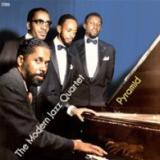
The Modern Jazz Quartet had become a jazz institution by the time Pyramid was recorded. Formed out of the rhythm section of the Dizzy Gillespie Big Band (1946 -48), founding of the members The MJQ , pianist Lohn Lewis and vibraphonist Milt Jackson , brought a sophisticated blend of jazz and classical music to audiences around the world. Active from 1952 through to 1997 (with a seven- year break in between), the MJQ's 38- year reign counts as being among the most enduring ensembles in jazz history. Presented here is their classic album Pyramid , featuring three compositions by the quartet's pianist John Lewis (including his hit 'Django), alongside jazz standards by Ellington, Ray Brown ('Pyramid'), and Jim Hall; plus, a unique take on the Nancy Hamiton & Morgan Lewis' popular standard, 'How High The Moon'.
[d] Vendome [Original 1952 Version]
[h] Django (John Lewis) [original 1954 Version]
expected to be published on 02.10.2026

2026 Repress
A collection that balances soulful vibes with modern an edge. Saison's "Can't Get Through" opens with deep textures and a classic house swing, while Piem, Saison & Kid Enigma's "Don't Stop" injects vocal fire and raw energy into the A-side. Flipping over, Matt Gillespie's "Need You Now" layers warmth and urgency into his take on the classic garage sound. Closing the record, Scott Diaz & Miss Yankey's "Intergalactic (Alternate Rub)" ventures into more garage territory with its atmospheric pull and soulful chords. A versatile package that brings together established names and rising voices in perfect balance.

Released in 1972 as the follow-up to the previous year's classic CTI album with Stanley Turrentine, Now is Astrud Gilberto's tenth studio album and her only recording on Perception, and wow does she make the most of the musicians available to her on this recording. Produced by Astrud herself and with all songs arranged by fellow Brazilian Eumar Deodato, the all-star line-up on Now includes Deodato on acoustic guitar, more Brazilian flavours from Airto Moreira on percussion, label vice-President and production genius Patrick Adams on Bass duties (along with Bob Cranshaw and Ron Carter), Dizzy Gillespie Quintet and Jazzberry Patch band member Mike Longo on keyboards and the mighty Billy Cobham on drums.
This item has not yet been released. You can pre-order the product now.
The Jazzcodes and Michele Chiavarini kick off this fine survey of contemporary deep house with 'Wolf Dust (Saison Rework)' which draws on jazz-inflected motifs and feeds them into a steady groove with layered keys sitting over a controlled kick pattern. 'Friday' from DJ Romain works in a more direct frame driven by looping piano stabs and clipped drums with diva vocals injecting heat. 'In The Moment' has an air of cool jazz to it with deft horns and spoken word that muse on the great genre while Saison's 'This Is A House Record' sure is that: classic drums and knotted little synths bring a warming vibe for grown-up floors.
This item has not yet been released. You can pre-order the product now.

"Cuba Greatest Hits" bringt die Hitze Havannas direkt ins Wohnzimmer und vereint die wichtigsten Klassiker der kubanischen Musik auf einem exklusiven Doppel-Vinyl. Von Son und Mambo bis Bolero und Latin Jazz bietet diese Compilation ein authentisches musikalisches Panorama mit Legenden wie Compay Segundo, Celia Cruz und Beny Moré. Ein atmosphärischer Katalogtitel voller Rhythmus, Lebensfreude und karibischem Flair - ideal für alle, die kubanische Musik lieben.
On Stock and ready to ship

Announcing the debut album from one of London’s most electrifying acts, New Regency Orchestra. An 18-piece Afro-Cuban big band, inspired by the musical melting pot of NYC in the 1950s, but with the punch and power of a whole host of London’s best Latin and jazz musicians. Blowing new life into these compositions, the album is a reimagining of some of the finest music from that golden era. From early 1950s René Hernandez and Tito Puente, through to the 1970s salsa of Rafael Labasta and Orlando Marin, produced and performed with fresh fire.
NRO is the brainchild of its artistic director, and the man behind Total Refreshment Centre and Church of Sound, Lex Blondin. Through a long-held passion for jazz, Lex discovered the explosive Afro-Cuban rhythms of mid-1940s NYC via the godfather of Afro-Cuban jazz, Mario Bauzá. A time when two musical worlds collided in a fusion of creativity and energy, jazz luminaries like Dizzy Gillespie and Charlie Parker joining forces with Cuban greats like Machito and Chano Pozo. This vibrant sound was music to dance to and found a home at The New York Palladium, a formative space of freedom and expression that was key to the scene’s development.
Although dance-focussed in their makeup, those early recordings are not often heard in modern club environments and Lex dreamt of retelling their story with a contemporary dynamism. A slice of serendipity followed, as a slot at a new festival opened up and Lex jumped at the chance to make this idea a reality, an 18-piece big band breathing new life into these beloved songs.
Enlisting the expertise of some of the capital’s finest talent, Lex and co-captain Andy Wood, of Como No fame, put together a world-class line-up of talent. Bringing in Eliane Correa as musical director and bandleader, a fluid and interchanging 18-piece band was formed.
The album itself is a hand-picked selection of timeless Afro-Cuban jazz classics, reimagined with NRO’s unbridled energy. It contains ten incredible instrumental tracks including 'Pregon' with its anthemic horn stabs and the addictive head nod bounce of 'Mambo Rama', alongside two scorching vocal numbers in 'Papa Boco' and 'Labasta Llego'. Coupling a heavyweight rhythm section with a wall of horns, they provide a fresh spin on songs from Tito Puente and Chico O'Farrill, René Hernandez through to Rafael Labasta.
“Some of the tunes like Tito Puente’s ‘Mambo Rama’ and ‘Scarlet Mambo’ might sound like they went to a gym as extra drums and bass synth were added to them whilst the tune ‘Sahib & Tito’ is a mix of Tito’s ‘Mambo Buda’ and Sahib Shihab’s ‘Nus’. Our intention is to be both respectful to the innovators and inventors of this incredible music and to pay our dues, but also to add something special from London where the city’s new jazz scene connects with its Latin American musicians and the musical influences around us.”
This pure collective joy, shared experience and music you can’t help but move to.
On Stock and ready to ship

Jazz music has more than its fair share of overshadowed figures that whilst contributing much to the music have little presence in its collective conscious. One such musician is the talented multi-reedist, Sahib Shihab. Born Edmond Gregory, as he was known before he adopted the Muslim faith in 1946, Sahib Shihab's music background shows a deep and significant evolution, influenced by Thelonious Monk, Dizzie Gillespie (his experience in Dizzie's band marked Sahib's switch to Baritone, the instrument he became most readily associated with), and above all by Charlie Parker's Bop. Had it not been for the post-war migration of many top American jazz musicians to Europe, it is quite likely that the legendary Clarke-Boland Big Band might never come into existence. Sahib, one of this musicians disillusioned with the politics and racism of the United States, accepted to join the band of Quincy Jones for an European tour in 1959. When the tour ended, Shihab he remained in Europe where he joined, in 1961, the Clarke-Boland Big Band. The collection 'Companionship', whose line up consists of seven elements which derives from this original band, spotlights the consummate musicianship and individuality of Sahib Shihab and is testimony to his special musical gifts - not only as a top-rank flautist and baritone saxophone but also as a composer. Furthermore, it provides a welcome reminder of the high quality of the Clarke-Boland Big Band's rhythm section, the lively style of vibraphonist Fats Sadi and the power and personality of two of the C-BBB's horn-playing stalwarts, Benny Bailey and Ake Persson. Here's a real rarity, surely a desert island disc. This double album has it all from frantic banging percussive workouts to modal numbers to beautiful ballads. It's a staggeringly good piece of music and worth every penny of the price tag it commands. Let's have a look to the most significant pieces. Francy Boland's "Om Mani Padme Hum", taken from a Tibetan prayer, shows Shihab in exuberant mood, playing against a vigorous percussion background and making dramatic use of his special technique of combining voice and flute. Boland contributes an incisive, effervescent solo. "Bohemia After Dark", a classic original by bassist Oscar Pettiford which he first recorded back in August 1955, finds Shihab in exultant form on baritone. "Companionship" has a Bossa Nova beat and features Bailey on flugelhorn and Shihab on flute, playing with a limpid, floating sound. Bailey's minor-key original, "Stoned Ghosts" was, he says, inspired by listening to some music written by Bela Bartok before he emigrated to the United States. The piece has an infectious back-beat pulse and showcases the superb walking technique of Jimmy Woode. In "Con Alma" Shihab's mellow flute set against a churning 12/8 beat in this stylish Boland arrangement. Woode's performance of the superb Mei Torme ballad, "Born To Be Blue", reveals his great affection for the song. "lt is the perfect combination," he says, "a beautiful melody married to a great lyric. I really love that tune." It is a song of rueful resignation, putting a brave face on the blues. "Balafon" is an up-tempo Francy Boland original written for the French mime artist, Marcel Marceau. The rhythm section really cooks on this track with Kenny Clarke's cymbal work outstanding. Boland's solo here is notable for its neat, left hand punctuations. "Calypso Blues" has been written by Nat King Cole and Don George. lt tells the wry and wistful tale of a Trinidadian in New York desperately homesick for the land where everything 5 so much cheaper (in New York "a dollar buy, a cup of coffee and a ham on rye") and the girls more natural than the artificial, painted beauties of New York. Woode's composition, "Sconsolato" is a haunting theme in A minor and it brings to a close a truly fascinating album. This is dynamic music played with vigour, verve and vitality - and it is an enormous pleasure to rediscover it. A shadowy fugitive from his home in the land of jazz, Sahib Shihab remains a true unsung figure, worthy of more attention. With his equally expert technique on Baritone, Flute, Alto and Soprano saxophones and his capacity to adapt easily to a variety of musical settings. His warm, individual, singsong sound in improvisation and his unusual and interesting compositions mark him out as a hidden treasure in the dusty corners of jazz archive.
On Stock and ready to ship

Die in London lebende schwedische Künstlerin Josefin Öhrn (Ex-Mitglied der Grammy-nominierten Band Josefin Öhrn & The Liberation) veröffentlicht mit "Cherry" ihr Solodebütalbum, das sie mit den Gastsängern Bobby Gillespie (Primal Scream) & Anton Newcombe (The Brian Jonestown Massacre) sowie Andy Bell (Ride) an der Gitarre aufnahm. "Cherry" ist Josefins bislang persönlichstes und eigenständigstes Album. Es widmet sich Themen wie Neuanfang, Begehren, Liebe und Trauer und reiht sich so in eine neue musikalische Strömung ein – ähnlich Robyn ("Sexistential") und Lykke Li ("The Afterparty") -, in der weibliche Erfahrungen offen und ohne Scham in farbenfroher Aufrichtigkeit geschildert werden. Solche Alben zeugen von einer faszinierenden Phase roher, intensiver und tiefgreifend transformativer Selbstverwirklichung. Obwohl "Cherry" musikalisch an den hypnotischen Psychedelic-Rock ihrer Ex-Band erinnert, sind die Arrangements, Strukturen und der Mix weniger avantgardistisch und orientieren sich eher an der entspannten Atmosphäre von Künstlern wie Kurt Vile, Lana Del Rey oder Natalie Bergman. Klare Melodiebögen und Josefins Stimme – intim, magnetisch und unerschütterlich – stehen im Vordergrund und verleihen dem Album seine eindringlich-emotionale Unmittelbarkeit. Josefin bat persönlich Kalle Jerneholm Gustavsson (Soundtrack Of Our Lives), mit dem sie bereits früher zusammenarbeitete, das Album zu produzieren.
expected to be published on 25.09.2026

Nachdem Elvin Jones 1963 gemeinsam mit dem Bassisten Jimmy Garrison, seinem langjährigen Partner aus dem John Coltrane Quartet, für Impulse! Records das Septett-Album “Illumination!” eingespielt
hatte, legte der Schlagzeuger 1965 mit “Dear John C.” sein erstes Album als eigenständiger Bandleader
bei dem Label vor. Obwohl das Titelstück des Albums natürlich eine Hommage an Coltrane war, legte
Jones großen Wert darauf, eine gewisse Distanz zur modalen Musik zu schaffen, die er seinerzeit mit dem
Quartett des Tenorsaxofonisten spielte. Dies tat er zum einen durch die Zusammenstellung des Repertoires,
das neben Stücken von Charles Mingus, Duke Ellington sowie Charlie Parker und Dizzy Gillespie auch einige
klassische Popsongs umfasste. Zum anderen besetzte er sein Quartett nicht mit einem Tenorsaxofonisten,
sondern mit dem Altsaxofonisten Charlie Mariano, der sich zuvor in der West-Coast-Szene einen Namen
gemacht hatte
expected to be published on 28.08.2026

Obwohl der Bariton Johnny Hartman bereits in den 1940er Jahren mit den Orchestern von Earl Hines
und Dizzy Gillespie sowie mit dem Pianisten Erroll Garner aufgetreten war, erlangte er erst 1963 durch das
brillante gemeinsame Album mit John Coltrane große Bekanntheit. Bob Thiele produzierte für Impulse!
Records anschließend noch zwei Soloalben mit dem Crooner, die seine samtige Stimme und seine subtile
Phrasierung in den Vordergrund stellten. “The Voice That Is!” entstand bei zwei Studiosessions unter
der Regie des Arrangeurs Bob Hammer. Am 22. September 1964 nahm Hartman mit einem Quartett um
den Pianisten Hank Jones jazzige Versionen von Standards auf. Zwei Tage später kehrte er mit einem
interessant besetzten größeren Ensemble ins Studio zurück, um Nummern aus populären Musicals und
Filmen einzusingen, denen mit Perkussion, Marimba, zwei Gitarren und Flöte ein lateinamerikanisches Flair
eingehaucht wurde.
expected to be published on 28.08.2026

320 page, beautifully written, designed and printed, hardback book
ISBN: 978-1-0687642-2-6
“Keep the books coming, keep the music coming, keep the art coming. When you think you know everything, you can miss out on a lot. When you realise you don’t know everything the floodgates come down a bit and you start following literary links and musical links that you might not have made before. It’s a whole new parallel universe.” Andrew Weatherall, 2015 Today Disco Pogo is delighted to announce A Disco Pogo Tribute To Andrew Weatherall, a 320-page hardback that gathers everything we love about the man and his music. It is the fourth in our hardback Tribute series – following Daft Punk, Aphex Twin and LCD Soundsystem – and the long-overdue successor to the sold-out and hard to find Jockey Slut Tribute To Andrew Weatherall from 2020. Inside you’ll find the best of that original Jockey Slut book, plus more than 200 pages of brand new material – fresh essays, oral histories, interviews and photography from the writers, photographers, musicians, producers, DJs, designers and friends who knew Andrew best.
The book is being published with the full blessing, approval and cooperation of the Weatherall estate, who will also receive a share of the profits from the book. From the fanzine kid at Boy’s Own to the producer who rewired Primal Scream and made ‘Screamadelica’ sound like the future; through The Sabres Of Paradise, Two Lone Swordsmen, The Asphodells and the much-loved A Love From Outer Space night and Convenanza festival, Weatherall left behind a body of work, a sensibility and a way of carrying yourself that is still being unpacked six years on. This is the book that tries to do all of it justice.
Highlights include: an interview with Bobby Gillespie that goes beyond ‘Screamadelica’, essays on ‘Sabresonic’, ‘Haunted Dancehall’, the Two Lone Swordsmen and his solo releases, plus a look into his many remixes. In addition: oral histories on his early years, A Love From Outer Space and Convenanza, an interview with Timothy J. Fairplay on The Asphodells and a celebration of his art work and his NTS radio shows. And then there’s the Disco Pogo Tribute regulars: a timeline, family tree, a studio gear deep dive, discography and more… Featuring interviews with Sean Johnston, David Holmes, Jagz Kooner, Leftfield, Shaun Ryder, Chemical Brothers, Terry Farley, Dot Allison, Beth Orton, Irvine Welsh, Daniel Avery, HAAi, Tia Cousins, Steve Mason, Richard Fearless and many more.
Order now and we will order the item for you at our supplier.

Ever since the late 1950s bossa-nova revolution, Brazil’s influence on French music has been undeniable. Pierre Barouh, Georges Moustaki and a vast array of lesser known artists, all made the Musica Popular Brasileira (MPB) an axis of promotion at the service of a cool and metaphysical, modern and mixed Brazilian lifestyle. Some were seduced by the poetic languors of the bossa, some were looking for fun, and others just loved the American hybridization of jazz-bossa, jazz-samba.
What is bossa nova? One of its creators, Joao Gilberto said: "Its style, cadence, everything is samba. At the very start, we didn't call it bossa nova, we sang a little samba made up of a single note - Samba de uma nota so .... The discussion around the origins of bossa nova is therefore useless”. It is nevertheless useful to remember that these magnificent Brazilian songs, which the guitarist describes as samba, were shifted and balanced around improbable chords. "I like things that lean, the in-betweens that limp with grace," said Pierre Barrouh, quoting Jean Cocteau.
With emotion, arrangements for violin and supple guitar licks, bossa nova rapidly changed. A transformation that can be heard in the Tchic, tchic, French Bossa Nova 1963-1974 compilation, the result of a cultural reappropriation, which traveled through the United States and supplemented itself in France.
A musical revolution that has remained significant, bossa nova was born in Rio. From 1956 to 1961, Brazil lived through its golden years. In five years, the country had invented its modernist style. Elected president in 1956, Juscelino Kubitschek de Oliveira, an elegant man with a broad forehead, brandished a promising slogan: "Fifty years of progress in five years". He quickly got to work. Not worried about increasing debt, he launched the project for a new federal capital, Brasilia, designed by the communist architect Oscar Niemeyer. Volkswagen opened state-of-the-art factories and created the “fusquinha”, the Beetle. In Rio, the Vespa made its first appearance. The Arpoador Surf Club crew run into the “girl” from Ipanema, Helô Pinheiro - the tanned garota ("chick"), between a flower and mermaid, who at 17 walked by the Veloso bar, where the fiery author and composer, Tom Jobim and Vinicius de Moraes, were getting drunk on whiskey. From then on, bossa symbolized cool.
In 1958, Joao Gilberto recorded Chega de Saudade, which the directors of Philips denied, calling it "music for fagots". The marketing director, who believed in it, secretly pressed 3000 78-inch vinyls and distributed them at schools around Rio, creating a tidal wave.
American jazzmen then took over. In particular, trumpeter Dizzy Gillespie and guitarist Charlie Byrd. In November 1962, the Brazilian Ministry of Foreign Affairs funded a "Bossa-Nova" concert at Carnegie Hall in New York, inviting the genre’s pioneers. Unprepared, the show soon turned to disaster. But the troupe was invited to the White House by Jackie Kennedy. The first lady loved "the new beat" and in particular Maria Ninguem, a song by Carlos Lyra, later covered by Brigitte Bardot.
In Brazil, the 1964 military coup quickly ended this euphoria. The destructive atmosphere that ensued pushed many Brazilian musicians to leave, if not to exile. Thus, Tom Jobim, Sergio Mendes and Joao Gilberto arrived to the United States. In New York, Joao Gilberto met saxophonist Stan Getz. At the time, he was married to the Bahianese Astrud Weinert Gilberto, who had a German father. She had never sung before, but she knew how to speak English. Getz therefore asked her to replace her husband on The Girl From Ipanema. The Getz/Gilberto record with Tom Jobim on piano, was released in March 1964. Phil Ramone, the "pope of pop" was in charge of sound.
Bossa nova arrived in Paris through the classic “guitar-voice” channel (Pierre Barouh, Baden Powell, Moustaki…) But France loved jazz and Paris had already welcomed its American contributors. All these good people were to pass through Saint-Germain-des-Prés. The cabaret l'Escale became the Mecca of Latin American sound where one could find Pierre Barrouh and his friends, such as the Camara Trio, samba-jazz aces, whose only record was published by the Saravah label. With a band strangely called Les Masques (a band that included Nicole Croisille and Pierre Vassiliu, among others), the Camara Trio recorded an interesting Brazilian Sound, including the track Il faut tenir which is present on this tasty compilation of rarities.
Other enlightened musicians can also be found on the compilation, such as Jean-Pierre Sabar (songwriter for Hardy, Auffray, Leforestier ...) and the French pop rock organist Balthazar. In 1975, Sabar recorded Aurinkoinen Musiikkimatka on a Finnish label, which featured the crazy Vai, Vai, included on this record. We are now following the footsteps of Brazilian electronic musicians such as Sergio Mendes, Eumir Deodato or Marcos Valle who created funk and disco sounds on their keyboards and synthesizers. A style that influenced Véronique Sanson when she wrote Jusqu’à la Tombée de la nuit in 1969 for Isabelle de Funès, the niece of Louis and a great friend of Michel Berger - Sanson did end up singing this track on her 1992 Sans Regret record.
The pinnacle of exoticism and travel, Sylvia Fels’ Corto Maltese includes bongos, sea mist and ocean sounds. The title was taken from Jacky Chalard’s concept album written in 1974, Je suis vivant, mais j’ai peur (I am alive, but I am scared), based on Gilbert Deflez’s science fiction novel.
However, bossa nova extended the scope of popularity. "In the 1970s, I was a fan of Sergio Mendes, Getz / Gilberto. I fell in love with this music that I knew because I had been an orchestral singer, " explained Isabelle Aubret, who in 1971 delivered a composite record of covers by the very funky Jorge Ben, Orfeu Negro, Tom Jobim, Vinicius de Morais and Jean Ferrat. "I recorded this album for Meys Records in Paris, far from Brazil, with wonderful musicians, François Raubert, Roland Vincent, Alain Goraguer...". The latter wrote the arrangements for Casa Forte, a very percussive title borrowed from Edu Lobo, one of the initiators of the bossa who spent time in California. "Jazz and bossa came together and produced very rhythmic music. I love singing, it allows me to dream, to have fun, to feel a high on stage, and these songs brought me joy, made me swing, my singing felt like a dance.”
The world tours of French singers and their desire for the tropics, often brought them to Rio with its hills, forests, caipirinhas and tanned bodies. There are surprises though, like this Iemenja (Iemenja is the goddess of the sea in the Afro-Brazilian candomblé religion). Not unlike the composer and musician Jean-Pierre Lang, based in Sao Paulo, Claire Chevalier taught Brazil to Brazil. In 1970, the singer and painter published a 45-inch vinyl, Mon mari et mes amants (My husband and my lovers), under the improbable pseudonym of Clarinha (little Claire). She was then living in Rio, with her husband, Joël Leibovitz, who founded a band called Azimuth, and who owned a record label specialized in "sambas enredos" songs for samba school parades.
For its B side, she asked Pierre Perret to come up with lyrics for a song composed by Carlos Imperial: "Oh goddess of the sea, o goddess Iemenja, I bring a white rose to adorn your long hair ..." . "Perret came to see us, and we had fun, remembers Joël Leibovitz. We wrote Lemenja for fun, we recorded it at the Havaí studio, behind the Central do Brasil the central station. Erlon Chaves, the arranger who worked with Elis Regina, joined us" adding his share of Afro-Brazilian percussions and funky brass to the mix.
There is a common misunderstanding in Franco-Brazilian history: that bossa, admittedly hedonistic, is perceived as funny, even though the poets who wrote the texts are often philosophizing on the human condition. Its French interpreters pull it towards a carnival inspired universe, far removed from its fundamental essence. Thus, Jean Constantin covered the famous Samba da minha terra, an ode to the art of samba written by the classic Bahian composer Dorival Caymmi, renaming it with the enticing title of Pas tant de tchi tchi pompon: "On your pier there is no tchi tchi / when you arch your back, you know everything is alright ”(lyrics by Gérard Calvi). This expedited bossa aims for the absurd, but retains a certain elegance.
Indeed, Jean Constantin was not an idiot, the rather large man had a huge mustache and liked fantasy, (Les pantoufles à papa, Le pacha, inspired by cha-cha-cha-cha, salsa and jazz) but he was also the lyricist of Mon manège à moi interpreted by Edith Piaf, the composer of Mon Truc en plume by Zizi Jeanmaire and the soundtrack of François Truffaut’s 400 Blows. Le Poulpe, published in 1970, from which this bossa is extract, was arranged by Jean-Claude Vannier, an accomplice of Serge Gainsbourg’s Melody Nelson. In short: "There is enough of samba / By looking at the parasol / Because my poor cabeza / Is going to die in the sun".
Even the American actress Marpessa Down, who was at the heart of the bossa nova revolution with her role as Euridyce in Marcel Camus’ film Orfeu Negro, winner of the 1959 Cannes Palme d'or, fed the clichée with Je voudrais parler au petit cuica - "Tell me how you manage to always make people want to dance / It's true, I must admit that I cannot resist your magic" - in consequence, once can hear the cuica, a little drum inherited from the Bantu.
But bossa nova had many angles. Societal, of course, pushing actresses who were symbols of women's liberation like Brigitte Bardot, Jeanne Moreau, or Sophia Loren to engage in the exercise of accelerated bossa. In February of 1963, Sophia Loren made a record in French in Rome, Je ne t'aime plus, featuring the song De jour en jour, a bossa written by two Italians, Armando Trovajoli and Tino Fornai, which was released a little later by Barclay. Bossa accompanied the 1960s, a decade of moral liberation. Ann Sorel, who interpreted La Poupée des favellas, caused a sensation with L’amour à plusieurs, a provocative song written by Frédéric Bottom and Jean-Claude Vannier. As for the actress Andrea Parisy, she displayed her bourgeois cheekiness in Marcel Carné's Les Tricheurs before interpreting Les mains qui font du bien. And Magalie Noël, the friend of Boris Vian, who sung Johnny fais-moi mal, was hired to sing Une énorme Samba, composed by Alain Goraguer (arranger to Gainsbourg, Bobby Lapointe and Jean Ferrat) with lyrics by Frédéric Botton.
But in the end, of what wood is bossa nova made of? The answer is given by Christianne Legrand, daughter of Raymond the conductor, and sister to Michel the composer: "With me, with jà" - jà means "immediately" in Portuguese. In 1972, the singer, an expert in vocal jazz and a member of the Double Six, published Le Brésil de Christianne Legrand. Two songs included on the Tchic Tchic compilation that demonstrate how bossa, jazz, funk, rock, etc. work like a swiss army knife: the music is used to denounce broken systems, or miracles, HLM et ciné roman, Cent mille poissons dans ton filet, two songs from the O Cafona soundtrack, a successful telenovela broadcast, at the time in black and white, on TV Globo. The first was adapted in French by the fighter and friend of the Legrand tribe, Agnès Varda. The second is content with a play on words, jostling them into a summer fun.
Véronique Mortaigne
Order now and we will order the item for you at our supplier.

The Mantecas represent one of the finest concentrations of experience and talent in Latin and Jazz music ever to be based in the UK. A pure uplifting Latin Jazz music celebration, limited edition 250 copies: not-to-be-missed, recorded at different locations in London during 2025/26 "On their fabulous fourth album, The Mantecas (formerly Manteca) have moved the needle all the way in the direction of Latin jazz (or jazz latino). In their early years, the London-based eight-piece played a mix of salsa, Cuban timba, boogaloo, Latin funk and descarga (jazzy, improvised Latin jam session), with plenty of vocals, strictly geared for the dance floor. Along the way, the jazz-descarga aspect emerged as a stronger force, though all sorts of other ingredients, from afrobeat to Afro-Cuban, cumbia to samba, ebbed and flowed throughout. Although there's nothing new with the concept of doing an album of instrumental Latin tracks in a jazz mode that's still dance-friendly (Machito, Sabú Martínez, Tito Puente and Tito Rodríguez all waxed jazz latino albums like that long ago), what's new here is The Mantecas' very fresh and confident interpretation of the idiom. And while they share something in common with the accessible, danceable Latinized soul jazz of someone like Mongo Santamaría or Willie Bobo, as well as the Afro-Cubop roots of Chano Pozo, they also bring to mind the more jazz-oriented improvisational legacy of Pozo's amigo Dizzy Gillespie, which is reflected in The Mantecas' explorations of a handful of 20th Century modern jazz giants as they rework timeless classics by John Coltrane, Miles Davis, Oliver Nelson and Wayne Shorter. For this release, all seven tracks are essentially Latin renditions of jazz standards or are Latin jazz originals. There's a mix of jazz and Latin rhythmic structures, instrumentation, arranging, and sensibilities at play, and it's a very natural sounding mélange. Like their previous albums, some of the tunes feature a club-ready blend of hot and cool, in a Latinized British acid jazz / soul jazz way." - Pablo "DJ Bongohead" Yglesias, 2026
expected to be published on 03.07.2026
Born in Philadelphia in 1943, Barron's journey through the jazz world reads like a tour of its greatest innovators: early work with James Moody, Roy Haynes, and a formative tenure in Dizzy Gillespie's quintet set the stage for a career defined by sophistication, depth, and unmistakable melodic clarity.
Through the 1960s and '70s, Barron became a sought-after collaborator, performing with Freddie Hubbard, Jimmy Owens, Yusef Lateef, Milt Jackson, Jimmy Heath, and Stan Getz. His role in the celebrated ensemble Sphere, alongside Buster Williams, Ben Riley, and Charlie Rouse, further cemented his reputation as a musician equally rooted in bebop tradition and forward-looking modernism.
expected to be published on 03.07.2026
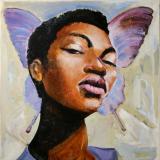
‘Black Butterfly’ is Brooklyn Funk Essentials eighth studio album and includes the bands recent hits ‘Never Give Up’, ‘Bust The Bus Stop’ and ‘Life During Wartime’. Playlisted on BBC Radio 2 and Jazz FM and supported by Craig Charles and Cerys Matthews at 6 Music as well as many stations across Europe and the Americas. The album was produced and co-written by bassist Lati Kronlund and features Alison Limerick, Ebba Åsman and Desmond Foster on vocals.
Kronlund and Limerick have been enjoying the recent renewed interest in ‘Where Love Lives’. Kronlund wrote and produced it for Limerick in 1990, it was remixed by Frankie Knuckles and David Morales and became a club classic and was featured in this year’s John Lewis Christmas TV Ad. Arthur Baker heard the original in a club in 1991 that he contacted Kronlund about working together and they then formed Brooklyn Funk Essentials.
Since then, Brooklyn Funk Essentials have built a devoted international following and notched up over 100 million streams. Fusing Soul, Hip Hop, Spoken Word, Jazz, Latin, and, of course,
Funk, the band’s journey began experimenting with drum machines and loops in Baker’s Shakedown Sound Studio in Jersey City—hunting for that perfect beat. The early recordings featured greats such as Maceo Parker, Lenny Pickett, Tower of Power Horns, Michigan & Smiley, and Dizzy Gillespie, leading to the acclaimed debut ‘Cool & Steady & Easy’ (1994). Fast-forward to April 2024, when Kronlund reunited with Baker in Miami, rediscovering recordings featuring percussion prodigy Bashiri Johnson, which inspired new creative sparks for the next chapter of Brooklyn Funk Essentials.
Order now and we will order the item for you at our supplier.

As the man who basically brought the conga into the modern age with his innovative multipercussion set-ups and tunable congas, and as a former member of Dizzy Gillespie and Stan Kenton’s bands, Cándido Camero Guerra a.k.a. Candido already had a long and storied career when he cut Dancin’ and Prancin’ for the Salsoul label in 1979 at the age of 58. So, you might have been excused at the time for assuming this was just another case of an old-timer trying to cash in on the disco craze, right? But you would have been very, very wrong…the record was pure brilliance, as the infusion of Candido’s Latin conga beats into the disco-fied 4 x 4 syncopated rhythm proved irresistible, revolutionizing the sound of underground disco while pointing the way to the house music to come. Indeed, both “Jingo” (an unstoppable version of the Olatunji classic) and “Thousand Finger Man” are still DJ favorites. Speaking of DJs, we’re putting this one out on black vinyl, perfect for queueing up and spinning. for A must for any dance music library!
Order now and we will order the item for you at our supplier.
