Search:göo

Styles
All
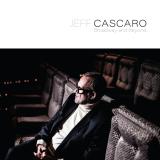
Jeff Cascaro - Broadway and Beyond LP
  • 1: Take The A Train
  • 2: Summertime
  • 3: Harlem 4. New York New York
  • 5: Brooklyn Blues
  • 6: Sweet Georgia Brown
  • 7: On Broadway
  • 8: I Got Rhythm
  • 9: Everytime We Say Goodbye

Jeff Cascaro's previous albums have already highlighted the jazzy side of his sound. With his latest record, ‘Broadway and Beyond,’ the artist has now gone one step further. Wonderful, airy grooves allow the singer to shine with the finest vocal nuances. Everything is relaxed and tastefully arranged, the songs have swing and are soulful. Once again, it is his incredibly versatile voice that evokes the atmosphere of the old New York nightclubs. Jeff Cascaro takes us to Broadway and shows us what else there is to marvel at beyond it.

pre-order now24.04.2026

expected to be published on 24.04.2026

22,65
Steve Kuhn - Steve Kuhn LP
  • A1: Pearlie's Swine
  • A2: Silver
  • A3: Time To Go
  • A4: The Heat Of The Moment
  • B1: The Baby
  • B2: Hold Out Your Hand
  • B3: The Meaning Of Love
  • B4: Ulla

180g Vinyl

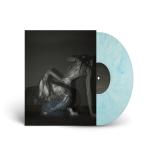
The album features the group playing Gary McFarland arrangements of Kuhn's compositions, accompanied by a string section on several tracks, with Kuhn delivering stream of consciousness lyrics in an unplanned and largely improvised fashion in the studio. However, that wasn't the only surprising aspect to the session. Airto Moreira's appearance was more by chance than design, he having just popped by the studio, again, unplanned. The 'Steve Kuhn' album is all the stronger for these extemporaneous and serendipitous elements and showcases a band at the top of their game; tight and funky yet relaxed and flowing like molten gold, with stabs and washes of keyboard from Kuhn. Splashes of free playing enter the session, but the band never stray too far from a melodic and harmonious centre of gravity. Kuhn's deft keyboard skills provide melodic embroidery to the impressive rhythmic textures and tonal colours of Carter, Cobham and Moreira. As if the music wasn't enough, the album is given extra significance by the fact that, within a few months of the recording, McFarland would die after being mysteriously poisoned by methadone in a New York bar. In a sense, it is a valedictory album from McFarland, channeled by Kuhn and the band. It's among the hardest of Kuhn's albums to find so this reissue is most welcome. Luxuriate in the glow of Kuhn's Fender Rhodes and the pliant funky bass of Ron Carter; immerse yourself in the percussive interplay of Moreira and Cobham, a pairing that has rarely sounded so good. This is such an exquisite album; you will lose yourself in its delicate power and find yourself coming back to it again and again. "It's a beautiful picture, and it helped me to comprehend things, life a bit, you know. And as I'm thinking about it, I hope it does that for whoever listens to it too." - Thundercat, Musician Details: Heavyweight Vinyl 45 RPM Cut / Original glued prints on Thick Cardboard 700 gram / 2 Separated parts hand-glued / Glossy lamination / PVC outer / 30x60 cm insert printed on 300 gram DNS paper with interview to Steve Kuhn by Tony Higgins.

pre-order now24.04.2026

expected to be published on 24.04.2026

48,11
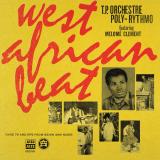
T.P. Orchestre Poly-Rythmo - West African Beat: Rare 7s and EPs from Benin and Niger LP 2x12"

For the last few years Acid Jazz has been the proud custodian of the Albarika Store legacy. Hailing from the small but culturally-significant state of Benin, the label was operational from the late-‘60s until the early ‘80s, and was home to some of the finest, deepest, rawest West African cuts ever. A font of local and regional music, infused with contemporary Western influences, the beating heart of the Albarika sound was the mighty T.P. Orchestre Poly-Rythmo, who in various guises released dozens of recordings for the label, under the leadership of Mêlomé Clément. The intoxicating originality of their sound stems from their combination of folkloric and sacred rhythms of the region, with the modernist sound of soukous, afrobeat, soul and funk. Recorded at EMI Studios in Lagos, these recordings have a unique high fidelity and have been a target for grail-hunting record collectors for decades. For this incredible 2LP collection, Dean Rudland and David Hill compile the Poly-Rythmo 45 releases; 7” single and EP sides lost to the seeds of time. Until now. Brought together for the first time, presented in a beautiful wide spine layout, the 2 LPs present a snapshot of some of the group’s finest work from the ‘70s, their distinctive beat already honed. The printed inner sleeves include images of the rare and collectable original labels and sleeves, along with sleeve notes by Francis Gooding

pre-order now24.04.2026

expected to be published on 24.04.2026

27,94
Jason Aldean - Songs About Us 2X12

Jason Aldean

Songs About Us 2X12

2x12inch964217561
BMG
24.04.2026
  • 1: Anytime Soon
  • 2: Drinking About You
  • 3: Don't Tell On Me
  • 4: How Far Does A Goodbye Go
  • 5: Songs About Us
  • 6: Good Thing Going
  • 7: She's Why
  • 8: Backroads Of My Memory
  • 9: Dust On The Bottle
  • 10: The High Road
  • 1: Easier Gone
  • 2: Help You Remember
  • 3: Country Into Rock 'N' Roll
  • 4: What's A Little Heartache
  • 5: One Last Look
  • 6: Fight A Fire
  • 7: Hard To Love You
  • 8: Little Hometown Left
  • 9: Her Favorite Color
  • 10: Lovin' Me Too Long
pre-order now24.04.2026

expected to be published on 24.04.2026

36,09
Stevie Cox and Ansboy - Twice Like Rice LP

Stevie Cox and Ansboy: two powerhouses of the Glaswegian club scene join forces for their collaborative debut EP on Rhythm Section INTL- ‘Twice Like Rice’. It’s a weighty four-track EP designed for the dancefloor, taking in myriad influences from dub techno, breaks, trance and good old fashioned house music. The Ep is full of deep, pulsating rhythms, lush textures and emotive peaks - all road tested in Stevie’s Iconic home turf: Sub Club.

Stevie Cox has long been a name long ruminating on everyone's lips, as a resident DJ of the iconic ‘Sub Club’ with an ever-growing tour schedule and back catalogue of releases via the likes of Klasse Wrecks and Optimo. Whilst the name Ansboy may be new to some, it is a fresh alias for the grammy nominated producer and mixdown engineer Robert Etherson who has long been a staple in the Scottish scene with an international touring repertoire under his belt.

The two friends met in their hometown of Glasgow and began their musical journey together last year after Robert taught Stevie how to do mixdowns. The pair clicked effortlessly, quickly discovering they shared the same passion for emotive, deep and progressive dance music. Their first track together - which took shape in the form of ‘Drift’ - a high-energy synth led anthem, came out with a special selection of tracks curated by Bradley Zero for his exclusive SHOUTS Summer sampler in 2025.

For the Twice Like Rice EP, their work evokes all corners of the dancefloor, kicking things off with ‘GC’ - a peak time breaks-infused trancey-heater - a master class in building dancefloor tension which gives way into a searing crescendo. Things spin towards a darker percussive focus on the more intense ‘Twice Like Rice’.

On the b-side things return to blissful euphoria with ‘Virgil’ - a warm up dub-techno ballad, before the emotional release of ‘Subculture closure’ inspired ‘Carter21’.

stock from19.05.2026

15,08

Last In: 11 days ago
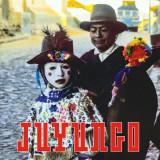
Juyungo - Afro-Indigenous Music From The North-Western Andes LP 2x12"
 
22

‘Since the 16th century, the Ecuadorian province of Esmeraldas has been home to a unique Afro-Indigenous culture originating in the integration of the Indigenous Chachi and Nigua peoples with African Maroon communities. Juyungo documents significant Esmeraldan artists and bands playing the Afro-Ecuadorian folklore of the province, as well as including some older field recordings. Based mostly on the marimba, whose origins lie partly in the African balafon, partly in Indigenous percussion instruments, the music is laced with call and response chants, ambient insect and bird noise, the filigree finger-styles of the Andean guitar tradition and the panpipes of the mountains. This is resonant insider roots music at its headiest — the mystic revelation of Esmeraldas, gully deep and lustral.’
- Francis Gooding, The Wire.


The fifth in our series of LPs compiling classic music from Ecuador. Customary Honest Jons runnings: a beautiful gatefold sleeve; superior pressing, with vivid, intimate sound; full-size, sixteen-page booklet, in colour throughout, with detailed, fascinating, bi-lingual notes, and stunning photographs.

The music is transfixing, magical; not like anything else. From start to finish, this album is continuously, profoundly immersive; a kind of journeying, trippy meditation about slavery and cultural resistance, identity and mix, places and spaces, futures and pasts. It’s inscrutable to net-surfing, algorithms, Shuffle. But for a taste try the insurgent marimba roller Agua Largo, jet-propelled by Rosa Huila’s rapturous blend of African spiritualist and Christian chant. ‘Healing music,’ Zakia called it on Gilles Peterson’s BBC show recently. And the ravishing pasillo Kasilla Shungulla — ‘calm your heart’ in the Quichua language — a duet between the Peruvian master-guitarist Raúl García Zárate and viola da gamba by Juan Luis Restrepo from Medellin, recorded in a baroque church in Buzbanza, Colombia.

out of Stock

Order now and we will order the item for you at our supplier.

27,31

Last In: 21 days ago
The Shapeshifters / Friendly Ghosts / Shaka Loves You - PAP Wax 02

2026 Repress

The good time groove lovers at Pleased As Punch are back with another outing on vinyl that once again brings some irresistible energy across a cool house and disco spectrum. The Shapeshifters excel with one of their soulful, uplifting specials on 'Do What You Wanna Do' before Friendly Ghosts keep the flames burning but in a more low-key, intimate style on 'Fan The Flame.' Shaka Loves You shuts down with a churchy and gospel tinged vocal that's backed by florid Hammond organs and a traintrack groove finished with hefty bass on 'Hear Me Today'.

out of Stock

Order now and we will order the item for you at our supplier.

14,08

Last In: 21 days ago
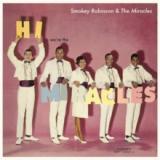
Smokey Robinson & The Miracles - Hi, We're the Miracles LP
  • 1: Who's Lovin' You
  • 2: Depend On Me
  • 3: Heart Like Mine
  • 4: Shop Around
  • 5: Won't You Take Me Back
  • 6: Cause I Love You
  • 7: I've Been Good To You
  • 8: What's So Good About Goodbye
  • 9: Your Love
  • 10: After All
  • 11: Way Over There
  • 12: Money
  • 13: Don't Leave Me
  • 14: Bad Girl
  • 15: Don't Say Bye-Bye
  • 16: Mighty Good Lovin
pre-order now22.04.2026

expected to be published on 22.04.2026

14,24
Soul Jazz Records - STUDIO ONE SOUND (2x12")
  • 1: Slim Smith – Hip Hug
  • 2: Ras Michael And The Sons Of Negus – Good People
  • 3: Lord Tanamo – Keep On Moving
  • 4: Wailing Soul – Trouble Maker
  • 5: Rita Marley – Come To Me
  • 6: Johnny Osbourne – All I Have Is Love
  • 7: The Martinis – I Second That Emotion
  • 8: Irving Brown – Run Come
  • 9: The Heptones – Give Give Love
  • 10: Rockie Ellis – Double Minded Man
  • 11: Jackie Opel – The Lord Is With Me
  • 12: Dub Specialist – Happy Feelings
  • 13: Prince Lincoln – Live Up To Your Name
  • 14: Ken Boothe – I Am A Fool
  • 15: Rheuben Alexander – Happy Valley
  • 16: Larry Marshall – There’s A Fire
  • 17: Roland Alphonso – Rolando Special
  • 18: Freddie Mcgregor – Homeward Bound

Studio One Sound is the classic Studio One collection from Soul Jazz Records. Described as ‘The University of Reggae’ by Chris Blackwell, Studio One, and founder Clement ‘Sir Coxsone’ Dodd are by far the most-important names in the history of reggae music. Originally released in 2012 this album has been out of print for many years, making it one of the most-collectible of Soul Jazz Records’ Studio One Series. This is the first ever colour vinyl edition of this classic album.

The album features some of the most in-demand and collectible Studio One tracks from over its fifty-year history and includes incredible legendary reggae artists such as The Heptones, Ken Boothe, The Skatalites, Johnny Osbourne and Wailing Souls. All these artists (and hundreds more) launched their careers at Studio One under the guidance of Clement 'Sir Coxsone' Dodd. The Studio One Sound collection features everything from classic ska and rocksteady to the deepest roots, heaviest dub and dancehall roots. Sleevenotes are by Rob Chapman, author of the celebrated books about Studio One Records, 'Never Grow Old' and 'Downbeat the Ruler'. The exact reproduction of the original artwork features the classic image of Dennis Brown on the cover. This album is newly fully remastered for vinyl by Jason Goz at Transition. Exclusive one-off pressing on heavyweight double transparent green vinyl.

pre-order now18.04.2026

expected to be published on 18.04.2026

30,67
PENNY ARCADE - DOUBLE EXPOSURE

PENNY ARCADE

DOUBLE EXPOSURE

12inchTR6071
Tapete
17.04.2026
  • Regrets
  • Memory Lane
  • Worst Trip
  • You've Got The Key
  • Everything's Easy
  • Early Morning
  • Rear View Mirror
  • Time
  • Instrumental No.1
  • We Used To Be Good Friends
  • Mercy
  • Riverside Drive

Double Exposure ist das neue Album des britischen Multiinstrumentalisten James Hoare, bekannt aus Bands wie Veronica Falls, Ultimate Painting und Proper Ornaments. Unter seinem Solo-Pseudonym Penny Arcade präsentiert er ein Werk, das noch roher, spontaner und experimenteller klingt als sein Debüt Backwater Collage (2024). Die Songs entstanden größtenteils schnell und intuitiv - aufgenommen auf einer 16-Spur-Bandmaschine, mit alten Drumcomputern, schwebenden Orgeln und reduzierten Arrangements. Gitarre ist erstmals nicht das zentrale Element, auch wenn Stücke wie "Regrets" zeigen, wie eindringlich Hoares Gitarrenarbeit bleibt. Das Album bewegt sich zwischen psychedelischen Folk-Momenten, Lo-Fi-Experimenten, souligen Anklängen und analogen Klanglandschaften, die an die Offenheit von Syd Barrett oder die Tape-Ästhetik von White Fence erinnern. Songs wie "Worst Trip", "Rear View Mirror" oder das träumerisch-verrauchíte "We Used To Be Good Friends" wirken wie spontane Momentaufnahmen - unfertig im besten Sinne, atmosphärisch dicht und voller subtiler Melodien. Double Exposure ist ein Album der Stimmungen und Schichten: ein intuitiver, unprätentiöser Blick in Hoares kreative Innenwelt, geprägt von Umbrüchen, Ortswechseln und der Schönheit des Ungefilterten.

pre-order now17.04.2026

expected to be published on 17.04.2026

23,49
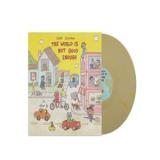
SEAN SOLOMON - THE WORLD IS NOT GOOD ENOUGH
  • 1: Car Crash
  • 1: 2Finish Line
  • 1: 3Shooting Star
  • 1: 4Overdose
  • 1: 5Remember
  • 1: 6Postcard
  • 1: 7Black Hole
  • 1: 8Korpo

Sean Solomon had great expectations. But when his hopes for an abundant world crashed up against an unforgiving reality, he decided to feel nothing. For a time, the Los Angeles-born-and-raised singer/songwriter and cartoonist/animator gave into the void - an understandable impulse when the landscape is cluttered with social injustice and division, global atrocities, and devastating headlines. But artistic expression can be a release valve - a way to comprehend the world and build community, which is exactly what Sean does on his debut solo album, The World Is Not Good Enough, arriving April 17th, 2026 via his new label home of ANTI- Records.

pre-order now17.04.2026

expected to be published on 17.04.2026

23,49
DANS DANS - LIVE! LP

DANS DANS

LIVE! LP

12inchUNDAY177LP
UNDAY RECORDS
17.04.2026

In the Summer of 2023, Dans Dans were nearing the end of a two-and-a-half-year-long period of intense creativity, during which they had released two celebrated albums, Zink and 6, and had toured extensively in Belgium and abroad. Feeling it was time for a well-deserved break in activity, they decided to play three final, intimate concerts before going into hiding: two consecutive nights at Trix in Antwerp (hometown of drummer Steven Cassiers and guitarist Bert Dockx) and one at Botanique in Brussels (hometown of bassist Frederic Jacques). 'LIVE!', Dans Dans' first ever full length live record, features highlights from these memorable nights, offering excitingversions of several of the group's most beloved compositions from across their back catalogue. While the band is, at the time of writing, getting ready to start working on new material, these recordings from 2023 are a good reminder of the magic Dans Dans are able to conjur when they get together and play. Here is one of the most original instrumental trios of the last two decades in their natural habitat, on stage, performing for a live audience, speaking through their intensely personal music. Here is Dans Dans at full flight, effortlessly blending different musical genres and painting fascinating sonic landscapes full of energy, mystery and contrast.

pre-order now17.04.2026

expected to be published on 17.04.2026

23,95
KARATE - POCKETS

KARATE

POCKETS

12inchNUMLP908
Numero Group
17.04.2026
  • With Age
  • Water
  • Ththe State I'm In" Aka "Goode Buy From Cobbs Creek Park
  • Cacophony
  • Alingual
  • Tow Truck
  • Pines
  • Concrete

Karates trotziges und letztes Studioalbum rundet eine 12-jährige Diskografie ab, die von harDCore-artiger Katharsis bis hin zu feedbackgesättigten Improvisationen reicht. Dieser Klassiker aus dem Jahr 2004 verzichtete auf die Friendster-Migration zugunsten eines zurück zum Wesentlichen gerichteten Songwritings, das von Jazzphrasierungen und beatinspirierter Lyrik durchdrungen ist. Mit Chris Brokaw, dem Gitarristen von Codeine/Come, wurde ,Pockets" von den originalen Analogbändern neu gemastert und kommt in einer Deluxe-Hülle mit reproduzierten Songtexten.

pre-order now17.04.2026

expected to be published on 17.04.2026

22,27
ROBERT PETTERSSON - DEABOLO HYPOMANIA
  • All These Years
  • Just To Make You Laugh
  • Bipolar Crack
  • About Nothing
  • Echoes
  • You
  • Something Good
  • Black Swans
  • In Your Grace
  • Pillar Of Davidson
  • Afterlife
  • Black Swans

Robert Pettersson, die kraftvolle Stimme hinter zwei der größten schwedischen Rockbands, Takida und Stiftelsen, tritt nun mit seinem ersten Soloalbum ins Rampenlicht. Bekannt für seine rohe Emotion und seinen unverwechselbaren Sound, hat Robert mehr als zwei Jahrzehnte damit verbracht, Charts anzuführen, Arenen auszuverkaufen und den modernen schwedischen Rock zu prägen. Sein Solodebüt zeigt eine persönlichere Seite und verbindet tiefgehende Texte mit elektronischen Klangwelten. Produziert wurde das Album von Roberts langjährigem Songwriting-Partner Chris Rehn. So habt ihr Robert Pettersson noch nie gehört - intim, mutig und unverkennbar authentisch.

pre-order now17.04.2026

expected to be published on 17.04.2026

25,17
Sofia Isella - Something Is A Shell LP
  • 1: Numbers 3:7-8
  • 2: Out In The Garden
  • 3: Star V
  • 4: The Chicken Is Naked And Afraid
  • 5: Above The Neck
  • 6: Evergreen Soldier
also available

Clear Smoke coloured vinyl[27,94 €]


Isella doesn’t flinch from the horror stitched into the fabric of the feminine experience. Citing writers like Plath Margaret Atwood, and Mona Awad as germinal influences on her lyricism, Isella plunges into the underbelly of expectations of good-girlhood, of valiant womanhood. In her songs she splays out the stakes of it all, plumbing the viscera, unearthing the blood, guts, dirt, and decay lurking beneath. By the time she hit fifteen, Isella’s taste had expanded and grown darker and more mature. Artists like Nine Inch Nails and Tom Waits became a conduit for the kind of raw intensity she’d always been drawn to, and gave her permission to push herself to new depths of expression. This is evidenced on her latest EP; That freedom that Reznor et al. endowed to the songwriter are evidenced on her latest EP; Something is a shell . Isella’s vocals swing from coolly detached to emotional detonation, often in the span of the same song. She brings listeners into a world colored by feminist hyper-realism, challenging listeners to re-define ideas of femininity, and safety; to see that things are not okay.

pre-order now17.04.2026

expected to be published on 17.04.2026

27,94
Various - Tchic Tchic: French Bossa Nova 1963-1974  Colored Edition LP 2x12"
  • A1: Les Masques - Il Faut Tenir (1969)
  • A2: Isabelle Aubret - Casa Forte (1971)
  • A3: Christianne Legrand - Hlm Et Ciné Roman (1972)
  • A4: Jean Constantin - Pas Tant D'chichi Ponpon (1972)
  • A5: Billy Nencioli & Baden Powell - Si Rien Ne Va (1969)
  • B1-: Marpessa Dawn - Le Petit Cuica (1963)
  • B2: Jean-Pierre Sabar - Vai Vai (1974)
  • B3: Sophia Loren - De Jour En Jour (1963)
  • B4: Isabelle - Jusqu’à La Tombée Du Jour (1969)
  • B5: Sylvia Fels - Corto Maltesse (1974)
  • C1: Frank Gérard - Comme Une Samba (1972)
  • C2: Ann Sorel - La Poupée Des Favellas (1971)
  • C3: Charles Level - Un Enfant Café Au Lait (1971)
  • C4: Andrea Parisy - Les Mains Qui Font Du Bien (1970)
  • C5: Audrey Arno - Quand Jean-Paul Rentrera (1969)
  • C6: Aldo Frank - T’as Vu Ce Printemps (1970)
  • D1: Christianne Legrand - Cent Mille Poissons Dans Ton Filet (1972)
  • D2: Clarinha - Lemenja (1970)
  • D3: Hit Parade Des Enfants - Aquarela (1976)
  • D4: Jean-Pierre Lang - Tendresse (1965)
  • D5: Magalie Noël - Une Énorme Samba (1970)
  • D6: Françoise Legrand - La Lune

Ever since the late 1950s bossa-nova revolution, Brazil’s influence on French music has been undeniable. Pierre Barouh, Georges Moustaki and a vast array of lesser known artists, all made the Musica Popular Brasileira (MPB) an axis of promotion at the service of a cool and metaphysical, modern and mixed Brazilian lifestyle. Some were seduced by the poetic languors of the bossa, some were looking for fun, and others just loved the American hybridization of jazz-bossa, jazz-samba.


What is bossa nova? One of its creators, Joao Gilberto said: "Its style, cadence, everything is samba. At the very start, we didn't call it bossa nova, we sang a little samba made up of a single note - Samba de uma nota so .... The discussion around the origins of bossa nova is therefore useless”. It is nevertheless useful to remember that these magnificent Brazilian songs, which the guitarist describes as samba, were shifted and balanced around improbable chords. "I like things that lean, the in-betweens that limp with grace," said Pierre Barrouh, quoting Jean Cocteau.


With emotion, arrangements for violin and supple guitar licks, bossa nova rapidly changed. A transformation that can be heard in the Tchic, tchic, French Bossa Nova 1963-1974 compilation, the result of a cultural reappropriation, which traveled through the United States and supplemented itself in France.

A musical revolution that has remained significant, bossa nova was born in Rio. From 1956 to 1961, Brazil lived through its golden years. In five years, the country had invented its modernist style. Elected president in 1956, Juscelino Kubitschek de Oliveira, an elegant man with a broad forehead, brandished a promising slogan: "Fifty years of progress in five years". He quickly got to work. Not worried about increasing debt, he launched the project for a new federal capital, Brasilia, designed by the communist architect Oscar Niemeyer. Volkswagen opened state-of-the-art factories and created the “fusquinha”, the Beetle. In Rio, the Vespa made its first appearance. The Arpoador Surf Club crew run into the “girl” from Ipanema, Helô Pinheiro - the tanned garota ("chick"), between a flower and mermaid, who at 17 walked by the Veloso bar, where the fiery author and composer, Tom Jobim and Vinicius de Moraes, were getting drunk on whiskey. From then on, bossa symbolized cool.

In 1958, Joao Gilberto recorded Chega de Saudade, which the directors of Philips denied, calling it "music for fagots". The marketing director, who believed in it, secretly pressed 3000 78-inch vinyls and distributed them at schools around Rio, creating a tidal wave.

American jazzmen then took over. In particular, trumpeter Dizzy Gillespie and guitarist Charlie Byrd. In November 1962, the Brazilian Ministry of Foreign Affairs funded a "Bossa-Nova" concert at Carnegie Hall in New York, inviting the genre’s pioneers. Unprepared, the show soon turned to disaster. But the troupe was invited to the White House by Jackie Kennedy. The first lady loved "the new beat" and in particular Maria Ninguem, a song by Carlos Lyra, later covered by Brigitte Bardot.

In Brazil, the 1964 military coup quickly ended this euphoria. The destructive atmosphere that ensued pushed many Brazilian musicians to leave, if not to exile. Thus, Tom Jobim, Sergio Mendes and Joao Gilberto arrived to the United States. In New York, Joao Gilberto met saxophonist Stan Getz. At the time, he was married to the Bahianese Astrud Weinert Gilberto, who had a German father. She had never sung before, but she knew how to speak English. Getz therefore asked her to replace her husband on The Girl From Ipanema. The Getz/Gilberto record with Tom Jobim on piano, was released in March 1964. Phil Ramone, the "pope of pop" was in charge of sound.

Bossa nova arrived in Paris through the classic “guitar-voice” channel (Pierre Barouh, Baden Powell, Moustaki…) But France loved jazz and Paris had already welcomed its American contributors. All these good people were to pass through Saint-Germain-des-Prés. The cabaret l'Escale became the Mecca of Latin American sound where one could find Pierre Barrouh and his friends, such as the Camara Trio, samba-jazz aces, whose only record was published by the Saravah label. With a band strangely called Les Masques (a band that included Nicole Croisille and Pierre Vassiliu, among others), the Camara Trio recorded an interesting Brazilian Sound, including the track Il faut tenir which is present on this tasty compilation of rarities.

Other enlightened musicians can also be found on the compilation, such as Jean-Pierre Sabar (songwriter for Hardy, Auffray, Leforestier ...) and the French pop rock organist Balthazar. In 1975, Sabar recorded Aurinkoinen Musiikkimatka on a Finnish label, which featured the crazy Vai, Vai, included on this record. We are now following the footsteps of Brazilian electronic musicians such as Sergio Mendes, Eumir Deodato or Marcos Valle who created funk and disco sounds on their keyboards and synthesizers. A style that influenced Véronique Sanson when she wrote Jusqu’à la Tombée de la nuit in 1969 for Isabelle de Funès, the niece of Louis and a great friend of Michel Berger - Sanson did end up singing this track on her 1992 Sans Regret record.


The pinnacle of exoticism and travel, Sylvia Fels’ Corto Maltese includes bongos, sea mist and ocean sounds. The title was taken from Jacky Chalard’s concept album written in 1974, Je suis vivant, mais j’ai peur (I am alive, but I am scared), based on Gilbert Deflez’s science fiction novel.


However, bossa nova extended the scope of popularity. "In the 1970s, I was a fan of Sergio Mendes, Getz / Gilberto. I fell in love with this music that I knew because I had been an orchestral singer, " explained Isabelle Aubret, who in 1971 delivered a composite record of covers by the very funky Jorge Ben, Orfeu Negro, Tom Jobim, Vinicius de Morais and Jean Ferrat. "I recorded this album for Meys Records in Paris, far from Brazil, with wonderful musicians, François Raubert, Roland Vincent, Alain Goraguer...". The latter wrote the arrangements for Casa Forte, a very percussive title borrowed from Edu Lobo, one of the initiators of the bossa who spent time in California. "Jazz and bossa came together and produced very rhythmic music. I love singing, it allows me to dream, to have fun, to feel a high on stage, and these songs brought me joy, made me swing, my singing felt like a dance.”


The world tours of French singers and their desire for the tropics, often brought them to Rio with its hills, forests, caipirinhas and tanned bodies. There are surprises though, like this Iemenja (Iemenja is the goddess of the sea in the Afro-Brazilian candomblé religion). Not unlike the composer and musician Jean-Pierre Lang, based in Sao Paulo, Claire Chevalier taught Brazil to Brazil. In 1970, the singer and painter published a 45-inch vinyl, Mon mari et mes amants (My husband and my lovers), under the improbable pseudonym of Clarinha (little Claire). She was then living in Rio, with her husband, Joël Leibovitz, who founded a band called Azimuth, and who owned a record label specialized in "sambas enredos" songs for samba school parades.


For its B side, she asked Pierre Perret to come up with lyrics for a song composed by Carlos Imperial: "Oh goddess of the sea, o goddess Iemenja, I bring a white rose to adorn your long hair ..." . "Perret came to see us, and we had fun, remembers Joël Leibovitz. We wrote Lemenja for fun, we recorded it at the Havaí studio, behind the Central do Brasil the central station. Erlon Chaves, the arranger who worked with Elis Regina, joined us" adding his share of Afro-Brazilian percussions and funky brass to the mix.

There is a common misunderstanding in Franco-Brazilian history: that bossa, admittedly hedonistic, is perceived as funny, even though the poets who wrote the texts are often philosophizing on the human condition. Its French interpreters pull it towards a carnival inspired universe, far removed from its fundamental essence. Thus, Jean Constantin covered the famous Samba da minha terra, an ode to the art of samba written by the classic Bahian composer Dorival Caymmi, renaming it with the enticing title of Pas tant de tchi tchi pompon: "On your pier there is no tchi tchi / when you arch your back, you know everything is alright ”(lyrics by Gérard Calvi). This expedited bossa aims for the absurd, but retains a certain elegance.

Indeed, Jean Constantin was not an idiot, the rather large man had a huge mustache and liked fantasy, (Les pantoufles à papa, Le pacha, inspired by cha-cha-cha-cha, salsa and jazz) but he was also the lyricist of Mon manège à moi interpreted by Edith Piaf, the composer of Mon Truc en plume by Zizi Jeanmaire and the soundtrack of François Truffaut’s 400 Blows. Le Poulpe, published in 1970, from which this bossa is extract, was arranged by Jean-Claude Vannier, an accomplice of Serge Gainsbourg’s Melody Nelson. In short: "There is enough of samba / By looking at the parasol / Because my poor cabeza / Is going to die in the sun".

Even the American actress Marpessa Down, who was at the heart of the bossa nova revolution with her role as Euridyce in Marcel Camus’ film Orfeu Negro, winner of the 1959 Cannes Palme d'or, fed the clichée with Je voudrais parler au petit cuica - "Tell me how you manage to always make people want to dance / It's true, I must admit that I cannot resist your magic" - in consequence, once can hear the cuica, a little drum inherited from the Bantu.


But bossa nova had many angles. Societal, of course, pushing actresses who were symbols of women's liberation like Brigitte Bardot, Jeanne Moreau, or Sophia Loren to engage in the exercise of accelerated bossa. In February of 1963, Sophia Loren made a record in French in Rome, Je ne t'aime plus, featuring the song De jour en jour, a bossa written by two Italians, Armando Trovajoli and Tino Fornai, which was released a little later by Barclay. Bossa accompanied the 1960s, a decade of moral liberation. Ann Sorel, who interpreted La Poupée des favellas, caused a sensation with L’amour à plusieurs, a provocative song written by Frédéric Bottom and Jean-Claude Vannier. As for the actress Andrea Parisy, she displayed her bourgeois cheekiness in Marcel Carné's Les Tricheurs before interpreting Les mains qui font du bien. And Magalie Noël, the friend of Boris Vian, who sung Johnny fais-moi mal, was hired to sing Une énorme Samba, composed by Alain Goraguer (arranger to Gainsbourg, Bobby Lapointe and Jean Ferrat) with lyrics by Frédéric Botton.

But in the end, of what wood is bossa nova made of? The answer is given by Christianne Legrand, daughter of Raymond the conductor, and sister to Michel the composer: "With me, with jà" - jà means "immediately" in Portuguese. In 1972, the singer, an expert in vocal jazz and a member of the Double Six, published Le Brésil de Christianne Legrand. Two songs included on the Tchic Tchic compilation that demonstrate how bossa, jazz, funk, rock, etc. work like a swiss army knife: the music is used to denounce broken systems, or miracles, HLM et ciné roman, Cent mille poissons dans ton filet, two songs from the O Cafona soundtrack, a successful telenovela broadcast, at the time in black and white, on TV Globo. The first was adapted in French by the fighter and friend of the Legrand tribe, Agnès Varda. The second is content with a play on words, jostling them into a summer fun.


Véronique Mortaigne
pre-order now17.04.2026

expected to be published on 17.04.2026

27,31
Cousin Feo & Dre Mendoza - Provoleta - 5th Anniversary’ LP

BLUE & WHITE COLOUR IN COLOUR VINYL

In the culinary arts, it’s easy to overcomplicate the final product. Theme, presentation, texture…they’re important but should work to complement the raison d'etre of any food. At the end of cooking a dish, it should taste good and feed people. Some dishes, like barbeque or provoleta, resist the tendency towards hollow showmanship. One of their expressions can be more or less aesthetic, but the first purpose is to be simple and tasteful. Argentinian provoleta goes so far as to blur the line between ingredient and dish. It relies on the inherent flavor of provolone being heated at the right speed for the perfect amount of time. You can add garlic or chives or red pepper to the slice, but ultimately they serve to bring out an essence that’s already there.

Los Angeles’ Cousin Feo has developed his rapping acumen in the five years since releasing Provoleta, but returning to the project today shows that he always had the penmanship, grit and delivery that christens an emcee worthy of remembrance. Like the bubbles rising up in the appetizer that is the album’s namesake, Feo showed that true profundity is found in the simple gestures.

Since dropping the project in 2019, Cousin Feo has expanded his vision of a world where hip-hop and football, two proletarian art forms, mingle in creative and compelling ways. He has collaborated across multiple continents, chronicled football histories, aided in canonizing legends, kept the flames high in age-old rivalries and constantly forced his audience to search for the last time they heard bars this hard. In anyone else’s hands it would be too great a task.

The maturity he showed on Provoleta wasn’t nascent, it was an inherent quality forcing itself to the surface. The songs refract his experience as a working class Angeleno through the archetypes of Argentinian football legends. The kernel that unites the two worlds is hustle. When Feo was coming up, missteps had greater consequences than crashing out in the group stage and street deals had the weight of a Boca-River Plate match.

Each track uses slightly different ingredients to let Feo’s underlying talent shine. “Maradona” feels salvific, fitting for a football legend canonized from the Andes to the Alps and a Los Angeles rapper looking to inspire similar hope in the neighborhoods that raised him. On “Di Stefano” Feo massages the instrumental with the same composure of the late forward, until he pierces through the headphones like one of Di Stefano’s arrows. It’s also refreshing to hear a song celebrating Messi before his meme-ification, focusing on the universal truths contained in his footballing talent instead of using number 10 as a stand-in to make a point in a fruitless argument. And he still finds space to show deference to Batistuta, Kempes and other members of the Argentinian pantheon who’ve been erased from the popular imagination by the national team's contemporary success.

Real ones know that true players, true rappers, and true artists will always stand the attacks of time and consensus. In Provoleta’s first verse, Cousin Feo says he moves with the hand of God. Maybe one day he’ll tell the whole truth and let us know how he was able to wrestle the pen away too. Limited edition of 300 hand-numbered copies.

pre-order now17.04.2026

expected to be published on 17.04.2026

30,67
Items per Page:
N/ABPM
Vinyl