CHARLES MINGUS (1922 – 1979)
At the end of the Fifties, hard bop was something else looking for a way out. The inexorable cycle of avant-garde trends needed renewal. These were years when both sides of the Atlantic saw wide-reaching deconstruction in philosophy, painting and music. Everything that seemed to belong to a healthy, normal, established order was seen with the most scrupulous scepticism.
In the history of art, successive pivotal years have always had an artificial aspect while at the same time they have revealed the state of an art that would define a new aesthetic. 1913… 1922 … 1959 … The Shape of Jazz to Come, Kind of Blue, Time Out, Ah Um … When creative minds decoded the structures of an art that was current, it was time to discover new ones. Charles Mingus was one of those who deconstructed, a creator and inventor who marked out a path for the other artists to come.
Поиск:go soul
Все
Standout favorites of RidingEasy Records’ Brown Acid compilation series, White Lightning’s stellar discography of rare and under-appreciated heavy psych, proto-metal rock gets a vital revival for new generations to learn how swinging, swaggering and often blazingly fast rock’n’roll is done.White Lightning was formed in Minneapolis, MN in 1968 by guitarist Tom “Zippy” Caplan and bassist Woody Woodrich after leaving garage psych band The Litter (themselves popular standouts from the Nuggets and Pebbles series of garage rock rarities.) Originally a power trio, the band later expanded to a 5-piece in 1969 while shortening its name to Lightning. The quintet’s brilliant and rare 1970 self-titled album on Pickwick International’s P.I.P. imprint provides 6 of the 10 tracks on Thunderbolts of Fuzz.The original White Lightning trio only released one 45-rpm single “Of Paupers and Poets” during their existence (on local Hexagon label in 1968, later reissued by major label ATCO Records in 1969.) A long out-of-print posthumous album released in 1995 gathered unreleased recordings, 3 of which are found here. This rounds out this collection of recorded highlights from the band’s rocky history.
Taking their name from a particularly potent type of LSD, White Lightning laid out from the start that it was not cute and cuddly 70s rock. In fact, the band’s aggressive tempos are like punk rock way before punk. However, their dirty blues groove and musical prowess shows the band was more than unrefined ne’er-do-wells, they had true versatility.
Drummer/lead vocalist Mick Stanhope later relinquished his drum throne to take center stage as lead singer of the expanded lineup. Throughout its initial 1968-1974 run, the band had 10 different lineups, with Caplan, Woodrich and Stanhope the most consistent members — though the band points out that no one member has played in all 11 incarnations of the group. For more facts and information visit thelitter-lightning.
Album opener “Prelude to Opus IV” is a wailing rocker with blazing double-kick drum, sizzling melodic riffs and Jim Dandy howls jam packed into an epic 4 minutes that serves enough testament to the band’s greatness, nothing more need be heard or said. However, the would-be hits keep coming as the Led Zeppelin meets Black Oak Arkansas thwack of “Hideaway” and “Born Too Rich” come screaming out of the speakers. “When A Man Could Be Free” shows the band could also reign in the fury, at least a little bit, for a warm Southern rock style ballad. “Borrowed and Blue” echoes the stately poetry of Electric Ladyland-era Hendrix with a dash of The Who’s rollicking psychedelia. “1930” is, quite simply, insane. Searing twin guitars with incredible fuzz-drenched tone, a warm and buzzing bass line bounce atop drummer Bernie Pershey’s unrelenting bass drum triplets while Stanhope ravages his lungs with soulful abandon. The album closes with the aptly titled “Before My Time” a barnstorming boogie rock instrumental the proves the band vanished long before receiving their due.
- 1: Haizea - Egunaren Hastapena
- 2: Izukaitz - Xori Bele
- 3: William S. Fischer - Pello Joxepe
- 4: Magdalena - Lanera Sartzen
- 5: Enbor - Agurra Ii
- 6: Itoiz - Ezekielen Ikasgaia
- 7: Koska - Ogia Eska
- 8: Itziar - Ameskoi
- 9: Errobi - Andere
- 10: Lisker - Amets Jazarriak
- 11: Amaia Zubiria Eta Pascal Gaigne - Itxasoan Laino Dago
- 12: Gontzal Mendibil - Hasperen Itun
- 13: Urria - Arrano Beltza Eta Amaia
1972-1985 KATEBEGIAK - Prog-Rock, Psych-Folk & Jazz-Rock Music from the BASQUE COUNTRY. The album KATEBEGIAK, now published by ELKAR, contains 13 tunes on double LP gatefold edition from Haizea, Izukaitz, William S. Fischer, Magdalena, Enbor, Itoiz, Koska, Itziar, Errobi, Lisker, Amaia Zubiria & Pascal Gaigne, Gontzal Mendibil & Taldea and Urria, and the CD-Book edition adds an extra bonus track by the great unknown artist Juan Arkotxa. Complied by Mikel Unzurrunzaga Schmitz aka DJ Makala. Music produced in the 70's in the Basque Country got trapped between two earth shattering artistic currents; Ez Dok Amairu in the 60s and Basque Radical Rock in the 80's, and unfortunately, most of the lovely discs and tunes created at that magical time have been pushed to a remote (and sometimes even despised) corner of our collective memory. 60's and 80's music currents are almost opposite, and both work as magnetic poles with a very strong power of attraction, and maybe also as a burden for any of the later artistic currents. 60's generation of artists searched within their rich and ancient cultural roots to acknowledge and update them, in proud, hopeful and unforgettable folk songs. The 80's one on the other hand, worked in a flammable environment in constant social and political conflict and found in punk the perfect way to express their anger and weariness for so many unfulfilled promises and the lack of opportunities into short, noisy, direct and corrosive songs, technically sparse but full of energy and expressive power. Most of the "classic" names engraved in our memory come from one or the other like Benito Lertxundi, Mikel Laboa, Lourdes Iriondo and Xabier Lete or Kortatu, Hertzainak, Zarama, Las vulpes, Eskorbuto or Cicatriz. 70's generation and their music work somehow as the "missing link" ("katebegia" in Basque) between the two. They loved folky tunes and don't forget their ancient roots, but they also look outside for inspiration and experimentation. Just as the 80's boys and girls found punk the 70's guys found a completely different sonic and aesthetic landscape in the works of Grateful Dead, Fairport Convention, King Crimson, Soft Machine, Gong_ and worked closely with keen souls in other neighboring regions such as Maquina!, Pau Riba or Sisa in Catalonia or Smash and Triana in Andalusia. This resulted in more abstract and poetic lyrical content, much longer psych-folk-prog-jazz tunes, full of complex instrumental passages and mesmerizing structures of sheer ambition and masterful execution in many cases. But, most important of all, they found a voice of their own, rich, unique, and fascinating, and that's what makes them so valuable to us. Not only to us, but also to lots of vinyl collectors and crate-diggers around the world, who have in many cases paid fortunes for some of the original editions of LPs that are the source of tunes in this compilation. Mikel Unzurrunzaga Schmitz aka DJ Makala, DJ and producer of worldwide scope and wisdom, noticed this fact first and decided to pay homage to these wonderful tunes through this masterful and dedicated selection for your pleasure and as an open invitation to dig deeper into your adventures in the dark and hidden side of Basque popular music.
This mega-rare 1969 album pays tribute to the Bronx and Brooklyn neighborhoods where young Latinos had invented the boogaloo a few years earlier. This record highlights the quality of Peruvian boogaloo and the talent of musicians such as pianist Otto de Rojas and percussionist Coco Lagos. First time reissue. In the mid-sixties, when young Latino musicians in New York fused Afro-Cuban rhythms with rock, soul and jazz, they had no idea that their boogaloo bang bang would reverberate just as strong and loud in a distant South American country. From 1955, La Sonora Macedo, took Cuban music to every corner of Peru, backed the leading musicians of the Peruvian tropical universe, such as Ñiko Estrada, Joe di Roma, the double bass player Pepe Hernández, and the trumpet players Tito Chicoma and Charlie Palomares. All diehard fans of Cuban music, always alert to any new artist arriving from the island. In the early sixties, light rock, doo-wop, ballads, Italian songs and bossa nova paraded across Lima's stages, making performances by Cuban bands, previously so frequent, a thing of the past. Moreover, the unanimous success of the Beatles from 1964 onwards, gave the impression that music from the English-speaking world would dominate the rest of the decade. But this was not the case. In large part because of Manuel Guerrero's good relations with U.S Latino labels, such as Alegre Records, which released the initial recordings by Johnny Pacheco and Charlie Palmieri, allowing listeners in Lima to follow the development of the salsa movement almost from the beginning. MAG was undoubtedly the best representative of these new sounds. In 1969, the LP "Acabo con Lima, huyo pa' Nueva York" was released on this label, a project which brought together three figures from Lima's show business world: Manuel Antonio Guerrero, owner and founder of MAG, who wasn't shy of joining in on the chorus and percussion during recordings, Pablo Villanueva "Melcochita", a multifaceted artist from a talented musical family from the popular district of La Victoria, was responsible for the vocals and percussion on the album. And the third Lima show business figure in this project was the musician, singer and comedian Alberto Montroy Laostervened, who gained fame in the sixties while still in his twenties for his imitation of Cantinflas, the Mexican actor. Alberto bore a devilish resemblance to Cantinflas, not only in his gestures but also physically. Under the name of Pepe Moreno "Karamanduka" he also went on to record songs abroad such as "El boogaloo de Cantinflitas". "Acabo con Lima, huyo pa' Nueva York" was immediately re-released in other countries, highlighting the quality of Peruvian boogaloo and talent of musicians such as pianist Otto de Rojas and percussionist Coco Lagos, who feature prominently on the album. Songs such as 'Vuela mi descarga', 'Peruvian boogaloo' and 'Peruvian guajira', pay tribute to the Bronx and Brooklyn, neighborhoods where young Latinos had invented the boogaloo a few years earlier.
Mice Parade returns from a decade of silence to release lapapọ, an album that spans the many styles of their storied career,and features guest singer appearances by Angel Deradoorian (Dirty Projectors) and Arone Dyer (Buke & Gase). The rock is louder; the West-African-inspired highlife breaks are chubbier; the dueling drumkits are more complex, the instrumental passages more serene. What started as a home recording project in the late 90s soon morphed into a formidable and completely unique live band of incredible musicians from around the globe, all live-mixed and effected by legendary UK engineer Brandon Knights (aka Dub Warrior), the longtime sound engineer for Lee Scratch Perry, Soul II Soul, Gladiators and others. After 9 albums and nearly 15 years years of worldwide touring, including festivals across the UK, Iceland, mainland Europe, Turkey and Japan, and supporting Stereolab across the US, Mice Parade fans can finally hear some new music, and the live band hopes to safely reunite later this year. Throughout it all, Adam has mostly recorded with same ethos: allowing only one take for each track, forcing him to either leave in mistakes or address them with mutes or distractions, and embracing the Bob Ross concept of 'happy accidents.' This was a strict rule for the first several albums, and while he eventually became less strict about it, it's still a goal that is achieved more often than not. Perfection is not the goal - indeed, there should be no such thing in music. Most songs are not even written before pressing the record button, but instead are built piece by piece in improvised fashion. lapapọ is a Yoruba word meaning something akin to "totally" or "altogether."
Jeder Song hat die Kraft, Erinnerungen wachzurufen und das Gefühl von Heimat durch Musik nutzbar zu machen: von der psychedelisch-funklastigen Single 'Something's Going On' bis zur kongregativen Energie des neuen Tracks 'We Give Thanks' verschmilzt 'Could We Be More' die Afro-Londoner Synergie, die so natürlich die Wärme und Identität von Kokoroko untermauert. Die Mehrfach-Preisträger Kokoroko sind auf soulige, bläserlastige Sounds mit westafrikanischen Wurzeln und Londoner Einflüssen spezialisiert. Sie spielten bereits auf vielen europäischen Festivals (von Glastonbury über Meltdown bis Elbjazz und Jazz á la Villette) und freuen sich darauf, ihre Reichweite in 2022 und darüber hinaus weiter auszubauen. Die Band trat in mehreren BBC-Fernsehshows auf, ihre beiden Boiler Room-Sets wurden zusammen fast eine halbe Million Mal angehört.
- 'This female-led, multicultural collective of under 30s is a vital example of not only jazz's new form but the shape of things to come.' - The Guardian
- 'Drawing influence from West African highlife and jazz, wellmarinated in enough polyrhythm seasoning to induce fires on the dance floors they play.' - OkayAfrica
- 'Afrobeat, jazz, soul and ’70s psych-leaning funk - luminescent!' - Cool Hunting
Formed in 1996, Goatsnake was an ultra-heavy, blues-doom powerhouse consisting of guitarist Greg Anderson (Engine Kid), vocalist Pete Stahl (Scream, Wool) and the mega rhythm section of Greg Rogers (drums), Guy Pinhas (bass) from underground heavy legends The Obsessed. The band’s tenure has ebbed and flowed for over two decades, leaving behind a legacy of legendary live shows and classic albums and EP’s.
VERY LIMITED QUANTITY OF BLACK VINYL FOR UK.
Goatsnake’s classic debut album— appropriately entitled 1 (one)— was originally released by Man's Ruin Records in 1999 on CD and LP formats. The album featured 8 songs that gracefully combined monolithic, Sabbath-y riffs with soulful vocals to create a monumental introduction to the band, and a style that would be influential for years to come.
2022 repress
Official LP reissue of 'Peace & Harmony' by Nigerian funk royalty Harry Mosco, Originally released in 1979. Incl the big tracks ''Sexy Dancer'', ''Step On'' and ''Do It Together''
Isle Of Jura digs deep going back 40 years for the reissue of Harry's 1979 album which is something of an undiscovered gem that touches upon Disco, Funk, Boogie, Soul and Dub. Harry passed away in 2012 and we’ve worked closely with his son on the reissue.
Harry Mosco is best known as the founder of legendary 1970s Nigerian Afro-Funk band The Funkees. Originating as an Army band after the Nigerian Civil War they lead the wave of upbeat music produced by young artists in Nigeria in response to the darkness of the recently concluded civil conflict. Following a notable hit single ‘Akula Owu Onyeara’ the band split in 1977 and Harry pursued a solo career.
‘Peace & Harmony’ was Harry’s third LP continuing the rich vein of form found in previous albums ‘Country Boy’ and ‘Funkees’ (For You Specially). He was a visionary who wrote, arranged and produced each song on the LP assisted by Mark Lusari on engineering duties (P.I.L, Jah Wobble & Prince I), whose Reggae and Dub influence can be felt on title track ‘Peace & Harmony’ and ‘Peaceful Dub’. The LP contains two certified floorfillers of Studio 54 era Disco Funk in the shape of ‘Sexy Dancer’ & ‘Step On’ and two slow jams, the soulful ballad ‘She’s Gone’ and horn lead album closer ‘Do It Together’. Mr Funkees was printed on the cover to help record buyers make the connection between Mosco and his former band
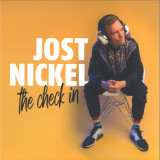
Along with Wolfgang Haffner, Jost Nickel is one of the very few top German tour and session drummers whose name also enjoys an excellent international reputation.
He succeeded as a drummer and musical director in the band of Mousse T and played with Sasha, Johannes Oerding, Marla Glen and SEEED, among others. Since 2006, Jost Nickel has been the drummer in Disko No.1, the band of German soul superstar Jan Delay. Involuntarily slowed down by the corona induced standstill of the cultural scene, Jost has used the time wisely and written and recorded his debut album ‘The Check In’, which has been eagerly awaited by many.
Besides the top German musicians Claus Fischer, Mark Smith (bass), Hanno Busch, Dirk Berger (guitar), Simon Oslender (keys), Lutz Krajenski (arrangements), and the colleagues of Disko No.1, international jazz stars like Jimmy Haslip (bass), Barry Finnerty
(guitar) and Jeff Lorber (keys) recorded the album.
Good things take time, as the saying goes, and Jost Nickel truly took his time writing and
realising his debut album. But the wait was worth it!
Bassist and composer Milo Fitzpatrick (Portico Quartet) launches new collaborative project with saxophonist Jordan Smart (Mammal Hands)
Vega Trails is a new project from double-bassist and composer Milo Fitzpatrick, a founder member of Portico Quartet, who has also performed with the likes of Nick Mulvey and Jono McCleary and features saxophonist Jordan Smart (Mammal Hands, Sunda Arc) in a richly powerful duo bringing together two powerfully charismatic musicians. The project which takes its name from Carl Sagan's science fiction novel 'Contact' (a book about signals of new life detected from the Vega system) andwas born out of a desire to bring the elements of bass and melody to the foreground in their rawest form and Fitzpatrick explains that he deliberatelychose the stripped back approach.
"There is so much in just one musician's sound; the emotional, the intellectual, the vulnerability and power of their character. But often these delicate nuances can be submerged in the quest for a group sound. In Vega Trails I wanted to grant the musicians space to breathe and be heard and for the listener to witness the intimacy and depth of a conversation between two voices, bass and melody. I was also interested in how the limitations would guide both the composition and performance and to push us both to places close to the limits of what we could play, and it is in this place where I believe the character of a musician blossoms and comes forward".
Tremors in the Static was composed during Lockdown as Fitzpatrick immersed himself in music that had space and sparseness such as Swedish fiddle music and Indian Classical music. Jan Johansson's legendary 'Jazz på Svenska' (jazz versions of Swedish folk songs) was another influence, as was a collection of ancient lullabies by Spanish soprano singer Montserrat Figueras. Through exploring the harmonic and textural possibilities on the bass, Fitzpatrick would cycle riffs and motifs whilst singing melodies, and he began to create the music debuted here. However, it was only after listening to Charlie Haden's album of duets, 'Closeness', that the project would come into focus as a duo, and Fitzpatrick immediately knew that the second musician had to be Jordan Smart.
"I saw Jordan play at two Gondwana Records events – in Berlin and Tokyo. Both times I was mesmerised by the intensity and conviction of his playing. His commitment to the cause of transcending himself and the listener made a lasting impression on me. When I began writing this record, I knew I needed a strong player who had equal conviction in their playing as me, but also someone who understood the importance of melody"
It was an inspired idea as Smart brought an openness and positivity which allowed the music to be both experimental and bold. Smart's ability to play tenor and soprano saxophone with equal command, as well as bass clarinet and Ney flute, allowed them to open up the pallet of sound and pull the melodies into varying emotional landscapes.The final piece of the puzzle was the performance space. Fitzpatrick knew that he wanted the two players to react off of a third element. The music was written for an ambient space which interacted with the notes: decaying and disintegrating them into silence. They found the perfect space in a church in Fitzpatrick's local neighbourhood of Stamford Hill.
"The recording space is the canvas on which the sound interacts and flows, it is the frame in which notes can live, breathe and die and is as important as the other elements. A resonant recording space, like a church, allows this stripped back sound to resonate, echo and linger, enough to create images and landscapes in which stories can play out".
This then is Vega Trails, a project that brings together two open-mined and communicative musicians for the first time, to tell beautiful winding stories together and to create something soulful and new.Something bigger than both of them and something that leaves us all richer for hearing it. Enjoy!
Christopher 'Lav' Landin is a master of ambient sounds but it's been a while since we heard from him after 2017's collab with Purl on A Strangely Isolated Place. A New Landscape is a fresh album on Past Inside The Present that comes on limited and transparent orange vinyl. Contained within are a beguiling bunch of tunes with soul stirring pads, gently propulsive rhythms and gorgeous sound designs that call to mind various different references from deepest space to a warm spring day. It is an accomplished album design for mental escape.
Repressed !
Fuzzed out and psychedelic covers of rare and classic tracks performed by San Francisco's Monophonics.
Monophonics are back with a six-song EP that fuses the complimentary and explosive soul, rock and funk influences, proving themselves to be the rightful inheritors of the Bay Area’s impressive psychedelic soul sound. Mirrors is comprised entirely of cover tunes, except that I doubt you’ve ever heard of half the deeply funky and soulful originals that inspired these soulful, tastefully produced, and timeless Monophonics treatments. “We wanted to do a couple songs that were more familiar to people and then shine some light on groups we’re big into,” lead singer, keyboardist and co-producer Kelly Finnigan explains. It takes a lot of guts to cover your favorite songs, your van jams, that song you play as a shot of inspiration to break-up a marathon studio session. “Not only are these great songs, but these are artists that we listen to and are influenced by.”
“It’s not about making records that sound old, it’s about making records that sound cool,” Kelly says. Not that he and the other five members of Monophonics mind if you confuse their albums for classic-era recordings. Even musician friends regular mistake a sweaty and greasy Monophonics original for an unheard Bar-Kays’ side, or a deep soul cover tune might pass for an original to a novice ear, except that Kelly makes sure to give credit where credit is due, which is what they do explicitly on this EP, Mirrors.
Even the familiar tunes, iconic, better said, receive a fresh treatment as instrumentals, despite their ubiquity as vocal songs. The EP opens with a ‘tip of the cap’ to The Main Ingredient’s version of “Summer Breeze” before the band unfolds a hazy, mellow-funk opus worthy of inclusion on a Bob James CTI album. The next four songs, all featuring vocals, range from the lowrider soul ballad, a cover of the The Invicibles’ “My Heart Cries” with a pleading and plaintive vocal by Nicole Smith, to the psychedelic blues stomp, “Lying,” originally by the archetypical psychedelic soul band nearly signed to Motown, Black Merda. Add in Kelly’s monster vocal take on Frankie Valli and the Four Seasons Northern Soul classic, “Beggin” (to be released as a 7” single with an instrumental version on the b-side), and the deep-funk pop-soul of Nu People’s “I’d be Nowhere Without You” with back-up vocals by Jeanine Jones and Veronica Johnson, and you have a highly-entertaining, toe-tapping, backbone-slipping, masterclass in deep funk and soul.
The final tune is the band’s singular take on the Mamas and the Papas hippie standard, “California Dreaming,” as an explicit and heartfelt tribute to their fans in Greece. The discerning music lovers of Greece fell in love with Monophonics after their 2012 hit “Bang Bang” resulting in multiple tours of the Mediterranean, where these native Californians imbibed on the fine ouzo, good vibes, and Grecian hospitality. Gifted a prized bouzouki (a traditional Greek guitar) by a local fan, Monophonics’ guitarist Ian McDonald and band infused this classic pop song with a soulful cinematic air and Mediterranean flavor, evoking a tune from an imagined Fellini film with a soundtrack by David Axelrod.
Catch the band on the road this Spring to hear some of these songs, favorites and new tunes from their forthcoming LP.
Johnny Clarke ruled the Dancehall in the mid 1970’s, using the cleaver 'Flyers Rhythms' that gave some of his tunes an edge with the Sound Systems. But his voice was always.
bigger than this and his versatility to sing a wide range of vocal styles, has seen him cut through the decades as one of Reggae’s best voices.
Johnny Clarke (b.1955.Jamaica) cut his musical teeth at the age of seventeen, recording his first song ‘God made the sea and sun’ for Producer Clancy Eccles. A low-key release but one that led to Johnny catching Producer Rupie Edwards eye, when he appeared at a talent contest at Bull Bay. Impressed by his voice both live and on disc, Rupie cut a few tunes with Johnny, ’Don’t Go Julie’ and ‘Everyday Wondering’ the latter of which had success not only in Jamaica, but also in the UK reggae market. The back bones of ‘Everyday Wandering’ now voiced by Rupie himself would lead onto an even bigger hit in the 70’s with the classic ‘Irie Feelings’.
Johnny Clarke’s decision to move on around this time coincided with producer Bunny ‘Striker’ Lee looking for a new singer to compete in the ever-moving Dancehall arena. Johnnie’s break came in a strange way, having provided backing vocals initially to a Bunny Lee produced cut, Earl Zero’s ‘None Shall Escape the Judgment’. The very same session the drummer on the track, Carlton ‘Santa’ Davis, when asked by Bunny to come up with some new sound and while working the High - Hat cymbals, hitting it when open, then when shut (based on the Philadelphia Disco Sound known as the Phili - Sound) gave what the reggae world would call a ‘Flyers Sound’. On transferring the tune to four tracks to mix down at King Tubby’s studio, Earl Zero’s vocal was mistakenly left off. Johnny Clarke being present at King Tubby’s and knowing the track already inside out, then sang the lead vocal. The track became a smash Sound System favourite and the rest as they say is history.
Johnny Clarke became one of Bunny’s main vocalists during the heyday that was the 1970’s. It’s from this vast cannon that we have selected some of the singer’s finest cuts. His soulful voice worked the musical field from Dread to Rockers to Lovers Rock.A great gift that on playing this album we hope you’ll agree carries through with the tests of time.
Twenty-six year old South African producer Mbulelo Mehlomakhulu grew up with a passion for house music. He began releasing music early at only 18, working with Blaque Core's Profound Nation and issuing a slew of records under the Xerophytic Soul moniker. Achieving local and global success with tracks like 'Ancient Cultures', he began to pioneer a more experimental sound - a cross between Durban's dark, propulsive gqom sound and vintage Detroit techno. This forward-thinking composite didn't go unnoticed, and Mehlomakhulu was tapped by Derrick May to release "The Robotics People" EP on Transmat in 2018. Now Mehlomakhulu returns with four stargazing hybrid compositions that again dance in the shared sonic space between Detroit and Durban. Gqom's slow, sensual pulse carries 'Play the Beat' with chants and echoing cowbell smacks swallowed into a wormhole of squashed analog bass and reverberating Underground Resistance stabs. Title track 'Kalibre' is less florid, but commands the dancefloor with clattering South African drums, ballroom slams and the ticking urgency of Chicago's DJ Sneak. 'Uranus' and 'God's Groove' lift the dancefloor to a higher plain, spiritually connecting with Carl Craig's historic early run and layering synthetic neon pads and cinematic shimmering effects. Mbulelo's sound is smart and poignant, and completely his own. By linking contemporary South African dance music to Detroit's pioneering 1980s techno vision, he makes a connection that's never felt more current.
Ever Crashing, the second LP by Kennedy Ashlyn aka SRSQ pronounced ‘seer-skew’, is the summation of a nearly three-year journey of soul searching, songwriting, and self-discovery: “I became myself in the process of making this record.” From the first choral swells of opener “It Always Rains,” it’s clear this collection exists on an ascendant plane, capturing an artist in super bloom. Every song hits like a single, heaving with guitar, synth, strings, live drums, and oceans of Ashlyn’s astounding voice, balletic and illuminated. The tracks gleam with detail, often assembled from as many as 100 separate tracks, all of which were written and played solely by Ashlyn – a feat of world-building as daunting as it is devastating.
For her, however, the process is intrinsic and intuitive – even a matter of survival. Her 2018 solo debut emerged in response to the tragic Ghost Ship fire in Oakland, which took the life of her bandmate and best friend Cash Askew. Similarly, Ever Crashing began materializing in the wake of an ADHD and bipolar disorder diagnosis, prompting a profound personal overhaul. Ashlyn cites such periods of turmoil as a muse of sorts, when “songs begin to echo within me,” gradually reverberating clearer and more vividly. As melodies and arrangements come into focus, the songs act like containers, vessels in which to externalize and exorcise tumultuous emotions, a transformation she memorializes in the climax of “Élan Vital:” “Reeling in and out of deep despair / I am saved by song.”
From swooning end credits balladry (“Dead Loss”) to orchestral slow-burn torch songs (“Abyss”) to dizzying shoegaze heavens (“Someday I Will Bask In The Sun”), the album exudes a sense of aching grandeur and bewildered joy, rich with triumphs hard won and lost loves never forgotten. Melodies pirouette and crescendo in dazzling, elevated acrobatics, somewhere between Kate Bush and The Sundays, threaded with ethereal undercurrents of shimmering shadow. Riffs brood and sparkle over crystalline synths, buoyant bass, and patient percussion, steadily building to holy moments of tidal power, finessed to perfection by producer Chris Coady (Beach House, Slowdive, Zola Jesus). Ashlyn’s is a dream-pop of questing catharsis, vulnerable but orchestral, as dense with hooks as heartbreak.
The album’s title refers to Ashlyn’s recurring sensation of being trapped in the crest of a wave, turned and churned in the surf, mirroring the cycles of self-flagellation and surrender that she battles being bipolar. But as the poetic raptures of these songs attest, her creative process thrives at transmuting trauma into potent music of arresting beauty and hidden divinity. Ever Crashing is an aching, rare work, shaded with gradients of reverie and regret, loss and letting go, “mourning the person I thought I should be, mourning the person I never was.” But even in its pain, Ashlyn’s voice exerts a redemptive gravity, yearning to transform and transcend: “Even on the inside / I’m bracing for impact / I’m waiting to destroy my life / To become sunlight.”
Ever Crashing, the second LP by Kennedy Ashlyn aka SRSQ pronounced ‘seer-skew’, is the summation of a nearly three-year journey of soul searching, songwriting, and self-discovery: “I became myself in the process of making this record.” From the first choral swells of opener “It Always Rains,” it’s clear this collection exists on an ascendant plane, capturing an artist in super bloom. Every song hits like a single, heaving with guitar, synth, strings, live drums, and oceans of Ashlyn’s astounding voice, balletic and illuminated. The tracks gleam with detail, often assembled from as many as 100 separate tracks, all of which were written and played solely by Ashlyn – a feat of world-building as daunting as it is devastating.
For her, however, the process is intrinsic and intuitive – even a matter of survival. Her 2018 solo debut emerged in response to the tragic Ghost Ship fire in Oakland, which took the life of her bandmate and best friend Cash Askew. Similarly, Ever Crashing began materializing in the wake of an ADHD and bipolar disorder diagnosis, prompting a profound personal overhaul. Ashlyn cites such periods of turmoil as a muse of sorts, when “songs begin to echo within me,” gradually reverberating clearer and more vividly. As melodies and arrangements come into focus, the songs act like containers, vessels in which to externalize and exorcise tumultuous emotions, a transformation she memorializes in the climax of “Élan Vital:” “Reeling in and out of deep despair / I am saved by song.”
From swooning end credits balladry (“Dead Loss”) to orchestral slow-burn torch songs (“Abyss”) to dizzying shoegaze heavens (“Someday I Will Bask In The Sun”), the album exudes a sense of aching grandeur and bewildered joy, rich with triumphs hard won and lost loves never forgotten. Melodies pirouette and crescendo in dazzling, elevated acrobatics, somewhere between Kate Bush and The Sundays, threaded with ethereal undercurrents of shimmering shadow. Riffs brood and sparkle over crystalline synths, buoyant bass, and patient percussion, steadily building to holy moments of tidal power, finessed to perfection by producer Chris Coady (Beach House, Slowdive, Zola Jesus). Ashlyn’s is a dream-pop of questing catharsis, vulnerable but orchestral, as dense with hooks as heartbreak.
The album’s title refers to Ashlyn’s recurring sensation of being trapped in the crest of a wave, turned and churned in the surf, mirroring the cycles of self-flagellation and surrender that she battles being bipolar. But as the poetic raptures of these songs attest, her creative process thrives at transmuting trauma into potent music of arresting beauty and hidden divinity. Ever Crashing is an aching, rare work, shaded with gradients of reverie and regret, loss and letting go, “mourning the person I thought I should be, mourning the person I never was.” But even in its pain, Ashlyn’s voice exerts a redemptive gravity, yearning to transform and transcend: “Even on the inside / I’m bracing for impact / I’m waiting to destroy my life / To become sunlight.”
180 GRAM AUDIOPHILE VINYL
• GATEFOLD SLEEVE
• INCLUDING INSERT WITH LINER NOTES
• HIGH RESOLUTION AUDIO MASTER, CUT ON 45 RPM
• GRAMMY AWARD NOMINEE, THREE-TIME ECHO AWARD
NOMINEE, THEODORE PRESSER AWARD RECIPIENT JAZZ MUSICIAN THEO CROKER
• FEATURING ARI LENNOX, GARY BARTZ, CHARLOTTE
DOS SANTOS, MALAYA, IMAN OMARI, KASSA OVERALL &
WYCLEF JEAN
• LIMITED EDITION OF 750 INDIVIDUALLY NUMBERED
COPIES ON TURQUOISE COLOURED VINYL
Every trip needs a guide. Through the trumpet, the Grammy Award-nominated artist, producer, composer, tought leader, influencer and tastemaker Theo Croker narrates a human story rooted in intimate experience, yet cognizant of cosmic consciousness. This journey unfolds in technicolor on his sixth full-length offering, BLK2LIFE || A FUTURE PAST.
“BLK2LIFE || A FUTURE PAST is meant to be a deeply impactful, personal experience for the listener. One that you can also dance to - it is Black music after all,” Croker says.
BLK2LIFE || A FUTURE PAST consists of 13 tracks and is inspired by the forgotten hero’s journey towards self-actualization within the universal origins of blackness. It’s a sonic celebration of Afro-origin, and ultimately a reclamation of the culture, for the culture. Joining Croker on the album are Ari Lennox, Charlotte Dos Santos, Gary Bartz, Iman Omari, Kassa Overall, Malaya, and Wyclef Jean.
BLK2LIFE || A FUTURE PAST is cut on 45 RPM with a high resolution audio master. The album is available as a limited edition of 750 individually numbered copies on turquoise coloured vinyl, housed in a gatefold sleeve.
- A1: Raise Your Vibrations
- A2: Transcend
- A3: This Could Be (For The Travelling Soul)
- A4: In Orbit
- A5: No Escape From Bliss
- A6: The Right Time
- A7: A Call To The Ancestors
- A8: Meditations
- B1: We Can’t Breathe
- B2: It’s Gonna Be Alright
- B3: Because Of You
- B4: Real Episode
- B5: Love From The Sun (Feat. Dee Dee Bridgewater)
- B6: Changes
- B7: Rahspect (Amen)
• 180 GRAM AUDIOPHILE VINYL
• INCLUDES INSERT WITH LINERNOTES
• FEATURING DEE DEE BRIDGEWATER ON “LOVE FROM THE SUN”
• LIMITED EDITION OF 500 NUMBERED COPIES ON CRYSTAL CLEAR VINYL
Theodore Lee Croker is an American jazz trumpeter, composer, producer and vocalist. He is a Grammy Award nominee, three-time Echo Award nominee, as well as a Theodore Presser Award recipient.
As the grandson of trumpeter Doc Cheatham, Theo Croker has jazz music in his DNA. Escape Velocity is his fourth studio album, originally released in 2016. He was discovered by singer Dee Dee Bridgewater, who became his mentor and can also be heard on this album (“Love from the Sun”). Croker thinks big and plays big, along with his equally talented band. His songs are full of interesting twists and turns but remains very cohesive, ensuring that this album never gets boring.
Escape Velocity is available as a limited edition of 500 individually numbered copies on crystal clear vinyl and includes an insert with liner notes.
Jeder Song hat die Kraft, Erinnerungen wachzurufen und das Gefühl von Heimat durch Musik nutzbar zu machen: von der psychedelisch-funklastigen Single 'Something's Going On' bis zur kongregativen Energie des neuen Tracks 'We Give Thanks' verschmilzt 'Could We Be More' die Afro-Londoner Synergie, die so natürlich die Wärme und Identität von Kokoroko untermauert. Die Mehrfach-Preisträger Kokoroko sind auf soulige, bläserlastige Sounds mit westafrikanischen Wurzeln und Londoner Einflüssen spezialisiert. Sie spielten bereits auf vielen europäischen Festivals (von Glastonbury über Meltdown bis Elbjazz und Jazz á la Villette) und freuen sich darauf, ihre Reichweite in 2022 und darüber hinaus weiter auszubauen. Die Band trat in mehreren BBC-Fernsehshows auf, ihre beiden Boiler Room-Sets wurden zusammen fast eine halbe Million Mal angehört.
- 'This female-led, multicultural collective of under 30s is a vital example of not only jazz's new form but the shape of things to come.' - The Guardian
- 'Drawing influence from West African highlife and jazz, wellmarinated in enough polyrhythm seasoning to induce fires on the dance floors they play.' - OkayAfrica
- 'Afrobeat, jazz, soul and ’70s psych-leaning funk - luminescent!' - Cool Hunting
- A1: Aquarius (Feat Horace Andy)
- A2: Nuh Fraid A Dem (Feat Luciano)
- A3: The Blessings (Feat Michael Rose)
- A4: Wicked (Feat Little Roy)
- A5: Stress (Feat Beres Hammond)
- A6: Bunker Buster
- B1: Lucky Friend (Backing Vocals The Tamlins)
- B2: The Light In Me (Feat Ronnie Davis)
- B3: Humble Lion (Feat Junior Rass)
- B4: Warrior (Feat Junior Reid)
- B5: Inna We Life (Feat Lonie)
- B6: Flesh & Blood (Feat Half Pint)
Tapper Zukie after taking a little time out of the musical arena has come back with an album full of great material and has called in an A list of fellow Jamaican artists to add flavour to this great set. As Tapper named the album himself ‘Bunker Buster’ it shows Mr Zukie busting back out of the studio and back in the arena in fine style.
The opening track finds his long-standing working partner Horace Andy adding his distinctive vocal style to ‘Aquarius’. ‘Nuh Fraid A Dem’ features the great Luciano, ‘The Blessings’ the mighty Michael Rose, and Little Roy adds some magical rhymes to ‘Wicked’. The soulful voice of Beres Hammond sweetens the effects of `Stress’. The killer title track `Buster Bunker’ is backed up by the Musical Intimidators and Tapper has reworked his ‘Good Luck My Friend’ track to ‘Lucky Friend’ which features the timeless backing vocals by the legendary Jamaican vocal group The Tamlins. Digging even deeper into his back catalogue he has also pulled up some classic rhythms and more existing vocals to rework over. For example, ‘The Light In Me’ features the greatly missed Ronnie Davis. Junior Rass adds his mighty roar to ‘Humble Lion’ and Junior Reid leads the charge on ‘Warrior’. Half Pint adds a musical layer to Flesh and Blood. All in all a great selection of musical ideas that also features the cream of Jamaica’s musicians, Sly Dunbar and Robbie Shakespeare, Flabba Holt, Chinna Smith to name but a few. Tapper’s son Noel Barnes (AKA Brand New) alongside Pam Hall adds some gloss to the CD edition of this release.
Such is his standing in the reggae community that a call out to Jamaica’s finest set of singers and their eager reply to add their talents has made this an album not to be missed and can sit proudly alongside and find a place in his already prodigious catalogue.
Hope you enjoy the set…….