The DIAMOND DOGS ladies and gentlemen!
One of the world's finest pure rock & roll bands, still doing it just how they please, sounding better than ever.
New record "About The Hardest Nut To Crack" was recorded live. 12 brilliant tracks, all mixed/produced/written and arranged from scratch at Strawberry Studios over eight days in the early spring of 2023. It's a hell of a statement!
Sound Like: The Faces, Rod Stewart, Ronnie Lane, Ronnie Wood, J Geils Band.
Cerca:gone
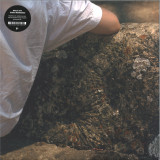
Black Truffle is pleased to announce Tender Membranes, the label’s first release from Swedish-Finnish sound artist and electro-acoustic composer Marja Ahti. Active for a decade in the Finnish underground music scene, in recent years Ahti has developed a distinctive approach to patiently unfolding electro-acoustic constructions, documented on a string of solo releases and collaborative projects with Judith Hamann and her husband Niko-Matti Ahti. Working with concrete and instrumental sounds, field recordings, and electronics, Ahti favours neither disjunctive collage nor monolithic consistency; rather, her work is composed of organically unfolding sequences of details and textures, which, as she says, ‘can stretch out or cut fast as long as they have a sense of inner stillness’, a sense that she connects to moments of heightened attention in everyday life. Tender Membranes consists of four lengthy pieces, partly inspired by the image of the senses and mind as membranes allowing for the passage between inner and outer spaces, sensation and its causes, creating a world. Ahti’s unhurried pacing encourages this sense of listening as an opening or surrender to sound, which can often create the impression that the listener is moving through a space zooming in on details. The opening Shrine (Aether) exemplifies this aspect of Ahti’s approach: a bell clears the air with a single long tone, followed by the ambience of outdoor spaces, crackling electronics, an archival recording of a horsefly on a windowpane. Dozens of these moments, varying in length, density, and intensity, move past the listener’s attention, momentarily brought into focus then slipping away. Like those of the masters of the French musique concrète tradition, Ahti’s sounds are not often recognisable, though they might suggest proximity or distance, open environments or closed spaces, the urban or rural, day or night. In Ahti’s work, we do not encounter spectacular metamorphoses à la Parmegiani but rather a state of ambiguity where the listener is often unsure what is organic and what is inorganic, where the careful productions of the synthesizer might end and sounds discovered in the environment begin. What Ahti calls her ‘poetic way of experiencing and organising the familiar and the unfamiliar’ is sustained throughout Tender Membranes, but each piece has its own character. On Dust / Light, human presence is more overt, as what appear to be whispers, singing, and distant speech thread between high frequencies, untraceable drips and pops, and metallic shimmers. In all this there is a melody that you can sing and to which you may dance makes more prominent use of musical instruments, gaining a sombre beauty from half-buried piano chords and organ tones. On the closing Oh Fragrant Witness, a delicate cloud of subtly bending pitches is repeatedly disrupted by a resounding, almost ominous mass of low tones, at once a strange detour from much of what has gone before and an almost classical finale. Arriving in a sleeve reproducing contemporary Finnish photographer Sini Pelkki’s fragmented visions of the everyday, Tender Membranes is a balm to reawaken tired ears.
Originally released on Polydor Records in August 1981, it remains a very special and discrete record and has gone on to achieve a cult status separate from the rest of their august catalogue.
Formed at London's Guildhall School of Music and Drama by way of Paris and the Isle Of Wight, Level 42 marked the union of four talented friends – Mark King, Mike Lindup, and brothers Phil and Roland 'Boon' Gould – complete with Wally Badarou, their very own studio-based synthesiser whizz-kid. From building a fervent following through the nascent Britfunk scene, they signed to Polydor and went on to make a series of fascinating albums.
The sheer invention, melody and imagination of this four-piece was astounding, aided by their secret weapon, French-Belizean Badarou, whom the band had met playing sessions for M, Robin Scott's art-disco ensemble. Although Level 42 had recorded – and made waves – for indie label Elite, they signed to Polydor and released this album, with three of their original calling cards, Starchild, Turn It On and the mighty, UK Top 40 breaching Love Games.
By the mid 80s Level 42 had become arena-filling superstars, with their commercial pop-funk with everyman lyrics that delighted fans not just in Europe, but also in America, too. Hear the roots of that on this frequently surprising, always entertaining debut album. Think of this album as the missing link between Talking Heads and Herbie Hancock.
Out of print on LP for a number of years, this re-issue faithfully replicates the original 1981 Polydor UK release with insert and is pressed onto high quality 180g vinyl.
- 1: What A Diff’rence A Day Made
- 2: It's Magic
- 3: I Can't Believe That You're In Love With Me
- 4: Baby (You’ve Got What It Takes)
- 5: I Get A Kick Out Of You
- 6: September In The Rain
- 7: This Bitter Earth
- 8: Teach Me Tonight
- 9: Smoke Gets In Your Eyes
- 10: Cry Me A River
- 11: Mad About The Boy
- 12: After You've Gone
- 14: A Rockin' Good Way (To Mess Around And Fall In Love)
- 13: Is You Is Or Is You Ain't My Baby?
As Duke Ellington would have said, Dinah Washington was “beyond category”. Subtle and inventive enough to hold an honored place in the jazz pantheon yet tough and forceful enough to command the attention of blues, R&B and rock & roll audiences. Equally at ease performing Broadway songs, pop tunes or jazz material, Washington combined urbane finesse with down-home grit to make music that reflected her strong-willed, larger-than-life personality.
- 1: Straight From The Heart (Feat. Leona Berlin, Karriem Riggins)
- 2: What's Best For Us (Feat. Pj)
- 3: So Confused (Feat. Kameron Corvet)
- 4: Angels Around (Feat. Tim Smith)
- 5: Crazy Games (Feat. Leona Berlin)
- 6: N???..Az (Skit)
- 7: My Turn Now (Feat. Kameron Corvet)
- 8: Losing You (Feat. Leona Berlin)
- 9: Last Time We Gonna Polite (Feat. Christian Scott)
- 10: New Dawn (Feat. Liselotte Östblom)
- 11: Blow My Mind/Let's Take It Back (Feat. Sy Smith, Javier Starks)
- 12: Sugar Bang Bang (Skit)
- 13: We Got Drums (Feat. Javier Starks, Soweto Kinch)
- 14: When They're Gone (Feat. Samora)
- 15: Fly Away (Feat. Nicholas Payton)
Er gilt als einer der herausragenden Drummer seiner Generation und ist auch als Multi-Instrumentalist und Songwriter eine absolute Ausnahmeerscheinung: Gregory Hutchinson. Er ist für seine Arbeiten mit unzähligen Stars bekannt, darunter Betty Carter, Red Rodney, Roy
Hargrove, Joshua Redman, Dianne Reeves, Lou Donaldson, Wynton Marsalis, John Scofield, Diana Krall und Harry Connick Jr, um nur einige zu nennen.
Hutchinson wurde in Brooklyn, New York geboren, wo er umgeben von Musik aufwuchs, vom geliebten Soul und R&B seiner Mutter bis hin zum Reggae seines Vaters - ebenfalls ein Schlagzeuger - und den explosiven Klängen des klassischen Hip-Hop , die ab den späten
1970er-Jahren die Straßen von New York City füllten.
Sein neues Album "Da Bang" koproduziert mit K arriem Riggins hat all diese unterschiedlichen Prägungen zu einem einzigartigen Ganzen verschmolzen. Im Herzen dieses Albums steht die überbordende Energie Brooklyns , angereichert mit Einflüssen verschiedenster
Genres und getragen von sehr persönlichen Lyrics.
Hutchinson geht in seinem Songwriting mit genau der Vielseitigkeit, Dynamik und Vorstellungskraft zu Werke, für die er seit vielen Jahren bekannt ist. Seine Eigenkompositionen decken dabei das gesamte
Farbspektrum ab.
Mit Karriem Riggins, PJ, Christian Scott, Soweto Kinch, Nicholas Pyton, Kurt Rosenwinkel, Sy Smith, Leona Berlin u.a.
In 1995 the self-titled full-length debut of Die Anarchistische Abendunterhaltung (DAAU) was released. The band consisted of four young, 'classically derailed' musicians who played their own compositions with acoustic instruments such as violin, cello, clarinet and accordion. Their work contained influences from Roma music, Eastern European folk, klezmer and jazz, but was performed with the energy, rebellious spirit and Sturm und Drang of a bona fide punk band. DAAU was part of the fertile Antwerp scene, which also produced dEUS, Zita Swoon and Kiss My Jazz, and soon signed an international record deal with Sony Classical.
The group's influential first record, which has been out of print for a while, is now finally being released again and is available on vinyl for the very first time.
In those early days, DAAU consisted of four young, classically trained musicians who tackled their instrumental compositions with a true punk spirit. 'If we'd had guitars, bass or drums at that time, we would probably have been just another rock band', says accordionist Roel Van Camp, who, together with his schoolmates Buni Lenski on violin, the latter's brother Simon on cello and Han Stubbe on clarinet made up the Antwerp quartet. 'With our acoustic instruments we tried to create our own version of the music we loved listening to, from sixties rock and prog to new wave.'
The quartet, which initially played in streets and cafes, appealed to a diverse audience and sometimes joked that they were a classically trained unit that had 'gone off the rails'. 'As befits teenagers, we wanted to shake things up', Stubbe remembers, 'even though we always kept cherishing our classical backgrounds.' Van Camp: 'Our education was never supposed to feel like a straitjacket. We were free-spirited enough to ignore the laws and regulations of the music academy and to create our own sound. Our compositions were open to influences from Roma music, Eastern European folk, klezmer and jazz'. 'That eclecticism was a direct result of the zeitgeist', Han Stubbe adds. 'We loved different styles and happily mixed them together'.
The monniker Die Anarchistische Abendunterhaltung was derived from Steppenwolf, a novel by German writer Hermann Hesse about a character who was outside society. 'In the book, the narrator talks of a theatre', Van Camp explains. 'And at the entrance there is a warning sign sign that says: if you go in here, you are guaranteed to lose your mind. That was an apt description of the way our music worked'.
Almost all tracks on DAAU's first album were 'Drieslagstelsels' (or 'three-course rotations'). The term referred to an agricultural method of the early Middle Ages, but also to the fact that each song of the group consisted of three major movements. Van Camp: 'The titles of those pieces referred to our method of writing. We piled up a huge bunch of ideas, because we wanted to tell more than just one story. With each composition, we took the listener for a ride'.
In 1995 the self-titled full-length debut of Die Anarchistische Abendunterhaltung (DAAU) was released. The band consisted of four young, 'classically derailed' musicians who played their own compositions with acoustic instruments such as violin, cello, clarinet and accordion. Their work contained influences from Roma music, Eastern European folk, klezmer and jazz, but was performed with the energy, rebellious spirit and Sturm und Drang of a bona fide punk band. DAAU was part of the fertile Antwerp scene, which also produced dEUS, Zita Swoon and Kiss My Jazz, and soon signed an international record deal with Sony Classical.
The group's influential first record, which has been out of print for a while, is now finally being released again and is available on vinyl for the very first time.
In those early days, DAAU consisted of four young, classically trained musicians who tackled their instrumental compositions with a true punk spirit. 'If we'd had guitars, bass or drums at that time, we would probably have been just another rock band', says accordionist Roel Van Camp, who, together with his schoolmates Buni Lenski on violin, the latter's brother Simon on cello and Han Stubbe on clarinet made up the Antwerp quartet. 'With our acoustic instruments we tried to create our own version of the music we loved listening to, from sixties rock and prog to new wave.'
The quartet, which initially played in streets and cafes, appealed to a diverse audience and sometimes joked that they were a classically trained unit that had 'gone off the rails'. 'As befits teenagers, we wanted to shake things up', Stubbe remembers, 'even though we always kept cherishing our classical backgrounds.' Van Camp: 'Our education was never supposed to feel like a straitjacket. We were free-spirited enough to ignore the laws and regulations of the music academy and to create our own sound. Our compositions were open to influences from Roma music, Eastern European folk, klezmer and jazz'. 'That eclecticism was a direct result of the zeitgeist', Han Stubbe adds. 'We loved different styles and happily mixed them together'.
The monniker Die Anarchistische Abendunterhaltung was derived from Steppenwolf, a novel by German writer Hermann Hesse about a character who was outside society. 'In the book, the narrator talks of a theatre', Van Camp explains. 'And at the entrance there is a warning sign sign that says: if you go in here, you are guaranteed to lose your mind. That was an apt description of the way our music worked'.
Almost all tracks on DAAU's first album were 'Drieslagstelsels' (or 'three-course rotations'). The term referred to an agricultural method of the early Middle Ages, but also to the fact that each song of the group consisted of three major movements. Van Camp: 'The titles of those pieces referred to our method of writing. We piled up a huge bunch of ideas, because we wanted to tell more than just one story. With each composition, we took the listener for a ride'.
Bristol's soul jazz kings The Jazz Defenders release a new vinyl 45 single this autumn as a taster for their third album, which is destined for release in spring 2024. Once again, they are bringing together their love of 1960's soul jazz and golden era 90's hip-hop, just as they did on a couple of tracks on their last album "King Phoenix" (Haggis Records 2022). This new single sees them reunited with London MC/rapper Doc Brown, who guested on the track "Perfectly Imperfect", and his flow sits so naturally over the Jazz Defenders' music and beats, you'd think he's a permanent band member.
The A-side "Rolling On A High" is a real old school boom bap style party hip-hop jam. Big beats, rolling bassline (acoustic double bass), Ramsey Lewis soul jazz piano vamps, funky Hammond organ and some punchy horn section business, all topped off with Doc Brown bouncing bars back and forth with that laid back vibe he always brings to the mic. A guaranteed dance-floor bomb, whether you're a breaker, a jazz dancer or simply a Saturday night disco shuffler. The B-side "Looking Back" takes the tempo right down. An 'end of the night' number when the lights in the club are low, the last drinks are being drained and you're thinking and reminiscing about times gone by. The good times and bad, successes and mistakes. And made even more poignant and reflective halfway through when the mellow strings come into the song (once again excellently arranged by pianist/bandleader George Cooper). If "Rolling On A High" is the fire then "Looking Back" is definitely the ice. Proof that the Jazz Defenders can rock the party and grab the dancers but also dig deep with emotive tunes that draw in the discerning listener.
The Jazz Defenders, led by keyboard maestro George Cooper from The Haggis Horns, have been building a reputation as a great musical unit since their debut Blue Note/hard bop-inspired album "Scheming" appeared on Haggis Records back in 2019, which received a huge amount of praise from critics, and subsequently went on to spend 5 weeks in the top ten of the American jazz charts In 2021, their double A-side vinyl single "The Big Man/Love's Vestige" got them the breakthrough they deserved. It garnered heavy support on radio from top folks like Craig Charles (BBC6 Music), Helen Mayhew (Jazz FM), Jamie Cullum (BBC Radio 2), and Worldwide FM resident DJ's Ashley Beedle and Colin Curtis. They further enhanced their reputation as a rocking band with album number two "King Phoenix" and by electrifying audiences at sold out live shows across the UK, including the legendary Ronnie Scott's Jazz Club in London.
Album number three is well on its way but for now, check out this tasty limited edition 45 single on Haggis Records. The JDs and Doc Brown...the perfect combination, still keeping that sweet jazz/hip-hop love affair alive today.
In 2020, the previous band formation announced its breakup, leaving Nelson at a pivotal turning point musically, and more broadly, in life, to determine what came next.
Over the next couple of years, Ayala grappled with issues of loss, addiction, coping with pain, relationships gone awry, and relationships anew. He also experimented more sonically, spending countless hours in the studio jamming with friends and using (Covid) boredom as an incubator for creativity. The result of this time period is Lonely Citizen, Indian Askin's third album. Lonely Citizen finds Nelson exploring his own personal story in perhaps the band's most intimate work to date.
Musically, he nods to his Latin roots, with a focus on percussion and groove being a thread throughout the record. Simultaneously, the lyrics find Ayala taking a magnifying glass to his personal reflections on his hometown, Amsterdam.
He says on the album, "It's about feeling sick and tired, and maybe even ashamed, of the place I grew up in and what it's become. And especially what I've become while living my life here. I was born in this machine and I will forever be a part of it, yes. I just can't shake the feeling that I need to leave this noise behind."
"Space Trip" is a cult record released in 1973 on the legendary Amigo catalog, the longest-running independent label in Sweden.
This amazing Spiritual Jazz-Funk/Fusion LP was very hard to find. Finally available again, fully licensed and remastered, with original artwork.
This album is a killer one in its entirety, with no fillers.
Some of the best spiritual jazz on record!
The only album to soundtrack both late-'70s Minneapolis lounges and a Travis Scott x Dior fashion show. Recorded in a host of living rooms with only a Fender Rhodes piano, a Donca Matic Mini Pops drum machine, and Senrick's wide-eyed, 20-year-old voice, the 1977 LP disappeared into the wild and joined the Wendigo in Minnesota lore. A provocative mix of marina soul, easy listening, and loner folk, Dreamin' is a sanguine sliver of the American private mind garden. Harsh winters coupled with a relative lack of interest amongst siblings allowed Chuck Senrick years of unfettered access to the family piano in their Farmington, Minnesota, home. Learning both by ear and by instruction, Senrick began gigging professionally at age 15, joining John Zimmer and the CR4 for a weekly rundown of Allman Brothers, Blind Faith, and Cream covers at the Sea Girt Inn in Lake Orchard. Tapping into James Taylor's pop-chart achievements in songwriting and enunciation, Senrick composed the bulk of the songs featured on Dreamin' before graduating from Farmington High School. At 20, Senrick migrated 30 miles north to the Twin Cities to pursue music full-time. Using borrowed equipment and borrowed living rooms, a string of informal recording sessions generated the quarter-inch tape for Dreamin'. "I didn't know how to do it," Senrick says about producing an album. "I just knew it could be done." Constructed with vocals, Fender Rhodes, and an assortment of rhythm presets on his Donca Matic Mini Pops drum machine, a mere 200 copies of the private-press masterpiece were stamped and sleeved and sold hand-to-hand at performances. Chuck's wife Lesli illustrated the album cover_a pen-to-paper portrait of her husband against the backdrop of the Minneapolis Skyline, she and their newborn son situated on a nearby knoll. Any plans for a re-press were quashed when producer Bruce W. Hansen lost the reels during a messy divorce. "I was a kid with big ideas and not much hope to do anything but play," Senrick said of the Dreamin' era. "It still amazes me that people are interested in it."
Teenage Fanclubs elftes Studioalbum 'Nothing Lasts Forever' ist wunderbar reichhaltig und melodisch - der Klang des Endes einer Jahreszeit, der letzten warmen Tage des Jahres, während die Nächte hereinbrechen und die Gedanken nachdenklich und melancholisch werden. Diese herbstliche Reflexion ist auf dem Album allgegenwärtig. Eines der wiederkehrenden Themen in den neuen Songs ist das Licht, als Metapher für Hoffnung und als ultimatives Ziel des Weges. Aufgenommen Ende August während einer intensiven zehntägigen Phase in der walisischen Landschaft, kann man die Wirkung dieser Umgebung auf der Platte hören - sie ist voller sanfter Brisen, weitem Himmel, Schönheit und Raum. Einer der eindrucksvollsten Texte des Albums findet sich im finalen Track 'I Will Love You'. Das wunderschöne siebenminütige, fast kosmisch-akustische Tagtraumstück blickt jenseits der Wut und Polarisierung unseres modernen Diskurses auf eine Zeit, in der 'the bigots are gone/after they apologise/for all the harm that they've done'. Die Suche nach dem Positiven angesichts der düsteren Realitäten des 21. Jahrhunderts fühlt sich sehr nach Teenage Fanclub an - einer Band, die seit über drei Jahrzehnten eine Kraft des Guten ist und Melancholie mühelos in glorreich klingende Harmonien verwandeln kann.
Their approach to music beckons the voices of years gone by, clearly evoking inspiration from bluegrass icons like Bill Monroe, Jimmy Martin and the Stanley Brothers. Described as one of the busiest, hardest working, and most entertaining bands in bluegrass, The Kody Norris Show brings back to the stage, old school suiting swagger with their custom matching suits, harkening visual spectaculars like those who donned the legendary western wears of designers like Nudie and
Manuel. Their sophomore album with Rebel Records, titled 'Rhinestone Revival' has everything that their fans love from The Kody Norris Show...and more! The album boasts 12 hard driving traditional bluegrass tracks, upping the honky-tonkanty, with the addition of percussion to really achieve a proper toe tapping collection.
Yoke Lore’s first full length album, Toward A Never Ending New Beginning is set to solidify Adrian Galvin as an indie pioneer, transcending beyond the genre with his unparalleled talent for captivating listeners with his distinct artistic vision and introspective lyricism. The 14-track album chronicles his journey of turning strengths into weaknesses, personal growth, and discovering who Yoke Lore truly is. It’s an album full of reflection and raw, unfiltered honesty that will most definitely connect with listeners on a deeper level. Combining electronic beats with subtle instrumentation, each song on Toward A Never Ending New Beginning is sonically diverse and thoughtfully crafted, taking listeners on a journey of self-discovery along with Galvin. Galvin views his debut record Toward a Never Ending New Beginning, as being guided by the principles of the I-Ching; an ancient Chinese divination text that maps out 64 transitions that you could possibly be going through at any time, reflected in the form of hexagrams. It is a meditation on all of the little changes he has gone through in his life: from celebrations to moments of sadness to moments of stillness. All of it is connected, all of it is related.
The set uses newly remastered audio with lacquers cut by Jeff Powell. The packaging includes expansive liner notes by producer Jim Rooney and critic/ writer Holly Gleaso and the booklet includes rare photographs.
There's a Light Beyond These Woods' is Griffith's debut album and was recorded ive to two-track in 1977 and 1978. All but two of the nine songs were penned by Griffith.
Poet In My Window' is Griffith's second album, released in 1982. All but one track are written by Griffith.
Once in a Very Blue Moon', Griffith's third album, was released in 1984 and had more of a country sound than her previous work. This album is different from her previous in the inclusion of more instrumentation; musicians Béla Fleck, Mark O'Connor, Pat Alger, Lloyd Green, and more appear on this record. The title song was covered by Dolly Parton in 1985.
The Last of the True Believers' was released in 1986, and Griffith continues her turn into a more country- oriented sound. It also includes "Love at the Five and Dime" and "Goin' Gone," which were later hits for Kathy Mattea. This album was nominated for a Grammy for Best Contemporary Folk Album.
- (Hey Baby) Que Paso (Fat Tony)
- Possum Kingdom (Ryan Bingham)
- Say My Name (Adrian Quesada)
- True Love Will Find You In
- The End (Shaky Graves)
- Texas Sun (Sir Woman)
- That’s Right (You’re Not
- From Texas) (The Texas Gentlemen)
- My Maria (The Suffers)
- Si Una Vez (Luna Luna)
- Since U Been Gone (Toadies)
- Angel Flying Too Close To
- The Ground (Sarah Jaffe)
- Pancho & Lefty (Shane Smith & The Saints)
Texas Parks & Wildlife Foundation, in partnership with Rambler Sparkling Water, introduce ‘Texas Wild’, a standout album featuring Texas musicians as they pay tribute to classic Texas tunes showcasing that untamed spirit found only in Texas music.
Produced by Texas singer songwriter Walker Lukens (The Song Confessional, Golden Dawn Arkestra, Darkbird, Coco Zandi), ‘Texas Wild’ is a standout album that blends the sounds of traditional Texas genres like blues, cumbia, and country with modern sounds like hip-hop, R&B and electronica, sure to please old school country fans
and new listeners alike.
Block print album art created by Texas artist, Mishka Westell.
Featuring covers of classic Texas songs by Texas musicians including Toadies, Fat Tony, Shaky Graves and Sir Woman.
Sales from the album will benefit Texas Parks & Wildlife Foundation.
Death Is Not The End sub-label 333 turns up the gold again with this repro of the much in-demand Flames cut of Nairobi Sisters' Promised Land. Sampled by Q-Tip for "Whateva Will Be" (appearing on ATCQ's final long-player) and on a range of earlier 90s boom-bap era productions, it is not at all hard to figure out why it's a coveted record. That break is as low-slung and funky as it gets, and best showcased on the superbly stripped-back dub on the flip.
The Nairobi Sisters were singers Terrie Nairobi and Judy Mowatt (later of the I-Threes, alongside Rita Marley & Marcia Griffiths). Promised Land was originally recorded together with The Gaytones for Sonia Pottinger's Gay Feet label, with this later version cut for Winston Jones' Brooklyn-based Flames Records. It is issued here under license from producer and songwriter Jones - the original singer and composer of Stop That Train (later made world-famous by Keith & Tex's version) with his Spanishtonians in the early 1960s - who later moved from JA to NYC where he established and ran the Flames label, a core imprint in Brooklyn's reggae scene from the mid-1970s until the early 1990s. 333 has licensed a range of Flames-era productions from the now Texas-based Jones, so keep and eye out for more as it comes... but for now, jump on this before it's gone!
Stevie Ray Vaughan's third studio album Soul To Soul was released in 1985, just two years after his massive debut Texas Flood. Moving more into a soulful R&B-tinged blues sound, Stevie included two new band members on keyboard and saxophone for Soul To Soul. The band know their way around a number of cover versions of songs penned by Hank Ballard, Doyle Bramhall, and Willie Dixon, bringing a variety of influences into SRV's brand of modern blues. His own compositions such as “Say What”, “Ain't Gone 'N' Give Up On Love” and “Life Without You” reveal an artist that is ever passionate in delivering real blues, and growing in his songwriting at the same time.
Soul To Soul is available as a limited edition of 1500 individually numbered copies on blue marbled vinyl.