quête:gos music studio

Genres
Tout
FUNKADELIC - FUNKADELIC (TAPE)

FUNKADELIC

FUNKADELIC (TAPE)

CassetteORGMCAS2326
ORG Music
29.08.2025

Das 1970 veröffentlichte, selbstbetitelte Debüt von Funkadelic war eine radikale Kollision von psychedelischem Rock, Gospel, Blues und Soul - ein chaotisches, genreübergreifendes Statement, das die Möglichkeiten der schwarzen Musik neu definierte. Wo Motown auf Hochglanz und Crossover-Appeal abzielte, stürzten sich Funkadelic kopfüber in Verzerrungen, Improvisationen und spirituelle Zweideutigkeiten, mit einem Sound, der so düster und unberechenbar war wie die Ära selbst. Unterstützt von einer wilden jungen Band, lehnte das Album Konventionen zugunsten von rohem Groove und existentiellem Lärm ab. Als Teil der Westbound Records Reissue Serie von Org Music stellt diese Ausgabe die volle Wirkung des Albums wieder her. Die Deluxe-Doppel-LP, die von Dave Gardner direkt vom analogen Band mit 45RPM neu gemastert wurde, bietet das bisher beeindruckendste Hörerlebnis dieses Klassikers. Gardner und die Restaurationsspezialistin Catherine Vericolli archivierten und restaurierten die Original-Masterbänder in den 54 Sound Studios in Ferndale, Michigan, mit Unterstützung des hauseigenen Ingenieurs Nick King. Neben CD, Kassette und digitalen Formaten ist auch eine einfache LP-Ausgabe erhältlich, die von hochauflösenden Bandüberspielungen geschnitten wurde. Funkadelic waren zu ihrer Zeit eine klangliche Revolution mit bleibendem Einfluss, ihr selbstbetiteltes Album ist ein bahnbrechendes Zeugnis für Musik ohne Regeln und Freiheit ohne Grenzen.

pré-commande29.08.2025

il devrait être publié sur 29.08.2025

14,08
FUNKADELIC - FUNKADELIC LP

FUNKADELIC

FUNKADELIC LP

12inchORGMLPC2326
ORG Music
29.08.2025

Das 1970 veröffentlichte, selbstbetitelte Debüt von Funkadelic war eine radikale Kollision von psychedelischem Rock, Gospel, Blues und Soul - ein chaotisches, genreübergreifendes Statement, das die Möglichkeiten der schwarzen Musik neu definierte. Wo Motown auf Hochglanz und Crossover-Appeal abzielte, stürzten sich Funkadelic kopfüber in Verzerrungen, Improvisationen und spirituelle Zweideutigkeiten, mit einem Sound, der so düster und unberechenbar war wie die Ära selbst. Unterstützt von einer wilden jungen Band, lehnte das Album Konventionen zugunsten von rohem Groove und existentiellem Lärm ab. Als Teil der Westbound Records Reissue Serie von Org Music stellt diese Ausgabe die volle Wirkung des Albums wieder her. Die Deluxe-Doppel-LP, die von Dave Gardner direkt vom analogen Band mit 45RPM neu gemastert wurde, bietet das bisher beeindruckendste Hörerlebnis dieses Klassikers. Gardner und die Restaurationsspezialistin Catherine Vericolli archivierten und restaurierten die Original-Masterbänder in den 54 Sound Studios in Ferndale, Michigan, mit Unterstützung des hauseigenen Ingenieurs Nick King. Neben CD, Kassette und digitalen Formaten ist auch eine einfache LP-Ausgabe erhältlich, die von hochauflösenden Bandüberspielungen geschnitten wurde. Funkadelic waren zu ihrer Zeit eine klangliche Revolution mit bleibendem Einfluss, ihr selbstbetiteltes Album ist ein bahnbrechendes Zeugnis für Musik ohne Regeln und Freiheit ohne Grenzen.

pré-commande29.08.2025

il devrait être publié sur 29.08.2025

31,05
American Football - American Football LP 3x12"
  • Silhouettes
  • Every Wave To Ever Rise (Feat Elizabeth Powell)
  • Uncomfortably Numb (Feat Hayley Williams)
  • Heir Apparent
  • Doom In Full Bloom
  • I Can’t Feel You (Feat Rachel Goswell)
  • Mine To Miss
  • Life Support

The quietest voices can be the most durable.

American Football’s original triumph, on their 1999 self-titled debut, was to reunite two shy siblings: emo and post-rock. It was a pioneering album where lyrical clarity was obscured and complicated by the stealth musical textures surrounding it.

Like Slint’s Spiderland, or Codeine’s The White Birch, even Talk Talk’s Laughing Stock, American Football asked far more questions than it cared to answer. But there wasn’t a band around anymore to explain it, anyway. The three young men who made the album – Mike Kinsella, Steve Holmes, and Steve Lamos – split up pretty much on its release.

Fifteen years later, American Football reunited (now as a four-piece, with the addition of Nate Kinsella). They played far larger shows than in their original incarnation and recorded their long-anticipated second album, 2016’s American Football (LP2). The release was widely praised, but the band members still felt like their best work was yet to come.

‘I feel like the second album was us figuring it out,’ says Nate. ‘For me, it wasn’t quite done. I knew there was still more.’

Enter American Football (LP3). ‘We put a lot of time and a lot of energy into it,’ says Mike. ‘We were all thoughtful about what we wanted to put out there. Last time, it was figuring out how to use all of our different arms. This time, we were like – Ok we have these arms, let’s use them.’ The band used the same producer, Jason Cupp, and recorded the album at the same studio (Arc Studios in Omaha, Nebraska) as its predecessor – yet they approached it in a markedly different way. There was a determination to let the songs breathe, to trust in ideas finding their own pace. The final result is a definite, and deliberate, stretching of the band.

As a result, LP3 is less obviously tethered to the band’s past than the second album. An immediate contrast between LP3 and its two predecessors is its cover. The two previous albums featured the exterior and interior of a residence in the band’s original hometown of Urbana, Illinois (now attracting fans for pilgrimages and photo opportunities), by the photographer Chris Strong. But American Football knew that LP3 was an outside record. Instead of the familiar house, this time the cover photo (again by Strong) features open, rolling fields on Urbana’s borders. It is a sign of the album’s magnitude in sound, and of the band’s boldness in breaking away from home comforts.

American Football also joked that LP3’s genre was ‘post-house’, because of this very conscious visual break. But, in a strange way, there are links in LP3 with an actual post-house genre: shoegaze. The more exploratory members of the original British shoegaze scene were inspired by the dreamtime and circularity of house music (ambient house in particular), cherishing its sonic possibilities. That spirit drips into LP3, most obviously on ‘I Can’t Feel You’, a collaboration with Rachel Goswell of Slowdive.

The album also features Hayley Williams from Paramore on the album’s catchiest moment, ‘Uncomfortably Numb’, and Elizabeth Powell, of the Québécoise act Land Of Talk. Mike wrote lyrics in French especially for her.

LP3 is contemplative, rich, expressive, yet with a queasy undercurrent. It is heavy with expectancy, revealing its ideas slowly, eliciting the hidden stories people carry around with them. ‘I feel like my lyric writing has changed a lot over the years,’ says Mike. ‘The goal is to be conversational, maybe to state something giant and heavy, but in a very plain way. But, definitely in this record, I keep things a little more vague.’ As on the first album, the lyrics on LP3 may seem confessional and concentrated, but the more you scrutinize them, the further their meaning slinks away. Or, as Mike tellingly sings on ‘I Can’t Feel You”: I’m fluent in subtlety.

‘Somewhere along the way we moved from being a reunion band to just being a band,’ says Steve Holmes. American Football is now a bona fide ongoing focus, and they are making some of the best music of their lives. American Football (LP3) stands with two other rare reunion successes – Slowdive and My Bloody Valentine’s mbv – as a fine example of how a band refinding one another can augment, rather than taint, their legacy.

‘I think that there are those albums, or the music that you heard when you were younger, and they imprint on you,’ says Nate. ‘And no matter where you go, or what you do they’re always there.’ He is talking of Steve Reich – an early and ongoing influence on American Football – but he might as well be reflecting what is said of his own band, and the ardent following they inspire. American Football stands as an enduring symbol of elusive emotional landscapes, where introspection can be as dramatic as confrontation

pré-commande15.08.2025

il devrait être publié sur 15.08.2025

27,31
Auri - III - Candles & Beginnings LP 2x12"
  • A1: The Invisible Gossamer Bridge
  • A2: The Apparition Speaks
  • A3: I Will Have Language
  • B1: Oh, Lovely Oddities
  • B2: Libraries Of Love
  • B3: Blakey Ridge
  • C1: Helios
  • C2: Museum Of Childhood
  • D1: Shieldmaiden
  • D2: A Boy Travelling With His Mother

CATCHY, MESMERIZINGLY BEAUTIFUL, DREAMY CHAMBER POP WITH A FOLKY TWIST

Music can have a multitude of emotional impacts and can create inner worlds out of voices, sounds, and moods.
If you open heart and ear to the mesmerizing, hauntingly beautiful soundscapes of AURI, you might find a beacon of light inside a sonic realm untouched by today’s often scary, grim realities; a dreamscape that can be profoundly uplifting.
On their third studio album, III - Candles & Beginnings’ the stars have aligned yet again. Propelled by the unique and celestial voice of Johanna Kurkela, the magical textures of Nightwish mastermind Tuomas Holopainen and the almost unlimited musical palette of Nigtwish multi-instrumentalist Troy Donockley, Auri have presented a world to be unlocked with the senses, blending folk, progressive and symphonic elements, world music, pop and avantgarde.
Right after completing Nightwish’s 2024 monument Yesterwynde, the songwriting for the third chapter in Auri’s musical adventures started in 2023, with Troy writing in Yorkshire and Tuomas and Johanna working their creative magic in Kitee, Finland. By Autumn 2024, a 10-song demo was complete, setting the stage for what would become another breathtaking Auri journey. The band and their trusted engineer Tero “Teecee” Kinnunen took the mixing process to sunny Spain, letting the Andalucian vibes infuse the music whereas in March 2025 mastering was wrapped up by Tim Oliver at the legendary Real World Studios - a ground-breaking recording complex started by Peter Gabriel in 1989.
The album is a tapestry of emotions - each song a world of its own, touching on childhood memories, vivid life experiences, and even a nod to one of the group’s most beloved places on Earth - The Lion Inn at Blakey Ridge, a historic spot nestled in the North York Moors and one of the most remote pubs you will ever find.
Visually, the cover artwork by Pete Voutilainen, layout and watercolors by Mikko Pankasalo plus calligraphy by Johanna Kurkela provide wonderful illustrations perfectly capturing Auri’s unique musical visions.
With guest musicians like Frank Van Essen (strings), Jonas Pap (cello), Juho Kanervo (basses), and the incredible drumming and percussion courtesy of Nightwish’s Kai Hahto, Auri III - Candles & Beginnings is as lush as it is atmospheric and provides astonishing dynamics.
Having been a studio endeavor in the past, Auri is finally going on tour with their first-ever live European trek kicking off in August 2025, followed by summer festivals in 2026, allowing you to hear, see and feel songs from their previous two albums, as well as brand new pieces from III - Candles & Beginnings.

pré-commande15.08.2025

il devrait être publié sur 15.08.2025

31,05
DRAB MAJESTY - AN OBJECT IN MOTION
  • Vanity (Feat. Rachel Goswell)
  • Cape Perpetua
  • The Skin And The Glove
  • Yield To Force

The latest EP from Drab Majesty marks the start of a stirring new chapter in the band's majestic legacy. Written during a 2021 retreat to the remote coastal Oregon town of Yachats, Deb Demure leaned into the neo-psychedelic resonance of a uniquely bowl-shaped 12-string Ovation acoustic/electric guitar. After early morning hikes in the rain, Deb would record ambient guitar experiments the rest of the day, tapping into "flow states," letting the sound lead the way. These sessions were then refined or recreated, and later elevated further with key collaborations by Rachel Goswell (Slowdive), Justin Meldal-Johnson (Beck, M83, Air), and Ben Greenberg (Uniform, Circular Ruin Studio). An Object In Motion is true to its title, capturing the chrysalis moment of an artist evolving, reborn and untethered, silhouetted against an open horizon."Cape Perpetua" kicks off the collection's divergent palette: sparkling acoustic finger-picking refracted through delay, equal parts raga and reverie. Melodies and moods congeal and dissipate, at the threshold of rustic American primitivism, brooding neo-folk, and pastoral melancholia. "The Skin And The Glove" deploys jangle to different effect - baggy, soaring, grey-skied kaleidoscopic pop in the spirit of Stone Roses, Primal Scream, and The Glove. Rachel Goswell lends her iconic freefall voice to The Cure-esque ballad, "Vanity," infusing poetic gravity to the doomed refrain: "If the valve breaks / then the earth quakes / and history finds a way / to put you in your place.""Yield To Force", the closing track of the EP, may be the most anomalous offering of the set. A 15-minute instrumental odyssey of cyclical strings, ominous slide guitar, and simmering synthesizer, the piece sways and spirals like a long zoom into distant storm clouds. Demure finesses the guitar with a restless but regal grandeur, unfolding a panorama of peaks, shadows, and plateaus. It's music both intuitive and prophetic, tracing the slow swing of pendulums across an endless plain. Taken as a whole, An Object In Motion presents a showcase of potential futures from Drab's evolving domain, their sound poised to bloom at the precipice of transformation.

pré-commande11.07.2025

il devrait être publié sur 11.07.2025

21,43
MAYSSA JALLAD - MARJAA: THE BATTLE OF THE HOTELS
  • Ete
  • Kharita
  • Baynana
  • Mudun
  • Haigazian (October 22)
  • Burj Al Murr (October 25 To 27)
  • Markaz Azraq (December 6)
  • Markaz Ahmar (December 6 Suite)
  • Al Hisar (December 8)
  • Holiday Inn (January To March)
  • Holiday Inn (March 21 To 29)
  • Al Irth

Mayssa Jallad is a Beirut-based bilingual singer-songwriter, architectural researcher and teacher. Her work deals with the highly personal as well as the political, as with her first solo album "Marjaa: The Battle of the Hotels", which explores the histories of urban battles that occurred before she was born, during the Lebanese Civil War, through a collaborative musical and architectural lens. "(Marjaa) is, as one might expect, a sombre affair largely comprised of Jallad's delicate vocals backed by acoustic guitar and ethereal synthesizer. Elsewhere, co-composer and producer Fadi Tabbal adds the crackle of distant artillery and a ghostly wind between the high-rise blocks." - Daniel Spicer, Songlines, April 2023 "Historical trauma, strings, drones, metallophones and buzuks wrap around powerful stories and gossamer vocals on Lebanese singer's tender, intimate debut. With shades of Nico, Jarboe and Elizabeth Fraser, '80s' 4AD fans will rejoice." - Andy Cowan, MOJO `Marjaa_' (tr. `reference') combined Mayssa Jallad's two main vocations: music and urban research/architectural history. The album was co-written with Fadi Tabbal and based on Mayssa's Historic Preservation master's thesis (`Beirut's Civil War Hotel District: Preserving the World's First High-Rise Urban Battlefield'). The thesis examined a 5-month conflict that took place within Beirut's skyscraper-laden luxury hotel district of Minet El Husn near the start of the Lebanese Civil War. Addressing a post-war generation who have never been taught this difficult history, `Marjaa_' was an attempt to process trauma, and "a call to protest for the renewal, rather than the recycling of the political class that once destroyed the country and holds us, to this day, hostage of its violence". In 2013, Mayssa founded indie-pop band Safar with guitarist Elie Abdelnour, releasing debut album In Transit with Lebanese indie label Ruptured in 2017, and follow-up EP Studies of an Unknown Lover in 2019. Both albums were produced by Lebanese producer Fadi Tabbal at Tunefork Studios in Beirut. Mayssa's most recent multi-genre collaborations include "Madina min Baeed" (2022) with electronic musician/producer Khaled Allaf; "Bi Kheir" and "Fil Aatma" (2022) with indie supergroup Baada Ab (Dani Shukri, Ezra Tenenbaum and Omaya Malaeb), released by Thawra records and Found Sound Nation. Next is the Versions version of Marjaa, which sees Civilistjävel! (aka Swedish producer Tomas Bodén) apply a stripped, dub methodology to Mayssa's original rich stems, refracting the Arabic source through the hazy prism of Northern European electronica. 140gsm vinyl, jacket printed on 20pt board with aqueous gloss coating, with a 3.5mm spine and a black paper inner dust sleeve.

pré-commande11.07.2025

il devrait être publié sur 11.07.2025

27,94
Rodina feat. The Joe Tatton Trio - Good Company

Rodina feat. The Joe Tatton Trio

Good Company

12inchRODMUS018
Rodina Music
01.07.2025

Rodina is the project of singer-songwriter Aoife Hearty and partner Joe Tatton, keys-player & co-writer from The New Mastersounds and leader of the Joe Tatton Trio. On Good Company, their first new album in 6 years, the two are joined by other great musicians including guitarist Lucas De Mulder, drummer Luke Flowers, The Filthy Six horns, and members of The Haggis Horns, among others.

Like their previous records there is a strong acid jazz slant to many of the songs, whether interpreted through a modern soul lens such as in opener "Simple Pleasures" or swaying more towards cosmic jazz-funk such as "We Go Out Of Our Way" or "Trust In This Life", which were the first singles lifted from the album.

Throw in some hippy Americana and even a tinge of Gospel and you end up with catchy songs that include both uptempo earworms like the super charged foot stomper "Good People" or the festival anthemic "Inspiration" and some beautiful chilled moments such as "All Over The Sky" and "Flowers".

Recorded at their small countryside recording studio in the Peak District this is the fourth vinyl produced at their studio after The New Mastersounds' Old School and Joe Tatton Trio's Galactico.

pas en stock

Commandez maintenant et nous commanderons l'article pour vous chez notre fournisseur.

31,05

Last In: 9 months ago
Stimulator Jones - Cool Green Trees (1999-2005) (LP)

"Chasing the funky symphonies that filled my head and my dreams..."

December 25th, 2023 - an Instagram post. Stimulator Jones shared half a dozen FIRE tracks from his beat tape archive. We were immediately drawn to the rough hewn boom bap.

"I'd release that", Rob commented.

Hours of material was shared and the result is this: Cool Green Trees (1999-2005). A collection of beats and loops Stimulator Jones created between the ages of 14-20 at home in his basement, bedroom and computer room in Roanoke, Virginia.

You will not believe the profound soulful genius contained within these naive schoolboy melodies.

December 25th, 1998 - 25 years ago to the day and his much-coveted Yamaha SU10 sampler was finally bestowed upon young Stimmy AKA Sam Lunsford: "I immediately hooked up a CD Walkman to the input jack and looped the beginning two bars of Grover Washington Jr.'s "Mercy Mercy Me". I don't know what exactly was so thrilling about hearing two measures of music repeating over and over but it was so infectious and hypnotizing and enthralling to me. I'll never forget that ecstatic rush of making my first loop - an uncontrollable, gleeful smile plastered all over my face." When you hear the pocket breakbeat symphonies featured here on Cool Green Trees, you'll feel the same sense of frisson.

In the wake of his Stones Throw breakthrough - Exotic Worlds & Master Treasures - Stimulator Jones was pegged by many as a 90s throwback artist. However, he literally IS a 90s artist. He's been recording music most of his life and he's now 40. He created the bulk of Cool Green Trees as a teenager. Everything before 2004 was recorded when Sam was still in school. He was in 8th grade when he made the 1999 tracks - he didn't even have his learner's permit. This album is a snapshot of a young man in a simpler time. Things were still mysterious back then and he was flying blind, relying on his ears and having to figure things out for himself: "I had no road map for becoming a beatmaker. I have been collecting music since I was a kid, I am a lifelong digger and seeker of cool and interesting sounds. I was there in the golden age of Hip Hop, and while I may have been a suburban white kid in Roanoke, Virginia, I was tuned in and I bought so many classic albums when they came out. I was attracted to Hip Hop because of the musical and poetic quality. I was hypnotized by the rhythms, partially because I was a drummer. I didn't brag about collecting my breakbeat records or making beats - it was something I did in isolation. It wasn't something I generally wanted to bring attention to and it didn't really score me any cool points. I certainly wasn't flexing on social media about it."

Hell, he can do that now!

Opener "Pharoah Jones" was inspired by Yesterday's New Quintet and Madlib's ability to capture that classic 70s sound whilst playing all the instruments. Sam created this one stoned afternoon by laying down a 2 bar loop and a shaker loop on his Yamaha SU700 sampler. He hung a microphone from the ceiling and played his Yamaha Stage Custom drum kit over the top before adding ender Rhodes and playing his dad's Selmer tenor sax through an Electro Harmonix Memory Man echo pedal. Yes! Up next, "Ghost Gospel" utilises a dope loop from a gospel record and adds some soul-funk drums overtop, whilst working that filter knob. Says Sam: "The loop reminded me of something Ghostface would rap over. The sample was in 3/4 waltz time but I flipped it for a 4/4 groove, a technique I picked up from RZA. "Ill Feeling" uses sped-up pieces from a dusty old funk record and putting them over a classic NOLA drum loop; gain chopping up a slow, bluesy 3/4 time signature and bending it to a 4/4 groove. Classy shit. "Capital Punishment" features drums tapped in live, inspired by MF Doom's Special Herbs series. "Do Not Adjust" consists loops found on a compilation of 70s French music at Happy's Flea Market, a classic Roanoke digging spot.

The sublime, evocative title track, "Cool Green Trees" was created when Sam was still living at home. He dumped samples off his SU10 into the family desktop and arranged them in a demo version of Pro Tools: "This track was sort of my ode to the DJ Shadow style of sample based production. Super spacey, slow, and moody. The heavily filtered drums were inspired by Alec Empire's 'Low on Ice' album. I later added some scratches and sounds from a Spider Man storybook record." "Chill Scratch" snags the final bit of a bossanova record and pairs it with a drum loop before adding experimental scratching run through an Electro Harmonix Memory Man echo pedal. "Poisonous Fumes" was made using a sampler, mixer and a turntable; a kind of mixtape beat collage with added scratches and sounds from various records. Using dialogue from superhero records was a nod to Madlib. "Welcome Aboard The Starship" is dark, downtempo trip-hop with a spooky bent. Sam paired a slow, hard drum loop with a guitar sample grabbed off a psychedelic rock record. To finish, he added various backwards sounds and weird atmospheric effects and a little scratching. Swoon.

Side B opens with "Keep On Runnin", made on a borrowed Roland SP202 sampler. Having always loved the sound of the Lo-Fi filter on those machines, reminiscent of the Emu SP1200, Sam always imagined Del or another of the Hieroglyphics crew rapping over this beat. You can certainly hear why. "Sounds Impossible" sees Sam experimenting with layering multiple kick samples at different volumes to create patterns similar to those heard by Showbiz and Lord Finesse during their God-level 1995 period. "Painted Faces" was made by chopping up a REDACTED record which he had gotten from Happy's Flea Market and paired it with a REDACTED drum loop. By the time Sam recorded "The Knew Style", he had acquired a shitty old 1960s portable turntable off eBay. It didn't function properly when he bought it but his brother opened it up, cleaned it out and got it working: "I remember he told me that there was a bunch of sand inside of it when he opened it up, as if its previous owner had taken it to the beach. I would take that turntable on my Happy's Flea Market digs so I could preview records...that's how I found this loop."

"Chicken Wing Blues Sauce" loops up a classic blues joint and pairs it with some REDACTED drums. A bit of filtering and arranging et voilà! "Kool Breeze", from 1999, is one of Sam's oldest surviving beats, as is "Sexx Bullets". The Roots sampled the same record, leaving Sam frustrated yet vindicated. "Soul Child" was an early SU10 creation, looping a dusty old Soul Children 45 and pairing it with 70s rock drum loops to great effect. "Take Off Runnin" was another loop found digging with a portable turntable. Paired with some boom bap drums it makes for a hypnotic head-nod groove. "Centurian" was intended to be a little beat interlude a la Pete Rock. The sample is from a sun-dappled soft-psych record and it's paired with a Robin Trower drum loop that just happens to fit perfectly. Sometimes you slap things together kind of haphazardly and magic happens. "Bozack" was the first beat Sam made using Pro Tools, his first foray into using chopped sounds instead of loops, an exciting new world. "Church" is beat interlude using a Phil Upchurch loop with the "Long Red" drums - a favourite break of Dilla et al. Sam was really on a tear in late 2004, probably because he was unemployed and phoneless and able to just make beats all day. He made "Splash One" on a borrowed Yamaha SU700 and again was experimenting with tapping the drums in live with his fingers, instead of using a loop or sequenced pattern. Channeling 9th Wonder, Sam used a water splash sound effect from a Batman record as a percussive element, hence the title (also a 13th Floor Elevators reference). The main loop is a backwards portion of one of his favourite Roy Ayers songs.

"Hank" is another fun little beat interlude thing, created on a borrowed Roland SP202 sampler with the fantastic Lo-Fi effect that resembled the Emu SP1200 at a fraction of the price. "73 goatee", from 99, is another of his oldest surviving beats, created in his bedroom with his Yamaha SU10 and his brother's Vestax MR-300 4-track recorder: "This one will always feel special. I can remember having a feeling all the way back then on the night that I created it that this was a solid beat with a catchy loop. There was something in the Fender Rhodes melody that resonated with me emotionally, and I had never heard a producer sample that portion before. I felt like I had found my own unique sound, my own unique loop. It came from an Ahmad Jamal '73. I actually even recorded myself rapping and scratching over this beat way back then, I still have that version in all its imperfect sloppy glory."

Sam explains just how much these tracks mean to him: "They all have immense historical and sentimental value and I'm proud of them. These beats come from an innocent, simple time when I was just figuring out how to craft these sounds. They're something very personal to me. They are the initial part of a journey that I really was taking *alone*. There was no YouTube. I couldn't Google shit. I didn't even know any other beatmakers, producers or DJs in my town that could teach me anything. It was always just me, alone, in a room with some equipment - chasing the funky symphonies that filled my head and my dreams. What I was doing wasn't cool. Most of my peers thought I was a weirdo and couldn't care less. Creating these sounds was an anti-social endeavour. In a sense, I felt like it was me against the world, and all I had to instruct and assist me were the recordings produced by my heroes - RZA, DJ Premier, Erick Sermon, Beatminerz, Showbiz, Diamond D, Beatnuts, Prince Paul, The Bomb Squad, Pete Rock, Q-Tip, E-Swift, Mista Lawnge, DJ Shadow, Cut Chemist, Peanut Butter Wolf, El-P and so many more...I dedicate this collection to them, and to my older brother Joe who has always been a musical and technical guiding light for me.

This was a time before every kid was a self-described producer and beatmaker, before everyone had a DAW, before Kanye and "chipmunk soul", before Red Bull beat battles, before there was any social media beyond chat rooms and AOL Instant Messenger, before Soundcloud, before SP-404 mania, before lo-fi beats to study to, before Splice, before targeted ads for MIDI chord packs, etc. In 99 when I told people that I had a sampler and made beats I was mostly met with bewildered confusion and indifference. Kids and adults alike would wonder why I got this weird machine for Christmas instead of something worthwhile like a Playstation or a mountain bike or even a guitar for that matter because at least that could be used to make "real music". Back then, sampling was still not widely respected as an art form - it was seen as lazy, talentless and unoriginal at best and outright criminal theft at worst. I had gotten respect for playing drums and guitar and things of that nature but this was a step in the wrong direction in the eyes of many."

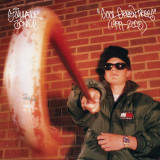
The cover photo is a picture of Sam standing on his back porch in the latter part of 1998, just before he got his first sampler. He was 13 years old, in 8th grade. His dad took the picture with his 35mm film camera: "I actually wanted to be pointing my dad's .22 pistol at the camera lens but he wouldn't let me. He gave me an old walking cane to use instead. The Tommy Hilfiger puffer jacket came from the lost and found at William Fleming High School where my mom worked as a secretary. I was thrilled when she brought it home because we never spent money on expensive name brand clothing like that - we were for the most part strictly a sale rack, bargain bin, thrift store, yard sale, flea market kind of family when it came to clothes. My watch is some cheap off-brand fake gold department store watch." Mastering for this vinyl edition was overseen by Be With regular Simon Francis and it was cut by the esteemed Cicely Balston at Abbey Road Studios to be pressed in the Netherlands by Record Industry.

pas en stock

Commandez maintenant et nous commanderons l'article pour vous chez notre fournisseur.

25,63

Last In: 9 months ago
VARIOUS - NEW BREED R&B: MONEY TALKS
  • A1: Don't Try To Tell Me - Berna-Dean
  • A2: This Mornin' - The Jesse Stone Singers
  • A3: All Around The World - Vermettya Royster With James Brown's Band
  • A4: What's On Your Mind - The Four Bars
  • A5: Don't Look Now - Wilbur "Hi-Fi" White & King Kolax Band
  • A6: Money Talks - Kenny Smith
  • A7: Hey Little Girl Pt 1 - Roosevelt Lee
  • B1: Goin' Away Baby (Round Like An Apple) - Smokey Wilson
  • B2: Hey Hey Baby - T-Bone Walker
  • B3: I'm A Good Woman - The Afterglows
  • B4: You Make Me Mad - Johnny Madara
  • B5: Money Talks (Tell Me What I Say) - The Citations
  • B6: Tell Me Why - Richard Berry
  • B7: Mary Don't You Weep - The Delights

New R&B discoveries continue to emerge and entertain the many followers of the New Breed musical cult; nobody finds more than the Kent connoisseurs.
Berna Dean’s two previously unheard recordings are by far her best. They were laid down at Cosimo Matassa’s New Orleans’ studios by GNP Crescendo but eschewed in favour of two relatively average sides. The great 50s R&B songwriter Jesse Stone provides a rocker for the much-admired Jimmy Breedlove and a super-catchy ‘This Morning’ for an unknown mixed vocal group that has a joyous gospel feel. Jesse also penned ‘Private Eye’, a classic early 60s story-song, for Buddy Wilkins which was issued on Al Sears’ Tri-Ess imprint.
The title track is used twice, on two very different Fraternity recordings. Kenny Smith’s version was issued in 1964 and has many followers, but the equally meritorious Coasters-inspired composition by the Citations is newly discovered. Win Menifee’s ‘I’m Runnin’ Around’ from the same Cincinnati label comes complete with a fascinating back-story.
There are three cover versions. Vermettya Royster’s ‘All Around The World’ is backed by James Brown’s 1961 band, while Roosevelt Lee's 1970 update of the 1947-originated ‘Hey Little Girl’ funks the tune up a la Godfather of Soul. The cover that will make the biggest noise is undoubtedly west coast band the Afterglows’ version of Barbara Lynn’s evergreen dancer ‘I’m A Good Woman’ – this is a future monster.
Golden Crest provides two fabulous male vocal group sides – the swinging ‘What’s On Your Mind’ by Eddie Daye’s Four Bars and the delightful harmonies of the appropriately-named, but unknown Delights ‘Mary Don’t You Weep’.
Blues still thrived into the 70s as Albert Washington’s mean and moody ‘Case Of The Blues’ proves. Smokey Wilson took the music into the late 70s with the storming ‘Goin’ Away Baby (Round Like An Apple)’, which benefits here from a 45-style edit. His Pioneer Club on 88th Street in South Central L A provides the atmospheric photo for this collection.
More early 60s movers come from Wilbur “Hi-Fi” White with ‘Don’t Look Now’, future hit songwriter Johnny Madara’s raucous ‘You Make Me Mad’ and Big Boy Groves ‘Bucket O’ Blood’ which brilliantly describes the kind of club these tracks would fit right into.
The LP version loses a few tracks, but so many collectors have strong preferences we’ve thrown the vinyl junkies a lifeline.

pré-commande27.06.2025

il devrait être publié sur 27.06.2025

29,37
Gnarls Barkley - The Odd Couple LP
  • A1: Charity Case
  • A2: Who’s Gonna Save My Soul
  • A3: Going On
  • A4: Run (I’m A Natural Disaster)
  • A5: Would Be Killer
  • A6: Open Book
  • A7: Whatever
  • B1: Surprise
  • B2: No Time Soon
  • B3: She Knows
  • B4: Blind Mary
  • B5: Neighbors
  • B6: A Little Better

With its cinematic origins The Odd Couple is the natural title for the second album by a pair who seem to spend as much time in wardrobe as the studio and whose recordings are often compared to film scores. Their greatest hit, 2006's "Crazy" was even built around a chunk of a spaghetti western soundtrack. Yet after the success of 2006's excellent St Elsewhere, the collaboration of singer Thomas "Cee-Lo Green" Callaway and producer Brian "Danger Mouse" Burton has become a permanent institution.

Two years on, The Odd Couple stands up proudly alongside its predecessor. The basic recipe hasn't been drastically altered--Danger Mouse's skittering beats and snap-crackle-pop production still provide the perfect platform for Cee-Lo's mighty, soulful wail. If anything, the pair have refined and sharpened their approach to a razor's edge. The key is the way the musical flavors intersect: the Arthur Lee-meets-N.E.R.D. stroll of "Surprise," the jubilant jumble of gospel/soul/synthpop on "Going On," the Otis Redding-shares-a-treadmill-with-Outkast feel of the single "Run (I'm a Natural Disaster)." The cumulative effect is one of a group whose trick-bag has a never-ending supply of happy surprises.

pré-commande20.06.2025

il devrait être publié sur 20.06.2025

27,69
MADALITSO BAND - MA GITALA LP

Madalitso Band

MA GITALA LP

12inchBJR110LP
Bongo Joe
13.06.2025
  • Anafera Chiboda
  • Princess Wanga
  • Ma Gitala
  • Chemwa
  • Mwadala
  • La Bwino
  • Zili Komweko
  • Po Lankhula

For their third album on Bongo Joe, Madalitso Band takes a new direction.

After two records capturing the raw intensity of their live performances, the Malawian duo ventures for the first time into the possibilities of the studio — without ever compromising their signature style or energy.

Armed with their handmade babatone, a guitar, and their interwoven voices, Yobu and Yosefe craft a sound at the crossroads of banjo music, kwela, gospel, and African folk. An acoustic trance that’s both minimal and vibrant, deeply rooted in tradition yet undeniably fresh and contemporary. On Ma Gitala, they add new textures: layered vocals, playful percussion, melodic surprises, and guests from their close and family circles.

Always guided by instinct, the band reveals a more intimate and narrative side of their universe — full of memories, spontaneity, and close-knit complicity. An album that captures the joy and creativity of two artists who turned the street into a stage, and the stage into a playground.

pré-commande13.06.2025

il devrait être publié sur 13.06.2025

30,21
MADALITSO BAND - MA GITALA
  • Anafera Chiboda
  • Princess Wanga
  • Ma Gitala
  • Chemwa
  • Mwadala
  • La Bwino
  • Zili Komweko
  • Po Lankhula

For their third album on Bongo Joe, Madalitso Band takes a new direction. After two records capturing the raw intensity of their live performances, the Malawian duo ventures for the first time into the possibilities of the studio - without ever compromising their signature style or energy. Armed with their handmade babatone, a guitar, and their interwoven voices, Yobu and Yosefe craft a sound at the crossroads of banjo music, kwela, gospel, and African folk. An acoustic trance that"s both minimal and vibrant, deeply rooted in tradition yet undeniably fresh and contemporary. On Ma Gitala, they add new textures: layered vocals, playful percussion, melodic surprises, and guests from their close and family circles. Always guided by instinct, the band reveals a more intimate and narrative side of their universe - full of memories, spontaneity, and close-knit complicity. An album that captures the joy and creativity of two artists who turned the street into a stage, and the stage into a playground.

pré-commande13.06.2025

il devrait être publié sur 13.06.2025

23,11
THY BURDENS - Drunken Prayer
  • Selfishness Of Man
  • Just A Closer Walk With Thee
  • When They Ring Them Golden Bells
  • Rock Of Ages
  • Bedside Of A Neighbor
  • Tramp On The Street
  • Ezekiel Saw The Wheel
  • Soldier Of The Cross
  • Long Ago, Far Away
  • Thy Burden Is Greater Than Mine

Thy Burdens is a natural evolution of the Drunken Prayer catalog. The album is an homage to the fiery, sublime music of the church that means so much to the musicians who worked on it. Musically it's hard country-soul with horns, shouting and a lot of groove. The songs vary between the evergreen and the obscure. Represented here are tributes across the landscape: Thomas Dorsey, Martha Carson, Snooks Eaglin, Ralph Stanley, The Zion Travellers, Leon Payne, The Dixie Hummingbirds, Hank Williams, Odetta, Dylan, and traditionals that are too old to credit. The project was spearheaded by Drive-By Truckers' bassist Bobby Matt Patton who cut his teeth playing in fiery Pentecostal church bands around north Alabama, and Morgan Geer (Drunken Prayer) who learned a lot of the hymns they recorded from his great grandmother and father in Mobile, AL. This all started when Bobby Matt met Morgan at a shared gig in Chapel Hill, NC, where they found themselves instant friends and kindred spirits. After talking for a while the idea for this album was born. The inspiration, other than purely rocking the hell out, was a pull to get to the core values of the old songs. The incontrovertibly true and inconceivably vast principles of kindness, right and wrong, and social justice: Cosmic Gospel. Morgan started using the moniker "Drunken Prayer" after a chance conversation with Tom Waits on the importance of gospel music, regardless of religious beliefs. There are a handful of Drunken Prayer albums, all with semi-religious overtones and imagery, but this one is the first that's all gospel - a prophecy revealed. Thy Burdens was recorded at Dial Back Sound, Patton's studio in Water Valley, MS. There may be some ghosts but there's nothing haunted about this music. It's a joyful noise

pré-commande06.06.2025

il devrait être publié sur 06.06.2025

22,27
The Mighty Mocambos - A Higher Frequency

Germany's iconic deep funk collective digs into a new soundscape: "A Higher Frequency" was recorded with a nine-piece live to tape at legendary MPS studio in the Black Forest, adding an airy, jazzy flavour to their trademark raw and breaks-heavy funk. Ten tracks full of spiritual grooves, soulful themes, loose funkiness and organic interplay, captured with state-of-the-art 1960s gear in a super-vibey room - but the title A Higher Frequency is not just about the pristine analogue sound quality of the recording, it is also a reference to a trancendant wavelength where minds meet and music connects.

Together with long-time friends and collaborators Daniel Kimaz on flute and Guillame Métenier, who worked his magic on the studio's historic Bösendörfer grand piano and Hammond organ, the group spent a week in the Black Forest, with full focus on the mission to capture the live energy and togetherness of the ensemble.

The result is an album bursting with positive energy and power, rooted in a universal funk groove with excursions into many colourful branches like outernational, cinematic, soulful jazz, psychedelic & disco.

The common thread is a propulsive, driving-forward feel: "Open The Gate" welcomes us with hard-hitting breakbeats and dramatic crime brass, followed by the cool groovin' piano-led soul jazz of "Get Loose", while "Spinning" takes us on a ride through cinematic horn choruses and folky-psych flute and guitars. "Back And Better" is Nichola Richards' time to shine, laying her sweet vocals over the sparse hiphop-infused soul beat to tell a comeback story. "Sweet Company" is a lighthearted uptempo tune inspired by TV and library themes of the 1960s. The swampy groove of "Sparks Of Joy" best reflects the fun of the band playing together and "Phantom Power" combines a trademark Mocambo breakin' theme with an unusual instrument, an electric phin from Thailand – a nod to the many so-called "world music jazz" recordings that the MPS studio gave birth to. On "Can't Stop This Fire", soul singer Carlton Jumel Smith from New York City takes over the mic as a special guest and brings the house down with a heavy funk delivery. "When We Roll" builds another highlight where bouncy drums play off disco-jazz horn themes and finally, the gospel-flavoured cine-soul epic "Homebound" drives it all home.

The vinyl record comes in a limited first edition in hand-made tip-on sleeve.

pré-commande06.06.2025

il devrait être publié sur 06.06.2025

23,49
Bob Dylan - Bob Dylan LP

The Understated Debut That Launched a Peerless Career: Bob Dylan Is the Clearest Connection to the Singer-Songwriter's Folk Roots
Pressed on MoFi SuperVinyl for Reference Playback: Mobile Fidelity 33RPM SuperVinyl Mono LP Features the Direct Sound Dylan Intended

1/4" / 15 IPS analogue mono master to DSD 256 to analogue console to lathe

Bob Dylan's self-titled 1962 debut is as understated of an entrance as any significant musician as ever made. Well-versed in American roots music, Dylan simultaneously pays homage to tradition and extends it by putting his own stamp on classic material that metaphorically functions as the soil of contemporary songs and styles. Free of ego, and performed with masterful conviction, Bob Dylan ranks with the initial efforts of giants like Elvis Presley and the Rolling Stones.

Nodding to Woody Guthrie and re-imagining Blind Lemon Jefferson's "See That My Grave Is Kept Clean," Dylan straddles the past and future. He authoritatively displays the ability to handle weighty topics such as death, sorrow, and lamentation with the vaudeville flair, bluesy mannerisms, and poignant command of an artist three times his then-20-year-old age.

Sourced from the original master tapes, housed in a Stoughton jacket, and pressed on MoFi SuperVinyl at Fidelity Record Pressing, Mobile Fidelity's numbered-edition 180g 33RPM mono SuperVinyl LP brings the contents of this seminal release as close as they've ever come to live-in-the-studio quality. Transparent to the source, Dylan's voice, acoustic guitar, and harmonica come across with exceptional realism — the "husk and bark" to which Robert Shelton referred in his legendary New York Times review of a Dylan appearance at Gerde's Folk City — courtesy of the format’s nearly non-existent noise floor, groove definition, and quiet surfaces.

Heard in the original mono configuration, Dylan’s vocals are in the heart of the musical action and as one with the accompaniment. This reissue paints an incredibly accurate portrait of the concrete mass of sound that features no artificial panning and offers a straight-ahead immersion into the music producer John Hammond recorded in just two days in November 1961.

Though much has been made of the commercial indifference that greeted the album upon its low-key release, focusing on sales figures and the reaction of a public not yet hip to Dylan's name miss the forest for the trees. Distinguished from the era's other folk efforts by way of the singer-songwriter’s determination, brazenness, and lived-through-this worldliness, Bob Dylan lays the groundwork for the path he'd soon trailblaze and everyone else would follow.

As Dylan scholar and pop-culture critic Greil Marcus observed in 2010: "Everybody knew Joan Baez and the Kingston Trio; if you knew Bob Dylan, you knew something other people didn't, something that soon enough everybody had to know. Within a year, an album could put an adjective in front of the singer's name as if it were already common coin."

Mono is how almost everyone first heard Dylan’s opening salvo. A career like none other starts here.

MoFi SuperVinyl:

Developed by NEOTECH and RTI, MoFi SuperVinyl is the most exacting-to-specification vinyl compound ever devised. Analog lovers have never seen (or heard) anything like it. Extraordinarily expensive and extremely painstaking to produce, the special proprietary compound addresses two specific areas of improvement: noise floor reduction and enhanced groove definition. The vinyl composition features a new carbonless dye (hold the disc up to the light and see) and produces the world's quietest surfaces. This high-definition formula also allows for the creation of cleaner grooves that are virtually indistinguishable from the original lacquer. MoFi SuperVinyl provides the closest approximation of what the label's engineers hear in the mastering lab.

pré-commande04.06.2025

il devrait être publié sur 04.06.2025

81,93
Orchestroll - Corrosiv LP 2x12"

Corrosiv, the sophomore album from Orchestroll, reveals the duo at their most mature and vulnerable. Originally conceived as a reflection on hybridity and bastardization, the album deploys New Age and ambient compositional tropes as a launchpad, exposing their trite sanctity to the realities of corrosion. Having come of age in the 1970s and 1980s, the New Age movement perdures today as a domain of contradictions; its promise of transcendence riddled with the very commercialized dogma from which its adherents claim to flee. Healing modalities such as reiki, crystal therapy, and sound baths are simultaneously pathways to solace and sites of exploitation; their sonic counterparts—ethereal synth pads, shimmering textures, celestial drones—claim to facilitate meditation and enlightenment while devolving into empty signifiers of vitality. With Corrosiv, Orchestroll displays neither reverence nor disdain toward New Age: they exhume it instead, revealing the saccharine effervescence and commodified murk undergirding its aesthetics. The result is intoxicating—disquieting.

Born from a two-week residency at EMS Studios and expanded through a performance at MUTEK Montreal’s 25th anniversary, Corrosiv has since outgrown its original conceptual nucleus, taking on a broader scope. Its inquiry into New Age ideology’s voided rhetoric and aesthetic mysticism now informs a broader interrogation of cultural mediocrity, anti-authoritarianism, gatekeeping, music industry toxicity, and the crumbling edifice of late capitalism and techno-feudalism—all the mechanisms by which meaning is stripped from ceremony, and once-potent forms of knowledge are subsumed into the machinery of economic extraction, severed from their original essence, and transformed into hollow simulacra. Corrosiv distills these themes through a loose narrative: a soul, fixated on wellness as dictated by cosmetic economism, becomes ensnared in an endless afterlife, unable to transcend and shed its dilapidated consciousness.

Framed as an act of audio dissolution, the album thus engages in an alchemical process, whereby complex waveshaping, morphing synthesis, and distortion enact a ritual of fragmentation. There is also friction: between the rigid, mechanical imposition of systematized order and the untamed, chaotic force of organic metamorphosis. Here corrosion and confinement are not solely conceptual motifs; they are enacted in real time, sculpting the album’s terrain. Scraping, tarnishing, degradation—the languid wear of form and substance—become instruments in their own right: buffing as abrasion, entrapment as transformation, corrosion as a means of reconfiguration. The ‘protagonist,’ if there must be one, is the listener, caught within the throes of structural determinism and the potential for emancipation, unable to pass into something greater as the specters of collapsed futures accumulate in the margins.

Corrosiv extends its reach through collaborations with familiar voices: Heith (PAN), VISIO (Haunter), Femminielli (Drowned by Locals), Habib Bardi (Interzone), and Jiyoung Wi (Enmossed, Psychic Liberation, Doyenne) each leave their imprint on its sprawling landscape. At 1h16m, it is a procession, dense with earworms that burrow into the listener’s unconscious.

Misshapen, broken-down metals leach copper into blood, acid reflux burning through the core. Psyche disaggregates into cosmic turmoil, drifting between planes—tongue on rustline, gullet laced with solvent hymns, molars unlatching, bitcrushed to marrowspill. A spasm of brine, ferrous scripture, venomtext blooming in leaden rivulets, cartilage smoldering in phosphor decomposition, synapses drowning in a quicksilver choir. Crest of bile, churning ore, breath clotting into arsenic mist, vein-thread cinched, a corrosive gospel, limb by limb, oxidized to silence.

Ultimately, as the music exhales its final breath, its residue refuses to dissipate—and stillness alone remains. There are no conclusions here—no resolution, no collapse—only the slow drift outward of a vessel unmoored, lost in the sea of symbolic souring. Corrosiv sings the song of a world barren of prophecy, littered with aesthetic detritus. Whether this magic has been transfigured or simply worn away is unclear: the last breath dissipates, but the oxidation does not stop. The silence, too, will decay.

Conceptualized, composed, performed, recorded, mixed, engineered and produced by Jesse Osborne-Lanthier, and Asaël Richard-Robitaille in 2023 and 2024 at Elektron Musik Studion (EMS) - Stockholm, Sweden and Landsc8pe Studio - Montréal, QC, Canada.
Artwork by Jesse Osborne-Lanthier.
Mastered by Stephan Mathieu @ Schwebung Mastering.

pré-commande02.06.2025

il devrait être publié sur 02.06.2025

30,21
DONNY HATHAWAY - Everything Is Everything LP 2x12"
  • A1: Voices Inside (Everything Is Everything)
  • A2: Je Vous Aime (I Love You)
  • A3: I Believe To My Soul
  • B1: Misty
  • B2: Sugar Lee
  • B3: Tryin' Times
  • C1: Thank You Master (For My Soul)
  • C2: The Ghetto
  • D1: To Be Young, Gifted And Black

Donny Hathaway's first studio album Everything is Everything is a significant work in the realm of soul and R&B music, released in 1970. It marked an important point in Hathaway's career and showcased his exceptional talent as a singer, songwriter, and pianist.

The album was Hathaway's first release after being signed to Atlantic in 1969. Hathaway had already built a reputation early in his life, first as a gospel singer as a child under the name Donny Pitts. Raised in St. Louis, with religious influences, his grandmother Martha Crumwell was herself an accomplished gospel singer and guitarist. After dropping out of Howard University in 1967, Hathaway moved to Chicago, his birthplace, and started working on music for Curtis Mayfield's Curtom Records label where he was a songwriter, producer, arranger, composer, conductor and session player.

Everything Is Everything was produced by Hathaway and Ric Powell, who plays drums and percussion on the album; Hathaway wrote or co-wrote five of the album's nine songs. Hathaway had met Powell while at Howard University, as well as the future Impressions lead singer, Leroy Hutson, who jointly wrote the hit song that would eventually make it on the album, "The Ghetto."

The track was mostly an instrumental, except for Hathaway's vocal ad-libs and his singing of the chorus. Hathaway and Hutson composed another socially conscious song for the album, titled "Tryin' Times." Other songs were split between covers (Ray Charles's "I Believe to My Soul" and Nina Simone's "To Be Young, Gifted and Black"), spiritual affairs ("Thank You Master for My Soul") and love songs ("Je Vous Aime (I Love You)").

Released in July 1970, the album peaked at No. 73 on the Billboard Top 200 Albums chart and No. 33 on the Billboard R&B Albums chart.

This timeless classic is now reissued in the definitive deluxe 180-gram 45 RPM 2LP Analogue Productions (Atlantic 75 Series) format.

pré-commande09.05.2025

il devrait être publié sur 09.05.2025

88,19
Lamb - An Extension of Now - Unreleased Recordings 1968-69

“Underground” is a relative term. One could argue that all the ‘60s San Francisco psychedelic bands were underground, because the music they made was so far removed from the pop and rock sounds that came before them. But of all the bands in the scene, Lamb was perhaps the most underground of them all. It wasn’t just that their blend of rock, folk, classical, country, blues, and gospel was as hard to classify as any of the era. It was also their vibe. Along with classically trained guitarist and songwriting partner Bob Swanson, Barbara Mauritz’s versatile vocals paced material often imbued with a haunting, mystical aura. Yet they could also be earthy and rootsy, occasionally drifting into spacey psychedelia with hints of raga-rock. Released in the early ‘70s, Lamb’s first two albums, A Sign of Change and Cross Between, did indeed offer some of the most intriguing and eclectic music of any San Francisco rock band on the psychedelic scene. But Lamb’s history predated the release of those records by a good couple of years or so. So prolific were Mauritz and Swanson that quite a few of their original compositions didn’t make it onto their albums, though these were often on par with the songs that did find official release. Unlike many bands of the time who had a bounty of surplus quality tunes, Lamb often taped these in studios and studio-like rehearsal conditions, as well as making some professional tapes of their live performances. Fortunately, many of those tapes survive, including a good number of songs that didn’t find a place on their LPs, as well as substantially different versions of some that did. The best of these from the late 1960s find release for the first time on An Extension of Now: Unreleased Recordings 1968-1969. This collection not only rounds out our picture of one of San Francisco rock’s finest underappreciated acts, but also serves as a first-class document of Lamb as they made their transition from a more standard rock outfit to a group not easily comparable to any other in the region, or indeed any other anywhere. Our black vinyl and CD (with extra tracks, limited to 500) releases feature liner notes by Richie Unterberger drawn from an interview with Bob Swanson, who has also contributed photos and memorabilia from his private archive. Produced by noted Bay Area archivist Alec Palao…if you’re a fan of late-‘60s S.F. psych, you have to hear this!

pré-commande09.05.2025

il devrait être publié sur 09.05.2025

44,12
Violeta García & Hora Lunga - I'll Wait for You in the Car Park

"The album was created in this back and forth of snapshots - we made most of the decisions impulsively without much questioning. That takes a lot of trust." — Violeta García & Hora Lunga

"I'll Wait For You In The Car Park", the first full length collaboration between Argentinian cellist, improviser and composer Violeta García and Swiss musician and composer Hora Lunga, is a work of extremes. Drawing from the realities of life on two continents, and embodying moods ranging from stoic desire to violent bursts, the album enciphers so-called ordinary moments from everyday life into an alluring collection of musical scenes. Seemingly inconspicuous moments are condensed into a tale of synchronicity: colliding time zones and seasons, metropolitan rhythms raining down onto a glacier's ice field, exploring places through street view, the serendipity of loitering at a kiosk. As such, "I'll Wait For You In The Car Park" brings documentary film essays to mind that carefully observe the private and everyday occurrences.
Violeta García and Hora Lunga crossed paths by chance in 2023 and began discussing and sharing music shortly afterwards. What started as a loose exchange of ideas, sending back and forth sketches and demos between South America and Europe, grew into several studio sessions in 2024. Being sucked into a "quite extraordinary flow", the two musicians recorded, arranged and intervened on a level playing field, using the studio as a playground to record musical layers and interweave them with field recordings and audio notes gathered over the course of a year. Speaking a kindred musical language, they quickly realized how their ideas clung to each other like two familiar souls, complementing, intertwining and merging. From gauzy and eerie textures, musical miniatures floating through time, howling and screaming strings, to tumbling and thundering basses – the sound of the ordinary shapes a body that vibrates, writhes and breathes.

Violeta García is a cellist, improviser and composer from Buenos Aires, Argentina. Based in Spain, she tours a lot with her band Blanco Teta. She is a performer in many art forms, including free improvisation, contemporary and trans-media experimental repertoire in violoncello and electronics and collaborations with dancers, film makers and visual artists. After years of studying classical and popular music on violoncello and, later, contemporary composition and improvisation, Violeta has developed her own musical voice needed to emerge beyond outside specific genres.

Throughout Swiss composer and musician Hora Lunga's work, the focus lies is on exploring boundaries, both musically and in terms of performance and content. Above all, genre designations lose all meaning, as the music always takes place within a dramaturgically conceived overall framework. In recent years, his projects have ranged from pop music productions to experimental works and sound performances, as well astheatre and film productions. His ensemble WIRREN consists of up to fifteen performers.

pré-commande25.04.2025

il devrait être publié sur 25.04.2025

20,13
ROME - The Dublin Session II (LP)
  • A1: Upon The Emerald Isle
  • A2: Give Your Heart To The Hawks
  • A3: Muse Of Fire
  • A4: An Der Landwehr (Lament Of An Icarus)
  • A5: Eirigh Anois!
  • B1: Hold The Line
  • B2: My White Rose
  • B3: The Tsarist Army
  • B4: Caoineadh Na Solas (Lament For The Sun)
  • B5: La Peau Dernière
  • B6: Deoch An Dorais (The Final Salute)

m Herbst 2022 reiste Jerome Reuter, der luxemburgische Singer-Songwriter und Kreativkopf von ROME, erneut auf die grüne Insel, um dort einige entspannte Wochen mit seinen irischen Freunden zu verbringen. Wie nicht anders zu erwarten war, wurde viel getrunken und gelacht. Es entstanden aber auch Songs. Und am Ende der Reise erblickte eine weitere, faszinierende "Dublin Session" das Licht der Welt.

Wurden die Tracks der ersten Dublin Session noch im legendären "Sonic Studio" in der irischen Hauptstadt aufgenommen, zog man sich für die zweite Session bewusst in die grünen Hügel von Wexford County zurück, um in Brian Brodys "Ballycale Studio" vollkommen ungestört und ganz ohne Zeitdruck musizieren zu können. Alle daraus entstanden Lieder der "Dublin Session II" sind unveröffentlichte Neukompositionen, denen Dank renommierter, irischer Musiker der landestypische Folk-Sound innewohnt.

Auf "The Dublin Session II" verbindet sich auf fast schon ganz natürliche und vor allem sehr harmonische Art und Weise ROMEs ureigener Stil aus Proto-Folk mit dem Klang des Traditional Irish Folk. Hierfür rekrutierte Co-Produzent, langjähriger Freund und musikalischer Mitstreiter Brian Brody (Rack & Ruin) kurzerhand das Who-is-Who irischer Musiker wie Ronan O Snodaigh (Dead Can Dance, Kíla) am Bodhran, Eoin O Cionnaith (Van Morrison, Christy Moore) an den Uilleann Pipes, Matthew Hanaphy am Banjo und den Tin Whistles, Goshia Gasior auf der Violine und Andy Slowey am Bass.

Unter den Kompositionen befinden sich Lieder wie das eingängige, fast tanzbare "Hold the Line" oder das bitter-böse "The Tsarist Army", die einen Kontrapunkt zu melancholischeren Kompositionen wie "My White Rose" und "Muse of Fire" setzen. Nicht unbeeinflusst vom Kriegsgeschehen in Europa und den Zeichen der Zeit entstand so ein multilinguales Kleinod mit Liedtexten auf Französisch ("La Peau Dernière"), Deutsch ("An der Landwehr"), Englisch und Gälisch ("Eirigh Anois!" u.a.).

Totgeglaubte leben bekanntlich länger und so stellt man mit ROME fest: Der europäische Geist ist wohlauf!

pré-commande25.04.2025

il devrait être publié sur 25.04.2025

26,85
Articles par page:
N/ABPM
Vinyl