“We go through life. We shed our skins. We become ourselves.”
This line from Patti Smith was going round and round Felix Manuel’s head as he gradually constructed Under Tangled Silence, his first album in six years and a record of a literal creative rebirth. Felix originally began it in earnest in 2020 Covid lockdown, but a catastrophic hard-drive meltdown destroyed almost all his work and sent him close to psychic collapse himself. However, ultimately this pushed him to rebuild from scratch and in so doing to confront and reassess every part of his musical and psychological processes.
The result is utterly extraordinary. Felix was a child prodigy as an instrumentalist and his advanced musicality has always been prominent in his music, but here he has put himself front and centre as pianist, harpist and more. And this sense of exposure as a performer interweaves with an unflinching emotional openness too. Where sometimes electronic production as advanced as this can use intellect and techniques as shields from soul-baring, this is the sound of someone who can boldly say “I feel things, I cry all the time, and I'm not afraid to say it or show it in the music.”
But this doesn’t mean there’s a move away from the soundsystems and dancefloors where Felix made his name as a uniquely innovative vinyl DJ. Even just in the opening track “A Tune for Us”, minimalist piano ripples and jazz drumming flow into the breaks of vintage jungle – and as the structure of the LP unfolds, a deep ambient meditation like “Hold” can sit very naturally in between the futurist dancehall of “L’Ancienne” and the high-definition acid house mind movie of “Galaxy in Silence”. In fact, as with the hands-on musicianship, that gutsy big-speaker electronic impact is delivered with more certainty, more expertise, more personal flourishes than ever. And all of those elements are more integrated than ever too: the sound of a total musical personality emerging afresh is truly something to behold. An already remarkable talent has been refreshed, reborn and is making the music of his life.
Поиск:grad u
Все
With a clutch of EPs under his belt spanning a wealth of pallets, Henzo narrows the focus on his debut studio album “The Poems We Write For Ourselves” - a culmination of persistent iterations over several years, distilling his sonic milieu into something that feels decidedly his own. The album proper is coupled with a debut live performance which reinterprets the tracks and splices them with omitted material from the time of writing - recorded in full in the intimate confines of Manchester’s growingly infamous Stage and Radio basement. Honing his craft in the shadows of Lancashire, Poems is an expansive reflection of the producer’s time spent away committing to the scope of an LP.
A thread of stratified sound design weaves throughout the record, but with a discerning dancefloor proclivity mostly prevalent. Cold opener “Noggin” riffs on noughties Raster-Noton a la Byetone rebuilt with fractal tear out DnB, with closer “Indulgence” following suit on a puckered plod of Dub Techno ambience. More club-focussed moments come in the form of “Rustica Slump” and “Blue Will...”, the former’s sickly sweet vocals resolved by the latter’s stoic UKG/Techno rudeness. “A Bouquet of Clumsy Words” channels mechanical shuffle with a stripped back 2/4 pulse whilst maintaining a firmly FWD>>energy alongside “Plant Your Roots In Me” on a similar vector - swapping out a straight kick pattern for a bludgeoning 808 assault on an early Hessle-indebted tip.
“Take Stock, Touch Grass” harks to golden era ClekClekBoom and Night Slugs with a bare bones kick and vocal motif, updating the formula with a tweaking lead line that places it firmly in the contemporary space. “Swell:Shrink” sings from the same sheet with a shrieking, space age wobble doing the heavy lifting, knocking the pace back to a shoulder-lean swagger on a slow fast conundrum Henzo has shown his flair for on previous releases.
The outliers to Henzo’s more known approach, “Worm Grunting” with Belfast’s Emby, an amalgamation of halfest time DnB and illest mannered Road Rap, plus “The Rest Is The Mess You Leave”, a starkly anti-retro Ghettotek endeavour, give grounds to the LP. Clearly rooted in the comfortable universe of the dancefloor, these tracks expand the producer’s realm into loftier heights as he graduates into long play land.
- Tired Of It
- Reality Is Calling
- Graveyard Island
- Look Up
- Murder Town
- Don't Look Back
- Johnny Aggro
- Bowling Green Lane
- Dover Street
- Jsa
- Monsters
- On The Radar
LTD. US EDIT.[21,22 €]
Grade 2 is a UK punk band from the Isle of Wight, formed in 2013. The young three-piece is made up of Sid Ryan - Bass & Lead Vocals, Jack Chatfield - Guitar & Vocals and Jacob Hull - Drums. Their music can be described as a classic punk sound, hard and fast whilst also including melodic guitar and vocal parts. Influence taken from classics such as The Clash, The Jam and The Stranglers. While touring, the band met Lars Frederiksen (Rancid) who took an interest in Grade 2 and ultimately played some of their music videos to his bandmate Tim Armstrong. Armstrong liked what he saw and not only agreed to produce the band"s forthcoming record but signed them to his label, Hellcat Records. Last December, Grade 2 flew to Los Angeles, and over the course of two weeks, tracked the dozen songs that comprise Graveyard Island. "He"s one of the most efficient people we"ve ever worked with. He knows exactly what he wants. In the studio, he wanted to capture how we sound onstage, so we were tracking songs live with a scratch vocal," vocalist/bassist Sid Ryan said on working with Armstrong.
- Judgement Day
- Fast Pace
- Under The Streetlight
- Doesn't Matter Much Now
- Midnight Ferry
- Brassic
- Gaslight
- Don't Stand Alone
- Streetrat Skallywag
- Parasite
- It's A Mad World, Baby
- Doing Time
- Celine
- See You Around
- Bottom Shelf
50 years after the genre turned the music world upside-down, GRADE 2 bring the raw power of old school punk to a new generation. Their second release on Tim Armstrong"s legendary Hellcat Records is a thumping 15 track tour de force melding the uncompromising ethos of punk with the howl of contemporary injustice, personal identity and frustrations of Gen-Z youth, authentically told by three lads with punk coursing through their veins. Formed on their native Isle of Wight when they were just 14 years old, Jack Chatfield (guitar & vocals), Jacob Hull (drums) and Sid Ryan (bass & vocals) honed their craft covering punk pioneers before creating a sound uniquely theirs: ten years on, the eponymous Grade 2 is their magnum opus. The new album was produced by the band along with Tim Timebomb (Armstrong) and T.J. Rivers at Armstrong"s Ship Rec Studio in Los Angeles. "Returning to Ship Rec Studio resparked that magic dynamic" says guitarist Jack Chatfield. "When we"re in there I feel like we reach our full potential. Tim would offer tweaks and tips for some songs, while others he"d compliment as finished first time we played them." "We worked flat-out recording this record," says drummer Jacob Hull, "but we never felt pressured, Tim keeping us in the zone to make the best tunes of our lives.
- A1: Pharoah Jones
- A2: Ghost Gospel
- A3: Ill Feeling
- A4: Capital Punishment
- A5: Do Not Adjust
- A6: Cool Green Trees
- A7: Chill Scratch
- A8: Poisonous Fumes
- A9: Welcome Aboard The Starship
- B1: Keep On Runnin
- B2: Sounds Impossible
- B3: Painted Faces
- B4: The Knew Style
- B5: Chicken Wing Blues Sauce
- B6: Kool Breeze
- B7: Sexx Bullets
- B8: Soul Child
- B9: Take Off Runnin
- B10: Centurian
- B11: Bozack
- B12: Church
- B13: Splash One
- B14: Hank
- B15: 73 Goatee
"Chasing the funky symphonies that filled my head and my dreams..."
December 25th, 2023 - an Instagram post. Stimulator Jones shared half a dozen FIRE tracks from his beat tape archive. We were immediately drawn to the rough hewn boom bap.
"I'd release that", Rob commented.
Hours of material was shared and the result is this: Cool Green Trees (1999-2005). A collection of beats and loops Stimulator Jones created between the ages of 14-20 at home in his basement, bedroom and computer room in Roanoke, Virginia.
You will not believe the profound soulful genius contained within these naive schoolboy melodies.
December 25th, 1998 - 25 years ago to the day and his much-coveted Yamaha SU10 sampler was finally bestowed upon young Stimmy AKA Sam Lunsford: "I immediately hooked up a CD Walkman to the input jack and looped the beginning two bars of Grover Washington Jr.'s "Mercy Mercy Me". I don't know what exactly was so thrilling about hearing two measures of music repeating over and over but it was so infectious and hypnotizing and enthralling to me. I'll never forget that ecstatic rush of making my first loop - an uncontrollable, gleeful smile plastered all over my face." When you hear the pocket breakbeat symphonies featured here on Cool Green Trees, you'll feel the same sense of frisson.
In the wake of his Stones Throw breakthrough - Exotic Worlds & Master Treasures - Stimulator Jones was pegged by many as a 90s throwback artist. However, he literally IS a 90s artist. He's been recording music most of his life and he's now 40. He created the bulk of Cool Green Trees as a teenager. Everything before 2004 was recorded when Sam was still in school. He was in 8th grade when he made the 1999 tracks - he didn't even have his learner's permit. This album is a snapshot of a young man in a simpler time. Things were still mysterious back then and he was flying blind, relying on his ears and having to figure things out for himself: "I had no road map for becoming a beatmaker. I have been collecting music since I was a kid, I am a lifelong digger and seeker of cool and interesting sounds. I was there in the golden age of Hip Hop, and while I may have been a suburban white kid in Roanoke, Virginia, I was tuned in and I bought so many classic albums when they came out. I was attracted to Hip Hop because of the musical and poetic quality. I was hypnotized by the rhythms, partially because I was a drummer. I didn't brag about collecting my breakbeat records or making beats - it was something I did in isolation. It wasn't something I generally wanted to bring attention to and it didn't really score me any cool points. I certainly wasn't flexing on social media about it."
Hell, he can do that now!
Opener "Pharoah Jones" was inspired by Yesterday's New Quintet and Madlib's ability to capture that classic 70s sound whilst playing all the instruments. Sam created this one stoned afternoon by laying down a 2 bar loop and a shaker loop on his Yamaha SU700 sampler. He hung a microphone from the ceiling and played his Yamaha Stage Custom drum kit over the top before adding ender Rhodes and playing his dad's Selmer tenor sax through an Electro Harmonix Memory Man echo pedal. Yes! Up next, "Ghost Gospel" utilises a dope loop from a gospel record and adds some soul-funk drums overtop, whilst working that filter knob. Says Sam: "The loop reminded me of something Ghostface would rap over. The sample was in 3/4 waltz time but I flipped it for a 4/4 groove, a technique I picked up from RZA. "Ill Feeling" uses sped-up pieces from a dusty old funk record and putting them over a classic NOLA drum loop; gain chopping up a slow, bluesy 3/4 time signature and bending it to a 4/4 groove. Classy shit. "Capital Punishment" features drums tapped in live, inspired by MF Doom's Special Herbs series. "Do Not Adjust" consists loops found on a compilation of 70s French music at Happy's Flea Market, a classic Roanoke digging spot.
The sublime, evocative title track, "Cool Green Trees" was created when Sam was still living at home. He dumped samples off his SU10 into the family desktop and arranged them in a demo version of Pro Tools: "This track was sort of my ode to the DJ Shadow style of sample based production. Super spacey, slow, and moody. The heavily filtered drums were inspired by Alec Empire's 'Low on Ice' album. I later added some scratches and sounds from a Spider Man storybook record." "Chill Scratch" snags the final bit of a bossanova record and pairs it with a drum loop before adding experimental scratching run through an Electro Harmonix Memory Man echo pedal. "Poisonous Fumes" was made using a sampler, mixer and a turntable; a kind of mixtape beat collage with added scratches and sounds from various records. Using dialogue from superhero records was a nod to Madlib. "Welcome Aboard The Starship" is dark, downtempo trip-hop with a spooky bent. Sam paired a slow, hard drum loop with a guitar sample grabbed off a psychedelic rock record. To finish, he added various backwards sounds and weird atmospheric effects and a little scratching. Swoon.
Side B opens with "Keep On Runnin", made on a borrowed Roland SP202 sampler. Having always loved the sound of the Lo-Fi filter on those machines, reminiscent of the Emu SP1200, Sam always imagined Del or another of the Hieroglyphics crew rapping over this beat. You can certainly hear why. "Sounds Impossible" sees Sam experimenting with layering multiple kick samples at different volumes to create patterns similar to those heard by Showbiz and Lord Finesse during their God-level 1995 period. "Painted Faces" was made by chopping up a REDACTED record which he had gotten from Happy's Flea Market and paired it with a REDACTED drum loop. By the time Sam recorded "The Knew Style", he had acquired a shitty old 1960s portable turntable off eBay. It didn't function properly when he bought it but his brother opened it up, cleaned it out and got it working: "I remember he told me that there was a bunch of sand inside of it when he opened it up, as if its previous owner had taken it to the beach. I would take that turntable on my Happy's Flea Market digs so I could preview records...that's how I found this loop."
"Chicken Wing Blues Sauce" loops up a classic blues joint and pairs it with some REDACTED drums. A bit of filtering and arranging et voilà! "Kool Breeze", from 1999, is one of Sam's oldest surviving beats, as is "Sexx Bullets". The Roots sampled the same record, leaving Sam frustrated yet vindicated. "Soul Child" was an early SU10 creation, looping a dusty old Soul Children 45 and pairing it with 70s rock drum loops to great effect. "Take Off Runnin" was another loop found digging with a portable turntable. Paired with some boom bap drums it makes for a hypnotic head-nod groove. "Centurian" was intended to be a little beat interlude a la Pete Rock. The sample is from a sun-dappled soft-psych record and it's paired with a Robin Trower drum loop that just happens to fit perfectly. Sometimes you slap things together kind of haphazardly and magic happens. "Bozack" was the first beat Sam made using Pro Tools, his first foray into using chopped sounds instead of loops, an exciting new world. "Church" is beat interlude using a Phil Upchurch loop with the "Long Red" drums - a favourite break of Dilla et al. Sam was really on a tear in late 2004, probably because he was unemployed and phoneless and able to just make beats all day. He made "Splash One" on a borrowed Yamaha SU700 and again was experimenting with tapping the drums in live with his fingers, instead of using a loop or sequenced pattern. Channeling 9th Wonder, Sam used a water splash sound effect from a Batman record as a percussive element, hence the title (also a 13th Floor Elevators reference). The main loop is a backwards portion of one of his favourite Roy Ayers songs.
"Hank" is another fun little beat interlude thing, created on a borrowed Roland SP202 sampler with the fantastic Lo-Fi effect that resembled the Emu SP1200 at a fraction of the price. "73 goatee", from 99, is another of his oldest surviving beats, created in his bedroom with his Yamaha SU10 and his brother's Vestax MR-300 4-track recorder: "This one will always feel special. I can remember having a feeling all the way back then on the night that I created it that this was a solid beat with a catchy loop. There was something in the Fender Rhodes melody that resonated with me emotionally, and I had never heard a producer sample that portion before. I felt like I had found my own unique sound, my own unique loop. It came from an Ahmad Jamal '73. I actually even recorded myself rapping and scratching over this beat way back then, I still have that version in all its imperfect sloppy glory."
Sam explains just how much these tracks mean to him: "They all have immense historical and sentimental value and I'm proud of them. These beats come from an innocent, simple time when I was just figuring out how to craft these sounds. They're something very personal to me. They are the initial part of a journey that I really was taking *alone*. There was no YouTube. I couldn't Google shit. I didn't even know any other beatmakers, producers or DJs in my town that could teach me anything. It was always just me, alone, in a room with some equipment - chasing the funky symphonies that filled my head and my dreams. What I was doing wasn't cool. Most of my peers thought I was a weirdo and couldn't care less. Creating these sounds was an anti-social endeavour. In a sense, I felt like it was me against the world, and all I had to instruct and assist me were the recordings produced by my heroes - RZA, DJ Premier, Erick Sermon, Beatminerz, Showbiz, Diamond D, Beatnuts, Prince Paul, The Bomb Squad, Pete Rock, Q-Tip, E-Swift, Mista Lawnge, DJ Shadow, Cut Chemist, Peanut Butter Wolf, El-P and so many more...I dedicate this collection to them, and to my older brother Joe who has always been a musical and technical guiding light for me.
This was a time before every kid was a self-described producer and beatmaker, before everyone had a DAW, before Kanye and "chipmunk soul", before Red Bull beat battles, before there was any social media beyond chat rooms and AOL Instant Messenger, before Soundcloud, before SP-404 mania, before lo-fi beats to study to, before Splice, before targeted ads for MIDI chord packs, etc. In 99 when I told people that I had a sampler and made beats I was mostly met with bewildered confusion and indifference. Kids and adults alike would wonder why I got this weird machine for Christmas instead of something worthwhile like a Playstation or a mountain bike or even a guitar for that matter because at least that could be used to make "real music". Back then, sampling was still not widely respected as an art form - it was seen as lazy, talentless and unoriginal at best and outright criminal theft at worst. I had gotten respect for playing drums and guitar and things of that nature but this was a step in the wrong direction in the eyes of many."
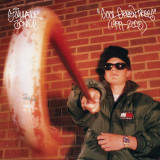
The cover photo is a picture of Sam standing on his back porch in the latter part of 1998, just before he got his first sampler. He was 13 years old, in 8th grade. His dad took the picture with his 35mm film camera: "I actually wanted to be pointing my dad's .22 pistol at the camera lens but he wouldn't let me. He gave me an old walking cane to use instead. The Tommy Hilfiger puffer jacket came from the lost and found at William Fleming High School where my mom worked as a secretary. I was thrilled when she brought it home because we never spent money on expensive name brand clothing like that - we were for the most part strictly a sale rack, bargain bin, thrift store, yard sale, flea market kind of family when it came to clothes. My watch is some cheap off-brand fake gold department store watch." Mastering for this vinyl edition was overseen by Be With regular Simon Francis and it was cut by the esteemed Cicely Balston at Abbey Road Studios to be pressed in the Netherlands by Record Industry.
The strength of Fan Club Orchestra's (FCO) trajectory lies in their nebulous, collaborative, and experimental nature, always with Laurent Baudoux at the centre. With its roots in the DIY impulses of the Brussels art and music scene of the late nineties, Baudoux rallied together a revolving cast of players with an unconventional ensemble of instruments to explore melancholic psychedelia that touched on drone and minimalism as readily as it carved minor pop hits from cracked electronics. Performances were often highly improvisational, aided by the barely controlled chaos that guest collaborators—such as American artist Mike Kelley—would inject into an appearance.
FCO self-released two albums in the early 2000s before finding a home with Sonig, where they released several more records up until their last with the label in 2013. This was a fitting frame as Sonig, like FCO, channelled the fervour and formalism of the experimental music history of the Rhineland, which includes Kraftwerk, krautrock, and key early electronic music studios.
Following an eleven year hiatus, Laurent Baudoux reassembled the group in 2024 and presented a new album with the esteemed Glaswegian label 12th Isle late in that same year. Building on the strength of the new iteration, and with the aim of reappraising some of the rich yet oblique history of the group through this new lens, FCO have remastered and reissued their 2013 album, 'An Insane Portrait'.
The recordings were originally commissioned in 2009 for Fabrizio Terranova's film 'Josée Andrei, An Insane Portrait' about the truly remarkable figure Josée Andrei. Shot in San Francisco, the film is an intimate portrait of Andre. Blind from birth, she is a witch, painter, photographer, tarot reader, and psychology and modern literature graduate.
'An Insane Portrait' captures a stripped-back FCO, with Baudoux working solely with original FCO member Ann Appermans. The configuration of Baudoux's electronics and Appermans' bass guitar yield a tender and preciously melodic suite of instrumentals.
Originally released on vinyl by Sonig in 2013, the remaster will again be presented by the label in a limited cassette edition and in digital formats, each featuring a bonus track that was not included in its original release.
The strength of Fan Club Orchestra's (FCO) trajectory lies in their nebulous, collaborative, and experimental nature, always with Laurent Baudoux at the centre. With its roots in the DIY impulses of the Brussels art and music scene of the late nineties, Baudoux rallied together a revolving cast of players with an unconventional ensemble of instruments to explore melancholic psychedelia that touched on drone and minimalism as readily as it carved minor pop hits from cracked electronics. Performances were often highly improvisational, aided by the barely controlled chaos that guest collaborators—such as American artist Mike Kelley—would inject into an appearance.
FCO self-released two albums in the early 2000s before finding a home with Sonig, where they released several more records up until their last with the label in 2013. This was a fitting frame as Sonig, like FCO, channelled the fervour and formalism of the experimental music history of the Rhineland, which includes Kraftwerk, krautrock, and key early electronic music studios.
Following an eleven year hiatus, Laurent Baudoux reassembled the group in 2024 and presented a new album with the esteemed Glaswegian label 12th Isle late in that same year. Building on the strength of the new iteration, and with the aim of reappraising some of the rich yet oblique history of the group through this new lens, FCO have remastered and reissued their 2013 album, 'An Insane Portrait'.
The recordings were originally commissioned in 2009 for Fabrizio Terranova's film 'Josée Andrei, An Insane Portrait' about the truly remarkable figure Josée Andrei. Shot in San Francisco, the film is an intimate portrait of Andre. Blind from birth, she is a witch, painter, photographer, tarot reader, and psychology and modern literature graduate.
'An Insane Portrait' captures a stripped-back FCO, with Baudoux working solely with original FCO member Ann Appermans. The configuration of Baudoux's electronics and Appermans' bass guitar yield a tender and preciously melodic suite of instrumentals.
Originally released on vinyl by Sonig in 2013, the remaster will again be presented by the label in a limited cassette edition and in digital formats, each featuring a bonus track that was not included in its original release.
astia's NECHTO presents a new six-track release from DJ Dextro, including one collaboration with Portuguese producer Cardao. The project marks Dextro’s first appearance on the label, following years of his tracks being played by Nastia and a shared event in Lisbon in 2023. That connection gradually turned into a conversation about releasing something together. “It was a matter of time until I got to her ear,” Dextro says. “And from there, we talked about NECHTO — and here we are.”
The tracks on the EP are shaped by a mix of spontaneous ideas and observations on daily life, society, and broader themes like science and the unknown. Dextro explains that the track titles often reflect his current state of mind or something happening around him --- sometimes personal, other times completely random. Each one sits within his established sound: energetic, structured, and focused on rhythm.
One of the six tracks features Cardao, with whom Dextro shares what he describes as “a good harmony and easy understanding” in the studio. Known for his groove-led, percussive style, Cardao’s contribution adds another layer to the release while fitting seamlessly into its overall tone.
Shaped by both artists’ individual perspectives, this EP stays close to the club — direct, driving techno rooted in shared sensibilities and straightforward execution.
- I Feel So
- Lead To Gray
- Leave Me Behind
- Home For The Night
- Pringle Street
- Hereafter
- Time Spent, Too Long
- Autumn
- Chrysanthemum
- As The City Sleeps
For Wilkes-Barre's One Step Closer - the concept of home is complicated. "I've never felt so distant in my life," vocalist Ryan Savitski screams on the lead single "Pringle Street," a place in his hometown that binds the album's lyrics to both a precise location and feeling of displacement. On their first ever full-length album and debut for Run For Cover This Place You Know, the band offers a modern coming-of-age story about growing up and grasping both the known and the unknown. One Step Closer started in 2016 and in their short five years, Savitski, along with drummer Tommy Norton, bassist Brian Talipan and guitarists Ross Thompson & Grady Allen have come into their own as a modern hardcore mainstay. Their 2019 EP 'From Me To You' countered existing trends in exchange for a more melodic sound in the vein of bands like Turning Point and Title Fight. They went on to open for Have Heart at the band's now legendary reunion shows that summer, and joined bands like Knuckle Puck and Turnstile on tour before pausing to write their debut album. This Place You Know grapples with the weight of themes like isolation, depression, and loss - all amplified by driving bass lines, em-phatic guitar riffs and unwavering drumming performed by the band. From the first moments of album opener "I Feel So," the stakes are made clear by the anchoring lyric 'this place you know, sometimes it hides the truth and lets people go" - One Step Closer is attempting to resolve the unresolvable anguish of moving on from everything you once knew.
- A1: Space Drift
- A2: Memory Loss
- A3: Siren-Call
- A4: Harmonisers Of The Spheres
- A5: Telepathy Beyond Time
- A6: Older Than Time
- A7: Congestion Hoe-Down
- A8: Shadowland
- A9: Celandine & Columbine
- A10: The Dying Of The Light
- A11: Cloud
- A12: Darkness At Noon
- A13: Future Perfect
- A14: The Killing Skies
- B1: Into The Depths She Calls
- B2: Lazy Summer Afternoons
- B3: Insects Revolt
- B4: Blood Runs Cold
- B5: Post Apocalypse Fog
- B6: Fish Don’t Cry
- B7: Ghost In The Abbey
- B8: Insects Dance
- B9: Dreams Of Magic & Cornfields
- B10: Devil’s Lightening
- B11: Danger Hurts
- B12: Why Me?
First ever release of pioneering radiophonic / experimental / electronic / soundtrack composer you may never have heard of but really should have by now. 26 tracks in all.
As we began the mammoth task of whittling down material for this album Elizabeth recalled the time she met Delia Derbyshire. It was during a party for existing and former Radiophonic Workshop composers at BBC Maida Vale in the early 1980s. Delia introduced herself with typical energy and exuberance proclaiming "It's up to you now - I'm passing the baton. Show these men how we get things done". That must have been quite an honour and responsibility for a young, female composer establishing herself within the male-dominated environs at Delaware Road.
Looking back over a musical career spanning almost five decades, it's clear Elizabeth rose to the challenge and made her mark. She was consistently in demand with television and radio producers, composing for an array of ground-breaking, critically acclaimed and popular BBC projects. Whilst Delia's legacy has achieved mythical status with her position as an innovator and feminist icon secured, the majority of Elizabeth's recorded work remains unavailable so her contribution to the output of the Workshop and evolution of British electronic music is somewhat under-appreciated.
Perhaps this record will help start to remedy the situation. Included are early tape experiments, home demos and non-BBC commissions from the early 1970's to the late 2000s. Having listened to 260+ digital audio tapes from Elizabeth's personal archive we have barely scratched the surface but hope to provide an indication of the breadth of her compositional and sound design skills.
Classically trained in cello and piano, Elizabeth graduated from the University of East Anglia with a degree in Music in 1973. She was mentored by Tristram Cary who helped her to become UEA's first recipient of a Masters in Electronic Music and later awarded an Honorary Doctorate by Staffordshire University. Joining the BBC as a studio manager in 1975, Elizabeth transferred to the Radiophonic Workshop in 1978. One of her first tasks was to create special sound effects for Blake's 7 using tape loops, the EMS 100 and trusted VCS3.
Her celebrated score for The Living Planet in 1982 featured early use of the PPG synthesizer and earned an Emmy nomination. Over the following years studio technology evolved rapidly, but Elizabeth transitioned from analogue recording techniques to newer digital platforms with relative ease, using samplers, midi sequencing and computer controlled workstations.
With an incredible 1,400 commissions to her name, she created special sound for The Day Of The Triffids, Lord Of The Rings, countless radio dramas including Iris Murdoch's The Sea, The Sea, Harold Pinter's Moonlight, all of Howard Barker's plays, productions of King Lear, Wordsworth's Prelude and The Pallisers. The success of The Living Planet led to further work for the BBC Natural History Unit followed by numerous commissions for The Natural World. At one point in the late 1980's at least five of her signature tunes were being broadcast every week including Points Of View, Horizon, Doctors To Be and Everyman.
After the closure of the Workshop in 1996 Elizabeth became freelance, arranging Faure's Pavane for the BBC World Cup '98 coverage (reaching no. 9 in the UK singles chart). She wrote additional music for Monty Python's Holy Grail DVD, scored Michael Palin's Full Circle and Sahara TV series, The Lost Gardens Of Heligan and The Human Body with Robert Winston.
Retiring from the music industry in the late 2000's, Elizabeth recently returned to her East Anglian roots and now lives near the coast. She walks daily, listening to all kinds of music, new and old, on her beloved air-pods.
After recent excursions on X-Kalay and Craigie Knowes, Melbourne's Escape Artist follows on from his excellent 'Energy Breakthrough EP' on Phonica's main label with another special release, the 'Forgot Who I Was / Remembering' 12".
As ever, euphoria and energy are his production calling cards, with A-side 'Forgot Who I Was' gradually building and releasing its intensity, all delicately programmed melodies underpinned by a potent shapeshifting bassline.
B-side 'Remembering' is almost a flipside of the same coin, maintaining aspects of the previous track's two-step-esque drum pattern yet slowing and gliding along in a more uplifting direction, touching on ambient techno with flourishes of acidic breaks.
Carrying on from recent archival releases from masters of Indian classical tradition such as Kamalesh Maitra and the Dagar Brothers, Black Truffle is pleased to present a previously unheard recording of a concert by Pakistani vocalist Salamat Ali Khan. Born to a musician family in Hoshiarpur in the northwestern state of Punjab, Khan moved with his family to Lahore in Pakistan after the 1947 partition of India, becoming a child musical prodigy. Khan was a master of the kyhal form of Hindustani classical vocal music, a style integrating influences from Middle Eastern musical traditions that gives the singer a great deal of improvisational freedom. Travelling widely across the globe from the 1960s until his death in 2001, Khan approached ragas performed in the kyhal style as expressive forums for risk-taking improvisation, enlivened by ceaseless ornamental invention.
This remarkable recording was captured by Michael Hönig (of krautrock legends Agitation Free) in concert at Berlin’s Neue Nationalgalerie as part of the MetaMusik festival in 1974 (which also featured Nico, Tangerine Dream, and Roberto Laneri’s Prima Materia, among many others). Khan, who is also heard accompanying himself on a specially tuned alpine zither (in place of the traditional swarmandal, an Indian style of zither), is joined by Shaukat Hussein Khan on tabla and Hussein Bux Khan on harmonium. The lack of a familiar underlying tanpura drone gives this performance a weightless, floating quality, with all three of the musicians playing masterfully with the interaction between silence and the pulse propelling each section of the raag.
As Khan explains in his opening remarks, this performance of the rainy season Raag Megh is divided into three parts, each with its own tempo and rhythmic scheme (tala). The opening vilambit, in a twelve-beat tala, stretches out for over twenty minutes, lingering for a long time in a space of meditative calm, Khan lightly strumming the zither while exploring the lower end of his range in languorously extended notes. Virtuoso tabla interjections at first barely state the tempo, and the interplay between musicians is so spacious that we hear scraps of audience noise and the squeak of the harmonium’s mechanism in between the notes. Gradually picking up rhythmic definition and melodic complexity, after around fifteen minutes the music builds dramatically, with Khan letting out emotive yelps and swooping scalar shapes ranging across his full vocal range. This flows seamlessly into the following jhaptal, at a faster tempo in ten beats, which then makes way for the concluding teental, very fast in sixteen beats, which becomes a frantic improvisational exchange of daring rhythmic disruptions from the tabla, flowing harmonium melodies, and a stunning variety of vocal approaches from Khan, ranging from rapid-fire staccato consonants to guttural growls.
Accompanied by stunning black and white concert photographs, the LP also contains a moving and entertaining recollection from acclaimed German musicologist Peter Pannke, looking back on his experience assisting Khan and his musicians in Berlin at the Metamusik festival (including a mouth-watering description of a feast cooked by the maestro himself). As Pannke describes in his account of attending the concert, the beauty and spiritual intensity of this music leaves the listener speechless.
- Forty (Feat. Chris Clarke And Mickey Factz)
- Worthy (Feat. Cashus King And Scienze)
- Simple (Feat. Sene And Chester Watson)
- Love (1-4) (Feat. Wyldeflowher, Geminelle, Yah Ra, Lexxus, And Noveliss)
- Dance (Feat. Phoenix Cruz And Charles Hamilton)
- Happy (Feat. Kota The Friend And R.a.p Ferreira)
- Knowledge (Feat. Triune And Tristate)
- Bible (Feat. Propaganda And Pch)
- Human (Feat. Homeboy Sandman And Asher Roth)
- Loser (Feat. Cashus King And Stik Figa)
- Joy (Feat. Fashawn And Choosey
In the turbulent world of hip-hop, few artists are able to make the transition from hot young star to acclaimed rap luminary. Los Angeles emcee Blu has followed this rare path, graduating from a spot on the 2009 XXL Freshman list to an expansive catalog with more than 25 celebrated releases. Now, the talented lyricist is celebrating his remarkable journey with Forty, a new album entirely produced by influential beatsmith August Fanon, who has crafted tracks for Westside Gunn, Mach-Hommy, Tha God Fahim, billy woods, Navy Blue, and more. “This album is a celebration of me reaching 40 years of age,” Blu explains. “All the content is a reflection of where I am mentally at the age of 40.” With intricate verses packed with wisdom and maturity, the collection finds Blu and a host of guests reflecting on happiness, religion, love, knowledge, humanity, and more.
Fanon brings these tracks to life with a unique production approach, taking it back to basics with soul heavy soundscapes Blu describes as “straight loops, no drum programming or layers, just really soulful loops.” With appearances by Kota The Friend, Asher Roth, R.A.P. Ferreira, Mickey Factz, Homeboy Sandman, Chester Watson, Fashawn, and more, Forty is a timless experience from an artist who remains a vital presence in any decade of life.
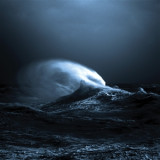
The Ottawa composer/performer and head of Black Bough Records plays every instrument on his CST debut: an accessibly avant-garde work of dark/ambient modern chamber music. Mark Molnar has been a linchpin of the Ottawa experimental music scene for over two decades, spanning contemporary classical, electroacoustic, industrial/noise, and improv. As a string player in a wide range of projects, an organizer and curator of innumerable shows, and via his own avantgarde label Black Bough Records, Molnar's unflagging contributions to independent music culture in Canada's capital city have been significant. EXO is his Constellation debut: a remarkable and bracing suite of post-classical composition on which Molnar plays every instrument. Meticulously self-recorded, primarily with strings, harp, and piano, EXO balances thematic melodicism, polytonality, and dissonance across three elegiac pieces of exquisitely expressive dynamism. This is exacting modern chamber music that blends formal and harmonic complexity with a solemn emotive sensibility accessible to a broad audience. Listeners that yearn for some edge and disquietude in a landscape of often all-too-approachable post-classical music should find EXO eminently worth their time and attention. While Molnar is a highly trained string player, and studied music under Aubrey Wolfe, microtonality with James Tenney, and composition with R. Murray Schafer, his trajectory has been entirely and intentionally outside the academy, signalling a socio-artistic commitment to DIY culture, forged from an early passion for the sonic worlds of post-hardcore, post-punk, no-wave, free improv, power electronics, and other independent/underground musics. His classically-informed works have been described as "tense currents of musical modernism invigorated with punk's raw vitality." EXO carries an undercurrent influenced by dark industrial and ambient metal in particular, with microphones purposely placed to pick up the low-end frequencies of the piano body, and of a bass drum positioned as a resonant skin in the acoustic space; an electroacoustic strategy organically meshed to the crisply defined and pristinely recorded pointillisms and polychords of strings, harp, and piano, which feed into this noisefloor of crepuscular sub-bass disquietude and decay. It's a production aesthetic that lends EXO a distinct undertow of tension and feeling, a sort of roiling maximalism where the chamber instrumentation traces arcs and waves of form and flow as if drawn from a dark, impervious ocean below. It also reinforces the profound hermeticism of Molnar's process, as a forbiddingly solitary creative act of immersion and navigation. The album artwork, featuring semiabstract stills of the sea by British photographer Ed Allen, further reifies this metaphor. The album's opening piece 'Sub Luna' (and its shortest at 8 minutes) showcases Molnar's adeptness at naturalistic and flowing complexity: tight cascades of climbing and descending chordal clusters hold their polytonal densities for various durations, yielding to more clarified harmonic suspensions and motifs, as melodic themes led primarily by violins in the higher registers provide a fractured lyricism. Molnar says: "the opening and closing figures of this piece act as opposing shorelines; the shorelines provide a reliable expression of range and key signature, and the tides come in and swallow them up, the motion of a body that addresses the relationship between states of lucidity and melodic figures." On 'Terre Sacer' everything happens in soupier waters, as a slow and doleful theme, anchored by grinding bass notes, circles in a gyre of dark resonances, until glistening strings gradually ascend to enrobe a plaintive and gently harrowing single-voiced ostinato over the composition's final third. Molnar's drone, ambient, minimalist, and goth-industrial influences are on display here. Side Two of EXO features the 18-minute multi-movement 'pallida Mors' (pale death): a waterfall of heterophony introduces dense chordal movements where strings are recorded and mixed to evoke pipe organ, in the album's most overtly dissonant and (anti)liturgical sequence. This gives way to ever more open and fragile spaces, before a resurgence of dark clusters and noise treatments introduces a final repeating piano coda, shrouded in devastated bass resonance, settling into what Molnar calls "a meditative hollow." Constellation is honoured to release this work by Mark Molnar, a longtime fellow-traveler whose selfless and boundlessly generous activities as an independent arts enabler sometimes obscure his own accomplished and uncompromising artistry. We trust EXO can help shed some much deserved light on this fine composer. Thanks for listening.
Nick Bike has been at it again, crafting high-grade club cuts that always make an impact. These two have already been well road-tested with great effects. 'Party People (Night & Day)' is the first and is a brilliant collision of some funky, soulful disco classics into one new and strident sound with irresistible claps and vocal hooks. On the flip is the scorching 'Every Night (Hold Me Tight)' which is just timeless and super smooth disco-funk with a persuasive charm. Two no-brainers here that will bring next-level fun to any set.
"In a world where it is easier than ever to say something, it is actually the hardest time to be heard.
We are constantly bombarded by so much information and/or distractions that people can hardly be blamed for not tuning in.
The box has been constructed to be safe, so why step outside it?
The vibe shift is undeniable but everyone is free to choose which frequency to tap into.
Music can be nourishment for the soul if you have the right ingredients. Even then you need the right chefs to cook it properly to be served.
Meftah and Ideeyah have taken their time to create something that feels complete.
Something intentional. Meditative.
Another piece in the great chain of the African Diaspora.
Where else but Detroit could something like this come from?
A complete concept that is unabashedly of the present but still honors the past. This is Soul music. Crafted with love for community, for heritage, for fulfillment.
There was a method to the madness, a reason for the gradual formation of artistic merit that is presented to you now.
This music contains a universal message if you can open your eyes and mind to it.
Less talking, more doing.
Go out there and be somebody again.
Reclaim your light under the sun.
Swing Low, Sweet Chariot.
For Funk is it’s own reward,
if you want it to be.
- Turtle Bugg"
Fast Castle kicks off 2025 with another five-track heater: Stable Units by Gent1e $oul!
Across five tracks, Gent1e $oul hones his signature blend of bass-driven genres, adding more dancefloor-focused cuts to his ever-expanding sonic universe.
The opener, 4TC Boom, came together in a single restless session, crafted as a late-night special for the label’s most recent dance at Fitzroy. Its thick, drippy bassline—born from Digitakt overdrive manipulation—makes it the perfect stalactite cave anthem.
Next up, Paladin—named after the strongest horseback unit in Gentle $oul’s beloved AOE II—marks Gent1e $oul’s second collaboration with recent Femme Bass Mafia production graduate Rolex3k. This jersey-tinged, wubby roller was first road-tested by MSJY at Reef, where it proved its undeniable dancefloor potential.
Who doesn’t love that classic M1 grime flute? +390 pairs its signature "ring ring" sound with rolling UK techno drums, making for a no-brainer DJ tool.
On the flip, Steppe Lancer is a brooding, venomous mutation—headsy, progressive, and laced with heavy, evil energy. An FCHQ favorite and one for the heads!
Closing things out, Parthian Tactics dives deep with a late-night dubstep cut. Powerful enough to shake the subs, yet swaying in half-time for those introspective moments.
For the artwork, our graphic wizard Jonas went all out, creating a stunning detailed Bronze Age–inspired 3D equestrian design. Snag the full-cover printed vinyl via Bandcamp or at your favorite record store.
Quick Guide
4TC Boom, 154bpm – Drippy stalactite cave, peak-time weapon
Paladin, 142bpm – Wubby jersey roller, groovy DJ tool
+390, 138bpm – Grime-tinged dubstep x techno hybrid
Steppe Lancer, 154bpm – Headsy, progressive rattlesnake venom bomb
Parthian Tactics, 146bpm – Deep dubstep for late-night sessions
- 1: Synthtro
- 2: I'm So Tired (Of Living In The City)
- 3: Can't Get Through To My Head
- 4: Someone Else Is In Control
- 5: Goin' Down
- 6: Wish That She'd Come Back
- 7: Thick Skin
- 8: Too Much Tension
- 9: Watching The News Gives Me The Blues
- 10: It's Alright
- 11: Traces
Ltd edition in transparent yellow vinyl!
The Mystery Lights 2nd outing on Daptone's rock subsidiary, Wick, sees them digging deeper into their cavern of influences, taking on tips from Suicide, The Kinks and Television as they look to build on their already party fuelled, raucous sound.
The Mystery Lights story begins in 2004 in the small town of Salinas California when friends Michael Brandon and Luis Alfonso -whose shared fondness for groups like The Mc5, Velvet Underground, Dead Moon, and The Fall (just to name a few) -decided to join forces and craft their own brand of unhinged rock and roll. From there they spent the better part of 10 years touring relentlessly before migrating to Queens, New York in 2014.
With a live show known for its raw, visceral energy and relentless assault –leaving little to no stoppage between songs –they barreled through countless NYC haunts and DIY venues, quickly amassing a fervent local following. The buzz soon caught the attention of Daptone Records execs who were in the beginning stages of launching a new rock-centric imprint, Wick Records. Impressed by the groups’ musicianship, groove, endless supply of energy, and understanding of musical history the Mystery Lights were quickly signed to Wick. Though a rock band at heart, the parallels to what Daptone Records had traditionally looked for in their Soul artists was undeniable. Soon sessions were booked with Producer/Engineer Wayne Gordon, and the release of their debut single “Too Many Girls” b/w “Too Tough to Bear” launched to mass critical fanfare.
Upon the release of their self-titled full-length on June 24th 2016 The Mystery Lights were quickly crowned “one of New York’s finest garage rock bands” by NME. Extensive touring, including multiple stops in Europe, Asia and Australia followed which found the group graduating from support slots at hole-in-the-wall clubs to headlining stages at major festivals worldwide.
After two years of break-neck, non-stop touring, the group settled back into Queens to prepare for their second full-length record, Too Much Tension(out May 2019). With Wayne Gordon in the producer’s chair and several intense writing sessions under their belt the group were back at Daptone’s House of Soul and ready to track. While keeping the hard-hitting approach of the first LP, Too Much Tension finds the group digging deeper into their well of eclectic influences, enriching their sound without echoing the past. Mixing the eerie, insistent synth sounds of groups like The Normal and Suicide, the energy and swagger of punk’s golden age, the pop sensibility of The Kinks, and the stark, deliberate execution of Television -The Mystery Lights are taking their idiosyncratic brand of rock and roll to dizzying new heights.
With Harmonia, Trikk takes us on a rich, multi-faceted trip of club music. Spread across five singles, the project explores a wide spectrum of styles, tempos, and textures—all while staying rooted in the heart of the dance floor.
Sagrado marks the peak of the project, with Trikk once again on quality control. It hits the heart and essence of the project—club music to the core. The track begins with a tight framework of kick drum, claps, and a bubbling bassline, a welcoming foundation for the elements that follow. Gradually, it opens up into a wide musical sunrise, as Trikk demonstrates his sure instinct once more—balancing warmth with his distinctive style.
The project took off with Rigor, a peak-time statement that paired massive, tactile sound design with surprising moments of piano serenity—setting the stage for both bold and nuanced. Luxo followed, weaving together industrial grit and organic warmth, further expanding Trikk’s musical language. With Fortuna, the project stepped into the glow of summer, as Trikk joined forces with Kenyan vocalist Sofiya Nzau. The latest single Raiva unites two worlds, blending Trikk’s rhythmic, new-wave-infused sound with MEUTE's commanding brass power.
Harmonia is a carefully woven narrative of rhythm, design, and identity—an artistic statement built to move.