- A1: The Sugarhill Gang - Rapper's Delight
- A2: Joe Bataan - Rap-O Clap-O
- A3: Funky 4 + 1 - That's The Joint (Remix)
- A4: Afrika Bambaataa X Zulu Nation & Cosmic Force - Zulu Na
- B1: Grandmaster Flash & The Furious Five - The Message
- B2: Super-Wolf - Super-Wolf Can Do It
- B3: Spoonie Gee - Spoonin' Rap
- B4: Cold Crush Brothers - Basketball Throwdown
- B5: Fab 5 Freddy - Down By Law
- C1: Boogie Down Productions - 9Mm Goes Bang
- C2: Jungle Brothers - Straight Out The Jungle
- C3: Digital Underground Feat 2Pac - Same Song
- C4: Monie Love Feat True Image - It's A Shame (My Sister)
- C5: Grand Puba - I Like It (I Wanna Be Where You Are)
- D1: The Pharcyde - Runnin
- D2: Capone-N-Noreaga - Invincible
- D3: D I.t.c. Feat. Ag., Big L & O.c. - Thick
- D4: Dj Honda Feat Mos Def - Travellin' Man
- D5: Rza - Grits
- E1: Percee P - Raw Heat (45 Version)
- E2: Guilty Simpson Feat Spacek - Smoking
- E3: Brooklyn Academy - Black Out
- E4: Dizzee Rascal - Fix Up, Look Sharp
- E5: Chinese Man Feat Kendra Morris & Dillon Cooper - Liar
- F3: Brand Nubian - Slow Down
- F4: Bozoo Bajou Feat Oh No - Back Up
- F5: Greyboy Feat Main Flow & Elgin Park - Uknowmylife
- F1: Beat Assailant - Hard Twelve (The Ante)
- F2: Lanu Feat Kero One - It's Time
Поиск:grand brothers
Все
Celebrating his 70th year in show business, Pat Boone, legendary singer, actor, songwriter, and author is reconnecting with his Nashville roots with a milestone country music project, Country Jubilee
Included in the 25 tracks are 5 Pat Boone Top 100 Country recordings, Boone's recordings of classic hits by Country legends, plus a new recording of the classic duet and Billboard #1 'You and I' (with featured guest artist Crystal Gayle), and Pat's new song, 'Grits' (with featured guest artists Ray Stevens, The Gatlin Brothers, Lorrie Morgan, Deborah Allen and Dean Miller), tailor-made for the line dancing crowd.
The Commemorative Edition 2CD format includes a 56- page booklet with 'The Story Behind the Song' (compiled by hit Country songwriter Frank Myers), 'I Remember Red' (influence of father-in-law and Country music pioneer and Grand Ole Opry co- founder Red Foley), lyrics, and archival and behind- the- scenes photographs.
Brotherhood Of Peace (aka B.O.P.) brought the world some of the best breezy power pop, Southern rock and heavy boogie all packed into one brilliant album in 1976, the fittingly titled Cuttin’ Loose. The album is a free-flowing nine song collection of genre blending would-be hits suited for both ’70s AM gold and FM album rock that never received its proper due, until now. The album flows somewhat similar to the way Big Star combined heavy riffs with airy pop sweetness, but B.O.P. brought more of a blues rock groove to the proceedings, resulting in heavier undercurrents to songs with glowing three-part harmonies and impeccable power trio musicianship. By the mid-’70s, rock ’n’ roll was truly anything goes. Experimentation, excess and inventing new genres was all the rage, and the trio of spritely young men—guitarist / vocalist Dennis Tolbert, bassist / vocalist Mike Arrington and drummer / vocalist Ronnie Smith—gamely tackled whatever sound they pleased. Fortunately, the band captured it all on their lone album, released on the small independent label Avanti Records in March 1976. The Mount Airy, North Carolina trio got its start as teens in 1969 as the backing band to a large 20-50 person traveling church choir called the New Americans. By 1970, the band was ready to move on to performing on their own. First as a sextet, the band soon trimmed down to a three-piece, working the local club circuit like madmen, sometimes playing three shows a day. At the height of their live tightness, B.O.P. recorded the album with local musicians Don Dixon and Robert Kirkland of the band Arrogance who worked at Charlotte recording studio Reflection Sound in October 1975. The band laid out the highlights of their live set in the studio, which ran the range of influences from The Raspberries to Deep Purple, Doobie Brothers to Nazareth, Lynyrd Skynyrd and Grand Funk. The initial pressing of 1000 copies was released in March 1976, but without major label machinery for retail distribution, radio and press, the album never took off. The band mostly sold them at live shows, via consignment at local stores and in limited distribution in the Southeastern region. However, to date, the record still occasionally pops up for sale online worldwide at exorbitant collectors’ prices. Until now, finally getting a proper reissue via Riding Easy Records.
- A1: I Wanna Dance With Somebody (Who Loves Me) (Who Loves Me)
- A2: Just The Lonely Talking Again
- A3: Love Will Save The Day
- A4: Didn't We Almost Have It All
- A5: So Emotional
- B1: Where You Are
- B2: Love Is A Contact Sport
- B3: You're Still My Man
- B4: For The Love Of You
- B5: Where Do Broken Hearts Go
- B6: I Know Him So Well
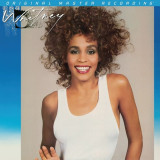
Whitney did more than turn Whitney Houston into a pioneering sensation known around the world by her first name. Originally released in June 1987, the singer's blockbuster sophomore record became the first album by a female artist to debut at No. 1 on the Billboard 200 chart — a position it claimed for a total of 11 weeks en route to selling more than 10 million copies in the U.S. The Diamond platinum effort also contains four No. 1 Hot 100 hits that, when combined with the three chart toppers from her 1985 debut, gave her seven consecutive No. 1 singles — an accomplishment that no other artist has accomplished. Commercially and creatively, Whitney stands on hallowed ground — especially now that the record plays with a sound that puts into perspective just how extraordinary, engaging, and vital Houston's music remains.
Mastered from the original master tapes and pressed on MoFi SuperVinyl at RTI, Mobile Fidelity's 180g 33RPM SuperVinyl LP of Whitney invites listeners to experience the Rock & Roll Hall of Fame inductee's pivotal album in audiophile quality for the very first time. Free of the dynamic limitations and tonal flatness prevalent on prior vinyl and CD pressings, it lets the music breathe and reveals the copious detail, nuance, and texture within the immaculately produced songs. MoFi's SuperVinyl profile offers further advantages in the forms of a nearly inaudible noise floor, dead-quiet surfaces, and superb groove definition.
In addition to featuring extreme clarity and immediacy, this numbered-edition reissue does wonders for the attribute that inspired more than 20 million people around the globe to add Whitney to their record collections: that inimitable voice. Houston's trademark mezzo-soprano — an acrobatic instrument equally capable of taking off on fantastic flights and unwinding for hushed meditations — benefits from the fantastic airiness and transparency afforded by this meticulously restored edition. Whitney has never sounded or looked better. The crossover landmark deserves nothing less.
Issued just two years after Houston's breakthrough debut, Whitney immediately signalled the genre-defying singer's intent to continue to push ahead and expand her palette. Shot by photographer Richard Avedon, the album cover depicts an iconic image of Houston — captured with a gleaming smile, bright eyes, teased-out afro, toned arms, and a right hand that appears to wave a friendly hello — whose active, athletic profile stands in contrast to the extremely formal sit-down shot of her that graces her '85 record. The change is telling: Whitney overflows with unfettered joy, rhythmic vibes, and deep-seated emotions that forever endeared her to the hearts and minds of countless listeners — and which set the standard for the wave after wave of divas that followed in her footsteps.
It's no coincidence that the first track on Whitney is the declarative "I Wanna Dance with Somebody (Who Loves Me)." Like Michael Jackson's "Billie Jean" and Madonna's "Material Girl," the feel-good smash is one of the quintessential '80s gems — a lithe, melodic, celebratory release of pent-up energy and loneliness that glides across club floors, shouts to the rooftops, and shrugs off any concerns about vulnerability or embarrassment. Houston's swooping voice moves in sync with the sleek beats and dipping-and-diving synths. She practically takes her fellow musicians by their hand and leads them in a blissful dance that nobody would dare sidestep. Focusing on Houston's singing — a task made challenging only because of the impossible-to-ignore hooks and grooves — showcases the virtuosic facets of not only her register but her control, discipline, smoothness, and warmth.
That she replicates those feats for the entirety of the nearly 53-minute-long album makes Whitney that much more special. Houston reaches back and channels her childhood gospel training on the R&B-flared "So Emotional"; effortlessly slips into Quiet Storm mode on the duet with her mother, gospel great Cissy Houston, on "I Know Him So Well"; flirts with smooth jazz and collaborates with tenor saxophonist Kenny G on the lush "Just the Lonely Talking Again"; conjures dreamscapes and shadow-boxes with supple funk on a romantic cover of the Isley Brothers' "For the Love of You"; and, for the majestic power ballad "Didn't We Almost Have It All," displays the sky-scraping reach of her vocals amid a grand arrangement made even bigger by Houston's sweeping performance and triumphant finish.
Houston's once-in-a-generation talents weren't lost on the adoring public, radio deejays, or industry experts. In addition to harbouring four No. 1 hits and receiving nominations for four Grammy Awards, Whitney generated another Top 10 success in the guise of the Afro-Cuban-leaning "Love Will Save the Day." The album also netted Houston four American Music Awards; two Billboard Music Awards; back-to-back People's Choice Awards; a Soul Train Award; and various other accolades. It all makes the crux of the Washington Post's July '87 review of the album appear prophetic: "Her voice sounds stronger still and the songs are varied but so consistent she could garner 10 Top 10s out of a field of 11."
That claim still holds true. A brilliant fusion of pop, R&B, smooth jazz, and soul, Whitney is a showstopper – and one of the key reasons Houston is the most-awarded female artist of all time.
At the essence of this album is Ark & Pit's supreme happiness, and freedom, from adhering to the rules of arrangements and musical clichés. The delicacy in which these ten tracks are made seems at first listen to be almost breakable, like a painting on a spiderweb. Each track flows into each other like a downward bound slinky - intentionally scattered and unpredictable. The only musical rules adhered to here are those which are pure and good, all others have been discarded… This is punk by day and house by night. This is summersaults, 90s hip-hop, skateboarding in L.A and hands in the air. This is truly how a duo, or brothers (which they are), work. Text by Bruno Pronsato
Twoonky, the brothers duo from Brescia (Italy) formed by Michele and Simone Bornati, is back on Macadam Mambo for a second album. After their brillantissimo ‘Dezzo’ from 2019, which was well noticed by the underground scene, the new opus ‘Ottico’ won’t leave you static. This is the kind of masterpiece that the more you listen, the more you love.
At the opposite of grandiloquent music that would have immediate effect, ‘Ottico’ is much more subtile, surfing on a cool wave of styles, a collage of vibes going from 70’s Kraut to 90’s Trip-Hop, where the analog sounds of guitars, synths, distorded voices, saxo, samples and electronics FX match so well, creating an ensemble in the unique mutant flow of the Twoonky’s that makes it so intemporal and so modern in the meanwile. It’s not about being curious, it’s about being open on crossing boundaries, like they are used to do with their unique place called Spettro in Brescia, where all the avant-garde of the electronic scene is coming to perform.
‘Ottico’ could be a kind of representation of the spirit of Spettro, and possibly one of the most interesting release of 2023. We don’t know why, but it’s true, Italians do it better
Carole King’s The Legendary Demos will be released April 24th, 2012 via Hear Music / Concord Music Group. A previously unreleased collection of 13 history-making Carole King recordings of some of her most celebrated songs, The Legendary Demos traces King's journey from her days as an Aldon staff writer in the 1960's, where she crafted hit after hit for other artists, to the dawn of her own triumphant solo career in the 1970's, and contains her original recordings of future standards like "(You Make Me Feel Like) A Natural Woman," "It's Too Late," and "You've Got A Friend." Featuring liner notes by acclaimed author and Rolling Stone contributing editor David Browne, the collection brings to light a heretofore missing link in the chain of King's career. Fittingly, The Legendary Demos serves as a companion to King’s long-awaited memoir, A Natural Woman, which is being released April 10th, 2012 via Grand Central Publishing.
Aldon Music used these demos—short for “demonstration records”—to pitch King's material to other artists, from Gene Pitney and Bobby Vee to Aretha Franklin and the Monkees. While the recordings have long been coveted and collected within the industry, they have never before been released to the public.
Whether it was a potential single for the Monkees or a solo performer like Pitney, King’s demos were remarkable in their completeness. “When she sat down to the piano and played a demo of one of her songs, the whole arrangement appeared right in front of your eyes magically,” recalls Brooks Arthur, who engineered a number of these efficient sessions for King at one of several midtown Manhattan studios. “A lot of the smarter producers would adhere to Carole’s demos. If you stuck to that, you’d come home a winner.”
King and then-husband / songwriting partner Gerry Goffin signed with Aldon Music in 1959, and anyone who listened to the radio during the first half of the ‘60s will recognize the songs of teen passion and devastating heartbreak heard in King’s original recordings. “Take Good Care of My Baby” was a No. 1 hit for Bobby Vee in 1961. Goffin’s gift for tapping into teen anguish—in this case, hiding behind a stoic public face—was never conveyed better than in “Crying in the Rain,” which the Everly Brothers took into the top 10 in early 1962. “Just Once in My Life” was the Righteous Brothers’ follow-up to their still-spine-tingling “You’ve Lost That Lovin’ Feelin’,” and King’s demo reveals how she and Goffin were instantly able to tap into the duo’s (and producer Phil Spector’s) dramatic, impassioned sound.
Like many of their fellow songwriters at the time, King and Goffin wrote songs for Don Kirshner’s TV show about a fictional, Beatles-derived pop band that debuted in September 1966. The Monkees turned out to be more credible singers (and musicians) than anyone initially expected, as their high-charting 1967 version of King and Goffin's “Pleasant Valley Sunday” revealed. The Monkees also cut “So Goes Love,” a dreamier ballad heard here, but the track didn’t make their first album and wasn’t released until long after they’d disbanded.
The Legendary Demos includes early takes of six tracks that formed the basis for King’s world-wide solo breakthrough Tapestry. King and lyricist Toni Stern’s ever-poignant “It’s Too Late” is here, along with King’s own “Way Over Yonder,” “Beautiful” and “Tapestry,” all three bursting with the artistic and spiritual renewal infusing King’s life during this period.
Among the collection’s numerous gems is the original 1967 demo for Goffin, King, and producer Jerry Wexler’s “(You Make Me Feel Like) A Natural Woman,” a song that would later appear on Tapestry and of course be famously cut by Aretha Franklin later that same year. King’s version offers several different takes from the Franklin and Tapestry versions. Her delivery in the opening lines is looser (check out the way she stretches out “Lord” in “Lord, it made me feel so tired”), and the bridge is even more imbued with palpable romantic and sexual heat.
And finally, there’s King’s initial take on “You’ve Got a Friend,” a classic entry in the Great American Rock Songbook. Milling around in the Troubadour balcony during soundcheck, her friend James Taylor heard King perform the song on a bare stage and was immediately taken with it; his own version, a massive hit, would arrive the following year.
Clear Vinyl
On Everything Harmony, the fourth full-length studio release from New York's The Lemon Twigs, the prodigiously talented brothers Brian and Michael D'Addario offer 13 original servings of beauty that showcase an emotional depth and musical sophistication far beyond their years as a band, let alone as young men. Everything Harmony successfully blends the brothers' distinct personalities while giving voice to their eclectic influences. Opening the album with the unassuming acoustic folk of plaintive "When Winter Comes Around," which echoes the sophisticated grandeur of classic Simon & Garfunkel recordings, they immediately switch things up to the sunny classic pop motif of "In MyHead." "Corner of My Eye" channels an Art Garfunkel-like vocal melody over a moody, vibraphone-tinged backing track suggesting the chamber pop of Brian Wilson. While they had no grand concept for Everything Harmony, both the D'Addarios felt a "palpable mood of defeat" prevailed while writing and recording it. "New To Me" was inspired by their shared experience with loved ones suffering from Alzheimer's, "What You Were Doing" is dressed in the tortured jangle of vintage Big Star, while "Born To Be Lonely," written after watching John Cassavetes' Opening Night, deals with what Brian calls "the fragility that often comes with age." Everything Harmony is a unified song cycle born of shared blood andcommon purpose. With two musical heads being better than one, there's no shortage of ideas to draw on. Their only impediments are time and the challenge of keeping up with their own prolific musical inspiration. "We share an intuition and tend to be influenced by one another," says Brian, "so the lyrical ideas on this record tend to complement each other. Writing has never been the issue for us. It's completing, editing and compiling that takes the time. We're trapped in a web of songs!"
- A1: Mister Sandman
- A2: Teensville
- A3: Steel Guitar Rag
- A4: Whispering
- A5: Yankee Doodle Dixie
- A6: You’re Just In Love
- A7: Swedish Rhapsody
- A8: Theme From “A Summer Place”
- B1: Oh Lonesome Me
- B2: Trambone
- B3: Corrine, Corrina
- B4: Heartaches
- B5: Boo Boo Stick Beat
- B6: One Mint Julep
- B7: Sleep Walk
- B8: Indian Love Call
Known as ‘Mr. Guitar’, Chet was one of the greatest and most influential musicians in Country
Music. He was an RCA Nashville Producer from the late '50s through to the mid-70's,
masterminding sessions for Dolly Parton, Charley Pride, Waylon Jennings and Jim Reeves. Chet
moved to Nashville and became a session man, playing on records by the Everly Brothers, Elvis
Presley and others, while also performing as a solo artist on the Grand Ole Opry. An in-demand
figure at this point, Chet commenced his own recording career with an instrumental version of
Indian Love Call. Followed by Yankee Doodle Dixie, a showcase arrangement on which Chet
played the Bass strings and Treble strings simultaneously! An architect of the Nashville Sound, he
recorded an instrumental version of the Chordettes' hit Mr. Sandman, which provided him with his
first Country Music chart entry. His records began to cross over into Pop and he enjoyed Hot 100
success with the percussive Boo Boo Stick Beat, Teensville, One Mint Julep, Sleep Walk and Oh
Lonesome Me
The incongruous, yet glorious, creative partnership between Nancy Sinatra and Lee Hazlewood was well underway when the two singular artists reunited to record 1972’s Nancy & Lee Again, a follow-up to their bestselling duet debut, Nancy & Lee. Nancy, the eldest daughter of Frank Sinatra, had been working with the Oklahoma-born songwriter since 1965, when she topped the pop charts with “These Boots Are Made For Walkin’.” Over the next five years, the two artists forged a prolific relationship in the studio, with Hazlewood writing and producing many of Nancy’s solo hits. Soon, the duo found success with a series of duets, including “Sand,” “Summer Wine,” and “Some Velvet Morning” – all of which appeared on their highly-influential 1968 debut.
Not long after the critical acclaim and chart success of Nancy & Lee died down, however, Hazlewood unexpectedly relocated to Sweden, leaving his musical partner in the proverbial dust. America, meanwhile, was in the midst of a cultural shift, as the Vietnam War waged on. By the turn of the decade, the musical landscape had changed significantly. “Trivial music and not profound music became unimportant,” recalls Nancy, speaking to Hunter Lea. “It was a tough time.” And yet, despite the circumstances, the stars somehow aligned for the duo to record some of their most magnificent music together.
Returning to Los Angeles for the project, Hazlewood – who reprised his role as producer – chose to take a new direction with the duo’s sophomore album. Nancy recalls, “It was more dramatic; it was more fun to do, more challenging to do…. It was more grandiose.” For the lush, orchestral arrangements, they collaborated with Larry Muhoberac (an original member of Elvis Presley’s TCB band, whose early ‘70s credits also included Barbra Streisand, Neil Diamond, and Lalo Schifrin) and Clark Gassman, who had worked on Hazlewood’s 1970 LP, Cowboy in Sweden. Backing vocals from brothers John and Tom Bahler, who remain two of the most recorded singers in history, added additional texture to several songs.
The big sound that Nancy describes above is exemplified in the album’s cinematic opener, “Arkansas Coal (Suite).” Clocking in at nearly six minutes long, the dynamic overture tells the tale of an ill-fated coal miner (sung by Hazlewood), while Nancy adjusts her vocals to sing as both the miner’s daughter and his wife. Hazlewood’s knack for vivid, nuanced storytelling shines throughout Nancy & Lee Again, particularly in “Paris Summer,” which details the conflict that a married woman faces, as she engages in a passionate affair. Another highlight is the country-inspired hit, “Did You Ever,” which was released as the album’s lead single. After it landed at No.2 on the U.K. pop charts, the song served as an alternate title track in several countries, including LP pressings in the U.K., Germany, and Canada.
One of the most emotionally-charged moments on Nancy & Lee Again is a cover of Dolly Parton’s “Down From Dover.” The heartbreaking tune tells the tale of a pregnant teenager, who has been abandoned by her lover and her family and ultimately gives birth to a stillborn baby. While Parton’s 1970 version was sung from the teenager’s point of view, Hazlewood and Sinatra transformed the country song into a duet. Hazlewood, who offers the man’s side of the story, sings in a notably deeper octave than his signature baritone.
Another poignant selection is “Congratulations,” which describes a soldier coming home from Vietnam. “His face has grown old and his eyes have grown cold/And they tell you of where he has been/Congratulations, you sure made a man out of him,” Hazlewood sings, pointedly. Nancy, who performs as the vet’s wife, argues that the song had a deeper meaning for her duet partner. “Lee started out a hawk, he was an army guy, so he was all for the war in the beginning. We didn’t talk about it, but at some point, he changed radically. ‘Congratulations’ was almost like an apology from him. I don’t want to put words in his mouth, but it was as though he was saying ‘I’m really sorry.’”
The song “Friendship Train” could also be interpreted as an apology of sorts – this time to Nancy. “You’ve been hurt and I’ve been hurt/Now we’re living pain,” the tune opens. When Hazlewood moved to Sweden without telling his longtime musical partner, Sinatra was understandably upset. “I felt pretty betrayed. I mean, who does that? Who just up and disappears like that? I’ll never understand it,” she reveals. But the uplifting duet – a slice of ‘70s pop perfection – offers reaffirming words of love between friends. “Lee felt things very deeply and tended to express his feelings in song instead of in real life,” explains Nancy.
The 10-track album closes with the stripped-down “Got It Together.” Backed by an acoustic guitar, the song is equal parts playful and candid, as the duo has an impromptu, spoken-word conversation about their lives. “I wish that we’d quit getting so old,” laments Nancy, who later shares her wish to have children (she would do so in the next few years). Hazlewood, meanwhile, attempts to remedy his past wrongdoings – this time asking his partner, “Can I go back to Sweden?” With that, Nancy gives her blessing.
This definitive reissue of Nancy & Lee Again also includes two bonus tracks. Both are stylistic departures for the duo – but fit right in with the psychedelic pop of the era. The first one, “Think I’m Coming Down,” is a harmony-filled reflection on a toxic relationship. “I think that was one of [Lee’s] drug things. I don’t mean that he used drugs; I mean that he was trying to be part of that culture. Trying to be hip,” explains Nancy, who delivers an emotive vocal performance on the solo track. Also included is “Machine Gun Kelly,” penned by a staple of the 70s singer-songwriter movement, Danny Kortchmar (James Taylor, Carole King, Linda Ronstadt). Recorded several months after the release of the album, the song found Nancy reuniting with Billy Strange, who arranged many of her solo albums, as well as Nancy & Lee. Sinatra and Hazlewood first performed “Machine Gun Kelly” during their residency at Las Vegas’ Riviera Hotel in February 1972 (later released as a concert documentary on Swedish television). While the recording has long remained a career favorite of Nancy’s, it would be decades before it was officially released.
Nancy & Lee Again remains a creative high point in the careers of Sinatra and Hazlewood and, upon its release, garnered rave reviews from Billboard, Record World, and Cash Box, among others. Yet, Nancy & Lee Again never received the spotlight it so utterly deserved. “We didn’t have label support at all in those days,” recalls Nancy. “Without the strength of a label, records die. We were old. We were old-fashioned. We were just not what was happening. It’s a very ageist kind of business.” Nevertheless, she adds, “I think it’s a very good album. I think it’s timeless.” Now, after years of being a sought-after rarity, this gem in the Sinatra-Hazlewood canon can finally get its due.
Five decades later, Nancy’s legacy only continues to grow, as new generations discover her impressive catalog (which boasts nearly 20 studio albums – her duets with Hazlewood among them – and dozens of charting singles, including the theme song to the 1967 James Bond film, You Only Live Twice). In 2020, Sinatra was recognized by her peers when “These Boots Are Made For Walkin’” was inducted into the GRAMMY® Hall of Fame. That same year, Sinatra partnered with Light in the Attic for Nancy Sinatra: Start Walkin’ 1965-1976, a definitive survey of her most prolific period. LITA has also reissued Sinatra’s classic debut, Boots, and her iconic, 1968 album with Lee Hazlewood, Nancy & Lee. The label looks forward to celebrating Nancy over the coming years with a variety of special releases, exclusive merchandise, and more.
The incongruous, yet glorious, creative partnership between Nancy Sinatra and Lee Hazlewood was well underway when the two singular artists reunited to record 1972’s Nancy & Lee Again, a follow-up to their bestselling duet debut, Nancy & Lee. Nancy, the eldest daughter of Frank Sinatra, had been working with the Oklahoma-born songwriter since 1965, when she topped the pop charts with “These Boots Are Made For Walkin’.” Over the next five years, the two artists forged a prolific relationship in the studio, with Hazlewood writing and producing many of Nancy’s solo hits. Soon, the duo found success with a series of duets, including “Sand,” “Summer Wine,” and “Some Velvet Morning” – all of which appeared on their highly-influential 1968 debut.
Not long after the critical acclaim and chart success of Nancy & Lee died down, however, Hazlewood unexpectedly relocated to Sweden, leaving his musical partner in the proverbial dust. America, meanwhile, was in the midst of a cultural shift, as the Vietnam War waged on. By the turn of the decade, the musical landscape had changed significantly. “Trivial music and not profound music became unimportant,” recalls Nancy, speaking to Hunter Lea. “It was a tough time.” And yet, despite the circumstances, the stars somehow aligned for the duo to record some of their most magnificent music together.
Returning to Los Angeles for the project, Hazlewood – who reprised his role as producer – chose to take a new direction with the duo’s sophomore album. Nancy recalls, “It was more dramatic; it was more fun to do, more challenging to do…. It was more grandiose.” For the lush, orchestral arrangements, they collaborated with Larry Muhoberac (an original member of Elvis Presley’s TCB band, whose early ‘70s credits also included Barbra Streisand, Neil Diamond, and Lalo Schifrin) and Clark Gassman, who had worked on Hazlewood’s 1970 LP, Cowboy in Sweden. Backing vocals from brothers John and Tom Bahler, who remain two of the most recorded singers in history, added additional texture to several songs.
The big sound that Nancy describes above is exemplified in the album’s cinematic opener, “Arkansas Coal (Suite).” Clocking in at nearly six minutes long, the dynamic overture tells the tale of an ill-fated coal miner (sung by Hazlewood), while Nancy adjusts her vocals to sing as both the miner’s daughter and his wife. Hazlewood’s knack for vivid, nuanced storytelling shines throughout Nancy & Lee Again, particularly in “Paris Summer,” which details the conflict that a married woman faces, as she engages in a passionate affair. Another highlight is the country-inspired hit, “Did You Ever,” which was released as the album’s lead single. After it landed at No.2 on the U.K. pop charts, the song served as an alternate title track in several countries, including LP pressings in the U.K., Germany, and Canada.
One of the most emotionally-charged moments on Nancy & Lee Again is a cover of Dolly Parton’s “Down From Dover.” The heartbreaking tune tells the tale of a pregnant teenager, who has been abandoned by her lover and her family and ultimately gives birth to a stillborn baby. While Parton’s 1970 version was sung from the teenager’s point of view, Hazlewood and Sinatra transformed the country song into a duet. Hazlewood, who offers the man’s side of the story, sings in a notably deeper octave than his signature baritone.
Another poignant selection is “Congratulations,” which describes a soldier coming home from Vietnam. “His face has grown old and his eyes have grown cold/And they tell you of where he has been/Congratulations, you sure made a man out of him,” Hazlewood sings, pointedly. Nancy, who performs as the vet’s wife, argues that the song had a deeper meaning for her duet partner. “Lee started out a hawk, he was an army guy, so he was all for the war in the beginning. We didn’t talk about it, but at some point, he changed radically. ‘Congratulations’ was almost like an apology from him. I don’t want to put words in his mouth, but it was as though he was saying ‘I’m really sorry.’”
The song “Friendship Train” could also be interpreted as an apology of sorts – this time to Nancy. “You’ve been hurt and I’ve been hurt/Now we’re living pain,” the tune opens. When Hazlewood moved to Sweden without telling his longtime musical partner, Sinatra was understandably upset. “I felt pretty betrayed. I mean, who does that? Who just up and disappears like that? I’ll never understand it,” she reveals. But the uplifting duet – a slice of ‘70s pop perfection – offers reaffirming words of love between friends. “Lee felt things very deeply and tended to express his feelings in song instead of in real life,” explains Nancy.
The 10-track album closes with the stripped-down “Got It Together.” Backed by an acoustic guitar, the song is equal parts playful and candid, as the duo has an impromptu, spoken-word conversation about their lives. “I wish that we’d quit getting so old,” laments Nancy, who later shares her wish to have children (she would do so in the next few years). Hazlewood, meanwhile, attempts to remedy his past wrongdoings – this time asking his partner, “Can I go back to Sweden?” With that, Nancy gives her blessing.
This definitive reissue of Nancy & Lee Again also includes two bonus tracks. Both are stylistic departures for the duo – but fit right in with the psychedelic pop of the era. The first one, “Think I’m Coming Down,” is a harmony-filled reflection on a toxic relationship. “I think that was one of Lee’s drug things. I don’t mean that he used drugs; I mean that he was trying to be part of that culture. Trying to be hip,” explains Nancy, who delivers an emotive vocal performance on the solo track. Also included is “Machine Gun Kelly,” penned by a staple of the 70s singer-songwriter movement, Danny Kortchmar (James Taylor, Carole King, Linda Ronstadt). Recorded several months after the release of the album, the song found Nancy reuniting with Billy Strange, who arranged many of her solo albums, as well as Nancy & Lee. Sinatra and Hazlewood first performed “Machine Gun Kelly” during their residency at Las Vegas’ Riviera Hotel in February 1972 (later released as a concert documentary on Swedish television). While the recording has long remained a career favorite of Nancy’s, it would be decades before it was officially released.
Nancy & Lee Again remains a creative high point in the careers of Sinatra and Hazlewood and, upon its release, garnered rave reviews from Billboard, Record World, and Cash Box, among others. Yet, Nancy & Lee Again never received the spotlight it so utterly deserved. “We didn’t have label support at all in those days,” recalls Nancy. “Without the strength of a label, records die. We were old. We were old-fashioned. We were just not what was happening. It’s a very ageist kind of business.” Nevertheless, she adds, “I think it’s a very good album. I think it’s timeless.” Now, after years of being a sought-after rarity, this gem in the Sinatra-Hazlewood canon can finally get its due.
Five decades later, Nancy’s legacy only continues to grow, as new generations discover her impressive catalog (which boasts nearly 20 studio albums – her duets with Hazlewood among them – and dozens of charting singles, including the theme song to the 1967 James Bond film, You Only Live Twice). In 2020, Sinatra was recognized by her peers when “These Boots Are Made For Walkin’” was inducted into the GRAMMY® Hall of Fame. That same year, Sinatra partnered with Light in the Attic for Nancy Sinatra: Start Walkin’ 1965-1976, a definitive survey of her most prolific period. LITA has also reissued Sinatra’s classic debut, Boots, and her iconic, 1968 album with Lee Hazlewood, Nancy & Lee. The label looks forward to celebrating Nancy over the coming years with a variety of special releases, exclusive merchandise, and more.
- A1: Tenison Stephens - Don&Apos;T Rip Me Off!
- A2: Leontine Dupree - Standing On His Word
- A3: Frankie Staton - Love One Another (Feat Speckled Rainbow)
- A4: Joe Washington &Amp; Wash - Blueberry Hill
- B1: Reno &Amp; The Chosen 3 - Soul Bagg
- B2: Don Patterson Trio - Paddy Wagon
- B3: Bill Cole - Bring It On Back To Me
- B4: Unknown Organist - Untitled
- B5: Roy Long - Mercy Mercy Mercy
- C1: Mckinley Edmonds - Hard Times
- C2: Marva Josie - I&Apos;M Satisfied
- C3: Shirley Wahls - Tell The Truth
- C4: The Echomen - Talk Is Cheap
- C5: Unknown - Damn You Sheriff Black
- D1: Rick Bowen - Snake In The Grass
- D2: 101 Gold Street Band - You Came A Long Way From St Louis
- D3: Bobbi Lane - Black And White
- D4: Dave Stockwell - I Can&Apos;T Get Enough
- D5: Delores Eiler - He Won&Apos;T Love You
** SISTER FUNK, SOUL-JAZZ and BLUE-EYED-SOUL - OBSCURE RARE GROOVES ALL THE WAY THRU! **
- the double vinyl LP comes with a full album download code
- deluxe double-gatefold LP with detailed liner notes & unseen photographs
- ALL songs appear on LP & digital for the very first-time
- sales notes by Joel Ricci (aka Lucky Brown)
When Tramp Records was founded, there really were very few ways in which the music lover could discover new music besides the traditional methods of digging, good luck, and inheritance. First there were torrent sites such as Napster and Limewire where generous collectors might digitize and upload portions of their accessions, and sometimes you could find entire radio show broadcasts of live vinyl curation made by real Disc Jockeys out there, a lot of the Deep Funk I heard for the first time in around 1999 I found this way via Disc Jockeys on radio shows from the UK, tunes were faded and mixed together and of course veiled with that unmistakable Mp3 'whoosh'. And unless you have been living as an off-grid hermit for the past 20 years, you know the rest of the story.
But though our world has changed, and even though everyone from our grandparents to our 5-year old nieces are curating their own internet playlists, I submit that the role of DJ has become even more vital, not less. We as a culture have always relied on our Disc Jockeys to introduce us to sounds that speak to their souls, to control the vibe and most importantly put forth the narrative that speaks to society as a whole. DJs are our tribal storytellers, and the music they bring us are the stories. And when a DJ like Tobias Kirmayer is telling us that story clearly and with conviction, it speaks to our souls as well.
"Countdown to...SOUL" is a compilation series that, much like Tramp Records' other critically-acclaimed comps such as Movements, Feeling Nice, and the Praise Poems Series' examines a unique facet of the Golden Era of Soul, Funk, Jazz and R&B. Perhaps, in this case the dawning of the Soul era, "proto-soul", "primitive soul", or even "pre-soul" if you will. When they were recorded, many of these tunes were still firmly ensconced in the Black Radical Jazz tradition, but there was a change in the air, something happening in the coming years that would revolutionize popular music forever. In fact, Soul had already taken over the world by the time many of these tunes were released on 45, but for various reasons, the artists and their music occupied the fringes of the idiom and therefore remained obscure. Countdown to...SOUL chronicles that beginning, that buildup, those heady moments before the lid blew off and American Black music would explode across the planet, while scouring the outskirts and tide pools for specimens that were emanating in their own respective neighborhoods and communities, so often overlooked by the American pop music machine.
Side A features barrier-breaking pioneer Frankie Staton and her message of "Love One Another" to the world that is as fresh and vital today as it was when it first came out in the late seventies. In that spirit, Tenison Stevens' appeal "Don't Rip Me Off" reminds us to treat each other as brothers and sisters.
Side B meets us at the altar of the formidable Hammond Organ with an Unknown and uncredited Organist found languishing on a one-of-a-kind unreleased acetate and moving on to explore the nexus of Soul, Bebop, and R&B with Don Patterson's "Paddy Wagon".
Side C satisfies our hunger for the blaring horn sections, big beat drums, wailing Hammonds, pleading vocals and gritty guitars of authentic Soul music (both brown and blue-eyed) with Marva Josie, Shirley Wahls and The Echomen, among others, but then takes a hard left turn into undoubtedly uncharted territory with the hybrid folk/country/soul story of Sherrif Black and poor Sally who, though she is tragically met with a terrible fate, thanks to the careful and conscientious mastering of our German engineers, the song itself remains alive and is a genuine addition to the canon.
For the remaining side, I'm gonna just let you discover this music on its own terms, as you won't find these tunes anywhere else, not on Napster, not even on Limewire, or anywhere else. I want to personally thank you for putting your trust in the DJ and for continuing to listen, study, appreciate, and share the work and mission of Tramp Records.
-Joel Ricci (May 2022)
- A1: Grand Master Caz & Chris Stein - Wild Style Theme
- A2: The Chief Rocker Busy Bee Vs Lil Rodney Cee & Dj Grand Wizard Theodore - Mc Battle
- A3: The Cold Crush Bros Vs The Fantastic Freaks - Basketball Throwdown
- A4: Kevie Kev, Master Rob, Prince Whipper Whip, Mc, Rubie Dee, Dota Rock & Dj Grand Wizard Theodore - Fantastic Freaks At The Dixie
- A5: Grand Wizard Theodore & Dj Kevie Kev Rockwell - Military Cut (Scratch Mix)
- A6: Grand Master Caz, Jdl, Easy Ad, Kg, Dj Charlie Chase & Dj Toney Tone - Cold Crush Bros At The Dixie
- B1: Double Trouble, Rodney Cee & K K Rockwell - Stoop Rap
- B2: Rodney Cee, K K Rockwell & Dj Stevie Steve - Double Trouble At The Amphitheatre
- B3: Grand Master Caz & Chris Stein - Wild Style Subway Rap
- B4: The Chief Rocker Busy Bee & Dj Aj - The Chief Rocker Busy Bee, Dj Aj At The Amphitheatre
- B5: Dj Grand Wizard Theodore & Kevie Kev Rockwell - Gangbusters (Scratch Mix)
- B6: Rammellzee & Shock Dell & The Grand Mixer Dst - Rammellzee & Shock Dell At The Amphitheatre
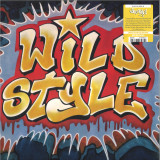
Animal Records – founded by Chris Stein of Blondie fame – only ever released one album in its brief early-80s history, but what an album that was. Wild Style remains the most seminal soundtrack in hip-hop history, a snapshot of the scene as it evolved from the streets to the recording studio. But it’s not just a vital document, it’s also a damn good listen.
The line-up is a who’s who of those who stood out from hip-hop’s nascent block party days. The Double Trouble pairing of Rodney Cee and KK Rockwell, The Chief Rocker himself, Busy Bee, the mighty line-ups of both The Cold Crush Brothers and The Fantastic Freaks. The music captures the free-form, roaming nature of the film – it’s rough at the edges, it’s occasionally amateurish, but it’s completely, utterly glorious.
The original Animal tracklisting, of which this is a reissue, is full of recurring sounds and motifs, all of them co-produced by Chris Stein and Fab Five Freddy, stepping away from breakbeats to produce a sound that reminds you of them, while being totally unique. The epic drums are courtesy of Lenny ‘Ferrari’ Ferraro, a Vietnam vet and punk drummer whose career spanned stints backing Aretha Franklin and Lou Reed.
Over time, those sounds – the Charlie Chase and Grand Wizard Theodore scratches, the indelible lyrics - have become hip-hop touchstones, endlessly sampled and referenced, the bedrock of so much music to follow. That’s because the soundtrack perfectly encapsulated the essence of the film, the scene and hip-hop’s emergence from The Bronx to the attention of the wider world. Presented in this reissue with the original artwork, it remains the blueprint.
- 1: The Chambers Brothers - “Uptown”
- 2: B.b. King - “Why I Sing The Blues”
- 3: The 5Th Dimension - “Don’t Cha Hear Me Callin’ To Ya”
- 4: The 5Th Dimension - “Aquarius/Let The Sunshine In (The Flesh Failures)”
- 5: David Ruffin - “My Girl”
- 6: The Edwin Hawkins Singers - “Oh Happy Day”
- 7: The Staple Singers - “It’s Been A Change”
- 8: The Operation Breadbasket Orchestra & Choir Featuring Mahalia Jackson And Mavis Staples - “Precious Lord Take My Hand”
- 9: Gladys Knight & The Pips - “I Heard It Through The Grapevine”
- 10: Mongo Santamaria - “Watermelon Man”
- 11: Ray Barretto - “Together”
- 12: Herbie Mann- “Hold On, I’m Comin’”
- 13: Sly & The Family Stone - “Sing A Simple Song”
- 14: Sly & The Family Stone - “Everyday People”
- 15: Nina Simone - “Backlash Blues”
- 16: Nina Simone - “Are You Ready”
SUMMER OF SOUL (…Or, When The Revolution Could Not Be Televised) Original Motion Picture Soundtrack accompanies Ahmir “Questlove” Thompson’s directorial debut documentary SUMMER OF SOUL, which won the Grand Jury Prize and Audience Award at the Sundance Film Festival. Like the documentary, most of the audio recordings that were recorded during the 1969 Harlem Cultural Festival have not been heard for over 50 years, keeping this incredible event in America’s history lost – until now. The SUMMER OF SOUL (…Or, When The Revolution Could Not Be Televised) Original Motion Picture Soundtrack is a joyous musical celebration and the rediscovery of a nearly erased historical event that celebrated Black culture, pride and unity. For the album, Questlove carefully selected 16 live renditions of jazz, blues, R&B, Latin, and soul classics performed over the course of The Harlem Cultural Festival in 1969 as chronicled by the film. Performers include The 5th Dimension, Gladys Knight & The Pips, B.B. King, Nina Simone, The Staple Singers, David Ruffin and Sly & The Family Stone! Extensive promo & marketing activity across all media outlets. The CD format was released in Jan. Standard black vinyl 17 track double LP in gatefold sleeve. Promo/marketing activity.
DAF (Deutsch Amerikanische Freundschaft) is an influential German electropunk band from Düsseldorf (Germany). The band claimed not to target anything while writing lyrics, but to surround around Delgado-López’s fascination with the sound of particular words. While recording their album Für Immer, the band split up. After four years the band got back together and released 1st Step To Heaven , which was (and still is) their only album in English. DAF received a lot of acclaim after this release. John Peel called them “the Grandfathers of Techno” and House music pioneer Adonis stated that the album was “House before there was House”.
1st Step To Heaven is available as a limited edition of 1000 individually numbered copies on gold coloured vinyl and includes an insert.
Jackie Mittoo, organ and piano maestro, was not only a founding member of the legendary Jamaican Ska group The Skatalites, but through the course of Jamaican music’s long history has produced a body of work under his own name and of that with his various group incarnations, The Soul Brothers, Soul Vendors and the Sound Dimension. His distinctive organ and piano sound and musical arrangements have all played a major part in Jamaica's musical history.
Jackie Mittoo (born 1948, Kingston, Jamaica) began playing musical instruments at a very early age. Taught piano by his grandmother he was performing live by the age of 10 and recording by the age of 15. Two Kingston bands that he played with the Rivals and the Sheiks brought him to the attention of Studio 1's founder Coxsone Dodd. Who at the time was putting a group of musicians together to be his studio band. Impressed by his skills on both the organ and the piano, Jackie was asked to join in what would become Jamaica's foremost band The Skatalites. The fellow band members were Lloyd Brevett (bass), Lloyd Knibbs (drums), Don Drummond (trombone), Tommy McCook, Roland Alphonso and Lester Sterling (Sax), Johnny Moore (trumpet), Jah Jerry(guitar) and Mr Mittoo (piano). This line up ruled the Jamaican scene between 1964 - 1965 as well as inventing the Ska sound, they also performed the backing duties for the other top labels of the time including Duke Reid's Treasure Isle and Justin Yap's Top Deck label.
1965 saw The Skatalites disband, and Jackie Mittoo move on to his next musical project The Soul Brothers. Formed with fellow Skatalite Roland Alphonso,this band would back all the hits coming out of Studio 1 for the next three years with Jackie Mittoo working as band leader and musical arranger. Around this time Jackie also had his own single released, a Ska underground classic called 'Got My Bugaloo'. Rare, as it also features Jackie in the unusual role for him, as lead singer!!!!. 1966 saw the Ska sound evolve into Rocksteady, again with Jackie's band at the helm, and his first hit single the Rocksteady cut 'Ram Jam'. The success of which would lead to a solo career and album releases under his own name such as 'Now', 'Macka Fat', 'Evening Time', 'In London' and 'Keep on Dancing', to name but a few. In 1967 the hits at Studio 1 were still flowing when The Soul Brothers morphed into The Soul Venders and began backing such luminaries as Ken Boothe, Alton Ellis, Delroy Wilson, The Heptones, The Cables, The Wailers and many other of the label’s solo artists.
By 1968 Jamaican music was ready for another change and Rocksteady rolled into a slower groove soon to be called Reggae. Jackie Mittoo would be at the forefront with his latest band The Sound Dimension. A line-up that included Leroy Sibbles (bass),Roland Alphonso and Cedric Brooks (saxophone),Eric Frater and Ernest Ranglin (guitar) and Bunny Williams (drums). Being the house band at Studio 1 they backed all the leading names of the time, John Holt, Horace Andy and Alton Ellis, all of Studio 1's output carried his sound. Jackie Mittoo emigrated in the late 60's to Canada but travelled to Jamaica and London to record with many of the big new names, who were trying to redress Studio 1's supremacy and needed his magic touch. Such producers as Bunny Lee used Jackie Mittoo on many of his sessions,Sugar Minott among others were always glad of his services.
For this release we have put together a selection of some of his finest recordings done with legendary reggae producer Bunny Lee. 1970’s cuts that feature Jackie’s numerous talents, showing his ability to embellish tracks with a feel few could better. Musical arranger, band leader and all around studio ace.
We hope you enjoy this great set with Jackie Mittoo in fine style and his organ super powered indeed…
From the very beginning in 2011 the concept was simple and crystal clear.
Mad Mats & Tooli's new label Local Talk had two main focus points.
First, the actual music was to be inspired around those magical 4/4 house rhythms...and beyond.
Second, the logo! The idea was that a simple and direct visual point together with a strong dance MUSIC message would make the label stand out among other labels in their northern neck of the woods.
In Scandinavia, the main theme is electronic 4/4 rhythms (techno, tech-house etc) and with Local Talk being more inspired by black dance music this has made them the black sheep in the hometown of Stockholm.
To set the musical direction straight from the very start they released Bassfort's 'Moon Shadow' which got instant attraction from both house heads and the more open-minded clubbing community.
With its warm, melodic chords, infectious piano theme and big strings it's always been the label's fave jam from their now +150(ish) releases.
When they decided to choose a track that would define the label for their 10-year anniversary, the choice was simple.
Mats & Tooli thought long and hard about who they wanted to interpret 'Moon Shadow' and after months of discussing options they decided that the only one they could trust to give the track a quality boost was NYC legend Joe Claussell.
Back in the late 90's, Mats used to book Joe for his legendary Raw Fusion parties in Stockholm so the connection and mutual respect were already in place. The result is a +11 minute long musical house journey that builds and builds until those characteristic piano chords make an entrance and transform the dynamics into a rainbow of sounds. Epic is not a word big enough to explain this grand musical production !
But the goodness does not end there, we're only halfway in on this anniversary release. The blood brothers Javi & Luis aka Kyodai (and 2/3 of Bassfort) made their own mix on the B side track from the original release, Moonlight.
As schooled jazz musicians they diverted from the electronic soundscape and went for a live jazz-funk production.
The final product is a warm and musical version with live drums, bass, piano, strings and even vocals from the brothers themselves.
The track almost comes across as something 4 Hero would put out back in the day.
All we can say, enjoy the dance!
Etran de L'Aïr (or "stars of the Aïr region") welcomes you to Agadez, the capital city of Saharan rock. Playing for over 25 years, Etran has emerged as stars of the local wedding circuit. Beloved for their dynamic repertoire of hypnotic solos and sun schlazed melodies, Etran stakes out a place for Agadez guitar music. Playing a sound that invokes the desert metropolis, Agadez celebrates the sounds of all the dynamism of a hometown wedding. Etran is a family band composed of brothers and cousins, all born and raised in the small neighborhood of Abalane, just in the shadow of the grand mosque. Sons of nomadic families that settled here in the 1970s fleeing the droughts, they all grew up in Agadez. The band was formed in 1995 when current band leader Moussa "Abindi" Ibra was only 9 years old. "We only had one acoustic guitar," he explains, "and for percussion, we hit a calabash with a sandal." Over the decades, the band painstakingly pieced together gear to form their band and built an audience by playing everywhere, for everyone. "It was difficult. We would walk to gigs by foot, lugging all our equipment, carrying a small PA and guitars on our backs, 25 kilometers into the bush, to play for free_ there's nowhere in Agadez we haven't played." Whereas other Tuareg guitarists look to Western rock, Etran de L'Aïr play in a pan-African style that is emblematic of their hometown, citing a myriad of cultural influences, from Northern Malian blues, Hausa bar bands, to Congolese Soukous. It's perhaps this quality that makes them so beloved in Agadez. "We play for the Tuareg, the Toubou, the Zarma, the Hausa," Abindi explains. "When you invite us, we come and play." Their music is rooted in celebration, and invokes the exuberance of an Agadez wedding, with an overwhelming abundance of guitars, as simultaneous solos playfully pass over one another with a restrained precision, forceful yet never overindulgent.
- A1: The Rulers - Don't Be A Rude Boy
- A2: The Rio Grandes - Soldiers Take Over
- A3: Winston & Geoge - Denham Town
- A4: Justin Hinds & The Dominoes - No Good Rudie
- A5: The Spanishtonians - Rudie Gets Plenty
- A6: Alton Ellis & The Flames - Cry Tough
- B1: Desmond Dekker & The Aces - Rudy Got Soul
- B2: Hazel & The Jolly Boys & The Fugitives - Stop Them
- B3: Joe White - Rudies All Around
- B4: The Black Brothers - Why Oh Why
- B5: The Valentines - (Gun Fever) Blam Blam Fever (Gun Fever)
- B6: Dandy - Rudy, A Message To You