Black Vinyl[33,57 €]
Suche:grateful dead
Green Vinyl[36,93 €]
Black Vinyl[33,57 €]
- 1: Foolish Heart
- 2: Just A Little Light
- 3: Victim Or The Crime
- 4: Standing On The Moon
- 5: Blow Away
- 6: Picasso Moon
- 7: Built To Last
- 8: I Will Take You Home
Available for the first time on vinyl, this release of Built To Last has been newly mastered by GRAMMY® Award-winning engineer David Glasser, produced for release by the Dead’s Audio Archivist and Legacy Manager, David Lemieux and available on 140-Gram, Black Vinyl. Built To Last is the thirteenth and final studio album from the band.
Bear's Choice, das erste echte Archivalbum von The Grateful Dead, wurde als Tribut an Pigpen kurz nach dessen Tod von keinem Geringeren als dem ursprünglichen Tonmann und Wohltäter der Dead, Owsley Stanley, alias Bear, liebevoll produziert. Bear's Choice basiert auf Liveshows, die Bear drei Jahre zuvor im Fillmore East in New York City aufgenommen hatte, und fängt die Dead in einem entscheidenden Moment ihrer Geschichte ein, als sie gerade Workingman's Dead (und
kurz darauf American Beauty) aufnahmen und sich zu Americana-Pionieren entwickelten, dabei aber nie den Kontakt zu ihren psychedelischen Improvisationswurzeln verloren.
Drei der acht Songs auf dem Album werden von Pigpen gesungen, wobei Seite 1 das definitive Beispiel für die frühen Acoustic Dead ist und Seite 2 aus elektrischem Blues und Rock 'n' Roll besteht, wobei Pigpen bei beiden Stücken auf der zweiten Seite den Ton angibt.
Dieses Album wurde von David Glasser mit Plangent Processes
von den originalen analogen 2-Spur-Bändern, die von Bear live aufgenommen wurden, neu gemastert und hat noch nie besser geklungen.
140-Gram, “Limeade” colour vinyl variant, direct to board Jacket. Features the original album track list using the (2020) 50th Anniversary remastered audio.
In 1970, the Grateful Dead pulled off a feat that that few bands ever achieve, and incredibly, they did it twice. After June 1970's release of Workingman's Dead, the Dead had arrived. An album that would remain in the upper echelon of Rolling Stone’s "best albums of all-time" lists for the next 50 years, the world now knew about the Dead. And remarkably, the Dead not only did it again less than six months later, by many accounts they outdid themselves with the follow-up release in November 1970 of American Beauty.
The album's 10 tracks include many of the Dead's best-known, most-loved, and most popular songs both on record and in concert for the next 25 years. An album that includes Box Of Rain, Friend Of The Devil, Sugar Magnolia, Candyman, Ripple, Brokedown Palace, Attics Of My Life, and Truckin' looks more like a greatest-hits compilation than a second album of 1970, and yet American Beauty demonstrates a band unable to slow down in terms of the quality of its writing, recording, and performing.
The Grateful Dead’s first tour outside of North America was immortalized on Europe ’72, a triple live album that distilled peak moments from the 22 shows the band played in six countries for thousands of Europeans. A triumph critically and commercially when it was released in November 1972, today the double-platinum album is an integral part of the Dead’s live legacy and beloved by generations of fans. Appreciation for the extraordinary tour grew in 2011 when every show was released in the unprecedented, 73-CD boxed set, Europe ’72: The Complete Recordings.
Today is the 50th anniversary of the first show from the Dead’s European adventure. It took place on April 7, 1972, at Wembley Empire Pool in London. To mark the milestone, Rhino and Dead are announcing a series of upcoming releases and events connected to the celebrated tour.
A newly remastered version of the original Europe ’72 album will be available on July 29. EUROPE ’72 (50th ANNIVERSARY EDITION) arrives in 3-LP. All of the new 50th anniversary editions were mastered by Grammy® Award winning engineer David Glasser with newly restored audio by Plangent Processes.
Es war die erste Tour von The Grateful Dead ausßerhalb der USA, welche die Band bei 22 Shows durch 6 europäische Länder führte. Die dazugehörigen Aufnahmen nehmen bis heute einen zentralen Platz innerhalb der umfangreichen Live-Diskografie der Band ein und wird
von den Fans - Dead Heads - auf der ganzen Welt
gefeiert.
Die Aufnahmen wurden zum goldenen Jubiläum noch
einmal remastered und erscheinen am 29. Juli als 2CD &
3LP.
Das wirklich großartige zweite Album von Paul Konopacka, Klaus Hoffmann, Kristian Kühl, König Wilhelmsburg und Jörkk Mechenbier aka Trixsi erscheint am 3. Juni auf Glitterhouse Records und hört auf den bescheidenen Namen:'And You Will Know Us By The Grateful Dead'. It's not a trick. It's just TRIXSI. Wie meinte unser erstes Bandinfo noch gleich? "Der Moment, wenn der Pantomime ein Bein gestellt bekommt und mit dem Gesicht in der Torte des Clowns landet, noch ehe dieser sie werfen kann, dann ist TRIXSI." Irgendwie so ähnlich jedenfalls. Stimmt auch eigentlich, bis auf die Sache mit dem Pantomimen. Dafür sind TRIXSI zu laut. Und die Sache mit dem Clown passt ehrlicherweise auch nur auf diesen Mechenbier, diesen Frontkasper, diese brüllende Bühnenbulette. TRIXSI sind schwer in Worte, aber ansonsten leicht zu fassen. Hier happened nicht mehr und nicht weniger, als der ganz normale Magic, den man mit einer handvoll Freunde in einem Topf namens "Band" eben so anrühren kann. Hier verdichtet sich ein wenig Erfindergeist und viel Auge für das, was bereits vollbracht wurde und Sinn ergab mit einem hohen Maß an Kreativität. Hier werden Reifen plattgestochen, statt den Versuch zu unternehmen, Räder neu zu erfinden. Angst oder Stress hat hier keiner mehr. Bock umso mehr. Freude trieft aus jeder Pore und tropft zu Boden, während die Bandmitglieder synchron den Kopf schütteln: Über den Zustand dieser Welt, das menschliche Miteinander im Allgemeinen und die Musikbranche im Speziellen. Die Band aus Hamburg spielt sowohl mit den funktionalen, antrainierten Momenten ihrer vorherigen, musikalischen Leben, als auch mit der Freiheit, die das Wegfallen von klanglichen und thematischen Konzepten wie HERRENMAGAZIN, FINDUS und LOVE A nun eben möglich macht. Da darf man beim Hören dann plötzlich an WEEZER und die EAGLES denken, während im Proberaum noch immer irgendwelche Punkrockplakate an der Wand hängen. Erlaubt ist, was gefällt. Und hier gefällt man sich untereinander gegenseitig. Einer ruft Prost, alle anderen nicken. Who the fuck is niezuvordagewesen? Wo bei deutschsprachiger Rockmusik der Spaß aufhört, fangen TRIXSI erst an. Und es steht zu befürchten, dass sie noch lange nicht fertig sind. - Jörkk Mechenbier (also ich selber) für die Band.
3-LP on 180-gram vinyl, housed in a two-piece box. Limited-Edition of 9,000 (WW). Liner Notes By Jesse Jarnow & Michael Parrish. Audio timing and speed correction by Plangent Processes and newly mastered by Jeffrey Norman. Available for the first time on Vinyl. Not available in other official physical or digital formats. Produced for release by David Lemieux.
- “Bertha”
- “Me And My Uncle”
- “Mr. Charlie”
- “Loser”
- “Beat It On Down The Line”
- “Sugaree”
- “Jack Straw”
- “Next Time You See Me”
- “Tennessee Jed”
- “El Paso”
- “Big Railroad Blues”
- “Casey Jones”
- “Good Lovin’”
- “Brokedown Palace”
- “Playing In The Band”
- “Run Rudolph Run”
- “Deal”
- “Sugar Magnolia”
- “Comes A Time”
- “Truckin’”
- “Drums”
- “The Other One”
- “Sitting On Top Of The World”
- “The Other One, Pt. 2”
- “Not Fade Away, Pt. 1”
- “Goin’ Down Road Feeling Bad”
- “Not Fade Away, Pt. 2”
- “One More Saturday Night”
From the first show the Grateful Dead played in St. Louis in 1968 – when “St. Stephen” made its debut – local fans knew the Gateway City’s rich musical heritage had a unique way of coaxing the best out of the band. One of the shortest-lived iterations of the Grateful Dead was the band that existed December 1971 through March 1972. Jerry, Bob, Phil, Bill, Pigpen, and Keith formed a formidable version of the Dead that only played a few shows together before Donna Jean joined as vocalist, and before Pigpen would depart the stage for good in June 1972. What this sextet lacked in quantity of shows it made up for with creativeness, power, and inspiration.
When Pigpen re-joined the Dead on December 1, 1971, after a few months off during which Keith had joined as piano player, the band was now an unstoppably powerful live juggernaut it hadn't been since the height of the Primal Dead era in late 1968-1969. Widely considered one of the best shows from the Pigpen-Keith era of the Grateful Dead, December 10, 1971 in St. Louis has it all: Pigpen singing lead on four songs including an 18 minute version of Good Lovin' and a very rare performance of Run Rudolph Run; a deep dive into the Dead's psychedelic recent past with a monster version of The Other One; plus plenty of the new material from earlier in 1971 like Bertha, Loser, Sugaree, and Playing In The Band. They also hit upon much of the music that would appear the following year on Europe '72, such as Jack Straw, Tennessee Jed, Mr. Charlie, and One More Saturday Night. And no Dead show of this vintage would be complete without the "hits": Truckin', Sugar Magnolia, and Casey Jones all make appearances. This is truly one of the deepest, most dynamic, exciting, and accessible live shows in the entire Grateful Dead canon.
- A1: Bertha (Live At The Fillmore East, New York, Ny, April 27, 1971)
- A2: Mama Tried (Live At The Fillmore East, New York, Ny, April 26, 1971)
- A3: Big Railroad Blues (Live At The Fillmore East, New York, Ny, April 5, 1971)
- A4: Playing In The Band (Live At The Fillmore East, New York, Ny, April 6, 1971)
- B1: The Other One (Live At The Fillmore East, New York, Ny, April 28, 1971)
- C1: Me & My Uncle (Live At The Fillmore East, New York, Ny, April 29, 1971)
- C2: Big Boss Man (Live At The Fillmore East, New York, Ny, April 26, 1971)
- C3: Me & Bobby Mcgee (Live At The Fillmore East, New York, Ny, April 27, 1971)
- C4: Johnny B. Goode (Live At The Fillmore East, New York, Ny, March 24, 1971)
- D1: Wharf Rat (Live At The Fillmore East, New York, Ny, April 26, 1971)
- D2: Not Fade Away / Goin’ Down The Road Feeling Bad (Live At The Fillmore East, New York, Ny, April 5, 1971)
Celebrating the 50th Anniversary of Grateful Dead’s first album to be certified Gold, this 2021 Remaster pressed onto 180g Black vinyl features all newly remastered tracks, remastered by GRAMMY ® Award winning engineer, David Glasser with Plangent Process Speed Correction.
Originally released in 1971, this is the American rock band’s second live album, known by fans as Skull and Roses due to the iconic cover art. The album was originally released without a title after the band initially submitted the album name “Skull Fuck”, but the band, fans and almost everyone who knows the Grateful Dead fondly refers to the album as Skull and Roses.
The album was their first album to be certified Gold in the US by the RIAA and is their second best-selling album. Pressed here onto 180g black vinyl, this remaster transports the listener back to the Dead’s residency at The Fillmore East, New York and, as with the first release, features three tracks previously unreleased on the studio album, “Bertha, “Playing In The Band” and “Wharf Rat”.
[a] a1. Bertha (Live at The Fillmore East, New York, NY, April 27, 1971) [2021 Remaster]
[b] a2. Mama Tried (Live at The Fillmore East, New York, NY, April 26, 1971) [2021 Remaster]
[c] a3. Big Railroad Blues (Live at The Fillmore East, New York, NY, April 5, 1971) [2021 Remaster]
[d] a4. Playing in the Band (Live at The Fillmore East, New York, NY, April 6, 1971) [2021 Remaster]
[e] b1. The Other One (Live at The Fillmore East, New York, NY, April 28, 1971) [2021 Remaster]
[f] c1. Me & My Uncle (Live at The Fillmore East, New York, NY, April 29, 1971) [2021 Remaster]
[g] c2. Big Boss Man (Live at The Fillmore East, New York, NY, April 26, 1971) [2021 Remaster]
[h] c3. Me & Bobby McGee (Live at The Fillmore East, New York, NY, April 27, 1971) [2021 Remaster]
[i] c4. Johnny B. Goode (Live at The Fillmore East, New York, NY, March 24, 1971) [2021 Remaster]
[j] d1. Wharf Rat (Live at The Fillmore East, New York, NY, April 26, 1971) [2021 Remaster]
[k] d2. Not Fade Away / Goin’ Down the Road Feeling Bad (Live at The Fillmore East, New York, NY, April 5, 1971) [2021 Remaster]
- Incredible performance at the SNACK ('Students Need Athletics, Culture & Kicks') Benefit, Kezar Stadium, San Francisco on March 23rd 1975
- Includes the entire K101-FM broadcast
- It's presented here together with background notes and images.
The Grateful Dead, live at the SNACK Benefit, Kezar Stadium on 23rd March 1975.
The SNACK ('Students Need Athletics, Culture & Kicks') Benefit took place in San Francisco's vast Kezar Stadium on Sunday, March 23rd 1975. The Dead were supposedly on hiatus at the time, but promoter Bill Graham persuaded them to appear, together with guests Merl Saunders and Ned Lagin. Including material from the work-in-progress Blues For Allah, as well as a superb rendition of Johnny B. Goode, their rapturously received set, broadcast on K101-FM, is presented in full here, together with background notes and images.
- A1: Saint Stephen
- A2: Bertha
- A3: Wharf Rat
- B1: Jack Straw
- B2: Truckin
- C1: Sugar Magnolia
- C2: Morning Dew
- D1: Brown-Eyed Woman
- D2: The Music Never Stopped
- D3: Estimated Prophet
The Grateful Dead forged its legend on the road, traveling countless miles between 1965 and 1995 to perform a world record 2,318 shows for millions of devoted fans. The band's refusal to ever play a song the same way twice has endeared generations of fans, many of whom prefer certain live versions of songs over their studio counterparts, and garnered the popular phrase among Dead Heads: There is nothing like a Grateful Dead concert.'
The live albums the band released during its 30-year career are the primary source for the collection, including tracks like Bertha' from Grateful Dead (Skull & Roses) (1971), Fire On The Mountain' from Dead Set (1981), and The Music Never Stopped' from One From the Vault (1991). A testament to its ongoing popularity, the revered double-album Europe '72 (1972), is represented by no less than five tracks, including Sugar Magnolia,' Jack Straw' and a searing rendition of Morning Dew.'
Other performances on the set were selected from the growing number of live releases that have emerged since the death of founding member Jerry Garcia in 1995. Some of those recordings include Touch Of Grey' from Truckin' Up To Buffalo (2005), a 1990 version of Eyes Of The World' with saxophonist Branford Marsalis featured on Wake Up To Find Out (2014), and Estimated Prophet,' which debuted earlier this year as part of Cornell 5/8/77, a recording of the Grateful Dead's mythic show at Cornell University in 1977, thought by many to be the band's greatest live performance.
Made for die-hard Dead Heads and new fans alike, The Best Of The Grateful Dead Live Vol. 1 1969-1977 will be available as a on 180-gram vinyl as a 2-LP set, covering the first half of the album, on March 23rd. The music will be available through digital and streaming services as well.
- A1: The Beau Brummels – Turn Around 3:01
- A2: Quicksilver Messenger Service – Joseph’s Coat 4:53
- A3: Moby Grape-Rose Coloured Eyes 4:00
- A4: Skip Spence – Grey / Afro 9:36
- B1: Ron Nagle – 61 Clay 2:37
- B2: Creedence Clearwater Revival – Ramble Tamble 7:12
- B3: Steve Miller Band – Motherless Children 6:02
- B4: Paul Kantner & Grace Slick -When I Was A Boy I Watched The Wolves 4:58
- C1: The Great Society -Free Advice 2:12
- C2: Sopwith Camel – Frantic Desolation 2:17
- C3: Big Brother & The Holding Company – All Is Loneliness 2:19
- C4: Country Joe & The Fish- Section 43 6:45
- C5: Santana -Eternal Caravan Of Reincarnation 4:28
- C6: Sly & The Family Stone – Everyday People 2:23
- D1: Doobie Brothers -Beehive State 2:42
- D2: The Charlatans -Alabama Bound 7:03
- D3: Kak - Lemonade Kid 5:56
- D4: The Grateful Dead -Mountains Of The Moon 4:09
New Jon Savage Compilation release alert! Jon Savage's SF Sike 1966-72 (Double Vinyl) Limited Edition. Heavyweight Luxury Gauge Sleeve-Stock & Inners.
The real sound of San Francisco 1966-72." It was the new gold rush, but with drugs, music and freedom the goal. " (Jon Savage -The Guardian August 2012)
A limited edition double vinyl 18 track album celebrating the great pop music and idealism of that time & featuring Moby Grape, Skip Spence, Ron Nagle, Country Joe & The Fish & much more
Full contextual & track-by-track sleeve notes by Jon Savage. Ephemera & archive material from the period.
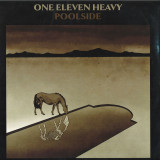
Formed in 2016 by transatlantic buds Nick Mitchell Maiato and James
Toth, One Eleven Heavy is a band designed as a Venn diagram of the
pair's shared musical loves Crazy Horse, Grateful Dead, and Dylan come to the fore when listening to their joyful third album, Poolside, but the influences go much deeper.
Toth says, We were lucky to have our touring drummer, Jake Morris (Stephen Malkmus & The Jicks) at the ready to play drums. Nick's pal, the fantastic Guy Fowler, plays bass on the record.
Guided by mysterious producer Colin Sick, One Eleven Heavy spent
a year writing and recording the tracks that form Poolside, an album that feels like a gothic western romp through cartoon dreams of escaped criminal ciphers ( Tyrant King ), rebound coke binge recollections ( Rizzo In The Wig ), and tales of sasquatches crossing state lines ( Bama Yeti ).
- Tiger Rider
- Flatfoot Willie
- All Dried Up
- Hungry Man
- Dolphins Hotel
- This Love That We Outwore
- Political Disaster
- Changing Times
- Ego In A Bag
- Time Will Show The Wiser
Formed in 2012 by long-time musical companions Oyvind Holm and Hogne Galaen,
the band quickly grew into the six- piece musical force they are today. Their unique
sound fuses cosmic Americana and rich vocal harmonies with catchy melodies, highspirited improvisation, and contagious musical energy that will leave you craving
more.
The six members come from diverse musical backgrounds but are united by their
shared love of psychedelia and cosmic Americana. They draw particular inspiration
from the California sound of the late '60s, with bands like The Byrds, Crosby, Stills,
Nash & Young, and the Grateful Dead as key infuences.
Between 2012 and 2019, the band recorded and released fve critically acclaimed
albums, two of which were recorded in the California desert at the legendary Rancho
De La Luna, nestled among the Joshua trees. Like many other artists, the pandemic
shook their foundations, forcing the band into an involuntary hiatus. In the aftermath
of lockdowns and other imposed restrictions, the backlash from other projects kept
them from picking up where they had left off.
However, the fall of 2024 brought new opportunities. An unexpected email from Mike
Scott of The Waterboys reignited their spirit and motivation. While on tour in Norway,
Scott discovered one of their albums and was so taken by their sound that he invited
them to contribute vocal harmonies to 'The Tourist,' a track off The Waterboys' new
album Life, Death & Dennis Hopper.
Soon after, an even greater opportunity arose--an invitation to join The Waterboys on
tour in the UK and Scandinavia. To accompany the upcoming tour, we've put together
a beginner's guide to Sugarfoot.
The compilation album Cosmic Norse Americana features nine highlights from
Sugarfoot's career so far, along with a newly recorded cover of Emitt Rhodes' 1967
track "Time Will Show The Wiser."
Sugarfoot:
Hogne Galaen - guitars, vocals
Even Granas - drums
Thomas Henriksen - keyboards
Oyvind Holm - guitars, vocals
Bent Saether - bass
Roar Oien - pedal steel
THOUGHTS AND WORDS
The Sugarfoot story begins back in 2011. But before there was Sugarfoot, there were
the Dipsomaniacs, Kulta Beats, Motorpsycho, Too Far Gone, and Deleted Waveform
Gatherings--bands that, in one way or another, featured future members of what would
eventually become Sugarfoot. Six musicians from diverse musical backgrounds,
united by a shared love of psychedelia and cosmic Americana. Drawing deep
inspiration from the California sound of the late '60s, their musical compass points
toward The Byrds, Crosby, Stills, Nash & Young, and the Grateful Dead.
I say eventually, because Sugarfoot didn't start as a band--it began as a duo. Hogne
Galaen and Oyvind Holm had previously played together in Deleted Waveform
Gatherings. But when their drummer moved out of town, the group was put on ice. Not
ones to sit still, the two of them launched a side project to keep the creative wheels
turning.
Throughout the winter of 2011, they holed up in their rehearsal space, writing and
recording rough sketches of what would soon grow into a full album. And that's when
things got interesting. They drew up a wish list--a dream lineup of musicians they'd
love to bring into the fold.
Among the names on that list were Even Granas, Thomas Henriksen, Bent Saether,
and Roar Oien, all soon to be permanent Sugarfooters. Each was invited to contribute
to the project, adding their parts to the pre-recorded tracks--without knowing what the
others were doing. Like assembling a giant musical puzzle, Galaen and Holm later
pieced the album together from these blindfolded contributions. The result was This
Love That We Outwore, released in the fall of 2012.
From there, things escalated quickly. By the following year, Sugarfoot had become a
proper band. Big Sky Country-- written and recorded collectively-- landed in 2014,
solidifying the group's evolving sound, including favourites such as Dolphins Hotel and
Ego In A Bag. When it came time to record a third album, the band felt the itch for
something new. They wanted a change of scenery--somewhere that could spark fresh
inspiration and leave its own sonic fngerprint on the production. So they asked
themselves: where could they go that carried the spirit, the legacy, the stardust of their
musical heroes?
That search led them to the California desert, to the legendary Rancho De La Luna,
nestled among the Joshua trees. Their next two albums, Different Stars (2016) and
The Santa Ana (2017), were both recorded at the Rancho. In fact, The Santa Ana was
both recorded and mixed during a two- week stay in 2015, making it a true time
capsule in the band's discography.
Strike Up The Band is Little Feat's triumph return to rock n roll with plenty of swampy southern soul with Bill Payne (keys/vocals0, Scott Sharrard (guitar/vocals), Tony Leone (drums/vocals), Fred Tackett (guitar), Kenny Gradney (bass), and Sam Clayton (percussion/vocals). It's their first album of new material in over 13 years with songs written by Payne and Tacket as well as Feat's newest members Sharrrard and Leone. The album was produced by the multi Grammy Award winner, Vance Powell (Phish, Chris Stapleton, Jack White) and Bill Payne. The song "Bluegrass Pines" features speacial guest Molly Tuttle and Larry Campbell & Teresa Williams, and was written by Payne and the Grateful Dead lyricst Robert Hunter, and the title track features Larkin Poe on guest vocals.
- 1: White Walls
- 2: Skyscape
- 3: I Want It All
- 4: Goodbye
- 5: Home Is So Sad
- 6: Fall From Grace
- 7: Hands
- 8: Dis, Quand Reviendras-Tu?
- 9: Minor Detail
"I loved Julia Sabra’s Natural History Museum—it was released at the end of the year and is quietly devastating. Her lyricism and sensitivity in timbre and harmony is akin for me to the great Linda Perhacs. The songs are intimate and infinite feeling at the same time—I love the raw and soft poetic settings of love and death." Julia Holter (Best album 2024- Fader)
“This album is a collection of songs written between 2020 and 2024 in Beirut. I wanted to capture them the way they were written by keeping the rawness and fragility intact, like the late-night voice memos I send to my bandmates as soon as I have a first draft of a song. Fadi and I decided to record them live on tape, with no overdubs, barely any effect - with all the imperfections. Most of the tracks were done in one take only. Some were recorded in the studio, and some in the church I grew up going to every summer in Dhour Shweir.
This is a collection of songs that slipped through the cracks, and some of the most personal ones I ever wrote. Songs about the port explosion, its aftermath, picking up the pieces and trying to move on, coming to terms with the past, regret and nostalgia for a childhood that lives only in memory, the uncertain future, learning to love, getting married, watching a genocide unfold on my phone screen, having it fill my every waking moment, imagining a better send off for all the dead, processing the violence and terror, and finding solace in community.
These songs would’ve probably stayed in my “songs in limbo” folder on my laptop had it not been for Pascal and Fadi, who pushed me to release them. And for this I’m eternally grateful.”
[h] 8.Dis, quand reviendras-tu? [Barbara cover]
Hausu Mountain continues the HausLive series of live show recordings that capture some of the headiest moments in Chicago underground music. On HausLive 4, we rewind the clock approximately one year to May 3rd, 2024 at Constellation, where the all-star Bill Orcutt Guitar Quartet (featuring Wendy Eisenberg, Ava Mendoza, and Shane Parish) made their barn-burning Chicago debut. The series channels the spirit of the informal bootlegging and tape trading of audience recordings as pioneered by the community surrounding the Grateful Dead, honing in on the raw live energy and in-the-moment emotions that can make any show stand out in the stream of time. HausLive 4 catches the Bill Orcutt Guitar Quartet in a sublime state of tour-hardened synergy with one another as they tear through the four-string guitar compositions that Orcutt wrote for his album Music for Four Guitars (Palilalia Records, 2022) with dialed-in fingers-on-fretboard precision, while also letting those songs evolve into flights of improvisation and extend into solo and duo passages led by each of the four guitarists. As Orcutt says on tape during one of the show’s interludes, “that record is thirty minutes; this show is an hour, so we’re improvising.” The resulting free-wheeling moments combine with the rigidity of Orcutt’s meticulous four-guitar compositions to form a program of music that draws power in equal measure from the forces of chance and discipline.
Dateline: April 10, 1970. Setting: The storied Fillmore West in San Francisco, CA. Context: Miles Davis, three days removed from his first session for Jack Johnson and, with newly recruited soprano saxophonist Steve Grossman in tow, opening shows for countercultural heroes the Grateful Dead on the latter’s home turf. Result: The initial rumblings of a thrilling era in which Davis and his cohorts would again upend jazz and popular conceptions of the genre with music steeped in groove, improvisation, and hang-on-for-your-life adventurousness. All captured on Black Beauty: Miles Davis at Fillmore West.
Mastered at MoFi’s California studio, pressed at Fidelity Record Pressing in California, and housed in a Stoughton gatefold jacket, Mobile Fidelity's numbered-edition 180g 33RPM 2LP set helps bring what went down that spring evening in Bill Graham’s venue to your listening room with exceptional clarity, balance, and presence. Originally only released in Japan in 1973 and unavailable in the United States until the late ‘90s on compact disc, this marks the first time Black Beauty has been issued on domestic vinyl. The wait is worth it.
Benefitting from quiet surfaces and excellent definition, these LPs present the band’s livewire energy and torrential storm of notes with captivating dynamics, pacing, and fullness. At its core, this audiophile reissue takes you into the walls of sound erected by a band learning on-the-fly the sheer power, will, and breadth of the electric jazz Davis was orchestrating and realizing, on the spot, would reach rock audiences that until that point had only a faint awareness of his mad-scientist experimentation. The sense of release and reach conveyed by these carefully restored records make it clear the veteran bandleader was in the process of a permanent shift that he’d chase for the next five years.
Given Davis was only a few months away from releasing the pioneering double album Bitches Brew, it shouldn’t come as a surprise that much of the fare here adheres to similar explorative approaches. Turbulent rhythms, provocative trumpet passages, and rich, saturated tonal colors that seemingly splash against a blank canvas take precedence over any traditional attempts at organization and melody. Davis and Co. intentionally play everything on a line with the bandleader signaling changes with his horn via coded phrases. The group speaks a common language — with each member having gone to achieve iconic status for their career contributions and technical prowess.
In the company of Grossman, Chick Corea (piano), Dave Holland (bass), Jack DeJohnette (drums), and Airto Moreira (percussion), Davis constructs themes around “Directions,” “Miles Runs the Voodoo Down,” “It’s About That Time,” the title track to Bitches Brew, and more from his then most-recent studio works and the in-progress Jack Johnson. His farewell to the popular standards that for nearly two decades remained a part of his repertoire arrive via a brief dalliance with “I Fall in Love Too Easily,” a shortened albeit aggressive “Masqualero,” and the “Theme” finale of “Spanish Key.” Initially, Black Beauty lacked specific track listings due to Davis’ increasing frustration with listeners over-analyzing his music.
In retrospect, it’s difficult to blame anyone for wanting to view what’s on display here with the aural equivalent of a magnifying glass. Leaning in rock directions, yet maintaining an ear for spaciousness and solos, Black Beauty survives as a snapshot of a thrilling moment amid a transitory period in which evolution came fast and furious. Just two months later, Davis would add another instrumentalist to the lineup in the form of organist Keith Jarrett, and the perpetually restless visionary would blast off to a more atmospheric and arguably more chaotic universe.
Consider, then, this live document a bridge to that galaxy and a breathtaking example of the possibilities of jazz itself.
- I Wonder Who
- Heartbreaker
- Blues On The Westside
- Waterfall
- Well All Right
- Rock De La Carcel
- Evol
- Aguaturbia
Aguaturbia's second LP "Volumen 2" (1970) is an essential album to understand the construction of what we know today as Chilean rock. Aguaturbia's debut album was originally released in 1970 and showcases one of South America's most significant psychedelic bands from the late 60s and early 70s. Their influence in their native Chile -and beyond- was groundbreaking. In July that same year the band recorded "Volumen 2" that, just as raw and dynamic as the debut,delivers even heavier intensity than their debut LP. As expected, this album is raw and dynamic, featuring heavy rhythms, distortion, and exceptional phased female vocals reminiscent of Jefferson Airplane. Comparisons with the Grateful Dead, Country Joe and the Fish and Led Zeppelin can be drawn. Splendid heavy psych and proto-stoner tracks make this album a pioneer recording in the history of South American rock. The LP showcases breathtaking moments, like the psych-blues 'Heartbreaker' or 'I Wonder Who' where guitarist Carlos Corales shines. When he played solos at the gigs, the effect on the audience was silence and euphoria at the same time. In fact, Carlos Corales (guitar) and Willy Cavada (drums) were both professional musicians who had made a previous career in rock and roll bands. Other outstanding songs are 'Blues On The Westside', 'Waterfall' and the magnificent 'Well All Right'. Controversy accompanies the release of the album once again. In this case the cover artwork, a tribute to Salvador Dalí, scandalizes the most conservative sector of Chilean society. This outstanding album is now available again on vinylafter many years out of stock.
- A1: Samson & Delilah
- A2: Let Us Get Together Right Down Here
- A3: I Belong To The Band
- A4: Pure Religion
- A5: Great Change Since I Been Born
- A6: Death Don't Have No Mercy
- A7: Cocaine Blues
- B1: Twelve Gates To The City
- B2: Goin' To Sit Down On The Banks Of The River
- B3: Tryin' To Get Home
- B4: Lo, I Be With You Always
- B5: I Am The Light Of This World
- B6: Lord, I Feel Like Just Goin' On
- B7: Devil's Dream
Reverend Gary Davis aus Laurens, South Carolina war Singer-Songwriter, Gitarrist
und ein wahrer Virtuose des Piemont-Blues-Fingerpicking-Stils. Jack White
erwähnte ihn als einen seiner Gitarrenhelden in der Dokumentation It Might Get Loud
und zeigte darin den Videoclip von Death Don't Have No Mercy (He'll come to your
house and he won't stay long).
Blind Gary Davies spielte Gitarre mit Daumen und Zeigefinger auf eine Weise, die nur
ein blinder Mann spielen kann. Viele seiner Songs wurden im Laufe der Zeit von
internationalen Künstlern gecovert; unter anderem gehören The Grateful Dead und Bob
Dylan zu den Interpreten, die durch ihre Davis-Interpretationen dem blinden Virtuosen
Ehre erwiesen. Harlem Street Singer beinhaltet seine größten Hits, die bis heute
populär sind.
- I Miss You, I Do
- Crooked Teeth
- Greyhound Station
- I Love You
- Day Old Thoughts
- Maybe I Ve Wasted My Time
- Took The Train Til The End
- You Re Mine, I M Yours
- Born In Spring
- Happy New Year
Arny Margret, Iceland’s remarkable and poetic upcoming singer-songwriter, is due to release her second album ‘I Miss You, I Do’ on March 7th via One Little Independent Records. The follow-up to 2022’s celebrated, minimalist folk debut ‘they only talk about the weather’ sees her working with new producers in America to develop and hone a sound that’s more textured, expansive, and mature.
‘I Miss You, I Do’ incorporates sessions from Arny Margret’s trips to New York City, North Carolina, and Colorado, as well as those recorded in Iceland. During extensive international touring, she wrote prolifically and spent time getting to know producers and musicians who each brought their own unique and individual talents to the project. Arny’s atmospheric and introspective material has been layered with country-inflected full band ensembles, keys, banjo, harmonium, slide guitar and more, adding an ambience that only enhances her natural ability to convey crystal-clear imagery within thematically rich writing.
In pursuit of her creative vision, Arny enlisted producers Josh Kaufman, Andrew Berlin, Brad Cook, and Guðm. “Kiddi” Kristinn Jónsson. Josh Kaufman is best known for his work with Grateful Dead founder Bob Weir, The National, This Is The Kit, Hiss Golden Messenger, Josh Ritter, and The War on Drugs. Andrew Berlin, GRAMMY nominated for his work on Gregory Alan Isakov’s record ‘Evening Machines’, also mixes national punk rock staples such as A Wilhelm Scream, Rise Against, and Teenage Bottlerocket. Brad Cook served as a producer for Bon Iver, Big Red Machine, Waxahatchee, Hand Habits, Kevin Morby, and Whitney amongst others. Arny also returned to Iceland to record with her long-time collaborator and friend Kiddi Jónsson in Reykjavík, Iceland.
Causa Sui returns with a new live album, recorded at their home turf – the legendary Copenhagen venue Loppen, located at the famous, and notorious, freetown Christiania – a venue the band has played more often than any other throughout their 20 year career.
This set is the perfect companion to last year's career highlight ‘From The Source”, which saw the band condense the multiple stylistic aspects of their sound into an awe-inspiring 47 minutes. Represented here are key cuts from that album – including the sidelong 7-part epic ‘Visions of a New Horizon” - as well as a few fan favorites such as ‘Red Sun in June” from the band's Summer Sessions series, which has never previously been released in a live version. In this rendition the band let themselves get carried away, riding on the energy of the room, soaring into jammy Grateful Dead territory. Elsewhere the band explores jazzy, improvisatory group interplay (The Spot) and get as heavy as they can (Soledad, Boozehound). Getting carried away is what Causa Sui are all about when playing live, and that mentality is captured in entirety on this set. Mixed and mastered by Jonas Munk from a multitrack soundboard recording
Howlin Rain’s grand 3xLP archival statement and untold story, written over nearly two decades in invisible ink between the lines. Features never before heard songs from The Russian Wilds, The Dharma Wheel, The Alligator Bride, Mansion Songs, Live Rain and the lost Ethan Miller Band sessions. With a broad cast of musical characters including Rick Rubin (Producer/American Records), Luther Dickinson (North Mississippi Allstars), Scarlet Rivera (Bob Dylan’s Rolling Thunder Revue), Joel Robinow (Once and Future Band), Isaiah Mitchell (Earthless/ The Black Crowes) and many more. Includes songs by The Rolling Stones, Grateful Dead, Leon Russell and Neil Merryweather. “I wanted to compile the record so it would have impact like our grandest, wildest, most unabashed studio album. I left out home demos, and songs from quiet corners, sketches, etc, in favor of fully formed, fully finished, studio level tracks from front to back. Lost at Sea is intended to be something that you can pour yourself into and get swept away in.” — Ethan Miller (Founder, bandleader)
Robyn Hitchcock is a rock’n’roll surrealist. Born in London on March 3rd, 1953 he describes his songs as “pictures you can listen to”. As much a child of Dali, De Chirico, and JG Ballard as of his 1960s musical heroes, he is a master of the absurd, reveling in the beauty of the unexpected. His first publicly visible band The Soft Boys (1976 - 81) has remained an influential art-rock touchstone for generations of musicians. “I just want to be an obscure cult fringe,” he told the NME in 1978; the NME didn’t believe him, but he’s been true to his ambition. Without ever breaking the surface of pop culture Hitchcock has floated at a tangent to the mainstream for nearly 5 decades. His songs have been performed by REM, The Replacements, Neko Case, Gillian Welch & David Rawlings, Lou Barlow, Grant Lee Phillips, Sparklehorse, and Suzanne Vega with the Grateful Dead among others. A confirmed outsider, he nonetheless has devoted listeners around the world who attend his concerts, and also tune into the online streaming shows Robyn seasonally does with his wife, the singer Emma Swift. In 1996 he was the subject of Jonathan Demme’s in-concert film, ‘Storefront Hitchcock’. Robyn Hitchcock came of age in the 1960s when he attended Winchester College, an eccentric hothouse boarding school in the south of England. This is the subject of “1967”, which is both a memoir and an album, due for release in June this year. The memoir is a book “1967: How I Got There And Why I Never Left”, describing how the music of Bob Dylan, The Beatles, Jimi Hendrix and others drastically transformed the direction of his life when he left home for this strange new world. The companion record album “1967: Vacations In The Past” is a selection of the (mostly) hit songs of that year, re-recorded acoustically by Robyn with the help of some friends in Cambridge, San Francisco, and Sydney. He is currently preparing new material to release in 2025. “I like to keep busy”, he says: “We have all eternity to not exist”.
Few bands have as enduring a legacy in the acoustic/newgrass/jam band
scene as Colorado-based Leftover Salmon
Carrying the torch passed down by the progressive bluegrass pioneers, The
Seldom Scene and Newgrass Revival, Leftover Salmon are true architects of the
contemporary jam grass scene, inspiring the careers of a generation of artists
ncluding Billy Strings, Greensky Bluegrass and Yonder Mountain String Band.
On 'Grass Roots', Leftover Salmon reflect on its bluegrass and festival
campground origins with a set of songs that draws from the repertoires that The
Salmon Heads and The Left Hand String Band played when they first jammed in a
Telluride Bluegrass Festival campground. Collaborating with jam scene icons
Billy Strings, Oliver Wood, and Darol Anger, and with the recent addition of Jay
Starling on resophonic guitar, lap steel and keys to the band's official line, Leftover
Salmon have all the instrumental firepower needed to deliver hard driving
versions of bluegrass standards and grassed- up versions of songs from Bob
Dylan, David Bromberg, and The Grateful Dead. Now available on Limited Edition
Banana Yellow Vinyl
Now available on Limited Edition Banana Yellow Vinyl
- Introduction
- Directions
- The Mask
- It’s About That Time
- Bitches Brew
- The Theme
- Paraphernalia
- Footprints
- Directions
- The Mask
- It’s About That Time
- Bitches Brew
- The Theme
- Spanish Key (Encore)
- The Theme
- Directions
- The Mask
- It’s About That Time
- I Fall In Love Too Easily
- Sanctuary
- Bitches Brew
- The Theme
- Fillmore West, April 11, 1970
- Miles Runs The Voodoo Down
- Directions
- The Mask
- It’s About That Time
- I Fall In Love Too Easily
- Sanctuary
- Bitches Brew
- Willie Nelson
- The Theme
These are four historic performances from the Fillmore East and West in 1970, at a time when Miles Davis was single-handedly bringing Jazz into the commercial Rock era. In their unedited form, all selections are previously unissued. The searing white heat of these concerts, originally issued in severely edited form, are now made whole. This set includes several bonus tracks like Wayne Shorter's “Paraphernalia” and “Footprints”, an early version of “Miles Runs The Voodoo Down” plus a rare encore performance of Bitches Brew’s “Spanish Key”.
The visionary Bill Graham had booked Miles on a bill with The Grateful Dead at the Fillmore West and with fellow Columbia artist Laura Nyro in June 1970. The latter recordings are the earliest documented live performances of Miles’s band when he hired two keyboardists--Chick Corea and Keith Jarrett, along with saxophonist Steve Grossman who had replaced Wayne Shorter. The rest of the rhythm section--keyboardist Corea, bassist Dave Holland, drummer Jack DeJohnette and percussionist Airto Moreira--were in the backbone of this band throughout this explosive period.
Curated by Carlos Santana, this set features fascinating firsthand accounts and profound insight into a seismic shift in American society, music, and culture. In a rare, in-depth interview, Miles--while listening to the concert playback--was “so excited about the music that he wanted every set, every note made available to the public...”
- Fillmore East, June 17, 1970
- A1: Introduction
- A2: Directions
- A3: The Mask
- Fillmore East, June 17, 1970
- B1: It’s About That Time
- B2: Bitches Brew
- B3: The Theme
- Fillmore West, April 11, 1970
- C1: Paraphernalia (Bonus Track)
- C2: Footprints (Bonus Track)
- Fillmore East, June 18, 1970
- D1: Directions (Bonus Track)
- D2: The Mask (Bonus Track)
- Fillmore East, June 18, 1970
- E1: It’s About That Time
- E2: Bitches Brew
- Fillmore East, June 18, 1970
- F1: The Theme
- F2: Spanish Key (Encore)
- F3: The Theme
- Fillmore East, June 19, 1970
- G1: Directions
- G2: The Mask
- H2: I Fall In Love Too Easily
- H3: Sanctuary
- Fillmore East, June 19, 1970
- I1: Bitches Brew
- I2: The Theme
- Fillmore West, April 11, 1970
- I3: Miles Runs The Voodoo Down (Bonus Track)
- Fillmore East, June 20, 1970
- J1: Directions
- J2: The Mask
- Fillmore East, June 20, 1970
- K1: It’s About That Time
- K2: I Fall In Love Too Easily
- K3: Sanctuary
- Fillmore East, June 20, 1970
- L1: Bitches Brew
- L2: Willie Nelson
- L3: The Theme
- Fillmore East, June 19, 1970
- H1: It’s About That Time
Miles At The Fillmore - The Bootleg Series Vol. 3 features four historic perfor- mances from the Fillmore East and West in 1970, at a time when Miles Davis was single-handedly bringing jazz into the commercial rock era.
The visionary Bill Graham had booked Miles on a bill with The Grateful Dead at the Fillmore West and with fellow Columbia artist Laura Nyro in June 1970. The latter recordings are the earliest documented live performances of Miles’s band when he hired the keyboardists Chick Corea and Keith Jarrett, along with saxophonist Steve Grossman who had replaced Wayne Shorter. The rest of the rhythm section - bassist Dave Holland, drummer Jack De- Johnette and percussionist Airto Moreira - were the backbone of his band throughout this explosive period.
Curated by Carlos Santana, this set features fascinating firsthand accounts and profound insight into a seismic shift in American society, music, and culture. In a rare, in-depth interview, Miles was “so excited about the music that he wanted every set, every note made available to the public...” The searing heat of these concerts, originally issued in severely edited form, are now made whole. This set includes several bonus tracks like Wayne Shorter’s “Paraphernalia” and “Footprints”, an early version of “Miles Runs The Voodoo Down” plus a rare encore performance of “Spanish Key” from the Bitches Brew album.
The Bootleg Series Vol. 3: Miles At The Fillmore is available as a deluxe 6-LP boxset, housed in a lift-off box. This 6LP-set includes printed inner sleeves and a 12-page booklet with extensive liner notes and rare photos.
- A1: Prayer (From Xabo: Father Boniecki)
- A2: In Between (From Xabo: Father Boniecki)
- A3: Journey (From Xabo: Father Boniecki)
- A4: Trip To Ireland (From I Never Cry)
- A5: The Beach (From I Never Cry)
- A6: The Locker Room (From I Never Cry)
- A7: At The Hospital (From I Never Cry)
- B1: Waiting (From At Home)
- B2: Wildfires (From Truth In Fire)
- B3: Ghosts (From Pradziady)
- B4: Soleil Pâle
- B5: Nora (From Nora)
Writing music for film and theatre has always been a big part of Hania Rani's musical world. It is also a part of the creative process that can be tantalisingly out of reach for listeners, either the project doesn't come to fruition or the music simply isn't available away from the film or play. From early collaborations with friends, to last year's two scores for full length films (xAbo: Father Boniecki directed by Aleksandra Potoczek and I Never Cry directed by Piotr Domalewski') Rani has been involved in many such projects, each representing an important step in her artistic development and life as a composer and artist:
"Composing for motion picture or theatre is for me a very different kind of work than writing for my own projects. Firstly, I need to collaborate with somebody else who sees the world through the lense of their own art and craft. That's why these kinds of encounters can be so exciting - they are a promise of creating something very new, as a result of creative work of so many people from all walks of life. Secondly, I feel that music in film is an invisible character, a missing emotion that creates a special atmosphere and sensation. It doesn't illustrate, it completes the work of art. I think it is an extremely sensitive matter that rejects banal associations and easy solutions. I feel like composing for film works like an exercise for my imagination."
It is the nature of these collaborations though, that sometimes the composers own preferred compositions don't make the final cut. This is where Music for Film and Theatre comes in as it allows Rani to present a selection of her own personal favourite pieces composed for film and plays. Pieces that made it to the final cut and pieces that were rejected by the director or the producer. Bringing the music together as an album offers a chance for Rani to share her music with her listeners on her own terms and a chance for her fans to hear a different side of her art.
"I put them in one place, as a collection of precious objects that were kept for years in a drawer. Some of them were composed a couple years ago, some are the result of recent research. I am very happy to finally be able to present them as a separate project."
Rani is of course grateful to all of the directors who have entrusted her to create music for their projects, but she professes especially warm feelings for the pieces composed for her first 'real' theatre play, Pradziady, directed by Michał Zdunik. The title comes from 'Dziady' a term in Slavic folklore for the spirits of the ancestors and a collection of pre-Christian rites, rituals and customs that were dedicated to them. The essence of these rituals was the 'communion of the living with the dead', namely, the establishment of relationships with the souls of the ancestors. "I felt this story needed extremely dark and fragile music, and at the same time a sound that could express the mixture of the two worlds - the living and the dead. I decided to compose part of the soundtrack with a string quartet but including two cellos, viola and only one violin. We recorded in a little house, completely built from wood, mostly from Finnish pine. I always felt this space has a very special, warm and natural acoustics - especially when it is combined with string instruments. The track composed for this theatre play is called Ghosts but actually didn't finally make it to the performance, although I like it so much that I thought it would perfectly fit
this compilation". Other highlights include the enchanting Soleil Pâle written for a collaboration with director Neels Castillon, and improvising dancers Alt Take, the beautiful melancholy of In Between (from the film score for xAbo: Father Boniecki) and the magical bliss of The Beach (from I Never Cry) and together they create a beautiful offering from an artist whose every note is worth hearing, but for whom the journey is just beginning:
"I am very happy to see that many artists consider my music as the right soundtrack for their works, because film music was always a huge inspiration for any of my compositions. I find there a lot of life and real emotions, but also a feeling of freedom. Freedom from my own thinking patterns and prejudices. I also believe strongly in collaboration between people, I always feel this is the way to create something really new, based on a mixture of different ways of thinking, feeling, expressing."
This then is Hania Rani, Music for Film and Theatre – enjoy!
"Everyone you love will end up dead," Isaiah Neal sings on "Ivy Tech," the second track from Leisure Hour's upcoming The Sunny Side. It's a matter-of-fact lyrics delivered in a matter-of-fact way - but a second later, Grace Dudas and Raegan Gordon join in to harmonize on a booming "whoa-oh-oh-oh" chorus. In the span of about three seconds, Leisure Hour's whole ethos becomes clear. The Sunny Side is the result of years of writing and recording, the culmination of a half-decade of lineup changes; by now, Leisure Hour's reached their final form: bassist/vocalist Dudas, guitarist/vocalist Neal, and drummer/vocalist Gordon. The Sunny Side, according to the band, is about "love, loss, and struggle with mental health as a middle class individual," and maybe it was a case of life mimicking art. The three of them struggled to come up with enough money to record and produce these songs the way they envisioned; they picked up extra shifts at their jobs and, in true DIY fashion, decided to throw as many music festivals as they could to drum up enough cash to bring these songs to life, and "the community around us rallied together to make this album happen, and for that we are eternally grateful." That gratitude is the driving force behind The Sunny Side. The eleven songs that comprise the record are built on shaky hopes and the anticipation of disappointment, but along with that comes a teeth-gritting resilience and a hard-won appreciation for those small victories. "I can't forgive you," Dudas sings at the end of "Forgiveness," but she follows it quickly with "But I'm trying to," and then she repeats it over and over. Maybe she's just trying to convince herself, but it's the effort that matters. Leisure Hour won't stop looking on the sunny side anytime soon, and they're trying their damnedest to convince you to do the same.
The vinyl os the first release in archival series celebrating the legacy of Robert Hunter, primary lyricist for Grateful Dead and main collaborator/songwriting partner for Jerry Garcia. Deluxe reissue of 1974 debut solo album. This Deluxe Edition introduces a freshly remastered version of the original album alongside 16 previously unreleased recordings, including alternate versions of album tracks and several session outtakes. All the music has been remastered from the original master tapes by GRAMMY® Award-winning engineer David Glasser using Plangent Processes tape restoration and speed correction.


![Grateful Dead - Grateful Dead (Skull & Roses) [Live] [2021 Remaster]](https://www.deejay.de/images/l/3/1/977131.jpg)