“MARK” is the new solo record from acclaimed drummer and composer Mark Guiliana: an auditory manifestation of one of theworld’s most creative and innovative musical minds. Ever since the first day he picked up a pair of drum sticks, Mark Guiliana has been instinctively exploring and absorbing themusic and rhythms that have been ever-present in his life. Fast forward to the present day and he has earned a formidable reputation as a world-class drummer, composer and thinker at the forefront of contemporary jazz and beyond. Guiliana’sartistry defies convention, weaving together a musical output beyond jazz with the ultimate goal of creating compelling musical narratives.
His songs serve as a conduit for his relentless quest for creativity, striving to share his sonic visions withthe world in their most unadulterated form. Guiliana’s new album “MARK”, represents an introspective voyage into his creative depths. On the record, Mark performs soloon a wide array of devices; you can hear his quintessential grooves intermixed with intriguing percussive soundscapes,sublime tapestries of synthesisers and fragments of spoken word. “MARK” is an album that peels back the layers of Guiliana’sexperiences, reflections, and the wisdom gleaned from a life immersed in music. It transcends genres and defiescategorisation, floating in the boundless space of pure expression.
Through music and through life, Mark looks into the mirrorand asks eternal questions of identity and growth: who am I, where am I going and what do I stand for? This album invites listeners to share in Mark’s personal dialogue, offering a sanctuary where they can begin to untangle and examine themselves track by track. “MARK” is an exploration of new and uplifting musical territory, unrestricted by norms andfree from preconceived ideas or satisfying (but ultimately unfulfilling) genre expectations. It embodies the impact of Guiliana’sjourney, marking his evolution as an artist. This record echoes the spirit of freedom, the courage of inquiry, and the beauty of unfettered expression.
Pearlescent White Vinyl with A5 card inserts.
Поиск:groove express
Все
Here at Mr Bongo we have been inundated with people asking us to reissue this release. Ana Frango Elétrico's petit cult classic masterpiece 'Little Electric Chicken Heart' from 2019, which was only ever released on vinyl and CD in Brazil and Japan, has fast become a collector's item.
Well received by fans, DJs, and reviewers on release, The Needle Drop expressed "Ana Frango Elétrico's authentically vintage fusion of chamber pop, rock, samba and jazz is a real blast!" listing it as one of its Top 50 Albums of 2019. The album's reputation has been slowly building ever since, gaining a Latin Grammy nomination in 2020, and now solidly cementing itself as a gem of contemporary Brazilian music.
Across the albums nine tracks, Ana blends elements and influences from MPB, Tropicália, indie rock, punk and pop, forging them together with a sumptuous dose of her signature style. The finesse of 'Saudade' kicks off the LP, one of Ana's most known tracks to a non-Brazilian audience. A sublime opener, beginning with a spellbinding piano solo before transcending into a beautiful dream-laden slice of warmth, complete with luscious jazzy horns and deft vocal delivery. ‘Promessa e previsões’ follows, the only track on the album not to be written by Ana, instead being penned by Chico França. It’s a swelling and sweeping twilight groover, building and breaking across absorbing peaks.
Other highlights on the album include the anthemic 'Chocolate', which was a firm favourite with a packed sing-along crowd when we heard Ana perform it live. Elsewhere, 'Se No Cinema' hits with its quirky allure, charm and catchy melodies before transforming into a carnival spirit.
Tapping into the richness of Brazil’s new wave of musical energy, the album also includes a heavyweight lineup of collaborations with artists such as Dora Morelenbaum (Bala Desejo), Tim Bernardes, Antonio Neves and Guilherme Lirio to name but a few.
A short, sweet and refreshing record, that leaves nothing to waste, marrying playful ideas with poignant themes. 'Little Electric Chicken Heart' is a future classic and will beguile fans of ‘70s Brazilian recordings, Gal Costa, Mac DeMarco, Stereolab, Superorganism, Caetano Veloso and more.
Veiga lands straight on the dancefloor, no ambiguity about it. Spurred by the guys from RS Produções, he's been honing his DJ skills since he was 17 (currently 23), initially with partner Nunocoox, who gave him even more motivation. Production came naturally sometime in 2020. We venture: maybe one of the good things coming out of the lockdown? Summer of '22, his debut at Musicbox (at the Príncipe monthly residency) is recorded as a festive, lively set, punctuated by the kind of crowd shouts only heard when things go really happy and sweaty. Since then, Veiga's name has been spotted regularly in the afro club scene, growing in reputation
This side of kuduro, "Leandro" is as expressive as it gets, with percussive forces pulling in deceitfully different directions, much in the same style as the slower form of tarraxo. But we can call this house, yeah? No niceties, however: little over 3 minutes and the track abruptly cuts into silence, exuding the raw power of something made for the mix, not in the least "for the people". In a similar pragmatic mode, the stabs in "Sem Nome" get the party started unannounced. Full mode, for the duration. Minimal groove, broken beats and emotive highlights. "Boiler Room" may be wishful thinking, an interpretation of what is required to rock the place or, ultimately, just a title to wrap up the project. In any case, here's a feisty vocal-and-whistle driven stormer, building up to perfection over three and a half minutes. All elements exactly where they belong. Relentless pace in "X de Destroi", a dark side operation, unreal ambiance, breakneck beats, a purgation?
The title "Tudo É No Guetto" contains all the necessary theory. Everything happens in the ghetto. This uplifting house slab celebrates life as it is, freezing hardships for a moment, the ghetto seen as welcoming, a natural place to be. Vocals stashed away in his cell phone come from the animação crew Os Twinni (he joined them for a while). Clipped, repeated and manipulated to convey the very simple feeling of good times. Veiga himself talks about growing up with minimum resources but still happy. That is the memory he retains from being a kid in the ghettos of Amadora, just outside of Lisbon, born to a Cape Verdean father and Portuguese mother. Though the music sounds carefree and the message is chilled, let us not be tempted to rebrand Reality.
"Direct heir to the fusions of Maloya rhythms from Réunion Island, like Alain Peters, Danyel Waro, René Lacaille... Bonbon Vodou is the sweet and sour confectionery concocted by Oriane Lacaille and JereM Boucris. Bathed in the sweetness of clear voices and carried by a devastating groove, Bonbon Vodou distills joy and propagates a trance wave.
Bonbon Vodou renews in French and Reunion Creole the melodic-fantastic marriage of grouple (couple group) Areski B./B. Fountain.
On her unique mini-drums, Oriane makes bodies shake to the pulsations of the Island of Meeting. JereM, with his oil can body guitar and North African reminiscences, hybridizes these rhythms of heady melodies.
The creoleness of Bonbon Vodou is expressed in a bonfire, which summons Brassens in choir as well as the explosive ternary of the Indian Ocean. To make this fire crackle a little more, the duo joins in a fantasized “side band”: the Piment Piment, three captivating musicians for an enhanced Bonbon Vodou formula. Roland Seilhes: the pied-noir blanc-bec at the hips (sax, clarinets and flute) Juliette Minvielle: the aerial wildness of Béarn (string drum, keyboards and percussion) Yann-Lou Bertrand: Panam ivory (bass, flute, trumpet, percussion)
Bonbon Vodou as a quintet explores even more deeply maloya and the mosaic of swaying and telluric rhythms gleaned from the four cardinal points.
If the duo adopted the Creole spelling of AFRODIZIAK it is because it extends the very real dream of their African roots.
Singing about the beauty of crossbreeding and the harshness of metic life.
The quest for hidden treasure, the lives of migrations and island lives are imbued with it.
“Bonbon Vodou sides with the practices of enchantment” Vinciane Despret "
* The title Afrodisiak quotes “We love life as much as possible” by Palestinian poet Mahmoud Darwish
Going solo while still keeping intact his devotion to RS Produções, Nuno appears as a true heartbreaker. Silky, space soul, why not even risk the patented future r&b? But this music exists and manifests itself apart from the established production centres, the golden arches of hype edifices and synthetic promotion regurgitated by a thousand cloned fingers. "Sai Do Coração" is a very brave, romantic improbability, shying away from DJ bravado and dancefloor top speed. Through these grooves comes a pure distillation of love, an alchemical sublimatio resulting in the much sought-after "higher substance", a bright globe issuing rays of affection all around.
With love we most likely also buy into a degree of suffering, and though this is not at all the ID of the album, Nuno explicitly connects the two sentiments in "N'Dengue", a cathartic cold cut one grows to cherish intensely by the time it is over. It's a key moment, grief pours out, liberation achieved in the dance - "I will love, I will suffer, I will shout, I will dance". Flip to the other side for "Confusão No Ghetto", another gritty expression, a richly percussive, slow tempo observation of things gone wrong. All the rest in the album feels simple, direct and yet sophisticated like photosynthesis. Like the soil, through which geological becomes biological. Nuno whips up a variety of textures and flavours into the invisible form of Music, romantic fiction into action.
DJ Support: Gilles Peterson (BBC Radio 6 Music), Tom Ravenscroft/Deb Grant – New Music Fix (BBC Radio 6 Music), Huey Morgan (BBC Radio 6 Music)
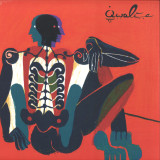
Cut from material recorded in April 2021 at Fish Factory studios in London, the album’s title Abbreviations nods to the editing and post-production processes that trimmed the original recordings into seven succinct and intricate tracks. Making space for collaborators Ernesto Marichales (percussion), Miryam Solomon (vocals) and Valeria Pozzo (Violin, viola), it builds on the critically-acclaimed success of Sound & Reason (supported by Gilles Peterson and Mary Anne Hobbs) to bring out different shades of the group’s shape-shifting sound.
‘Elevator Company’ condenses twenty-minutes of jamming around Tal Janes’ hypnotic guitar line into a low-lit lounge groove that subverts the tropes of elevator music associated with some forms of easy listening jazz. Featuring Solomon’s wordless vocals, the piece blurs the lines between ambient and improvised music, creating a warm and intimate atmosphere reminiscent of classic RnB recordings.
On a different tip, ‘The Spin’ is a trance-like freak-out drawing on the final reserves of energy at the tail end of two days of solid recording. Reflecting guitarist Janes’ idea that "music really starts happening after a while, once you feel like you have nothing left to offer," the hypnotic rhythm section sets the tone for an fraught and frazzled guitar solo that seems to dissolve the very edges of time and space in the process.
An album that speaks to Qwalia’s endless capacity for self-renewal and uninhibited expression, Abbreviations takes its cue from the group’s name to communicate something ineffable about the nature of music, rhythm and sound that must be experienced to be truly understood.
First release in 5years by Snaker, and the catalog counts 11nd.
This title features a joint work release by 2 artists, KOOLMFL and Sonic Weapon who also been busy with their releases on Powder’s Thinner Groove label. Their approach to express “Contemporary library sound” was to experiment with various way to create funky collages, Trippy beats, groovy or anti-groovy loop arts, and fragments of noise and scratch. The sound is going everywhere but consistent as a sound library to Get On Down.
180 Proof Records & BBE Music continue to bring new life to the Strata catalogue, this time with the short-lived label's swan song: Larry Nozero’s 1975 passion project, Time. The final album to be released on Strata Inc., Time is a dream- like mix of mood, an album full of range, tempo, and feeling; from the impulsive and airy rendition of the jazz standard “All The Things You Are” to the brooding melancholia of “Tony,” Nozero’s Time is destined to become known among aficionados as a classic of 1970s jazz. Like time itself, each song is open to individual interpretation - something Nozero himself confessed to on the album’s original liner notes, saying “It got so deep that we decided to call the group and our album after that concept of TIME, because it seemed to mean something to just about everyone.” A native of Detroit, Nozero spent time in Charles Moore’s Detroit Contemporary 5 (part of Strata Inc.) before being drafted into the military. While enlisted, Nozero capitalised on his time by honing his craft in the Army Band. By the time he returned to Detroit, Nozero had little trouble landing high-profile gigs. No stranger to success, Nozero’s previous credits and collaborators include Henry Mancini, Sergio Mendes, and playing Soprano sax on Marvin Gaye’s iconic 1971 album, What’s Going On. Working with his cousin and collaborator Dennis Tini, Time is unlike many albums of the era in that it truly feels like a work fuelled by freewheeling expressionism. The pieces are funky, soulful, strange and soothing all at once. Tini’s stand-out contribution to the album is “Tune for L.N.”, a funk-fuelled piece of rhythm-centric jazz. A distinguishing feature of the album is the use of wordless vocals. The scat work on part two of “Chronicle Of The Murdered House” adds a distinct counterpoint to Nozero’s reed work, while the high pitch bebop of “Baubles, Bangles and Beads” closes out the album with a carefree and buoyant groove. Time has been remastered by the Grammy nominated studio The Carvery, along with the artwork, which has been restored and includes never seen before photos.
Black vinyl back in for the first time in a while, note new price. Produced by Leon Michels. Toured with Chicano Batman. Planned touring with Lee Fields & The Expressions. What is Buck? Buck is a state of mind, a way of life, a demeanor that gets you through the good times and the bad. If you ask Brainstory, It is also the energy that permeates their debut album. Kevin, Tony, and Eric are a trio of brothers bounded by blood, fate, and a small town with nothing to do. Their story begins in the long lost lands of the San Bernardino Valley, in the twilight zone known as Rialto, California: An arid wasteland of boredom and empty lots. Through punk rock and skateboarding they found temporary liberation from the local monotony. However, it wouldn’t be long before a hunger for more led them to explore musical realms beyond that of the hardcore punk they admired. After stints at music school and steady disappointment trying to navigate their local jazz scene they moved to Los Angeles and Brainstory was born. Through a introduction from Chicano Batman’s bassist, Brainstory caught the ears of Big Crown head honchos Danny Akalepse and Leon Michels. Shortly thereafter they were on their way to Queens, to record at The Legendary Diamond Mine with Michels at the helm. An instant chemistry yielded 10 songs in 10 days and now Brainstory has gifted the world with one hell of an introduction to all things Buck. Highlights include the sublime slow burner, “Dead End” which was the A-side to their first 45 on Big Crown that sold out in a matter of days. With Kevin’s sublime falsetto floating atop Tony and Eric’s unflappable and unmistakable backbeat, this tune has become a favorite with the ballad heads, the low-riders, and the slowie collectors. “Breathe” showcases another side of their sound taking a page out of the Shuggie Otis playbook and flipping the script with some stoned out west coast swag. Kev and Tony’s father, Big Tone, an accomplished performer himself, steps in on “Peter Pan” to sing lead vocals over a chorus of friends and family. Bassist extraordinaire, Tony, takes over lead vocal duties on “Sorry”, a smoked out, G Funk groove that is just waiting to be sampled. These guys have come a long way from their self released EPs and opening tours with Chicano Batman. Their musical growth is undeniable, and taking their California sunshine vibes and mixing them with Michels’ NYC aesthetic has proven to be an amazing combination. It’s a debut record that pulls influences from so many genres seamlessly it’s hard to nail down. Call it Funk, call it Rock, call it Soul, but over here at Big Crown HQ, we’ve decided to call it BUCK.
The Guardian wrote “the Canadian songwriter has one of the all-time great singing voices in popular music, an intensely romantic Chet Baker-ish instrument that seems to float with piercing direction, like a paper aeroplane thrown hard through mist.” With Uncut describing his songcraft “as delicate and lovely as a rare orchid” and Record Collector praising the album’s “sublime alien balladry” such are the accolades that have accrued throughout Chenaux’s unique and consummately uncompromising solo music for well over a decade now. Delights Of My Life opens a new chapter for the singer/guitarist and formally introduces the Eric Chenaux Trio, with Toronto-based musicians Ryan Driver on Wurlitzer organ and Phillipe Melanson on electronic percussion. Driver is a longtime collaborator, appearing on several of Chenaux’s solo albums (even embedded into the very title of the 2010 masterpiece Warm Weather With Ryan Driver). Melanson has a long list of involvements that include Bernice, Joseph Shabason, and U.S Girls, and a recent release with his Impossible Burger project on Chenaux’s own experimental label Rat-drifting, but this marks the first fulsome involvement between the two as players on a recording. In many ways Delights Of My Life also picks up right where Chenaux’s previous album left off, in its subversions of a classic, timeless jazz-inflected balladry, while the interplay of the trio formation indeed unfurls many new delights. Recording together at Chenaux’s spartan home studio in rural France, Driver’s harmonically warped organ and Melanson’s electroacoustic sampling and percussion hold time in newfound ways. Where previously Chenaux relied on a freeze/sustain pedal and minimalist rhythmic triggers to generate both pulse and chordal foundations, Melanson now paints timekeeping with expressive and intricate colourations, through live deployments of fluid sampled percussion (including orchestral timbres like timpani, kettle drums, and woodblock) that blur the boundaries between acoustic and electronic. Driver also ramps up his role in the song arrangements (prefigured in his support playing on Say Laura), teasing out chords and melodic filigree on Wurlitzer that percolate more prominently with Chenaux’s signature fried guitar solos and succulent singing. Both trio members add dulcet backing vocals, most notably on the 10-minute tour-de-force of fuzzed and ring-modulated swing “This Ain’t Life” that opens the record. All seven songs on the album groove and sway, simmer and sparkle, like nothing in the inestimable Chenaux discography to date. Chenaux’s tunes have the uncanny ability to sound like jazz standards; songs you feel you’ve heard before, though certainly never quite like this. Yet these are of course all originals, compositionally and interpretively, bent through an inimitable avant/out-music lens. Delights Of My Life conveys warm familiarity, shot through with the exuberantly experimental subversion and playful, even mischievous, iconoclasm that continues to mark Chenaux as defiantly, virtuosically, and genially one-of-kind
Julius Rodriguez returns with his 2nd LP on Verve Records. The album is made up of exciting new original material and a cover of Dijon’s “Many Times”. Guest features from Keyon Harrold, Nate Mercereau, and Georgia Anne Muldrow. “This album for me embodies the meaning of "Evergreen." With the differing worlds that are presented by each track, I still aim to be fully honestly myself in my expression - maintaining my voice in any variation of musical climate. With this, I hope to carry on the importance of prioritizing the music itself, rather than letting a genre or label create a preconceived connotation of the music. The genre is me.”
DJ Subaru has already made their name exciting dancers with offbeat anthems and obscurities as part of their luminous Pleasuremaxxx parties, alongside similarly inclined soirees in Leeds, London, Berlin and beyond. Making their accomplished production debut on CWPT with 'Lots of Love', DJ Subaru instinctively mines the expressive, outsider strains of disco, Italo and pop pleasures in their record bag, revealing an EP that throbs with the pleasures, pain and potential of a life in strobes and smoke.
Vocalist and muse Tiss Vampiric emerges from London’s shadowy underground to lend their voice to the brooding, disco-Gothic track, ‘My Love’. Stalking a moody paradise amongst DJ Subaru’s EBM-oriented synthesizers, their baroque lyrics conjure an atmosphere that bridges the energies of subversive pioneers such as Soft Cell and Ministry, a sensual maze where denial only leads to more devotion, as well as more dancing.
Keeping the lights dim but brightening the corners, the prolific cosmic disco pioneer Prins Thomas reinvigorates his legendary ‘Discomiks’ approach for a euphoric remix of ‘My Love’. Incorporating DJ Subaru and Tiss Vampiric into a dancefloor canon that also includes Lana Del Rey, Pet Shop Boys and the Chemical Brothers, this classic arrangement has been road-tested to build euphoria, joyfully reflecting menace from mirrorballs.
The latter portion within 'Lots of Love' leaves us entirely in DJ Subaru’s musical visions. The only voice on ‘I <3 You’ is soft and robotic, intoning the track’s simple title over a lush, caramelized groove that’s pure circuits and sentiment. In contrast, the moody pads of ‘Just Visiting’ build to a crescendo of breaks and basslines that capture more urgent early hours energy, while ‘She’ provides a beautifully naive melody and a slightly balearic touch for a wide-eyed kiss goodbye.
Following the release of Eric Chenaux's last album Say Laura (2022), The Guardian wrote "the Canadian songwriter has one of the all-time great singing voices in popular music, an intensely romantic Chet Baker-ish instrument that seems to float with piercing direction, like a paper aeroplane thrown hard through mist." With Uncut describing his songcraft "as delicate and lovely as a rare orchid" and Record Collector praising the album's "sublime alien balladry" such are the accolades that have accrued throughout Chenaux's unique and consummately uncompromising solo music for well over a decade now. Delights Of My Life opens a new chapter for the singer/guitarist and formally introduces the Eric Chenaux Trio, with Toronto-based musicians Ryan Driver on Wurlitzer organ and Phillipe Melanson on electronic percussion. Driver is a longtime collaborator, appearing on several of Chenaux's solo albums (even embedded into the very title of the 2010 masterpiece Warm Weather With Ryan Driver). Melanson has a long list of involvements that include Bernice, Joseph Shabason, and U.S Girls, and a recent release with his Impossible Burger project on Chenaux's own experimental label Rat-drifting, but this marks the first fulsome involvement between the two as players on a recording. In many ways Delights Of My Life also picks up right where Chenaux's previous album left off, in its subversions of a classic, timeless jazz-inflected balladry, while the interplay of the trio formation indeed unfurls many new delights. Recording together at Chenaux's spartan home studio in rural France, Driver's harmonically warped organ and Melanson's electroacoustic sampling and percussion hold time in newfound ways. Where previously Chenaux relied on a freeze/sustain pedal and minimalist rhythmic triggers to generate both pulse and chordal foundations, Melanson now paints timekeeping with expressive and intricate colourations, through live deployments of fluid sampled percussion (including orchestral timbres like timpani, kettle drums, and woodblock) that blur the boundaries between acoustic and electronic. Driver also ramps up his role in the song arrangements (prefigured in his support playing on Say Laura), teasing out chords and melodic filigree on Wurlitzer that percolate more prominently with Chenaux's signature fried guitar solos and succulent singing. Both trio members add dulcet backing vocals, most notably on the 10-minute tour-de-force of fuzzed and ring-modulated swing "This Ain't Life" that opens the record. All seven songs on the album groove and sway, simmer and sparkle, like nothing in the inestimable Chenaux discography to date. Chenaux's tunes have the uncanny ability to sound like jazz standards; songs you feel you've heard before, though certainly never quite like this. Yet these are of course all originals, compositionally and interpretively, bent through an inimitable avant/out-music lens. Delights Of My Life conveys warm familiarity, shot through with the exuberantly experimental subversion and playful, even mischievous, iconoclasm that continues to mark Chenaux as defiantly, virtuosically, and genially one-of-kind.
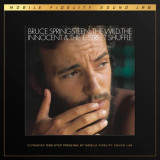
Released only eight months after his exhilarating debut, Bruce Springsteen's The Wild, the Innocent & the E Street Shuffle contains rousing dispatches from the boardwalk, the street, the beach, and the bedroom. It explodes with energy, dares to dream, teases with humour, crackles with tragedy, clings to hope, and overflows with discovery, youthfulness, and personality. It features an unforgettable cast of characters — corner boys, teenage hustlers, doomed lovers, jazz men, junk men, factory girls, fortune tellers, alley cats, pimps, escorts, and more — illuminated by vivid colour, breathtaking detail, and poetic action.
Musically, the heartfelt 1973 record is inhabited by sympathetic vignettes and cinematic arrangements steeped in rock 'n' roll, soul, jazz, and R&B. It finds the New Jersey native looking beyond the parameters of his preceding record and seeking to move on from environments he knows well (and chronicles here) by rushing headlong toward unknown territories, adventures, and people. Underpinned by the singer-guitarist's ambitious poetic enterprise and will to succeed, The Wild, the Innocent & the E Street Shuffle is the album on which Springsteen becomes the Boss.
Mastered on Mobile Fidelity's renowned mastering system, pressed at RTI on MoFi SuperVinyl, and strictly limited to 7,500 numbered copies, Mobile Fidelity's UltraDisc One-Step 180g 33RPM LP set is the definitive-sounding version of Springsteen's sophomore record. Benefitting from SuperVinyl’s nearly non-existent noise floor, superb groove definition, and dead-quiet surfaces, The Wild, the Innocent & the E Street Shuffle plays with a clarity, energy, presence, and openness that complement the expressiveness, dynamics, and scope of the seven restless songs that comprise a work Rolling Stone ranked the 345th Greatest Album of All Time.
Beyond the audiophile sonics that practically place you behind the console at 914 Sound Studios — listen to the separation between the instruments, natural decay of the notes, interplay within the widescreen soundstaging, and nothing-to-lose youthfulness of Springsteen’s voice — this reissue takes seriously this record’s influential merit by presenting it in packaging that underlines its status. Tucked in a beautiful slipcase, the LP is housed in a special foil-stamped jacket with faithful-to-the-original graphics. This reissue is made for listeners who prize sound quality and who want to engage themselves in everything involved with the invigorating set that busted Springsteen loose from the club circuit and landed him on the radio
Determined to liberate anyone within earshot and unafraid to come on strong, The Wild, the Innocent & the E Street Shuffle serves as the debut of the E Street Band — not only heard but seen for the first time by most of the public courtesy of the back-cover photograph. This is where saxophonist Clarence Clemons, organist-accordionist Danny Federici, and pianist David Sancious step out of the shadows — and drummer Vini Lopez and bassist Garry Tallent again stoke a fiery rhythmic engine that helps drive the untamed, reimagined big-band swing of “Kitty’s Back,” breathless R&B thrust of “Rosalita (Come Out Tonight),” and carefree dance steps of the funky “The E Street Shuffle.”
Of course, the main attraction remains a then-24-year-old visionary on the precipice of becoming a sensation and turning a then-bloated rock scene on its head. Recorded over three months while Springsteen and company were busy touring his debut LP, The Wild, the Innocent & the E Street Shuffle reflects the high-octane approach the vocalist embraced onstage and drifts away from the label-dictated acoustic-based frameworks of his debut. The set also witnesses Springsteen deepening his observational skills, with narratives such as the romantically tinged “4th of July, Asbury Park (Sandy)” and redemptive epic “Incident on 57th Street” mirroring changes taking place in the singer’s own life, small towns, and America at large.
A thrilling collision of memories, reflections, and composites — Sandy, Rosalita, and the latter’s parents are all based on actual people Springsteen knew, as is the community depicted in the opening track — the aptly titled The Wild, the Innocent & the E Street Shuffle resonates decades on due to its truths, authenticity, and spirit. Those characteristics — as well as the fact that many of its lengthy songs come on as the equivalent of sweaty, feverish soul revue that won’t stop until you’ve been exhausted — also explain how this now-iconic album triumphed over the reservations of industry “experts” that both demanded Springsteen re-record it and instructed deejays not to play it.
Yet there’d be no stopping a record that saw the past, present, and future, a band whose will would not be denied, and a phenomenon who was born to run. A never-ending invitation to act real cool and stay up all night, The Wild, the Innocent & the E Street Shuffle always feels alright.

The Funky French League is a collective of intergenerational DJ’s / producers / musicians, composed of Young Pulse, Arthur Chaps, Woody Braun, Monsieur Willy, DJ Asko and Uncle T. Coming from diverse backgrounds, from hip hop to electronic music, the love of groove brought them together. Their goal is to promote funk and its derivatives through parties, mixes, remixes, radio broadcasts... This 7” release is a remake of the African Blood classic A.I.E from 1975. It goes without saying that Monsieur Willy touched this one with respect, dignity and style but yet still pumped it up to the max. The afro beat driven Bonus Beat on the flip, again caters for the DJ to give them maximum freedom to express their skills and mixing creativity.
For Twice Infinity’s second solo release, the London and Geneva-based DJ and producer GFX – one of the most active newcomers of the past years – makes his vinyl debut with the aptly named Vibing The Groove EP. His three original tracks span a wide array of playful, groovy, punching and driving techno that perfectly showcase GFX’s musical vision for the near future and mark a preliminary goal in his search for a unique musical expression since his release debut in 2020.
The B-side accompanies two remixes by equally exciting members of the next generation of producers; while the approach by Cuban techno activist Hioll is more to the point and made straight up for peak time sets, Manchester-based trance wunderkind Faster Horses explores his not so well know passion for funky and stepping contemporary techno.
In one sense, it’s easy for artists—songwriters, specifically—to express their feelings in their work. After all, that’s what the lyrics are for! But it’s much harder to convey emotional energy in how you play, slash at the guitar, and the structure of the music itself. That’s precisely why Girl and Girl’s Sub Pop debut, Call A Doctor, feels like such a vital, electrifying shock to the senses. Not since the early work of Car Seat Headrest or Conor Oberst’s widescreen emotional brutality as Bright Eyes has indie rock managed to come across as this intimate and grandiose, as the Australian quartet led by Kai James lay a lifetime’s worth of woes—mental health, the human race’s planned obsolescence if you’ve been living on this cursed rock you know what we’re getting at—across a canvas of indie rock that feels both timeless and in-the-moment.
An audacious and aggressively tuneful blast of a record, Call A Doctor is an unforgettable first bow from Girl and Girl, whose origins lie in James and guitarist Jayden Williams jamming in his mother’s garage in the afternoon after school. One afternoon, James’ Aunty Liss headed down to their practice space after walking her dog and asked if she could sit in on drums. “It sounded really great,” James recalls. “We begged her to stay, and she said, ‘I’ll stay until you find another drummer.’ We wore her down, and she eventually became a permanent member.”
After bassist Fraser Bell joined to round things out, Girl and Girl hit the road and began to make a name for themselves beyond the Australian bush, eventually signing to Sub Pop off the strength of word of mouth. Call A Doctor came together quickly soon after, largely recorded in marathon sessions in a two-story industrial complex over the course of two weeks. “That added to the intensity of the album,” James says about the frenzied creative process overseen by producer Burke Reid. “I can hear the stress in the record, which is good because that’s what it’s about—being tense, tied up, and in your own head.”
Call A Doctor’s eleven songs—spanning sweeping guitar epics and wry acoustic shuffles to spiky punk maneuvers and the type of raw, adoringly unvarnished indie-pop associated with legendary PacNW label K Records—are literally plucked from James’ personal history, as he reworked older recordings with newer lyrics reflecting his past struggles as well as new anxieties that emerged prior to the album’s recording. “I’ve struggled with mental health for a lot of my life,” he explains, “and I went through a particularly difficult patch when we were making the album; the band had started to get some attention, and I felt an enormous amount of pressure to live up to it.”
Far from the sound of collapsing under pressure, Call A Doctor finds James and Co. stepping up with their entire collective chest. This is a record that’s so out-and-out alive that you nearly feel like you’re in the same room with Girl and Girl as you listen to it; lead single “Hello” practically bursts through the speakers, amplified by Aunty Liss’ unbelievable stickhandling duties. “‘Hello’ is all about romanticizing your own misery. Letting those deep, dark, dirty thoughts take over. Understanding that even if you could pull yourself out, you wouldn’t because the constant stress and worry is far too familiar and comfortable.”
“Mother” pogos on a spiky groove that’s reminiscent of the geographically close New Zealanders who make up the legendary Flying Nun label, while “Oh Boy” draws from the Shins’ own jangly sound, injected with James’ wonderfully nervy vocals. Then there’s Call A Doctor’s sorta-centerpiece “Maple Jean and the Anthropocene,” a five-minute epic offering a new perspective on climate change and the notion of what it means, in a personal sense, to suffer: “I live in the bushland, and I was driving home one night and hit and killed a wallaby with my car,” James recalls while discussing the song’s lyrical inspiration. “My first thought was, ‘What is the universe trying to tell me?’ No remorse, no guilt, just total self-centeredness. Which was like, Woah, you fucking psychopath! This wallaby wasn’t put on this earth to send you a message. That’s what the song is about, our egocentric species - thinking you’re the main character and that everything that happens is somehow about you.”
“This record is about an individual who’s too far in their head, trying to get out,” James continues while discussing Call A Doctor’s overall outlook—specifically the snapshot it offers of its creator. But even though this record deals with uneasy topics we all know well from within ourselves, it’s important to emphasize how teeming with life Girl and Girl’s music is. There’s a brazen, bold sense of humor to this stuff, an undeniable brightness to the darkness that makes it impossible not to be drawn in as a listener. Feeling down never sounded so goddamn good.
Intrigue's self-released synth-funk rarity released officially for the first time by Backatcha. Recorded in 1986 by the same line-up that created the classics 'I Like It', 'Call Of The Heart', 'No Turning Back' and more, 'One Touch' expresses the woes of a homewrecker over a "midnight" groove weighted with synth bass and rhythm delay. This limited 12" is a forerunner to the forthcoming Intrigue compilation featuring previously unreleased material alongside the group's sought-after catalogue of recordings.
Culled from three 1985 gigs in the UK during a transitional and transcendent time in the band's story, Sonic Youth's `Walls Have Ears' appeared as a 2LP set in 1986, not just a live album but an artful tapestry full of live experimentation with songs, between-song tape segues, darkness, humor and audio verité on par with elements of side B of `Master Dik' to come later. With a bit of complexity to the situation of the release itself. But that's a different story. Deleted as quickly as it appeared then, it's now issued for the first time officially under the band's auspices. In this 2LP set brimming with primitive classics like "The Burning Spear", "I Love Her All The Time", "Death Valley 69" and "I'm Insane" (uncredited on sleeve), segues and live guitar changes ooze together threaded by Madonna tapes and vocal loops off the board. The first two sides of `Walls' are massive, cavernous, with newly-drafted drummer Steve Shelley in tow taking on past tunes and unveiling "Expressway To Yr Skull" in glorious form. They tear it up especially on one trash-fi excerpt of "Blood On Brighton Beach" (actually "Making the Nature Scene") from a legendary outdoor gig November 8th where Moore, Gordon and Ranaldo's guitars treble-blast dissonant shockwaves over the black-stoned beach of Quadrophenia fame. The record's second slab spotlights an April 1985 pre-Shelley gig supporting Nick Cave at London's Hammersmith Palais and was one of the final appearances live of Bob Bert, again featuring some molten takes on "Brother James", "Kill Yr Idols", "Flower" (Iisted as "The Word (E.V.O.L.)"), "Ghost Bitch" and others. The emergence of the Jesus and Mary Chain in the world gave Brit scribes a lazy and easy parallel, addressed here with a wink with the inclusion of "Speed JAMC", another offstage tape interlude playfully scrolling through one of that band's songs at fast-forward. This document remains an essential representation of some lean and mean years of the quartet's throttling march out into the world in the mid eighties. Coloured vinyl, one red, one yellow LP.
A leading Norwegian bassist for over 30 years, ECM legend Arild Andersen forges promising relation-ships with two rising stars - Daniel Sommer (drums) and Rob Luft (guitar) in an expansive, playful exploration of song and collective improvisation. As Time Passes " is set to release on April 26th on April Records. Led by Sommer, the release signifies the first chapter of the drummers much much-anticipated Nordic trilogy on April Records, aiming to capture and document Nordic improvisation and composition across three carefully curated ensembles. Bassist Arild Andersens storied career stretches back to the 1970"s as one of ECM s first recording artists, collaborating with household names of the genre including Jan Garbarek, Don Cherry, Bill Frisell, John Taylor, Sonny Rollins, Chick Corea, and the list goes on. Welcoming the opportunity to work with and nurture younger artists, the ensemble was born when Daniel Sommer selected Andersen for a project during his studies at the Danish National Academy of Music. Later, impressed by Luft s performances in Ireland and Norway, Andersen suggested expanding the pair into a trio. A transcendent musical voyage, As Time Passes " blurs the lines of conventional trio roles, and celebrates the evolution of jazz as a fluid, versatile form of expression. By providing each musician the freedom of becoming a key contributor in the melodic discourse, the trio channels the spirit of jazz veterans such as the Bill Evans Trio and free free-jazz ensemble Air, while echoing the sounds and innovations of pan pan-European contemporary jazz. Mixing pensive rubato ambience with energetic grooves, instrumental dexterity, a modern ECM ECM-esque sound and folk undertones, the record s compositional clarity combined with the spontaneity of a live performance flows across and between genres, borders and generations alike. Luft s intricately over-dubbed layers of acoustic guitars, vast reverbs, and contrapuntal melodies expand the sound of the three piece into an immersive world of textures. Rendered in the stark beauty of Andersen"s bass lines, the nuanced strokes of Sommer"s drums, and capped with the lush, expansive timbres of Luft"s guitar, "As Time Passes" is a testament to enduring and ever ever-evolving wonder of Jazz.