"Philadelphia’s So Totally are a portrait of utmost devotion, and how longevity in any kind of relationship can’t occur without it. Since 2015, the band originally called So Totally In Love has humbly studied their surroundings and themselves, perfecting a sound that from inception was present. So Totally’s shimmering guitars and melodies typically sit underneath lush vocals that concurrently embed themselves in a listener’s subconscious, haunting them with heavy mood and nostalgia for 90’s rock groups like Swirlies, Pixies, and The Breeders. Previous releases, and their dedication to spending years playing regionally, brought So Totally to the point of singular focus on drafting a third album, entitled Double Your Relaxation, while in quarantine in 2020.
Upon formation, So Totally collectively bonded over an admiration of Land of Talk. While the influence is certainly present in vocalist/guitarist Roya Weidman’s sugary vocals, the band's love of comfortably resolving melodies, and auxiliary percussion, So Totally sonically have more in common with bands like Sonic Youth, My Bloody Valentine, and Spirit of the Beehive…creating massive walls of sound on each record that plainly implies the quartets towering live experience. Such huge tones aren’t only because of Weidman and guitarist/vocalist Matt Arbiz playing, but the collective effort of the band, which is rounded out by bassist Ryan Wildsmith and drummer Joe McLaughlin.
Lyrically and thematically, Double Your Relaxation explores where influence and “hypnosis” exist in life, specifically in environment, media, relationships, and self (via mental illness), bouncing between perspectives of witnessing, interacting with, and contributing to illusion and how that ultimately affects our idea of identity. The moody and, at times, surreal nature of the songs lends itself very appropriately to the shoegaze and heavy indie style So Totally plays, making them a perfect addition to the canon of the genre."
Поиск:group a d
Все
Allchival present their second look at the music of Roger Doyle and Operating Theatre (a little known proto synth-pop act and experimental theatre group that he led.)
In reverse chronological order the second disc contains music from the United Dairies release of 1979 – ‘Rapid Eye Movements’. Experimental tape work heavily influenced by the French school of music concretists and recorded at various points during the 70s in Finland, Holland and Ireland, although it is most certainly a Roger Doyle solo record the label ran by Nurses With Wounds John Fothergill decided to release it under the group name for reasons now lost to the fog of time.
After this a volte-face towards a more accessible sound, coming via his friendship with future Hollywood actress Olwen Fouéré and her connection to the theatre. It also featured the vocals of a young Spanish immigrant Elena López- bucking the 80’s trend by moving to rather than from Dublin. With Fouéré adding the theatrical element to the group (an almost essential part of any early 80s synth act) alongside pulsing synths, brass, a vocoder and the electro acoustic production talents of Doyle himself, it was the first time a Fairlight sampler was used in an Irish studio setting and gives a prescient but alternative take on the new wave sound that came to dominate the charts soon after.
Doyle’s work on the newly released Fairlight sampler had brought him to the attention of U2’s Bono who had seen a feature about his sampling experimentations and reached out to him for piano lessons. This led to a deal on the bands embryonic Mother records for what Doyle calls his first “popular song” - Queen of No Heart - which alongside “Spring is Coming” made up the backbone of the EP which was released some years later (1986) on the Mother Records label. Established by U2 in 1984 and initially intended to launch Irish bands, many of the acts – including this one – were subsequently unhappy about the label’s haphazard approach to releases and lack of promotion. The record was released as a die cut 7 inch with the two main tracks and a 12 inch EP with additional tracks – ‘Part of My Make-Up’ / ‘Atlantean’ / ‘Satanasa’. The Mother experience was for Doyle and the rest of the group a frustrating one with no promotional plan and no tour. After that Operating Theatre as a quasi pop project ‘just kind of fizzled out’ says Doyle.
Doyle, the musical maverick at the heart of the act, continues to produce to this day and has released 30 albums. A frequent collaborator we round out the record with a remix from another Irish outsider - Morgan Buckley of the Wah Wah Wino fame.
- 1: Peter Patzer - You Are Not The One For Me
- 2: Stroer - Don't Stay For Breakfast
- 3: Upstairs - You're Just Yourself
- 4: J. D. (Puma) Lewis - Dancing Shoes
- 5: Trust - It's Not Over
- 6: Imagination - Strawberry Wine
- 7: Squish - Get Up
- 8: Publicity - Funky Feeling
- 9: Bernie L. - Backstreetboy
- 10: Cash - Raff Dich Auf
- 11: The Poptown Syndicate - Keep On Lovin' (Single Version)
Repress.
The German boogie compilation 'Boogie on the Mainline' presents a selection of 10 rare disco tracks from Germany plus one more tune from Austria, all of them, originally released between 1980 and 1987. Check!
.
The fully licenced album contains little known tunes by groups like Imagination (which you can also see on the cover of the LP), Squish, Upstairs, The Poptown Syndicate and more. As the Boogie-ish post-disco side of German music history still basically remains undiscovered as of yet, 'Boogie On The Mainline' hopefully will shed some light again on 11 rare gems that were mainly published on small or private labels.
- Yellow Magic Orchestra - Seoul Music
- Sandii - Zoot Kook
- You An’ Me Orgasmus Orchestra - Sakisaka To Momonai No Gokigen Ikaga One Two Three
- Yukihiro Takahashi - Drip Dry Eyes
- Jun Togawa - Suki-Suki-Daisuki
- Miharu Koshi - Parallelisme
- Haruomi Hosono & Yukihiro Takahashi - Bikkuri Party No Theme
- Apogee & Perigee - Sakasa Kenjin Eagas
- Haruomi Hosono - Yumemiru Yakusoku
- Hajime Tachibana - Rock
- Ryuichi Sakamoto - Riot In Lagos
- Jun Togawa - Radarman
- Haruomi Hosono - Platonic
- Super Eccentric Theater - Beat The Rap
- Yellow Magic Orchestra -Rap Phenomena
- Ryuichi Sakamoto - Lexington Queen
- Sheena - Chanel No #5 No On The Rock
- Testpattern - Beach Girl
- Yukihiro Takahashi - Flashback
- Tamao Koike - Automne Dans Un Miroir
- Interior - Ascending
Recording technology was completely revolutionized in the 80s by the multitrack recorder, with the popularity of 24-channel SSL consoles sweeping the world. Japanese pop music created during this wave of digital improvement is now recognized worldwide as ""City Pop."" Techno Pop was another offshoot born of the same revolution. Precise, computer-controlled beats produced by groups like Yellow Magic Orchestra (YMO) introduced a different type of sound to the masses. By now, these works have been brought into the international limelight and continue to be a major influence on today's music.
At the center of Tokyo’s Techno Pop scene was ALFA/YEN Records. The label left behind an impressive body of work, but much of it wasn't made widely available... until now! This new, definitive compilation focuses on the music archives of the YEN Records catalog, available for the first time exclusively at Light in the Attic. This is a true celebration of Japan's Techno Pop scene of the 80s, reissued with the intent that future generations, internationally, will be able to discover, enjoy, and appreciate ALFA/YEN and its significant contributions to the sonic landscape of the 80s and beyond.
Coloured Vinyl[27,94 €]
As an organism, Blood circa Loving You Backwards, was a six piece. Tim O'Brien is the lyric writer, but the song writing and arrangement is a painstakingly collaborative process in which the band aims for democracy over swiftness.
The record also features the band's first major work with the producer Daniel Enrique Howard, whom the band recorded with at his studio in Brooklyn. Howard helped guide Blood into this new sonic territory. It is not a bedroom project, but instead fully realized, somehow sounding both intimate like Liz Harris' Grouper feels intimate and totally vast in the way that a Talk Talk record feels vast. It's in the same universe as Ought in its earlier iterations.
Both Tymon Dogg and Richard Dudanski had musical roots playing in The 101'ers with future Clash singer/guitarist Joe Strummer. All three shared a deep love for southern Spain, due perhaps to the influence of the Romero sisters, Paloma (later "Palmolive" of The Slits) and the artist Esperanza, who were among the first Spanish punk refugees in London. Tymon's career began with beguiling interactions with Apple Records, The Moody Blues and future Led Zeppelin members John Paul Jones and Jimmy Page before he discovered his true musical self as a punk / folk experimentalist, opening shows for the likes of The Slits, Raincoats and Pop Group and becoming the longest-running musical foil in Strummer's career, continuing into The Clash and Mescaleros. Similarly, Richard played in Basement 5, Public Image Ltd, The Raincoats and others before following Esperanza back to Granada...which subsequently became second home to Tymon and Joe. Spain is not without its own punk heroes, and chief among them was Granada's Antonio Arias, another pal of Joe's and leader of Spain's musical heroes, Lagartija Nick, which also included Dacoits members Juan Codorniu and JJ Machuca. Antonio sings the albums two Spanish-language songs. while Tymon sings the other nine...and there's an instrumental, "Mongols", which the band considered too epic as a stand-alone instrumental to mess with! Tymon sings three songs from his past: "The Wheel Of Life And Death" has been heard before as a live bonus track on the expanded reissue of "Battle Of Wills", "Conscience Money" was heard in a very different version on the impossible-to-find "Made Of Light" album, and an embryonic take of "Something To Prove" turned up the even rarer 1989 solo album, "Relentless". If you imagine the playful elasticity of "Sandinista!" recast into a more straightforward record, with Tymon taking the lead on something more than that album's "Lose This Skin", you're halfway there. Guests include Killing Joke bassist / famed producer Youth and Dr Robert from The Blow Monkeys
repress !
Following acclaimed singles from Powell, Blood Music, Shit & Shine and Prostitutes, the next release from Diagonal is a landmark. It marks both the London label's first full-length album release, and the return of abrasive and furiously funky hip-hop deconstructionists Death Comet Crew, one of the most quietly influential underground acts to emerge from the creative melting pot of 1980s New York.
Ghost Among The Crew documents the group's return to studio operations for the first time since the 80s, as well as their first ever full-length studio album. It's a remarkable trip: a consolidation of their early feral disassemblies of hip-hop and electro, but also broader in scope, chewing up and spitting out fragments of soul, jazz fusion, punk and industrial music.
Death Comet Crew were founded in New York City in 1983 by Stuart Argabright, a founder member of post-punk/industrial mavericks Ike Yard and the mind behind Dominatrix and later Black Rain. Their sound, then as now, was a singular proposition: urban in mood, exploratory, often compellingly danceable, yet confrontational. It emerged from the interweaving talents of the group's varied members: guitarist Michael Diekmann (of Ike Yard), bassist Shinichi Shimokawa (later of Black Rain) and Nick Taylor aka DJ High Priest, frequently joined by the late, great hip hop artist and graffiti writer Rammellzee. Having recorded two studio EPs - 1985's At The Marble Bar (featuring Rammellzee) and its follow-up Mystic Eyes - the group disbanded barely a year after forming. They left behind a reputation for their incendiary live performances, several recordings from which were gathered on crucial 2004 compilation This Is Riphop.
The musical climate that first birthed Death Comet Crew was one of fertile cross-pollination of styles. In the late 1970s and early 1980s, the seeds of modern day urban musics - hip hop, punk and post-punk, no wave - were taking root in the streets of recession-struck New York City. Argabright recalls dancing at the downtown Mudd Club around 1980 to a bold mixture of styles, with DJs cutting from synth-pop and post-punk to funk, soul and early hip-hop: Bowie and James Brown next to Run DMC, Ultravox and Gary Numan. Indeed, the names of his New York contemporaries operating around the same time - the likes of Liquid Liquid, Run DMC, Afrika Bambaataa, Arthur Russell, ESG, Swans, Sonic Youth, Bill Laswell and more - have since been inscribed in modern music history.
With previous projects Dominatrix and Ike Yard having recently become inactive, in 1984 Argabright formed Death Comet Crew as a means of exploring new sonic avenues. He'd been experimenting with tape, recording and procesing the sounds of his surrounding environment and dialogue from films and TV. Joined by Shimokawa, Diekmann and Taylor, and using drum machines, turntables, spidery guitar and bass, the group assembled a scrambled collage of rhythms and sampled voices. Their live performances were, in Argabright's words, "aurally violent, sharp-edged, downright lacerating", hacking gleefully away at hip hop and electro's rhythmic frameworks. Rammellzee joined the group to vocal 1985 debut EP At The Marble Bar; his MC turn on highlight 'Exterior Street' is all the more remarkable for having been entirely freestyled in the studio. When Death Comet Crew reformed in 2003 for a string of live shows, he continued as an active member of the group, touring and working with them during the recording of Ghost Among The Crew, until he sadly passed away in 2010.
After reforming, Death Comet Crew began writing and recording new material. Now, following on from their just-released Galacticoast 12" through Citinite, Ghost Among The Crew - its title a homage to Rammellzee - hones the group's abrasive early experimentations while tripping into bold and astrally minded new territory. Alongside the core quartet of Argabright, Diekmann, Shimokawa and Taylor are new voices, including Rapscallion (a friend of Rammellzee's), Jessica 6/Hercules & Love Affair singer Nomi Ruiz, and Carolyn 'Honeychild' Coleman. Its eight tracks are steeped in the impulsive spirit of electric Miles and the deep space romances of Sun Ra, and possessed of an enigmatic yet undeniable pop edge. But equally they're pricked with urban paranoia and dread, traits that have long been hallmarks of Argabright's musical projects.
'Me Czar Of The Magyars' opens the album in a twist of tension like the turning of a ratchet. Its taut electroid shudder is paired with machine gunned cymbal hits and a voice telling of "wormwood and opium dens" - the sound of being teleported from everyday city streets into the astral plane, where every sensory input is heightened and the promise of danger or pleasure lurks unseen around every corner. Later, Coleman's lyrics pay tribute to Rammellzee on the sci-fi funk of 'Deep Space Woman'. 'Let The Clubs Ring' melts lounge bar organs and frazzled guitar into freakishly unstable shapes, while 'Drag Racing' matches its title, rocketing along frantically atop clattering drums. 'Moons On Titan's Seas' is halfway interlude pause for rest, like an exotic cocktail in a bar orbiting some as-yet-undiscovered new world. These varied strands are somehow all summarised in album closer 'Ignition Spark', which sets Ruiz's vocals alongside Taylor's and Argabright's. The zone the trio inhabit in this final track exists in perpetual push-pull between contemplation, memory, intrigue and violence, a decisive opening of a new chapter in Death Comet Crew's history.
As with all Diagonal releases, the initial vinyl pressing will be packaged in unique, specially designed artwork.
- A1: Rainbow Crutch - Lookin` Back
- A2: The Black River Circus - A Ritual Melody
- A3: The Cherry Fogg - Nervous Conclusion
- A4: Timmy Sims - Corporation (Feat His Organ Combo)
- A5: The Tears - A Soulful Feeling
- B1: The Young Ones - Harbor Melon
- B2: Kurrt Watkins - Theme For Billy (Feat Soul Sister 7)
- B3: Ron Anthony - Just Funky (Feat Classiques)
- B4: Soul Brothers - Miss Delores Funk
- B5: The Group Solo - Beware Of The Dog
- B6: Earnie - Soul Shakin`(Feat The Soul Shakers)
The Hammond organ was first manufactured in 1935. In 1954, the now famous Hammond B3 model was introduced with additional harmonic percussion feature. When the company went out of business in 1985, around two million of various models of the Hammond organ have been produced.
The Hammond B3 was originally marketed to churches as a lower-cost alternative to the wind-driven pipe organ. It quickly became popular with professional jazz musicians in organ trios. Jimmy Smith's use of the Hammond B3 inspired a generation of organ players, and its use became more widespread in the 1960s and 1970s in rhythm and blues, rock, reggae, and progressive rock.
This collection is centered on the exciting and dynamic sounds of the Hammond B3 organ!
The band was founded on January 20, 1966 by Cologne students, initially as a political cabaret. The group grew out of the Cologne APO Non-parliamentary Opposition in Germany (Außerparlamentarische Opposition APO) around the SDS German Socialist Students‘ Union, its political orientation evolving over the years towards a clearly dialectical and Marxist position. Independently of each other, group members joined the DKP German Communist Party between 1970 and 1973. On September 6, 1970, the band performed at the Fehmarn Festival following Jimi Hendrix; this was their last appearance for a long time. In 1973, Floh from Cologne performed as part of a West German delegation at the 10th World Youth Festival in East Berlin. From 1980, part of the band (with Vridolin Enxing as chairman) was active in “Rock gegen Rechts” Rock against the extreme right; in the same year, the band was awarded the Deutscher Kleinkunstpreis with Gerhard Polt.
After more than 3,000 concerts in Germany and Europe, Cologne Floh disbanded in May 1983 after a farewell tour. The farewell concert in Cologne‘s sports hall attracted 6,000 spectators and lasted 14 hours, with the participation of numerous musicians such as Hannes Wader, Dieter Süverkrüp, Franz-Josef Degenhardt, Hanns-Dieter Hüsch, Die 3 Tornados, BAP and Ina Deter. In 2023, the group was awarded the Holger Czukay Honorary Prize by the City of Cologne for its lifetime artistic achievement.
With the rock band cantata „Mumien“, the group reacted in 1974 to the 1973 putsch in Chile, notably by setting to music the last speech of deposed president Salvador Allende. In the same year, the band worked with Hans Werner Henze on alternative musical settings of Chilelied (“Dieser chilenische Sommer war süß” / This Chilean summer was sweet; 1974), lyrics: Rudi Bergmann (* 1950), first performed on May 31, 1974 in Essen (Grugahalle: memorial concert for Víctor Jara, at the same time a demonstration of solidarity with the resistance in Chile). „Mumien“ has not yet been reissued on vinyl, and the only CD version (with the album „Vietnam“) dates from 1995.
Introducing the next release in Names You Can Trust's long-running collaboration with the prolific and symbiotic musical universe of Bogotá, Colombia. Mau Gatiyo y Los Años Maravillosos formed in 2021, arising from the very same fertile ground of the Teusaquillo neighborhood that has spawned many records and musical mischievousness. At the heart of this experimental movement is what can only be described asTropicanibalismo, where a deep hunger for the roots of Colombian tropical music are only satiated by dissecting it, consuming it and ultimately creating something new again as some kind of untraditional, unholy, and yet referential form of musical sustenance.
Within this concept, there's a clear lineage of inspired and visionary artists that have been featured throughout NYCT's record catalog for the last 15 years that includes luminaries Frente Cumbiero, Meridian Brothers, and Romperayo. Each of these artists' tentacles have touched several parallel projects from their talented neighbors and friends, and whether through production, playing, engineering, or mixing, these collaborations have heavily contributed to a very fruitful and colorful scene that could only exist within Colombia's capital, while also gaining notoriety in the nooks and crannies of northern latitudes like New York, Chicago, and Los Angeles.
Mau Gatiyo, a talented accordian player and vocalist, together with his group (translated as The Wonder Years), is precisely one of these projects, a collective that has found their calling in the echoes of thevallenatosandcumbiasthat once populated the nation's airwaves throughout the 20th century. It's a traditional format that has always lent itself to storytelling, whether it be anecdotes about daily life, or using one's voice to raise uncomfortable questions in protest against the system. This is where Mau Gatiyo's poetic, almostnew wavetimbre finds a lane of its own, straddling a 2020s societal landscape under the guise of ostensibly old-time accordion music.
The debut 7-inch from the group, an excerpt from their recently released album Baño Unisex, was recorded at Mambo Negro studios by Ivan Medellin (La Sonora Mazurén) and mixed by Eblis Alvarez of Meridian Brothers, both familiar names and contributors to the NYCT catalog. Alvarez himself, who has emerged in recent years as an international beacon of this new tropical avant-garde, is no stranger to flipping traditional styles on their head, or at least respectfully off-kilter. Mau Gatiyo y sus Años Maravillosos proves to be another great vessel for this veryBogotano expression, draping the classical playing of its group members in a modern day cosmopolitan expression of righteousness, both outwardly in their dashing, performative fashion sense, and lyrically with their cheeky "420, Reloj"ganja-tune promotion – or even their outward dissenter objections to paramilitary and firearm power in "Poder Militar."
Ultimately, these songs lie at the crossroads where two cultural eras connect and become something unique, a protestation one with performance, dance, and artistic expression. This cathartic ritual of protest has a storied history in music, and these two new entries into the NYCT catalog will hopefully find their place amongst a modern day canon, or at the very least, have your feet moving and your head nodding in just approval.
Vol. 2[26,01 €]
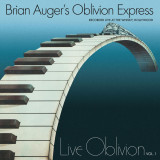
Live albums are often a ‘hit or miss’ affair but ‘Live Oblivion’ 1 & 2 buck that trend, Recorded across 2 nights in 1974 at the Hollywood venue The Whisky A Go Go. The group were finishing off a huge US tour that had roared down the east coast then across the Midwest and by the time they hit LA, as Brian recalls “we were all absolutely performing at our height. So I decided that I really needed to record the band live at that point”. Utilising the Wally Heider Mobile Truck, the scene was set for one of the greatest jazz-fusion live recordings to be made. The show opens with a hyper fast version of Beginning Again due to drummer Steve Ferrone being almost an hour late and running high on adrenaline, Brian remembers thinking “I don’t even know if I can play it that fast!” Fortunately, he and the Oblivion Express including stellar vocalist Alex Ligertwood rise to the challenge and the result is akin to some frenetic jazzy drum & bass but also pushes the group onto another level altogether for the rest of the show. Across both volumes there are no fillers and the highlights are many - Bumpin’ On Sunset, Freedom Jazz Dance, and Inner City Blues are all stunning, but especially the epic version of Maiden Voyage which Mos Def sampled on his 1997 'If You Can Huh! You Can Hear', and both DJ Mitsu in 2004 and 2017 Crimeapple both dipped into Live Oblivion to sample that fire for their own projects.
- A1: Honkaya - Boat Rowing Song
- A2: Etukuma Kara - Dance Practice On Ice
- A3: Uekap - Greeting Song
- A4: Cikap - Dance For The Crane
- A5: Sonkayno - Game Song
- A6: Haw Sa - King Of Round Singing
- A7: Hetono He Karakara - Sake Ritual
- A8: Yaykatekara - Wedding Song
- A9: Tacuro - Birds
- B1: Sikata Kuykuy - Snow Falling From A Tree
- B2: Horippa - Dance Song
- B3: Hunpe Yan Na - A Whale Ashore
- B4: Hunpe Pa Wa - From The Whale Head
- B5: Pon Repun Kamuy - Little Orca Sea God
- B6: Orouru Roahun - Lullaby
- B7: Kanerenren - Bear Ceremony Song
Marewrew (pronounced: Ma-leoo-leoo / mɑleːul̯ eːu)̯ is a female vocal group that sings traditional Ainu songs. The music of the long-suppressed people from northern Japan has been a particular focus of Pingipung's output in recent years, together with Oki Kano who recorded and produced many Ainu artists. Following various re-releases by Umeko Ando, the late grande dame of traditional Ainu music, the spotlight is now on the a cappella music of Marewrew, which by the way means ‘butterfly’ in Ainu. Attentive listeners will recognise the voices, as some of the band have already performed as backing singers on recordings by Umeko Ando. Their a cappella versions of traditional Ainu music shed a whole new light on the fascinating songs that have been passed down through generations exclusively through song. 'Ukouk' means 'round singing', which refers to the form in which Marewrew perform and record. Many of the songs are set as tightly interwoven canons: one starts, the others join in, but slightly out of phase: Almost like dub echoes, except that they are sung and not created in post-production. The short songs sometimes unfold into a wondrous trance ('Sikata Kuykuy', 'Honkaya') that seems to spin round and round - if singing can actually dance, then this is how. Nature sounds and woodpeckers can be heard ('Hawsa’), and there is a funny miniature in which the ladies imitate birdsong ('Takuro'). Things get hypnotic with an evocative song about stranded whales ('Hunpe Yan Na’) or an ode to the Orca as ‘Little Sea God’ (‘Pon Repun Kamuy’). The album culminates in unexpected pop ('Yaykatekara') or cumbia moments ('Kanerenren') with a band line-up including percussions and Oki Kano on the famous Tonkori harp. Marewrew are Rekpo, Hisae and Mayunkiki. Rim-Rim was a member of the group until 2022. Mayunkiki reflects on the ambivalence of performing traditional music as a contemporary band: "When we first started performing, we all thought we had to perform in an Ainu way. But over time we have become more and more open to new ways of singing. I think if our way of singing is seen as the only, correct way of our tradition, then it won't spread, it's not alive. We like it when it's traditional, but it changes, just like our voices have changed over time.” * 'Ukouk' is a selection of Marewrew's work from the last 13 years, compiled from CD releases by Pingipung's Andi Otto. Oki Kano has contributed unreleased material and added new versions of the songs which had only been released in Japan. The album has been remastered by Kassian Troyer and is now available on LP for the first time.
- A1: The Soul Stirrers - Wade In The Water (Chatter - Lp1)
- D4: Sam Cooke - Yield Not To Temptation (Chatter)
- D5: Sam Cooke - Yield Not To Temptation
- D6: Sam Cooke - Couldn't Hear Nobody Pray
- D7: Sam Cooke - Somewhere There's A God
- D8: Mel Carter - That's Heaven To Me
- E1: The Simms Twins - You Send Me (Demo)
- E2: The Simms Twins - Just For You
- E3: The Valentinos - Somewhere There's A Girl
- E4: Johnnie Taylor - You Were Made For Me
- E5: Johnnie Taylor - When A Boy Falls In Love
- E6: Johnnie Taylor - Soothe Me
- E7: The Valentinos - That's Where It's At (Chatter)
- E8: Lc Cooke - That's Where It's At
- E9: Johnnie Taylor - Everybody Wants To Fall In Love
- F1: Billy Preston - Keep On Loving You
- F2: The Simms Twins - I'll Always Be In Love With You
- F3: Johnnie Morisette - Baby We've Got Love (Chatter)
- F4: Johnnie Taylor - Baby We've Got Love
- F5: Johnnie Morisette - Baby, Lots Of Luck
- F6: Johnnie Morisette - Put Me Down Easy
- F7: Johnnie Morisette - Rome (Wasn't Built In A Day) (Wasn't Built In A Day)
- F8: Johnnie Taylor - Greazee (Part 1 & 2)
- G1: Johnnie Morisette - I Gopher You
- G2: The Simms Twins - I Gopher You (Chatter)
- G3: Lc Cooke - You're Always On My Mind
- G4: The Valentinos - I Need Lots Of Love
- A2: The Soul Stirrers - Wade In The Water
- G5: The Valentinos - Don't Throw Your Love On Me So Strong
- G6: The Valentinos - Black Night
- G7: The Valentinos - Damper
- G8: The Valentinos - You Can Run (But You Can't Hide) (But You Can't Hide)
- G9: Meet Me At The Twisting Place (Chatter)
- G10: Meet Me At The Twisting Place
- H1: Good Good Loving
- H2: The Wobble
- H3: Lookin' For A Love (Chatter)
- H4: Lookin' For A Love
- H5: I've Got A Love For You
- H6: I've Got A Girl (Chatter)
- H7: I've Got A Girl
- H8: Tired Of Living In The Country
- H9: It's All Over Now
- A3: The Soul Stirrers - I'm A Pilgrim
- A4: Rh Harris & His Gospel Paraders - Praying Ground
- A5: Rh Harris & His Gospel Paraders - Somebody (Chatter)
- A6: The Soul Stirrers - Somebody
- A7: Rh Harris & His Gospel Paraders - Sometimes
- A8: The Soul Stirrers - Amazing Grace
- B1: The Soul Stirrers - Pass Me Not (Lp2)
- B2: The Soul Stirrers - Oh Mary, Don't You Weep (Chatter)
- B3: The Soul Stirrers - Oh Mary, Don't You Weep
- B4: The Soul Stirrers - Since I Met The Savior
- B5: The Soul Stirrers - God Is Standing By
- B6: The Soul Stirrers - Lead Me To Calvary (Rehearsal)
- B7: The Soul Stirrers - Listen To The Angels Sing
- B8: The Soul Stirrers - Don't Leave Me Alone
- C1: The Soul Stirrers - Stand By Me Father
- C2: The Soul Stirrers - Jesus Be A Fence Around Me
- C3: Rh Harris & His Gospel Paraders - Lead Me Jesus
- C4: Rh Harris & His Gospel Paraders - Free At Last
- C5: The Soul Stirrers - Looking Back (Chatter)
- C6: The Soul Stirrers - Looking Back
- C7: The Womack Brothers - Born Again
- D1: The Womack Brothers - Wait On Jesus
- D2: The Womack Brothers - Time Brings About A Change
- D3: Sam Cooke - Must Jesus Bear The Cross Alone
Sam Cooke’s SAR Records Story 1959-1965 gathers significant recordings of SAR Records – the label Sam Cooke co-founded, produced the majority of records for and was instrumental in operating. Groundbreaking artists such as The Soul Stirrers, Johnnie Taylor, Billy Preston, and Bobby Womack’s group The Valentinos are all featured, in addition to Sam himself. “The whole SAR Records Story is infused with Sam Cooke’s rapturous sense of how sacred gospel and sexual soul flow together, unbroken,” stated Milo Miles on NPR’s Fresh Air upon the set’s initial release almost three decades ago. In an era where black-owned labels were a rarity, Los Angeles based SAR Records was founded at almost exactly the same time as Motown, its Detroit counterpart. SAR was established in 1959 by Sam Cooke, music publisher J.W. Alexander, and S. Roy Crain, Cooke’s road manager and founder of gospel group The Soul Stirrers. The acronymous name standing for Sam Alex Roy, SAR sought to keep gospel music alive while simultaneously crossing over to pop audiences in the secular world. LPs 1 and 2 of the set focus on the former, while LPs 3 and 4 encompass the latter. From choosing talent, to writing a great number of songs, to producing, SAR was entirely the fulfillment of Cooke’s vision on a musical/creative level. The superstar singer, who had already crossed over from the gospel world himself, tirelessly coached the vocalists during SAR recording sessions, emphasizing diction. His methods are heard throughout the collection, as he is heard speaking to artists between takes. “And by Sam being there with you and just giving you that special attention, you wanted to give it to him like it was supposed to be. I think that’s what made SAR, SAR. Because he was selling himself through different artists.” – Bobby Womack. VERY LIMITED 1-2 COPIES ONLY PER SHOP
Repress!
PRINCE PHILLIP MITCHELL has been performing, writing and producing since the early sixties and even spent a little time with Alvin Cash's backing group the Cash Registers. He wrote hits for Mel And Tim and Millie Jackson but is best known on the Northern Soul scene for his 'Shout' recording Free For All' and our chosen side, the crossover soul anthem I'm So Happy'.
LOU RAGLAND shot to fame on the Northern Soul scene with his 4-figure rarity I Travel Alone', recorded for 'Amy' Records in May 1967. It was his home town buddy, Edwin Starr, that helped Ragland secure the deal and although a flop at the time it cemented his popularity in England. When Starr came to the UK in 1983 with his Ric-Tic Revue Ragland was invited along and, at last, got the recognition he deserved.
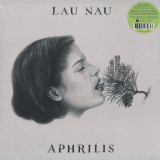
The title of the Lau Nau's 10th album, Aphrilis, derives from the Latin word aperire, meaning "to open." A fitting verb for the month of the year it is closely associated with — April. And while the images of plants and blossoms coming back to colorful life after a long, cold winter feels appropriate when listening to the rich and lustrous bloom of music on Aphrilis, another definition of open feels even more apt. For under the abundance lies the memory of times of austerity, the friction of hard choices, the acceptance that nothing is fixed and the future is unknown. This literal and metaphorical exploration of complexity and contradiction makes Aphrilis a multi-dimensional antidote for our troubled times, one that emphasizes the quiet and communal over noise and spectacle. Laura Naukkarinen, the Finnish artist behind this project, has long kept her mind and spirit open to whatever sounds and creative ideas felt appropriate for the moment. For the past six years that has meant primarily working with modular synthesis — learning how to build modules and releasing acclaimed work centered on its sounds like 5x4 (2023) or Puutarhassa (2022). Running parallel to this work, however, has been a continued exploration of acoustic instruments and group performances with her trio Lau Nau ja Seitsemäs Taivas. Aphrilis arrives then like fresh growth in a creative season cycle. A companion to her brilliant 2017 release Poseidon, the album, says Naukkarinen, "felt like a needed moment to embrace songs with lyrics again." And through the creation of this work, she remained open not only to her own creative muse, but also the input of her chosen collaborators. Each player on Aphrilis — Matti Bye on celesta and synths, Pekko Käppi on jouhikko, Hermanni Yli-Tepsa on violin and contrabass, Topias Tiheäsalo on electric guitar, Samuli Kosminen (Múm) on various instruments — was given free reign to arrange their own parts to accompany Naukkarinen's compositions. Kosminen’s lush fingerprint can also be heard in the mixing and production of the album, as with Poseidon six years ago. The moniker of this project may be taken from Naukkarinen’s own name, but Lau Nau feels more like a band than ever before. The delicacy and softness of the music is reflected in Naukkarinen’s lyrics. Each song is rife with imagery and creatures from the natural world. The spiders in the forest. The animals that keep a young woman company in her refuge in the woods. Wet grass. The feeling of the music is almost tactile, as if listening to the album will leave a bit of dew or sap on your fingers. The theme of this material, says Naukkarinen, runs even deeper. “The songs tell about cracks and changes of direction in different histories: personal, societal, planetary,” she says. “About moments when a yes can become a no and vice versa. The album wants to propose that at the moment of a crisis there is a possibility to influence the histories by our choices.” That may feel like a lot for such a fragile sounding collection of songs to bear. But Aphrilis is an album of surprising strength and resilience
Nick Llobet (they/them) was ready to throw in the towel. Llobet, who grew up in South Florida, learned to play guitar at a very young age, dabbling in everything from classical, blues, classic rock, and flamenco. They'd spent much of their early 20s searching for their voice as an artist and as an individual, as well as for a musical community Llobet would eventually move to Brooklyn, but after three years of looking for a hopeful artistic breakthrough, they spent much of their time in seclusion, consumed by social anxiety and imposter syndrome-and they were considering abandoning songwriting completely. One day, while commuting through Penn Station en route to their partner's family home in Virginia (that would also lead to the crucial purchase of a secondhand Tascam cassette recorder), they noticed Patti Smith sitting alone, waiting for a train. The typically shy Llobet decided to approach the icon, who was, in turn, delighted to see that Llobet was carrying a guitar. At the end of their interaction, Smith offered some parting wisdom: "She wished me luck and said, 'Practice hard, Nick.'" Llobet took her advice to heart, and this chance encounter kicked off a personal and artistic rebirth. They started performing as youbet, a play on their last name, and began "changing their vision for what a song could be." youbet's debut, Compare & Despair, a delightful gem of a record that showcases Llobet's propensity for freewheeling whimsy and emotional intensity. In May 2019, inspired by a song-a-week writing group that produced Compare & Despair, Llobet started a second club in which contributors would upload that week's song to a private Bandcamp. Invigorated by this small musical collaboration, the feedback, and the accountability, Llobet wrote 18 songs throughout the duration of the club, twelve of which became Way To Be. After this songwriting marathon, Llobet spent 2020 focusing on instrumental guitar work and political engagement. By the summer of 2021, they were ready to revisit the Way To Be tracks. Over the next year-and-a-half, Llobet worked on the record relentlessly, refining the lyrics, recording, and arrangements from their apartment. Llobet self-produced Way To Be and describes the process as an enormous, labor-intensive undertaking that felt akin to "making a whole film." Along the way, Llobet was joined by collaborators, including Julian Fader (Ava Luna), Adam Brisbin (Buck Meek), and Daniel Siles. Across Way To Be's 12 delightfully off-kilter tunes, Llobet uses wordplay and tongue-in-cheek humor to obliquely explore dysfunctional relationships, regret, self-confidence or the lack thereof, queerness, and self-discovery. Fuzzy at the edges and filled with playful, kinetic arrangements, Way To Be is a bridge into the entrancing world of youbet. You won't want to leave.
From multiple Emmy Award-winning creators David Benioff and D. B. Weiss (Game of Thrones), and Emmy-nominated Alexander Woo (The Terror: Infamy, True Blood) comes 3 Body Problem, a thrilling story that redefines sci-fi drama with its layered mysteries and genre-bending high stakes. Based on the acclaimed, international bestselling book trilogy, The Three-Body Problem. A young woman's fateful decision in 1960s China reverberates across space and time to a group of brilliant scientists in the present day. As the laws of nature unravel before their eyes five former colleagues reunite to confront the greatest threat in humanity's history.
The anticipated series features a score by the multiple award-winning composer Ramin Djawadi, who is best known for scoring memorable themes and dynamic pieces for films and series including Game of Thrones, House of the Dragon, and Westworld. The acclaimed composer has received two Primetime Emmy Awards, was nominated for five more, and received three nominations for a Grammy Award.
3 Body Problem is available as a limited edition on translucent blue coloured vinyl, includes an insert and sticker sheet.
1981, the leaden years are over, the socialist left is in power in France and the first wave of punk seems a long way off. However, the youth of the day had not said its last word, and bands were springing up all over the place, free radio stations were opening up, fanzines were being published, concerts were being staged on the fly and little by little a scene was forming, a motley crew of kids in revolt, radical activists and just plain old folk passing through.
After having cut their teeth in a variety of more or less confidential bands, in which you'd come across a good number of players from this up-and-coming alternative scene, the members of Guernica moved up a gear, determined to blow on the still-glowing embers of rebel rock. With the shortage of venues the rule at the time, they began by scouring the suburban MJCs, putting on wild concerts and eventually meeting up with the squatters of the Couronnes commune and the members of V.I.S.A., with whom they played an active part in organising concerts in squatted buildings in these relegated areas of the capital.
In February 1983, the V.I.S.A. association and the Abattoir art collective (which included some members of Guernica) organised a concert at the Usine Pali-Kao. That evening, two groups took to the stage in succession: Guernica and a fledgling duo, Bérurier Noir. The evening will go down in the history of alternative rock as one of the key turning points of the period. After the departure of Loran, who played guitar with both bands, Fabrice Benoît joined Guernica on guitar, and the gang continued for a few more months, ending on a high note with a chaotic concert at the Eldorado in Paris.
Until now, it's been impossible to get your hands on any of the band's recordings unless you're lucky enough to own the Paris Mix compilation, the Guernica/Bérurier Noir split or the V.I.S.A. Usine Cascades 1982 cassette. This vinyl, a perfect record of the era, brings together the six tracks recorded by the band at the time.